


Remember when having a projector meant dedicating an entire room to a bulky device that required careful mounting and professional installation? Those days are quickly becoming distant memories thanks to the rapid advancement of portable laser projector technology. Today's market offers impressive options that fit in a backpack yet deliver image quality that would have been unthinkable just a few years ago.
The LG CineBeam Q 4K and Epson EpiqVision Mini EF11 represent two different philosophies in this emerging category. Released in early 2023 and late 2020 respectively, these projectors showcase how quickly this technology is evolving. While they're both classified as portable laser projectors, they make different trade-offs that could significantly impact which one belongs in your home—or travel bag.
Before diving into specifics, let's clarify what makes these projectors special. Traditional projectors have historically used UHP (Ultra High Performance) lamps—essentially specialized light bulbs that generate significant heat, consume substantial power, and eventually burn out after a few thousand hours. Laser technology, by contrast, offers several substantial advantages:
The "portable" designation means these projectors are engineered for quick setup and teardown, easy transport, and flexibility in placement. This represents a significant technological achievement given the complex optics and processing required for high-quality projection.
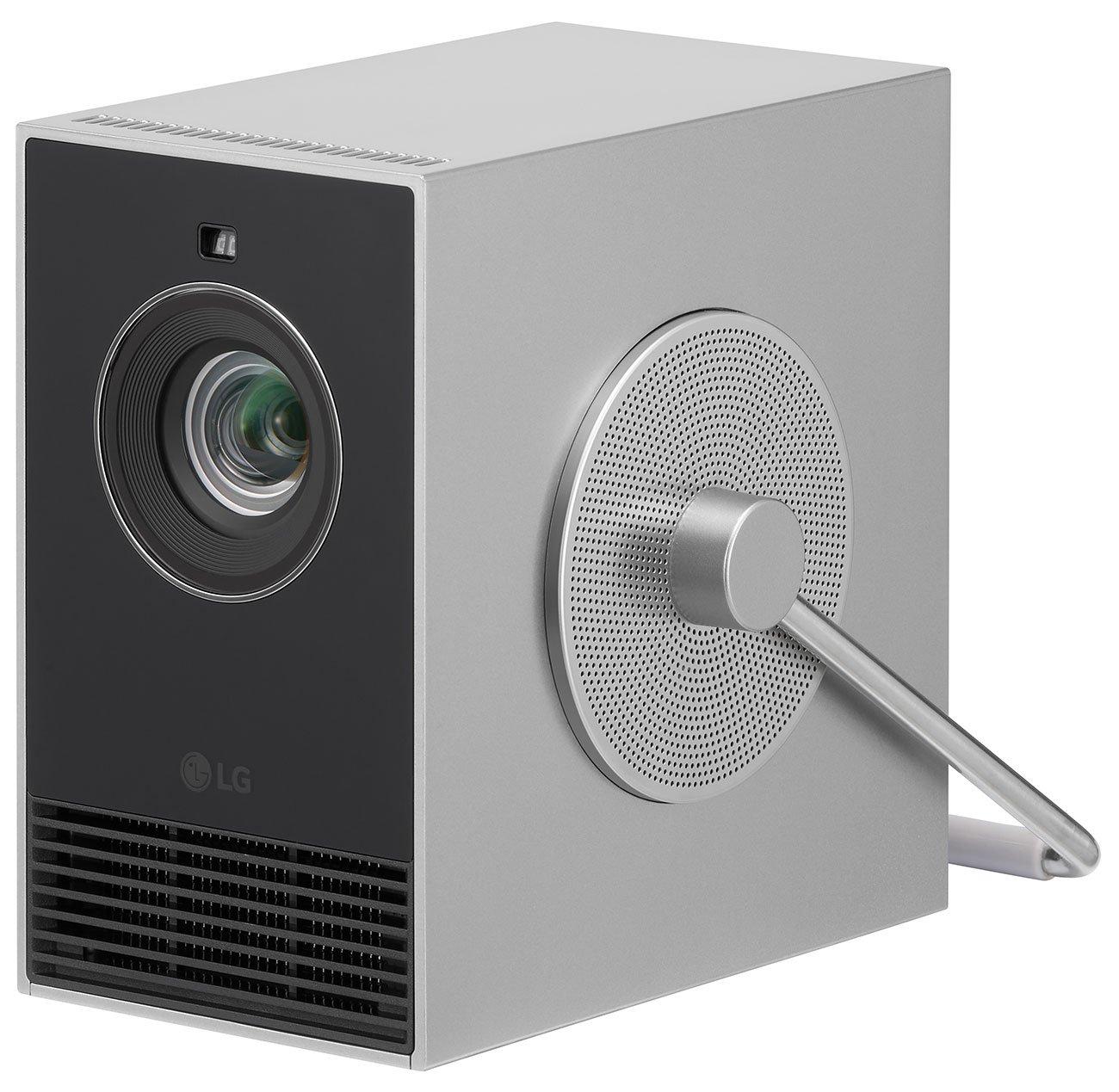
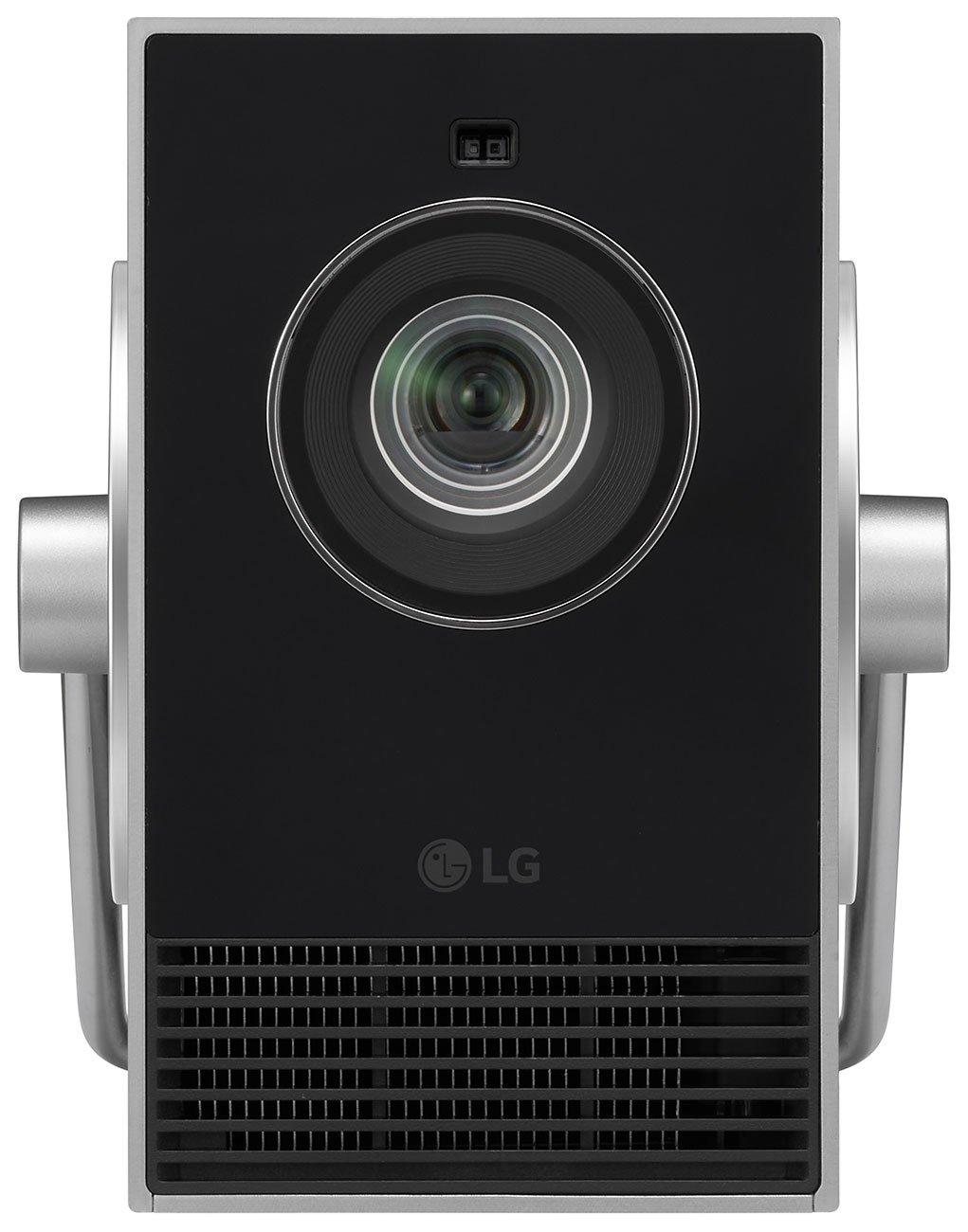
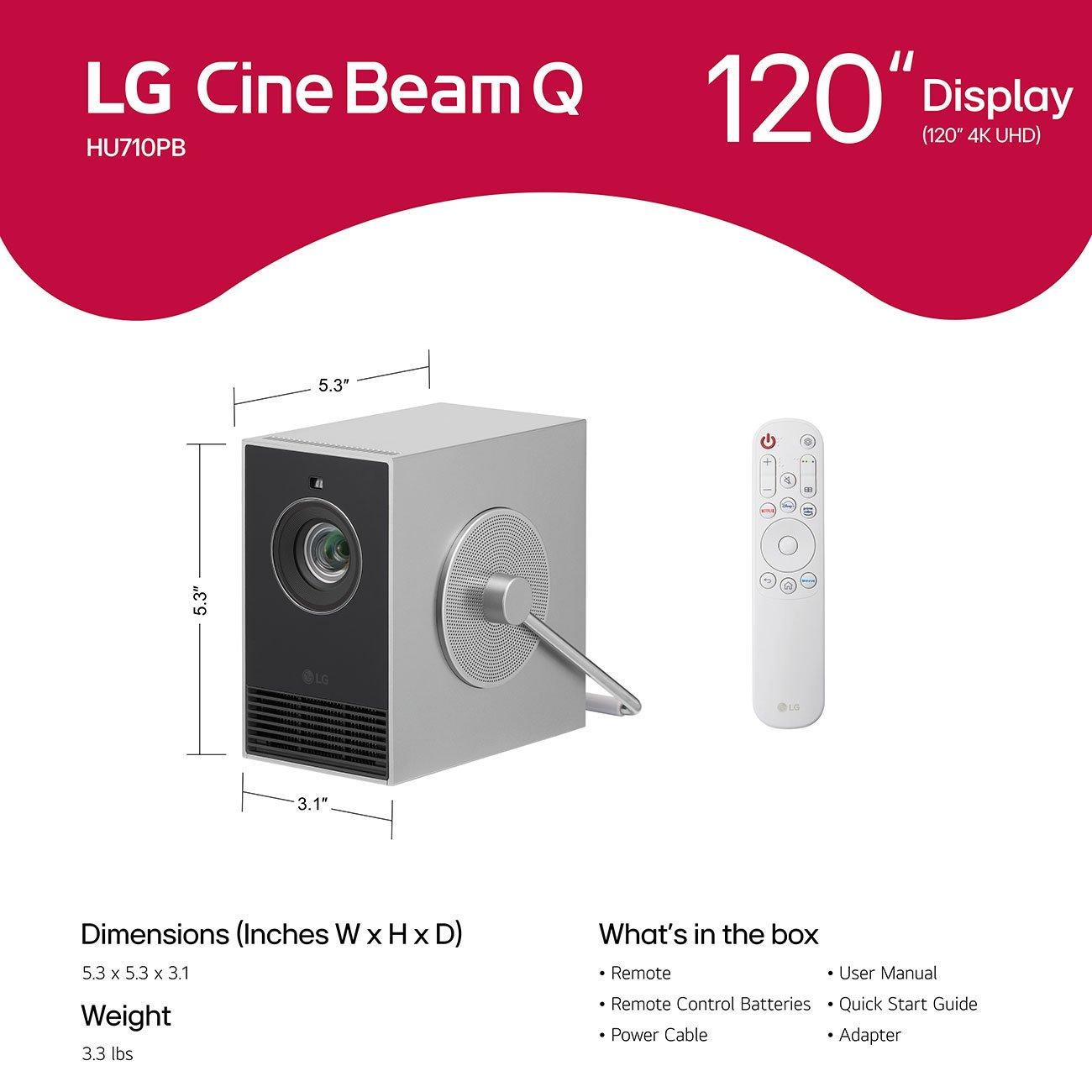
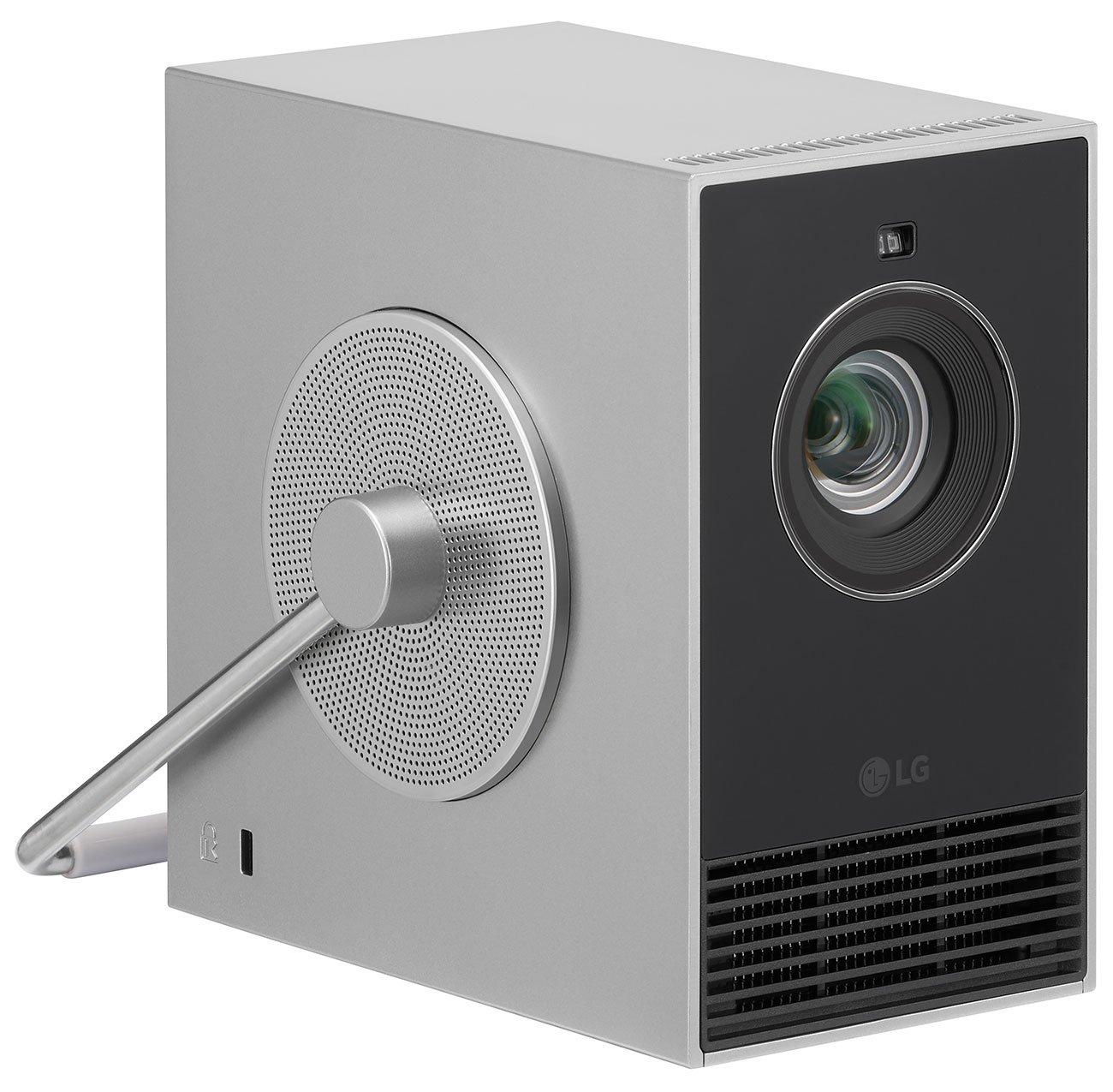
The $1,299 LG CineBeam Q 4K made a splash when it debuted in early 2023, promising true 4K resolution in an ultra-compact form factor. At just 5.31" x 3.15" x 5.31" and weighing a mere 3.3 pounds, it's remarkably small for a 4K projector. Its distinctive cube shape with a 360-degree rotating handle/stand makes it immediately recognizable and exceptionally portable.
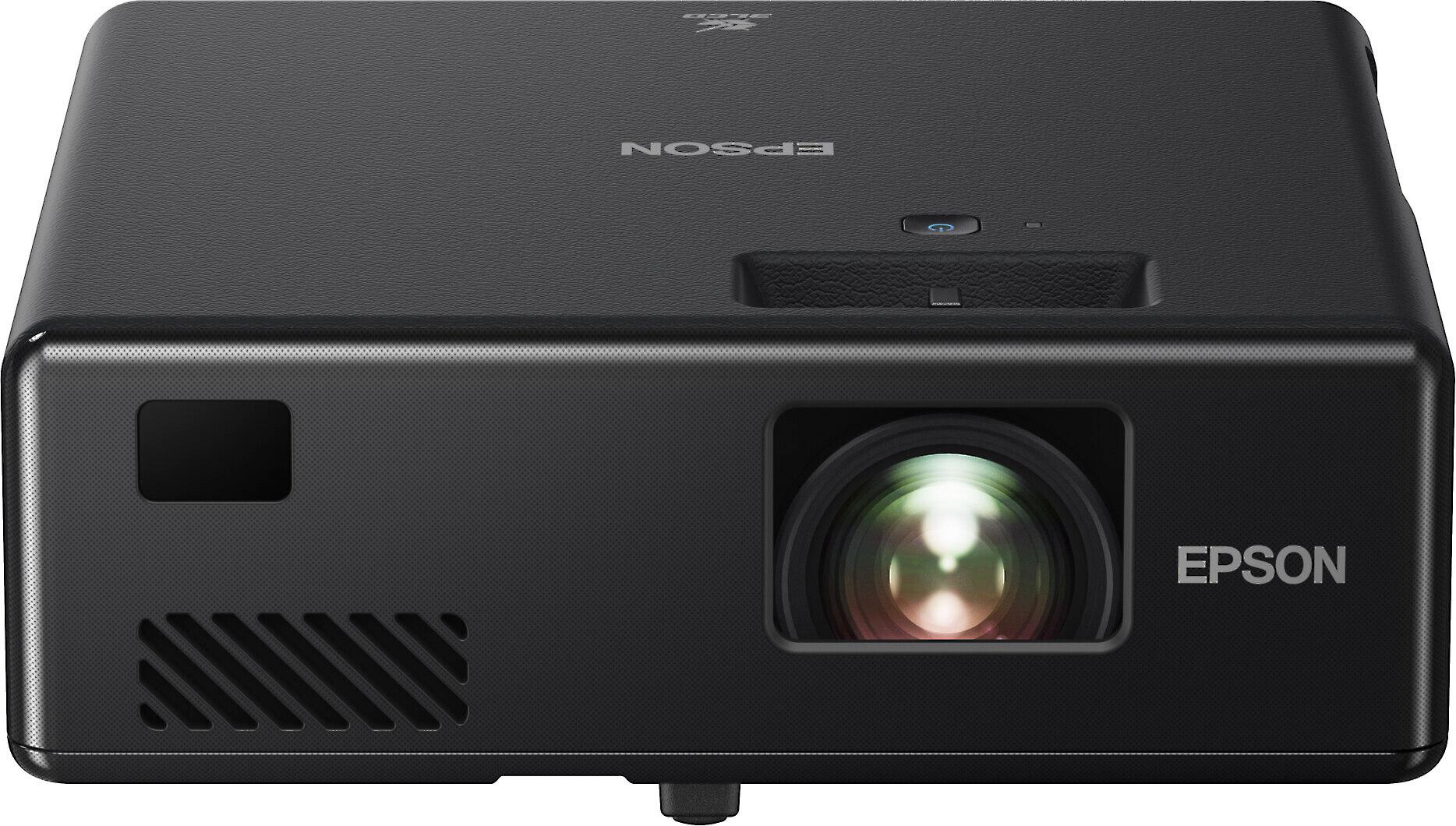
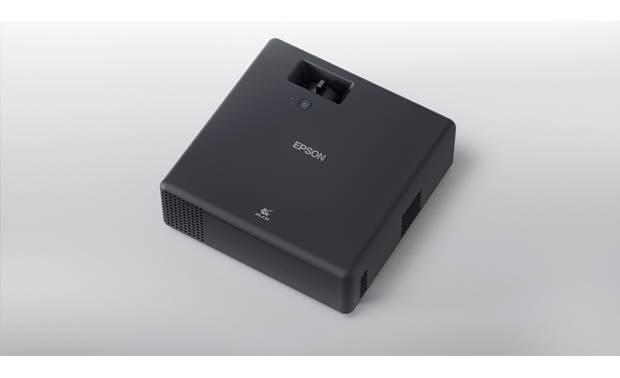
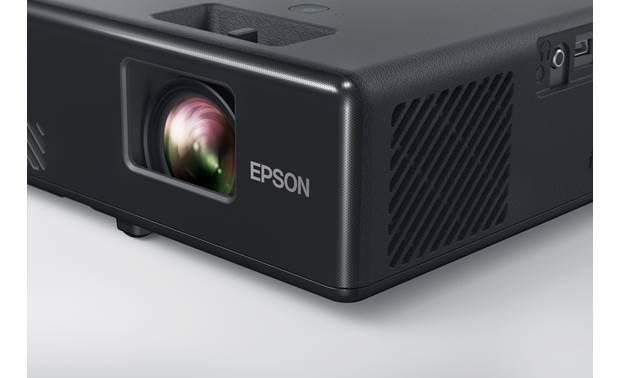
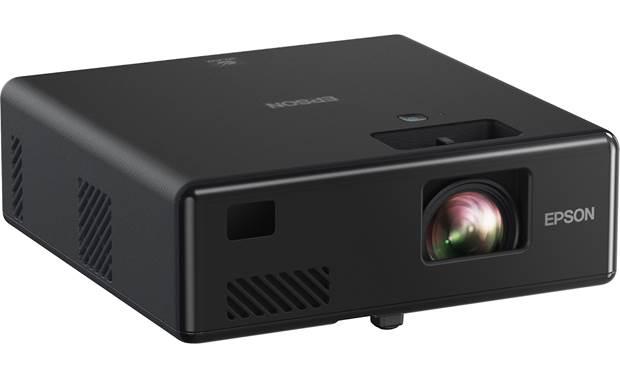
In contrast, the $699 Epson EpiqVision Mini EF11, which launched in late 2020, takes a slightly different approach. At 6.9" x 6.9" x 2.6" and 2.7 pounds, it's still highly portable but prioritizes brightness over resolution, offering Full HD (1080p) projection at 1,000 lumens—double the brightness of the LG model.
Both represent significant technological advances compared to portable projectors from just a few years earlier, which typically offered lower resolution (often 720p), dimmer images, and less refined features. The use of laser light sources in such compact devices particularly showcases how rapidly miniaturization has progressed in this category.
The most obvious technical difference between these projectors is resolution. The LG CineBeam Q offers 4K UHD (3840 x 2160) resolution, while the Epson EF11 provides Full HD (1920 x 1080). In practical terms, this means the LG displays four times the number of pixels as the Epson.
Is this difference noticeable? Based on my experience with both 4K and 1080p projectors, the answer depends entirely on your viewing distance and screen size. At screen sizes below 80 inches or viewing distances beyond 10 feet, the resolution difference becomes less perceptible to most viewers. However, as you increase the image size or move closer, the LG's 4K advantage becomes increasingly apparent—particularly with detailed content like nature documentaries or games with fine text.
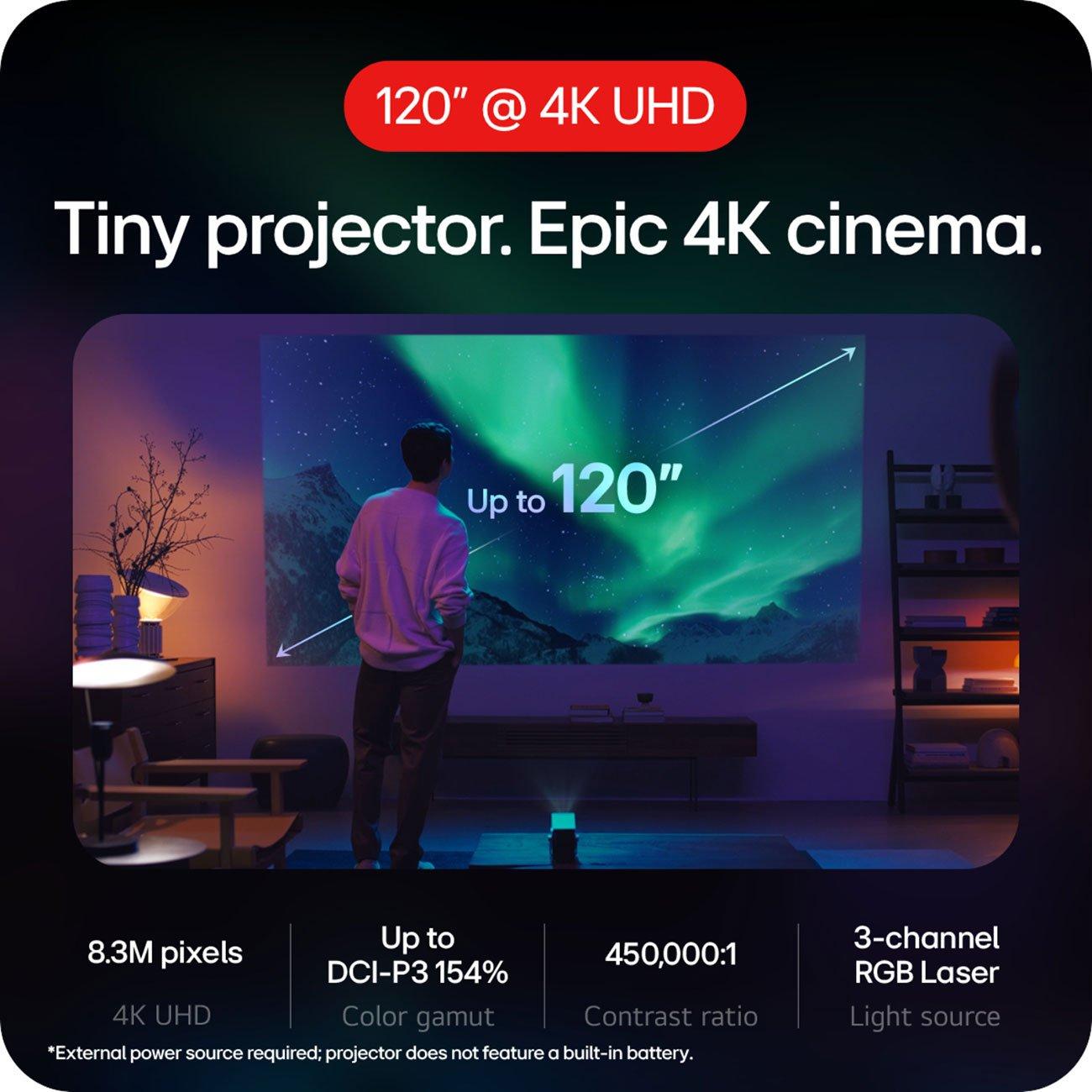
It's worth noting that the LG's 4K resolution comes via XPR (eXpanded Pixel Resolution) technology, which uses pixel-shifting to create the appearance of 8.3 million pixels from a lower-resolution chip. While not native 4K, the results are virtually indistinguishable from native 4K in real-world viewing.
Here's where these projectors take fundamentally different technical approaches:
The LG CineBeam Q employs a 3-channel RGB laser light engine paired with DLP (Digital Light Processing) technology. This combination allows it to cover an impressive 154% of the DCI-P3 color space—the standard used for digital cinema. This wider color gamut means it can reproduce more vibrant and accurate colors than most displays, including some subtle hues that standard projectors simply cannot display.
The Epson EF11 uses Epson's 3LCD technology, which splits light into three separate red, green, and blue components that pass through three separate LCD panels before recombining. This approach eliminates the "rainbow effect" (momentary color separation visible to some viewers) common in single-chip DLP projectors and ensures consistent color brightness—a significant advantage over many competing models.
During actual content viewing, both projectors offer excellent color reproduction, though they have different strengths. The LG delivers more vibrant, saturated colors that particularly shine with HDR content. The Epson produces more natural skin tones and consistent colors across all brightness levels, even if it can't match the LG's absolute color volume.
Contrast ratio—the difference between the brightest whites and darkest blacks a projector can produce—significantly impacts perceived image quality. The LG claims a 450,000:1 contrast ratio compared to the Epson's 200,000:1.
While manufacturer contrast specifications should always be taken with a grain of salt, the LG does produce noticeably deeper blacks in dark room viewing. This advantage stems from its laser-DLP combination, which can more effectively "turn off" light in dark areas of the image. However, this advantage diminishes significantly in rooms with ambient light, where external light overwhelms both projectors' black level capabilities.
Perhaps the most critical practical difference between these projectors is brightness. The Epson EF11 offers 1,000 lumens versus the LG CineBeam Q's 500 ANSI lumens.
What does this mean in practice? Brightness directly impacts where and when you can effectively use these projectors. During my testing in various environments, the brightness difference was immediately apparent:
This brightness difference represents perhaps the most significant practical consideration for most users. If you'll primarily use your projector in controlled lighting conditions, the LG's lower brightness may not be problematic. However, if you want flexibility to watch in varying light conditions, the Epson's additional brightness provides substantial practical advantages.
The LG CineBeam Q makes a stronger design statement with its perfect cube shape and integrated rotating handle that doubles as an adjustable stand. This multifunctional design element allows for easy angle adjustment without needing a separate tripod. The matte finish and minimalist aesthetic make it look more like a premium lifestyle product than traditional projection equipment.
The Epson EF11 takes a more conventional approach with its rectangular design, though it remains quite compact. It lacks the integrated stand of the LG, typically requiring a separate tripod or stand for optimal positioning. While less visually distinctive, the slightly larger chassis accommodates its more powerful light source and cooling system.
Both projectors are genuinely portable—I've transported both in a backpack without issue—but the LG's smaller size and integrated handle give it a slight edge for frequent travelers or those who plan to move it regularly between locations.
The technological gap between these projectors is perhaps most evident in their approach to smart features. The LG, released over two years after the Epson, benefits from more recent developments in smart projector interfaces.
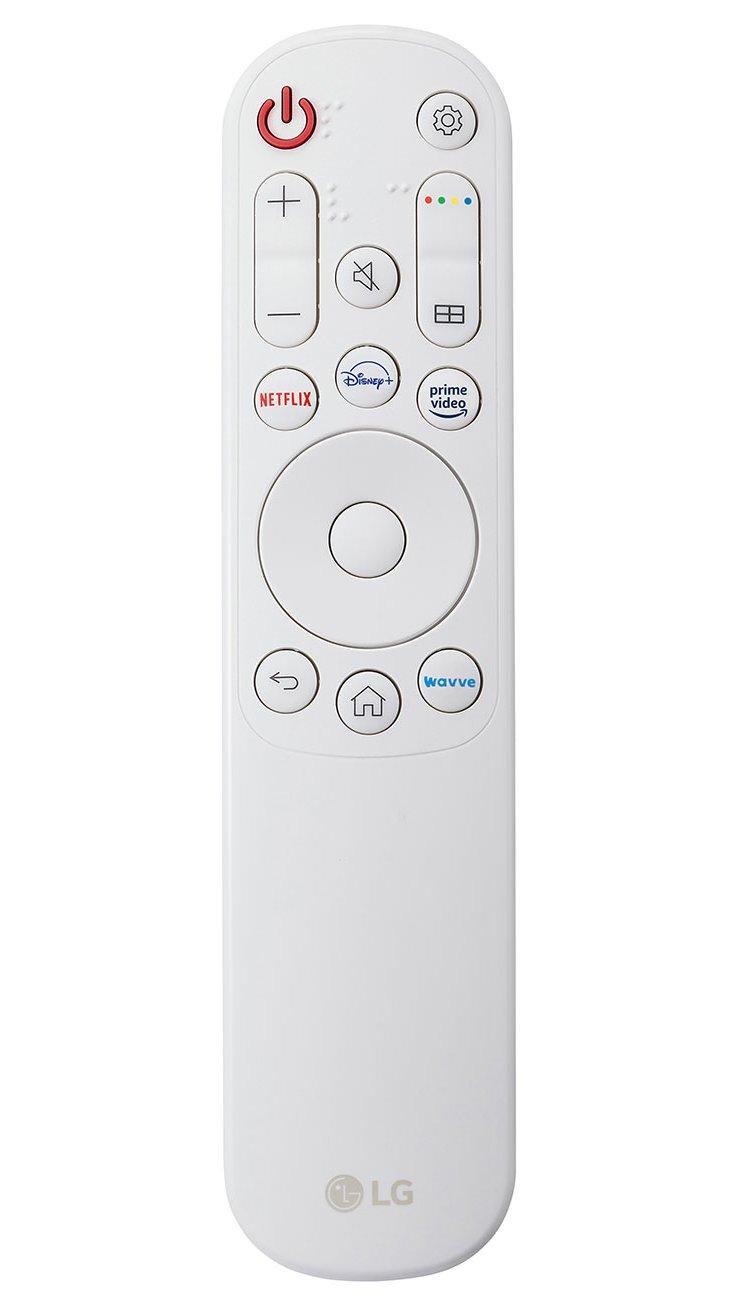
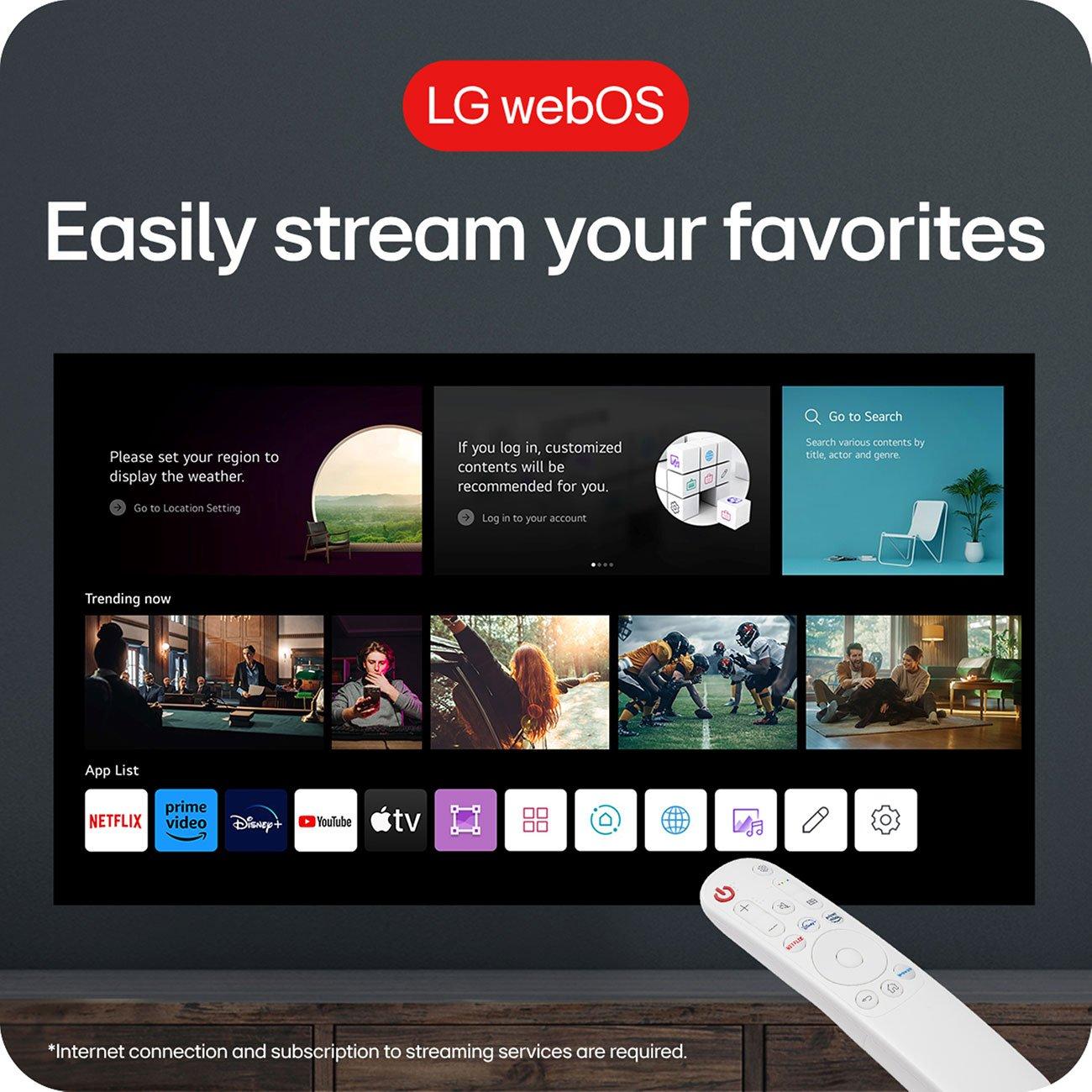
The LG CineBeam Q runs the full webOS smart TV platform—the same system used in LG's premium televisions. This provides direct access to popular streaming services like Netflix, Disney+, and Amazon Prime Video without requiring external devices. The interface is responsive, visually appealing, and regularly updated. It supports screen mirroring via AirPlay 2 and Android Screen Share, offering easy wireless content sharing from mobile devices.
The Epson EF11, lacking a built-in smart platform, requires external streaming devices connected through HDMI. For many users who already own streaming sticks or boxes, this may not be a significant limitation. However, it does mean one more device to carry and power if you're using the projector in different locations.
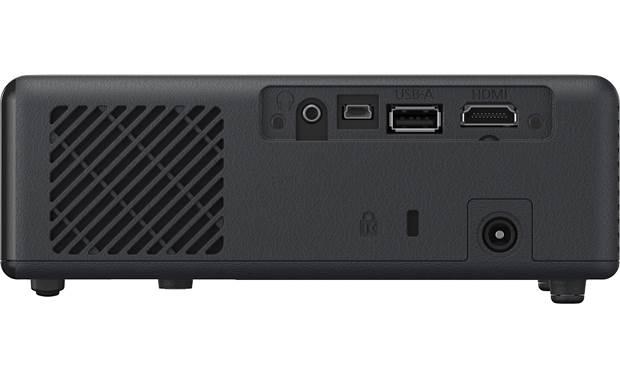
Regarding physical connectivity, both offer the essentials for portable use, though neither matches the extensive input options of larger home theater projectors:
The LG's USB-C port is particularly useful for modern laptops, allowing for both video and power through a single cable connection—a convenience that reflects its more recent design.
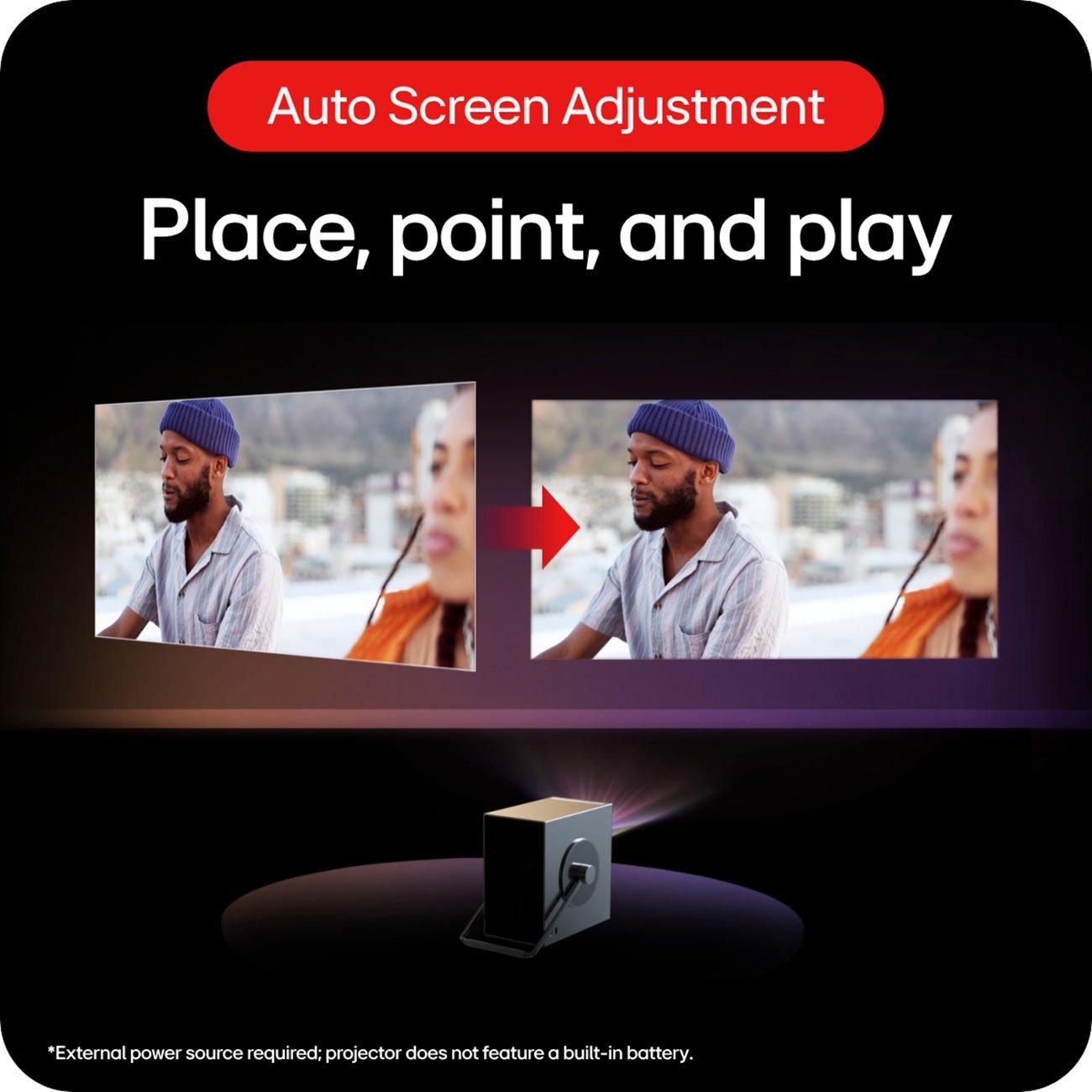
Both projectors aim for plug-and-play simplicity, but their auto-adjustment capabilities differ considerably.
The LG CineBeam Q offers more comprehensive automatic setup features, including:
The Epson EF11 provides:
In practical use, the LG's more advanced auto-adjustment features make setup noticeably faster and more foolproof, especially in challenging environments. This reflects the technological progress in the 2+ years between these products' releases, with more sophisticated image analysis algorithms enabling better automatic adjustments.
Regarding projection parameters, the Epson's 1.0:1 throw ratio (compared to the LG's 1.2:1) allows it to project larger images from shorter distances—a meaningful advantage in small rooms. The Epson also supports larger maximum screen sizes (150 inches versus the LG's 120 inches), though the brightness limitations of both projectors make their practical maximum sizes somewhat smaller for satisfactory viewing.
Let's be honest—built-in audio has traditionally been a weakness for portable projectors, and neither of these models completely breaks that trend, though they approach it differently.
The LG CineBeam Q includes a 3W mono speaker that, while adequate for casual listening, lacks bass response and overall volume. In quiet environments, it's serviceable for dialogue-heavy content, but anything with significant dynamic range or music quickly exposes its limitations.
The Epson EF11 takes a slightly more sophisticated approach with a dual-speaker design (albeit with just 1.5W per channel) that separates high frequencies from low frequencies. This results in marginally better audio balance and clarity, though still far from what you'd want for an immersive viewing experience.
Both projectors support Bluetooth audio output to connect to external speakers or headphones—a feature I've found essential for any serious viewing. The LG has a particularly neat dual Bluetooth feature that allows simultaneous connection of two audio devices, useful for shared private listening.
At $1,299, the LG CineBeam Q sits firmly in the premium portable projector category, commanding more than twice the price of many 1080p portable options. You're paying for cutting-edge technology here—4K resolution, HDR support, advanced auto-adjustment features, and the webOS smart platform, all in an exceptionally compact form factor.
The $699 Epson EpiqVision Mini EF11, while not inexpensive, represents a more accessible entry point into laser projection technology. Its higher brightness and solid overall performance make it an excellent value, particularly if 4K resolution isn't essential to your viewing needs.
When evaluating long-term value, consider that both projectors eliminate the ongoing cost of lamp replacements—a significant advantage over traditional lamp-based projectors. Their 20,000-hour light source ratings mean most users will replace the projector for newer technology long before the light source degrades significantly.
While both projectors can serve in dedicated home theater settings, they make different compromises that affect their suitability:
The LG CineBeam Q, with its superior resolution, contrast, and color performance, delivers more cinema-like image quality in properly darkened rooms. When paired with an external audio system, it can create a surprisingly immersive viewing experience despite its small size. Its 4K resolution particularly shines on larger screens, where the additional detail becomes more apparent.
The Epson EF11, while lacking 4K resolution, offers greater flexibility with its higher brightness. This makes it more forgiving in dedicated theater spaces that might not have perfect light control. Its 3LCD technology also ensures freedom from the rainbow effect that some viewers find distracting with DLP projectors like the LG.
Neither projector includes lens shift capabilities or extensive zoom functionality—features typically found on dedicated home theater projectors that provide greater installation flexibility. This reflects their primary design for portable, temporary setups rather than permanent installation.
After extensively testing both projectors in various settings, I've developed a straightforward framework to help determine which might better suit your needs:
I'd particularly recommend the LG for film enthusiasts who prioritize image quality and primarily watch in controlled lighting, or frequent travelers who value the ultra-compact form factor and integrated stand.
The Epson makes more sense for family rooms, outdoor movie nights, or situations where absolute control over ambient light isn't always possible. Its brightness advantage simply makes it more versatile across a wider range of environments.
The portable laser projector market has evolved rapidly over the past few years, with both the LG CineBeam Q and Epson EpiqVision Mini EF11 representing impressive technological achievements in their own ways. The LG showcases how far miniaturization and image quality have progressed, while the Epson demonstrates how practical performance can be delivered at a more accessible price point.
Your ultimate choice should align with your specific viewing habits, environments, and priorities. The LG delivers superior image quality under ideal conditions, while the Epson offers greater versatility across different lighting scenarios. Both represent significant upgrades over traditional lamp-based projectors or older portable models, particularly in terms of color performance, startup time, and long-term reliability.
As portable laser projection technology continues to evolve, we'll likely see further improvements in brightness, resolution, and smart features. For now, both the $1,299 LG CineBeam Q and $699 Epson EpiqVision Mini EF11 offer compelling options that bring big-screen experiences to spaces where traditional projectors would be impractical or impossible.
| LG CineBeam Q 4K UHD Portable Laser Projector | Epson EpiqVision Mini EF11 Laser Projector |
|---|---|
| Price - Investment required | |
| $1,299 (premium price point) | $699 (mid-range value option) |
| Resolution - Determines image detail and clarity | |
| 4K UHD (3840 x 2160) using XPR technology | Full HD (1920 x 1080) |
| Brightness - Critical for usage in different lighting conditions | |
| 500 ANSI lumens (best for darkened rooms) | 1,000 lumens (usable with some ambient light) |
| Contrast Ratio - Affects black levels and picture depth | |
| 450,000:1 (superior blacks in dark rooms) | 200,000:1 (good but less dramatic contrast) |
| Color Performance - Impacts color accuracy and vibrancy | |
| 154% DCI-P3 color gamut (exceptional color range) | 3LCD technology (accurate colors, no rainbow effect) |
| HDR Support - Enhances dynamic range in compatible content | |
| HDR10 and HLG with Dynamic Tone Mapping | No HDR support |
| Physical Size - Affects portability and placement options | |
| 5.31" x 3.15" x 5.31", 3.3 lbs (ultra-compact) | 6.9" x 6.9" x 2.6", 2.7 lbs (compact) |
| Maximum Screen Size - Determines largest possible image | |
| Up to 120 inches | Up to 150 inches |
| Throw Ratio - Affects required distance from screen | |
| 1.2:1 (needs more distance for same image size) | 1.0:1 (shorter distance for same image size) |
| Smart Platform - Determines need for external devices | |
| webOS with built-in streaming apps | No smart platform (requires external devices) |
| Auto-Adjustment Features - Impacts setup convenience | |
| Auto keystone, auto focus, and 4/9/15-point warping | Auto Picture Skew Correction with manual adjustments |
| Audio - Affects need for external speakers | |
| 3W mono speaker (minimal, likely need external audio) | Dual 1.5W speakers with bass-reflex (better but still limited) |
| Connectivity - Determines compatibility with devices | |
| 1x HDMI, 1x USB-C, Bluetooth audio out, AirPlay 2 | 1x HDMI, USB-A/B ports |
| Light Source Lifespan - Long-term reliability | |
| 20,000 hours laser life | 20,000 hours laser life |
| Best Use Case - Ideal application scenarios | |
| Dedicated dark room viewing, premium portable experience | Versatile environments, value-conscious users |
The Epson EpiqVision Mini EF11 is significantly brighter with 1,000 lumens compared to the LG CineBeam Q's 500 ANSI lumens. This makes the Epson better suited for rooms with some ambient light, while the LG CineBeam Q performs best in fully darkened environments.
The 4K resolution of the $1,299 LG CineBeam Q offers noticeably sharper images than the $699 Epson EF11's Full HD resolution, particularly at screen sizes above 80 inches or when viewing detailed content. However, the value depends on your priorities—if you mainly watch in rooms with ambient light, the Epson's higher brightness might be more beneficial than the LG's higher resolution.
The Epson EpiqVision Mini EF11 with its 1,000 lumens can work reasonably well in rooms with moderate ambient light, especially at screen sizes under 80 inches. The LG CineBeam Q at 500 ANSI lumens struggles significantly in bright environments and is best used in darkened rooms for optimal image quality.
The LG CineBeam Q 4K UHD Portable Laser Projector comes with the webOS smart TV platform, offering built-in apps for Netflix, Disney+, Amazon Prime Video, and more. The Epson EpiqVision Mini EF11 does not have built-in streaming apps and requires an external device like a streaming stick connected to its HDMI port.
While both projectors are designed for portability, the LG CineBeam Q has a slight edge with its smaller 5.31" x 3.15" x 5.31" dimensions (versus the Epson's 6.9" x 6.9" x 2.6") and convenient integrated 360-degree rotating handle/stand. The Epson is slightly lighter at 2.7 lbs compared to the LG's 3.3 lbs, but overall, the LG's design is more optimized for frequent movement.
Both the LG CineBeam Q with its 3W mono speaker and the Epson EF11 with its dual 1.5W speakers provide relatively limited audio that's suitable only for casual viewing. For an immersive home theater experience with either projector, external speakers or soundbars are highly recommended. Both models support Bluetooth audio output for wireless speaker connection.
The LG CineBeam Q 4K UHD Portable Laser Projector offers more comprehensive auto-adjustment features, including automatic keystone correction and auto focus, making it more user-friendly for beginners. The Epson EpiqVision Mini EF11 has basic Auto Picture Skew Correction but requires more manual adjustments. For those new to projectors, the LG provides a more plug-and-play experience.
The Epson EpiqVision Mini EF11 supports larger maximum screen sizes up to 150 inches diagonal, while the LG CineBeam Q tops out at 120 inches. However, due to brightness limitations, both projectors perform best at smaller sizes—around 80-100 inches for the Epson and 60-80 inches for the LG—when considering optimal image quality.
The LG CineBeam Q 4K UHD Portable Laser Projector supports both HDR10 and HLG high dynamic range formats with Dynamic Tone Mapping for enhanced contrast and color. The Epson EpiqVision Mini EF11 Laser Projector does not support HDR playback, which means HDR content will be displayed in standard dynamic range.
Both the LG CineBeam Q and Epson EpiqVision Mini EF11 feature laser light sources rated for approximately 20,000 hours of use. This translates to over 13 years of viewing at 4 hours per day, meaning most users will likely upgrade their projector for newer technology long before the light source requires replacement.
For gaming, the LG CineBeam Q offers advantages with its 4K resolution that makes game text and details sharper, plus HDR support for compatible games. However, neither projector advertises particularly low input lag (the time between controller input and screen response), which is critical for competitive gaming. Casual gamers will find both suitable, though the Epson's higher brightness might be preferable for daytime gaming sessions.
The $1,299 LG CineBeam Q costs nearly twice as much as the $699 Epson EpiqVision Mini EF11, and whether this premium is justified depends on your specific needs. The LG's higher price brings 4K resolution, HDR support, a smart TV platform, and a more compact design. The Epson offers greater brightness and better value for everyday use. For critical film viewing in controlled environments, the LG's premium may be worthwhile; for more casual or varied viewing situations, the Epson represents better value.
We've done our best to create useful and informative comparisons to help you decide what product to buy. Our research uses advanced automated methods to create this comparison and perfection is not possible - please contact us for corrections or questions. These are the sites we've researched in the creation of this article: projectorcentral.com - lg.com - thefrogpadappliances.com - youtube.com - techradar.com - lg.com - avsforum.com - lg.com - tomsguide.com - jefflynch.com - hometheaterview.com - projectorreviews.com - youtube.com - avsforum.com - projectorcentral.com - pcrichard.com - bhphotovideo.com - youtube.com - lg.com - applerivertvandappliance.com - big-georges.com - queencityonline.com - lg.com - lg.com - lg.com - lgnewsroom.com - heimkino.de - bestbuy.com - bhphotovideo.com - youtube.com - bestbuy.com - gagadget.com - epson.com - projectorreviews.com - audiogeneral.com - projectorreviews.com - epson.com - youtube.com - epson.com - youtube.com - mediaserver.goepson.com - files.support.epson.com - staples.com - projectorcentral.com - bestbuy.com - planettv.com - dell.com - epson.eu - projectortop.com

Privacy Policy
Terms and Conditions - Affiliate Policy
Home Security
© Copyright 2008-2026.
11816 Inwood Rd #1211, Dallas, TX 75244