

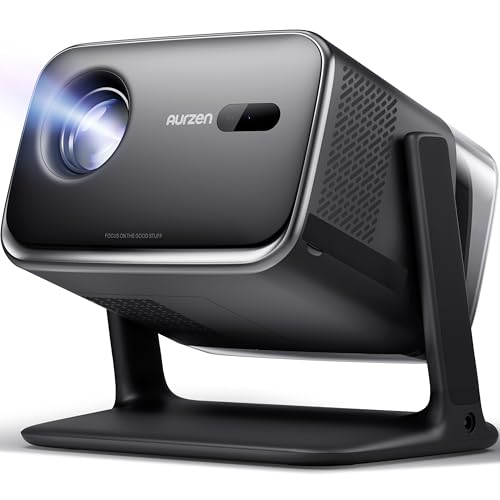
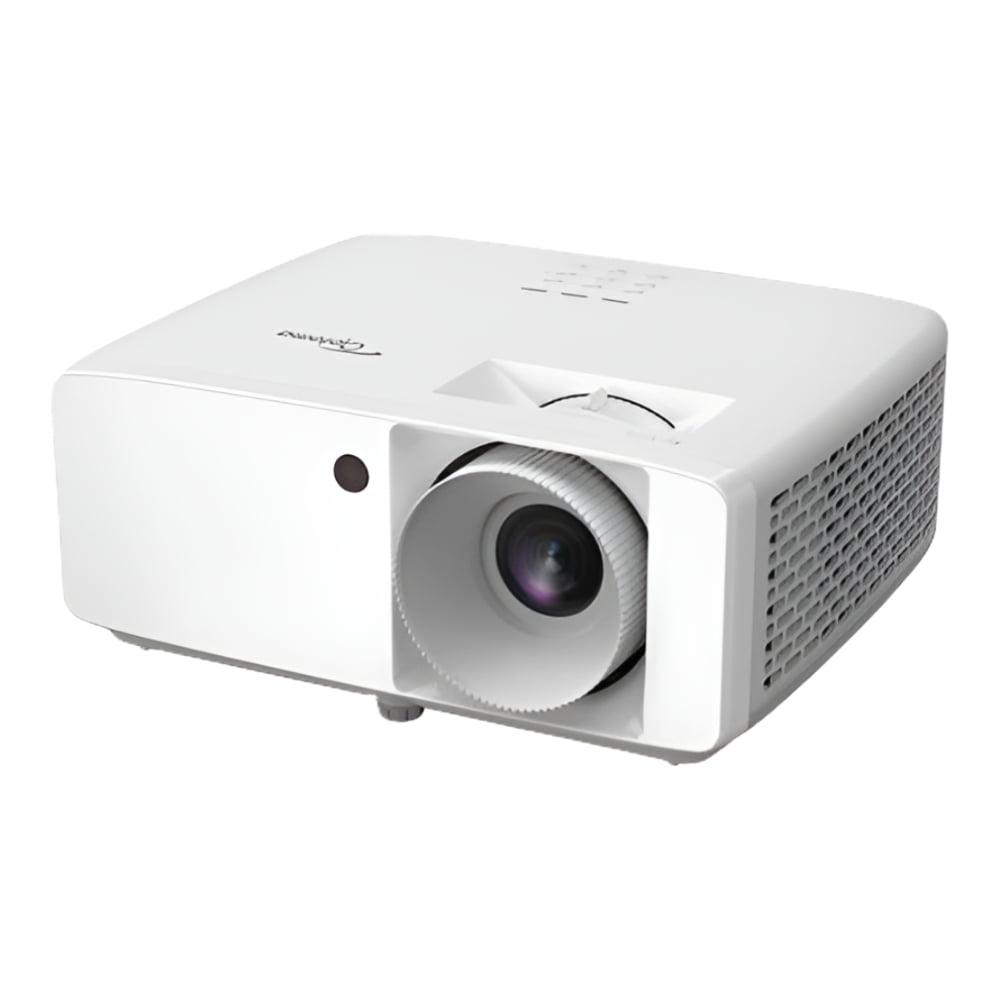
The projector market has transformed dramatically in recent years, splitting into two distinct philosophies that serve very different needs. On one side, you have smart projectors like the Aurzen BOOM Mini Smart Projector Google TV that prioritize convenience and all-in-one functionality. On the other, high-performance models like the Optoma HZ40HDR 1080p Projector focus purely on delivering the best possible image quality and brightness. Understanding these different approaches is crucial for making the right choice for your specific situation.
At the time of writing, these projectors represent vastly different price points and value propositions. The fundamental question isn't just about budget—it's about whether you need a projector that works adequately in many situations, or one that excels in a dedicated setup. Let's dive deep into what makes each approach unique and help you determine which philosophy aligns with your needs.
Before comparing specific models, it's important to understand what separates these two categories. Smart projectors integrate streaming capabilities directly into the device, eliminating the need for external players like Apple TV or Roku. They typically use LED light sources (arrays of small light-emitting diodes) that run cooler and last longer than traditional bulbs, though they're usually less bright than other technologies.
Dedicated home theater projectors focus on pure image performance. They often use laser phosphor technology—where blue laser light hits a phosphor wheel to create the full color spectrum—or traditional lamp-based systems. These projectors assume you'll connect external devices for content and prioritize maximum brightness, contrast, and color accuracy.
The most critical factors when choosing any projector are brightness (measured in ANSI lumens, which tells you how much light the projector actually outputs), contrast ratio (the difference between the brightest whites and darkest blacks), and throw distance (how far back you need to place the projector to get your desired screen size).
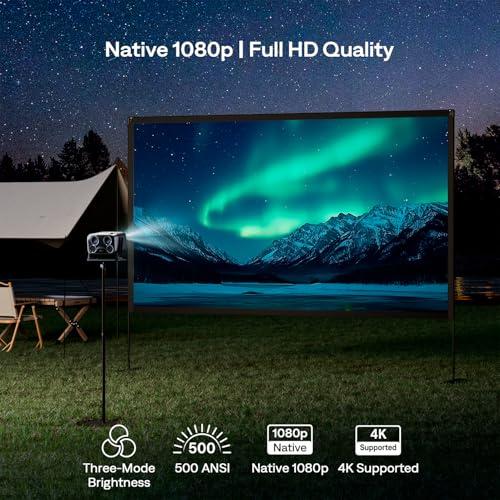
The Aurzen BOOM Mini Smart Projector Google TV, released in 2023, represents the modern smart projector approach. It's designed for people who want projector functionality without the complexity of traditional setups. Everything is built-in: the streaming apps, the speakers, even automatic focus and image correction systems.
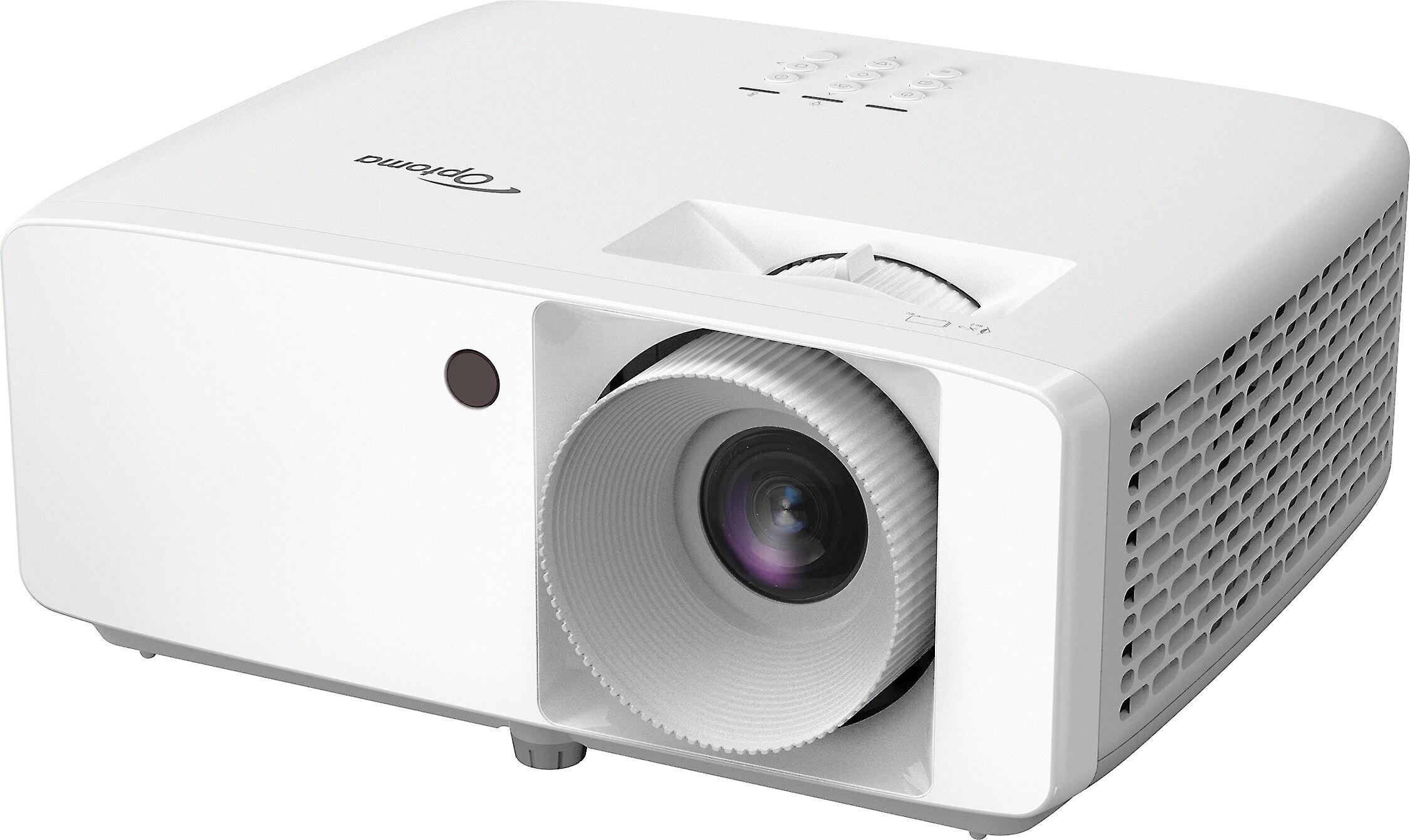
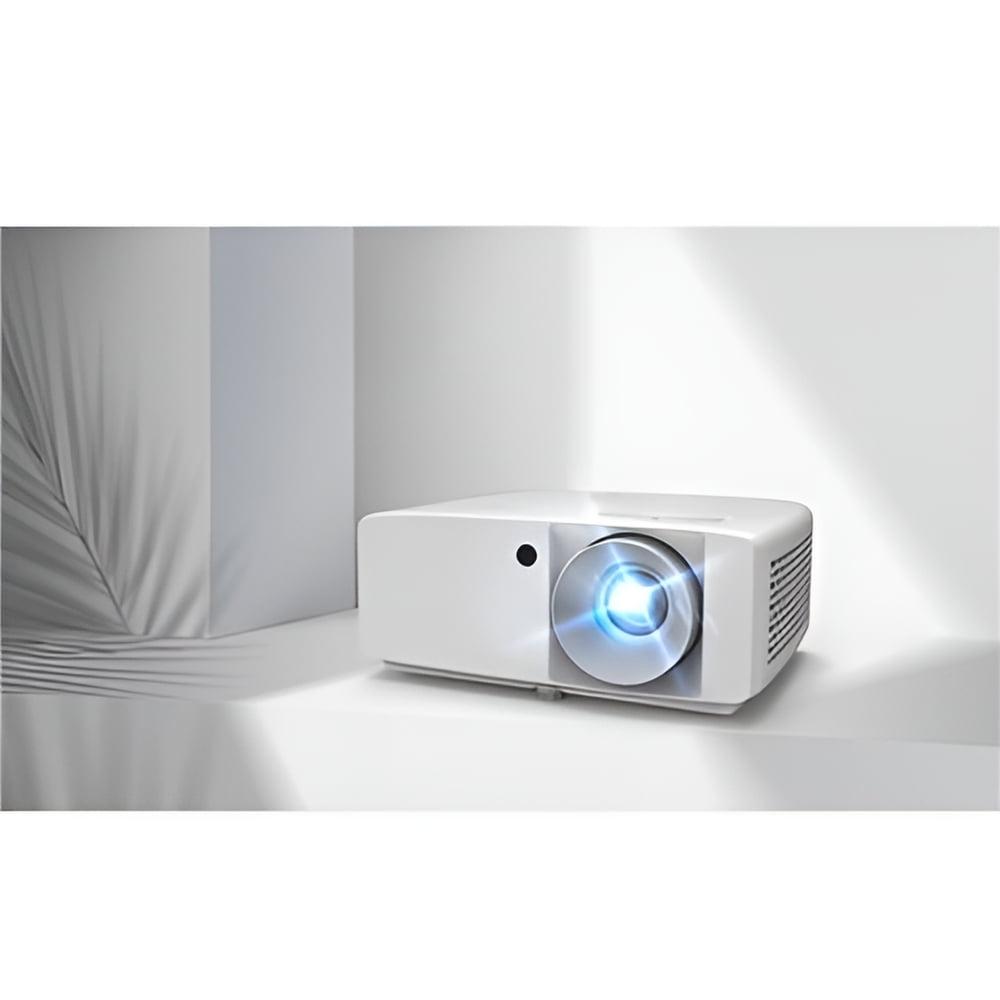
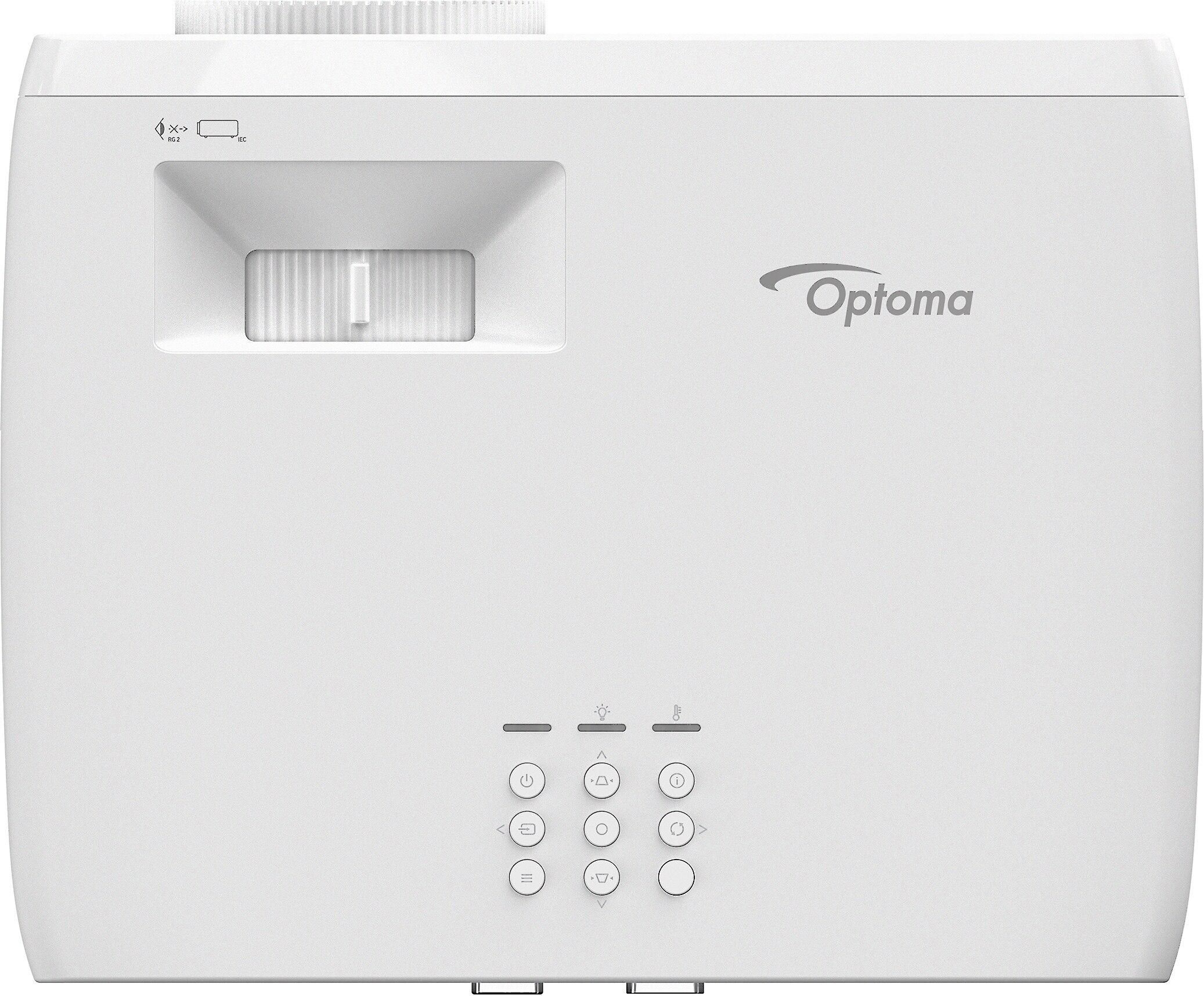
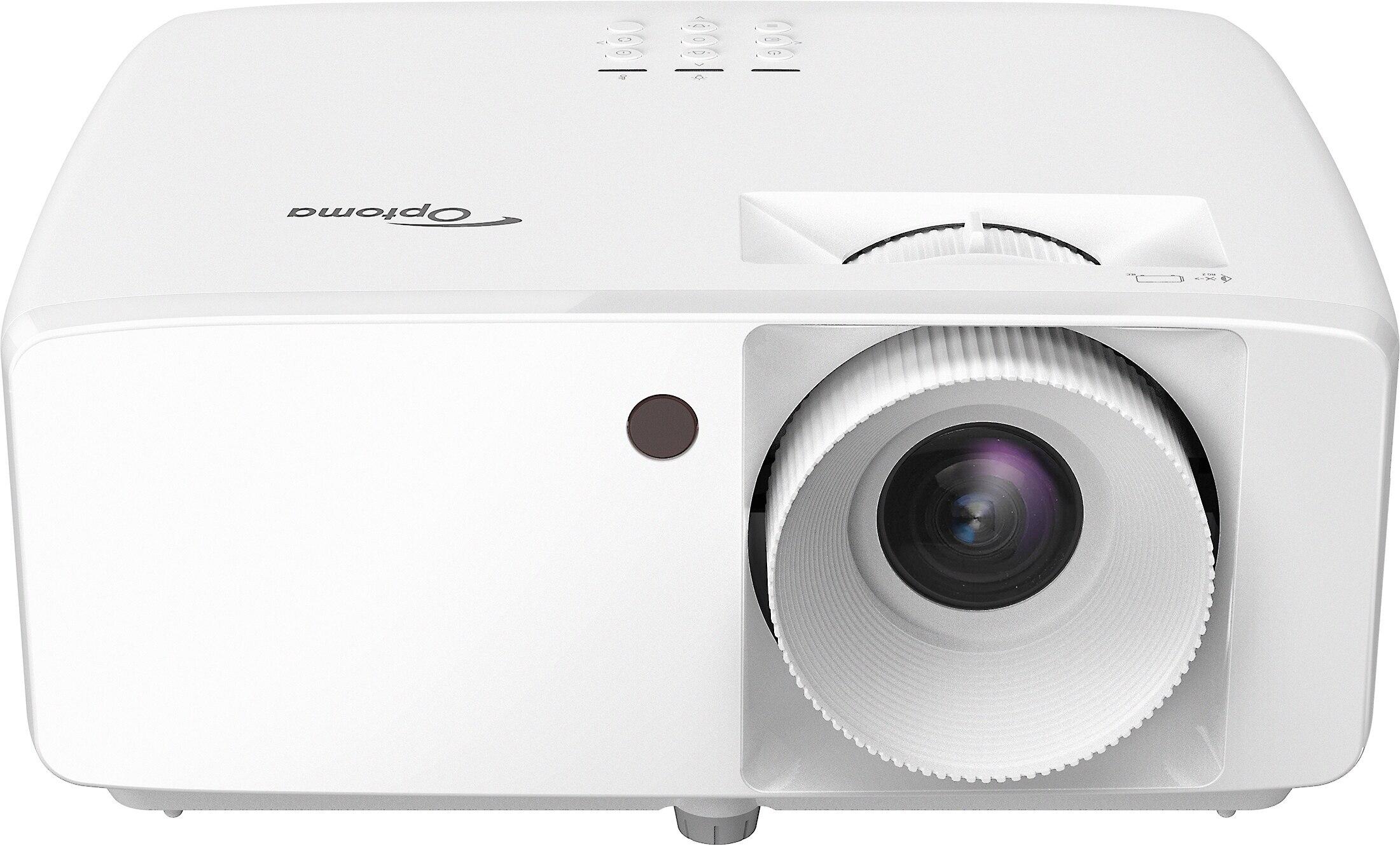
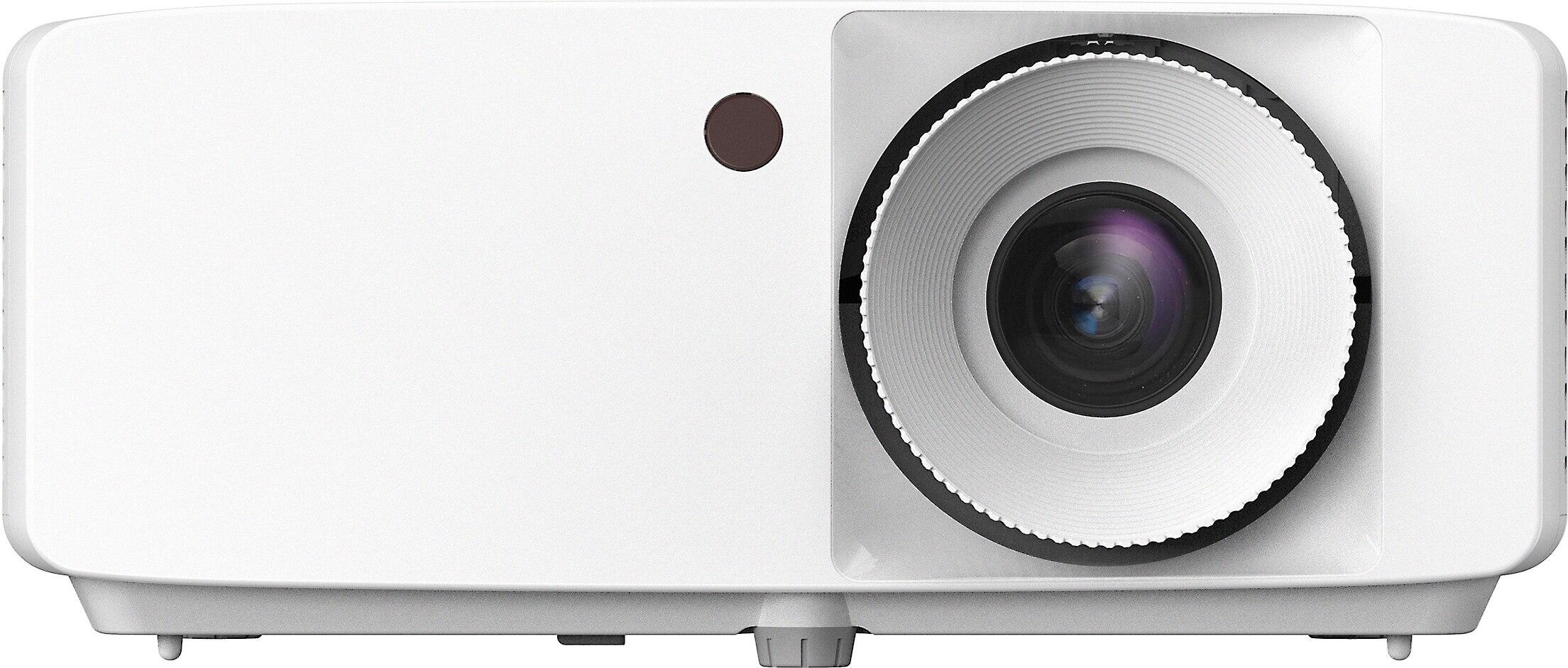
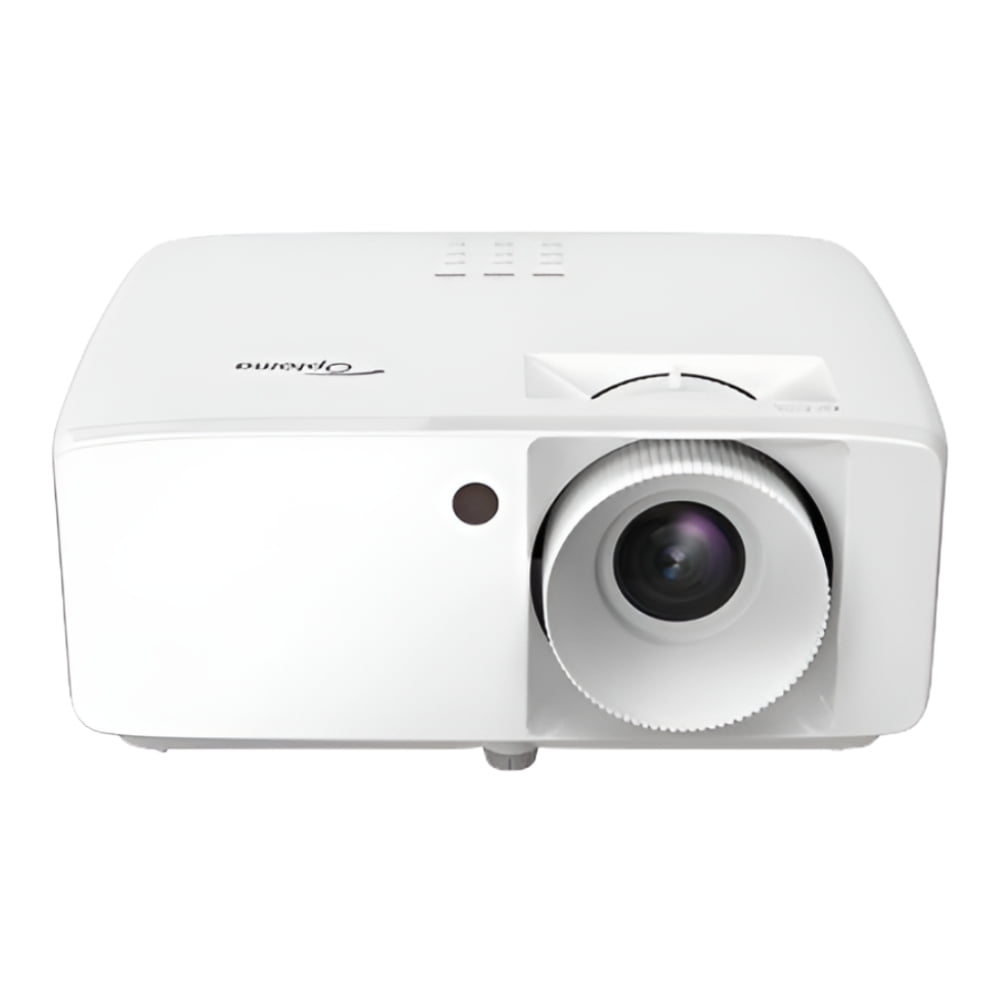
The Optoma HZ40HDR 1080p Projector, also from 2023, takes the opposite approach. It's a laser projector that assumes you want maximum image quality and are willing to handle more complex setup requirements. Optoma has been refining this laser phosphor technology for several years, and the HZ40HDR represents their current sweet spot for brightness and performance in the 1080p category.
These different philosophies became more pronounced after 2020, when smart projectors really took off during the pandemic as people sought easy home entertainment solutions. Meanwhile, laser projector technology has matured significantly since 2018, with much more reliable light sources and better color reproduction than early models.
Here's where the performance gap becomes immediately obvious. The Optoma HZ40HDR outputs 4,000 ANSI lumens compared to the Aurzen BOOM Mini's 500 ANSI lumens. That's an eight-fold difference in brightness, which fundamentally changes how and where you can use each projector.
ANSI lumens are the industry standard for measuring projector brightness, based on a nine-point measurement system that provides accurate real-world performance numbers. Many cheaper projectors inflate their brightness claims using "LED lumens" or other non-standard measurements, but both projectors here use proper ANSI ratings.
This brightness difference means the Optoma HZ40HDR can produce watchable images even with room lights on or during daytime viewing with curtains partially open. Based on extensive user feedback, the HZ40HDR maintains good image quality on screens up to 120 inches even in moderately lit rooms. The Aurzen BOOM Mini, by contrast, really needs a dark room to shine. Its 500 lumens work well for screens up to 80 inches in darkened conditions, but struggle with any ambient light.
The contrast ratio difference is equally dramatic. The Optoma HZ40HDR achieves a 300,000:1 static contrast ratio, while the Aurzen BOOM Mini manages 1,000:1. Contrast ratio measures the difference between the brightest white and darkest black the projector can display. Higher contrast creates more realistic images with better shadow detail and more vibrant colors.
In practical terms, this means the Optoma can display deep, inky blacks alongside bright highlights in the same scene—crucial for movies with dramatic lighting. The Aurzen will show more grayish blacks and less punch in bright scenes, though it's still perfectly watchable for most content in dark rooms.
The Optoma HZ40HDR uses DLP (Digital Light Processing) technology, where millions of tiny mirrors flip rapidly to create the image. This provides excellent sharpness and smooth motion, making it particularly good for sports and action movies. The Aurzen BOOM Mini uses LCD technology, where liquid crystal panels control light passage. LCD typically offers good color saturation but can sometimes show slight motion blur in fast-moving scenes.
For gaming, the Optoma HZ40HDR clearly dominates with its 8.6ms input lag at 1080p/120Hz. Input lag measures the delay between when your controller sends a signal and when the action appears on screen. Anything under 20ms is considered good for casual gaming, while competitive gamers typically want under 10ms.
The HZ40HDR's gaming mode optimizations reduce image processing to minimize this delay, making it suitable for competitive gaming where split-second reactions matter. The projector also supports 120Hz refresh rates from modern gaming consoles, providing smoother motion in supported games.
The Aurzen BOOM Mini doesn't specify its input lag performance, which typically indicates it's not optimized for gaming. Smart projectors generally prioritize image processing for streaming content over gaming responsiveness. Based on similar devices in this category, expect input lag around 30-50ms—perfectly fine for casual gaming but potentially frustrating for competitive players.
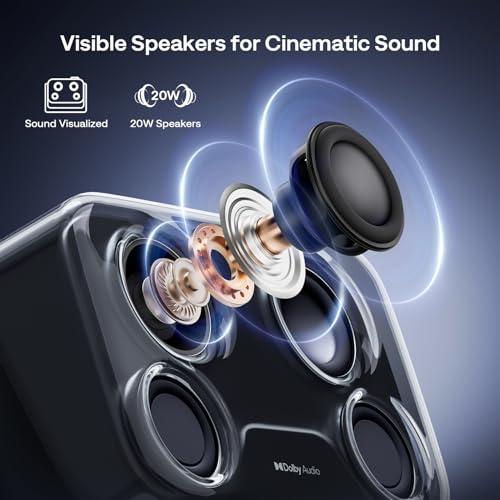
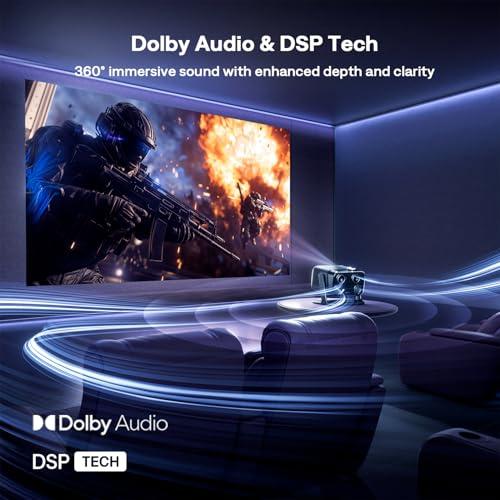
Here's one area where the Aurzen BOOM Mini actually outperforms the Optoma HZ40HDR. The Aurzen features dual 10W speakers (20W total) with Dolby Audio processing—a technology that creates more immersive sound by optimizing audio for the specific speaker configuration.
The rear-facing speaker design on the Aurzen helps with sound dispersion in small to medium rooms. User reviews consistently praise the audio quality as surprisingly good for a portable projector, with enough volume and clarity for casual movie watching. The projector can even function as a standalone Bluetooth speaker when not projecting.
The Optoma HZ40HDR includes only a basic 15W mono speaker—essentially there for basic functionality rather than quality listening. This reflects the target audience: people setting up dedicated home theaters typically invest in separate audio systems anyway. If you're planning a proper home theater setup, you'll want to budget for a soundbar or surround sound system with the Optoma.
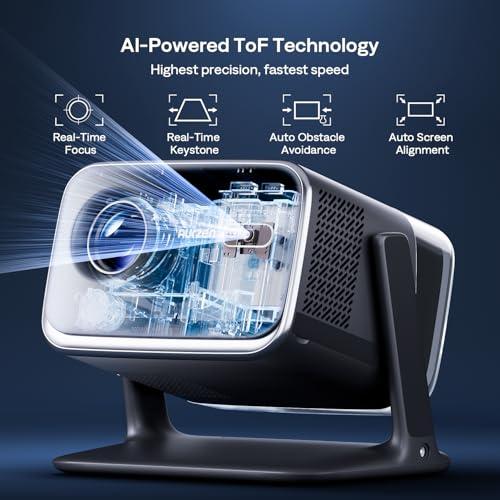
The setup experience reveals each projector's design philosophy most clearly. The Aurzen BOOM Mini uses ToF (Time-of-Flight) sensors to automatically measure distances and adjust focus in real-time. These sensors emit infrared light and measure how long it takes to bounce back, creating a 3D map of the projection environment.
This means you can literally pick up the Aurzen and move it anywhere, and it will automatically refocus and correct image distortion within seconds. The automatic keystone correction fixes the trapezoidal distortion that happens when projecting at angles, while the obstacle avoidance feature can detect and work around objects in the projection path.
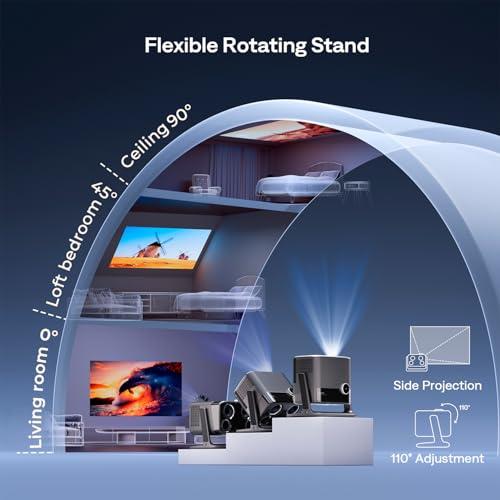
The built-in 110-degree adjustable stand means you can project onto ceilings, walls, or even floors without additional mounting equipment. This flexibility makes it genuinely portable in ways that traditional projectors aren't.
The Optoma HZ40HDR requires manual adjustment of focus, zoom (1.1x manual zoom range), and keystone correction. While this means more setup time, it also provides more precise control over image quality. Professional installers often prefer manual controls because they can fine-tune the image exactly as desired and lock those settings.
The throw ratio also differs significantly. The Aurzen has a 1.36:1 throw ratio, while the Optoma ranges from 1.48:1 to 1.62:1. Throw ratio tells you how far back you need to place the projector—a 1.5:1 ratio means you need 1.5 feet of distance for every foot of screen width. The Aurzen's shorter throw ratio makes it more flexible in small rooms.
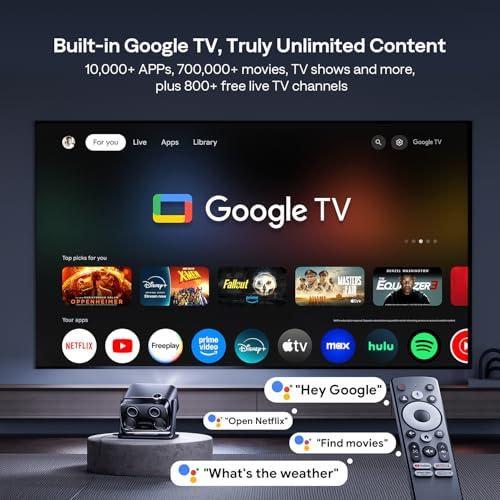
The Aurzen BOOM Mini runs full Google TV, which is essentially Android TV with Google's interface and recommendation system. This provides access to over 10,000 apps, including Netflix, Disney+, Hulu, and YouTube, without needing any external devices.
The integration goes deeper than just app access. Google Cast lets you wirelessly stream content from phones and tablets, while Google Assistant voice control lets you search for content, control playback, and even manage smart home devices through the projector.
The Kids Mode is particularly thoughtful, providing parental controls and content filtering that many families will appreciate. This kind of ecosystem integration makes the Aurzen genuinely useful as a primary entertainment device rather than just a display.
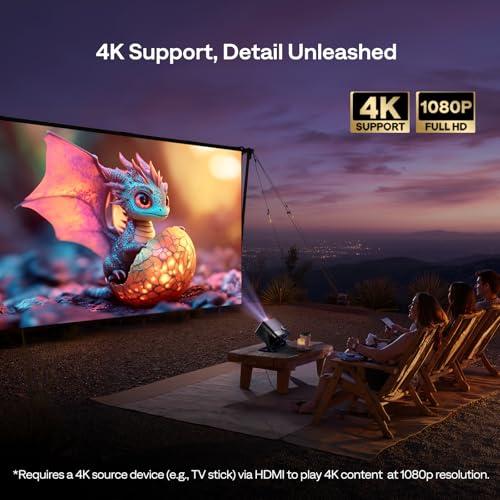
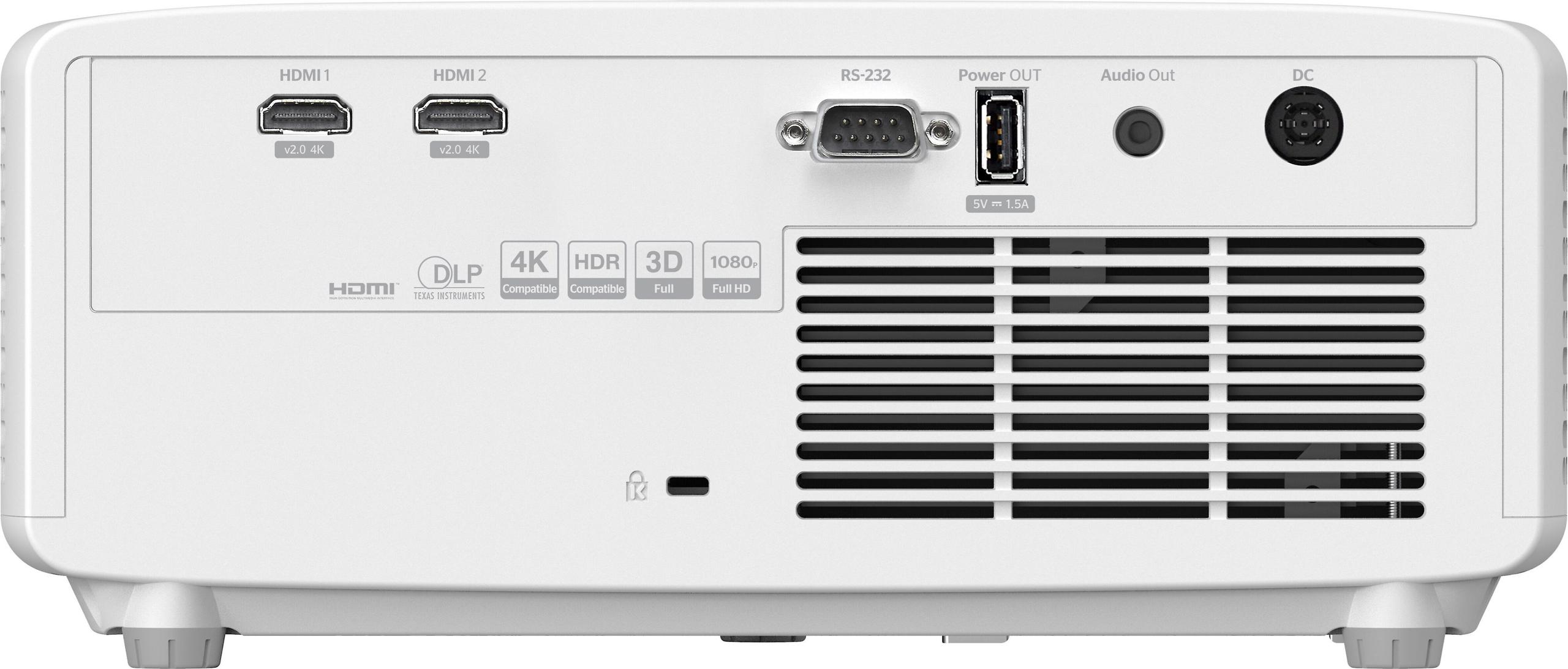
The Optoma HZ40HDR takes the opposite approach with two HDMI 2.0 ports that support 4K input (downscaled to 1080p output) and HDR content. This setup works better for people with dedicated source devices like game consoles, 4K Blu-ray players, or high-end streaming boxes that often provide better performance than built-in smart features.
Both projectors offer dual-band Wi-Fi and Bluetooth connectivity, though the Aurzen integrates these more seamlessly into its smart features.
The light source technology represents perhaps the biggest long-term difference. The Optoma HZ40HDR's laser phosphor system is rated for 30,000 hours of operation. At three hours of daily use, that's nearly 30 years of operation without needing any lamp replacements.
Laser technology also maintains consistent brightness and color accuracy throughout its lifespan, unlike traditional lamps that gradually dim and shift color over time. The energy efficiency is impressive too—laser projectors typically consume 45% less power than equivalent lamp-based models.
The Aurzen BOOM Mini's LED technology also runs cooler and should last longer than traditional lamps, though the manufacturer doesn't specify exact lifespan ratings. LED projectors generally last 20,000+ hours, which is still excellent for most users.
Both projectors run impressively quiet. The Aurzen operates at ≤36dB while the Optoma ranges from 32-34dB. For reference, a quiet library is about 40dB, so neither should be distracting during use.
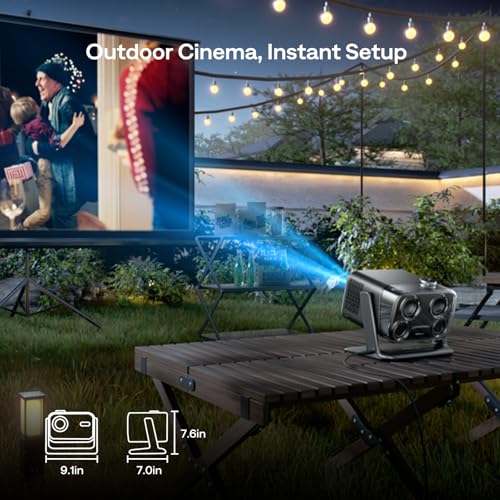
The Aurzen BOOM Mini excels in flexibility scenarios. It's perfect for apartment dwellers who can't install permanent mounting systems, families who want entertainment in multiple rooms, or anyone who values plug-and-play simplicity. The automatic setup features make it genuinely useful for outdoor movie nights, bedroom ceiling projection, or travel entertainment.
I particularly appreciate this approach for people who are intimidated by traditional projector setup complexity. The Aurzen removes most technical barriers while still providing a genuine big-screen experience.
The Optoma HZ40HDR shines in dedicated home theater environments where image quality is the priority. Its brightness advantage makes it suitable for living rooms with windows, basement theaters with moderate lighting, or any situation where you can't achieve perfect darkness.
For serious gaming, the low input lag makes the Optoma a clear choice. The combination of brightness, contrast, and responsiveness creates an excellent big-screen gaming experience that the Aurzen simply can't match.
The laser reliability also makes the Optoma more suitable for permanent installations where maintenance access might be difficult, like ceiling-mounted setups.
At the time of writing, these projectors occupy different price tiers that generally reflect their capabilities and target markets. The Aurzen BOOM Mini provides excellent value for its convenience features and all-in-one approach, while the Optoma HZ40HDR justifies its higher cost through superior image quality and long-term reliability.
Choose the Aurzen BOOM Mini Smart Projector Google TV if you prioritize convenience, portability, and built-in smart features over maximum image quality. It's ideal for casual viewing in dark rooms, multiple-use scenarios, and anyone who wants projector functionality without setup complexity.
Choose the Optoma HZ40HDR 1080p Projector if image quality, brightness, and gaming performance are your primary concerns. It's the better choice for dedicated home theaters, living room entertainment with ambient light, or any situation where you want the best possible 1080p image quality.
The fundamental question comes down to whether you need a projector that works adequately in many different situations, or one that excels in its intended environment. Both approaches have merit—the key is honestly assessing your priorities, room conditions, and how you actually plan to use your projector.
Based on extensive research into user experiences and professional reviews, both projectors deliver on their respective promises. The Aurzen truly does make projection accessible and convenient, while the Optoma provides professional-grade image quality at a reasonable price point. Your specific needs and room setup should drive the decision more than absolute performance numbers or price considerations.
| Aurzen BOOM Mini Smart Projector Google TV | Optoma HZ40HDR 1080p Projector |
|---|---|
| Brightness - Most critical factor for room lighting flexibility | |
| 500 ANSI lumens (requires dark room) | 4,000 ANSI lumens (works with ambient light) |
| Display Technology - Affects image sharpness and color | |
| LCD with LED light source | DLP with laser phosphor |
| Contrast Ratio - Determines black levels and image depth | |
| 1,000:1 (adequate for casual viewing) | 300,000:1 (excellent blacks and highlights) |
| Light Source Lifespan - Long-term ownership costs | |
| LED (lifespan not specified) | Laser (30,000 hours, virtually maintenance-free) |
| Smart Features - Built-in streaming vs external devices | |
| Native Google TV with 10,000+ apps | No built-in streaming (requires external devices) |
| Gaming Performance - Input lag for responsive gameplay | |
| Not specified (likely 30-50ms) | 8.6ms at 1080p/120Hz (excellent for competitive gaming) |
| Audio System - Built-in sound quality | |
| Dual 10W speakers (20W total) with Dolby Audio | 15W mono speaker (basic functionality) |
| Setup Complexity - Ease of installation and use | |
| Real-time autofocus and keystone correction | Manual focus, zoom, and keystone adjustments required |
| Portability - Size and mounting flexibility | |
| Compact with 110° flexible stand, ceiling projection | Larger but lightweight, requires mounting for optimal use |
| Projection Size Range - Screen size flexibility | |
| 40" to 200" diagonal | 20" to 300" diagonal |
| Connectivity Options - Device compatibility | |
| Wi-Fi, Bluetooth 5.1, HDMI ×1, USB ×2 | Wi-Fi, Bluetooth, HDMI ×2 (2.0), USB ×1, RS-232 |
| Noise Level - Distraction during quiet scenes | |
| ≤36dB (ultra-quiet operation) | 32-34dB (slightly quieter) |
| Best Use Cases - Primary scenarios for each | |
| Dark room casual viewing, portability, built-in streaming | Dedicated home theater, gaming, bright room viewing |
The Optoma HZ40HDR is significantly brighter at 4,000 ANSI lumens compared to the Aurzen BOOM Mini Smart Projector Google TV at 500 ANSI lumens. This makes the Optoma HZ40HDR suitable for daytime viewing and rooms with ambient light, while the Aurzen BOOM Mini requires a dark room for optimal image quality.
The Aurzen BOOM Mini Smart Projector Google TV has built-in Google TV with access to Netflix, Disney+, Hulu, and over 10,000 apps, so no external streaming device is needed. The Optoma HZ40HDR requires external streaming devices like Apple TV, Roku, or game consoles to access streaming content.
The Optoma HZ40HDR is superior for gaming with its 8.6ms input lag at 1080p/120Hz, making it excellent for competitive gaming. The Aurzen BOOM Mini doesn't specify gaming performance and is better suited for casual gaming due to likely higher input lag from its smart processing features.
The Aurzen BOOM Mini Smart Projector Google TV offers automatic setup with real-time autofocus and keystone correction, making it plug-and-play ready. The Optoma HZ40HDR requires manual focus, zoom, and keystone adjustments, which provides more control but takes longer to set up properly.
The Aurzen BOOM Mini has superior built-in audio with dual 10W speakers (20W total) and Dolby Audio support, adequate for most rooms. The Optoma HZ40HDR has a basic 15W mono speaker that's mainly for basic functionality, requiring external audio systems for quality sound in home theater setups.
Both work in home theaters, but serve different needs. The Optoma HZ40HDR excels in dedicated theater rooms with its superior brightness, contrast, and image quality. The Aurzen BOOM Mini works well in smaller, dark theater spaces where convenience and built-in streaming are priorities over maximum image quality.
The Aurzen BOOM Mini Smart Projector Google TV is more portable with its compact design, built-in 110° flexible stand, and automatic adjustments that work in any position. The Optoma HZ40HDR is less portable and typically requires proper mounting and manual setup for optimal performance.
The Optoma HZ40HDR uses laser technology rated for 30,000 hours of maintenance-free operation. The Aurzen BOOM Mini uses LED technology with an unspecified lifespan, though LED projectors typically last 20,000+ hours. Both avoid traditional lamp replacement costs.
The Optoma HZ40HDR delivers superior image quality with its 300,000:1 contrast ratio, DLP technology, and laser light source, providing deeper blacks and more vibrant colors. The Aurzen BOOM Mini offers good image quality for its class but has a lower 1,000:1 contrast ratio that's adequate for casual viewing.
The Aurzen BOOM Mini Smart Projector Google TV includes Google Assistant voice control for hands-free operation, content search, and smart home integration. The Optoma HZ40HDR doesn't have built-in voice control but can work with voice assistants through connected streaming devices.
The Optoma HZ40HDR is better for large screens (100+ inches) due to its superior brightness maintaining image quality at larger sizes. The Aurzen BOOM Mini works well for screens up to 80 inches in dark rooms but struggles to maintain brightness and quality on very large screens.
The Optoma HZ40HDR offers better long-term value for dedicated setups with its 30,000-hour laser life, superior performance, and maintenance-free operation. The Aurzen BOOM Mini Smart Projector Google TV provides excellent value for users prioritizing convenience, portability, and all-in-one functionality over maximum image quality.
We've done our best to create useful and informative comparisons to help you decide what product to buy. Our research uses advanced automated methods to create this comparison and perfection is not possible - please contact us for corrections or questions. These are the sites we've researched in the creation of this article: aurzen.com - aurzen.com - the-gadgeteer.com - projectorcentral.com - aurzen.com - aurzen.com - youtube.com - bestbuy.com - bestbuy.com - youtube.com - aurzen.com - youtube.com - hometechnologyreview.com - youtube.com - aurzen.com - projectorcentral.com - optomausa.com - crutchfield.com - tvsbook.com - youtube.com - avsforum.com - hometechnologyreview.com - optomausa.com - bestbuy.com - tvsbook.com - picclick.com - crutchfield.com - homecinemachoice.com - compsource.com - adorama.com - bhphotovideo.com - provantage.com - cdw.com - datavision.com - manua.ls - ipcstore.com - pcrichard.com - richersounds.com - electronicexpress.com - projexdisplay.com - dubaimachines.com - newegg.com - projectorpoint.co.uk - a.ubuy.com.kw - greentoe.com

Privacy Policy
Terms and Conditions - Affiliate Policy
Home Security
© Copyright 2008-2026.
11816 Inwood Rd #1211, Dallas, TX 75244