


The projector market has undergone a dramatic shift in recent years, splitting into two distinct camps: smart projectors with built-in streaming capabilities and traditional projectors that rely on external devices. This fundamental divide creates very different user experiences, and understanding these differences is crucial when choosing your next projector.
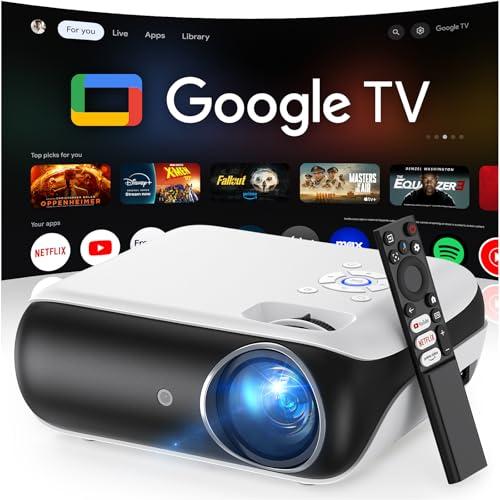
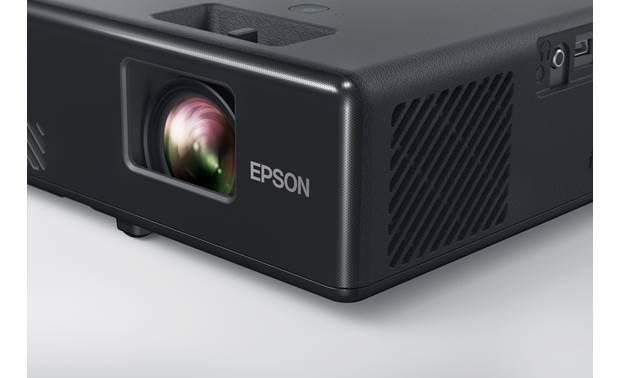
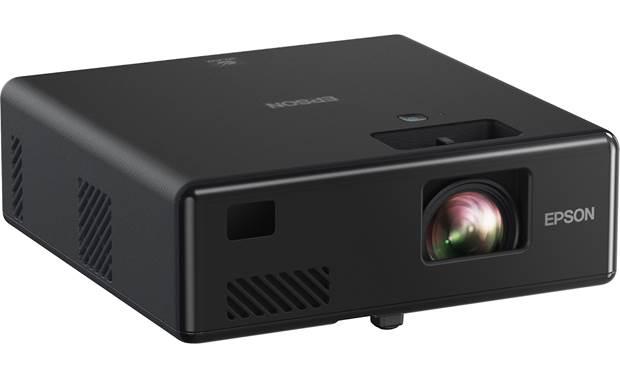
The HAPPRUN Google TV Smart Projector represents the new wave of all-in-one smart projectors, while the Epson EpiqVision Mini EF11 exemplifies the traditional approach with premium image quality. Both launched around 2020-2021, but they've taken completely different paths to solving the same problem: bringing big-screen entertainment to your home.
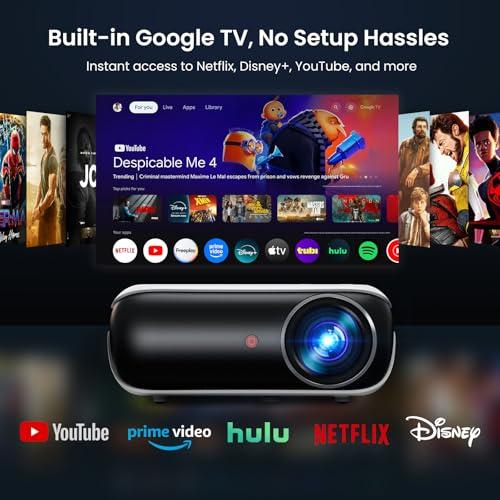
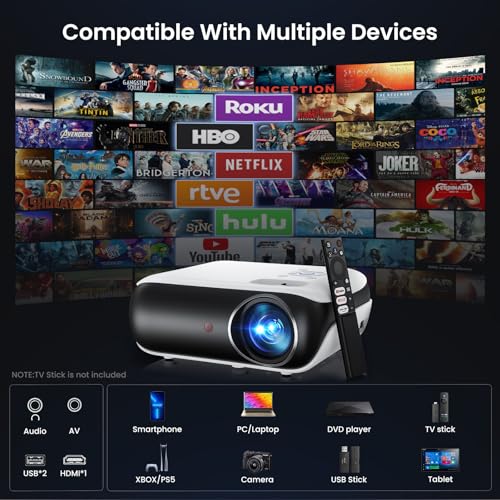
Smart projectors like the HAPPRUN Google TV model essentially combine a streaming device with a projector, creating a single unit that can access Netflix, YouTube, and other services directly. Think of it as a smart TV in projector form—you plug it in, connect to WiFi, and you're watching content within minutes.
This approach eliminates the cable clutter and complexity that has traditionally plagued home projection setups. Instead of juggling multiple remotes and switching between devices, everything runs through one interface. The HAPPRUN takes this further by including Google TV 11.0 with official Netflix licensing—a rare feature even among smart projectors, where many rely on unofficial app installations or workarounds.
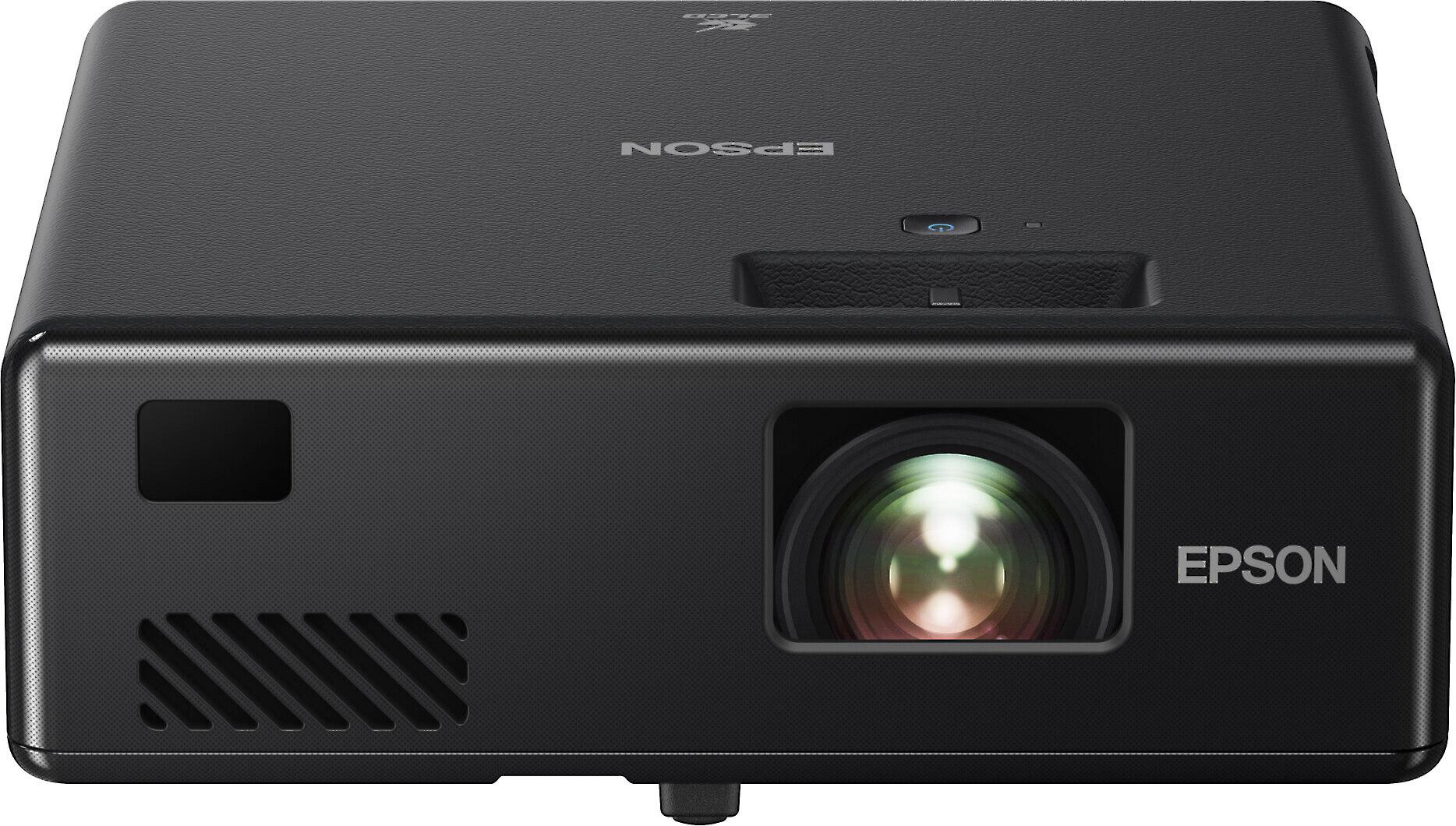
Traditional projectors like the Epson EpiqVision Mini EF11 focus exclusively on image quality and leave smart features to external devices. You'll need to connect an Apple TV, Roku, Fire TV, or similar streaming device to access online content. While this adds complexity and cost, it also means you're getting a projector designed purely for optimal image reproduction.
This separation of concerns often results in superior display technology. The Epson EF11 uses professional-grade 3LCD technology—the same type found in commercial presentation projectors and high-end home theater systems. It's a proven approach that prioritizes image fidelity over convenience.
Brightness, measured in ANSI lumens, is arguably the most critical specification for any projector. It determines where and when you can actually use your projector effectively. This is where the two models diverge dramatically.
ANSI lumens represent standardized brightness measurements that account for real-world viewing conditions. Unlike manufacturer specifications that might be inflated, ANSI lumens give you a realistic picture of performance. For context, movie theaters typically use projectors with 10,000-15,000 ANSI lumens, while home projectors usually range from 300-3,000 ANSI lumens.
The Epson EF11 delivers 1,000 ANSI lumens—nearly three times the HAPPRUN's 350 ANSI lumens. This difference is immediately noticeable in real-world use. While 350 ANSI lumens requires a completely darkened room for optimal viewing, 1,000 ANSI lumens allows comfortable viewing with some ambient light present.
Based on extensive user feedback and professional reviews, the HAPPRUN performs best in dedicated dark rooms or for evening outdoor use. Turn on a few lamps or use it during daytime, and the image becomes washed out and difficult to see. This isn't necessarily a dealbreaker—many people use projectors primarily for evening movie watching—but it does limit versatility.
The Epson EF11, with its higher brightness, remains viewable in family rooms with typical lighting. You can watch content during the day with curtains drawn, or in the evening without completely darkening the room. This flexibility makes it more practical for everyday family use rather than dedicated home theater sessions.
The Epson EF11 employs true 3LCD technology, which uses three separate LCD panels—one each for red, green, and blue light. This creates images by combining all three color channels simultaneously, resulting in accurate color reproduction and eliminating the "rainbow effect" (brief flashes of separated colors) that some users experience with single-chip DLP projectors.
The HAPPRUN uses standard projection technology (likely single-chip DLP or LCD) that's more common in budget projectors. While it includes 4K decoding with HDR10+ support, it's important to understand what this actually means. The projector can accept and process 4K video signals, but it displays them at its native 1080p resolution. You're not getting true 4K detail—the projector is essentially downscaling 4K content to fit its 1080p display.
Contrast ratio measures the difference between the brightest whites and darkest blacks a projector can produce. The Epson EF11 achieves a remarkable 200,000:1 contrast ratio compared to the HAPPRUN's 20,000:1 ratio—a ten-fold difference that significantly impacts image quality.
Higher contrast ratios translate to deeper blacks, more detailed shadow areas, and overall more dynamic images. This is especially noticeable in dark movie scenes or content with high dynamic range. The Epson's superior contrast makes it better suited for serious movie watching and creates a more immersive viewing experience.
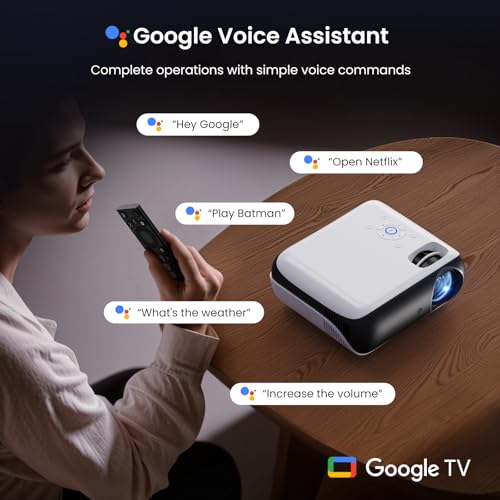
The HAPPRUN Google TV Smart Projector shines in the convenience department. Google TV 11.0 provides a unified interface that aggregates content from multiple streaming services, making it easy to find something to watch. The inclusion of Google Assistant means you can control the projector with voice commands—useful when you're settled in for movie night and don't want to hunt for the remote.
What sets the HAPPRUN apart from many smart projectors is its official Netflix licensing. Many budget smart projectors require sideloading apps or use unofficial Netflix clients that may stop working after updates. Having official app support provides peace of mind and consistent functionality.
The projector also supports Chromecast and AirPlay, allowing easy casting from smartphones and tablets. This feature proves particularly valuable for sharing photos, videos, or presentations without needing additional hardware.
The Epson EF11 requires an external streaming device, which initially seems like a disadvantage. However, this approach offers some benefits worth considering. External streaming devices typically have more processing power than built-in smart TV platforms, resulting in faster navigation and smoother performance. They also receive more frequent software updates and support new streaming services faster than built-in systems.
The downside is obvious: additional cost, complexity, and another device to manage. You'll need to budget for a quality streaming device ($100-200 at the time of writing) and deal with additional cables and setup steps.
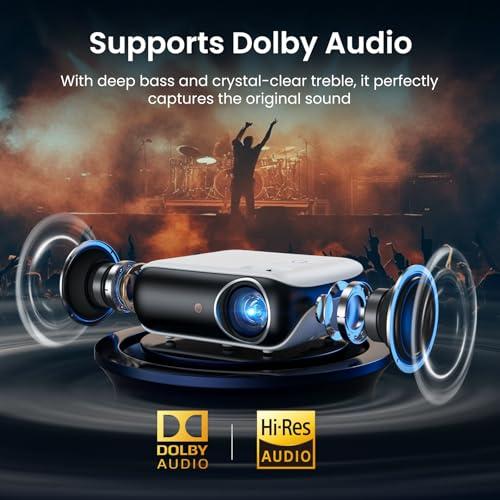
Built-in projector speakers rarely impress, but there are significant differences between these models. The HAPPRUN includes 8W digital speakers with Dolby-certified 3D stereo sound—substantially more powerful than the Epson's 1.5W dual-speaker system.
For small rooms or casual viewing, the HAPPRUN's audio might suffice. The higher power output and Dolby certification suggest better dynamic range and clearer dialogue. However, both projectors would benefit from external audio solutions for true home theater experiences.
The Epson EF11 does include a sophisticated two-way speaker design with dedicated drivers for high and low frequencies, but the limited power output restricts its effectiveness in larger spaces.
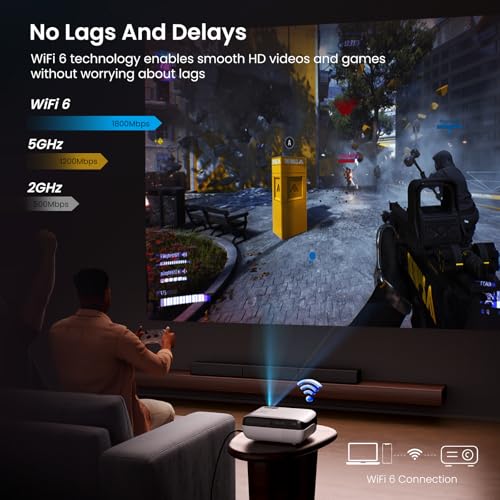
The HAPPRUN embraces modern wireless standards with dual-band WiFi (including WiFi 6 support in some configurations) and Bluetooth 5.2. The WiFi 6 support is particularly valuable, offering faster, more stable streaming with reduced latency—important for 4K content streaming and gaming applications.
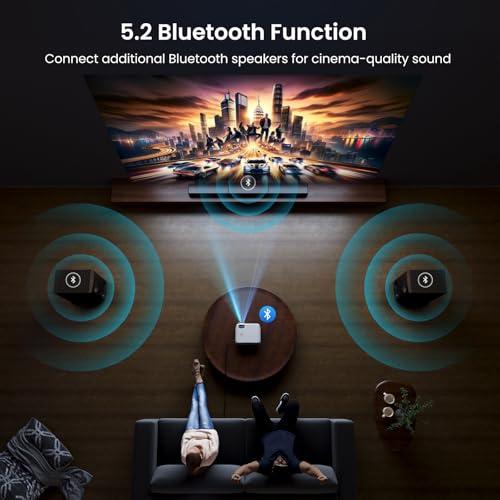
Bluetooth 5.2 enables two-way connectivity, meaning you can connect both input devices (like game controllers) and output devices (headphones or speakers) wirelessly. This flexibility proves useful for late-night viewing or gaming sessions.
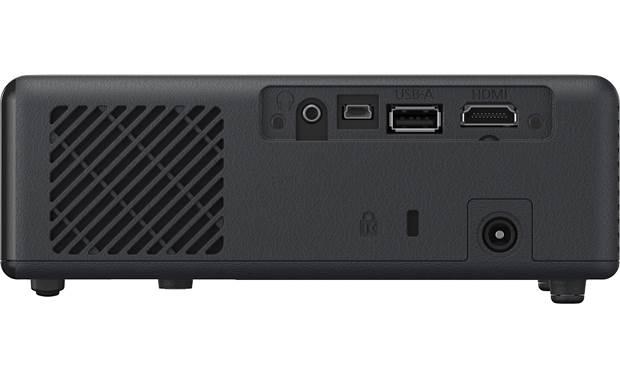
Both projectors offer HDMI connectivity, but the HAPPRUN provides more comprehensive port selection with two USB ports, AV input, and headphone jack. The Epson EF11 focuses on essential connections with one HDMI input and basic USB support.
The Epson's single HDMI input could be limiting if you need to connect multiple devices. However, this encourages the use of HDMI switches or AV receivers, which often improve overall system performance.
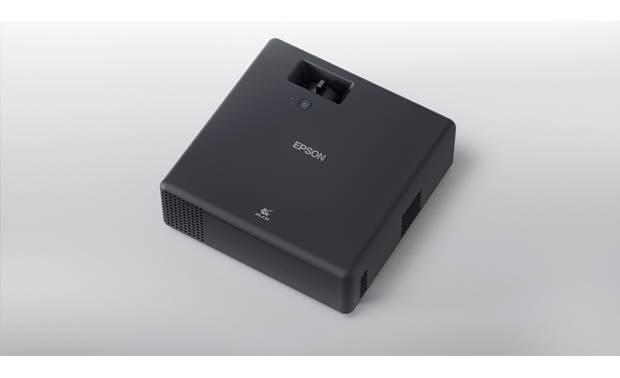
The Epson EF11 prioritizes ultimate portability with its compact 6.9" cube design weighing just 2.7 pounds. This makes it genuinely pocketable for business travelers or anyone who frequently moves their projector between locations.
The HAPPRUN takes a more versatile approach to installation, supporting ceiling mounting, tripod mounting, and various tabletop configurations. This flexibility makes it suitable for permanent installations or outdoor use where positioning options matter more than ultimate portability.
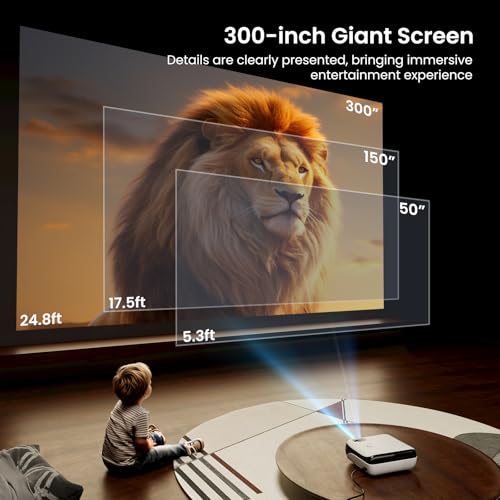
Screen size capabilities differ significantly between these models. The HAPPRUN can project images from 40 inches up to 300 inches, making it suitable for everything from intimate bedroom viewing to large outdoor movie nights. The Epson EF11 covers 30-150 inches, focusing on more typical home viewing scenarios.
For outdoor entertaining or large basement theaters, the HAPPRUN's extended range provides valuable flexibility. However, remember that larger screen sizes reduce brightness per square inch, so the HAPPRUN's already-limited 350 ANSI lumens become even more challenging at maximum screen sizes.
Gaming on projectors has become increasingly popular, and both models handle gaming differently. The HAPPRUN benefits from its smart TV platform, which often includes gaming modes that reduce input lag—the delay between controller input and on-screen response.
The Epson EF11's superior brightness and contrast ratio create more immersive gaming experiences, particularly for single-player games where image quality matters more than competitive response times. The 3LCD technology also eliminates motion artifacts that can distract during fast-paced gaming.
For casual gaming, both projectors perform adequately. Serious gamers should consider the Epson EF11 for its superior image quality, while those prioritizing convenience and built-in smart features might prefer the HAPPRUN.
Both projectors use laser light sources rated for 20,000 hours—equivalent to watching 8 hours daily for nearly 7 years. This eliminates the lamp replacement costs that plagued older projector technologies and represents excellent long-term value for both models.
The Epson EF11 benefits from Epson's established reputation and support network. Released in 2020, it has a proven track record and widespread service availability. The HAPPRUN, being from a newer brand, offers less certainty regarding long-term support and parts availability.
Smart projectors face unique longevity challenges related to software support. The HAPPRUN's Google TV platform should receive regular updates from Google, but the projector manufacturer must implement these updates. History shows that budget smart devices often receive limited software support after the initial launch period.
The Epson EF11's external device approach sidesteps this issue entirely. When your streaming device becomes outdated, you simply replace it while keeping your projector. This separation often results in better long-term value despite higher initial complexity.
For dedicated home theater use, the choice between these projectors depends on your priorities and room setup. The Epson EF11 delivers superior image quality that approaches entry-level dedicated home theater projectors. Its high contrast ratio and accurate colors create compelling movie experiences, particularly in darkened rooms.
The HAPPRUN focuses on convenience and ease of use. For families who want occasional big-screen entertainment without complex setups, it provides an appealing solution. The larger screen size capability also makes it suitable for basement theaters or outdoor movie nights where ultimate image quality matters less than spectacle.
Both projectors work well in different home theater scenarios. The Epson EF11's compact size and quiet operation (22-27 dB) make it suitable for bedrooms or living rooms where noise matters. The HAPPRUN offers more mounting flexibility for custom installations but may require more consideration regarding noise levels during operation.
You prioritize convenience and want everything built into one device. The all-in-one approach eliminates complexity and additional purchases, making it ideal for users who want to start watching content immediately without dealing with multiple devices and remotes. It's perfect for families with children who need simple operation, RV owners who want entertainment without complex setups, or anyone planning large outdoor movie nights where screen size flexibility matters more than ultimate image quality.
The HAPPRUN also makes sense if you're budget-conscious and want maximum value from a single purchase. While you sacrifice image quality, you gain features typically requiring separate purchases.
Image quality is your primary concern and you're willing to accept additional complexity for superior performance. The dramatically higher brightness makes it usable in more lighting conditions, while the professional-grade 3LCD technology delivers accurate colors and deep contrast ratios that approach dedicated home theater projectors.
The Epson EF11 suits users who already own streaming devices, prioritize established brand reliability, or need a projector for business presentations where bright, clear images are essential. It's also the better choice for gaming enthusiasts who want the most immersive visual experience.
These projectors represent fundamentally different philosophies. The HAPPRUN Google TV Smart Projector prioritizes user experience and convenience, delivering remarkable value through smart integration and ease of use. The Epson EpiqVision Mini EF11 focuses on image quality and proven reliability, justifying its premium positioning through superior display technology.
At the time of writing, the price difference between these approaches has narrowed significantly, making the decision more about priorities than budget constraints. Both offer excellent long-term value through laser light sources and modern features, but they'll serve different users better depending on specific needs and usage patterns.
For most home users seeking occasional big-screen entertainment, the HAPPRUN's convenience and built-in smart features provide exceptional value. However, users who prioritize image quality, need versatility in various lighting conditions, or want proven long-term reliability should seriously consider the Epson EF11's superior performance despite the additional complexity and cost.
| HAPPRUN Google TV Smart Projector | Epson EpiqVision Mini EF11 Laser Projector |
|---|---|
| Brightness - Most critical spec for room versatility and daytime viewing | |
| 350 ANSI lumens (requires dark rooms for optimal viewing) | 1,000 ANSI lumens (usable with ambient light, 3x brighter) |
| Smart Features - Determines if you need external streaming devices | |
| Built-in Google TV 11.0 with official Netflix, voice control, no external devices needed | No smart features, requires separate Apple TV/Roku/Fire TV ($100-200 additional cost) |
| Display Technology - Affects color accuracy and image quality | |
| Standard projection with 4K decoding (displays at 1080p) + HDR10+ | Professional 3LCD technology with true color reproduction, no rainbow effects |
| Contrast Ratio - Impact on black levels and image depth | |
| 20,000:1 (good for budget projectors) | 200,000:1 (10x better, delivers deeper blacks and more detail) |
| Audio System - Built-in speaker quality for casual viewing | |
| 8W Dolby-certified stereo speakers (adequate for small-medium rooms) | 1.5W dual speakers (suitable for personal viewing only) |
| Screen Size Range - Flexibility for different spaces and outdoor use | |
| 40-300 inches (excellent for outdoor movie nights and large spaces) | 30-150 inches (focused on typical home viewing scenarios) |
| Connectivity - Wireless capabilities and port selection | |
| Dual-band WiFi 6, Bluetooth 5.2, 2 USB ports, HDMI, AV input | Single HDMI, USB Type-A, Miracast support, no built-in WiFi |
| Physical Design - Portability and installation flexibility | |
| Multiple mounting options (ceiling, tripod, wall), standard projector size | Ultra-compact 6.9" cube, 2.7 lbs, highly portable |
| Noise Level - Important for bedroom or quiet room use | |
| Not specified in documentation | Exceptionally quiet 22-27 dB operation |
| Brand & Warranty - Long-term support and reliability | |
| Newer brand with less established support network | Epson's proven reliability with 2-year warranty and widespread service |
| Best Use Cases - Who should choose each projector | |
| Dark room entertainment, outdoor movies, families wanting simple setup | Bright room viewing, business presentations, image quality enthusiasts |
The Epson EpiqVision Mini EF11 is significantly brighter with 1,000 ANSI lumens compared to the HAPPRUN Google TV Smart Projector's 350 ANSI lumens. This makes the Epson EF11 much more suitable for rooms with ambient light or daytime viewing, while the HAPPRUN requires darker environments for optimal picture quality.
The HAPPRUN Google TV Smart Projector has built-in Google TV with Netflix, YouTube, and other streaming apps included, so no additional devices are needed. The Epson EpiqVision Mini EF11 requires an external streaming device like Apple TV, Roku, or Fire TV, adding to the total cost and setup complexity.
The Epson EpiqVision Mini EF11 delivers superior picture quality with professional 3LCD technology, 200,000:1 contrast ratio, and accurate color reproduction. The HAPPRUN Google TV Smart Projector offers good 1080p quality with 4K decoding and HDR10+ support, but cannot match the Epson's image performance.
The HAPPRUN Google TV Smart Projector can project up to 300 inches, making it excellent for large outdoor movie nights. The Epson EpiqVision Mini EF11 maxes out at 150 inches, which is still suitable for most home theater applications but less flexible for very large screens.
For home theater use, the Epson EpiqVision Mini EF11 is generally superior due to its higher brightness, exceptional contrast ratio, and professional-grade 3LCD technology that delivers cinema-quality images. However, the HAPPRUN Google TV Smart Projector offers convenience with built-in streaming and works well for casual home theater viewing in dark rooms.
The HAPPRUN Google TV Smart Projector has more powerful 8W Dolby-certified speakers suitable for small to medium rooms. The Epson EpiqVision Mini EF11 includes 1.5W dual speakers that are adequate for personal viewing but insufficient for larger spaces. Both benefit from external audio systems for true home theater experiences.
The Epson EpiqVision Mini EF11 is extremely portable with its compact 6.9-inch cube design weighing only 2.7 pounds. The HAPPRUN Google TV Smart Projector is less portable but offers more mounting flexibility with ceiling, tripod, and wall mount options.
Yes, the HAPPRUN Google TV Smart Projector includes Google Assistant for voice control of navigation, playback, and settings. The Epson EpiqVision Mini EF11 does not have built-in voice control, though you could add this functionality through a connected streaming device.
The HAPPRUN Google TV Smart Projector offers excellent value by including smart TV functionality that would otherwise require separate purchases. The Epson EpiqVision Mini EF11 provides better value for image quality enthusiasts who prioritize brightness and professional display technology, despite requiring additional streaming devices.
Both the HAPPRUN Google TV Smart Projector and Epson EpiqVision Mini EF11 use laser light sources rated for 20,000 hours of operation. This translates to approximately 7 years of daily viewing at 8 hours per day, with no lamp replacements needed during this period.
The Epson EpiqVision Mini EF11 generally provides a better gaming experience due to its superior brightness and contrast ratio, creating more immersive visuals. The HAPPRUN Google TV Smart Projector offers convenience with potential gaming mode features through its smart platform, but the lower brightness may limit gaming in brighter rooms.
The HAPPRUN Google TV Smart Projector has official Netflix licensing built-in, allowing direct access without additional devices. The Epson EpiqVision Mini EF11 can access Netflix through connected streaming devices like Apple TV or Roku, but requires this additional hardware to stream any content including Netflix.
We've done our best to create useful and informative comparisons to help you decide what product to buy. Our research uses advanced automated methods to create this comparison and perfection is not possible - please contact us for corrections or questions. These are the sites we've researched in the creation of this article: youtube.com - topvisiontec.com - youtube.com - happrunprojector.com - youtube.com - happrunprojector.com - youtube.com - business.walmart.com - youtube.com - walmart.com - cordcuttersnews.com - nexpow.com - bestbuy.com - bhphotovideo.com - youtube.com - bestbuy.com - gagadget.com - epson.com - projectorreviews.com - audiogeneral.com - projectorreviews.com - epson.com - youtube.com - epson.com - youtube.com - mediaserver.goepson.com - files.support.epson.com - staples.com - projectorcentral.com - bestbuy.com - planettv.com - dell.com - epson.eu - projectortop.com

Privacy Policy
Terms and Conditions - Affiliate Policy
Home Security
© Copyright 2008-2026.
11816 Inwood Rd #1211, Dallas, TX 75244