


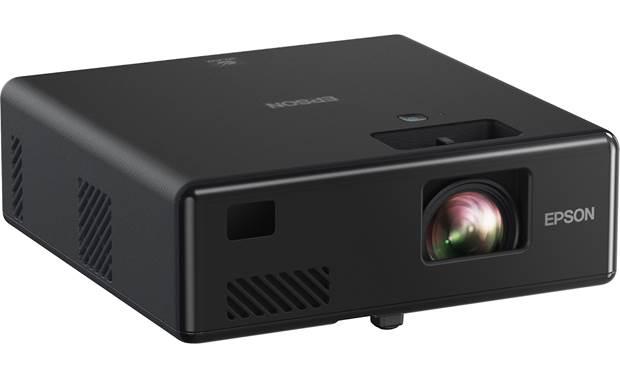
Portable projectors have come a long way from the dim, blurry devices of just a few years ago. Today's models offer genuinely impressive picture quality while maintaining the convenience of easy setup and transport. But as this category has matured, it's split into two distinct approaches: ultra-portable entertainment hubs and semi-portable cinema solutions.
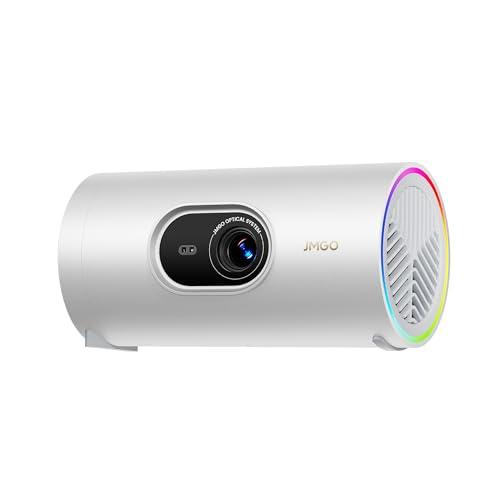
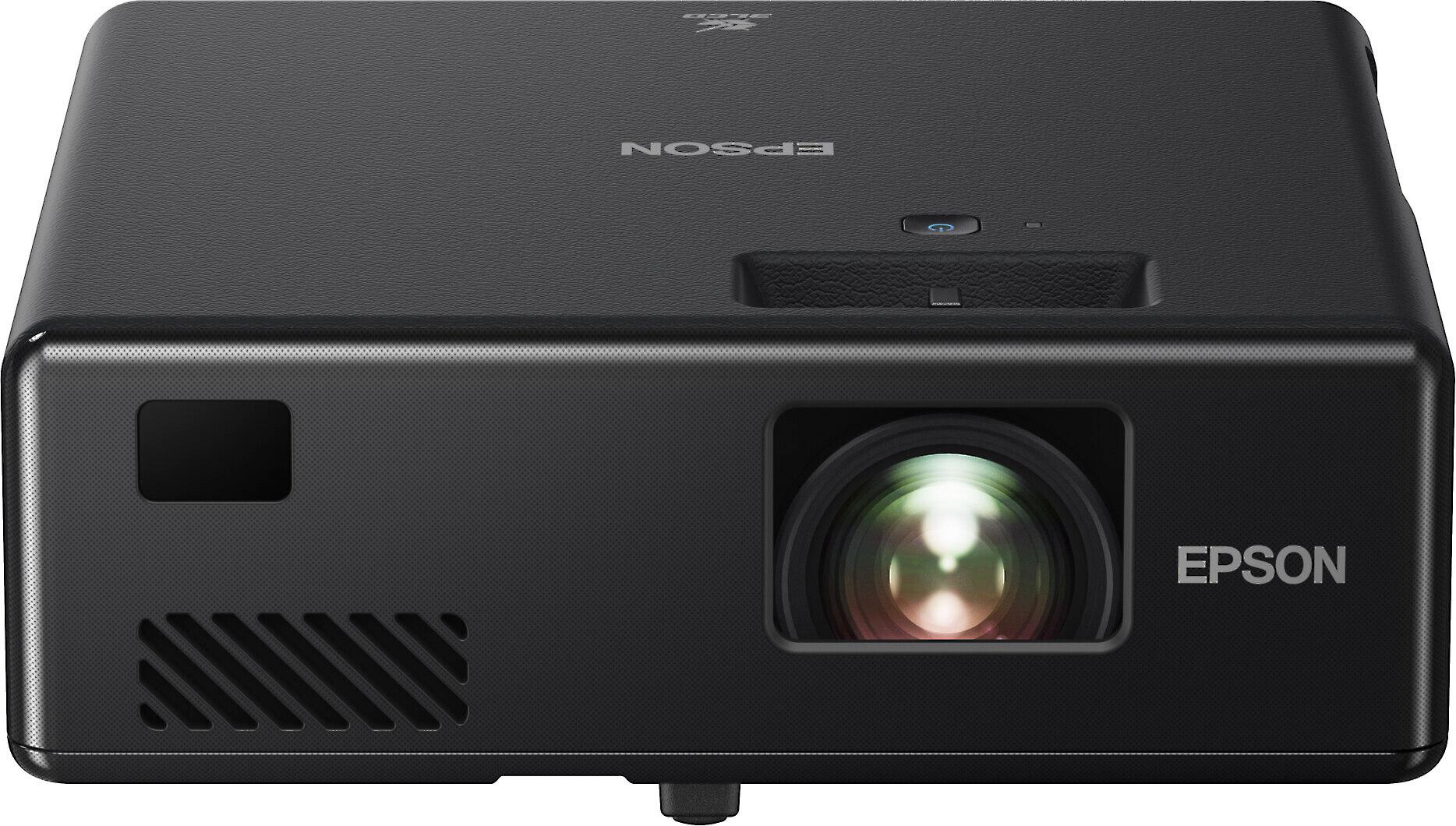
The JMGO PicoPlay and Epson EpiqVision Mini EF11 represent these two philosophies perfectly. Released about five years apart—the Epson EF11 debuted in 2020 while the PicoPlay launched globally in 2025—they show how rapidly this technology has evolved. The newer PicoPlay brings smart features and innovative design, while the EF11 focuses on proven projection technology and image quality.
Understanding which approach works better for your needs requires looking at several key performance areas. Let's break down what really matters when choosing between these devices.
When evaluating any projector, brightness is the single most important specification. It determines everything from how large you can project to what lighting conditions you can use. Brightness is measured in lumens, and understanding this measurement is crucial for making the right choice.
The Epson EF11 produces 1000 ANSI lumens using laser phosphor technology. ANSI (American National Standards Institute) lumens represent a standardized measurement that provides consistent, comparable results across different manufacturers. The PicoPlay outputs 400 ISO lumens, which uses a slightly different measurement standard but is roughly comparable.
This brightness difference creates dramatically different real-world performance. Based on our research into user experiences and expert reviews, the EF11 can handle moderate ambient light and comfortably project images up to 150 inches diagonal. Users report being able to watch movies in living rooms with some lights on, making it genuinely versatile for family entertainment.
The PicoPlay, by contrast, performs best in dim or completely dark environments. Users consistently report optimal viewing at 50-60 inch screen sizes, with image quality degrading noticeably in any ambient light. This isn't necessarily a dealbreaker—many people prefer watching movies in darkened rooms anyway—but it does limit when and where you can use the device.
For home theater use specifically, this brightness difference becomes even more significant. A dedicated movie room can accommodate the PicoPlay's lower brightness, but a multi-purpose living room where you might want to leave some lights on for safety or convenience strongly favors the EF11.
Beyond raw brightness, these projectors use completely different display technologies that affect color accuracy, contrast, and overall image quality.
The Epson EF11 employs 3LCD technology, which uses three separate LCD panels—one each for red, green, and blue light. This approach eliminates the "rainbow effect" that some people see with single-chip DLP projectors, where brief flashes of color appear when you move your eyes quickly. The 3LCD system also processes 10-bit color, meaning it can display over one billion different colors for smooth gradations and natural-looking skin tones.
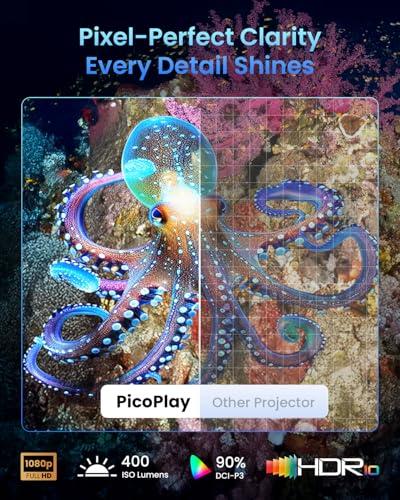
The PicoPlay uses a single TFT LCD panel with 8-bit color processing. While this sounds less impressive on paper, JMGO has tuned it to cover 90% of the DCI-P3 color space and 124% of the Rec.709 standard. In practical terms, this means the PicoPlay can display very vibrant, saturated colors that often appear more "punchy" than the EF11's more natural palette.
Contrast ratios tell another part of the story. The Epson EF11 claims a 200,000:1 contrast ratio thanks to its laser light source, while the PicoPlay offers 400:1. Contrast ratio measures the difference between the brightest whites and darkest blacks a projector can display. Higher contrast generally means more detailed shadow areas and more realistic-looking images.
However, these numbers need context. The PicoPlay supports HDR10 (High Dynamic Range), which uses special encoding to preserve more detail in bright and dark areas of the image. When watching HDR content from Netflix or streaming services, this can partially compensate for the lower native contrast ratio.
Both projectors deliver native 1080p resolution, which remains the sweet spot for portable devices. While 4K would be nice, the file sizes, processing power, and cost involved make 1080p more practical for truly portable use. At typical viewing distances for these projector sizes, the difference between 1080p and 4K becomes less noticeable anyway.
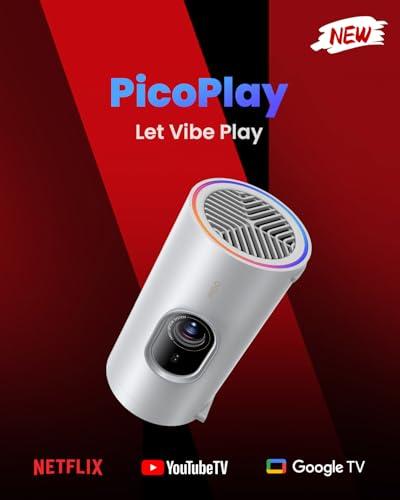
This is where the five-year technology gap between these devices becomes most apparent. The PicoPlay includes Google TV with full access to Netflix, YouTube, Amazon Prime Video, and other streaming services. It supports Google Assistant voice commands and Google Cast for wireless streaming from phones and tablets.
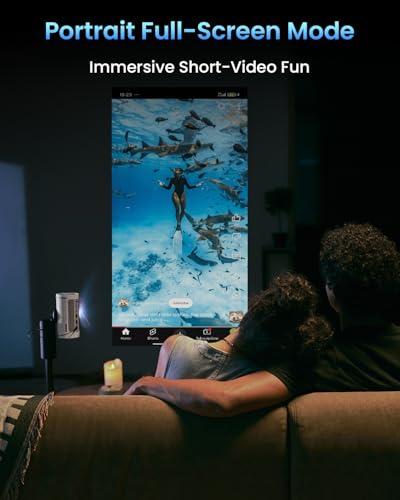
Perhaps more interesting is the PicoPlay's Vertical Play mode, specifically designed for TikTok, Instagram Reels, and other vertical video content. This might sound gimmicky, but it reflects how content consumption has evolved since 2020. For younger users especially, this feature adds genuine value.
The Epson EF11 has no smart features whatsoever. You'll need to connect a streaming device like an Apple TV, Roku, or Amazon Fire Stick. This isn't necessarily bad—dedicated streaming devices often perform better and receive more frequent updates than built-in smart platforms. But it does mean additional cost, setup complexity, and another remote to manage.
For home theater applications, this difference matters significantly. A built-in smart platform means one less device to hide, fewer cables to run, and simpler operation. However, serious home theater enthusiasts often prefer dedicated streaming devices for their superior performance and more frequent updates.
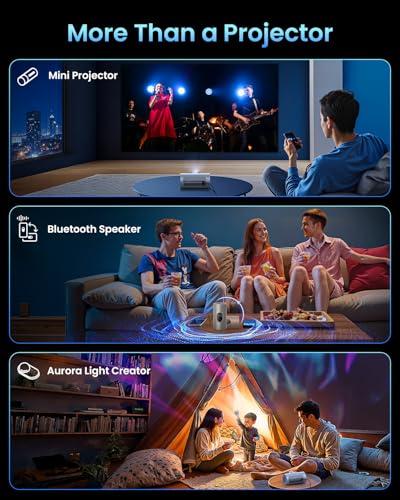
Both projectors include built-in speakers, but their approaches differ substantially. The PicoPlay features an 8-watt speaker system with Dolby Audio support and can function as a standalone Bluetooth speaker when not projecting. Users report surprisingly rich sound quality for such a compact device.
The EF11 includes basic 1.5-watt dual speakers that work fine for casual viewing but won't satisfy anyone seeking quality audio. Most users end up connecting external speakers or a soundbar for serious movie watching.
This audio difference reinforces each device's intended use case. The PicoPlay aims to be a complete, self-contained entertainment solution. The EF11 assumes you'll integrate it into a larger home theater setup with dedicated audio equipment.
For portable use—camping, outdoor movies, or small gatherings—the PicoPlay's integrated audio provides real convenience. For home theater use, external audio remains the better choice regardless of which projector you select.
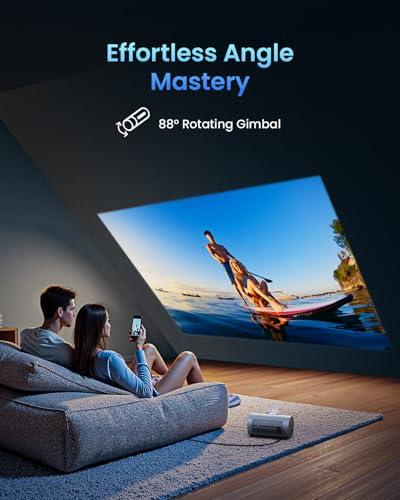
The PicoPlay's cylindrical design with rotating 88-degree gimbal represents genuinely innovative thinking about projector form factors. Shaped like an oversized travel mug, it can easily project onto walls, ceilings, or any surface without requiring additional mounting hardware. The rotating mechanism feels solid and precise, allowing quick adjustments for optimal viewing angles.
This design enables use cases that traditional projectors can't handle easily. Ceiling projection for bedtime viewing, awkward wall angles in small spaces, or outdoor setups where level surfaces aren't available all become much simpler.
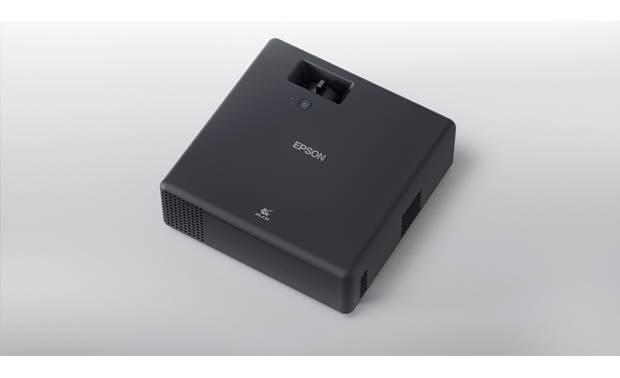
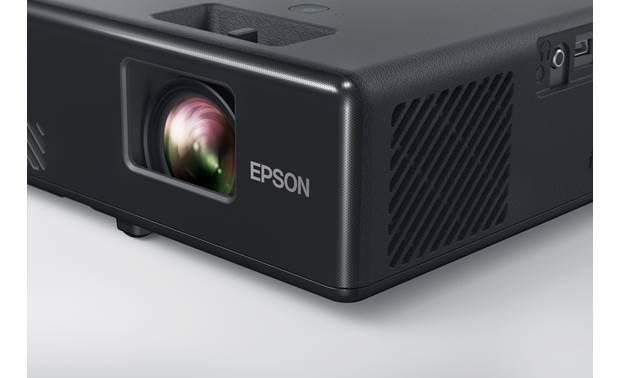
The Epson EF11 uses a conventional rectangular form factor that's compact but still recognizably a traditional projector. While less innovative, this design offers stability and familiar mounting options. It feels more substantial and professional, which some users prefer.
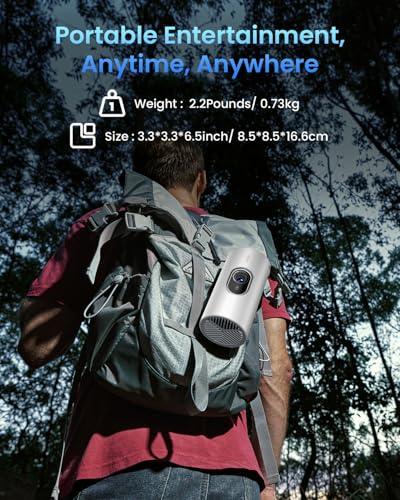
Both devices weigh around 2.5 pounds, making them genuinely portable. However, the PicoPlay's unique shape and included carrying case make it feel more travel-friendly, while the EF11's traditional design fits better in permanent or semi-permanent installations.
The power story reveals another fundamental difference in approach. The PicoPlay includes an integrated 20,000 mAh battery providing up to three hours of video playback or seven hours in music mode. It can also run from any 65-watt USB-C power source, including many laptop chargers or dedicated power banks.
This battery capability enables truly portable use. Users report successful outdoor movie nights, camping trips, and backyard gatherings without access to AC power. The ability to run from a power bank extends usage time indefinitely if needed.
The Epson EF11 requires constant AC power with no battery option. This limits portability to locations with electrical outlets but eliminates concerns about battery degradation over time or running out of power mid-movie.
For home theater use, the power difference matters less since AC power is readily available. But for any portable application, the PicoPlay's battery capability provides significant advantages.
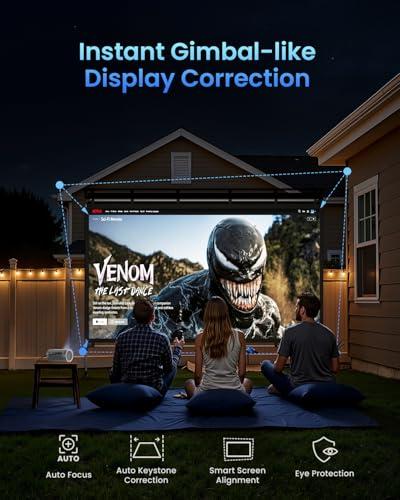
Modern projectors should be ready to watch within seconds, not minutes. The PicoPlay includes what JMGO calls the FlexiSmart system, which automatically handles focus, keystone correction (adjusting for angled projection), and screen alignment. A ToF (Time-of-Flight) sensor measures distances and automatically adjusts the image geometry.
User reports consistently praise this automatic setup. Place the projector, turn it on, and within seconds you have a properly focused, geometrically correct image. Manual adjustments remain available for fine-tuning, but they're rarely needed.
The EF11 offers manual keystone correction and focus adjustment. While not difficult, setup takes longer and requires more user intervention. However, once properly adjusted, the image remains stable and doesn't require frequent readjustment.
The PicoPlay also includes smart eye protection, automatically dimming or pausing projection when someone approaches the lens. This feature particularly benefits households with children or pets.
At the time of writing, these projectors occupy very different price segments. The PicoPlay typically sells for significantly less than the EF11, making value comparison complex.
The PicoPlay offers remarkable value proposition: smart features, decent image quality, innovative design, and true portability at its price point. When you factor in the built-in streaming capability, speakers, and battery operation, it represents substantial functionality for the money.
The EF11 costs considerably more but delivers significantly better core projection performance. The 2.5x brightness advantage, superior color accuracy, and professional build quality justify the premium for users prioritizing image quality over convenience features.
Total ownership costs also matter. The PicoPlay needs nothing additional to function fully. The EF11 requires a streaming device and likely external speakers for optimal performance, adding to the total investment.
For home theater applications, choose based on your room and priorities. Dark, dedicated movie rooms can accommodate the PicoPlay's lower brightness while benefiting from its smart features and simpler setup. Multi-purpose living rooms or spaces with ambient light strongly favor the EF11's superior brightness and image quality.
For portable entertainment—camping, travel, outdoor gatherings—the PicoPlay clearly wins. Battery operation, compact design, integrated speakers, and smart features make it genuinely self-contained. The EF11 requires AC power and external devices, limiting true portability.
For business or educational use, the EF11's brightness advantage becomes crucial. Presentation rooms rarely offer complete light control, and the ability to project clear, readable text in moderate ambient light justifies the additional cost.
For casual viewing and social media content, the PicoPlay's unique features shine. Vertical Play mode, ambient lighting effects, and Bluetooth speaker functionality create entertainment experiences beyond simple projection.
Your choice should align with your primary use case and environment. If you need maximum portability, smart features, and good-enough image quality at an attractive price point, the PicoPlay delivers exceptional value. Its innovative design and comprehensive feature set make it genuinely unique in the portable projector market.
If image quality takes priority and you can accommodate the higher price and AC power requirement, the EF11 provides significantly better projection performance. Its laser technology, 3LCD system, and professional brightness levels create a more cinema-like experience.
Neither projector is perfect, but each excels in its intended role. The PicoPlay revolutionizes portable projection with smart features and innovative design, while the EF11 delivers professional-quality images in a semi-portable package. Understanding your priorities—convenience versus quality, portability versus performance—will guide you to the right choice.
At the time of writing, both represent strong values in their respective categories. The portable projector market continues evolving rapidly, but these devices show how far the technology has progressed and hint at even better options coming in the future.
| JMGO PicoPlay 1080P Smart Portable Projector | Epson EpiqVision Mini EF11 Laser Projector |
|---|---|
| Brightness - The most critical factor determining room lighting flexibility and screen size | |
| 400 ISO lumens (requires dark rooms, optimal at 50-60" screens) | 1000 ANSI lumens (handles moderate ambient light, up to 150" screens) |
| Display Technology - Affects color accuracy and image processing quality | |
| Single TFT LCD panel with 8-bit color processing | 3LCD technology with 10-bit color processing |
| Smart Features - Determines if you need additional streaming devices | |
| Google TV built-in with Netflix, YouTube, Prime Video access | No smart features - requires external streaming device |
| Portability Design - How easily you can move and set up the projector | |
| Cylindrical design with 88° rotating gimbal, travel mug size | Traditional rectangular form factor, compact but conventional |
| Power Options - Freedom from wall outlets for true portability | |
| Integrated 20,000 mAh battery (3 hours video) + USB-C power bank compatible | AC power only - no battery option |
| Audio System - Whether you need external speakers for quality sound | |
| 8W integrated speaker with Dolby Audio, doubles as Bluetooth speaker | Basic 1.5W dual speakers - external audio recommended |
| Setup Automation - How quickly you can start watching | |
| FlexiSmart auto-focus, auto keystone, screen alignment with ToF sensor | Manual focus and keystone correction required |
| Image Size Range - Maximum practical projection capabilities | |
| 40-180 inches (optimal 50-60 inches in dark rooms) | 30-150 inches (excellent performance throughout range) |
| Contrast Ratio - Affects detail in dark scenes and overall image depth | |
| 400:1 (compensated by HDR10 support) | 200,000:1 (laser technology advantage) |
| Light Source Lifespan - Long-term reliability and replacement costs | |
| 25,000 hours LED (gradual brightness decline over time) | 20,000 hours laser (more stable performance throughout lifespan) |
| Color Gamut Coverage - Vibrancy and accuracy of color reproduction | |
| 90% DCI-P3, 124% Rec.709 (vibrant, saturated colors) | Standard color gamut with 3LCD natural color accuracy |
| Special Features - Unique capabilities that differentiate each model | |
| Vertical Play mode for social media, ambient lighting with music sync | Professional laser phosphor technology with MicroLaser Array |
| Connectivity Options - How you connect devices and expand functionality | |
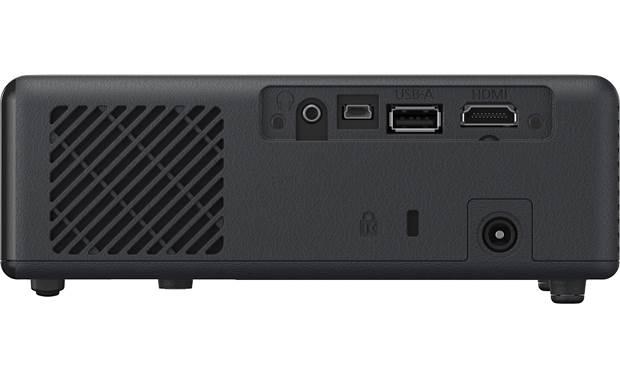
| HDMI 2.1 (ARC), USB-A, USB-C, Wi-Fi, Bluetooth, Google Cast | HDMI input, USB Type-A and Type-B, Miracast wireless display |
The Epson EpiqVision Mini EF11 is significantly brighter at 1000 ANSI lumens compared to the JMGO PicoPlay's 400 ISO lumens. This means the Epson EF11 can handle moderate ambient light and larger screen sizes up to 150 inches, while the PicoPlay requires dark rooms and works best with 50-60 inch screens.
Only the JMGO PicoPlay includes built-in smart features with Google TV, providing direct access to Netflix, YouTube, Amazon Prime Video, and other streaming services. The Epson EpiqVision Mini EF11 has no smart features and requires an external streaming device like Apple TV, Roku, or Amazon Fire Stick.
The JMGO PicoPlay is designed for true portability with its integrated 20,000 mAh battery providing 3 hours of video playback, compact cylindrical design, and USB-C power bank compatibility. The Epson EF11 requires constant AC power and has no battery option, making it less suitable for camping or outdoor movie nights.
The Epson EF11 delivers superior overall image quality with 3LCD technology, 10-bit color processing, and a 200,000:1 contrast ratio for more natural colors and better detail. The JMGO PicoPlay offers vibrant colors with 90% DCI-P3 coverage and HDR10 support, but has lower contrast at 400:1 and 8-bit color processing.
The JMGO PicoPlay has significantly better audio with an 8-watt speaker system that supports Dolby Audio and can function as a standalone Bluetooth speaker. The Epson EF11 includes basic 1.5-watt dual speakers that are adequate for casual viewing but most users will want external speakers for quality sound.
The JMGO PicoPlay offers faster setup with its FlexiSmart system providing automatic focus, keystone correction, and screen alignment within seconds. The Epson EF11 requires manual focus and keystone adjustments, taking longer to achieve optimal image quality but offering more precise control once configured.
For home theater, the choice depends on your room setup. The Epson EF11 is better for multi-purpose living rooms with ambient light due to its superior brightness and professional image quality. The JMGO PicoPlay works well in dedicated dark movie rooms where its smart features and simpler setup provide convenience advantages.
Both the JMGO PicoPlay and Epson EF11 have native 1080p resolution and cannot display true 4K. However, both can accept and downscale 4K input signals. The PicoPlay supports HDR10 for enhanced contrast and color in compatible content, while the EF11 focuses on excellent 1080p reproduction.
The JMGO PicoPlay uses LED technology rated for 25,000 hours but may experience gradual brightness decline over time. The Epson EF11 features laser technology rated for 20,000 hours with more stable performance throughout its lifespan. Both exceed typical usage patterns by 10+ years.
The JMGO PicoPlay typically offers better value with its combination of smart features, portability, decent image quality, and innovative design at a lower price point. The Epson EF11 costs significantly more but justifies the premium with superior brightness, professional image quality, and proven laser technology for users prioritizing performance over convenience.
The JMGO PicoPlay is essentially plug-and-play with built-in streaming, speakers, and battery operation. The Epson EF11 requires a streaming device for smart functionality and benefits from external speakers for quality audio, adding to the total system cost.
Both projectors support gaming through HDMI connections, but the JMGO PicoPlay offers a low latency mode and more flexible positioning with its rotating gimbal design. However, the Epson EF11's superior brightness allows for better visibility in gaming scenarios where some ambient light is present. Serious gamers will prefer the EF11 for its image quality advantages.
We've done our best to create useful and informative comparisons to help you decide what product to buy. Our research uses advanced automated methods to create this comparison and perfection is not possible - please contact us for corrections or questions. These are the sites we've researched in the creation of this article: techbuzzireland.com - youtube.com - newatlas.com - projectorcentral.com - youtube.com - thegadgetflow.com - youtube.com - global.jmgo.com - youtube.com - bestbuy.com - projector-database.com - notebookcheck.net - eu.jmgo.com - bestbuy.com - bhphotovideo.com - youtube.com - bestbuy.com - gagadget.com - epson.com - projectorreviews.com - audiogeneral.com - projectorreviews.com - epson.com - youtube.com - epson.com - youtube.com - mediaserver.goepson.com - files.support.epson.com - staples.com - projectorcentral.com - bestbuy.com - planettv.com - dell.com - epson.eu - projectortop.com

Privacy Policy
Terms and Conditions - Affiliate Policy
Home Security
© Copyright 2008-2026.
11816 Inwood Rd #1211, Dallas, TX 75244