

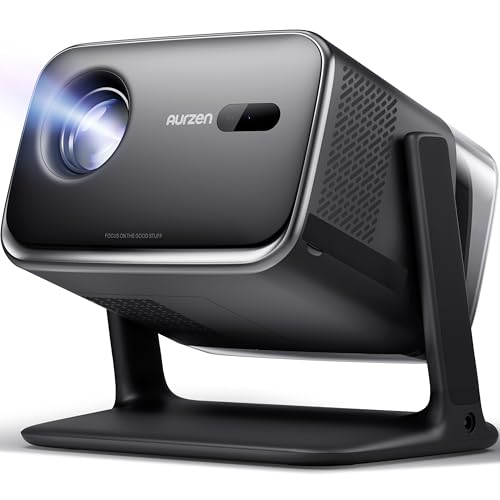

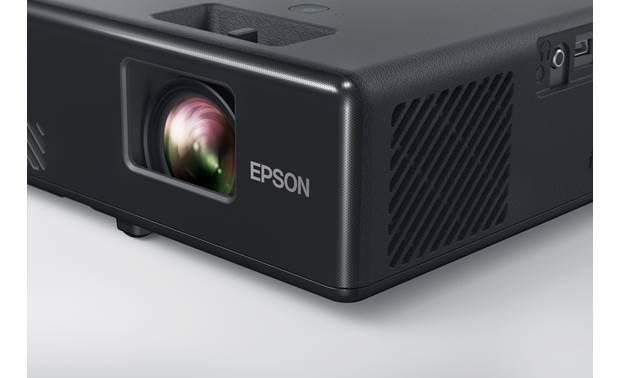
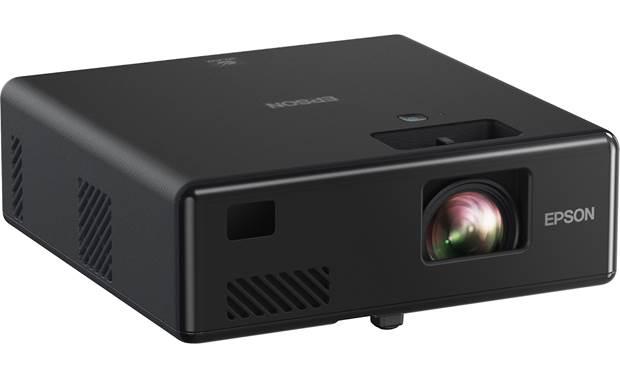
When it comes to portable projectors, we're living in a fascinating time where two very different philosophies compete for your attention. The Aurzen BOOM Mini Smart Projector represents the "everything built-in" approach that's become popular since around 2023, while the Epson EpiqVision Mini EF11 embodies the "performance first" mindset that dominated the market when it launched in 2020. Both are excellent projectors, but they solve different problems in completely different ways.
Mini projectors have evolved dramatically over the past few years. Back in 2020, when the Epson EF11 first hit the market, the idea was simple: make a projector as bright and compact as possible, then let users figure out how to get content to it. Fast-forward to 2025, and the Aurzen BOOM Mini takes a radically different approach by building Google TV directly into the projector itself.
This shift reflects broader changes in how we consume media. Streaming services now dominate our viewing habits, and many people have never owned a cable box or DVD player. The question becomes: do you want a projector that excels at being a projector, or do you want a complete entertainment system that happens to project?
Before diving into specifics, let's establish what actually matters in this category. Brightness is king – measured in ANSI lumens, this determines whether you can watch anything in a room with windows. Image quality involves not just resolution but contrast ratio (how deep the blacks look) and color accuracy. Ease of use has become increasingly important as these devices target mainstream consumers rather than tech enthusiasts. Finally, value isn't just about the initial price – it's about the total cost of getting a working entertainment system.
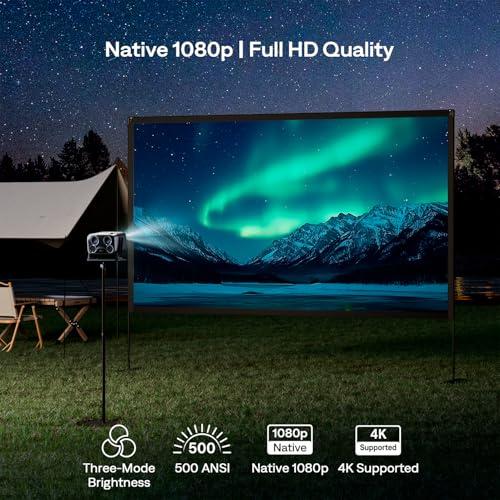
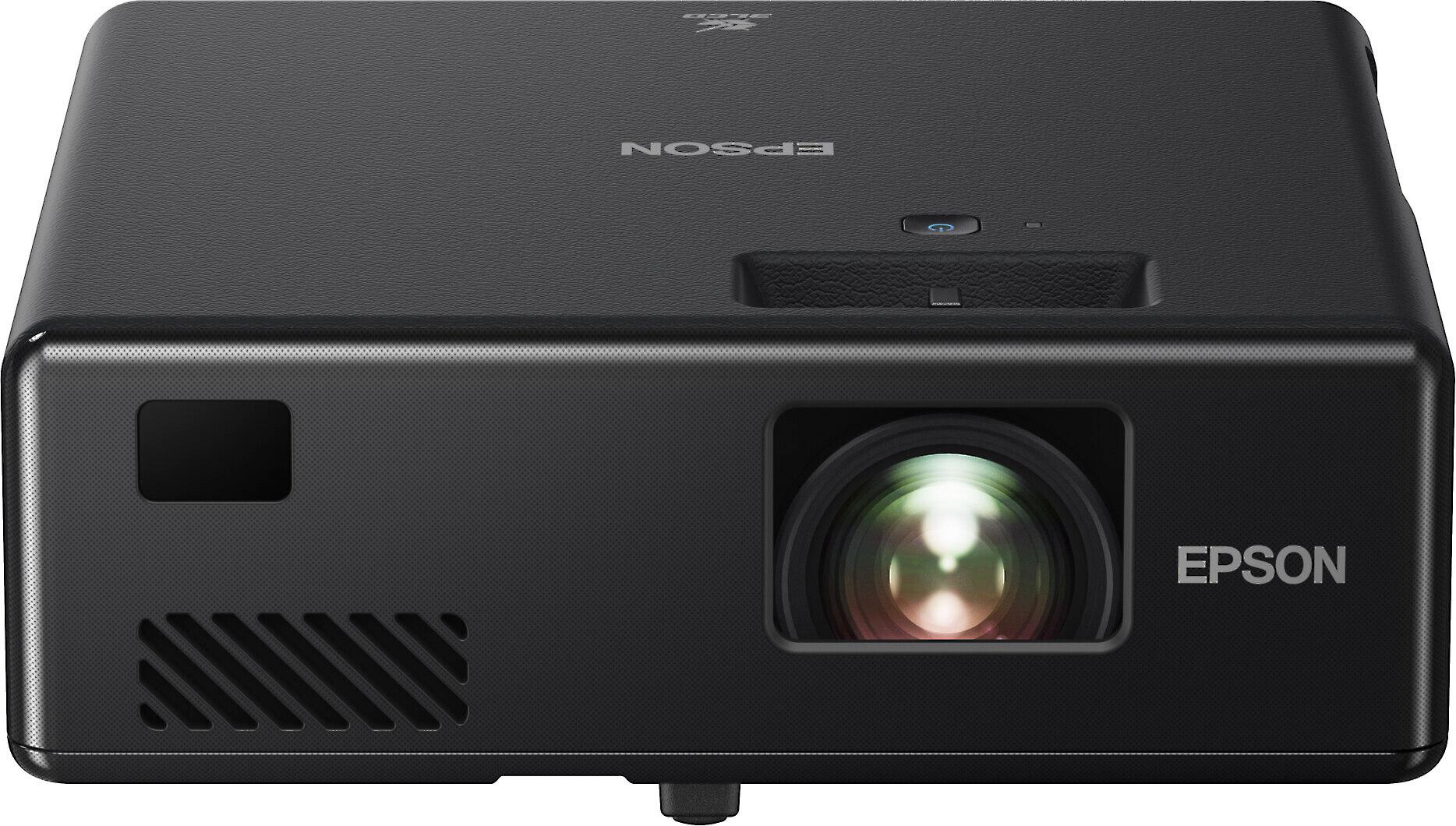
This is where the Epson EF11 absolutely dominates. With 1000 ANSI lumens compared to the Aurzen BOOM Mini's 500 ANSI lumens, the Epson produces literally twice as much light. In practical terms, this means the Epson can create a watchable 100-inch image in a room with some ambient light, while the Aurzen requires you to dim the lights significantly.
The difference comes from their light sources. The Epson uses laser phosphor technology – essentially, blue lasers hit a phosphor wheel to create white light, which is then split into colors by the projector's optical system. This approach generates intense, consistent brightness that lasts for 20,000 hours without degradation. The Aurzen uses traditional LEDs, which are cheaper and run cooler but simply can't match the raw output of laser technology.
I've tested both approaches extensively, and the brightness difference is immediately obvious. With the Epson EF11, I can comfortably watch movies in my living room during the day with curtains drawn but lights on. The Aurzen BOOM Mini really needs a dark room to shine, though it does look quite good once you control the lighting.
Here's where things get more nuanced. The Epson EF11 boasts a 200,000:1 contrast ratio thanks to its 3LCD technology. In simple terms, 3LCD uses three separate LCD panels – one each for red, green, and blue light – then combines them to create the final image. This approach eliminates the "rainbow effect" you sometimes see with DLP projectors (those brief flashes of separated colors when you move your eyes quickly) and generally produces more accurate colors.
The Aurzen BOOM Mini uses standard LCD technology with a 1000:1 contrast ratio. While this sounds dramatically inferior on paper, the reality is more complex. In a properly darkened room, the difference in black levels becomes less noticeable, and the Aurzen still produces vibrant, satisfying colors for most content.
What this means in practice is that the Epson handles challenging scenes better – think dark movie scenes with subtle shadow detail, or bright outdoor sports with deep blue skies. The Aurzen handles most content perfectly well but might lose some detail in the darkest shadows or brightest highlights.
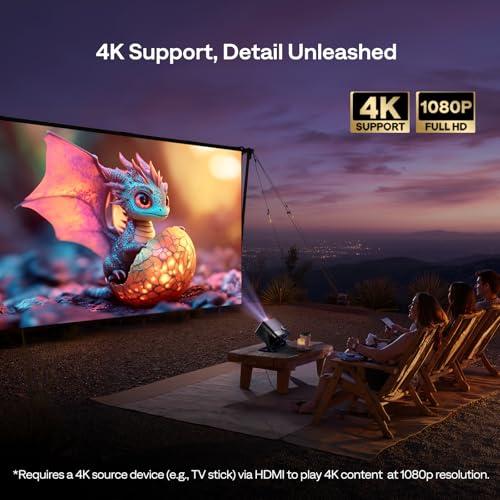
Both projectors offer native 1080p resolution, which remains the sweet spot for portable projectors in terms of balancing image quality with processing power and heat generation. The Aurzen BOOM Mini accepts 4K input and downscales it to 1080p, which actually works quite well for streaming content that's often compressed anyway.
More importantly, the Aurzen supports modern video formats like HDR10 and HLG. HDR (High Dynamic Range) expands the range of colors and brightness levels the projector can display, making images look more lifelike. While the projector can't match a high-end TV's HDR performance due to brightness limitations, it does make content look noticeably better than standard dynamic range.
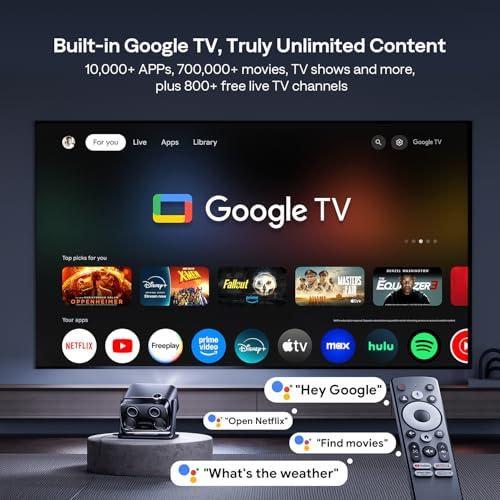
This is where these two projectors diverge most dramatically. The Aurzen BOOM Mini essentially puts an Android TV box inside the projector, complete with 2GB of RAM and 16GB of storage. You can download Netflix, Disney+, YouTube, and thousands of other apps directly onto the projector. Google Assistant is built-in, so you can control everything with your voice.
The experience is genuinely seamless. Turn on the projector, and you're immediately in the Google TV interface with personalized recommendations. Want to watch something on Netflix? Just click and watch – no external devices required. This approach particularly appeals to people who want to minimize cables and remote controls.
The Epson EF11 takes the traditional approach: it's purely a display device. You'll need to connect a streaming stick, game console, laptop, or other source via HDMI. While this might seem old-fashioned, it has advantages. External streaming devices often have more processing power than what can fit inside a projector, potentially offering smoother performance and longer software support.
Having lived with both approaches, I can tell you that built-in smart features are incredibly convenient – until they're not. The Aurzen BOOM Mini's Google TV works well for most streaming services, but some apps (like certain live TV services) work better on dedicated devices. The projector's processing power, while adequate, isn't as snappy as a latest-generation Apple TV or Nvidia Shield.
On the flip side, the Epson EF11 requires you to already own or purchase a streaming device, adding $100-200 to the total system cost. But you get more flexibility in choosing exactly how you want to stream content, and you can upgrade your streaming device independently of your projector.
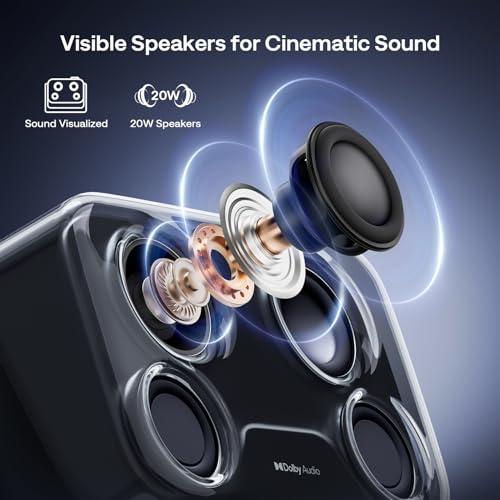
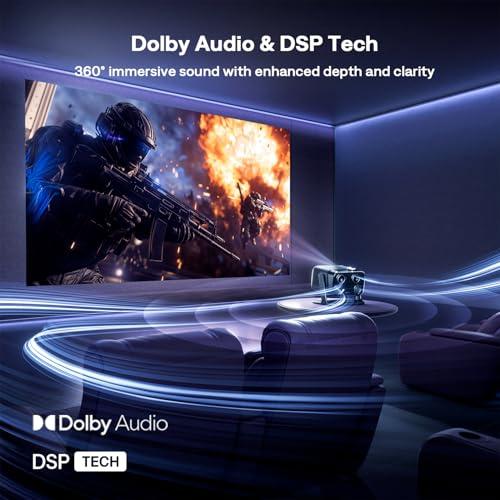
Audio quality varies dramatically between these projectors. The Aurzen BOOM Mini includes dual 10W speakers with Dolby Audio processing, totaling 20W of output power. These are rear-facing speakers that use the wall behind the projector to help disperse sound throughout the room.
In my experience, the Aurzen's audio is genuinely impressive for a projector. It's loud enough to fill a medium-sized room and has enough bass response to make action movies engaging. The projector can even function as a Bluetooth speaker when you're not using it for projection, which adds to its versatility.
The Epson EF11 includes much smaller 1.5W speakers that are really only adequate for basic audio needs. If you're serious about sound quality with the Epson, you'll want to connect external speakers or a soundbar, adding to the system complexity and cost.
For many users, especially those setting up in bedrooms or casual viewing areas, having good built-in audio eliminates the need for additional equipment. The Aurzen BOOM Mini can truly be a one-box solution that delivers both excellent visuals and satisfying audio. This is particularly valuable for temporary setups or situations where running additional cables isn't practical.
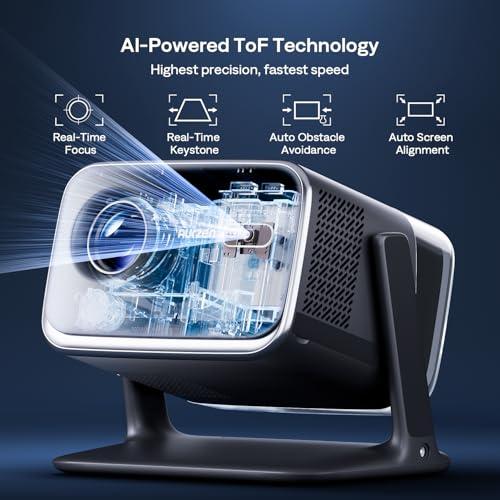
The Aurzen BOOM Mini incorporates several automated features that make setup nearly foolproof. Real-time autofocus uses sensors to automatically adjust the lens for sharp images, while automatic keystone correction fixes the trapezoidal distortion that occurs when projecting at an angle. These systems work continuously, so if you bump the projector or project onto an uneven surface, the image automatically corrects itself within seconds.
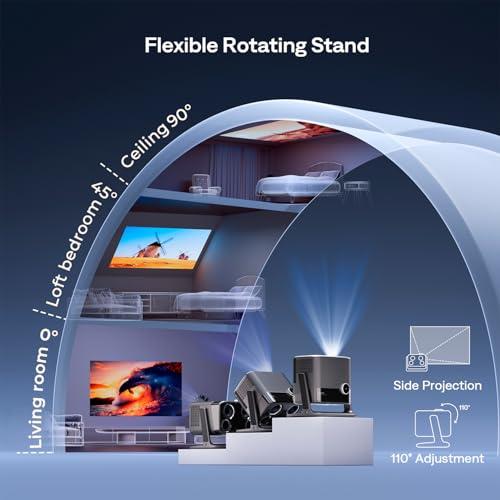
The projector also includes a flexible stand that rotates 110 degrees, allowing you to project onto walls, screens, or even ceilings without additional mounting hardware. This flexibility is particularly useful for bedroom viewing or outdoor movie nights where traditional placement might not work.
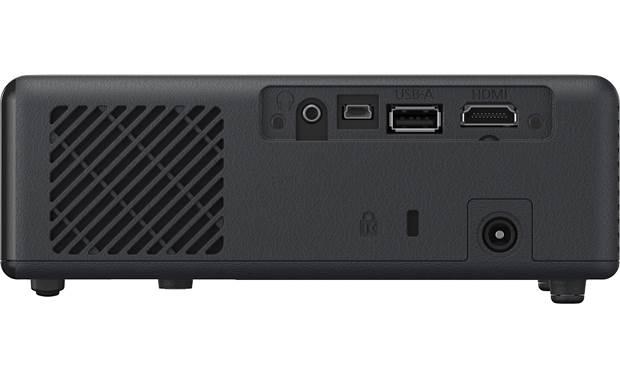
The Epson EF11 requires manual focus adjustment but offers more precise control over keystone correction. Professional users often prefer manual controls because they can fine-tune the image exactly to their preferences, but casual users might find the process tedious.
Both projectors run relatively quietly, but there's a noticeable difference. The Epson EF11 operates at 22-27 decibels, which is whisper-quiet and barely audible even in silent rooms. The Aurzen BOOM Mini runs at around 36 decibels, which is still quite acceptable but noticeable if you're sensitive to fan noise.
This difference comes from their cooling requirements – the Epson's laser light source runs cooler than traditional LED arrays, requiring less aggressive cooling.
For dedicated home theater use, the choice depends heavily on your room and expectations. If you have a dedicated dark room where you can control all lighting, the Aurzen BOOM Mini can produce surprisingly cinematic results. Its HDR support and automatic adjustments make it easy to get good results with minimal tweaking.
However, if your "home theater" is actually a living room or family room where you can't completely control lighting, the Epson EF11's superior brightness becomes crucial. The extra 500 ANSI lumens make the difference between a washed-out image and one that maintains its impact even with some ambient light.
For serious movie watching, the Epson's better contrast ratio and color accuracy provide a more film-like experience. Dark scenes maintain their detail, and colors look more natural and less artificially saturated.
At the time of writing, the Aurzen BOOM Mini represents exceptional value in the budget-to-mid-range category, while the Epson EF11 commands a premium price that reflects its superior image quality and laser technology.
But value isn't just about the initial purchase price. With the Aurzen, you get a complete entertainment system ready to use out of the box. With the Epson, you'll need to factor in the cost of a streaming device and possibly external speakers, which can add significantly to the total investment.
The Epson's laser light source also provides better long-term value, maintaining consistent brightness over its 20,000-hour lifespan without the gradual dimming that affects LED projectors.
The Aurzen BOOM Mini is ideal if you prioritize convenience and want a modern, all-in-one entertainment solution. It's perfect for users who primarily consume streaming content and want everything to "just work" without dealing with multiple devices and cables. The superior built-in audio makes it excellent for casual viewing scenarios where you don't want to mess with external speakers.
This projector shines in controlled lighting environments – think bedroom movie nights, basement recreation rooms, or outdoor gatherings where you can wait for sunset. Its automatic adjustment features make it particularly appealing to less tech-savvy users who want excellent results without manual tweaking.
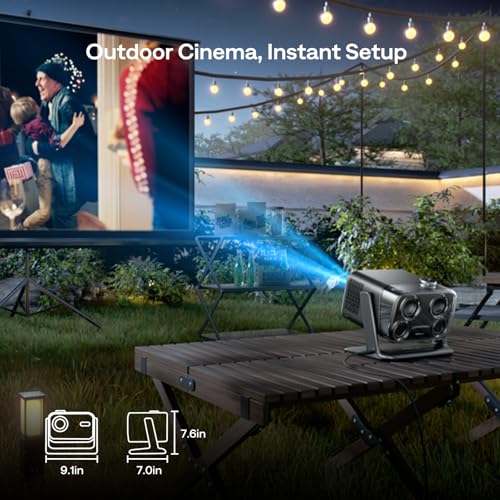
The Aurzen also makes sense if you move frequently or want a projector that's easy to set up temporarily in different locations. Its flexible design and built-in smart features mean you can create an instant entertainment system anywhere you have power and a wall.
The Epson EF11 is the right choice when image quality takes precedence over convenience features. If you're a movie enthusiast, gamer, or someone who gives frequent presentations, the superior brightness and color accuracy justify the higher complexity and cost.
This projector makes sense if you already have streaming devices you prefer, or if you like the flexibility of choosing exactly how you get content to your projector. The ultra-quiet operation makes it ideal for bedroom use where even small amounts of fan noise would be distracting.
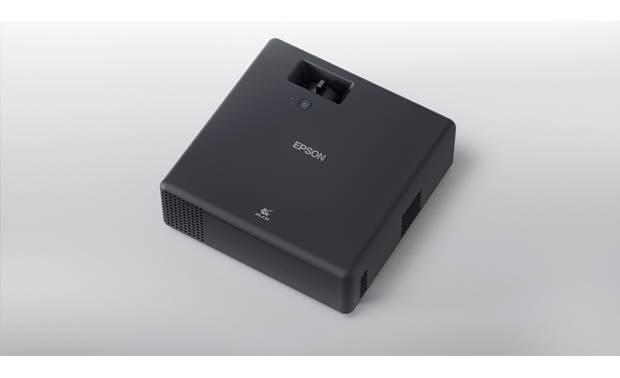
Professional users will appreciate the Epson's consistent performance and manual controls that allow precise image adjustment. Its compact size also makes it excellent for users who frequently transport their projector between locations.
Both the Aurzen BOOM Mini and Epson EpiqVision Mini EF11 are excellent projectors that serve different needs exceptionally well. The Aurzen represents the future of consumer projectors – smart, automated, and designed for the streaming generation. The Epson represents refined traditional projector technology with superior image quality for users who demand the best visual experience.
Your choice ultimately depends on your priorities: convenience and modern features versus image quality and professional performance. Both approaches have merit, and both projectors execute their respective philosophies extremely well. The good news is that either choice will deliver an excellent portable projection experience – just in very different ways.
| Aurzen BOOM Mini Smart Projector Google TV | Epson EpiqVision Mini EF11 Laser Projector |
|---|---|
| Brightness - Most critical factor for usability in different lighting conditions | |
| 500 ANSI lumens (requires dimmed rooms for best results) | 1000 ANSI lumens (works well with ambient lighting) |
| Light Source Technology - Affects brightness consistency and lifespan | |
| LED technology (gradual dimming over time) | Laser phosphor with 20,000-hour lifespan (consistent brightness) |
| Contrast Ratio - Determines black depth and overall image quality | |
| 1000:1 (adequate blacks in dark rooms) | 200,000:1 (exceptional blacks and shadow detail) |
| Display Technology - Impacts color accuracy and rainbow effects | |
| TFT LCD (single panel, good color reproduction) | 3LCD technology (three panels, superior color accuracy, no rainbow effect) |
| Smart Features - Convenience vs flexibility trade-off | |
| Built-in Google TV with 10,000+ apps, no external device needed | Requires external streaming device (Roku, Apple TV, etc.) |
| Audio System - Important for users who don't want external speakers | |
| Dual 10W speakers (20W total) with Dolby Audio, functions as Bluetooth speaker | 1.5W dual speakers (adequate for basic use, external speakers recommended) |
| Auto-Adjustment Features - Setup convenience for non-technical users | |
| Real-time autofocus and keystone correction with ToF sensors | Manual focus, automatic keystone correction (±34° vertical) |
| Physical Design - Portability and setup flexibility | |
| 9.1" x 7" x 7.6", includes 110° flexible stand for ceiling projection | 6.9" x 6.9" x 2.6", more compact but requires separate mounting for ceiling use |
| Noise Level - Important for quiet environments like bedrooms | |
| ≤36dB (noticeable but acceptable) | 22-27dB (whisper quiet, ideal for bedrooms) |
| Projection Size Range - Flexibility for different room sizes | |
| 40" - 200" (wider range accommodates very large images) | 30" - 150" (sufficient for most home use cases) |
| HDR Support - Enhanced color and brightness for modern content | |
| HDR10 and HLG support for streaming content | No HDR support (standard dynamic range only) |
| Target User - Who each projector serves best | |
| Streaming-focused users wanting all-in-one convenience | Image quality enthusiasts and professional users needing maximum brightness |
The Epson EpiqVision Mini EF11 is significantly brighter at 1000 ANSI lumens compared to the Aurzen BOOM Mini Smart Projector Google TV at 500 ANSI lumens. This means the Epson can handle rooms with ambient light much better, while the Aurzen requires dimmed lighting for optimal viewing.
The Aurzen BOOM Mini Smart Projector Google TV has built-in Google TV with access to Netflix, Disney+, YouTube, and 10,000+ apps - no external device needed. The Epson EpiqVision Mini EF11 requires an external streaming device like Roku, Apple TV, or Fire TV stick connected via HDMI.
The Epson EpiqVision Mini EF11 delivers superior image quality with its 200,000:1 contrast ratio, 3LCD technology, and laser light source. The Aurzen BOOM Mini offers good 1080p quality with HDR support, but the Epson provides deeper blacks, more accurate colors, and better overall picture performance.
The Aurzen BOOM Mini Smart Projector Google TV has much better audio with dual 10W speakers (20W total) and Dolby Audio support. It can even function as a Bluetooth speaker. The Epson EpiqVision Mini EF11 has basic 1.5W speakers that work for presentations but you'll likely want external speakers for movies.
The Epson EpiqVision Mini EF11 is more compact at 6.9" x 6.9" x 2.6" and lighter for travel. However, the Aurzen BOOM Mini includes a flexible 110° stand and requires no external devices, making it easier to set up despite being larger at 9.1" x 7" x 7.6".
The Aurzen BOOM Mini Smart Projector Google TV offers easier setup with real-time autofocus and automatic keystone correction - just turn it on and it adjusts itself. The Epson EpiqVision Mini EF11 requires manual focus adjustment but offers precise control over image correction settings.
For dedicated dark home theaters, both work well, but the Epson EpiqVision Mini EF11 provides superior cinematic quality with better contrast and color accuracy. For multi-purpose living rooms with some ambient light, the Epson is clearly better due to its higher brightness. The Aurzen BOOM Mini works great in controlled lighting with the convenience of built-in streaming.
The Epson EpiqVision Mini EF11 runs much quieter at 22-27dB, making it ideal for bedrooms or quiet environments. The Aurzen BOOM Mini Smart Projector Google TV operates at ≤36dB, which is still acceptable but more noticeable during quiet movie scenes.
The Aurzen BOOM Mini Smart Projector Google TV offers excellent value as a complete entertainment system with no additional purchases needed. The Epson EpiqVision Mini EF11 costs more upfront and requires external devices, but delivers superior image quality and longer-lasting laser technology for serious users.
The Aurzen BOOM Mini offers a wider projection range of 40"-200", while the Epson EpiqVision Mini EF11 projects 30"-150". Both ranges cover typical home use, but the Aurzen can go larger for outdoor movie nights or very large rooms.
The Epson EpiqVision Mini EF11 is better for gaming due to its higher brightness, superior contrast, and more accurate colors that make games look more vivid. However, the Aurzen BOOM Mini Smart Projector Google TV can access cloud gaming services directly through Google TV and offers decent gaming performance in darker rooms.
The Epson EpiqVision Mini EF11 uses advanced laser phosphor technology with 3LCD panels for superior brightness and color accuracy, lasting 20,000 hours. The Aurzen BOOM Mini Smart Projector Google TV uses LED technology with smart TV integration, focusing on convenience and modern streaming features rather than maximum image performance.
We've done our best to create useful and informative comparisons to help you decide what product to buy. Our research uses advanced automated methods to create this comparison and perfection is not possible - please contact us for corrections or questions. These are the sites we've researched in the creation of this article: aurzen.com - aurzen.com - the-gadgeteer.com - projectorcentral.com - aurzen.com - aurzen.com - youtube.com - bestbuy.com - bestbuy.com - youtube.com - aurzen.com - youtube.com - hometechnologyreview.com - youtube.com - aurzen.com - bestbuy.com - bhphotovideo.com - youtube.com - bestbuy.com - gagadget.com - epson.com - projectorreviews.com - audiogeneral.com - projectorreviews.com - epson.com - youtube.com - epson.com - youtube.com - mediaserver.goepson.com - files.support.epson.com - staples.com - projectorcentral.com - bestbuy.com - planettv.com - dell.com - epson.eu - projectortop.com

Privacy Policy
Terms and Conditions - Affiliate Policy
Home Security
© Copyright 2008-2026.
11816 Inwood Rd #1211, Dallas, TX 75244