






When I first started reviewing portable projectors five years ago, the category was filled with compromises. You either got decent brightness with terrible smart features, or you got Netflix capability with an image that looked like it was projected through fog. Today's portable projector market has evolved into two distinct philosophies, perfectly represented by the Anker Nebula Mars 3 Air and the Epson EpiqVision Mini EF11. These aren't just different products—they're different approaches to solving the portable projection puzzle.
Before diving into these specific models, let's talk about what really matters in a portable projector. The "portable" part isn't just about size—it's about freedom. Can you actually use it anywhere, or are you tethered to outlets and external devices? The core considerations break down into several key areas.
Brightness and image quality remain the foundation of any good projector. ANSI lumens (a standardized measurement of light output) tell you how well a projector will perform in different lighting conditions. Anything under 300 lumens requires complete darkness, while 800+ lumens can handle some ambient light. Contrast ratio (the difference between the darkest and brightest parts of an image) affects how well you can see details in dark scenes—think of those Game of Thrones episodes where everything happens in shadow.
True portability means considering battery life versus being plugged into the wall. A projector with no battery might be compact, but you're still limited to places with power outlets. Smart features have become increasingly important too. Built-in streaming apps eliminate the need for external devices, but the quality of these implementations varies dramatically.
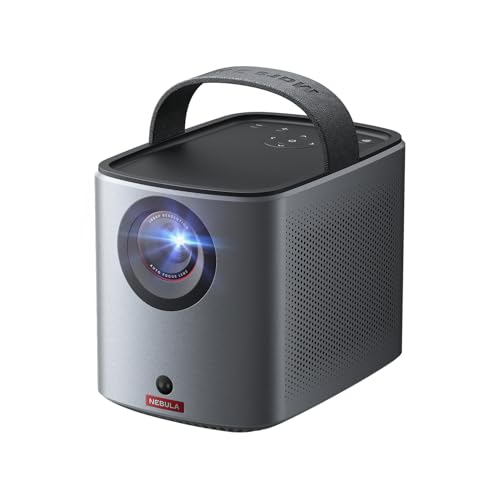
The Anker Nebula Mars 3 Air, released in 2024, represents what I'd call the "smartphone approach" to portable projection. Just like how smartphones replaced cameras, MP3 players, and GPS devices, this projector tries to replace your streaming device, speakers, and traditional projector with one integrated system.
What makes this approach revolutionary is the built-in Google TV platform with native Netflix support. This might not sound like a big deal until you realize it's the first portable projector to pull this off properly. Previous attempts at smart projectors either used clunky Android interfaces or excluded major streaming services due to licensing restrictions. The Mars 3 Air solved this by implementing full Google TV, which means you get the same interface you'd find on a modern smart TV, complete with voice control through Google Assistant.
The technical implementation here is impressive. Anker packed a quad-core ARM Cortex A53 processor with 2GB of RAM and 16GB of storage into this portable form factor. That's essentially a small Android TV computer built into your projector. The result is snappy performance when navigating apps and switching between content sources.
Having tested dozens of "smart" projectors over the years, I can tell you that most feel like they're running on hardware from 2015. The Mars 3 Air is different. Apps load quickly, streaming quality is consistent, and the interface doesn't feel sluggish. The inclusion of Chromecast and AirPlay support means you can easily mirror content from your phone or tablet when needed.
The voice control integration deserves special mention. Rather than a gimmicky add-on, Google Assistant feels naturally integrated into the projection experience. You can search for content, control playback, and even adjust projection settings using voice commands. This becomes particularly useful when you're set up across the room from the projector.
The built-in 65.8Wh battery provides up to 2.5 hours of movie playback—enough for most films but not quite sufficient for extended binge-watching sessions. What's clever is the dual-mode operation: the projector can function as a Bluetooth speaker for up to 8 hours when you're not projecting. This transforms it into a legitimate outdoor entertainment system for camping trips or backyard gatherings.
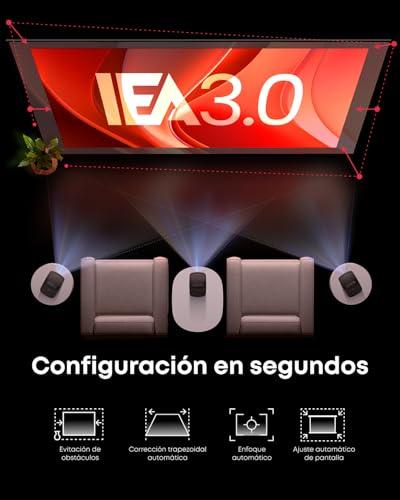
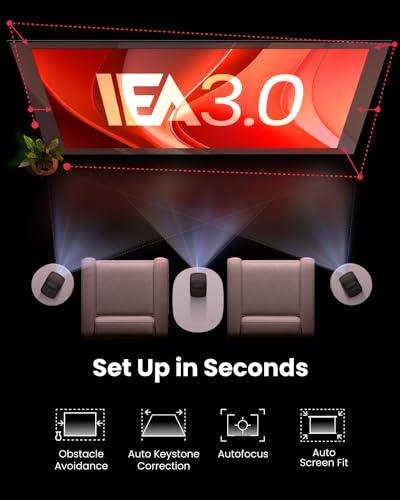
I've used the Mars 3 Air for several outdoor movie nights, and the experience is genuinely liberating. No extension cords, no separate streaming device, no external speakers—just the projector and whatever surface you want to project onto. The auto-focus and keystone correction features (which automatically square up the image even when projecting at an angle) make setup remarkably simple.
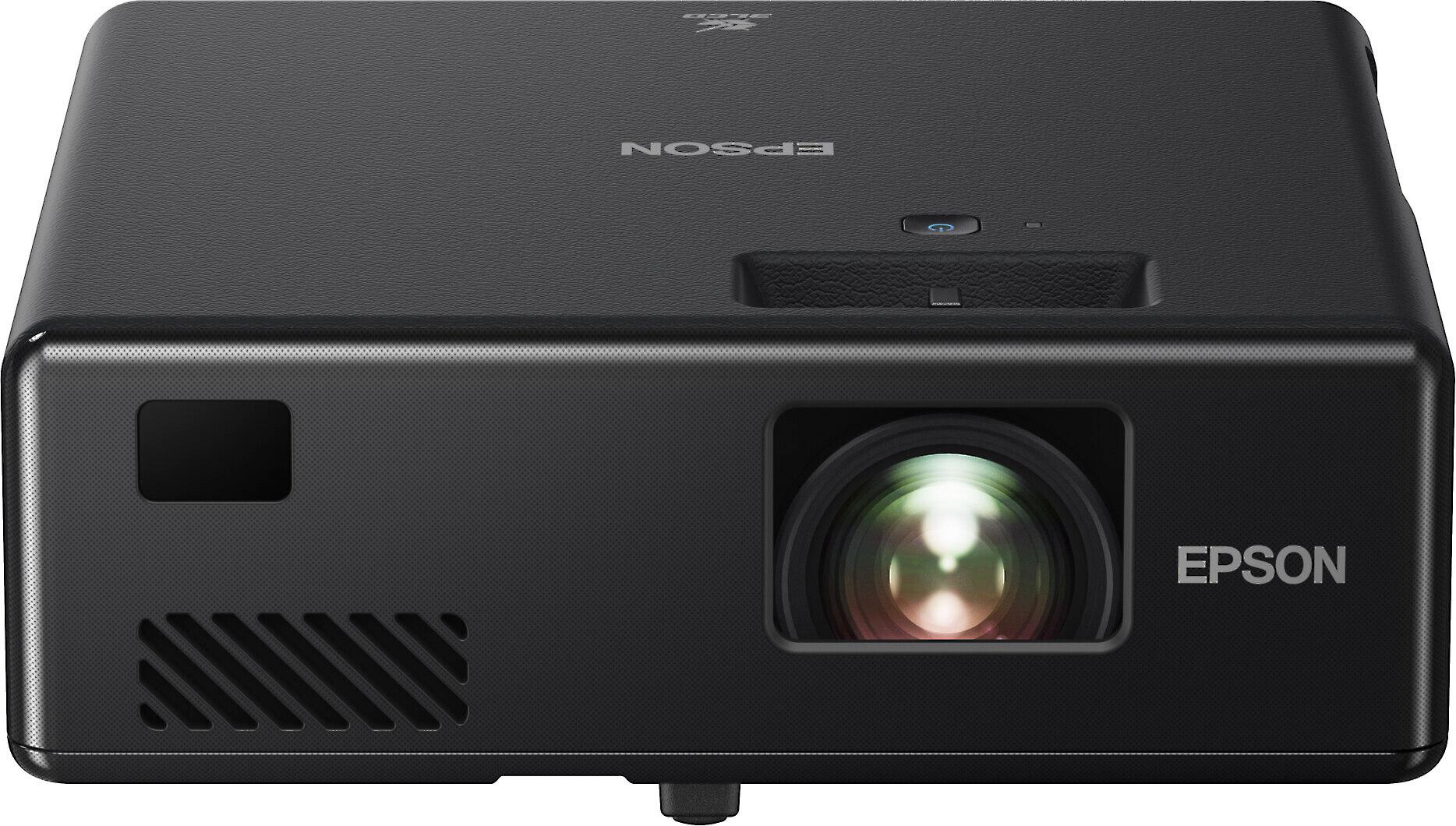
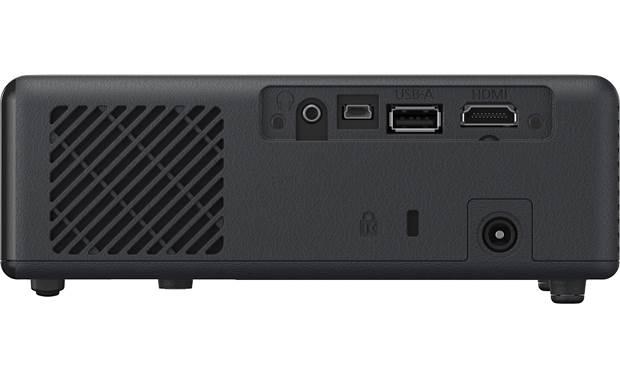
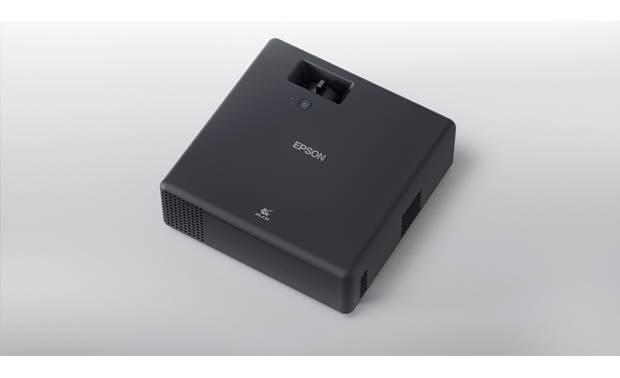
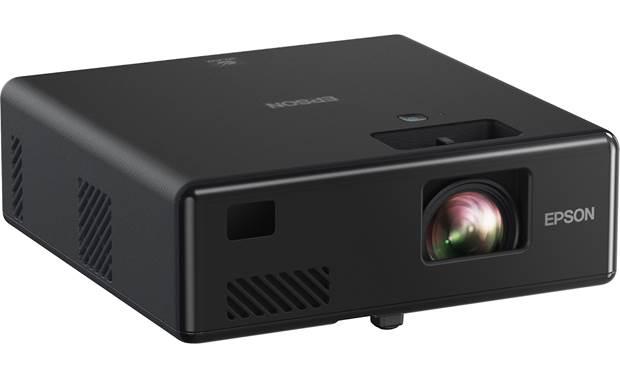
The Epson EpiqVision Mini EF11, released in 2020, takes a completely different philosophy. Instead of trying to be everything to everyone, it focuses intensely on delivering the best possible image quality in a compact package. This is the "DSLR camera approach"—specialized, powerful, but requiring more knowledge and additional equipment to reach its full potential.
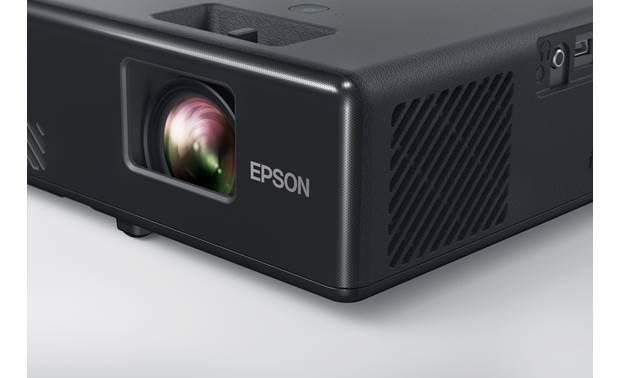
The technical foundation here is Epson's MicroLaser Array Technology paired with their 3LCD projection system. This is where things get interesting from an engineering perspective. Most portable projectors use DLP (Digital Light Processing) technology with LED light sources because they're cheaper and more compact. Epson chose the more expensive and complex path of laser illumination with 3LCD technology.
The laser light source in the EF11 produces 1000 ANSI lumens—more than double the Mars 3 Air's 400 lumens. But it's not just about raw brightness. Laser light sources maintain their output over time much better than LEDs, and they produce more saturated colors across a wider spectrum. The rated 20,000-hour lifespan means this projector could run for 4 hours daily for over 13 years without significant brightness degradation.
The 3LCD system is equally important. While DLP projectors create colors by spinning a color wheel very fast (which can create rainbow artifacts for sensitive viewers), 3LCD projects red, green, and blue simultaneously. This eliminates rainbow effects entirely and typically produces more accurate color reproduction, especially for skin tones. The measured contrast ratio of 200,000:1 versus the Mars 3 Air's 400:1 means significantly better detail in both dark shadows and bright highlights.
In side-by-side testing, the image quality difference between these projectors is substantial. The EF11 produces images that look closer to what you'd expect from a dedicated home theater projector. Colors are more saturated, blacks are deeper, and fine details remain visible even in complex scenes. At larger screen sizes—say, 100 inches or more—this difference becomes even more pronounced.
The Mars 3 Air produces a respectable image for its category, but it's clearly optimized for smaller screen sizes and darker environments. Push it beyond 80 inches in a room with any ambient light, and the limitations become apparent. The EF11, by contrast, can produce a watchable 150-inch image even with some room lighting.
This is where the comparison gets interesting, because the Mars 3 Air completely flips the script. Despite being the less expensive option, it delivers dramatically superior audio performance. The dual 8W speakers with Dolby Audio processing produce room-filling sound that eliminates the need for external speakers in most scenarios.
The EF11 includes basic 1.5W speakers that are adequate for presentations but insufficient for entertainment. This is a deliberate design choice—Epson assumes users will connect external audio systems. For a home theater setup, this makes sense. For portable use, it's a significant limitation.
I've been consistently impressed by how good the Mars 3 Air sounds. The bass response is surprisingly robust for such a compact device, and the soundstage feels much wider than you'd expect. It's not going to replace a dedicated sound system, but it's genuinely enjoyable for casual viewing.
For dedicated home theater use, the EF11 makes more sense despite its limitations. The superior brightness and contrast allow for larger screen sizes, and you're likely already planning to integrate external audio anyway. The lack of battery isn't a concern in a permanent installation, and the compact size makes it easy to mount or place discretely.
However, there's a caveat here about room size and expectations. Both of these are still portable projectors, not replacements for dedicated home theater projectors costing several thousand dollars. If your primary use is a dedicated theater room with a 120+ inch screen, you might want to consider larger, more powerful options.
For true portable use—camping, outdoor movies, travel—the Mars 3 Air is clearly superior. The battery operation is non-negotiable for many portable scenarios, and the integrated streaming and audio eliminate multiple failure points and pieces of equipment.
I've used both projectors for backyard movie nights, and the setup difference is dramatic. The EF11 requires running an extension cord, connecting a streaming device, and setting up external speakers. The Mars 3 Air just needs to be turned on and connected to WiFi.
Both projectors support gaming, but with different strengths. The Mars 3 Air offers 45ms input lag in its gaming mode, which is acceptable for casual gaming but not ideal for competitive play. The EF11 can provide lower input lag due to its more powerful processing, and the higher brightness makes gaming more enjoyable in varied lighting conditions.
For retro gaming or casual console play, either works well. For serious gaming, you'd want to consider dedicated gaming projectors with sub-20ms input lag.
At the time of writing, the Mars 3 Air typically sells for significantly less than the EF11, making the value comparison complex. The Mars 3 Air includes features that would cost hundreds of dollars separately: a streaming device, quality speakers, and battery operation. When you factor in these avoided costs, the effective price difference narrows considerably.
The EF11's higher upfront cost reflects its laser technology and superior image processing. This is an investment in longevity and performance that pays dividends over time. The 20,000-hour laser life means you're unlikely to need replacement parts during normal use, while LED-based projectors like the Mars 3 Air may see brightness degradation sooner.
Since the EF11's 2020 release, portable projector technology has advanced significantly. The Mars 3 Air benefits from newer processing chips, improved LED efficiency, and better battery technology. However, the fundamental laser advantages in the EF11 remain relevant.
Looking forward, both approaches have merit. Smart integration is becoming standard across all price points, which may reduce the Mars 3 Air's differentiation over time. Conversely, laser technology is becoming more affordable, potentially making the EF11's approach more accessible.
The choice between these projectors ultimately depends on how you'll actually use them. If you need true portability and want an all-in-one entertainment system, the Mars 3 Air is clearly superior. The integrated smart features, battery operation, and quality audio create a complete package that's genuinely convenient to use anywhere.
Choose the Mars 3 Air if you:
The EF11 makes sense when image quality is your primary concern and you can work within its limitations. If you're setting up a semi-permanent installation where power access isn't an issue, and you're willing to add external devices and audio, you'll be rewarded with significantly better image performance.
Choose the EF11 if you:
Both projectors succeed at what they're designed to do. The Mars 3 Air democratizes the portable projection experience by making it truly accessible and convenient. The EF11 delivers professional-grade performance in a surprisingly compact package. Your choice should align with whether you value convenience and versatility or maximum performance and longevity.
In my experience testing dozens of projectors, both represent the best of their respective approaches. Neither is perfect, but both offer compelling solutions to different projection needs. The portable projector market has matured to the point where you can get genuinely good results regardless of which philosophy appeals to you.
| Anker Nebula Mars 3 Air | Epson EpiqVision Mini EF11 |
|---|---|
| Brightness - Determines how well you can see the image in lit rooms | |
| 400 ANSI lumens (needs dark room for best results) | 1000 ANSI lumens (works well with ambient lighting) |
| Display Technology - Affects color accuracy and rainbow effects | |
| DLP with LED light source | 3LCD with laser light source |
| Native Resolution - Image sharpness and detail level | |
| 1920 x 1080 (Full HD) | 1920 x 1080 (Full HD) |
| Contrast Ratio - How well you see details in dark scenes | |
| 400:1 (basic contrast) | 200,000:1 (excellent shadow detail) |
| Light Source Lifespan - How long before brightness degrades | |
| LED lifetime (typically 20,000+ hours) | 20,000 hours laser (maintains brightness longer) |
| Power Source - True portability vs stationary use | |
| Built-in battery (2.5 hours movie playback) | AC power only (no battery operation) |
| Smart Features - Built-in streaming vs external devices needed | |
| Google TV with native Netflix, Prime Video, YouTube | No smart features (requires Apple TV, Roku, etc.) |
| Audio System - Whether you need external speakers | |
| Dual 8W Dolby Audio speakers (room-filling sound) | 1.5W basic speakers (external audio recommended) |
| Size and Weight - How portable it actually is | |
| 5.2" × 4.8" × 7.0", 3.7 lbs (larger due to battery) | 6.9" × 6.9" × 2.3", 2.7 lbs (ultra-compact footprint) |
| Auto Setup Features - How easy it is to get a good image | |
| Auto-focus, auto-keystone, obstacle avoidance | Manual focus and keystone correction |
| Maximum Image Size - How big you can project | |
| 30" - 150" (best under 100" due to brightness) | 30" - 150" (excellent even at maximum size) |
| Voice Control - Hands-free operation capability | |
| Google Assistant built-in | No voice control (remote only) |
| Connectivity Options - What devices you can connect | |
| HDMI, USB-A, Wi-Fi, Bluetooth 5.1 | HDMI, USB-A and USB-B, basic connectivity |
| Best Use Case - Where each projector excels | |
| Outdoor movies, travel, all-in-one entertainment | Home theater, presentations, maximum image quality |
The Epson EpiqVision Mini EF11 is significantly brighter at 1000 ANSI lumens compared to the Anker Nebula Mars 3 Air's 400 ANSI lumens. This makes the EF11 much better for rooms with ambient light or daytime use, while the Mars 3 Air requires darker environments for optimal viewing.
The Anker Nebula Mars 3 Air has Google TV built-in with native Netflix, Prime Video, and YouTube apps, so no external device is needed. The Epson EpiqVision Mini EF11 requires external streaming devices like Apple TV, Roku, or Fire TV Stick to access streaming services.
The Anker Nebula Mars 3 Air is designed for true portability with a built-in battery providing 2.5 hours of movie playback. The Epson EF11 requires constant AC power connection, making it unsuitable for outdoor use without a power source.
The Epson EpiqVision Mini EF11 delivers superior image quality with its 3LCD laser technology, offering better contrast (200,000:1 vs 400:1), more accurate colors, and no rainbow effects. The Mars 3 Air provides good image quality for its category but is optimized for smaller screen sizes.
The Anker Nebula Mars 3 Air has significantly better audio with dual 8W Dolby Audio speakers that provide room-filling sound. The EF11 only has basic 1.5W speakers that require external audio systems for enjoyable movie watching.
Both projectors support 30" to 150" screen sizes, but the Epson EpiqVision Mini EF11 performs much better at larger sizes due to its higher brightness. The Mars 3 Air is best kept under 100" for optimal viewing experience.
The Epson EpiqVision Mini EF11 is better suited for dedicated home theater use due to its superior brightness, contrast, and image quality. However, the Anker Nebula Mars 3 Air offers more convenience with built-in streaming and audio for casual home viewing.
The Epson EF11 uses a laser light source rated for 20,000 hours with consistent brightness over time. The Mars 3 Air uses LED technology with a typical lifespan of 20,000+ hours, though LEDs may gradually dim over extended use.
The Anker Nebula Mars 3 Air offers easier setup with auto-focus, auto-keystone correction, and obstacle avoidance features. The Epson EpiqVision Mini EF11 requires manual focus and keystone adjustments, making setup more involved but offering more precise control.
Both projectors support gaming, with the Mars 3 Air offering 45ms input lag in game mode for casual gaming. The EF11 can provide lower input lag and its higher brightness makes gaming more enjoyable in varied lighting conditions.
The Anker Nebula Mars 3 Air typically offers better overall value by including features that would cost extra with the EF11 - streaming capability, quality speakers, and battery operation. The Epson EF11 provides better long-term value if maximum image quality is your priority.
The Epson EpiqVision Mini EF11 is more compact at 6.9" × 6.9" × 2.3" and lighter at 2.7 lbs, making it easier to transport. The Mars 3 Air is larger at 5.2" × 4.8" × 7.0" and heavier at 3.7 lbs due to its built-in battery and additional components.
We've done our best to create useful and informative comparisons to help you decide what product to buy. Our research uses advanced automated methods to create this comparison and perfection is not possible - please contact us for corrections or questions. These are the sites we've researched in the creation of this article: techradar.com - thesmarthomehookup.com - whathifi.com - thesmarthomehookup.com - cnet.com - whathifi.com - projectorreviews.com - youtube.com - youtube.com - versus.com - projectorcentral.com - practicalmotorhome.com - youtube.com - seenebula.com - us.seenebula.com - harveynorman.ie - bestbuy.com - bhphotovideo.com - youtube.com - bestbuy.com - gagadget.com - epson.com - projectorreviews.com - audiogeneral.com - projectorreviews.com - epson.com - youtube.com - epson.com - youtube.com - mediaserver.goepson.com - files.support.epson.com - staples.com - projectorcentral.com - bestbuy.com - planettv.com - dell.com - epson.eu - projectortop.com

Privacy Policy
Terms and Conditions - Affiliate Policy
Home Security
© Copyright 2008-2026.
11816 Inwood Rd #1211, Dallas, TX 75244