



Portable laser projectors have transformed from expensive business tools into genuine alternatives to traditional TVs. These compact powerhouses promise cinema-quality visuals that you can set up anywhere, from your living room to the backyard. But with options ranging from budget-friendly to premium, choosing the right one requires understanding what actually matters for your specific needs.
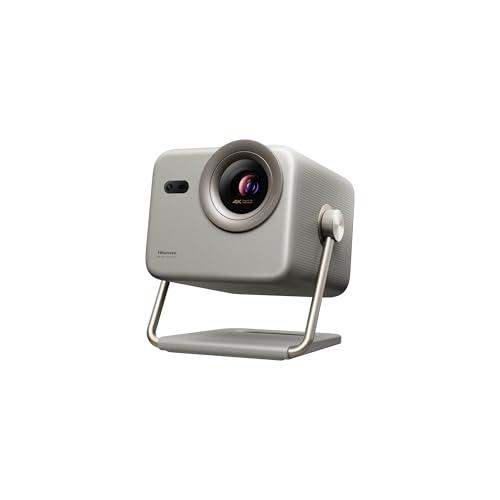
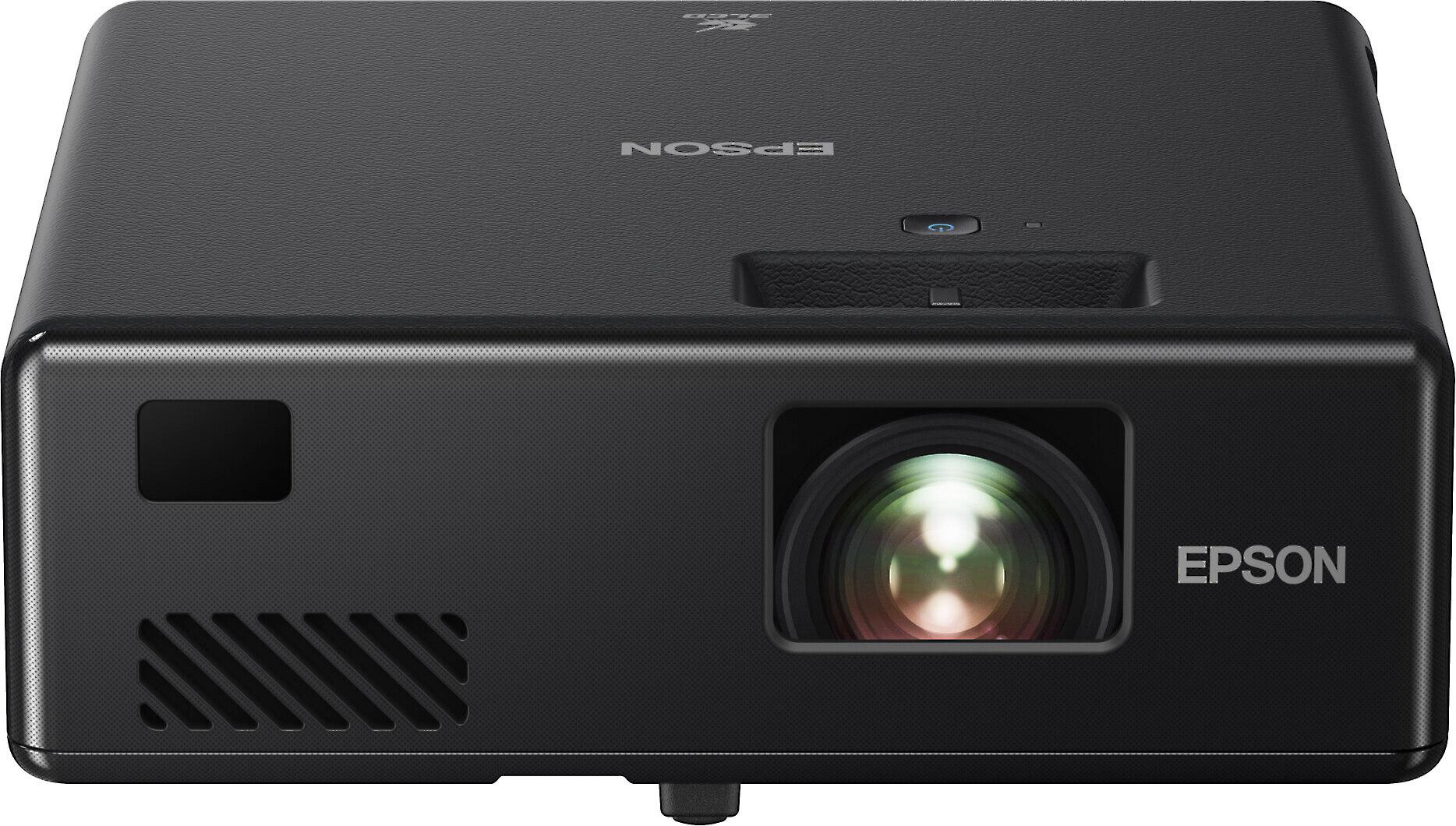
Today we're comparing two popular models that take distinctly different approaches: the premium Hisense M2 Pro 4K Triple Laser Portable Projector and the value-focused Epson EpiqVision Mini EF11 Laser Projector. At the time of writing, these projectors sit in different price tiers—the Hisense commanding a premium price while the Epson offers impressive performance at a more accessible cost.
Before diving into the comparison, it's worth understanding why laser projectors represent a significant leap over older lamp-based models. Traditional projector lamps dim over time, require expensive replacements, and take time to warm up. Laser light sources maintain consistent brightness for 20,000+ hours, start instantly, and offer superior color accuracy.
The "portable" aspect means these projectors prioritize ease of setup and movement over the absolute maximum performance of fixed installation units. You're trading some brightness and features for the flexibility to move your cinema experience wherever you want it.
Key factors that separate good portable laser projectors from great ones include brightness (measured in ANSI lumens), resolution capabilities, color accuracy, setup convenience, and smart features. The most important consideration is often brightness—too little and you'll be limited to darkened rooms, while sufficient brightness opens up more flexible viewing scenarios.
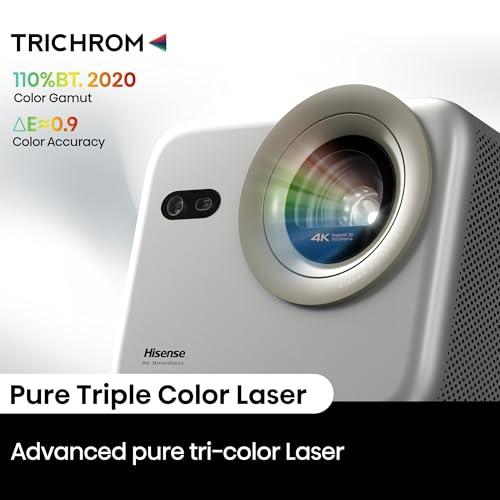
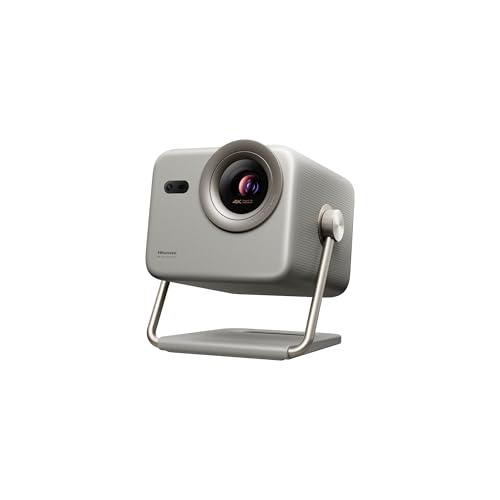
The Hisense M2 Pro, released in 2025, represents Hisense's push into premium portable projection. It's built around their proprietary Triple Laser technology, which uses separate red, green, and blue lasers instead of the single blue laser found in most projectors. This approach theoretically provides better color reproduction and brightness efficiency.
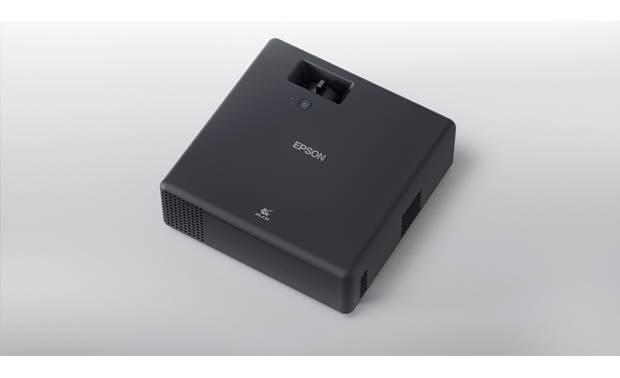
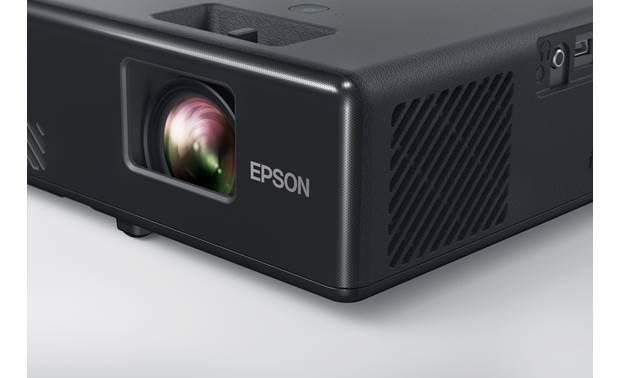
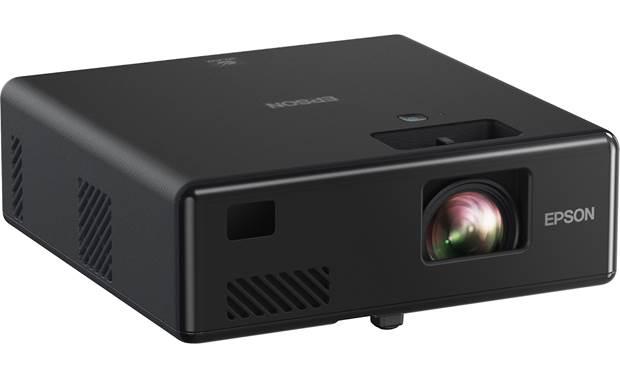
The Epson EF11, available since 2020, takes a more traditional but proven approach with Epson's 3LCD technology. Rather than chasing the latest trends, Epson focused on delivering reliable Full HD performance in an ultra-compact package. The company's MicroLaser Array technology promises exceptional brightness control and color accuracy within its class.
These different philosophies create an interesting comparison: cutting-edge 4K technology versus proven Full HD excellence, premium features versus focused simplicity, and higher investment versus strong value proposition.
The most obvious difference between these projectors is resolution. The Hisense M2 Pro delivers native 4K UHD (3840x2160 pixels), while the Epson EF11 maxes out at Full HD (1920x1080 pixels). But raw pixel count doesn't tell the complete story.
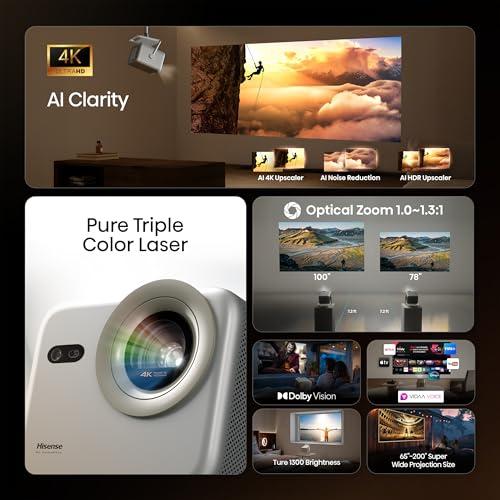
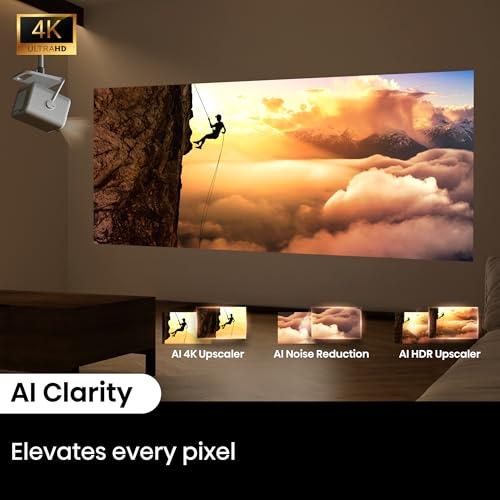
The Hisense's 4K resolution becomes most apparent with native 4K content from streaming services or Ultra HD Blu-rays. The difference is particularly noticeable on larger screen sizes—above 100 inches—where individual pixels become visible with Full HD content. The M2 Pro also includes AI upscaling technology that attempts to enhance lower-resolution content, though the effectiveness varies depending on source material quality.
However, the Epson EF11 demonstrates that resolution isn't everything. Epson's 3LCD technology—which uses three separate LCD panels for red, green, and blue—typically produces more accurate colors and better black levels than the DLP technology found in many portable projectors. Our research indicates that reviewers consistently praise the EF11's natural-looking skin tones and vibrant colors, even compared to some higher-resolution competitors.
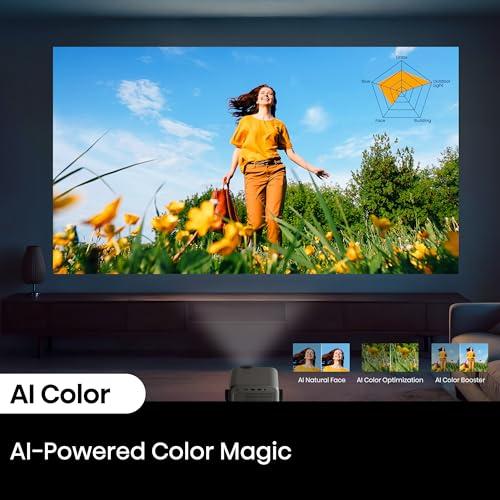
The Hisense's triple laser system covers 110% of the BT.2020 color space (a technical standard that defines the range of colors a display can reproduce), which on paper exceeds what most TVs can achieve. In practice, this translates to exceptionally vibrant colors, particularly in scenes with rich reds, deep blues, and bright greens. However, some users might find these colors oversaturated compared to more neutral displays.
For most viewers, the choice between 4K and excellent Full HD comes down to viewing distance and content preferences. If you're primarily watching streaming services that offer 4K content and sitting relatively close to a large projected image, the Hisense M2 Pro's resolution advantage becomes clear. For viewers who prioritize natural color reproduction and don't need the absolute maximum detail, the Epson EF11 often provides a more pleasing overall image.
Brightness might be the most crucial specification for portable projectors because it determines where and when you can actually use them. Both projectors use different approaches to achieve their brightness ratings, and understanding these differences helps predict real-world performance.
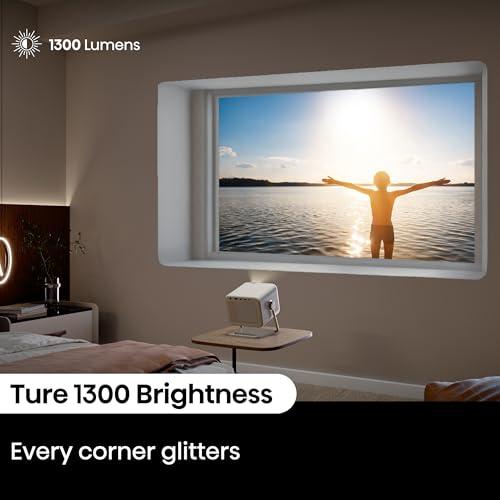
The Hisense M2 Pro claims 1,300 ANSI lumens, which places it in the higher brightness category for portable projectors. ANSI lumens represent a standardized measurement that better reflects actual viewing conditions than simpler lumen ratings. This brightness level means the Hisense can produce watchable images in moderately lit rooms and excel in darker environments.
The Epson EF11 is rated at 1,000 lumens (with measured performance around 960 ANSI lumens according to professional reviews). While lower than the Hisense, this brightness still exceeds most portable projectors in its price range. Reviewers note that the EF11's brightness feels particularly effective because Epson's 3LCD technology doesn't suffer from the "rainbow effect" (brief color flashes) that some DLP projectors exhibit, making the image appear more stable and comfortable to watch.
In practical terms, both projectors perform best in dimmed or darkened rooms. The M2 Pro's extra brightness provides more flexibility for daytime viewing or rooms with ambient light, but neither projector will compete with bright TVs in sunny rooms. The brightness advantage becomes most apparent when projecting larger images—the Hisense maintains better image quality at 150+ inch screen sizes where the Epson might appear dim.
One interesting technical detail: the Hisense M2 Pro uses 28 individual laser chips, with each chip providing power equivalent to four LEDs. This distributed approach should provide more consistent brightness across the image and potentially longer-lasting performance compared to single-laser designs.
Portable projectors live or die by their setup convenience, and both models take different approaches to making projection foolproof.
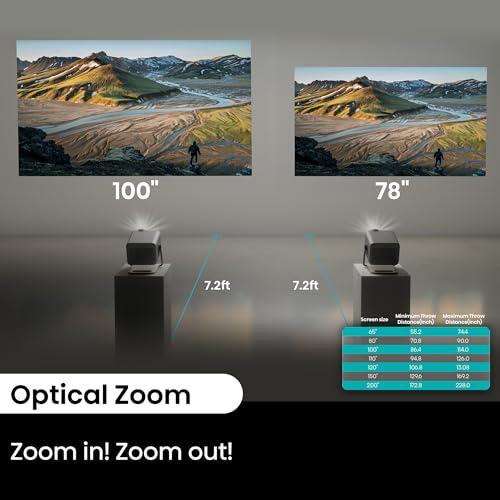
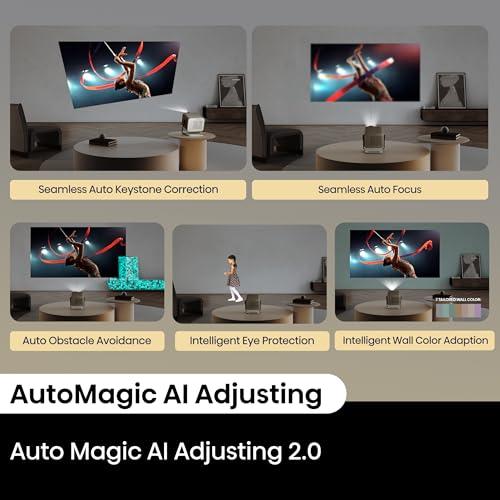
The Hisense M2 Pro includes several advanced features that genuinely simplify setup. The optical zoom capability (1.0-1.3x) is particularly noteworthy because most portable projectors rely on digital zoom, which reduces image quality. True optical zoom means you can adjust image size and placement without losing the sharp 4K detail that justifies the projector's premium price.
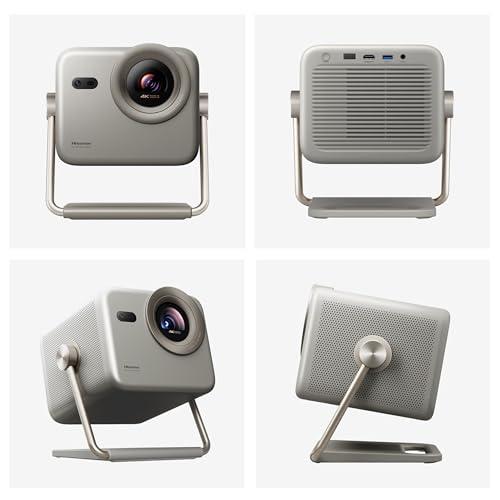
Even more impressive is the M2 Pro's gimbal design, which allows 360-degree horizontal rotation and 135-degree vertical adjustment. This flexibility means you can project onto ceilings, walls at odd angles, or even behind the projector—scenarios that would be impossible with traditional fixed-mount projectors. The intelligent wall color adaptation feature automatically adjusts color output to compensate for projection surfaces that aren't pure white, maintaining color accuracy even on beige or light-colored walls.
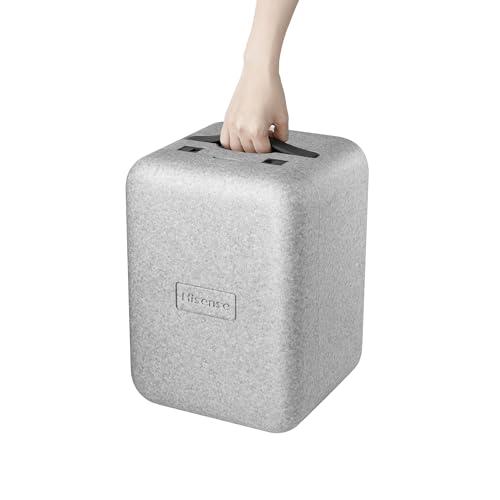
The Epson EF11 takes a more straightforward approach with standard keystone correction (digital adjustment for angled projection) and auto picture skew correction. While less sophisticated than the Hisense's features, these corrections handle the most common setup challenges effectively. The EF11's ultra-compact size (2.7 pounds versus the Hisense's 8.6 pounds) makes physical positioning easier, even if the electronic adjustments are more limited.
Both projectors include auto-focus capabilities, but the implementation differs. The M2 Pro combines auto-focus with its other intelligent features for a more comprehensive automatic setup, while the EF11 focuses on getting the basics right with reliable, quick focusing.
For users who plan to frequently move their projector or use it in unconventional positions, the Hisense M2 Pro's advanced flexibility features provide genuine value. For those who mainly need straightforward setup in traditional viewing positions, the Epson EF11's simpler approach may actually be preferable—fewer features mean fewer things that could potentially malfunction.
The approach to smart features creates another clear distinction between these projectors, reflecting different philosophies about what a modern projector should be.
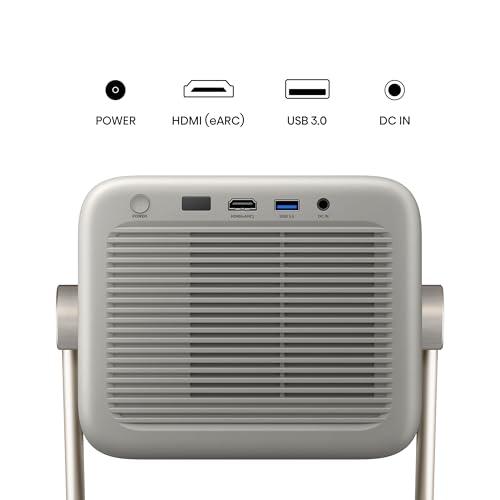
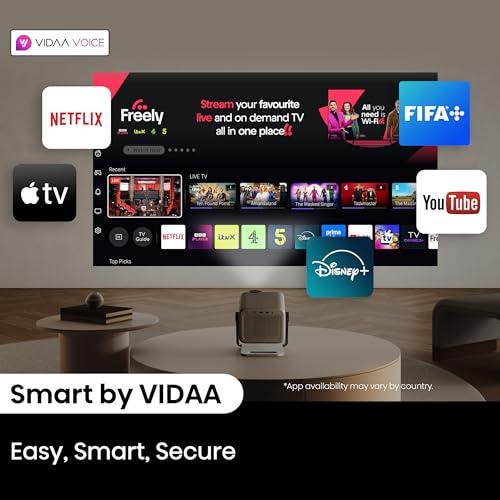
The Hisense M2 Pro includes VIDAA Smart OS with built-in apps for Netflix, YouTube, Disney+, Amazon Prime Video, and Apple TV. This integration means you can start streaming immediately after setup without additional devices. The projector also includes Wi-Fi 802.11ac, Bluetooth 5.0, and voice assistant compatibility, essentially functioning as a smart TV that happens to project images instead of displaying them on a built-in screen.
The built-in 20-watt speaker system supports Dolby Audio and DTS Virtual:X, providing spatial audio that enhances the cinematic experience. While these speakers won't match dedicated home theater audio systems, they're impressive for a portable projector and eliminate the need for external speakers in many situations.
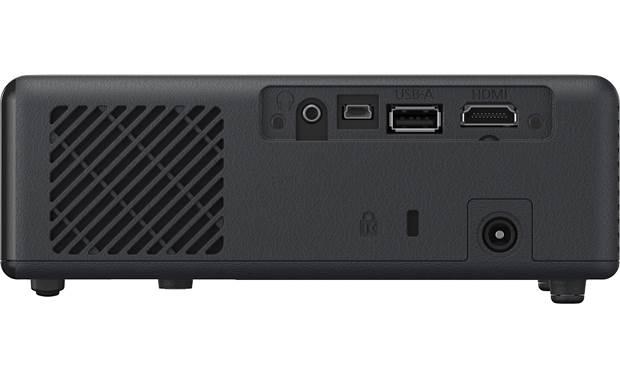
The Epson EF11 deliberately avoids built-in smart features, instead providing HDMI input for external streaming devices like Apple TV, Roku, Amazon Fire TV, or Android TV. This approach offers several advantages: streaming devices typically receive more frequent updates than projector smart platforms, you can choose your preferred interface and ecosystem, and there's one less system component that could become outdated over time.
The EF11's audio system is more basic—dual 1.5-watt speakers that handle dialogue adequately but lack the power and spatial audio features of the Hisense system. Most users will want external speakers or headphones for serious viewing sessions.
Neither approach is inherently superior, but they serve different user preferences. The M2 Pro's integrated approach appeals to users who want everything built-in and don't mind potential limitations or obsolescence of smart TV platforms. The EF11's external device approach suits users who already have preferred streaming solutions or want maximum flexibility in choosing their smart TV experience.
Gaming performance has become increasingly important for projectors as more people use them for console gaming and PC gaming. The differences between our two contenders are significant.
The Hisense M2 Pro includes dedicated gaming features with a 240Hz refresh rate capability and 12ms input lag. Input lag measures the delay between when you press a controller button and when the action appears on screen—lower numbers are better for responsive gaming. The 12ms figure puts the M2 Pro in the acceptable range for competitive gaming, while the high refresh rate support means it can take full advantage of newer gaming consoles and PCs that output high frame rates.
The Epson EF11 doesn't emphasize gaming performance in its specifications or marketing, suggesting standard input lag and refresh rate performance. For casual gaming, this probably won't matter, but serious gamers will notice the difference in fast-paced games where reaction time matters.
The gaming advantage goes clearly to the Hisense M2 Pro, making it a better choice for households where the projector will regularly serve gaming duty alongside movies and TV shows.
At the time of writing, these projectors occupy different price tiers, making the value comparison more complex than simple feature-counting.
The Hisense M2 Pro commands a premium price that reflects its 4K resolution, advanced laser technology, comprehensive smart features, and sophisticated setup capabilities. The question becomes whether these premium features justify the higher cost for your specific needs and viewing habits.
The Epson EF11 offers compelling value by focusing on what matters most: excellent image quality, reliable performance, and ultra-portable design at a more accessible price point. Professional reviews consistently praise its performance-to-price ratio, suggesting that Epson successfully identified the features that actually matter to most users and delivered them without unnecessary complexity or cost.
For users who prioritize 4K content, advanced setup flexibility, integrated smart features, and gaming performance, the M2 Pro's premium price represents reasonable value given its feature set. For users who want excellent Full HD performance, maximum portability, and proven reliability without paying for features they won't use, the EF11 delivers better value.
The value calculation also depends on longevity expectations. The Hisense's 4K capability provides more future-proofing as streaming services continue expanding 4K content libraries. However, the Epson's simpler feature set might age more gracefully—there are fewer complex systems that could become outdated or malfunction over time.
Both projectors can serve home theater duty, but with different strengths and limitations.
The Hisense M2 Pro excels in home theater applications thanks to its 4K resolution, high brightness, advanced color reproduction, and integrated audio system. The ability to project up to 200-inch images while maintaining 4K sharpness creates a genuinely cinematic experience that surpasses what most TVs can provide. The built-in streaming apps eliminate cable management complexity, while the powerful speakers reduce the need for immediately investing in external audio equipment.
The Epson EF11's smaller size makes it easier to integrate into existing living spaces without dominating the room's aesthetics. The excellent color accuracy means movies look natural and engaging, even if they lack the ultimate detail of 4K projection. The external streaming device approach often provides a more responsive, feature-rich smart TV experience than built-in projector platforms.
For dedicated home theater rooms, the M2 Pro provides a more complete, premium experience. For multi-purpose living spaces where the projector needs to disappear when not in use, the EF11 offers better discretion while still delivering impressive performance.
After extensive research and evaluation of expert and user opinions, clear usage patterns emerge for each projector.
Choose the Hisense M2 Pro 4K Triple Laser Portable Projector if you want the latest technology and don't mind paying for it. This projector suits users who prioritize 4K content, need flexible setup options for various rooms or outdoor use, want integrated smart features without external devices, plan to use the projector for gaming, and have the budget for premium portable projection. The M2 Pro excels when you want maximum image quality, advanced features, and the flexibility to project in challenging positions or lighting conditions.
Choose the Epson EpiqVision Mini EF11 Laser Projector if you want proven performance at a reasonable price. This projector appeals to users who find Full HD resolution sufficient for their content, prioritize maximum portability and simple setup, prefer using external streaming devices, want excellent value without premium pricing, and value brand reliability over cutting-edge features. The EF11 succeeds when you need reliable, high-quality projection without complexity or premium cost.
The decision ultimately depends on your priorities: future-proof premium performance versus proven, accessible excellence. Both projectors succeed in their intended roles, making either a solid choice within their respective market segments. The Hisense M2 Pro pushes portable projection technology forward with impressive results, while the Epson EF11 demonstrates that focusing on fundamentals can deliver outstanding value and user satisfaction.
Consider your typical viewing content, room lighting conditions, portability needs, and budget constraints. Both projectors will deliver impressive performance—the question is which approach to portable projection better matches your specific needs and preferences.
| Hisense M2 Pro 4K Triple Laser Portable Projector | Epson EpiqVision Mini EF11 Laser Projector |
|---|---|
| Resolution - Higher resolution shows more detail, especially on large screens | |
| Native 4K UHD (3840 x 2160) with AI upscaling | Full HD (1920 x 1080) with excellent color accuracy |
| Brightness - Determines viewing flexibility in different lighting conditions | |
| 1,300 ANSI lumens (good for moderately lit rooms) | 1,000 lumens (best in dimmed/dark environments) |
| Laser Technology - Affects color accuracy and long-term reliability | |
| Triple laser (R+G+B) for 110% BT.2020 color space | MicroLaser Array with 3LCD for natural colors |
| Projection Size Range - Flexibility for different room sizes | |
| 65" to 200" (excellent for large spaces) | 30" to 150" (ideal for smaller rooms) |
| Weight & Portability - Important for frequent moving or travel | |
| 8.6 lbs (feature-rich but heavier) | 2.7 lbs (ultra-portable design) |
| Smart Features - Convenience vs. flexibility trade-offs | |
| Built-in VIDAA OS with streaming apps | Requires external streaming device via HDMI |
| Audio System - Built-in sound quality for immediate use | |
| 20W Dolby Audio speakers with spatial sound | 1.5W dual speakers (basic audio) |
| Setup Flexibility - Ease of positioning and adjustment | |
| Optical zoom, 360° gimbal, wall color adaptation | Standard keystone correction, compact placement |
| Gaming Performance - Responsiveness for console/PC gaming | |
| 240Hz refresh rate, 12ms input lag | Standard gaming performance (no low-latency specs) |
| Laser Lifespan - Long-term operating costs | |
| 25,000+ hours | 20,000 hours |
| Best For - Target user and use cases | |
| Premium 4K experience, flexible setup, gaming | Value-focused Full HD, maximum portability, simplicity |
The Hisense M2 Pro 4K Triple Laser Portable Projector is significantly better for 4K content since it offers native 4K UHD resolution (3840 x 2160) with AI upscaling. The Epson EpiqVision Mini EF11 Laser Projector maxes out at Full HD (1920 x 1080), so you won't get the full detail from 4K streaming services like Netflix or Disney+. If you prioritize maximum image detail and future-proofing, the Hisense M2 Pro is the clear winner.
The Hisense M2 Pro 4K Triple Laser Portable Projector produces 1,300 ANSI lumens compared to the Epson EpiqVision Mini EF11's 1,000 lumens. This brightness advantage makes the Hisense better for moderately lit rooms and daytime viewing. However, both projectors perform best in dimmed or darkened environments for optimal image quality.
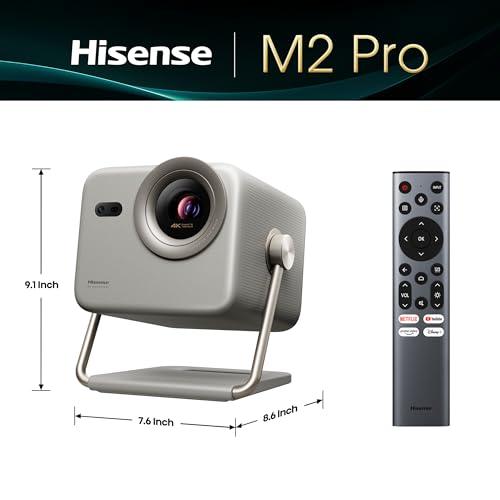
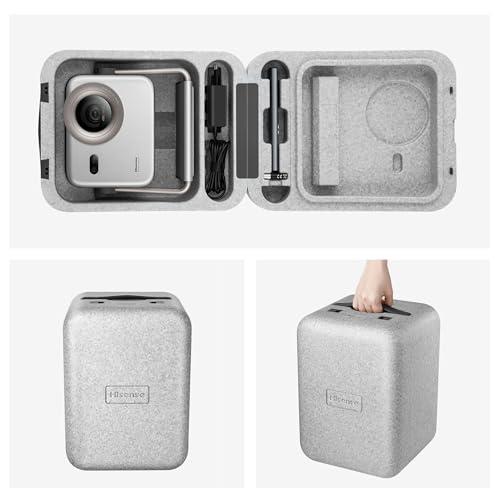
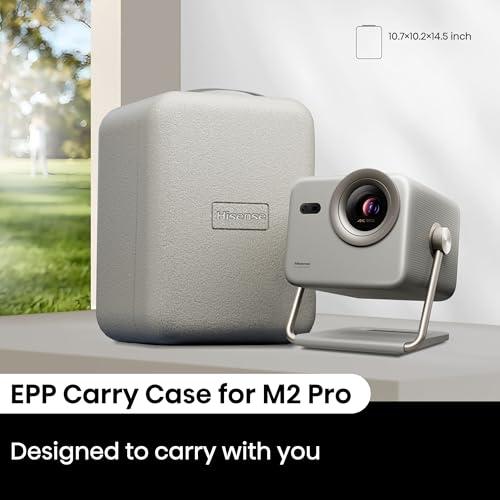
The Epson EpiqVision Mini EF11 Laser Projector weighs only 2.7 pounds and measures 6.9" x 6.9" x 2.6", making it extremely portable. The Hisense M2 Pro weighs 8.6 pounds at 7.6" x 8.6" x 9.1", offering more features but less portability. Choose the Epson EF11 for maximum portability or the Hisense for advanced features in a reasonably portable package.
The Hisense M2 Pro 4K Triple Laser Portable Projector includes built-in VIDAA Smart OS with streaming apps like Netflix, YouTube, and Disney+ pre-installed. The Epson EpiqVision Mini EF11 requires external streaming devices like Apple TV or Roku connected via HDMI. The Hisense M2 Pro offers more convenience, while the Epson approach provides more flexibility and potentially better long-term software support.
The Hisense M2 Pro 4K Triple Laser Portable Projector excels for gaming with 240Hz refresh rate support and 12ms input lag, making it suitable for competitive gaming. The Epson EpiqVision Mini EF11 Laser Projector doesn't specify gaming-focused features and likely has standard input lag. Serious gamers should choose the Hisense M2 Pro for responsive, high-refresh gaming performance.
Both projectors excel in different ways. The Hisense M2 Pro uses triple laser technology covering 110% BT.2020 color space for vibrant, wide-gamut colors. The Epson EF11 employs 3LCD technology known for natural skin tones and accurate color reproduction. The Hisense M2 Pro offers more vivid colors and 4K detail, while the Epson EF11 provides more natural, film-like color accuracy in Full HD.
The Hisense M2 Pro 4K Triple Laser Portable Projector offers superior setup flexibility with optical zoom (1.0-1.3x), 360° horizontal rotation, 135° vertical adjustment, and intelligent wall color adaptation. The Epson EpiqVision Mini EF11 provides standard keystone correction and auto picture skew correction. The Hisense M2 Pro handles challenging installation scenarios much better than the Epson.
The Hisense M2 Pro 4K Triple Laser Portable Projector features a robust 20W speaker system with Dolby Audio and DTS Virtual:X support, providing impressive spatial sound. The Epson EpiqVision Mini EF11 has basic 1.5W dual speakers suitable for dialogue but lacking power for cinematic audio. The Hisense M2 Pro offers significantly better built-in audio performance.
The Epson EpiqVision Mini EF11 Laser Projector typically offers better value, delivering excellent Full HD performance, proven reliability, and ultra-portability at a more accessible price point. The Hisense M2 Pro commands a premium for its 4K resolution, advanced features, and comprehensive smart platform. Choose the Epson EF11 for value or the Hisense for premium features.
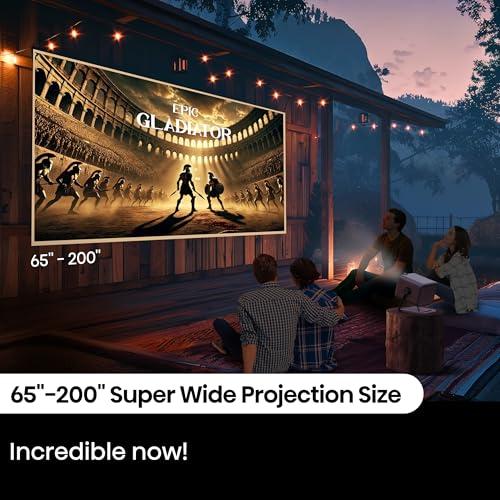
The Hisense M2 Pro 4K Triple Laser Portable Projector supports 65" to 200" screen sizes, making it excellent for large home theater setups. The Epson EpiqVision Mini EF11 works best with 30" to 150" screens. For screens above 120", the Hisense M2 Pro's 4K resolution and higher brightness provide better image quality than the Epson's Full HD resolution.
The Hisense M2 Pro 4K Triple Laser Portable Projector offers 25,000+ hours of laser life, while the Epson EpiqVision Mini EF11 Laser Projector provides 20,000 hours. Both offer excellent longevity compared to traditional lamp projectors. The Hisense M2 Pro has a slight advantage in laser lifespan, but both should last many years of regular use without replacement.
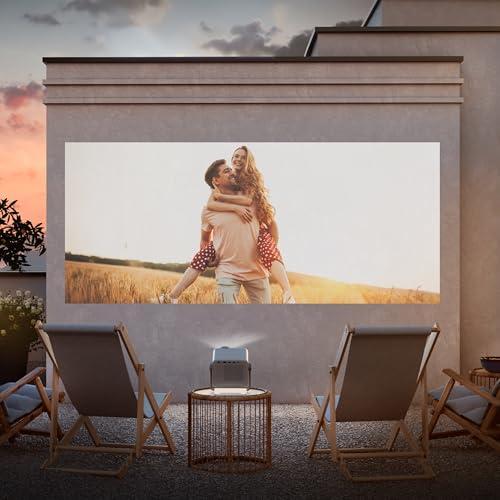
Both projectors work for outdoor use, but the Hisense M2 Pro 4K Triple Laser Portable Projector has advantages with higher brightness (1,300 vs 1,000 lumens), larger screen size capability (up to 200"), and more flexible positioning options. However, the Epson EpiqVision Mini EF11's ultra-light 2.7-pound design makes it easier to transport for outdoor events. Choose the Hisense M2 Pro for better outdoor image quality or the Epson EF11 for maximum portability.
We've done our best to create useful and informative comparisons to help you decide what product to buy. Our research uses advanced automated methods to create this comparison and perfection is not possible - please contact us for corrections or questions. These are the sites we've researched in the creation of this article: thegadgetflow.com - valueelectronics.com - youtube.com - projectorscreenstore.com - whathifi.com - hisense-usa.com - tomsguide.com - content.syndigo.com - youtube.com - shop.hisense-usa.com - avsforum.com - projectorscreen.com - projectorscreen.com - projectorcentral.com - avsforum.com - youtube.com - projector-database.com - bestbuy.com - bhphotovideo.com - youtube.com - bestbuy.com - gagadget.com - epson.com - projectorreviews.com - audiogeneral.com - projectorreviews.com - epson.com - youtube.com - epson.com - youtube.com - mediaserver.goepson.com - files.support.epson.com - staples.com - projectorcentral.com - bestbuy.com - planettv.com - dell.com - epson.eu - projectortop.com

Privacy Policy
Terms and Conditions - Affiliate Policy
Home Security
© Copyright 2008-2026.
11816 Inwood Rd #1211, Dallas, TX 75244