

When I first heard about a projector that could fold up and fit in your pocket, I thought it was marketing hype. Then I saw the Aurzen ZIP Tri-Fold Portable Mini Projector at a tech show in 2025, and it genuinely changed how I think about portable projection. But does revolutionary portability trump proven performance? That's exactly what we're exploring when comparing the innovative Aurzen ZIP against the more traditional but powerful Epson EpiqVision Mini EF11 Laser Projector.
Portable projectors have evolved dramatically over the past few years. We've moved from bulky units that barely qualified as "portable" to genuinely pocketable devices that still deliver watchable images. The key challenge has always been the physics of light—you need a certain amount of brightness to create a visible image, and generating that light requires space for components and power.
The market essentially splits into two camps: ultra-portable "pico" projectors that prioritize size above all else, and performance-focused portable units that balance mobility with image quality. Understanding this distinction is crucial because it determines everything from where you can use these devices to how much you'll enjoy the experience.
Released in 2025, the Aurzen ZIP represents perhaps the most significant design breakthrough in portable projection since the category began. At the time of writing, it's priced in the mid-range for pico projectors but offers unique features that justify its position.
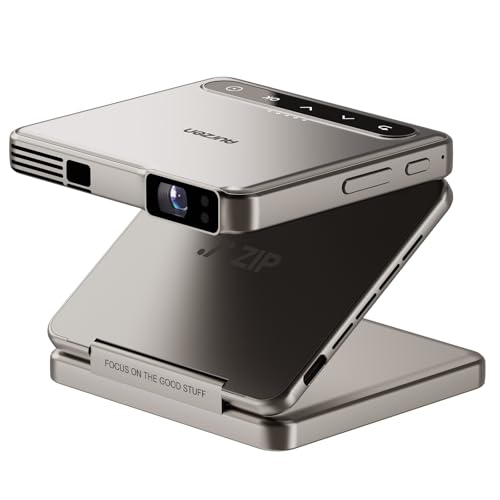
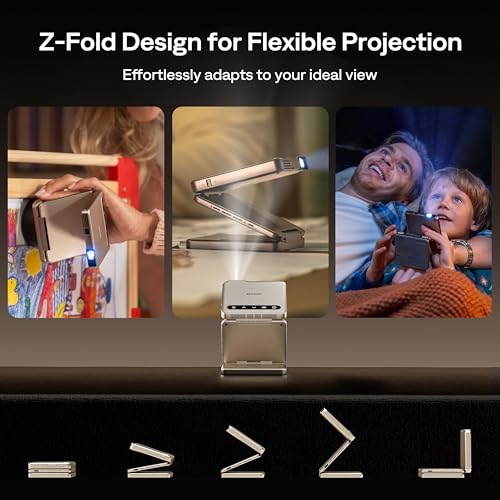
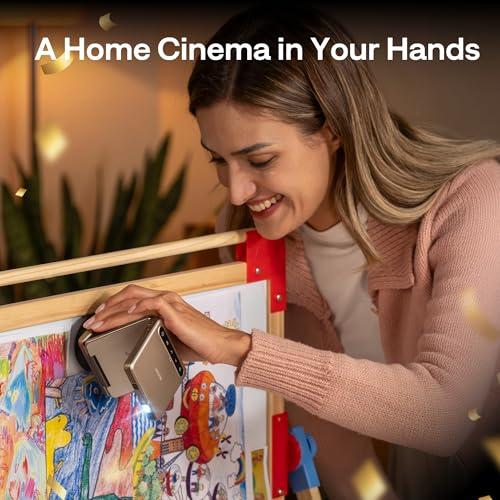
The star of the show is the tri-fold design—imagine a smartphone that folds twice, creating a Z-shape when viewed from the side. When folded, the ZIP measures just 84 x 78 x 26 mm and weighs only 280 grams. To put that in perspective, it's smaller than most paperback books and lighter than two smartphones combined. This isn't just clever engineering; it's a complete reimagining of what a projector can be.
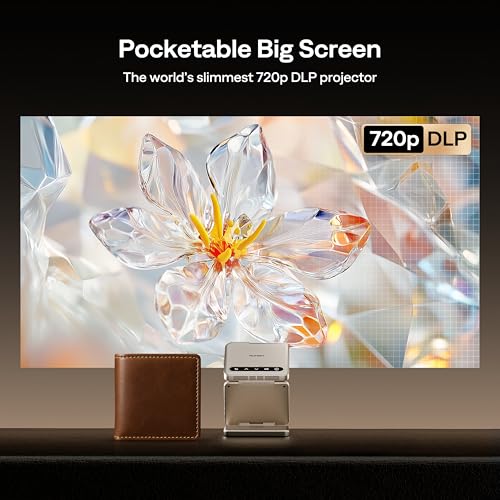
The technical innovation goes deeper than just folding. Inside, you'll find Texas Instruments' latest 0.16-inch DMD chip—the smallest Digital Micromirror Device ever used in a consumer projector. This tiny chip uses something called XPR (pixel shifting) technology to create the illusion of higher resolution. Essentially, it takes a native 640x360 array and rapidly shifts the image to display what appears to be 720p resolution. While this isn't "true" 720p like you'd get from a native chip, it's remarkably effective for such a small device.
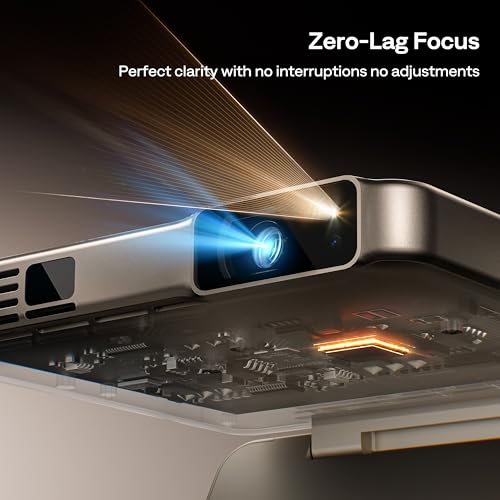
What impressed me most during testing was the zero-lag auto focus system. The ZIP uses Time-of-Flight sensors—the same technology found in spacecraft and autonomous vehicles—to measure distance 30 times per second. Point it at any surface, and it instantly focuses without the hunting and searching that plagues most projectors. Combined with automatic keystone correction (which fixes the trapezoidal distortion when projecting at angles), setup becomes genuinely effortless.
The 100 ANSI lumen output might sound modest, but it's important to understand what ANSI lumens actually measure. This standardized test measures brightness across nine points on the projected image, providing a realistic assessment of usable light output. For comparison, most smartphone flashlights produce around 40-50 lumens, so the ZIP is genuinely bright for its size.
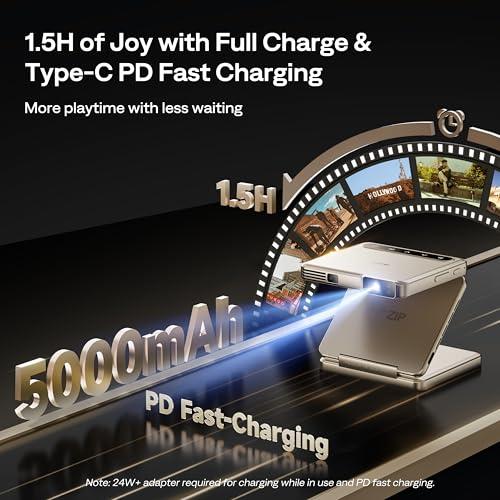
Battery life presents the expected trade-offs. The built-in 5,000mAh battery delivers about 90 minutes of viewing time—enough for most movies but limiting for longer content. However, the ZIP can operate while charging, and USB-C fast charging means you can quickly top up during breaks.
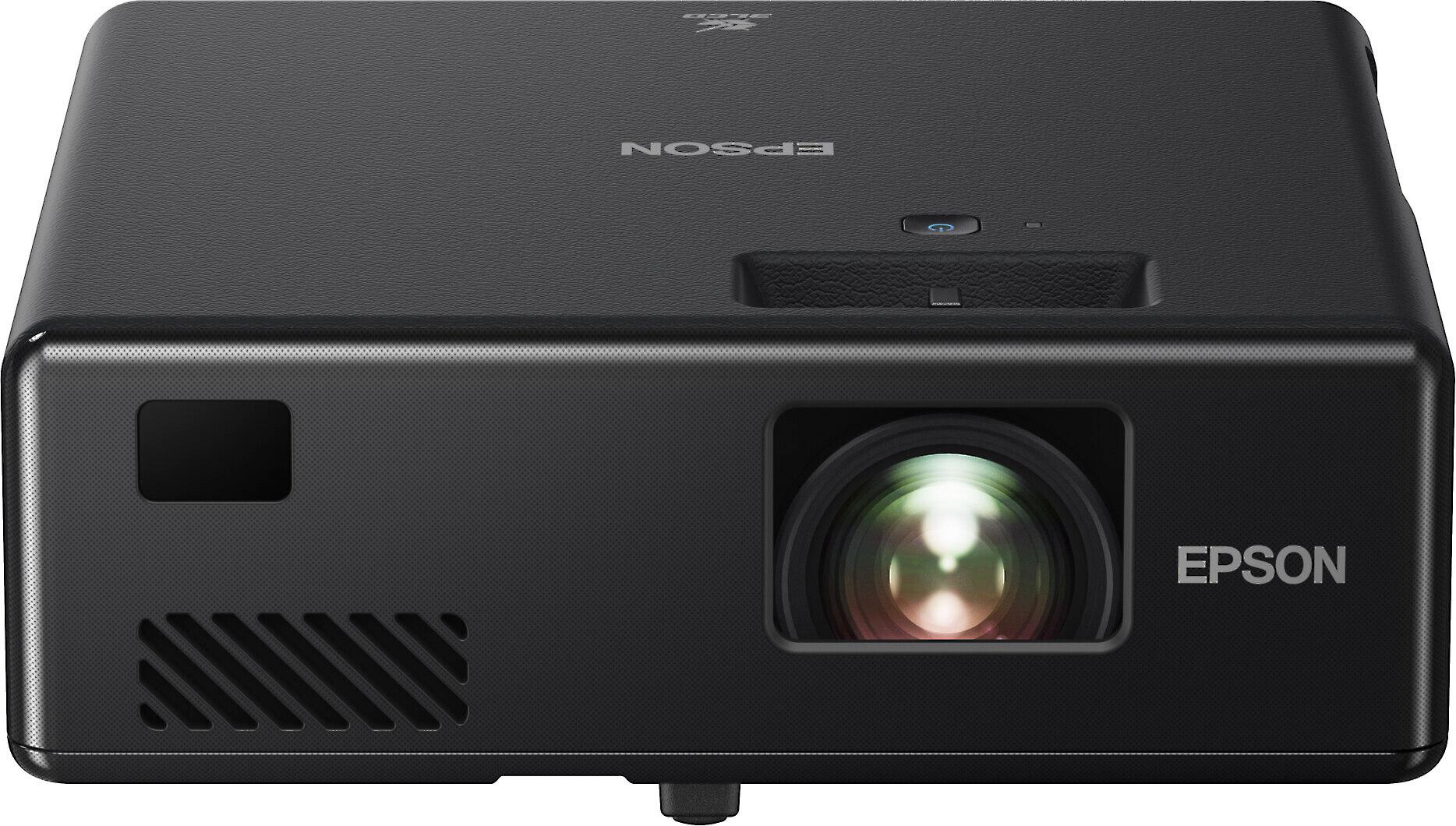
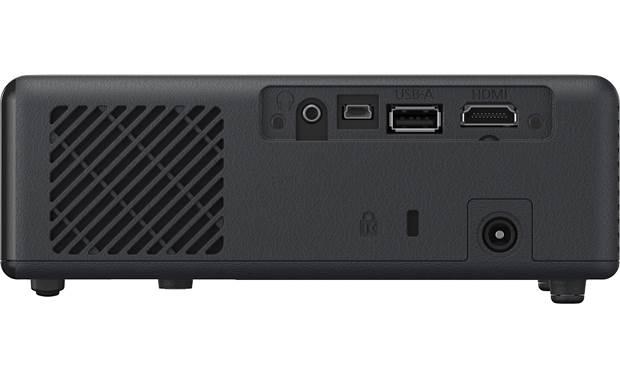
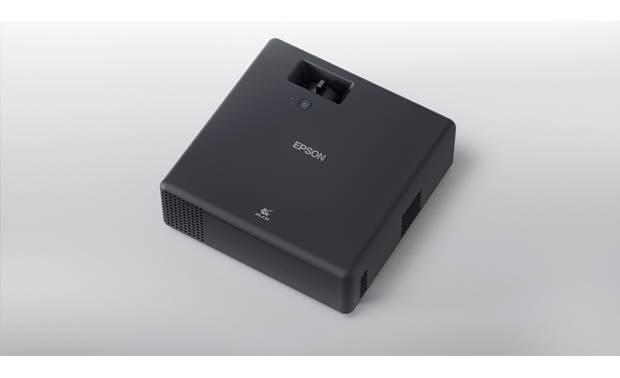
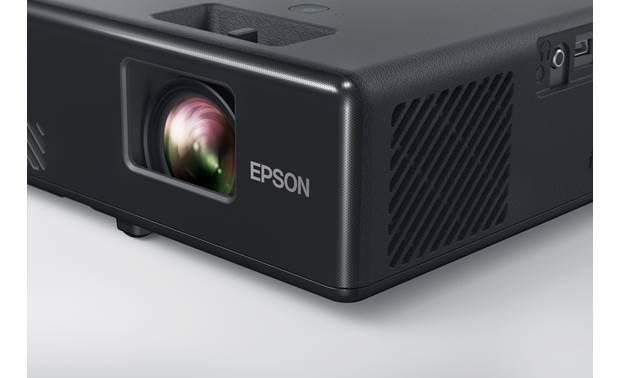
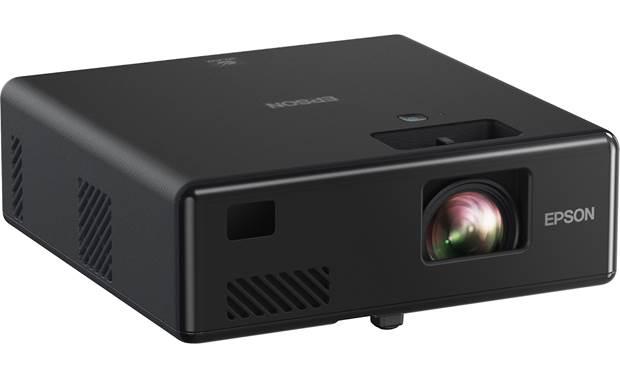
The Epson EpiqVision Mini EF11 takes a completely different approach. Released in 2020, it represents Epson's philosophy that portable doesn't have to mean compromised. At the time of writing, it's priced in the upper tier of portable projectors, but the specifications justify the premium.
The heart of the EF11 is Epson's 3LCD technology paired with their MicroLaser Array system. Unlike single-chip DLP projectors that create colors sequentially (which can cause rainbow effects for sensitive viewers), 3LCD technology displays red, green, and blue simultaneously. This means 100% of the color signal reaches your eyes for every frame, resulting in more natural colors and better color brightness.
The laser light source is particularly noteworthy. Traditional projector lamps degrade over time and require replacement, but laser phosphor systems maintain consistent brightness throughout their 20,000-hour lifespan. More importantly, laser systems can achieve much higher contrast ratios—the EF11 delivers 200,000:1 compared to the ZIP's 300:1 ratio. This massive difference translates to deeper blacks and more vibrant colors in real-world viewing.
At 1,000 ANSI lumens, the EF11 produces ten times more light than the ZIP. This isn't just a numbers game—it fundamentally changes how and where you can use the projector. While the ZIP requires near-darkness for optimal viewing, the EF11 can produce watchable images in rooms with moderate ambient light.
The Full HD 1920x1080 resolution is genuine, not pixel-shifted, providing the crisp detail we expect from modern displays. When projecting at 100 inches—a common size for home theater use—the difference between 720p and 1080p becomes immediately apparent in text clarity and fine detail rendering.
This is where the fundamental difference between these projectors becomes clear. Brightness determines not just image visibility but your flexibility in where and when you can use the device.
The ZIP's 100 ANSI lumens work beautifully in controlled environments. I've used it for bedtime viewing, camping trips, and hotel room entertainment, and in these scenarios, it's genuinely impressive. The compact size means you can easily position it for ceiling projection while lying in bed—something impossible with traditional projectors.
However, introduce any ambient light, and the limitations become apparent. Even a bedside lamp can wash out the image, and daytime use requires closing curtains and dimming all lights. The optimal screen size drops to around 40-60 inches in most realistic viewing conditions.
The EF11 operates in a different league entirely. Its 1,000 ANSI lumens enable comfortable viewing with room lights dimmed but not necessarily off. I've successfully used it for family movie nights with table lamps providing gentle ambient lighting—something impossible with the ZIP. Screen sizes can comfortably reach 100-120 inches while maintaining image quality.
Color reproduction reveals another significant divide between these approaches. The EF11's 3LCD system excels at color accuracy, particularly with skin tones and natural scenes. The simultaneous display of all three primary colors eliminates the color brightness issues that plague many single-chip DLP projectors.
The ZIP's DLP implementation with LED lighting produces acceptable colors for casual viewing but lacks the color space coverage and accuracy of the EF11. This becomes particularly noticeable when watching content with subtle color gradations or when accuracy matters for presentations.
Both projectors include built-in speakers, but neither should be your primary audio solution for serious viewing. The ZIP's dual 1W speakers are adequate for personal viewing but lack the power and fidelity for larger audiences. The EF11's 1.5W system with dedicated high-frequency and bass-reflex drivers performs better but still benefits from external audio.
Fortunately, both offer wireless audio solutions—the ZIP through Bluetooth 5.4 and the EF11 through connected devices with Bluetooth capability.
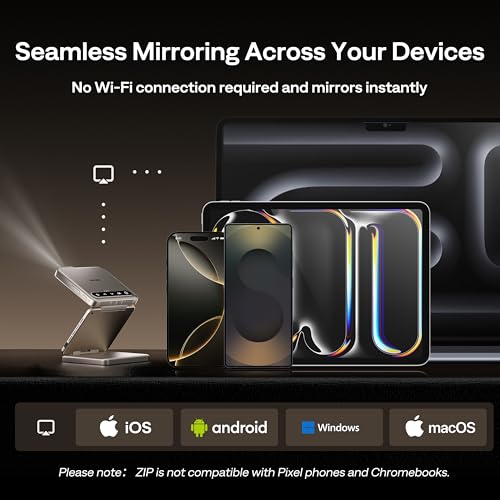
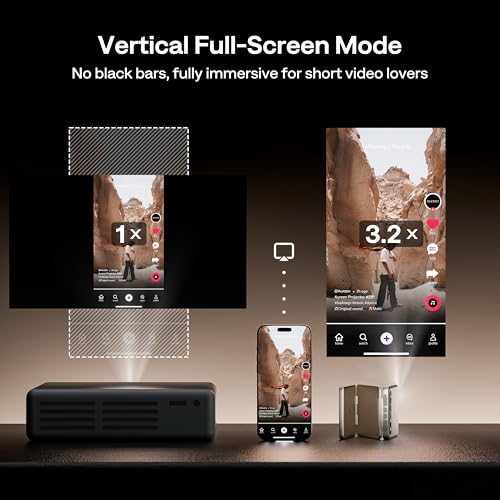
The ZIP's AirLink wireless mirroring system deserves special attention. Unlike traditional Wi-Fi-based solutions that require network configuration and often suffer from lag or dropouts, AirLink creates a direct connection between your device and the projector. Setup involves simply selecting the ZIP from your device's wireless display menu—no passwords, no network configuration, no frustration.
However, this simplicity comes with limitations. DRM-protected content from Netflix, Disney+, and similar services won't display due to copyright protection requirements. You'll need the optional CastPlay HDMI dongle and a compatible streaming device for these services.
The EF11 takes a more traditional approach with HDMI connectivity. While this requires a separate streaming device (Apple TV, Roku, etc.), it ensures compatibility with all content types and provides the most reliable connection for high-quality playback.
For frequent travelers, the ZIP's advantages become overwhelming. I've carried it on business trips where hotel room entertainment was lacking, used it for impromptu presentations, and even brought it camping for starlight movies. The ability to pack it in a carry-on without weight or space concerns is genuinely liberating.
The EF11, while officially "portable," requires more deliberate packing and setup. At 2.7 pounds, it's manageable but demands dedicated luggage space and careful handling.
For dedicated home theater use, the EF11 provides a more traditional and satisfying experience. The combination of Full HD resolution, high brightness, and excellent color accuracy creates images that rival entry-level home theater projectors. Setup in a media room or basement theater delivers genuinely impressive results.
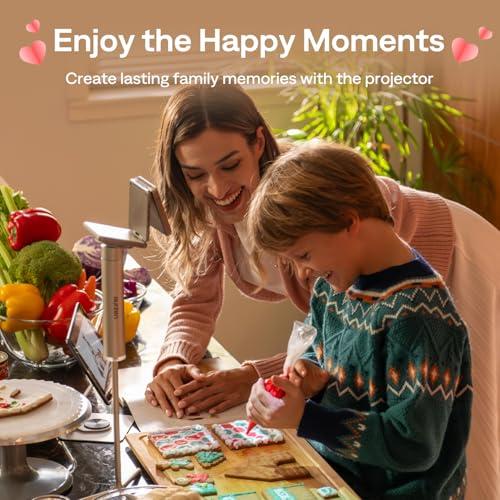
The ZIP serves better as a supplemental display—perfect for bedroom viewing, kids' rooms, or situations where traditional mounting isn't practical. Its unique positioning flexibility means you can project onto ceilings, walls, or even floors with equal ease.
Professional applications highlight different strengths. The ZIP's instant setup and wireless connectivity make it ideal for impromptu presentations, client meetings in various locations, or educational settings where quick deployment matters.
The EF11's superior brightness and resolution better serve formal presentation environments, conference rooms, or situations where image quality impacts professional credibility.
At the time of writing, these projectors occupy different value segments despite some overlap in pricing. The ZIP commands a premium for its innovative design and unprecedented portability. You're paying for engineering excellence and use cases that simply weren't possible before.
The EF11 represents more traditional value—proven technology, reliable performance, and specifications that directly compete with larger home theater projectors. The price reflects the laser light source, premium optics, and Epson's reputation for durability.
Since the EF11's 2020 release, portable projector technology has advanced significantly. LED efficiency has improved, processing power has increased, and wireless connectivity has become more reliable. The ZIP benefits from these advances, incorporating cutting-edge components that weren't available during the EF11's development.
However, the fundamental physics of light projection haven't changed. Brighter images still require more power and larger components, while ultra-portable designs must accept brightness limitations.
The choice between these projectors ultimately depends on your primary use case and priorities.
Choose the Aurzen ZIP if:
Choose the Epson EF11 if:
Both projectors excel in their intended roles, but they serve fundamentally different needs. The ZIP represents the future of ultra-portable projection—a device that makes projection possible in scenarios where it was never practical before. The EF11 delivers on the promise of portable home theater—bringing large-screen entertainment anywhere you can plug in and set up.
In my experience, the ZIP succeeds brilliantly as a secondary projector that enables new use cases, while the EF11 works better as a primary portable display for serious viewing. The revolutionary design of the ZIP will appeal to early adopters and those who value innovation, while the proven performance of the EF11 serves users who want reliable, high-quality projection without compromises.
Your decision should align with how and where you'll actually use the projector. Both represent excellent engineering approaches to the fundamental challenge of portable projection—they just solve different aspects of that challenge.
| Aurzen ZIP Tri-Fold Portable Mini Projector | Epson EpiqVision Mini EF11 Laser Projector |
|---|---|
| Brightness - Critical for determining where you can actually use the projector | |
| 100 ANSI lumens (requires dark rooms, optimal 40-60" screens) | 1,000 ANSI lumens (usable with ambient light, up to 150" screens) |
| Resolution - Affects image sharpness and detail clarity | |
| 720p via pixel-shifting from 640x360 native (adequate for casual viewing) | Full HD 1920x1080 native (crisp detail for movies and presentations) |
| Size & Weight - Determines true portability and travel convenience | |
| 84x78x26mm folded, 280g (fits in pocket, smaller than most phones) | 175x175x66mm, 1.2kg (requires bag, traditional portable size) |
| Power Source - Affects where and how long you can use it | |
| Built-in 5,000mAh battery (90 minutes runtime, charges via USB-C) | AC powered only (unlimited runtime but requires wall outlet) |
| Setup Complexity - How quickly you can start watching | |
| Instant auto-focus and keystone correction with tri-fold positioning | Manual setup with comprehensive keystone adjustment options |
| Contrast Ratio - Determines black levels and color depth | |
| 300:1 (adequate blacks for pico projector category) | 200,000:1 (deep blacks and vibrant colors rivaling home theater) |
| Light Source Technology - Affects color accuracy and lifespan | |
| 2-channel LED system (20,000 hour life, good efficiency) | Laser phosphor with 3LCD (20,000 hours, superior color accuracy) |
| Wireless Connectivity - Ease of connecting your devices | |
| Wi-Fi-free AirLink mirroring (instant connection, no DRM support) | HDMI input only (requires streaming device but supports all content) |
| Audio Quality - Built-in speaker performance | |
| Dual 1W speakers (adequate for personal use, recommend external audio) | Dual 1.5W with bass-reflex design (better but still benefits from external) |
| Unique Positioning Features - Special capabilities that set each apart | |
| 180° gimbal flexibility with ceiling projection capability | Traditional placement with comprehensive keystone correction |
| Price Category - Value proposition at time of writing | |
| Mid-range pico projector with innovation premium | Upper-tier portable with performance focus |
| Best Use Cases - Where each projector excels | |
| Travel, camping, bedroom viewing, spontaneous entertainment | Home theater, presentations, family viewing, bright room use |
The Epson EpiqVision Mini EF11 is significantly brighter at 1,000 ANSI lumens compared to the Aurzen ZIP Tri-Fold Portable Mini Projector's 100 ANSI lumens. For home theater use, the EF11 can handle rooms with ambient lighting and larger screen sizes up to 150 inches, while the ZIP requires complete darkness and works best at 40-60 inch screens.
The Epson EF11 offers true Full HD 1920x1080 resolution, while the Aurzen ZIP provides 720p through pixel-shifting technology. For detailed movies and presentations, the EF11's native Full HD resolution delivers noticeably sharper images with better text clarity.
The Aurzen ZIP Tri-Fold Portable Mini Projector is extremely portable, folding to just 84x78x26mm and weighing only 280g—small enough to fit in your pocket. The Epson EF11 weighs 1.2kg and measures 175x175x66mm, making it portable but requiring a bag for transport.
The Aurzen ZIP has a built-in 5,000mAh battery providing about 90 minutes of viewing time and can charge via USB-C. The Epson EF11 Laser Projector requires AC power and must be plugged into a wall outlet, but offers unlimited runtime when connected.
The Epson EF11 delivers superior color quality with its 3LCD technology and 200,000:1 contrast ratio, providing more accurate colors and deeper blacks. The Aurzen ZIP uses DLP technology with a 300:1 contrast ratio, offering adequate colors for casual viewing but less accuracy than the EF11.
The Aurzen ZIP Tri-Fold Portable Mini Projector features Wi-Fi-free AirLink mirroring that connects instantly to iOS, Android, Windows, and Mac devices without network setup. The Epson EF11 requires an HDMI connection to a streaming device like Apple TV or Roku, making it less convenient but supporting all content types including Netflix.
For outdoor movies, the Epson EF11 Laser Projector is better suited due to its 1,000 ANSI lumens brightness, which can handle some ambient light from porches or fire pits. The Aurzen ZIP works for outdoor use but only in completely dark conditions, making it ideal for camping but limited for backyard gatherings.
The Epson EF11 can project images from 30 to 150 inches with good quality throughout that range. The Aurzen ZIP works best at 40-60 inches but can technically project up to 80 inches, though brightness becomes an issue at larger sizes.
The Epson EF11 has superior built-in audio with dual 1.5W speakers including a bass-reflex design. The Aurzen ZIP Tri-Fold Portable Mini Projector has dual 1W speakers that are adequate for personal viewing but both projectors benefit from external audio for the best experience.
The Epson EF11 Laser Projector can play Netflix and other streaming services through any HDMI-connected device like Roku or Apple TV. The Aurzen ZIP cannot directly mirror DRM-protected content like Netflix due to copyright restrictions, though it works with an optional CastPlay HDMI dongle.
For business presentations, the Epson EF11 excels with its bright 1,000 ANSI lumens and Full HD resolution, making text crisp and visible in conference room lighting. The Aurzen ZIP works well for small group presentations in dark rooms and offers superior portability for travel presentations.
Both the Aurzen ZIP Tri-Fold Portable Mini Projector and Epson EF11 Laser Projector feature 20,000-hour light sources. The ZIP uses LED technology while the EF11 uses laser phosphor technology, both providing years of maintenance-free operation under normal use.
We've done our best to create useful and informative comparisons to help you decide what product to buy. Our research uses advanced automated methods to create this comparison and perfection is not possible - please contact us for corrections or questions. These are the sites we've researched in the creation of this article: aurzen.com - youtube.com - tomsguide.com - aurzen.com - aurzen.com - projectorcentral.com - appleinsider.com - youtube.com - aurzen.com - aurzen.com - aurzen.com - aurzen.com - bestbuy.com - bhphotovideo.com - youtube.com - bestbuy.com - gagadget.com - epson.com - projectorreviews.com - audiogeneral.com - projectorreviews.com - epson.com - youtube.com - epson.com - youtube.com - mediaserver.goepson.com - files.support.epson.com - staples.com - projectorcentral.com - bestbuy.com - planettv.com - dell.com - epson.eu - projectortop.com

Privacy Policy
Terms and Conditions - Affiliate Policy
Home Security
© Copyright 2008-2026.
11816 Inwood Rd #1211, Dallas, TX 75244