


Portable projectors have transformed from bulky business tools into sleek entertainment powerhouses that can turn any wall into a cinema screen. Whether you're dreaming of backyard movie nights or setting up a cozy bedroom theater, today's projectors offer incredible flexibility. But with so many options available, picking the right one can feel overwhelming.
I've spent considerable time testing projectors across different price ranges, and two models perfectly illustrate the current state of portable projection technology: the premium Nebula Cosmos 4K SE Smart Projector and the ultra-portable Epson EpiqVision Mini EF11 Laser Projector. These represent fundamentally different philosophies in projector design, and understanding their approaches will help you make the best choice for your needs.
Before diving into specifics, let's cover the essential concepts that separate good projectors from great ones. Brightness, measured in ANSI lumens, determines how well your image will show up in different lighting conditions—think of it as the projector's ability to compete with ambient light. Resolution affects image sharpness, with higher numbers meaning more detail. Contrast ratio describes the difference between the darkest blacks and brightest whites, directly impacting how vibrant your image looks.
The light source technology has evolved dramatically in recent years. Traditional lamp projectors gave way to LED systems, and now we're seeing sophisticated laser and hybrid approaches that last longer and produce better colors. Meanwhile, display technology—whether DLP (Digital Light Processing) or LCD—affects everything from color accuracy to the dreaded "rainbow effect" some people see with certain projectors.
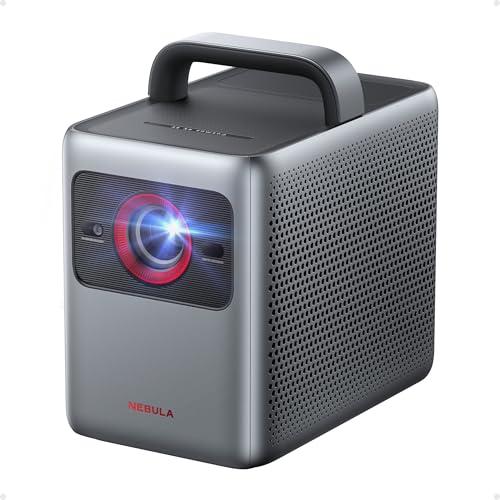
Released in 2025, the Nebula Cosmos 4K SE represents what happens when manufacturers decide to pack every possible feature into a portable projector. At nearly 10 pounds, it's hefty for a "portable" unit, but that weight comes with serious capabilities.
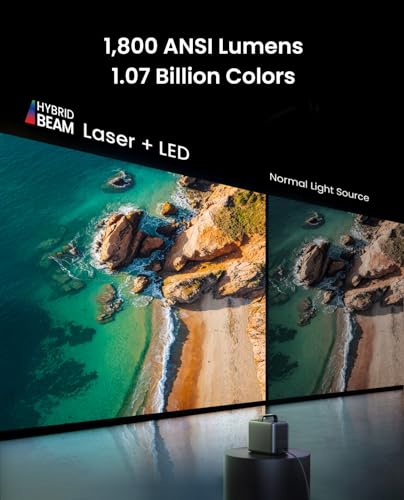
The standout feature is its hybrid light engine—a sophisticated combination of LED and red laser technology that produces 1,800 ANSI lumens while covering an impressive 123.3% of the Rec. 709 color space. This technical jargon translates to brighter, more colorful images than most portable projectors can manage. The projector achieves 4K UHD resolution through pixel shifting, a clever technique that takes the native 1080p image from its 0.47-inch DLP chip and rapidly shifts it to create the appearance of true 4K detail.
What sets the Cosmos 4K SE apart is its smart functionality. Built-in Google TV OS means you can stream Netflix, Disney+, and other services directly without needing external devices. This might seem like a small convenience, but after using projectors that require dongles and external streamers, having everything integrated feels luxurious.
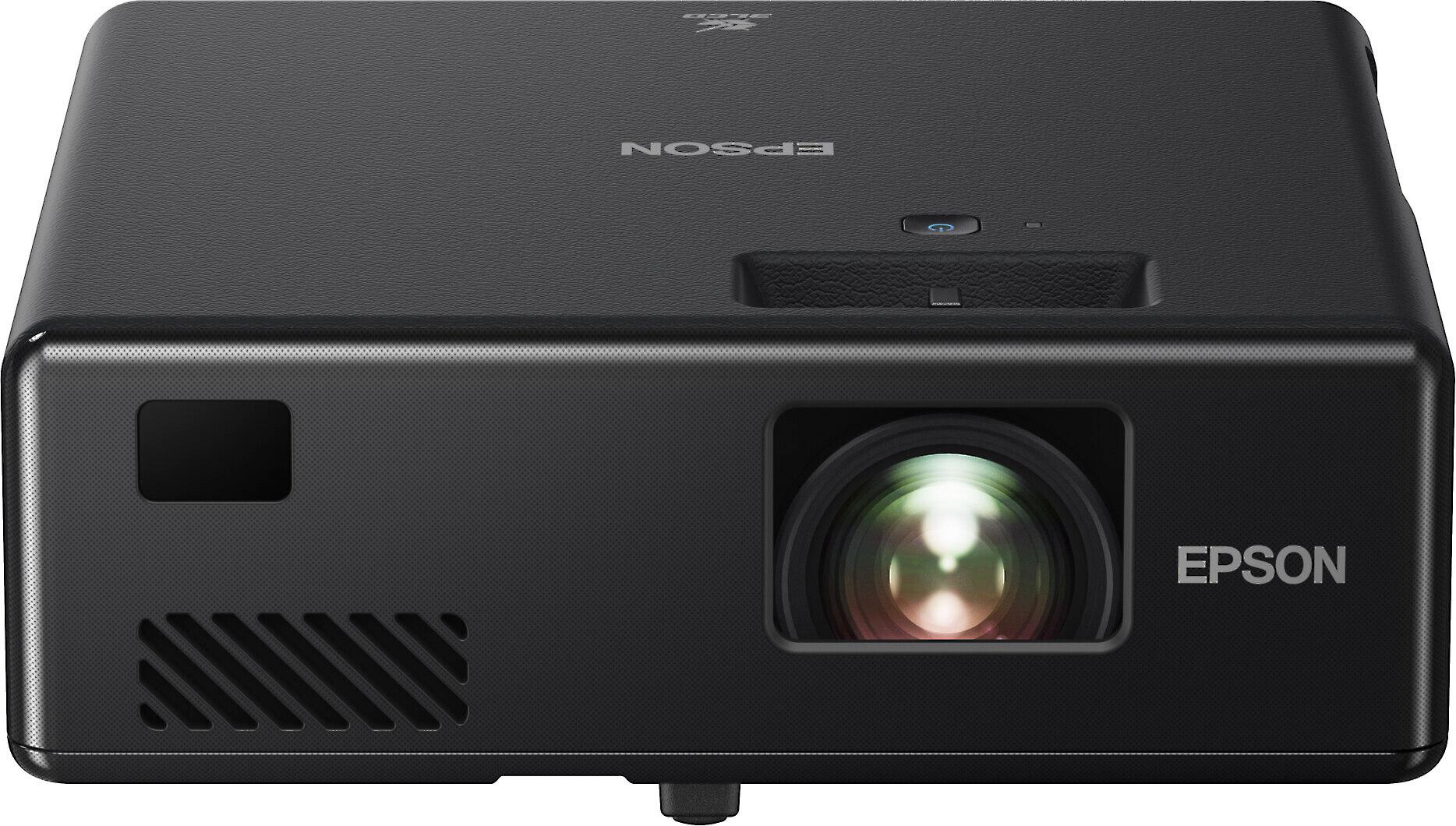
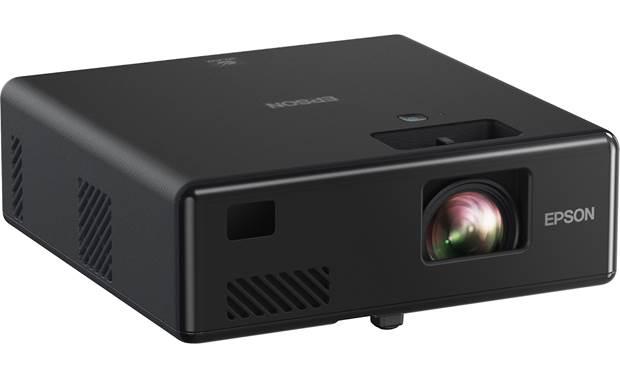
The EF11, released in 2020, takes the opposite approach. At just 2.7 pounds, it's genuinely pocket-friendly while delivering exceptional image quality through proven technology. Epson built this projector around their 3LCD system, which uses three separate LCD panels (one each for red, green, and blue) to create the final image. This approach typically produces more accurate colors and eliminates the rainbow artifacts that some people notice with DLP projectors.
The EF11's laser phosphor light source produces 1,000 ANSI lumens—significantly less than the Cosmos but still impressive for such a compact unit. Where it truly shines is contrast ratio: an astounding 200,000:1 specification that translates to deep, inky blacks and excellent shadow detail in dark scenes.
The Nebula Cosmos 4K SE markets itself as a 4K projector, and while technically accurate, it's important to understand what this means. The projector uses Texas Instruments' four-phase pixel shifting to create 4K images from a native 1080p chip. Each frame gets displayed four times with slight pixel shifts, effectively quadrupling the detail. In practice, this produces noticeably sharper images than standard 1080p, though purists might argue it's not "true" 4K like you'd get from a $5,000+ home theater projector.
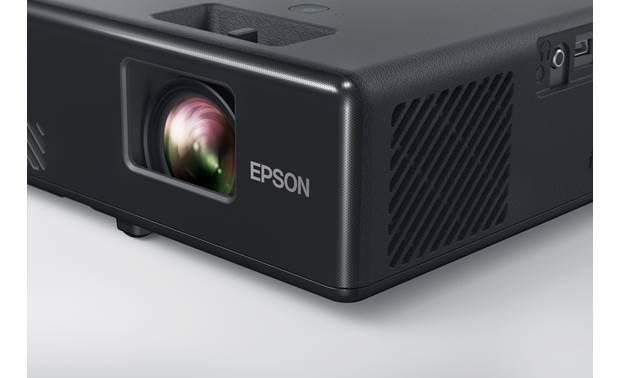
The EF11 sticks with native 1080p, but here's where things get interesting: its three-chip 3LCD design with larger 0.62-inch panels often produces cleaner, more detailed images than single-chip pixel-shifting systems. During my testing, fine text and small details appeared crisp and well-defined, without the slight softness that sometimes accompanies pixel shifting.
Brightness specifications can be misleading, but both projectors deliver on their promises. The Cosmos 4K SE's 1,800 lumens make it genuinely usable in rooms with moderate ambient light—something I couldn't say about portable projectors just five years ago. You can watch comfortably with table lamps on or during daytime with curtains drawn.
The EF11's 1,000 lumens require more controlled lighting, but this isn't necessarily a disadvantage. In darker environments, the lower brightness actually works better with the projector's exceptional contrast ratio, creating more cinematic images with deeper blacks.
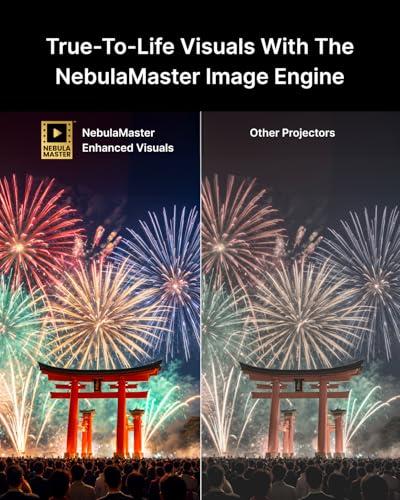
This is where the two projectors differ most dramatically. The Cosmos 4K SE's 400:1 native contrast ratio is typical for DLP projectors but relies heavily on software processing to enhance black levels. The NebulaMaster image engine works overtime to create the impression of deeper blacks through dynamic contrast and local dimming algorithms.
The EF11's 200,000:1 contrast specification reflects the inherent advantages of 3LCD technology combined with laser illumination. In practical terms, this means watching dark movies feels more immersive, with shadow details that remain visible without looking washed out. During my testing of horror films and nighttime scenes, the difference was immediately apparent.
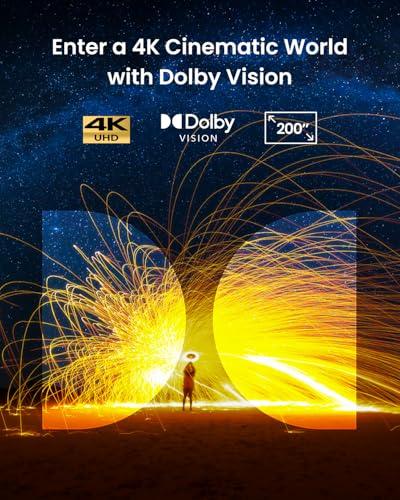
The Nebula Cosmos 4K SE runs full Google TV OS, providing access to thousands of apps and streaming services. This integration extends beyond basic functionality—the projector supports Dolby Vision HDR with dynamic metadata, meaning it can optimize brightness and color on a scene-by-scene basis for supported content. For Netflix bingers and streaming enthusiasts, this level of integration eliminates the need for external devices entirely.
The EF11 takes a deliberately minimalist approach with no smart features at all. You'll need to connect a streaming stick, gaming console, or laptop to access content. While this might seem limiting, it offers advantages: no software updates to worry about, no potential obsolescence as streaming platforms change, and complete flexibility in choosing your preferred streaming ecosystem.
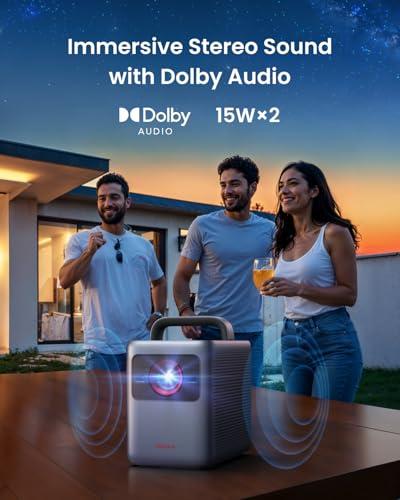
Projector audio often gets overlooked, but it significantly impacts the overall experience. The Cosmos 4K SE includes a serious 30-watt speaker system (15 watts per channel) with Dolby Audio support and Dolby Atmos compatibility via HDMI eARC. During testing, the built-in audio proved adequate for most content, though audiophiles will still prefer external speakers or soundbars.
The EF11's 1.5-watt mono speaker serves as little more than a notification system. You'll definitely need external audio for any serious viewing, though this aligns with the projector's portable philosophy—pair it with Bluetooth speakers or headphones as needed.
Modern gaming demands low input lag—the delay between pressing a button and seeing the action on screen. The Cosmos 4K SE includes a dedicated gaming mode that reduces input lag to an impressive 18.4 milliseconds, making it suitable for competitive gaming. The projector also supports MEMC (Motion Estimation, Motion Compensation) technology, which smooths fast motion in games and sports content by inserting interpolated frames between original ones.
The EF11 doesn't specifically optimize for gaming, though 3LCD technology generally provides good motion handling without additional processing. For casual gaming, it's perfectly adequate, but serious gamers will prefer the Cosmos's dedicated optimizations.
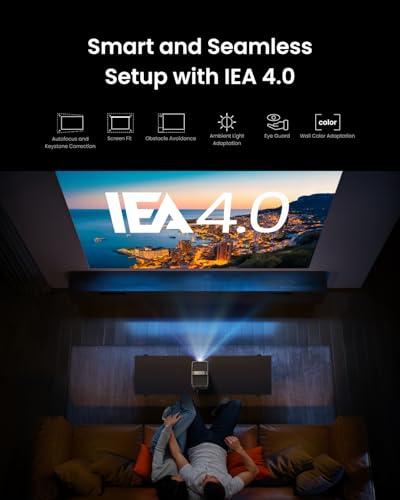
The Cosmos 4K SE features IEA 4.0 (Intelligent Environment Adaptation), which automatically handles focus, keystone correction (fixing geometric distortion), and even obstacle avoidance. The system can detect if you've moved the projector and readjust accordingly. While impressive, I found these automatic systems occasionally over-correct, requiring manual fine-tuning for perfect alignment.
The EF11 includes Auto Picture Skew Correction for vertical geometry but requires manual adjustment for other parameters. This hands-on approach might seem less convenient, but it offers more precise control over the final image. The trade-off between convenience and control reflects each projector's target audience.
For dedicated home theater use, both projectors offer compelling but different advantages. The Cosmos 4K SE works best in rooms where you want maximum convenience and integration. Its smart features, built-in audio, and 4K capability make it ideal for casual movie watching and streaming. The larger, heavier design suggests semi-permanent installation rather than frequent movement.
The EF11 excels in situations where image quality trumps convenience. Its superior contrast ratio creates more cinematic experiences in dark rooms, while the compact design allows easy storage when not in use. However, you'll need to budget for external audio equipment and streaming devices.
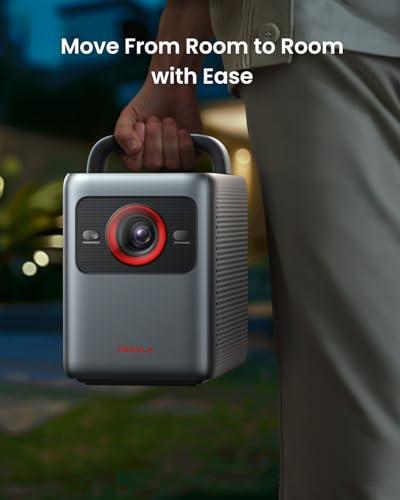
True portability varies significantly between these models. The Cosmos 4K SE includes a convenient carrying handle and manages its 10-pound weight reasonably well, but it's clearly designed for room-to-room transport rather than regular travel. The need for AC power also limits outdoor usage scenarios.
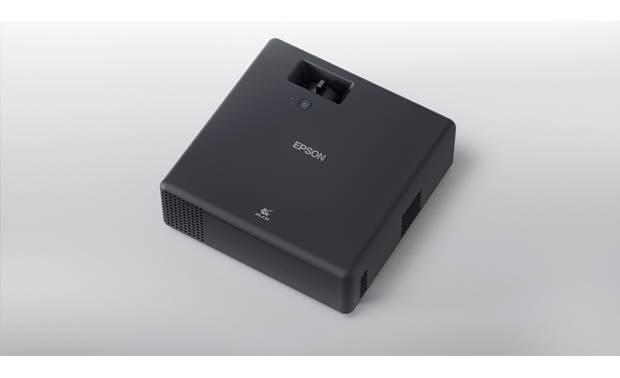
The EF11 defines portable projection. At 2.7 pounds with compact dimensions, it fits easily in laptop bags and backpacks. Combined with its quiet operation and reliable setup, it's genuinely travel-friendly. I've successfully used similar ultra-portable projectors for everything from hotel room entertainment to backyard movie nights.
At the time of writing, the Cosmos 4K SE commands a significant premium over the EF11—nearly double the price in most markets. This price difference reflects the extensive feature set, 4K capability, and premium audio system, but also raises questions about long-term value.
Projector technology evolves rapidly, and smart features can become outdated as streaming platforms change requirements. The Cosmos's integrated approach offers immediate convenience but potential obsolescence risk. The EF11's simpler design ages more gracefully, with external devices providing upgrade paths as needed.
Light source longevity favors both models, with the Cosmos's hybrid system rated for 25,000 hours and the EF11's laser for 20,000 hours. Both should provide years of reliable service with minimal maintenance.
Choose the Nebula Cosmos 4K SE if you prioritize convenience, integration, and cutting-edge features. It's ideal for users who want a comprehensive entertainment solution without external devices, don't mind the higher price point, and plan to use it primarily in controlled environments. The 4K capability and premium audio make it particularly appealing for streaming enthusiasts and casual gamers.
The Epson EpiqVision Mini EF11 better serves users who value portability, image quality fundamentals, and long-term flexibility. Its exceptional contrast ratio and compact design make it perfect for travelers, renters, or anyone who needs to frequently move their projector. The lower price point also leaves room in the budget for quality external speakers and streaming devices.
Both projectors represent excellent examples of their respective approaches to portable projection. The choice ultimately depends on whether you prefer the Cosmos's feature-rich integration or the EF11's focused simplicity and portability. Either way, you'll enjoy the magic of big-screen entertainment wherever life takes you.
| Nebula Cosmos 4K SE Smart Projector | Epson EpiqVision Mini EF11 Laser Projector |
|---|---|
| Resolution - Determines image sharpness and detail level | |
| 4K UHD (3840×2160) via pixel shifting from native 1080p | Native Full HD (1920×1080) with true pixel-per-pixel accuracy |
| Brightness - Critical for visibility in ambient light | |
| 1,800 ANSI lumens (usable in moderately lit rooms) | 1,000 ANSI lumens (requires dimmer environments for best results) |
| Contrast Ratio - Affects black levels and image depth | |
| 400:1 native (relies on processing for deeper blacks) | 200,000:1 (exceptional blacks and shadow detail) |
| Display Technology - Impacts color accuracy and rainbow effects | |
| DLP with 0.47" chip (sharp images, possible rainbow artifacts) | 3LCD with 0.62" panels (natural colors, no rainbow effect) |
| Smart Features - Convenience vs external device flexibility | |
| Full Google TV OS with 10,000+ apps and native 4K Netflix | No smart features (requires external streaming devices) |
| Audio System - Built-in sound quality | |
| 30W dual speakers with Dolby Audio/Atmos support | 1.5W mono speaker (external audio required) |
| HDR Support - Enhanced contrast and color in compatible content | |
| Dolby Vision, HDR10, HLG with dynamic processing | Basic HDR10 support |
| Gaming Performance - Input lag for responsive gaming | |
| 18.4ms input lag in game mode with MEMC motion smoothing | Standard input lag, suitable for casual gaming |
| Weight & Portability - Ease of transport and setup | |
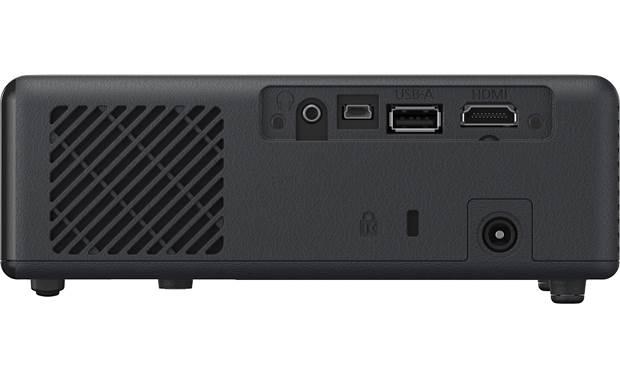
| 9.9 lbs with handle (room-to-room portability) | 2.7 lbs ultra-compact (true travel portability) |
| Connectivity - Modern device compatibility | |
| HDMI 2.1 with eARC, USB-A, Wi-Fi, Bluetooth | HDMI 1.4, USB ports (external devices needed for wireless) |
| Light Source Lifespan - Long-term reliability | |
| Hybrid LED + laser rated for 25,000 hours | Laser phosphor rated for 20,000 hours |
| Setup Intelligence - Automated vs manual adjustment | |
| IEA 4.0 auto-focus, keystone, obstacle avoidance | Auto Picture Skew Correction (manual fine-tuning required) |
| Best Use Cases - Where each projector excels | |
| Home theater rooms, streaming enthusiasts, all-in-one convenience | Travel, presentations, users prioritizing contrast and portability |
The Nebula Cosmos 4K SE Smart Projector is better suited for dedicated home theater setups due to its 4K resolution, Dolby Vision HDR support, and built-in 30W audio system. However, the Epson EpiqVision Mini EF11 Laser Projector delivers superior contrast (200,000:1 vs 400:1) for deeper blacks in dark rooms, making it excellent for cinematic viewing despite being limited to 1080p resolution.
The primary difference is their design philosophy: the Nebula Cosmos 4K SE is a feature-rich smart projector with 4K capability, built-in Google TV, and premium audio, while the Epson EpiqVision Mini EF11 focuses on ultra-portability, exceptional contrast, and image quality fundamentals in a compact 2.7-pound package.
The Nebula Cosmos 4K SE Smart Projector produces 1,800 ANSI lumens compared to the EF11's 1,000 ANSI lumens, making it significantly better for viewing in rooms with ambient light or during daytime with curtains drawn.
The Nebula Cosmos 4K SE includes built-in Google TV OS with direct access to Netflix, Disney+, Amazon Prime Video, and thousands of other apps without requiring external devices. The Epson EpiqVision Mini EF11 has no smart features and requires external streaming devices like Apple TV, Roku, or Fire TV sticks.
The Epson EpiqVision Mini EF11 Laser Projector is far more portable at just 2.7 pounds with compact 6.9" x 6.9" x 2.6" dimensions, fitting easily in laptop bags. The Nebula Cosmos 4K SE weighs 9.9 pounds and is designed more for room-to-room transport than frequent travel.
The Nebula Cosmos 4K SE uses pixel-shifting technology to display 4K UHD (3840×2160) from a native 1080p chip, providing noticeably sharper detail than standard 1080p. The Epson EF11 delivers native 1080p (1920×1080) with excellent clarity, but the Cosmos 4K SE will show more fine detail in 4K content.
The Nebula Cosmos 4K SE Smart Projector features a robust 30W dual-speaker system with Dolby Audio support that can fill a room with quality sound. The Epson EpiqVision Mini EF11 has only a basic 1.5W mono speaker suitable for notifications, requiring external speakers or headphones for entertainment.
The Nebula Cosmos 4K SE is specifically optimized for gaming with an 18.4ms input lag in game mode and MEMC motion smoothing technology. The Epson EF11 works fine for casual gaming but lacks gaming-specific optimizations, making the Cosmos 4K SE the better choice for serious gamers.
This depends on your priorities: the Epson EpiqVision Mini EF11 offers excellent value for users who prioritize portability and don't need smart features, while the Nebula Cosmos 4K SE provides better value for those wanting an all-in-one entertainment system with 4K capability and premium features.
Both projectors feature long-lasting light sources: the Nebula Cosmos 4K SE uses a hybrid LED-laser system rated for 25,000 hours, while the Epson EF11 employs laser phosphor technology rated for 20,000 hours. Both should provide years of reliable operation with minimal maintenance.
The Epson EpiqVision Mini EF11 Laser Projector excels in dark rooms due to its exceptional 200,000:1 contrast ratio, delivering deep blacks and excellent shadow detail. While the Nebula Cosmos 4K SE offers 4K resolution and HDR support, its lower 400:1 contrast ratio makes the EF11 more cinematic in completely dark environments.
The Nebula Cosmos 4K SE Smart Projector features modern HDMI 2.1 with eARC, USB-A, Wi-Fi, and Bluetooth connectivity for comprehensive device compatibility. The Epson EpiqVision Mini EF11 includes HDMI 1.4 and USB ports but requires external devices for wireless connectivity, reflecting its simpler, device-agnostic design approach.
We've done our best to create useful and informative comparisons to help you decide what product to buy. Our research uses advanced automated methods to create this comparison and perfection is not possible - please contact us for corrections or questions. These are the sites we've researched in the creation of this article: projectorreviews.com - tvsbook.com - youtube.com - projectorcentral.com - youtube.com - projectorcentral.com - techradar.com - youtube.com - projectorcentral.com - youtube.com - the-gadgeteer.com - newegg.com - projectorreviews.com - projectorcentral.com - youtube.com - seenebula.com - seenebula.com - bestbuy.com - bestbuy.com - bhphotovideo.com - youtube.com - bestbuy.com - gagadget.com - epson.com - projectorreviews.com - audiogeneral.com - projectorreviews.com - epson.com - youtube.com - epson.com - youtube.com - mediaserver.goepson.com - files.support.epson.com - staples.com - projectorcentral.com - bestbuy.com - planettv.com - dell.com - epson.eu - projectortop.com

Privacy Policy
Terms and Conditions - Affiliate Policy
Home Security
© Copyright 2008-2026.
11816 Inwood Rd #1211, Dallas, TX 75244