

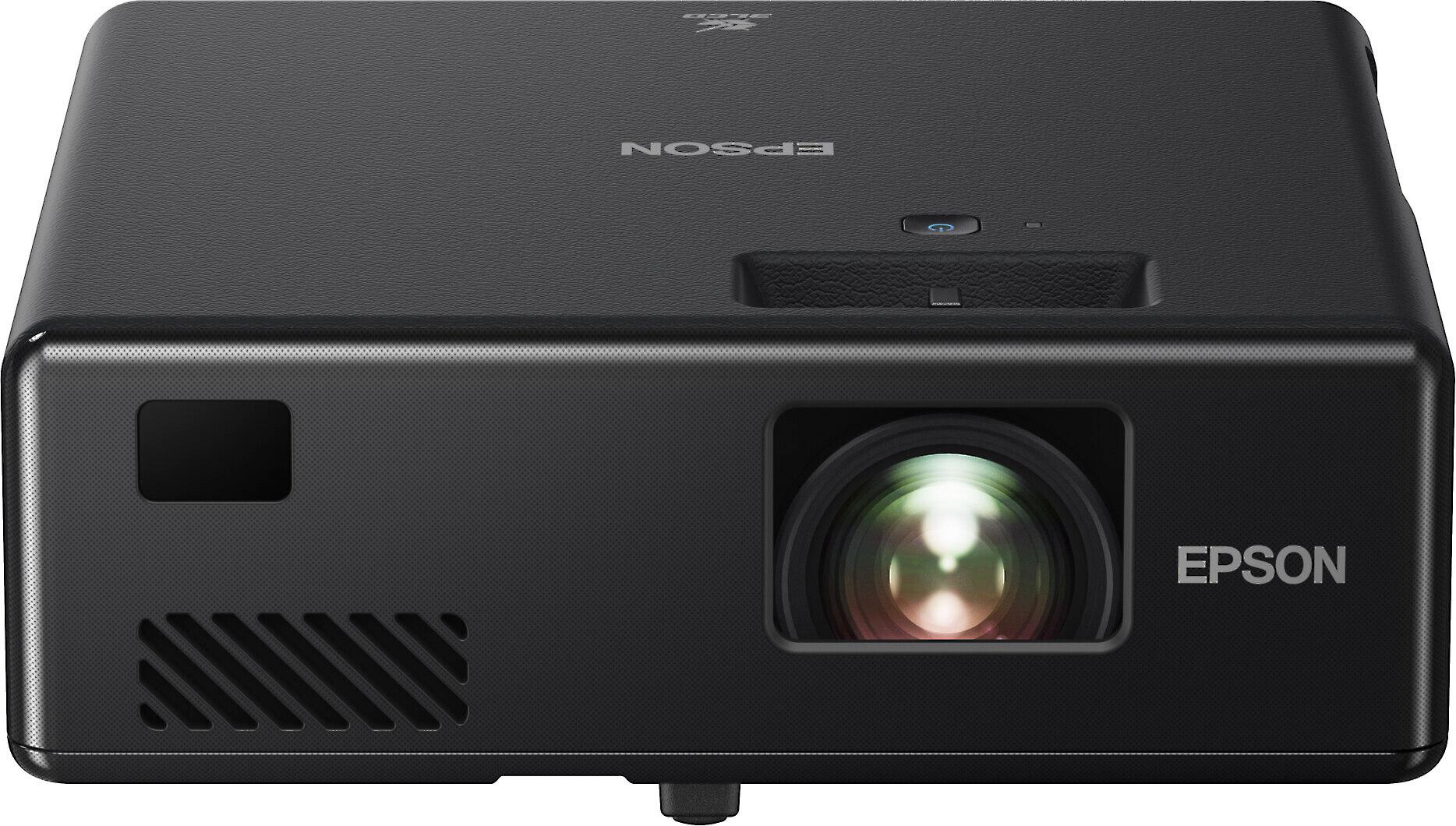
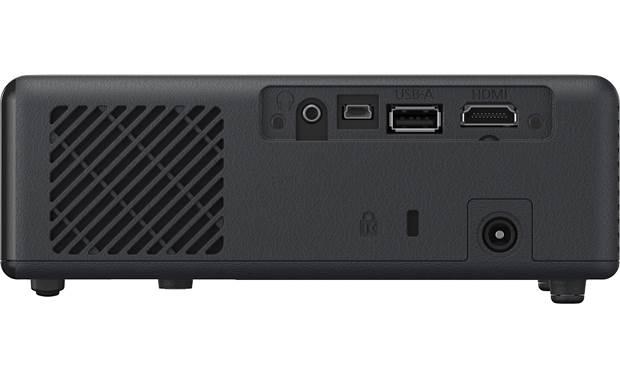
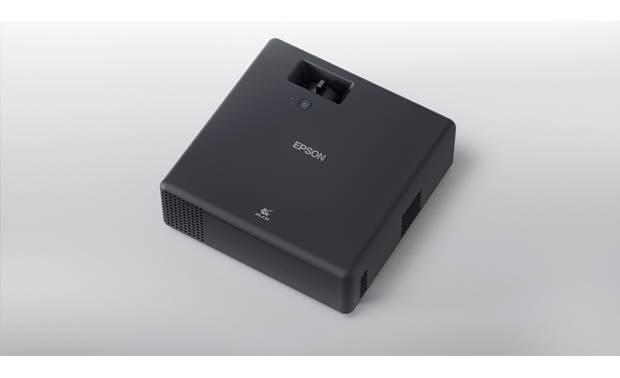

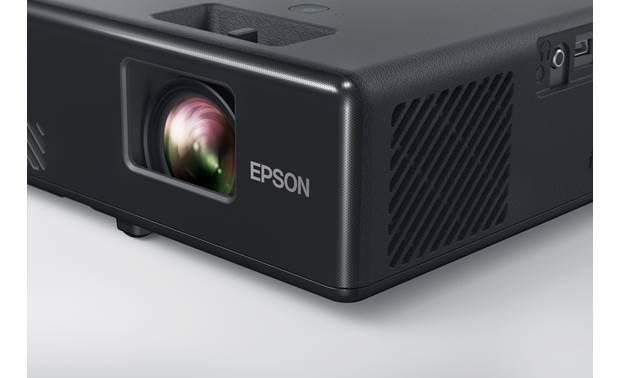
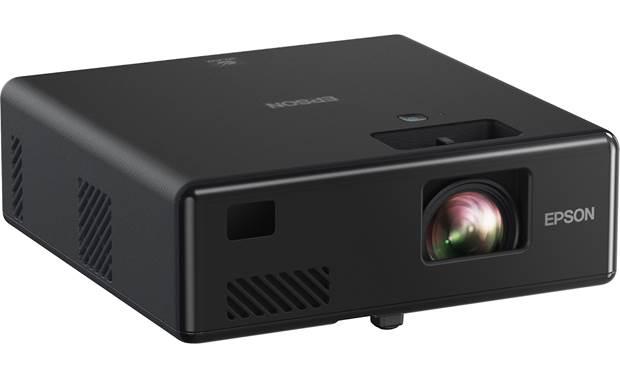
When shopping for a laser projector in 2024, you'll quickly discover there's no one-size-fits-all solution. The projection market has evolved dramatically over the past few years, with laser technology becoming more accessible while simultaneously pushing the boundaries of what's possible in home entertainment. Today, we're comparing two projectors that perfectly illustrate this divide: the JMGO N1S Ultimate 4K Laser Projector and the Epson EpiqVision Mini EF11 Laser Projector.
These aren't just different models—they represent completely different philosophies about what a projector should be. Understanding these differences will help you make the right choice for your specific needs and budget.
Before diving into the comparison, it's worth understanding why laser projectors have become the gold standard for serious projection enthusiasts. Traditional projectors use metal halide or LED bulbs that dim over time, require replacement, and often produce inconsistent colors. Laser projectors solve these problems by using highly focused laser light sources that maintain consistent brightness and color accuracy for 20,000 to 30,000 hours—essentially the projector's entire lifespan.
The key technical advancement here is the laser light source itself. Unlike bulbs that produce a broad spectrum of light that must be filtered, lasers can produce very specific wavelengths of red, green, and blue light. This precision allows for much wider color gamuts (the range of colors a display can reproduce) and more accurate color reproduction than traditional projection methods.
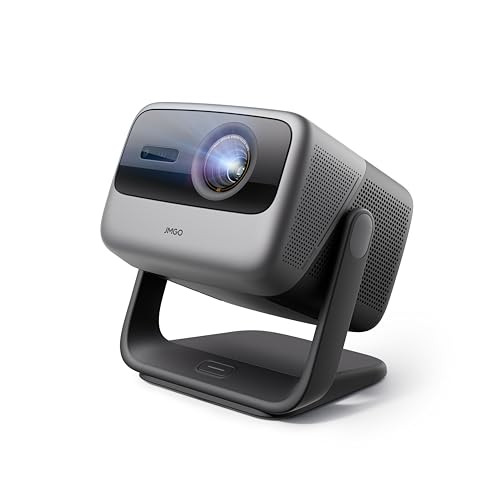
The JMGO N1S Ultimate launched in 2024 as part of JMGO's push into the premium laser projector market. JMGO, a Chinese manufacturer, has been making waves in recent years by offering high-end features at more accessible price points than traditional projector giants. The N1S Ultimate represents their flagship model, incorporating advanced triple-laser RGB technology that was previously only available in projectors costing significantly more.
Meanwhile, the Epson EpiqVision Mini EF11 hit the market in 2020 as Epson's answer to the growing demand for portable laser projection. Epson, being one of the established leaders in projection technology, took a different approach—focusing on making laser technology truly portable and accessible rather than chasing maximum specifications.
Since these products launched, the laser projector market has become increasingly competitive, with brightness levels climbing and prices dropping. The improvements we've seen over the past few years include better speckle reduction (eliminating the grainy appearance that early laser projectors sometimes had), improved color accuracy, and more sophisticated automatic adjustment features.
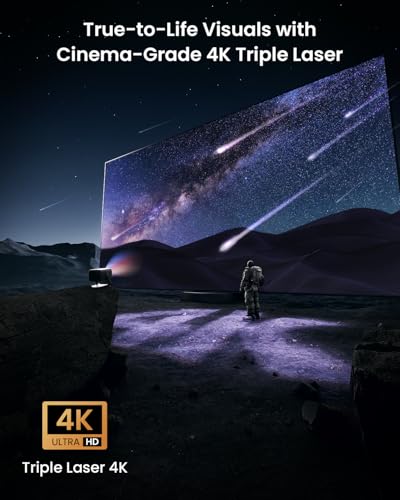
The most obvious difference between these projectors is resolution. The JMGO N1S Ultimate delivers true 4K UHD at 3,840 x 2,160 pixels, while the Epson EpiqVision Mini EF11 tops out at Full HD 1080p (1,920 x 1,080 pixels). But here's where it gets interesting—the JMGO uses a technique called pixel shifting with its 0.47-inch DMD (Digital Micromirror Device) chip to achieve 4K resolution.
Pixel shifting works by rapidly moving the projected image by sub-pixel amounts, effectively quadrupling the apparent resolution. While purists might argue this isn't "true" 4K like you'd get from a native 4K chip, the visual difference is substantial when viewing 4K content. Text appears sharper, fine details in movies are more defined, and the overall image has that crisp, modern look we've come to expect from high-resolution displays.
For the Epson EpiqVision Mini EF11, the 1080p resolution is perfectly adequate for most content, especially at typical viewing distances. Many streaming services still deliver content in 1080p, and the difference between 1080p and 4K becomes less noticeable as viewing distance increases.
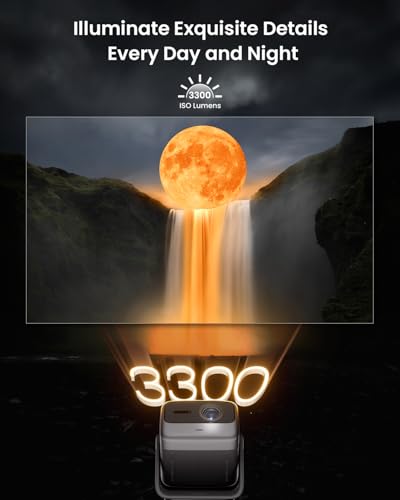
Here's where these projectors diverge dramatically. The JMGO N1S Ultimate produces a measured 3,524 ANSI lumens—that's bright enough to use in rooms with significant ambient light. ANSI lumens, by the way, is the industry standard measurement for projector brightness, measured as an average across nine points on the projected image.
To put this in perspective, most home theater enthusiasts consider 2,000 lumens the minimum for a room with some ambient light, while 3,000+ lumens opens up possibilities for daytime viewing or rooms with windows. The JMGO's brightness means you're not confined to a basement or blacked-out room—you can genuinely use this projector in a normal living room environment.
The Epson EpiqVision Mini EF11, at 1,000 lumens, requires more controlled lighting conditions. This isn't necessarily a weakness—many people prefer the cinematic experience of a darkened room. However, it does limit flexibility, especially for families with children or anyone who wants to use the projector casually throughout the day.
Both projectors use different underlying technologies that affect color reproduction. The JMGO N1S Ultimate employs DLP (Digital Light Processing) technology with its MALC 2.0 Triple Color Laser system. DLP creates images using millions of tiny mirrors that tilt to reflect light toward or away from the screen. The triple-laser setup means dedicated red, green, and blue lasers work together to create the full spectrum of colors.
This system delivers an impressive color gamut covering 110% of the BT.2020 standard—that's the color space used for HDR content and represents a much wider range of colors than standard HD content. The practical result is more vibrant, saturated colors that really pop off the screen.
The Epson EpiqVision Mini EF11 uses 3LCD technology, which works by splitting light into red, green, and blue components using dichroic mirrors, then processing each color separately before recombining them. This approach typically produces more natural-looking skin tones and eliminates the rainbow effect—brief flashes of red, green, and blue that some people see with DLP projectors, especially during high-contrast scenes.
The choice between these technologies often comes down to personal preference. DLP tends to produce more vibrant, punchy colors that work well for gaming and HDR content, while 3LCD offers more natural, film-like color reproduction.
Having tested numerous projectors in various lighting conditions, brightness is arguably the most important specification for determining where and how you can use a projector. The JMGO N1S Ultimate's 3,500-lumen output fundamentally changes what's possible.
I've found that projectors in this brightness range allow for genuine daytime viewing, even with some natural light in the room. You can host movie nights without drawing all the curtains or demanding everyone dim the lights. For sports viewing, this level of brightness maintains the social, casual atmosphere that makes projectors appealing for group entertainment.
The Epson EpiqVision Mini EF11's 1,000 lumens, while more modest, still represents excellent performance for a portable projector. In my experience, this brightness level works well for evening entertainment once the sun goes down, and it's perfectly adequate for dedicated movie watching in a controlled environment.
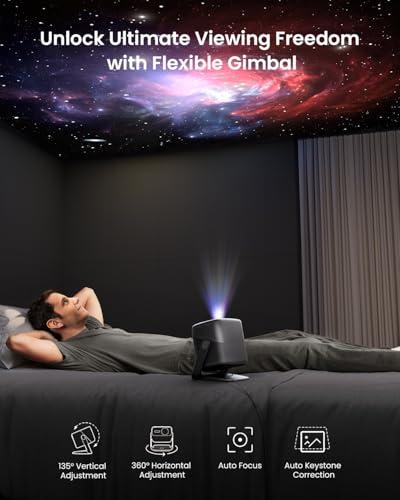
One of the most innovative features of the JMGO N1S Ultimate is its integrated gimbal system, allowing 360-degree horizontal and 135-degree vertical rotation. This isn't just a marketing gimmick—it fundamentally changes how you can use the projector.
Traditional projectors require careful positioning and often complex ceiling mounts or precise table placement to achieve proper alignment. The JMGO's gimbal means you can place it almost anywhere and adjust the projection angle electronically. Want to project onto the ceiling for bed-time viewing? No problem. Need to angle the projection to avoid obstacles in the room? Easy adjustment.
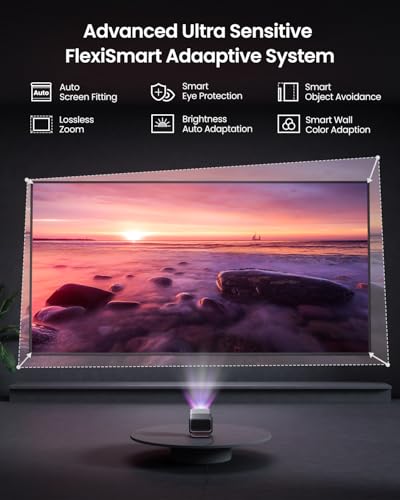
The gimbal works in conjunction with advanced automatic correction features. The projector uses TOF (Time of Flight) sensors and cameras to analyze the projection surface, automatically correcting for keystone distortion (the trapezoidal shape that occurs when projecting at an angle), adjusting focus, and even adapting colors based on wall color.
The JMGO N1S Ultimate uses ultra-short throw optics, meaning it can create large images while positioned very close to the screen or wall. This approach has several advantages: it minimizes shadows when people walk in front of the projector, reduces the chances of the light beam being blocked, and allows for larger images in smaller rooms.
However, ultra-short throw projectors can be more sensitive to surface imperfections and require very flat walls or screens for optimal performance. They also tend to be more expensive and complex than traditional projectors.
The Epson EpiqVision Mini EF11 uses a conventional 1:1 throw ratio, meaning the projector distance from the wall equals the image width. While this requires more space, it's often easier to set up and more forgiving of various projection surfaces.
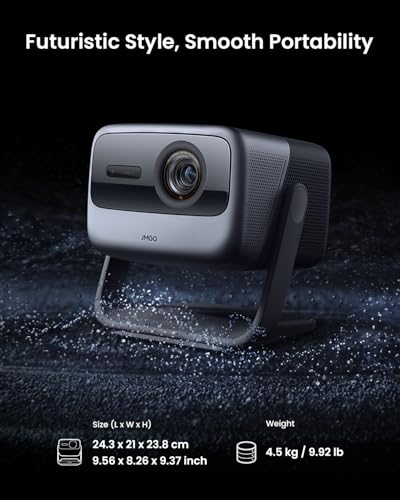
When we talk about "portable" projectors, these two models represent very different interpretations of the concept. The Epson EpiqVision Mini EF11 is genuinely portable in the traditional sense—at 2.7 pounds and roughly the size of a large book, it's something you can easily throw in a backpack for camping trips, business presentations, or movie nights at friends' houses.
The JMGO N1S Ultimate, while including a travel case and weighing 14.3 pounds, is more accurately described as "transportable." It's the kind of projector you might move between rooms in your house or take to a vacation rental, but it's not something you'd casually carry around.
However, the JMGO's gimbal design offers a different kind of flexibility that can be more valuable in fixed installations. Once positioned, you can electronically adjust the projection angle for different content or viewing scenarios without physically moving the projector.
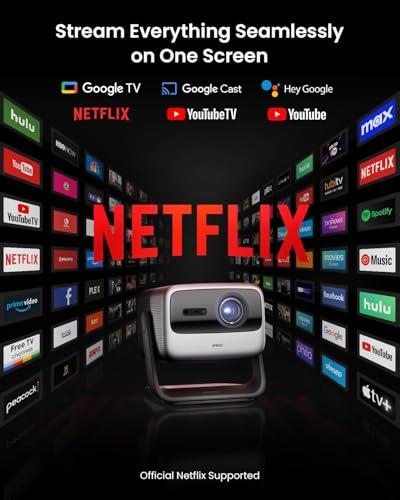
Modern projectors increasingly function as smart TVs, and this is where the JMGO N1S Ultimate really shines. It runs Google TV 3.0 with full access to streaming apps, including certified Netflix—surprisingly rare among projectors due to content protection requirements.
The integration of Google Assistant allows for voice control, and the projector supports casting from phones and tablets. This means it can function as a complete entertainment system without requiring any external devices.
The Epson EpiqVision Mini EF11 takes a more basic approach, providing HDMI input for connecting external streaming devices like Apple TV, Roku, or Fire TV. While this requires additional hardware, it also means you're not locked into a particular smart TV platform and can upgrade or change streaming devices independently.
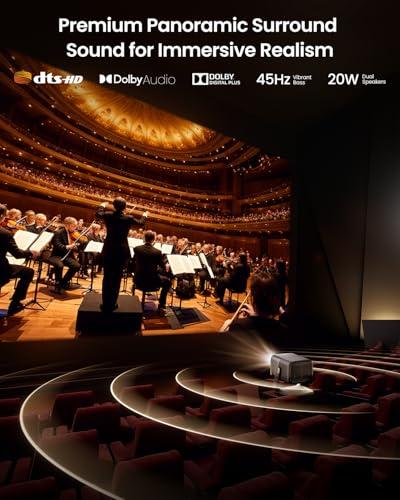
Many people underestimate how important good audio is to the overall viewing experience. The JMGO N1S Ultimate includes a sophisticated audio system with dual 10W speakers and a 20W subwoofer, supporting Dolby Digital Plus and DTS-HD Master Audio. The system produces genuine bass response down to 45Hz, which means you'll actually hear and feel the low-frequency effects in movies.
Having used numerous projectors with integrated audio, I can say this level of audio performance is exceptional for a projector. While it won't replace a dedicated surround sound system, it's perfectly adequate for most viewing scenarios and eliminates the need for external speakers in many setups.
The Epson EpiqVision Mini EF11 includes basic dual speakers totaling 1.5W. This is adequate for dialog and basic audio, but you'll likely want to connect external speakers or headphones for a more immersive experience.
For gamers, input lag—the delay between controller input and on-screen action—is crucial. The JMGO N1S Ultimate achieves 16ms input lag in its gaming mode, which is excellent for a projector and suitable for most gaming scenarios, including competitive play.
The projector also supports HDMI 2.1 with eARC (enhanced Audio Return Channel), meaning it can handle the latest gaming console outputs and return audio to a sound system through the same HDMI cable.
While specific gaming specs weren't available for the Epson EpiqVision Mini EF11, its more basic feature set suggests it's optimized for general entertainment rather than gaming performance.
For dedicated home theater use, the JMGO N1S Ultimate offers several advantages. The 4K resolution makes a real difference when viewing high-quality content, especially on larger screen sizes. The exceptional brightness allows for larger images while maintaining good contrast, and the wide color gamut produces the vibrant, impactful colors that make HDR content special.
The projector's ultra-short throw design can be ideal for home theaters with limited space, and the gimbal system provides installation flexibility that traditional projectors simply can't match.
However, serious home theater enthusiasts might be concerned about the projector's contrast ratio. While 1,600:1 is decent for a DLP projector, it's not in the same league as high-end home theater projectors that can achieve much deeper blacks.
The Epson EpiqVision Mini EF11 represents a different philosophy—good enough performance in a package that doesn't require dedicated space or complex installation. For families or casual viewers who want the big-screen experience without the commitment of a traditional home theater setup, this approach makes a lot of sense.
The 3LCD technology's natural color reproduction works particularly well for film content, and the lack of rainbow artifacts makes it suitable for viewers who are sensitive to DLP's occasional quirks.
At the time of writing, the JMGO N1S Ultimate sits in the premium segment but offers features typically found in much more expensive projectors. For users who want maximum image quality, flexibility, and features, the price premium over mid-range options is justified by the 4K resolution, exceptional brightness, and comprehensive smart features.
This projector makes the most sense for:
The Epson EpiqVision Mini EF11 offers exceptional value in the portable projector category. At the time of writing, finding a laser projector with 1,000 lumens at this price point is remarkable, especially from a established brand like Epson.
This projector is ideal for:
The choice between these projectors ultimately depends on your priorities and use case. If you're building a dedicated entertainment space, value maximum performance, and want the flexibility to use the projector in various lighting conditions, the JMGO N1S Ultimate delivers premium features at a competitive price point.
If portability, simplicity, and value are your primary concerns—and you're comfortable with 1080p resolution and more controlled lighting requirements—the Epson EpiqVision Mini EF11 offers an excellent introduction to laser projection technology.
Consider the JMGO N1S Ultimate if you want the best possible image quality and don't mind the higher price and larger size. Choose the Epson EpiqVision Mini EF11 if you need true portability and are working with a tighter budget.
Both projectors represent excellent values in their respective categories, but they serve fundamentally different needs. Understanding these differences will help ensure you choose the projector that best matches your specific requirements and expectations.
| JMGO N1S Ultimate 4K Laser Projector | Epson EpiqVision Mini EF11 Laser Projector |
|---|---|
| Resolution - Higher resolution means sharper text and more detailed images | |
| 4K UHD (3840 x 2160) via pixel-shifting DLP | Full HD (1920 x 1080) native resolution |
| Brightness - Critical for daytime viewing and larger screen sizes | |
| 3,500 ANSI lumens (excellent for bright rooms) | 1,000 ANSI lumens (requires dim lighting) |
| Display Technology - Affects color accuracy and rainbow artifacts | |
| DLP with triple RGB laser (vibrant colors, possible rainbow effect) | 3LCD technology (natural colors, no rainbow effect) |
| Color Gamut - Wider gamut produces more vivid, saturated colors | |
| 110% BT.2020 coverage (exceptional HDR performance) | Standard color gamut (adequate for HD content) |
| Contrast Ratio - Higher contrast means deeper blacks and better detail | |
| 1,600:1 native (good for DLP projector) | 200,000:1 (excellent on-paper spec) |
| Portability - Weight and size determine ease of transport | |
| 14.3 lbs, transportable with gimbal flexibility | 2.7 lbs, truly pocket-sized and ultra-portable |
| Smart Features - Built-in streaming eliminates need for external devices | |
| Google TV 3.0 with Netflix, Google Assistant | Basic HDMI input, requires streaming device |
| Audio System - Better audio reduces need for external speakers | |
| Dual 10W + 20W subwoofer with Dolby Digital Plus | Basic 1.5W dual speakers |
| Throw Distance - Affects room setup requirements | |
| Ultra-short throw (large image from close distance) | Traditional 1:1 throw ratio (more predictable setup) |
| Laser Life - Longer life means lower long-term costs | |
| 30,000+ hours RGB laser | 20,000 hours laser diode |
| Gaming Performance - Lower input lag improves gaming responsiveness | |
| 16ms input lag with HDMI 2.1 support | Standard input lag, basic HDMI |
| Installation Flexibility - More options mean easier room integration | |
| 360° gimbal with auto-correction (revolutionary flexibility) | Standard placement with keystone correction |
The JMGO N1S Ultimate 4K Laser Projector is significantly better for dedicated home theater setups. It offers true 4K resolution, exceptional brightness at 3,500 ANSI lumens, and a wide color gamut covering 110% BT.2020 for vibrant HDR content. The ultra-short throw design and gimbal system provide installation flexibility that traditional projectors can't match. While the Epson EpiqVision Mini EF11 Laser Projector delivers good image quality with natural colors from its 3LCD technology, the 1080p resolution and 1,000 lumens brightness limit its home theater potential.
The JMGO N1S Ultimate delivers superior overall image quality with 4K UHD resolution (3840 x 2160) compared to the Epson EpiqVision Mini EF11's Full HD 1080p resolution. The JMGO also produces much brighter images at 3,500 ANSI lumens versus 1,000 lumens, allowing for larger screens and better performance in ambient light. However, the Epson's 3LCD technology produces more natural skin tones and eliminates rainbow artifacts that some viewers notice with DLP projectors.
The Epson EpiqVision Mini EF11 Laser Projector is dramatically more portable, weighing only 2.7 pounds and measuring 6.9" x 6.9" x 2.6". It's truly pocket-sized and perfect for travel, camping, or business presentations. The JMGO N1S Ultimate weighs 14.3 pounds and is better described as "transportable" rather than portable, though it includes a travel case and offers unique gimbal flexibility for different projection angles once positioned.
The JMGO N1S Ultimate 4K Laser Projector excels in bright rooms thanks to its exceptional 3,500 ANSI lumens brightness, making daytime viewing and well-lit room projection genuinely viable. The Epson EpiqVision Mini EF11 at 1,000 lumens requires more controlled lighting conditions and works best in dimmed environments or evening viewing. For bright room performance, the JMGO is the clear winner.
The JMGO N1S Ultimate includes an impressive audio system with dual 10W speakers plus a 20W subwoofer, supporting Dolby Digital Plus and producing bass down to 45Hz. This eliminates the need for external speakers in most scenarios. The Epson EpiqVision Mini EF11 has basic 1.5W dual speakers adequate for dialog but you'll likely want external speakers or headphones for a more immersive audio experience.
The JMGO N1S Ultimate 4K Laser Projector is superior for gaming with its 16ms input lag, HDMI 2.1 support, and 4K resolution that enhances gaming visuals. The higher brightness also allows for better gaming in various lighting conditions. While the Epson EpiqVision Mini EF11 can handle gaming, it lacks the advanced gaming features and low input lag optimization of the JMGO.
The JMGO N1S Ultimate runs full Google TV 3.0 with certified Netflix, Google Assistant voice control, and wireless casting capabilities, functioning as a complete smart entertainment system. The Epson EpiqVision Mini EF11 Laser Projector offers basic HDMI connectivity and requires external streaming devices like Apple TV, Roku, or Fire TV for smart functionality.
The JMGO N1S Ultimate features a triple RGB laser system rated for 30,000+ hours of operation, while the Epson EpiqVision Mini EF11 uses a laser diode rated for 20,000 hours. Both represent excellent longevity compared to traditional lamp projectors, with the JMGO offering slightly longer projected lifespan and no bulb replacement costs over the projector's lifetime.
Value depends on your priorities. The Epson EpiqVision Mini EF11 Laser Projector offers exceptional value for portable laser projection technology, delivering 1,000 lumens and reliable performance from an established brand. The JMGO N1S Ultimate provides premium value with 4K resolution, exceptional brightness, and comprehensive features typically found in much more expensive projectors.
The JMGO N1S Ultimate 4K Laser Projector uses ultra-short throw optics, creating large images while positioned very close to the wall, and features automatic keystone correction and focus adjustment through its gimbal system. The Epson EpiqVision Mini EF11 uses a traditional 1:1 throw ratio requiring more distance for larger images but offers more predictable setup in various room configurations with basic keystone correction.
The JMGO N1S Ultimate displays true 4K UHD content at 3840 x 2160 resolution using pixel-shifting DLP technology, making it ideal for 4K movies, streaming, and gaming. The Epson EpiqVision Mini EF11 Laser Projector is limited to Full HD 1080p resolution, though it can accept 4K input signals and downscale them, which still provides some image quality benefits over native 1080p content.
For outdoor use, the JMGO N1S Ultimate is superior due to its much higher brightness (3,500 vs 1,000 lumens), allowing it to overcome ambient light better and produce larger, more visible images. However, the Epson EpiqVision Mini EF11 Laser Projector offers easier transport and setup for camping or backyard events, making it more practical for frequent outdoor use despite requiring darker conditions for optimal viewing.
We've done our best to create useful and informative comparisons to help you decide what product to buy. Our research uses advanced automated methods to create this comparison and perfection is not possible - please contact us for corrections or questions. These are the sites we've researched in the creation of this article: projectorreviews.com - youtube.com - projectorcentral.com - tomsguide.com - global.jmgo.com - global.jmgo.com - projectorcentral.com - global.jmgo.com - youtube.com - vividstorm.us - youtube.com - global.jmgo.com - device.report - global.nothingprojector.com - bestbuy.com - bhphotovideo.com - youtube.com - bestbuy.com - gagadget.com - epson.com - projectorreviews.com - audiogeneral.com - projectorreviews.com - epson.com - youtube.com - epson.com - youtube.com - mediaserver.goepson.com - files.support.epson.com - staples.com - projectorcentral.com - bestbuy.com - planettv.com - dell.com - epson.eu - projectortop.com

Privacy Policy
Terms and Conditions - Affiliate Policy
Home Security
© Copyright 2008-2026.
11816 Inwood Rd #1211, Dallas, TX 75244