


Remember when projectors were bulky, noisy machines relegated to boardrooms and classrooms? Those days are long gone. Today's portable projectors pack impressive technology into increasingly compact packages, transforming virtually any space into an entertainment center with minimal setup.
The portable projector market has exploded since 2020, partly driven by pandemic-era home entertainment needs and advancements in projection technology. Improved light sources, more efficient power management, and smart features have made these devices more practical for everyday use. While traditional home theater projectors still dominate for dedicated cinema rooms, these portable alternatives offer compelling flexibility for those who want big-screen experiences without permanent installation.
When shopping for a portable projector, several factors determine whether a model will meet your needs or leave you disappointed. Brightness (measured in lumens) remains the most critical factor, as it determines how visible your image will be with ambient light. Resolution, contrast ratio, connectivity options, and—increasingly—smart features round out the core considerations.
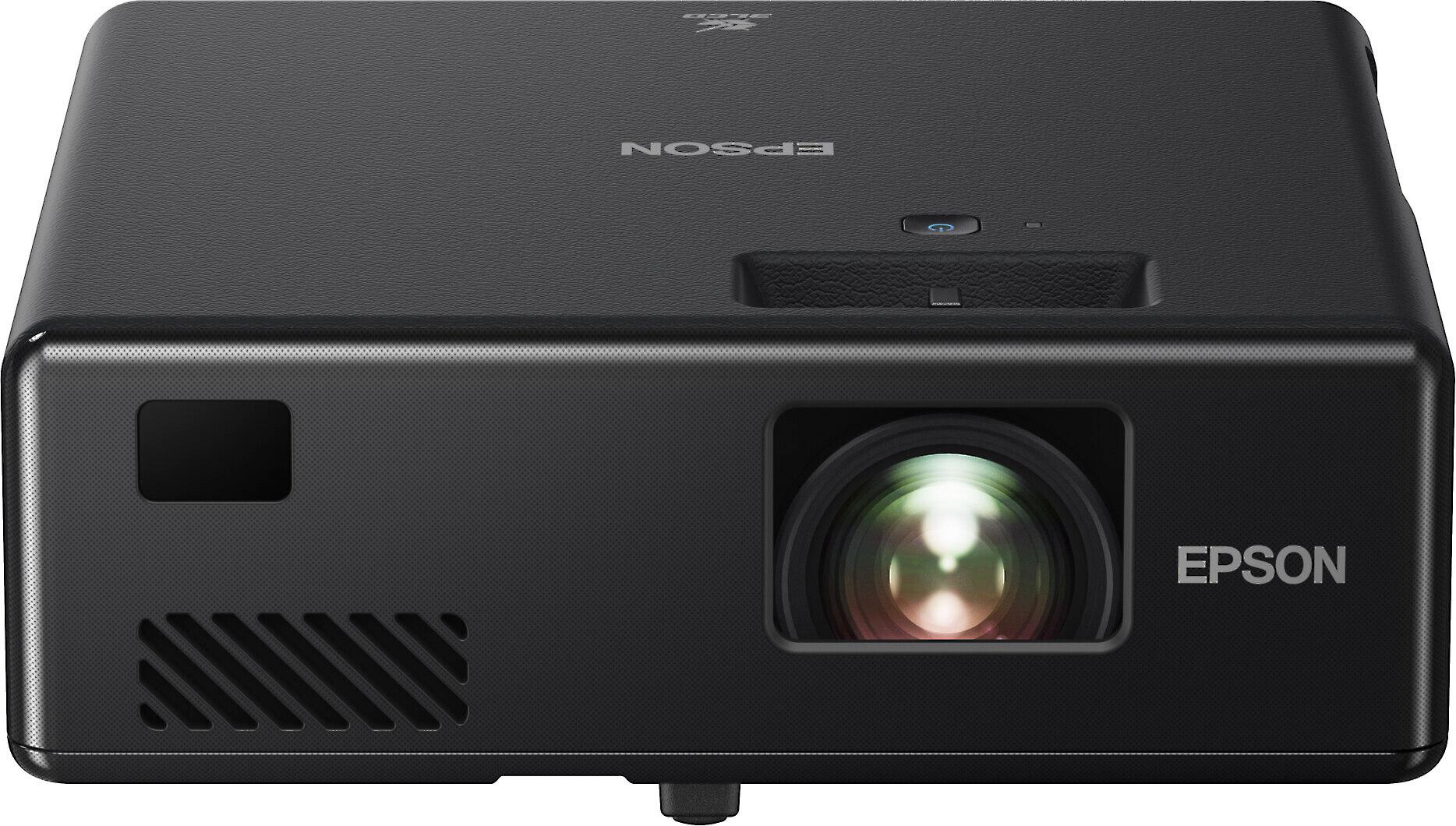
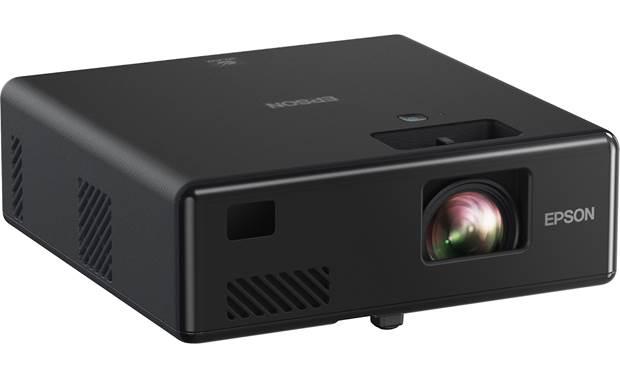
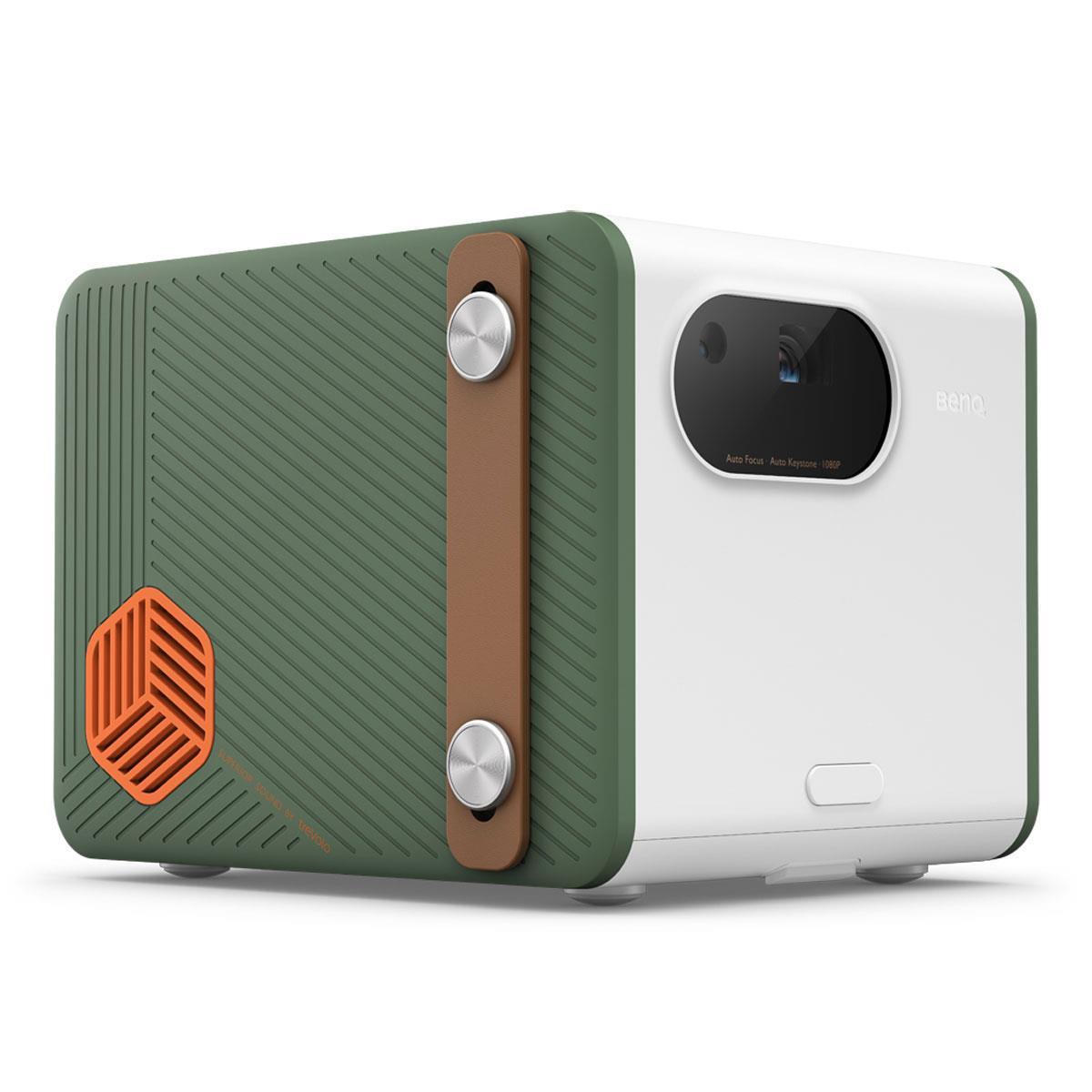
Today we're comparing two distinct approaches to portable projection: the $699 Epson EpiqVision Mini EF11, released in late 2020, and the $799 BenQ GS50, which arrived on the market in 2021. While they both fall into the portable projector category, they represent different philosophies about what matters most in a projector you can move from room to room—or even outdoors.
Epson released the EpiqVision Mini EF11 as part of their strategy to bring laser projection technology to more accessible price points. At $699, it represented a significant step in bringing laser projection—previously reserved for high-end installations—into a portable form factor.
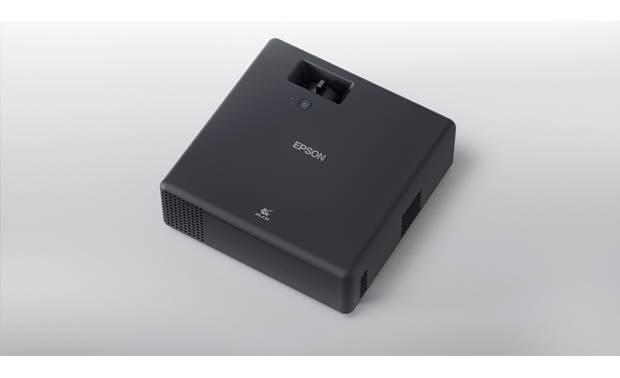
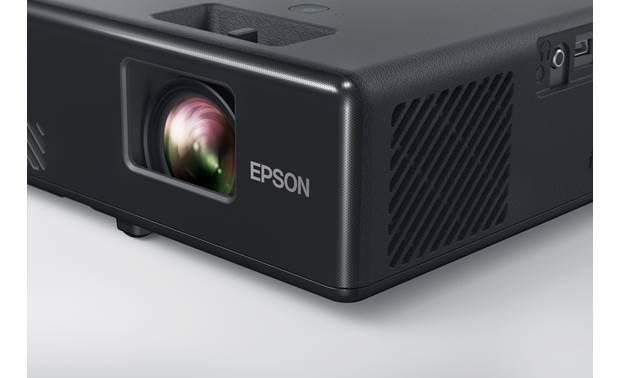
The EF11 is a compact cube measuring just 6.9" on each side and standing 2.6" tall. Weighing only 2.7 pounds, it's remarkably portable, though it lacks a battery. Under the hood, Epson employs its 3LCD technology coupled with a laser light source, a combination rarely found at this price point when it launched.
While the projector market has evolved since 2020, the EF11 remains competitive in its class thanks to its excellent 1,000-lumen brightness rating and impressive 200,000:1 contrast ratio. The laser light source also gives it longevity advantages, with a rated 20,000-hour lifespan before any noticeable dimming occurs.
BenQ took a different approach with the GS50, which arrived in 2021 as a purpose-built outdoor portable projector. Priced at $799, it's positioned as a premium option for those who want true go-anywhere projection capabilities.
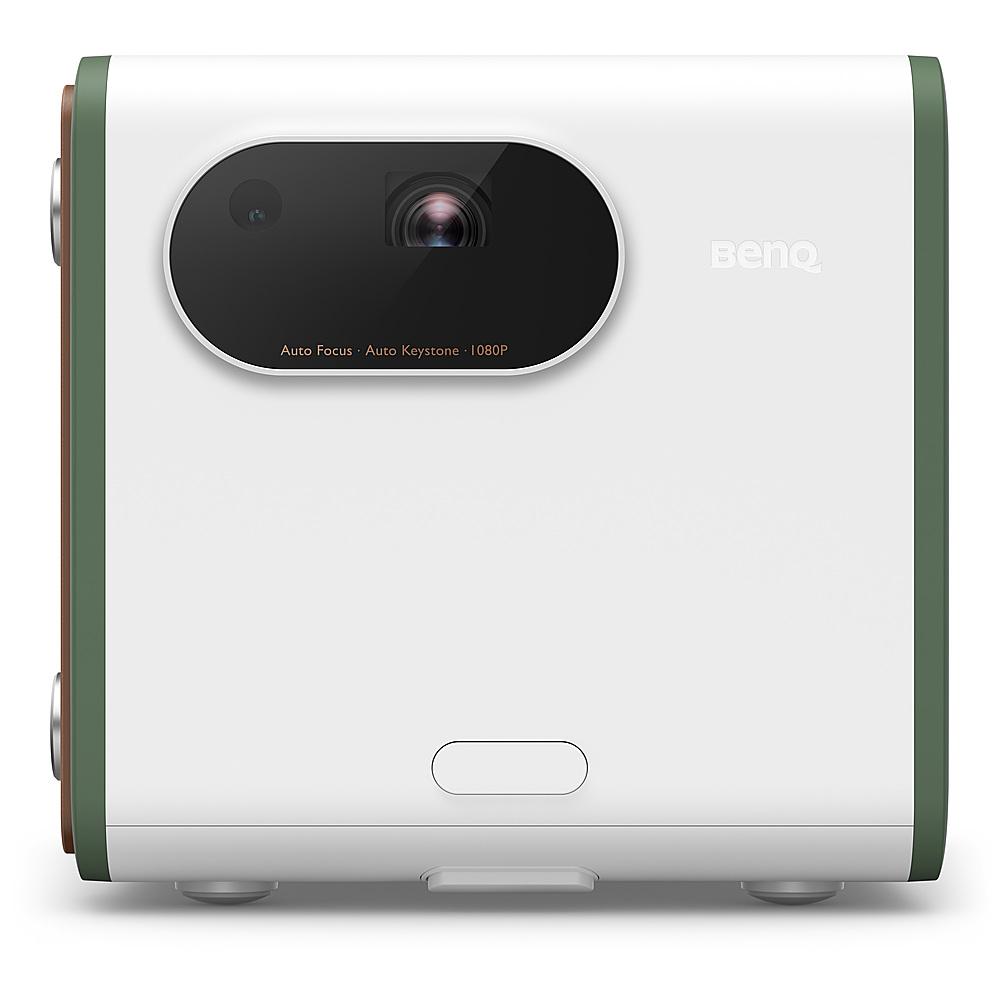
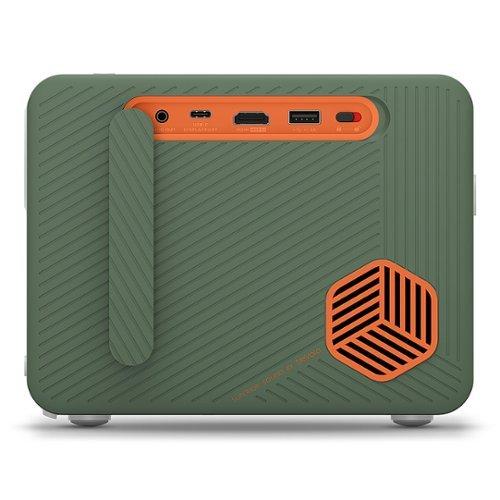
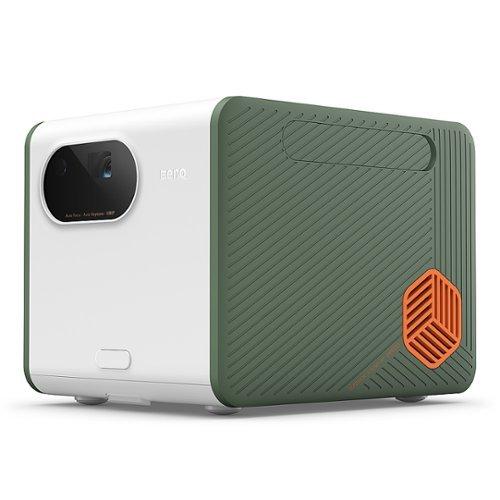
The GS50 is slightly larger than the Epson at approximately 15 x 19 x 15 cm and considerably heavier at 3.9 kg (8.6 pounds), but that extra size accommodates features the Epson lacks. Most notably, it includes a built-in battery providing up to 2.5 hours of wireless projection, IPX2 water resistance for protection against light splashing, and drop resistance up to 70 cm.
BenQ equipped the GS50 with a DLP projection system and LED light source rated at 500 ANSI lumens—half the brightness of the Epson on paper. However, it incorporates HDR10 support and a more sophisticated audio system than typical portable projectors.
Since its release, the outdoor projector category has seen more competitors emerge, but the GS50's combination of durability, battery power, and audio quality continues to help it stand out.
Brightness is where these projectors diverge most significantly, and it dramatically impacts when and where you can use them effectively.
The Epson EF11's 1,000 lumen rating is impressive for a portable projector, and independent testing has confirmed it delivers close to the advertised brightness (approximately 960 ANSI lumens). This brightness level means you don't need a completely darkened room to enjoy a visible image. With blinds drawn during daytime or modest lighting in the evening, you'll still get a watchable picture at sizes up to about 100 inches.
In my experience with similar brightness projectors, this level of output hits a sweet spot: bright enough for casual viewing in living rooms with some ambient light, while not requiring special electrical considerations that higher-brightness projectors might need.
The BenQ GS50 delivers about half the brightness at 500 lumens (measuring closer to 419 ANSI lumens in some tests). This difference is immediately noticeable in anything but a darkened space. The GS50 requires more controlled lighting conditions to shine—somewhat ironically limiting when you can use it outdoors despite its outdoor-focused design. It performs best after sunset or in shaded areas during the day.
However, brightness isn't the only factor in perceived image quality. The GS50 incorporates HDR10 support, which helps it display more dynamic range even with its lower brightness, making the most of what light output it has available.
The projectors employ fundamentally different display technologies, each with distinct advantages.
Epson's 3LCD system uses three separate LCD panels (one each for red, green, and blue) to create an image. This approach delivers several benefits: equal color and white brightness (some competing technologies have lower color brightness than white brightness), elimination of the "rainbow effect" that bothers some viewers of single-chip projectors, and typically more accurate color reproduction.
The rainbow effect, for those unfamiliar, is a visual artifact where brief flashes of rainbow-colored bands appear, particularly when moving your eyes across high-contrast areas of the screen. It's caused by the color wheel in single-chip DLP projectors, and while not everyone notices it, those who do find it extremely distracting.
BenQ's GS50 uses Digital Light Processing (DLP) technology with a single imaging chip and a color wheel. DLP typically offers sharper perceived detail, better contrast in challenging scenes, and more compact designs. The trade-off is the potential for the aforementioned rainbow effect and sometimes less accurate colors compared to 3LCD systems.
In practice, the Epson's 3LCD system produces more natural-looking skin tones and saturated colors without requiring as much calibration out of the box. The BenQ still delivers good color for a DLP projector, and its HDR support helps compensate in high-contrast scenes.
Both projectors offer Full HD 1920×1080 resolution, which remains the sweet spot for portable projectors. While 4K projectors have become more common since these models were released, they typically command significantly higher prices and often require more power and cooling.
The Epson EF11 includes sophisticated 10-bit color processing and scene-adaptive color correction, which analyzes content and adjusts color rendering to maintain natural appearance across different types of scenes. This processing is particularly beneficial for mixed content viewing—switching between films, sports, and video games without recalibrating.
The BenQ GS50 counters with support for HDR10 and HLG HDR formats, allowing it to accept high dynamic range content from compatible sources. Though it can't deliver the full brightness required for true HDR impact, this processing helps preserve detail in shadows and highlights better than standard processing. The GS50 can also accept 4K input signals, though it downscales them to its native 1080p resolution.
Despite both being marketed as portable, these projectors have different definitions of mobility.
The Epson EF11 represents what I'd call "repositionable design"—easy to move between rooms or take to a friend's house, but still requiring a power outlet. At 2.7 pounds, it's genuinely lightweight, making one-handed carrying effortless. Its cube-like design with minimal protruding parts means it slips easily into a backpack or carrying case.
The BenQ GS50 offers "true portability" with its built-in battery. This critical difference means you can use it completely untethered from power sources for up to 2.5 hours—enough for most movies. In practical terms, this lets you project onto the side of a tent while camping, create an impromptu backyard movie night without extension cords, or set up in locations where power isn't readily available.
The GS50's higher weight (8.6 pounds) makes it less convenient for frequent transportation, though BenQ includes a leather handle to ease carrying. The extra weight houses not just the battery but also enhanced durability features and a more substantial audio system.
For a device designed to be moved frequently, durability becomes particularly important.
The Epson has a standard consumer electronics design—it should survive normal handling but wasn't built with outdoor conditions in mind. There's no official water or dust resistance rating, meaning it should be kept away from moisture and used primarily indoors.
BenQ specifically engineered the GS50 for outdoor use with an IPX2 splash-proof rating, meaning it can withstand water dropping at up to a 15° angle. While this doesn't make it waterproof, it provides peace of mind against light rain or accidental drink spills. The projector can also withstand drops up to 70cm (about 27 inches), approximately the height of a typical table.
These durability features make the GS50 more suitable for family use, particularly with children, or for environments where conditions can't be fully controlled.
Modern portable projectors have significantly simplified setup compared to their predecessors, and both of these models include helpful automatic adjustments.
The Epson EF11 features Auto Picture Skew Correction, which analyzes the projected image and corrects vertical geometry automatically. This helps compensate for situations where the projector isn't perfectly aligned with the projection surface. However, it lacks auto-focus, requiring manual adjustment when you change the projection distance.
The BenQ GS50 offers both auto-focus and auto keystone correction, creating a more streamlined setup process. Place the projector, power it on, and it automatically adjusts to provide a squared, focused image within seconds. For a device designed for outdoor use where stable, level surfaces might be limited, these automatic features are particularly valuable.
The projectors have different throw ratios, affecting how far you need to position them from your screen or wall.
The Epson's 1.0:1 throw ratio means you get roughly 1 foot of image width for every foot of distance from the projection surface. This short-throw design allows for larger images in smaller rooms—a 100-inch diagonal image requires positioning the projector about 8.5 feet from the screen.
The BenQ has a longer 1.21:1 throw ratio, requiring more distance for the same image size. For a 100-inch image, you'd need to place the projector about 10.3 feet away. This difference might seem small, but in tight spaces like apartments or small bedrooms, those extra feet can determine whether you can achieve your desired image size.
Both projectors support front, rear, and ceiling projection modes, but neither offers lens shift—a premium feature that allows adjusting the image position without moving the projector.
Connectivity has evolved rapidly in projectors since these models were released, but both offer solid options for most modern sources.
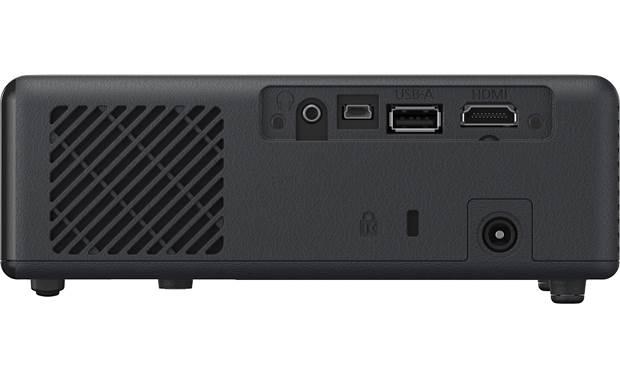
The Epson EF11 provides a straightforward selection of ports: one HDMI input, USB-A (for power to streaming sticks), and USB-B (for firmware updates and potential service use). This simplicity is both a strength and limitation—it handles basic connections well but lacks some newer options.
The BenQ GS50 expands connectivity with HDMI 2.0, USB-A, and notably, USB-C with DisplayPort Alt Mode support. This USB-C connection allows direct video input from compatible laptops and smartphones—increasingly common in newer devices—potentially eliminating the need for a separate HDMI cable.
Neither projector includes a TV tuner, so for traditional broadcast television, you'll need an external tuner or streaming device with live TV services.
Here's where the generational difference between these projectors becomes apparent and where the price difference is partly justified.
The Epson EF11 has no built-in smart platform. To stream content, you'll need to connect an external device like a Roku, Amazon Fire TV Stick, or Apple TV. While this allows for flexibility in choosing your streaming platform, it adds to the total cost and requires managing another device.
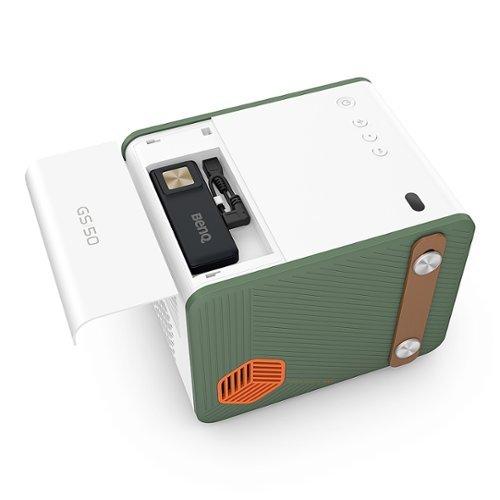
The BenQ GS50 integrates Android TV 9.0, providing direct access to thousands of streaming apps without additional hardware. It includes both Chromecast and AirPlay support for wirelessly casting content from mobile devices. The built-in QS01 media streamer can handle 4K content (though displayed at 1080p) and connects to both 2.4GHz and 5GHz Wi-Fi networks.
For outdoor use where setting up multiple devices might be cumbersome, the GS50's integrated smart platform represents a significant convenience advantage.
Audio is often an afterthought in projectors, with most dedicated home theater setups using external audio systems. However, for truly portable use, built-in audio becomes crucial.
The Epson EF11 includes a basic dual-speaker system with 1.5W output. While functional for a small room and casual viewing, it lacks volume, bass response, and clarity for proper movie enjoyment. In most setups, you'll want to connect external speakers or a soundbar for satisfying audio.
The BenQ GS50 represents a dramatic improvement with its 2.1 channel audio system, featuring two 5W tweeters and a dedicated 10W woofer. This configuration delivers significantly better frequency response, particularly in the low end where most portable projector speakers fail entirely. The 270-degree sound output design helps fill a room or outdoor space more effectively.
In practical terms, the GS50's audio is actually usable for movie nights, while the Epson's is more comparable to a laptop speaker—acceptable for dialogue but inadequate for music or action sequences.
Beyond basic speaker quality, the projectors differ in audio capabilities and features.
The Epson offers standard audio adjustments but no advanced audio processing modes.
The BenQ includes Bluetooth audio output for connecting to external speakers wirelessly, but more impressively, it can function as a standalone Bluetooth speaker. This dual-purpose functionality means the GS50 provides value even when you're not using it as a projector—a clever feature for a device that might not see daily projection use.
At $699, the Epson EF11 focuses its budget on image quality, particularly brightness and color accuracy. Its value proposition centers on delivering the best possible picture for indoor viewing at a sub-$700 price point. The laser light source also represents excellent long-term value, as it should maintain consistent brightness throughout its 20,000-hour rated life without requiring lamp replacements.
At $799, the BenQ GS50 commands a $100 premium but redistributes its technology budget differently. It sacrifices some brightness to include a battery, ruggedized design, superior audio, and smart features. Whether this represents better value depends entirely on your usage scenarios.
For permanent living room setups with existing audio systems, the Epson likely represents better value. For versatile use across multiple environments, particularly outdoors, the BenQ's premium may be easily justified by eliminating the need for external devices and power sources.
Looking beyond the initial purchase price reveals additional considerations.
The Epson's laser light source should never need replacement during the projector's practical lifespan. However, to match the BenQ's functionality, you might need to purchase a streaming device ($30-$150) and portable speaker ($50-$200), potentially pushing the total investment close to or above the BenQ's price.
The BenQ's LED light source is rated for 20,000-30,000 hours, comparable to or exceeding the Epson's laser. However, the built-in battery represents a consumable component that will gradually lose capacity over time, potentially requiring service after several years of regular use. The integrated Android TV platform may also stop receiving updates eventually, while an external streaming device could be replaced independently.
The Epson excels as a compact, high-quality image projector for flexible indoor use. Its superior brightness makes it more versatile in environments where lighting can't be fully controlled, and its 3LCD technology delivers excellent color without the artifacts that bother some viewers of DLP projectors.
The BenQ shines as a versatile entertainment hub that happens to include projection capabilities. Its battery power and ruggedized design enable use cases the Epson simply can't address, while its superior audio and integrated streaming make it a more complete package out of the box.
The portable projector market has continued to evolve since these models were released, but both still represent excellent options in their respective niches. While newer competitors have emerged with incrementally improved specifications, the fundamental differences between the Epson EF11 and BenQ GS50 approaches remain relevant.
Your decision ultimately hinges on how you plan to use your projector most frequently. For dedicated home use with controlled lighting, the Epson's superior brightness and image quality will likely prove more satisfying over time. For versatile use across multiple environments, particularly outdoors, the BenQ's battery power, durability, and comprehensive feature set justify its higher price tag.
Either way, both projectors demonstrate how far portable projection technology has come—delivering experiences that would have seemed impossible in such compact packages just a few years ago. Whether you prioritize the best possible image or the most flexible use cases, these portable projectors bring big-screen entertainment wherever you need it.
| Epson EpiqVision Mini EF11 Laser Projector | BenQ GS50 Portable Outdoor Projector |
|---|---|
| Price - Base investment required | |
| $699 | $799 |
| Projection Technology - Impacts color accuracy and visual artifacts | |
| 3LCD (no rainbow effect, more accurate colors) | DLP (sharper perceived detail, may show rainbow effect) |
| Light Source - Determines longevity and maintenance requirements | |
| Laser (20,000 hours lifespan, consistent brightness) | LED (20,000-30,000 hours lifespan) |
| Brightness - Critical for visibility in ambient light | |
| 1,000 lumens (usable in moderate ambient light) | 500 ANSI lumens (requires dimmer conditions) |
| Resolution - Determines image sharpness and detail | |
| 1920 x 1080 (Full HD) | 1920 x 1080 (Full HD) |
| Contrast Ratio - Affects depth and richness of blacks | |
| 200,000:1 (excellent black levels) | 100,000:1 (good black levels) |
| HDR Support - Enhances dynamic range in compatible content | |
| No HDR support | HDR10 and HLG support |
| Battery - Enables true wireless operation | |
| No battery (requires power outlet) | Built-in battery (up to 2.5 hours playback) |
| Water/Dust Resistance - Protection for outdoor use | |
| None (indoor use only) | IPX2 splash-proof rating (resistant to light water spray) |
| Physical Durability - Protection against accidents | |
| Standard consumer electronics design | Drop-resistant up to 70cm |
| Weight - Impacts portability and ease of transport | |
| 2.7 lbs (highly portable) | 8.6 lbs (less portable but includes handle) |
| Smart Features - Determines need for additional devices | |
| No built-in smart platform (requires external streaming device) | Android TV 9.0 built-in with Chromecast and AirPlay |
| Audio System - Quality of built-in sound | |
| Basic dual 1.5W speakers (inadequate for movies) | 2.1 channel (2x 5W tweeters, 1x 10W woofer) with 270° sound |
| Throw Ratio - Determines required distance for screen size | |
| 1.0:1 (100" image at 8.5 feet) | 1.21:1 (100" image at 10.3 feet) |
| Setup Features - Ease of achieving optimal image | |
| Auto Picture Skew Correction (vertical only) | Auto focus and auto keystone correction |
| Connectivity - Options for connecting devices | |
| HDMI, USB-A (power only), USB-B | HDMI 2.0, USB-A, USB-C (DisplayPort Alt Mode) |
| Color Processing - Impacts color accuracy and smoothness | |
| 10-bit processing with scene adaptive correction | HDR processing with 4K input acceptance (downscaled) |
| Maximum Image Size - Largest recommended projection | |
| 150 inches diagonal | 100 inches diagonal |
| Additional Features - Unique capabilities | |
| MicroLaser Array Technology for enhanced brightness | Can function as standalone Bluetooth speaker |
| Best For - Ideal use case summary | |
| Indoor use with focus on image quality and brightness | Multi-environment use including outdoors with true portability |
The Epson EpiqVision Mini EF11 is significantly brighter with 1,000 lumens compared to the BenQ GS50's 500 ANSI lumens. This makes the Epson better for rooms with some ambient light, while the BenQ requires dimmer conditions for optimal viewing.
The BenQ GS50 is specifically designed for outdoor use with IPX2 splash resistance, drop protection up to 70cm, and a built-in battery that lasts up to 2.5 hours. The Epson EF11 lacks these outdoor-friendly features and requires a constant power connection, making it primarily suitable for indoor use.
The Epson EpiqVision Mini EF11 generally offers better overall picture quality with higher brightness (1,000 lumens), better contrast ratio (200,000:1), and 3LCD technology that delivers more accurate colors without the rainbow effect. The BenQ GS50 compensates somewhat with HDR support, but its lower 500-lumen brightness limits its performance in anything but dark environments.
You'll likely want external speakers with the Epson EF11 as it only includes basic 1.5W dual speakers that are inadequate for movies. The BenQ GS50 features a much better 2.1 channel audio system (2x 5W tweeters, 1x 10W woofer) that provides satisfactory sound for most viewing situations without requiring external speakers.
The Epson EpiqVision Mini EF11 is lighter at 2.7 pounds compared to the BenQ GS50's 8.6 pounds, making it easier to transport. However, the BenQ offers true portability with its built-in battery, while the Epson always requires a power outlet, limiting where you can use it.
The BenQ GS50 has Android TV 9.0 built-in with access to thousands of apps, plus Chromecast and AirPlay support for wireless streaming from mobile devices. The Epson EF11 has no built-in smart platform and requires an external streaming device like a Roku or Fire TV Stick.
For a dedicated home theater setup, the Epson EpiqVision Mini EF11 is generally better suited with its higher brightness, superior contrast ratio, and better color accuracy from its 3LCD technology. However, you'll need to add external speakers and a streaming device. The BenQ GS50 offers a more complete package with better built-in audio but sacrifices some image quality.
The Epson EpiqVision Mini EF11 supports a larger maximum image size of up to 150 inches diagonal, while the BenQ GS50 is limited to 100 inches diagonal. Additionally, the Epson's shorter throw ratio (1.0:1 vs. 1.21:1) means you can achieve a larger image with less distance between the projector and screen.
Neither projector is optimized specifically for gaming. The BenQ GS50 has an input lag of around 62ms, which is acceptable for casual gaming but not competitive play. The Epson EF11 doesn't officially list its input lag, but similar models typically range from 50-60ms. For casual gaming, both will work, with the Epson offering better brightness and the BenQ providing battery-powered flexibility.
Both projectors feature long-lasting light sources. The Epson EF11's laser light source is rated for 20,000 hours, while the BenQ GS50's LED light source is rated for 20,000-30,000 hours. However, the BenQ's built-in battery will gradually lose capacity over time and may require service after several years of regular use.
The BenQ GS50 offers more flexibility for multi-room use with its battery operation, auto-focus, and auto keystone correction features that make setup quick in new locations. The Epson EF11 requires a power outlet and manual focus adjustment when moved, though its higher brightness means it can adapt better to rooms with varying lighting conditions.
The Epson EpiqVision Mini EF11 at $699 offers better value for those prioritizing image quality and brightness for indoor use. The BenQ GS50 at $799 provides better overall value if you need true portability with battery power, outdoor capability, good built-in audio, and integrated streaming features. The $100 difference essentially pays for additional versatility rather than better projection performance.
We've done our best to create useful and informative comparisons to help you decide what product to buy. Our research uses advanced automated methods to create this comparison and perfection is not possible - please contact us for corrections or questions. These are the sites we've researched in the creation of this article: bestbuy.com - bhphotovideo.com - youtube.com - bestbuy.com - gagadget.com - epson.com - projectorreviews.com - audiogeneral.com - projectorreviews.com - epson.com - youtube.com - epson.com - youtube.com - mediaserver.goepson.com - files.support.epson.com - staples.com - projectorcentral.com - bestbuy.com - planettv.com - dell.com - epson.eu - projectortop.com - cnet.com - hometheaterhifi.com - youtube.com - youtube.com - whathifi.com - youtube.com - bgeek.eu - youtube.com - youtube.com - projectorreviews.com - youtube.com - youtube.com - projectorcentral.com - projectorreviews.com - bestbuy.com - touchboards.com - projectorcentral.com - adorama.com - projectorreviews.com - insight.com - cnet.com

Privacy Policy
Terms and Conditions - Affiliate Policy
Home Security
© Copyright 2008-2026.
11816 Inwood Rd #1211, Dallas, TX 75244