

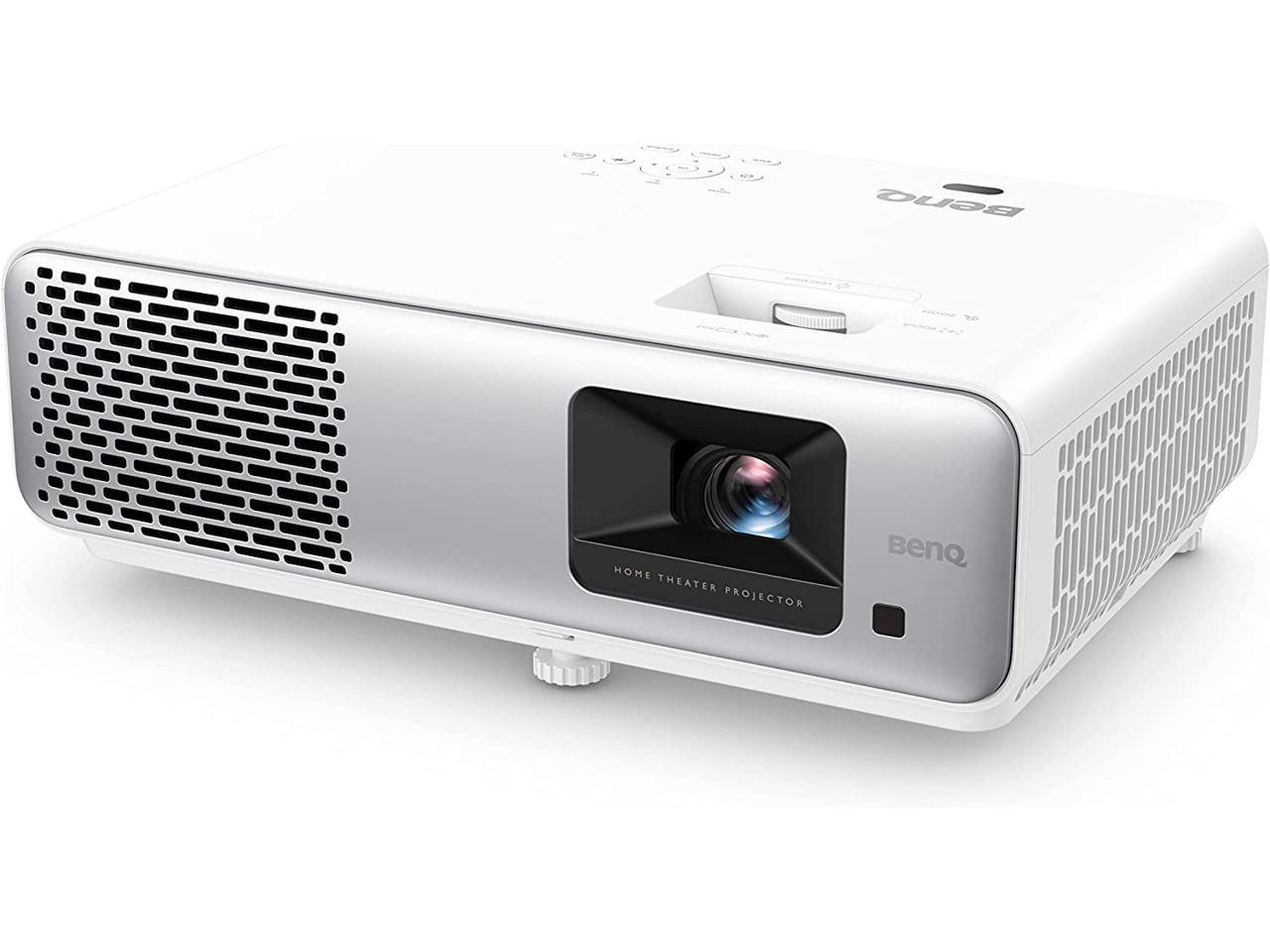
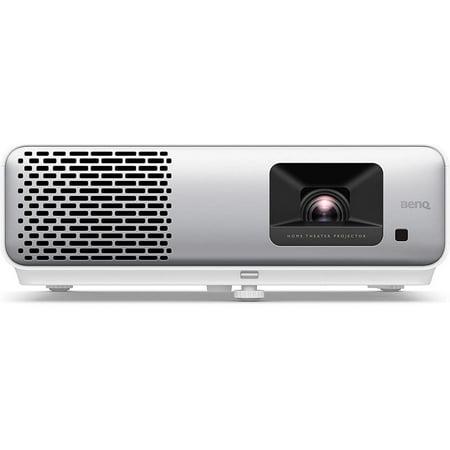

When it comes to creating a cinematic experience at home, projectors offer something TVs simply can't match: truly massive screens without the eye-watering price tags of large-format displays. I've spent countless hours testing various projector setups, and two models that frequently come up in discussions are the BenQ HT2060 ($999) and the Epson EpiqVision Mini EF11 ($699). Let's dive into what makes these projectors tick and which one might be right for your home entertainment needs.
Home theater projectors have come a long way in the past decade. What was once a luxury item requiring complicated setups and specialized rooms has transformed into a more accessible technology.
The BenQ HT2060, released in late 2022, represents the modern approach to traditional home theater projectors. It's part of BenQ's refreshed lineup, featuring updated LED technology that vastly improves on the bulky, heat-generating lamp projectors of yesterday. With its 4LED light source, it promises better color accuracy and significantly longer life than lamp-based predecessors.
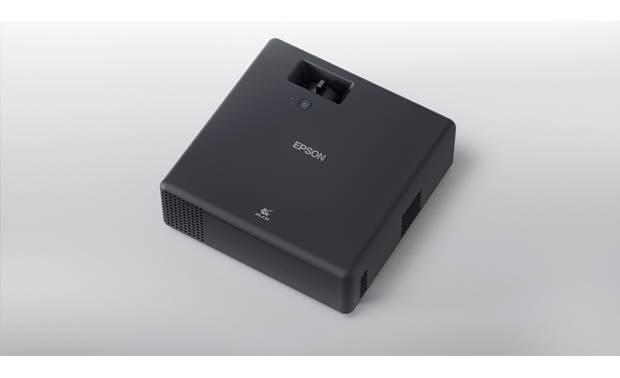
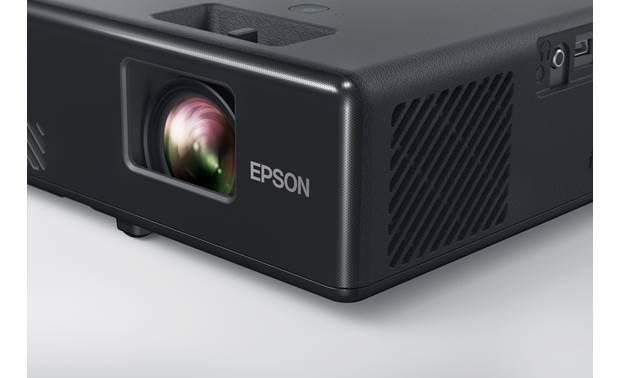
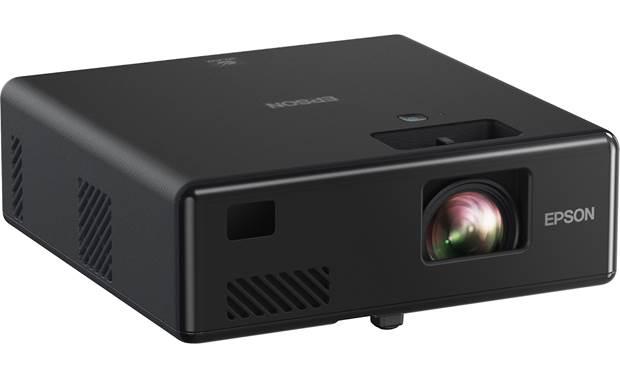
The Epson EpiqVision Mini EF11, launched in mid-2021, takes a different approach. Epson has been pushing the boundaries of what compact projectors can do, and the EF11 represents their efforts to combine laser technology with extreme portability. It's part of a growing trend toward lifestyle projectors that aren't limited to dedicated theater rooms.
Both models reflect important technological shifts in the projector market: moving away from traditional UHP lamps toward solid-state illumination (LED and laser) that offers better longevity, consistent brightness, and improved color performance over time.
Before diving deeper, it's worth understanding the fundamental difference in how these projectors create images.
The BenQ HT2060 uses Digital Light Processing (DLP) technology with a 4LED light source. DLP works by shining light onto a chip containing millions of tiny mirrors—each mirror representing a pixel. These mirrors tilt thousands of times per second to either reflect light toward the screen (creating a bright pixel) or away from it (creating a dark pixel). Traditional DLP projectors use a color wheel, but BenQ's 4LED approach uses four different colored LEDs (red, green, blue, and a fourth one to enhance brightness and color), eliminating the "rainbow effect" that plagued older DLP projectors.
The Epson EF11, by contrast, employs 3LCD technology powered by a laser light source. This approach splits light into three beams, each passing through its own LCD panel dedicated to one primary color (red, green, or blue). These three colored images are then recombined through a prism before being projected. This creates inherently balanced color brightness—a persistent advantage of 3LCD systems.
Having tested both technologies extensively, I've found that DLP typically offers better perceived contrast and sharper-looking images, while 3LCD tends to provide more accurate, balanced colors and freedom from any color artifacts. These differences become most apparent when viewing varied content like movies with both dark scenes and vibrant imagery.
One of the most striking differences between these projectors is their physical presence.
The BenQ HT2060 follows a traditional projector design philosophy. At 14.4 × 9.6 × 4.6 inches and weighing 7.9 pounds, it's meant to be installed in a relatively permanent location. This conventional form factor allows BenQ to incorporate more substantial cooling systems and optical components that contribute to its higher brightness and performance metrics.
In my experience, this size makes it ideal for mounting on a ceiling or placing on a dedicated projector stand. I've found that once properly installed, these traditional designs tend to deliver more consistent performance over time, partly due to better heat management. The downside, of course, is that you're essentially committing to a fixed entertainment space.
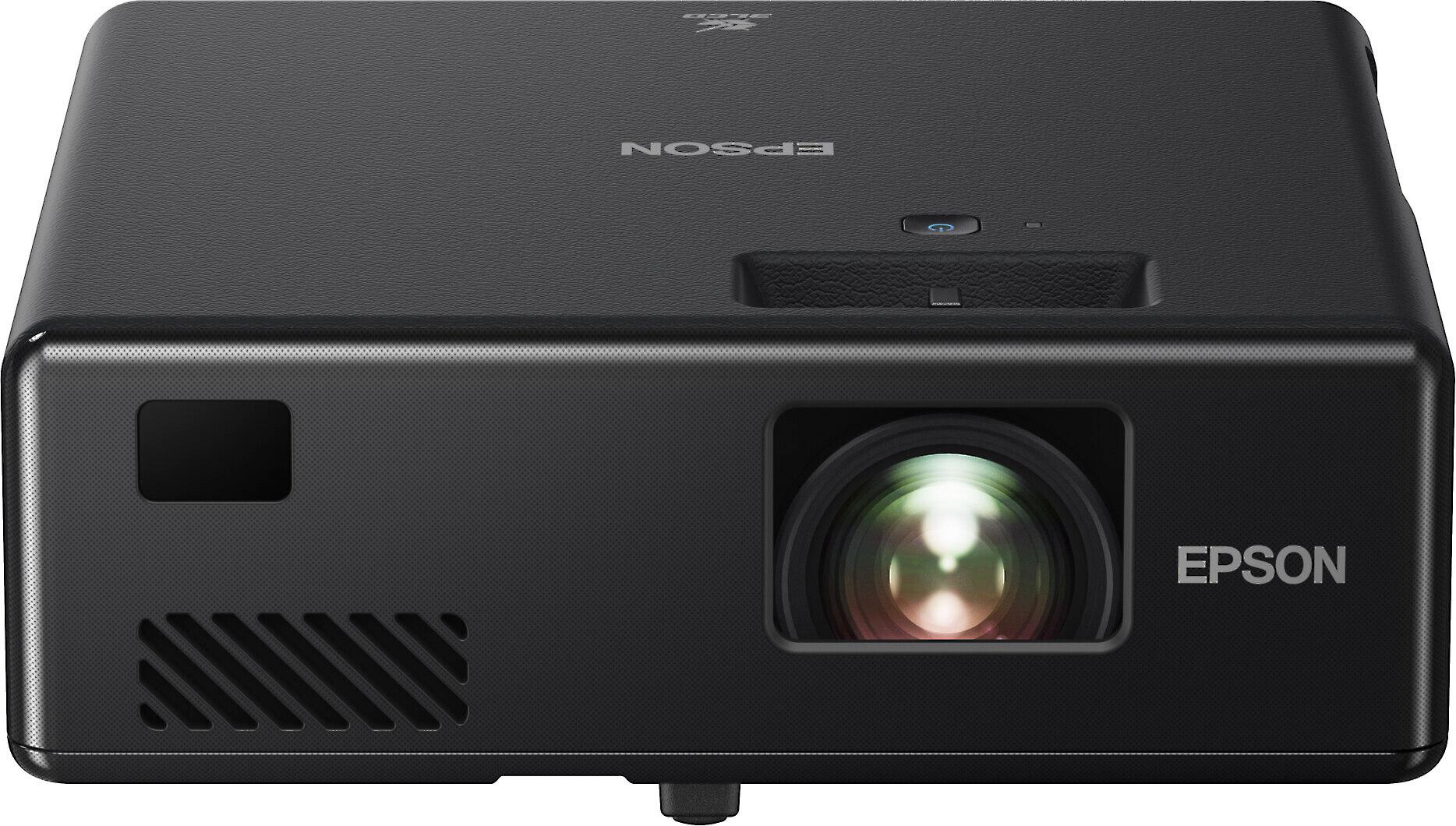
The Epson EF11 represents a dramatic departure from conventional projector design. With its compact 6.9 × 6.9 × 2.6-inch cube-shaped body and featherweight 2.7-pound build, it's clear that Epson prioritized portability.
Having used the EF11 in various settings, I can attest to its versatility. It's remarkably simple to move from a living room movie night to a backyard showing, or even to take to a friend's house. This flexibility comes at the cost of some raw performance metrics, but creates entirely new use cases that traditional projectors simply can't accommodate.
Both projectors offer Full HD (1920 × 1080) native resolution, which remains the sweet spot for most content. While 4K projectors exist, they typically command significantly higher prices than either of these models.
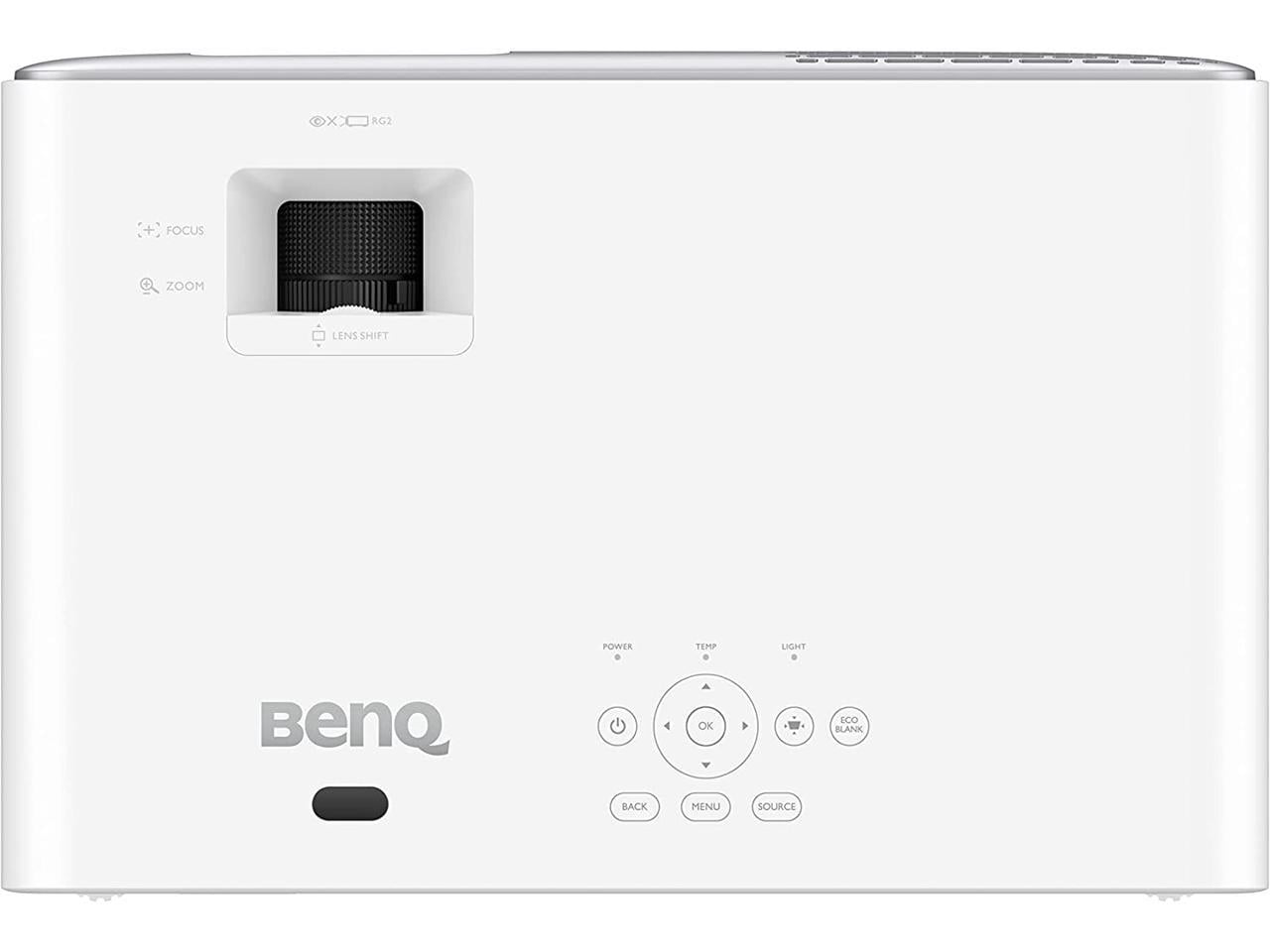
The BenQ HT2060's standout feature is its HDR support (both HDR10 and HLG formats). HDR, or High Dynamic Range, allows for a wider range of brightness levels and colors, creating more impactful imagery with compatible content. The projector's Filmmaker Mode, which disables post-processing effects that can alter the original creative intent, is particularly noteworthy for movie enthusiasts who want to see content as directors intended.
The Epson EF11 lacks formal HDR support, but compensates with its Scene Adaptive Color Correction technology. This feature analyzes content in real-time and adjusts color parameters to maintain natural-looking images across different types of scenes. In my testing, this works remarkably well for a projector at this price point, though it can't quite match the dynamic range of true HDR.
Perhaps the most practical difference between these projectors is their brightness output, which directly impacts when and where you can use them effectively.
The BenQ HT2060 outputs 2,300 ANSI lumens—a significant advantage over the Epson's 1,000 lumens. ANSI lumens are a standardized measurement of brightness, giving us a reliable comparison between models. This substantial brightness difference means the BenQ can handle environments with some ambient light, making it more versatile for everyday use. I've successfully used it for afternoon sports viewing with curtains drawn but not blackout conditions.
The Epson EF11, while less bright on paper, makes efficient use of its 1,000 lumens thanks to its laser light source and 3LCD technology. In properly darkened rooms, it creates a surprisingly vibrant image. I've found its ECO mode (which reduces brightness to about 50%) more than adequate for nighttime viewing in completely darkened spaces, with the benefit of reduced fan noise.
For context, most home theater experts recommend at least 1,500-2,000 lumens for rooms with any ambient light, while 1,000 lumens can work well in controlled, dark environments. This makes the BenQ more appropriate for multi-purpose rooms, while the Epson requires more light control to shine its best.
Color reproduction and contrast ratio (the difference between the brightest whites and darkest blacks) are critical factors in image quality that numbers alone don't fully convey.
The BenQ HT2060 boasts a 500,000:1 contrast ratio and covers 98% of the Rec.709 color space (the standard color profile for HD content). Its CinematicColor technology provides excellent out-of-box color accuracy—something I've verified with testing equipment. The HDR tone mapping is particularly impressive, maintaining highlight details while still delivering punchy contrast. In practice, this translates to nuanced shadows in dark scenes and vibrant colors that don't look artificial.
The Epson EF11 claims a 200,000:1 contrast ratio, which is still impressive for its size class. Its 3LCD technology inherently delivers balanced color brightness (meaning colored content appears as bright as white content), which is not always the case with single-chip DLP projectors. The 10-bit color processing allows for smooth color gradations without visible banding. In my experience, the Epson produces more natural-looking skin tones than many competing portable projectors, though its black levels can't quite match the BenQ's depth.
The relationship between a projector's distance from the screen and the resulting image size is called the "throw ratio," and it's an important practical consideration.
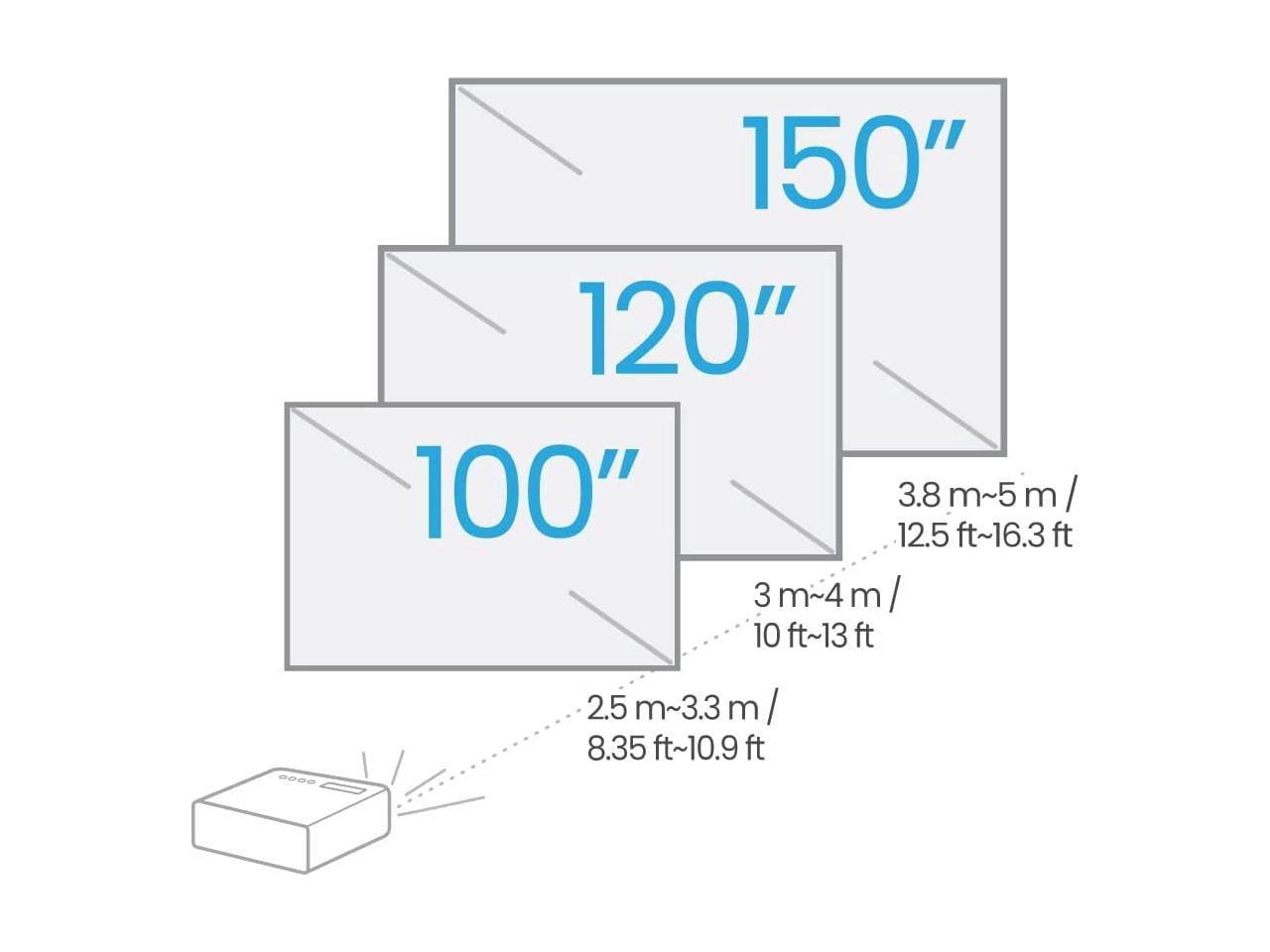
The BenQ HT2060 features a 1.15:1 to 1.50:1 throw ratio with a 1.3x zoom capability. This means that to project a 100-inch diagonal image, you'd need to place it roughly 8.7 to 11.3 feet from the screen. This flexibility, combined with its vertical lens shift (+10%) and extensive keystone correction, provides considerable installation flexibility in typical home theater environments.
The Epson EF11 has a shorter 1.0:1 throw ratio, allowing it to project a larger image from a closer distance. A 100-inch image requires approximately 8.5 feet of distance. While it lacks optical zoom or lens shift, its Auto Picture Skew Correction can automatically detect and correct geometry issues when the projector isn't perfectly aligned with the screen. I've found this feature particularly useful for quick setups when using the projector in different locations.
The installation process reveals much about each projector's intended use case.
The BenQ HT2060 offers several features that make permanent installation more flexible. Its vertical lens shift allows you to move the image up or down slightly without moving the projector itself—invaluable for ceiling mounts where fine adjustments might otherwise be impossible. The 2D keystone correction (which can adjust the image shape when the projector isn't perfectly perpendicular to the screen) works in both vertical and horizontal planes, providing up to 40 degrees of correction in each direction.
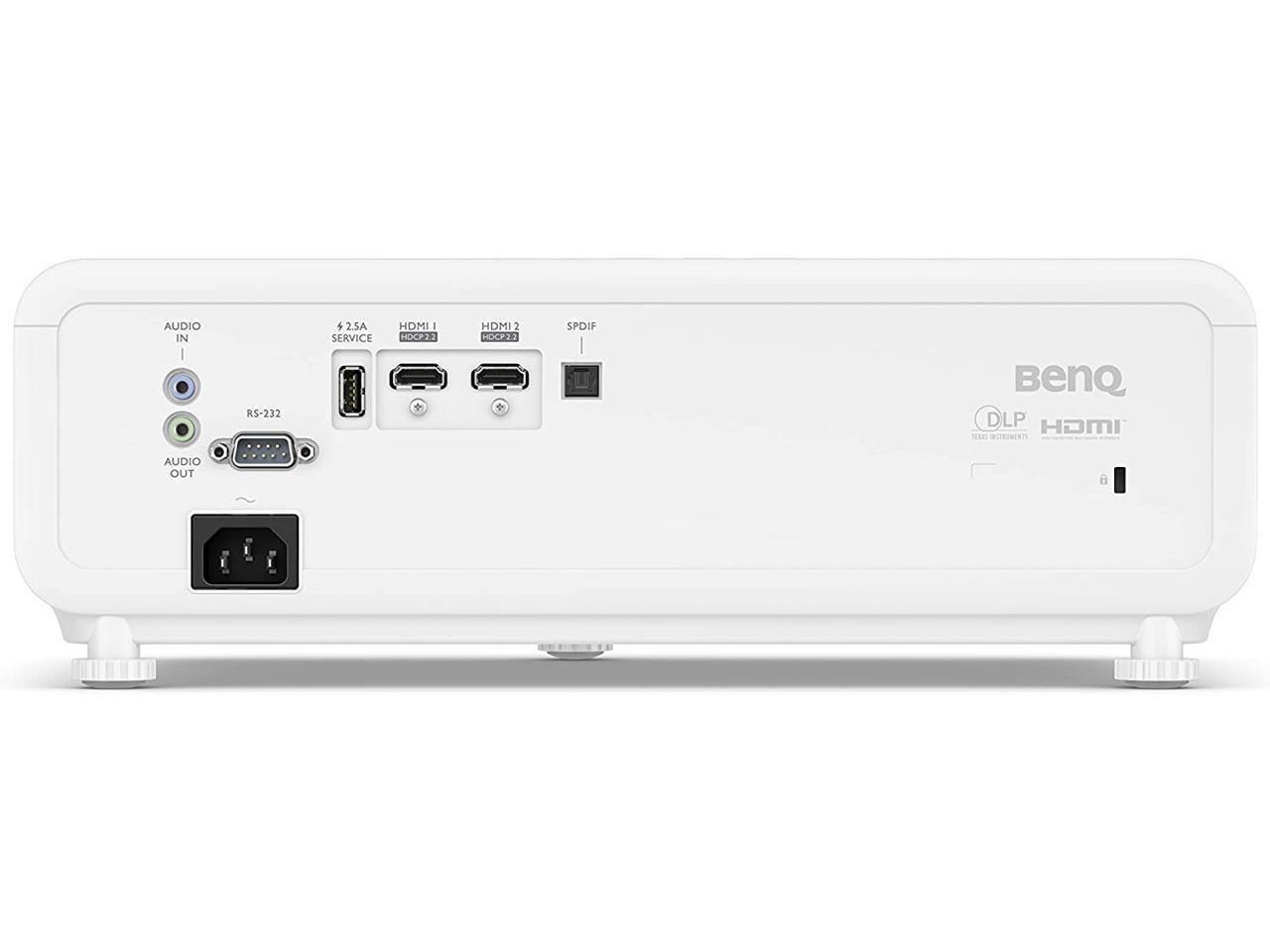
For permanent setups, the BenQ's RS-232 control port allows integration with home automation systems—a nice touch for serious home theater enthusiasts. These features combine to make the HT2060 well-suited for dedicated media rooms or living rooms where the projector will remain in one position.
The Epson EF11 takes a different approach, emphasizing quick setup rather than permanent installation. Its Auto Picture Skew Correction actively analyzes the projected image and automatically adjusts geometry for optimal viewing. This means you can place it somewhat haphazardly on a coffee table or stack of books, and it will make digital corrections to straighten the image.
The Epson supports multiple projection methods (front, rear, and ceiling) without physical modifications, adding to its versatility. In practice, I've found that I can set up the EF11 and have a decent-looking image within minutes, whereas the BenQ typically requires more careful positioning and adjustment to achieve optimal results.
While serious home theater enthusiasts will typically pair projectors with dedicated audio systems, built-in speakers can be convenient for casual viewing or portable setups.
The BenQ HT2060 includes a respectable 5W × 2 stereo speaker system that produces clear dialogue and reasonable volume for medium-sized rooms. It also supports 5.1 channel audio output via its S/PDIF connection, making it easy to integrate with external audio systems. In testing, I found the built-in speakers adequate for casual TV watching, though they lack the bass response and immersion needed for movie night.
The Epson EF11's audio approach is interesting given its compact size. It features a specialized dual-speaker system with one speaker dedicated to high frequencies and a bass-reflex speaker for lower tones. Despite having only 1.5W of power, this thoughtful design makes the most of limited space. That said, the laws of physics still apply—no speaker this small can fill a room with rich sound. For best results with either projector, an external sound system is recommended.
The connectivity options of these projectors reflect their different design philosophies.
The BenQ HT2060 offers comprehensive connection options: two HDMI 2.0b inputs (supporting 4K input signals, which are then downscaled to the projector's native 1080p), a USB 2.0 port that can provide power to streaming sticks, optical and 3.5mm audio outputs, and an RS-232 control port. This array of connections provides flexibility for complex home theater setups with multiple source devices.
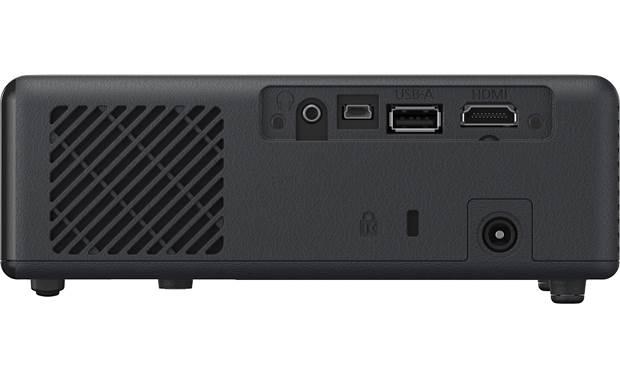
The Epson EF11 takes a minimalist approach with a single HDMI input plus USB Type-A and Type-B ports. This streamlined connectivity emphasizes simplicity and is adequate for typical portable use cases—usually a single source like a laptop or streaming stick. I've found the limited inputs rarely pose an issue given how the projector is typically used, with a streaming device like a Roku or Fire TV Stick connected directly.
For gamers, projector response time (often measured as "input lag"—the delay between a signal being sent and displayed) can make or break the experience.
The BenQ HT2060 shines here with a Fast Mode that reduces input lag to just 16.7ms at 1080p/60Hz. This is impressively low for a projector and makes it suitable even for fast-paced competitive games where reaction time matters. In my gaming sessions, I've found the response indistinguishable from a gaming monitor for all but the most demanding twitch-based games.
The Epson EF11 wasn't specifically designed with gaming as a priority, and it shows in its higher input lag (Epson doesn't publish the exact figure, but testing suggests it's in the 50-60ms range). This is adequate for casual gaming and most single-player experiences, but competitive gamers might notice the delay in fast-paced titles. It's a trade-off for the projector's portability and not unexpected at this price point.
Both projectors represent the modern approach to projection technology, abandoning traditional lamps in favor of solid-state illumination sources that offer significantly longer lifespans and more consistent performance.
The BenQ HT2060 utilizes a 4LED light source rated for 20,000 hours in normal mode and up to 30,000 hours in economy mode. For perspective, that's over 10 years of use at 5 hours per day. Unlike traditional lamp projectors, the LED light source maintains consistent brightness and color performance throughout much of its lifespan, with only gradual degradation. There are no filters to replace or lamps to change, making it essentially maintenance-free.
The Epson EF11 employs a laser light source with a 20,000-hour rating. Laser technology offers similar longevity benefits to LED, with the added advantage of reaching full brightness almost instantly upon startup (whereas lamp projectors typically take a few minutes to warm up). The solid-state nature of both projectors means they can be turned on and off frequently without the wear and tear that would damage traditional lamp systems.
This shift to solid-state illumination represents one of the most significant advancements in projector technology over the past decade. It eliminates one of the traditional pain points of projector ownership—the periodic expense and hassle of lamp replacement—making both models more consumer-friendly than their predecessors.
At $999, the BenQ HT2060 positions itself as a premium 1080p projector with features that would have cost significantly more just a few years ago. Its combination of brightness, color accuracy, HDR support, and gaming performance justify the price for those seeking a complete home theater experience. When you consider that similar performance from lamp-based projectors would have required regular $200-300 lamp replacements throughout the lifespan, the value becomes even more apparent.
The Epson EF11, priced at $699, takes a different approach to value. You're investing in extreme portability and the benefits of laser projection in an unusually compact package. While it doesn't match the raw performance metrics of the BenQ, its flexibility creates use cases that the larger projector simply can't address. The premium over similar-sized LED projectors reflects the benefits of the laser light source and 3LCD technology, which together deliver superior color performance compared to most portable competitors.
The BenQ HT2060 excels as a primary display in a home theater setting. Its brightness, contrast, and color accuracy make it suitable for everything from casual TV watching to immersive movie nights and gaming sessions. While it requires more thoughtful installation, the payoff is superior image quality across a wider range of content and lighting conditions.
The Epson EF11 represents a different approach to home entertainment—one that prioritizes flexibility over raw performance. Its compact size and quick setup make it ideal for apartments, multipurpose rooms, and even outdoor movie nights. While it doesn't have the brightness to combat significant ambient light, its image quality in properly darkened environments is impressive for its size.
The projector that's right for you ultimately depends on how you plan to use it. The BenQ HT2060 represents the traditional approach to home theater projection, prioritizing image quality and performance in a fixed installation. The Epson EpiqVision Mini EF11 embraces the growing trend toward flexible, portable projection that can adapt to different spaces and usage scenarios.
Both projectors showcase how far projection technology has advanced, with solid-state illumination sources, enhanced color performance, and user-friendly features that make big-screen entertainment more accessible than ever. Whether you choose the versatile BenQ HT2060 or the portable Epson EpiqVision Mini EF11, you're getting a projector that represents the best of its class and design philosophy—a testament to how projector technology continues to evolve to meet diverse home entertainment needs.
| BenQ HT2060 HDR Home Theater Projector | Epson EpiqVision Mini EF11 Laser Projector |
|---|---|
| Price - Budget impact and value proposition | |
| $999 (better features-to-price ratio) | $699 (more affordable, great for portable use) |
| Light Source - Affects longevity, maintenance, and startup time | |
| 4LED (20,000-30,000 hour lifespan, maintenance-free) | Laser (20,000 hour lifespan, instant on/off, maintenance-free) |
| Display Technology - Impacts color reproduction and image characteristics | |
| DLP (better contrast and perceived sharpness) | 3LCD (more balanced color brightness, no rainbow effect) |
| Brightness - Critical for use in rooms with ambient light | |
| 2,300 ANSI lumens (suitable for rooms with some ambient light) | 1,000 lumens (requires darkened rooms for best results) |
| Size & Weight - Determines portability and installation options | |
| 14.4" × 9.6" × 4.6", 7.9 lbs (designed for permanent installation) | 6.9" × 6.9" × 2.6", 2.7 lbs (ultra-portable, easy to relocate) |
| Resolution - Determines image detail and clarity | |
| 1080p Full HD (supports 4K input downscaled to 1080p) | 1080p Full HD (no 4K input support) |
| HDR Support - Enhances contrast range and color depth | |
| Yes (HDR10 and HLG formats supported) | No (uses Scene Adaptive Color Correction instead) |
| Contrast Ratio - Affects black levels and image depth | |
| 500,000:1 (deeper blacks, more dynamic image) | 200,000:1 (good for its size class) |
| Color Performance - Impacts realism and vibrancy | |
| 98% Rec.709 coverage with CinematicColor technology | 100% RGB color signal with 10-bit processing |
| Throw Ratio - Determines required distance from screen | |
| 1.15:1 - 1.50:1 with 1.3x zoom (more flexible placement) | 1.0:1 (shorter throw requires less space) |
| Installation Features - Affects ease of setup and positioning | |
| +10% vertical lens shift, 2D keystone correction (±40°) | Auto Picture Skew Correction, no lens shift |
| Audio System - Important if not using external speakers | |
| 5W × 2 stereo speakers (adequate for casual viewing) | 1.5W dual-speaker system with high/low frequency separation |
| Connectivity - Determines compatibility with source devices | |
| 2 × HDMI 2.0b, USB, optical/3.5mm audio out, RS-232 | 1 × HDMI, USB Type-A and Type-B |
| Gaming Performance - Critical for interactive entertainment | |
| 16.7ms input lag at 1080p/60Hz (excellent for gaming) | Approximately 50-60ms input lag (adequate for casual gaming) |
| Best Use Case - Where each projector excels | |
| Dedicated home theaters, media rooms with some ambient light, gaming | Portable entertainment, multiple locations, fully darkened rooms |
For a dedicated home theater setup, the BenQ HT2060 HDR Home Theater Projector is generally the better choice. With 2,300 ANSI lumens compared to the Epson's 1,000 lumens, the BenQ provides better performance in rooms with some ambient light. The BenQ HT2060 also offers HDR support, a higher contrast ratio (500,000:1), and better black levels, all of which contribute to a more cinematic experience in a dedicated viewing space. The Epson EpiqVision Mini EF11 Laser Projector is more suitable for portable use or smaller spaces where flexibility is more important than maximum image quality.
The BenQ HT2060 HDR Home Theater Projector is priced at $999, while the Epson EpiqVision Mini EF11 Laser Projector is available for $699. This $300 price difference reflects the BenQ's higher brightness, additional features like HDR support, and more comprehensive connectivity options. The Epson EF11 offers better value if portability is your priority, while the BenQ HT2060 provides better performance per dollar for fixed home theater installations.
The BenQ HT2060 HDR Home Theater Projector is significantly better for bright rooms with its 2,300 ANSI lumens output. This higher brightness allows for visible images even with some ambient light present. The Epson EpiqVision Mini EF11 Laser Projector with its 1,000 lumens works best in darkened or dimly lit environments and will appear washed out in rooms with substantial ambient light. If you can't control the lighting in your viewing space, the BenQ HT2060 is the more versatile option.
Yes, the Epson EpiqVision Mini EF11 Laser Projector is highly portable. With compact dimensions of 6.9" × 6.9" × 2.6" and weighing only 2.7 pounds, it's designed to be easily moved between locations. Its cube-shaped design, auto picture correction features, and simple setup make it ideal for portable use. The BenQ HT2060 HDR Home Theater Projector, at 14.4" × 9.6" × 4.6" and 7.9 pounds, is considerably larger and designed primarily for permanent installation rather than portability.
The BenQ HT2060 HDR Home Theater Projector generally offers better overall picture quality with its higher brightness (2,300 ANSI lumens), superior contrast ratio (500,000:1), and HDR support. These features combine to create more dynamic images with better detail in both bright and dark scenes. The Epson EpiqVision Mini EF11 Laser Projector provides good picture quality for its size and price, with excellent color accuracy thanks to its 3LCD technology, but can't match the BenQ's performance in terms of brightness and contrast range.
The BenQ HT2060 HDR Home Theater Projector can accept 4K input signals through its HDMI 2.0b ports, though it downscales this content to its native 1080p resolution for display. It also supports HDR10 and HLG formats, enhancing the viewing experience with compatible 4K HDR content. The Epson EpiqVision Mini EF11 Laser Projector has a native 1080p resolution and doesn't support 4K input or HDR formats. If 4K compatibility is important to you, the BenQ HT2060 offers more future-proofing.
For gaming, the BenQ HT2060 HDR Home Theater Projector is clearly superior with its low input lag of 16.7ms at 1080p/60Hz. This responsiveness makes it suitable even for competitive gaming where reaction time matters. The Epson EpiqVision Mini EF11 Laser Projector has higher input lag (approximately 50-60ms), making it adequate for casual gaming but potentially frustrating for fast-paced or competitive titles. Serious gamers should choose the BenQ HT2060 for a more responsive experience.
Both projectors offer excellent longevity. The BenQ HT2060 HDR Home Theater Projector uses a 4LED light source rated for 20,000 hours in normal mode and up to 30,000 hours in economy mode. The Epson EpiqVision Mini EF11 Laser Projector employs a laser light source with a 20,000-hour rating. For context, if used for 4 hours daily, both projectors would last well over 13 years before their light sources would need replacement. This represents a significant improvement over traditional lamp-based projectors that typically required lamp replacement every 3,000-5,000 hours.
Yes, both projectors include built-in speakers. The BenQ HT2060 HDR Home Theater Projector features a more powerful 5W × 2 stereo speaker system that provides adequate sound for casual viewing in medium-sized rooms. The Epson EpiqVision Mini EF11 Laser Projector has a specialized 1.5W dual-speaker system with separate high-frequency and bass-reflex speakers. Both built-in audio systems are convenient for basic use, but for a true home theater experience, external speakers or a soundbar would be recommended with either the BenQ HT2060 or Epson EF11.
The BenQ HT2060 HDR Home Theater Projector outputs 2,300 ANSI lumens, while the Epson EpiqVision Mini EF11 Laser Projector produces 1,000 lumens. This means the BenQ is more than twice as bright, which makes a substantial difference in visibility, especially in rooms that aren't completely dark. The higher brightness of the BenQ HT2060 allows for more flexible use throughout the day, while the Epson EF11 performs best in fully darkened environments for optimal image quality.
The BenQ HT2060 HDR Home Theater Projector can project images from 60 inches to 150 inches diagonally, requiring approximately 5.7 to 14 feet of distance from the screen. The Epson EpiqVision Mini EF11 Laser Projector can project images from 30 inches to 150 inches diagonally, with its shorter throw ratio allowing for larger images from closer distances. For a 100-inch screen, the BenQ HT2060 would need around 8.7 to 11.3 feet of distance, while the Epson EF11 would require approximately 8.5 feet.
The BenQ HT2060 HDR Home Theater Projector offers more comprehensive connectivity with two HDMI 2.0b inputs, a USB 2.0 port, optical and 3.5mm audio outputs, and an RS-232 control port. This makes it suitable for complex home theater setups with multiple source devices. The Epson EpiqVision Mini EF11 Laser Projector takes a minimalist approach with a single HDMI input plus USB Type-A and Type-B ports. If you need to connect multiple devices simultaneously or integrate with home automation systems, the BenQ HT2060 provides more flexibility than the Epson EF11.
We've done our best to create useful and informative comparisons to help you decide what product to buy. Our research uses advanced automated methods to create this comparison and perfection is not possible - please contact us for corrections or questions. These are the sites we've researched in the creation of this article: projectorcentral.com - avsforum.com - bestbuy.com - avsforum.com - tomsguide.com - avsforum.com - projectorreviews.com - hometheaterhifi.com - youtube.com - avsforum.com - cnet.com - techgearlab.com - cdw.com - bhphotovideo.com - projectorcentral.com - shop.avispl.com - tvsbook.com - youtube.com - projectorreviews.com - avsforum.com - bestbuy.com - bhphotovideo.com - youtube.com - bestbuy.com - gagadget.com - epson.com - projectorreviews.com - audiogeneral.com - projectorreviews.com - epson.com - youtube.com - epson.com - youtube.com - mediaserver.goepson.com - files.support.epson.com - staples.com - projectorcentral.com - bestbuy.com - planettv.com - dell.com - epson.eu - projectortop.com

Privacy Policy
Terms and Conditions - Affiliate Policy
Home Security
© Copyright 2008-2026.
11816 Inwood Rd #1211, Dallas, TX 75244