


Remember when the idea of a "portable" projector meant lugging around a 15-pound behemoth that needed its own carrying case? Those days are thankfully behind us. The portable projector market has undergone a remarkable transformation over the past decade, with devices becoming increasingly compact, powerful, and versatile.
Today's portable projectors offer an impressive blend of performance and convenience that was once unimaginable. They've become genuine alternatives to traditional TVs in many settings, providing the flexibility to create large-screen experiences almost anywhere. Whether you're looking to set up a backyard movie night, deliver a business presentation on the go, or create a temporary gaming setup at a friend's house, modern portable projectors can handle it all with surprising effectiveness.
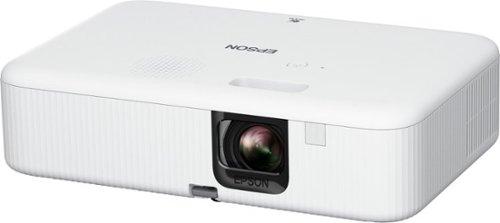
In this detailed comparison, we'll examine two standout offerings from Epson's portable projector lineup: the EpiqVision Mini EF11 Laser Projector and the EpiqVision Flex CO-FH02 Smart Portable Projector. While both come from the same manufacturer and share some DNA, they represent different approaches to portable projection that might make one significantly more suitable for your specific needs.
The EpiqVision Mini EF11 was released in late 2020 as part of Epson's push into the premium portable laser projector market. It represented a significant technological achievement in miniaturizing laser projection technology into an ultra-compact form factor. Prior to the EF11, laser projection was primarily found in significantly larger, installation-focused projectors.
The EpiqVision Flex CO-FH02 debuted more recently in 2022, reflecting a different product strategy. Rather than focusing on cutting-edge laser technology, the CO-FH02 prioritized brightness, smart features, and value in a still-portable but larger package.
In the roughly 18 months between these products' releases, we saw the continued evolution of two distinct approaches to portable projection: premium laser technology in ultra-compact designs versus high-brightness lamp-based projectors with integrated smart platforms. This division represents different solutions to the fundamental challenges of portable projection.
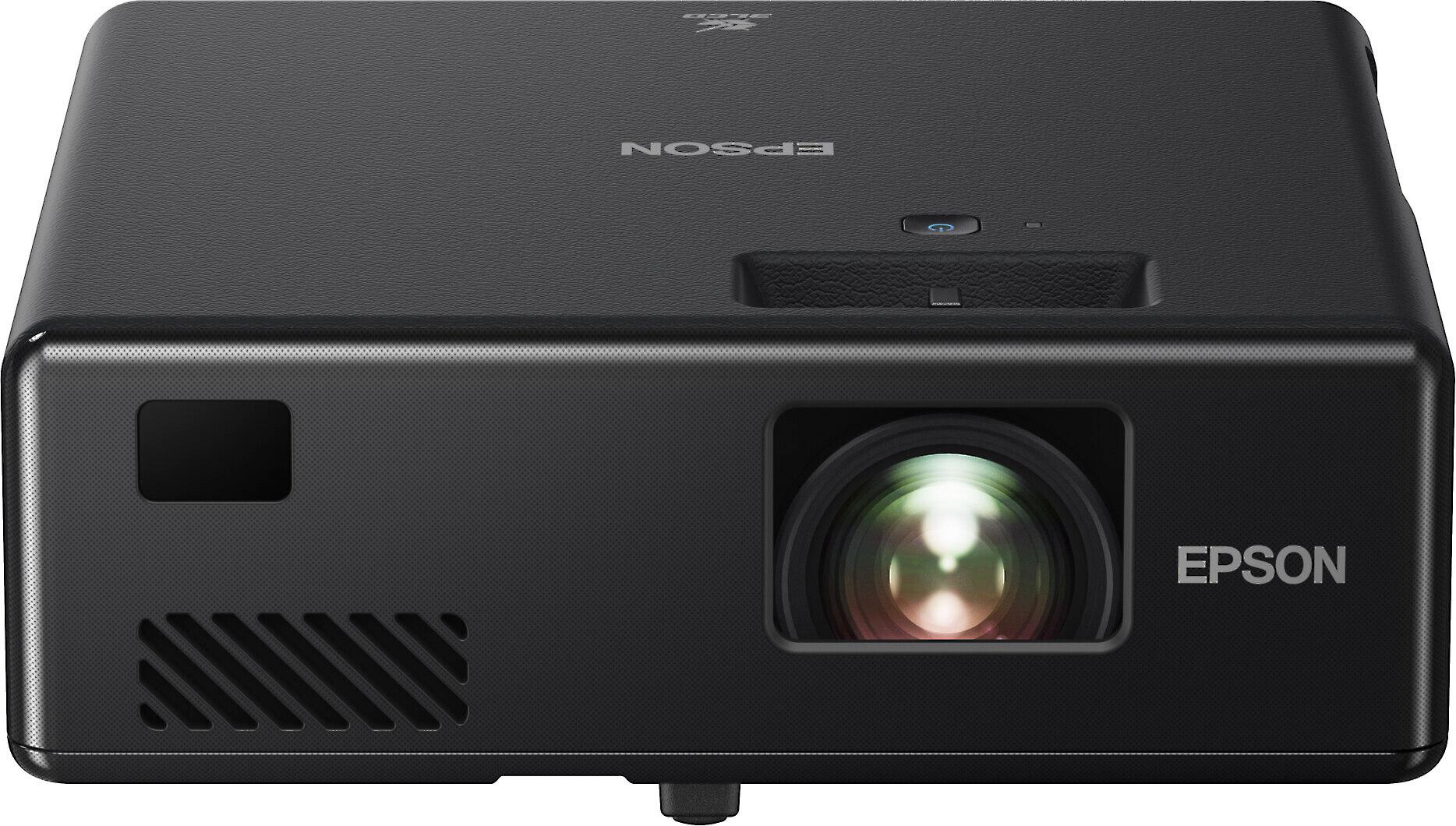
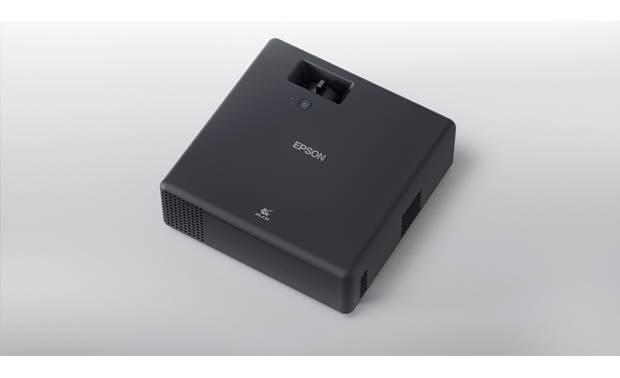
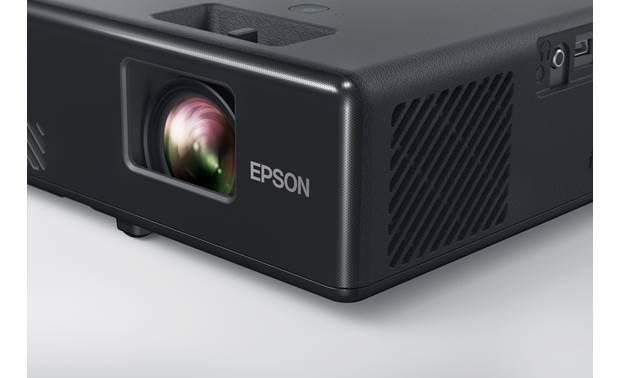
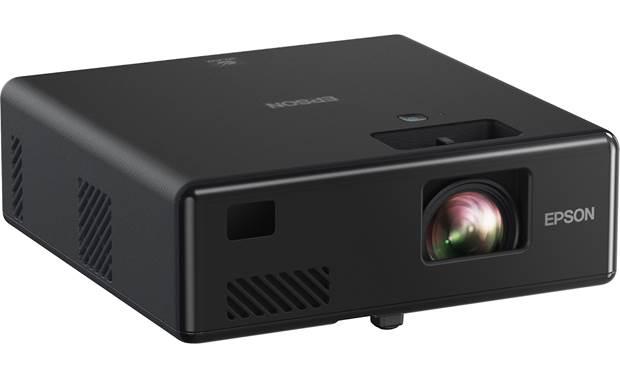
The EF11 embraces a strikingly minimalist cube design that measures just 6.9" on each side and stands 2.6" tall. At a mere 2.7 pounds, it's about the weight of a small laptop. The matte black finish gives it a premium, sophisticated look that wouldn't feel out of place in the most stylish living rooms. This cube form factor isn't just about aesthetics—it creates a remarkably efficient use of space that makes the EF11 exceptionally portable.
I've found that the EF11's cube design makes it surprisingly easy to pack in a backpack or carry-on bag, with minimal worry about damage during transport. The balanced weight distribution also makes it stable on uneven surfaces, which can be invaluable when setting up impromptu movie nights.
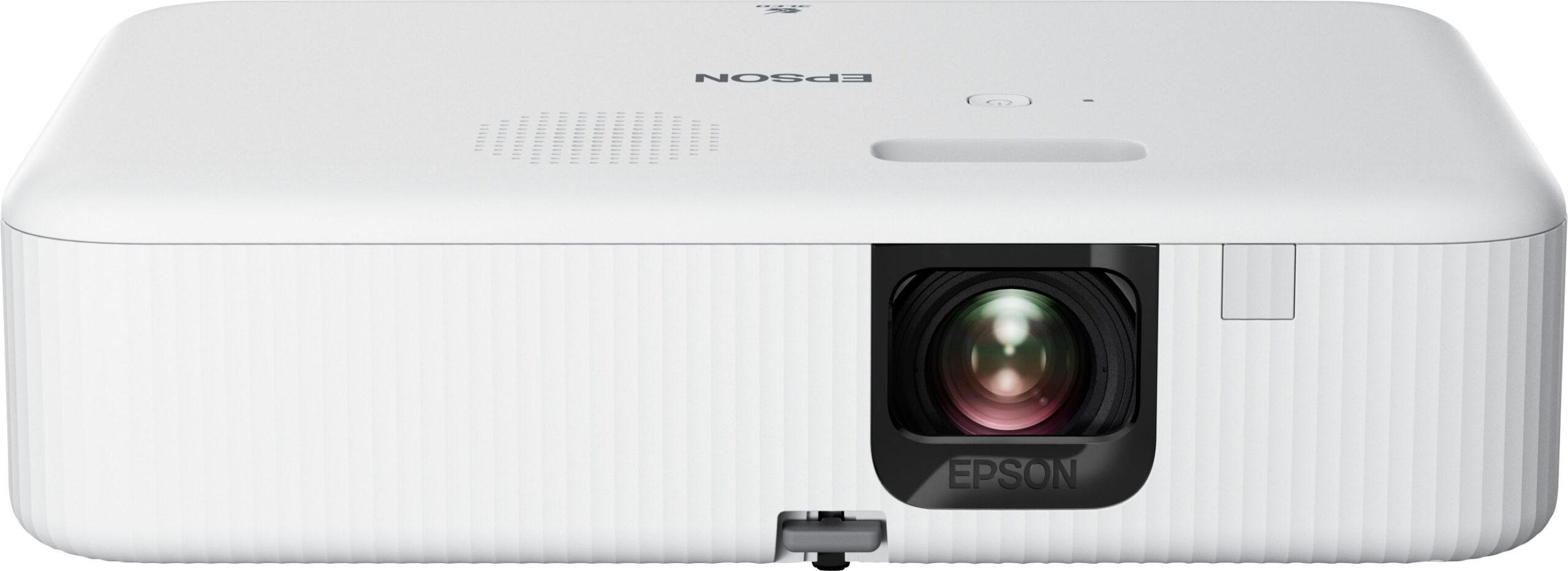
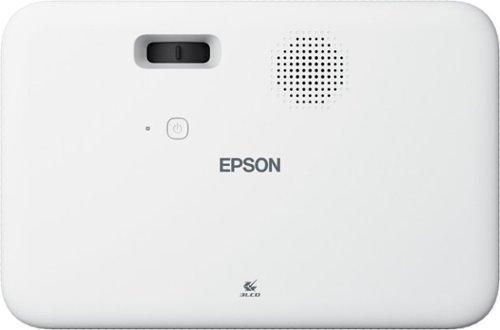
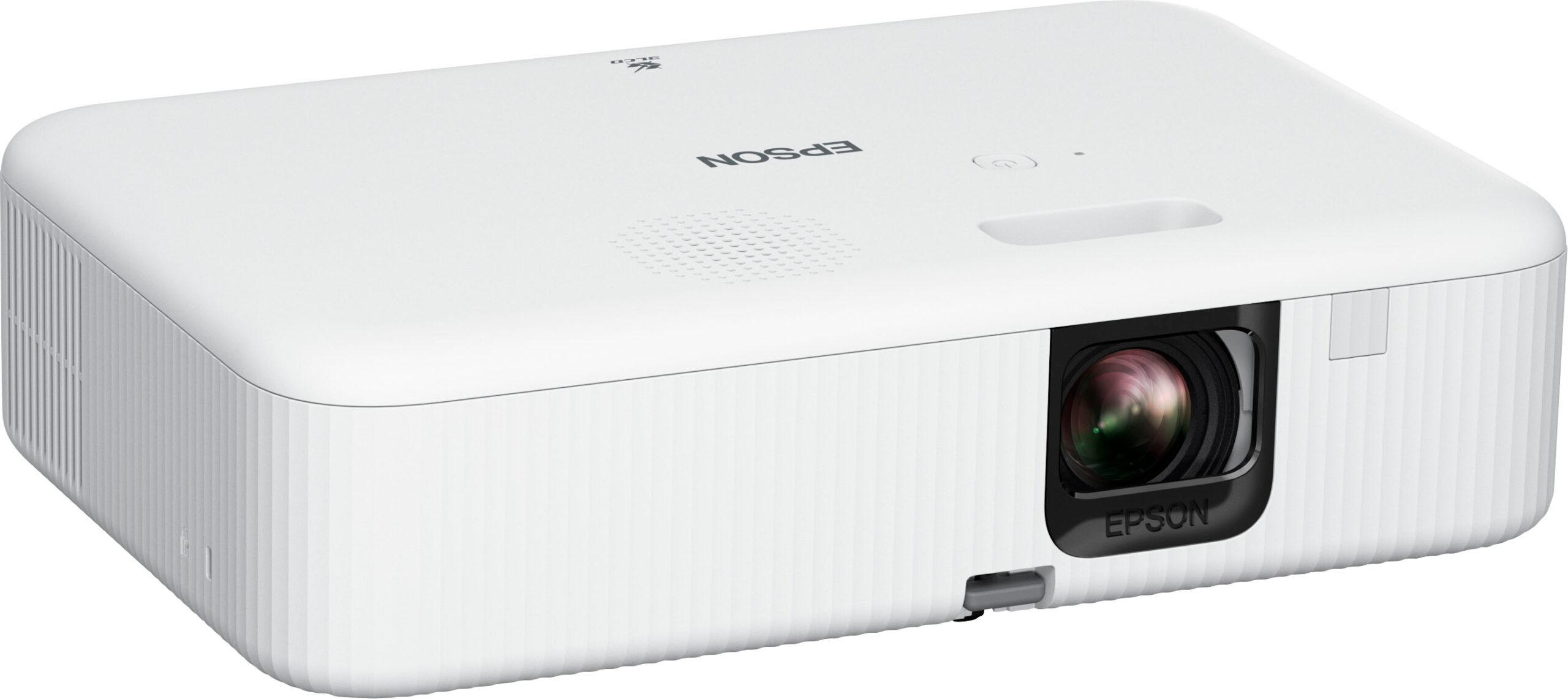
The CO-FH02 takes a more traditional rectangular approach, measuring 12.5" × 8.3" × 3.4" and weighing 5.7 pounds—over twice as heavy as the EF11. While certainly still portable by projector standards, it demands more consideration when packing and transporting. However, the larger form factor accommodates its higher brightness capabilities and built-in Android TV functionality, representing a different set of priorities.
The CO-FH02 does include a carrying handle, which is a thoughtful touch that partially compensates for its larger size and weight. This makes it easy to move around a home or office, though it's less ideal for frequent travel compared to the EF11.
Both projectors feature solid build quality, but their different design philosophies extend to their construction. The EF11's compact nature means fewer moving parts and a generally more robust housing. Its laser light source is also inherently more durable than traditional lamps when subjected to movement and vibration.
The CO-FH02's lamp-based system requires more ventilation and cooling, resulting in more potential failure points when frequently transported. However, its more conventional design may make it easier to service if problems do arise.
Perhaps the most fundamental technical difference between these projectors is their light source technology. The EF11 utilizes Epson's MicroLaser Array technology—a sophisticated system that uses multiple laser diodes to generate light. This laser light source offers several significant advantages:
The CO-FH02 employs a traditional UHE (Ultra High Efficiency) lamp system. While this older technology has disadvantages compared to laser sources, it enables higher brightness at a lower cost. The lamp is rated for 6,000 hours in normal mode and up to 12,000 hours in eco mode—significantly less than the EF11's laser, but still respectable for casual use.
For perspective, even at 6,000 hours, you could watch a two-hour movie every day for over eight years before needing a lamp replacement. The replacement lamps typically cost between $99-$129, so this should factor into your long-term cost calculations.
Brightness is measured in lumens, which essentially indicates how much light the projector can output. This specification is particularly important for portable projectors since they're often used in less-than-ideal lighting conditions.
The CO-FH02 delivers an impressive 3,000 lumens of both color and white brightness. This high output makes it usable even in rooms with significant ambient light—something relatively rare in portable projectors. In practical terms, this means you can watch content during the day with curtains partially open or with room lights on at moderate levels.
In contrast, the EF11 produces 1,000 lumens, which is adequate for dark or dimly lit environments but struggles in brighter conditions. While this might seem like a major disadvantage, it's important to understand that the EF11's laser light source creates a perception of higher brightness due to its superior contrast ratio. Additionally, the EF11's brightness remains more consistent throughout its lifespan, while lamp projectors typically dim gradually over time.
In my experience using both types of projectors, the practical difference isn't as dramatic as the specs might suggest in controlled environments. The EF11 performs admirably in proper home theater settings with managed lighting, while the CO-FH02's additional brightness provides more flexibility for casual viewing in varied lighting conditions.
Both projectors offer Full HD 1080p resolution (1920×1080 pixels), which remains the sweet spot for most content consumption. While 4K projectors are becoming more common, they typically command significantly higher prices, especially in portable formats.
Where they differ significantly is their maximum image size capabilities:
For context, a 150" screen is already massive—about 11 feet wide and 6.2 feet tall. The CO-FH02's ability to project up to 300" (25 feet wide!) is impressive but rarely practical for most home settings. However, this capability could be valuable for specific use cases like outdoor movie nights, large venue presentations, or other special events.
The contrast ratio indicates a projector's ability to simultaneously display bright highlights and deep shadows—a critical factor in image quality that affects everything from perceived detail to overall picture impact.
The EF11 boasts an exceptional 200,000:1 contrast ratio, largely thanks to its laser light source's ability to achieve deeper black levels. This translates to noticeably richer images with more apparent depth, particularly in darker scenes.
The CO-FH02 offers a more modest 16,000:1 contrast ratio, which is still respectable for its class but doesn't match the dramatic range of the EF11. In practical terms, this means shadows may appear more as dark gray than true black, and the overall image might look slightly flatter, especially in dark room viewing.
Both projectors benefit from Epson's 3LCD technology, which uses three separate LCD panels (one each for red, green, and blue) to produce colors. This approach differs from single-chip DLP projectors (which use a color wheel) and typically delivers more accurate colors and eliminates the "rainbow effect" that some viewers find distracting in DLP projectors.
The 10-bit color processing in both models allows for over a billion possible colors, resulting in smooth color gradients and natural-looking skin tones. Both also include various color modes optimized for different content types and viewing environments.
One of the most significant practical differences between these projectors is their approach to smart features.
The CO-FH02 comes with a fully integrated Android TV experience, giving you direct access to thousands of streaming apps including Netflix, Disney+, HBO Max, and YouTube. The included voice-enabled remote allows for easy navigation and Google Assistant integration for voice search and smart home control. This built-in smart platform means you can start streaming content immediately without connecting any additional devices.
The EF11 takes a different approach, offering no built-in smart platform. Instead, it's designed to work with external streaming devices connected via HDMI, such as Roku, Apple TV, Fire TV Stick, or Chromecast. This requires an additional purchase if you don't already own such a device, but it also provides greater flexibility to choose your preferred streaming ecosystem and upgrade it independently from the projector.
The connectivity profiles of these projectors reflect their different design philosophies:
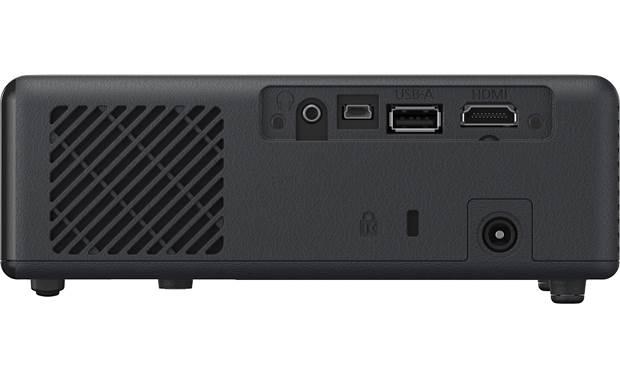
EF11 Connectivity:
CO-FH02 Connectivity:
The CO-FH02's wireless connectivity options provide additional flexibility for streaming content directly to the projector and connecting audio devices. The EF11's more limited connection options reflect its focus on simplicity and portability.
Built-in audio has traditionally been a weak point for projectors, but both of these models make respectable efforts to provide usable sound without requiring external speakers.
The EF11 features an interesting dual-speaker system with specialized drivers—one dedicated to higher frequencies and one bass-reflex speaker for lower frequencies. Despite modest 1.5W power output, this design approach provides better sound separation and clarity than you might expect from such a compact device.
The CO-FH02 employs a single 5W bass-reflex speaker system, offering more power and potentially more volume than the EF11. However, the single-speaker design may not provide the same level of audio separation.
In my experience, neither projector will replace a dedicated sound system for a true home theater experience, but both are perfectly adequate for casual viewing. The EF11's sound is surprisingly robust for its size, while the CO-FH02 can get louder but sometimes with less definition.
Both projectors support Bluetooth audio output, allowing you to connect to external speakers or headphones wirelessly. This is particularly valuable for temporary setups where running audio cables might be impractical.
Keystone correction is a technology that digitally adjusts the projected image to compensate when the projector isn't perfectly perpendicular to the screen. This is particularly important for portable projectors, which are frequently set up in less-than-ideal positions.
The EF11 includes Epson's Auto Picture Skew Correction, which automatically detects and corrects vertical geometry issues up to ±34° and horizontal issues up to ±40°. This means you can place the projector off-center or at an angle, and it will automatically adjust the image to appear rectangular.
The CO-FH02 offers automatic vertical keystone correction up to ±30° and manual horizontal correction up to ±30°. While still flexible, the requirement for manual horizontal correction means slightly more effort during setup compared to the EF11's fully automatic approach.
It's worth noting that any digital keystone correction slightly reduces the effective resolution of the projected image. For critical viewing, it's always best to position the projector properly to minimize the need for these corrections.
The throw ratio indicates how wide the projected image will be relative to the distance between the projector and screen. This specification has significant practical implications for where you can place the projector in your space.
The EF11 features a 1.0:1 throw ratio, which means that at a distance of 6 feet from the wall, it will project a 6-foot-wide image (approximately 87" diagonal at 16:9 aspect ratio). This relatively short throw distance allows for larger images in smaller rooms.
The CO-FH02 has a variable throw ratio of 1.19-1.61:1, requiring more distance for the same image size. At the same 6-foot placement, the image would be approximately 4-5 feet wide (60-75" diagonal). This means you'll need to place the CO-FH02 farther from the screen to achieve the same image size as the EF11.
For home theater use, the EF11's shorter throw ratio can be a significant advantage in rooms where space is limited. In practical terms, this means you might be able to place the EF11 on a coffee table and still get a satisfyingly large image, while the CO-FH02 might need to be positioned farther back in the room.
The EpiqVision Mini EF11 typically retails for around $699, positioning it in the premium segment of portable projectors. Its higher price reflects its laser technology, compact design, and superior contrast ratio. The 20,000-hour light source means you'll likely never need to replace it during the projector's useful life, providing better long-term value despite the higher initial investment.
The EpiqVision Flex CO-FH02 comes in at a more accessible price point of approximately $599. While slightly less expensive upfront, potential lamp replacements should be considered in the total cost of ownership. However, for many users, the integrated smart features eliminate the need for a separate streaming device, potentially offsetting this cost difference.
Both projectors represent different value propositions depending on your priorities. The EF11 offers premium technology in an ultra-portable package, while the CO-FH02 delivers exceptional brightness and built-in streaming at a more accessible price point.
Both the EpiqVision Mini EF11 and the EpiqVision Flex CO-FH02 represent impressive achievements in portable projection technology, but they're designed with different priorities and use cases in mind. The EF11 excels as an ultra-portable, premium quality projector for controlled environments, while the CO-FH02 offers greater brightness, smart features, and potentially larger images at a more accessible price point.
For my home theater setup, I've found the EF11's superior contrast ratio and laser technology provide a more cinema-like experience in a properly darkened room. However, for multi-purpose spaces or environments with variable lighting, the CO-FH02's additional brightness offers valuable flexibility that might outweigh the contrast advantage.
Your ideal choice ultimately depends on how you plan to use the projector, where you'll use it most frequently, and which features align with your specific viewing habits. Either way, both models demonstrate how far portable projection technology has advanced, offering impressive performance that would have been unimaginable in such compact packages just a few years ago.
| Epson EpiqVision Mini EF11 Laser Projector | Epson EpiqVision Flex CO-FH02 Smart Portable Projector |
|---|---|
| Light Source Technology - Affects longevity, startup time, and image consistency | |
| Laser diode (20,000 hour life, instant on/off, consistent brightness throughout lifespan) | Traditional lamp (6,000-12,000 hour life depending on mode, requires replacement eventually) |
| Brightness - Determines usability in various lighting conditions | |
| 1,000 lumens (adequate for dark or dimly lit rooms only) | 3,000 lumens (usable in rooms with moderate ambient light) |
| Size & Weight - Impacts portability and placement options | |
| 6.9" × 6.9" × 2.6", ultra-portable at 2.7 lbs | 12.5" × 8.3" × 3.4", moderately portable at 5.7 lbs |
| Contrast Ratio - Affects image depth, black levels, and overall picture quality | |
| 200,000:1 (exceptional, delivers cinema-like black levels) | 16,000:1 (good but noticeably less depth in dark scenes) |
| Smart Features - Determines need for additional streaming devices | |
| No built-in smart platform (requires external streaming device) | Integrated Android TV with apps and Google Assistant |
| Maximum Image Size - Affects potential usage scenarios | |
| 30" to 150" projection size | Up to 300" projection size (ideal for large venues) |
| Throw Ratio - Determines required distance for desired image size | |
| 1.0:1 (requires less distance for same image size) | 1.19-1.61:1 (requires 20-60% more distance for same image size) |
| Audio System - Affects need for external speakers | |
| 1.5W dual speaker system (one for highs, one for lows) | 5W single bass-reflex speaker (louder but less separation) |
| Keystone Correction - Impacts setup flexibility and image quality | |
| Auto Picture Skew Correction: Vertical ±34°, Horizontal ±40° | Automatic vertical ±30°, Manual horizontal ±30° |
| Price & Value - Overall investment consideration | |
| $699 (higher upfront cost but no lamp replacements needed) | $599 (lower initial cost but may require lamp replacement) |
| Best For - Use case recommendation | |
| Dark room home theater, frequent travelers needing premium portability | Versatile use in varied lighting, users wanting integrated streaming |
The Epson EpiqVision Flex CO-FH02 Smart Portable Projector is significantly brighter with 3,000 lumens compared to the Epson EpiqVision Mini EF11 Laser Projector's 1,000 lumens. This makes the CO-FH02 better suited for rooms with ambient light, while the EF11 performs best in darkened environments. If you'll be using your projector in well-lit spaces, the CO-FH02 offers a clear advantage.
The Epson EpiqVision Mini EF11 Laser Projector is considerably more portable at just 2.7 pounds and measuring 6.9" × 6.9" × 2.6", compared to the Epson EpiqVision Flex CO-FH02 which weighs 5.7 pounds and measures 12.5" × 8.3" × 3.4". If you need to travel frequently with your projector, the compact cube design of the EF11 makes it much easier to pack and transport.
Only the Epson EpiqVision Flex CO-FH02 Smart Portable Projector has built-in streaming apps through its integrated Android TV platform. The Epson EpiqVision Mini EF11 Laser Projector requires an external streaming device connected via HDMI. If you want a complete all-in-one solution without purchasing additional devices, the CO-FH02 provides immediate access to popular streaming services.
For home theater enthusiasts concerned with image quality, the Epson EpiqVision Mini EF11 Laser Projector offers superior contrast with a 200,000:1 ratio compared to the Epson EpiqVision Flex CO-FH02's 16,000:1 ratio. This results in deeper blacks and more image depth. Both projectors offer the same Full HD 1080p resolution, but the EF11's laser technology generally produces a more cinema-like image in properly darkened rooms.
The Epson EpiqVision Mini EF11 Laser Projector has a significantly longer light source lifespan with its laser rated for 20,000 hours, compared to the Epson EpiqVision Flex CO-FH02's lamp which lasts 6,000 hours in normal mode or up to 12,000 hours in eco mode. The EF11 provides better long-term reliability with no lamp replacements needed throughout its typical lifespan.
The Epson EpiqVision Mini EF11 Laser Projector is more suitable for small rooms due to its 1.0:1 throw ratio, allowing it to project larger images from shorter distances. The Epson EpiqVision Flex CO-FH02 has a 1.19-1.61:1 throw ratio, requiring more distance for the same image size. In limited spaces, the EF11 can typically project a larger image while positioned closer to the screen.
The Epson EpiqVision Mini EF11 Laser Projector typically costs around $699, while the Epson EpiqVision Flex CO-FH02 Smart Portable Projector is priced at approximately $599. The $100 price difference primarily reflects the EF11's laser technology and premium compact design. When considering long-term value, remember the CO-FH02 may eventually require lamp replacement, while the EF11's laser source should last the lifetime of the projector.
For watching sports, which often happens during daytime or in rooms with some ambient light, the Epson EpiqVision Flex CO-FH02 Smart Portable Projector is generally better suited with its 3,000 lumens of brightness. The Epson EpiqVision Mini EF11 Laser Projector with 1,000 lumens may struggle in these conditions. Additionally, the CO-FH02's ability to project larger images (up to 300" versus the EF11's 150") might enhance the sports viewing experience for larger gatherings.
Both projectors offer built-in audio, but with different approaches. The Epson EpiqVision Mini EF11 Laser Projector features a 1.5W dual-speaker system with dedicated drivers for high and low frequencies, while the Epson EpiqVision Flex CO-FH02 has a more powerful 5W bass-reflex speaker. For casual viewing, the CO-FH02 provides greater volume, though the EF11 offers better sound separation despite lower power. Both support Bluetooth connection to external speakers for improved audio quality.
For a dedicated home theater with controlled lighting, the Epson EpiqVision Mini EF11 Laser Projector is generally the better choice due to its superior 200,000:1 contrast ratio, which delivers deeper blacks and more image depth compared to the Epson EpiqVision Flex CO-FH02's 16,000:1 contrast. Home theater enthusiasts typically prioritize contrast and image quality over raw brightness when ambient light is controlled. The EF11's laser technology also provides more consistent performance over time.
Both projectors offer Full HD 1080p resolution suitable for gaming, but they have different strengths. The Epson EpiqVision Mini EF11 Laser Projector provides better contrast and potentially more immersive visuals in dark environments, while the Epson EpiqVision Flex CO-FH02 offers greater brightness for gaming sessions with some ambient light. Neither projector advertises especially low input lag, so competitive gamers might want to research specific gaming performance. Both support HDMI connection to gaming consoles and PCs.
If you want the most hassle-free setup experience, the Epson EpiqVision Flex CO-FH02 Smart Portable Projector offers greater convenience with its built-in Android TV (no additional streaming device needed) and 3,000 lumens brightness (less need for complete darkness). However, the Epson EpiqVision Mini EF11 Laser Projector provides easier physical setup with its fully automatic keystone correction and more flexible placement options due to its shorter throw ratio. Your definition of "hassle-free" might depend on whether you prioritize physical setup or content access.
We've done our best to create useful and informative comparisons to help you decide what product to buy. Our research uses advanced automated methods to create this comparison and perfection is not possible - please contact us for corrections or questions. These are the sites we've researched in the creation of this article: bestbuy.com - bhphotovideo.com - youtube.com - bestbuy.com - gagadget.com - epson.com - projectorreviews.com - audiogeneral.com - projectorreviews.com - epson.com - youtube.com - epson.com - youtube.com - mediaserver.goepson.com - files.support.epson.com - staples.com - projectorcentral.com - bestbuy.com - planettv.com - dell.com - epson.eu - projectortop.com - expertreviews.co.uk - projectorcentral.com - youtube.com - bestbuy.com - specsradar.com - techwalls.com - cnet.com - epson.com - youtube.com - projectorreviews.com - epson.com - abt.com - youtube.com - cnet.com - techgearlab.com - staples.com - bestbuy.com - bestbuy.com - projectorcentral.com - bhphotovideo.com - dell.com - latin.epson.com - specsradar.com - projectorcentral.com - officedepot.com - files.support.epson.com - walmart.com - adorama.com - epson.com

Privacy Policy
Terms and Conditions - Affiliate Policy
Home Security
© Copyright 2008-2026.
11816 Inwood Rd #1211, Dallas, TX 75244