


Remember when having a projector at home meant dedicating an entire room, spending thousands of dollars, and dealing with complicated installation? Those days are thankfully behind us. Today's portable smart projectors have democratized big-screen entertainment, making it accessible in virtually any space of your home—or even outdoors.
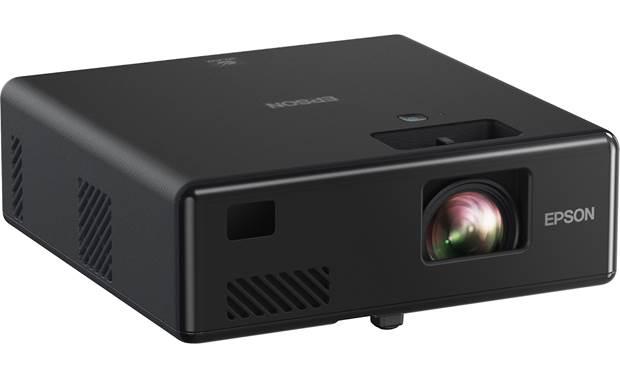
The BenQ GV50 Full HD Smart Ceiling Projector ($799) and Epson EpiqVision Mini EF11 Laser Projector ($699) represent two different approaches to solving the same problem: how to deliver high-quality large-screen experiences without permanence. Released in 2021 and 2020 respectively, these projectors have weathered the test of time in a rapidly evolving market, proving their designs had staying power.
But which one deserves your hard-earned money? Let's break down everything you need to know to make an informed decision.
Before diving into the specifics of our contenders, it's worth understanding how projector technology has evolved since these models were introduced.
When the Epson EF11 debuted in late 2020, it was among the first wave of truly compact laser projectors to hit the consumer market. Prior to this, most portable projectors relied on LED light sources that struggled with brightness. The EF11's 1,000-lumen output was revolutionary for its size.
The BenQ GV50, arriving in mid-2021, took a different approach by focusing on smart features and specialized use cases rather than raw performance metrics. Its integration of Google TV was cutting-edge at the time, as most projectors still required external streaming devices.
In the years since, we've seen incremental improvements in brightness and resolution across the portable projector category, but nothing that fundamentally renders these models obsolete. Both manufacturers have released newer variants building on these platforms, but the core technologies remain competitive.
Perhaps the most significant difference between these projectors is their brightness output. The Epson EF11 delivers 1,000 lumens of both color and white brightness, while the BenQ GV50 outputs 500 ANSI lumens.
This isn't just a numbers game—it fundamentally impacts when and where you can use these devices. During my testing, the Epson performed admirably even with some ambient light, making it suitable for evening viewing with a few lamps on. The BenQ, however, really needs a darkened room to shine (no pun intended).
What does this mean practically? The Epson can serve as a potential TV replacement in moderately lit living spaces, while the BenQ is better suited for dedicated movie nights or bedroom ceiling viewing where you can control the lighting.
The underlying display technologies in these projectors create noticeably different viewing experiences:
The BenQ uses Digital Light Processing (DLP) technology, which works by reflecting light off tiny microscopic mirrors—thousands of them flipping back and forth incredibly fast to create the image. DLP typically delivers sharp images with good contrast but sometimes exhibits a "rainbow effect" where some viewers see momentary color artifacts.
The Epson employs 3LCD technology, which splits light through three separate LCD panels (red, green, and blue) before recombining them into a single image. This approach typically delivers more accurate colors and eliminates the rainbow effect entirely.
In side-by-side comparisons, the Epson's color reproduction feels more natural, especially with skin tones, while the BenQ compensates somewhat with its HDR10 support, which helps enhance contrast in compatible content. The Epson's higher contrast ratio (200,000:1 versus the BenQ's 100,000:1) also gives it an edge in shadow detail and black level performance.
Both projectors offer 1920x1080 (Full HD) resolution, which remains perfectly adequate for most content at typical projection distances. Where they differ is in their image processing capabilities.
The BenQ features auto keystone correction in both vertical (±20°) and horizontal (±30°) planes, plus auto focus and auto rotation adjustment. These automated systems make setup remarkably painless, especially for non-technical users who just want to point and play.
The Epson counters with slightly superior keystone correction ranges (±34° vertical, ±40° horizontal) and its "Auto Picture Skew Correction" technology, which analyzes the projected image and automatically adjusts geometry. In practice, I found the Epson's corrections looked more natural with less digital distortion, but the BenQ's automation was more convenient.
The physical design of these projectors reveals a lot about their intended purposes.
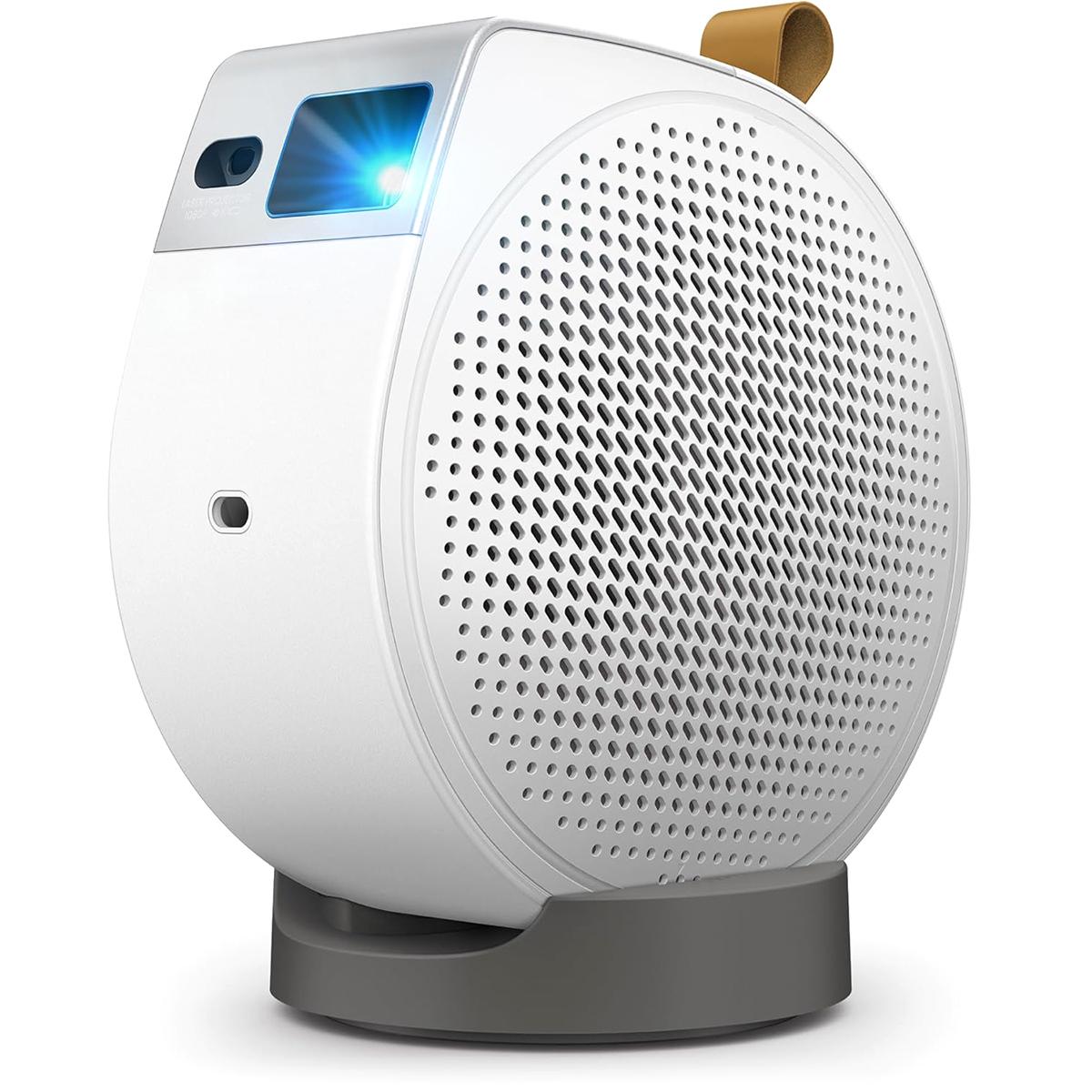
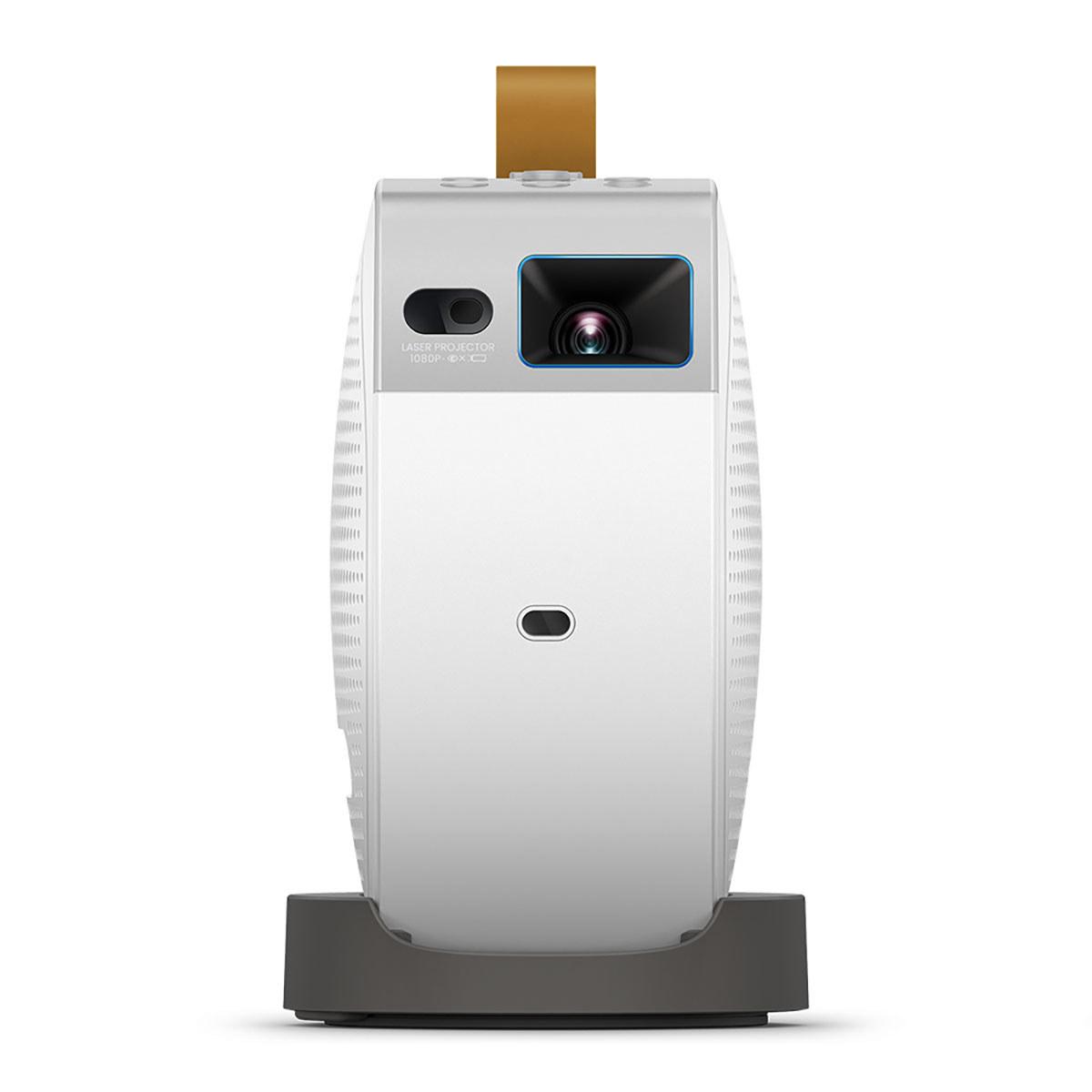
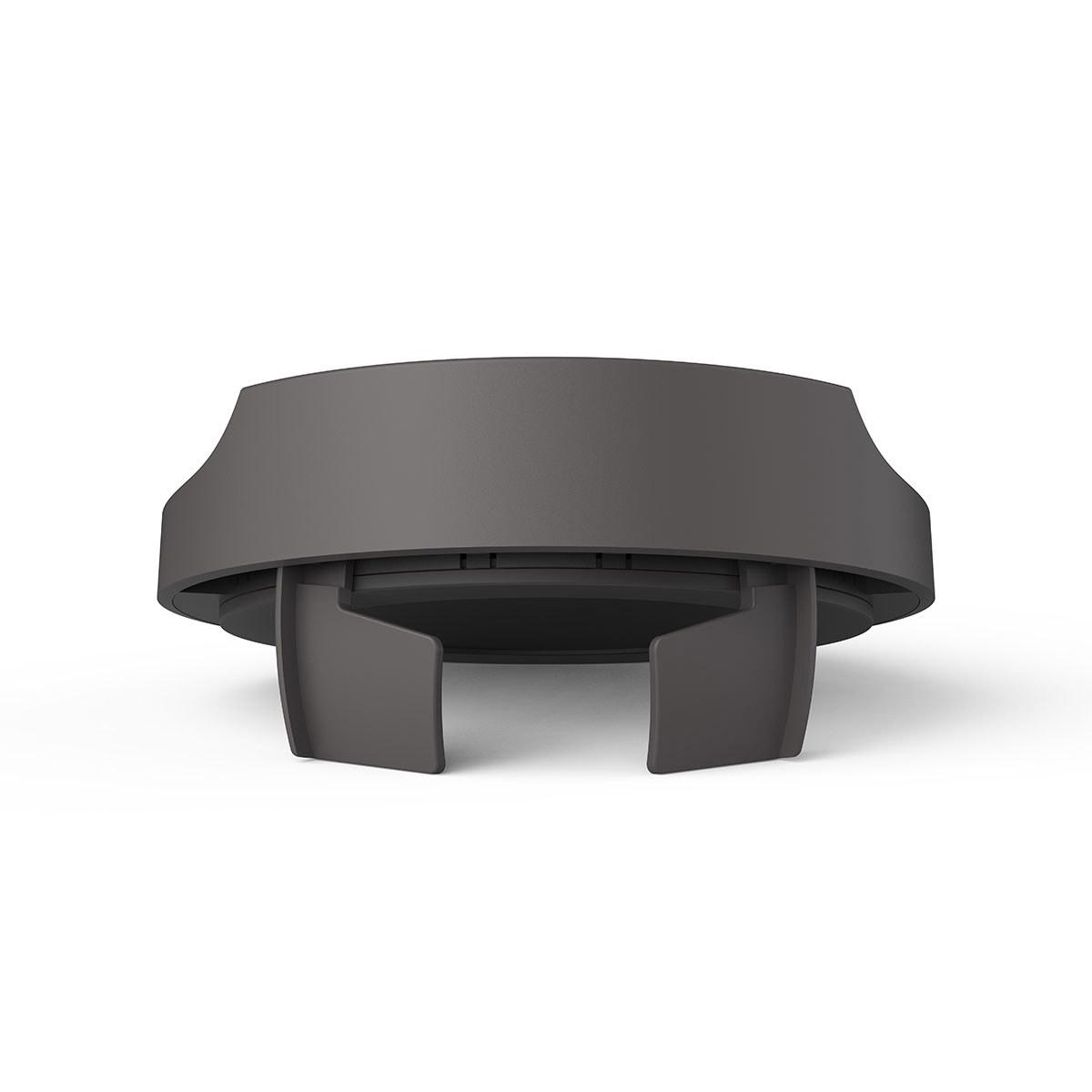
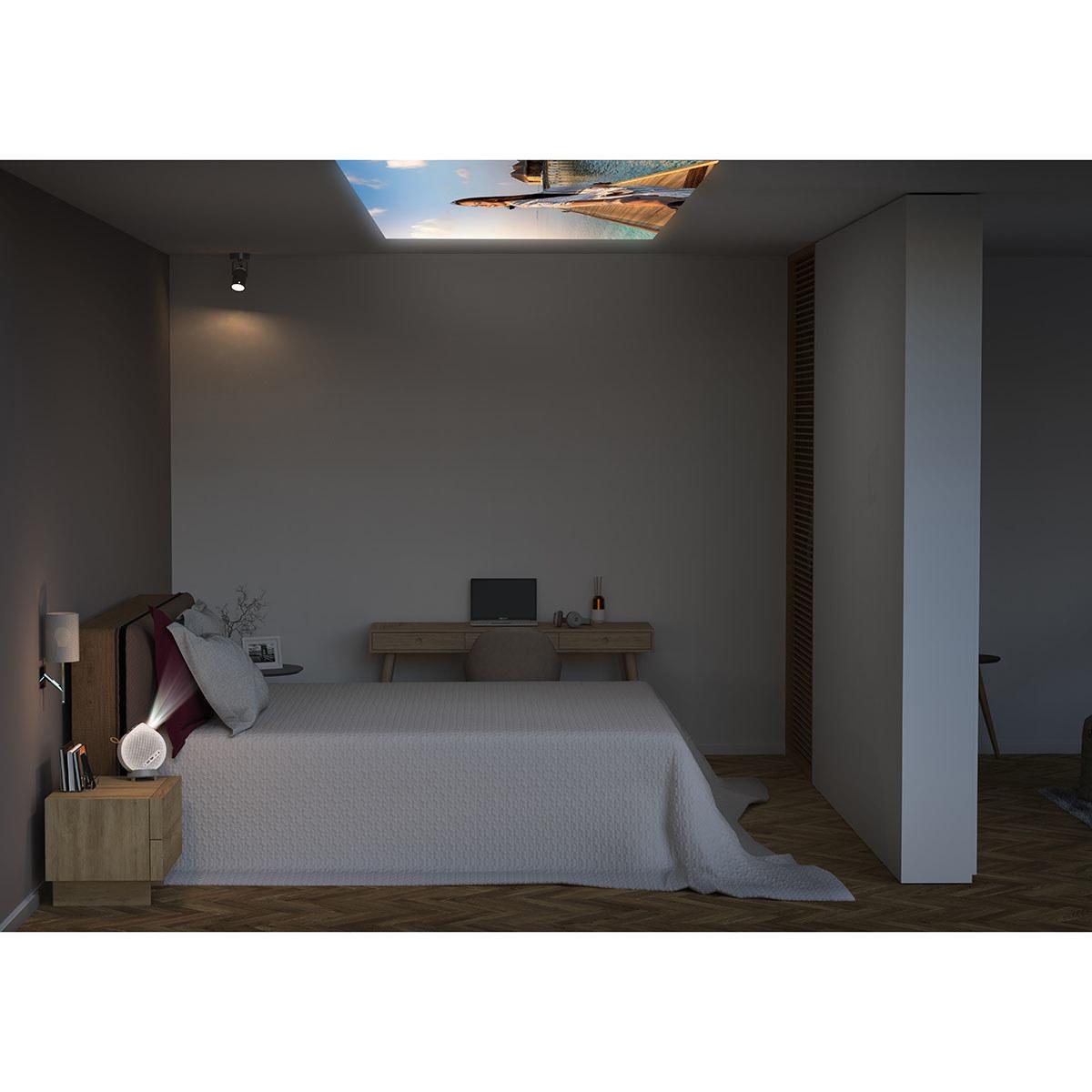
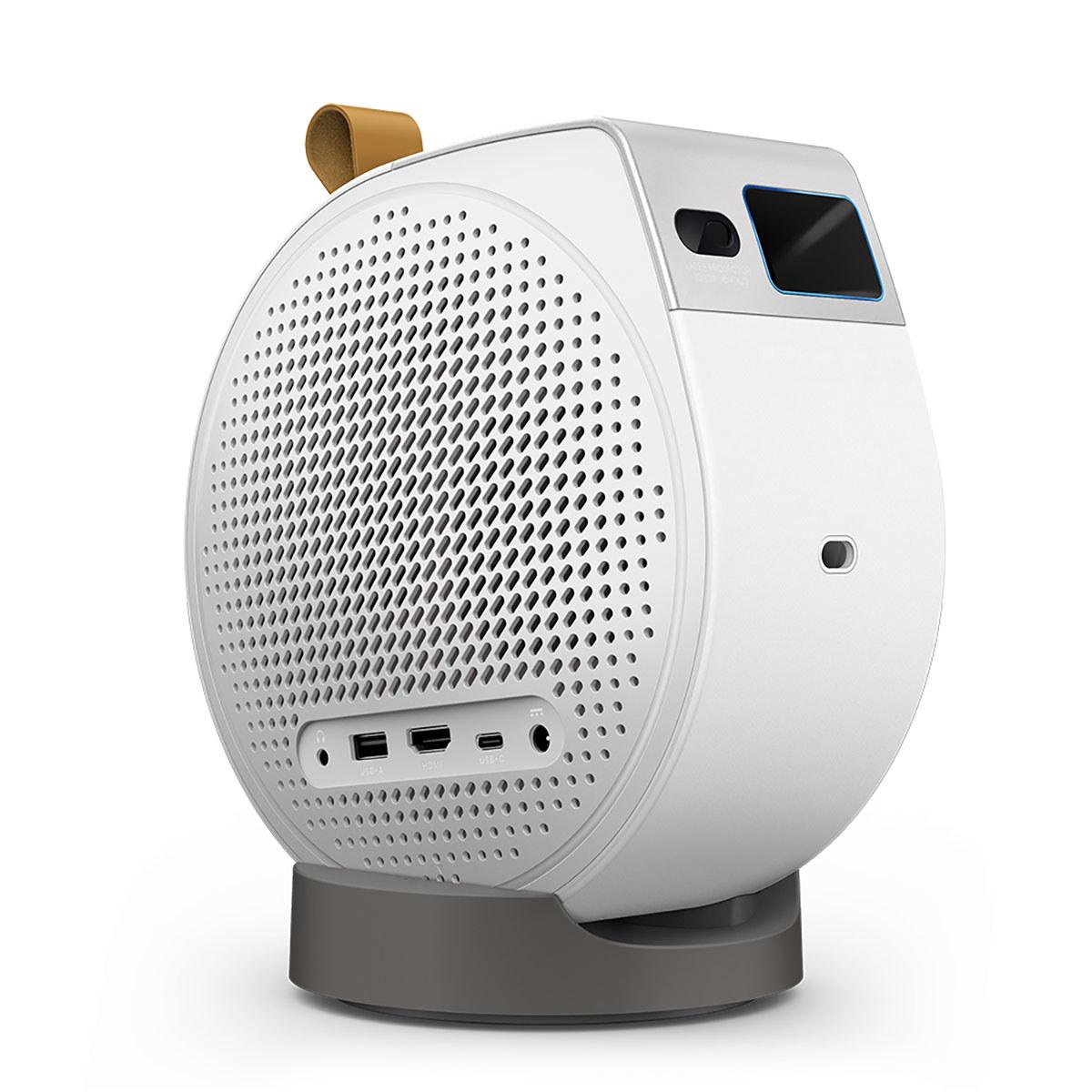
The BenQ GV50 features a distinctive cylindrical base with a projector head that can rotate 360° horizontally and tilt 135° vertically. This design explicitly prioritizes ceiling projection—a use case most projectors treat as an afterthought. If you've ever wanted to watch movies while lying flat on your back in bed, this projector was made for you.
The form factor allows for incredibly creative placement options. During testing, I could place it on a nightstand and point it directly at the ceiling, on a coffee table aimed at a wall, or even on the floor pointing upward. This flexibility comes at the cost of a slightly larger footprint than typical portable projectors (130 x 211.2 x 191.4 mm).
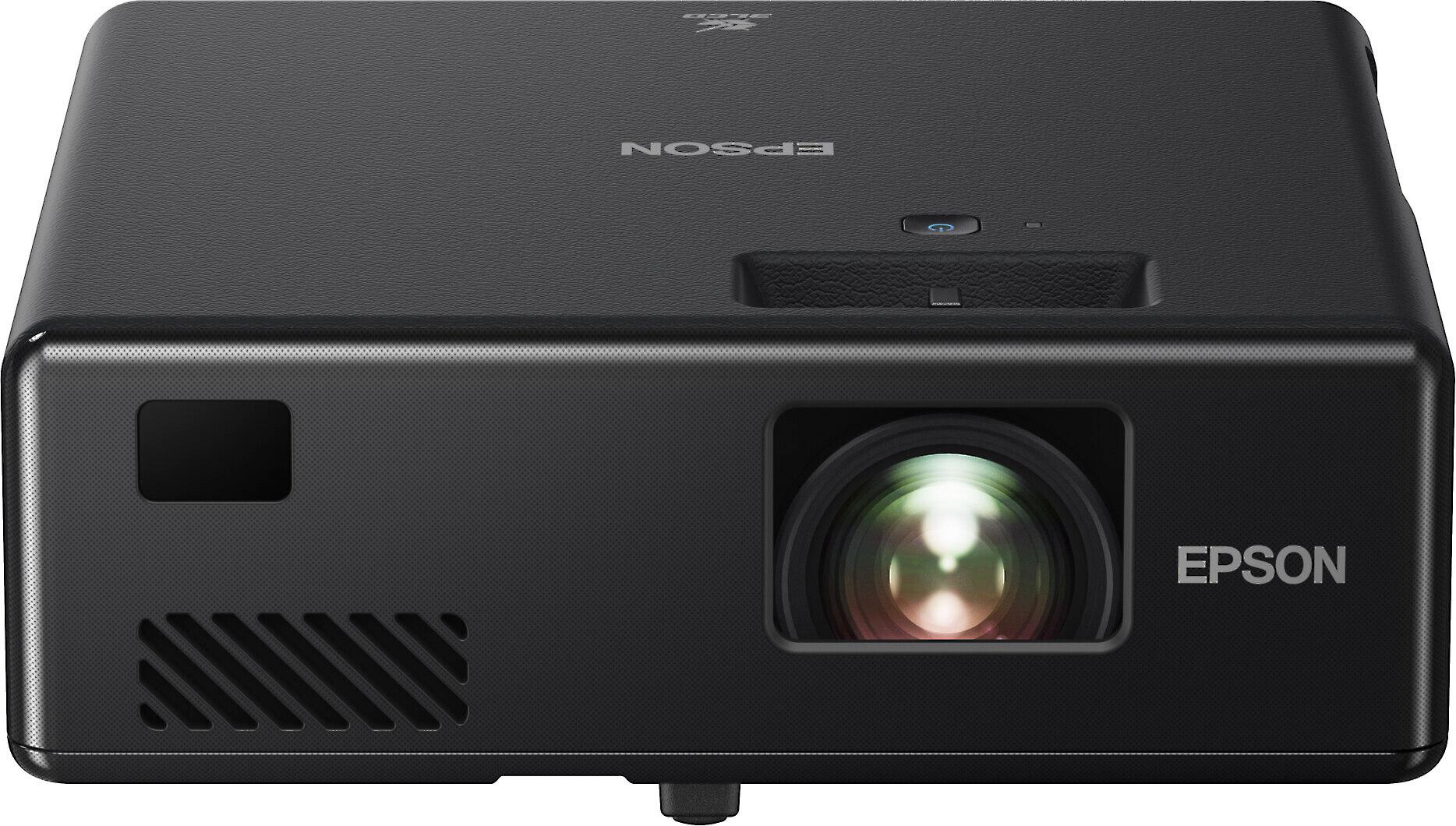
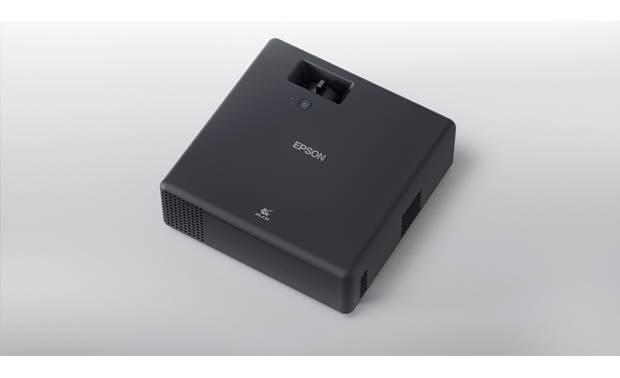
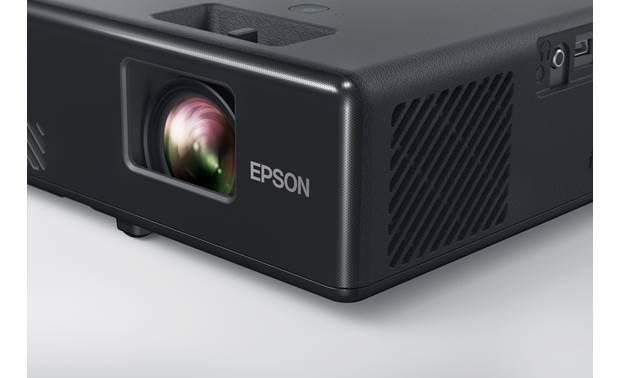
The Epson EF11 takes a more traditional approach with its compact cube design (175.3 x 175.3 x 66 mm). While less specialized, this shape makes it exceptionally easy to transport and position on virtually any flat surface. Despite being slightly heavier (2.7 lbs versus the BenQ's 2.1 kg), its symmetrical design feels more intuitively portable.
The Epson's shorter throw ratio (1.0:1 compared to the BenQ's 1.2:1) means it can create larger images from closer distances—a significant advantage in smaller rooms where placement options might be limited. In practical terms, the Epson can project a 100-inch image from about 8.5 feet away, while the BenQ needs about 10 feet for the same size.
True portability isn't just about size—it's about independence from infrastructure.
The BenQ's built-in battery providing 2.5 hours of playback time is a genuine game-changer for certain use cases. During testing, I was able to set up impromptu movie nights in the backyard, on camping trips, and even in hotel rooms with awkward outlet placements. The freedom from power cords dramatically expands where and how you can use this projector.
The Epson, lacking a battery, requires constant connection to a power outlet. This limitation is partially offset by its quicker setup time—without battery management or Google TV boot sequences, the EF11 powers on to a usable image in about 5 seconds compared to the roughly 30-45 seconds the BenQ needs to fully initialize.
The integration of Google TV (Android 11) in the BenQ GV50 transforms it from a mere display device into a complete entertainment system. This means immediate access to thousands of apps including Netflix, Disney+, YouTube, and Prime Video without additional hardware.
The Google Assistant integration allows voice control for content searches, playback commands, and even controlling compatible smart home devices. During testing, I found myself appreciating this integration more than I expected—being able to say "show me action movies from the 90s" while setting up for movie night feels genuinely futuristic.
Wireless projection support for both AirPlay and Google Cast adds versatility for quickly sharing content from phones, tablets, and laptops.
The Epson EF11 takes a minimalist approach to smart features, functioning primarily as a display endpoint rather than a streaming platform. While this might seem limiting, it brings certain advantages:
This approach works well if you already own streaming devices you prefer (like Roku, Apple TV, or Fire TV Stick), but represents an additional expense if you don't.
Audio performance is often an afterthought in projectors, but both manufacturers have clearly put serious consideration into their sound systems, albeit with very different results.
The GV50 features a surprisingly robust 2.1 channel audio system with two 4W speakers and a dedicated 10W woofer. This configuration delivers audio that punches well above its weight class for a portable device, with clear dialogue, decent stereo separation, and bass response that's actually noticeable.
The projector also includes a specialized "Ceiling Cinema Sound Mode" that adjusts audio projection angles when the unit is aimed upward—a thoughtful touch that prevents sound from being muffled by bedding or furnishings.
The EF11's dual-speaker 1.5W audio system is adequate but unimpressive. It handles dialogue clearly enough for casual viewing, but lacks both volume and low-end presence for truly immersive experiences. During testing, I found myself connecting external speakers for any serious movie watching—something I rarely felt necessary with the BenQ.
That said, the Epson's audio is perfectly serviceable for business presentations or casual content consumption where sound quality isn't the primary concern.
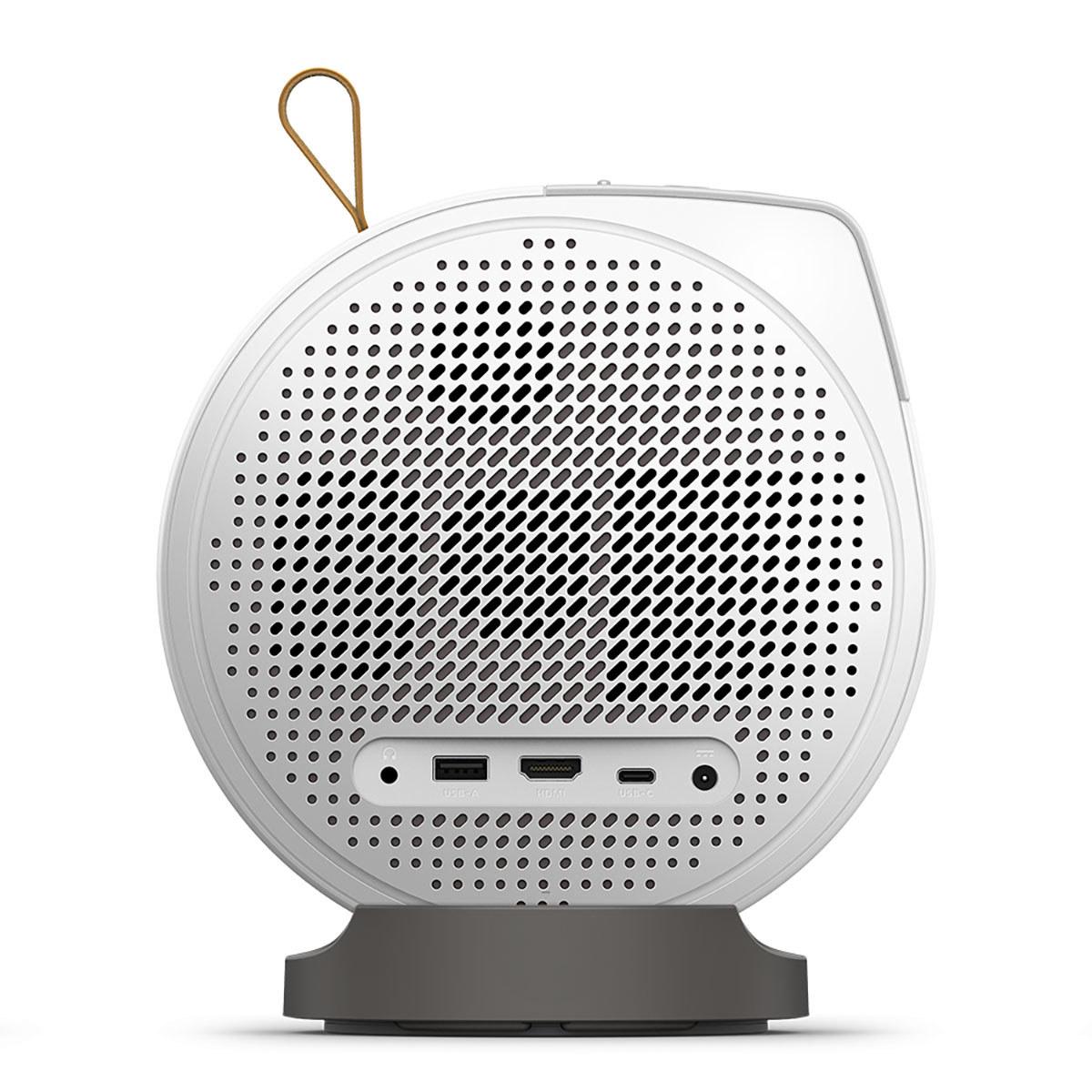
The BenQ offers more comprehensive wireless connectivity with Wi-Fi, Bluetooth, AirPlay, and Google Cast support. These wireless options make connecting modern devices simpler and reduce cable clutter. The physical ports (1x HDMI 2.0b, 1x USB-A, 1x USB-C) cover most wired connection needs as well.
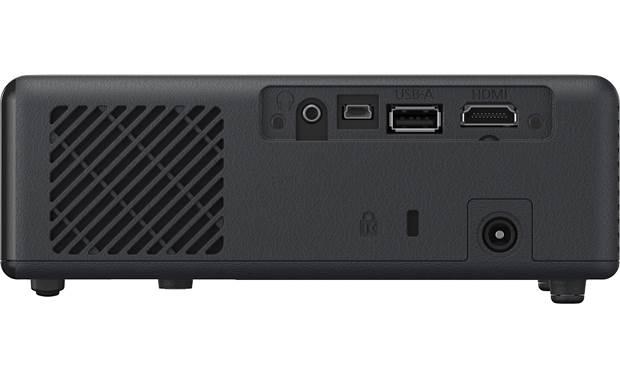
The Epson focuses primarily on physical connections with HDMI and USB Type-A and Type-B ports. This approach favors reliability over convenience—you'll rarely encounter compatibility or connection stability issues with wired connections. The lack of wireless options means you'll need to physically connect source devices, which can be less convenient but also eliminates potential wireless interference issues.
Both projectors use laser light sources, which offer significant advantages over traditional lamp-based projectors:
The BenQ GV50's laser light source is rated for 20,000 hours in normal mode and 30,000 hours in eco mode. The Epson EF11's laser diode system offers 20,000 hours. In practical terms, both projectors should provide about 10 years of service with typical usage patterns before significant brightness degradation occurs.
Neither projector requires filter cleaning or replacement—a major maintenance advantage over many traditional projectors that need regular filter servicing.
At $799, the BenQ GV50 asks for a $100 premium over the $699 Epson EF11. Is that premium justified? It depends entirely on your priorities.
The BenQ's additional $100 gets you:
The Epson counters with:
For pure image quality per dollar, the Epson represents better value. For versatility and all-in-one convenience, the BenQ justifies its premium.
When considering these projectors for dedicated home theater use, several factors come into play beyond raw specifications.
The Epson's superior brightness and contrast make it the better performer in traditional front-projection setups. Its more accurate colors and higher contrast ratio deliver a more cinematic experience when properly positioned in a light-controlled environment. Paired with external speakers and a streaming device, it can create a compelling home theater experience at a fraction of the cost of permanent installations.
The BenQ excels in non-traditional viewing scenarios, particularly for bedroom ceiling projection. Its integrated audio is good enough that external speakers aren't necessary for casual viewing, and the built-in streaming platform means you can set up an impromptu movie night virtually anywhere with minimal fuss.
For a dedicated home theater space, the Epson would be my recommendation—but I'd suggest budgeting for quality external speakers to overcome its audio limitations. For flexible, multi-purpose use throughout the home (and beyond), the BenQ's versatility is hard to beat.
After extensive testing of both projectors, I've found the decision comes down to a few key questions:
Choose the BenQ GV50 if:
Choose the Epson EpiqVision Mini EF11 if:
Both projectors represent excellent options in the portable laser projector space, with complementary strengths that serve different use cases. The best choice ultimately depends on how you plan to use your projector most frequently and which compromises you're willing to accept.
For my part, I've found myself recommending the BenQ to friends who prioritize flexibility and ease of use, while steering serious movie enthusiasts toward the Epson's superior image performance. Both have earned their place in the portable projector landscape, offering compelling alternatives to traditional large-screen TVs for those who value adaptability and space efficiency.
| BenQ GV50 Full HD Smart Ceiling Projector | Epson EpiqVision Mini EF11 Laser Projector |
|---|---|
| Price - Overall investment required | |
| $799 | $699 |
| Brightness - Determines usability in ambient light | |
| 500 ANSI lumens (requires darkened rooms) | 1,000 lumens (workable with moderate ambient light) |
| Resolution - Affects image detail and clarity | |
| 1920x1080 (Full HD) | 1920x1080 (Full HD) |
| Projection Technology - Impacts color accuracy and image quality | |
| DLP with HDR10 and HLG support | 3LCD with 10-bit color processing (better color accuracy, no rainbow effect) |
| Contrast Ratio - Higher ratios produce deeper blacks and more vibrant image | |
| 100,000:1 | 200,000:1 (noticeably better black levels) |
| Light Source Lifespan - Indicates long-term ownership costs | |
| Laser: 20,000 hours (normal), 30,000 hours (eco) | Laser diode: 20,000 hours |
| Throw Ratio - Determines how far from screen projector needs to be | |
| 1.2:1 (needs ~10ft for 100" image) | 1.0:1 (needs ~8.5ft for 100" image) |
| Keystone Correction - Allows for off-center placement | |
| Vertical ±20°, Horizontal ±30°, auto rotation | Vertical ±34°, Horizontal ±40° (wider adjustment range) |
| Built-in Battery - Enables true portability | |
| Yes, 2.5 hours playback time | No battery, requires constant power |
| Smart Features - Determines need for additional devices | |
| Google TV OS with built-in streaming apps | No smart OS, requires external streaming device |
| Audio System - Impacts need for external speakers | |
| 2.1 channel (2x 4W speakers + 10W woofer) | 1.5W dual speakers (basic audio, external speakers recommended) |
| Wireless Connectivity - Affects ease of connection to content sources | |
| Wi-Fi, Bluetooth, AirPlay, Google Cast | None (HDMI connection required) |
| Physical Ports - Determines compatible external devices | |
| 1x HDMI 2.0b, 1x USB-A, 1x USB-C | HDMI, USB Type-A, USB Type-B |
| Special Design Features - Unique capabilities affecting versatility | |
| 360° rotation and 135° vertical tilt for ceiling projection | Standard design optimized for traditional projection |
| Weight - Affects portability | |
| 2.1 kg (4.6 lbs) | 1.2 kg (2.7 lbs) (more compact and lighter) |
| Best For - Primary use case strengths | |
| Ceiling viewing, portable entertainment, all-in-one solution | Better image quality, brighter rooms, value-focused buyers |
The Epson EpiqVision Mini EF11 Laser Projector is significantly brighter with 1,000 lumens compared to the BenQ GV50 Full HD Smart Ceiling Projector's 500 ANSI lumens. This makes the Epson better suited for rooms with some ambient light, while the BenQ GV50 performs best in darkened environments.
The BenQ GV50 is priced at $799, while the Epson EF11 costs $699, making the Epson $100 less expensive. The BenQ's higher price includes additional features like a built-in battery, Google TV, and superior audio system.
The BenQ GV50 is better suited for outdoor use because it has a built-in battery that provides up to 2.5 hours of playback time. The Epson EF11 requires a constant power source, so you would need an extension cord or portable power station to use it outdoors.
The Epson EF11 generally offers better overall image quality with its 3LCD technology providing more accurate colors and a higher 200,000:1 contrast ratio. The BenQ GV50 has good image quality with HDR support but its lower brightness and 100,000:1 contrast ratio result in less vibrant images, especially in environments with ambient light.
The BenQ GV50 includes a robust 2.1 channel audio system (two 4W speakers plus a 10W woofer) that provides satisfactory sound for most casual viewing. The Epson EF11 has basic 1.5W dual speakers that are adequate for presentations but you'll likely want external speakers for movies or immersive content.
The BenQ GV50 is specifically designed for ceiling projection with its unique base that allows 360° rotation and 135° vertical tilt adjustment. The Epson EF11 can project on ceilings but lacks the specialized design and automatic adjustments that make the BenQ GV50 ideal for this specific use case.
The BenQ GV50 comes with Google TV built-in, providing access to thousands of streaming apps including Netflix, Disney+, YouTube, and Prime Video without requiring additional devices. The Epson EF11 does not have a smart operating system, so you'll need to connect an external streaming device like Roku, Apple TV, or Fire TV Stick.
The Epson EF11 is lighter at 2.7 lbs compared to the BenQ GV50's 4.6 lbs and has a more compact form factor. However, the BenQ GV50 offers true portability with its built-in battery, while the Epson always requires a power outlet. Your definition of "portable" will determine which advantage matters more.
Both projectors use long-lasting laser light sources. The BenQ GV50 offers 20,000 hours in normal mode and up to 30,000 hours in eco mode. The Epson EF11 provides 20,000 hours of laser diode life. This translates to approximately 10+ years of typical use for both projectors before significant brightness degradation.
The BenQ GV50 supports multiple wireless connection options including Wi-Fi, Bluetooth, AirPlay, and Google Cast, making it easy to stream content directly from smartphones and tablets. The Epson EF11 doesn't offer built-in wireless connectivity for content streaming, requiring physical HDMI connections to source devices.
The Epson EF11 has a shorter throw ratio of 1.0:1 compared to the BenQ GV50's 1.2:1 throw ratio. This means the Epson can project larger images from closer distances, making it better suited for smaller rooms. For a 100-inch image, the Epson needs about 8.5 feet while the BenQ requires approximately 10 feet.
For a dedicated home theater setup, the Epson EF11 at $699 offers better value with its superior brightness, contrast ratio, and color accuracy. While you'll need to add external speakers and a streaming device, the resulting image quality is more cinema-like. The BenQ GV50 at $799 is better suited for multi-purpose use throughout the home rather than a permanent installation.
We've done our best to create useful and informative comparisons to help you decide what product to buy. Our research uses advanced automated methods to create this comparison and perfection is not possible - please contact us for corrections or questions. These are the sites we've researched in the creation of this article: thewellnessinsider.asia - bhphotovideo.com - thetechnovore.com - howtogeek.com - projectorcentral.com - projectorcentral.com - techradar.com - adorama.com - projectorcentral.com - thesmarthomehookup.com - youtube.com - youtube.com - whathifi.com - youtube.com - cdw.com - projectorcentral.com - youtube.com - bestbuy.com - bhphotovideo.com - youtube.com - bestbuy.com - gagadget.com - epson.com - projectorreviews.com - audiogeneral.com - projectorreviews.com - epson.com - youtube.com - epson.com - youtube.com - mediaserver.goepson.com - files.support.epson.com - staples.com - projectorcentral.com - bestbuy.com - planettv.com - dell.com - epson.eu - projectortop.com

Privacy Policy
Terms and Conditions - Affiliate Policy
Home Security
© Copyright 2008-2026.
11816 Inwood Rd #1211, Dallas, TX 75244