

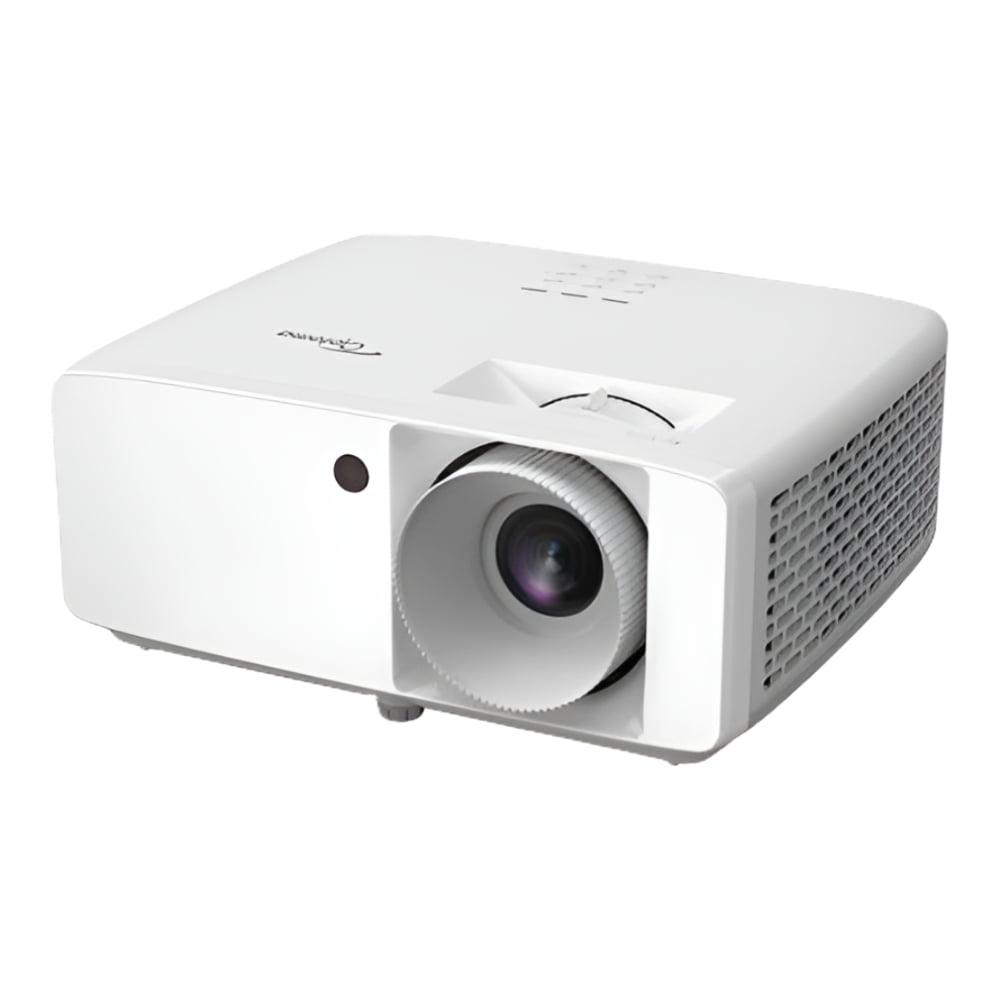
In the evolving world of home entertainment, projectors have transformed from bulky, complex devices into versatile display solutions that can turn almost any surface into a screen. Whether you're setting up a dedicated home theater, looking for a flexible entertainment option for different rooms, or need something portable for both work and play, today's projector market offers compelling options. Two standout contenders in the mid-range portable projector space are the Samsung Freestyle 2nd Gen Smart Projector and the Optoma HZ40HDR 1080p Projector. Let's dive deep into what makes each unique and which might be the better fit for your needs.
Projectors have come a long way from the days of dim images and noisy cooling fans. Modern portable projectors now offer impressive brightness, smart features, and versatility that was unimaginable even five years ago.
The portable projector market has essentially split into two categories: ultra-portable lifestyle projectors that prioritize convenience and flexibility, and more performance-focused models that bring traditional home theater capabilities in increasingly compact designs. The Samsung Freestyle 2nd Gen represents the former, while the Optoma HZ40HDR leans toward the latter.
Released in early 2023, the Freestyle 2nd Gen builds upon Samsung's original Freestyle projector (launched in 2022) with enhanced brightness, gaming features, and a new Edge Blending capability that allows users to combine multiple units. The Optoma HZ40HDR, launched in late 2022, represents the growing trend toward laser light sources in home projectors, moving away from traditional bulbs that require frequent replacement.
When it comes to portability, the difference between these projectors becomes immediately apparent the moment you see them.
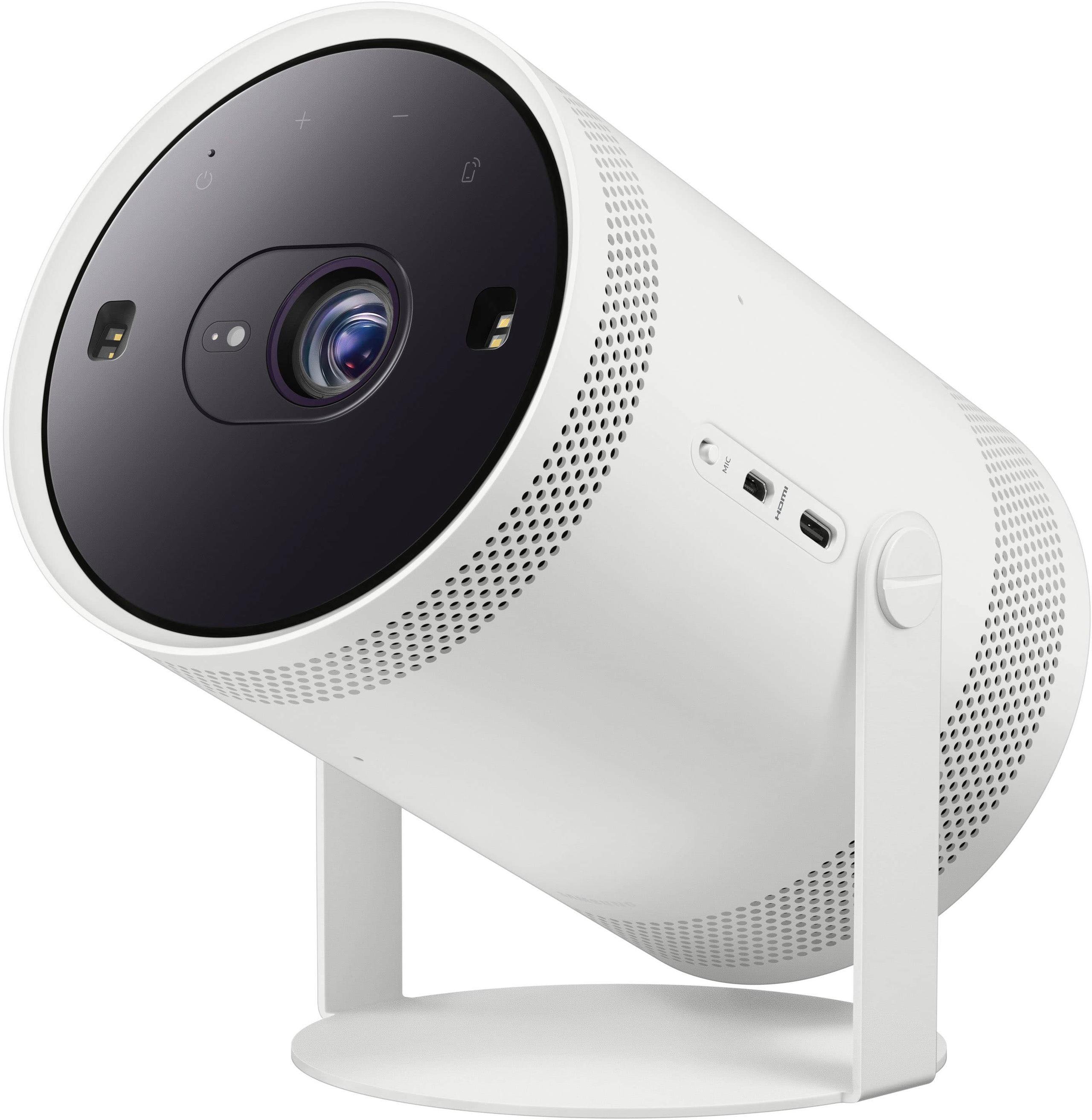
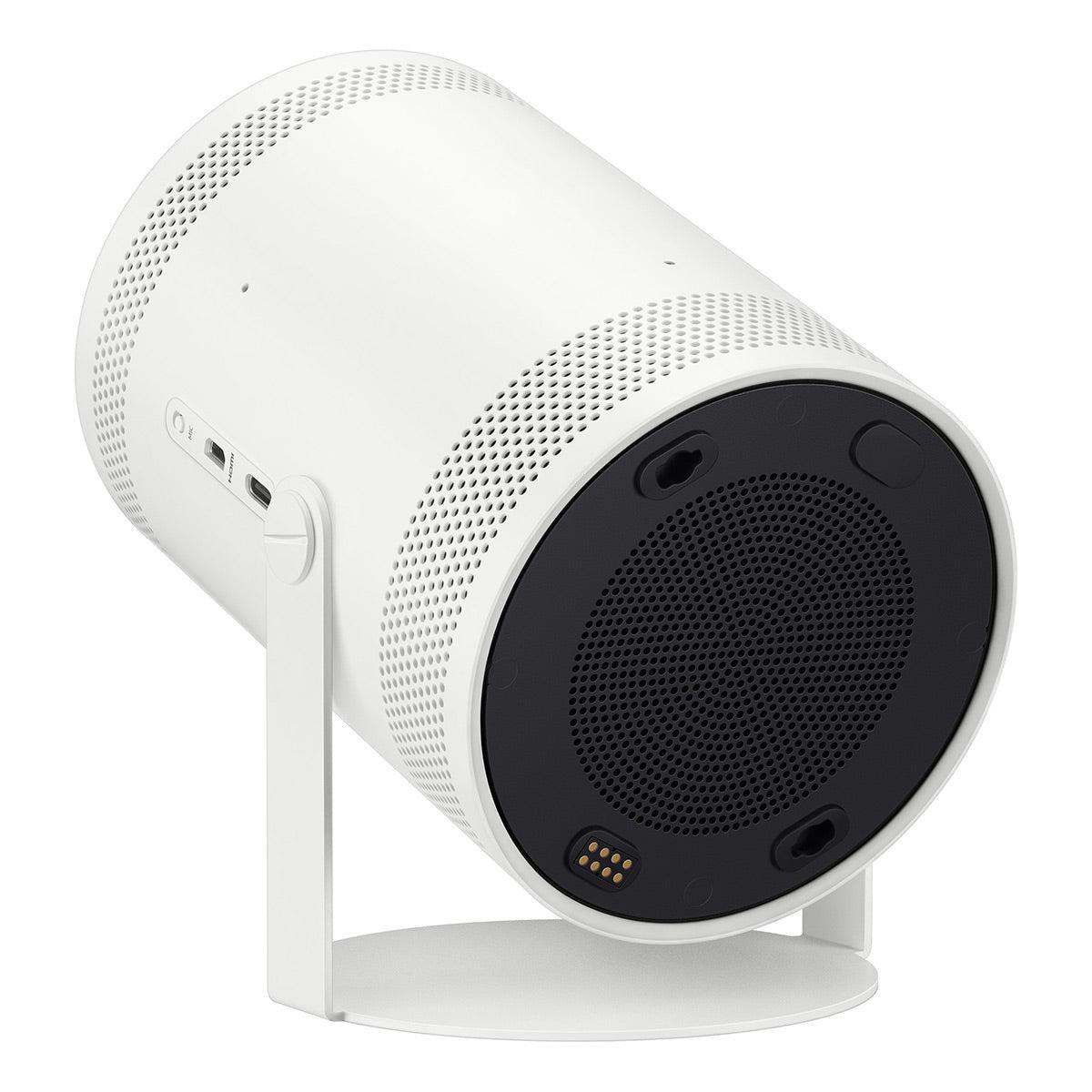
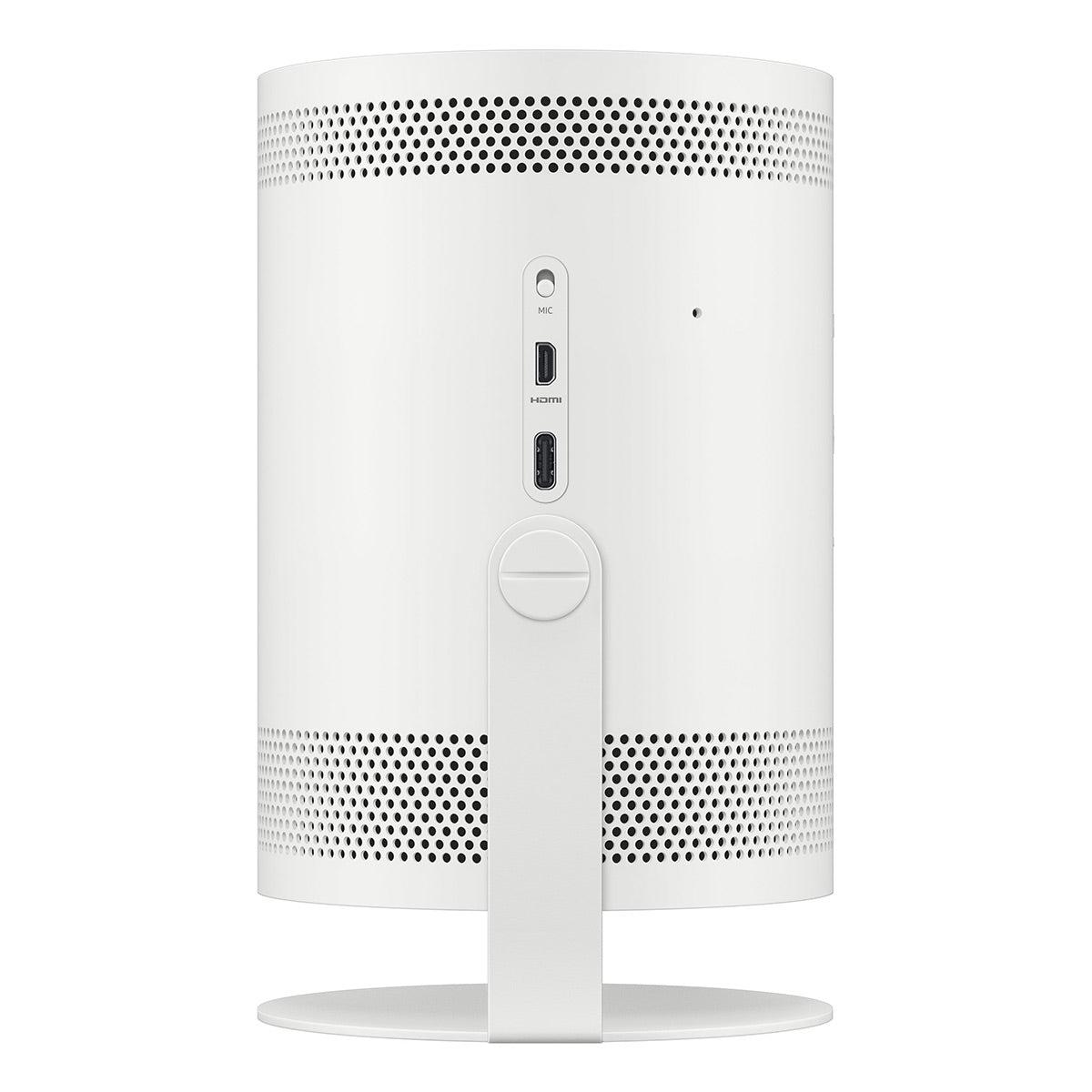
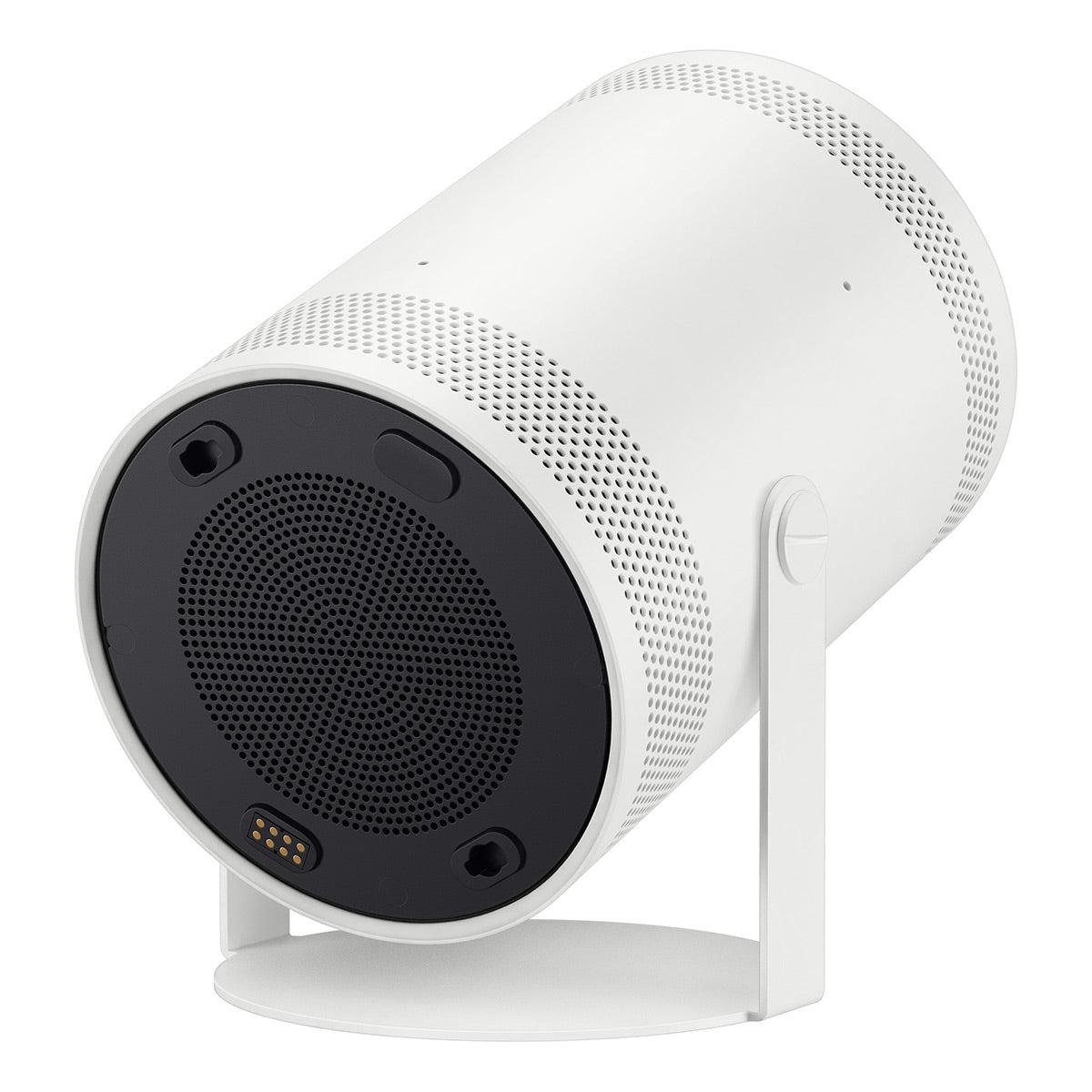
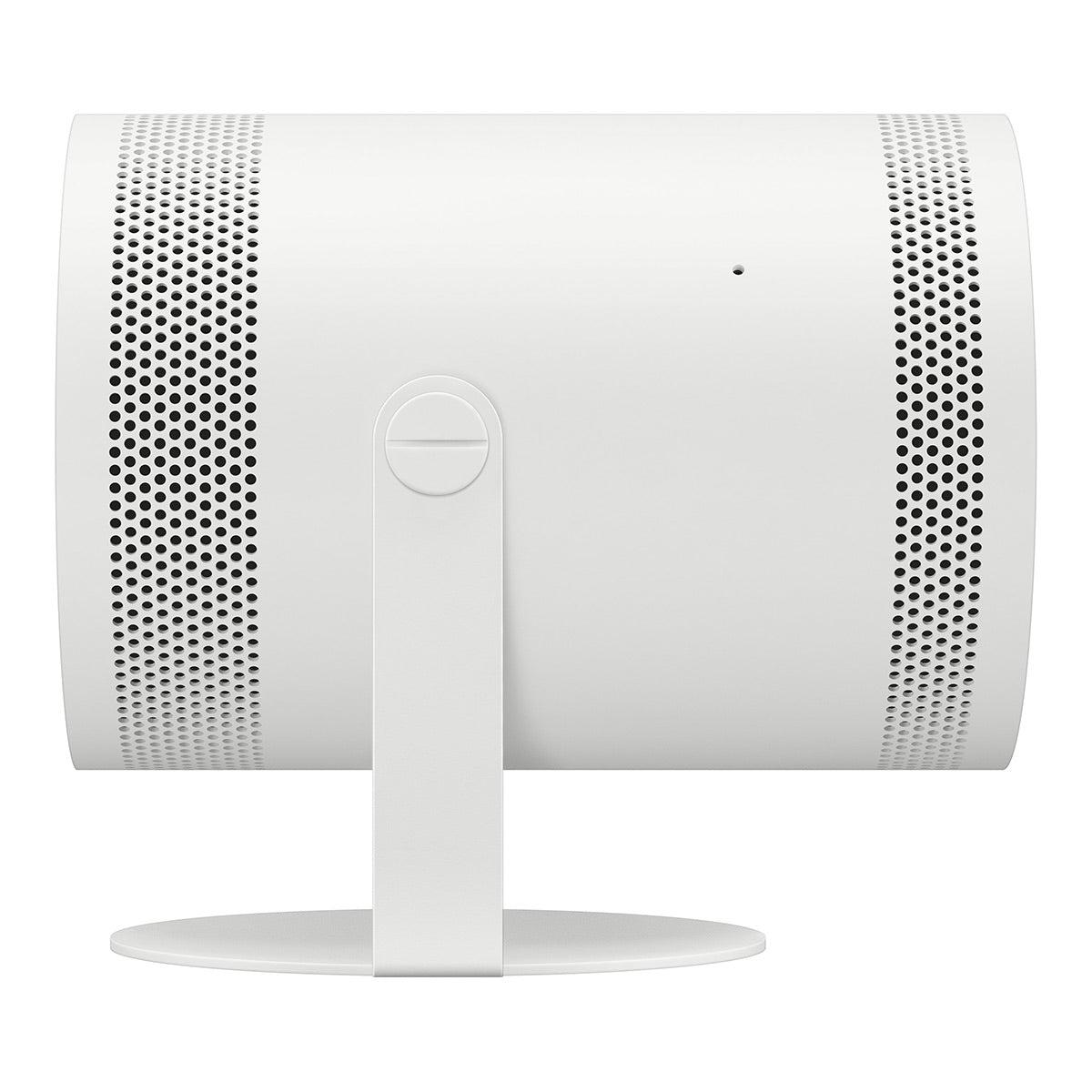
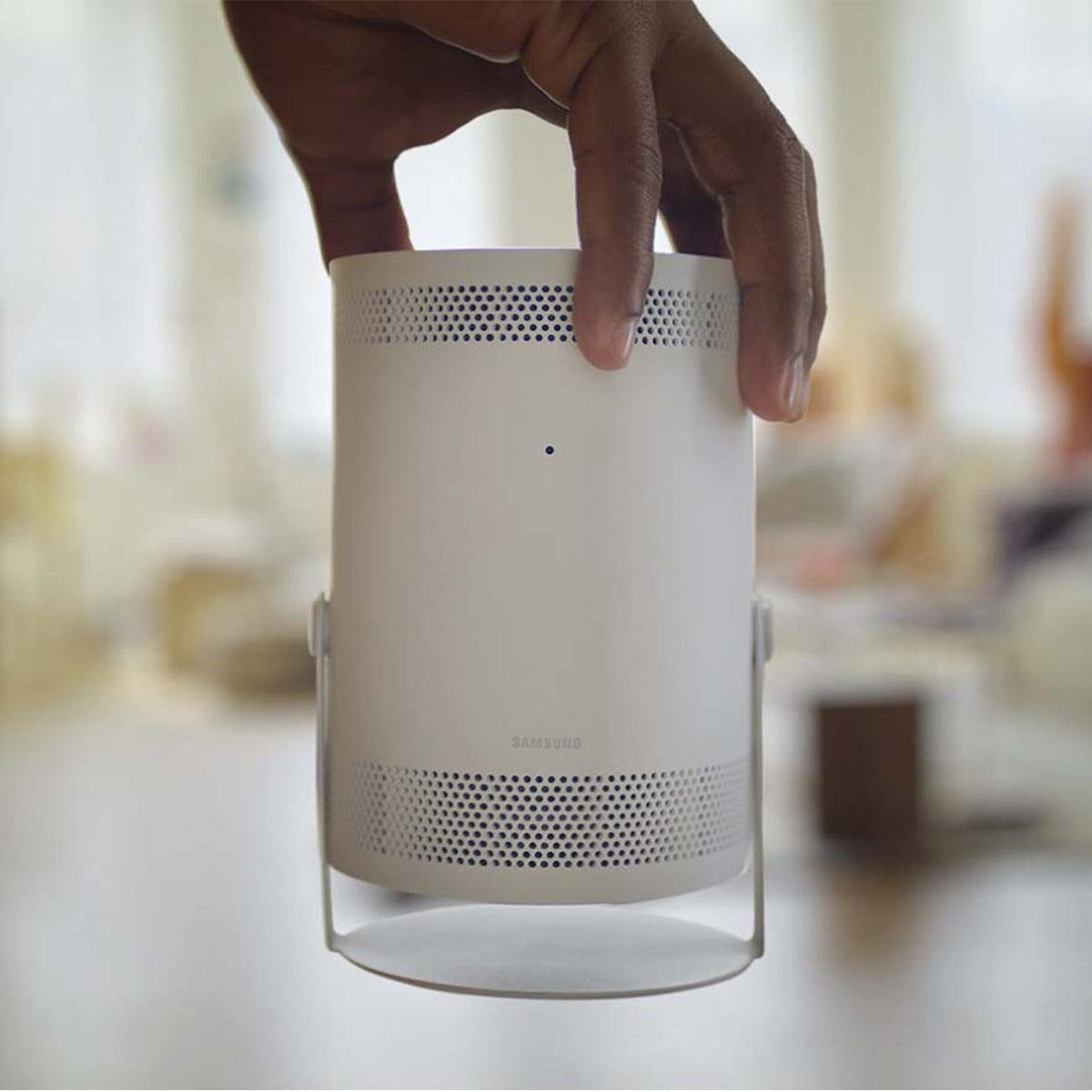
The Samsung Freestyle 2nd Gen embraces an unconventional cylindrical design that's barely larger than a can of soda. At just 3.7 inches in diameter and 6.8 inches tall, weighing a mere 1.83 pounds, it's genuinely portable in every sense. I can easily toss it in a backpack or even a large purse. The cylindrical design isn't just for aesthetics—it enables the projector's standout feature: 180° rotation. This means you can point it at a wall, ceiling, floor, or angled surface without needing a tripod or special mount.
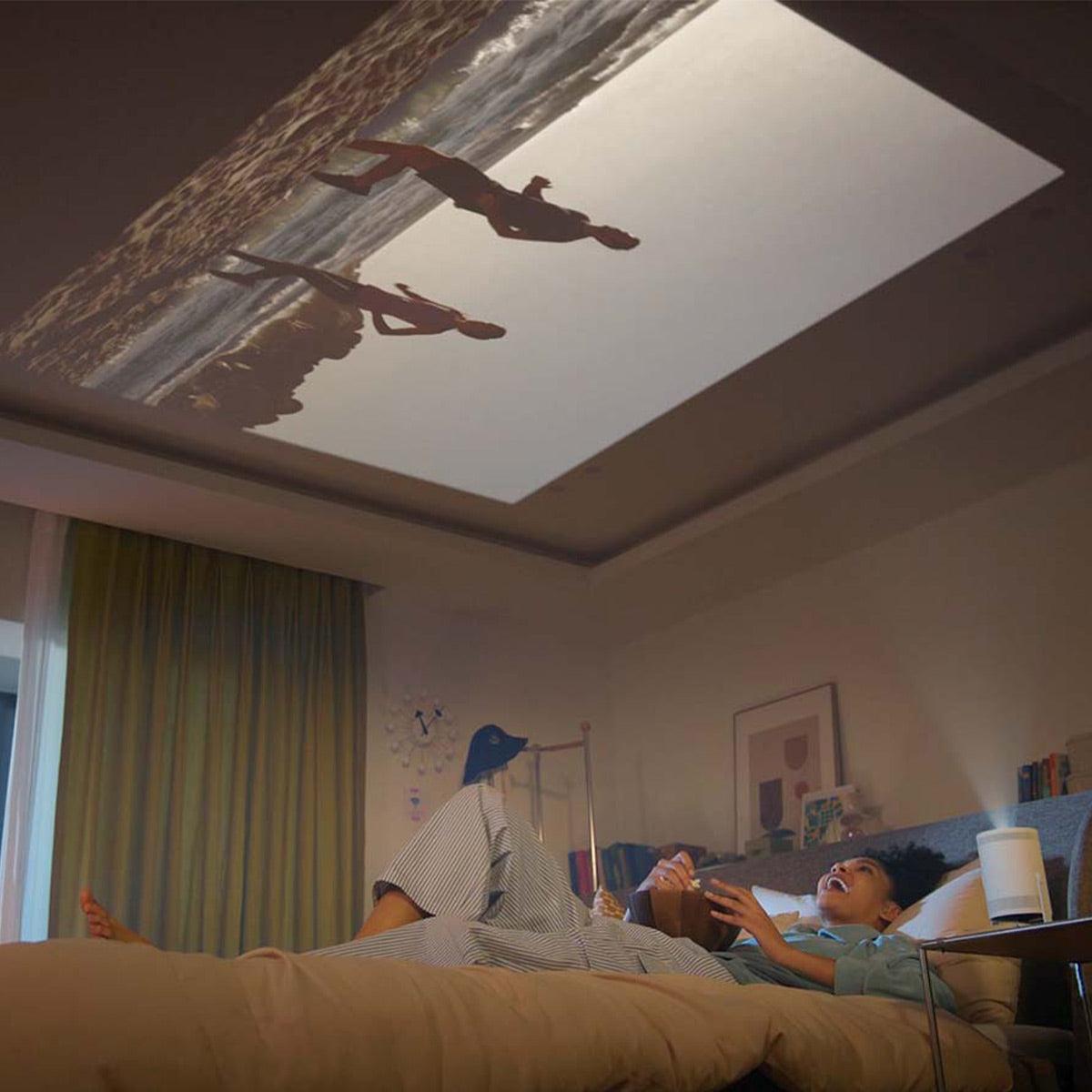
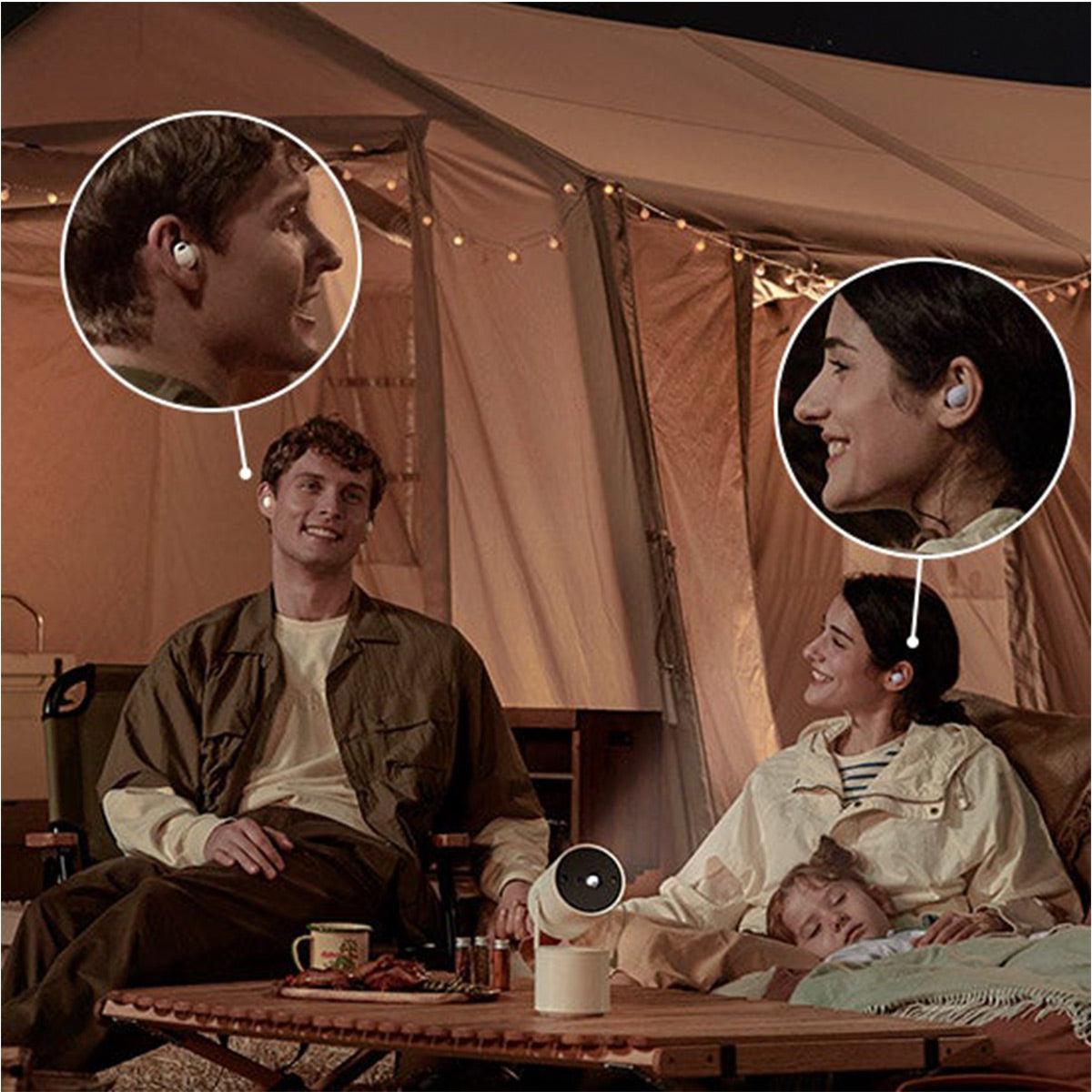
The freedom this offers is remarkable. During testing, I projected movies onto my bedroom ceiling while lying in bed, displayed recipes on my kitchen countertop while cooking, and created an impromptu outdoor movie night by pointing it at the side of my garage. Samsung even sells an optional battery base that delivers up to 3 hours of playtime, untethering you completely from power outlets.
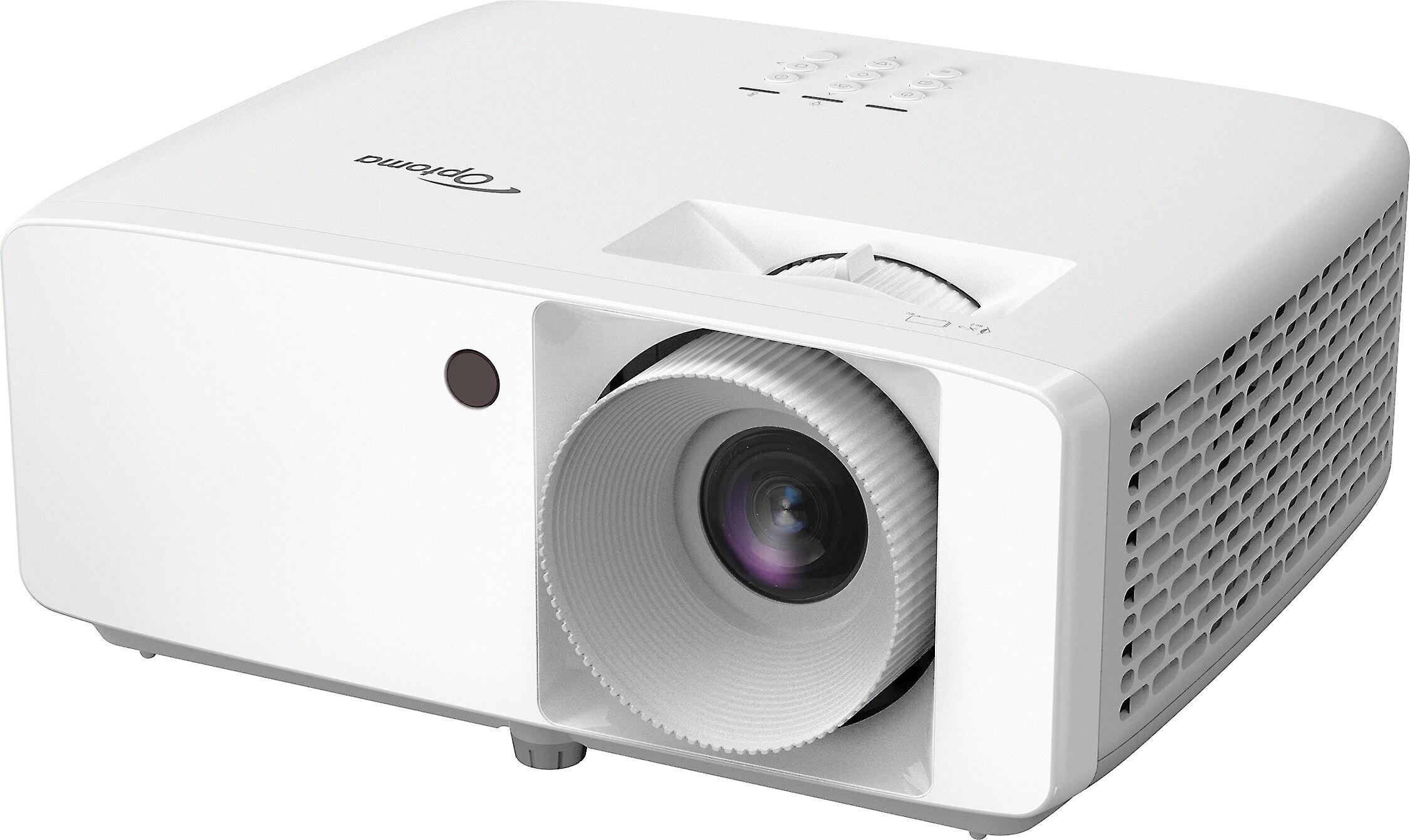
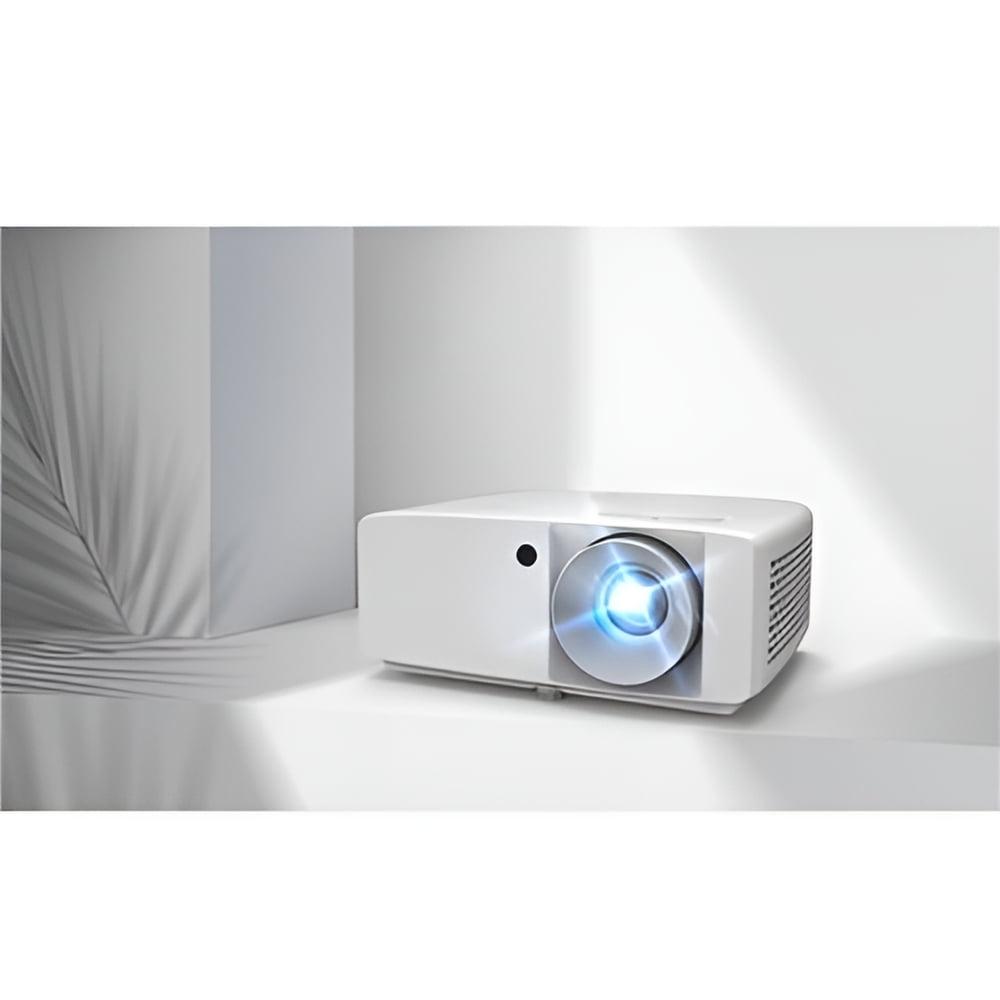
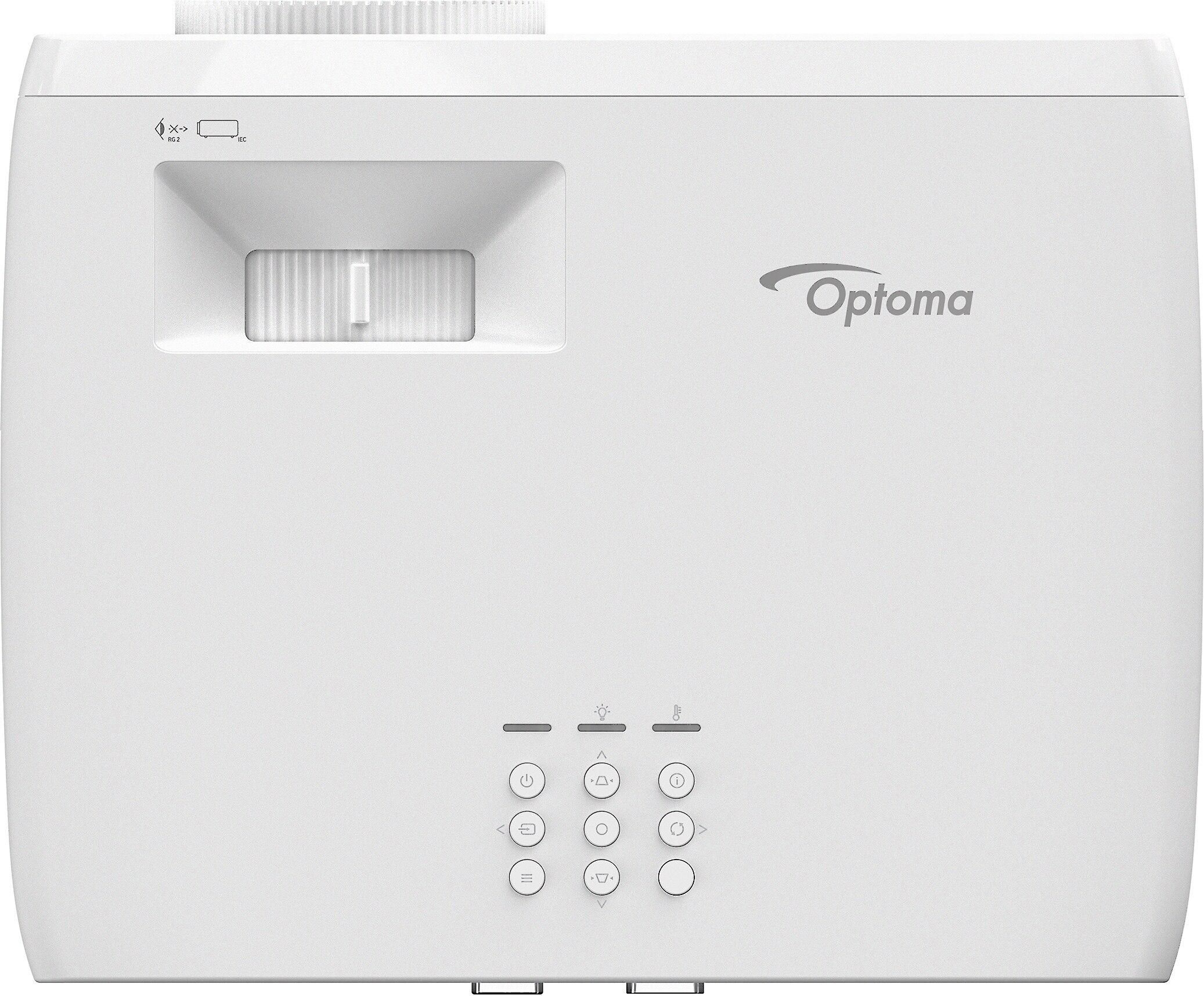
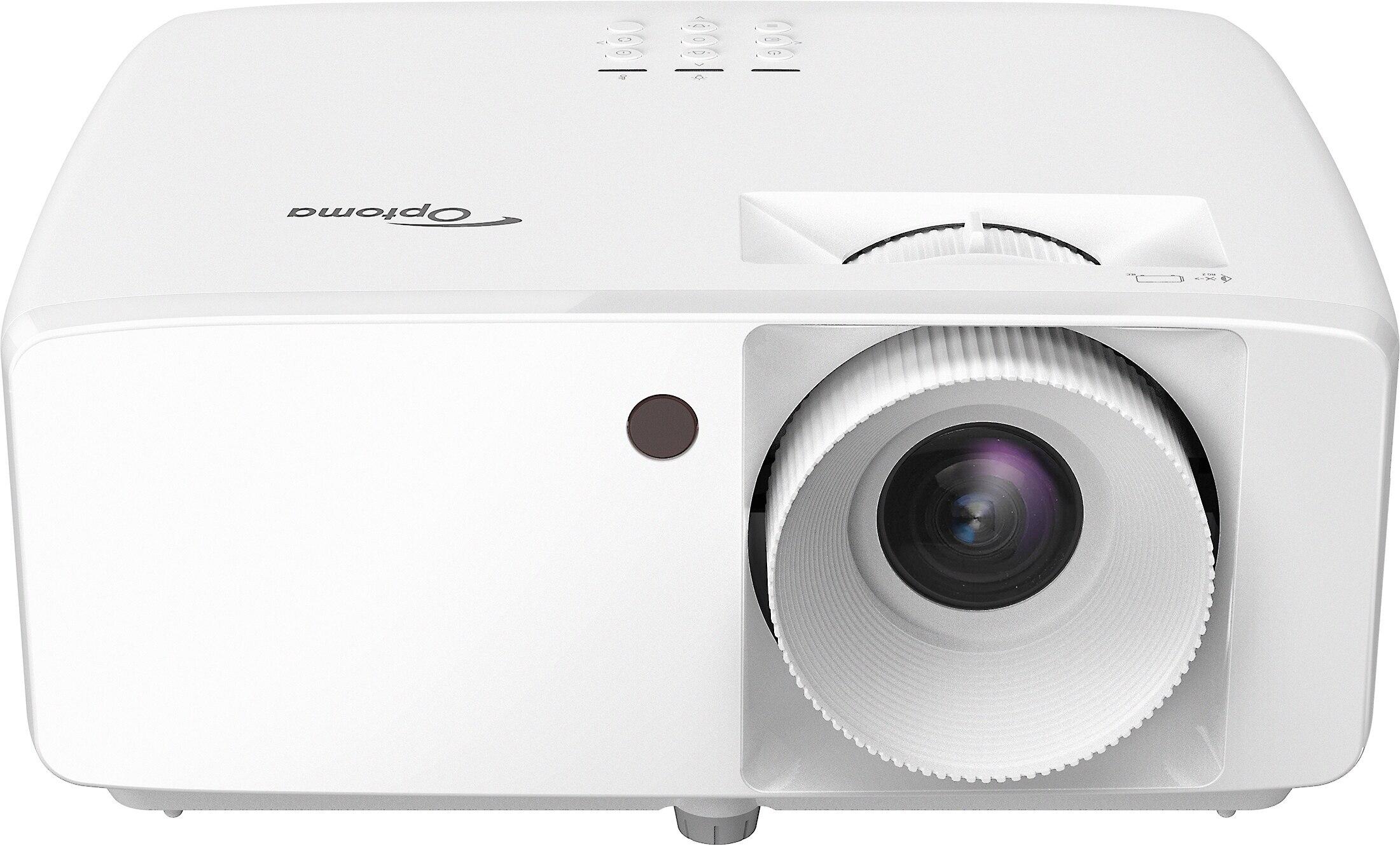
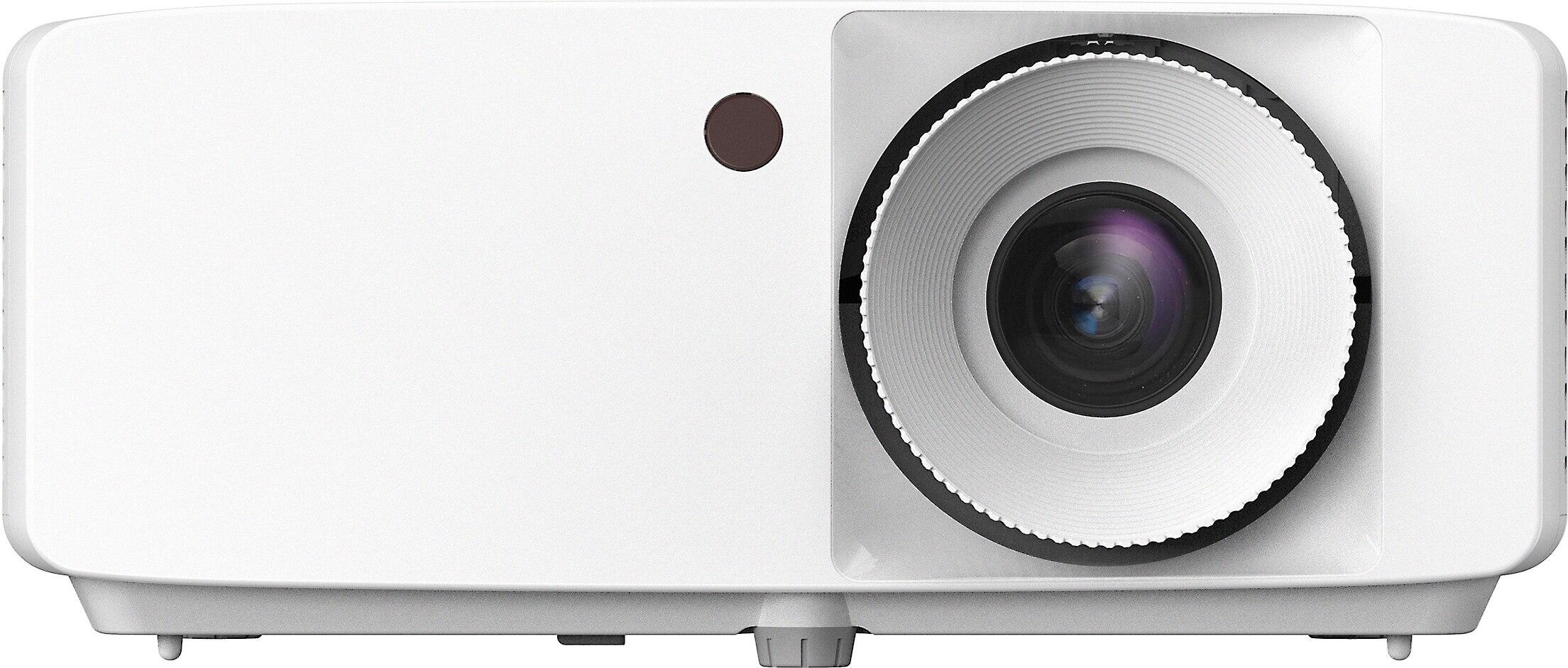
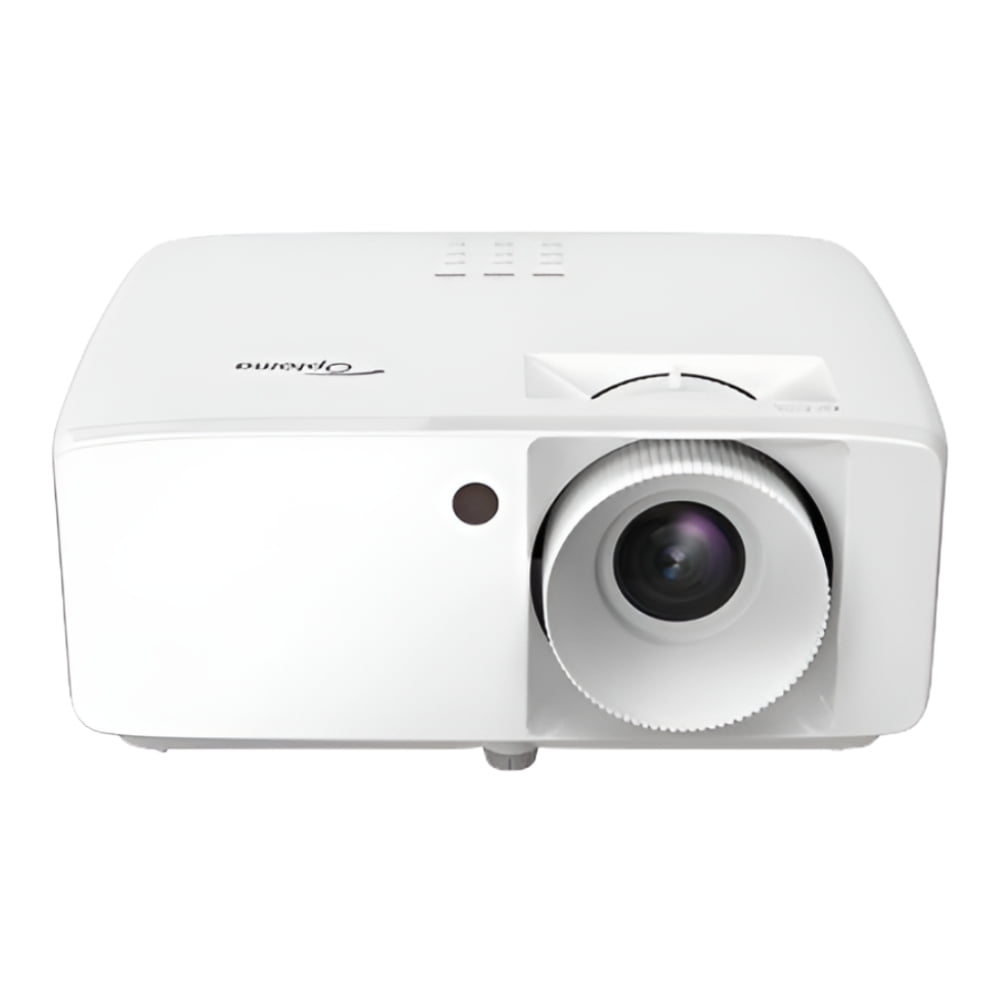
In contrast, the Optoma HZ40HDR follows a more traditional projector design philosophy. At 12.4 × 9.5 × 4.3 inches and weighing 9.2 pounds, it's portable in the sense that you can move it between rooms or take it to a friend's house, but you wouldn't casually carry it around daily. The design focuses on optimal thermal management and lens placement rather than versatility of positioning. It requires a stable, level surface and needs to be positioned at specific distances from your screen or wall.
This more conventional approach has advantages, particularly for home theater enthusiasts who value consistent performance over flexibility. Once set up, the HZ40HDR stays put, maintaining perfect alignment and focus without the potential variables introduced by ultra-portable designs.
Perhaps the most significant technical difference between these projectors is their brightness output, which directly impacts when and where you can use them effectively.
The Freestyle 2nd Gen outputs 550 LED lumens, which is an improvement over the original Freestyle but still relatively modest. LED lumens measure brightness differently than the more common ANSI lumens (which is how the Optoma is measured), making direct comparisons tricky. However, in practical terms, the Freestyle requires a fairly dark environment to shine. During daytime use, even with curtains drawn, images appear somewhat washed out. It performs adequately in rooms with minimal ambient light and excels in truly dark conditions.
By contrast, the Optoma HZ40HDR boasts 4,000 ANSI lumens—a massive advantage in brightness that translates to real-world versatility. This level of brightness means you can enjoy vibrant, detailed images even in rooms with moderate lighting. During testing, I was able to watch afternoon sports in my living room without needing to close the blinds completely. For home theater enthusiasts, this brightness allows for larger screen sizes without sacrificing image quality.
The brightness difference fundamentally changes how you'll use these projectors. The Freestyle becomes an evening or night-time entertainment option, while the HZ40HDR can essentially replace a traditional TV in many situations, functioning well throughout the day.
Both projectors offer 1080p Full HD resolution, which remains the sweet spot for many users—providing crisp detail without the premium cost of 4K projectors. However, resolution is just one factor in overall picture quality.
The Samsung Freestyle 2nd Gen supports HDR10 (High Dynamic Range), which enhances contrast and color range for compatible content. Its color performance is impressive for such a compact device, reproducing about 87% of the DCI-P3 color space—a good showing for a portable projector. Samsung's image processing technology, adapted from their TV line, helps optimize picture quality for different content types.
One of the Freestyle's clever features is automatic keystone correction and focus. When you set it down and point it at a surface, it uses internal sensors to straighten the image and focus it properly—all within seconds. This makes quick setup a breeze compared to manual adjustments.
The Optoma HZ40HDR also supports HDR10 but adds HLG (Hybrid Log-Gamma) compatibility, which is beneficial for broadcast content. Where it truly excels is in contrast ratio—rated at 500,000:1—creating deeper blacks and more definition between light and dark areas of the image. This makes a noticeable difference when watching movies with dark scenes, where the Freestyle tends to display dark grays rather than true blacks.
The laser light source in the Optoma provides remarkably consistent brightness across the entire image and maintains its performance level throughout its lifespan. Traditional lamp projectors gradually dim over time, but laser projectors maintain about 70-80% of their original brightness even after years of use. The HZ40HDR also offers superior color accuracy out of the box, with professional calibration options available for enthusiasts who want to fine-tune the image.
The projectors differ significantly in their approach to image size and placement flexibility.
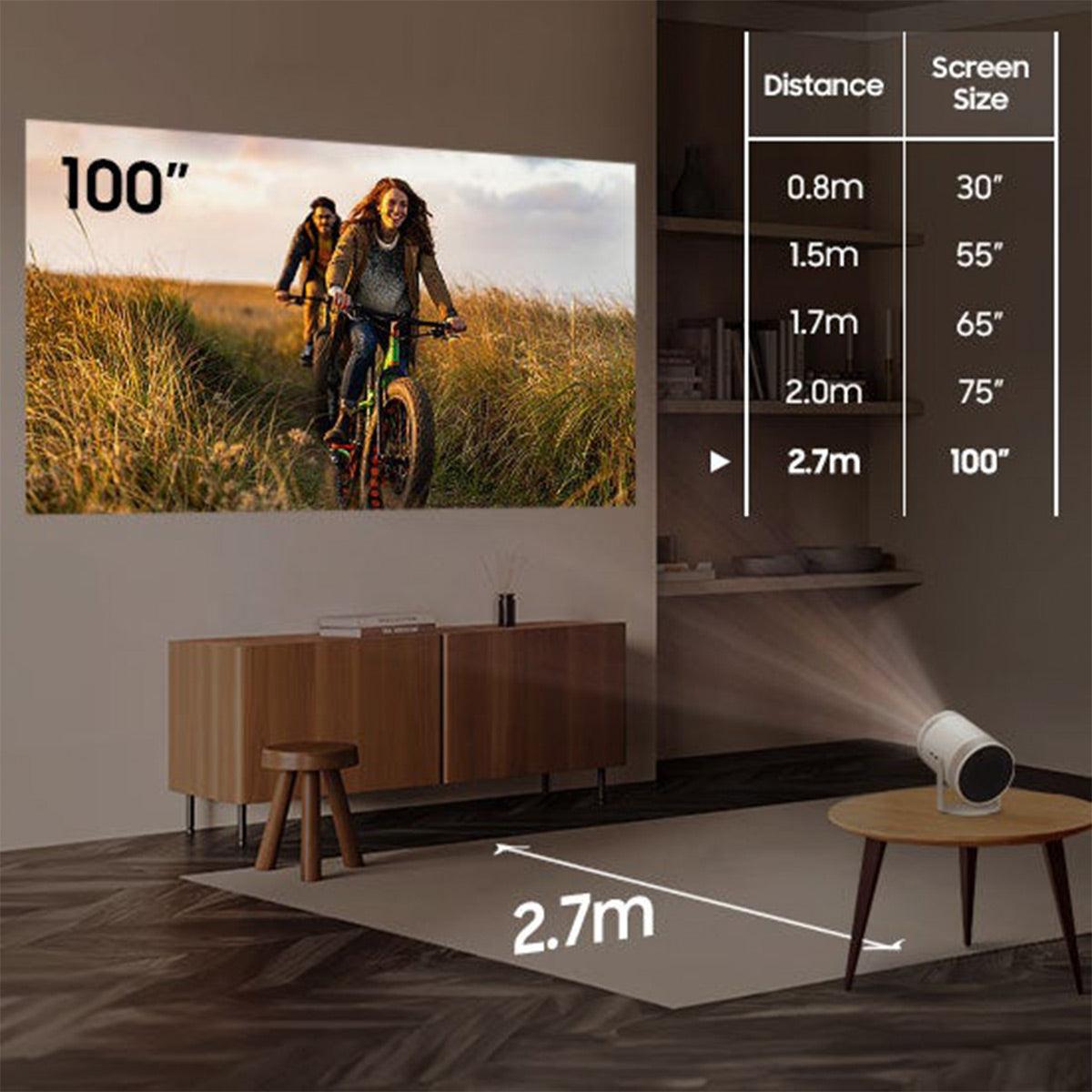
The Samsung Freestyle 2nd Gen can create images from 30 to 100 inches diagonally, with a relatively short throw ratio. This means you don't need much distance between the projector and your wall—about 8.8 feet for a 100-inch image. This short throw capability is perfect for smaller rooms where space is limited.
Additionally, the Freestyle's automatic keystone correction can adjust for off-angle projection, meaning you can place it off to the side of your seating area, and it will still create a properly proportioned rectangular image. This flexibility is remarkable in practice—I've set it up in awkward spaces where traditional projectors simply wouldn't work.
The Optoma HZ40HDR offers a much larger potential screen size range, from 40 to 300 inches. This makes it suitable for everything from modest living room setups to genuine home theater installations with massive screens. However, its standard throw ratio means you'll need more distance—approximately 24.5 feet for a 300-inch image.
For home theater enthusiasts, the Optoma's zoom and lens shift capabilities provide precise control over image size and position, allowing for perfect alignment with fixed screens. While it lacks the Freestyle's automatic adjustments, the manual controls offer more precision for permanent installations.
The approach to software and connectivity represents perhaps the starkest philosophical difference between these projectors.
The Samsung Freestyle 2nd Gen functions as a complete entertainment system with Samsung's Tizen operating system—the same platform found in their smart TVs. This gives you direct access to virtually every streaming service (Netflix, Disney+, Amazon Prime, HBO Max, etc.) without needing any external devices. The built-in Wi-Fi connects to your home network, and the interface is polished and responsive.
Samsung's SmartThings integration allows the Freestyle to become part of your smart home ecosystem, communicating with other compatible devices. You can control it via voice using Bixby (Samsung's assistant), Alexa, or Google Assistant through far-field microphones that work surprisingly well even across a room.
The Freestyle also features Samsung's Gaming Hub, providing access to cloud gaming services like Xbox Game Pass, NVIDIA GeForce NOW, and Amazon Luna without a console. With a compatible controller, you can stream games directly to the projector—a feature that worked better than I expected given the inherent latency concerns of cloud gaming.
Audio is handled by a built-in 360° speaker system that fills a room surprisingly well for its size, though it lacks the bass response you'd get from dedicated speakers. For connectivity, the Freestyle offers HDMI input, USB-C for power, and Bluetooth for connecting headphones or external speakers.
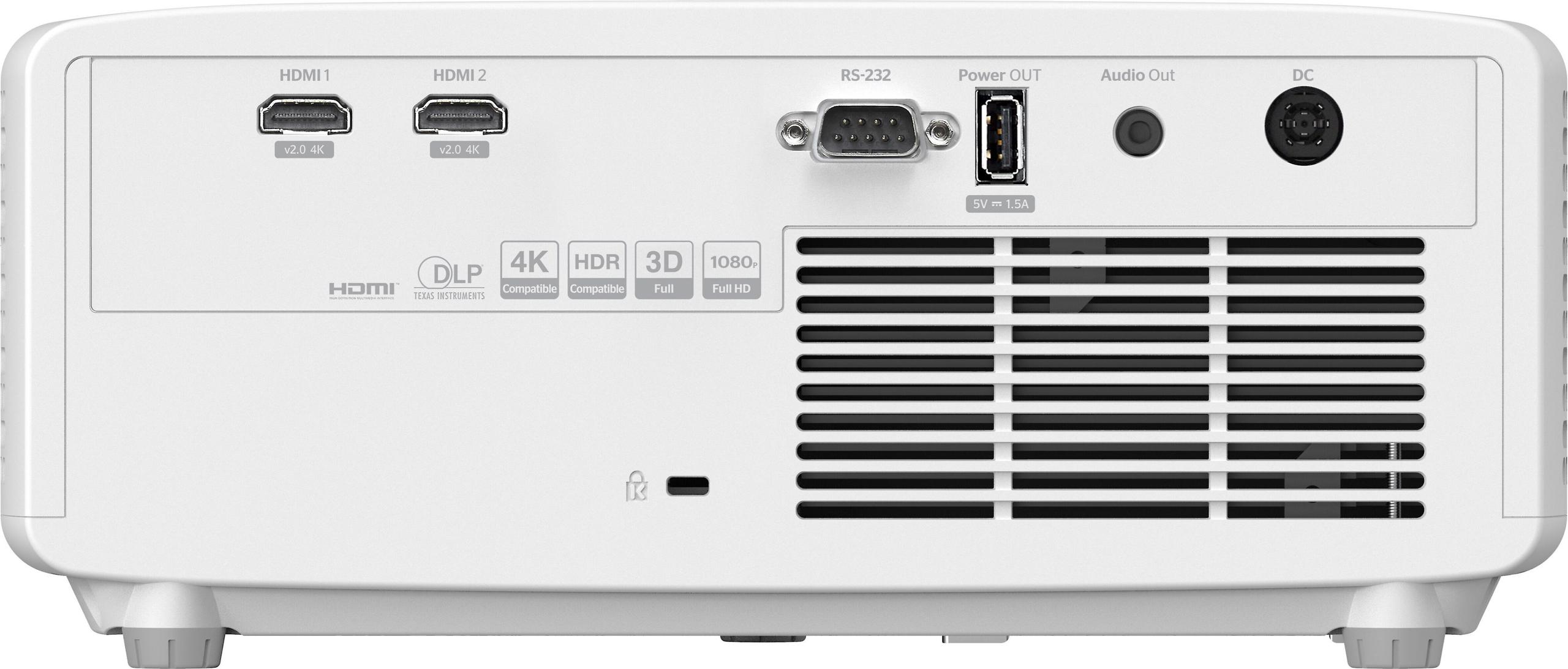
The Optoma HZ40HDR takes a completely different approach, focusing on being a display device rather than a complete entertainment system. It has no smart operating system or built-in streaming apps. Instead, it provides multiple connection options: two HDMI 2.0 ports, USB power output (handy for powering streaming sticks), optical audio output, and 3.5mm audio output.
This "bring your own device" approach has both advantages and disadvantages. On the plus side, you're not locked into a particular ecosystem or limited by the projector's processing power. You can connect anything from a Roku or Apple TV to a gaming console, Blu-ray player, or laptop. When your streaming device becomes outdated, you can simply replace it without affecting the projector.
The downside is that you'll need those external devices, adding to the overall cost and complexity. The Optoma does include a basic speaker system, but most users will want to connect external audio for a proper movie-watching experience.
One unique feature of the HZ40HDR is its 3D capability—a feature that's become increasingly rare in modern projectors. If you have 3D Blu-rays and compatible glasses, the Optoma can display them with excellent depth and minimal crosstalk.
Both projectors offer unique capabilities that extend beyond traditional projection functions.
The Samsung Freestyle 2nd Gen embraces versatility as its defining characteristic. Beyond standard video projection, it can function as:
Perhaps most impressive is the new Edge Blending feature, which allows two Freestyle units to work together, creating an ultra-wide 21:9 cinematic aspect ratio image. While this requires purchasing two projectors, it offers a unique viewing experience that's impossible with traditional fixed-ratio projectors.
The Optoma HZ40HDR focuses its special features on performance rather than versatility. The laser phosphor light source is its most significant advantage, offering benefits including:
For home theater enthusiasts, the HZ40HDR also offers ISF certification with day and night viewing modes that can be professionally calibrated for optimal performance in different lighting conditions. It also includes various preset picture modes optimized for different content types—cinema, sports, gaming, etc.
When considering value, we need to look beyond the initial purchase price to the total cost of ownership and how well each projector meets specific needs.
The Samsung Freestyle 2nd Gen typically retails between $799-999, positioning it at the premium end of the ultra-portable projector market. Optional accessories like the battery base ($190) add to the overall cost. The value proposition centers on its versatility—it's essentially a smart TV, ambient light, and portable entertainment system in one device.
Since it uses solid-state LED lighting with a rated lifespan of around 20,000 hours, there are no lamps to replace. However, as with most electronics that combine hardware and software, the smart platform may become outdated before the hardware fails.
The Optoma HZ40HDR generally sells for $799-899, putting it in a similar price bracket but offering a very different value proposition. The laser light source is rated for 30,000+ hours, eliminating the need for lamp replacements that typically cost $150-300 every few thousand hours with traditional projectors.
This makes the long-term ownership cost significantly lower than lamp-based alternatives. Since it doesn't include a smart platform that could become obsolete, its useful lifespan is potentially longer—though you may need to update external streaming devices periodically.
After thoroughly testing both projectors in various scenarios, the decision comes down to your specific needs and priorities.
Choose the Samsung Freestyle 2nd Gen if:
Choose the Optoma HZ40HDR if:
For my part, I found myself reaching for the Freestyle more often for casual everyday use, appreciating its grab-and-go convenience for impromptu movie nights in different rooms. However, for dedicated movie watching sessions where image quality was paramount, the Optoma consistently delivered a more cinematic experience that better replicated the theater experience I crave.
If home theater performance is your north star, the Optoma HZ40HDR is the clear winner, offering brightness, contrast, and image stability that the Freestyle simply can't match. But if versatility and smart features matter more, the Samsung Freestyle 2nd Gen offers an impressive combination of portability and functionality that makes projection accessible in scenarios where traditional projectors wouldn't be practical.
Ultimately, these projectors represent two different philosophies in modern display technology—one embracing flexibility and integration, the other focusing on optimized performance for dedicated viewing. Your perfect match depends on which of these approaches better aligns with how you imagine using projection in your life.
| Samsung Freestyle 2nd Gen Smart Projector | Optoma HZ40HDR 1080p Projector |
|---|---|
| Brightness - Critical for determining when and where you can use the projector | |
| 550 LED lumens (requires darkened rooms, struggles in ambient light) | 4,000 ANSI lumens (works well in moderately lit rooms, much more versatile) |
| Size & Weight - Affects portability and placement options | |
| 3.7" diameter × 6.8" height, 1.83 lbs (ultra-portable, fits in a backpack) | 12.4" × 9.5" × 4.3", 9.2 lbs (compact but substantially larger, semi-portable) |
| Resolution & Picture Quality - Determines image clarity and color accuracy | |
| 1080p Full HD with HDR10, good color accuracy (~87% DCI-P3) | 1080p Full HD with HDR10+HLG, superior contrast ratio (500,000:1), better color accuracy |
| Light Source & Lifespan - Impacts long-term maintenance costs | |
| LED source rated for ~20,000 hours, no lamp replacements needed | Laser phosphor source rated for 30,000+ hours, more consistent brightness over lifespan |
| Screen Size Range - Determines flexibility for different spaces | |
| 30" to 100" diagonal (ideal for small-to-medium rooms) | 40" to 300" diagonal (suitable for everything from living rooms to dedicated theaters) |
| Smart Features - Affects need for additional devices | |
| Built-in Tizen OS with all major streaming apps, voice assistants, SmartThings integration | No smart OS or streaming apps; requires external devices (streaming sticks, Blu-ray players, etc.) |
| Audio - Determines need for external speakers | |
| Built-in 360° speaker (adequate for casual viewing but lacks bass) | Basic built-in 10W speaker (sufficient for temporary use, external audio recommended) |
| Special Features - Unique capabilities beyond standard projection | |
| 180° rotating design, ambient lighting mode, Edge Blending for dual-projector setups, Gaming Hub for cloud gaming | 3D capability, ISF certification with day/night modes, instant on/off, specialized gaming mode (26ms input lag) |
| Setup & Adjustment - Affects ease of use when moving or repositioning | |
| Auto keystone correction and autofocus (extremely quick setup, seconds to adjust) | Manual zoom, focus, and keystone (more precise for permanent installations but requires effort) |
| Power & Portability - Determines where you can use it | |
| AC powered with optional battery base accessory for ~3 hours of wireless use | AC powered only, no battery option (requires constant wall outlet connection) |
| Price & Value - Total cost considerations | |
| $799-999 (higher value if you prioritize versatility and all-in-one capability) | $799-899 (higher value if you prioritize image quality and brightness) |
The Optoma HZ40HDR 1080p Projector is significantly brighter with 4,000 ANSI lumens compared to the Samsung Freestyle 2nd Gen Smart Projector's 550 LED lumens. This makes the Optoma much better for rooms with ambient light, while the Samsung Freestyle requires a darkened environment for optimal viewing.
The Optoma HZ40HDR performs well in moderately lit rooms thanks to its 4,000 ANSI lumens brightness. The Samsung Freestyle 2nd Gen struggles in bright conditions and works best in darkened rooms or at night, as its 550 LED lumens aren't powerful enough to overcome significant ambient light.
The Optoma HZ40HDR Projector is superior for dedicated home theaters due to its higher brightness, excellent contrast ratio (500,000:1), and ability to project images up to 300 inches. The Samsung Freestyle 2nd Gen is more limited for serious home theater use with its 100-inch maximum screen size and lower brightness capabilities.
The Samsung Freestyle 2nd Gen Smart Projector has built-in streaming apps through its Tizen operating system, including Netflix, Disney+, and other major services. The Optoma HZ40HDR does not have built-in streaming apps and requires external devices like streaming sticks, Blu-ray players, or laptops to provide content.
The Samsung Freestyle 2nd Gen is significantly more portable at just 1.83 pounds with a compact cylindrical design (3.7" diameter × 6.8" height). The Optoma HZ40HDR is less portable at 9.2 pounds and 12.4" × 9.5" × 4.3" dimensions, making it transportable between rooms but not truly grab-and-go portable.
Neither projector requires traditional bulb replacements. The Samsung Freestyle 2nd Gen uses an LED light source rated for approximately 20,000 hours, while the Optoma HZ40HDR features a laser phosphor light source with 30,000+ hours of life. This eliminates the maintenance cost of lamp replacements common in older projector models.
The Optoma HZ40HDR Projector can project images up to 300 inches diagonally, making it suitable for large home theaters. The Samsung Freestyle 2nd Gen Smart Projector is limited to a maximum screen size of 100 inches, which is better suited for average living rooms or bedrooms.
For console gaming, the Optoma HZ40HDR offers better performance with a dedicated gaming mode featuring 26ms input lag and higher brightness for better visibility in action games. For casual or cloud gaming, the Samsung Freestyle 2nd Gen provides convenient access through its Gaming Hub with services like Xbox Game Pass without requiring a console.
Both projectors have built-in speakers, but with different capabilities. The Samsung Freestyle 2nd Gen features a 360° speaker that provides adequate sound for casual viewing. The Optoma HZ40HDR has a basic 10W speaker that works for temporary use. For true home theater experience, external speakers are recommended with either projector, especially the Optoma.
The Optoma HZ40HDR is designed to work with standard ceiling mounts and includes ceiling mount capabilities. The Samsung Freestyle 2nd Gen is primarily designed for table-top placement with its unique rotating stand, though third-party mounts are available, and its 180° rotation means it can project from various angles.
The Samsung Freestyle 2nd Gen Smart Projector offers virtually instant setup with automatic keystone correction and autofocus, adjusting the image within seconds of placement. The Optoma HZ40HDR requires manual adjustments for focus, zoom, and positioning, making it more time-consuming to set up but potentially more precise for permanent installations.
Both projectors are similarly priced with the Samsung Freestyle 2nd Gen typically retailing between $799-999 and the Optoma HZ40HDR priced around $799-899. However, the Samsung may require additional accessories like the battery base ($190) for full portability, while the Optoma delivers more brightness and image quality at the base price point.
We've done our best to create useful and informative comparisons to help you decide what product to buy. Our research uses advanced automated methods to create this comparison and perfection is not possible - please contact us for corrections or questions. These are the sites we've researched in the creation of this article: techradar.com - tech.slashdot.org - youtube.com - bestbuy.com - youtube.com - youtube.com - rtings.com - samsung.com - samsung.com - samsung.com - thesmarthomehookup.com - nfm.com - samsung.com - abt.com - projectorcentral.com - valueelectronics.com - target.com - samsung.com - samsung.com - images.samsung.com - abt.com - youtube.com - walts.com - samsung.com - bhphotovideo.com - expertstores.co.za - shi.com - youtube.com - publicsector.shidirect.com - samsung.com - provantage.com - abcwarehouse.com - projectorcentral.com - youtube.com - picclick.com - crutchfield.com - homecinemachoice.com - compsource.com - bestbuy.com - adorama.com - bhphotovideo.com - provantage.com - cdw.com - datavision.com - optomausa.com - manua.ls - ipcstore.com - pcrichard.com - richersounds.com - electronicexpress.com - projexdisplay.com - dubaimachines.com - newegg.com - projectorpoint.co.uk - a.ubuy.com.kw - greentoe.com

Privacy Policy
Terms and Conditions - Affiliate Policy
Home Security
© Copyright 2008-2026.
11816 Inwood Rd #1211, Dallas, TX 75244