


Finding the right portable projector feels overwhelming with dozens of options flooding the market. Two models that consistently surface in discussions represent vastly different philosophies: the TCL C1 Google TV Portable Projector and the Epson EpiqVision Mini EF11 Laser Projector. At the time of writing, these projectors sit at opposite ends of the price spectrum while targeting overlapping use cases, making the choice particularly interesting.
Before diving into specifics, let's establish what matters most in portable projectors. Unlike massive home theater systems that prioritize raw performance above all else, portable units balance convenience, image quality, and features within strict size and weight constraints.
Brightness stands as the single most critical specification. Measured in lumens (the amount of light output), brightness determines whether you can actually see your content. The difference between 200 and 1000 lumens isn't just numbers—it's the difference between "dark room only" and "usable with some ambient light." Most people underestimate how much brightness they need until they try using an underpowered projector in anything but complete darkness.
Smart features represent the modern battleground. Some projectors include built-in streaming platforms like Google TV or Android TV, eliminating the need for external devices. Others remain "dumb" displays requiring you to connect Apple TV, Roku, or similar streaming sticks. This seemingly minor difference dramatically impacts setup complexity and total system cost.
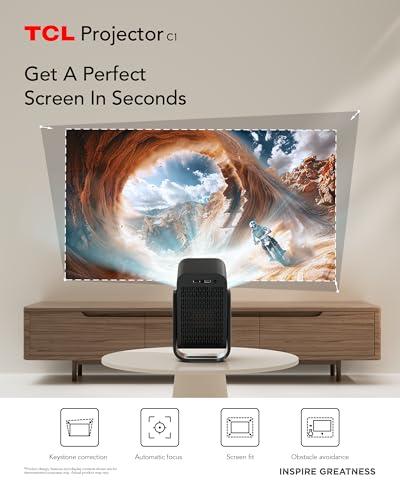
Setup automation separates modern projectors from older models that required extensive manual adjustment. Features like auto-focus (automatically sharpening the image), keystone correction (fixing geometric distortion when projecting at angles), and obstacle avoidance (adjusting the image around objects) transform the user experience from technical hassle to plug-and-play simplicity.
Understanding these fundamentals helps explain why the TCL C1 and Epson EF11 took such different approaches to solving portable projection.
Released in 2024, the TCL C1 represents the latest wave of ultra-affordable projectors packed with smart features. TCL, better known for televisions, applied their TV expertise to create something genuinely different in the projector space.
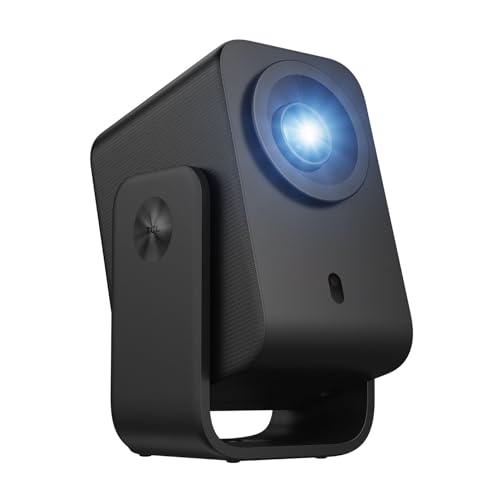
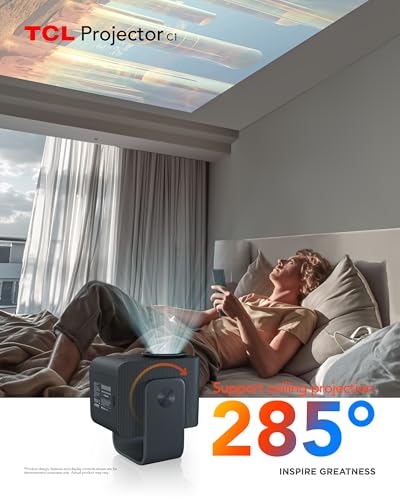
The most striking aspect isn't the projector itself—it's the 285-degree adjustable gimbal stand. This engineering choice transforms how you think about projector placement. While traditional projectors require careful positioning on tables or ceiling mounts, the TCL C1 can project from virtually any surface onto walls, ceilings, or anywhere in between. I've seen users mount it on nightstands for ceiling projection, creating an entirely different viewing experience that would be impossible with conventional designs.
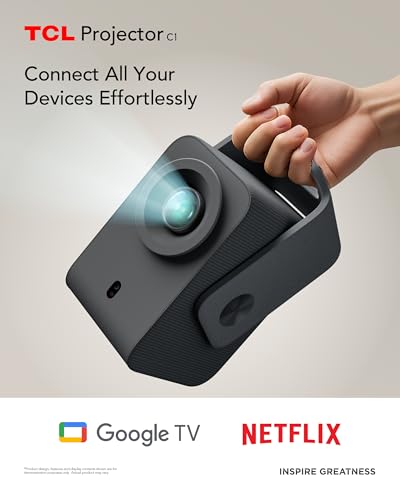
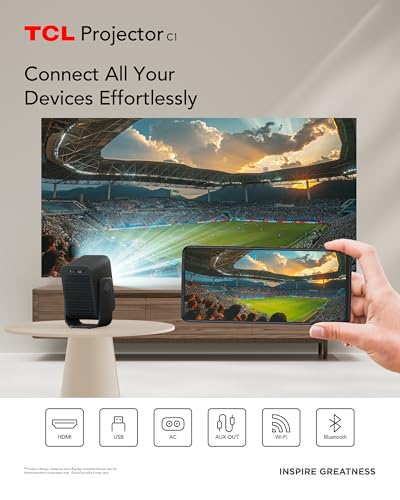
The TCL C1's Google TV integration goes beyond typical "smart" projector implementations. This isn't some stripped-down Android interface—it's full Google TV with Netflix certification, a distinction that matters more than most realize. Many budget projectors claim streaming capabilities but force users through workarounds for major services. The TCL C1 works with Netflix, YouTube, Prime Video, and Disney+ directly, no external devices required.
Google Assistant integration extends beyond basic voice search. You can control smart home devices, adjust volume, and navigate content using natural language. The included Chromecast support means seamless casting from smartphones and laptops. For someone building their first streaming setup, these features eliminate the need to purchase separate streaming hardware worth well over $100.
Here's where expectations need calibration. The TCL C1 outputs 230 ISO lumens using LED technology, which sounds modest compared to traditional projectors but serves its intended purpose. LED projectors measure brightness differently than lamp-based units, and 230 ISO lumens translates to perfectly watchable images in dark or dimly lit rooms.
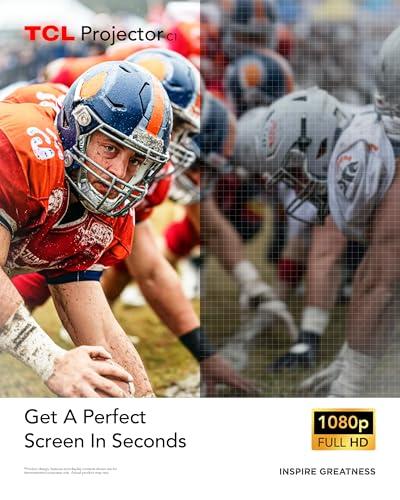
The 1080p native resolution with 4K pass-through support means the projector can accept 4K signals from devices but downscales them to display at 1080p. For screen sizes between 40-120 inches—the TCL C1's sweet spot—1080p provides sharp, detailed images that satisfy most viewers. The fully sealed optical engine prevents dust infiltration, a common problem with budget projectors that gradually degrades image quality.
TCL's TrueHue technology optimizes color and contrast frame-by-frame, producing surprisingly film-like images. The 1500:1 contrast ratio won't match high-end displays, but it delivers adequate black levels for enjoyable viewing. Colors appear natural rather than oversaturated, which some prefer over the artificially vivid look of cheaper projectors.
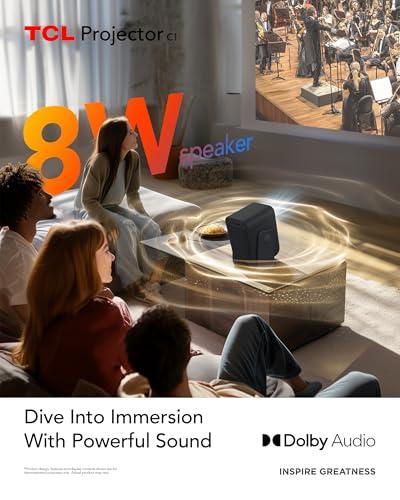
The 8-watt Dolby Audio speaker system punches above its weight class. Most portable projectors include barely functional speakers as afterthoughts. The TCL C1 actually delivers room-filling sound suitable for small to medium spaces. Dialogue remains clear at all volume levels, and the bass response, while limited, provides enough low-end warmth to avoid the tinny sound plaguing similar devices.
The projector doubles as a Bluetooth speaker when not projecting, adding versatility for music playback. While you wouldn't mistake it for a dedicated sound system, it eliminates the immediate need for external speakers in many scenarios.
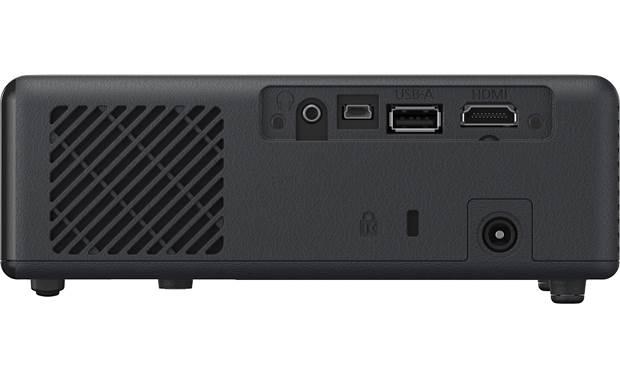
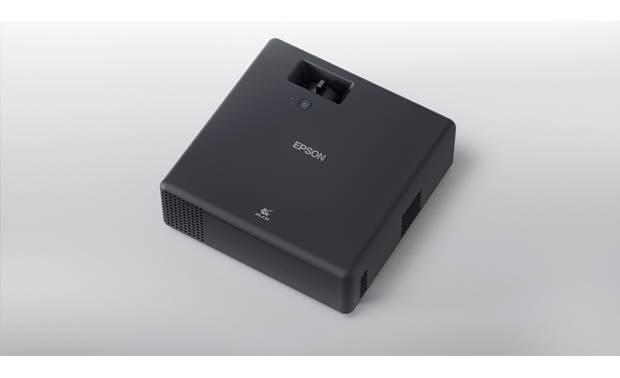
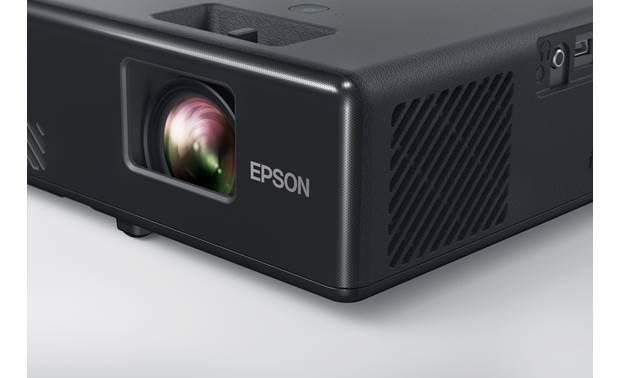
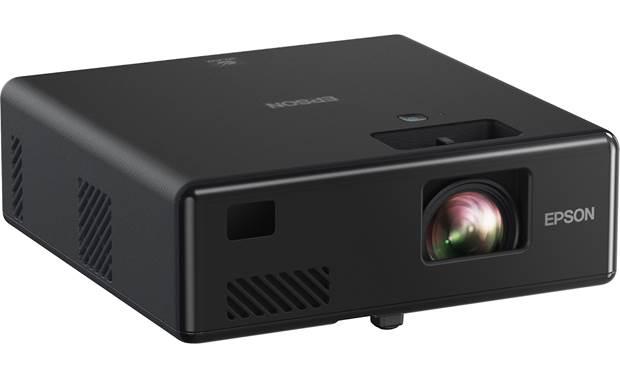
The Epson EF11, launched in 2020, represents Epson's entry into portable laser projection. As an established projector manufacturer, Epson brought decades of optical expertise to create something fundamentally different from the TCL C1.
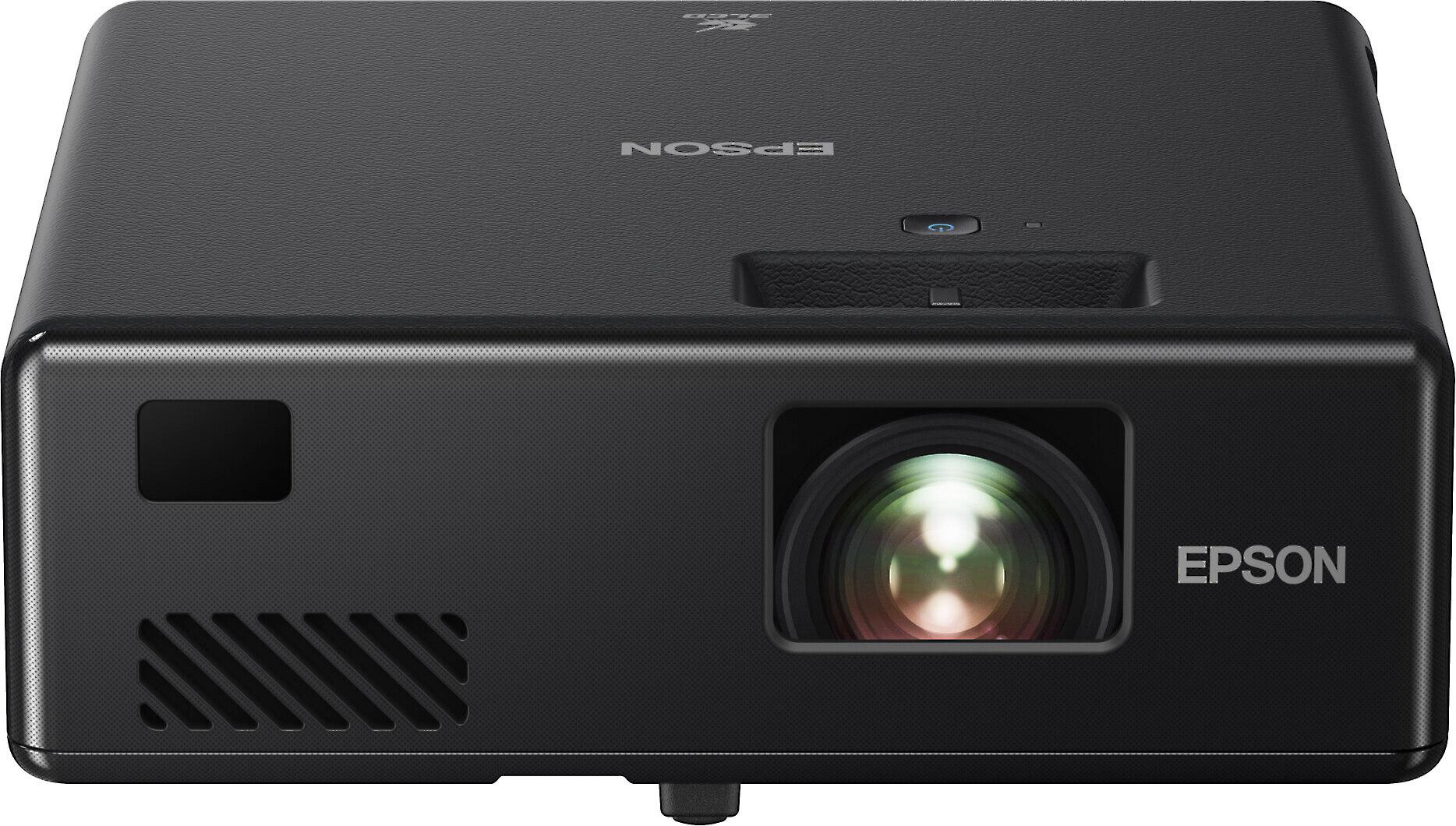
The EF11's laser phosphor light source delivers 1000 ANSI lumens—over four times the TCL C1's output. This isn't just a numbers game; it's a qualitative leap enabling use in rooms with ambient light. While the TCL C1 requires darkness, the Epson EF11 maintains watchable images with windows open or lights dimmed.
Laser technology provides additional benefits beyond brightness. The 20,000-hour lifespan eliminates lamp replacements for most users' entire ownership period. Color consistency remains stable throughout the light source's life, unlike traditional lamps that gradually shift color temperature and dim over time.
The 3LCD system displays 100% of the RGB color signal for every frame, eliminating the "rainbow effect" some viewers notice with single-chip DLP projectors. This creates smoother color transitions and more accurate reproduction, particularly important for skin tones and natural scenes.
The Epson EF11's 200,000:1 contrast ratio transforms image depth compared to the TCL C1. Dark scenes reveal shadow detail invisible on lesser projectors, while bright highlights maintain separation rather than blowing out to pure white. This dynamic range enhancement particularly benefits HDR content and cinematic material.
Epson's Scene Adaptive Color Correction analyzes content in real-time, optimizing color reproduction based on what's being displayed. Sports content receives different treatment than nature documentaries, maximizing visual impact across diverse material. Auto Picture Skew Correction analyzes the projected image geometry and corrects distortion automatically, though it's less comprehensive than the TCL C1's omni-directional system.
The 1:1 throw ratio enables larger images from shorter distances compared to the TCL C1. At eight feet from the wall, the EF11 projects a 96-inch diagonal image, while the TCL C1 would need closer positioning for similar size.
Unlike the TCL C1, the Epson EF11 includes no smart features whatsoever. This design choice reflects Epson's philosophy of focusing purely on projection quality while leaving content delivery to dedicated streaming devices. Users must connect Apple TV, Roku, Amazon Fire TV, or similar hardware for streaming access.
This approach offers flexibility—you can upgrade streaming hardware independently of the projector—but increases total system complexity and cost. At the time of writing, quality streaming devices add significant expense to the EF11's already premium pricing.
The brightness difference between these projectors fundamentally determines where each can be used effectively. The TCL C1's 230 lumens restricts use to controlled lighting environments. Think bedrooms with blackout curtains, basements, or evening use with lights off. Attempting to use it during daylight or with significant ambient light results in washed-out, barely visible images.
The Epson EF11's 1000 lumens opens possibilities the TCL C1 simply cannot match. Living rooms with curtains drawn but not blackout-level darkness become viable. Conference rooms with dimmed fluorescent lighting work adequately. While neither projector conquers bright, sunlit spaces, the EF11 dramatically expands usable environments.
Professional color accuracy matters more for some content than others. The Epson EF11's 3LCD laser system delivers reference-quality color reproduction suitable for photo editing, presentation graphics, and critical viewing. The TCL C1's produces pleasing, natural-looking images but lacks the precision needed for color-critical work.
Contrast ratio differences become apparent in dark scenes. The EF11's 200,000:1 specification enables deep blacks and shadow detail that transforms movie viewing. The TCL C1's 1500:1 contrast provides adequate separation but can't match the depth and dimensionality of laser-based systems.
The TCL C1 wins decisively on setup simplicity. Its auto-focus, omni-directional keystone correction, and obstacle avoidance work together to deliver truly plug-and-play operation. Place it anywhere, power on, and within seconds you have a properly focused, geometrically correct image.
The gimbal design enables projection angles impossible with traditional projectors. Ceiling projection for bedtime viewing, angled wall projection around furniture, or floor-to-ceiling setup all work seamlessly. This flexibility often matters more than absolute image quality for casual use.
The Epson EF11 requires more traditional setup considerations. While it includes auto skew correction, keystone adjustment remains largely manual. Positioning becomes more critical without the TCL C1's gimbal flexibility.
At the time of writing, the TCL C1 costs roughly one-third of the Epson EF11, but simple price comparison misses important factors.
The TCL C1 includes Google TV functionality worth considerable money if purchased separately. Factor in the cost of a quality streaming device, and the price gap narrows significantly. For users building their first streaming setup, the TCL C1 provides everything needed in one purchase.
The Epson EF11 requires additional streaming hardware, increasing total system investment. However, it offers upgrade flexibility—streaming technology evolves quickly, and separating projection from content delivery allows independent upgrades.
Consider usage patterns when evaluating value. Occasional movie nights favor the TCL C1's convenience and lower investment. Daily use or professional applications justify the EF11's superior performance and build quality.
Neither projector replaces dedicated home theater systems, but both serve specific roles in home entertainment ecosystems.
The TCL C1 excels in secondary viewing spaces. Bedrooms, guest rooms, patios, and apartments where traditional theater setups prove impractical benefit from its streaming integration and flexible placement. The sealed optical engine and 30,000-hour LED life expectancy provide years of reliable service with minimal maintenance.
The Epson EF11 bridges portable convenience with theater-quality aspirations. Its brightness and color accuracy work well in main living spaces during evening hours. The laser light source maintains consistency over extended viewing sessions, important for serious movie watching.
For primary home theater use, both projectors require careful room preparation. Even the EF11's 1000 lumens necessitates light control for optimal experience. Neither matches dedicated theater projectors for absolute performance, but both offer compelling convenience advantages.
Choose the TCL C1 Google TV Portable Projector if you prioritize convenience, value, and integrated streaming. Its gimbal design, automated setup, and built-in Google TV create a uniquely user-friendly experience. Budget-conscious buyers, casual viewers, and anyone wanting minimal complexity will find it perfectly suited to their needs. The brightness limitation restricts it to dark room use, but that matches most portable projection scenarios anyway.
The Epson EF11 Laser Projector justifies its premium pricing through superior brightness, color accuracy, and professional build quality. Choose it if image quality matters more than convenience, if your viewing environment includes ambient light, or if you need presentation capabilities. The requirement for external streaming devices adds complexity but provides upgrade flexibility.
Both projectors serve their intended audiences exceptionally well. The TCL C1 democratizes big-screen entertainment for casual users, while the Epson EF11 delivers professional-grade performance in a portable package. Your choice depends on whether you value convenience or performance more highly—and both approaches have merit depending on your specific needs and viewing habits.
| TCL C1 Google TV Portable Projector | Epson EpiqVision Mini EF11 Laser Projector |
|---|---|
| Brightness - Most critical factor determining where you can use the projector | |
| 230 ISO lumens (dark rooms only, unusable with ambient light) | 1000 ANSI lumens (works in dimly lit rooms, 4x brighter) |
| Light Source Technology - Affects brightness consistency and lifespan | |
| LED with 30,000-hour life (gradual dimming over time) | Laser phosphor with 20,000-hour life (consistent brightness throughout) |
| Smart TV Integration - Determines if you need external streaming devices | |
| Built-in Google TV with Netflix certification (no additional hardware needed) | No smart features (requires Apple TV, Roku, or Fire TV stick) |
| Native Resolution - Picture sharpness for screen sizes up to 120 inches | |
| 1080p Full HD with 4K pass-through (sharp for portable use) | 1080p Full HD with 4K pass-through (identical resolution) |
| Contrast Ratio - Affects black levels and image depth | |
| 1500:1 (adequate blacks, limited shadow detail) | 200,000:1 (deep blacks, excellent shadow detail in dark scenes) |
| Projection Flexibility - How easily you can position the projector | |
| 285° gimbal stand (ceiling projection, unique mounting angles) | Standard positioning (front/rear/ceiling mount, no gimbal) |
| Audio System - Built-in speaker quality for rooms without external audio | |
| 8-watt Dolby Audio speaker (room-filling sound for small-medium spaces) | Dual 1.5-watt speakers (requires external speakers for good audio) |
| Setup Automation - How much manual adjustment is required | |
| Auto-focus, omni-directional keystone, obstacle avoidance (zero-fuss setup) | Auto picture skew correction only (some manual adjustment needed) |
| Weight & Portability - Important for frequent moving or travel | |
| 1.77 kg / 3.9 lbs (ultra-portable with integrated handle) | 1.22 kg / 2.7 lbs (lighter but less features for portability) |
| Optical Design - Maintenance requirements over time | |
| Fully sealed optical engine (dust-proof, minimal maintenance) | Standard optical design (dust protection not specified) |
| Color Technology - Affects color accuracy and rainbow artifacts | |
| LCD panel with LED (natural colors, no rainbowing) | 3LCD laser system (professional color accuracy, no rainbowing) |
| Operating Noise - Important for quiet environments | |
| Under 30 dB at 1 meter (very quiet operation) | 22-27 dB (slightly quieter, professional-grade fan design) |
| Target Use Case - Best suited environments and users | |
| Dark room entertainment, streaming convenience, budget-conscious buyers | Bright room capability, color-critical work, premium image quality |
The Epson EpiqVision Mini EF11 is significantly better for dedicated home theater setups. Its 1000 ANSI lumens provide 4x more brightness than the TCL C1 Google TV Portable Projector, enabling viewing in larger rooms with some ambient light. The Epson EF11 also delivers superior contrast (200,000:1 vs 1500:1) and professional color accuracy through 3LCD laser technology, creating more cinematic image quality for serious movie watching.
Only the Epson EF11 works reasonably well in rooms with ambient light due to its 1000-lumen output. The TCL C1 at 230 lumens requires complete darkness or very dim lighting to produce watchable images. If you need daytime viewing or can't fully control room lighting, the Epson EpiqVision Mini EF11 is your only viable option between these two models.
The TCL C1 Google TV Portable Projector has comprehensive built-in streaming with Google TV, Netflix certification, and access to over 10,000 apps. The Epson EF11 has no smart features whatsoever - you'll need to connect an Apple TV, Roku, or Fire TV stick for any streaming capability. This makes the TCL C1 much more convenient for users who want an all-in-one solution.
The TCL C1 has significantly better built-in audio with an 8-watt Dolby Audio speaker that can fill small to medium rooms. The Epson EF11 only has dual 1.5-watt speakers that are barely adequate for close-range use. For good sound quality, the Epson EpiqVision Mini EF11 really needs external speakers, while the TCL C1 Google TV Portable Projector works well on its own.
The TCL C1 offers superior setup convenience with auto-focus, omni-directional keystone correction, obstacle avoidance, and a unique 285° gimbal that allows ceiling projection. The Epson EF11 requires more manual positioning and adjustment. If you want true plug-and-play operation, the TCL C1 Google TV Portable Projector is dramatically easier to use.
The Epson EF11 provides professional-grade image quality with laser technology, exceptional contrast, and accurate colors suitable for presentations or critical viewing. The TCL C1 produces good, natural-looking images that satisfy casual viewing but lacks the precision and depth of the Epson EpiqVision Mini EF11. Both offer 1080p resolution, but the Epson delivers noticeably superior overall picture quality.
The TCL C1 provides exceptional value by including Google TV functionality that would cost extra with the Epson EF11. When you factor in the need to buy a streaming device for the Epson, the total system costs become much closer. The TCL C1 Google TV Portable Projector is ideal for budget-conscious buyers, while the Epson EpiqVision Mini EF11 justifies its premium for users prioritizing image quality.
Both projectors handle gaming adequately for casual use, with the TCL C1 supporting 4K input pass-through and the Epson EF11 offering low input lag. However, the Epson EF11 provides better gaming visuals due to superior brightness and contrast. Neither is optimized specifically for competitive gaming, but both work well for console gaming in appropriate lighting conditions.
Both are highly portable, with the Epson EF11 being lighter at 2.7 lbs versus the TCL C1's 3.9 lbs. However, the TCL C1 includes an integrated handle and requires no additional streaming hardware for travel use. The TCL C1 Google TV Portable Projector is more travel-friendly overall, while the Epson EpiqVision Mini EF11 is technically lighter but needs extra devices for full functionality.
The TCL C1 offers longer lamp life with its 30,000-hour LED versus the Epson EF11's 20,000-hour laser. However, the Epson EF11 maintains consistent brightness throughout its lifespan, while LEDs gradually dim over time. Both provide years of use without replacement, but the TCL C1 Google TV Portable Projector technically offers longer total lifespan.
The TCL C1 works best in small to medium rooms (bedrooms, small living rooms) that can be darkened completely. The Epson EF11 handles larger spaces and rooms with some ambient light due to its superior brightness. For apartments or smaller homes, the TCL C1 Google TV Portable Projector is perfectly adequate, while larger spaces benefit from the Epson EpiqVision Mini EF11's extra brightness and professional image quality.
Choose the TCL C1 if you want maximum convenience, built-in streaming, and excellent value for dark-room viewing. Pick the Epson EF11 if image quality is your priority and you need brighter output for rooms with ambient light. The TCL C1 Google TV Portable Projector suits casual users and budget buyers, while the Epson EpiqVision Mini EF11 serves quality-focused users willing to invest more for superior performance.
We've done our best to create useful and informative comparisons to help you decide what product to buy. Our research uses advanced automated methods to create this comparison and perfection is not possible - please contact us for corrections or questions. These are the sites we've researched in the creation of this article: youtube.com - thegadgetflow.com - notebookcheck.net - shopabunda.com - youtube.com - youtube.com - youtube.com - youtube.com - tcl.com - androidauthority.com - manuals.plus - westcoast.co.uk - bestbuy.com - bhphotovideo.com - youtube.com - bestbuy.com - gagadget.com - epson.com - projectorreviews.com - audiogeneral.com - projectorreviews.com - epson.com - youtube.com - epson.com - youtube.com - mediaserver.goepson.com - files.support.epson.com - staples.com - projectorcentral.com - bestbuy.com - planettv.com - dell.com - epson.eu - projectortop.com

Privacy Policy
Terms and Conditions - Affiliate Policy
Home Security
© Copyright 2008-2026.
11816 Inwood Rd #1211, Dallas, TX 75244