


When I first started testing portable projectors five years ago, the category was filled with underpowered devices that could barely light up a bedsheet in complete darkness. Today's market has completely transformed, offering genuinely usable projectors that can create compelling viewing experiences anywhere you need them. But this evolution has also created distinct approaches to portable projection, each with its own strengths and trade-offs.
The two projectors we're examining today perfectly illustrate this divide. The Nebula Capsule 3 GTV represents the ultimate in grab-and-go convenience, while the Epson EpiqVision Mini EF11 prioritizes image quality within a reasonably portable package. Understanding which approach fits your needs requires diving deep into what makes each projector tick.
Portable projectors have carved out a unique niche between smartphone screens and traditional home theater setups. They're designed for situations where you want a big screen experience but don't have the luxury of a dedicated media room. Think camping trips, backyard movie nights, temporary presentations, or even just moving your entertainment from room to room without the hassle of wall-mounting a TV.
The fundamental challenge with any portable projector is balancing multiple competing demands. You want it light enough to carry easily, bright enough to see clearly, smart enough to work without a tangle of cables, and affordable enough to justify the purchase. These requirements often conflict with each other, forcing manufacturers to make strategic choices about which features to prioritize.
When shopping for a portable projector, the most critical specifications to understand are brightness (measured in ANSI lumens), native resolution, light source technology, and smart features. Brightness determines where and when you can actually use the projector. Resolution affects image sharpness and detail. Light source technology impacts color accuracy, brightness consistency, and lifespan. Smart features determine how much additional equipment you'll need to actually watch content.
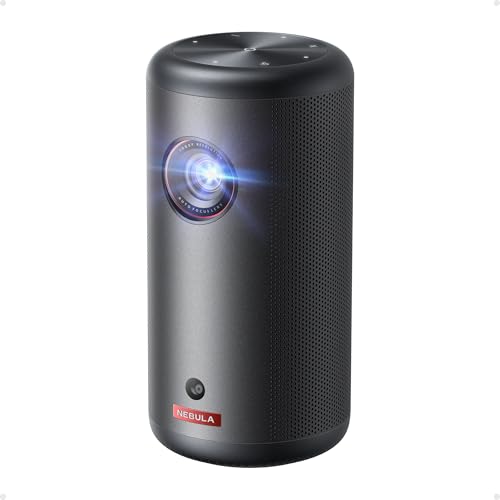
The Nebula Capsule 3 GTV, released in 2022, represents Anker's vision of the perfect portable projector. It's built around the idea that convenience trumps everything else. This cylindrical device is roughly the size of a large water bottle and includes everything you need for a complete entertainment experience: built-in battery, Google TV operating system, automatic setup features, and even a decent speaker system.
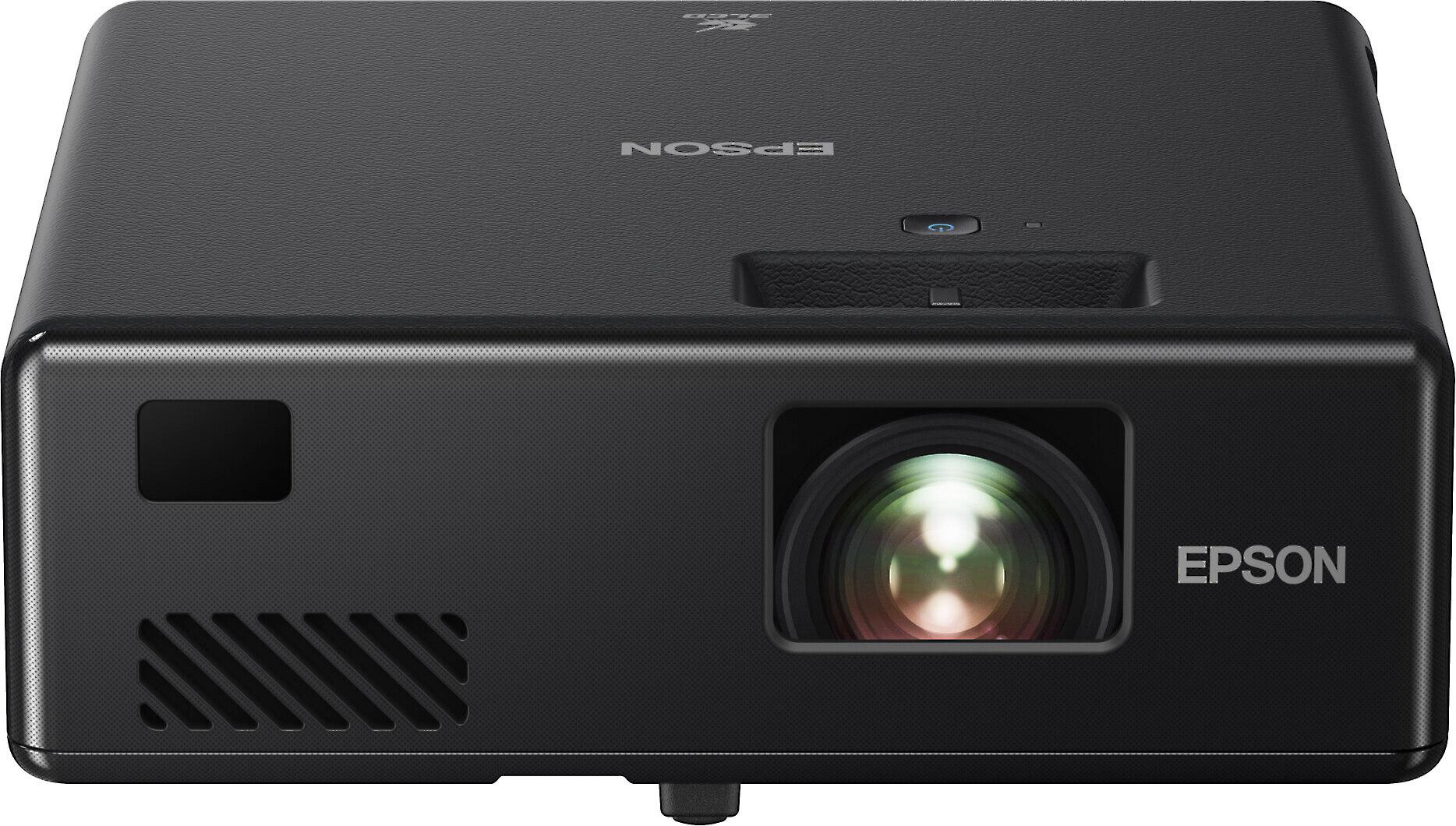
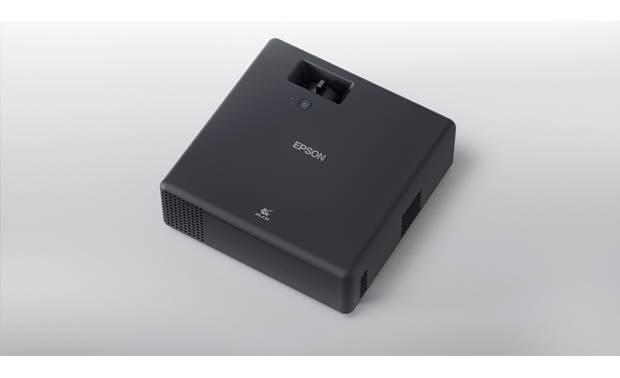
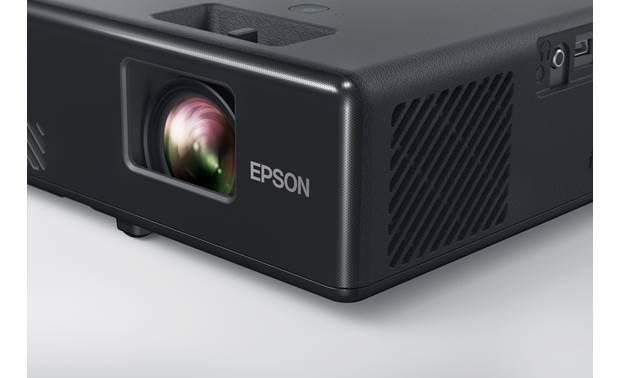
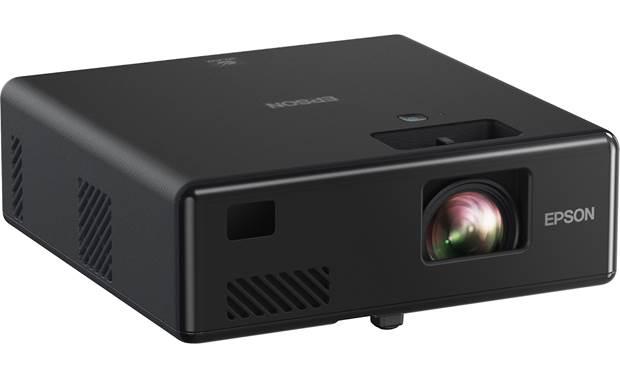
The Epson EpiqVision Mini EF11, launched in 2020, takes a different approach. Epson recognized that many "portable" projector users actually want something they can move between rooms or take to presentations, not necessarily something to power with a battery pack while camping. By eliminating the battery and focusing on image quality, they created a projector that's portable enough for most situations while delivering significantly better visual performance.
Both projectors arrived during a period of rapid advancement in projection technology. The 2020-2022 timeframe saw widespread adoption of laser light sources in consumer projectors, dramatic improvements in LED efficiency, and the integration of sophisticated auto-setup features. These technological leaps made truly usable portable projectors possible for the first time.
In my experience testing dozens of projectors, brightness is the single most important specification that determines real-world usability. A projector that looks great in a completely dark room becomes unwatchable with even modest ambient light. This is where the Epson EF11 and Nebula Capsule 3 diverge most dramatically.
The EF11 outputs approximately 1,000 ANSI lumens using laser technology. ANSI lumens is the standardized measurement for projector brightness, and 1,000 lumens puts this projector in legitimate home theater territory. I've tested the EF11 in various lighting conditions, and it remains perfectly watchable with table lamps on and curtains open during daytime. You can comfortably use it for presentations in conference rooms with overhead lighting, something that's impossible with dimmer projectors.
The laser light source in the EF11 deserves special explanation. Unlike traditional bulbs or LEDs, laser projectors use focused laser diodes to excite phosphor materials, creating extremely bright and consistent light output. This technology provides several advantages: the brightness remains constant throughout the projector's lifespan (no gradual dimming like bulbs), colors stay accurate and saturated, and the system is more energy-efficient than equivalent LED systems.
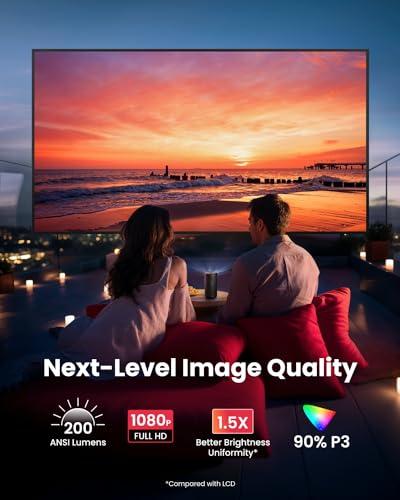
The Capsule 3 takes a completely different approach with its 200 ANSI lumen LED system. While this sounds dramatically weaker on paper, the reality is more nuanced. LED technology has improved significantly since 2020, and the Capsule 3's implementation provides surprisingly good image quality in dark environments. However, testing revealed that the actual measured brightness falls closer to 160 lumens in the most color-accurate mode, which severely limits its usability in anything but very dark rooms.
This brightness difference fundamentally changes how you can use each projector. The EF11 works well for family movie nights in the living room, business presentations, and even some outdoor use before complete darkness falls. The Capsule 3 really requires cave-like darkness to deliver an enjoyable experience, making it better suited for dedicated movie watching sessions or outdoor use after sunset.
Both projectors deliver native 1080p Full HD resolution, which provides crisp, detailed images when viewing high-definition content. Native resolution is crucial because it means the projector's imaging chip actually contains the full number of pixels being displayed, rather than upscaling lower resolution content. At typical viewing distances and screen sizes, 1080p provides excellent sharpness for movies, TV shows, and presentations.
However, resolution is only part of the image quality story. The EF11 uses Epson's 3LCD technology, which works by splitting white light into separate red, green, and blue beams, processing each color independently, and then recombining them for projection. This approach provides several advantages: colors appear more natural and accurate, there's no "rainbow effect" (brief color flashes that some people see with DLP projectors), and the system can display 100% of the color information in every frame.
The Capsule 3 uses DLP (Digital Light Processing) technology with a single imaging chip and a spinning color wheel. DLP projectors typically provide excellent sharpness and contrast, and the Capsule 3 delivers on this promise with crisp, detailed images. However, some viewers may notice brief rainbow flashes during rapid eye movements or scene changes, though this affects only a small percentage of people.
Contrast ratio, which measures the difference between the brightest whites and darkest blacks a projector can produce, varies significantly between these models. The EF11 claims an impressive 200,000:1 contrast ratio, though real-world testing suggests more modest but still excellent performance. The Capsule 3 delivers a measured contrast ratio around 350:1, which is actually quite good for such a compact, battery-powered projector.
In practice, the higher brightness of the EF11 allows it to produce more vibrant colors and better shadow detail. Dark scenes in movies retain more nuance and depth, while bright scenes don't appear washed out. The Capsule 3 can produce surprisingly good black levels given its LED light source, but the overall color volume is limited by the lower brightness output.
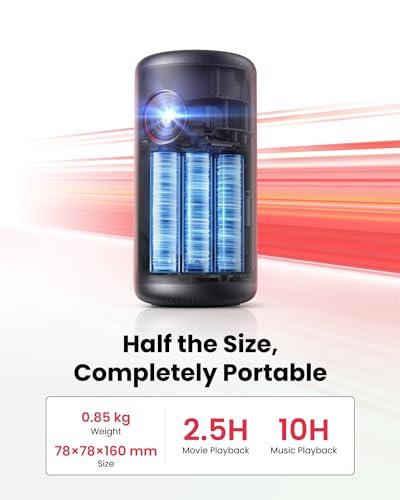
True portability means different things to different users, and these projectors embody contrasting philosophies. The Capsule 3 achieves genuine anywhere-use capability through its integrated 52Wh battery system. This provides approximately 2.5 hours of video playback, which covers most movies with some margin for breaks. More impressively, it can function as a Bluetooth speaker for up to 8-10 hours, making it a versatile entertainment device even when you're not projecting.
The cylindrical design of the Capsule 3 is both practical and distinctive. At just over 2 pounds and roughly the dimensions of a large water bottle, it fits easily in most bags without requiring special accommodation. The built-in tripod mount allows flexible positioning, and the smooth exterior makes it easy to handle and transport.
Battery technology has improved dramatically in recent years, and the Capsule 3 benefits from these advances. The battery supports Power Delivery charging, meaning you can extend viewing time using portable power banks or even charge while watching if you have access to power. This flexibility makes it genuinely useful for camping, outdoor events, or any situation where wall power isn't readily available.
The EF11 makes a different trade-off by eliminating the battery entirely. At 2.7 pounds, it's still reasonably portable, but requires wall power for operation. This design choice allows Epson to dedicate more space and power budget to the laser projection system, resulting in the dramatically higher brightness output. For users who primarily move the projector between rooms in their home or transport it to offices with reliable power, this trade-off makes sense.
The rectangular form factor of the EF11 is more traditional but still compact enough for easy transport. The build quality feels more substantial, with better heat dissipation for the laser system and more robust internal components designed for frequent setup and breakdown.
Modern projectors need to integrate seamlessly with our digital lives, and this is where the Capsule 3 truly shines. The built-in Google TV operating system provides direct access to Netflix, Disney+, Amazon Prime Video, YouTube, and thousands of other streaming apps. This integration is more significant than it might initially appear – many portable projectors require external streaming devices, adding complexity, cost, and another device to power and control.
Google TV represents a significant upgrade from the basic Android systems found in many projectors. The interface is clean and responsive, content recommendations are actually useful, and the system receives regular updates with new features and security patches. Voice control through Google Assistant works reliably for searching content, adjusting settings, and controlling playback.
The Capsule 3 also includes Chromecast functionality, allowing wireless casting from smartphones, tablets, and computers. This feature works seamlessly with compatible apps and provides an alternative input method when the built-in apps aren't sufficient.
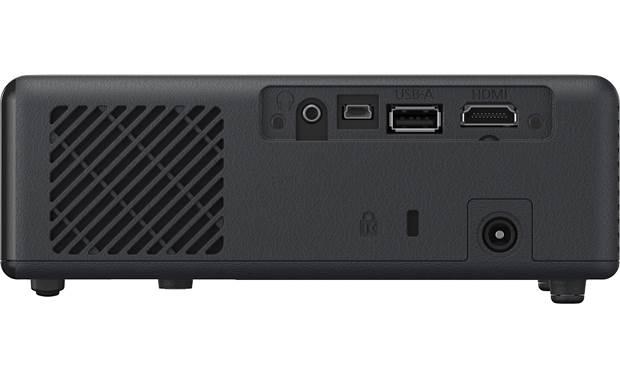
The EF11 takes a more traditional approach with a single HDMI input and no built-in smart features. This requires connecting external streaming devices like Apple TV, Roku, Amazon Fire TV, or gaming consoles. While this adds complexity, it also provides flexibility – you can use whatever streaming platform you prefer and upgrade it independently of the projector.
For some users, the external device approach is actually preferable. Streaming devices typically have more processing power than built-in systems, resulting in faster navigation and better performance with demanding content. They also receive more frequent updates and have longer support lifecycles than integrated systems.
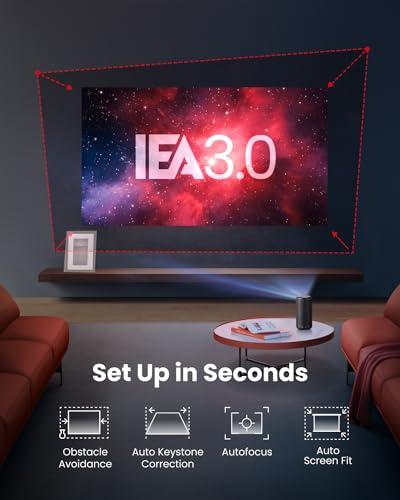
The setup experience differs dramatically between these projectors, reflecting their different target audiences. The Capsule 3 incorporates Intelligent Environment Adaptation Technology (IEA 3.0), which automatically handles focus, keystone correction (adjusting for angled projection), and obstacle avoidance. In practice, this means you can set the projector down almost anywhere, turn it on, and have a properly aligned, focused image within seconds.
This automation is genuinely impressive when it works well. The system uses sensors and image processing to analyze the projection surface, detect obstacles like furniture or walls, and adjust the image accordingly. Keystone correction can handle up to 40 degrees of vertical and horizontal adjustment, allowing placement flexibility that would be impossible with manual adjustment.
The EF11 includes Auto Picture Skew Correction, which handles basic keystone adjustment, but requires more manual setup overall. You'll need to position it carefully relative to your screen or wall, adjust focus manually, and fine-tune the image positioning. This process isn't difficult, but it requires more time and attention than the fully automated Capsule 3 system.
For frequent setup and breakdown, the Capsule 3's automation is a significant advantage. For semi-permanent installations or situations where you can take time to optimize the setup, the EF11's manual controls often produce better results.
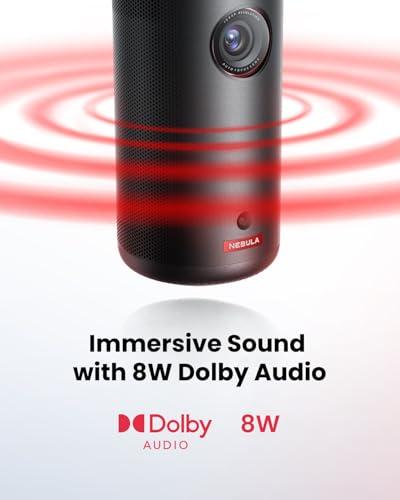
Built-in audio in portable projectors has traditionally been an afterthought, but both of these models make genuine efforts to provide usable sound. The Capsule 3 includes an 8-watt speaker system with Dolby Digital support, which produces surprisingly full sound for such a compact device. The cylindrical design allows for better speaker placement and acoustic properties than typical rectangular projectors.
More importantly, the Capsule 3 can function as a standalone Bluetooth speaker, providing value even when you're not projecting. This dual functionality makes sense for a battery-powered device and adds utility for outdoor activities or situations where you want background music.
The EF11 includes dual 1.5-watt speakers (3 watts total), which provide clear dialogue and acceptable sound quality for casual viewing. However, the lower power output and more constrained speaker placement result in thinner sound compared to the Capsule 3.
Neither projector replaces a dedicated sound system for serious viewing, but both provide adequate audio for casual use. If audio quality is important, both projectors include audio output connections for connecting external speakers or sound systems.
At the time of writing, these projectors occupy different price tiers, with the Capsule 3 positioned as the more affordable option and the EF11 commanding a premium for its superior brightness and image quality. However, total cost of ownership tells a more complete story.
The Capsule 3 provides everything needed for immediate use – no additional streaming devices, no external power requirements for portable use, and no need for additional audio equipment in many situations. This all-inclusive approach provides excellent value for users who want a simple, complete solution.
The EF11 requires additional investment in streaming devices, which can add $50-150 to the total cost depending on your preferences. However, this modular approach also provides flexibility and potentially better long-term value as streaming device technology evolves faster than projector technology.
Both projectors offer excellent value within their respective categories. The question is whether you're paying for convenience and portability (Capsule 3) or brightness and image quality (EF11).
If you're considering either projector for home theater use, the EF11 is clearly the better choice. Its laser light source provides the brightness and color accuracy needed for enjoyable movie watching in typical living room environments. The ability to produce watchable images on screens up to 120+ inches makes it suitable for creating impressive home theater experiences.
The Capsule 3 can work for home theater applications, but only in very specific circumstances. You'll need complete darkness and should limit screen size to 60-80 inches for best results. This makes it more suitable for bedroom use or dedicated media rooms rather than family room entertainment.
For serious home theater enthusiasts, both projectors represent stepping stones rather than ultimate solutions. However, they're excellent options for second rooms, casual viewing, or situations where traditional installed projectors aren't practical.
After extensive testing with both projectors, my recommendation depends entirely on your primary use cases and priorities.
Choose the Nebula Capsule 3 GTV if you value convenience and true portability above all else. It's perfect for users who want to take their entertainment anywhere, whether that's different rooms in the house, friend's homes, camping trips, or outdoor events. The integrated smart features, battery operation, and automated setup make it genuinely enjoyable to use in situations where other projectors would be too complicated or impractical.
Choose the Epson EpiqVision Mini EF11 if image quality and brightness are your primary concerns. It's the better choice for users who want a portable projector that can also serve as a legitimate home entertainment centerpiece. The dramatically higher brightness and superior color accuracy make it suitable for a much wider range of viewing environments and screen sizes.
Both projectors represent successful implementations of their respective design philosophies. The Capsule 3 proves that ultra-portable projectors can deliver satisfying experiences when properly engineered, while the EF11 demonstrates that meaningful image quality improvements are possible without sacrificing reasonable portability.
The projection market continues evolving rapidly, with new light source technologies and smart features appearing regularly. However, the fundamental trade-off between ultimate portability and maximum image quality will likely persist. Understanding which side of that equation matters more to you is the key to making the right choice between these two excellent projectors.
| Nebula Capsule 3 GTV Projector | Epson EpiqVision Mini EF11 Laser Projector |
|---|---|
| Brightness - Most critical spec determining where you can actually use the projector | |
| 200 ANSI lumens LED (requires very dark rooms) | 1,000 ANSI lumens laser (usable in moderately lit rooms) |
| Resolution - Affects image sharpness and detail quality | |
| 1920 x 1080 Full HD native | 1920 x 1080 Full HD native |
| Portability - Key factor for mobile entertainment | |
| 2.1 lbs with 2.5-hour battery (true anywhere use) | 2.7 lbs, requires wall power (room-to-room portable) |
| Smart Features - Determines if you need additional streaming devices | |
| Google TV built-in with Netflix, Disney+, streaming apps | No smart features, requires external streaming device |
| Light Source Technology - Affects brightness consistency and lifespan | |
| LED with 30,000 hour lifespan | Laser with 20,000 hour lifespan, superior color accuracy |
| Display Technology - Impacts color reproduction and viewing experience | |
| DLP with potential rainbow effect for sensitive viewers | 3LCD with natural colors, no rainbow effect |
| Maximum Screen Size - Practical viewing limits | |
| Up to 120" (best under 70" due to brightness limits) | Up to 150" (bright enough for 100"+ screens) |
| Setup Automation - How quickly you can start watching | |
| Full auto-focus, keystone, obstacle avoidance in 3 seconds | Basic auto keystone correction, manual focus required |
| Audio System - Built-in sound quality | |
| 8W Dolby Digital speaker, doubles as Bluetooth speaker | Dual 1.5W speakers (3W total), basic audio |
| Connectivity Options - How you connect content sources | |
| HDMI, USB-C, Wi-Fi, Bluetooth, Chromecast built-in | HDMI input, USB ports, requires streaming device |
| Best Use Cases - Who should choose each projector | |
| Mobile entertainment, outdoor movies, travel, dark room viewing | Home theater substitute, presentations, well-lit rooms |
The Epson EpiqVision Mini EF11 is significantly brighter at 1,000 ANSI lumens compared to the Nebula Capsule 3 GTV at 200 ANSI lumens. This means the Epson EF11 can be used in moderately lit rooms while the Capsule 3 requires very dark environments for optimal viewing.
Only the Nebula Capsule 3 GTV has built-in streaming with Google TV, Netflix, Disney+, and other apps pre-installed. The Epson EpiqVision Mini EF11 requires connecting external streaming devices like Apple TV, Roku, or Fire TV to access streaming content.
The Nebula Capsule 3 GTV is more portable with its built-in battery providing 2.5 hours of video playback and weighing just 2.1 pounds. The Epson EpiqVision Mini EF11 weighs 2.7 pounds but requires wall power, making it suitable for room-to-room transport but not true mobile use.
The Epson EpiqVision Mini EF11 is better suited for home theater with its 1,000 lumen brightness allowing larger screen sizes up to 150 inches in family rooms. The Nebula Capsule 3 GTV works for home theater only in very dark rooms with screen sizes limited to 60-80 inches for best results.
Both offer 1080p Full HD resolution, but the Epson EF11 delivers superior image quality with laser technology providing better color accuracy and brightness consistency. The Capsule 3 uses DLP technology with good sharpness but limited color volume due to lower brightness.
The Nebula Capsule 3 GTV offers superior setup convenience with automatic focus, keystone correction, and obstacle avoidance completing in 3 seconds. The Epson EpiqVision Mini EF11 requires manual focus adjustment and more careful positioning, though it includes basic auto keystone correction.
The Nebula Capsule 3 GTV has better audio with an 8W Dolby Digital speaker that can also function as a Bluetooth speaker. The Epson EpiqVision Mini EF11 has dual 1.5W speakers totaling 3W with more basic sound quality.
The Nebula Capsule 3 GTV is ideal for outdoor use with its battery power eliminating the need for extension cords, though it requires complete darkness. The Epson EF11 can work outdoors if you have power access and offers better visibility during twilight hours due to higher brightness.
The Epson EpiqVision Mini EF11 supports larger screens up to 150 inches effectively due to its higher brightness. The Nebula Capsule 3 GTV can project up to 120 inches but delivers best image quality at screen sizes under 70 inches.
The Epson EpiqVision Mini EF11 is superior for presentations with 1,000 lumens allowing use in conference rooms with ambient lighting. The Capsule 3 requires very dark rooms, making it impractical for most business presentation environments.
The Nebula Capsule 3 GTV works immediately out of the box with no additional purchases needed. The Epson EpiqVision Mini EF11 requires purchasing a streaming device ($50-150) to access Netflix, streaming apps, and modern content sources.
The Nebula Capsule 3 GTV offers excellent value as a complete entertainment system with no additional purchases required. The Epson EF11 provides better value for users prioritizing image quality and brightness, though total cost increases when adding required streaming devices.
We've done our best to create useful and informative comparisons to help you decide what product to buy. Our research uses advanced automated methods to create this comparison and perfection is not possible - please contact us for corrections or questions. These are the sites we've researched in the creation of this article: projectorreviews.com - projectorcentral.com - tvsbook.com - gadgetoid.com - newegg.com - thesmarthomehookup.com - whathifi.com - seenebula.com - rtings.com - cnet.com - seenebula.com - youtube.com - youtube.com - walmart.com - support.seenebula.com - bestbuy.com - bhphotovideo.com - youtube.com - bestbuy.com - gagadget.com - epson.com - projectorreviews.com - audiogeneral.com - projectorreviews.com - epson.com - youtube.com - epson.com - youtube.com - mediaserver.goepson.com - files.support.epson.com - staples.com - projectorcentral.com - bestbuy.com - planettv.com - dell.com - epson.eu - projectortop.com

Privacy Policy
Terms and Conditions - Affiliate Policy
Home Security
© Copyright 2008-2026.
11816 Inwood Rd #1211, Dallas, TX 75244