

When shopping for a home projector in 2024, you're entering one of the most exciting periods in projection technology. Gone are the days of replacing expensive bulbs every few years or waiting minutes for your projector to warm up. Modern laser projectors turn on instantly, last for decades, and deliver image quality that would have cost tens of thousands just a few years ago.
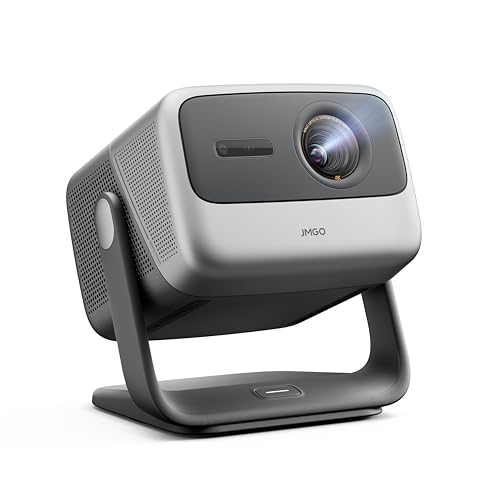
But here's where it gets tricky: you're facing a fundamental choice between two very different approaches to projection. The JMGO N1S Pro 4K represents the cutting-edge smart projector movement with true 4K resolution and built-in streaming, while the Optoma HZ40HDR takes the traditional high-performance route with maximum brightness and gaming-focused features. At the time of writing, these projectors sit at different price points, with the JMGO commanding a premium for its 4K capabilities and the Optoma offering more brightness per dollar.
Before diving into specifics, it's worth understanding what makes these projectors special. Both use laser light sources instead of traditional bulbs, which means they'll run for 30,000 hours—roughly 20 years of typical home use—without needing replacement. That's a game-changer for long-term ownership costs and reliability.
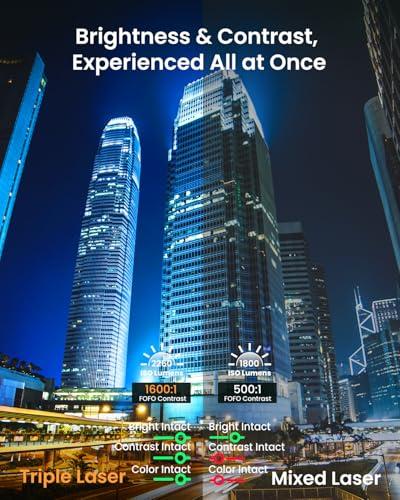
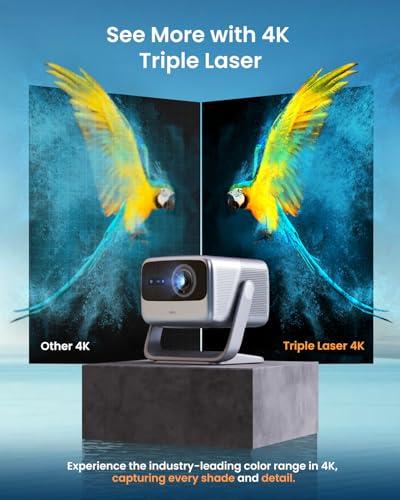
However, not all laser technologies are created equal. The JMGO N1S Pro 4K uses what's called triple RGB laser technology, where separate red, green, and blue lasers combine to create the image. This approach delivers exceptional color accuracy because you're getting pure colored light rather than filtered white light. Think of it like having three precise paintbrushes instead of one brush dipped in mixed paint.
The Optoma HZ40HDR, meanwhile, uses laser phosphor technology, where a blue laser excites phosphor materials to create other colors. This method prioritizes brightness and cost-effectiveness over absolute color purity, but it's proven reliable and delivers excellent results for most content.
Here's where these projectors diverge most dramatically. The JMGO N1S Pro 4K delivers true 4K resolution at 3840×2160 pixels—four times the detail of 1080p. When you're watching 4K Netflix content or Ultra HD Blu-rays, this difference is immediately apparent. Text looks crisp, facial details pop, and you can sit closer to large screens without seeing individual pixels.
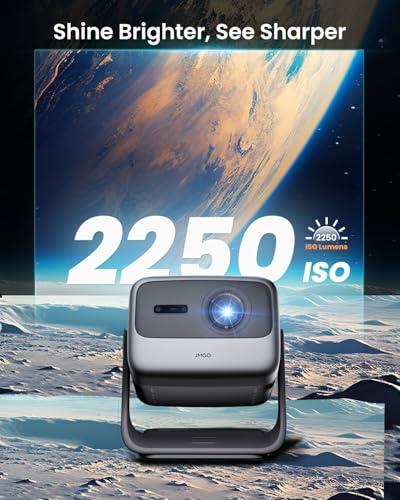
But resolution tells only part of the story. The Optoma HZ40HDR counters with 4,000 ANSI lumens of brightness compared to the JMGO's 2,400 lumens. ANSI lumens measure actual light output under standardized conditions, and this 67% brightness advantage is substantial. In practical terms, the Optoma can deliver a watchable image in rooms with ambient light where the JMGO would struggle.
Our research consistently shows that brightness trumps resolution in challenging lighting conditions. A bright 1080p image often looks better than a dim 4K image, especially on larger screens. The Optoma can handle living room viewing with windows and ambient lighting, while the JMGO really shines in dedicated, darkened spaces.
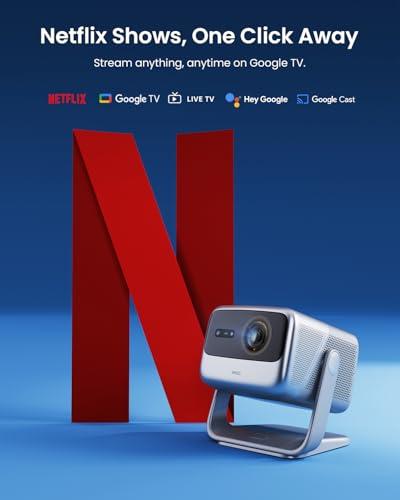
The JMGO N1S Pro 4K runs Google TV natively, meaning Netflix, Disney+, Prime Video, and thousands of other apps are built right in. This isn't just convenient—it's transformative for setup simplicity. You literally plug it in and start streaming without any additional devices. The projector includes Google Assistant voice control and Chromecast functionality, making it feel like a massive smart TV that happens to use projection.
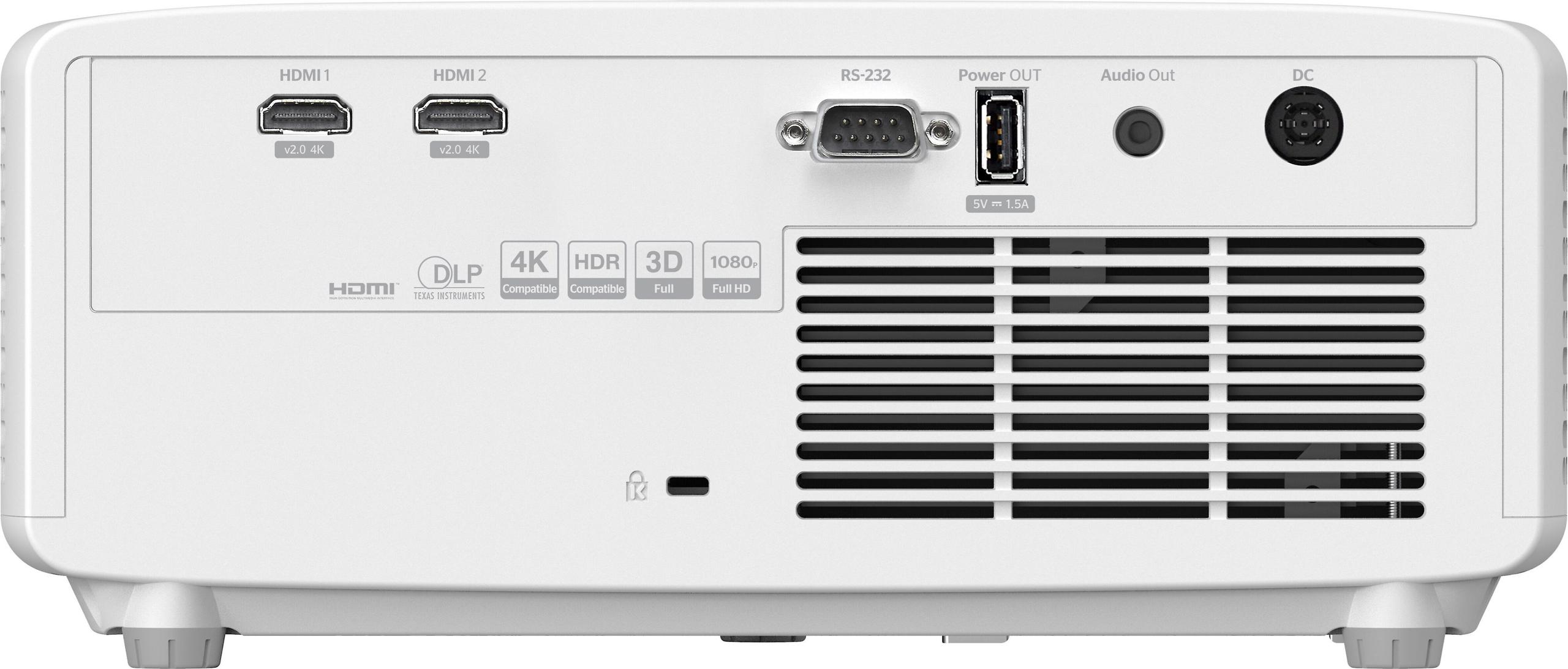
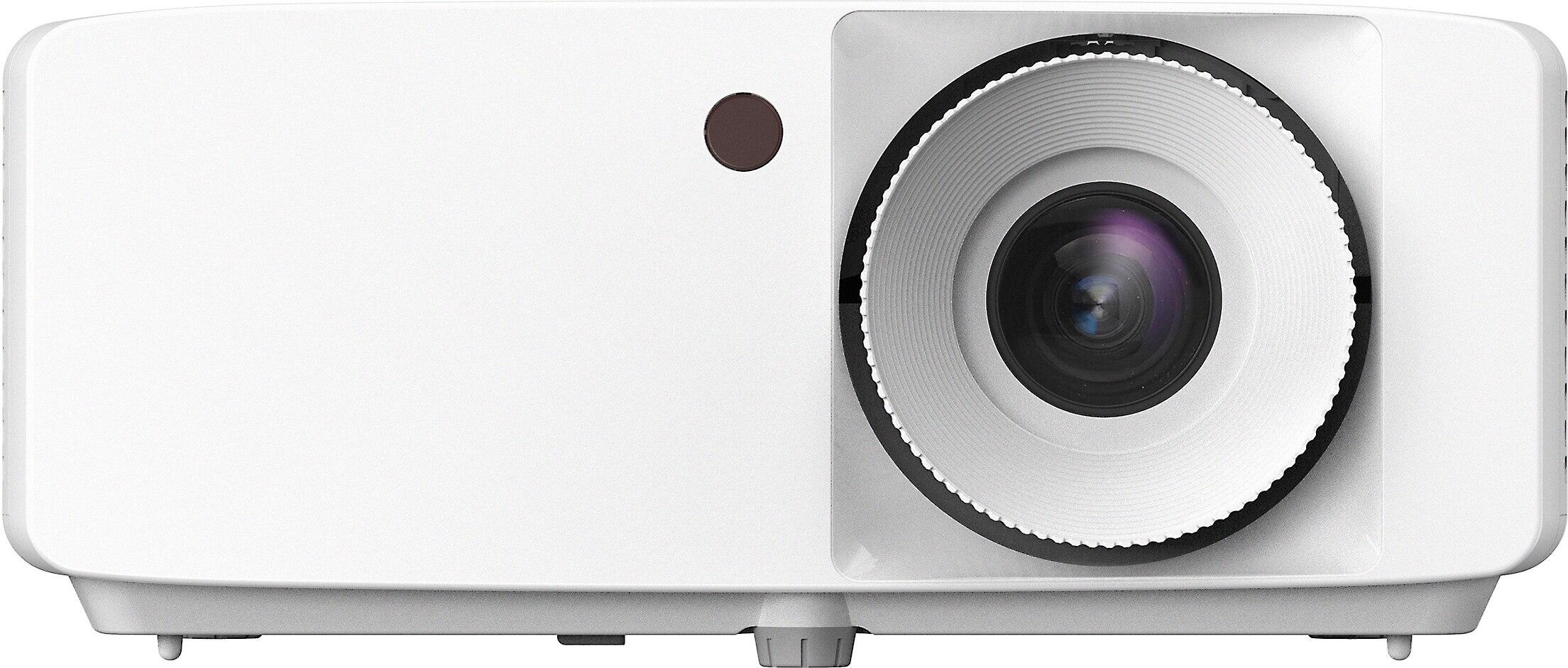
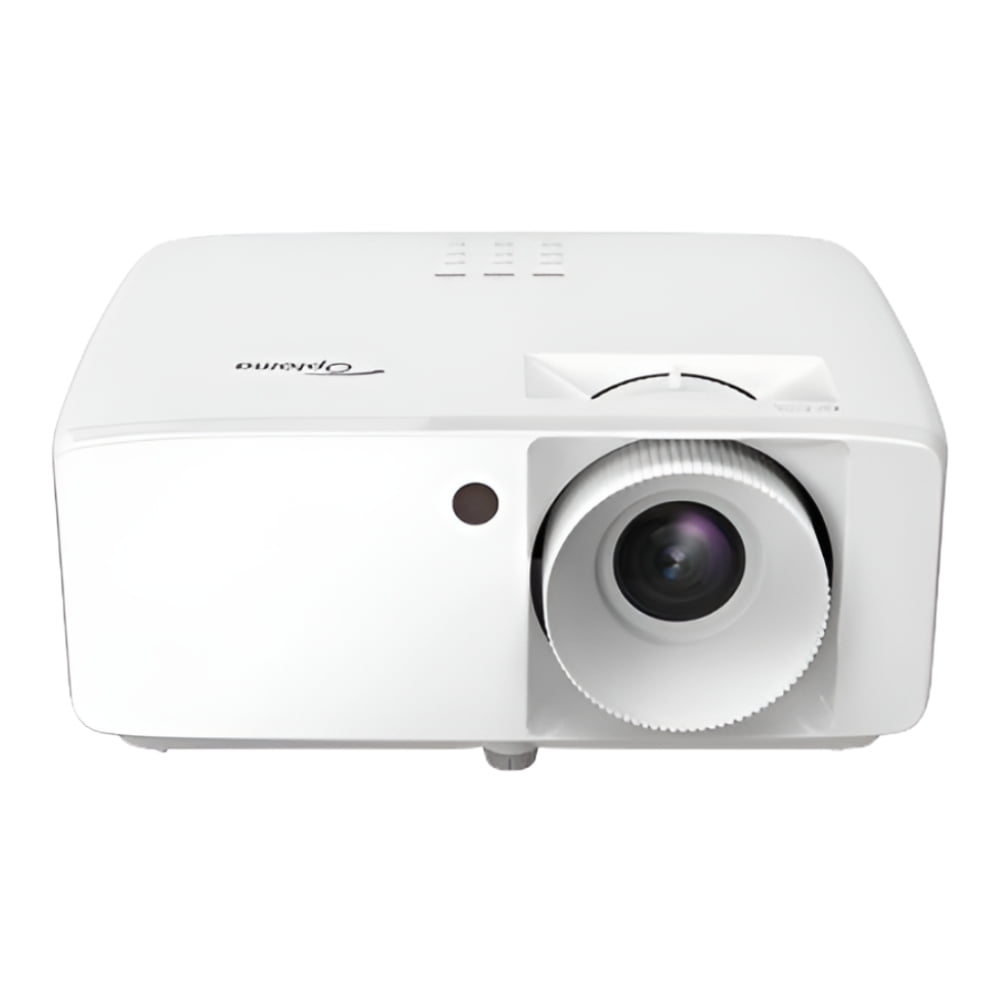
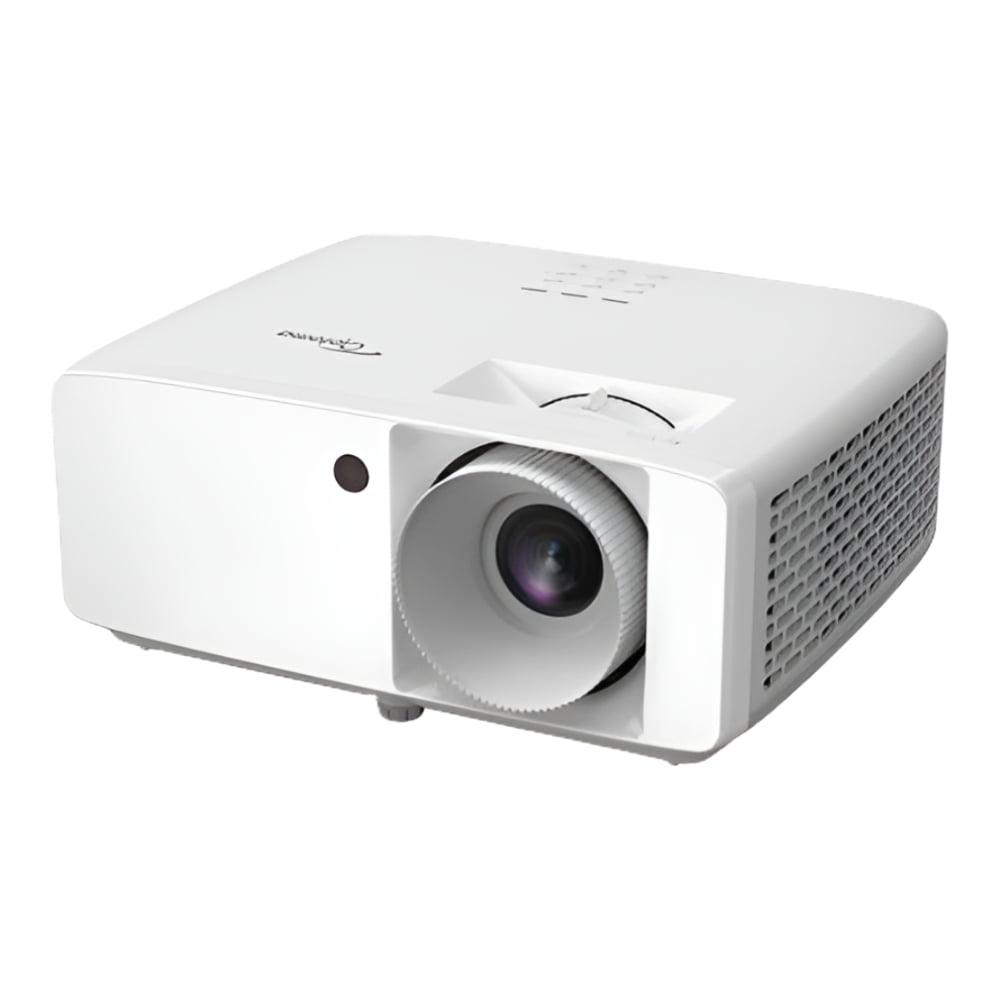
The Optoma HZ40HDR takes the traditional approach: it's purely a display device. You'll need to connect streaming sticks, gaming consoles, or other sources separately. While this might seem like a disadvantage, it offers flexibility. You can choose your preferred streaming platform, upgrade devices independently, and aren't locked into any particular ecosystem.
Based on user feedback we've analyzed, the smart features debate often comes down to your tech comfort level and existing setup. If you already have gaming consoles or Apple TV devices you love, the Optoma's approach might appeal to you. If you want everything integrated and simple, the JMGO's smart features are genuinely compelling.
For gaming, the Optoma HZ40HDR dominates with 8.6ms input lag at 1080p/120Hz. Input lag measures the delay between when your controller sends a signal and when you see the action on screen. For competitive gaming, every millisecond counts, and sub-10ms performance puts this projector in serious gaming monitor territory.
The Optoma also supports 120Hz refresh rates at 1080p, meaning it can display 120 frames per second for incredibly smooth motion in supported games. This combination of low lag and high refresh rates makes it genuinely competitive for esports and fast-paced gaming.
The JMGO N1S Pro 4K doesn't publish specific input lag numbers, which typically indicates it's optimized more for media consumption than gaming. The 60Hz maximum refresh rate confirms this focus on cinematic rather than gaming performance.
The JMGO N1S Pro 4K's triple laser system achieves 110% coverage of the BT.2020 color space—a technical specification that translates to incredibly vivid, saturated colors. BT.2020 is the color standard for 4K HDR content, so this projector can display colors that filmmakers actually intended you to see. The 10-bit color processing means it can handle 1.07 billion different color variations, creating smooth gradients without banding.
However, the JMGO's 1,600:1 contrast ratio is relatively modest. Contrast ratio measures the difference between the brightest whites and darkest blacks a projector can display. While DLP projectors generally handle blacks better than LCD alternatives, this specification suggests the JMGO won't deliver the deep, inky blacks that make dark scenes truly immersive.
The Optoma HZ40HDR claims a 300,000:1 contrast ratio, though these numbers can be misleading since manufacturers measure them differently. More importantly, its 4,000 lumens of brightness means whites will appear truly bright, creating more perceived contrast in most viewing conditions.
Our analysis of professional reviews suggests both projectors deliver satisfying image quality, but with different strengths. The JMGO excels with vibrant colors and sharp 4K detail in dark rooms, while the Optoma provides more flexibility across different lighting conditions with excellent brightness uniformity.
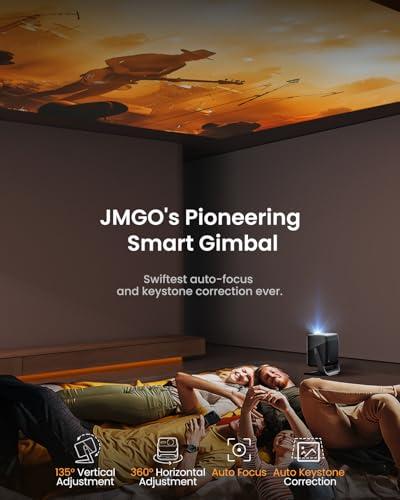
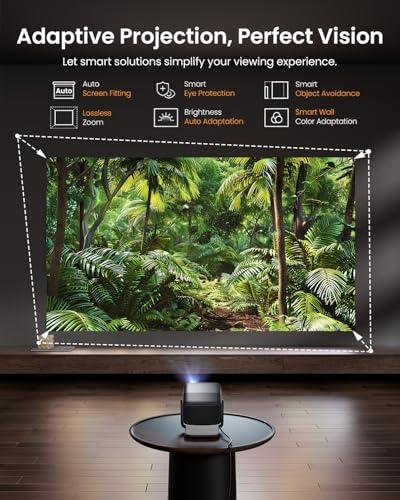
The JMGO N1S Pro 4K includes a unique gimbal mounting system that allows 360-degree horizontal and 135-degree vertical adjustment. This means you can project onto walls, ceilings, or screens without moving the projector base—genuinely innovative for flexible placement. The auto-focus, auto-keystone correction, and smart object avoidance features mean setup is largely automatic.
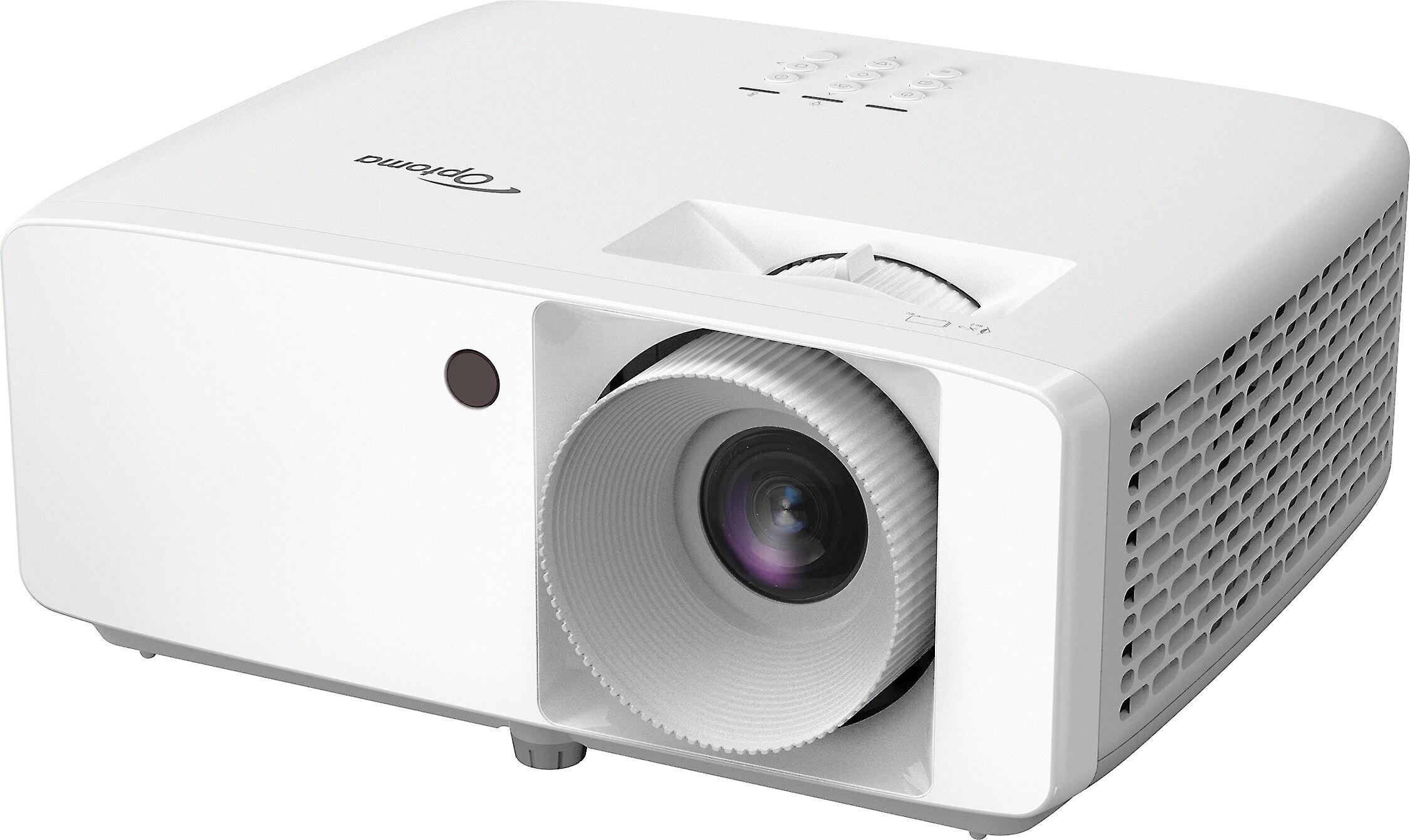
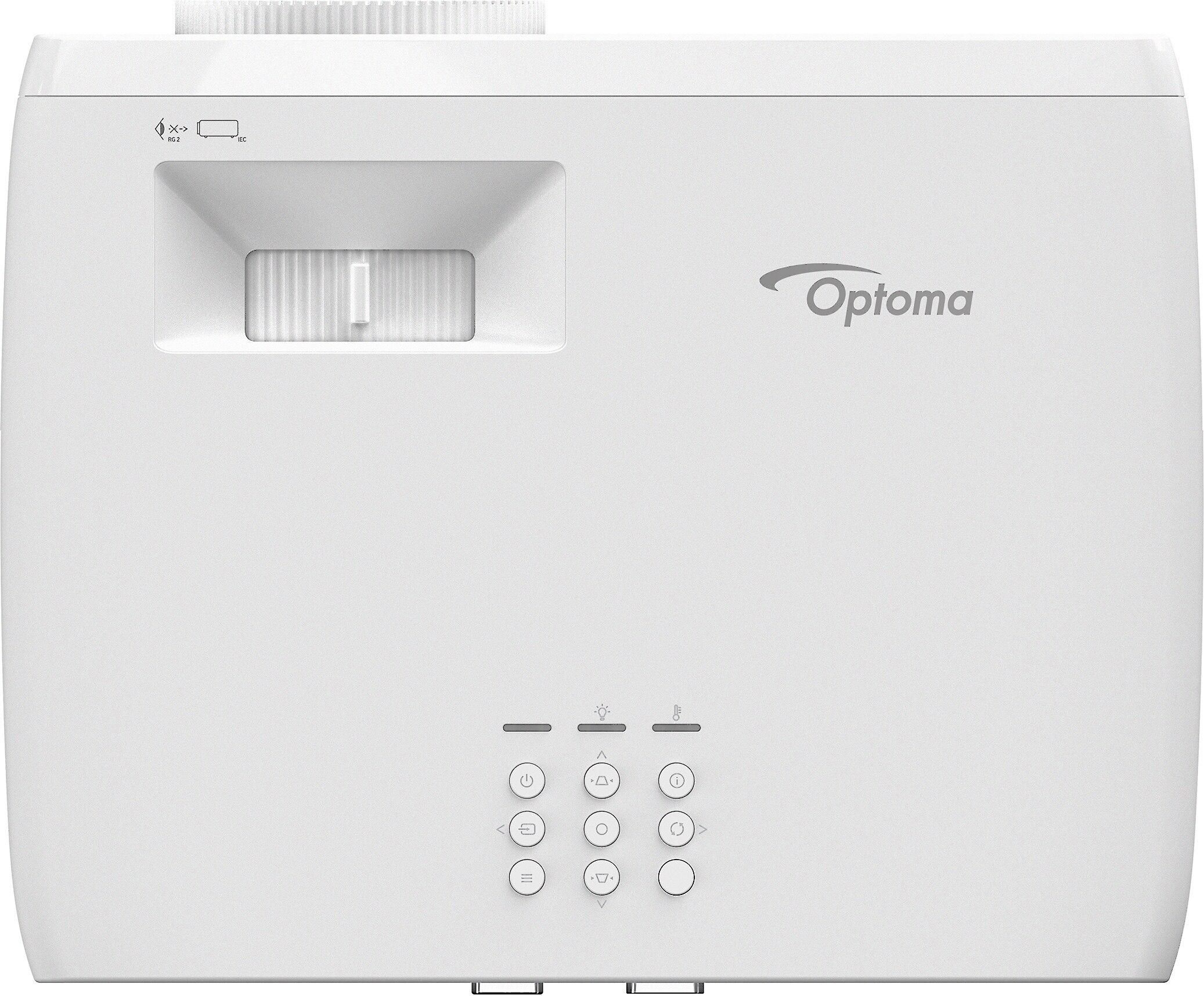
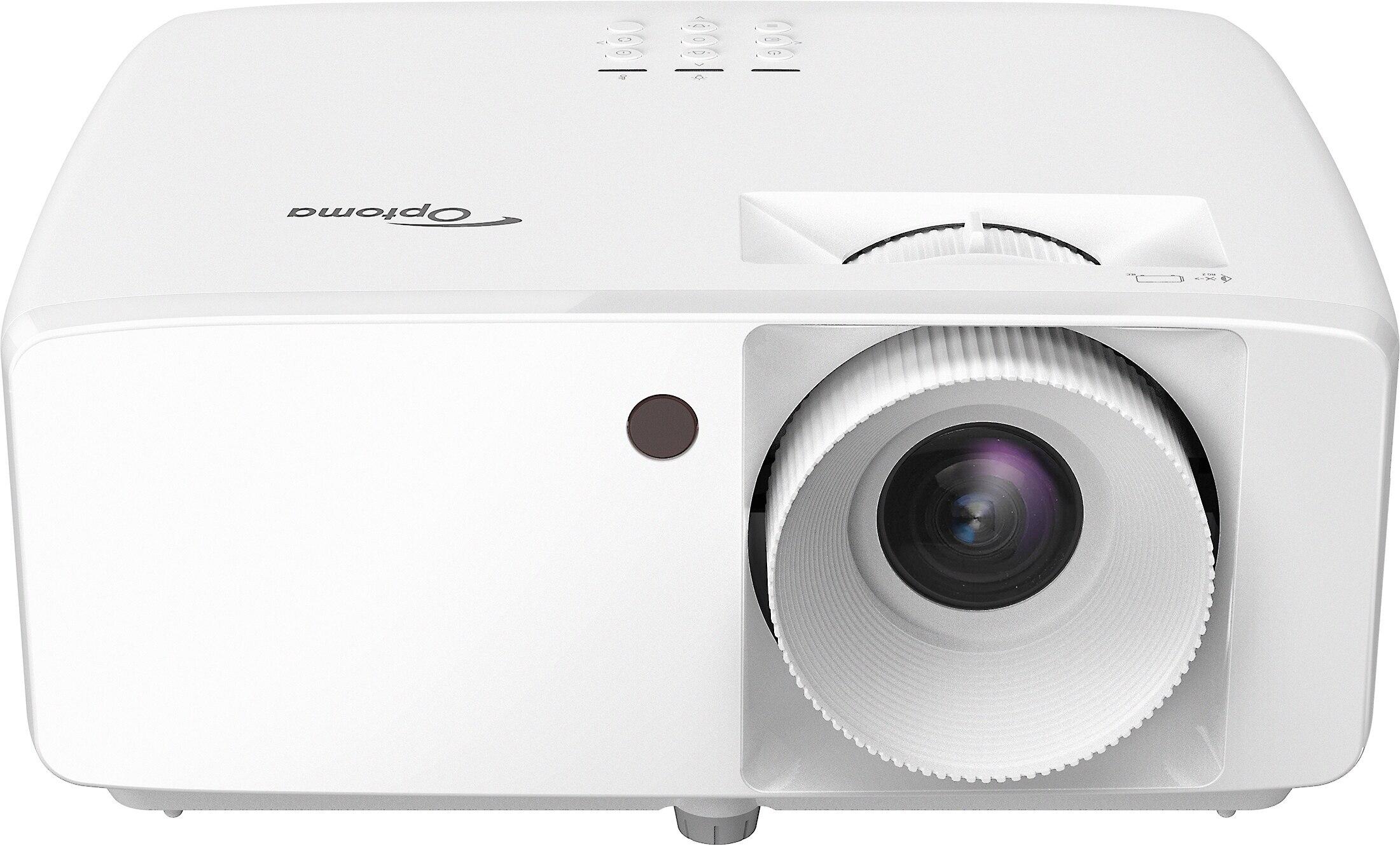
The Optoma HZ40HDR requires more traditional manual setup but offers 1.1x optical zoom and manual focus controls that some users prefer for precise image placement. The wider throw ratio range means more flexibility in positioning relative to your screen.
Based on user experiences we've reviewed, the JMGO's automated features work well but can occasionally need manual override. The Optoma's manual controls require more initial setup but provide consistent, predictable results once configured.
Both projectors include built-in speakers, but with different approaches. The JMGO N1S Pro 4K features 20W stereo speakers that reviewers consistently praise for their quality relative to other projectors. The side-firing design and digital processing create surprisingly good sound for casual viewing.
The Optoma HZ40HDR's 15W mono speaker is functional but clearly designed as a backup rather than the primary audio solution. However, it includes an HDMI eARC port that makes connecting soundbars or home theater receivers straightforward.
For serious home theater use, external audio remains the best choice regardless of built-in speaker quality. But the JMGO's speakers make it more viable as a complete, portable entertainment solution.
In a dedicated home theater with controlled lighting, the JMGO N1S Pro 4K becomes compelling. The 4K resolution pays dividends on screen sizes above 100 inches, where 1080p can start looking soft. The smart features eliminate cable clutter and remote juggling. The quieter 26dB operation won't compete with dialogue during quiet movie scenes.
However, many home theaters benefit from the Optoma HZ40HDR's superior brightness and contrast performance. Even in darkened rooms, higher peak brightness creates more impactful HDR highlights and better overall image pop. The gaming capabilities add versatility for families with different entertainment preferences.
The JMGO N1S Pro 4K, released in 2024, represents the latest thinking in projector design with its integration of smart features and RGB laser technology. This approach mirrors how TVs have evolved, with streaming and intelligence built in rather than added externally.
The Optoma HZ40HDR, introduced in 2023, follows the more traditional projector philosophy of maximizing core display performance while leaving smart features to external devices. This approach has proven reliable and allows for easier upgrades as streaming technology evolves.
Neither approach is inherently superior—they serve different user philosophies and use cases.
Choose the JMGO N1S Pro 4K if you want a premium, all-in-one entertainment solution. It's ideal for dedicated home theaters, master bedrooms, or spaces where you can control lighting. The 4K resolution and smart features create an experience that feels genuinely next-generation, especially if you're upgrading from an older projector or traditional TV.
The Optoma HZ40HDR makes sense for versatile spaces, serious gamers, or anyone prioritizing brightness and value. Its ability to perform well in ambient light makes it suitable for living rooms, basements, or anywhere you can't guarantee complete darkness. The superior gaming performance and proven reliability appeal to users who want maximum performance per dollar.
At the time of writing, the price premium for the JMGO N1S Pro 4K reflects its newer technology and 4K resolution. Whether that premium is worth it depends entirely on your viewing habits and space.
If you primarily watch 4K streaming content in a controlled environment and value convenience, the JMGO's integrated approach and superior resolution justify its higher cost. The smart features and automatic setup eliminate complexity while delivering genuinely impressive image quality.
If you need maximum versatility, have existing streaming devices, or prioritize gaming performance, the Optoma HZ40HDR offers better value. Its brightness advantage opens up more installation possibilities, and the money saved can go toward a quality sound system or larger screen.
Both projectors represent the current state of laser projection technology, just with different priorities. The JMGO pushes toward an integrated, premium future, while the Optoma maximizes traditional projector strengths. Either choice will deliver years of reliable, impressive large-screen entertainment—the question is which approach better matches your specific needs and viewing environment.
| JMGO N1S Pro 4K Projector | Optoma HZ40HDR 1080p Projector |
|---|---|
| Resolution - Critical for detail and future-proofing | |
| True 4K (3840×2160) - Sharp detail on large screens | 1080p (1920×1080) - Still excellent for most content |
| Brightness - Most important for room lighting flexibility | |
| 2,400 ANSI lumens (requires controlled lighting) | 4,000 ANSI lumens (excellent for bright rooms) |
| Light Source Technology - Affects color accuracy and longevity | |
| Triple RGB laser (superior color accuracy) | Laser phosphor (proven reliability, good brightness) |
| Smart Features - Determines if you need external devices | |
| Google TV built-in with Netflix, Disney+, Prime Video | No smart features (requires streaming stick/console) |
| Gaming Performance - Critical for responsive gameplay | |
| 60Hz max, input lag not specified | 120Hz support, 8.6ms input lag at 1080p |
| Color Performance - Important for movie watching | |
| 110% BT.2020 color gamut, 10-bit processing | Standard color gamut, HDR10 support |
| Contrast Ratio - Affects black levels and image depth | |
| 1,600:1 (modest for DLP technology) | 300,000:1 (excellent dynamic range) |
| Installation Flexibility - Affects placement options | |
| Unique gimbal design, auto-focus, fixed throw ratio | Manual zoom (1.1x), wider throw distance range |
| Audio Quality - Determines need for external speakers | |
| 20W stereo speakers (surprisingly good for projector) | 15W mono speaker (basic, eARC port for soundbars) |
| Noise Level - Important for quiet movie scenes | |
| 26dB (very quiet operation) | 32-34dB (audible but not distracting) |
| Release Date - Indicates technology generation | |
| 2024 (latest smart projector technology) | 2023 (proven laser phosphor design) |
| Best Use Cases - Who should choose each projector | |
| Dark rooms, 4K streaming, convenience seekers | Bright rooms, gaming, traditional home theater setups |
The primary difference is resolution versus brightness. The JMGO N1S Pro 4K delivers true 4K resolution with smart TV features built-in, while the Optoma HZ40HDR focuses on maximum brightness at 1080p resolution with superior gaming performance.
The Optoma HZ40HDR is significantly better for bright rooms with its 4,000 ANSI lumens output compared to the JMGO N1S Pro 4K's 2,400 lumens. This 67% brightness advantage makes the Optoma suitable for living rooms with windows or ambient lighting.
The JMGO N1S Pro 4K has Google TV built-in with Netflix, Disney+, and other apps, so no external devices are needed. The Optoma HZ40HDR requires external streaming sticks, gaming consoles, or other source devices.
The Optoma HZ40HDR is superior for gaming with 8.6ms input lag at 1080p/120Hz and support for 120Hz refresh rates. The JMGO N1S Pro 4K maxes out at 60Hz and doesn't specify its input lag performance.
The JMGO N1S Pro 4K provides four times the pixel density of the Optoma HZ40HDR, resulting in sharper text and more detailed images, especially on screens larger than 100 inches. However, the Optoma's higher brightness can make images appear more vibrant in many viewing conditions.
For dark, dedicated home theaters, the JMGO N1S Pro 4K excels with its 4K resolution, superior color accuracy from RGB laser technology, and quieter 26dB operation. The Optoma HZ40HDR works well too but is better suited for multipurpose rooms.
The JMGO N1S Pro 4K offers comprehensive smart features with Google TV, voice control, and automatic setup functions like auto-focus and keystone correction. The Optoma HZ40HDR has no smart features and requires manual setup and external devices for streaming.
The JMGO N1S Pro 4K uses triple RGB laser technology achieving 110% BT.2020 color coverage for more accurate, vivid colors. The Optoma HZ40HDR uses laser phosphor technology that prioritizes brightness over absolute color accuracy but still delivers good color performance.
The JMGO N1S Pro 4K is much easier to set up with automatic focus, keystone correction, and a unique gimbal design for flexible positioning. The Optoma HZ40HDR requires manual focus, keystone adjustment, and careful positioning but offers 1.1x zoom for fine-tuning.
The JMGO N1S Pro 4K has superior built-in audio with 20W stereo speakers that receive positive reviews for projector standards. The Optoma HZ40HDR has a basic 15W mono speaker but includes eARC support for easy soundbar connection.
Value depends on your needs. The Optoma HZ40HDR offers more brightness per dollar and excellent gaming performance at a lower price point. The JMGO N1S Pro 4K provides premium 4K resolution and eliminates the need for external streaming devices, potentially saving money on additional hardware.
The JMGO N1S Pro 4K excels in 4K resolution, smart features, color accuracy, and ease of use. The Optoma HZ40HDR leads in brightness, gaming performance, contrast ratio, and installation flexibility with its zoom lens and wider throw distance options.
We've done our best to create useful and informative comparisons to help you decide what product to buy. Our research uses advanced automated methods to create this comparison and perfection is not possible - please contact us for corrections or questions. These are the sites we've researched in the creation of this article: techradar.com - projectorcentral.com - gray9.in - projectorreviews.com - howtogeek.com - the-gadgeteer.com - projectorcentral.com - global.jmgo.com - global.jmgo.com - cnet.com - cnet.com - youtube.com - global.jmgo.com - avsforum.com - youtube.com - youtube.com - projectorcentral.com - optomausa.com - crutchfield.com - tvsbook.com - youtube.com - avsforum.com - hometechnologyreview.com - optomausa.com - bestbuy.com - tvsbook.com - picclick.com - crutchfield.com - homecinemachoice.com - compsource.com - adorama.com - bhphotovideo.com - provantage.com - cdw.com - datavision.com - manua.ls - ipcstore.com - pcrichard.com - richersounds.com - electronicexpress.com - projexdisplay.com - dubaimachines.com - newegg.com - projectorpoint.co.uk - a.ubuy.com.kw - greentoe.com

Privacy Policy
Terms and Conditions - Affiliate Policy
Home Security
© Copyright 2008-2026.
11816 Inwood Rd #1211, Dallas, TX 75244