

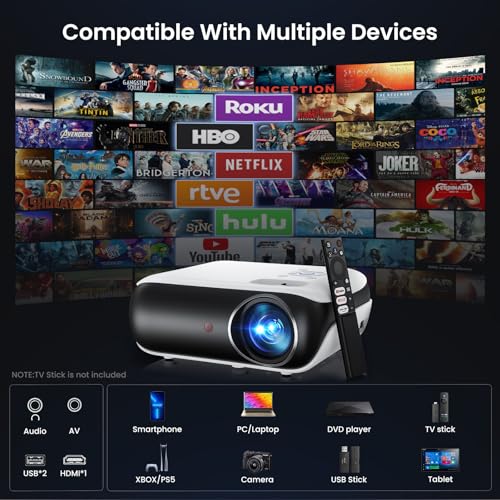
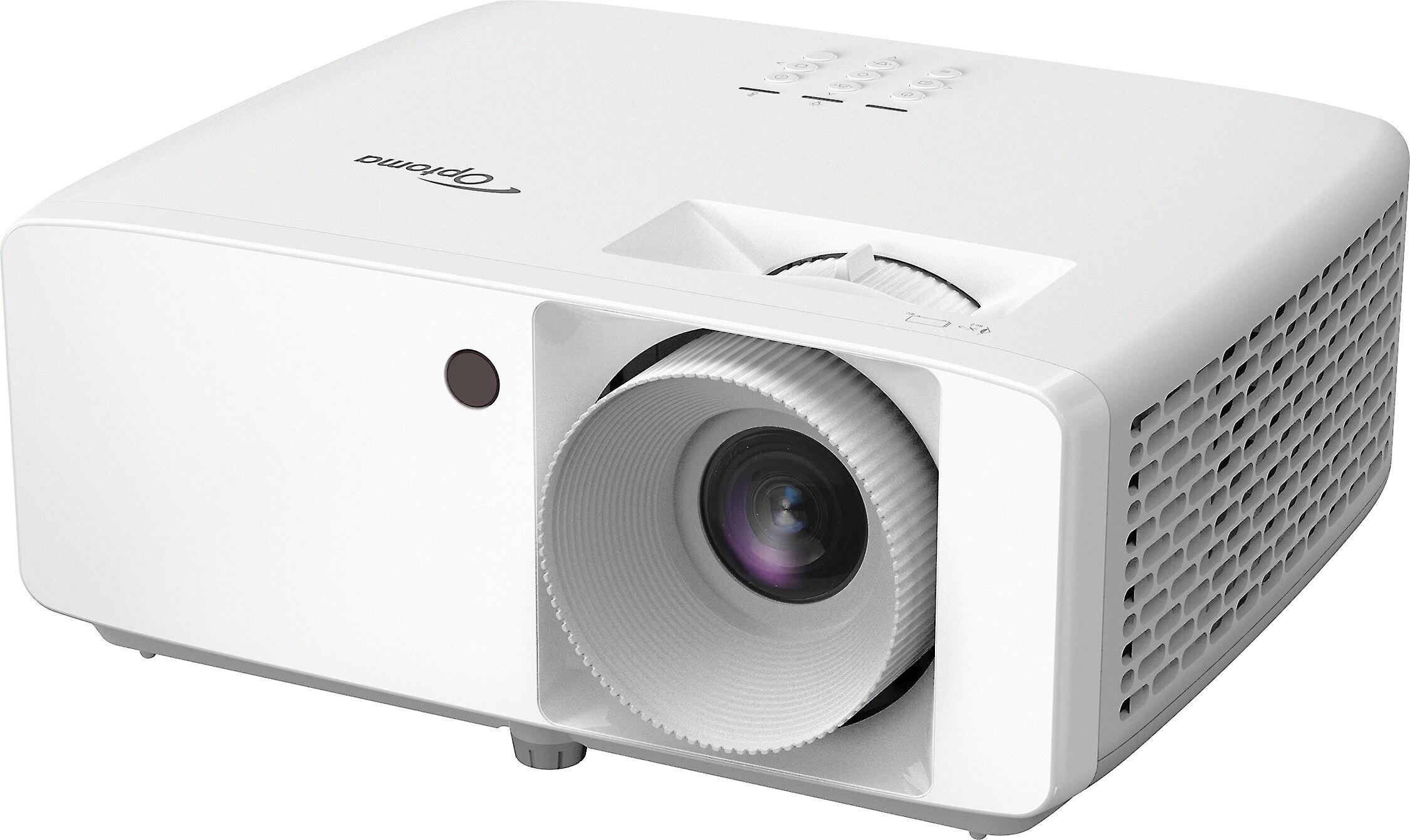
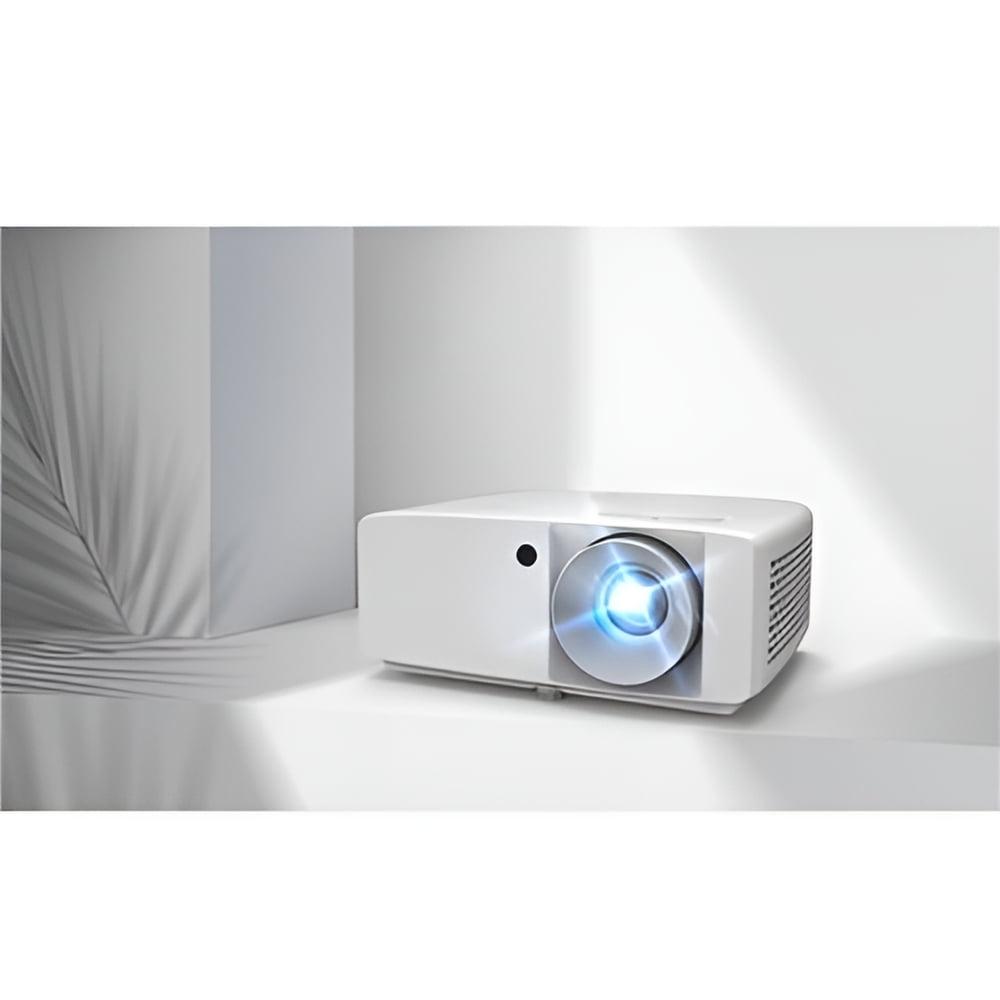
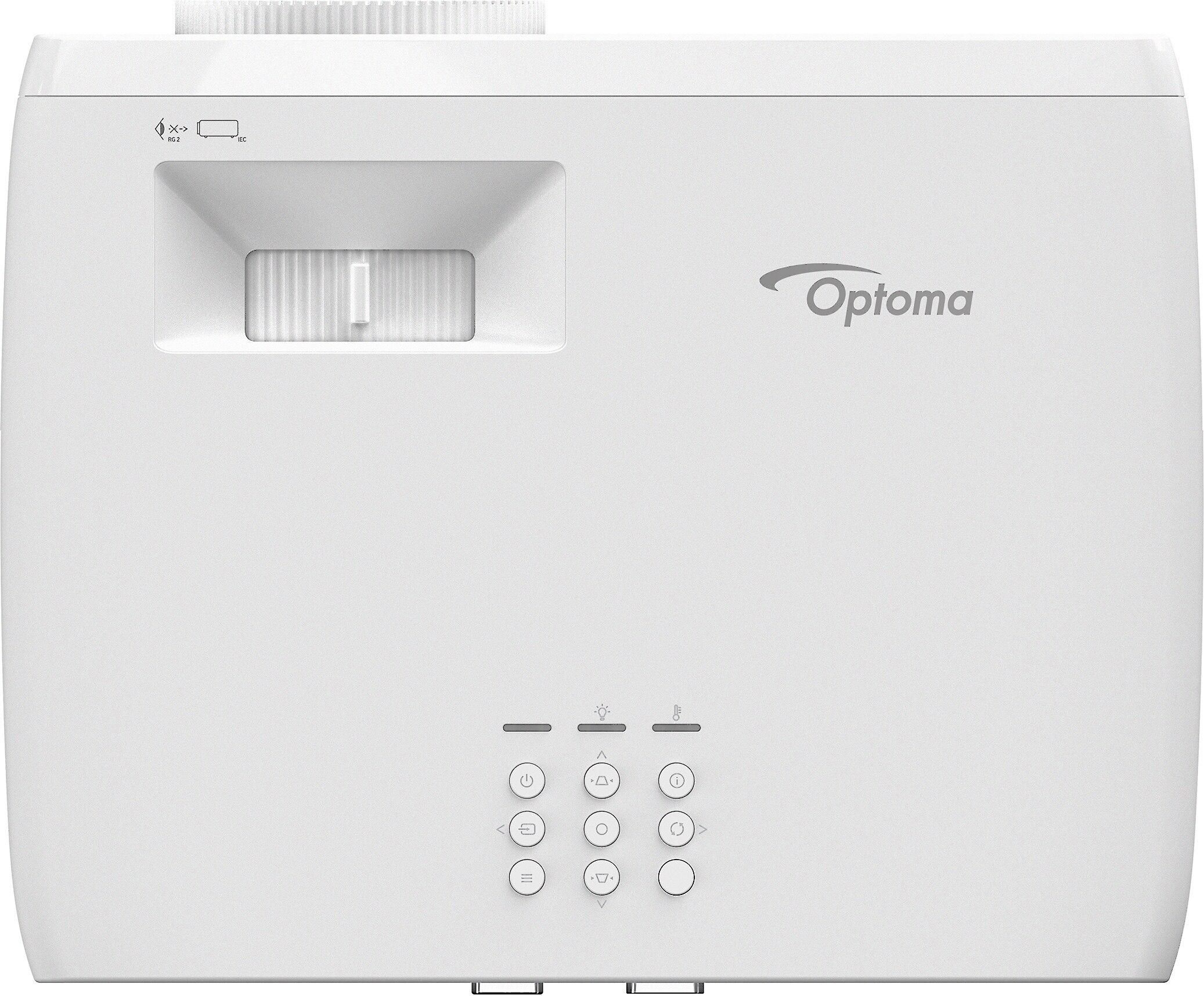
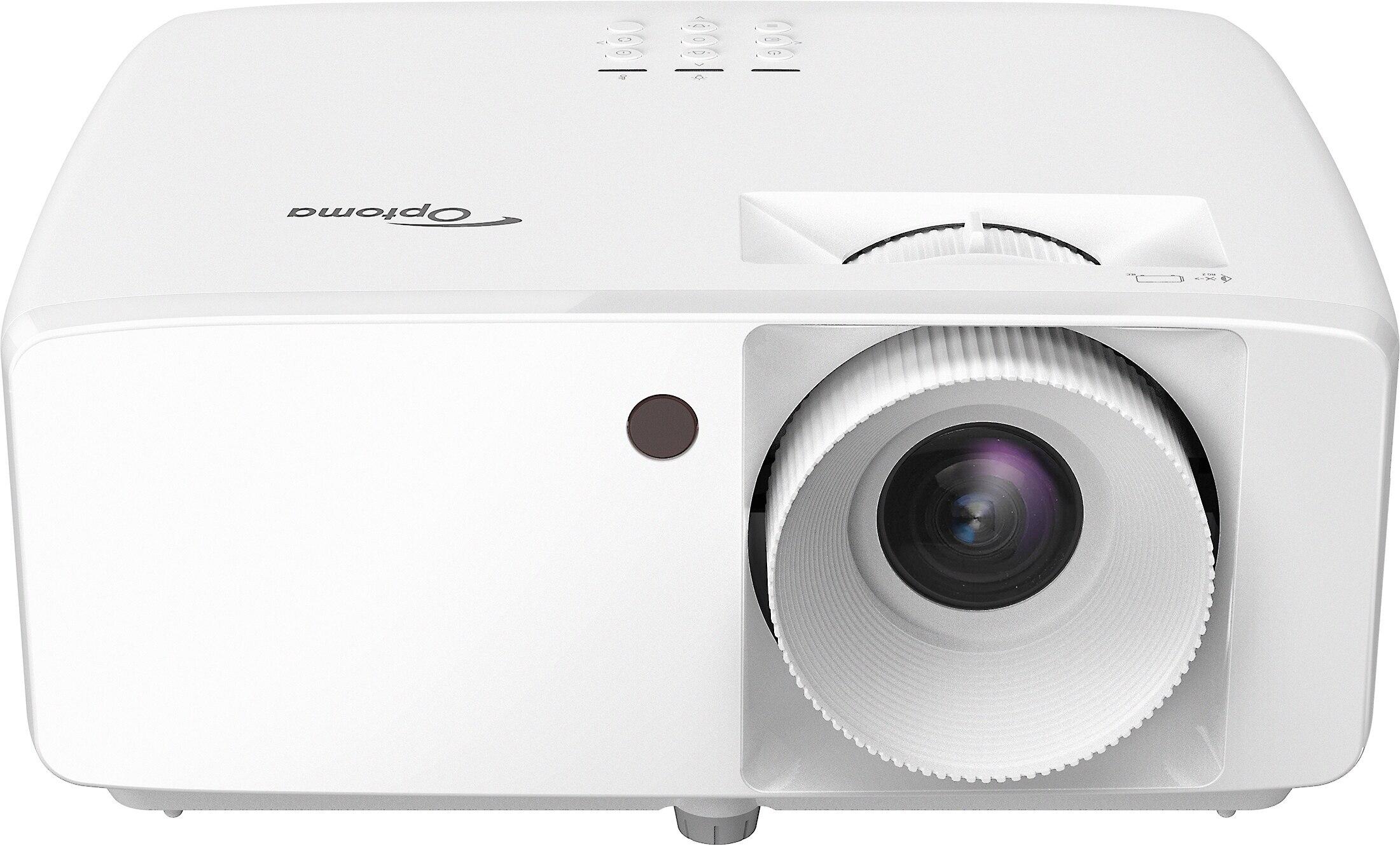
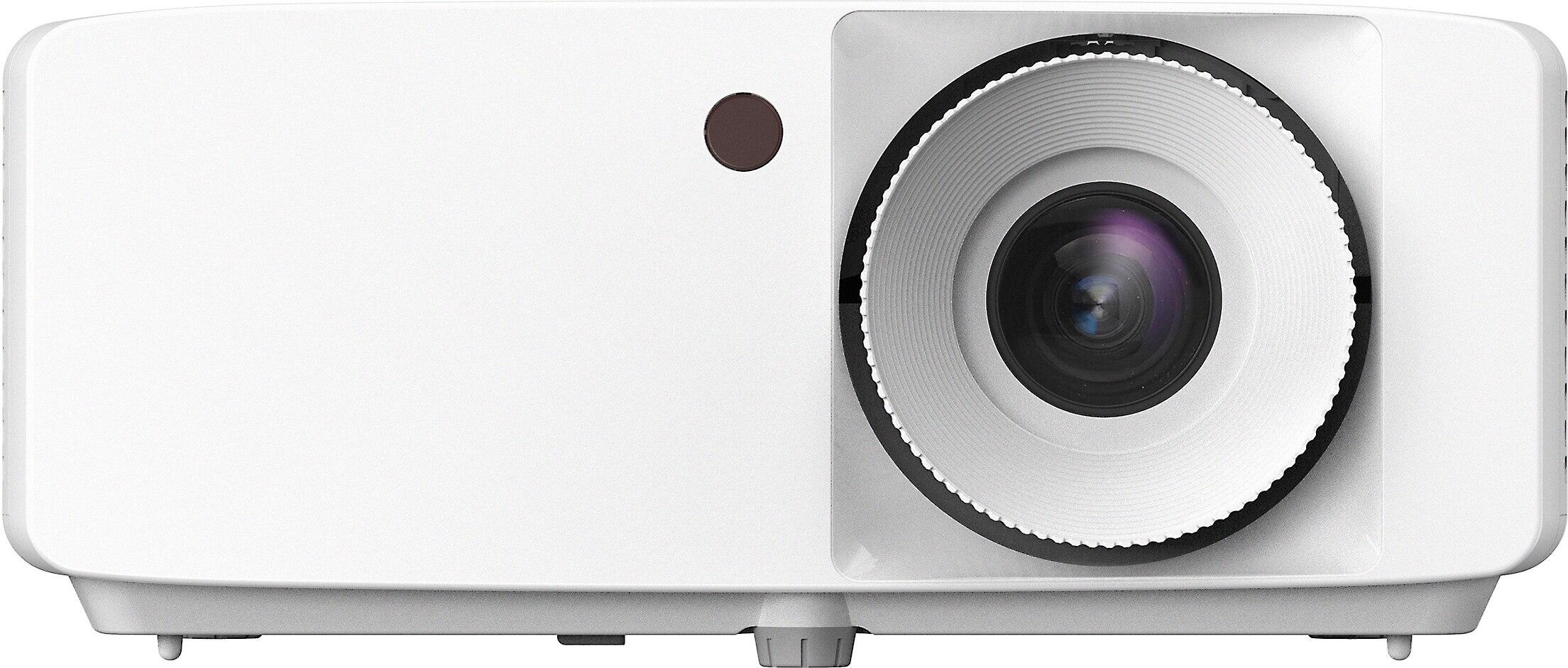
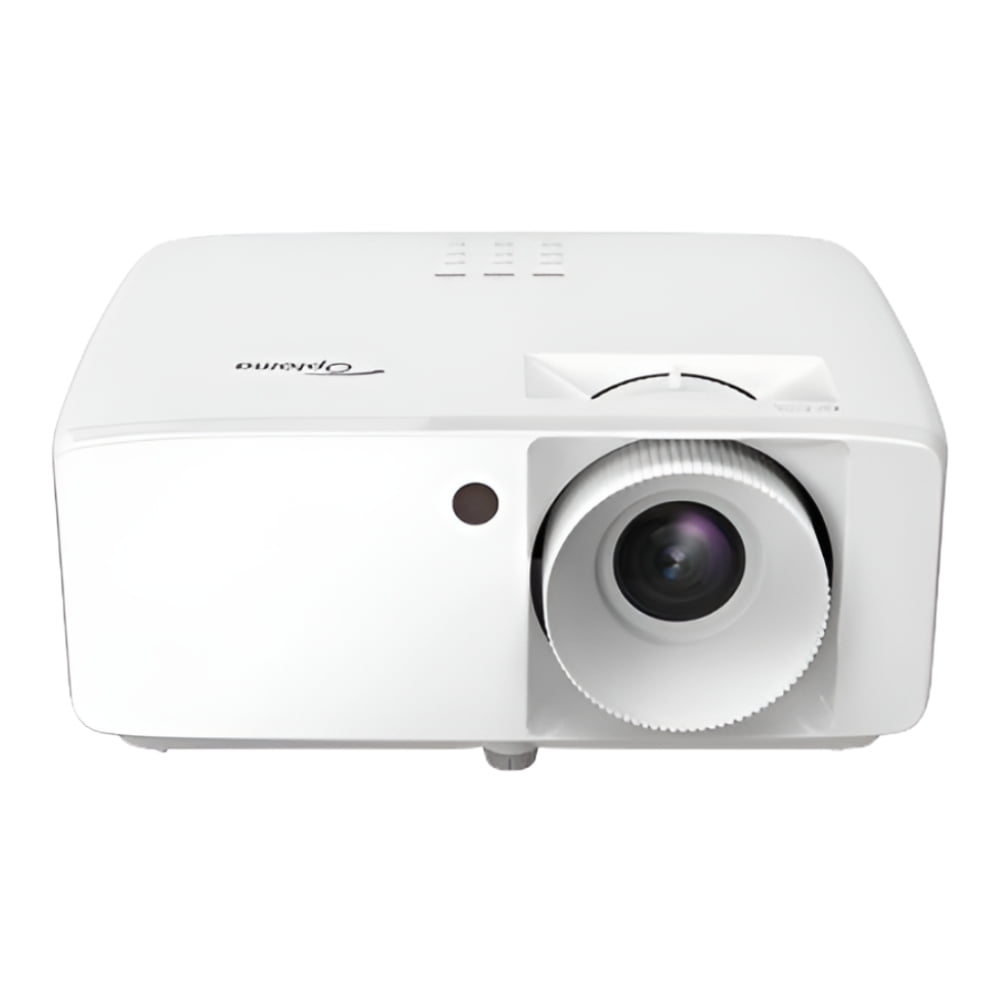
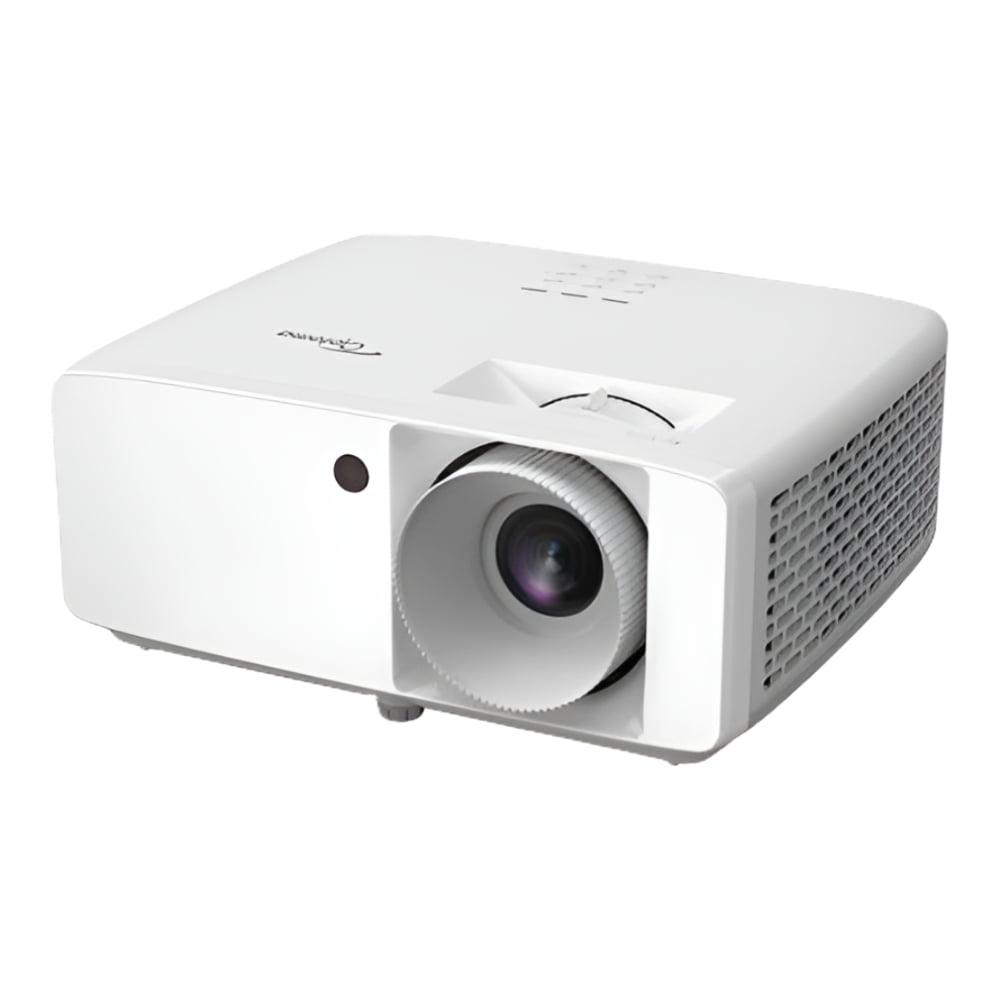
The home projector market has evolved dramatically over the past few years, splitting into two distinct philosophies that serve very different needs. On one side, we have all-in-one smart projectors like the HAPPRUN Google TV Smart Projector, which prioritize convenience and streaming integration. On the other, professional-grade units like the Optoma HZ40HDR focus purely on image performance and brightness. Understanding which approach fits your situation can save you from buyer's remorse and ensure you get the viewing experience you're actually looking for.
The most critical difference between these projectors isn't their smart features or price points—it's brightness, measured in ANSI lumens (a standardized way to measure projector light output). The Optoma HZ40HDR produces 4,000 ANSI lumens, while the HAPPRUN Google TV Smart Projector manages just 350 ANSI lumens. That's more than an 11-fold difference, and it fundamentally changes how and where you can use each projector.
To put this in perspective, anything under 1,000 lumens typically requires near-complete darkness to produce a watchable image. The HAPPRUN falls squarely into this category, meaning you'll need to close curtains, turn off lights, and essentially create a cave-like environment for optimal viewing. Even a small amount of ambient light—think a lamp in the corner or light sneaking around blackout curtains—will wash out the image significantly.
The Optoma HZ40HDR, by contrast, can handle considerable ambient light. You can watch movies with living room lamps on, during overcast daytime hours, or even in rooms with some natural light filtering in. This versatility is crucial for most living situations where complete light control isn't practical or desirable.
From our research into user experiences, the brightness difference creates two entirely different use cases. The HAPPRUN works best as a dedicated movie night projector—something you set up occasionally for special viewing sessions. The Optoma can replace a TV for daily use, handling everything from afternoon sports to evening movie watching without requiring you to transform your living space.
Both projectors offer native 1080p resolution (1920×1080 pixels), and both can accept 4K content, though neither displays true native 4K. However, resolution only tells part of the story. Contrast ratio—the difference between the darkest blacks and brightest whites a projector can produce—often matters more for perceived image quality.
The Optima HZ40HDR achieves a 300,000:1 contrast ratio compared to the HAPPRUN's 20,000:1. This 15-fold advantage translates to noticeably deeper blacks, better shadow detail, and more vibrant colors. In dark movie scenes, the Optoma can maintain detail in shadows while keeping bright elements properly exposed, whereas the HAPPRUN tends to lose subtlety in challenging content.
Both projectors support HDR (High Dynamic Range), which expands the range of brightness and color information compared to standard content. The HAPPRUN supports HDR10+, an enhanced version that adjusts brightness scene-by-scene. The Optoma HZ40HDR handles HDR10 and HLG (Hybrid Log-Gamma), which is commonly used for broadcast HDR content. In practice, the Optoma's superior brightness and contrast make HDR more impactful, as HDR requires substantial light output to show its benefits.
Color accuracy represents another significant difference. The Optoma meets Rec. 709 color standards—the professional benchmark for HD content—ensuring that colors appear as filmmakers intended. The HAPPRUN uses consumer-grade color processing that tends to oversaturate colors for a more vivid but less accurate presentation. For casual viewing, this might actually be preferable, but serious movie enthusiasts will appreciate the Optoma's color fidelity.
Gaming has become a major consideration for projector buyers, and the Optoma HZ40HDR clearly targets this market with specific optimizations. Its dedicated gaming mode reduces input lag to just 8.6 milliseconds at 1080p with 120Hz refresh rate support. Input lag measures the delay between controller input and on-screen response—anything under 20ms is considered excellent for gaming.
The projector's 120Hz support means it can display 120 frames per second from compatible gaming consoles like the PlayStation 5 and Xbox Series X, providing smoother motion in fast-paced games. This feature particularly benefits competitive gaming where every frame and millisecond counts.
The HAPPRUN Google TV Smart Projector doesn't specify gaming optimizations or input lag measurements, suggesting it's designed more for general entertainment than serious gaming. While it can certainly display games, don't expect the responsive performance that competitive gamers demand.
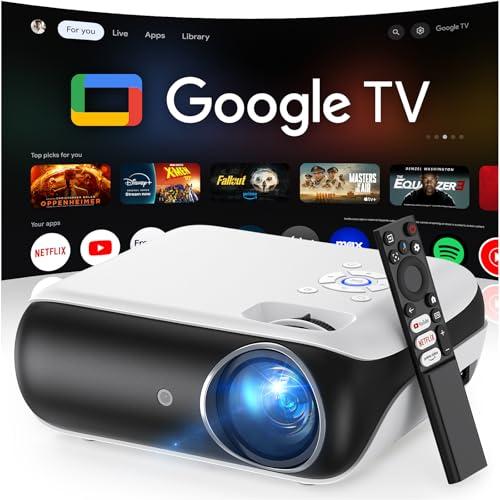
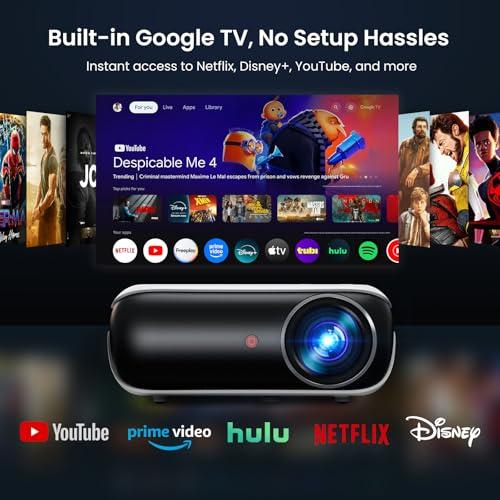
Here's where the HAPPRUN Google TV Smart Projector shines brightest. Released in 2024 as part of the smart projector wave, it includes Google TV 11.0 with official licensing for major streaming services including Netflix, YouTube, Prime Video, and Disney+. This integration eliminates the need for external streaming devices entirely.
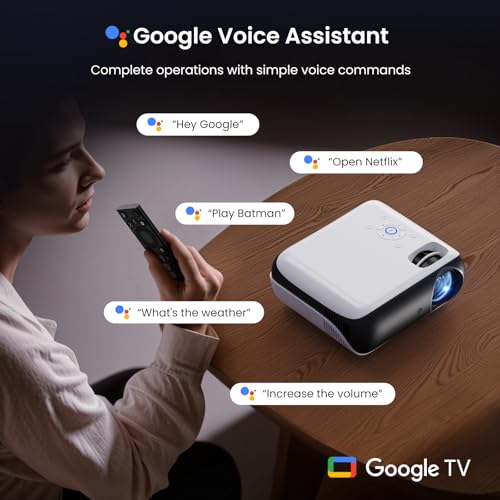
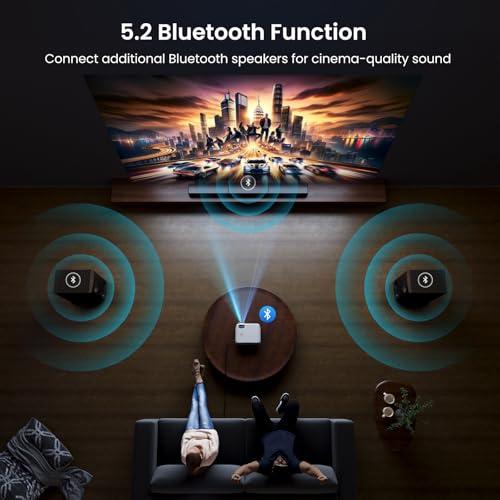
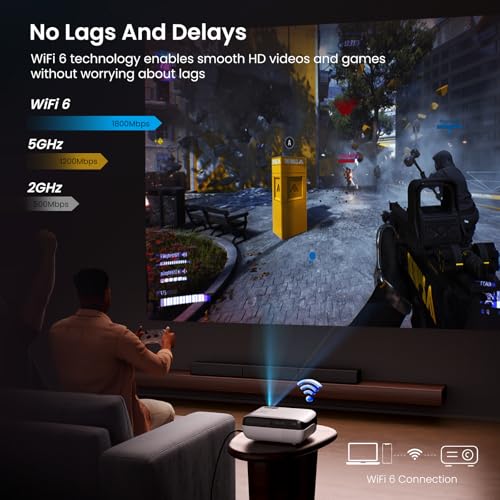
The built-in Google Assistant provides voice control, while Chromecast and AirPlay support enable seamless casting from smartphones and tablets. Wi-Fi 6 connectivity ensures fast, stable streaming, and Bluetooth 5.2 allows wireless connection to headphones or external speakers. These features create a genuinely plug-and-play experience that appeals to users who want simplicity above all else.
The Optoma HZ40HDR, released in 2023, takes the opposite approach. It includes zero wireless connectivity—no Wi-Fi, no Bluetooth, no smart features whatsoever. This might seem like a disadvantage, but it reflects a professional philosophy: let the projector excel at image reproduction while dedicated streaming devices handle content delivery.
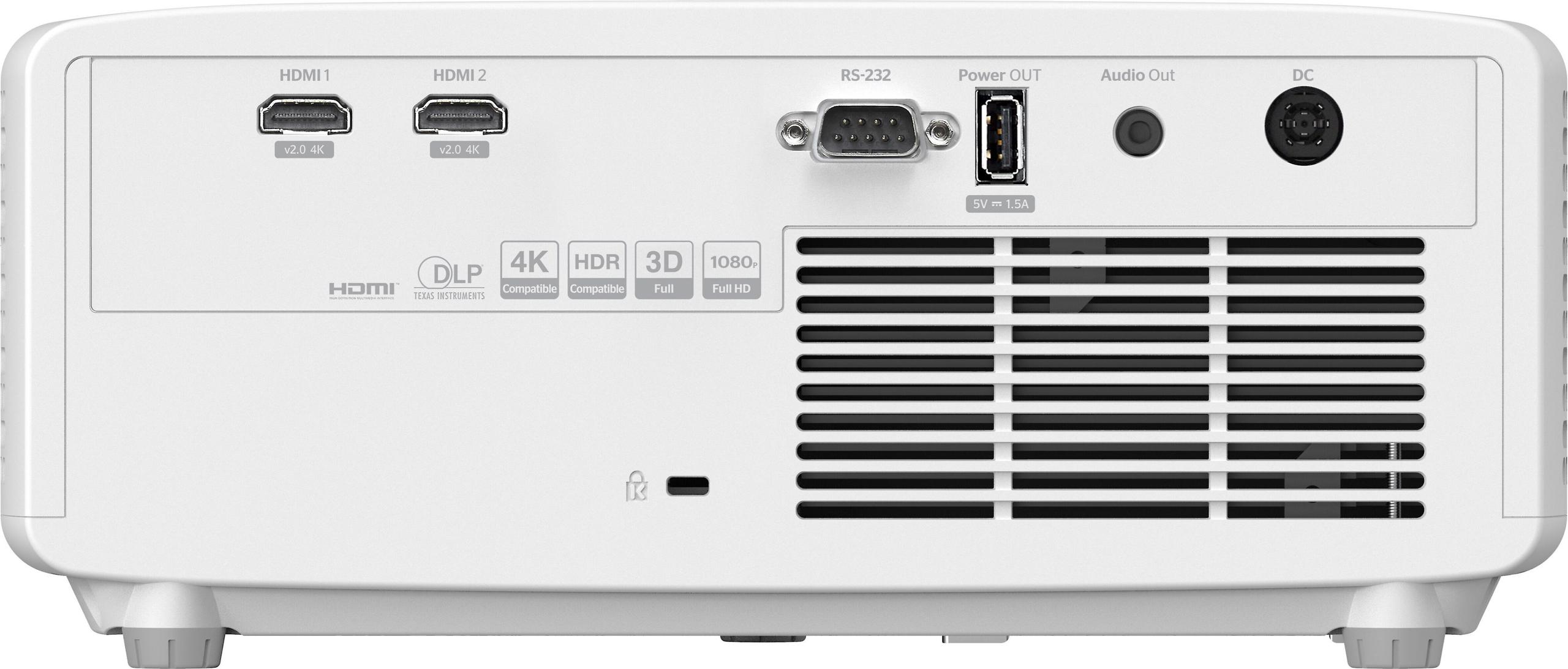
This approach has merits. External streaming devices like Apple TV 4K, NVIDIA Shield TV, or gaming consoles often provide better streaming performance, more frequent updates, and superior app selection compared to built-in smart platforms. The Optoma's dual HDMI 2.0 ports accommodate multiple sources simultaneously, allowing you to connect a streaming device, gaming console, and laptop without constant cable swapping.
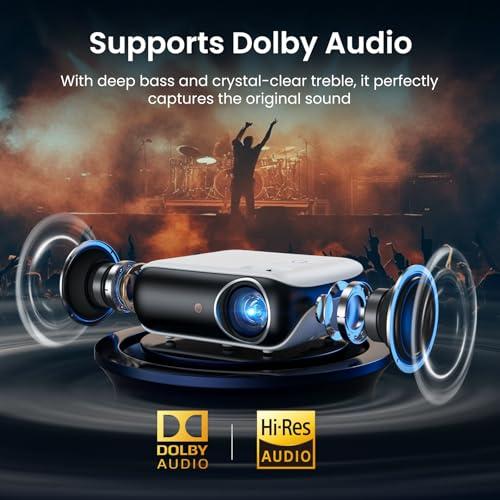
Neither projector excels in audio, which is typical for the category. The Optoma HZ40HDR includes a 15-watt mono speaker that's serviceable for casual use but lacks the depth and stereo separation needed for immersive viewing. The HAPPRUN's 8-watt speaker features Dolby 3D processing for some stereo effect, but still falls short of true home theater audio.
Based on user feedback we've analyzed, both projectors benefit significantly from external audio solutions. The HAPPRUN's Bluetooth 5.2 makes wireless speaker pairing convenient, though some users report minor audio-video synchronization issues with Bluetooth connections. The Optoma requires wired connections but avoids sync problems entirely.
For serious home theater use, plan to invest in a soundbar, external speakers, or AV receiver regardless of which projector you choose. The built-in speakers serve best as backup options when external audio isn't practical.
Both projectors offer flexible mounting options, but their physical characteristics suit different scenarios. The Optoma HZ40HDR measures 10.79" × 8.50" × 4.49" and weighs 6.6 pounds, making it relatively compact for its brightness level. Its external power supply reduces internal heat and allows for a smaller main unit.
The projector includes manual 1.1× zoom and both horizontal and vertical keystone correction (±30°), providing reasonable installation flexibility. However, it lacks lens shift, which means careful positioning is crucial for proper alignment. Professional installers typically prefer projectors with lens shift, but the feature adds significant cost.
The HAPPRUN Google TV Smart Projector offers similar mounting versatility with ceiling, tabletop, tripod, and wall mount compatibility. Its lighter construction makes temporary setups easier, aligning with its intended use as an occasional entertainment device.
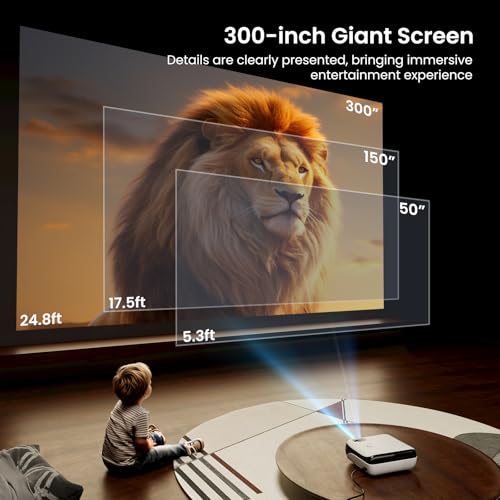
Both projectors can produce images from roughly 40 inches to 300 inches diagonal, though optimal size varies by model and viewing distance. For the best experience with the HAPPRUN, stick to 100-150 inches in completely dark rooms. The Optoma HZ40HDR maintains image quality up to 200+ inches even with some ambient light.
The Optoma HZ40HDR's laser phosphor light source represents a significant technological advantage. Traditional lamp-based projectors require bulb replacements every 2,000-5,000 hours at costs of $200-400 per bulb. Laser technology eliminates this maintenance entirely, with the light source rated for 30,000 hours of use—potentially decades for typical home use.
Laser projectors also provide instant on/off operation without warm-up or cool-down periods, consume less power (the Optoma uses about 139 watts), and maintain consistent brightness throughout their lifespan. These benefits justify much of the price premium for serious users.
The HAPPRUN likely uses LED technology, which also offers long lifespan compared to traditional lamps, though specific ratings aren't detailed in available specifications. LED projectors generally last longer than lamp-based units but may not match laser longevity.
The connectivity approaches reflect each projector's philosophy. The HAPPRUN Google TV Smart Projector prioritizes wireless connectivity with Wi-Fi 6, Bluetooth 5.2, and extensive casting support. This makes it incredibly convenient for smartphone and tablet users who want to share content wirelessly.
The Optoma HZ40HDR focuses on wired reliability with dual HDMI 2.0 ports, USB power, RS-232 control (for professional installations), and analog audio output. The lack of wireless connectivity might seem limiting, but it ensures stable, high-quality connections without the potential dropouts or compression artifacts that can affect wireless streaming.
You're looking for maximum convenience and don't mind working within its limitations. This projector makes sense for apartment dwellers, casual movie watchers, or anyone who prioritizes simplicity over peak performance. It's ideal if you can create a properly dark viewing environment and primarily stream content rather than gaming seriously.
The HAPPRUN excels for occasional movie nights, kids' entertainment, or situations where you need a projector that "just works" without additional devices. Its built-in Google TV platform provides excellent app selection and user interface, making it genuinely plug-and-play.
However, be realistic about its brightness limitations. If you can't achieve near-complete darkness in your viewing space, this projector will disappoint. The low brightness makes it unsuitable for living rooms with windows, daylight use, or any situation where ambient light control is challenging.
You want a projector that can replace a TV for regular use and don't mind adding external devices for smart features. The Optoma HZ40HDR makes sense for serious home theater enthusiasts, gamers, or anyone who needs reliable performance in varied lighting conditions.
Its exceptional brightness allows flexible placement in living rooms, finished basements, or anywhere you can't achieve complete darkness. The professional-grade features, gaming optimizations, and laser light source justify the higher cost for users who will appreciate these benefits.
The Optoma particularly suits households with existing streaming setups—if you already own an Apple TV, Fire Stick, or gaming console, the lack of built-in smart features becomes irrelevant while you gain superior image quality.
At the time of writing, these projectors occupy different price tiers and serve distinctly different needs. The HAPPRUN Google TV Smart Projector offers remarkable convenience and integration at budget-friendly pricing, making advanced home projection accessible to casual users. The Optoma HZ40HDR commands professional pricing but delivers the brightness, gaming performance, and image quality that serious users demand.
Neither projector is inherently better—they're simply designed for different priorities and use cases. The key is honestly assessing your viewing environment, usage patterns, and performance expectations. If you want the simplest possible setup and can guarantee dark viewing conditions, the HAPPRUN provides excellent value. If you need versatility, brightness, and don't mind external streaming devices, the Optoma HZ40HDR offers superior long-term satisfaction despite its higher cost.
The projector market continues evolving rapidly, with smart features becoming more common and brightness levels increasing across all price segments. However, the fundamental trade-off between convenience and performance remains, making careful consideration of your specific needs more important than ever.
| HAPPRUN Google TV Smart Projector | Optoma HZ40HDR 1080p Projector |
|---|---|
| Brightness - Most critical spec determining where you can use the projector | |
| 350 ANSI lumens (requires completely dark room) | 4,000 ANSI lumens (works well with ambient light) |
| Native Resolution - Base image sharpness before upscaling | |
| 1080p (1920×1080) with 4K decoding | 1080p (1920×1080) with 4K input support |
| Contrast Ratio - Determines depth of blacks and overall image pop | |
| 20,000:1 (good for budget category) | 300,000:1 (excellent blacks and shadow detail) |
| Smart Features - Built-in streaming vs external device requirements | |
| Google TV 11.0 with official Netflix, YouTube, Prime Video | No smart features (requires external streaming devices) |
| Gaming Performance - Input lag and refresh rate for responsive gaming | |
| Standard performance, no gaming optimizations | 8.6ms input lag, 120Hz support, dedicated gaming mode |
| Light Source Technology - Affects lifespan and maintenance | |
| LED technology (long-lasting, no exact hours specified) | Laser phosphor (30,000 hours, maintenance-free) |
| Audio System - Built-in sound quality | |
| 8W Dolby 3D stereo speaker | 15W mono speaker |
| Wireless Connectivity - Cable-free content streaming and control | |
| Wi-Fi 6, Bluetooth 5.2, Chromecast, AirPlay | No wireless connectivity |
| Physical Ports - Wired connection options | |
| 1× HDMI, 2× USB-A, AV input, headphone jack | 2× HDMI 2.0, USB power, RS-232, audio out |
| HDR Support - Enhanced color and brightness range | |
| HDR10+ (dynamic scene-by-scene optimization) | HDR10 and HLG (broadcast HDR standard) |
| Projection Size Range - Flexibility for different room sizes | |
| 40-200 inches (up to 300 inches possible) | 20-300 inches with consistent quality |
| Noise Level - Fan noise during operation | |
| Not specified in available specs | 32-34 dB (quiet for brightness level) |
| Best Use Case - Primary intended scenario | |
| Occasional dark-room movie nights with maximum convenience | Daily home theater use in various lighting conditions |
The Optoma HZ40HDR is significantly brighter at 4,000 ANSI lumens compared to the HAPPRUN Google TV Smart Projector's 350 ANSI lumens. This makes the Optoma HZ40HDR suitable for rooms with ambient light, while the HAPPRUN requires complete darkness for optimal viewing.
The HAPPRUN Google TV Smart Projector includes built-in Google TV with official Netflix, YouTube, and Prime Video apps. The Optoma HZ40HDR has no smart features and requires external streaming devices like Apple TV or Fire Stick to access streaming content.
The Optoma HZ40HDR is superior for gaming with 8.6ms input lag, 120Hz refresh rate support, and a dedicated gaming mode. The HAPPRUN Google TV Smart Projector lacks gaming-specific optimizations and would be better suited for casual gaming only.
Both the HAPPRUN and Optoma HZ40HDR can project images up to 300 inches diagonally. However, the HAPPRUN Google TV Smart Projector performs best at 100-150 inches in dark rooms, while the Optoma maintains quality at larger sizes even with some ambient light.
The Optoma HZ40HDR delivers superior image quality with a 300,000:1 contrast ratio versus the HAPPRUN's 20,000:1 ratio. The Optoma also meets professional Rec. 709 color standards for more accurate colors in home theater use.
The HAPPRUN Google TV Smart Projector offers comprehensive wireless connectivity including Wi-Fi 6, Bluetooth 5.2, Chromecast, and AirPlay. The Optoma HZ40HDR has no wireless capabilities and requires wired connections for all devices.
The Optoma HZ40HDR uses laser technology rated for 30,000 hours of maintenance-free operation. The HAPPRUN Google TV Smart Projector uses LED technology with long lifespan, though specific hours aren't detailed in available specifications.
The HAPPRUN Google TV Smart Projector is easier to set up thanks to built-in streaming apps and wireless connectivity - just plug in and start watching. The Optoma HZ40HDR requires external devices for streaming but offers more professional installation features like keystone correction.
The Optoma HZ40HDR works excellently in living rooms due to its high brightness handling ambient light well. The HAPPRUN Google TV Smart Projector struggles in typical living rooms and needs a dedicated dark space for optimal performance.
Neither projector excels in audio. The Optoma HZ40HDR has a 15W mono speaker while the HAPPRUN features an 8W Dolby 3D stereo speaker. Both benefit significantly from external sound systems for true home theater audio quality.
The Optoma HZ40HDR is better suited for serious home theater use with superior brightness, contrast, and color accuracy. The HAPPRUN Google TV Smart Projector works for casual home theater in completely dark rooms but lacks the performance for demanding movie enthusiasts.
The Optoma HZ40HDR provides better long-term value for serious users due to its laser light source requiring no maintenance and superior performance in various conditions. The HAPPRUN Google TV Smart Projector offers excellent value for casual users prioritizing convenience and built-in streaming features.
We've done our best to create useful and informative comparisons to help you decide what product to buy. Our research uses advanced automated methods to create this comparison and perfection is not possible - please contact us for corrections or questions. These are the sites we've researched in the creation of this article: youtube.com - topvisiontec.com - youtube.com - happrunprojector.com - youtube.com - happrunprojector.com - youtube.com - business.walmart.com - youtube.com - walmart.com - cordcuttersnews.com - nexpow.com - projectorcentral.com - optomausa.com - crutchfield.com - tvsbook.com - youtube.com - avsforum.com - hometechnologyreview.com - optomausa.com - bestbuy.com - tvsbook.com - picclick.com - crutchfield.com - homecinemachoice.com - compsource.com - adorama.com - bhphotovideo.com - provantage.com - cdw.com - datavision.com - manua.ls - ipcstore.com - pcrichard.com - richersounds.com - electronicexpress.com - projexdisplay.com - dubaimachines.com - newegg.com - projectorpoint.co.uk - a.ubuy.com.kw - greentoe.com

Privacy Policy
Terms and Conditions - Affiliate Policy
Home Security
© Copyright 2008-2026.
11816 Inwood Rd #1211, Dallas, TX 75244