

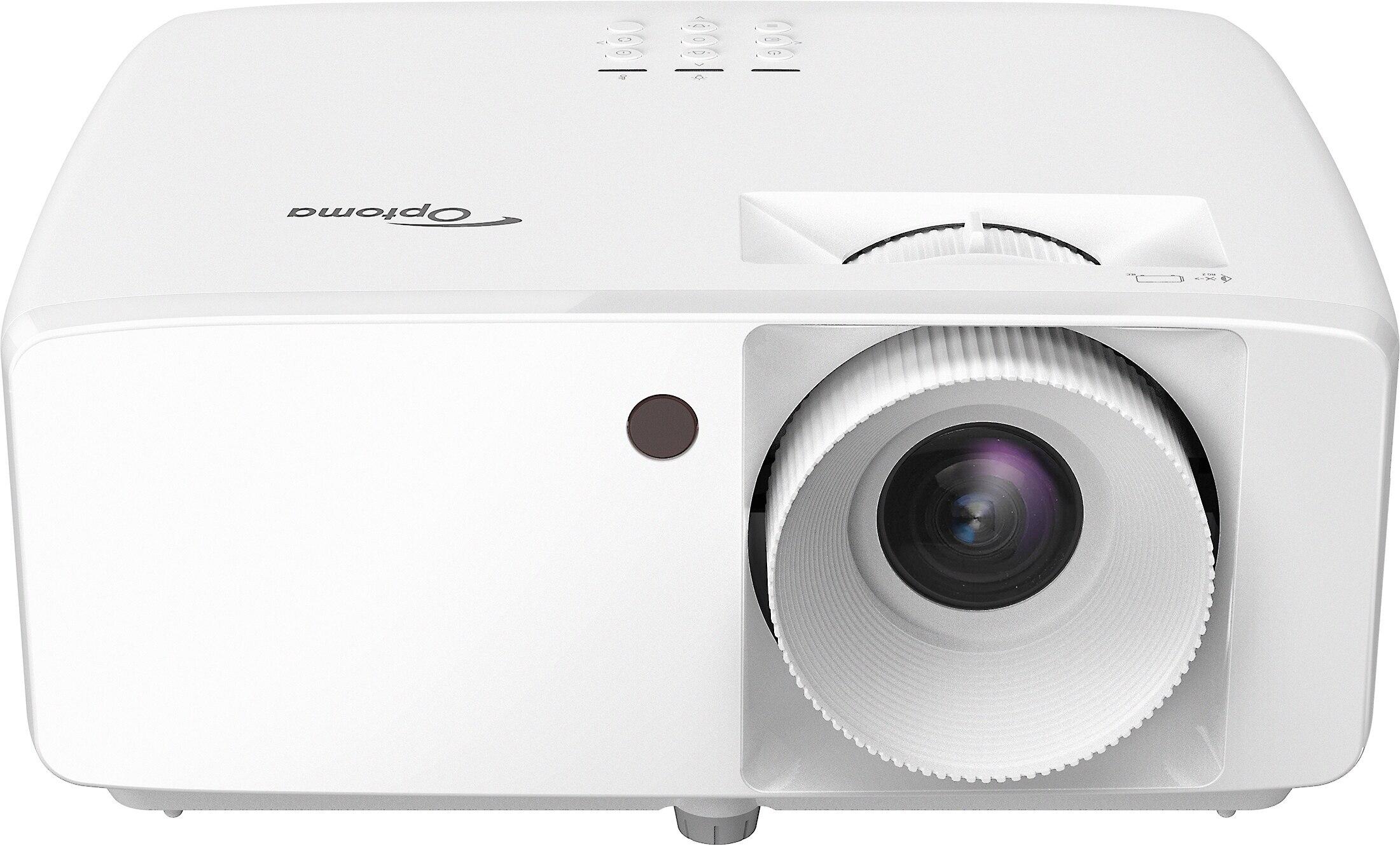
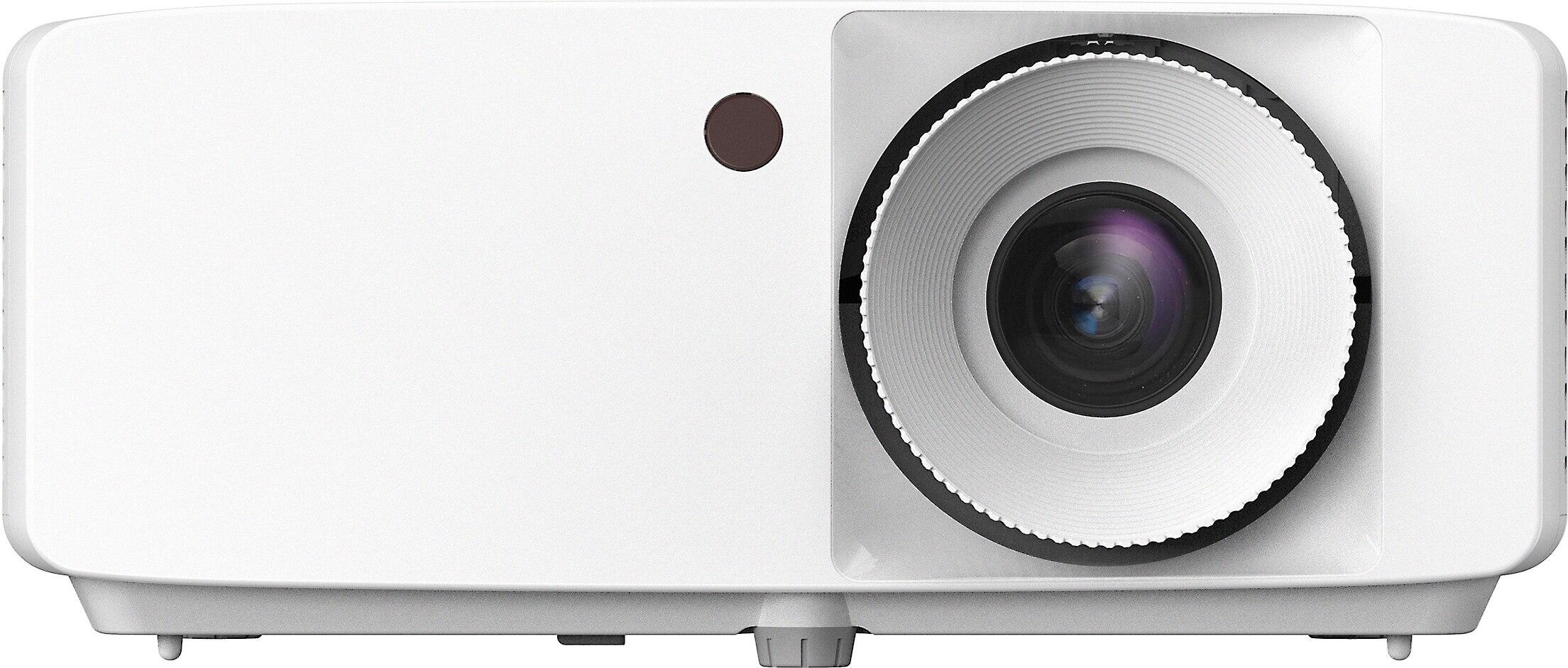
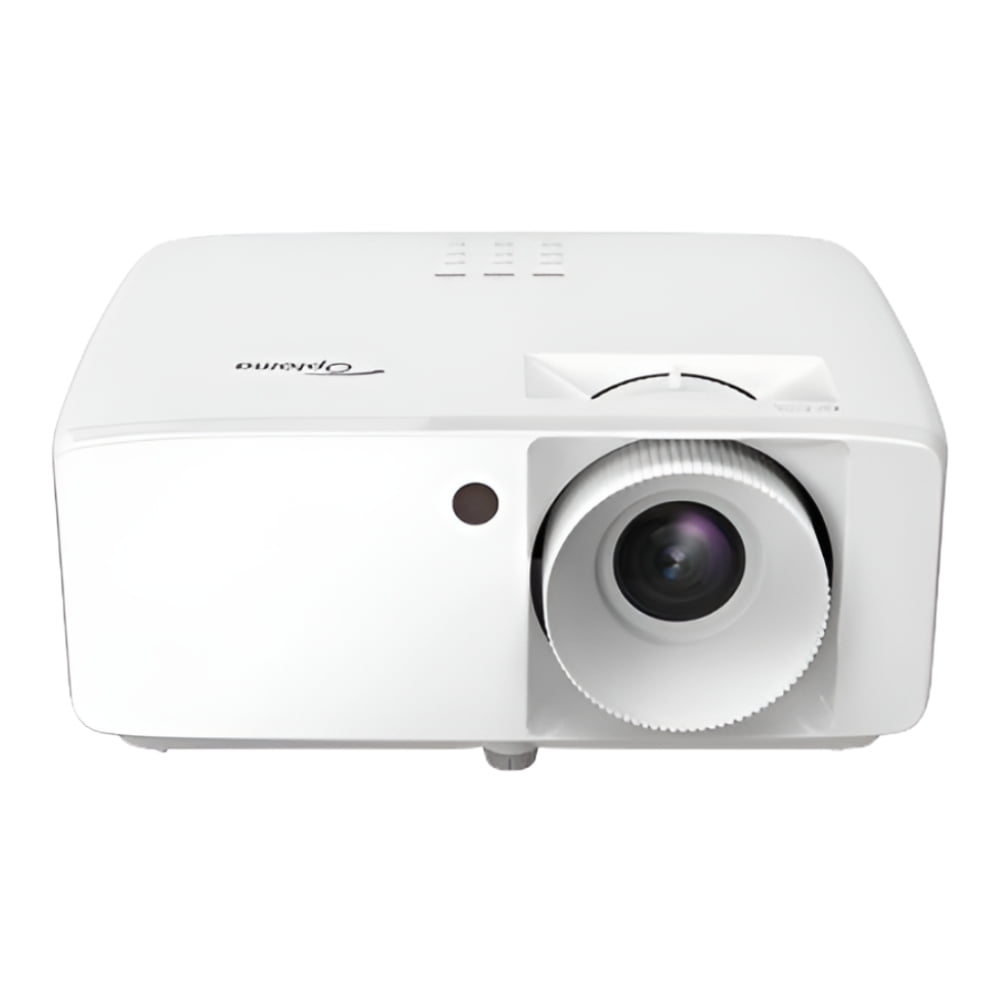
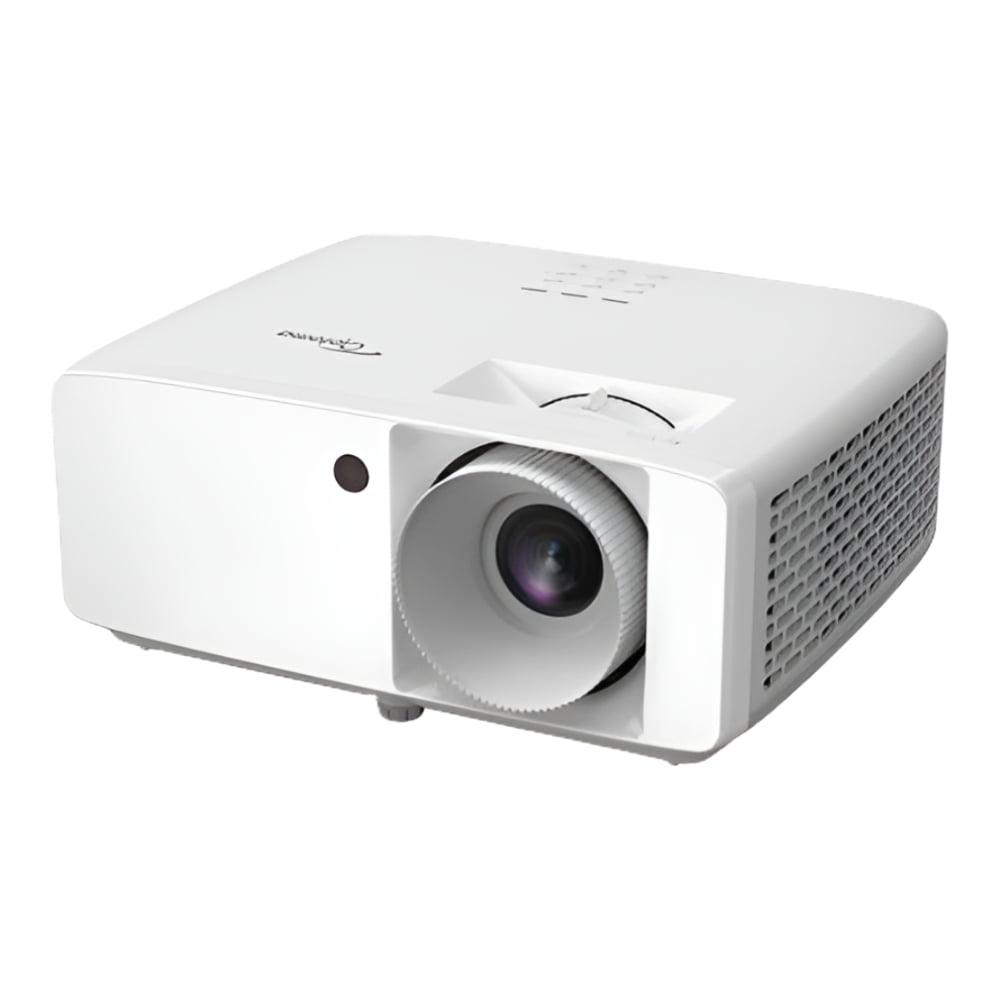
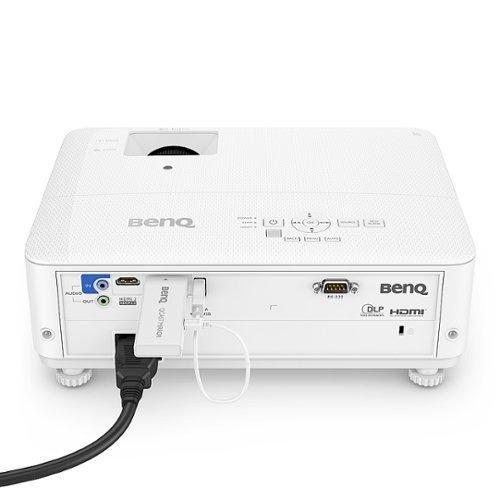
In the last decade, home projectors have transformed from clunky, expensive machines into accessible entertainment powerhouses. Today's 1080p projectors deliver impressive image quality at prices that won't empty your wallet, making big-screen experiences possible for many households. While 4K projectors continue to claim the premium space, 1080p models like the Optoma HZ40HDR and BenQ TH685P remain popular choices, offering excellent value for most viewing scenarios.
Since their release—the HZ40HDR in late 2019 and the TH685P in early 2021—both projectors have carved out specific niches in the market. The technology landscape has shifted somewhat, with laser technology becoming more mainstream and gaming features increasingly important to consumers. Let's explore how these two models compare in today's market and which might be right for your specific needs.
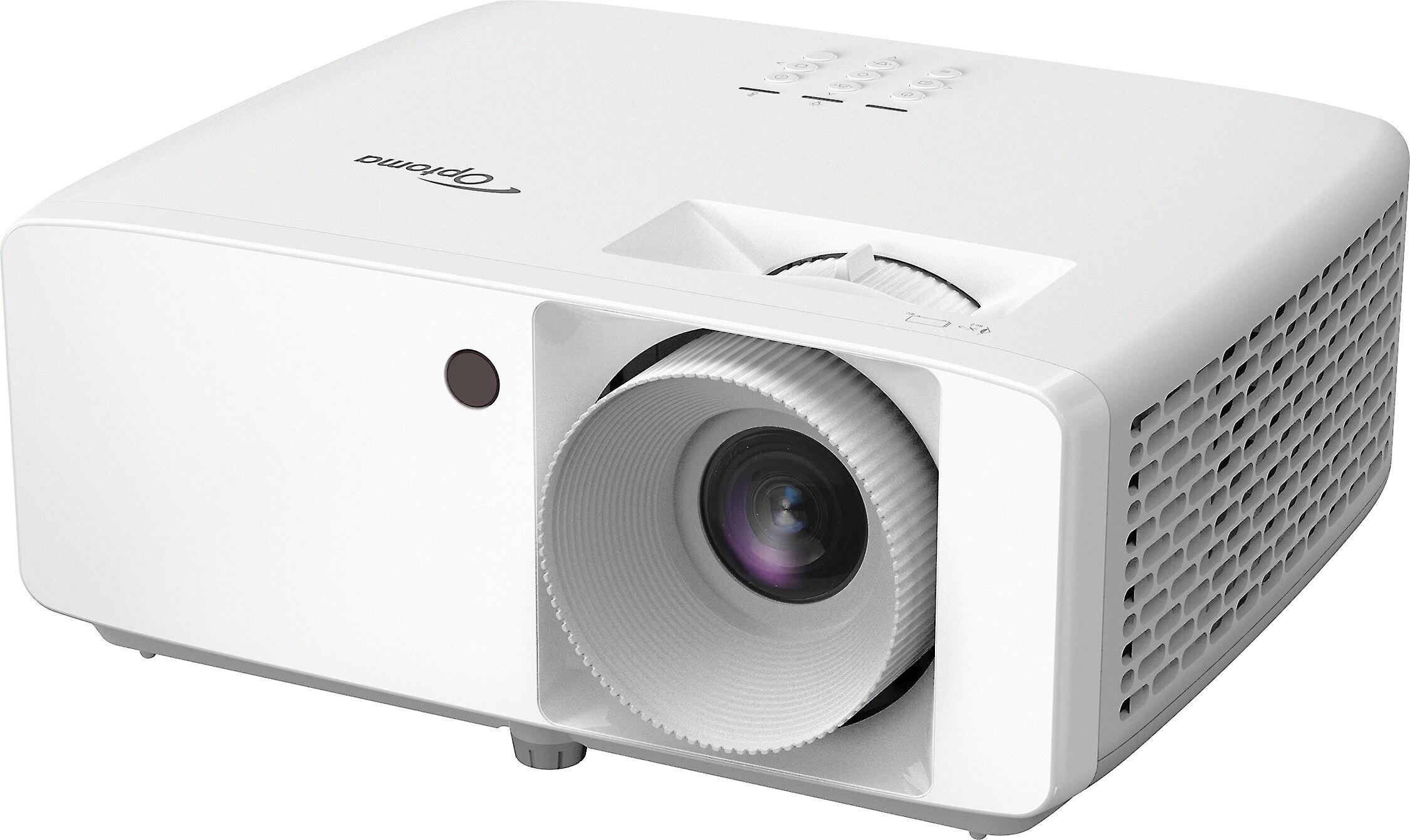
The Optoma HZ40HDR represents Optoma's push to bring laser technology to more accessible price points. Released as part of their DuraCore laser lineup, this projector aimed to address the long-standing frustration with traditional lamp replacements while maintaining impressive brightness.
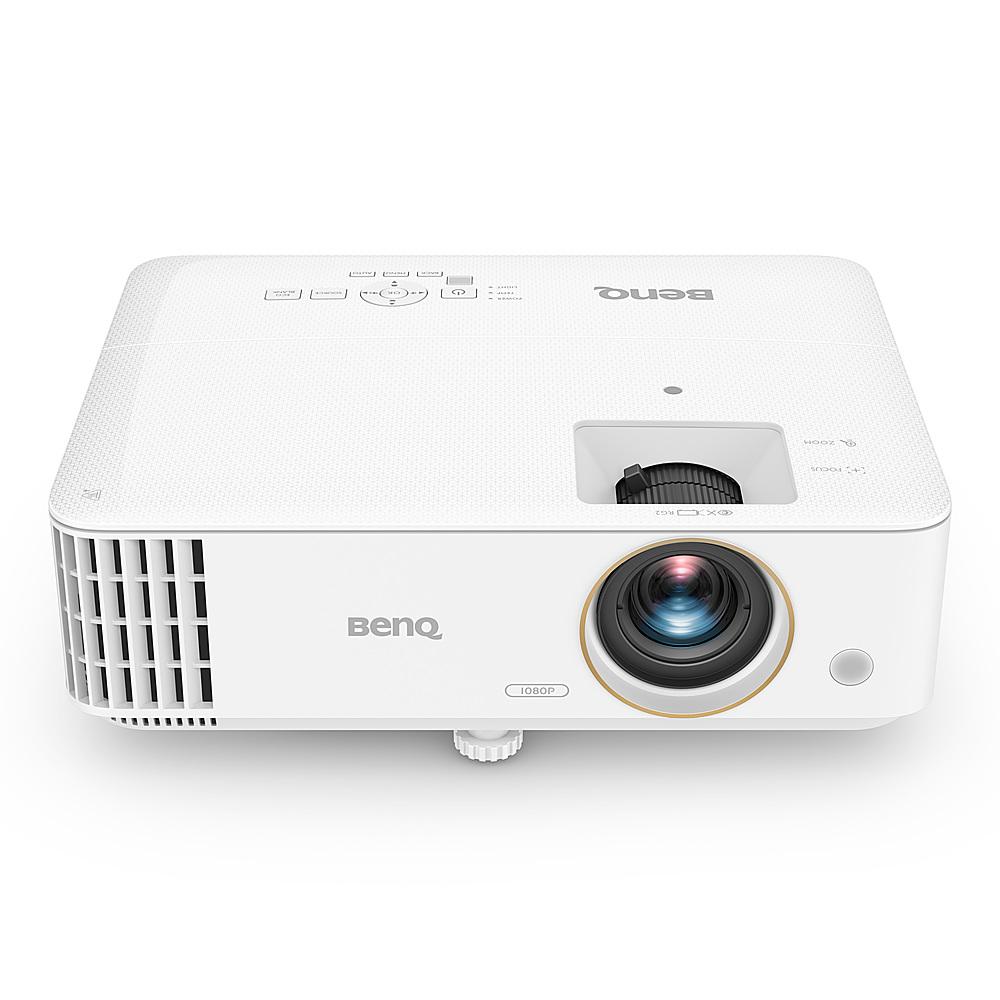
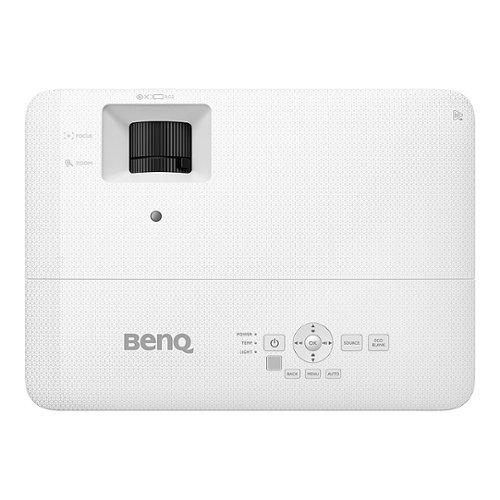
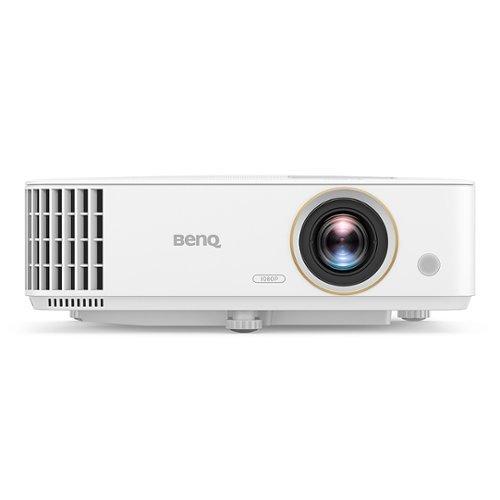
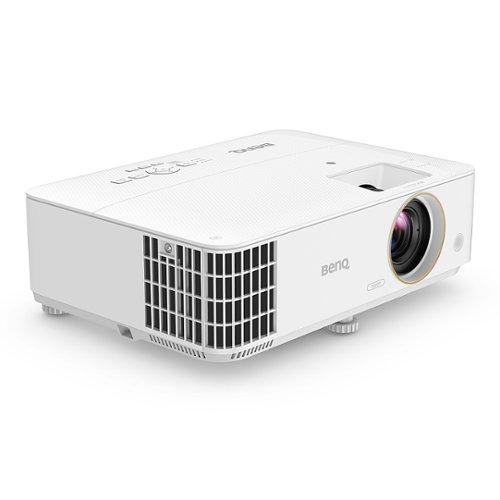
The BenQ TH685P, meanwhile, is BenQ's evolution of their popular gaming projector line, building on the success of the original TH685 with refinements aimed specifically at console and PC gamers. It's designed to deliver what gamers need most: responsive performance and solid image quality at a price that won't break the bank.
Both projectors target the home entertainment market, but with distinctly different approaches to technology and user priorities. This creates an interesting comparison that goes beyond simple specs.
Perhaps the most significant difference between these two projectors is their fundamental light source technology. This choice affects everything from image quality to long-term ownership costs.
The Optoma HZ40HDR uses DuraCore laser technology, which fundamentally changes the projector ownership experience. Traditional projector lamps gradually dim over time and eventually burn out, requiring replacement—much like old incandescent light bulbs. Laser light sources, however, maintain consistent brightness throughout their much longer lifespan.
With a rated 30,000-hour lifespan, the HZ40HDR's laser could theoretically run for 10 hours daily for over 8 years before showing significant deterioration. This extended lifespan eliminates the hassle and expense of lamp replacements, which typically cost $100-300 each and are needed every 3,000-5,000 hours with traditional projectors.
Beyond longevity, the laser light source offers practical benefits like instant on/off functionality (no warm-up time needed) and maintained color accuracy throughout its life. The 4,000 ANSI lumens output also stays consistent, rather than gradually dimming as lamp projectors do.
"ANSI lumens" refers to brightness measured according to the American National Standards Institute methodology—a standardized way to compare brightness between projectors. At 4,000 ANSI lumens, the HZ40HDR can produce clear, vivid images even with some ambient light present, making it versatile for both dedicated home theaters and more casual living room environments.
The BenQ TH685P takes the conventional approach with a traditional UHP (Ultra High Performance) lamp rated for up to 15,000 hours in its most economical mode—impressive for lamp technology but still half the laser's lifespan. In standard usage modes, you might expect 4,000-8,000 hours before replacement.
While the 3,500 ANSI lumens brightness is slightly lower than the Optoma's, it's still plenty bright for most home environments. The primary drawback is that this brightness will gradually decrease over the lamp's lifetime, with noticeable dimming typically occurring after 2,000-3,000 hours of use.
The practical implication is that the BenQ will require maintenance that the Optoma won't. For some, this is a significant consideration—especially if you're mounting the projector in a difficult-to-access location or simply dislike the idea of periodic maintenance.
Both projectors deliver 1080p (1920×1080) resolution, which remains the sweet spot for most content. While not as detailed as 4K, 1080p provides a sharp, clear image at typical viewing distances, especially at the 80-120 inch screen sizes most commonly used in homes.
With 4,000 ANSI lumens, the Optoma HZ40HDR outshines the BenQ TH685P by approximately 14%. This difference may seem small on paper, but it becomes noticeable in practical use, especially in rooms with ambient light. The Optoma can maintain a vibrant image even with some lights on or during daytime viewing with curtains drawn, while the BenQ may struggle more in these conditions.
More dramatic is the contrast ratio difference: 300,000:1 for the Optoma versus 10,000:1 for the BenQ. Contrast ratio represents the difference between the brightest whites and darkest blacks a projector can produce. While manufacturer contrast specs are notoriously optimistic, the laser technology in the Optoma genuinely delivers deeper blacks and better overall contrast, particularly noticeable during dark movie scenes.
During a side-by-side comparison, the Optoma's advantage in a dim room would be immediately apparent in scenes with both bright and dark elements. The BenQ still performs admirably for its price point, but can't match the dynamic range of its laser competitor.
Color reproduction is where the comparison gets interesting. The BenQ TH685P advertises 95% coverage of the Rec.709 color space—the standard color gamut for HDTV content. This means it can accurately reproduce most colors in standard film and television content.
The Optoma doesn't specify its color gamut coverage percentage, but in practical use, the BenQ typically delivers slightly more accurate colors out of the box. However, the Optoma's laser light source maintains its color accuracy over time, while lamp-based projectors like the BenQ gradually shift in color reproduction as their lamps age.
Both projectors support HDR10 and HLG (Hybrid Log Gamma) formats, which allow for enhanced contrast and color from compatible content sources. HDR (High Dynamic Range) content can display a wider range of brightness levels and colors than standard content, creating more realistic and impactful images. Neither projector can display the full capabilities of HDR content (true HDR requires much higher brightness and contrast capabilities), but both make reasonable approximations that enhance the viewing experience.
Modern projectors have embraced gaming as a primary use case, and both these models offer features specifically designed for gamers.
Input lag—the delay between your controller input and seeing the result on screen—is perhaps the most important specification for gaming. Both projectors excel here, with the BenQ TH685P offering an impressive 8.3ms lag at 1080p/120Hz and the Optoma HZ40HDR coming in just behind at 8.6ms in the same mode.
These numbers are excellent by projector standards and comparable to many gaming monitors. For context, most people cannot perceive input lag below 20ms, making both projectors responsive enough even for competitive gaming. The 0.3ms difference between them is imperceptible in practice.
Both projectors also support 120Hz refresh rates at 1080p resolution, allowing for smoother motion in compatible games. This high refresh rate capability was forward-thinking when these projectors were released and remains valuable for current-generation consoles like the PlayStation 5 and Xbox Series X, which can output 120Hz in many titles.
While both projectors offer excellent response times, the BenQ TH685P includes additional gaming-focused features that set it apart. Its Game Mode enhances visibility in dark scenes without washing out the image—particularly useful in horror games or titles with dark environments. The complementary Game Sound Mode adjusts audio to emphasize important gaming cues like footsteps or weapon reloads.
The Optoma HZ40HDR offers a standard gaming mode that optimizes for low latency but lacks the specialized enhancements of the BenQ. For casual gamers, this difference may be negligible, but dedicated gamers might appreciate the BenQ's tailored approach.
Projector placement can be challenging in many homes, making installation flexibility an important consideration.
The throw ratio indicates how wide an image the projector creates relative to its distance from the screen. The BenQ TH685P has a more flexible throw ratio of 1.13-1.46:1, compared to the Optoma's 1.48-1.62:1. In practical terms, the BenQ can create a 100-inch image from as close as 8.2 feet, while the Optoma requires at least 10.7 feet for the same image size.
This difference can be significant in smaller rooms where space is limited. The BenQ also offers a more generous 1.3x zoom compared to the Optoma's 1.1x zoom, providing more placement flexibility without having to physically move the projector.
Both projectors offer vertical keystone correction (±40° for the BenQ, ±30° for the Optoma), which digitally adjusts the image to appear rectangular when the projector isn't perfectly aligned with the screen. The Optoma adds horizontal keystone correction (±30°), giving it an edge for challenging placements.
It's worth noting that digital keystone correction can slightly reduce image quality, so ideally, you'd want to minimize its use through proper physical alignment. Neither projector offers lens shift—a premium feature that allows optical adjustment of the image position without moving the projector—which is typically found only in higher-end models.
Built-in speakers in projectors are typically afterthoughts, but they can be convenient for casual viewing or temporary setups.
The Optoma HZ40HDR surprises with a robust 15W mono speaker that delivers relatively full sound at moderate volumes. It won't replace a proper sound system, but it's perfectly serviceable for casual viewing or when portability is a priority.
The BenQ TH685P includes a less powerful 5W speaker but enhances it with the aforementioned Game Sound Mode. For general viewing, the Optoma clearly wins the audio comparison, though neither will satisfy dedicated audio enthusiasts.
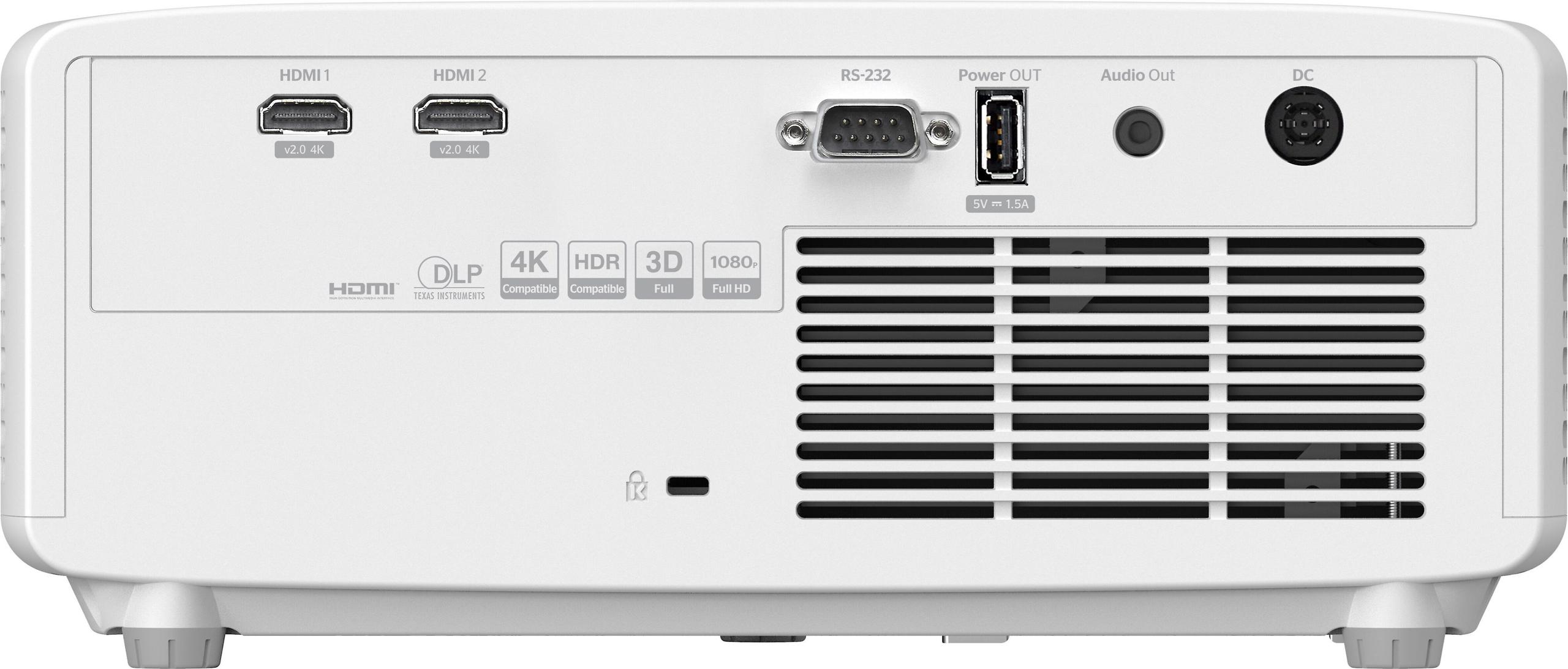
For a proper home theater setup, you'll want external speakers regardless of which projector you choose. Both models include 3.5mm audio outputs for connecting to external sound systems, though neither offers HDMI ARC (Audio Return Channel) functionality that would simplify connections to modern soundbars and receivers.
Projector ownership costs extend beyond the purchase price, and this is where the fundamental technology difference between these models has significant implications.
The Optoma HZ40HDR typically costs 30-40% more than the BenQ TH685P at initial purchase. However, the BenQ will require lamp replacements that gradually erode this price advantage over time.
Assuming a lamp cost of approximately $150-200 and replacement every 5,000 hours of use (in standard mode), a user watching 3 hours daily would need a replacement roughly every 4-5 years. Over a 10-year ownership period, you might expect to replace the lamp 2-3 times, adding $300-600 to the total cost of ownership.
The break-even point typically occurs around the 6-year mark for average users. If you plan to keep your projector longer than this, the Optoma's higher initial cost may be justified by long-term savings. Heavier users will reach this break-even point sooner.
Beyond direct costs, there are environmental factors to consider. The laser technology in the Optoma eliminates the need for lamp replacements, reducing waste. Laser projectors also typically consume less power for equivalent brightness; the Optoma uses approximately 220 watts at full brightness versus around 260 watts for the BenQ.
For environmentally-conscious consumers, the laser technology represents a more sustainable choice, though the manufacturing process for laser components may have its own environmental impact that's harder to quantify.
For dedicated home theater use, both projectors have strengths and limitations worth considering.
The Optoma HZ40HDR offers better native contrast and brightness, making it the superior choice for dedicated dark-room cinema viewing. Its laser light source also means consistent performance without maintenance interruptions—just set it up and enjoy for years without worry.
The BenQ TH685P counters with slightly better color accuracy out of the box and a more flexible throw ratio that might better accommodate your specific room dimensions. Its lower upfront cost might also allow budget allocation to other home theater components like audio equipment or screen materials.
Neither projector offers features typically found in premium home theater models, such as motorized lens controls, extensive color management systems, or frame interpolation for motion smoothing. But for most viewers, these limitations won't detract from the overall experience.
For optimal home theater integration, both projectors would benefit from:
After comparing all these factors, how do you choose between the Optoma HZ40HDR and BenQ TH685P? Here's a straightforward decision framework:
Choose the Optoma HZ40HDR if:
Choose the BenQ TH685P if:
Both the Optoma HZ40HDR and BenQ TH685P represent excellent value in their respective niches. The Optoma embraces newer laser technology to deliver a maintenance-free experience with excellent brightness and contrast, while the BenQ focuses on gaming performance and affordability with a conventional lamp approach.
For most users, the decision comes down to usage patterns and planned ownership duration. Heavy users will find the Optoma's maintenance-free design increasingly valuable over time, while occasional users might never reach the break-even point where the Optoma's premium is justified.
Whichever model you choose, both projectors deliver impressive big-screen experiences that would have cost significantly more just a few years ago. They represent the sweet spot in today's projector market—advanced enough to provide excellent performance without the premium price of 4K models.
As with most technology purchases, the "best" choice isn't universal but depends on your specific needs, preferences, and usage patterns. By understanding the key differences outlined in this comparison, you can make an informed decision that aligns with your priorities and get years of big-screen enjoyment from either the Optoma HZ40HDR or BenQ TH685P.
| Optoma HZ40HDR 1080p Projector | BenQ TH685P 1080p HDR Gaming Projector |
|---|---|
| Light Source Technology - Affects maintenance, lifespan, and long-term costs | |
| Laser (30,000 hour lifespan, no replacement needed) | Lamp (15,000 hour max lifespan, requires replacement) |
| Brightness - Determines visibility in ambient light conditions | |
| 4,000 ANSI lumens (excellent for rooms with ambient light) | 3,500 ANSI lumens (good for slightly dimmed environments) |
| Contrast Ratio - Impacts black levels and overall image depth | |
| 300,000:1 (superior dark scene performance) | 10,000:1 (good but noticeably less dynamic range) |
| Gaming Performance - Critical for competitive and responsive gameplay | |
| 8.6ms input lag at 1080p/120Hz (excellent responsiveness) | 8.3ms input lag at 1080p/120Hz (marginally better, with gaming-specific modes) |
| Throw Ratio - Determines required distance from screen | |
| 1.48-1.62:1 (requires more distance for same image size) | 1.13-1.46:1 (can create larger images in smaller spaces) |
| Built-in Audio - Important for portable use or simple setups | |
| 15W mono speaker (surprisingly robust for casual viewing) | 5W mono speaker with Game Sound Mode (adequate but less powerful) |
| Color Accuracy - Affects realism and visual quality | |
| Standard coverage (consistent over lifespan due to laser) | 95% Rec.709 coverage (slightly better initial color accuracy) |
| Keystone Correction - Helps with non-ideal placement | |
| Vertical ±30°, Horizontal ±30° (more flexible adjustment) | Vertical ±40° only (limited to vertical adjustments) |
| Zoom Range - Allows fine-tuning without moving projector | |
| 1.1x manual zoom (minimal adjustment flexibility) | 1.3x manual zoom (more placement options) |
| Maintenance Requirements - Impacts long-term convenience | |
| Essentially maintenance-free (set and forget) | Requires lamp replacement every 4,000-8,000 hours of use |
| Long-term Value - Initial cost vs. total ownership expense | |
| Higher upfront cost, better value for frequent, long-term use | Lower initial price, better short-term value for occasional users |
The BenQ TH685P 1080p HDR Gaming Projector has a slight edge for gaming with an 8.3ms input lag compared to the Optoma HZ40HDR's 8.6ms. The BenQ also includes specialized gaming features like Game Mode and Game Sound Mode that enhance visibility in dark scenes and emphasize important audio cues. However, both projectors support 120Hz refresh rates and offer excellent gaming performance, with the Optoma HZ40HDR providing better contrast that can benefit atmospheric games.
The main difference is their light source technology. The Optoma HZ40HDR uses a maintenance-free laser that lasts up to 30,000 hours, while the BenQ TH685P uses a traditional lamp with a maximum 15,000-hour lifespan that will require replacement. This fundamental difference affects brightness consistency, maintenance requirements, and long-term ownership costs. The Optoma HZ40HDR also offers higher brightness (4,000 vs. 3,500 ANSI lumens) and better contrast ratio.
The Optoma HZ40HDR is brighter with 4,000 ANSI lumens compared to the BenQ TH685P's 3,500 ANSI lumens. This 14% brightness advantage makes the Optoma better for rooms with ambient light or larger screens. Additionally, the Optoma's laser light source maintains consistent brightness throughout its lifespan, while the BenQ's lamp will gradually dim over time, making the Optoma HZ40HDR even brighter in comparison after extended use.
For a dedicated home theater, the Optoma HZ40HDR is generally superior with its 300,000:1 contrast ratio (versus 10,000:1) providing noticeably better black levels and image depth critical for movie viewing. Its laser light source also ensures consistent performance without maintenance interruptions. However, if color accuracy is your priority, the BenQ TH685P offers 95% Rec.709 coverage for slightly more accurate colors out of the box. For most home theater enthusiasts, the Optoma HZ40HDR's superior contrast makes it the preferred choice.
While the BenQ TH685P has a lower initial price, the Optoma HZ40HDR often proves more cost-effective for frequent users over a long period. The BenQ requires lamp replacements (costing $150-200 each) every 4,000-8,000 hours, while the Optoma's laser light source lasts 30,000 hours with no replacements needed. For someone using the projector 3 hours daily, the total cost of ownership typically equalizes around the 6-year mark, making the Optoma HZ40HDR more economical for long-term, regular use.
The Optoma HZ40HDR performs significantly better in bright rooms with its 4,000 ANSI lumens compared to the BenQ TH685P's 3,500 ANSI lumens. This brightness advantage, combined with the Optoma's superior 300,000:1 contrast ratio, helps maintain image quality when ambient light is present. If you plan to use your projector in a living room with windows or can't completely control lighting conditions, the Optoma HZ40HDR will deliver a more visible, vibrant image.
For overall image quality, the Optoma HZ40HDR generally outperforms the BenQ TH685P with its dramatically better contrast ratio (300,000:1 vs. 10,000:1) and higher brightness (4,000 vs. 3,500 ANSI lumens). This results in more dynamic images with deeper blacks. However, the BenQ offers slightly better color accuracy with its 95% Rec.709 coverage. For most content, especially movies with dark scenes, the Optoma HZ40HDR's superior contrast and brightness advantage will create a more impressive viewing experience.
The BenQ TH685P is better suited for small rooms thanks to its more flexible 1.13-1.46:1 throw ratio compared to the Optoma HZ40HDR's 1.48-1.62:1. This means the BenQ can create a 100-inch image from just 8.2 feet away, while the Optoma requires at least 10.7 feet for the same size. The BenQ also offers a more generous 1.3x zoom (versus 1.1x), providing greater placement flexibility in limited spaces. For tight room configurations, the BenQ TH685P is clearly advantageous.
Neither projector natively displays 4K resolution as both are 1080p projectors. However, both the Optoma HZ40HDR and BenQ TH685P can accept 4K input signals (which they downscale to 1080p) and both support HDR10 and HLG (Hybrid Log-Gamma) HDR formats. This allows them to display enhanced contrast and color from compatible 4K HDR sources, even though the resolution is limited to 1080p. If true 4K resolution is important, you'll need to consider higher-end projectors than either the Optoma HZ40HDR or BenQ TH685P.
The Optoma HZ40HDR requires significantly less maintenance with its 30,000-hour laser light source that never needs replacement. The BenQ TH685P uses a conventional lamp rated for up to 15,000 hours in eco mode (4,000-8,000 hours in standard modes) that will eventually require replacement. Beyond the light source, both projectors have dust filters that need occasional cleaning, but the Optoma eliminates the most significant maintenance concern. If you prefer a "set and forget" solution with minimal upkeep, the Optoma HZ40HDR is clearly superior.
Both projectors support the 120Hz output capabilities of PS5 and Xbox Series X, with the BenQ TH685P offering a marginally better input lag of 8.3ms versus the Optoma HZ40HDR's 8.6ms at 1080p/120Hz. The BenQ includes gaming-specific features like Game Mode for better visibility in dark scenes and Game Sound Mode for enhanced audio cues. However, the Optoma's superior contrast may benefit atmospheric games. For competitive gaming where every millisecond counts, the BenQ TH685P has a slight edge, but for visually rich gaming experiences, the Optoma HZ40HDR might be preferred.
The Optoma HZ40HDR features a surprisingly capable 15W mono speaker that can deliver adequate audio for casual viewing. The BenQ TH685P has a less powerful 5W speaker that's sufficient only for basic use. For a proper home theater experience with either projector, external speakers or a soundbar are strongly recommended. If you occasionally need to rely on built-in audio, the Optoma's speaker system is noticeably more robust, making the Optoma HZ40HDR a better standalone solution when external audio isn't available.
We've done our best to create useful and informative comparisons to help you decide what product to buy. Our research uses advanced automated methods to create this comparison and perfection is not possible - please contact us for corrections or questions. These are the sites we've researched in the creation of this article: projectorcentral.com - youtube.com - picclick.com - crutchfield.com - homecinemachoice.com - compsource.com - bestbuy.com - adorama.com - bhphotovideo.com - provantage.com - cdw.com - datavision.com - optomausa.com - manua.ls - ipcstore.com - pcrichard.com - richersounds.com - electronicexpress.com - projexdisplay.com - dubaimachines.com - newegg.com - projectorpoint.co.uk - a.ubuy.com.kw - greentoe.com - youtube.com - projectorcentral.com - androidguys.com - bhphotovideo.com - techradar.com - newegg.com - projectorcentral.com - cnet.com - staples.com - cdw.com - youtube.com - shi.com - touchboards.com - projectorcentral.com - youtube.com - iconicmicro.com - adorama.com - publicsector.shidirect.com - adorama.com

Privacy Policy
Terms and Conditions - Affiliate Policy
Home Security
© Copyright 2008-2026.
11816 Inwood Rd #1211, Dallas, TX 75244