



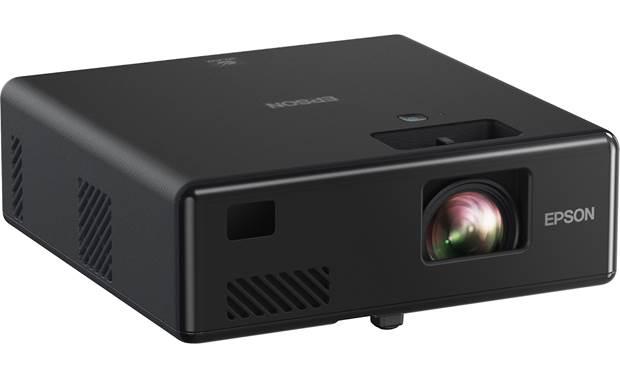
The world of portable projectors has exploded in recent years, transforming from clunky business presentation tools into sophisticated entertainment devices that can turn any wall into a home theater. Today, we're diving deep into two fascinating approaches to portable projection: the XGIMI MoGo 3 Pro, which launched in 2024 as a smart entertainment powerhouse, and the Epson EpiqVision Mini EF11, which debuted in 2020 focusing on pure projection performance.
These projectors represent fundamentally different philosophies. One prioritizes convenience and smart features, while the other emphasizes image quality above all else. Understanding which approach suits your needs could save you hundreds of dollars and countless hours of frustration.
Before we dig into specifics, let's talk about what makes portable projectors so appealing. Unlike traditional home theater projectors that require ceiling mounts and dedicated dark rooms, portable projectors promise big-screen entertainment anywhere you can find a wall. They've become increasingly popular for everything from backyard movie nights to hotel room Netflix binges.
The key considerations when shopping for portable projectors boil down to a few critical factors: brightness (how well it performs in ambient light), smart features (whether you need external devices), audio quality (can you skip the external speakers), and setup complexity (how much tweaking is required each time you move it).
What's fascinating is how the technology has evolved. Back in 2020, when the Epson EF11 launched, most portable projectors required multiple external devices and complex manual adjustments. By 2024, when the XGIMI MoGo 3 Pro arrived, we're seeing full Google TV integration and automated setup features that would have seemed like science fiction just a few years ago.
The XGIMI MoGo 3 Pro uses DLP (Digital Light Processing) technology with an LED light source, while the Epson EF11 employs 3LCD technology with a laser phosphor system. These differences matter more than you might think.
DLP works by using millions of tiny mirrors that flip thousands of times per second to create images. It's compact and produces sharp images, but can sometimes create "rainbow effects" – brief color flashes that some people notice, especially when moving their eyes quickly. The XGIMI uses a 0.23-inch DLP chip, which is industry-standard for portable projectors in this price range.
The Epson's 3LCD system splits light into red, green, and blue components, processes each separately, then recombines them. This eliminates rainbow effects entirely and typically produces more accurate colors. Combined with laser phosphor technology (where a blue laser excites phosphors to create other colors), the EF11 achieves both higher brightness and better color reproduction.
LED light sources, like in the XGIMI, typically last around 25,000 hours and gradually dim over time. Laser systems, like the Epson's, maintain consistent brightness for their rated 20,000-hour lifespan before dropping off more suddenly. In practical terms, both will outlast most users' needs.
Here's where things get interesting. The Epson EF11 delivers 1000 ANSI lumens, while the XGIMI MoGo 3 Pro produces 450 ISO lumens. But wait – those are different measurement standards, which manufacturers sometimes use to make their numbers look better.
ANSI lumens (American National Standards Institute) is the gold standard for brightness measurement. ISO lumens, used by XGIMI, tends to produce slightly higher numbers for the same actual brightness. Independent testing suggests the XGIMI delivers approximately 394 ANSI lumens in real-world conditions.
This means the Epson is genuinely about 2.5 times brighter – a massive difference in practical use. With the EF11, you can watch comfortably in a living room with some lights on or curtains open during daytime. The XGIMI really needs darkness or very dim lighting to shine.
However, brightness isn't everything. The XGIMI's LED light source produces more even illumination across the image, while some users report slight brightness variations with laser projectors in certain conditions.
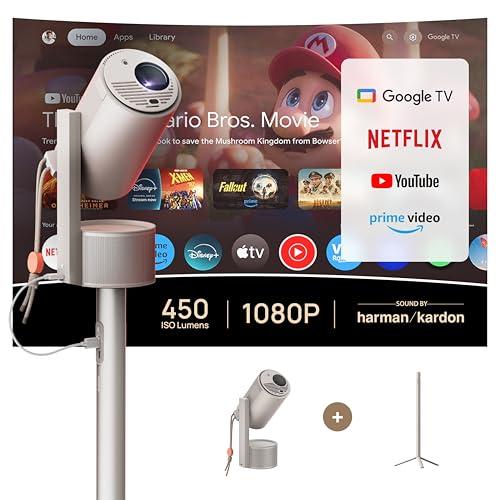
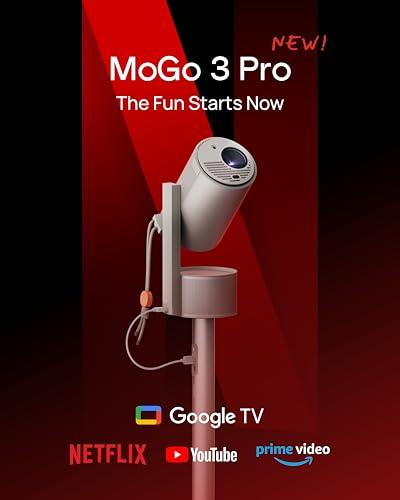
This is where these projectors diverge most dramatically. The XGIMI MoGo 3 Pro runs Google TV with officially licensed Netflix – something that was nearly impossible to find in portable projectors until recently. This means you can access thousands of apps directly without any external devices.
The smart integration goes beyond just having apps. Google Assistant voice control lets you search for content, control playback, and even integrate with smart home devices. Chromecast support means you can wirelessly cast content from any phone or laptop. The interface is smooth and responsive, feeling more like a modern smart TV than a traditional projector.
In contrast, the Epson EF11 has no smart features whatsoever. You'll need to connect a streaming stick, Apple TV, or laptop for any content. While this might seem like a disadvantage, it actually offers some benefits. External streaming devices often have more processing power and get software updates longer than built-in smart systems. Plus, you're not locked into any particular ecosystem.
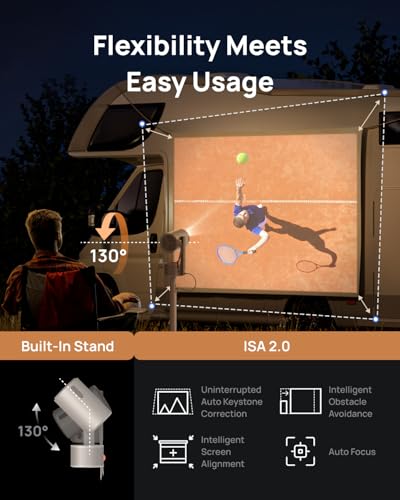
The XGIMI's ISA 2.0 (Intelligent Screen Adaptation) deserves special mention. This system uses cameras and sensors to automatically focus the image, correct geometric distortion, and even detect obstacles like picture frames or electrical outlets, adjusting the image to avoid them. It's genuinely impressive technology that makes setup almost foolproof.
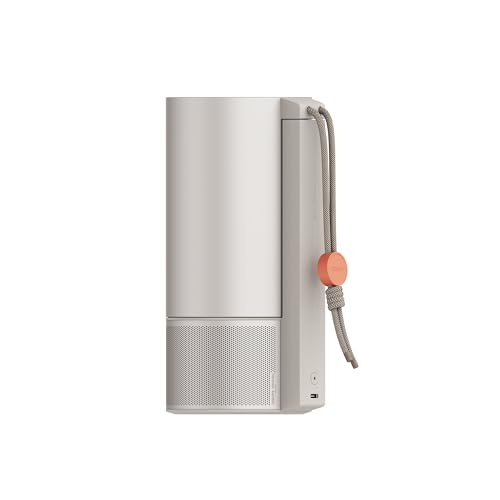
Audio often gets overlooked in projector reviews, but it's crucial for the overall experience. The XGIMI MoGo 3 Pro includes dual 5-watt Harman Kardon speakers that are genuinely impressive for a device this size. They produce clear dialogue, decent bass response, and enough volume to fill a large room comfortably.
More importantly, the XGIMI can function as a Bluetooth speaker when not projecting. There's even an "ambient light mode" where pressing down on the projector activates colored lighting that pulses with music – a unique party trick that adds genuine utility for music listening.
The Epson EF11's single 1.5-watt speaker system is, frankly, barely adequate for anything beyond checking that audio is working. You'll definitely want external speakers or a soundbar for any serious viewing.
From a home theater perspective, this audio difference is significant. While serious enthusiasts will likely use dedicated audio systems regardless, the XGIMI's built-in audio quality means you can create a satisfying viewing experience in bedrooms, guest rooms, or temporary setups without additional equipment.
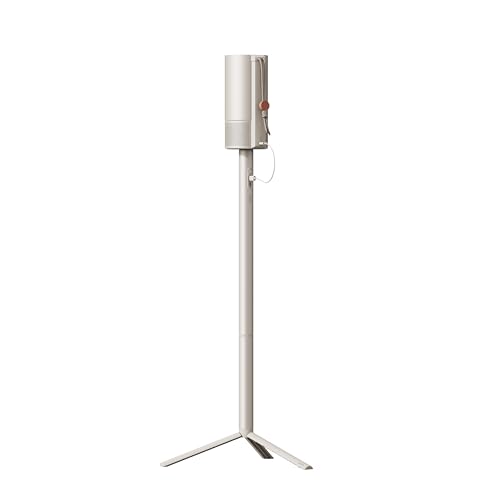
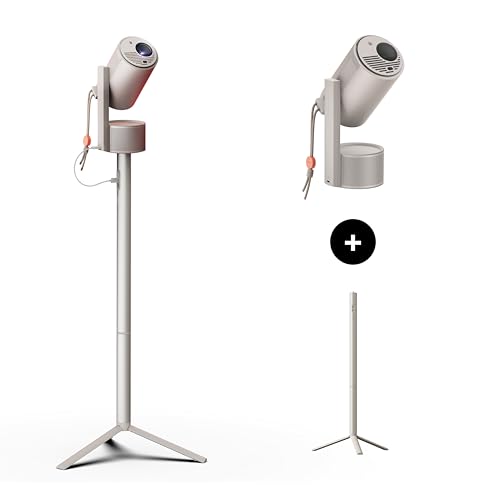
Both projectors are genuinely portable, but they take different approaches to achieving it. The XGIMI MoGo 3 Pro features a distinctive cylindrical design with a built-in adjustable stand that tilts up to 130 degrees. This design is both functional and elegant, allowing for flexible positioning without additional accessories.
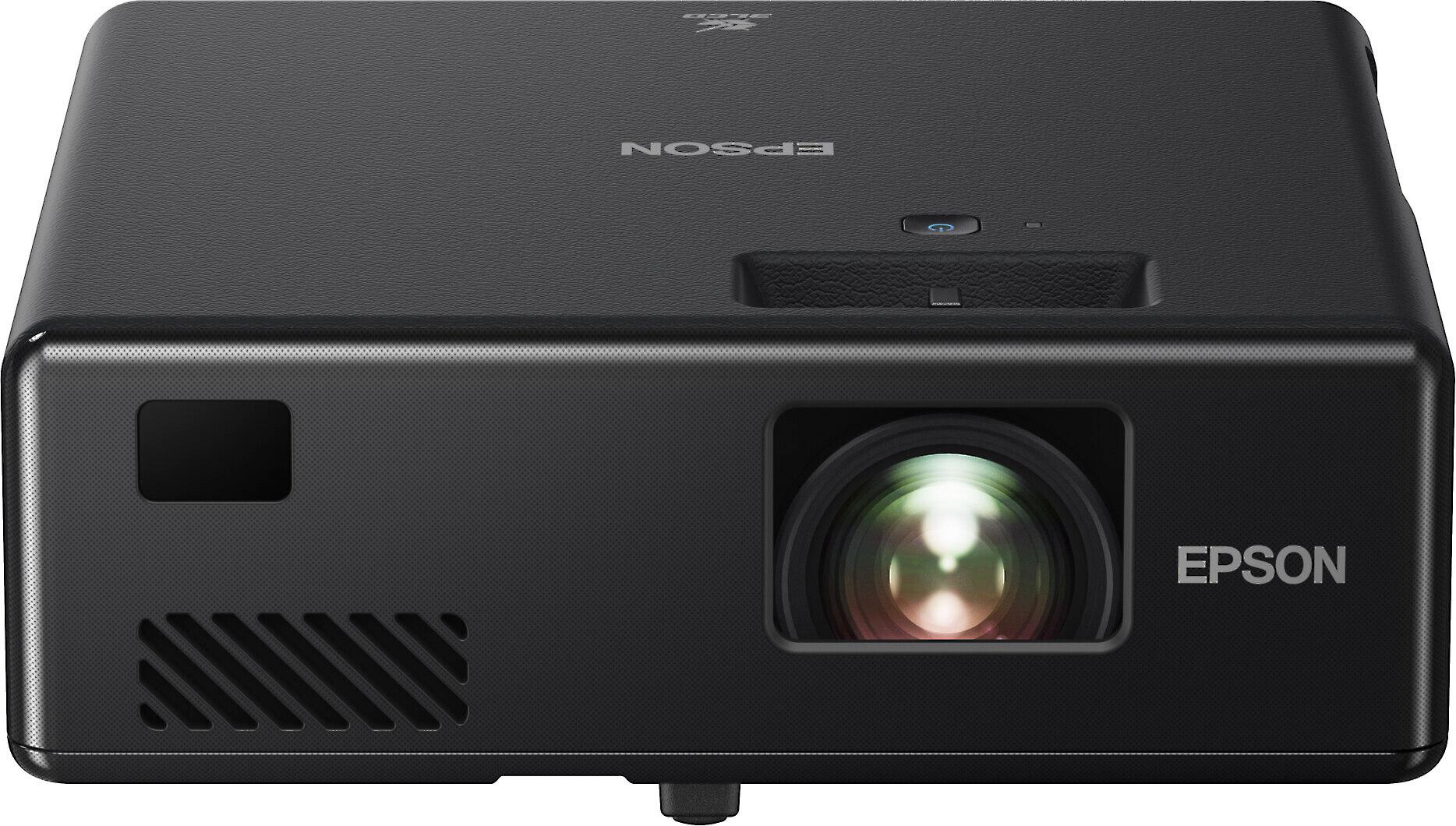
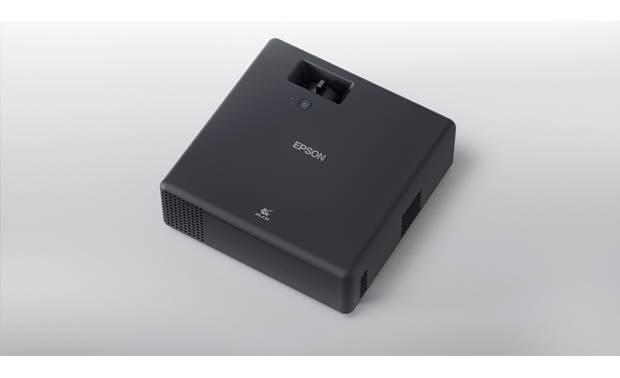
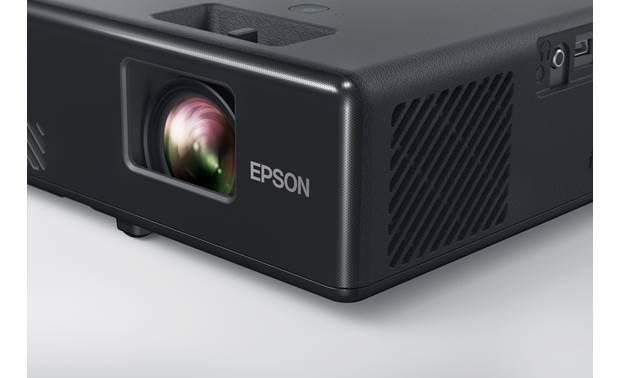
The Epson EF11 opts for a more traditional rectangular form factor that's slightly more compact but requires careful positioning or additional stands for angled projection. Both weigh between 2.4 and 2.7 pounds – light enough for easy transport but substantial enough to feel well-built.
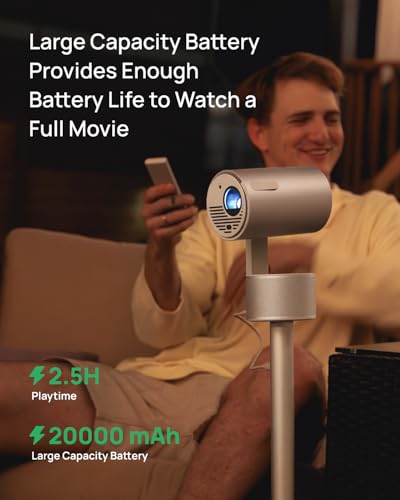
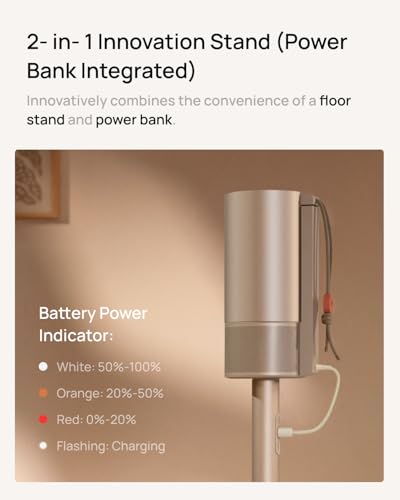
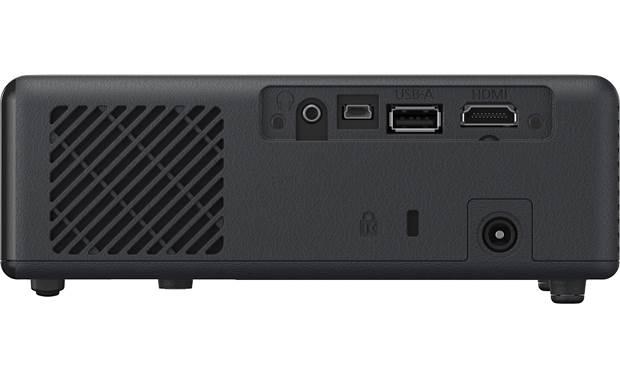
A critical limitation for both models is the lack of built-in batteries. Neither can operate without being plugged in, which limits true portability. XGIMI offers an optional PowerBase Stand with a built-in battery that provides about 2.5 hours of viewing time, but this accessory comes at additional cost. The XGIMI can also run from USB-C power delivery, allowing use with high-capacity power banks, though brightness drops to about 235 lumens when battery-powered.
For dedicated home theater use, the Epson EF11 has clear advantages. Its superior brightness allows for larger screen sizes – up to 150 inches – while maintaining good image quality. The laser light source provides consistent performance over time, and the 3LCD technology delivers more accurate colors for movie watching.
However, the XGIMI MoGo 3 Pro shouldn't be dismissed for home theater use. Its automated setup features make it incredibly easy to achieve a properly aligned, focused image every time. The built-in Netflix access and quality audio system create a more integrated entertainment experience, especially in secondary viewing areas.
For projection distances, both offer similar throw ratios around 1.2:1, meaning you need about 10 feet of distance to achieve a 100-inch image. The XGIMI's intelligent obstacle avoidance can help in challenging room layouts where perfect positioning isn't possible.
Gaming introduces additional considerations like input lag (the delay between controller input and on-screen response). The XGIMI MoGo 3 Pro offers a dedicated Game Mode that reduces input lag to around 27-60 milliseconds depending on settings. This is acceptable for casual gaming but not ideal for competitive online gaming where every millisecond counts.
The Epson EF11 doesn't specifically optimize for gaming, but its simpler processing chain can actually result in lower latency. However, you'll need to connect a gaming console or PC via HDMI, adding complexity compared to the XGIMI's potential for cloud gaming through its smart platform.
At the time of writing, these projectors occupy different price tiers, with the XGIMI MoGo 3 Pro typically available for significantly less than the Epson EF11. However, comparing prices requires looking at total system cost.
The XGIMI delivers a complete entertainment system out of the box. You get projection, smart streaming, and quality audio in one package. The Epson requires additional investment in streaming devices and external speakers to achieve similar functionality, which can add several hundred dollars to the total cost.
From a pure performance-per-dollar perspective, the Epson offers exceptional value for its brightness and color accuracy capabilities. Professional-grade projectors with similar specifications typically cost significantly more. However, the additional equipment required for a complete system narrows this value advantage.
After extensive consideration of both projectors' capabilities, I lean toward recommending the XGIMI MoGo 3 Pro for most users, primarily due to its superior user experience and all-in-one functionality. The convenience of built-in streaming, automated setup, and excellent audio creates a more satisfying daily-use experience than dealing with multiple devices and manual adjustments.
However, this recommendation comes with important caveats. If your primary use case involves bright rooms, daytime viewing, or you already have quality external audio systems, the Epson EF11 delivers genuinely superior projection performance that justifies its higher price.
The portable projector market continues evolving rapidly. The XGIMI MoGo 3 Pro represents the cutting edge of smart integration, while the Epson EF11 showcases how traditional projection excellence can be packaged in portable form factors.
Future developments likely include brighter LED systems, more sophisticated automated features, and eventually, projectors with both exceptional brightness and full smart integration. Until then, choosing between these approaches depends on your priorities: convenience and integration versus maximum projection performance.
Both projectors succeed at their intended purposes. The XGIMI makes big-screen entertainment accessible and enjoyable for casual users, while the Epson brings serious projection capabilities to portable formats. Your choice ultimately depends on whether you value the journey (ease of use) or the destination (image quality) more highly.
| XGIMI MoGo 3 Pro | Epson EpiqVision Mini EF11 |
|---|---|
| Brightness - Most critical for ambient light viewing | |
| 450 ISO lumens (~394 ANSI lumens) - requires dark room | 1000 ANSI lumens - works in moderate ambient light |
| Smart Features - Determines if you need external devices | |
| Google TV with Netflix, 10,000+ apps built-in | No smart features - requires streaming stick or device |
| Audio Quality - Major factor for all-in-one convenience | |
| Dual 5W Harman Kardon speakers (excellent) | Single 1.5W speaker (basic, needs external audio) |
| Projection Technology - Affects color accuracy and reliability | |
| DLP with LED light source (25,000 hour lifespan) | 3LCD with laser phosphor (20,000 hours, consistent brightness) |
| Setup Automation - Time savings for frequent use | |
| ISA 2.0: auto-focus, keystone, obstacle avoidance | Manual focus and keystone correction required |
| Physical Design - Impacts placement flexibility | |
| Cylindrical with 130° adjustable stand | Compact cube design, requires separate stand for angles |
| Power Requirements - Affects true portability | |
| AC power required (USB-C compatible with power banks) | AC power only (no battery operation) |
| Color Performance - Important for movie watching | |
| 90% DCI-P3 color gamut, 8-bit processing | Superior 3LCD color accuracy, 10-bit processing |
| Gaming Performance - Matters for console gaming | |
| Game Mode with 27-60ms input lag | No game optimization, standard input processing |
| Total System Cost - Real ownership expense | |
| Complete entertainment system out of box | Requires additional streaming device and external speakers |
The Epson EpiqVision Mini EF11 is significantly brighter at 1000 ANSI lumens compared to the XGIMI MoGo 3 Pro's 450 ISO lumens (approximately 394 ANSI lumens). This means the Epson EF11 can handle rooms with ambient light much better, while the XGIMI MoGo 3 Pro performs best in dark environments.
No external devices are needed with the XGIMI MoGo 3 Pro since it runs Google TV with built-in Netflix, Prime Video, and access to 10,000+ apps. However, the Epson EpiqVision Mini EF11 has no smart features, so you'll need to connect a streaming stick, Apple TV, or laptop to access any streaming content.
The XGIMI MoGo 3 Pro has significantly better audio with dual 5W Harman Kardon speakers that can fill a room without external audio equipment. The Epson EF11 only has a basic 1.5W speaker that's adequate for checking audio but requires external speakers or a soundbar for quality sound.
The XGIMI MoGo 3 Pro offers automated setup with ISA 2.0 technology that handles auto-focus, keystone correction, and obstacle avoidance automatically. The Epson EpiqVision Mini EF11 requires manual focus adjustments and keystone correction each time you move it, making setup more time-consuming.
For dedicated home theater rooms, the Epson EF11 delivers superior image quality with higher brightness, better color accuracy, and 3LCD technology. However, the XGIMI MoGo 3 Pro excels in secondary viewing areas due to its convenience features, built-in streaming, and quality audio system.
The Epson EpiqVision Mini EF11 produces superior image quality with 3LCD laser technology, 10-bit color processing, and higher brightness for better detail visibility. The XGIMI MoGo 3 Pro offers good image quality with 90% DCI-P3 color coverage but can't match the Epson's color accuracy and brightness performance.
Neither projector has a built-in battery and both require AC power to operate. The XGIMI MoGo 3 Pro can run from USB-C power banks (though at reduced brightness), and XGIMI offers an optional PowerBase Stand with battery. The Epson EF11 requires constant AC power with no battery options.
Both are similarly portable, with the XGIMI MoGo 3 Pro weighing 2.4 lbs and the Epson EF11 at 2.7 lbs. The XGIMI has advantages with its built-in adjustable stand and USB-C charging compatibility, while the Epson has a more compact cube design but requires separate stands for angled projection.
The XGIMI MoGo 3 Pro offers better gaming features with a dedicated Game Mode that reduces input lag to 27-60ms, making it suitable for casual gaming. The Epson EpiqVision Mini EF11 doesn't have gaming optimizations and requires connecting external gaming devices via HDMI.
The XGIMI MoGo 3 Pro provides a complete system out of the box with streaming, projection, and quality audio included. The Epson EF11 requires additional purchases of streaming devices and external speakers to match the XGIMI's functionality, increasing the total system cost significantly.
The Epson EpiqVision Mini EF11 is much better for bright rooms due to its 1000 ANSI lumens output, allowing comfortable viewing with curtains open or lights on. The XGIMI MoGo 3 Pro really needs dark or dimly lit environments to deliver its best image quality.
The XGIMI MoGo 3 Pro uses LED technology rated for 25,000 hours that gradually dims over time. The Epson EF11 has a laser light source rated for 20,000 hours that maintains consistent brightness throughout its lifespan. Both will outlast typical user needs, with the XGIMI offering slightly longer rated life.
We've done our best to create useful and informative comparisons to help you decide what product to buy. Our research uses advanced automated methods to create this comparison and perfection is not possible - please contact us for corrections or questions. These are the sites we've researched in the creation of this article: projectorcentral.com - techradar.com - androidcentral.com - tvsbook.com - techradar.com - thesmarthomehookup.com - whathifi.com - youtube.com - youtube.com - projectorcentral.com - projectorcentral.com - youtube.com - global.xgimi.com - us.xgimi.com - youtube.com - us.xgimi.com - us.xgimi.com - bestbuy.com - bhphotovideo.com - youtube.com - bestbuy.com - gagadget.com - epson.com - projectorreviews.com - audiogeneral.com - projectorreviews.com - epson.com - youtube.com - epson.com - youtube.com - mediaserver.goepson.com - files.support.epson.com - staples.com - projectorcentral.com - bestbuy.com - planettv.com - dell.com - epson.eu - projectortop.com

Privacy Policy
Terms and Conditions - Affiliate Policy
Home Security
© Copyright 2008-2026.
11816 Inwood Rd #1211, Dallas, TX 75244