

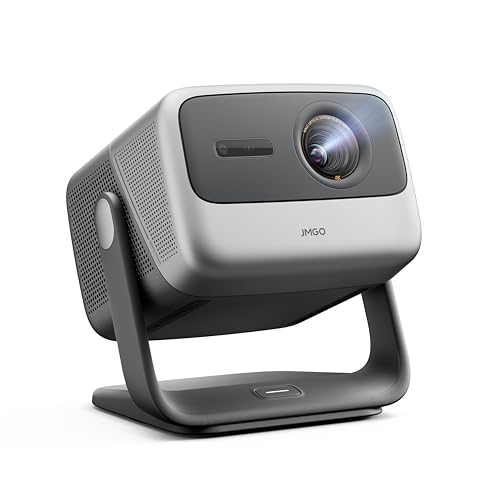

The portable projector market has exploded in recent years, but not all "portable" projectors are created equal. Today we're comparing two fundamentally different approaches to projection: the feature-packed JMGO N1S Pro 4K and the ultra-compact Epson EpiqVision Mini EF11. While both can technically be moved around, they serve very different purposes and represent opposite philosophies in portable projection design.
Understanding these differences is crucial because choosing the wrong type could leave you frustrated with performance that doesn't match your expectations. The JMGO N1S Pro 4K is what we'd call a "premium portable" – it prioritizes image quality and smart features over pure portability. The Epson EF11, meanwhile, is a true "ultra-portable" that sacrifices some performance for exceptional convenience and reliability.
The portable projector category has matured significantly since around 2020, when laser light sources became more affordable and streaming integration became standard. Before diving into our comparison, it's worth understanding what makes a projector truly useful in 2024.
Brightness remains the most critical factor, measured in ANSI lumens (a standardized measurement that tells you how much light the projector actually produces). Most portable projectors claim higher numbers than they deliver in real-world testing, so actual measured brightness matters more than marketing specs. For context, you need at least 800-1000 lumens for a dark room, and 2000+ lumens if you want to use the projector with any ambient light.
Resolution has become a major differentiator. Full HD (1920x1080) was the standard for years, but true 4K (3840x2160) portable projectors have emerged since 2022. The jump from Full HD to 4K provides four times the pixel count, making text sharper and fine details more visible – especially important on larger screen sizes above 100 inches.
Display technology affects both image quality and reliability. Most portable projectors use either DLP (Digital Light Processing) with a single chip and color wheel, or 3LCD technology that uses three separate LCD panels for red, green, and blue. Each has trade-offs: DLP can produce rainbow artifacts (brief flashes of color) but often delivers better contrast, while 3LCD eliminates rainbows but may have less punchy blacks.
Released in 2024, the JMGO N1S Pro 4K represents the cutting edge of portable projection technology. At roughly twice the price of the Epson at the time of writing, it's positioned as a premium alternative to traditional home theater projectors that happens to be portable, rather than a portable projector that compromises on performance.
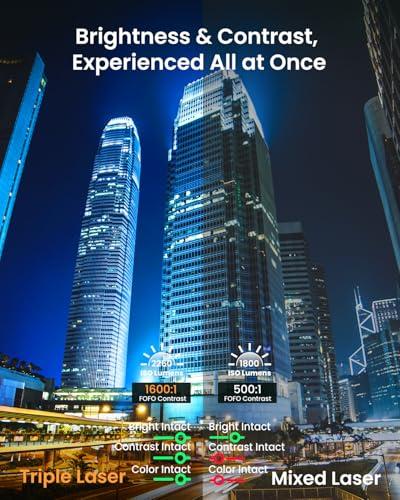
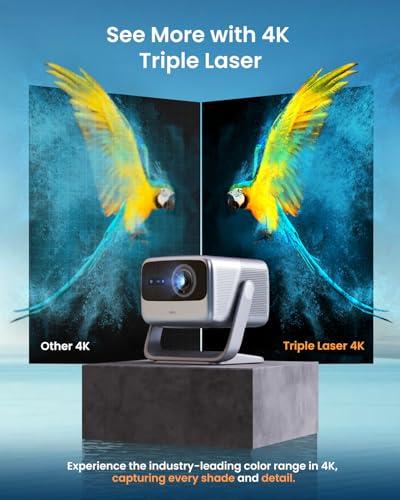
The standout feature of the JMGO N1S Pro 4K is its MALC 2.0 triple RGB laser system. Unlike traditional projectors that use a single white light source filtered through color wheels or dichroic mirrors, this system uses three separate red, green, and blue lasers that combine to create the final image. This approach delivers several advantages: colors are more saturated and accurate (covering 110% of the BT.2020 color space, which is wider than most TVs), there's no rainbow effect since there's no spinning color wheel, and the laser light source should last around 30,000 hours without replacement.
The true 4K resolution makes a dramatic difference on large screens. Text appears razor-sharp, and fine details in movies become visible that would be lost on a Full HD projector. The JMGO also supports HDR10, which provides better contrast and color depth in compatible content, though it lacks the more advanced Dolby Vision HDR found on premium TVs.
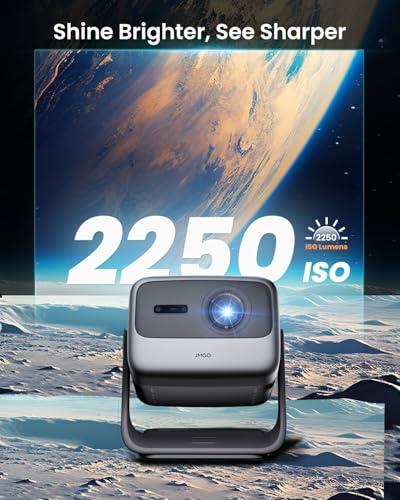
With a claimed 2400 ANSI lumens (measured closer to 1500-1600 in real-world testing), the JMGO N1S Pro 4K produces enough light to be usable in rooms with ambient lighting. This is genuinely game-changing for portable projectors – you can use it in a living room with lamps on, or even outdoors during golden hour. Most portable projectors require complete darkness, severely limiting when and where you can use them.
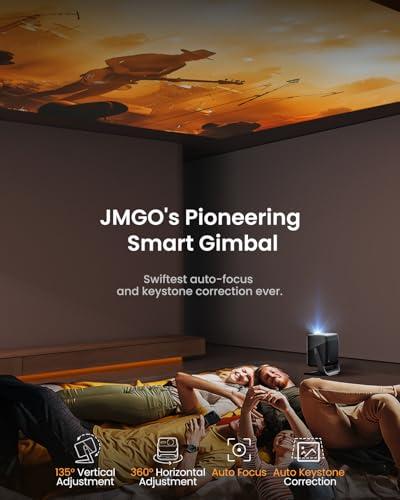
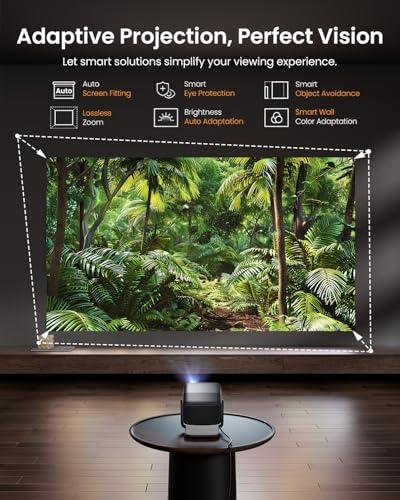
Perhaps the most unique feature is the motorized gimbal system that allows the projector head to rotate 135 degrees vertically and 360 degrees horizontally. This means you can place the JMGO on a coffee table and project onto any wall or even the ceiling without moving the base unit. Combined with automatic focus and keystone correction (which fixes the trapezoidal distortion when projecting at an angle), setup becomes remarkably flexible.
The auto-focus system uses a time-of-flight sensor to measure distance and adjust the lens automatically, while smart object avoidance can detect if someone walks into the projection path and temporarily dim or redirect the image. These aren't just gimmicks – they solve real problems that make projectors frustrating to use.
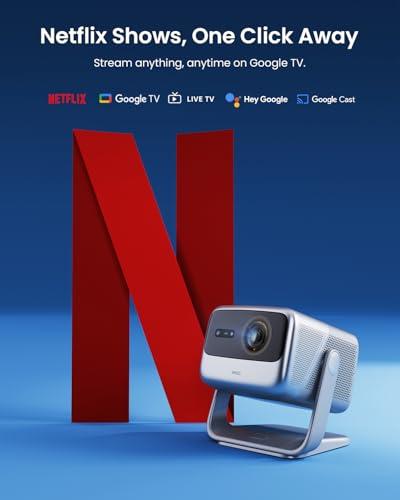
The JMGO N1S Pro 4K runs Google TV with official Netflix certification, which is rarer than you might expect. Many projectors can't run Netflix natively due to licensing restrictions. Having everything built-in eliminates the need for external streaming devices and keeps cable clutter minimal.
The Google TV interface is responsive and provides access to thousands of apps. Google Assistant voice control works well for searching content and adjusting basic settings. Chromecast is built-in for wireless casting from phones and tablets.
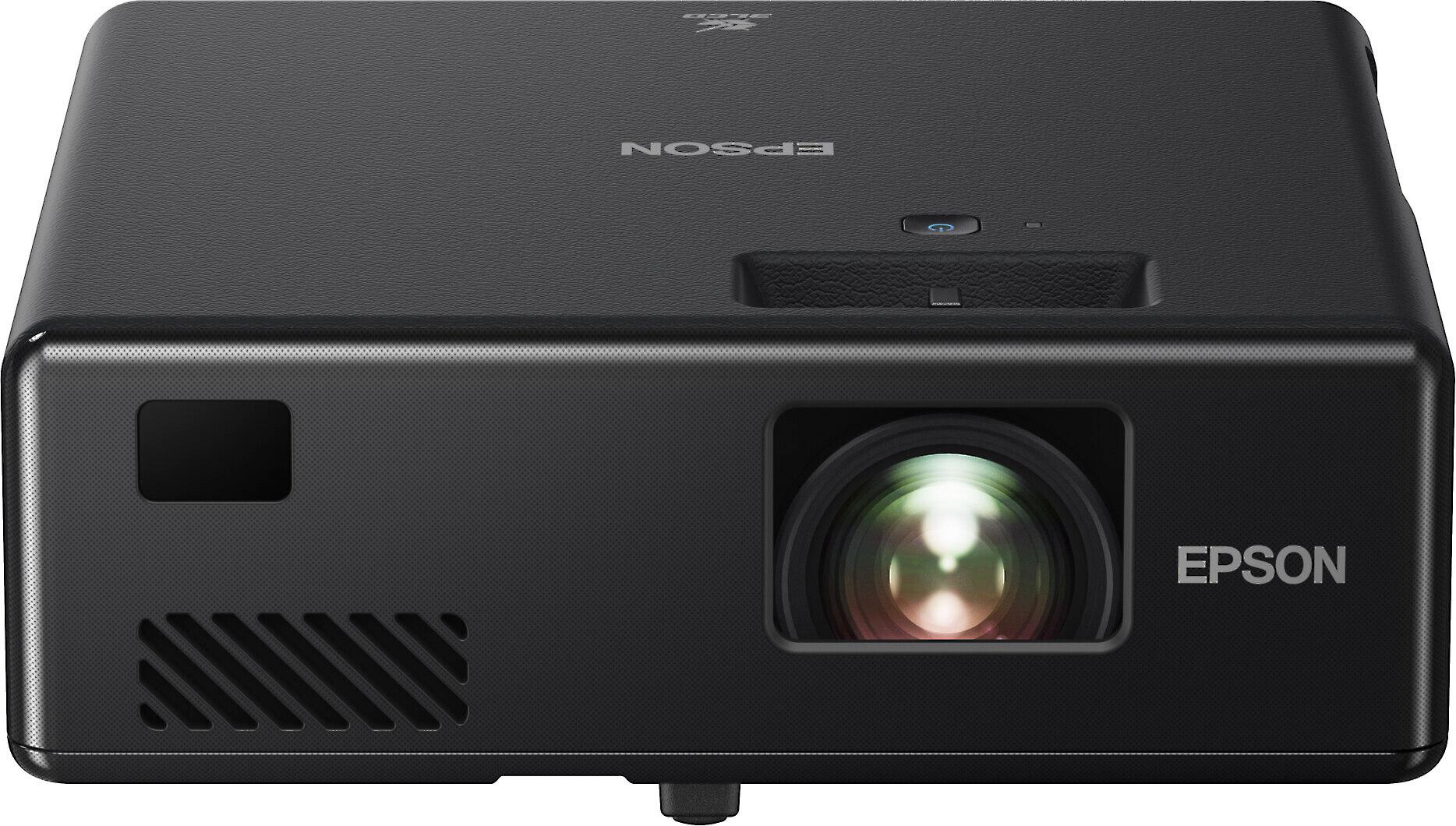
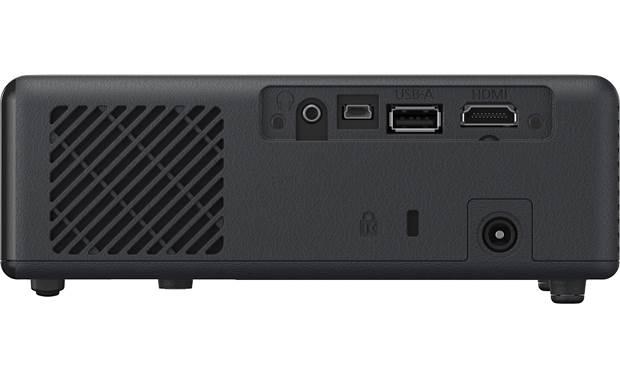
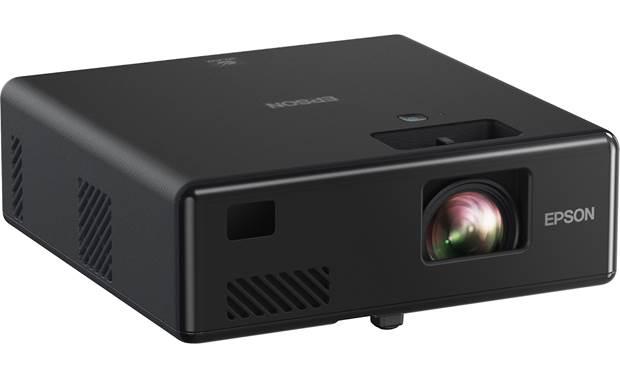
The Epson EpiqVision Mini EF11, released in 2020, takes a completely different approach. Instead of cramming maximum performance into a portable form factor, Epson optimized for pure portability while maintaining quality where it matters most.
The Epson EF11 uses 3LCD technology with Epson's MicroLaser Array system. This creates images using three separate LCD panels for red, green, and blue, illuminated by laser phosphor light sources. The result is completely rainbow-free viewing – something that benefits anyone sensitive to the color flashing that can occur with DLP projectors.
The contrast ratio of 200,000:1 is impressive on paper and delivers genuinely deep blacks in dark scenes. While the overall image may not be as bright or colorful as the JMGO, colors appear more natural and film-like rather than artificially saturated.
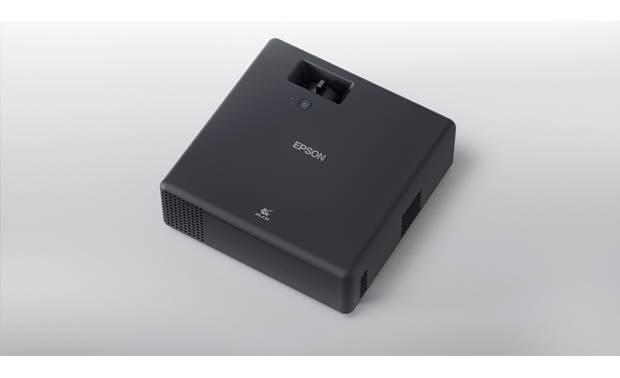
At just 2.7 pounds and roughly the size of a hardcover book, the Epson EF11 achieves true portability. It easily fits in laptop bags and carry-on luggage, making it practical for business travel or moving between rooms. The compact size also means it disappears on a shelf when not in use.
Build quality feels solid despite the small size. Epson's reputation for reliability extends to the EF11, which is backed by a two-year warranty compared to one year for the JMGO. For users who need dependable performance in various environments, this peace of mind matters.
With 1000 ANSI lumens (measured very close to spec), the Epson EF11 provides adequate brightness for dark to moderately dim rooms. You'll want to control lighting carefully – think basement media rooms or bedrooms with blackout curtains. The advantage is lower power consumption and quieter operation compared to brighter projectors.
In terms of pure image quality, the JMGO N1S Pro 4K is clearly superior. The 4K resolution provides noticeably sharper text and finer detail, especially on screens larger than 100 inches. Colors are more vivid and saturated, though some might prefer the more natural color reproduction of the Epson EF11.
However, the Epson's 3LCD technology eliminates rainbow artifacts entirely, which can be distracting for sensitive viewers when watching the JMGO. The Epson also handles motion better, with less judder in fast-moving scenes.
For home theater use, the choice depends on your priorities. The JMGO delivers a more impressive, TV-like experience with vibrant HDR content, while the Epson EF11 provides a more film-like, cinema-accurate presentation.
The JMGO N1S Pro 4K wins decisively on setup convenience. The combination of gimbal adjustment, auto-focus, and smart keystone correction means you can achieve a perfect image from almost any placement position. The smart object avoidance is genuinely useful for families with children or pets.
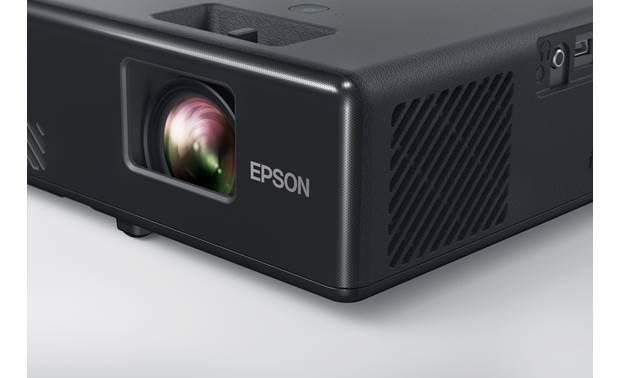
The Epson EF11 requires more traditional setup – you need to physically position it at the correct distance and angle for your desired screen size. However, this simplicity also means fewer things can go wrong. The manual focus ring is precise and reliable.
The JMGO N1S Pro 4K caters specifically to gamers with low input lag (around 17ms) and support for high refresh rates up to 240Hz in certain modes. The 4K resolution makes text-heavy games much more readable, and HDR adds visual impact to compatible titles.
The Epson EF11 isn't optimized for gaming but handles casual gaming adequately. The Full HD resolution limits fine detail, and input lag is higher, making it less suitable for competitive gaming.
Both projectors include built-in speakers, but they take different approaches. The JMGO N1S Pro 4K features 20W stereo speakers that provide room-filling sound adequate for casual viewing. The side-firing design helps with sound dispersion.
The Epson EF11 has a more sophisticated dual-speaker system despite the smaller size – one speaker handles high frequencies while a bass-reflex speaker manages low frequencies. However, the total power is just 3W, limiting maximum volume.
For serious home theater use, external audio is recommended for both, but the JMGO can work standalone more effectively.
At the time of writing, the JMGO N1S Pro 4K costs roughly double the Epson EF11. This price difference reflects fundamentally different target markets and use cases.
The JMGO competing against entry-level dedicated home theater projectors and premium portable models. For the price, you get true 4K resolution, high brightness, and extensive smart features that eliminate the need for additional devices. If you primarily plan to use it as a TV replacement in a dedicated space, the performance per dollar is compelling.
The Epson EF11 competing in the ultra-portable category where convenience and reliability are premium features. At its price point, you get exceptional build quality, proven technology, and true portability. However, you'll need to budget for an external streaming device, adding to the total cost.
Home theater is the priority. If you're primarily replacing a TV or creating a dedicated viewing space, the 4K resolution and high brightness justify the premium price. The ability to use it in rooms with some ambient light is genuinely valuable.
You want everything integrated. The built-in Google TV with Netflix eliminates cable clutter and additional devices. For users who prefer streamlined setups, this convenience has real value.
Gaming matters. The low input lag and 4K resolution make it one of the better portable options for console gaming. The large screen size enhances the gaming experience significantly.
You have a consistent viewing location. The gimbal system shines when you have a dedicated spot but want flexibility in projection angle. It's less valuable if you're constantly moving the entire projector.
True portability is essential. If you need to travel with the projector, present in different locations, or store it in tight spaces, the size and weight advantage is decisive. The Epson fits in spaces where the JMGO simply won't.
Budget consciousness matters. At roughly half the price, the Epson EF11 provides the core projection experience without premium features. For users focused on basic large-screen viewing, it delivers solid value.
Reliability is crucial. Epson's track record and two-year warranty provide confidence for business users or anyone who can't afford downtime. The simpler design has fewer potential failure points.
You prefer natural colors. The 3LCD technology produces more accurate, film-like colors compared to the more saturated output of the JMGO. Some users prefer this more subtle presentation.
You already have streaming devices. If you're invested in Apple TV, Roku, or another ecosystem, the lack of built-in smart features isn't a disadvantage.
These projectors represent fundamentally different approaches to portable projection. The JMGO N1S Pro 4K is a premium home theater projector that happens to be portable, while the Epson EF11 is a truly portable projector that prioritizes convenience over maximum performance.
For most home theater enthusiasts, the JMGO N1S Pro 4K provides better long-term satisfaction despite the higher initial cost. The 4K resolution future-proofs your investment, and the brightness enables more flexible usage scenarios. The smart features eliminate ongoing frustrations with external devices and cables.
However, if portability is genuinely important – whether for business use, frequent relocation, or tight storage constraints – the Epson EF11 remains the better choice. It's a tool designed for its specific purpose rather than a compromise.
Consider your primary use case carefully. A projector that sits permanently on a media room shelf has different requirements than one that travels between locations. Both options excel in their intended roles, but choosing the wrong one for your needs will lead to disappointment regardless of the objective performance differences.
The projector market continues evolving rapidly, with new models appearing regularly. However, these two represent mature, well-executed examples of their respective philosophies. Whether you prioritize cutting-edge performance or practical portability, both deliver on their core promises effectively.
| JMGO N1S Pro 4K Projector | Epson EpiqVision Mini EF11 Laser Projector |
|---|---|
| Resolution - Critical for text clarity and detail on large screens | |
| 3840 x 2160 (True 4K UHD) - Sharp text and fine detail | 1920 x 1080 (Full HD) - Good for most content under 100" |
| Brightness - Determines usable lighting conditions | |
| 2,400 ANSI lumens claimed (1,500+ measured) - Works with ambient light | 1,000 ANSI lumens (960 measured) - Requires dark rooms |
| Display Technology - Affects color accuracy and rainbow artifacts | |
| DLP + Triple RGB Laser - Vivid colors, possible rainbow effect | 3LCD + Laser Phosphor - Natural colors, zero rainbow artifacts |
| Smart Features - Built-in streaming vs external device needed | |
| Google TV with Netflix built-in - No additional devices required | None - Requires external streaming stick/box |
| Size & Weight - Portability and setup convenience | |
| 7.99" x 9.29" x 9.48" / 4.4 lbs - Portable but substantial | 6.9" x 6.9" x 2.3" / 2.7 lbs - Truly ultra-portable |
| Unique Features - Standout capabilities that differentiate | |
| Motorized gimbal (135°/360° rotation), auto-focus, object avoidance | Ultra-compact design, dual-frequency speaker system |
| Gaming Performance - Input lag and refresh rate support | |
| 17ms input lag, 240Hz support - Excellent for gaming | Standard input lag, 60Hz - Adequate for casual gaming |
| Audio Quality - Built-in speaker performance | |
| 20W stereo speakers - Room-filling sound for casual viewing | 3W dual speakers - Compact but limited volume |
| Connectivity - Ports and wireless options | |
| 2x HDMI 2.1 (eARC), USB-A, Wi-Fi 6, Bluetooth 5.2 | 1x HDMI, USB-A/B, basic wireless |
| Contrast Ratio - Deep blacks and dynamic range | |
| 1,600:1 - Good for DLP technology | 200,000:1 - Excellent black levels |
| Color Coverage - Vibrancy and accuracy of colors | |
| 110% BT.2020 - Exceptionally wide, vivid color gamut | Standard color reproduction - More natural, film-like colors |
| Warranty - Coverage period and manufacturer support | |
| 1 year - Standard for premium projectors | 2 years - Above-average coverage for reliability |
| Light Source Life - Long-term maintenance costs | |
| 30,000 hours (laser) - Maintenance-free operation | 20,000 hours (laser) - No bulb replacements needed |
The JMGO N1S Pro 4K Projector is significantly better for dedicated home theater setups. It delivers true 4K resolution with HDR support, 2,400 ANSI lumens of brightness, and vivid colors covering 110% of the BT.2020 color space. The built-in Google TV eliminates the need for external streaming devices. The Epson EpiqVision Mini EF11 works for casual home viewing but is limited to Full HD resolution and requires darker rooms due to its 1,000-lumen output.
The JMGO N1S Pro 4K Projector provides superior image quality with 4K resolution (four times more pixels than Full HD), brighter output, and more saturated colors. However, the Epson EpiqVision Mini EF11 offers more natural color reproduction and completely eliminates rainbow artifacts thanks to its 3LCD technology. For large screens over 100 inches, the 4K advantage of the JMGO becomes very noticeable.
The Epson EpiqVision Mini EF11 is significantly more portable at just 2.7 pounds and 6.9" x 6.9" x 2.3" dimensions. It easily fits in laptop bags and carry-on luggage. The JMGO N1S Pro 4K Projector weighs 4.4 pounds with larger dimensions, making it "portable" but not ultra-compact like the Epson.
The JMGO N1S Pro 4K Projector includes built-in Google TV with Netflix, Disney+, and thousands of other apps, so no external devices are required. The Epson EpiqVision Mini EF11 has no smart features and requires an external streaming stick, Apple TV, or similar device for accessing streaming content.
The JMGO N1S Pro 4K Projector performs much better in rooms with ambient light due to its 2,400 ANSI lumen output. You can use it in living rooms with lamps on or even outdoors during golden hour. The Epson EpiqVision Mini EF11 with 1,000 lumens requires controlled lighting and works best in dark or dimly lit rooms.
The JMGO N1S Pro 4K Projector offers superior setup convenience with its motorized gimbal system, auto-focus, and automatic keystone correction. You can project on walls or ceilings without moving the base unit. The Epson EpiqVision Mini EF11 requires traditional manual positioning and focusing, but this simplicity also means fewer potential technical issues.
The JMGO N1S Pro 4K Projector is much better for gaming with 17ms input lag, 4K resolution for sharp text and detail, and support for refresh rates up to 240Hz. The Epson EpiqVision Mini EF11 handles casual gaming adequately but isn't optimized for gaming performance, with higher input lag and Full HD resolution limiting detail.
The JMGO N1S Pro 4K Projector features 20W stereo speakers that provide room-filling sound adequate for casual viewing without external audio. The Epson EpiqVision Mini EF11 has a sophisticated dual-speaker design but only 3W total power, limiting maximum volume. Both benefit from external speakers for serious home theater use.
Value depends on your needs. The JMGO N1S Pro 4K Projector costs roughly double the Epson EpiqVision Mini EF11 but includes 4K resolution, higher brightness, and built-in smart features that eliminate additional device costs. The Epson offers excellent value for users prioritizing portability and basic large-screen viewing on a budget.
The Epson EpiqVision Mini EF11 includes a 2-year warranty, reflecting Epson's confidence in build quality and reliability. The JMGO N1S Pro 4K Projector comes with a standard 1-year warranty. For business users or those prioritizing long-term reliability, the Epson's extended warranty coverage provides additional peace of mind.
Color accuracy depends on preference. The JMGO N1S Pro 4K Projector produces more vivid, saturated colors covering 110% of BT.2020 color space, creating an impressive but sometimes artificial look. The Epson EpiqVision Mini EF11 delivers more natural, film-like colors that some users prefer for movies. The Epson also eliminates rainbow artifacts completely with its 3LCD technology.
Choose the JMGO N1S Pro 4K Projector if you want a TV replacement for home theater use, need 4K resolution, plan to use it in rooms with ambient light, or want built-in smart features without external devices. Choose the Epson EpiqVision Mini EF11 if you prioritize true portability, have budget constraints, need proven reliability for business use, or primarily watch in dark rooms where Full HD resolution is adequate.
We've done our best to create useful and informative comparisons to help you decide what product to buy. Our research uses advanced automated methods to create this comparison and perfection is not possible - please contact us for corrections or questions. These are the sites we've researched in the creation of this article: techradar.com - projectorcentral.com - gray9.in - projectorreviews.com - howtogeek.com - the-gadgeteer.com - projectorcentral.com - global.jmgo.com - global.jmgo.com - cnet.com - cnet.com - youtube.com - global.jmgo.com - avsforum.com - youtube.com - youtube.com - bestbuy.com - bhphotovideo.com - youtube.com - bestbuy.com - gagadget.com - epson.com - projectorreviews.com - audiogeneral.com - projectorreviews.com - epson.com - youtube.com - epson.com - youtube.com - mediaserver.goepson.com - files.support.epson.com - staples.com - projectorcentral.com - bestbuy.com - planettv.com - dell.com - epson.eu - projectortop.com

Privacy Policy
Terms and Conditions - Affiliate Policy
Home Security
© Copyright 2008-2026.
11816 Inwood Rd #1211, Dallas, TX 75244