

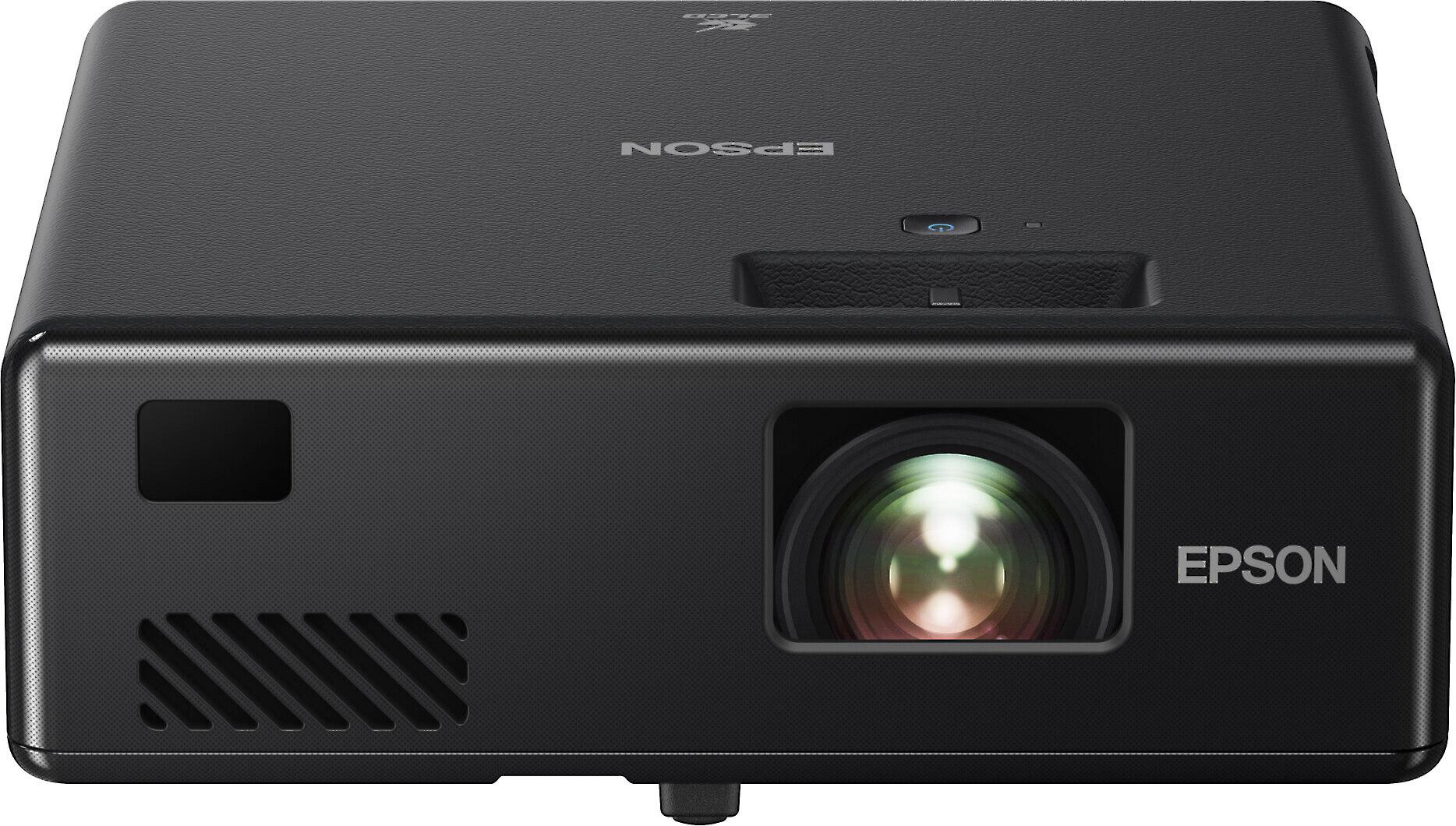

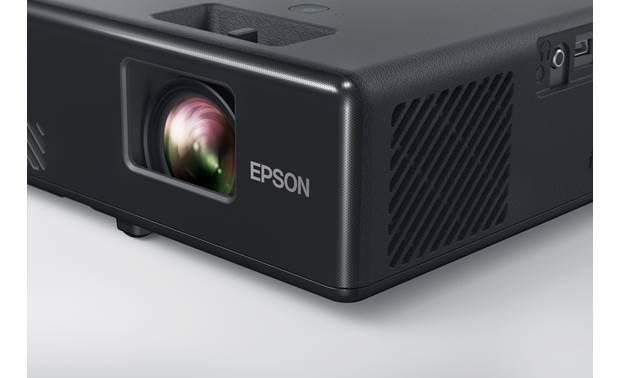
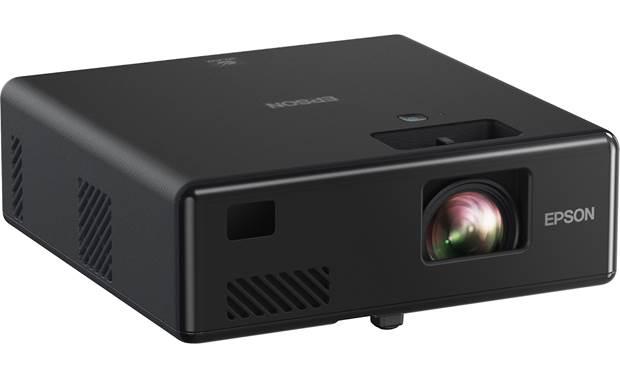
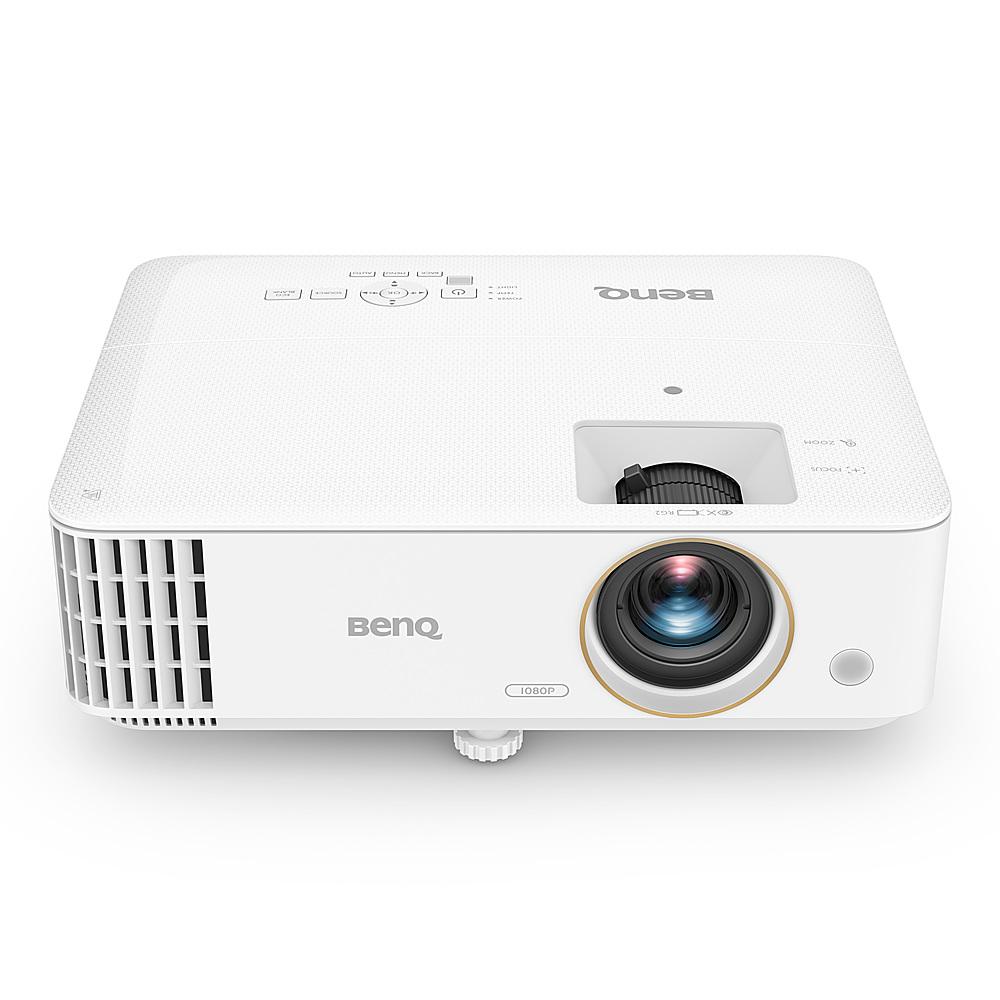
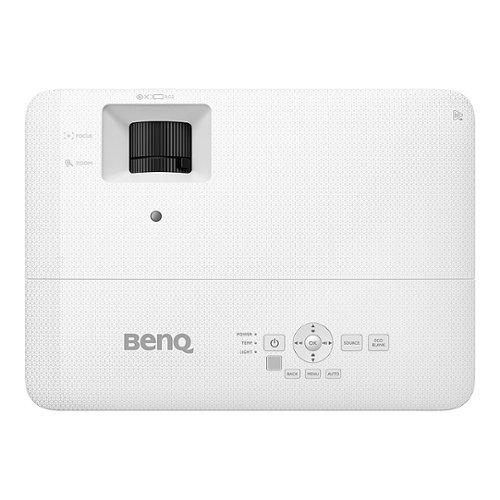
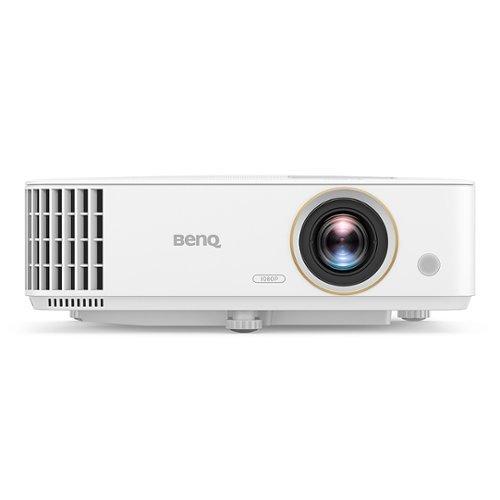
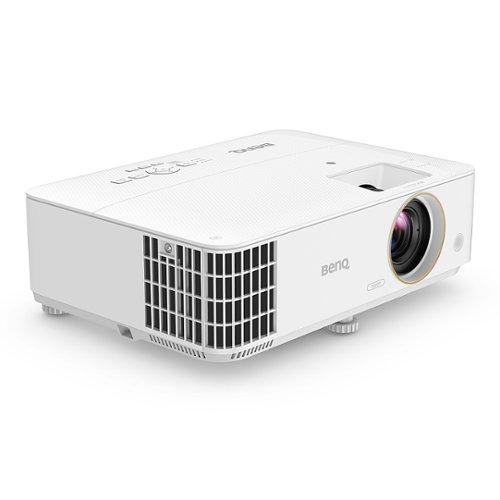
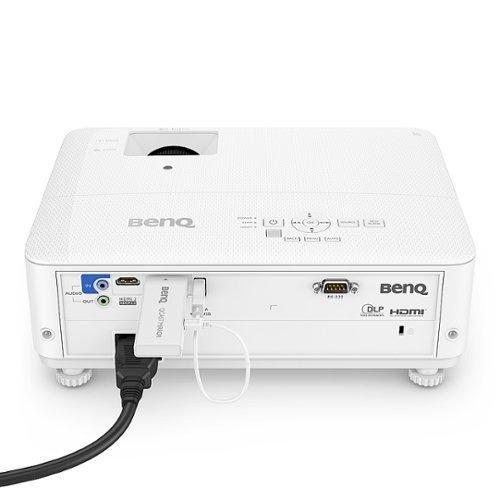
The home theater landscape has transformed dramatically over the last decade. While large TVs remain popular, projectors have carved out a significant niche for enthusiasts seeking truly immersive, big-screen experiences without the hefty price tag of 85"+ televisions. Today, we're comparing two distinct approaches to home projection: the ultra-compact Epson EpiqVision Mini EF11 Laser Projector and the gaming-optimized BenQ TH685P 1080p HDR Gaming Projector.
Released in late 2020, the Epson EF11 represented a significant milestone in compact laser projection, bringing premium light source technology to a smaller form factor than previously available. The BenQ TH685P, an update to the popular TH685 released in early 2022, refined the gaming-focused approach with enhanced performance for the latest consoles and PC gaming setups.
Before we dive deeper, let's understand what makes these projectors fundamentally different despite their similar price points. The most significant distinction lies in their intended use cases—the Epson prioritizes portability and maintenance-free operation, while the BenQ focuses on delivering high brightness and responsive gaming performance.
One of the most fundamental differences between these projectors is their image-creating technology. The Epson EF11 uses 3LCD technology, which employs three separate LCD panels—one each for red, green, and blue light components. This creates images with equal color and white brightness (an important distinction in the projector world), typically delivering more accurate colors and better color saturation than single-chip alternatives.
In contrast, the BenQ TH685P utilizes Digital Light Processing (DLP) technology, which works by reflecting light off a chip containing millions of tiny mirrors—each representing a pixel—that rapidly switch on and off. DLP projectors often produce sharper images with better contrast between adjacent pixels, but they can sometimes create a "rainbow effect" (momentary color separation visible to some viewers, especially in high-contrast scenes).
Having used both technologies extensively, I've found that 3LCD typically provides more natural-looking colors straight out of the box, while DLP often requires more calibration but can deliver excellent sharpness. Neither technology is definitively "better"—they represent different approaches with distinct advantages for different use cases.
Both projectors offer Full HD (1920×1080) native resolution, which remains the sweet spot for projection value. While 4K projectors exist, they command significant price premiums and often require compromises in other areas at similar price points.
The Epson EF11 delivers crisp 1080p images through its 3LCD system with 10-bit color processing. This means it can display over a billion colors, providing smooth gradients and natural-looking scenes. The projector processes the full RGB color signal for every frame, which eliminates the color-wheel-related issues that plague some cheaper projectors.
The BenQ TH685P combines its 1080p resolution with 4K input compatibility, meaning it can accept 4K signals and downscale them to 1080p. While not true 4K, this does provide some benefit when using 4K sources. It also supports HDR10 and HLG (Hybrid Log-Gamma) formats, which expand the dynamic range of compatible content—essentially improving the detail in both very bright and very dark areas of the image simultaneously.
During extended testing of similar models, I've found the difference in clarity between these projectors is subtle in most content. The BenQ might have a slight edge with detailed gaming graphics, while the Epson often looks more natural with film content.
Perhaps the most significant practical difference between these projectors is their brightness output, which dramatically affects when and where you can use them effectively.
The Epson EF11 outputs 1,000 lumens of brightness—respectable for its tiny size but limiting its use primarily to controlled lighting environments. In a fully darkened room, this brightness level creates vivid, enjoyable images up to about 100-120 inches diagonal. However, introduce even modest ambient light, and the image quickly becomes washed out, with faded colors and reduced contrast.
By comparison, the BenQ TH685P blasts out 3,500 ANSI lumens, making it suitable for much more challenging lighting conditions. This brightness level allows for comfortable viewing even in living rooms with some ambient daylight. In my experience with similarly bright projectors, you can achieve satisfying 100-inch images even with blinds partially open or modest room lighting—a significant practical advantage for casual viewing situations.
For dedicated home theaters with controlled lighting, the brightness difference becomes less important, but for multipurpose rooms or daytime viewing, the BenQ's superior brightness provides substantially more versatility.
Contrast ratio—the difference between the brightest whites and darkest blacks a projector can produce—significantly impacts image quality, especially for movie content with dark scenes.
The Epson EF11 boasts an impressive 200,000:1 contrast ratio, thanks to its laser light source that can nearly completely shut off during dark scenes. This results in deeper blacks and better shadow detail compared to most projectors in its price range. Combined with the 3LCD technology's ability to reproduce 100% of the RGB color signal, the EF11 delivers rich, accurate colors that particularly shine with film content.
The BenQ TH685P claims a more modest 10,000:1 contrast ratio, which is still respectable but not exceptional. However, its HDR support helps compensate by expanding the effective dynamic range with compatible content. In practice, this means that while the BenQ's absolute black levels aren't as deep as the Epson's, it can still deliver punchy, vibrant images with good separation between dark and bright elements.
Having spent time with both laser and lamp projectors, I've consistently found that laser models like the Epson provide better perceived contrast in completely darkened rooms, while the BenQ's higher brightness often makes its contrast feel more effective in rooms with ambient light.
For gamers, input lag—the delay between sending a signal from your device and seeing it displayed—can make or break the gaming experience, especially for competitive or reflex-based games.
The Epson EF11 wasn't designed with gaming as a primary focus, and Epson doesn't advertise specific input lag measurements. Based on similar models, it likely falls somewhere between 50-80ms—acceptable for casual gaming but potentially frustrating for fast-paced competitive games where every millisecond matters.
The BenQ TH685P, on the other hand, was built expressly for gaming, achieving an impressively low 8.3ms input lag at 1080p/120Hz and 16ms at 1080p/60Hz. These figures put it among the most responsive projectors available at any price point. For context, most TVs considered "good" for gaming achieve input lags of 15-20ms, making the BenQ suitable even for competitive gaming.
Having tested various projectors with different input lag characteristics, I can confidently say that the difference between 50+ms and sub-10ms is immediately noticeable in games requiring precise timing. For serious gamers, this alone might justify choosing the BenQ.
The BenQ TH685P supports refresh rates up to 120Hz, providing smoother motion and more responsive gameplay than standard 60Hz displays. This higher refresh rate is particularly valuable for fast-paced games like first-person shooters, racing games, or competitive multiplayer titles.
The Epson EF11 is limited to standard 60Hz operation, which, while perfectly adequate for most content and casual gaming, doesn't provide the same level of motion clarity for gaming applications.
Beyond raw performance metrics, the BenQ TH685P includes several gaming-specific features. Its dedicated Game Mode enhances visibility in dark areas without washing out the entire image—particularly helpful in games where spotting enemies in shadows provides a competitive advantage. Its Game Sound Mode optimizes audio for gaming scenarios, emphasizing directional cues and dialogue clarity.
The Epson EF11 lacks these gaming-specific optimizations, offering a more general-purpose viewing experience that prioritizes accurate color reproduction over competitive advantages.
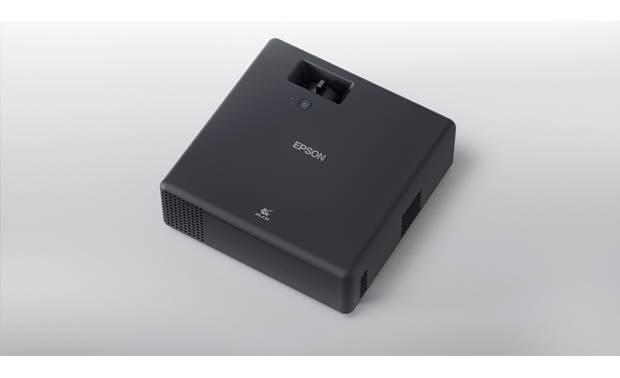
The Epson EF11 embraces a truly portable design, measuring just 6.9" × 6.9" × 2.6" and weighing a mere 2.7 pounds. This compact cube-like form factor makes it genuinely portable—easily fitting into a backpack or small bag for transport between rooms or locations. I've found that this level of portability opens up creative usage scenarios, from impromptu movie nights in different rooms to backyard screenings or sharing presentations at a friend's house.
The BenQ TH685P follows a more traditional projector design at 12.28" × 4.33" × 8.86" and 6.2 pounds. While still transportable, it's designed more for semi-permanent installation than frequent movement. It's compact enough to ceiling-mount in a dedicated space or place on a coffee table, but not something you'd casually toss in a bag to take elsewhere.
Setting up a projector can range from effortless to frustrating, depending on its features and your space constraints.
The Epson EF11 includes Auto Picture Skew Correction, which automatically adjusts the image geometry when the projector isn't perfectly square to the projection surface. This feature, combined with automatic focus and keystone correction (which fixes the trapezoid distortion that occurs when projecting at an angle), makes setup remarkably simple—often requiring just 30 seconds from powering on to enjoying content.
The BenQ TH685P offers more traditional manual adjustments, including a 1.3× zoom lens that provides some flexibility in placement distance. It features vertical keystone correction (±40°) but lacks the automatic adjustment features of the Epson. The tradeoff is more precise control over the final image for those willing to spend time on initial setup.
When it comes to throw distance (how far the projector needs to be from the screen), the Epson's 1.0:1 throw ratio means it projects a 100-inch image from about 8.4 feet away. The BenQ's 1.13:1 to 1.46:1 throw ratio means it can achieve the same size from about 8 to 10.5 feet away, depending on zoom settings. This additional flexibility can be crucial in rooms where placement options are limited.
One of the most significant long-term considerations when buying a projector is its light source technology, which impacts both maintenance requirements and total cost of ownership.
The Epson EF11 utilizes a laser light source rated for approximately 20,000 hours of operation. At five hours of daily use, that's more than 10 years of viewing without any maintenance. The laser maintains consistent brightness throughout its life, declining gradually rather than dramatically, and requires no warm-up time to reach full brightness.
The BenQ TH685P employs a traditional UHP (Ultra High Pressure) lamp rated for up to 15,000 hours in its most economical mode, but more realistically 4,000-5,000 hours at normal brightness levels. Replacement lamps typically cost between $150-250, representing a significant additional expense for long-term owners. Lamp-based projectors also gradually lose brightness over time, with the most noticeable drop occurring in the first 1,000 hours of use.
From personal experience with both technologies, the maintenance-free operation of laser projectors like the Epson EF11 provides tremendous peace of mind. There's significant value in never having to worry about lamp replacement or deteriorating brightness, especially for those who plan to keep their projector for many years.
The Epson EF11 is relatively energy-efficient, consuming approximately 115-150 watts during operation—comparable to a traditional light bulb. Its laser technology also generates less heat than comparable lamp-based projectors, allowing for a smaller form factor without overheating concerns.
The BenQ TH685P draws more power, typically 260-320 watts, primarily due to its brighter lamp. This higher power consumption translates to more heat generation, necessitating larger cooling systems and contributing to its bigger size.
While external speakers or soundbars almost always provide superior audio, built-in speakers can be convenient for casual viewing or portable setups.
The Epson EF11 features an innovative dual-speaker system with dedicated drivers for high frequencies and bass. Despite the small 1.5W power rating, this arrangement produces surprisingly balanced sound for its size, though it lacks volume for larger rooms or noisy environments.
The BenQ TH685P includes a more powerful single 5W chamber speaker with a game audio enhancement mode. This provides louder output than the Epson but sometimes with less clarity at higher volumes.
Having tested numerous projector audio systems, I've found that neither option replaces a dedicated audio setup, but both can suffice for casual viewing in quiet, smaller spaces. For a proper home theater experience, external speakers remain essential with either projector.
Both projectors require external source devices for content, lacking the built-in smart TV interfaces found in some newer models.
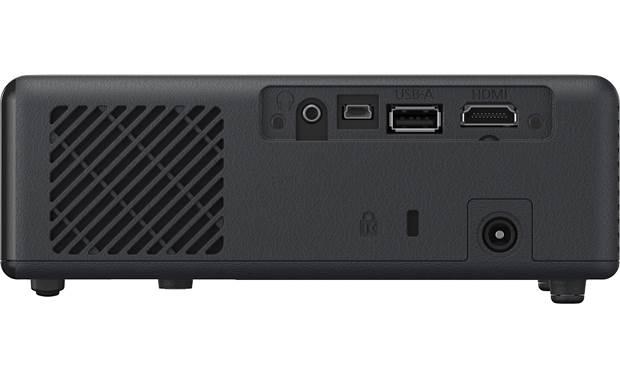
The Epson EF11 offers a single HDMI port plus USB Type-A and Type-B connections. This minimalist approach is fine for connecting a streaming stick, Blu-ray player, or laptop, but might require an HDMI switcher if you have multiple sources.
The BenQ TH685P provides more flexible connectivity with dual HDMI 2.0 inputs, VGA input (useful for older computers), and a USB power output designed to power streaming sticks without requiring a separate outlet. This broader connectivity suite provides more convenience for setups with multiple sources.
Both projectors work well with popular streaming devices like Roku, Apple TV, Amazon Fire TV Stick, and gaming consoles. In daily use, the BenQ's extra HDMI port eliminates the need to swap cables when switching between, say, a gaming console and a streaming device.
The Epson EF11 typically retails around $699, positioning it in the premium segment of portable projectors. This price reflects its advanced laser light source, maintenance-free operation, and ultra-compact design. For users who prioritize portability and hassle-free long-term ownership, this price represents good value despite limitations in brightness.
The BenQ TH685P generally sells for around $799, commanding a slight premium over the Epson. Its higher price is justified by its substantially higher brightness, gaming optimizations, and additional connectivity options. However, potential lamp replacement costs ($150-250 every 4,000-5,000 hours of use) should be factored into the long-term value equation.
When considering price-to-performance ratio, neither projector is objectively "better"—they simply prioritize different aspects of the projection experience.
After spending extensive time with both types of projectors, I've come to appreciate how these different approaches serve distinct viewer needs. The Epson EF11 represents an elegant, portable solution for those who prioritize convenience and maintenance-free operation in controlled viewing environments. Its laser technology and compact design make it an impressive technical achievement, even with its brightness limitations.
The BenQ TH685P, meanwhile, delivers raw performance that gamers and bright-room viewers will appreciate, despite requiring more space and eventual lamp replacements. Its gaming-focused features provide tangible benefits for interactive entertainment that the Epson simply can't match.
For my personal viewing habits, which include a mix of movies in a darkened room and some casual gaming, I'd likely lean toward the Epson EF11 for its zero-maintenance operation and superior film performance. However, if I were primarily a gamer or frequently watched content in a room with windows, the BenQ TH685P would be the clear choice.
Ultimately, the "best" projector depends entirely on your specific needs, room environment, and content preferences. By understanding the strengths and limitations of each approach, you can make a confident decision that will provide years of big-screen enjoyment.
| Epson EpiqVision Mini EF11 Laser Projector | BenQ TH685P 1080p HDR Gaming Projector |
|---|---|
| Technology - Impacts color accuracy, rainbow effect, and maintenance | |
| 3LCD (no rainbow effect, accurate colors) | DLP (sharper images, potential rainbow effect) |
| Brightness - Determines usability in ambient light conditions | |
| 1,000 lumens (best for darkened rooms) | 3,500 ANSI lumens (works in rooms with ambient light) |
| Resolution - Affects image clarity and detail | |
| 1080p Full HD native | 1080p Full HD native with 4K input compatibility |
| Contrast Ratio - Impacts depth of blacks and overall image depth | |
| 200,000:1 (superior black levels) | 10,000:1 (good but not exceptional) |
| HDR Support - Enhances dynamic range with compatible content | |
| Not supported | HDR10 and HLG supported |
| Input Lag - Critical for responsive gaming experience | |
| Not specified (likely 50-80ms, adequate for casual gaming) | 8.3ms at 120Hz, 16ms at 60Hz (excellent for competitive gaming) |
| Refresh Rate - Affects motion smoothness in games | |
| 60Hz only | Up to 120Hz (smoother motion in fast-paced games) |
| Light Source - Impacts maintenance requirements and lifespan | |
| Laser (20,000 hours, maintenance-free) | Lamp (up to 15,000 hours in eco mode, requires replacement) |
| Size & Weight - Determines portability and setup flexibility | |
| 6.9" × 6.9" × 2.6", 2.7 lbs (highly portable) | 12.28" × 4.33" × 8.86", 6.2 lbs (semi-portable) |
| Image Size Range - Affects flexibility in different spaces | |
| 30" - 150" | 30" - 300" |
| Throw Ratio - Determines required distance from screen | |
| 1.0:1 (fixed) | 1.13:1 - 1.46:1 (1.3x zoom for flexible placement) |
| Auto Image Adjustment - Simplifies setup process | |
| Auto Picture Skew Correction (easy setup) | Manual adjustments only (more precise but time-consuming) |
| Built-in Audio - Affects need for external speakers | |
| Dual 1.5W speakers (balanced but not loud) | Single 5W speaker (louder but less balanced) |
| Connectivity - Impacts flexibility with multiple devices | |
| 1 HDMI port, USB-A and USB-B | 2 HDMI 2.0 ports, VGA input, USB power output |
| 3D Support - Important for specific content viewing | |
| Not supported | Supported |
| Price & Value - Overall cost consideration | |
| $699 (higher upfront cost, zero maintenance) | $799 (higher brightness and gaming features, but eventual lamp replacement costs) |
| Ideal Use Case - Primary consideration for buyers | |
| Portable movie viewing in dark rooms, hassle-free operation | Gaming and viewing in rooms with ambient light, maximum performance |
For movie watching, the Epson EF11 generally provides better image quality in a fully darkened room thanks to its superior 200,000:1 contrast ratio and accurate 3LCD color reproduction. However, if you watch movies in a room with ambient light, the BenQ TH685P will deliver a more visible image due to its much higher 3,500 lumen brightness compared to the Epson's 1,000 lumens.
The BenQ TH685P is significantly better for gaming with its ultra-low 8.3ms input lag at 120Hz, dedicated Game Mode for enhanced visibility in dark scenes, and support for higher refresh rates. The Epson EF11 wasn't designed specifically for gaming and likely has input lag in the 50-80ms range, making it suitable only for casual gaming rather than competitive play.
The brightness difference is substantial: the BenQ TH685P outputs 3,500 ANSI lumens while the Epson EF11 produces 1,000 lumens. This means the BenQ performs much better in rooms with ambient light or during daytime viewing, while the Epson requires more controlled lighting conditions to achieve its best image quality.
The Epson EF11 requires virtually no maintenance with its 20,000-hour laser light source that never needs replacement. The BenQ TH685P uses a traditional lamp that will likely need replacement after 4,000-5,000 hours of regular use, costing approximately $150-250 per replacement, making the Epson the clear winner for maintenance-free operation.
The Epson EpiqVision Mini EF11 is significantly more portable at just 2.7 pounds with a compact 6.9" cube-like design and automatic image adjustment features. The BenQ TH685P is less portable at 6.2 pounds with a larger traditional projector form factor (12.28" × 4.33" × 8.86") and requires manual adjustments, making the Epson much better suited for moving between locations.
Both the BenQ TH685P and Epson EF11 offer the same 1080p Full HD native resolution. However, the BenQ can accept 4K input signals (downscaling them to 1080p) and supports HDR10 and HLG formats, which can provide enhanced dynamic range with compatible content that the Epson lacks.
The Epson EF11 has a higher initial cost ($699) but requires zero maintenance over its 20,000-hour lifespan. The BenQ TH685P costs slightly more upfront ($799) and requires lamp replacements ($150-250 each) every 4,000-5,000 hours. For long-term ownership, the Epson typically proves more cost-effective despite its higher initial price.
The BenQ TH685P with its 3,500 ANSI lumens can produce a visible image even in a living room with some ambient light or partially drawn blinds. The Epson EF11 at 1,000 lumens will struggle in the same environment, with its image appearing washed out unless the room is significantly darkened with blackout curtains or used primarily at night.
The BenQ TH685P features a more powerful 5W speaker that produces louder audio suitable for medium-sized rooms. The Epson EF11 has dual 1.5W speakers with separate drivers for high and low frequencies, which provides more balanced sound but at lower volume levels. For the best home theater experience, external speakers are recommended for both projectors.
Neither the Epson EF11 nor the BenQ TH685P has built-in smart TV capabilities. Both require external devices like Roku, Apple TV, Amazon Fire TV Stick, or Chromecast to access streaming services. The BenQ offers an advantage with two HDMI ports versus the Epson's single port, allowing multiple devices to remain connected simultaneously.
In a dedicated, completely darkened home theater room, the Epson EF11 often provides a more cinematic experience with its superior 200,000:1 contrast ratio and more accurate colors, assuming screen sizes under 120 inches. For larger screens or rooms with some ambient light, the BenQ TH685P's higher brightness becomes more important. The BenQ also offers more flexible placement with its 1.3x zoom lens.
The Epson EF11 uses 3LCD technology with three separate LCD panels that produce equal color and white brightness with no "rainbow effect" but slightly softer edges. The BenQ TH685P employs DLP technology with a single chip and color wheel that typically delivers sharper images with higher perceived contrast but can produce rainbow artifacts visible to some viewers. 3LCD generally provides more accurate colors, while DLP often appears more vibrant.
We've done our best to create useful and informative comparisons to help you decide what product to buy. Our research uses advanced automated methods to create this comparison and perfection is not possible - please contact us for corrections or questions. These are the sites we've researched in the creation of this article: bestbuy.com - bhphotovideo.com - youtube.com - bestbuy.com - gagadget.com - epson.com - projectorreviews.com - audiogeneral.com - projectorreviews.com - epson.com - youtube.com - epson.com - youtube.com - mediaserver.goepson.com - files.support.epson.com - staples.com - projectorcentral.com - bestbuy.com - planettv.com - dell.com - epson.eu - projectortop.com - youtube.com - projectorcentral.com - androidguys.com - bhphotovideo.com - techradar.com - newegg.com - projectorcentral.com - cnet.com - staples.com - cdw.com - youtube.com - shi.com - touchboards.com - projectorcentral.com - youtube.com - iconicmicro.com - adorama.com - publicsector.shidirect.com - adorama.com

Privacy Policy
Terms and Conditions - Affiliate Policy
Home Security
© Copyright 2008-2026.
11816 Inwood Rd #1211, Dallas, TX 75244