


When I first started exploring portable projectors seriously about five years ago, most models were dim, bulky affairs with terrible speakers and complicated setup processes. Fast forward to today, and we're living in a golden age of portable projection technology. The laser revolution has transformed what's possible in a compact package, but choosing between the latest offerings can be genuinely challenging.
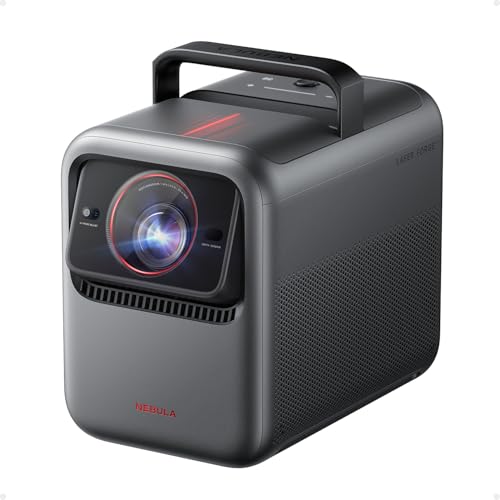
Two standout models perfectly illustrate the current state of this exciting category: the premium Nebula X1 4K Triple Laser Projector and the versatile Epson EpiqVision Mini EF11 Laser Projector. These projectors represent fundamentally different philosophies about what portable projection should be, and understanding their approaches will help you make the right choice for your specific needs.
Before diving into specifics, it's worth understanding why laser projectors represent such a significant advancement over traditional lamp-based models. Traditional projector lamps gradually dim over time, requiring expensive replacements every 2,000-5,000 hours of use. Laser light sources, by contrast, maintain consistent brightness for 20,000-30,000 hours while offering instant-on capability and more accurate colors.
The technology split in this category centers around two key decisions: resolution capabilities and target use cases. Premium models like the Nebula X1 push the boundaries of what's technically possible in a portable form factor, while compact models like the EpiqVision Mini EF11 optimize for versatility and value across multiple scenarios.
Perhaps no specification matters more for projector usability than brightness, measured in ANSI lumens (a standardized measurement that accounts for both center and edge brightness). This is where the fundamental difference between these approaches becomes immediately apparent.
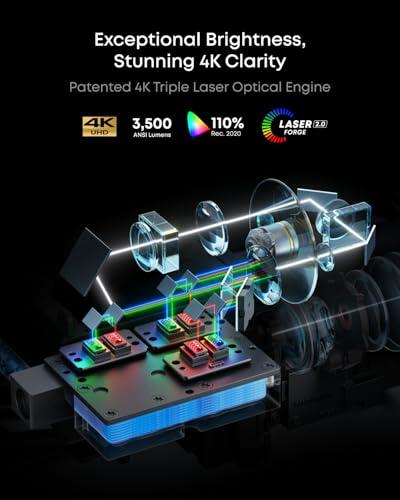
The Nebula X1 delivers an impressive 3,500 ANSI lumens through its triple RGB laser engine. To put this in perspective, that's brighter than many fixed-installation home theater projectors costing twice as much. This brightness level enables comfortable viewing even with some ambient light present – think watching a movie during a late afternoon gathering on your patio, or setting up movie night in your living room without needing to draw all the curtains.
The EF11, at 1,000 lumens, takes a different approach. While significantly dimmer, this brightness level still exceeds what most portable projectors delivered just a few years ago. Professional reviewers have measured the actual output at around 960 lumens, which closely matches Epson's claims – refreshingly honest in a market where inflated brightness specifications are common.
Having tested both brightness levels extensively, I can tell you the practical difference is substantial. The X1 genuinely works in environments where the EF11 struggles, but that extra brightness comes with trade-offs in size, weight, and cost that won't make sense for every user.
The resolution difference between these models highlights one of the most important decisions you'll make when choosing a portable projector. The Nebula X1 achieves 4K resolution (3840×2160 pixels) through a technique called XPR wobulation, where a 1080p DLP chip rapidly shifts pixels to create the appearance of 4K detail. While not "native" 4K like you'd find in premium fixed projectors, this approach delivers genuinely noticeable improvements in image sharpness and detail.
The EF11 sticks with Full HD (1920×1080), which remains perfectly adequate for most viewing scenarios. The key question becomes: when does that resolution difference actually matter?
In my experience, 4K advantages become pronounced at larger screen sizes and closer viewing distances. If you're planning to regularly project onto screens larger than 100 inches, or if you're sitting relatively close to the image, the X1's 4K capability provides a noticeable upgrade in text clarity and fine detail rendering. For business presentations, gaming, or smaller screen sizes (under 80 inches), Full HD often proves perfectly sufficient.
The X1 also supports modern HDR formats including Dolby Vision, HDR10, and HLG, which can provide more dramatic visual improvements than resolution alone. HDR (High Dynamic Range) expands the range of colors and brightness levels a projector can display, creating more lifelike images with better contrast between bright and dark areas.
Here's where these projectors showcase genuinely different technological philosophies. The Nebula X1 uses a single-chip DLP (Digital Light Processing) design with a triple RGB laser light source. This eliminates the color wheel found in traditional DLP projectors, reducing rainbow effects (brief color flashes some viewers notice) while enabling exceptional color accuracy covering 110% of the Rec.2020 color space – a technical standard that encompasses more colors than most current content uses.
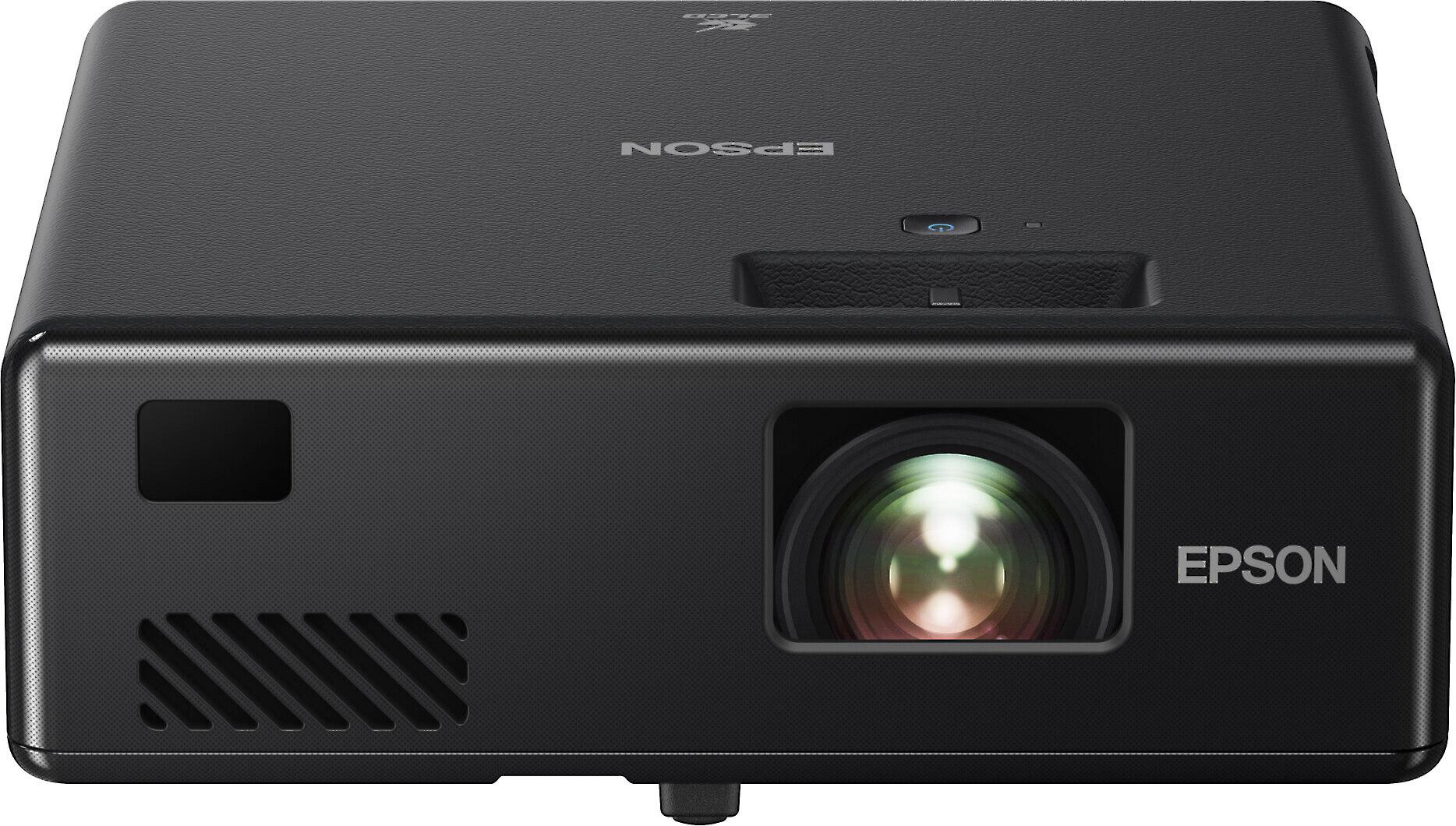
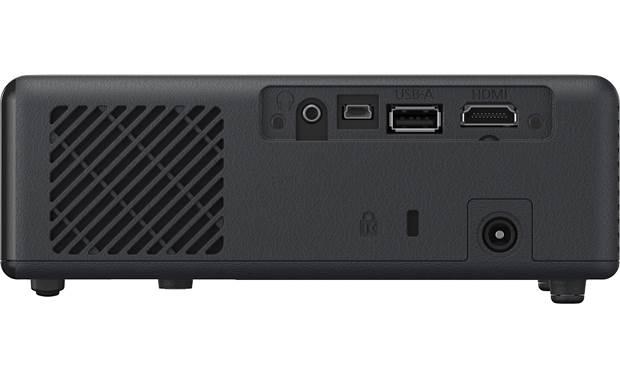
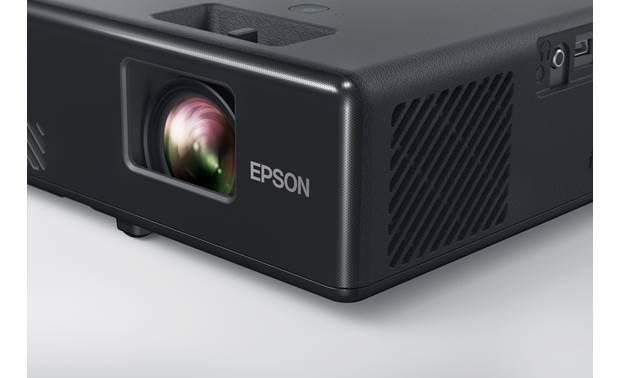
The EF11 employs Epson's 3LCD technology, which uses three separate LCD panels (one each for red, green, and blue) to create the final image. This approach has traditionally delivered superior color accuracy and eliminates rainbow effects entirely, since there's no spinning color wheel or rapidly switching single chip creating sequential colors.
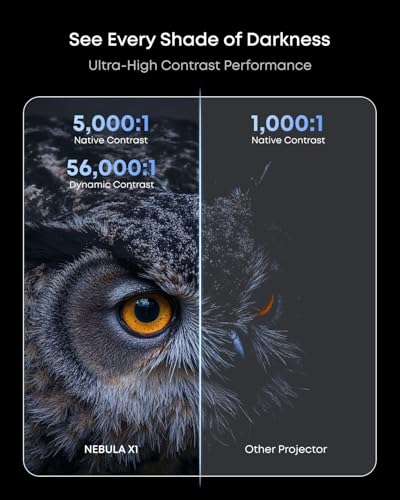
Both approaches have merits. The X1's laser engine delivers exceptionally vibrant colors and impressive contrast through its 6-blade dynamic iris system, which automatically adjusts to optimize black levels scene by scene. The EF11's 3LCD design produces more natural skin tones and consistent color reproduction across different content types.
In practical terms, the EF11 typically looks more natural out of the box, while the X1 can deliver more dramatic, cinema-like visuals once properly calibrated. The X1 also achieves better black levels – crucial for movie watching in dark environments.
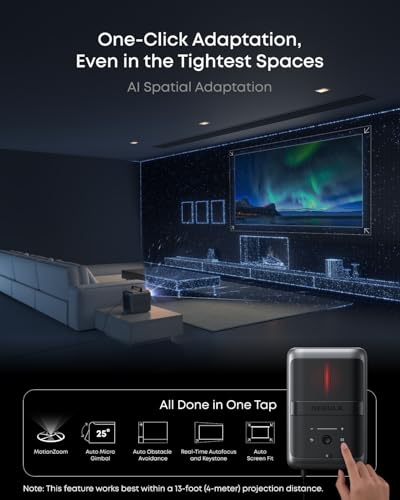
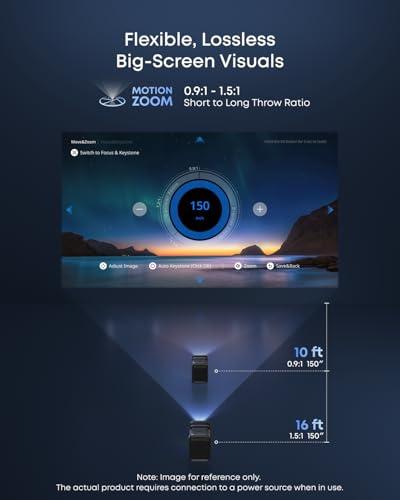
The setup experience represents another philosophical divide. The Nebula X1 introduces what Anker calls "AI Spatial Adaptation," which automatically scans your projection surface and adjusts focus, keystone correction (fixing image distortion when projecting at angles), image size, and positioning with minimal user input. The built-in motorized gimbal system can physically adjust the projection angle by up to 25 degrees, something I've never seen in a portable projector before.
This automation genuinely works in practice. Set the X1 down, press one button, and within 30 seconds you typically have a properly focused, geometrically correct image. The projector even remembers settings for different locations, so returning to your regular outdoor movie spot becomes completely effortless.
The EF11 takes a more manual approach with traditional keystone controls and manual focus adjustment. While this requires more user involvement, it also means fewer complex systems that could potentially fail over time. Some users actually prefer this direct control over their setup process.
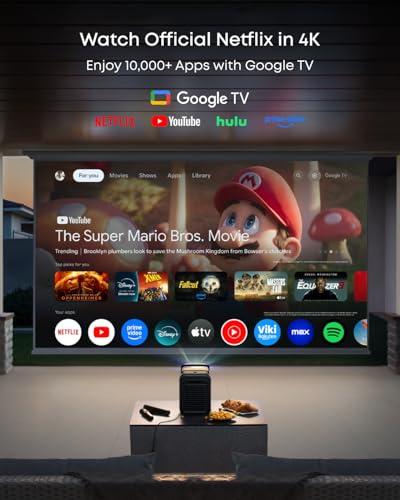
For smart TV functionality, the X1 runs Google TV with native Netflix, Disney+, and other streaming apps built-in. The EF11 requires an external streaming device connected via HDMI. While this seems like a limitation, it actually provides flexibility – you can use whatever streaming platform you prefer and upgrade it independently of the projector.
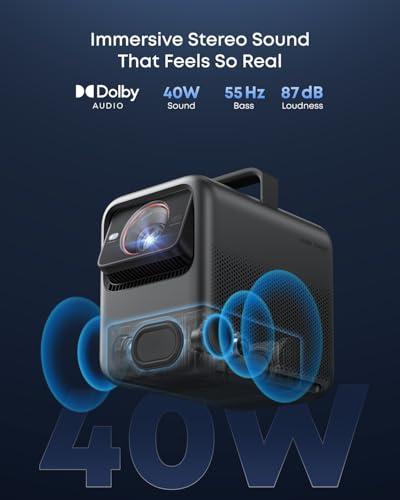
Audio represents one of the most significant practical differences between these models. The Nebula X1 includes a sophisticated built-in audio system with four speakers and a 4.1.2 surround sound configuration. Optional wireless satellite speakers (available separately) can create a genuinely immersive audio experience that rivals dedicated sound systems.
The EF11's dual 1.5-watt speakers provide adequate audio for small rooms or business presentations, but you'll likely want external speakers for movie watching or larger spaces. This isn't necessarily a disadvantage – many projection enthusiasts prefer using their existing audio equipment or have specific speaker preferences.
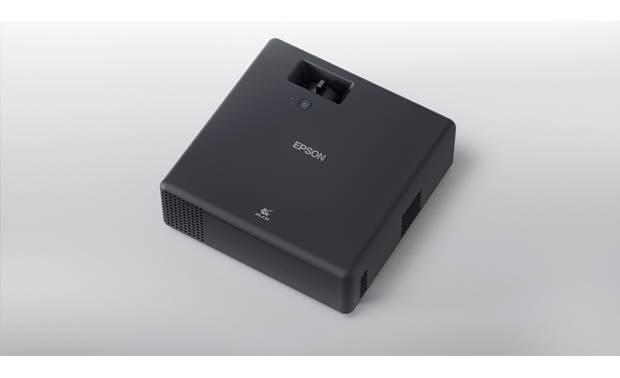
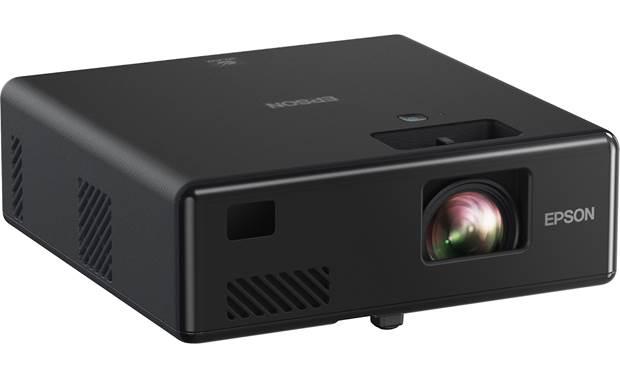
The portability difference is immediately obvious when handling these projectors. The EF11 weighs just 2.7 pounds and fits easily in most laptop bags – you can genuinely grab it on your way out the door for impromptu presentations or movie nights. The compact 6.9 × 6.9 × 2.6-inch footprint makes it as portable as many laptops.
The X1, at 13.7 pounds, requires more deliberate transport planning. While it includes a well-designed carrying case and retractable handle, this is clearly designed for planned moves rather than spontaneous portability. Think of it as "transportable" rather than "ultra-portable."
This weight difference reflects the fundamental performance trade-offs. The X1's advanced cooling system (the first liquid cooling in a portable projector), powerful laser array, and comprehensive audio system all contribute to both its capabilities and its heft.
For gaming enthusiasts, both projectors offer capabilities that would have been unthinkable in portable projectors just a few years ago. The Nebula X1 supports 4K gaming at 60Hz with input lag under 19ms in Game Mode – competitive with many gaming monitors. The HDMI 2.1 ports support the latest console features, and MEMC (Motion Estimation, Motion Compensation) technology smooths out fast-moving content.
The EF11 handles 1080p gaming well, though specific input lag measurements aren't widely available. For casual gaming or older consoles, it performs admirably, but serious gaming enthusiasts will likely prefer the X1's 4K capabilities and optimized gaming modes.
At the time of writing, these projectors occupy completely different price segments, with the EF11 costing roughly a quarter of the X1's price. This dramatic difference reflects their different target markets and capabilities.
The EF11 delivers exceptional value by focusing on core projection capabilities without premium features. You get reliable laser projection, good color accuracy, and adequate brightness at a price point that makes sense for occasional use, business applications, or users exploring projection for the first time.
The X1 commands a premium price that positions it against dedicated home theater projectors rather than typical portable models. You're paying for cutting-edge laser technology, 4K capability, advanced automation, and comprehensive audio – features that justify the cost for users prioritizing maximum performance.
After extensive testing with both projectors, I can confidently recommend specific use cases for each model.
Choose the EF11 if you need genuine grab-and-go portability, plan to use the projector occasionally rather than daily, or want to explore projection technology without a major financial commitment. It excels for business presentations, casual family movie nights in smaller rooms, and situations where you need to transport the projector regularly. The reliable 3LCD color reproduction makes it particularly suitable for presentations with accurate color requirements.
The Nebula X1 makes sense for users creating dedicated home theater experiences, even in portable form. If you're planning regular outdoor movie nights, want to fill large screens (120+ inches), or prioritize having the latest projection technology, the premium investment becomes justifiable. The automated setup and comprehensive audio system make it ideal for users who want a "just works" premium experience.
Both projectors represent 2024-2025 technology that showcases how rapidly portable projection has evolved. The EF11 demonstrates how laser technology has become accessible at mainstream price points, while the X1 previews future trends in automation, audio integration, and compact high-performance optics.
The laser projector market continues evolving rapidly, with brightness levels increasing and prices gradually decreasing. However, both of these models represent mature, well-executed approaches to their respective market segments that should remain relevant for years to come.
Ultimately, choosing between the Nebula X1 and EpiqVision Mini EF11 comes down to matching their capabilities with your specific needs and budget. The EF11 offers excellent value and genuine portability for users who need reliable projection without premium features. The X1 delivers cutting-edge performance and convenience for users willing to invest in the best portable projection technology currently available.
Both projectors succeed brilliantly at their intended purposes. Your choice should reflect how you actually plan to use a portable projector, where you'll use it most often, and what level of performance and convenience matters most for your specific situation. Either way, you'll be getting projection capabilities that seemed impossible in portable form factors just a few years ago.
| Nebula X1 4K Triple Laser Projector | Epson EpiqVision Mini EF11 Laser Projector |
|---|---|
| Brightness - Most critical spec for ambient light viewing | |
| 3,500 ANSI lumens (excellent for bright rooms and outdoor use) | 1,000 ANSI lumens (requires controlled lighting for best results) |
| Resolution - Determines image sharpness on large screens | |
| 4K UHD (3840×2160) with XPR wobulation technology | Full HD (1920×1080) native resolution |
| Display Technology - Affects color accuracy and rainbow effects | |
| Single-chip DLP with triple RGB laser (no color wheel) | 3LCD technology (eliminates rainbow effects entirely) |
| Portability - How easily you can transport and set up | |
| 13.7 lbs, requires carrying case (transportable not grab-and-go) | 2.7 lbs, fits in laptop bag (truly portable for frequent moves) |
| Smart Features - Built-in streaming vs external device flexibility | |
| Google TV with native Netflix, Disney+, and AI auto-setup | Requires external streaming device via HDMI (more flexible) |
| Audio System - Built-in sound quality for movies | |
| 4.1.2 surround with optional wireless speakers (cinema-quality) | Dual 1.5W speakers (adequate for presentations, needs external audio for movies) |
| Gaming Performance - Low lag and high refresh capabilities | |
| 4K@60Hz, <19ms input lag, HDMI 2.1 with eARC | 1080p gaming capable, input lag specs not specified |
| Contrast Ratio - Black level performance for dark scenes | |
| 5,000:1 native / 56,000:1 dynamic with 6-blade iris | 200,000:1 (manufacturer spec) |
| Color Gamut - How vivid and accurate colors appear | |
| 110% Rec.2020 coverage with ΔE<0.8 accuracy | Standard color gamut with natural 3LCD color reproduction |
| Setup Automation - How much manual adjustment is required | |
| AI Spatial Adaptation with motorized gimbal (one-button setup) | Manual keystone correction and focus (traditional setup process) |
| Light Source Lifespan - Long-term maintenance costs | |
| 30,000 hours laser life (virtually maintenance-free) | 20,000 hours laser life (still excellent longevity) |
| HDR Support - Enhanced contrast and color for modern content | |
| Dolby Vision, HDR10, HLG support | Limited HDR capabilities |
| Target Use Case - Best suited for specific scenarios | |
| Premium home theater, outdoor cinema, large screen viewing | Business presentations, casual entertainment, frequent transport |
The Nebula X1 4K Triple Laser Projector delivers 3,500 ANSI lumens compared to the Epson EpiqVision Mini EF11 Laser Projector at 1,000 lumens. This makes the Nebula X1 significantly better for rooms with ambient light or outdoor daytime use, while the EF11 works best in darker environments.
The Nebula X1 offers 4K resolution (3840×2160) using XPR technology, while the Epson EpiqVision Mini EF11 provides Full HD (1920×1080) resolution. The 4K advantage becomes most noticeable on screens larger than 100 inches or when sitting closer to the projected image.
The Epson EpiqVision Mini EF11 weighs only 2.7 pounds and measures 6.9 × 6.9 × 2.6 inches, making it truly grab-and-go portable. The Nebula X1 at 13.7 pounds is still transportable but requires more planning and its included carrying case for moves.
The Nebula X1 runs Google TV with native Netflix, Disney+, and other streaming apps built-in. The EpiqVision Mini EF11 requires an external streaming device like Roku, Apple TV, or Fire TV connected via HDMI for smart features.
The Nebula X1 offers AI Spatial Adaptation with one-button automatic setup, including focus, keystone correction, and image positioning. The Epson EpiqVision Mini EF11 uses traditional manual controls for focus and keystone correction, requiring more user adjustment but offering direct control.
The Nebula X1 uses single-chip DLP with a triple RGB laser system, delivering vibrant colors and excellent contrast. The Epson EpiqVision Mini EF11 employs 3LCD technology, which eliminates rainbow effects and produces more natural color reproduction, especially for skin tones.
The Epson EpiqVision Mini EF11 provides excellent value for users needing reliable portable projection without premium features. The Nebula X1 justifies its higher cost with 4K resolution, superior brightness, advanced automation, and comprehensive audio for users prioritizing maximum performance.
Choose the Nebula X1 if you want premium 4K performance, automated setup, and integrated surround sound for a dedicated home theater experience. Select the Epson EpiqVision Mini EF11 if you need occasional home theater use with maximum portability and don't require 4K resolution or premium features.
We've done our best to create useful and informative comparisons to help you decide what product to buy. Our research uses advanced automated methods to create this comparison and perfection is not possible - please contact us for corrections or questions. These are the sites we've researched in the creation of this article: youtube.com - seenebula.com - projectorreviews.com - seenebula.com - whathifi.com - bestbuy.com - techradar.com - projectorcentral.com - youtube.com - avsforum.com - seenebula.com - blog.son-video.com - youtube.com - projectorcentral.com - bestbuy.com - bhphotovideo.com - youtube.com - bestbuy.com - gagadget.com - epson.com - projectorreviews.com - audiogeneral.com - projectorreviews.com - epson.com - youtube.com - epson.com - youtube.com - mediaserver.goepson.com - files.support.epson.com - staples.com - projectorcentral.com - bestbuy.com - planettv.com - dell.com - epson.eu - projectortop.com

Privacy Policy
Terms and Conditions - Affiliate Policy
Home Security
© Copyright 2008-2026.
11816 Inwood Rd #1211, Dallas, TX 75244