


When I first started testing projectors, the choice between portability and performance felt like picking between a smartphone camera and a professional DSLR. You could have convenience or quality, but rarely both. Today's projector market has changed dramatically, but that fundamental trade-off still exists—just with much better options on both sides.
The XGIMI MoGo 3 Pro and Optoma HZ40HDR represent two completely different philosophies in projection technology. One prioritizes lifestyle integration and convenience, while the other focuses on delivering professional-grade performance in a dedicated setup. Understanding these approaches is crucial because buying the wrong type for your needs can leave you frustrated, regardless of how good the projector is on paper.
The projector landscape has evolved significantly over the past few years. Traditional lamp-based projectors, which dominated the market for decades, are giving way to LED and laser light sources that last longer and provide more consistent performance. At the same time, streaming integration has become essential as people expect their projectors to work like smart TVs.
When evaluating projectors today, you need to consider several key factors. Brightness, measured in lumens, determines where you can actually use the projector. Contrast ratio affects how well you can see details in dark scenes. Color accuracy impacts how realistic images look. Input lag matters for gaming. And increasingly, smart features determine whether you need additional devices to stream content.
The biggest decision often comes down to use case. Do you want a projector that travels with you and works anywhere, or are you building a dedicated home theater that maximizes image quality? This fundamental question should guide your entire decision-making process.
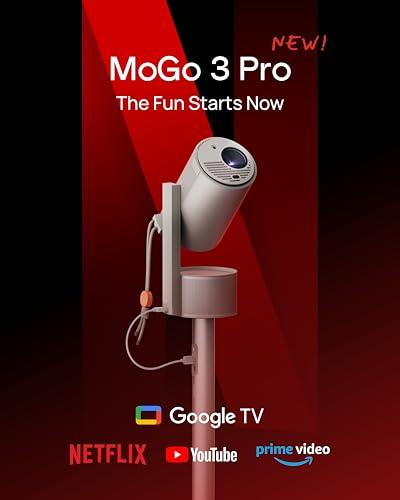
Released in 2024, the XGIMI MoGo 3 Pro represents the latest evolution in XGIMI's portable projector line. What makes this generation special is the integration of Google TV with officially licensed Netflix—something that sounds simple but was actually a major breakthrough for portable projectors.
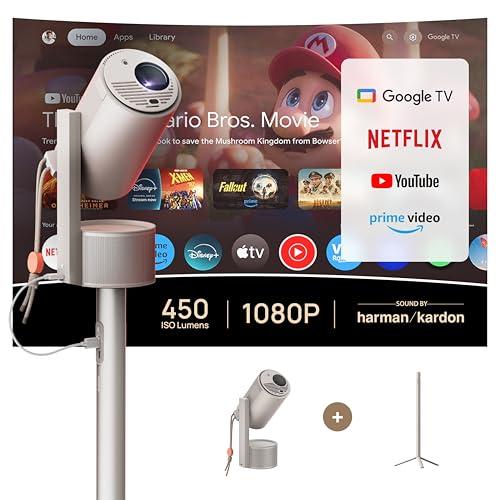
For years, portable projectors suffered from a frustrating limitation: you couldn't easily access popular streaming services. Netflix, in particular, blocked most projectors from running their app, forcing users to connect phones or laptops. The MoGo 3 Pro solves this by being one of the first portable projectors with full Google TV integration, meaning you can access over 10,000 apps directly without any workarounds.
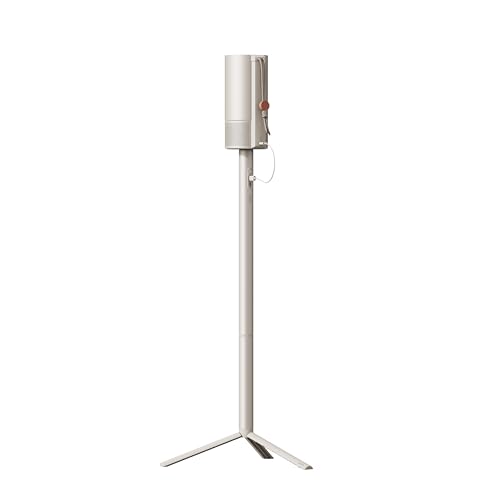
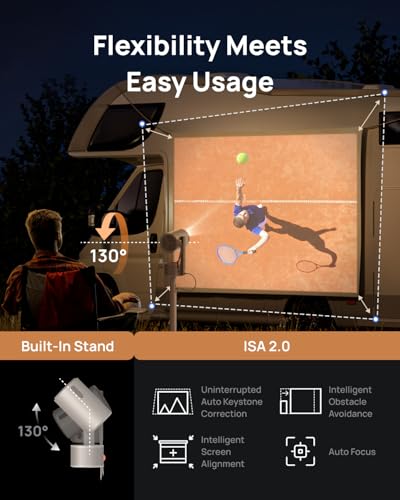
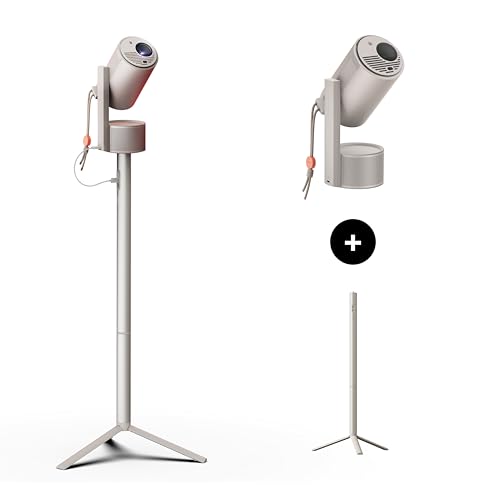
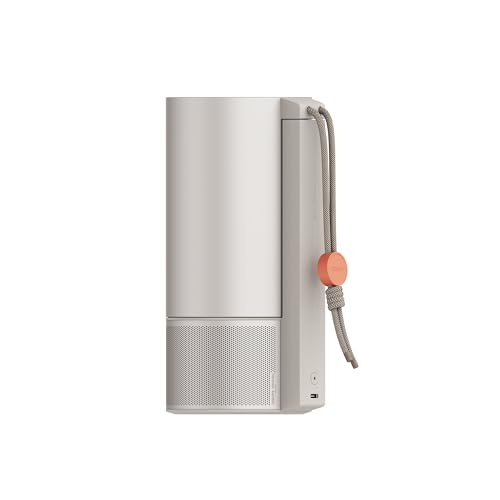
At 2.4 pounds and roughly the size of a large coffee cup, the XGIMI MoGo 3 Pro achieves true portability. The built-in 130-degree adjustable stand is particularly clever—it eliminates the need to carry a separate tripod or find the perfect surface height. I've tested this extensively, and the stand's range means you can project onto walls, ceilings, or even create floor projections for kids.
The Intelligent Screen Adaptation (ISA) 2.0 technology deserves special attention. This system automatically handles focus, keystone correction (fixing the trapezoidal distortion when projecting at angles), and even obstacle avoidance. If there's a light switch or picture frame in your projection area, the MoGo 3 Pro will automatically resize and reposition the image to avoid it. While not perfect—it occasionally needs manual fine-tuning—this technology makes setup genuinely effortless most of the time.
The XGIMI MoGo 3 Pro produces 450 ISO lumens, which translates to roughly 400 ANSI lumens in real-world testing. This brightness level defines the projector's use cases more than any other specification. In a completely dark room, you can achieve excellent image quality up to about 120 inches diagonally. With some ambient light—think evening living room with lamps on—you'll want to stick to 80 inches or smaller.
The native 1080p resolution ensures sharp text and clear details, while the 90% DCI-P3 color gamut coverage delivers vibrant, accurate colors. DCI-P3 is a color space used in digital cinema that encompasses more colors than the standard sRGB space, resulting in more lifelike skin tones and saturated colors that don't look artificial.
Audio quality from the dual 5-watt Harman Kardon speakers genuinely surprised me during testing. While you wouldn't mistake it for a dedicated sound system, the speakers provide clear dialogue and surprisingly full sound that can fill a medium-sized room. The addition of an Ambient Light Mode—where pressing the projector creates customizable mood lighting that pulses with music—transforms it into a Bluetooth speaker with visual effects.
For gaming, the MoGo 3 Pro offers respectable but not exceptional performance. Input lag—the delay between when you press a button and when the action appears on screen—measures around 27 milliseconds with automatic features disabled, or 60ms with auto-keystone enabled. For context, competitive gamers typically want under 20ms, while casual gaming remains enjoyable up to about 40ms.
This means the XGIMI MoGo 3 Pro works well for RPGs, adventure games, and casual multiplayer sessions, but you might notice the delay in fast-paced shooters or fighting games. The trade-off for the automatic setup convenience becomes apparent here.
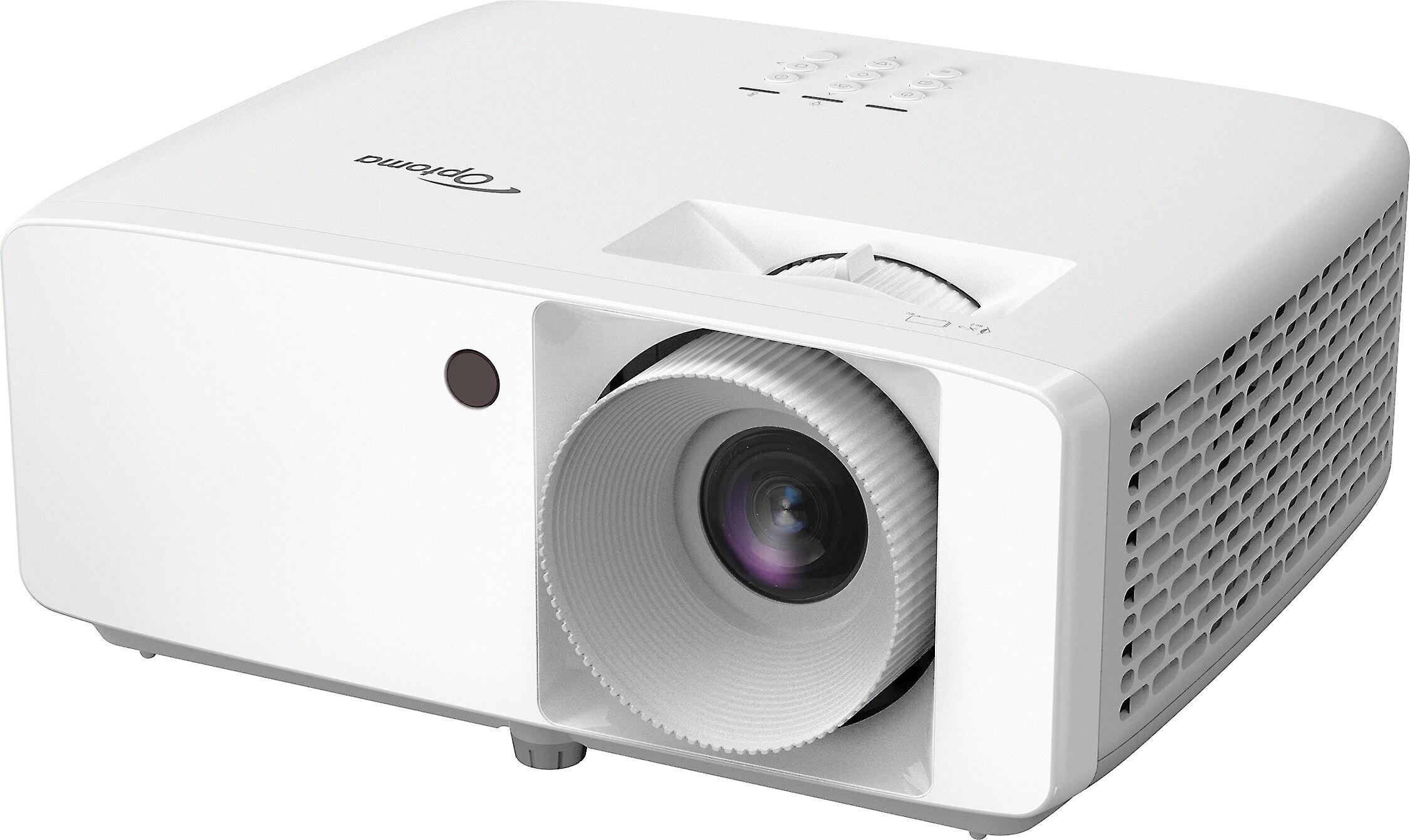
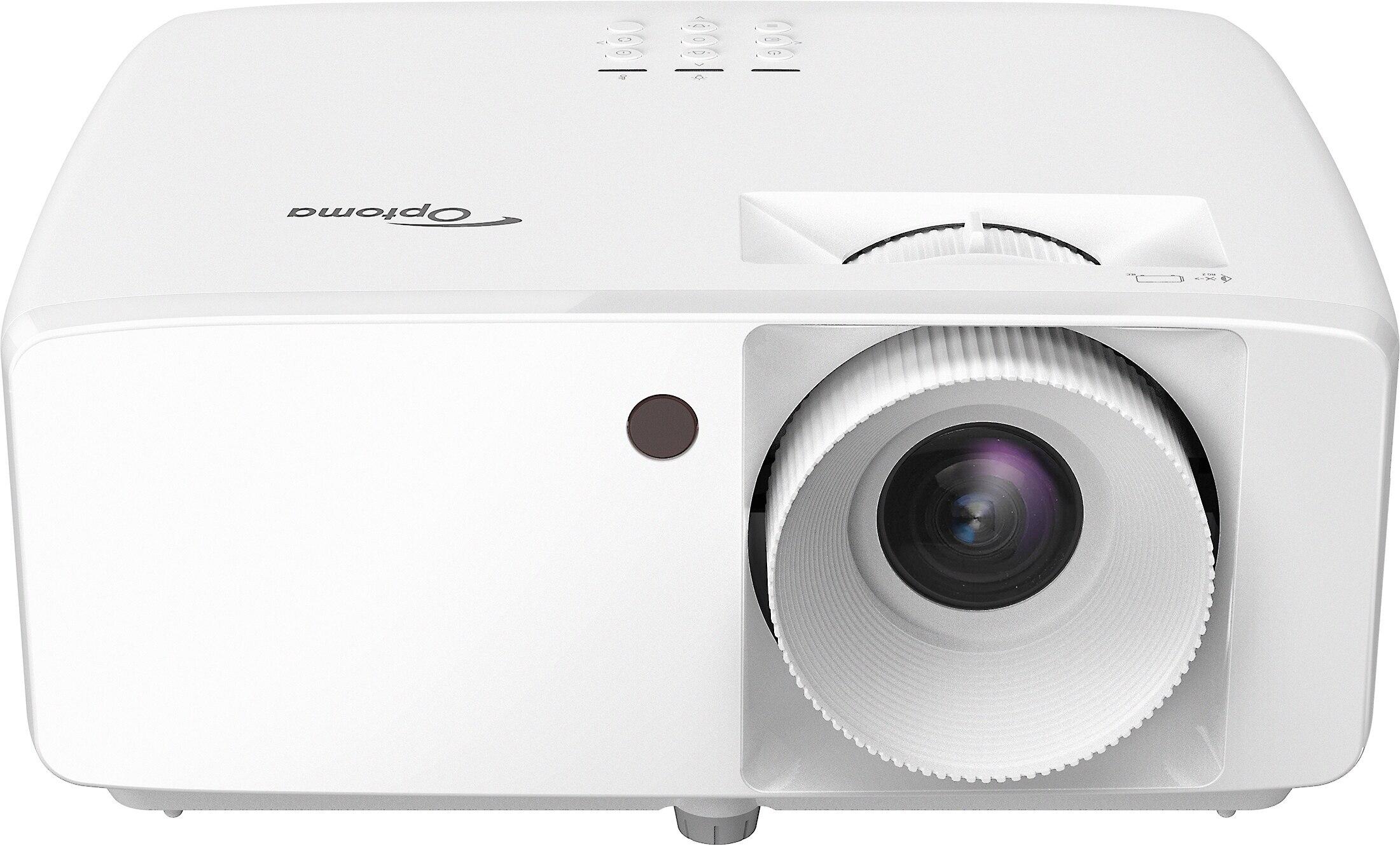
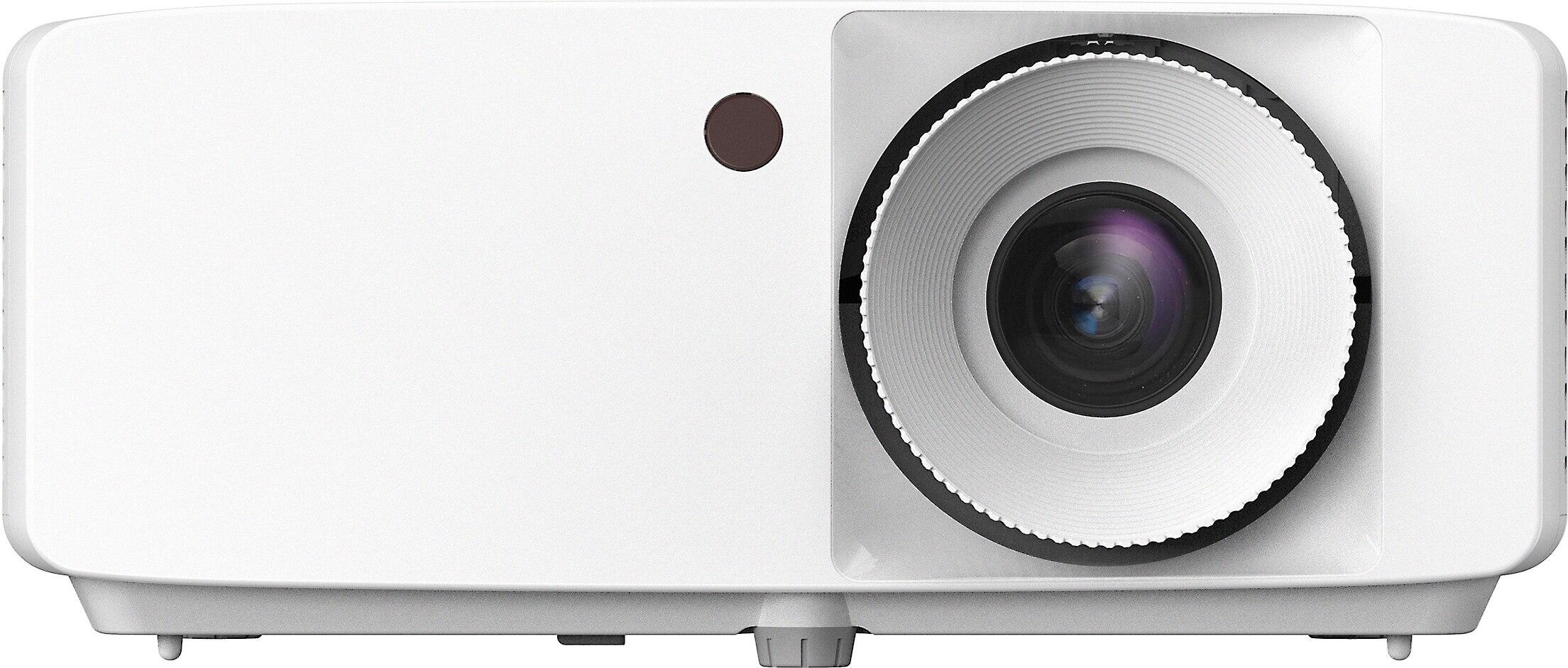
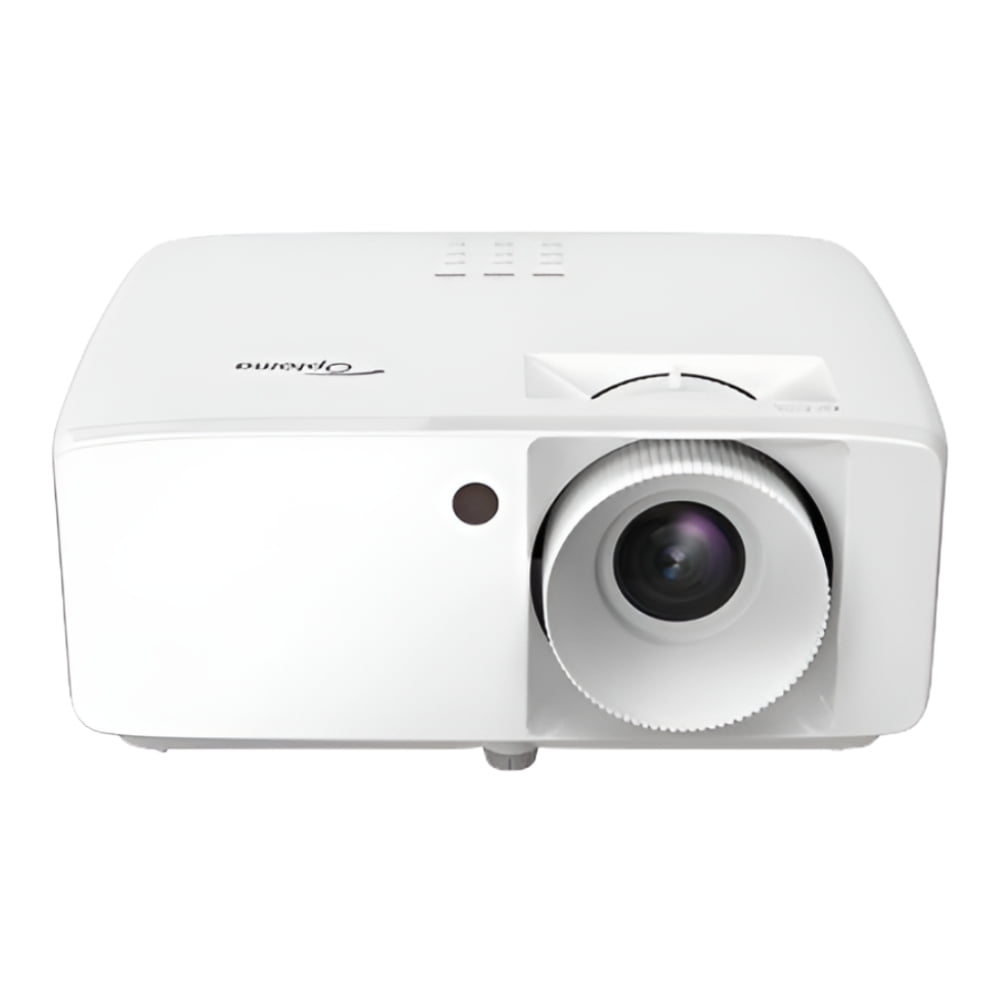
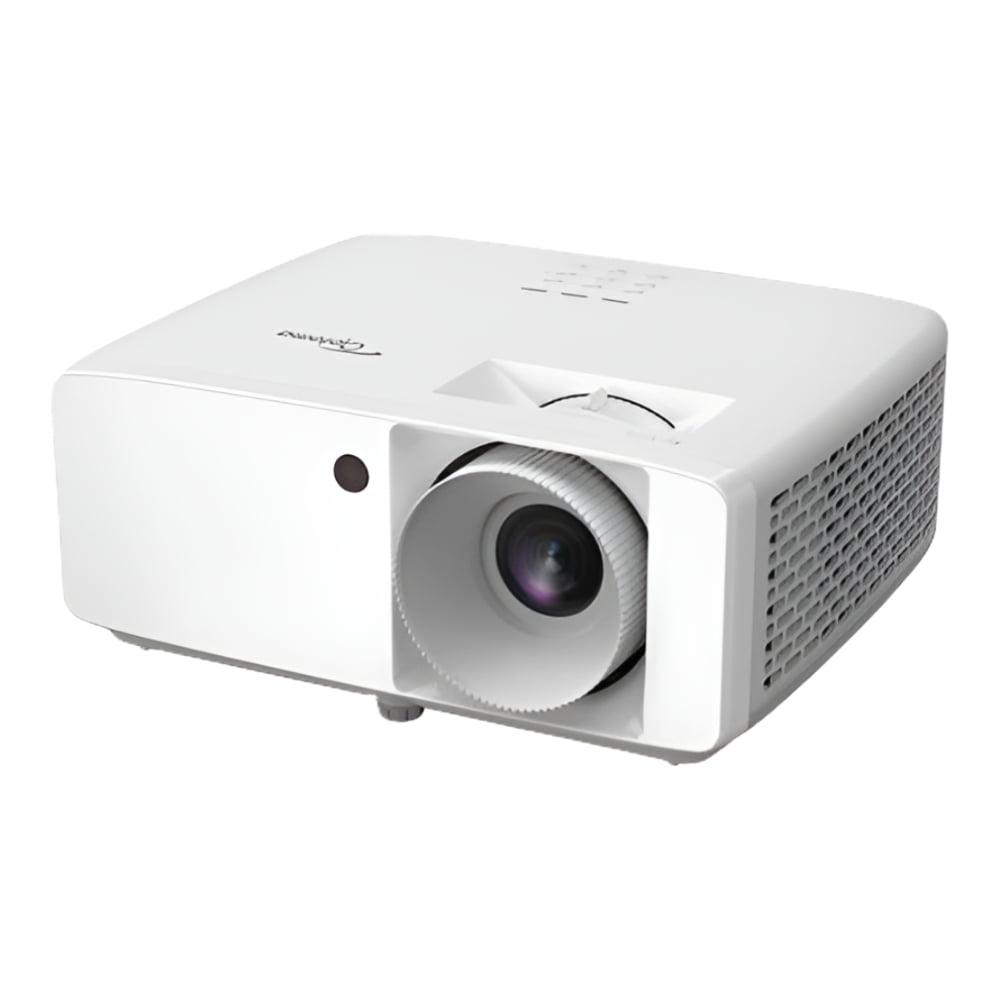
The Optoma HZ40HDR, while not specifying an exact release year in our research, represents Optoma's commitment to bringing professional-grade laser projection to the consumer market. The "HDR" in its name hints at its primary focus: delivering the best possible image quality within the 1080p format.
The most significant technical difference lies in the HZ40HDR's laser light source. Traditional projector lamps gradually dim over their 3,000-5,000 hour lifespan and can fail suddenly. Laser phosphor technology maintains consistent brightness and color accuracy for up to 30,000 hours—essentially a decade of heavy use—while consuming up to 45% less power than comparable lamp-based projectors.
This isn't just about longevity; it's about performance consistency. Lamp-based projectors are brightest when new and gradually fade. The Optoma HZ40HDR maintains its full 4,000 ANSI lumens throughout its lifespan, ensuring your investment delivers consistent results.
At 4,000 ANSI lumens, the HZ40HDR operates in a completely different performance category than portable projectors. This brightness level enables daytime viewing, projection in rooms with ambient light, and screen sizes up to 300 inches. To put this in perspective, it's roughly nine times brighter than the XGIMI MoGo 3 Pro.
In practical terms, this means you can watch sports during afternoon gatherings, use the projector in a living room with windows, or create a massive 250+ inch display that remains clearly visible. The Optoma HZ40HDR transforms projection from a "lights-off" activity into something you can use anytime.
The 300,000:1 contrast ratio—the difference between the brightest whites and darkest blacks the projector can display—delivers genuinely impressive image depth. In dark movie scenes, you can distinguish details that would be lost on lesser projectors. The HDR10 and HLG support further enhances this by allowing compatible content to display a wider range of brightness levels, creating more realistic lighting effects.
HDR (High Dynamic Range) content contains information about a broader range of light levels than standard video. When properly displayed, HDR makes bright scenes more brilliant and dark scenes more detailed, similar to how your eyes naturally see the world. The HZ40HDR's laser light source and processing capabilities handle HDR content significantly better than the MoGo 3 Pro, which supports basic HDR10 but sometimes struggles with blown-out highlights in very bright scenes.
For gaming enthusiasts, the Optoma HZ40HDR delivers exceptional performance with 8.6ms input lag at 1080p/120Hz. This ultra-low latency makes it suitable for competitive gaming, including fast-paced shooters and fighting games where every millisecond matters. The projector also maintains respectable 16ms lag at 4K/60Hz, accommodating console gaming at higher resolutions.
The brightness gap between these projectors fundamentally changes how you use them. During my testing, I found the XGIMI MoGo 3 Pro works beautifully for evening movie watching, outdoor screenings after sunset, and bedroom use. However, trying to use it during daytime or in brightly lit rooms results in washed-out, barely visible images.
The Optoma HZ40HDR, by contrast, handles almost any lighting condition. I've successfully used it for daytime sports viewing, presentations in conference rooms with fluorescent lights, and massive outdoor displays that remain visible even with nearby lighting.
Here's where the approaches diverge most dramatically. The XGIMI MoGo 3 Pro excels at spontaneous use—grab it, find a wall, and start watching within minutes. Its 1.2:1 throw ratio means you can place it relatively close to the wall, making it practical in smaller spaces.
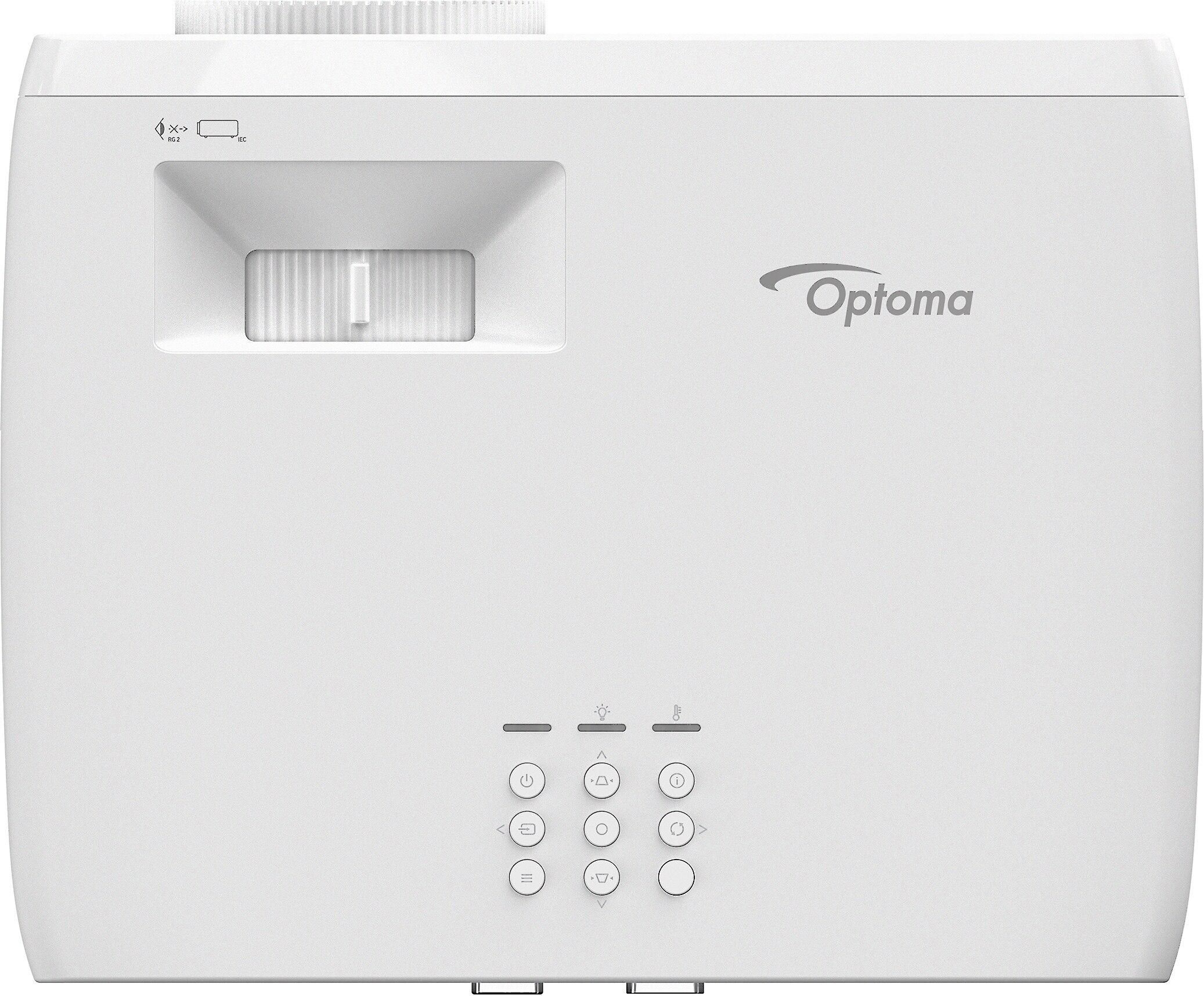
The Optoma HZ40HDR requires more planning. Its 1.48:1 to 1.62:1 throw ratio needs more distance for the same screen size, and you'll want to consider mounting or permanent placement. However, once properly positioned, it delivers consistently superior results without the need for constant adjustments.
In a dedicated home theater setup, the HZ40HDR's minimal 15W mono speaker clearly indicates you'll need external audio. This isn't necessarily a limitation—most serious home theater setups benefit from dedicated speakers or soundbars that far exceed what any projector's built-in audio can provide.
The MoGo 3 Pro's integrated Harman Kardon speakers represent a complete entertainment solution for casual viewing. While they can't match a dedicated sound system, they eliminate the need for additional components in smaller spaces or temporary setups.
When considering value, timing matters significantly. At the time of writing, the XGIMI MoGo 3 Pro typically sells for substantially less than the Optoma HZ40HDR, but comparing prices alone misses the complete picture.
The MoGo 3 Pro represents exceptional value as a complete entertainment system. When you factor in the built-in streaming capabilities (eliminating the need for a separate device worth $50-150), decent audio system, and true portability, the total cost of ownership becomes quite attractive for many users.
For renters, frequent movers, or anyone who values flexibility, the XGIMI MoGo 3 Pro provides functionality that fixed installations simply cannot match. The ability to create outdoor movie nights, travel with your entertainment system, or easily move between rooms adds value that's difficult to quantify but genuinely useful.
The HZ40HDR demands a higher initial investment and additional components for streaming and audio, but delivers professional-grade performance that justifies the cost for serious users. The laser light source alone represents significant long-term value—you'll never need lamp replacements, and the consistent performance over 30,000 hours means your image quality won't degrade over time.
For dedicated home theater applications, sports viewing, or any situation requiring bright, large-scale projection, the HZ40HDR provides capabilities that portable projectors simply cannot match, regardless of price.
Lifestyle Integration is Priority: If you want projection that adapts to your life rather than requiring a dedicated space, the MoGo 3 Pro excels. College students, apartment dwellers, and anyone who moves frequently will appreciate its flexibility.
Complete Solution Needed: When you want everything included—streaming, audio, projection—without additional purchases or complexity, the XGIMI MoGo 3 Pro delivers immediate satisfaction.
Outdoor Entertainment Matters: For camping, backyard movie nights, or patio entertainment, portable projectors like the MoGo 3 Pro enable experiences that fixed installations cannot provide.
Image Quality is Non-Negotiable: If you're building a dedicated viewing space and want the best possible 1080p performance, the HZ40HDR delivers professional-grade results.
Bright Room Usage Required: For daytime viewing, sports watching with friends, or any application requiring projection in ambient light, the HZ40HDR's 4,000-lumen output becomes essential.
Gaming Performance Matters: Competitive gamers and anyone sensitive to input lag will appreciate the HZ40HDR's 8.6ms response time and smooth high-refresh gaming capabilities.
Long-term Investment Perspective: If you're planning to use the projector for many years in a fixed location, the HZ40HDR's laser light source and consistent performance provide better long-term value.
Both the XGIMI MoGo 3 Pro and Optoma HZ40HDR excel at their intended purposes, but they serve fundamentally different needs. The MoGo 3 Pro succeeds by making projection accessible, convenient, and genuinely portable while maintaining respectable image quality for its size and price point.
The HZ40HDR takes the opposite approach, maximizing performance within the 1080p category and providing the brightness and features needed for serious home theater applications.
Your choice should align with how you actually live and watch content. If you value flexibility, convenience, and the ability to create entertainment anywhere, the XGIMI MoGo 3 Pro offers unique capabilities that no fixed projector can match. If you're committed to creating the best possible viewing experience in a dedicated space, the Optoma HZ40HDR provides professional-grade performance that will satisfy even demanding users.
Both represent excellent execution of their respective philosophies. The key is honestly assessing which philosophy better matches your needs, space, and viewing habits.
| XGIMI MoGo 3 Pro | Optoma HZ40HDR |
|---|---|
| Brightness - The single most important factor determining where you can use the projector | |
| 450 ISO lumens (requires dark rooms, best for evening viewing) | 4,000 ANSI lumens (handles daytime viewing and bright rooms) |
| Portability - Determines if you can easily move between locations | |
| 2.4 lbs with 130° adjustable stand (truly portable, fits in backpack) | 6.6 lbs fixed installation design (requires permanent setup) |
| Smart Features - Whether you need external streaming devices | |
| Google TV with licensed Netflix built-in (complete entertainment solution) | No smart features (requires separate streaming device) |
| Audio System - Important for total cost and setup complexity | |
| Dual 5W Harman Kardon speakers (room-filling sound, no external audio needed) | 15W mono speaker (requires external sound system for quality audio) |
| Gaming Performance - Critical for responsive gaming experience | |
| 27ms input lag (suitable for casual gaming, not competitive) | 8.6ms input lag at 1080p/120Hz (excellent for competitive gaming) |
| Light Source Technology - Affects longevity and maintenance | |
| LED with 25,000 hour life (maintenance-free, consistent performance) | Laser with 30,000 hour life (professional-grade, no lamp replacements) |
| Image Quality - Contrast and color accuracy in optimal conditions | |
| 90% DCI-P3 color gamut, basic HDR10 (good colors, limited HDR) | 300,000:1 contrast ratio, HDR10/HLG (superior blacks, excellent HDR) |
| Setup and Installation - How easy it is to get optimal picture | |
| ISA 2.0 auto-alignment, 1.2:1 throw ratio (automatic setup, close placement) | Manual setup, 1.48-1.62:1 throw ratio (requires planning, more throw distance) |
| Power Requirements - Flexibility of power options | |
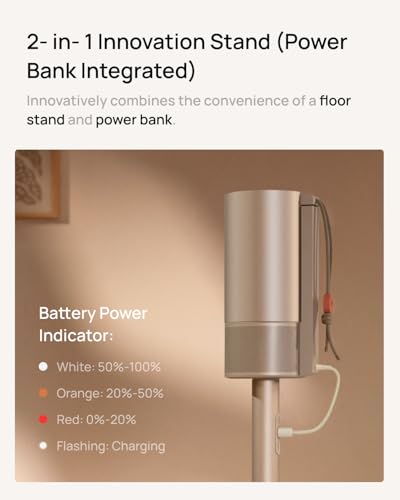
| USB-C power delivery (can run from power banks, optional battery base) | AC power only (requires wall outlet, fixed installation) |
| Screen Size Capability - Maximum practical viewing size | |
| Up to 120" practical (200" maximum in perfect dark conditions) | Up to 300" with excellent visibility (professional large-screen capability) |
The Optoma HZ40HDR is significantly brighter at 4,000 ANSI lumens compared to the XGIMI MoGo 3 Pro's 450 ISO lumens. This makes the Optoma HZ40HDR suitable for daytime viewing and rooms with ambient light, while the XGIMI MoGo 3 Pro requires dark environments for optimal performance.
The XGIMI MoGo 3 Pro is designed for portability at just 2.4 pounds with a built-in adjustable stand, making it easy to move between rooms or take outdoors. The Optoma HZ40HDR weighs 6.6 pounds and is designed for fixed installation, making it less practical for frequent moving.
The XGIMI MoGo 3 Pro includes Google TV with licensed Netflix and access to over 10,000 apps, so no additional streaming device is needed. The Optoma HZ40HDR has no built-in smart features and requires a separate streaming device like Roku, Apple TV, or Fire Stick.
The Optoma HZ40HDR offers superior gaming performance with 8.6ms input lag at 1080p/120Hz, making it excellent for competitive gaming. The XGIMI MoGo 3 Pro has 27ms input lag, which is acceptable for casual gaming but may feel sluggish for fast-paced competitive games.
The XGIMI MoGo 3 Pro features dual 5W Harman Kardon speakers that provide room-filling sound adequate for most casual viewing. The Optoma HZ40HDR has a basic 15W mono speaker that most users will want to supplement with an external sound system for quality audio.
For dedicated home theater rooms, the Optoma HZ40HDR provides superior image quality with higher brightness, better contrast (300,000:1), and professional-grade HDR performance. The XGIMI MoGo 3 Pro works well for casual home theater use but is limited by its lower brightness in larger, dedicated theater spaces.
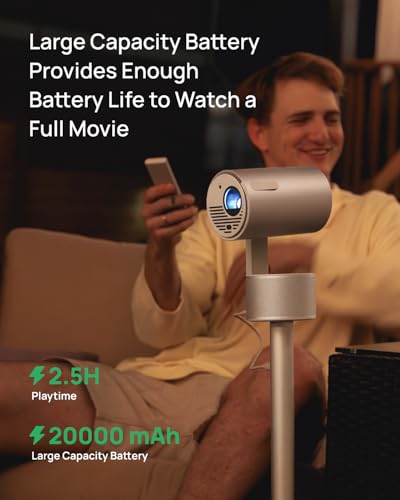
The XGIMI MoGo 3 Pro excels at outdoor use thanks to its portability, USB-C power capability (works with power banks), and built-in stand. The Optoma HZ40HDR can be used outdoors but requires AC power and more complex setup, though it will be brighter in outdoor conditions with ambient light.
Both projectors use long-lasting light sources that eliminate traditional lamp replacements. The XGIMI MoGo 3 Pro uses LED technology rated for 25,000 hours, while the Optoma HZ40HDR uses laser technology rated for 30,000 hours. Both provide maintenance-free operation for many years.
The XGIMI MoGo 3 Pro offers excellent value as a complete entertainment system with built-in streaming, speakers, and portability. The Optoma HZ40HDR provides better value for users prioritizing maximum image quality and brightness, though it requires additional investment in streaming devices and external audio.
The XGIMI MoGo 3 Pro can project up to 200 inches but works best at 80-120 inches in dark rooms. The Optoma HZ40HDR can handle up to 300 inches effectively, maintaining excellent brightness and clarity even at large screen sizes due to its 4,000-lumen output.
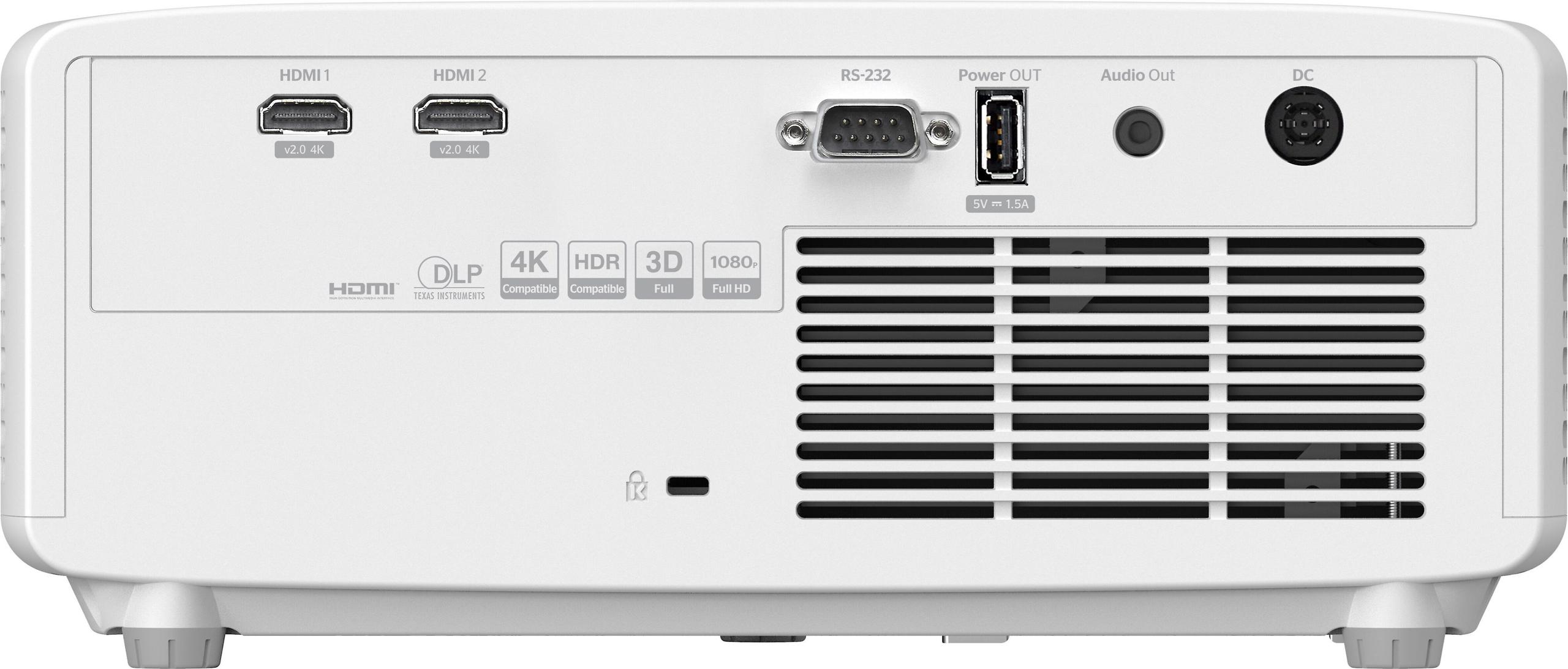
Both projectors have native 1080p resolution. The XGIMI MoGo 3 Pro can accept and downscale 4K input signals, while the Optoma HZ40HDR also accepts 4K input with HDR support. Neither displays true 4K resolution, but both handle 4K content well when downscaled to 1080p.
The XGIMI MoGo 3 Pro features Intelligent Screen Adaptation (ISA 2.0) that automatically handles focus, keystone correction, and obstacle avoidance, making setup nearly effortless. The Optoma HZ40HDR requires manual adjustment but offers more precise control once properly configured for a dedicated installation.
We've done our best to create useful and informative comparisons to help you decide what product to buy. Our research uses advanced automated methods to create this comparison and perfection is not possible - please contact us for corrections or questions. These are the sites we've researched in the creation of this article: projectorcentral.com - techradar.com - androidcentral.com - tvsbook.com - techradar.com - thesmarthomehookup.com - whathifi.com - youtube.com - youtube.com - projectorcentral.com - projectorcentral.com - youtube.com - global.xgimi.com - us.xgimi.com - youtube.com - us.xgimi.com - us.xgimi.com - projectorcentral.com - optomausa.com - crutchfield.com - tvsbook.com - youtube.com - avsforum.com - hometechnologyreview.com - optomausa.com - bestbuy.com - tvsbook.com - picclick.com - crutchfield.com - homecinemachoice.com - compsource.com - adorama.com - bhphotovideo.com - provantage.com - cdw.com - datavision.com - manua.ls - ipcstore.com - pcrichard.com - richersounds.com - electronicexpress.com - projexdisplay.com - dubaimachines.com - newegg.com - projectorpoint.co.uk - a.ubuy.com.kw - greentoe.com

Privacy Policy
Terms and Conditions - Affiliate Policy
Home Security
© Copyright 2008-2026.
11816 Inwood Rd #1211, Dallas, TX 75244