

Home projectors have evolved dramatically over the past decade, transforming from bulky, dim machines into sophisticated entertainment powerhouses. Today's market offers incredible variety, from theater-grade 4K laser projectors to pocket-sized portable units you can take camping.
The Optoma HZ40HDR and BenQ GS50 represent two distinct approaches to home projection, each with unique strengths that cater to different types of users. Released in 2020 and 2021 respectively, these projectors showcase how diverse the market has become—with technology once reserved for commercial cinemas now available for home use, alongside innovations focused on portability and convenience.
Before diving into specifics, it's worth understanding that projectors differ from TVs in fundamental ways. Rather than emitting their own light like TVs, projectors cast light onto a surface, making ambient light control and screen quality important considerations. This distinction creates both challenges and unique opportunities that smart shoppers should understand.
The Optoma HZ40HDR (typically priced around $1,299) represents the traditional home theater approach: a fixed installation projector designed to deliver maximum image quality and brightness. It uses advanced laser light source technology rather than conventional bulbs, promising years of maintenance-free operation.
In contrast, the BenQ GS50 (typically around $799) embodies the newer trend of lifestyle projectors—devices designed to fit into more casual, flexible entertainment scenarios. With its built-in battery, ruggedized design, and smart platform integration, it prioritizes versatility over raw performance.
Both projectors offer 1080p resolution, but as we'll explore, their technical approaches and target users couldn't be more different.
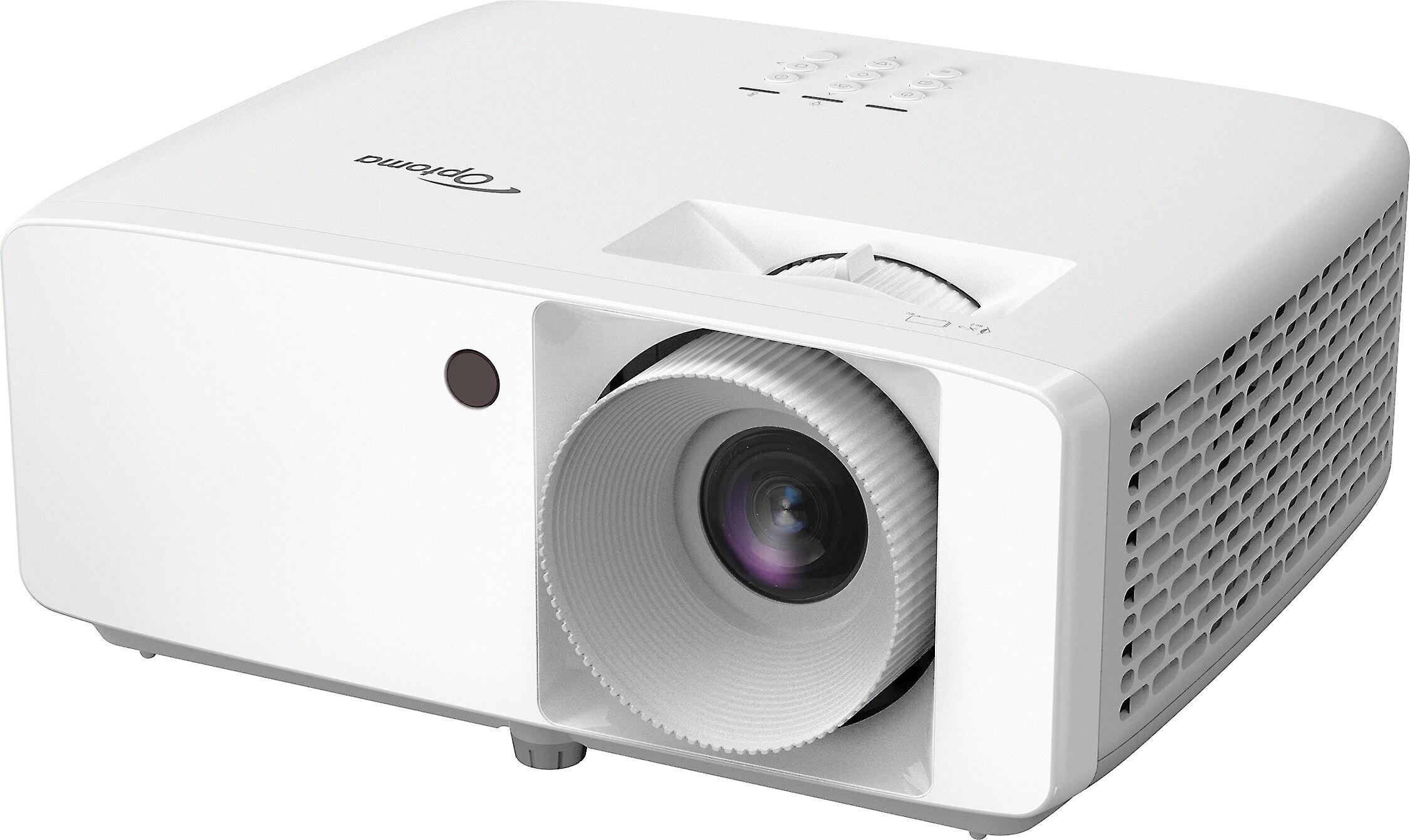
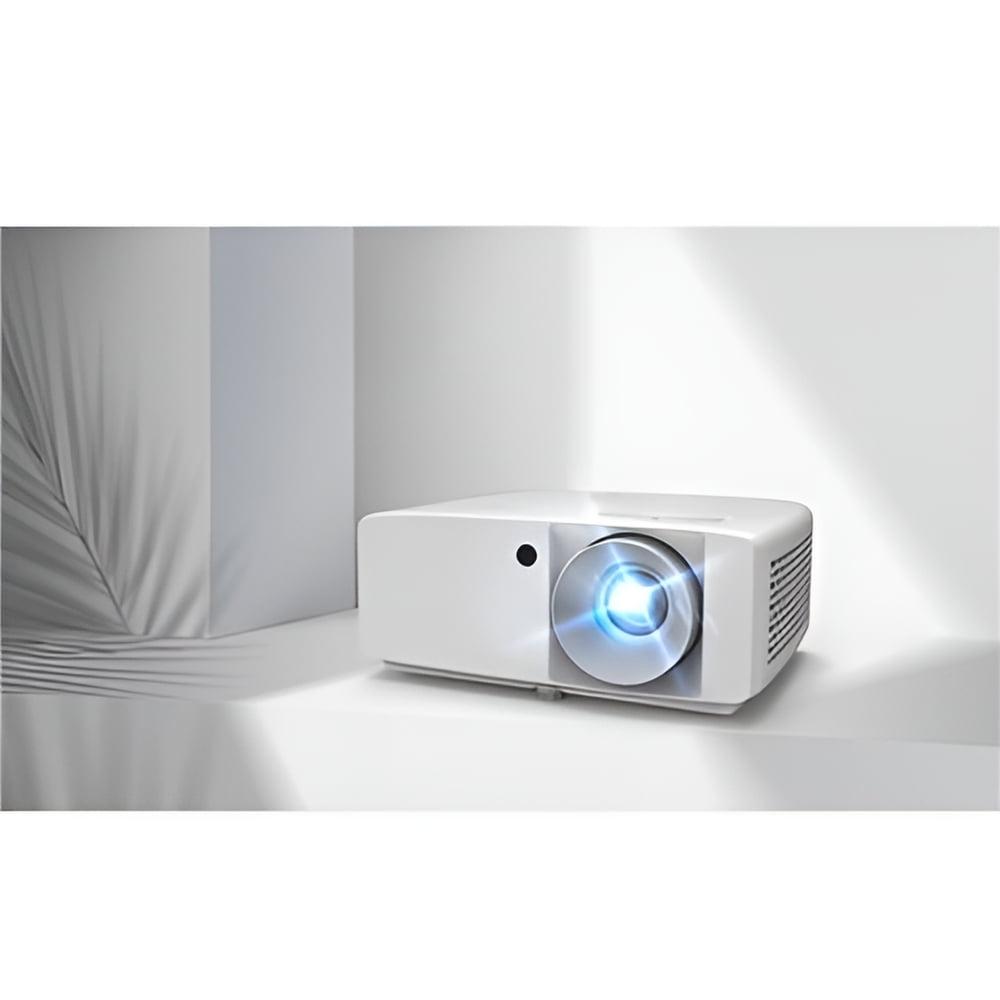
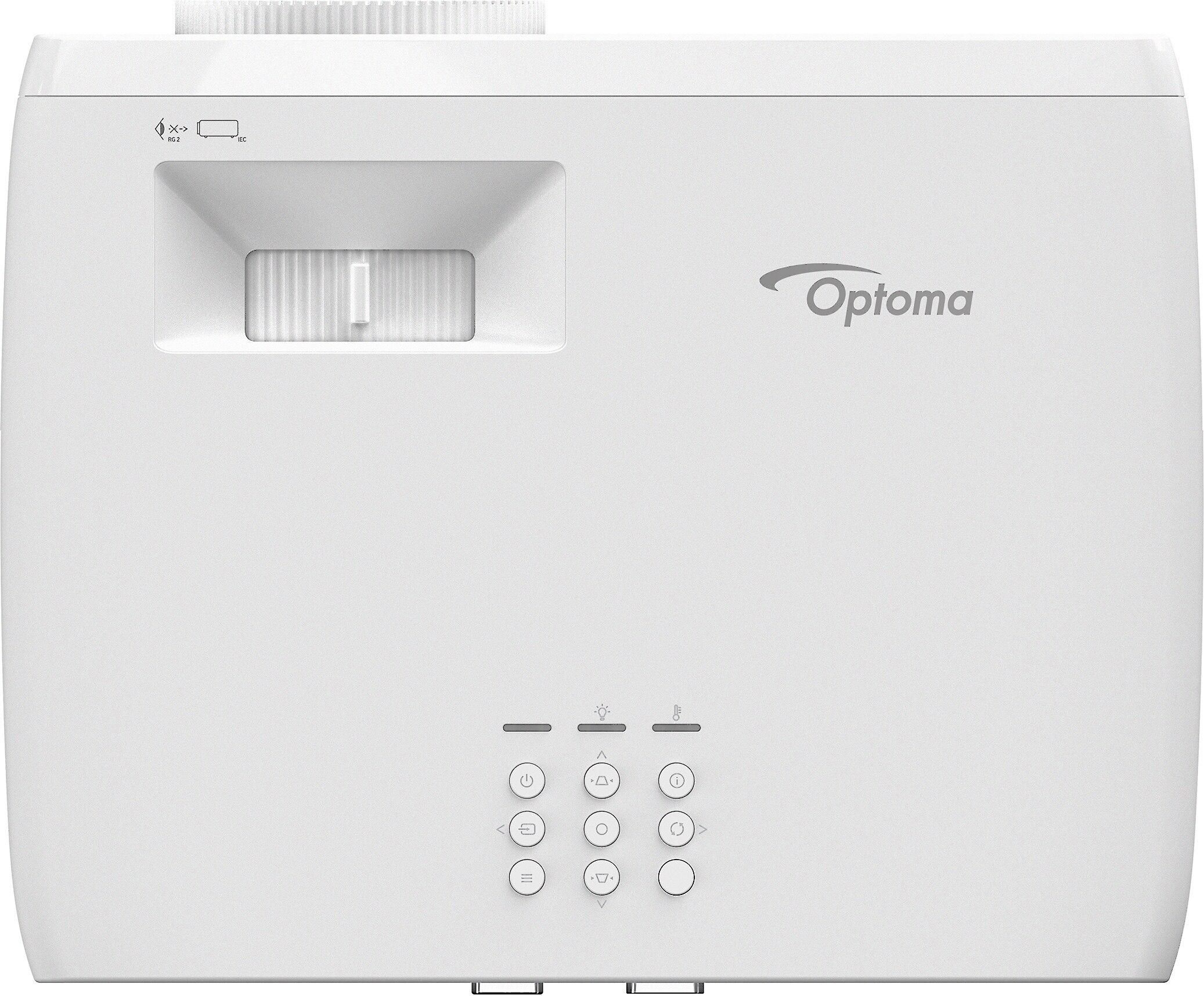
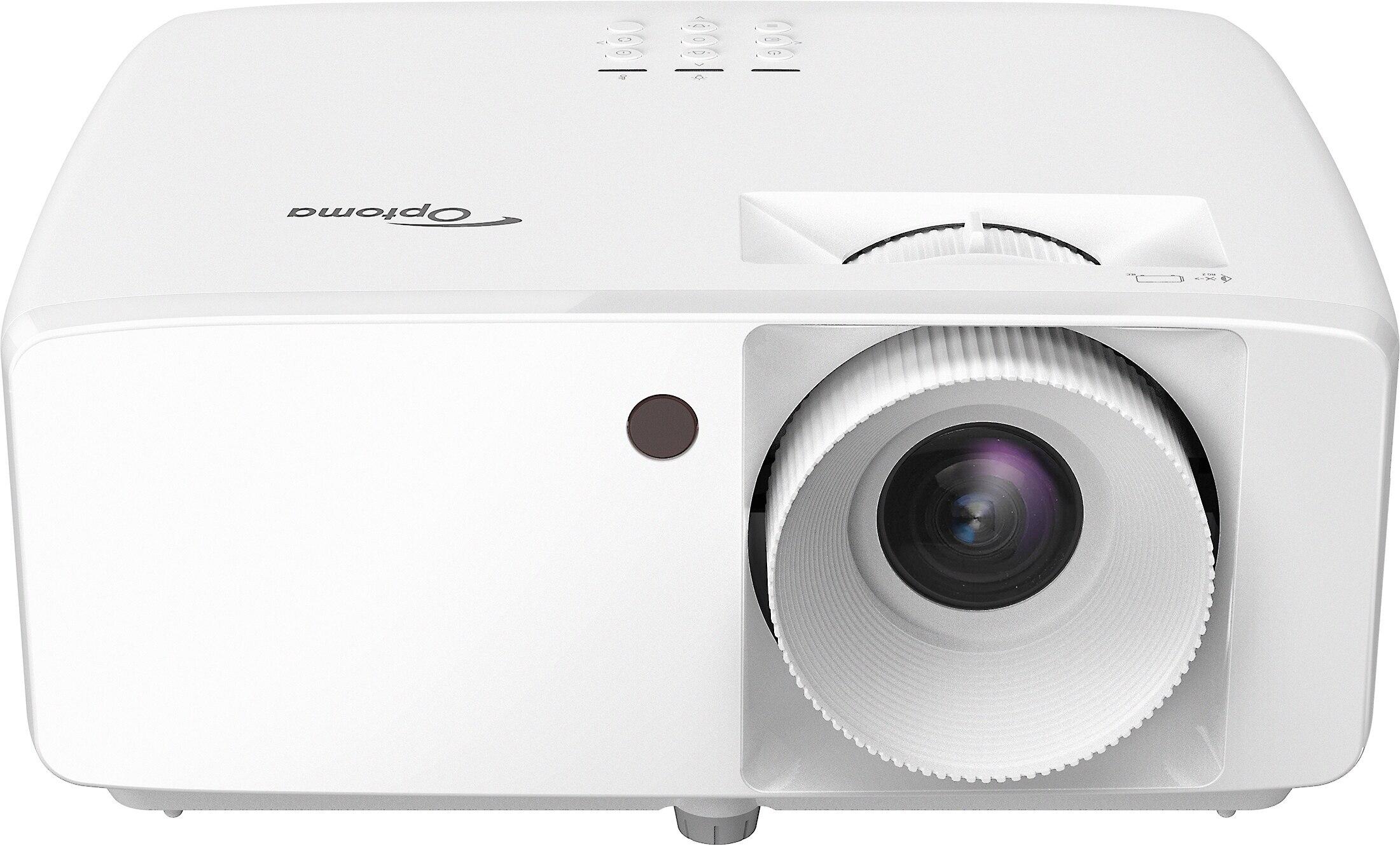
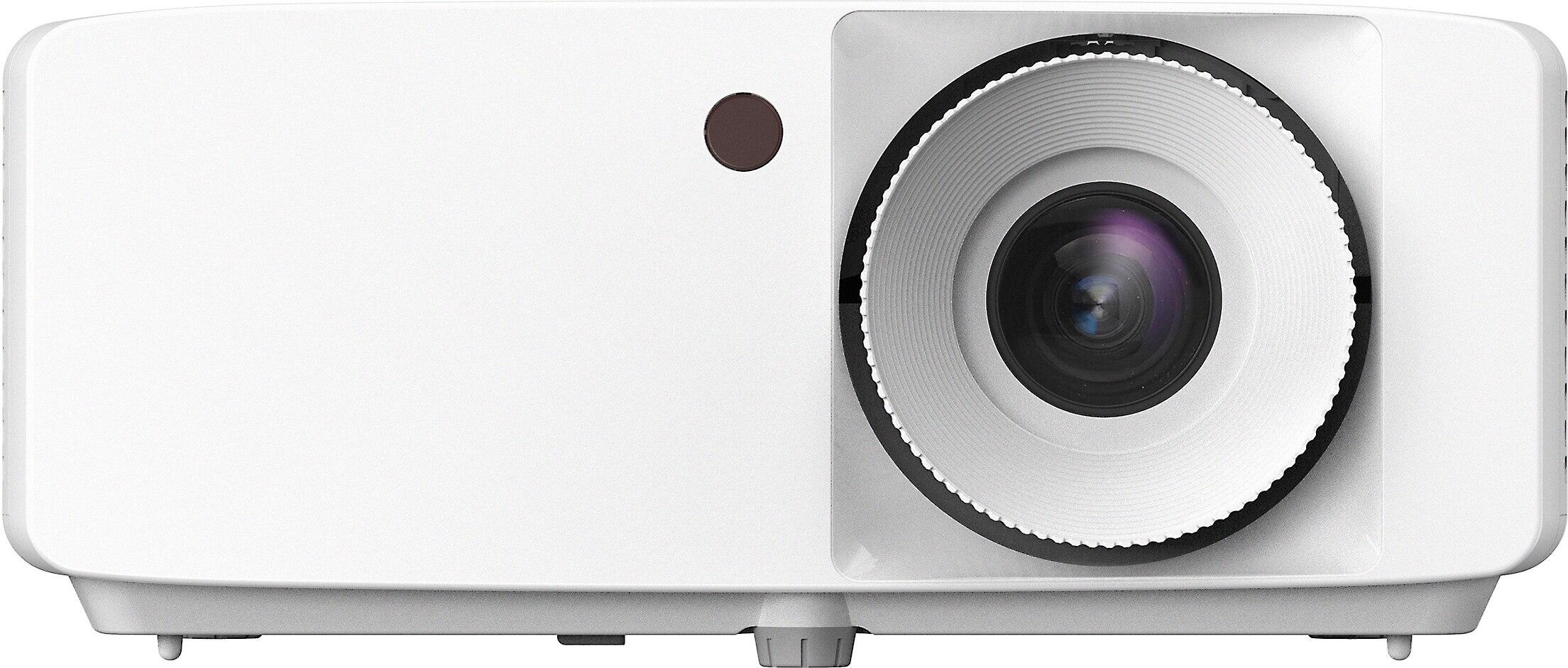
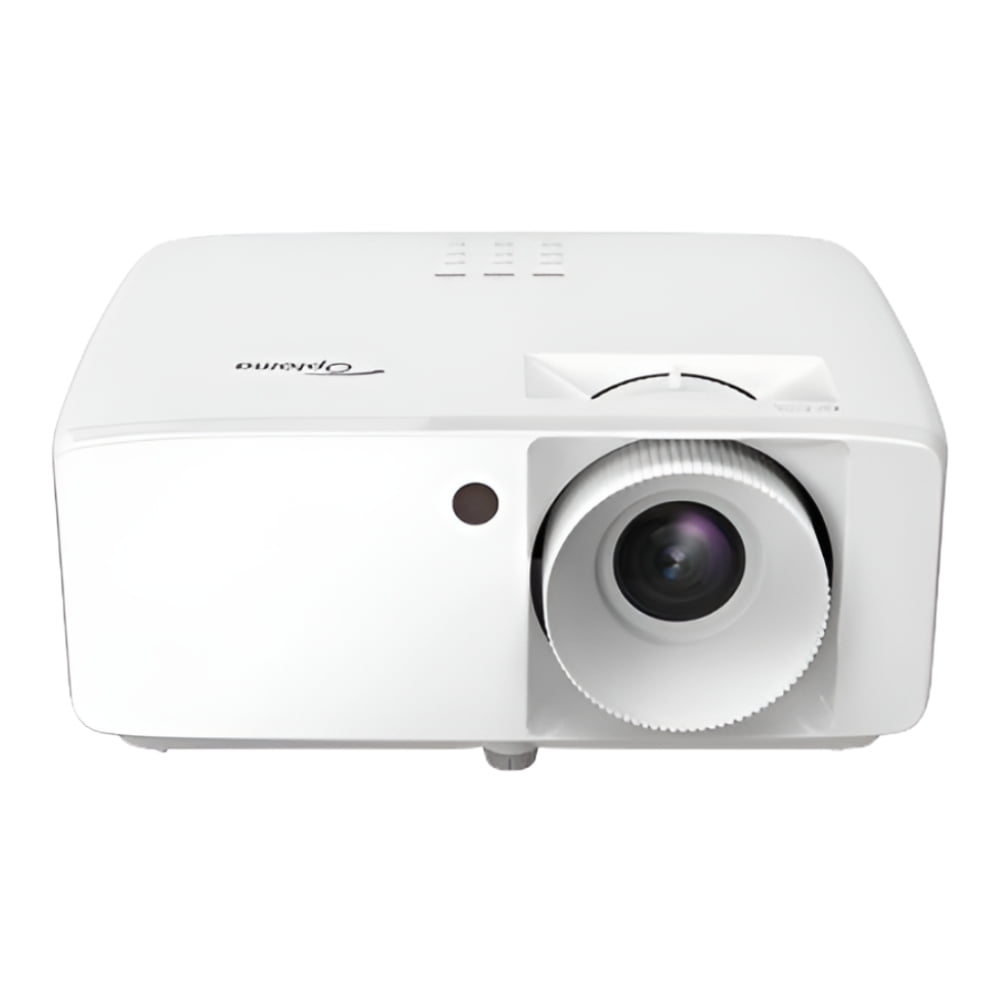
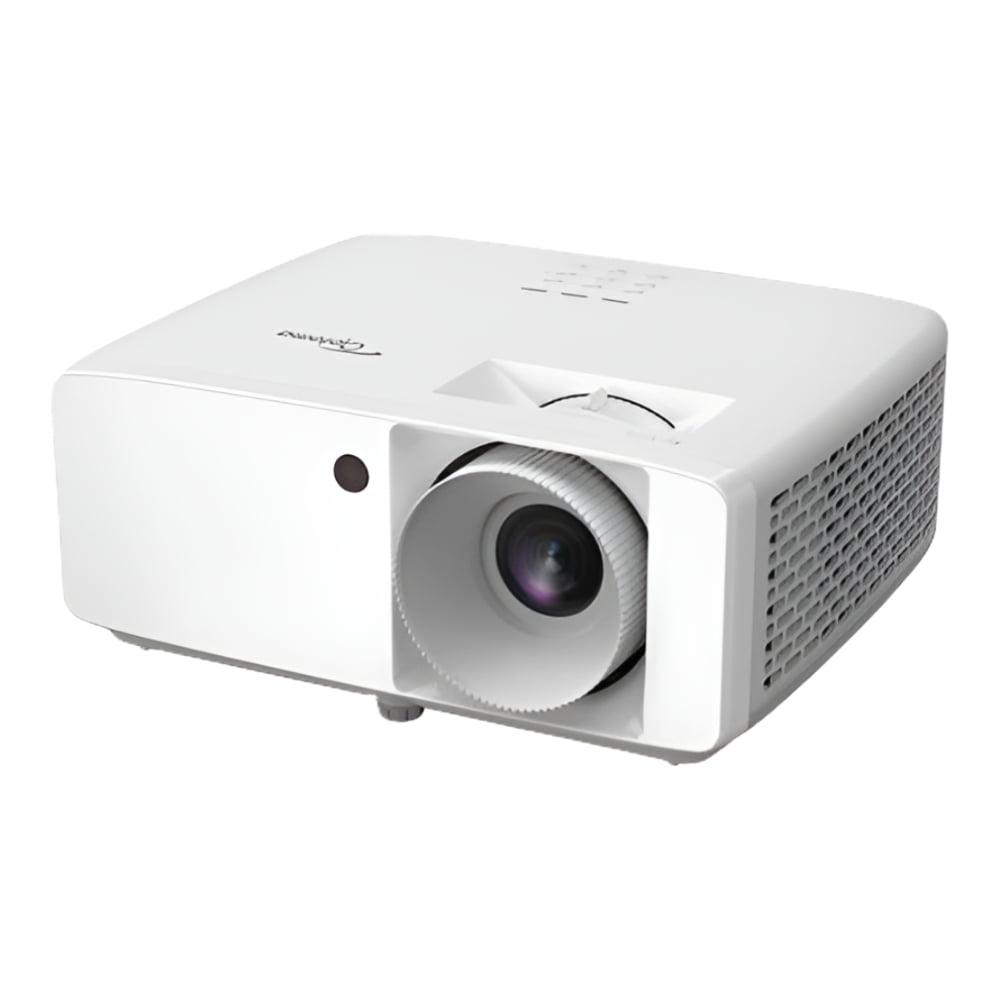
The Optoma HZ40HDR follows traditional projector design language with a rectangular chassis measuring 10.79" x 4.49" x 8.50". At 6.6 pounds, it's reasonably portable for occasional movement but clearly designed for semi-permanent installation. Its white finish and subtle curves make it visually unobtrusive when ceiling-mounted or placed on a shelf.
The chassis features front-facing vents that exhaust heat efficiently—a necessity for the powerful laser light source inside. Despite its 32-34 dB noise rating, the cooling system handles heat dissipation admirably during extended viewing sessions. The lens is centered on the front face with manual zoom and focus rings that provide precise control.
Since its 2020 release, Optoma has maintained this design philosophy across their lineup, prioritizing function over flashy aesthetics—a choice that home theater enthusiasts generally appreciate.
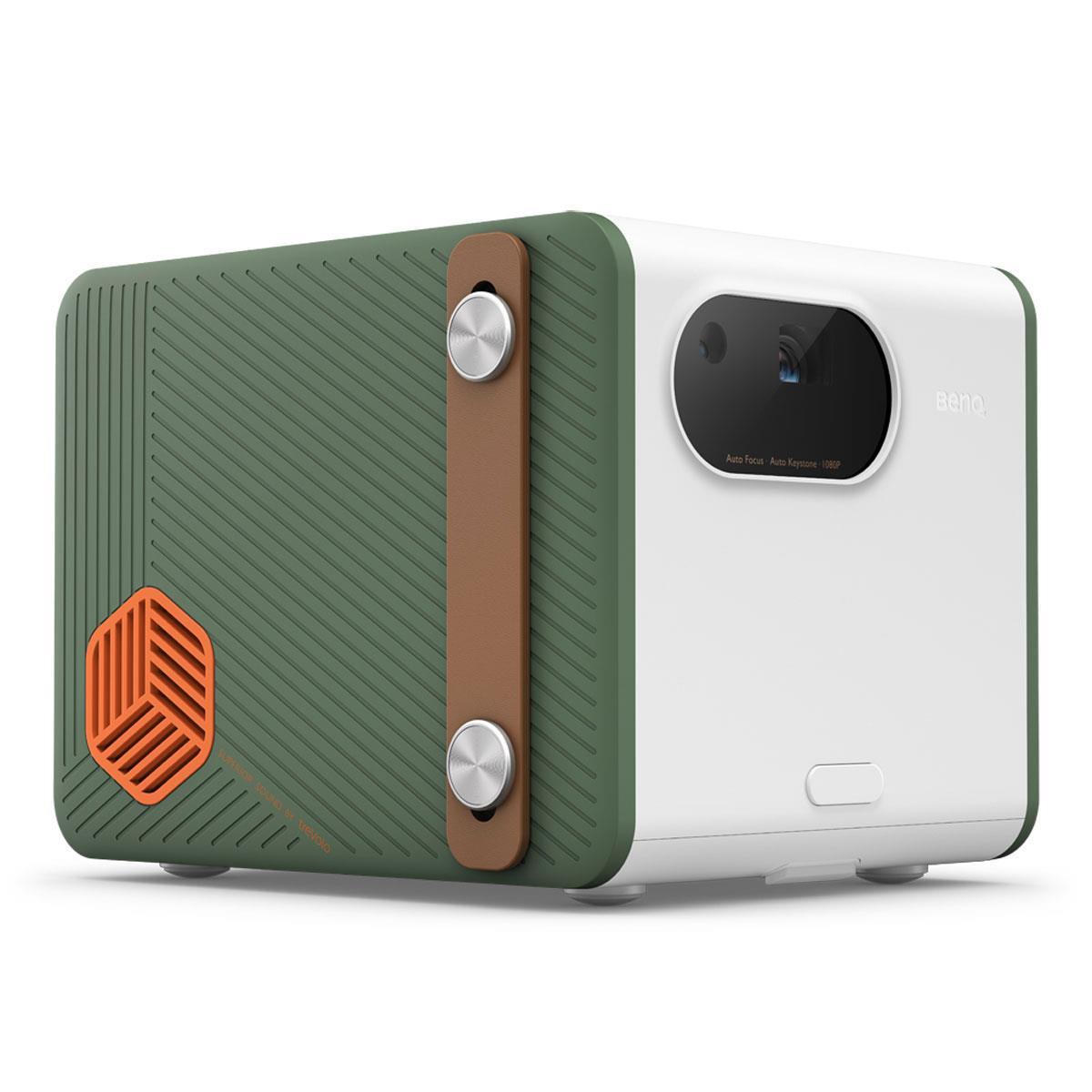
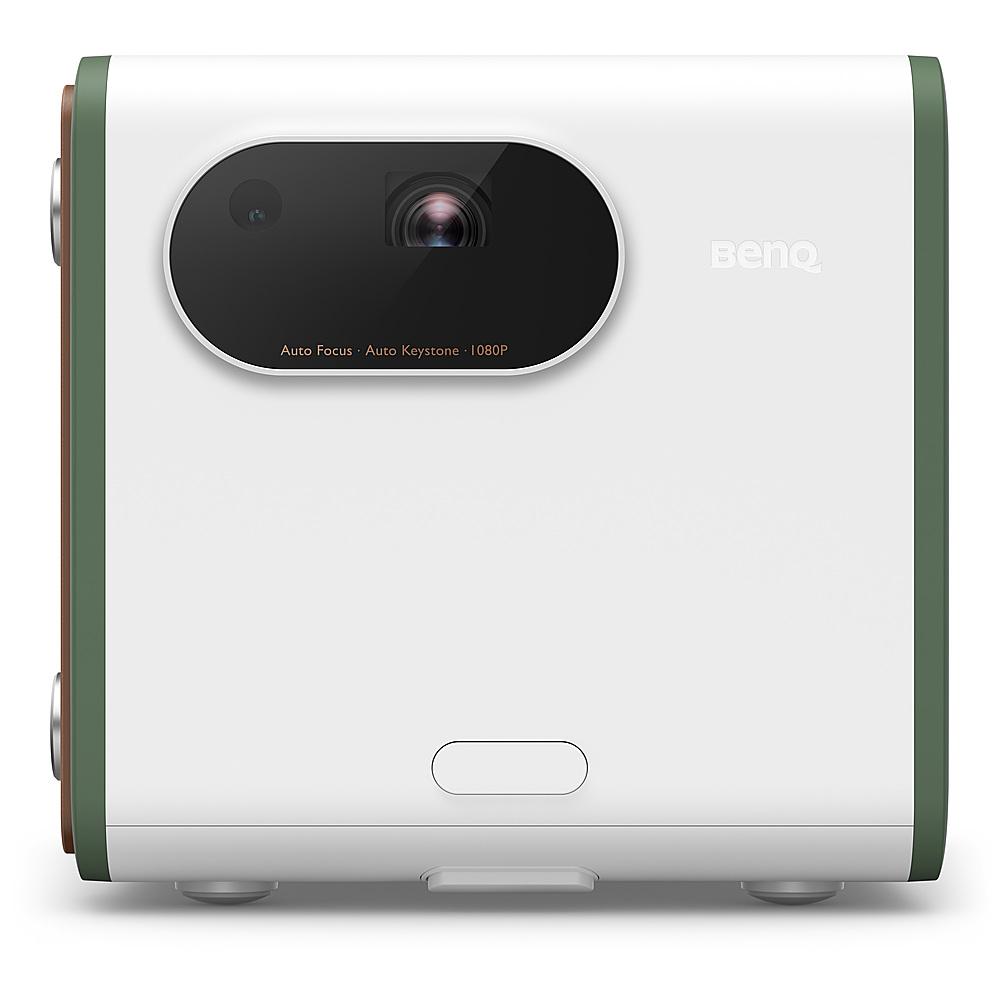
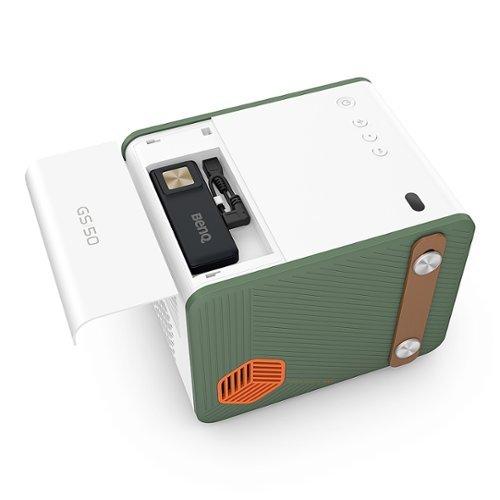
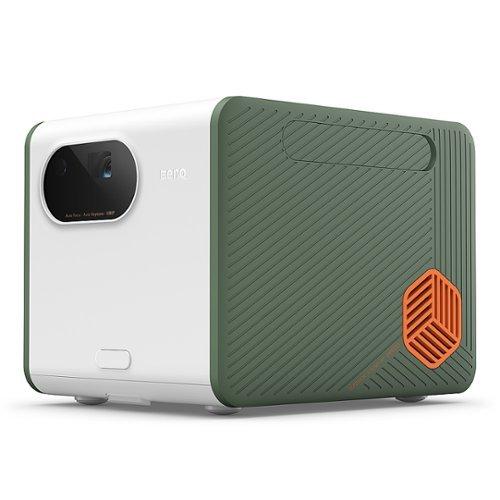
The BenQ GS50, released in 2021, represents a completely different approach. Its cube-like design (15 x 19 x 15 cm) features rounded corners, a leather carrying handle, and a distinctive two-tone color scheme that signals its portable nature. At 3.9 kg, it's lighter than the Optoma but still substantial enough to feel premium.
The projector's IPX2 splash-proof rating means it can withstand light water exposure—think accidental rain droplets or drinks spilled nearby—while its drop resistance up to 70cm protects against the occasional tumble. These features weren't common in projectors before 2020 and represent BenQ's understanding that portable projectors need to withstand real-world conditions.
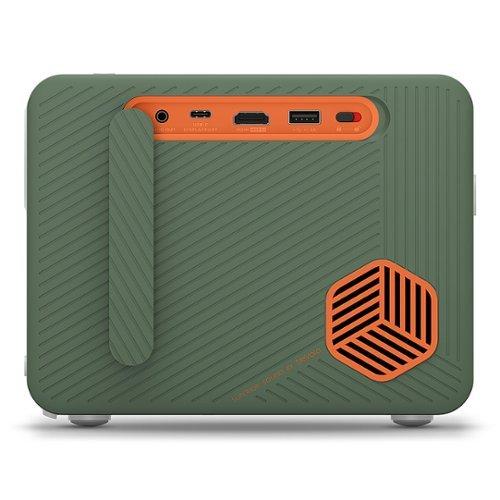
The GS50's chassis incorporates 270-degree sound output through visible speaker grilles, highlighting its integrated audio capabilities. All ports are protected by rubber covers that maintain the water resistance rating when closed.
Brightness represents perhaps the most significant technical difference between these projectors. The Optoma HZ40HDR outputs an impressive 4000 ANSI lumens—an objective measurement of light output that represents true brightness, unlike less reliable marketing metrics some manufacturers use.
This high brightness level allows the Optoma to produce vibrant images even in rooms with ambient light, making it versatile enough for daytime viewing in living rooms with windows or evening sports viewing with some lights on. In a properly darkened home theater, this brightness allows for larger screen sizes while maintaining image punch.
The BenQ GS50 outputs 500 ANSI lumens—a significant difference that fundamentally changes how and where you can use the projector. While adequate for nighttime outdoor viewing or fully darkened rooms, the GS50 struggles against ambient light. Images will appear washed out in moderately lit environments, limiting daytime use.
This brightness difference isn't a fault of the GS50 but rather a necessary compromise for its portable, battery-powered design. Higher brightness requires more power consumption, which would reduce battery life and increase heat output.
Both projectors offer native 1080p (1920x1080) resolution, which remains the sweet spot for most content. While 4K projectors have become more common since these models were released, 1080p still delivers excellent detail, especially at typical viewing distances.
The Optoma HZ40HDR pairs its resolution with superior contrast capabilities (300,000:1 ratio) that create deeper blacks and more dynamic range between the darkest and brightest parts of an image. Its image processing includes dedicated modes for cinema, gaming, and HDR content that optimize color and motion performance for each use case.
The BenQ GS50 offers good contrast (100,000:1) but can't match the Optoma's dynamic range. It compensates with sophisticated image processing, including automatic keystone correction (which adjusts the image shape when the projector isn't perfectly aligned with the screen) and auto-focus—convenience features that recognize its portable nature will mean frequent setup and adjustment.
Both projectors support HDR10 and HLG (Hybrid Log-Gamma) formats, which expand color range and contrast compared to standard content. HDR content contains more information about brightness levels, allowing compatible displays to show more detail in very bright and very dark areas simultaneously.
The Optoma HZ40HDR's higher brightness and contrast give it a significant advantage in HDR performance. When watching HDR movies like "Dune" or "The Revenant," the Optoma reveals subtle color gradations and details in both shadowy scenes and bright outdoor sequences that the BenQ simply cannot reproduce with the same impact.
The BenQ GS50 handles HDR content adequately, but its lower brightness means the HDR effect is more subtle. Colors remain accurate but lack the punchy vibrancy that higher-brightness projectors can achieve with HDR material.
The Optoma HZ40HDR uses DuraCore laser technology—a significant advancement over traditional lamp-based projectors. Laser light sources offer several advantages:
The laser technology also enables the high contrast ratio by allowing more precise control over light output. The tradeoff comes in power consumption and heat generation, which necessitates a more robust cooling system.
The BenQ GS50 uses LED technology, which offers similar longevity (20,000-30,000 hours) but with different performance characteristics:
LED technology was a logical choice for BenQ given the GS50's portable nature, though it cannot match the peak brightness of laser systems.
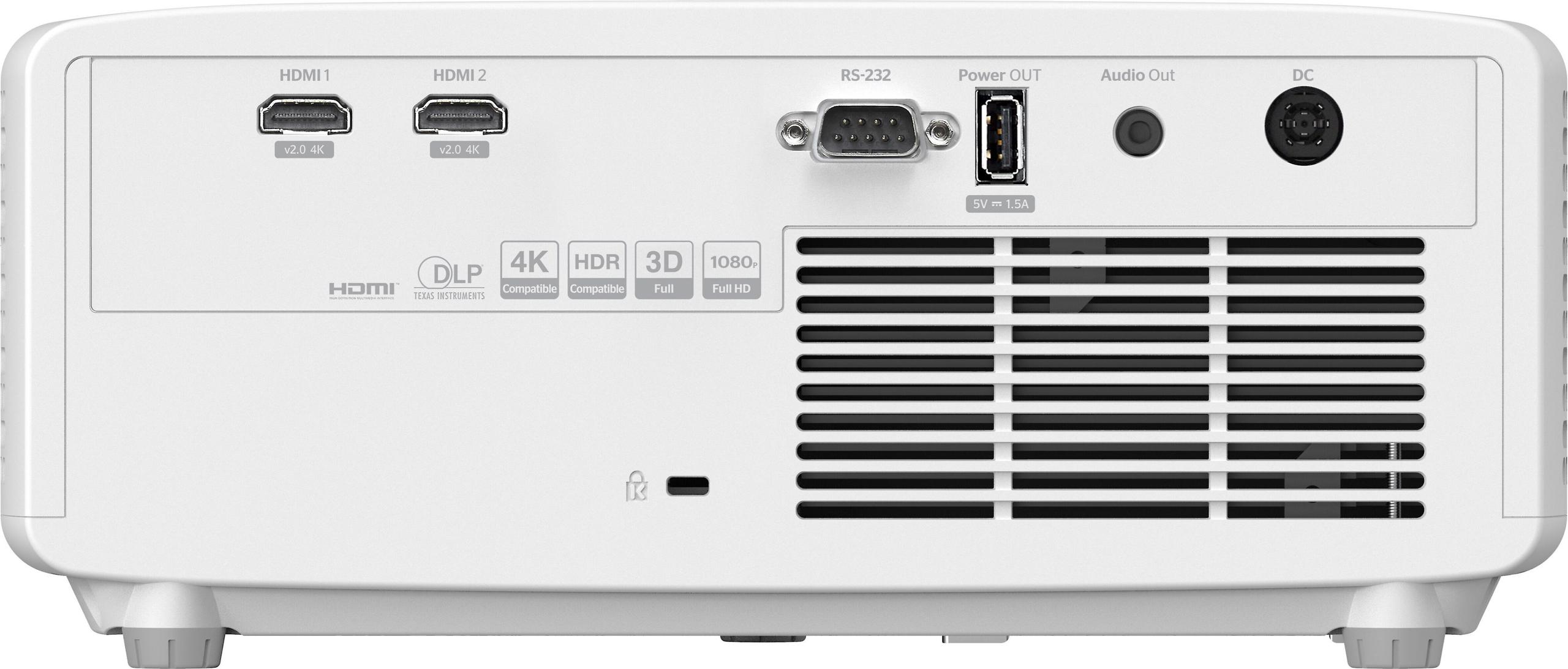
The Optoma HZ40HDR takes a minimalist approach to smart features, focusing instead on core performance. Its connectivity includes:
This projector requires external streaming devices like Roku, Apple TV, or Amazon Fire Stick for accessing content services. While this might seem limiting compared to smart TVs, it allows users to choose their preferred platform and upgrade it independently from the projector.
Since its release, the trend has moved toward more integrated smart features, making the Optoma's approach feel slightly dated but still completely functional.
The BenQ GS50 embraces the smart ecosystem approach with:
This integrated approach means the GS50 functions as a complete entertainment system out of the box. The Android TV interface provides access to Netflix, Disney+, Prime Video, and other streaming services without additional hardware.
The USB-C DisplayPort connection is particularly forward-thinking, allowing direct connection from modern laptops and phones with minimal cable clutter—a feature only now becoming common in newer projectors.
The Optoma HZ40HDR offers impressive gaming performance with an input lag of just 8.6ms at 1080p/120Hz. Input lag measures the delay between a signal reaching the projector and appearing on screen—lower numbers mean more responsive gameplay.
This low input lag makes the Optoma suitable even for competitive gaming where split-second reactions matter. The projector supports 120Hz refresh rates, providing smoother motion in compatible games. When playing fast-paced titles like "Call of Duty" or "Fortnite," the difference between the Optoma and slower projectors becomes immediately apparent.
The BenQ GS50 offers a more modest 62ms input lag at 60Hz, which is acceptable for casual gaming and most single-player experiences. However, competitive gamers would find this delay frustrating in fast-paced multiplayer games.
The GS50 compensates with convenience—imagine setting up impromptu gaming sessions in the backyard or taking your console camping. For many users, this flexibility outweighs the performance limitations.
The Optoma HZ40HDR includes a basic 15W mono speaker system that provides adequate audio for casual viewing. The sound is clear enough for dialogue but lacks bass response and stereo separation. This basic audio approach is typical for home theater projectors, which assume integration with external sound systems.
For optimal home theater performance, pairing the Optoma with at least a sound bar—or ideally a surround sound system—is recommended.
The BenQ GS50 features one of the most impressive audio systems in any portable projector, with a 2.1 channel arrangement (two 5W midrange tweeters and one 10W woofer). This configuration delivers impressive sound with noticeable bass response and stereo separation that creates a more immersive experience.
The 270-degree sound output spreads audio wider than traditional front-firing speakers, making it ideal for outdoor viewing where people might be seated around the projector rather than directly in front of it.
Perhaps most impressively, the GS50 functions as a standalone Bluetooth speaker even when not projecting, adding value beyond its primary function.
The Optoma HZ40HDR excels in dedicated viewing environments where performance takes priority over portability. Its ideal use cases include:
I've found that in dedicated home theater settings, the Optoma's performance rivals projectors costing significantly more. When properly calibrated and paired with an appropriate screen, the image quality can be truly stunning, especially with 4K HDR content (which it accepts but downscales to its native 1080p).
The BenQ GS50 addresses entirely different needs, focusing on adaptability rather than ultimate performance:
What impresses me most about the GS50 is how it removes barriers to projection. Traditional projectors require careful planning—mounting hardware, cable management, external speakers, and dedicated space. The GS50 eliminates these constraints, making big-screen viewing accessible in virtually any setting.
At approximately $1,299, the Optoma HZ40HDR represents a significant investment. However, several factors justify the price:
For dedicated home theater enthusiasts, the Optoma delivers excellent value over its lifespan, especially considering the elimination of lamp replacement costs.
At around $799, the BenQ GS50 sits at the premium end of the portable projector market. Its value proposition includes:
The GS50 commands a premium price compared to basic portable projectors, but its comprehensive feature set and build quality justify the cost for users who will take advantage of its versatility.
After thoroughly testing both projectors in various settings, I've developed a straightforward framework for deciding between them:
Choose the Optoma HZ40HDR if:
The Optoma represents the better choice for enthusiasts committed to creating the best possible viewing experience in a consistent location. Its performance advantages are most apparent with high-quality content in controlled lighting conditions.
Choose the BenQ GS50 if:
The BenQ is the clear winner for lifestyle-oriented users who prioritize convenience and versatility. Its portable design opens up possibilities that traditional projectors simply cannot match.
The Optoma HZ40HDR and BenQ GS50 aren't direct competitors so much as representatives of two different philosophies in home projection. One prioritizes performance in dedicated spaces, while the other embraces flexibility across various environments.
Your choice should ultimately align with how and where you'll actually use the projector most frequently. The best projector isn't necessarily the one with the highest specs or the most features—it's the one that fits seamlessly into your entertainment habits and enhances your viewing experience.
Whether you choose the high-performance laser brightness of the Optoma HZ40HDR or the go-anywhere versatility of the BenQ GS50, both projectors deliver impressive technology that was unimaginable in consumer projectors just a few years ago. The golden age of home projection is here—which path you choose depends entirely on your priorities.
| Optoma HZ40HDR 1080p Projector | BenQ GS50 Portable Outdoor Projector |
|---|---|
| Price - Overall investment consideration | |
| $1,299 | $799 |
| Brightness - Critical for ambient light performance | |
| 4,000 ANSI lumens (excellent for rooms with ambient light) | 500 ANSI lumens (requires near-darkness for optimal viewing) |
| Resolution - Determines image sharpness and detail | |
| 1920x1080 Full HD | 1920x1080 Full HD |
| Light Source - Affects lifespan and maintenance needs | |
| Laser (30,000 hours lifespan, no lamp replacements) | LED (20,000-30,000 hours lifespan, no lamp replacements) |
| Contrast Ratio - Impacts image depth and black levels | |
| 300,000:1 (excellent shadow detail and depth) | 100,000:1 (good, but less dynamic range) |
| Input Lag - Critical for gaming responsiveness | |
| 8.6ms at 1080p/120Hz (excellent for competitive gaming) | 62ms at 60Hz (acceptable for casual gaming only) |
| Portability - Affects where and how you can use it | |
| 6.6 lbs, requires constant power source | 3.9 kg (8.6 lbs), built-in battery with 2.5 hours runtime |
| Smart Features - Convenience for content access | |
| No built-in smart platform, requires external streaming device | Android TV 9.0 built-in with 5,000+ apps, Chromecast and AirPlay |
| Audio System - Determines need for external speakers | |
| 15W mono speaker (basic audio, external speakers recommended) | 2.1 channel system (2x 5W tweeters, 1x 10W woofer with 270° sound) |
| Durability - Important for portable or family use | |
| Standard indoor design | IPX2 splash-proof rating, drop-resistant up to 70cm |
| Connectivity - Flexibility for various devices | |
| 2x HDMI 2.0, USB (power), 3.5mm audio out, RS-232 | HDMI 2.0, USB-A, USB-C (DisplayPort), 3.5mm audio out, Wi-Fi, Bluetooth 4.2 |
| Best Use Case - Primary consideration for purchase decision | |
| Dedicated home theaters, living rooms with some ambient light, serious gaming | Outdoor viewing, camping, travel, temporary setups, kid-friendly environments |
The Optoma HZ40HDR is significantly brighter with 4,000 ANSI lumens compared to the BenQ GS50's 500 ANSI lumens. This makes the Optoma HZ40HDR much better for rooms with ambient light or larger screens, while the BenQ GS50 requires darker environments for optimal viewing.
The BenQ GS50 Portable Outdoor Projector is specifically designed for outdoor use with its built-in battery (2.5 hours runtime), IPX2 splash resistance, drop protection, and portable design. The Optoma HZ40HDR requires constant power and isn't weatherproof, making the BenQ GS50 the clear choice for outdoor entertainment.
Yes, but with different performance levels. The Optoma HZ40HDR offers excellent gaming performance with just 8.6ms input lag at 1080p/120Hz, making it suitable for competitive gaming. The BenQ GS50 has a higher 62ms input lag at 60Hz, which is acceptable only for casual gaming where split-second reactions aren't critical.
The BenQ GS50 features an impressive 2.1 channel audio system (two 5W tweeters and one 10W woofer) that typically doesn't require external speakers for most viewing situations. The Optoma HZ40HDR has a basic 15W mono speaker that's adequate for casual use, but external speakers or a sound bar are recommended for a true home theater experience.
While both the Optoma HZ40HDR and BenQ GS50 offer 1080p resolution, the Optoma HZ40HDR delivers superior overall image quality with a higher contrast ratio (300,000:1 vs 100,000:1) and much higher brightness. This results in better HDR performance, deeper blacks, and more vivid colors, especially in environments that aren't completely dark.
The BenQ GS50 comes with Android TV 9.0 built-in, offering access to thousands of streaming apps including Netflix, Disney+, and YouTube without needing external devices. The Optoma HZ40HDR doesn't have built-in smart features and requires an external streaming device like Roku, Apple TV, or Fire Stick to access streaming services.
Both projectors offer excellent light source longevity. The Optoma HZ40HDR's laser light source is rated for up to 30,000 hours, while the BenQ GS50's LED light source lasts 20,000 hours in normal mode and up to 30,000 hours in eco mode. At 4 hours of daily use, both would last well over a decade before requiring any light source maintenance.
The Optoma HZ40HDR is significantly better for a dedicated home theater setup due to its superior brightness (4,000 ANSI lumens), higher contrast ratio (300,000:1), excellent HDR performance, and low input lag. While more expensive than the BenQ GS50, the Optoma HZ40HDR will deliver a more cinema-like experience in a controlled environment.
Yes, both projectors accept laptop connections. The Optoma HZ40HDR connects via HDMI, requiring a standard HDMI cable or appropriate adapter for your laptop. The BenQ GS50 offers more connection options with both HDMI and USB-C DisplayPort, making it more versatile for modern laptops that have USB-C ports, often requiring fewer adapters.
The BenQ GS50 is more apartment-friendly due to its compact size, portability, and all-in-one design that includes quality speakers and streaming capabilities. Its auto-focus and auto keystone features also make setup easier in changing environments. The Optoma HZ40HDR delivers better image quality but requires more dedicated space and additional components for a complete setup.
Neither projector displays native 4K resolution as both have 1080p (Full HD) displays. However, both can accept 4K input signals which they downscale to 1080p. The Optoma HZ40HDR handles this downscaling with better results due to its superior contrast and brightness capabilities, preserving more of the 4K content's dynamic range, though detail levels remain at 1080p.
Value depends on your needs. The BenQ GS50 at $799 offers better value if you prioritize portability, outdoor use, and an all-in-one solution with built-in streaming and quality audio. The Optoma HZ40HDR at $1,299 represents better value for dedicated home theater enthusiasts who prioritize image quality and brightness over portability. The Optoma is a better long-term investment for stationary use, while the BenQ offers more flexibility.
We've done our best to create useful and informative comparisons to help you decide what product to buy. Our research uses advanced automated methods to create this comparison and perfection is not possible - please contact us for corrections or questions. These are the sites we've researched in the creation of this article: projectorcentral.com - youtube.com - picclick.com - crutchfield.com - homecinemachoice.com - compsource.com - bestbuy.com - adorama.com - bhphotovideo.com - provantage.com - cdw.com - datavision.com - optomausa.com - manua.ls - ipcstore.com - pcrichard.com - richersounds.com - electronicexpress.com - projexdisplay.com - dubaimachines.com - newegg.com - projectorpoint.co.uk - a.ubuy.com.kw - greentoe.com - cnet.com - hometheaterhifi.com - youtube.com - youtube.com - whathifi.com - youtube.com - bgeek.eu - youtube.com - youtube.com - projectorreviews.com - youtube.com - youtube.com - projectorcentral.com - projectorreviews.com - bestbuy.com - touchboards.com - projectorcentral.com - adorama.com - projectorreviews.com - insight.com - cnet.com

Privacy Policy
Terms and Conditions - Affiliate Policy
Home Security
© Copyright 2008-2026.
11816 Inwood Rd #1211, Dallas, TX 75244