

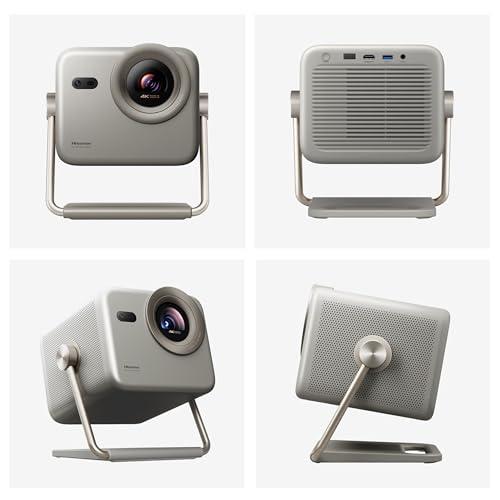
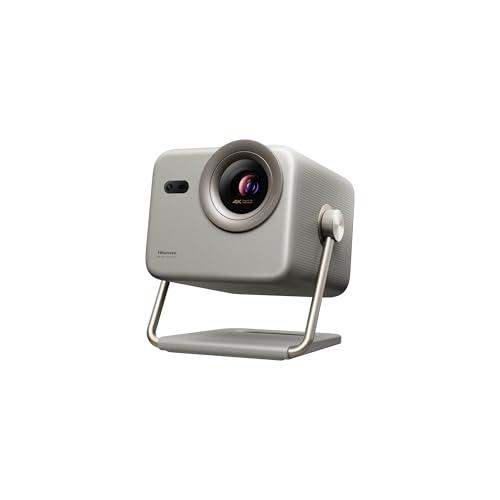
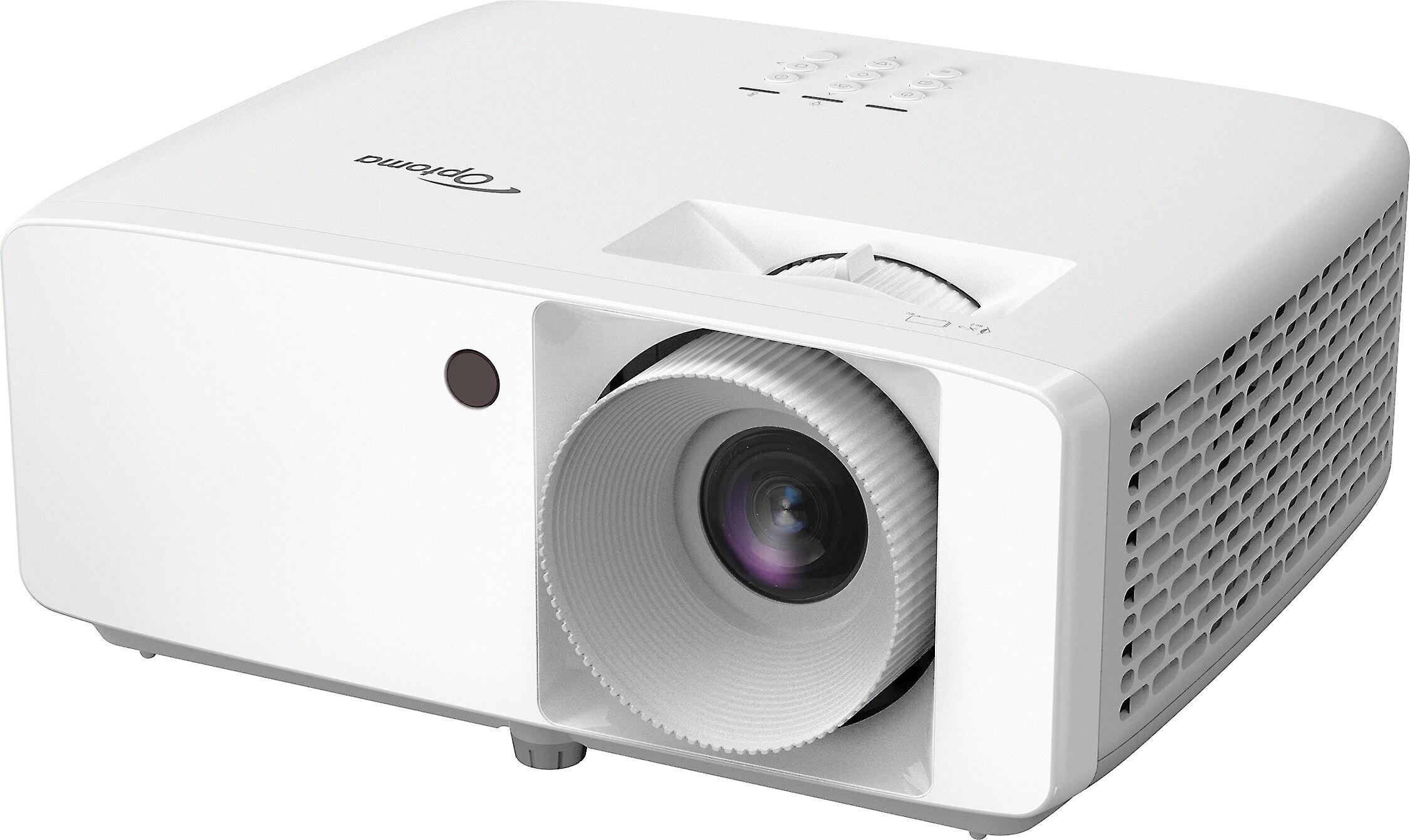
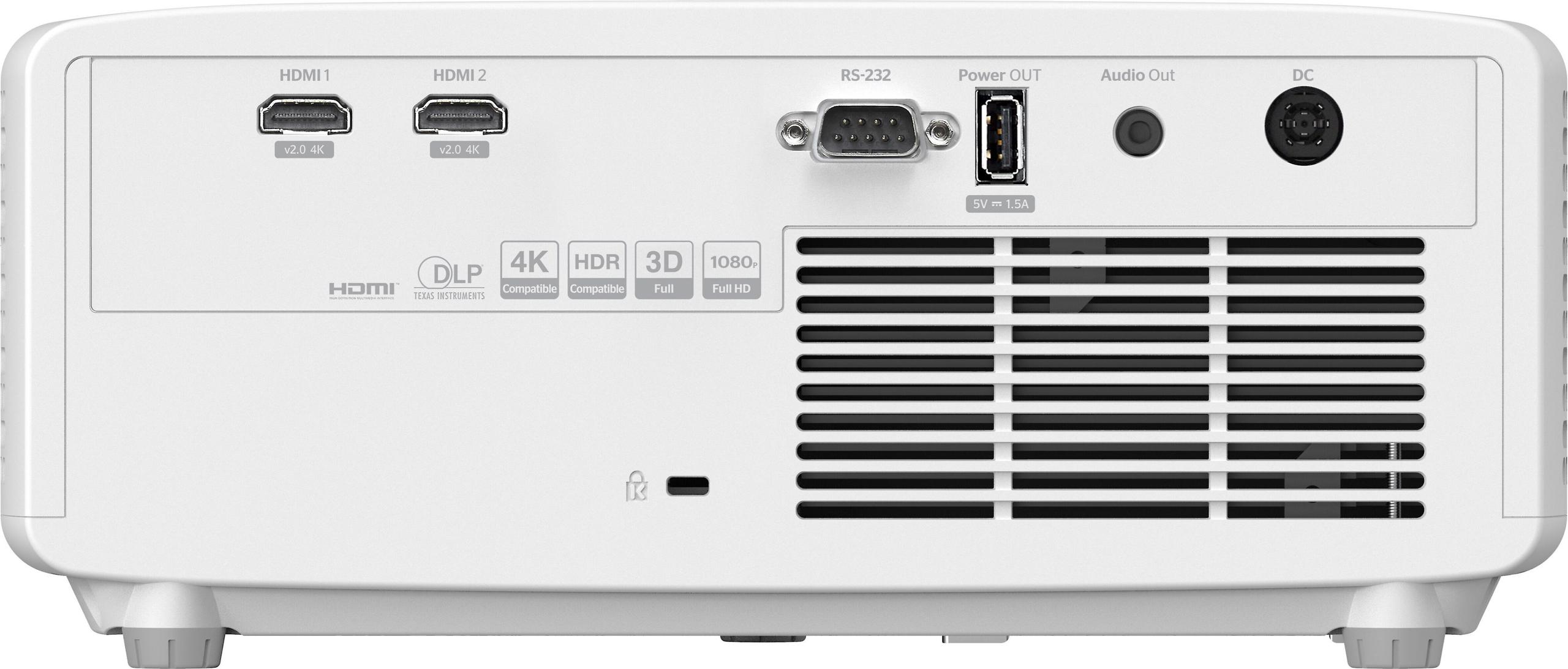
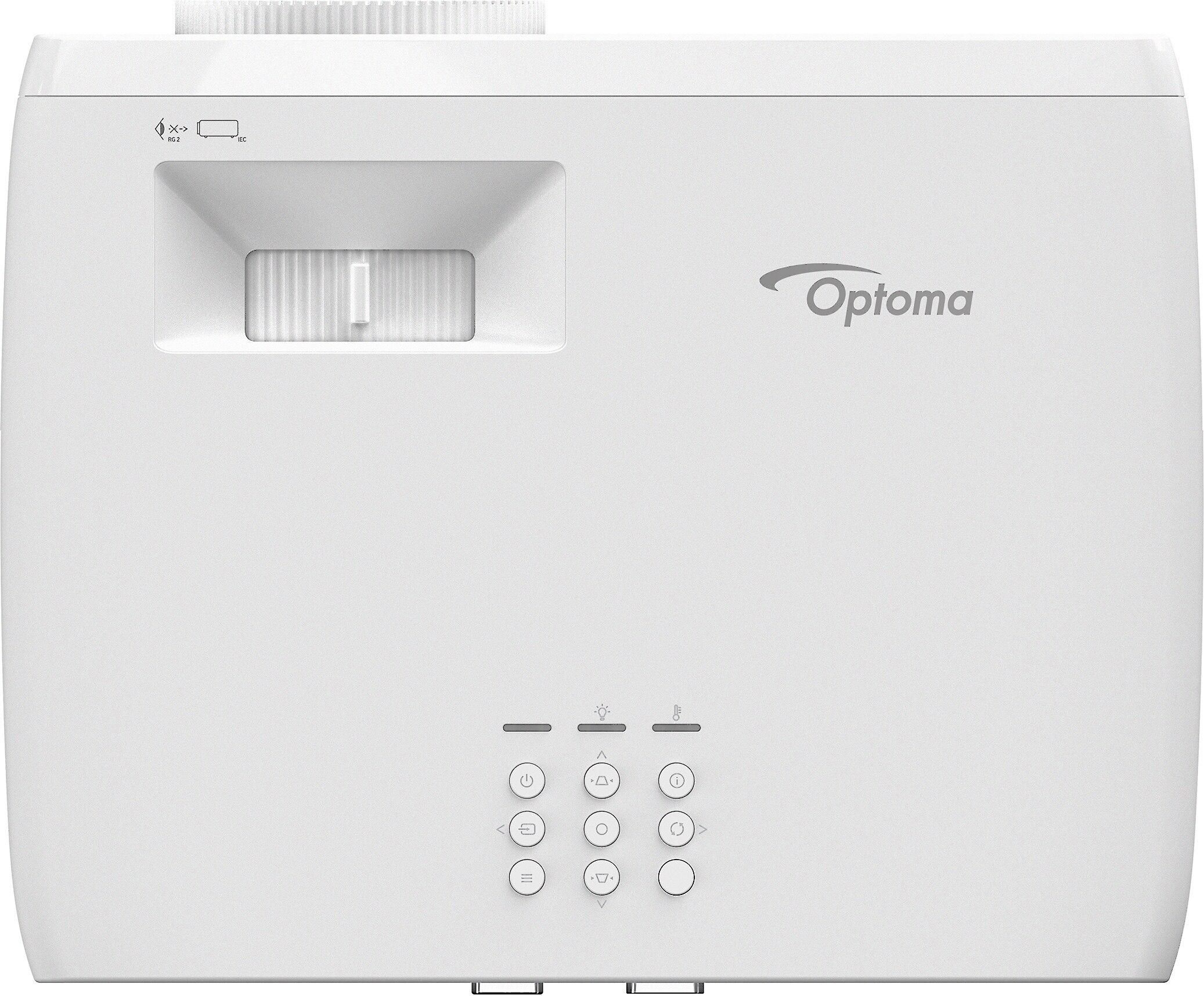
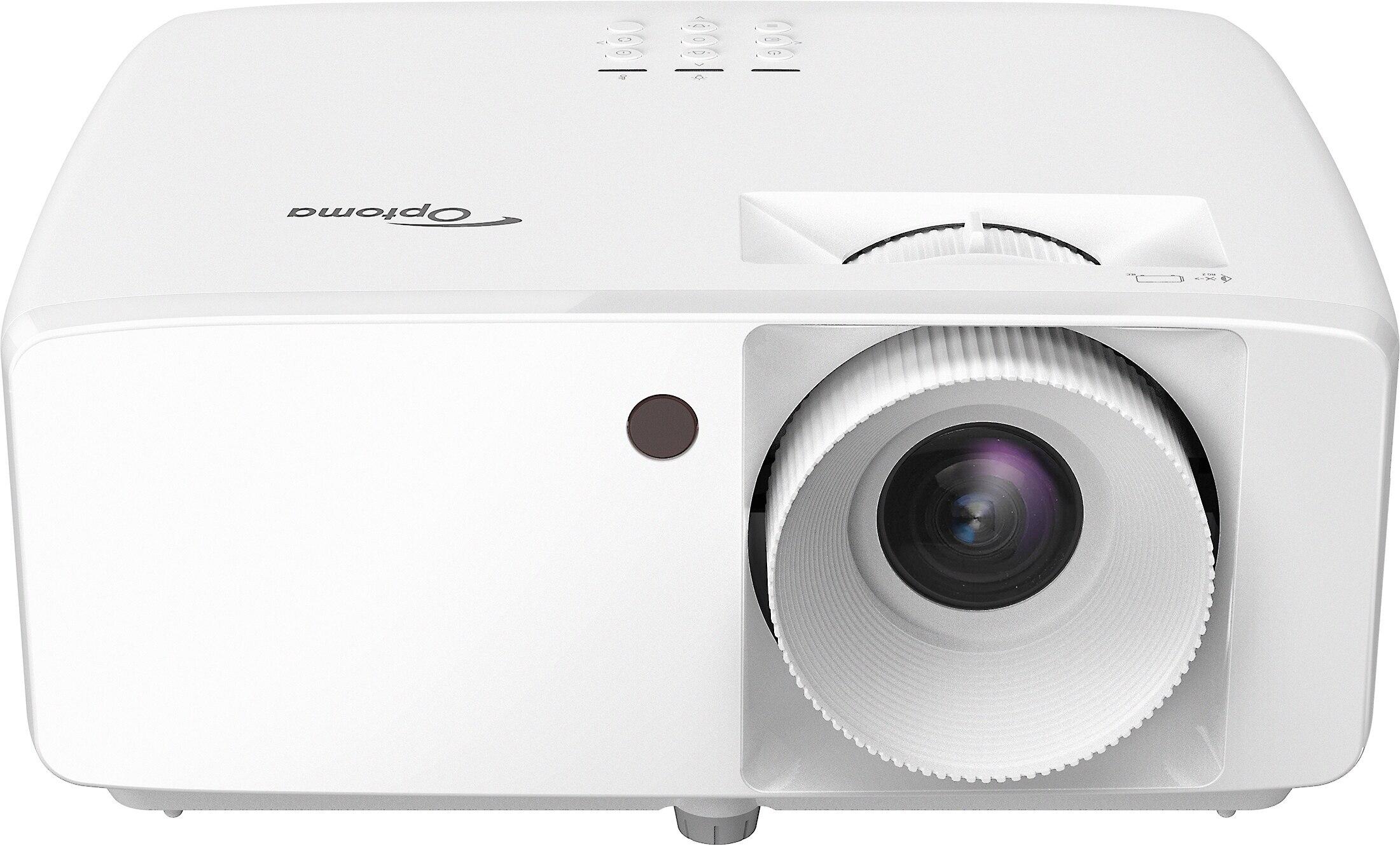
The projector market has evolved dramatically over the past few years, with laser technology finally making both ultra-portable 4K units and bright installation projectors truly practical for home use. Two standout models represent these different approaches: the Hisense M2 Pro 4K Triple Laser Portable Projector and the Optoma HZ40HDR 1080p Projector. These aren't just different models—they're fundamentally different philosophies about how projection should work in your home.
The projector landscape changed significantly around 2020-2023, when laser light sources became affordable enough to replace traditional lamp-based systems. This shift eliminated the biggest pain point of projector ownership: replacing expensive bulbs every few thousand hours. Both projectors we're examining benefit from this revolution, offering 25,000-30,000 hour lifespans that essentially mean you'll never need to worry about maintenance.
Understanding which approach fits your needs requires looking beyond basic specs to how these technologies actually perform in real-world home environments.
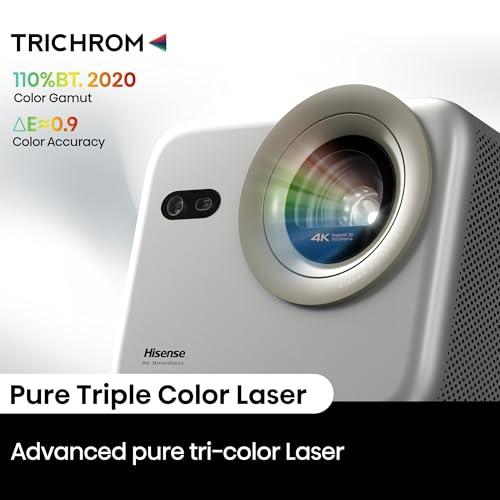
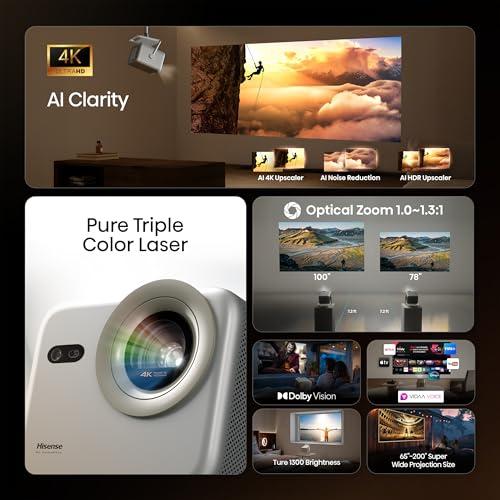
At their core, these projectors represent two distinct evolutionary paths in modern projection technology. The Hisense M2 Pro uses what's called "pure triple laser" technology—essentially three separate lasers producing red, green, and blue light directly. This is the same approach used in premium laser TVs costing $5,000 or more, just miniaturized into a portable form factor.
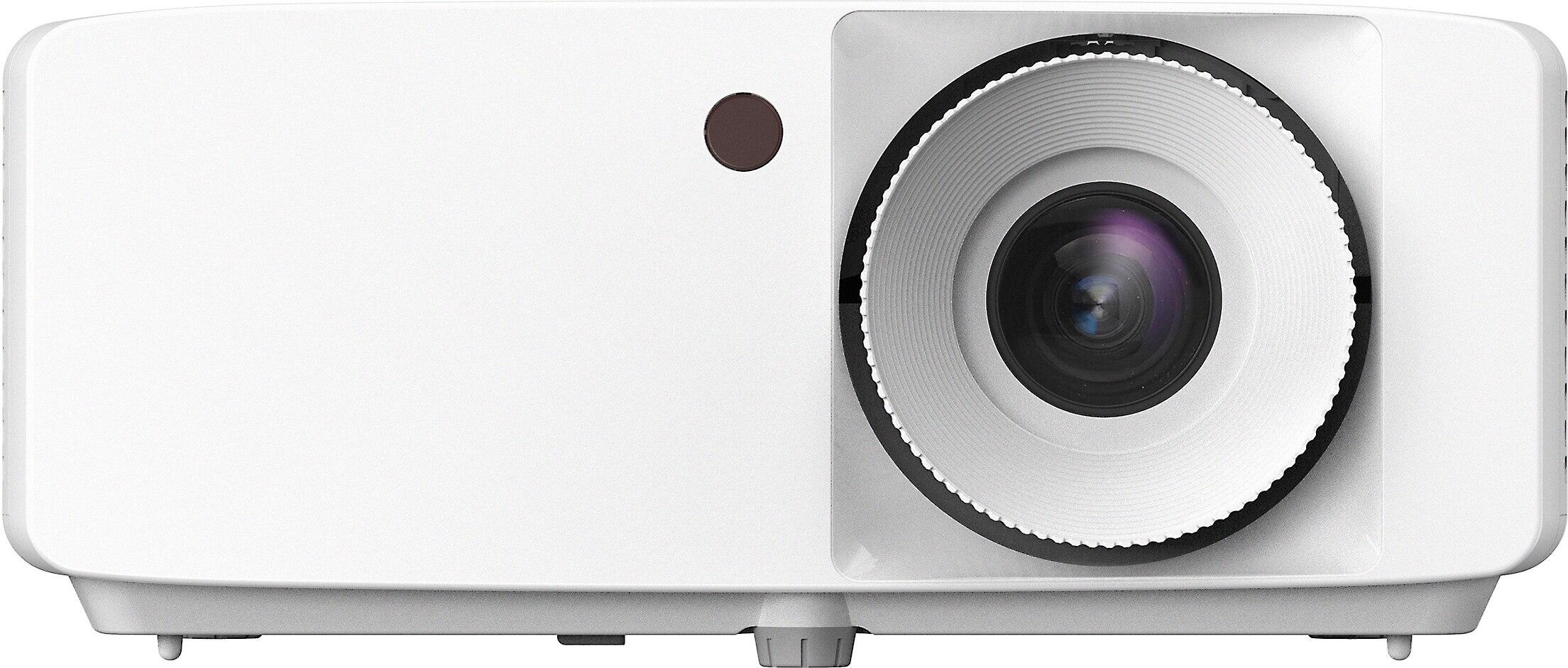
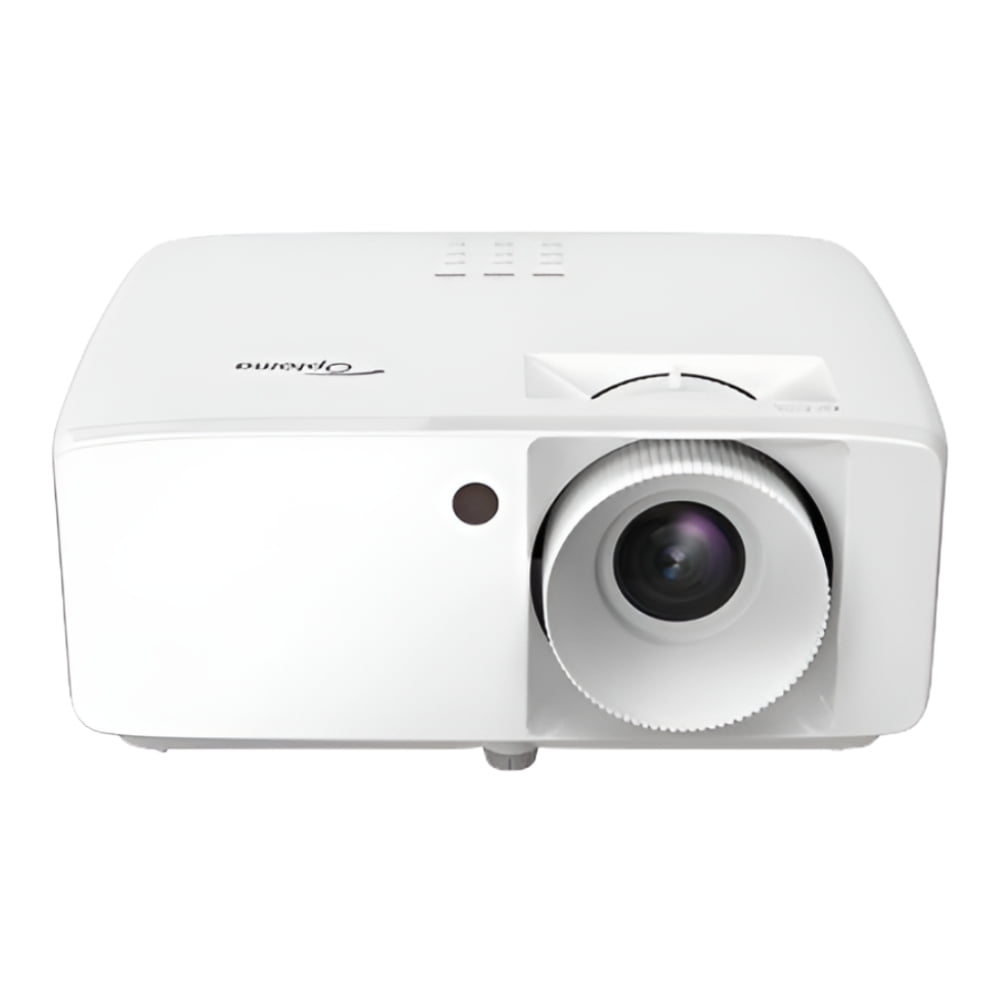
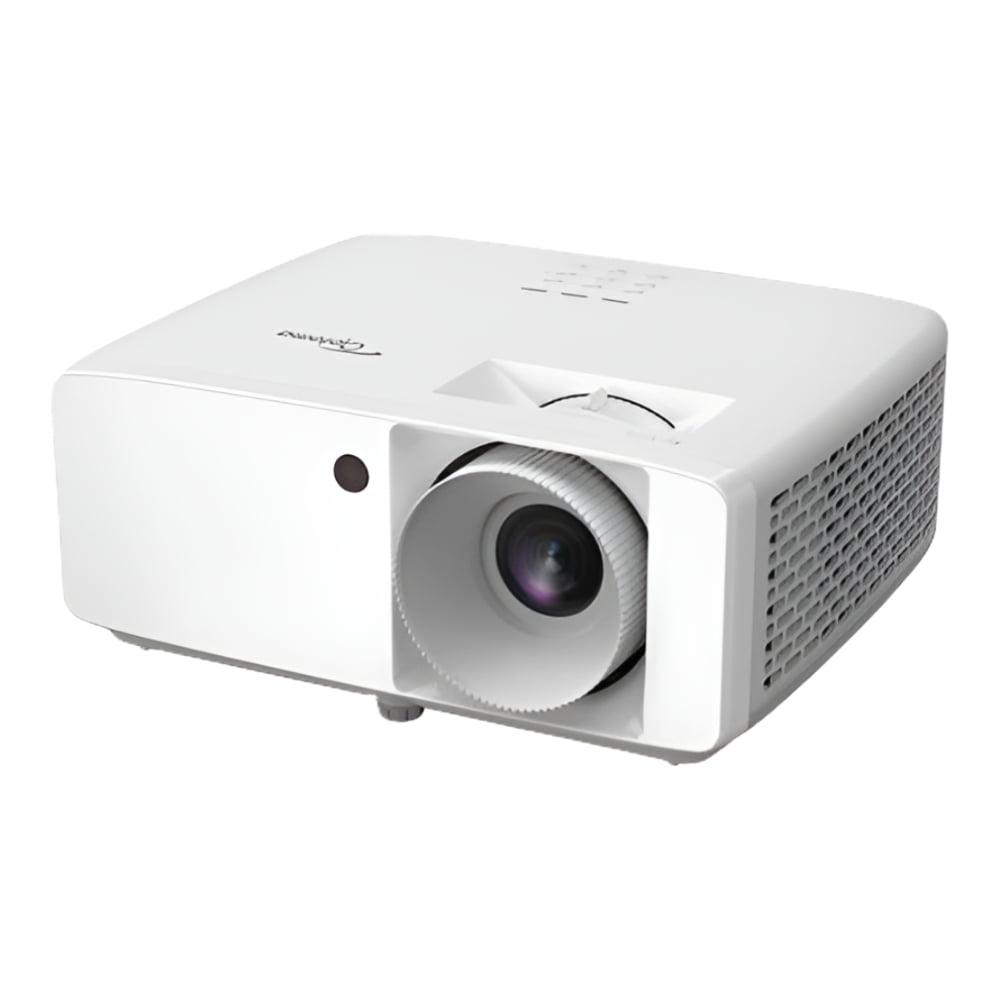
The Optoma HZ40HDR, meanwhile, uses "laser phosphor" technology, where a single blue laser excites a phosphor coating to create the full color spectrum. Think of it like how fluorescent lights work, but much more sophisticated. This approach prioritizes raw brightness output over color accuracy, making it ideal for rooms with ambient light.
The engineering trade-offs here are fascinating. Hisense had to fit 28 individual laser chips into a package smaller than most traditional projectors, each chip providing the equivalent power of four LEDs. Optoma took the opposite approach, maximizing the power output of their single laser system to achieve brightness levels that work even during daytime viewing.
This is where the Hisense M2 Pro establishes its most significant advantage. True native 4K resolution (3840×2160 pixels) isn't just about having more pixels—it's about future-proofing your investment. The difference becomes immediately apparent when you're watching 4K Netflix content or gaming on a PlayStation 5.
The M2 Pro uses a precision DLP system with 2.07 million tiny mirrors, each one smaller than a human hair, that tilt thousands of times per second to create each pixel. This level of precision allows it to display genuine 4K detail that you simply cannot achieve by upscaling 1080p content.
The Optoma HZ40HDR handles 1080p exceptionally well, and can accept 4K signals from your devices, but it downscales everything to its native 1920×1080 resolution. For many people, this is still perfectly adequate—1080p content looks sharp and detailed on screen sizes up to about 120 inches. However, if you're building a system for the next 5-10 years, the resolution difference becomes increasingly important as 4K content continues to proliferate.
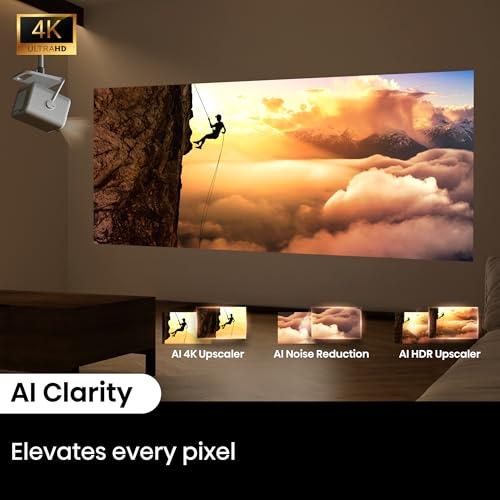
The M2 Pro also includes what Hisense calls "AI 4K Clarity Engine"—sophisticated algorithms that analyze lower-resolution content and intelligently upscale it. This means even your older 1080p movies and shows will look noticeably sharper and more detailed than they would on a native 1080p projector.
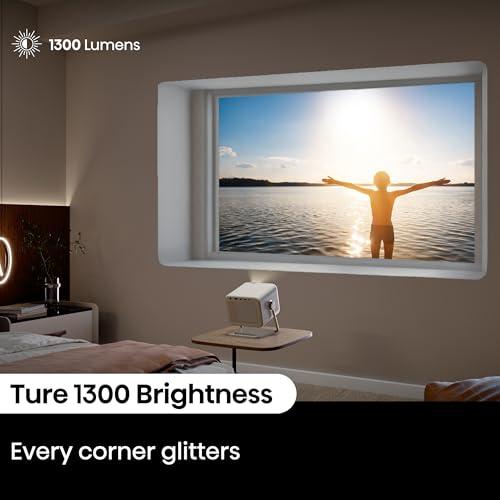
Here's where the Optoma HZ40HDR absolutely dominates. At 4,000 ANSI lumens, it produces more than three times the brightness of the Hisense M2 Pro's 1,300 lumens. ANSI lumens measure the actual light output across the entire screen area, so this isn't just a numbers game—it's the difference between being able to watch comfortably with lights on versus needing to darken your room.
In practical terms, the HZ40HDR can produce a watchable image even with sunlight streaming through windows, making it ideal for living rooms that serve multiple purposes throughout the day. The M2 Pro, while still brighter than many portable projectors, really shines (pun intended) in darker environments where its superior color accuracy and 4K resolution can be fully appreciated.
This brightness difference fundamentally changes how you can use each projector. The HZ40HDR works well for family movie nights in the main living room, casual gaming sessions, or even business presentations. The M2 Pro is better suited for dedicated movie watching, serious gaming, or bedroom entertainment where you have more control over ambient light.
From our research into user experiences, people consistently report that the HZ40HDR exceeds expectations for bright room viewing, while the M2 Pro delivers a more premium, cinema-like experience in controlled lighting conditions.
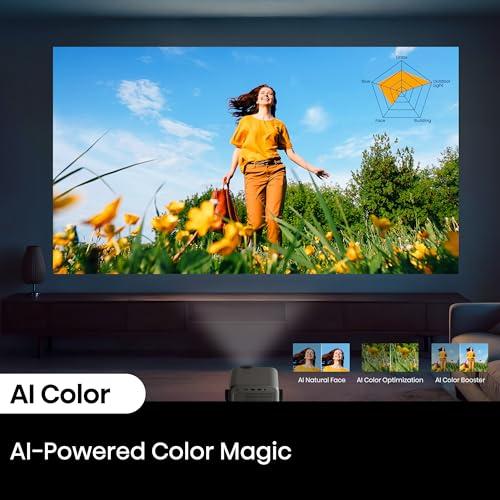
The color reproduction capabilities of these projectors reveal their different design priorities. The Hisense M2 Pro achieves something remarkable: 110% coverage of the BT.2020 color space, which is the standard for 4K HDR content. This means it can display colors that most TVs and monitors simply cannot reproduce.
The triple laser system creates this expanded color gamut by using pure, coherent light sources rather than filtered white light. Professional reviewers have measured the M2 Pro's color accuracy at around ΔE 0.9, which is considered reference-quality performance. In practical terms, this means skin tones look natural, sunsets appear vibrant without being oversaturated, and the subtle color gradations in nature documentaries are rendered with scientific precision.
The Optoma HZ40HDR delivers solid Rec.709 color accuracy—the standard for 1080p content—and produces vivid, appealing colors that most viewers find satisfying. However, it cannot match the expanded color gamut of the triple laser system. This isn't necessarily a limitation for most content, but it becomes noticeable when viewing premium HDR movies or playing games designed to showcase extended color ranges.
Both projectors support HDR (High Dynamic Range), which enhances contrast and color depth, but the M2 Pro's support for Dolby Vision—the premium HDR format—gives it an edge with compatible content from Netflix, Apple TV+, and Ultra HD Blu-rays.
Gaming performance has become increasingly important as projectors compete with large TVs for living room entertainment. Both projectors deliver impressive gaming capabilities, but with different strengths.
The Hisense M2 Pro offers true 4K gaming support with a 240Hz refresh rate capability and just 12ms of input lag. Input lag is the delay between when you press a button and when you see the result on screen—anything under 20ms is considered excellent for gaming. The M2 Pro's 12ms lag, combined with technologies like Auto Low Latency Mode (ALLM) and Motion Estimation Motion Compensation (MEMC), creates incredibly smooth, responsive gameplay.
This means you can take full advantage of PlayStation 5 and Xbox Series X capabilities, displaying games in their native 4K resolution at high refresh rates. The difference is particularly noticeable in fast-paced games like racing titles or competitive shooters.
The Optoma HZ40HDR actually achieves slightly lower input lag—8.6ms at 1080p/120Hz—making it excellent for competitive gaming where every millisecond counts. However, you're limited to 1080p gaming output, even though the projector can accept 4K signals from your console.
For serious gamers building a dedicated gaming setup, the M2 Pro's 4K capability gives it the long-term advantage. For competitive gamers who prioritize ultra-low lag over resolution, the HZ40HDR's slight edge in response time might be worth the resolution trade-off.
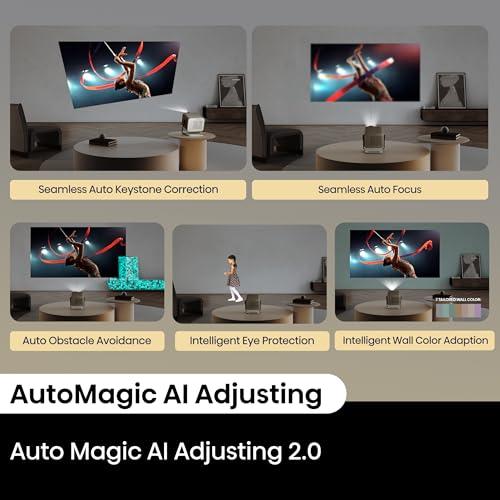
This is where the philosophical differences between these projectors become most apparent. The Hisense M2 Pro represents the future of projection technology with its "Auto Magic 2.0" setup system. When you turn it on, it automatically focuses, corrects keystone distortion (the trapezoidal effect when projecting at an angle), and even adjusts colors to compensate for non-white walls.
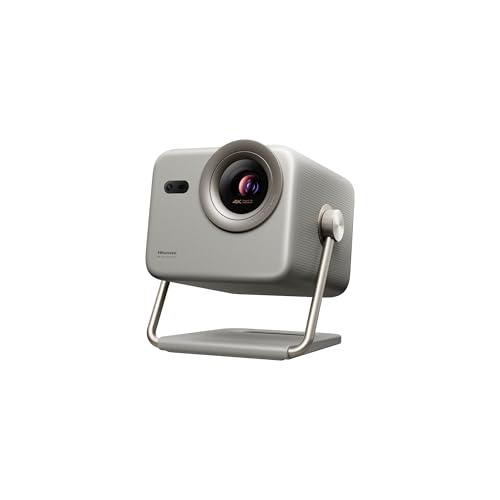
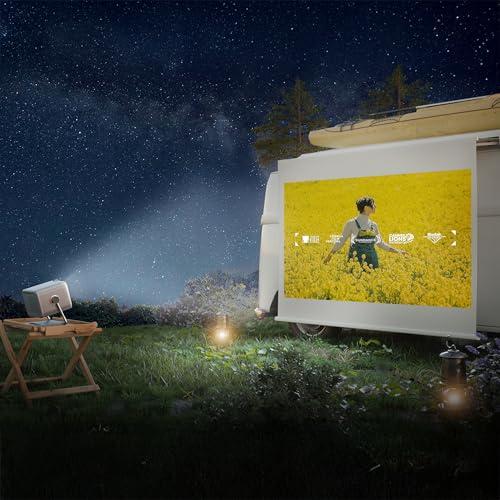
The M2 Pro's most innovative feature is its 360-degree gimbal system, allowing you to project onto walls, ceilings, or even angled surfaces with minimal setup fuss. This flexibility is genuinely revolutionary—you can set it on a coffee table for a wall projection, or place it on the floor for a ceiling movie night under the stars.
The Optoma HZ40HDR takes a more traditional approach, requiring manual focus adjustments and keystone corrections. While this might seem less convenient, it actually gives you more precise control over the image. Professional installers often prefer this approach because they can fine-tune every aspect of the projection to achieve optimal results.
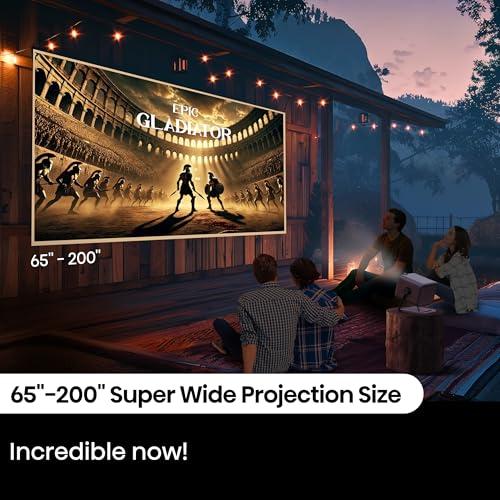
The HZ40HDR also offers a larger projection range—from 20 inches up to 300 inches—compared to the M2 Pro's 65-200 inch range. This makes it more suitable for very large installations or small spaces where you need maximum flexibility in throw distance.
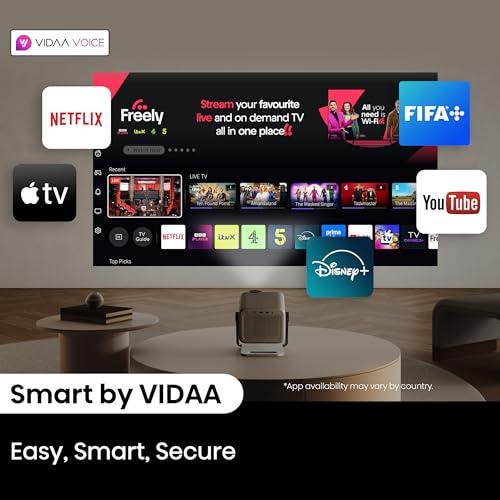
The Hisense M2 Pro includes VIDAA Smart OS, providing direct access to Netflix, YouTube, Disney+, Amazon Prime Video, and other streaming services without requiring external devices. The interface is fast and intuitive, with voice control capabilities that make navigation effortless.
This integration is more valuable than it might initially appear. Having everything built into the projector eliminates cable clutter, reduces the number of remote controls, and ensures optimal compatibility between the streaming interface and the projector's advanced features like HDR processing and color management.
The Optoma HZ40HDR requires external streaming devices, which actually offers certain advantages. You can choose the streaming platform that best suits your preferences—whether that's an Apple TV for seamless iPhone integration, an NVIDIA Shield for advanced gaming capabilities, or a simple Roku for cost-effective streaming.
Both approaches have merit, but for portable use, the M2 Pro's integrated solution is clearly more convenient. For permanent installations, the HZ40HDR's flexibility to work with any external device ecosystem is advantageous.
Audio performance reveals another key difference in design philosophy. The Hisense M2 Pro includes a sophisticated 20-watt stereo speaker system (two 10-watt drivers) with Dolby Audio and DTS Virtual:X processing. This creates a surprisingly immersive soundstage that eliminates the need for external speakers in many situations.
The spatial audio processing actually analyzes the content and creates the impression of sound coming from different directions, even though you're hearing it from speakers built into the projector. For a portable unit, this audio quality is impressive and adds to the all-in-one convenience factor.
The Optoma HZ40HDR includes a basic 15-watt mono speaker that's adequate for casual viewing but really expects you to connect external audio equipment. This isn't necessarily a limitation—most serious home theater setups will use dedicated speakers or soundbars anyway.
At the time of writing, these projectors occupy different price tiers that reflect their distinct target markets. The Optoma HZ40HDR represents excellent value in the traditional installation projector category, offering professional-grade brightness and reliability at prices that have dropped significantly since its 2023 launch.
The Hisense M2 Pro, being newer technology with advanced miniaturization, commands a premium that reflects its engineering sophistication and 4K capabilities. However, when compared to other 4K laser projectors, it offers compelling value by combining portability with performance typically found only in much larger, more expensive units.
The value equation also includes long-term considerations. Both projectors eliminate ongoing lamp replacement costs, but the M2 Pro's integrated smart features and premium construction suggest better long-term value retention, while the HZ40HDR's lower entry price makes it more accessible for budget-conscious buyers.
Based on extensive research into user experiences and professional reviews, here's how to think about choosing between these projectors:
Choose the Hisense M2 Pro if you value cutting-edge technology, want true 4K resolution for future-proofing, need genuine portability, or primarily watch in controlled lighting conditions. It's ideal for apartments, bedrooms, or dedicated home theater spaces where you want the best possible image quality and don't need to fight bright ambient light.
The M2 Pro also makes sense if you appreciate convenience features and want an all-in-one solution that includes smart streaming and quality audio. For gaming enthusiasts who want to experience next-generation consoles at their full 4K potential, the M2 Pro is the clear choice.
Choose the Optoma HZ40HDR if you need a projector that works well in bright rooms, want maximum screen size capability (up to 300 inches), or prefer the proven reliability and value of 1080p technology. It's perfect for family rooms, multi-purpose spaces, or situations where the projector will be permanently installed and optimally configured.
The HZ40HDR also makes sense if you already have preferred streaming devices and audio equipment, or if you're building a more traditional home theater setup where the projector is just one component in a larger system.
Both projectors represent excellent examples of modern laser projection technology, but they solve different problems for different users. The choice ultimately comes down to whether you prioritize maximum image quality and portability (M2 Pro) or maximum brightness and installation flexibility (HZ40HDR). Either way, you're getting a projector that should provide years of reliable, maintenance-free entertainment.
| Hisense M2 Pro 4K Triple Laser Portable Projector | Optoma HZ40HDR 1080p Projector |
|---|---|
| Native Resolution - Future-proofing and detail quality | |
| True 4K UHD (3840×2160) with AI upscaling | 1080p Full HD (1920×1080), accepts 4K input |
| Brightness - Critical for ambient light performance | |
| 1,300 ANSI lumens (requires darker rooms) | 4,000 ANSI lumens (excellent for bright rooms) |
| Light Source Technology - Affects color accuracy and lifespan | |
| Pure triple RGB laser (28 laser chips) | Single laser phosphor with color wheel |
| Color Gamut - Impacts vibrancy and HDR performance | |
| 110% BT.2020 (premium wide color) | Rec.709 (standard color space) |
| Portability - Setup flexibility and room-to-room use | |
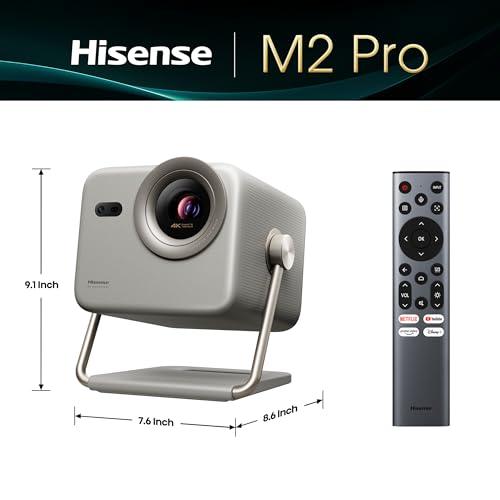
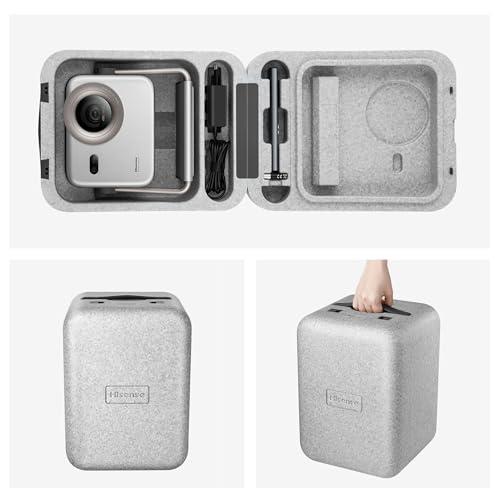
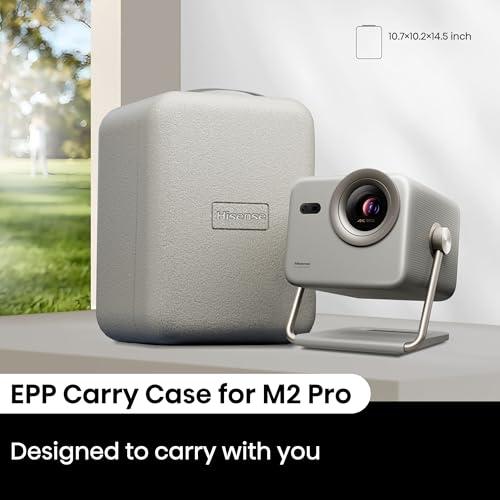
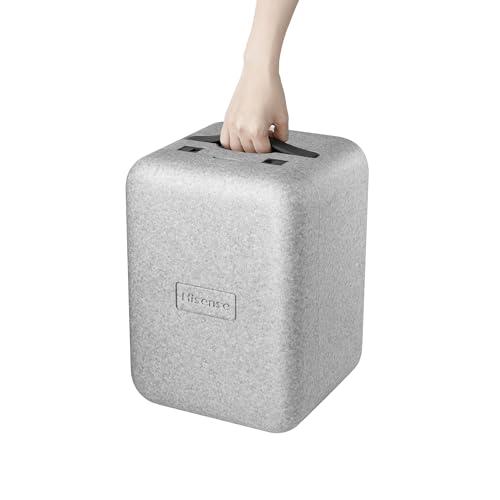
| 8.6 lbs with 360° gimbal, carry case included | 6.6 lbs, traditional fixed orientation |
| Gaming Performance - Console compatibility and responsiveness | |
| 240Hz refresh, 12ms lag, 4K gaming support | 120Hz refresh, 8.6ms lag, 1080p gaming only |
| Setup Automation - Convenience vs manual control | |
| Auto focus, keystone, wall color adaptation | Manual focus and keystone adjustment required |
| Smart Features - Built-in streaming vs external devices | |
| VIDAA OS with Netflix, Disney+, YouTube built-in | No smart OS, requires external streaming device |
| Audio System - Built-in sound quality | |
| 20W stereo with Dolby Audio, DTS Virtual:X | 15W mono speaker (basic audio) |
| Screen Size Range - Installation flexibility | |
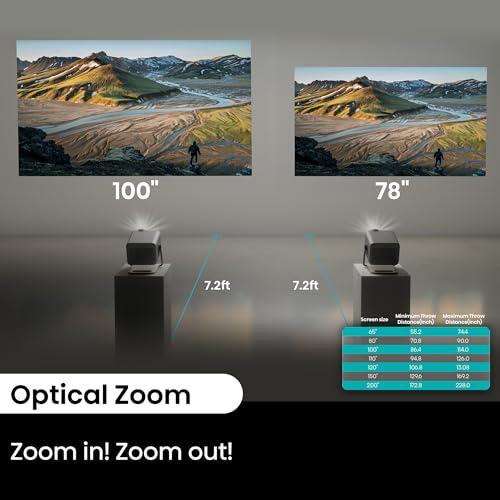
| 65" to 200" projection capability | 20" to 300" projection range |
| Optical Zoom - Image adjustment without quality loss | |
| 1.0-1.3x optical zoom maintains 4K sharpness | 1.1x manual zoom with focus ring |
| HDR Support - Premium content compatibility | |
| Dolby Vision, HDR10, HDR10+, HLG | HDR10 and HLG support |
| Contrast Ratio - Black level performance | |
| 1,000:1 native contrast | 300,000:1 dynamic contrast |
| Laser Lifespan - Long-term maintenance costs | |
| 25,000+ hours (essentially maintenance-free) | 30,000 hours (no lamp replacements needed) |
The Hisense M2 Pro 4K Triple Laser Portable Projector is better for dedicated home theater use due to its true 4K resolution, superior color accuracy (110% BT.2020), and Dolby Vision support. However, the Optoma HZ40HDR 1080p Projector works better in multi-purpose rooms with ambient light thanks to its 4,000 ANSI lumens brightness.
The primary difference is resolution and brightness approach. The Hisense M2 Pro delivers true 4K resolution with 1,300 lumens using triple laser technology, while the Optoma HZ40HDR provides 1080p resolution with 4,000 lumens using single laser phosphor technology.
The Optoma HZ40HDR 1080p Projector is significantly brighter at 4,000 ANSI lumens, making it excellent for daytime viewing and well-lit rooms. The Hisense M2 Pro at 1,300 lumens requires darker environments for optimal viewing.
The Hisense M2 Pro 4K Triple Laser Portable Projector provides true 4K gaming at 240Hz with 12ms input lag. The Optoma HZ40HDR accepts 4K input but outputs at 1080p resolution, though it offers slightly lower 8.6ms input lag for competitive gaming.
The Hisense M2 Pro is designed for portability with automatic focus, keystone correction, and a 360° gimbal system that allows projection on any surface. The Optoma HZ40HDR 1080p Projector requires manual setup and is better suited for permanent installation.
The Hisense M2 Pro 4K Triple Laser Portable Projector includes VIDAA Smart OS with Netflix, Disney+, YouTube, and other streaming apps built-in. The Optoma HZ40HDR requires external streaming devices like Apple TV, Roku, or Fire TV Stick.
The Hisense M2 Pro offers superior color accuracy with 110% BT.2020 color space coverage and professional-grade color reproduction. The Optoma HZ40HDR 1080p Projector provides good Rec.709 color accuracy but cannot match the expanded color gamut of the triple laser system.
Both projectors offer maintenance-free operation with long laser lifespans. The Hisense M2 Pro 4K Triple Laser Portable Projector provides 25,000+ hours, while the Optoma HZ40HDR offers up to 30,000 hours of laser life.
The Hisense M2 Pro is ideal for apartments and bedrooms due to its compact size, quiet operation, automatic setup features, and ability to project on ceilings. The Optoma HZ40HDR 1080p Projector is better for larger, brighter spaces.
The Optoma HZ40HDR supports larger installations with screen sizes from 20" to 300". The Hisense M2 Pro 4K Triple Laser Portable Projector projects from 65" to 200", which covers most home theater needs while maintaining 4K sharpness.
The Hisense M2 Pro features superior audio with 20W stereo speakers, Dolby Audio, and DTS Virtual:X processing. The Optoma HZ40HDR 1080p Projector has a basic 15W mono speaker that's adequate for casual use but benefits from external audio systems.
Choose the Hisense M2 Pro 4K Triple Laser Portable Projector if you have a dedicated dark room and want future-proof 4K resolution. Select the Optoma HZ40HDR if you need to use the projector in bright rooms or prioritize maximum screen size over resolution.
We've done our best to create useful and informative comparisons to help you decide what product to buy. Our research uses advanced automated methods to create this comparison and perfection is not possible - please contact us for corrections or questions. These are the sites we've researched in the creation of this article: thegadgetflow.com - valueelectronics.com - youtube.com - projectorscreenstore.com - whathifi.com - hisense-usa.com - tomsguide.com - content.syndigo.com - youtube.com - shop.hisense-usa.com - avsforum.com - projectorscreen.com - projectorscreen.com - projectorcentral.com - avsforum.com - youtube.com - projector-database.com - projectorcentral.com - optomausa.com - crutchfield.com - tvsbook.com - youtube.com - avsforum.com - hometechnologyreview.com - optomausa.com - bestbuy.com - tvsbook.com - picclick.com - crutchfield.com - homecinemachoice.com - compsource.com - adorama.com - bhphotovideo.com - provantage.com - cdw.com - datavision.com - manua.ls - ipcstore.com - pcrichard.com - richersounds.com - electronicexpress.com - projexdisplay.com - dubaimachines.com - newegg.com - projectorpoint.co.uk - a.ubuy.com.kw - greentoe.com

Privacy Policy
Terms and Conditions - Affiliate Policy
Home Security
© Copyright 2008-2026.
11816 Inwood Rd #1211, Dallas, TX 75244