


Transforming any wall into a massive screen is no longer a complex affair requiring ceiling mounts and permanent installations. Today's portable smart projectors bring big-screen entertainment to spaces where traditional projectors wouldn't be practical. I've spent considerable time with both the Samsung Freestyle 2nd Gen and the Epson EpiqVision Mini EF11, and they represent two different approaches to solving the same problem: how to create a flexible, high-quality viewing experience without the bulk of traditional projectors.
Remember when projectors were bulky machines that needed dark rooms, complex setup, and constant maintenance? The projector landscape has changed dramatically in the last five years. The miniaturization of components and advancements in light source technology have created an entirely new category of entertainment devices.
The Samsung Freestyle 2nd Gen, released in late 2023 as an update to the original Freestyle that debuted in 2022, represents Samsung's vision of extreme portability and versatility. Meanwhile, the Epson EpiqVision Mini EF11, which hit the market in 2021, showcases Epson's focus on delivering superior image performance in a reasonably compact form factor.
Understanding the light source technology in each projector helps explain many of their performance differences.
The Freestyle 2nd Gen uses LED (Light-Emitting Diode) technology, which works by passing electric current through semiconductor material to produce light. This approach offers several advantages:
Samsung has improved the LED brightness slightly from the first generation, though it remains relatively modest at 550 lumens.
The Epson EF11 utilizes laser projection technology, which creates light by stimulating phosphors with a blue laser diode. This technology provides:
Epson also incorporates their proprietary 3LCD technology, which splits light into three primary colors that pass through separate LCD panels before recombining. This differs from the single-chip DLP (Digital Light Processing) technology in the Samsung and helps eliminate the "rainbow effect" some viewers experience with DLP projectors.
When you're buying a projector, image quality is paramount—and there are significant differences between these two models.
Both projectors offer Full HD 1080p resolution (1920×1080 pixels), which remains the sweet spot for most content. While 4K projectors exist in the market, they typically come with much higher price tags and larger form factors.
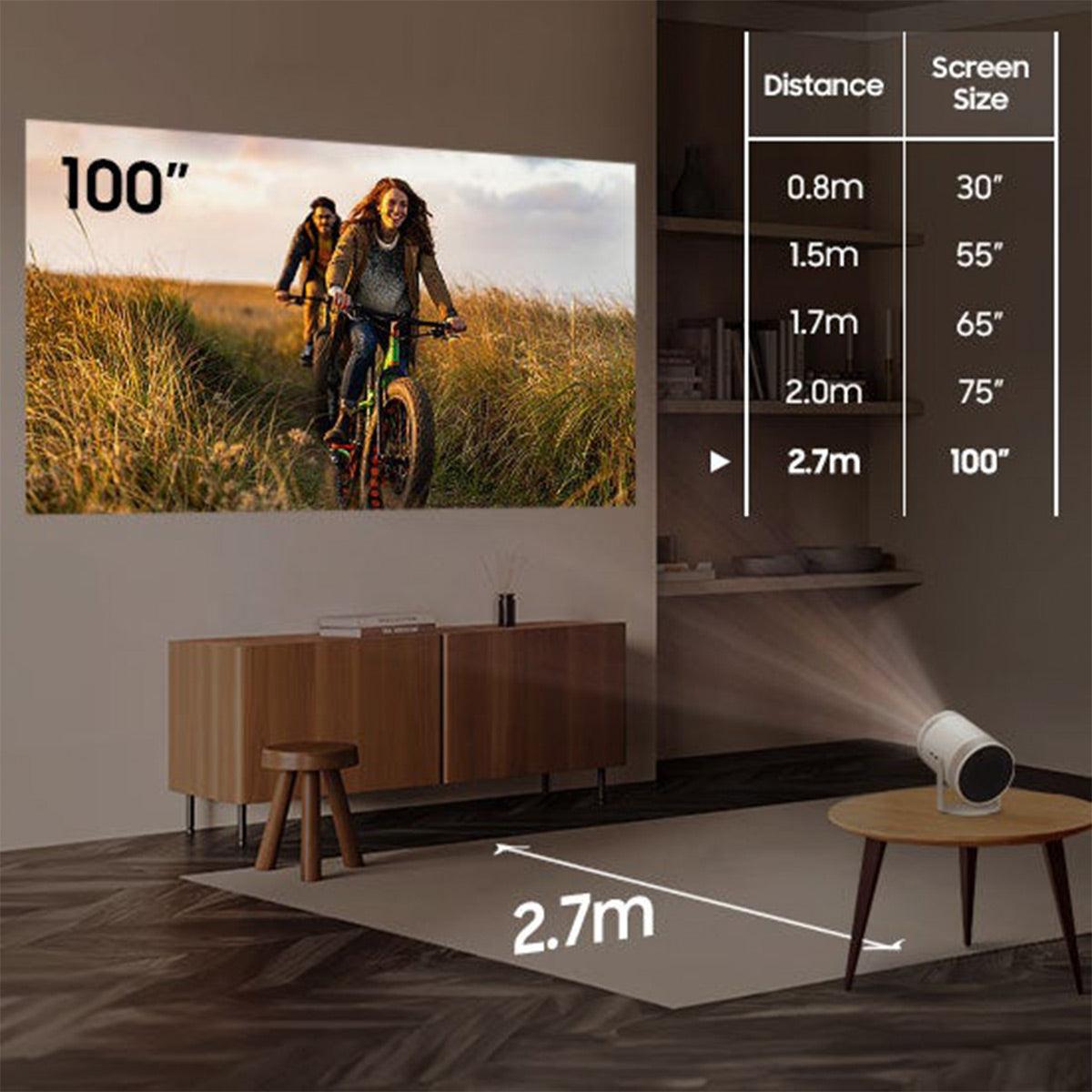
The Samsung Freestyle 2nd Gen maintains the same resolution as its predecessor but adds HDR10+ support for improved contrast and color when playing compatible content. The picture appears sharp at proper viewing distances for screen sizes up to about 100 inches.
The Epson EF11's image appears slightly sharper to my eyes, with better defined edges and finer detail in complex scenes. This clarity advantage comes from Epson's more sophisticated optical system and higher-quality lens assembly.
Here's where the differences become dramatic. With 1,000 lumens, the Epson EF11 produces an image nearly twice as bright as the Samsung's 550 lumens. What does this mean in practice?
The Samsung Freestyle 2nd Gen requires near darkness for enjoyable viewing. Even with modest ambient light—say, a couple of dimmed lamps—the image becomes washed out, especially in brighter scenes. This limitation significantly affects when and where you can use it effectively.
The Epson, while still not as bright as full-sized home theater projectors (which often range from 2,000-3,000 lumens), performs admirably in rooms with some ambient light. I've used it in my living room with curtains drawn but not completely blacked out, and the image remained vibrant and watchable. For evening sports viewing or casual movie nights where complete darkness isn't practical, this brightness advantage makes a substantial difference.
Color performance varies significantly between these projectors, largely due to their different underlying technologies.
The Samsung Freestyle 2nd Gen produces pleasing colors with decent saturation in completely dark environments. Samsung has improved the color processing from the first generation, and the HDR10+ support helps maintain detail in very bright and very dark areas of the image.
The Epson EF11's 3LCD technology creates noticeably more accurate and vibrant colors. The difference is particularly evident in scenes with rich, saturated colors like sunsets, vibrant costumes, or nature documentaries. The laser light source maintains color consistency throughout its lifespan, while LED projectors typically experience some color shift over time.
These projectors represent different philosophies about what "portable" should mean.
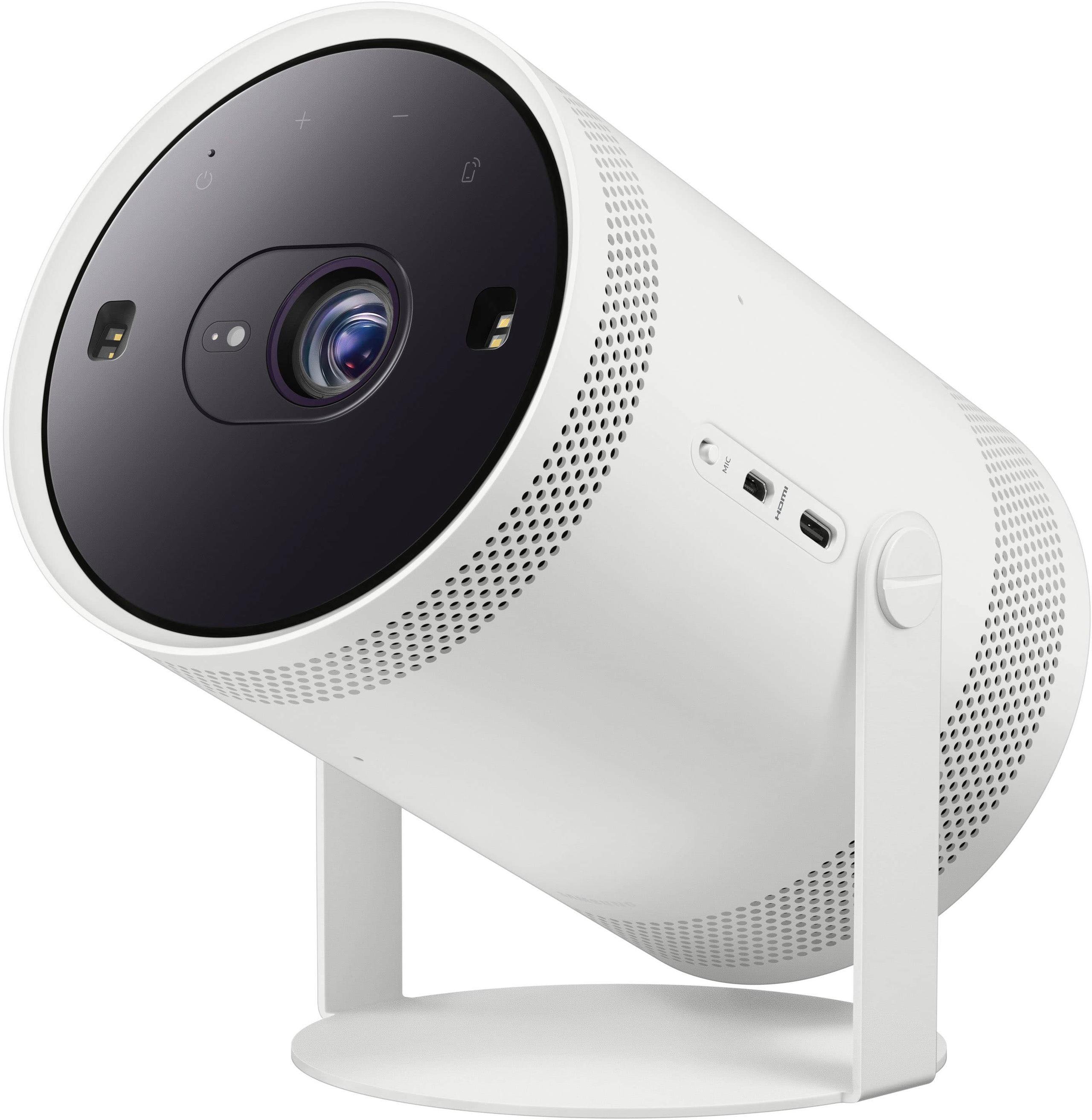
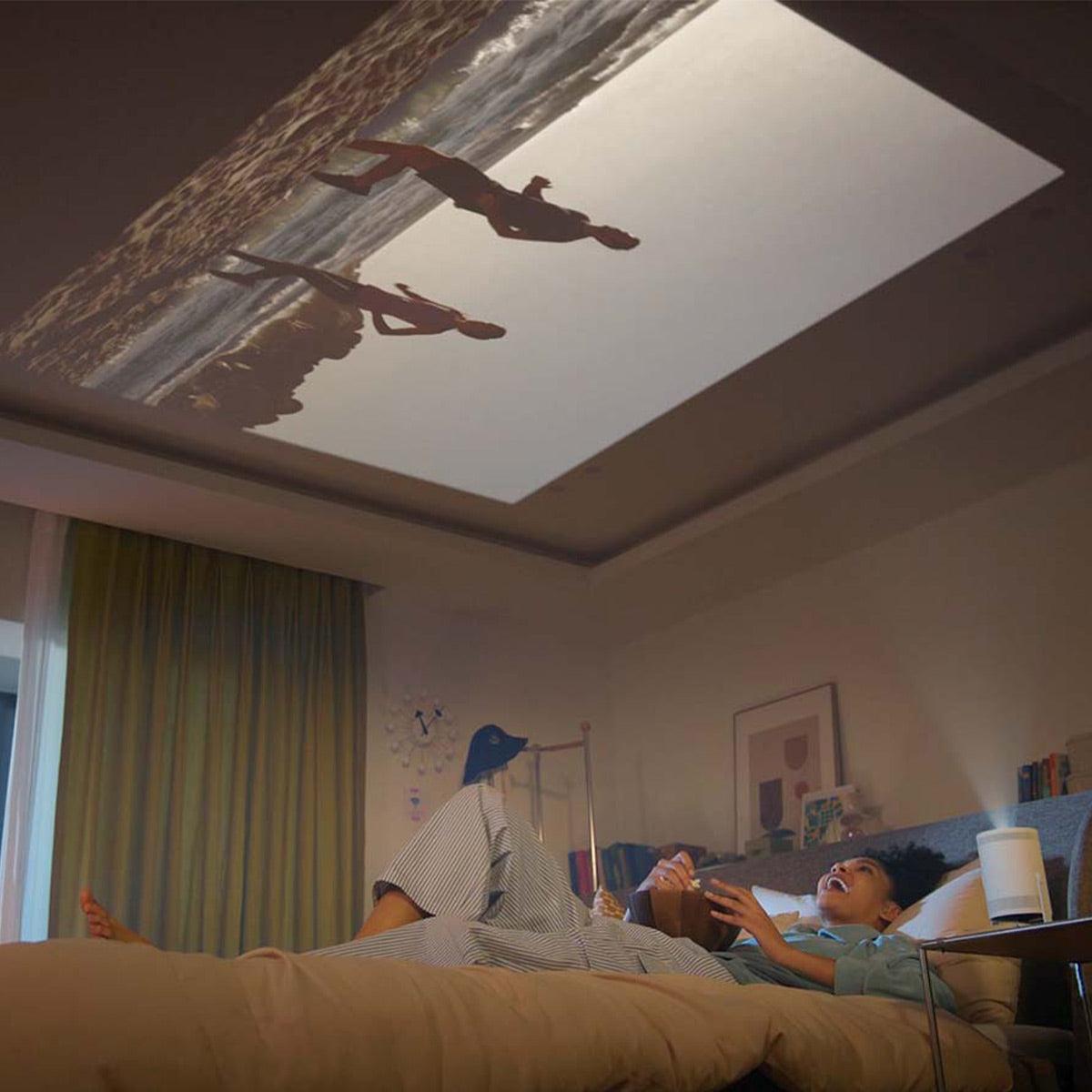
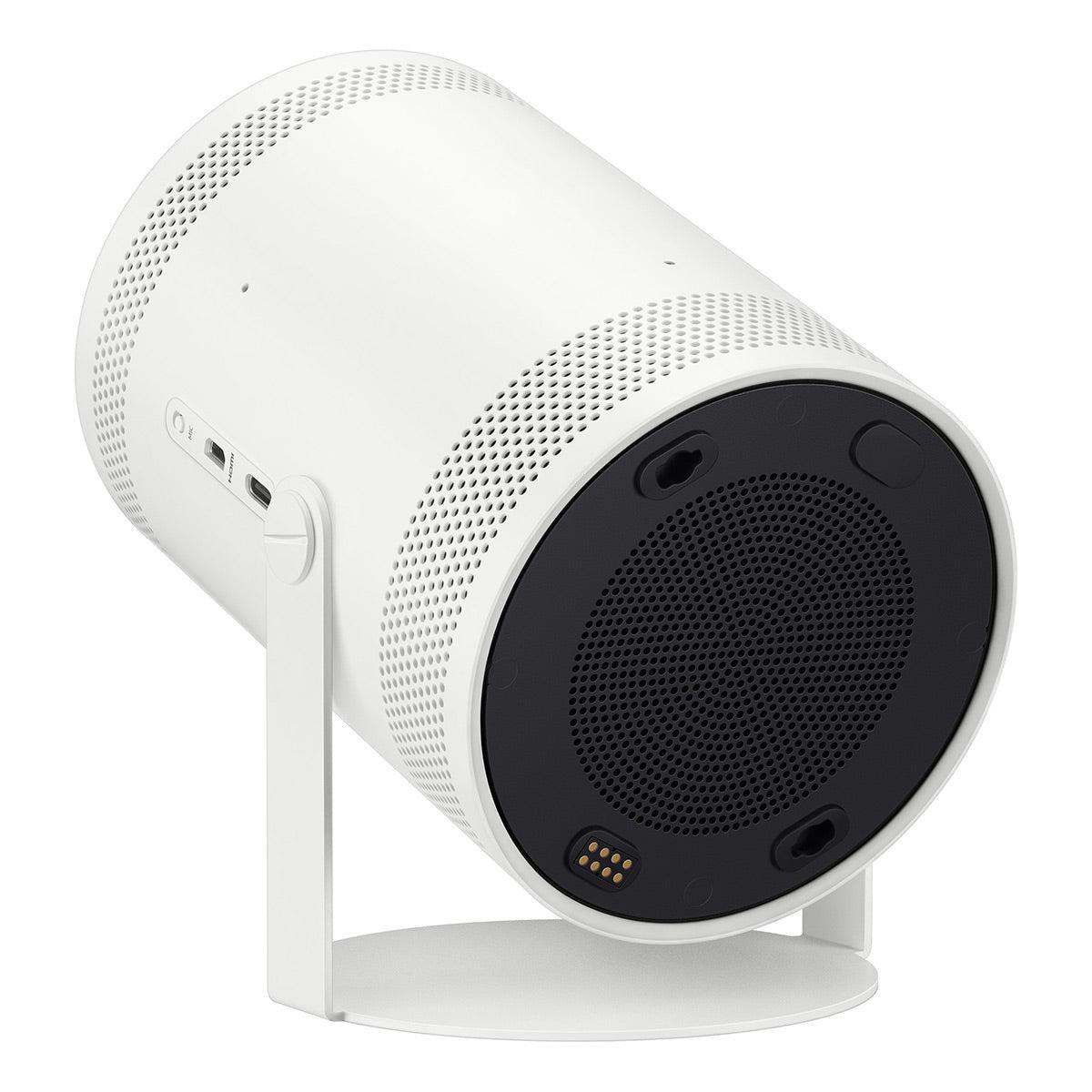
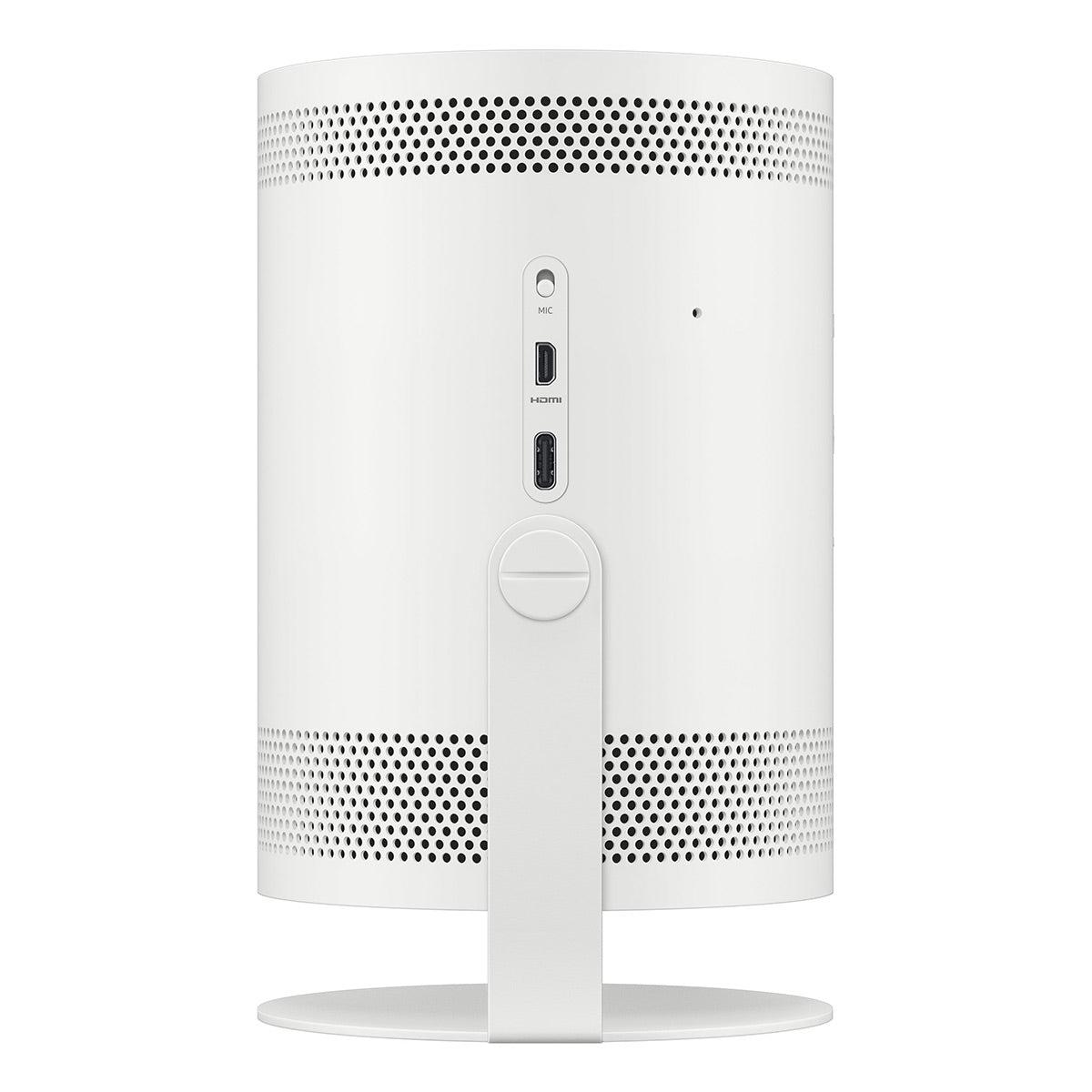
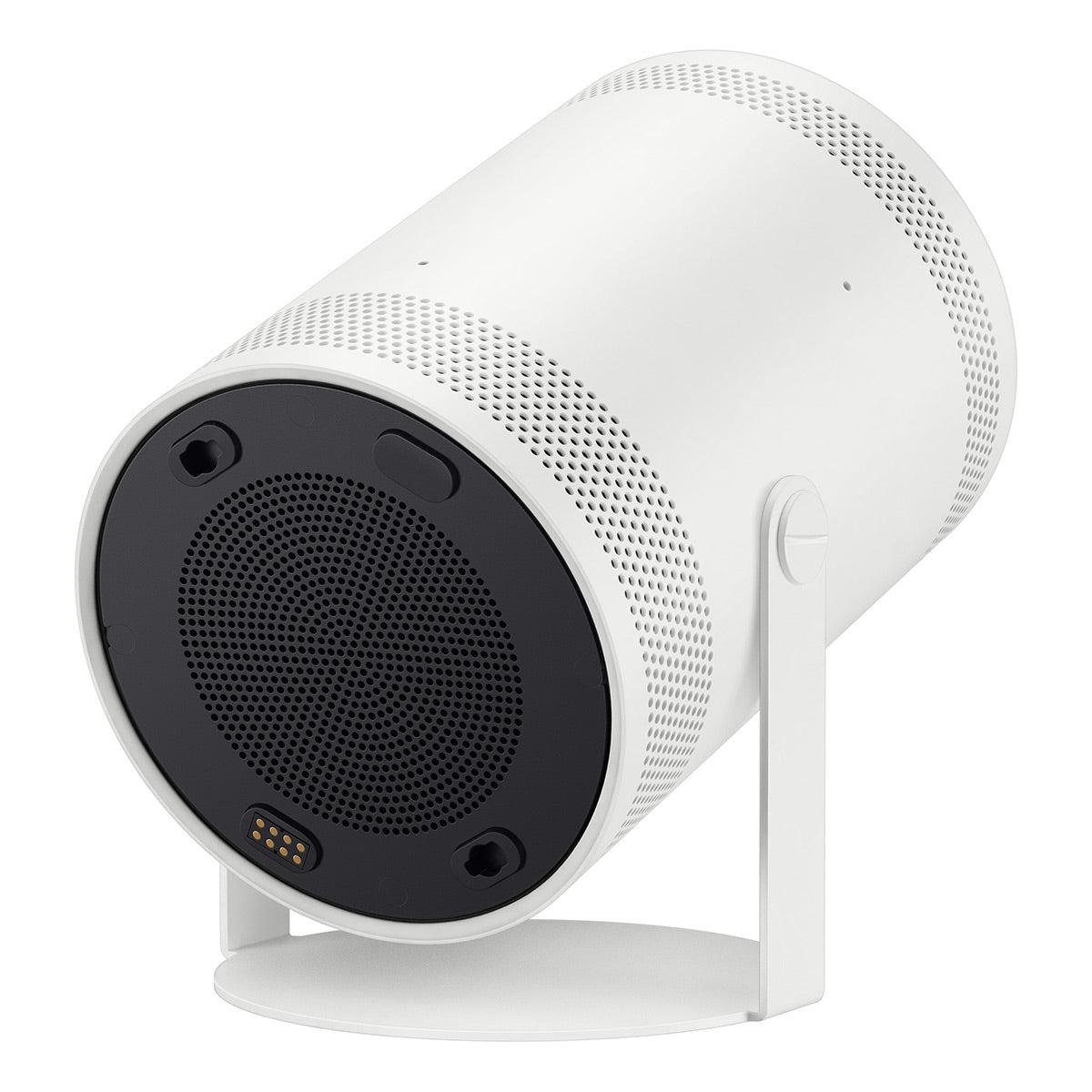
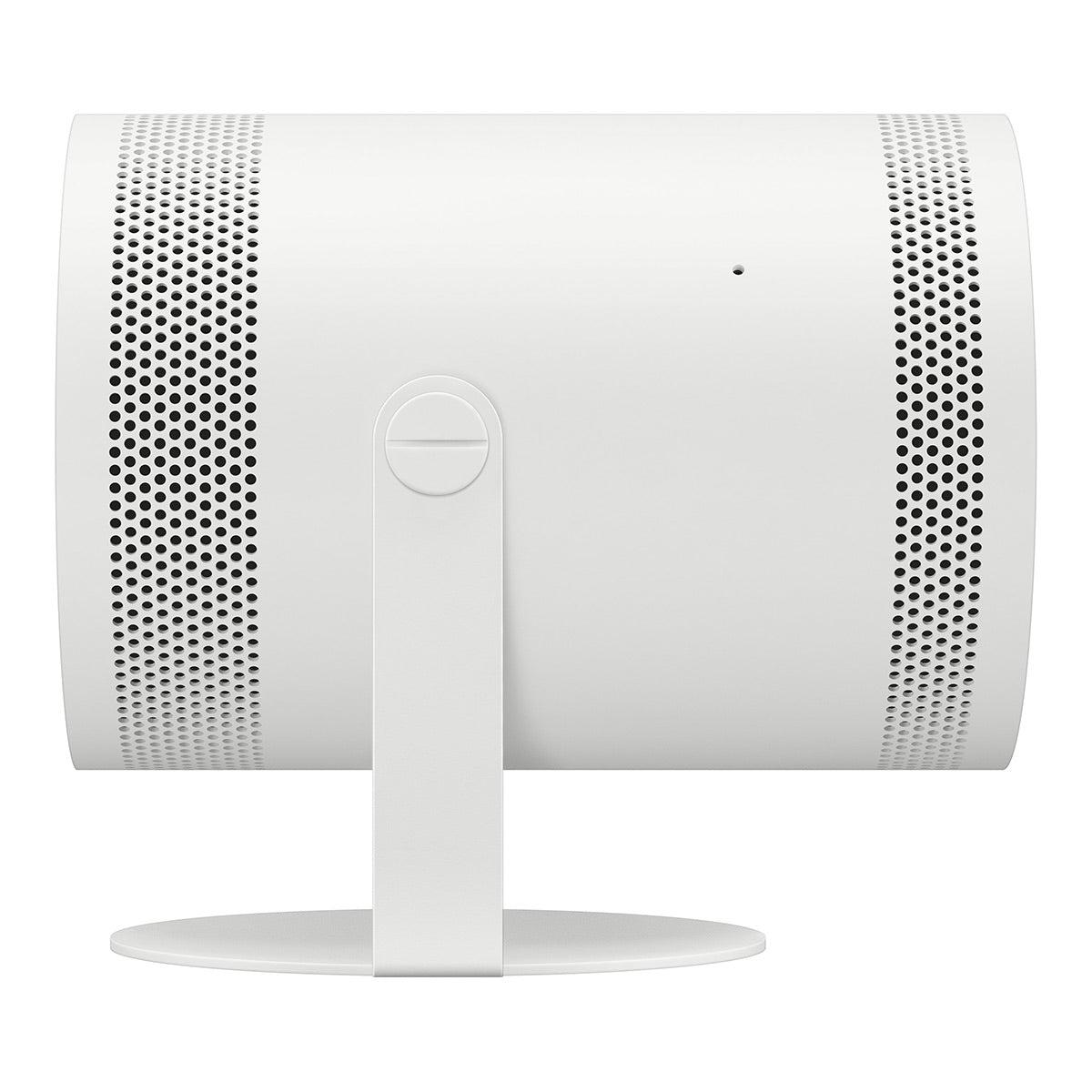
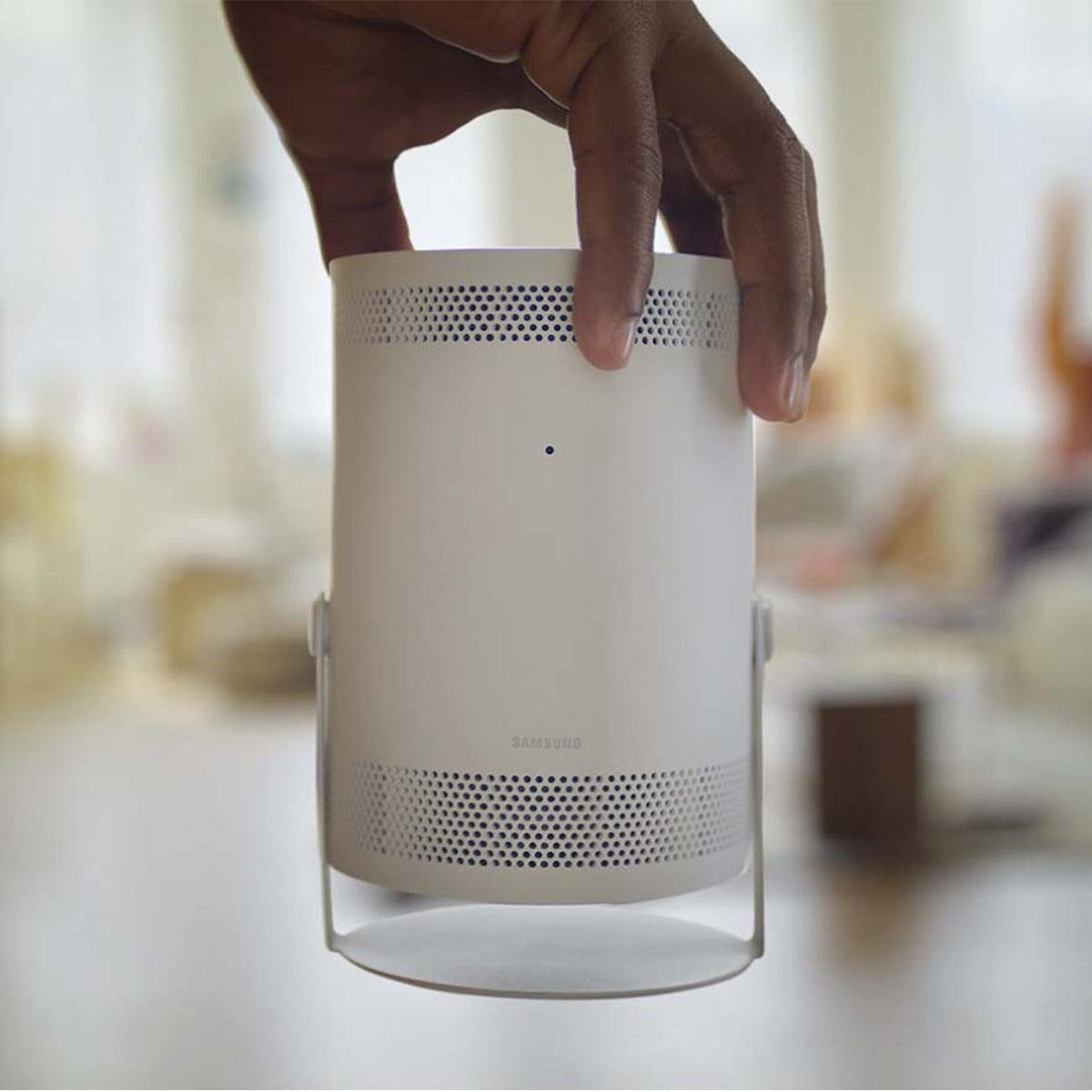
The Samsung Freestyle 2nd Gen maintains the distinctive cylindrical design of the original, measuring just 3.7 inches in diameter and 5.8 inches in height, weighing a mere 1.83 pounds. It's genuinely small enough to toss in a backpack or even a large purse. The swivel stand allows 180-degree rotation, making it possible to project onto ceilings, walls, or even floors.
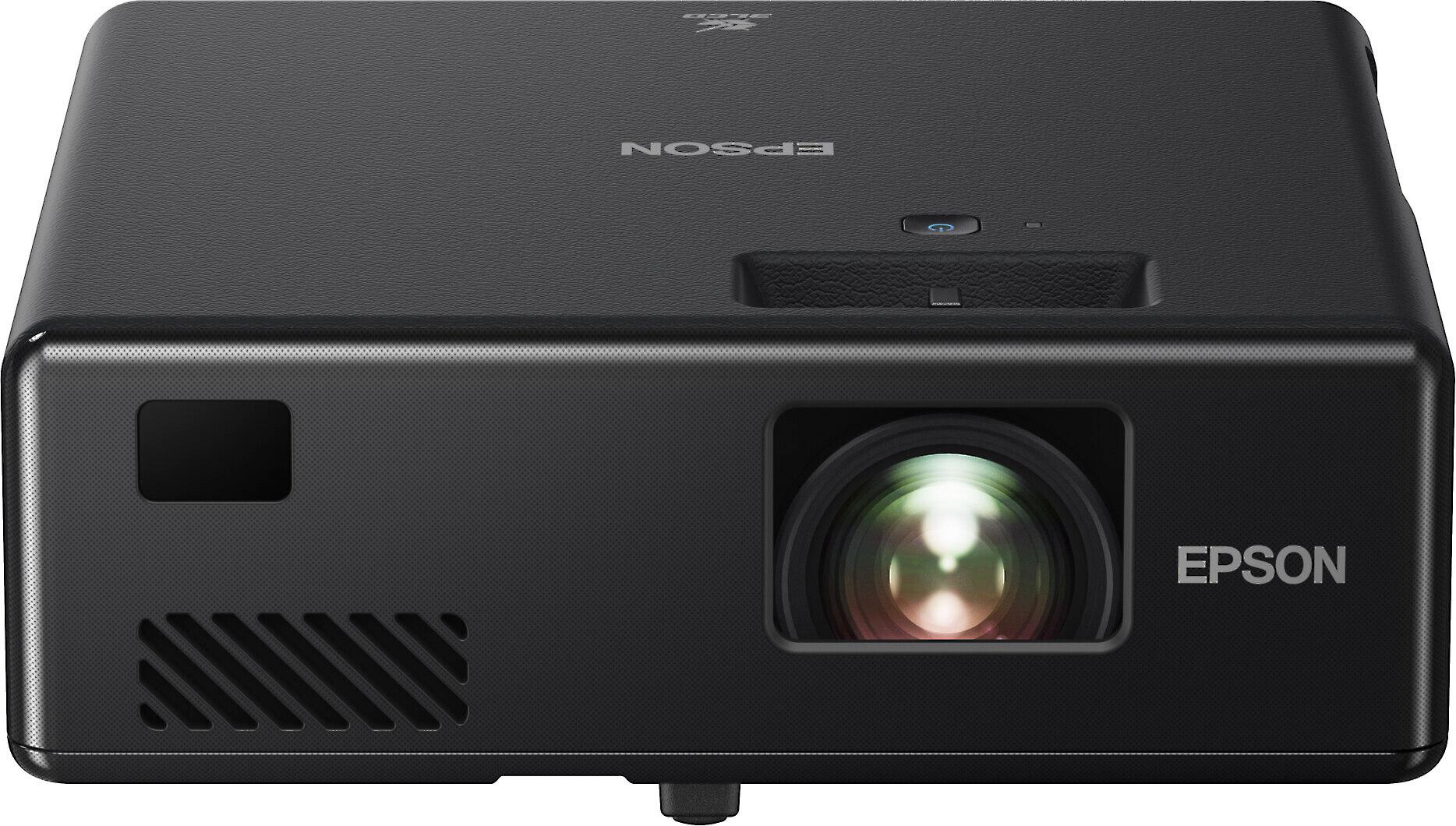
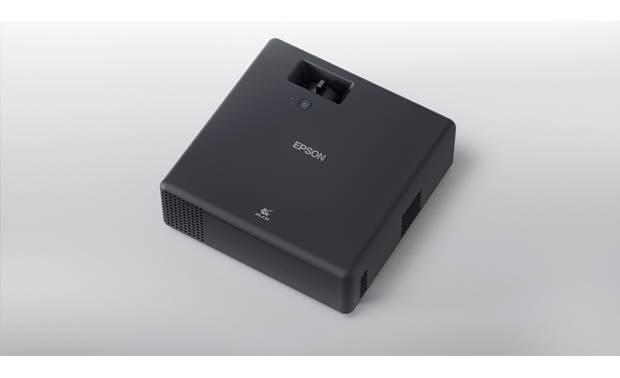
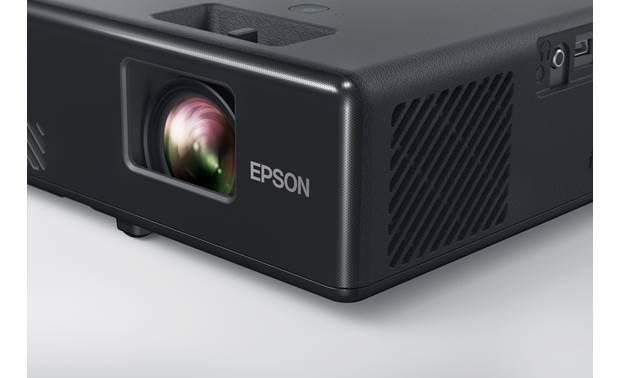
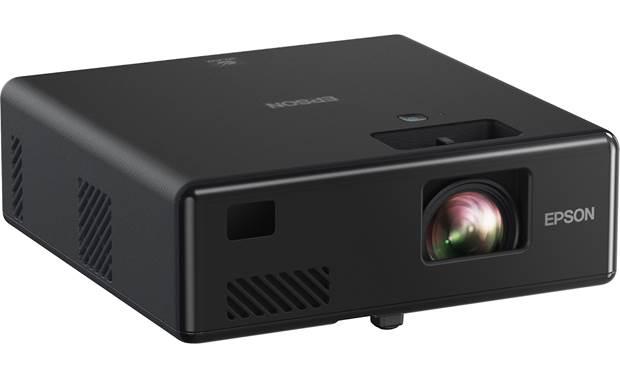
The Epson EF11 takes a more conventional cube-shaped approach at 6.9 × 6.9 × 2.6 inches and 2.6 pounds. While still considered portable, it's notably larger and heavier than the Samsung. Its fixed projection angle means you'll need to use keystone correction more frequently when positioning isn't ideal.
The Samsung Freestyle 2nd Gen excels in setup convenience. Its auto keystone correction, auto focus, and auto leveling features work remarkably well, automatically adjusting the image when you move the projector. Within seconds of positioning it, you'll have a properly aligned image. The 2nd Gen improves on the first with faster and more accurate auto-adjustments.
The Epson requires more manual tweaking. Its keystone correction works well once configured, but you'll need to adjust it yourself using the remote. Focus is also manual, requiring you to use the remote to fine-tune sharpness. This takes longer but sometimes results in more precise adjustments than automated systems.
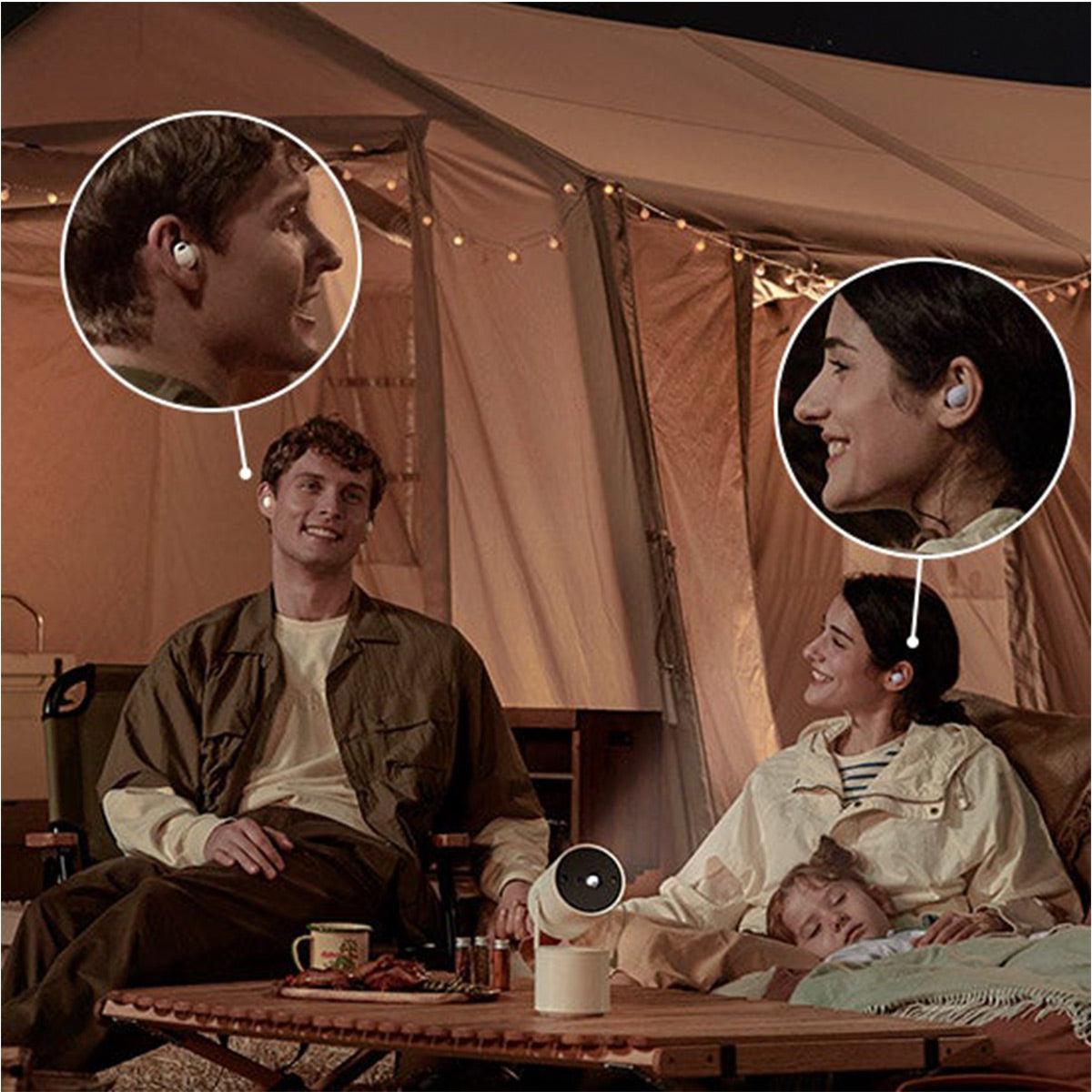
One of the most significant upgrades in the Samsung Freestyle 2nd Gen is the addition of an optional battery base. When purchased separately, this accessory transforms the Freestyle into a truly cord-free projector with approximately 2 hours of playback time—enough for most movies. This feature alone may justify the price premium for users who need genuine go-anywhere functionality.
The Epson EF11 requires constant AC power. While you can use external power banks with sufficient output, it lacks a dedicated battery solution, limiting its use to locations with available power outlets.
Modern projectors are essentially computers with projection capabilities, and their operating systems significantly impact usability.
The Samsung Freestyle 2nd Gen runs on Samsung's Tizen OS, the same platform used in their smart TVs. The interface is polished and responsive, with a layout that will feel familiar to Samsung TV owners. It supports most major streaming apps including Netflix, Disney+, Prime Video, and more directly without requiring external devices.
The Epson EF11 uses Android TV with Google Assistant integration, providing access to the Google Play Store with its thousands of apps. The interface is intuitive, though not quite as streamlined as Samsung's. One advantage is the broader app ecosystem of Android TV, which includes more niche services and applications.
Both projectors offer solid connectivity, but with different emphases:
The Samsung Freestyle 2nd Gen includes:
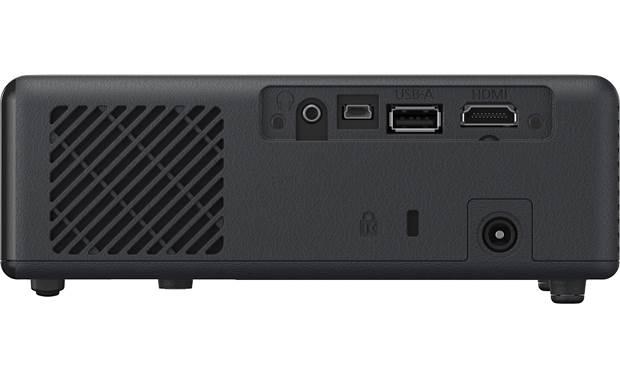
The Epson EF11 provides:
The Samsung's USB-C port allows for more flexible power options, including power banks that support USB-C PD (Power Delivery). The Epson's connections are more focused on traditional home theater setups.
For gamers, input lag (the delay between your controller action and the result appearing on screen) is crucial.
The Samsung Freestyle 2nd Gen measures around 43ms input lag in game mode, which is adequate for casual gaming but not ideal for competitive play. The 2nd Gen adds Samsung's Gaming Hub, allowing for cloud gaming services like Xbox Game Pass without requiring a console.
The Epson EF11 has slightly higher input lag at approximately 50-60ms. This difference would be barely perceptible to casual gamers but might frustrate those playing fast-paced competitive games.
Neither projector supports high refresh rates beyond the standard 60Hz, so they won't take advantage of newer consoles' 120Hz capabilities.
Built-in audio is often an afterthought in projectors, but both manufacturers have made genuine efforts here.
The Samsung Freestyle 2nd Gen features a 360-degree 5W speaker that projects sound in all directions. This works surprisingly well in small to medium-sized rooms, creating a spacious soundstage that belies the projector's tiny size. Bass response is limited, as expected, but dialogue clarity is good, and the overall volume is sufficient for casual viewing.
The Epson EF11 incorporates a custom-designed Yamaha sound system with dual 2W speakers. Despite the lower power rating, the audio quality is slightly better than the Samsung's, with richer midrange and clearer dialogue. The stereo separation, though minimal due to the speakers' proximity, provides better directional audio than the Samsung's omnidirectional approach.
Both projectors support Bluetooth audio output for connecting to external speakers or headphones. They also feature HDMI ARC (Audio Return Channel), allowing audio to be sent to compatible soundbars or receivers through the same HDMI cable that delivers video.
For serious home theater use, I'd recommend external audio with either projector. While their built-in speakers are adequate for casual viewing, they can't match the impact of even modest dedicated audio systems.
Beyond the core functions, each projector offers unique capabilities that might be deciding factors for some users.
The Samsung offers several features that expand its use beyond simple projection:
The Epson prioritizes performance and reliability:
The Samsung Freestyle 2nd Gen typically retails for $799-899, representing a premium price point in the portable projector market. You're paying for the extreme portability, Samsung ecosystem integration, and unique form factor.
The Epson EpiqVision Mini EF11 usually sells for $699-799, offering better pure projection performance per dollar. The laser light source and superior brightness represent excellent value for those primarily concerned with image quality.
For context, traditional home theater projectors with similar or better image quality but lacking smart features might cost $500-700, while high-end portable projectors with 4K capabilities can exceed $1,000.
If you're considering either projector for a dedicated home theater space, there are additional factors to weigh.
The Epson EF11 is better suited for traditional home theater use. Its higher brightness and superior contrast make it more capable in spaces where you want a cinematic experience. Paired with external speakers, it can deliver satisfying movie nights on screens up to 120 inches.
The Samsung Freestyle 2nd Gen struggles more in dedicated theater applications. Its lower brightness limits practical screen size to around 80-100 inches before the image becomes noticeably dim. However, its extreme portability means it could serve as both an occasional home theater projector and a device for other spaces.
Neither projector supports the wider color gamuts (like DCI-P3) that home theater enthusiasts might desire, nor do they offer advanced calibration options found in higher-end models.
After extensive time with both projectors, here's my guidance for different user profiles:
Choose the Samsung Freestyle 2nd Gen if:
Choose the Epson EpiqVision Mini EF11 if:
For most people setting up a semi-permanent projection system, I'd recommend the Epson. Its superior brightness and image quality will likely provide more satisfaction over time, especially for movie watching and general content consumption.
However, if you're frequently moving between locations or want a projector that can truly go anywhere—camping trips, backyard movie nights, different rooms in your home—the Samsung's extreme portability and battery option make it the better choice despite its higher price tag.
Both the Samsung Freestyle 2nd Gen and the Epson EpiqVision Mini EF11 represent impressive technological achievements, packing projector capabilities into increasingly portable forms. Your specific needs and usage scenarios should guide your decision more than brand preference or slight price differences. Consider where and how you'll use the projector most often, and that should make your choice clear.
| Samsung Freestyle 2nd Gen Smart Projector | Epson EpiqVision Mini EF11 Laser Projector |
|---|---|
| Price - Overall investment required | |
| $799-899 (higher cost for extreme portability) | $699-799 (better value for image quality) |
| Light Source Technology - Affects brightness, color accuracy, and lifespan | |
| LED with 20,000-hour lifespan | Laser with 20,000-hour lifespan and better color stability |
| Brightness - Critical for viewing with ambient light | |
| 550 lumens (requires near-darkness) | 1,000 lumens (works in rooms with some ambient light) |
| Resolution - Determines image sharpness | |
| 1080p Full HD with HDR10+ support | 1080p Full HD with scene adaptive gamma correction |
| Size & Weight - Affects true portability | |
| 3.7" × 5.8", 1.83 pounds (extremely portable) | 6.9" × 6.9" × 2.6", 2.6 pounds (compact but bulkier) |
| Setup Features - Impacts ease of use and flexibility | |
| Auto keystone, auto focus, auto leveling, 180° rotation | Manual focus and keystone adjustment, less flexible positioning |
| Power Options - Determines where you can use it | |
| Optional battery base offering ~2 hours playback | AC power only (no battery option) |
| Operating System - Controls available apps and interface | |
| Samsung Tizen OS with major streaming apps | Android TV with Google Play Store (5,000+ apps) |
| Audio - Quality of built-in sound system | |
| 360° 5W speaker with good volume | Dual 2W Yamaha speakers with better audio quality |
| Connectivity - How it connects to devices and networks | |
| HDMI, USB-C, Bluetooth, Wi-Fi, AirPlay 2, SmartThings | HDMI, USB-A, Bluetooth, Wi-Fi, Chromecast built-in |
| Gaming Performance - Suitability for playing video games | |
| ~43ms input lag, Gaming Hub for cloud gaming | ~50-60ms input lag (slightly less responsive) |
| Projection Technology - Affects color accuracy and rainbow effects | |
| Single-chip DLP (may show rainbow effects for some viewers) | 3LCD technology (no rainbow effects, better color accuracy) |
| Special Features - Unique capabilities that add value | |
| Ambient mode, screen mirroring, far-field microphone | Split screen capability, superior brightness, more accurate colors |
| Ideal Use Case - Where each projector excels | |
| Multiple locations, ultra-portable needs, Samsung ecosystem | Home theater setup, better image quality, ambient light situations |
The Epson EpiqVision Mini EF11 Laser Projector is significantly brighter at 1,000 lumens compared to the Samsung Freestyle 2nd Gen Smart Projector's 550 lumens. This makes the Epson EF11 better for rooms with some ambient light, while the Samsung Freestyle 2nd Gen requires near-darkness for optimal viewing.
Only the Samsung Freestyle 2nd Gen Smart Projector offers battery power capability through an optional battery base that provides approximately 2 hours of playback. The Epson EpiqVision Mini EF11 Laser Projector requires constant AC power connection and does not have a battery option.
For dedicated home theater use, the Epson EpiqVision Mini EF11 is generally better due to its higher brightness (1,000 lumens vs 550 lumens), superior contrast, and better color accuracy from its 3LCD technology. The Samsung Freestyle 2nd Gen works best in completely dark rooms and has more limited screen size potential for true theater experiences.
The Samsung Freestyle 2nd Gen Smart Projector typically costs $799-899, while the Epson EpiqVision Mini EF11 Laser Projector usually sells for $699-799. The Samsung commands a premium price for its extreme portability and unique features, while the Epson offers better pure projection performance per dollar.
The Samsung Freestyle 2nd Gen is significantly more portable at just 3.7" × 5.8" and 1.83 pounds with an optional battery base for cord-free operation. The Epson EpiqVision Mini EF11 is larger at 6.9" × 6.9" × 2.6", weighs 2.6 pounds, and requires AC power, making it less convenient for frequent movement or travel.
Both projectors support major streaming services. The Samsung Freestyle 2nd Gen runs on Tizen OS with Netflix, Disney+, Prime Video, and other popular apps. The Epson EpiqVision Mini EF11 uses Android TV with access to 5,000+ apps via Google Play Store including all major streaming platforms and many niche services.
The Samsung Freestyle 2nd Gen features a 360° 5W speaker with good volume and spatial sound. The Epson EpiqVision Mini EF11 has dual 2W Yamaha-designed speakers that deliver slightly better audio quality with richer midrange and clearer dialogue despite the lower power rating. For serious home theater use, external speakers are recommended with either projector.
The Samsung Freestyle 2nd Gen Smart Projector uses LED technology that offers instant on/off capability with a 20,000-hour lifespan. The Epson EpiqVision Mini EF11 Laser Projector employs laser projection technology, also rated for 20,000 hours, but with better brightness, more vivid colors, and better performance consistency throughout its lifespan.
The Samsung Freestyle 2nd Gen has slightly lower input lag (~43ms vs Epson's ~50-60ms), making it marginally better for gaming. It also features Samsung's Gaming Hub for cloud gaming services. However, neither the Samsung nor the Epson EpiqVision Mini EF11 supports refresh rates beyond 60Hz, limiting their appeal for competitive gaming.
The Samsung Freestyle 2nd Gen offers superior automatic adjustments with auto keystone correction, auto focus, and auto leveling that work within seconds of positioning the projector. The Epson EpiqVision Mini EF11 requires manual adjustment of keystone correction and focus using the remote, taking more time but sometimes resulting in more precise adjustments.
Both the Samsung Freestyle 2nd Gen and Epson EpiqVision Mini EF11 can technically project up to about 100-120 inches diagonally. However, due to brightness limitations, the Samsung's practical maximum for enjoyable viewing is around 80-100 inches in completely dark rooms, while the Epson's higher brightness allows comfortable viewing at the full 120 inches even with minimal ambient light.
Both the Samsung Freestyle 2nd Gen Smart Projector and the Epson EpiqVision Mini EF11 Laser Projector have light sources rated for approximately 20,000 hours of use. However, the Epson's laser technology typically maintains brightness and color accuracy better throughout its lifespan compared to LED technology, potentially providing better image quality in the later years of operation.
We've done our best to create useful and informative comparisons to help you decide what product to buy. Our research uses advanced automated methods to create this comparison and perfection is not possible - please contact us for corrections or questions. These are the sites we've researched in the creation of this article: techradar.com - tech.slashdot.org - youtube.com - bestbuy.com - youtube.com - youtube.com - rtings.com - samsung.com - samsung.com - samsung.com - thesmarthomehookup.com - nfm.com - samsung.com - abt.com - projectorcentral.com - valueelectronics.com - target.com - samsung.com - samsung.com - images.samsung.com - abt.com - youtube.com - samsung.com - samsung.com - walts.com - bhphotovideo.com - shi.com - youtube.com - publicsector.shidirect.com - provantage.com - abcwarehouse.com - bestbuy.com - bhphotovideo.com - youtube.com - bestbuy.com - gagadget.com - epson.com - projectorreviews.com - audiogeneral.com - projectorreviews.com - epson.com - youtube.com - epson.com - youtube.com - mediaserver.goepson.com - files.support.epson.com - staples.com - projectorcentral.com - bestbuy.com - planettv.com - dell.com - epson.eu - projectortop.com

Privacy Policy
Terms and Conditions - Affiliate Policy
Home Security
© Copyright 2008-2026.
11816 Inwood Rd #1211, Dallas, TX 75244