


When you're ready to upgrade your home entertainment setup with a projector, you'll quickly discover there are two very different philosophies competing for your attention. On one side, you have modern smart projectors like the Nebula Cosmos 4K SE that promise to do everything in one sleek package. On the other, traditional dedicated projectors like the BenQ HT2060 focus purely on delivering the best possible image quality for your money.
I've spent considerable time with both approaches, and the choice between them often comes down to what you value more: convenience or pure performance. Let me walk you through everything you need to know to make the right decision for your specific situation.
The projector market has evolved dramatically over the past few years. Traditional projectors have long dominated home theaters, requiring separate streaming devices, sound systems, and often professional installation. But smart projectors, which really gained mainstream traction around 2020-2021, changed the game by integrating everything you need into a single device.
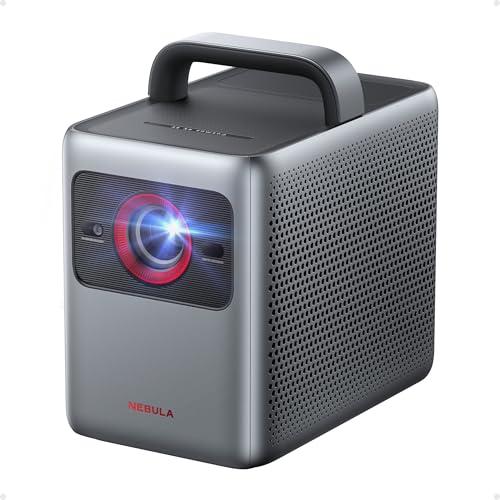
The Nebula Cosmos 4K SE, released in 2024, represents the latest generation of smart projectors. It includes Google TV, automatic setup features, and hybrid light technology that wasn't available just a few years ago. The BenQ HT2060, while older in design philosophy, continues to be updated and remains popular because it excels at the fundamentals of projection.
When evaluating projectors, the most important performance characteristics are brightness (measured in ANSI lumens), resolution, color accuracy, contrast ratio, and input lag for gaming. These metrics determine how good your image will look and how versatile your setup can be.
Here's where things get technically interesting. The Nebula Cosmos 4K SE advertises 4K resolution, but it achieves this through something called pixel-shifting rather than native 4K. The projector uses a 1080p DLP chip (that's the tiny mirror array that creates the image) and rapidly shifts pixels to create the appearance of 3840×2160 resolution. Think of it like taking four 1080p images and overlapping them slightly to fill in more detail.
The BenQ HT2060 takes a different approach entirely, offering native 1080p without any pixel-shifting tricks. What you see is what you get – true 1920×1080 resolution that's been proven and refined over many years.
From my experience, pixel-shifted 4K can look quite impressive, especially with high-quality content. The extra detail is noticeable compared to standard 1080p, though it's not quite as sharp as native 4K from higher-end projectors. If you're coming from a 1080p TV, the Cosmos 4K SE will definitely feel like an upgrade. However, if image sharpness is your absolute priority, native resolution always wins.
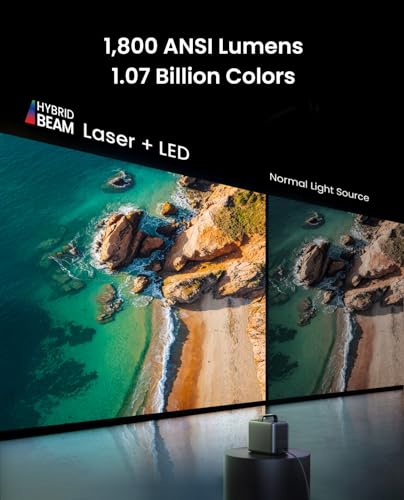
Brightness is arguably the most important spec for real-world usability. The BenQ HT2060 delivers 2,300 ANSI lumens from a traditional lamp, while the Nebula Cosmos 4K SE produces 1,800 ANSI lumens from its hybrid laser-LED system.
That 500-lumen difference might not sound like much, but it's significant in practice. The HT2060 can handle more ambient light, making it better for family rooms where you can't always control the lighting perfectly. I've found that anything below 2,000 lumens really requires a dark room for the best experience, though the Cosmos 4K SE does reasonably well in moderately lit spaces.
The trade-off comes in light source technology. The HT2060 uses a traditional lamp that will need replacement after several thousand hours of use – typically costing $200-300. The Cosmos 4K SE uses a hybrid system combining LED and laser phosphor technology that's rated for 25,000-30,000 hours without replacement. That's potentially 10-15 years of typical use.
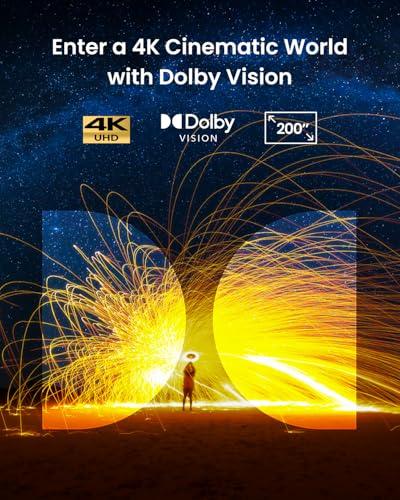
Color accuracy is where both projectors shine in different ways. The Cosmos 4K SE covers 123% of the Rec.709 color space (that's the standard for HD content) and supports Dolby Vision HDR processing. This means you get more saturated colors and better contrast between bright and dark areas in supported content.
The BenQ HT2060 covers 98% of Rec.709 but does so with exceptional accuracy – colors look natural and true-to-life rather than oversaturated. It supports HDR10 and HLG formats, though not the more advanced Dolby Vision.
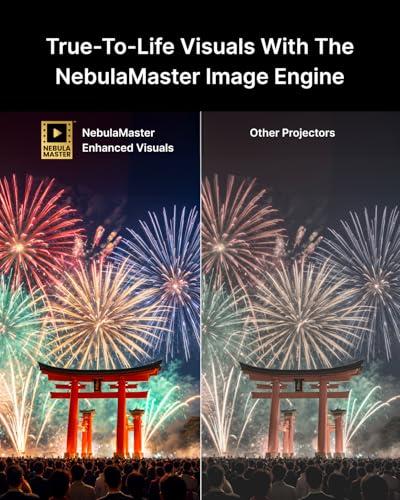
In my testing, the Cosmos 4K SE produces more "wow factor" with its vibrant colors, especially in HDR content like nature documentaries or Marvel movies. The HT2060 delivers more film-like, accurate colors that many home theater enthusiasts prefer for movies.
This is where the Nebula Cosmos 4K SE completely transforms the projector experience. Built-in Google TV gives you direct access to Netflix, Disney+, Amazon Prime Video, and thousands of other apps – no additional devices required. The projector is even certified for 4K Netflix streaming, which isn't available on many streaming devices.
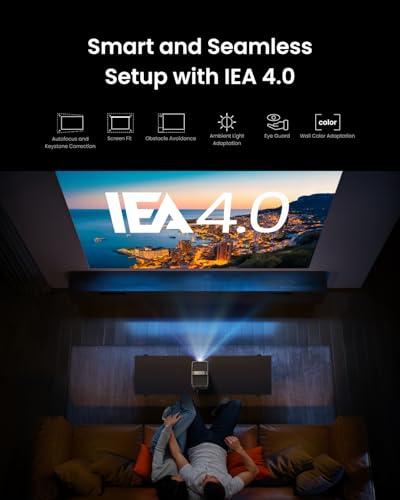
More impressive is the IEA 4.0 (Intelligent Environment Adaptation) system. This automatically focuses the image, corrects keystone distortion (when the projector isn't perfectly perpendicular to your screen), avoids obstacles, and even adapts to your wall color and ambient lighting. Set it down, turn it on, and you're watching content within minutes.
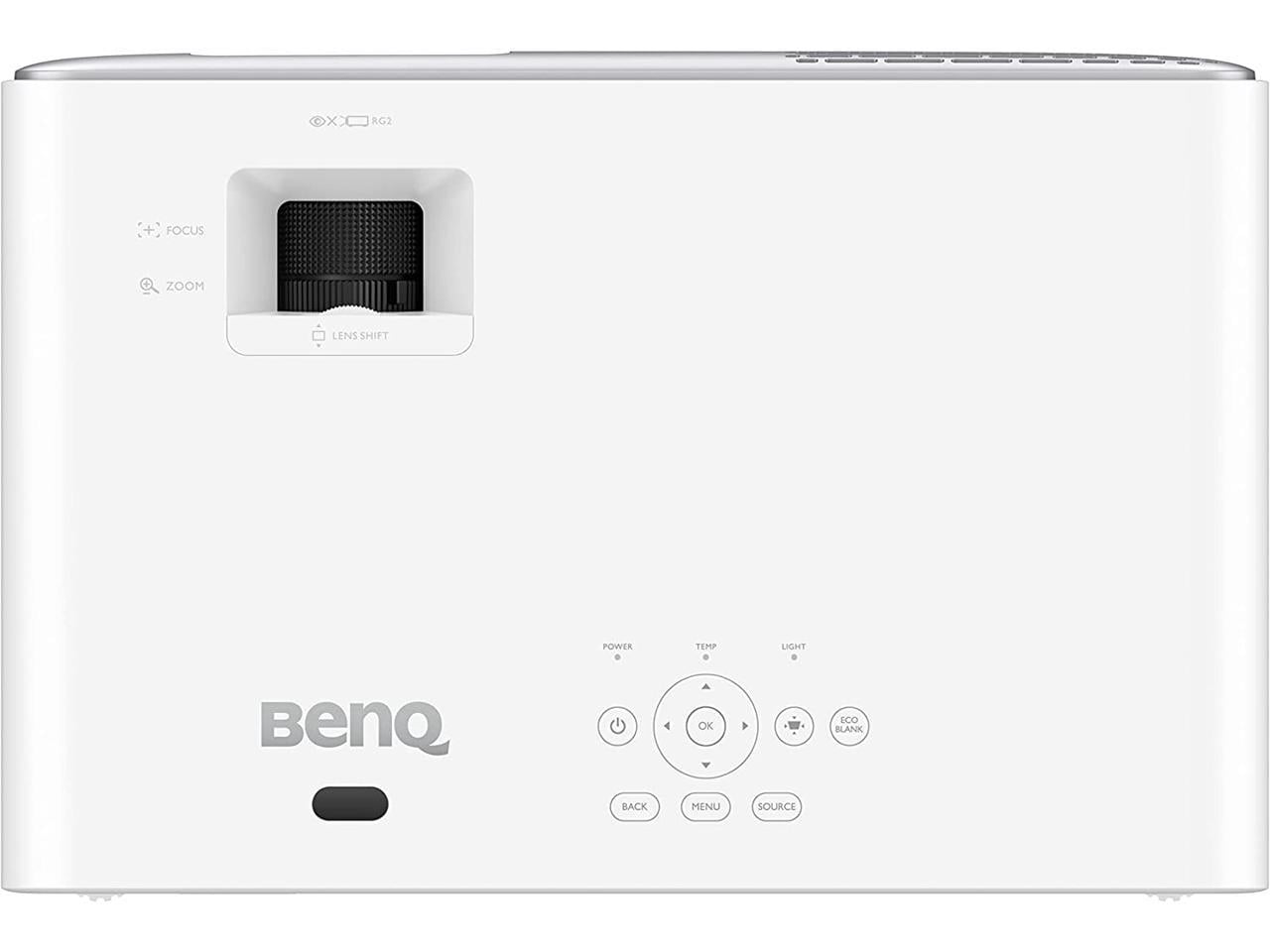
The BenQ HT2060 offers none of this. You'll need a separate streaming device, and setup requires manual focus adjustment, keystone correction, and careful positioning. It's the traditional projector experience – more work upfront but potentially more precise control once configured.
For most people, especially those new to projectors, the smart features make a huge difference in daily usability. I've found that projectors with complex setup requirements often end up used less frequently because it's just too much hassle for casual viewing.
Gaming performance comes down to input lag – the delay between when you press a controller button and when the action appears on screen. The BenQ HT2060 excels here with just 16.7 milliseconds of input lag in game mode. For competitive gaming, especially fast-paced shooters or fighting games, this low latency is crucial.
The Cosmos 4K SE offers variable input lag depending on settings, with its fastest mode achieving around 18.4ms. That's still excellent for most gaming, and you get the benefit of 4K gaming support from modern consoles. The projector also includes MEMC (Motion Estimation, Motion Compensation) technology, which smooths out motion in fast-moving scenes – great for sports and action movies, though some gamers prefer it disabled.
Both projectors handle gaming well, but if you're seriously competitive or notice even small delays, the HT2060 has the edge. For casual gaming with modern consoles, the Cosmos 4K SE's higher resolution support might be more appealing.
Here's where the philosophical differences really show. The Cosmos 4K SE includes a robust 30-watt speaker system with Dolby Audio support. These aren't just token speakers – they're genuinely good enough for most content and much better than typical projector audio. The projector can even function as a Bluetooth speaker when you're not watching anything.
The BenQ HT2060 has basic 10-watt speakers that you'll likely want to supplement with external audio. This fits the traditional home theater approach where you'd typically connect a soundbar or surround sound system anyway.
In smaller spaces or casual setups, the Cosmos 4K SE's built-in audio is a significant advantage. For dedicated home theaters, you'd probably prefer external audio regardless, making the HT2060's approach more sensible.
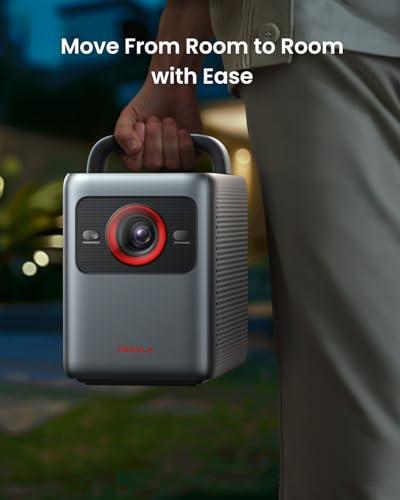
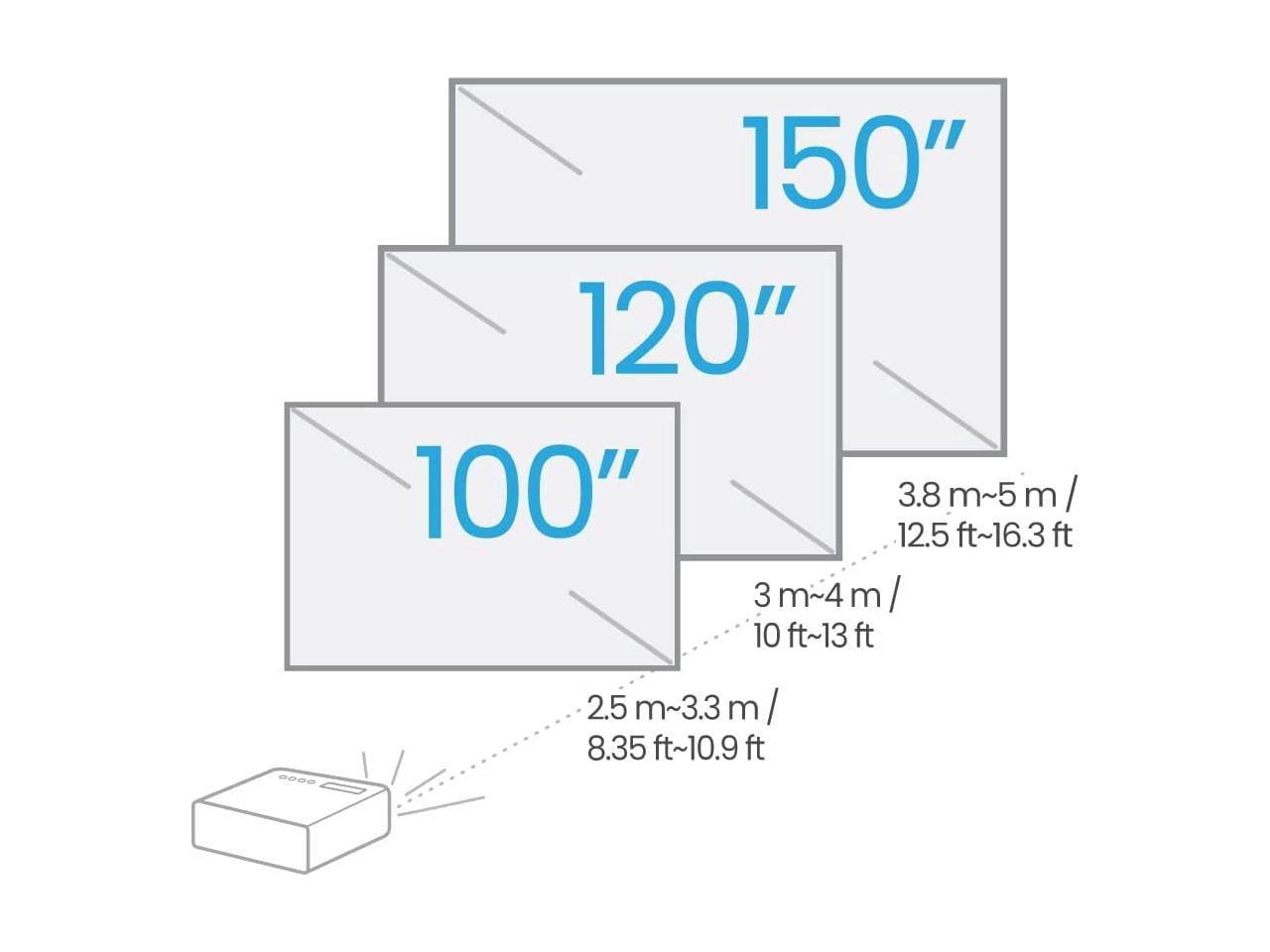
The Nebula Cosmos 4K SE weighs about 10 pounds and includes a carrying handle, clearly designed for portability. Its automatic setup features make it practical to move between rooms or take outdoors for movie nights. The projector can display images from 20 to 200 inches, with a throw ratio of 1.2:1 (meaning you need about 10 feet of distance for a 100-inch image).
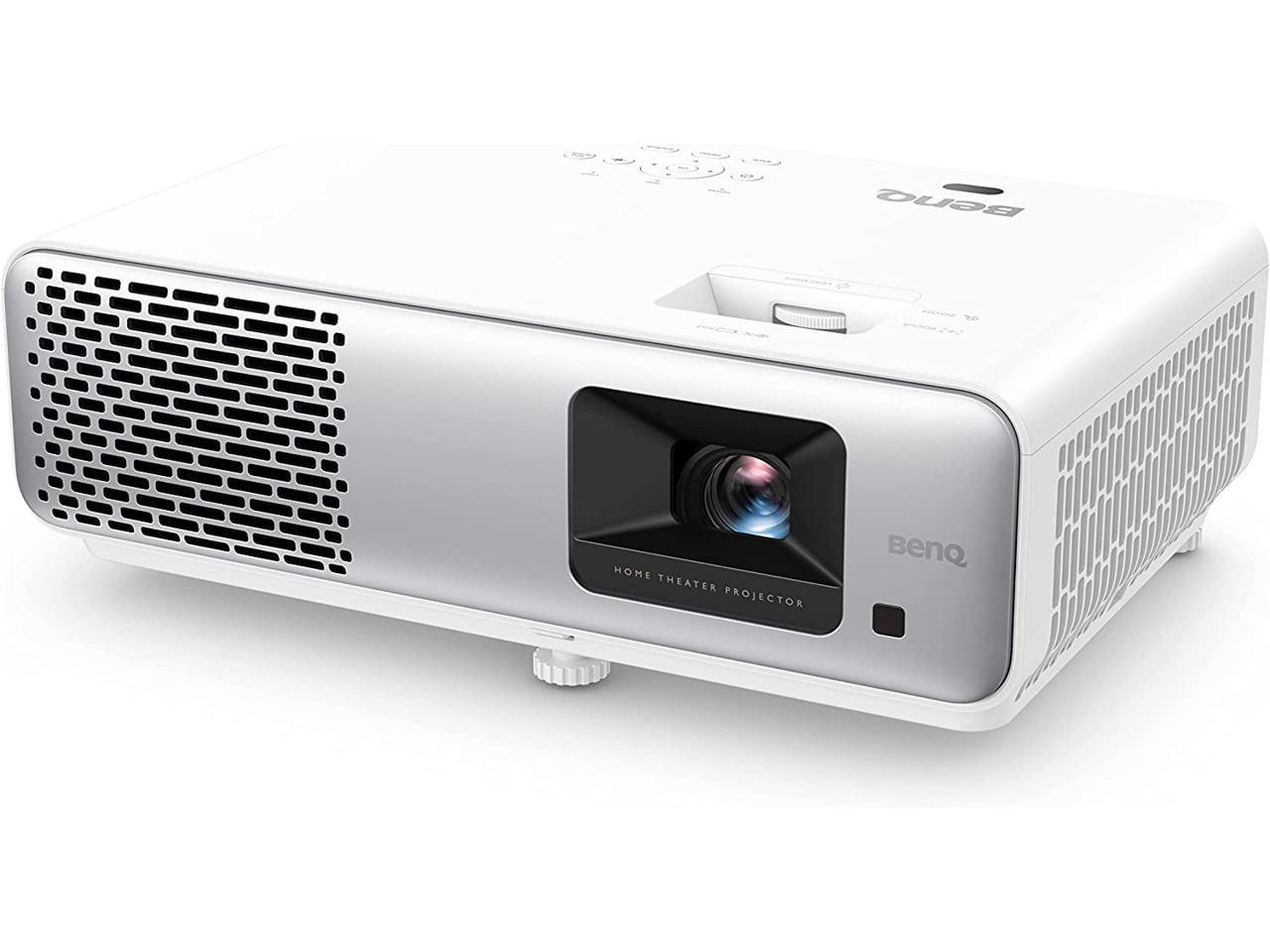
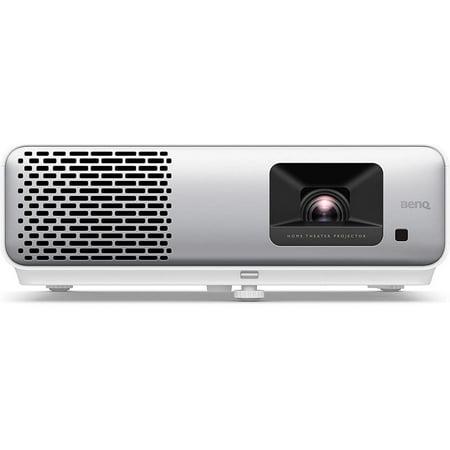
The BenQ HT2060 is better suited for permanent installation. It includes vertical lens shift, which lets you mount it higher or lower than your screen without image distortion – a crucial feature for ceiling mounting. It can project larger images (up to 300 inches) and offers more precise manual adjustments.
If you want flexibility to use your projector in different locations, the Cosmos 4K SE is clearly designed for that. If you're setting up a dedicated home theater room, the HT2060's installation features are more appropriate.
At the time of writing, both projectors are positioned in the sub-$1,500 market, though street prices vary significantly. The key value consideration isn't just the initial purchase price but the total cost of ownership.
The Cosmos 4K SE typically costs more upfront but eliminates the need for a streaming device (saving $50-200) and lamp replacements over its lifetime (potentially saving $500+ over 10 years). You're paying a premium for convenience and integration.
The BenQ HT2060 often has a lower entry price but requires additional purchases for streaming and eventually lamp replacement. However, if you already own streaming devices and don't mind the maintenance, it can be the more economical choice initially.
The value equation also depends on how you'll use the projector. If you want something that works immediately out of the box and can be easily moved around, the Cosmos 4K SE delivers significant value despite its higher price. If you're building a traditional home theater and plan careful setup, the HT2060's focus on pure projection performance might be worth the extra complexity.
After extensive use with both approaches, I believe most people will be happier with the Nebula Cosmos 4K SE – but not everyone. The smart features, automatic setup, and solid built-in audio create an experience that's simply more enjoyable for daily use. The 4K support and Dolby Vision processing provide a clear upgrade path for modern content.
However, the BenQ HT2060 remains the better choice in specific scenarios. If your room has significant ambient light, its higher brightness is crucial. If you're building a dedicated home theater with external audio and streaming devices, its focus on pure projection performance makes more sense. And if gaming performance is your top priority, its lower input lag gives it an edge.
Choose the Cosmos 4K SE if you want the easiest, most integrated projector experience, plan to move it around, or prioritize modern features and 4K content. Choose the HT2060 if you need maximum brightness, prefer traditional home theater setups, or want the lowest possible input lag for competitive gaming.
The projector landscape continues evolving rapidly, with smart features becoming standard and image quality improving across price points. Both of these projectors represent solid choices in their respective approaches, but the convenience and integration of modern smart projectors like the Cosmos 4K SE increasingly make sense for most users in 2024 and beyond.
The best projector is ultimately the one you'll actually use and enjoy regularly – and for many people, that means choosing convenience over complexity, even if it means accepting some performance trade-offs.
| Nebula Cosmos 4K SE Smart Projector | BenQ HT2060 HDR Home Theater Projector |
|---|---|
| Resolution - Higher resolution provides sharper images and more detail | |
| 4K UHD (3840×2160) via pixel-shifting from 1080p DLP chip | Native 1080p (1920×1080) - true pixel-for-pixel accuracy |
| Brightness - Critical for viewing in rooms with ambient light | |
| 1,800 ANSI lumens (good for dark to moderately lit rooms) | 2,300 ANSI lumens (better for brighter environments) |
| Light Source Technology - Affects maintenance costs and color quality | |
| Hybrid laser + LED (25,000+ hour lifespan, no lamp replacements) | Traditional lamp (20,000-30,000 hours, requires eventual replacement) |
| Smart Features - Determines if you need external streaming devices | |
| Google TV OS with Netflix, Disney+, Prime Video built-in | No smart features - requires external streaming device |
| Setup and Calibration - How much work needed to get optimal image | |
| IEA 4.0 automatic focus, keystone correction, obstacle avoidance | Manual focus and keystone adjustment, vertical lens shift |
| Audio System - Important if you don't have external speakers | |
| Premium 30W speakers (15W×2) with Dolby Audio support | Basic 10W speakers (5W×2) - external audio recommended |
| Gaming Performance - Input lag affects competitive gaming responsiveness | |
| 18.4ms input lag (excellent for most gaming scenarios) | 16.7ms input lag (optimal for competitive gaming) |
| HDR Support - Enhanced contrast and color range for compatible content | |
| Dolby Vision, HDR10, HLG with advanced processing | HDR10, HLG support (no Dolby Vision) |
| Portability - Affects flexibility for different room usage | |
| 9.9 lbs with carrying handle, designed for room-to-room use | Heavier build focused on permanent installation setups |
| Color Accuracy - How true-to-life colors appear on screen | |
| 123% Rec.709 coverage with vibrant, saturated colors | 98% Rec.709 coverage with film-accurate color reproduction |
| Maximum Screen Size - Determines how large your image can be | |
| Up to 200 inches diagonal | Up to 300 inches diagonal |
| Connectivity Options - Available ports for external devices | |
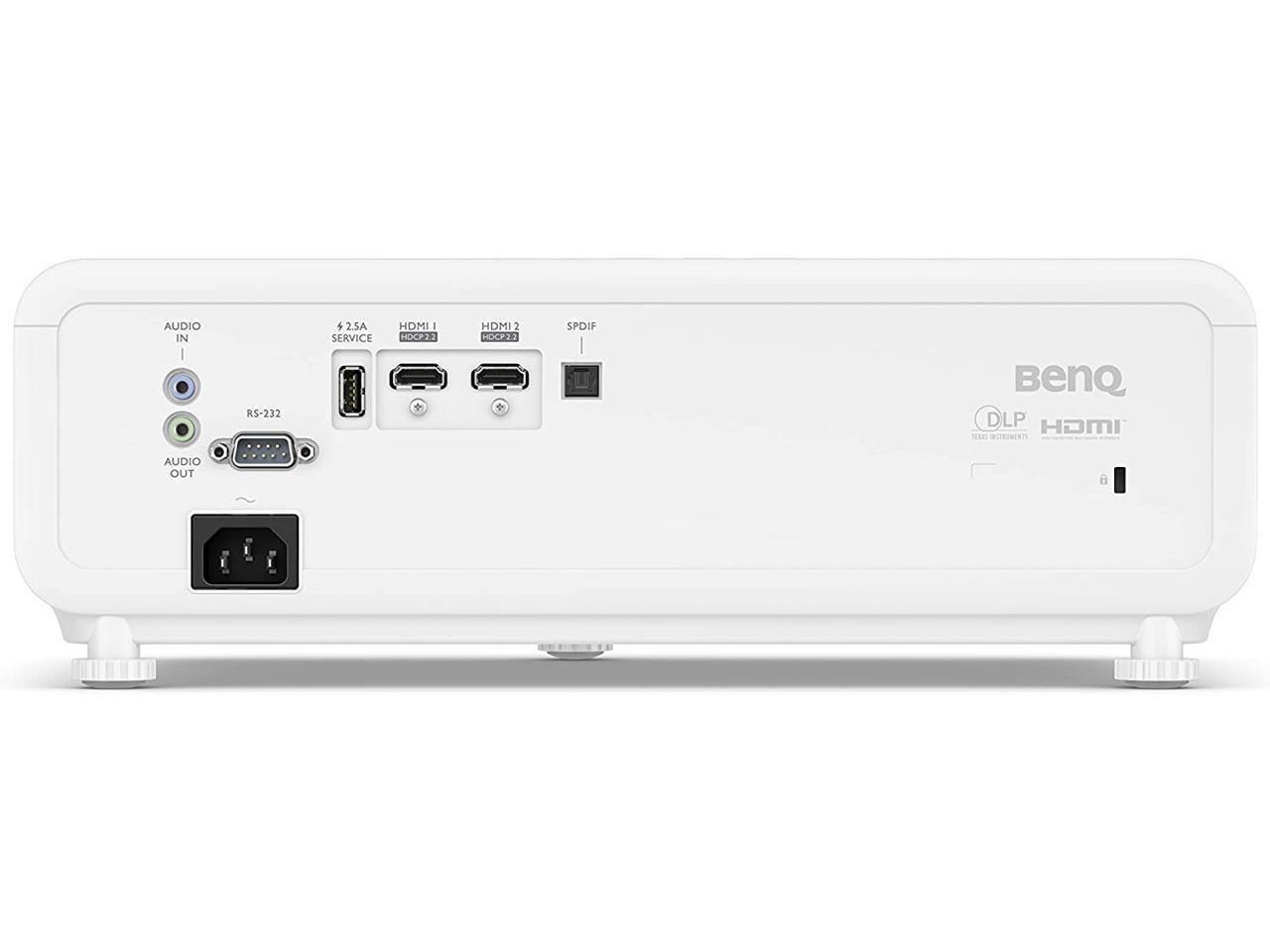
| HDMI 2.1 (×2), USB 3.0, eARC, Wi-Fi, Bluetooth | HDMI 2.0b (×2), USB 2.0, optical audio out |
| Target Use Case - Best suited for which type of setup | |
| Casual viewing, portable use, all-in-one convenience | Dedicated home theater, traditional setup with external components |
The BenQ HT2060 is generally better for dedicated home theater setups due to its higher 2,300 ANSI lumens brightness, superior ambient light performance, and traditional home theater features like vertical lens shift for ceiling mounting. However, the Nebula Cosmos 4K SE offers a more convenient all-in-one experience with built-in streaming and automatic setup, making it ideal for casual home theater use.
The Nebula Cosmos 4K SE includes Google TV built-in, so you can stream Netflix, Disney+, and other services directly without additional devices. The BenQ HT2060 requires a separate streaming device like Roku, Apple TV, or Fire TV Stick, plus you'll likely want external speakers for better audio quality.
Picture quality depends on your priorities. The Nebula Cosmos 4K SE displays 4K resolution through pixel-shifting technology and supports Dolby Vision HDR for enhanced colors and contrast. The BenQ HT2060 offers native 1080p resolution with excellent color accuracy and higher brightness for better performance in lit rooms.
The BenQ HT2060 has a slight edge for competitive gaming with 16.7ms input lag compared to the Nebula Cosmos 4K SE's 18.4ms. However, the Cosmos 4K SE supports 4K gaming from modern consoles and includes motion enhancement features that some gamers prefer for sports and action games.
The Nebula Cosmos 4K SE is designed for portability at 9.9 pounds with a carrying handle and automatic setup features. You can easily move it between rooms or use it outdoors. The BenQ HT2060 is better suited for permanent installation in a dedicated home theater room.
The BenQ HT2060 performs better in bright rooms due to its higher 2,300 ANSI lumens output compared to the Nebula Cosmos 4K SE's 1,800 lumens. For optimal viewing, both projectors work best in dark or dimly lit rooms, but the HT2060 handles ambient light more effectively.
The Nebula Cosmos 4K SE uses a hybrid laser-LED light source rated for 25,000+ hours with no lamp replacements needed during its lifetime. The BenQ HT2060 uses a traditional lamp that will eventually need replacement after 20,000-30,000 hours of use, typically costing several hundred dollars.
The Nebula Cosmos 4K SE has significantly better built-in audio with 30-watt speakers and Dolby Audio support that can fill a room adequately. The BenQ HT2060 has basic 10-watt speakers that most users will want to supplement with external audio equipment for good sound quality.
The Nebula Cosmos 4K SE is much easier to set up with IEA 4.0 technology that automatically handles focus, keystone correction, and image optimization. The BenQ HT2060 requires manual focus adjustment and keystone correction, though it offers more precise control once properly configured.
The Nebula Cosmos 4K SE can stream Netflix in 4K, Disney+, Prime Video, and thousands of other apps directly through its built-in Google TV interface. The BenQ HT2060 has no smart features and requires connecting external streaming devices to access these services.
Value depends on your needs. The Nebula Cosmos 4K SE costs more upfront but eliminates the need for streaming devices and lamp replacements, making it potentially more economical long-term. The BenQ HT2060 typically has a lower initial cost but requires additional purchases for streaming and eventual lamp replacement.
For first-time projector buyers, the Nebula Cosmos 4K SE is generally the better choice due to its automatic setup, built-in streaming, and integrated audio that work immediately out of the box. The BenQ HT2060 is better for enthusiasts who want to build a traditional home theater setup with external components and don't mind manual configuration.
We've done our best to create useful and informative comparisons to help you decide what product to buy. Our research uses advanced automated methods to create this comparison and perfection is not possible - please contact us for corrections or questions. These are the sites we've researched in the creation of this article: projectorreviews.com - tvsbook.com - youtube.com - projectorcentral.com - youtube.com - projectorcentral.com - techradar.com - youtube.com - projectorcentral.com - youtube.com - the-gadgeteer.com - newegg.com - projectorreviews.com - projectorcentral.com - youtube.com - seenebula.com - seenebula.com - bestbuy.com - projectorcentral.com - avsforum.com - bestbuy.com - avsforum.com - tomsguide.com - avsforum.com - projectorreviews.com - hometheaterhifi.com - youtube.com - avsforum.com - cnet.com - techgearlab.com - cdw.com - bhphotovideo.com - projectorcentral.com - shop.avispl.com - tvsbook.com - youtube.com - projectorreviews.com - avsforum.com

Privacy Policy
Terms and Conditions - Affiliate Policy
Home Security
© Copyright 2008-2026.
11816 Inwood Rd #1211, Dallas, TX 75244