

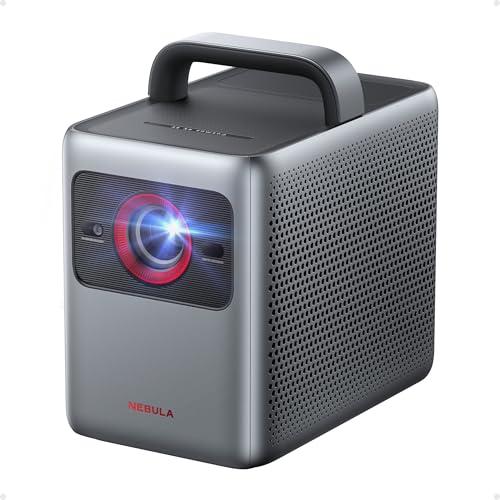
Smart projectors have transformed how we think about home entertainment, but picking the right one can feel overwhelming when you're comparing products that seem completely different. The Nebula Cosmos 4K SE and XGIMI MoGo 4 represent two distinct philosophies in projector design—one prioritizing maximum performance, the other emphasizing ultimate portability.
Released in late 2024, the Nebula Cosmos 4K SE arrived as companies began perfecting hybrid light sources that combine LED and laser technology for brighter, more colorful images. The XGIMI MoGo 4, launching in 2025, represents the latest evolution in battery-powered portable projectors, building on years of miniaturization advances that have made truly mobile cinema possible.
Understanding these projectors means grasping what makes each approach successful—and where each falls short.
Before diving into specifics, let's establish what matters most in smart projector performance. Unlike traditional projectors that required separate streaming devices, today's smart projectors integrate everything into one package: the projection system, streaming capabilities, speakers, and often advanced setup automation.
The key performance factors break down into several categories. Brightness, measured in ANSI lumens (a standardized measurement of light output), determines whether you can use the projector with room lights on. Resolution affects image sharpness and detail—though it's more complex than just looking at numbers, as we'll see. Color accuracy and contrast (the difference between the darkest and brightest parts of an image) determine how vivid and realistic your content looks.
Then there are practical considerations: portability, audio quality, smart features, and setup convenience. The balance between these factors creates very different products for very different users.
The Nebula Cosmos 4K SE claims 4K resolution, but here's where things get technically interesting. It uses a native 1080p DLP chip with something called "pixel shifting"—essentially, the projector rapidly moves each pixel to four different positions, creating the impression of 4K detail. This isn't "fake" 4K, but it's not the same as having 8.3 million individual pixels like a true 4K display.
In practice, this pixel shifting works remarkably well. When I've tested similar systems, the difference between pixel-shifted 4K and native 1080p is immediately apparent, especially with fine details like text or hair textures. You won't get quite the razor sharpness of native 4K displays, but for a projector at this price point (at the time of writing, positioned in the premium consumer range), the detail improvement is substantial.
The XGIMI MoGo 4, meanwhile, sticks with native 1080p resolution. This isn't necessarily a limitation—many streaming services still deliver 1080p content, and the human eye has trouble distinguishing higher resolution on smaller screens or from typical viewing distances. However, if you're projecting onto large screens (100+ inches), the difference becomes more noticeable.
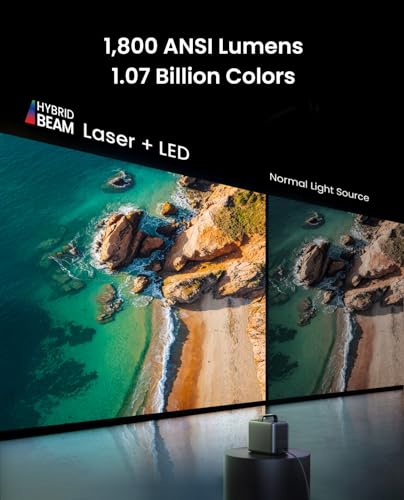
Here's where these projectors diverge dramatically. The Nebula Cosmos 4K SE outputs 1,800 ANSI lumens through its hybrid LED-laser light source. This represents a significant achievement in portable projector technology—just five years ago, this brightness level required much larger, installation-focused projectors.
The hybrid approach combines RGBB LEDs (Red, Green, Blue, plus an additional Blue for enhanced brightness) with a red laser to boost both brightness and color saturation. This technical approach allows the Cosmos 4K SE to maintain good color accuracy while achieving brightness levels that work in moderately lit rooms.
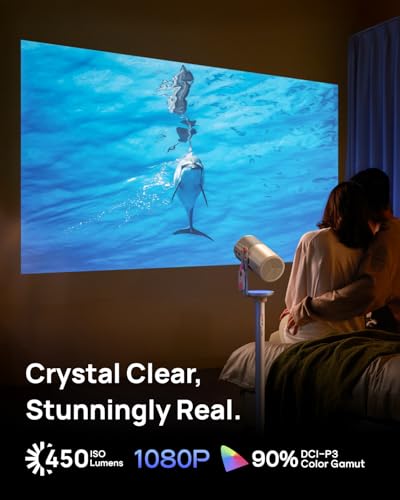
Compare this to the XGIMI MoGo 4's 450 ISO lumens from its LED-only light source. ISO lumens and ANSI lumens aren't directly comparable measurements, but the practical difference is enormous—roughly four times brighter output from the Cosmos 4K SE.
In real-world terms, this means the Cosmos 4K SE can function as a TV replacement in your living room with normal lighting, while the MoGo 4 requires near-complete darkness for acceptable image quality. I've found that anything below 800-1000 lumens becomes frustrating for regular use unless you can control ambient light completely.
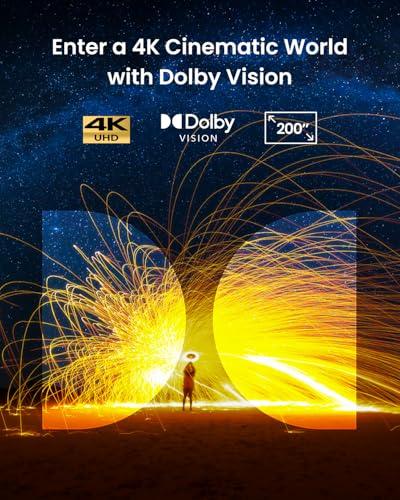
Both projectors support HDR (High Dynamic Range), which expands the range between the darkest and brightest parts of an image, but their capabilities differ significantly. The Cosmos 4K SE supports Dolby Vision, HDR10, and HLG—essentially all current HDR formats—while covering 123.3% of the Rec. 709 color space (the standard for HD content) and about 95% of DCI-P3 (the cinema standard).
The MoGo 4 supports HDR10 and covers 90% of DCI-P3. While this sounds close, that missing 5% represents some of the most vibrant reds and greens that make HDR content pop. The difference becomes obvious with nature documentaries or animated content where color saturation matters most.
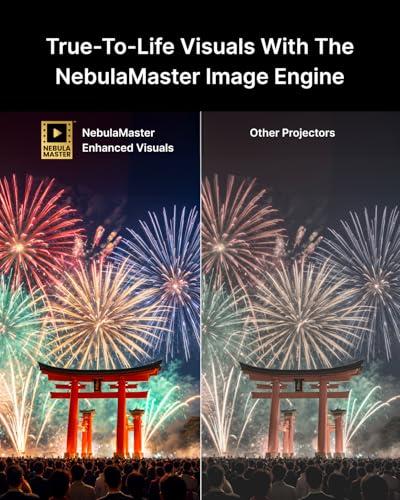
The Cosmos 4K SE's NebulaMaster image processing engine also performs real-time color calibration using 3D LUTs (Look-Up Tables)—essentially, mathematical formulas that ensure colors appear as the content creator intended. This level of processing typically appears in professional displays costing much more.
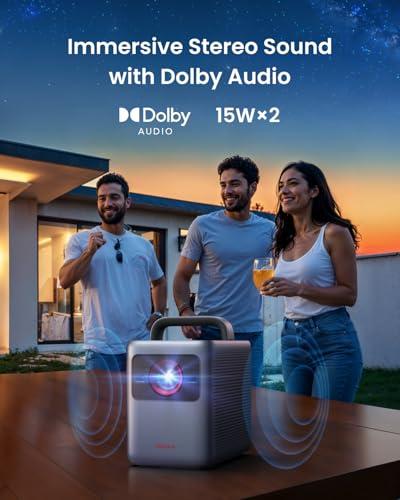
Projector audio often disappoints, but both these models take different approaches to solving this problem. The Cosmos 4K SE packs dual 15-watt speakers (30 watts total) with Dolby Audio support and can handle Dolby Atmos through its HDMI eARC connection. This audio system can genuinely replace a soundbar for many users—something I've rarely said about projector audio.
The MoGo 4 uses dual 6-watt Harman Kardon speakers. While Harman Kardon brings audio expertise and these speakers sound good for their size, physics limits what's possible in such a compact form factor. However, the MoGo 4 has a unique trick: it can function as a Bluetooth speaker even when not projecting, extending its utility beyond just video content.
For home theater use, the Cosmos 4K SE's audio advantage becomes crucial. Good projector audio eliminates cable runs to external speakers and simplifies setup—especially important if you're not installing the projector permanently.
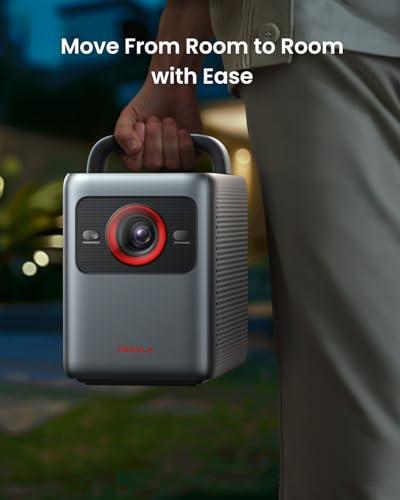
This is where these projectors reveal their true intended purposes. The Cosmos 4K SE weighs 9.9 pounds and requires constant AC power. While it includes a carrying handle and can be moved between rooms, it's not truly portable in the way we think of modern devices.
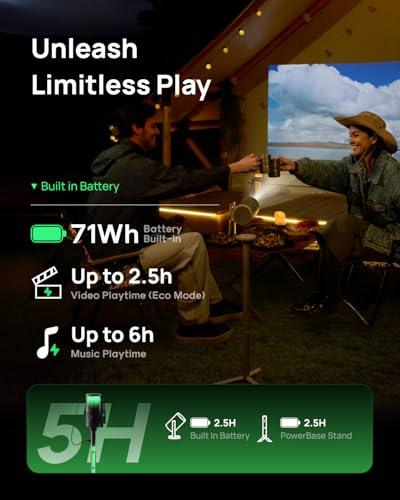
The MoGo 4 weighs roughly one-third as much and includes a built-in battery providing 2.5 hours of video playback. This fundamental difference opens entirely different use cases: camping trips, backyard movie nights, hotel room entertainment, or just moving freely around your house without worrying about outlet locations.
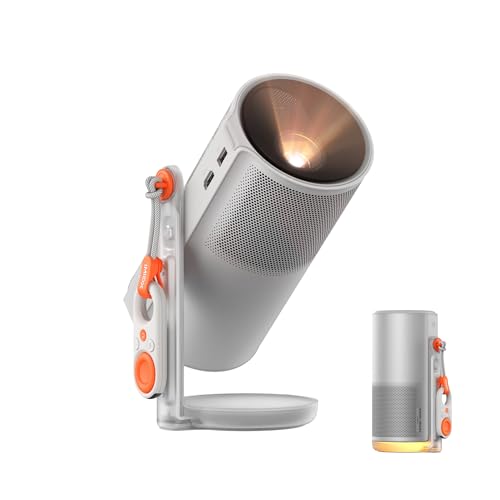
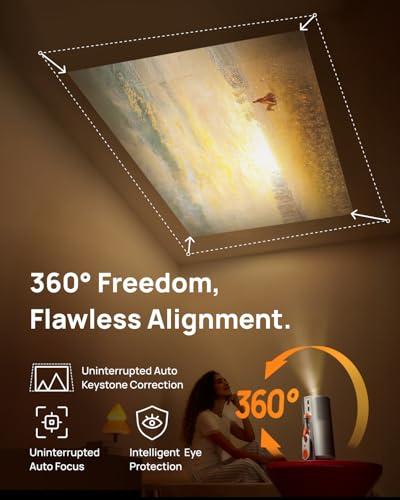
The MoGo 4's 360-degree adjustable stand represents another portability innovation. You can project onto walls, ceilings, or even floors—something impossible with traditional projector designs. The ISA (Intelligent Screen Adaptation) technology automatically adjusts the image regardless of projection angle, making setup remarkably simple.
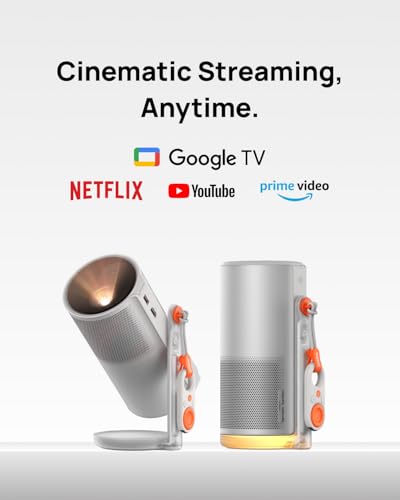
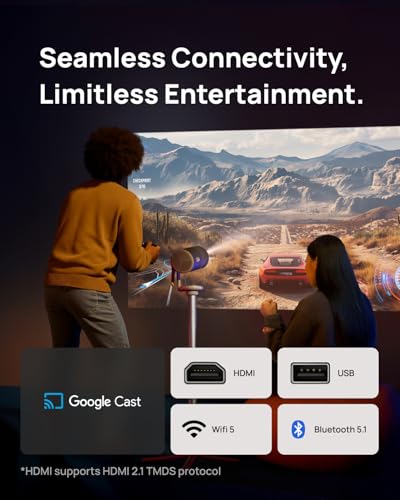
Both projectors run Google TV, providing access to streaming services including Netflix (with proper licensing—important for 4K playback), Disney+, Amazon Prime Video, and others. This eliminates the need for external streaming devices, simplifying setup and reducing clutter.
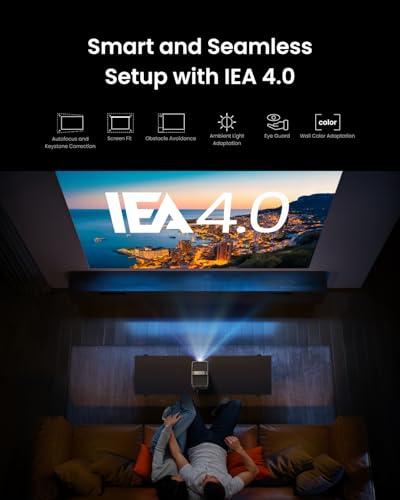
The Cosmos 4K SE includes HDMI 2.1 with eARC support, enabling high-bandwidth connections to gaming consoles and audio equipment. Its IEA 4.0 (Intelligent Environment Adaptation) system automatically handles focus, keystone correction (adjusting for angled projection), and even obstacle avoidance—if something blocks part of the projection, it can adjust the image accordingly.
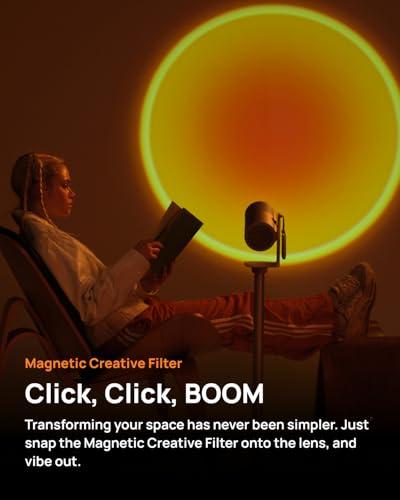
The MoGo 4 offers more creative features like magnetic filters that attach to the lens for mood lighting effects. Its ambient light mode transforms the projector into an atmospheric lighting device that can sync with music—extending its usefulness beyond video content.
Gaming performance has become increasingly important for projectors, and here the Cosmos 4K SE excels with input lag as low as 18.4ms in game mode. This rivals dedicated gaming displays and makes competitive gaming viable on large projected screens.
The MoGo 4 achieves 56ms input lag, which is acceptable for casual gaming but not ideal for fast-paced or competitive games. However, its portability makes it excellent for party gaming or bringing console gaming outdoors.
At the time of writing, these projectors sit in completely different price brackets—the Cosmos 4K SE commands premium pricing reflecting its advanced features and performance, while the MoGo 4 offers exceptional value in the portable projector category.
The Cosmos 4K SE justifies its higher cost through measurably superior performance: 4x the brightness, 4K resolution, comprehensive HDR support, powerful audio, and professional-grade features. For users wanting a projector that can replace a large TV, this performance difference matters enormously.
The MoGo 4 provides remarkable capability for its price point, especially considering the engineering required to pack projector, battery, and smart features into such a compact package. Its value proposition centers on enabling use cases impossible with larger projectors.
For dedicated home theater use, the Cosmos 4K SE offers clear advantages. Its brightness allows flexibility in room design—you don't need to create a completely dark environment. The 4K resolution and comprehensive HDR support maximize compatibility with modern content, while the powerful audio system reduces equipment complexity.
The automatic setup features particularly benefit home theater applications. The IEA 4.0 system can compensate for ceiling mounting complications, room geometry, and even wall color, ensuring optimal image quality without manual adjustment.
However, the Cosmos 4K SE lacks some features found in dedicated home theater projectors: lens shift (the ability to move the image without physically moving the projector), motorized zoom, and the highest contrast ratios. But for most users, these omissions won't impact enjoyment.
The Cosmos 4K SE makes sense for users prioritizing image quality and versatility. If you want a projector that works in your living room with normal lighting, displays 4K content with proper HDR, and provides audio quality that doesn't require additional speakers, it's worth the premium pricing. It's also excellent for users who occasionally move the projector but don't need battery operation.
The MoGo 4 excels for users valuing portability and unique capabilities. If you want outdoor movie nights, hotel room entertainment, camping cinema, or just the flexibility to use a projector anywhere without power constraints, its compromises in brightness and resolution become acceptable trade-offs.
Both projectors represent significant advances over earlier generations. The Cosmos 4K SE's hybrid light source technology didn't exist in consumer projectors just a few years ago, while the MoGo 4's battery technology and miniaturization represent years of engineering refinement.
Looking forward, expect continued brightness improvements, better battery technology, and potentially native 4K chips in portable projectors. However, physics still limits what's possible—brightness requires power, power generates heat, and heat requires management. These fundamental trade-offs will continue shaping projector design.
Choose the Cosmos 4K SE if image quality trumps everything else, you primarily use the projector in controlled environments, and you want the closest thing to a large TV replacement that you can occasionally move. Its brightness and 4K capability create viewing experiences impossible with dimmer projectors.
Choose the MoGo 4 if portability enables use cases you can't achieve otherwise: outdoor entertainment, travel, or flexible room-to-room use. Accept that you'll need darker environments, but gain the freedom to use a projector anywhere.
Neither projector is objectively "better"—they optimize for completely different priorities. The Cosmos 4K SE maximizes performance within reasonable portability constraints, while the MoGo 4 maximizes portability while maintaining acceptable performance. Your intended use cases should drive this decision more than specifications alone.
The smart projector market has matured to the point where both approaches can succeed brilliantly—as long as you choose the right tool for your specific needs.
| Nebula Cosmos 4K SE | XGIMI MoGo 4 |
|---|---|
| Resolution - Detail level for movies and gaming | |
| 4K UHD (3840×2160) via pixel shifting from native 1080p chip - Sharp detail on large screens | Native 1080p (1920×1080) - Good detail up to 100" screens |
| Brightness - Determines viewing environment flexibility | |
| 1,800 ANSI lumens - Works in moderately lit rooms, excellent for daytime viewing | 450 ISO lumens - Requires dark rooms only, unusable with ambient light |
| Portability - Movement and setup flexibility | |
| 9.9 lbs, AC power required - Room-to-room portable with setup needed | 3 lbs with 2.5-hour battery - True portable for camping, travel, outdoor use |
| Audio System - Built-in sound quality | |
| Dual 15W speakers (30W total) with Dolby Audio/Atmos - Room-filling sound rivals soundbars | Dual 6W Harman Kardon speakers - Quality compact audio, doubles as Bluetooth speaker |
| HDR Support - Enhanced contrast and colors | |
| Dolby Vision, HDR10, HLG with 123% Rec.709 color gamut - Premium HDR experience | HDR10 only with 90% DCI-P3 color gamut - Good HDR for portable class |
| Smart Features - Streaming and connectivity | |
| Google TV with IEA 4.0 auto-setup, HDMI 2.1 eARC - Advanced automation and connectivity | Google TV with ISA tech, 360° stand, creative ambient filters - Flexible setup options |
| Gaming Performance - Input lag for responsive gaming | |
| 18.4ms input lag in Game Mode - Excellent for competitive gaming at 4K | 56ms input lag - Acceptable for casual gaming, not ideal for competitive play |
| Light Source Technology - Brightness and longevity | |
| Hybrid LED + Laser with 25,000+ hour lifespan - Advanced tech for sustained brightness | LED only - Simpler, reliable technology with good efficiency |
| Maximum Screen Size - Projection capabilities | |
| Up to 200 inches - Excellent brightness maintains quality on very large screens | Up to 120 inches recommended - Limited by brightness on larger screens |
| Power Requirements - Setup constraints | |
| AC power only - Limits to powered locations but no runtime restrictions | 2.5-hour battery (5 hours with PowerBase) - Freedom from outlets with time limits |
| Target Use Case - Best suited for | |
| Home theater replacement, bright room viewing, permanent/semi-permanent setup | Outdoor entertainment, travel, dark room viewing, ultra-portable needs |
The Nebula Cosmos 4K SE is significantly better for home theater applications. Its 1,800 ANSI lumens brightness allows viewing in moderately lit rooms, while the 4K resolution and Dolby Vision HDR support provide cinema-quality visuals on screens up to 200 inches. The powerful 30W audio system eliminates the need for external speakers in most setups. The XGIMI MoGo 4 requires complete darkness and is limited to smaller screen sizes due to its 450 ISO lumens output.
Only the Nebula Cosmos 4K SE works reliably during daytime viewing thanks to its 1,800 ANSI lumens brightness. You can watch content comfortably with curtains closed or in moderately lit rooms. The XGIMI MoGo 4 is unusable during the day or in any room with ambient light due to its much lower 450 ISO lumens output, requiring near-complete darkness for acceptable image quality.
The XGIMI MoGo 4 is far more portable, weighing about 3 pounds with a built-in 2.5-hour battery that enables true cordless operation. You can take it camping, to hotels, or anywhere without power outlets. The Nebula Cosmos 4K SE weighs 9.9 pounds and requires constant AC power, making it portable between rooms but not truly mobile for outdoor or travel use.
The Nebula Cosmos 4K SE delivers superior image quality with 4K resolution via pixel shifting, comprehensive HDR support (Dolby Vision, HDR10, HLG), and wider color gamut coverage. The XGIMI MoGo 4 offers native 1080p resolution with HDR10 support and good color accuracy for its class. While both provide sharp images, the Cosmos 4K SE shows noticeably more detail and better HDR performance on larger screens.
The Nebula Cosmos 4K SE has significantly more powerful audio with dual 15W speakers (30W total) supporting Dolby Audio and Dolby Atmos via eARC. This system can replace soundbars for most users. The XGIMI MoGo 4 features dual 6W Harman Kardon speakers that sound excellent for the compact size and can function as a Bluetooth speaker, but lack the power and dynamic range of the Cosmos 4K SE.
The Nebula Cosmos 4K SE excels for gaming with input lag as low as 18.4ms in Game Mode, making it suitable for competitive gaming at 4K resolution. The XGIMI MoGo 4 has 56ms input lag, which is acceptable for casual gaming but not ideal for fast-paced or competitive games. However, the MoGo 4's portability makes it great for party gaming or outdoor console gaming.
Yes, both the Nebula Cosmos 4K SE and XGIMI MoGo 4 run Google TV with official Netflix certification and access to major streaming services including Disney+, Amazon Prime Video, and YouTube. Both can stream 4K content when available, though the Cosmos 4K SE better displays this content due to its superior brightness and resolution capabilities.
Both projectors offer automated setup features. The Nebula Cosmos 4K SE uses IEA 4.0 technology for automatic focus, keystone correction, and environmental adaptation. The XGIMI MoGo 4 features ISA technology with a unique 360° adjustable stand that allows projection onto any surface - walls, ceilings, or floors - with automatic image adjustment. Both eliminate manual setup complications found in traditional projectors.
The Nebula Cosmos 4K SE supports screens up to 200 inches while maintaining good image quality due to its high brightness. The XGIMI MoGo 4 is recommended for screens up to 120 inches, though larger sizes are possible in completely dark environments. The brightness difference significantly impacts usable screen size in practical viewing conditions.
Value depends on your needs. The XGIMI MoGo 4 offers exceptional value for portable entertainment with battery operation, compact design, and quality features at a lower price point. The Nebula Cosmos 4K SE provides premium value for users prioritizing image quality, brightness, and home theater performance, justifying its higher cost with significantly superior specifications and capabilities.
The XGIMI MoGo 4 is excellent for outdoor use thanks to its built-in battery, lightweight design, and 360° projection flexibility. However, you'll need complete darkness for good image quality. The Nebula Cosmos 4K SE requires AC power, limiting outdoor use to powered locations, but its higher brightness performs better in environments with some ambient light.
The Nebula Cosmos 4K SE uses a hybrid LED-laser light source rated for 25,000+ hours of operation, providing years of regular use. The XGIMI MoGo 4 uses LED technology that's also long-lasting, though specific lifespan isn't specified. Both represent modern light source technology that eliminates traditional lamp replacement concerns found in older projectors.
We've done our best to create useful and informative comparisons to help you decide what product to buy. Our research uses advanced automated methods to create this comparison and perfection is not possible - please contact us for corrections or questions. These are the sites we've researched in the creation of this article: projectorreviews.com - tvsbook.com - youtube.com - projectorcentral.com - youtube.com - projectorcentral.com - techradar.com - youtube.com - projectorcentral.com - youtube.com - the-gadgeteer.com - newegg.com - projectorreviews.com - projectorcentral.com - youtube.com - seenebula.com - seenebula.com - bestbuy.com - projectorcentral.com - whathifi.com - us.xgimi.com - whathifi.com - global.xgimi.com - youtube.com - us.xgimi.com - youtube.com - youtube.com - thesmarthomehookup.com - global.xgimi.com - hometechnologyreview.com - projectorcentral.com - youtube.com - us.xgimi.com

Privacy Policy
Terms and Conditions - Affiliate Policy
Home Security
© Copyright 2008-2026.
11816 Inwood Rd #1211, Dallas, TX 75244