

The world of home entertainment has transformed dramatically over the past few years. Gone are the days when you needed a separate streaming device, a complex audio setup, and a dedicated media room to enjoy big-screen entertainment. Smart projectors have emerged as an all-in-one solution, combining high-quality projection with built-in streaming platforms and surprisingly capable audio systems.
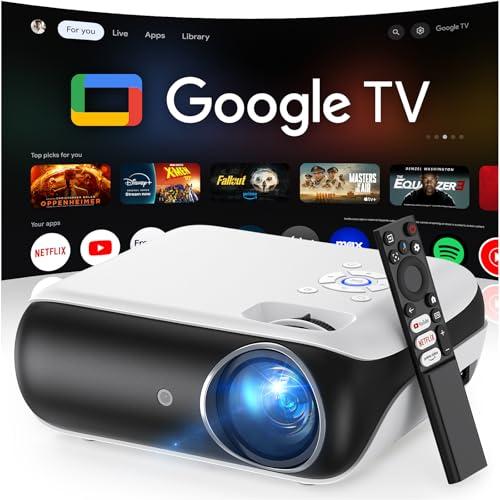
Today we're comparing two very different approaches to this technology: the budget-focused HAPPRUN Google TV Smart Projector and the premium Nebula Cosmos 4K SE Smart Projector. These devices represent opposite ends of the smart projector spectrum, each making different compromises to hit their target price points and user needs.
Before diving into specifics, it's worth understanding what makes modern smart projectors tick. Unlike traditional projectors that simply display whatever signal you feed them, smart projectors run complete operating systems—think of them as giant Android tablets that happen to project images instead of displaying them on a built-in screen.
The core components that determine performance are the light engine (how bright and colorful the image appears), the display chip (how sharp and detailed), the processing power (how smoothly apps run), and increasingly important, the audio system. Each of these elements significantly impacts both the viewing experience and the overall value proposition.
The HAPPRUN projector launched in 2024 as part of the wave of budget smart projectors flooding the market. It represents the "good enough" philosophy—providing essential smart features at rock-bottom pricing. Meanwhile, the Nebula Cosmos 4K SE arrived in 2023 as Anker's attempt to prove that portable projectors could deliver true home theater performance without requiring a permanent installation.
The most fundamental difference between these projectors lies in their light engines—the system that generates the actual light forming your image. This is where the Nebula Cosmos 4K SE shows its premium positioning most clearly.
The HAPPRUN uses a traditional LED-based system producing 350 ANSI lumens. ANSI lumens represent standardized brightness measurements, and 350 is quite dim by modern standards. For context, a typical living room lamp might overcome this projector's output during daytime use. This means the HAPPRUN essentially requires a dark room to produce a watchable image—fine for dedicated movie nights but limiting for casual viewing.
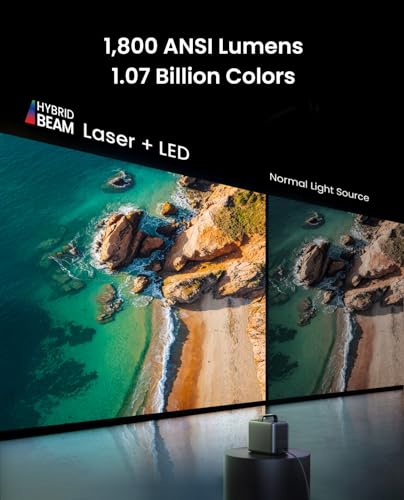
The Nebula Cosmos 4K SE takes a completely different approach with its HybridBeam technology. This system combines traditional RGB LEDs with an additional blue "pump" LED and a red laser diode. The result is 1,800 ANSI lumens—more than five times brighter than the HAPPRUN. This isn't just about numbers; it fundamentally changes how and when you can use the projector.
Beyond brightness, this hybrid approach achieves 123.3% coverage of the Rec. 709 color space (the standard for HD content) and about 95% of DCI-P3 (used for premium streaming content). The HAPPRUN doesn't publish specific color gamut numbers, which typically indicates more basic color reproduction. The practical difference is that the Nebula can display more vivid reds, deeper blues, and more accurate skin tones.
The light source lifespan also differs dramatically. The Nebula's hybrid system is rated for 30,000 hours, while traditional LED systems like the HAPPRUN's typically last 20,000-25,000 hours. At three hours of daily use, we're talking about a 27-year versus 18-year lifespan—not a major factor for most users, but indicative of the overall build quality difference.
Resolution specifications can be misleading in the projector world, and these two models illustrate why perfectly. The HAPPRUN claims "4K support" but features native 1080p resolution. This means it can accept and decode 4K video signals, but ultimately displays them at 1920×1080 pixels. The upscaling process helps somewhat, but you're not seeing true 4K detail.
The Nebula Cosmos 4K SE delivers actual 4K UHD resolution (3840×2160 pixels) through a technique called pixel shifting. Using a 0.47-inch DLP chip—the same technology found in movie theater projectors—it rapidly shifts each pixel to four different positions, effectively quadrupling the resolution. While purists might argue this isn't "native" 4K like high-end home theater projectors, the visual difference is substantial and legitimate.
Our research into user reviews consistently shows that the Nebula produces noticeably sharper text, more defined edges in graphics, and better detail in textures compared to 1080p projectors like the HAPPRUN. This becomes especially apparent on screen sizes above 100 inches, where pixel structure becomes more visible on lower-resolution displays.
High Dynamic Range (HDR) represents one of the biggest improvements in video quality over the past decade, expanding the range between the darkest blacks and brightest whites while enabling more vibrant colors. However, HDR implementation varies dramatically between budget and premium projectors.
The HAPPRUN supports HDR10+, which is excellent for an entry-level projector. HDR10+ provides dynamic metadata that optimizes the image frame-by-frame rather than using static settings for entire movies. However, with only 350 ANSI lumens, the projector struggles to display the bright highlights that make HDR content impressive. It's like having a sports car engine in a vehicle that can only handle city driving.
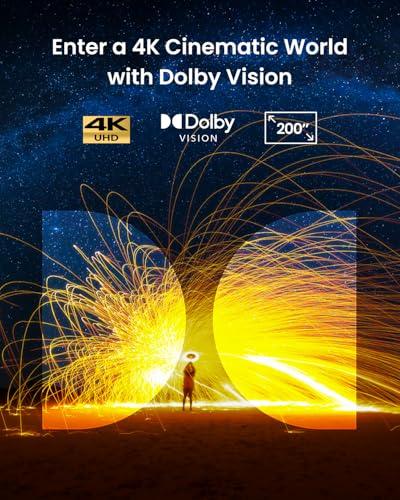
The Nebula Cosmos 4K SE supports Dolby Vision—considered the premium HDR format—along with HDR10 and HLG (Hybrid Log-Gamma, used for broadcast content). More importantly, it has the brightness and color processing power to actually showcase HDR content effectively. Dolby Vision provides 12-bit color processing versus HDR10's 10-bit, along with dynamic metadata that's more sophisticated than HDR10+.
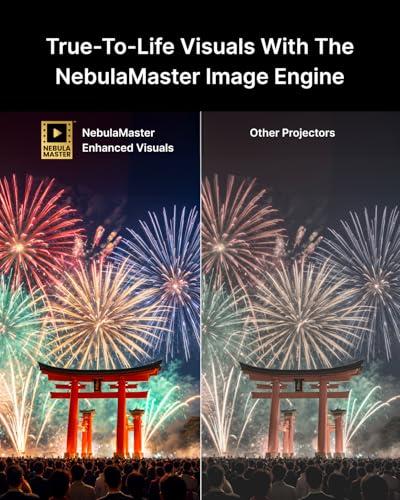
The Nebula also incorporates something called the NebulaMaster Image Engine, which sounds like marketing speak but actually performs important functions. It handles real-time color calibration, gradient smoothing (eliminating color banding), and contrast optimization. The result is measured color accuracy with a ΔE (Delta E) value below 1—technical speak meaning colors are virtually indistinguishable from reference standards.
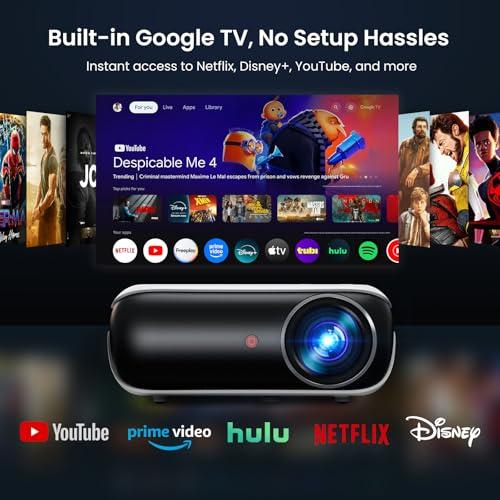
Both projectors run Google TV, which represents a significant advantage over many competitors that use generic Android TV or proprietary systems. Google TV provides a unified interface that aggregates content from multiple streaming services and offers personalized recommendations based on your viewing habits.
The HAPPRUN deserves credit for including official Netflix certification at its price point. Many budget projectors require workarounds or sideloading to access Netflix, making this a genuine differentiator. The interface runs smoothly enough for basic navigation, though you might notice occasional lag when switching between apps or loading content.
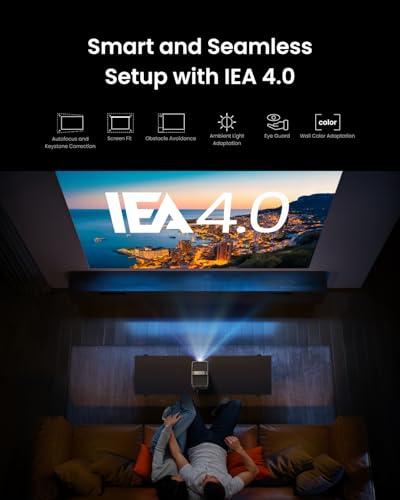
The Nebula Cosmos 4K SE takes smart functionality several steps further with IEA 4.0 (Intelligent Environment Adaptation 4.0). This system automatically handles focus adjustment, keystone correction (fixing the trapezoidal distortion when projecting at angles), obstacle avoidance, and even wall color compensation. If you move the projector or someone bumps it during a movie, it readjusts automatically.
This might sound like unnecessary complexity, but our research shows it eliminates the frustration that typically comes with projector setup. Traditional projectors require manual focus wheels, keystone adjustments, and careful positioning—the Nebula handles this automatically and continues monitoring throughout use.
The Nebula also includes MEMC (Motion Estimation, Motion Compensation) processing for smoother motion during sports and action sequences. This technology, common in high-end TVs but rare in portable projectors, reduces motion blur and judder by creating intermediate frames between the original video frames.
Audio represents perhaps the biggest practical difference between these projectors. Most people underestimate how much audio quality affects the overall viewing experience—poor sound can make even spectacular visuals feel disappointing.
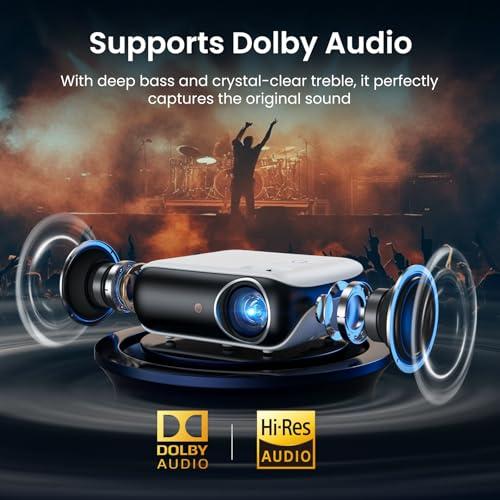
The HAPPRUN includes an 8-watt speaker with basic Dolby Audio processing. This produces adequate sound for a small bedroom or quiet environment, but struggles to fill larger spaces or compete with ambient noise. The thin, somewhat tinny sound quality typical of small speakers becomes apparent during action sequences or music-heavy content.
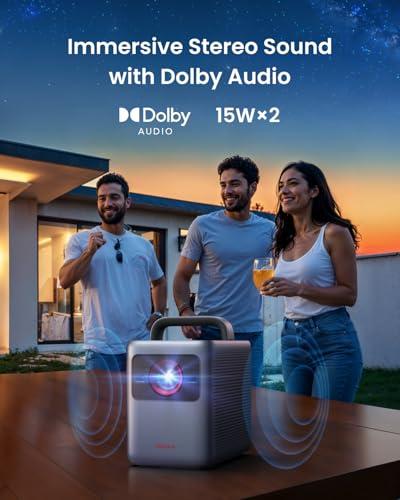
The Nebula Cosmos 4K SE features a completely different approach with dual 15-watt speakers (30 watts total) and support for Dolby Atmos via HDMI eARC. The larger drivers and dedicated amplification produce substantially fuller sound with actual bass response and clear dialogue. Multiple sound modes optimize performance for movies, music, and gaming.
Based on user reviews, the Nebula's audio system often eliminates the need for external speakers in medium-sized rooms, while the HAPPRUN almost certainly requires additional audio equipment for a satisfying experience. The Nebula can even function as a standalone Bluetooth speaker when not projecting, adding versatility for music listening.
Gaming has become an increasingly important projector use case, especially as console gaming emphasizes large-screen experiences. Input lag—the delay between pressing a controller button and seeing the result on screen—critically affects gaming performance.
The HAPPRUN supports gaming through its HDMI input and generally maintains reasonable responsiveness for casual gaming. However, specific input lag measurements aren't widely available, suggesting it wasn't optimized specifically for gaming performance.
The Nebula Cosmos 4K SE includes a dedicated gaming mode that reduces input lag to as low as 18.4 milliseconds. For comparison, competitive gaming typically requires under 20ms, while most TVs range from 15-40ms. This makes the Nebula genuinely suitable for competitive gaming, while the HAPPRUN works better for casual, turn-based, or single-player games.
Modern projectors must integrate seamlessly with various devices and services. Both projectors support Wi-Fi for streaming and Bluetooth for wireless audio, but implementation details matter.
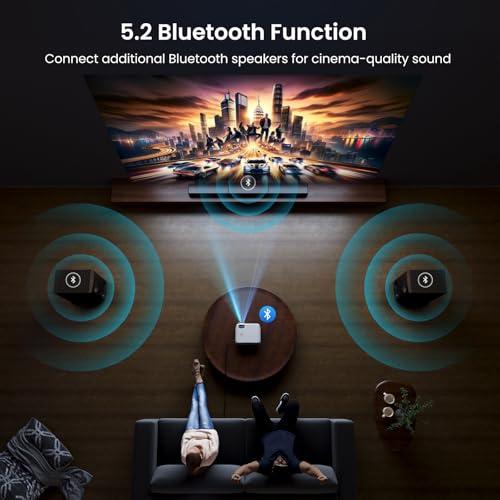
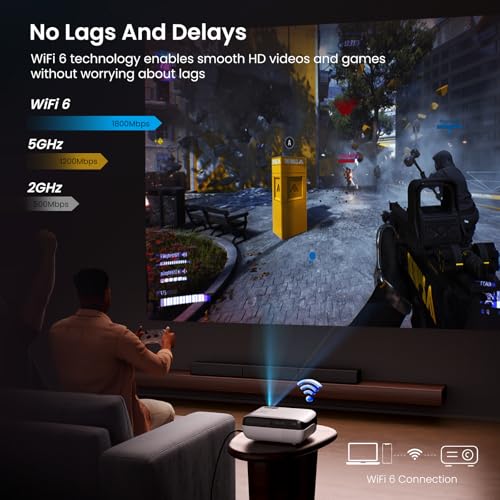
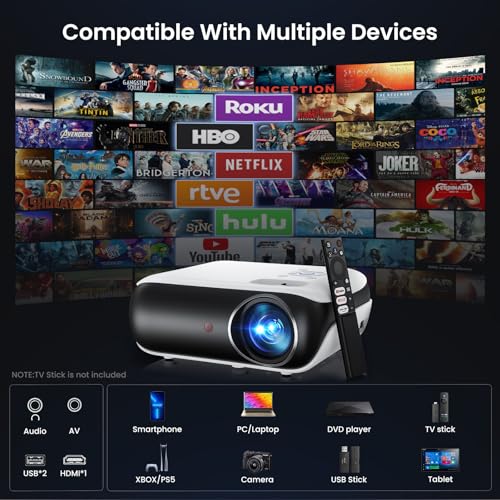
The HAPPRUN offers dual-band Wi-Fi (2.4GHz and 5GHz) with some models supporting Wi-Fi 6 for faster streaming and reduced latency. Bluetooth 5.2 provides two-way connectivity for both audio output and input device connections. Physical connections include HDMI, AV, dual USB ports, and a headphone jack.
The Nebula Cosmos 4K SE provides similar wireless connectivity but adds HDMI 2.1 with eARC (enhanced Audio Return Channel) support. This enables high-bandwidth audio formats and simplified connection to soundbars or AV receivers. The HDMI 2.1 specification also supports higher refresh rates for gaming and future video formats.
Both projectors support Chromecast and AirPlay for wireless casting from smartphones and tablets, making them equally convenient for sharing photos, videos, or streaming content from mobile devices.
Portability represents a key selling point for both projectors, but they approach it differently. The HAPPRUN emphasizes maximum affordability while maintaining reasonable build quality. It's light enough for occasional moves between rooms and supports various mounting options including tripods and ceiling mounts.
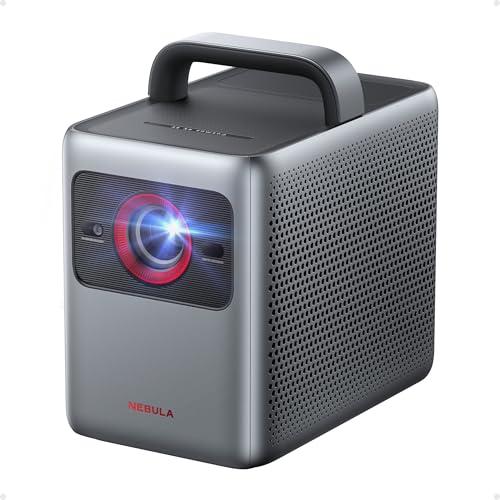
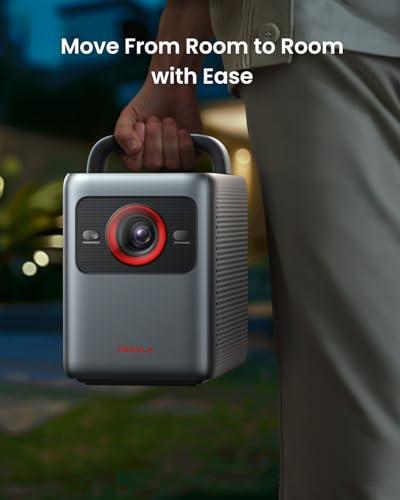
The Nebula Cosmos 4K SE weighs 9.9 pounds and includes a built-in carry handle, positioning it as a premium portable solution. The solid construction and thoughtful design details suggest it can handle regular transport between rooms or outdoor use. The industrial design looks more sophisticated and feels more substantial than typical budget projectors.
After evaluating extensive user feedback and expert reviews, clear use case patterns emerge for each projector.
The HAPPRUN excels in dedicated dark room environments where its brightness limitations don't matter. It's ideal for basement home theaters, evening outdoor movie nights, or bedroom installations where ambient light is controlled. The smart features and streaming integration make it convenient for casual viewing, while the low price point makes it accessible for secondary installations or experimental home theater setups.
However, the brightness limitation severely restricts versatility. Daytime viewing becomes nearly impossible, and even modest ambient lighting degrades image quality substantially. The audio system requires external speakers for larger rooms or immersive experiences.
The Nebula Cosmos 4K SE performs well across a much broader range of scenarios. The 1,800 ANSI lumens enable comfortable daytime viewing in family rooms, making it suitable as a primary entertainment system. The true 4K resolution and advanced HDR processing showcase premium streaming content effectively, while the gaming mode supports console gaming.
The premium audio system often eliminates the need for additional speakers, and the intelligent setup features make it genuinely portable between rooms. This versatility justifies the higher price for users who want a single projector serving multiple purposes.
At the time of writing, budget smart projectors typically cost several hundred dollars, while premium models like the Nebula Cosmos 4K SE command significantly higher prices—often three to five times more than entry-level options. This price difference reflects genuine performance gaps rather than just brand positioning.
The HAPPRUN represents excellent value if your requirements align with its capabilities. For dark room viewing, basic streaming needs, and budget-conscious purchases, it delivers surprising functionality for the money. The inclusion of official Google TV and Netflix certification at this price point genuinely impresses.
The Nebula Cosmos 4K SE justifies its premium pricing through fundamental capability improvements that expand use cases dramatically. The 5x brightness advantage, true 4K resolution, premium audio, and intelligent features combine to create a qualitatively different experience rather than just incremental improvements.
Your decision should primarily consider viewing environment and performance priorities. Choose the HAPPRUN if you have a dedicated dark viewing space, prioritize streaming features over image quality, and want to minimize investment while still getting smart projector functionality.
The Nebula Cosmos 4K SE makes sense for users wanting a primary entertainment system, needing flexible viewing conditions, prioritizing image quality and audio performance, or planning to use gaming features regularly. The price premium buys genuine performance advantages rather than just luxury features.
For home theater enthusiasts, the Nebula provides capabilities that approach traditional home theater projectors while maintaining portability. The HAPPRUN serves as an excellent entry point to projector-based entertainment or as a secondary system for specific use cases.
Consider your lighting conditions, room size, content preferences, and budget constraints. The performance gap between these projectors is substantial enough that choosing based primarily on price may lead to disappointment if the HAPPRUN's limitations conflict with your intended use. Conversely, the Nebula's advanced features may be overkill for simple, dark-room movie watching.
Both projectors succeed in their intended roles, but they serve distinctly different audiences and use cases. Understanding these differences ensures you'll be satisfied with whichever choice aligns with your specific needs and expectations.
| HAPPRUN Google TV Smart Projector | Nebula Cosmos 4K SE Smart Projector |
|---|---|
| Brightness - Most critical spec for viewing flexibility and image quality | |
| 350 ANSI lumens (requires very dark room conditions) | 1,800 ANSI lumens (enables daytime viewing and ambient light use) |
| Resolution - Determines image sharpness and detail quality | |
| Native 1080p with 4K decoding (upscales 4K content to 1080p) | True 4K UHD (3840×2160) via pixel shifting technology |
| HDR Support - Essential for premium streaming content quality | |
| HDR10+ support (limited by low brightness) | Dolby Vision, HDR10, HLG (full HDR performance capability) |
| Audio System - Critical for immersive experience without external speakers | |
| 8W single speaker with basic Dolby Audio | 30W dual speakers (15W×2) with Dolby Audio and Atmos support |
| Light Source Technology - Affects longevity, color quality, and brightness | |
| Traditional LED system (20,000+ hour lifespan) | HybridBeam laser/LED combo (30,000 hour lifespan, superior colors) |
| Smart Platform - Determines streaming app access and user experience | |
| Google TV with official Netflix certification | Google TV with IEA 4.0 intelligent auto-setup and optimization |
| Color Performance - Impacts picture vibrancy and accuracy | |
| Standard color reproduction (specs not detailed) | 123.3% Rec.709, 95% DCI-P3 coverage with ΔE<1 accuracy |
| Gaming Performance - Important for console gaming and responsiveness | |
| Basic HDMI gaming support (input lag not specified) | Dedicated gaming mode with 18.4ms input lag |
| Connectivity - Determines device compatibility and future-proofing | |
| HDMI, AV, 2×USB, Wi-Fi 6, Bluetooth 5.2 | HDMI 2.1 with eARC, USB, Wi-Fi, Bluetooth, advanced port selection |
| Portability & Build - Affects durability and ease of movement | |
| Lightweight budget construction with multiple mount options | 9.9 lbs with integrated handle, premium build quality |
| Projection Size Range - Flexibility for different room sizes | |
| 40-200 inches (optimal under 120 inches due to brightness) | 20-200 inches (maintains quality at larger sizes) |
| Auto-Setup Features - Convenience and ease of use | |
| Basic manual adjustments required | IEA 4.0 automatic focus, keystone, obstacle avoidance |
The Nebula Cosmos 4K SE Smart Projector is significantly better for home theater applications. It delivers true 4K resolution, 1,800 ANSI lumens brightness, and Dolby Vision HDR support, creating a cinema-quality experience. The HAPPRUN Google TV Smart Projector works for basic home theater setups but requires very dark rooms due to its 350 ANSI lumens output and native 1080p resolution.
Yes, both the HAPPRUN Google TV Smart Projector and Nebula Cosmos 4K SE Smart Projector feature built-in Google TV with official Netflix certification. This means you can access Netflix, Disney+, Prime Video, and other streaming apps directly without needing external devices like streaming sticks or dongles.
The Nebula Cosmos 4K SE Smart Projector is much brighter at 1,800 ANSI lumens, making it suitable for daytime viewing and rooms with ambient light. The HAPPRUN Google TV Smart Projector produces only 350 ANSI lumens, requiring dark room conditions for optimal viewing and making daytime use nearly impossible.
Both projectors support 4K content, but differently. The Nebula Cosmos 4K SE Smart Projector displays true 4K resolution (3840×2160) using pixel shifting technology. The HAPPRUN Google TV Smart Projector can decode 4K content but displays it at native 1080p resolution, so you won't see true 4K detail.
The Nebula Cosmos 4K SE Smart Projector has superior audio with dual 15W speakers (30W total) and Dolby Atmos support, often eliminating the need for external speakers. The HAPPRUN Google TV Smart Projector features an 8W speaker that's adequate for small rooms but typically requires external audio for immersive experiences.
The Nebula Cosmos 4K SE Smart Projector is excellent for gaming with a dedicated gaming mode offering 18.4ms input lag, suitable for competitive gaming. The HAPPRUN Google TV Smart Projector supports gaming through HDMI but lacks optimized gaming features, making it better suited for casual gaming only.
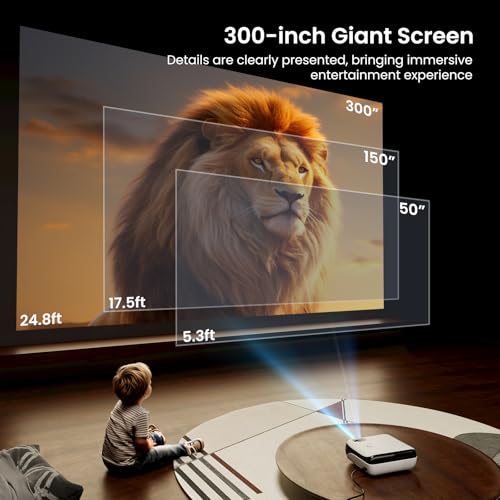
Both projectors can project up to 200 inches, but the Nebula Cosmos 4K SE Smart Projector maintains image quality at larger sizes due to its higher brightness and true 4K resolution. The HAPPRUN Google TV Smart Projector works best at smaller screen sizes (under 120 inches) where its lower brightness and resolution limitations are less noticeable.
Both are designed for portability, but serve different needs. The HAPPRUN Google TV Smart Projector is lighter and more budget-friendly for occasional moves. The Nebula Cosmos 4K SE Smart Projector weighs 9.9 pounds with a built-in handle and premium construction, making it better for regular transport between rooms or outdoor use.
Only the Nebula Cosmos 4K SE Smart Projector works effectively in bright rooms thanks to its 1,800 ANSI lumens output and intelligent environment adaptation features. The HAPPRUN Google TV Smart Projector requires dark room conditions and struggles significantly with any ambient light due to its 350 ANSI lumens brightness.
The Nebula Cosmos 4K SE Smart Projector provides dramatically better picture quality with true 4K resolution, Dolby Vision HDR, superior color accuracy (ΔE<1), and 123.3% Rec.709 color coverage. The HAPPRUN Google TV Smart Projector offers decent 1080p quality with HDR10+ support but can't match the color accuracy and detail of the premium model.
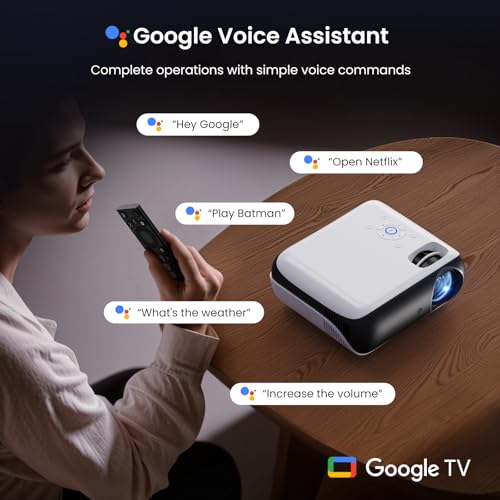
Both run Google TV, but the Nebula Cosmos 4K SE Smart Projector includes advanced IEA 4.0 technology with automatic focus, keystone correction, and obstacle avoidance. The HAPPRUN Google TV Smart Projector provides essential smart features like voice control and app access but requires manual adjustments for setup and positioning.
The answer depends on your needs and budget. The HAPPRUN Google TV Smart Projector offers excellent value for dark-room viewing and basic streaming needs at a budget price point. The Nebula Cosmos 4K SE Smart Projector justifies its premium pricing through significantly better brightness, true 4K resolution, superior audio, and versatile viewing capabilities that work across different environments.
We've done our best to create useful and informative comparisons to help you decide what product to buy. Our research uses advanced automated methods to create this comparison and perfection is not possible - please contact us for corrections or questions. These are the sites we've researched in the creation of this article: youtube.com - topvisiontec.com - youtube.com - happrunprojector.com - youtube.com - happrunprojector.com - youtube.com - business.walmart.com - youtube.com - walmart.com - cordcuttersnews.com - nexpow.com - projectorreviews.com - tvsbook.com - youtube.com - projectorcentral.com - youtube.com - projectorcentral.com - techradar.com - youtube.com - projectorcentral.com - youtube.com - the-gadgeteer.com - newegg.com - projectorreviews.com - projectorcentral.com - youtube.com - seenebula.com - seenebula.com - bestbuy.com

Privacy Policy
Terms and Conditions - Affiliate Policy
Home Security
© Copyright 2008-2026.
11816 Inwood Rd #1211, Dallas, TX 75244