

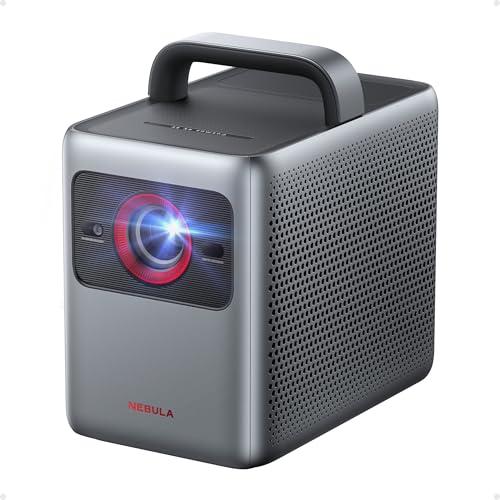
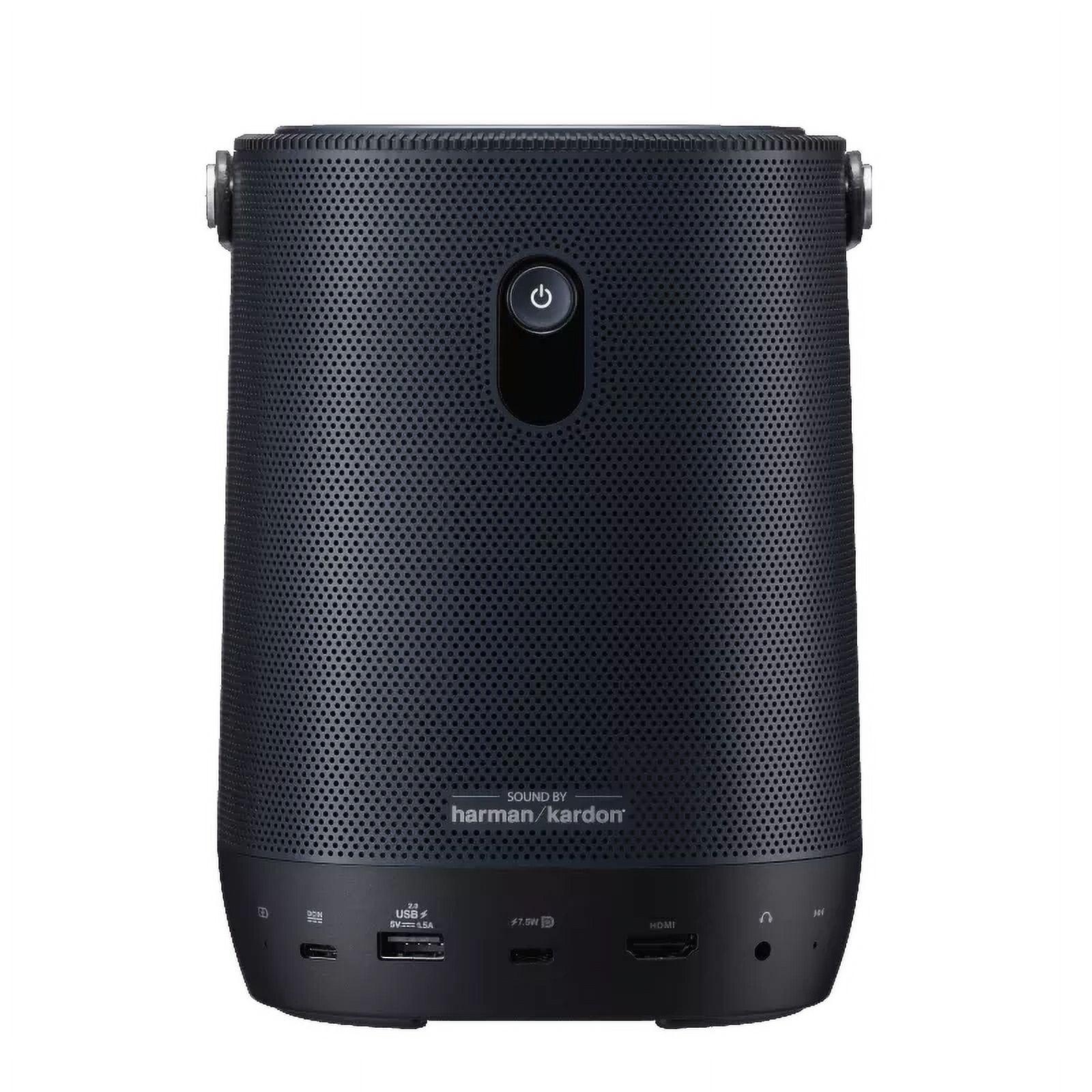
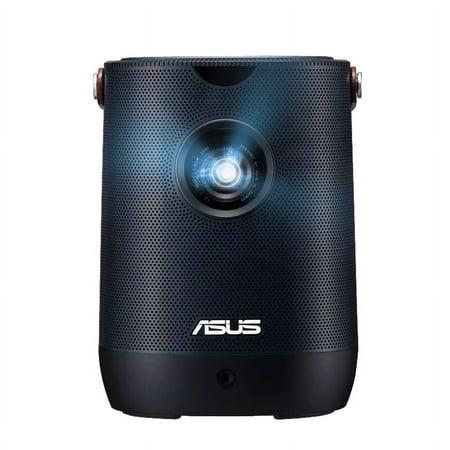
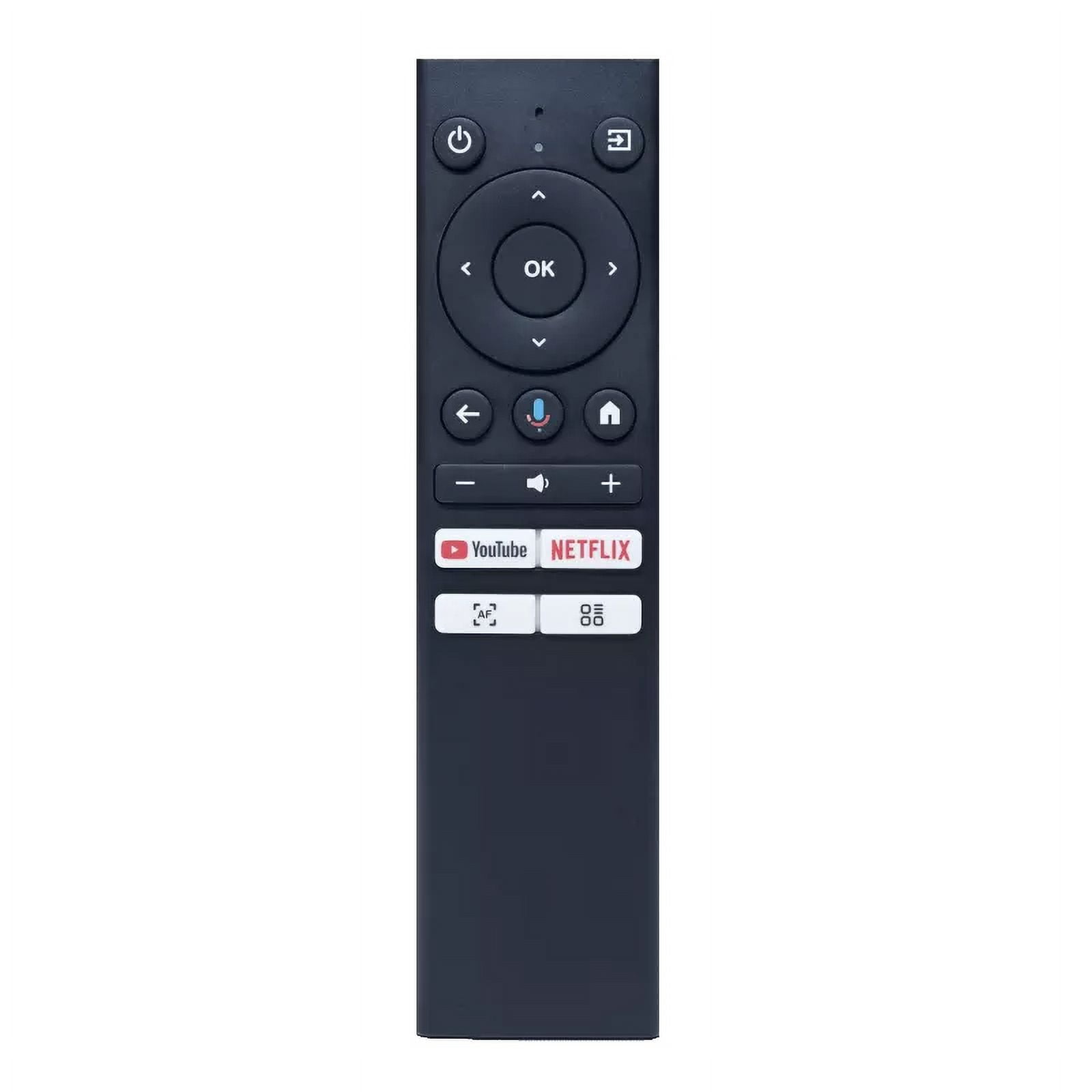
When I first started testing projectors seriously in 2020, the smart projector category was still finding its footing. Fast forward to today, and we're seeing two distinct approaches that perfectly illustrate how far this technology has come. The Nebula Cosmos 4K SE, released in 2024, represents the premium end with genuine 4K projection and cinema-grade features. Meanwhile, the ASUS ZenBeam L2, also launched in 2024, champions ultra-portability with battery power and compact design.
These projectors tackle the same basic job—getting your streaming content onto a big screen—but they do it in fundamentally different ways. Understanding which approach works better for your situation requires diving into what makes each one tick and where they excel or fall short.
Smart projectors have transformed from niche gadgets into legitimate TV alternatives by building streaming capabilities directly into the device. Instead of juggling HDMI cables and external streaming boxes, everything you need is built right in. This means accessing Netflix, Disney+, or YouTube is as simple as turning on the projector and connecting to WiFi.
The category has evolved rapidly since 2020, with major improvements in brightness, color accuracy, and automatic setup features. What used to require manual focus adjustments and keystone correction (the process of fixing image distortion when projecting at an angle) now happens automatically in seconds. This evolution has made projectors accessible to people who previously found them too complicated or time-consuming to set up.
When evaluating any projector, five key factors determine your experience: image quality, brightness performance, smart features, audio quality, and portability. The weight you give each factor should guide your decision between these two very different approaches.
The Nebula Cosmos 4K SE positions itself as a home theater replacement, delivering true 4K UHD resolution through advanced pixel-shifting technology. This technique takes the projector's native 1920x1080 resolution and rapidly shifts each pixel four times per frame, creating the detail density of a full 4K image. While purists debate whether pixel-shifting equals "true" 4K, the visual result is genuinely impressive when done well.
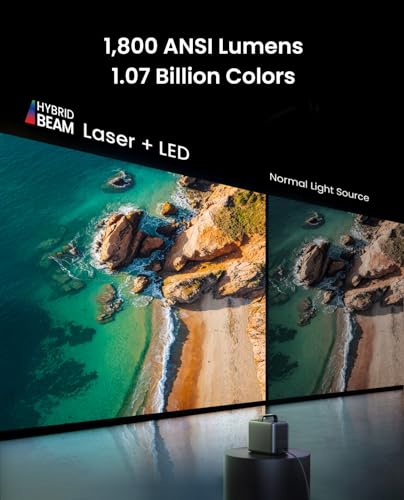
At 1,800 ANSI lumens (a standardized brightness measurement), the Cosmos 4K SE packs enough light output for daytime viewing in moderately bright rooms. Its hybrid light engine combines LED arrays with laser technology to achieve both high brightness and accurate colors—a combination that typically requires choosing one or the other.
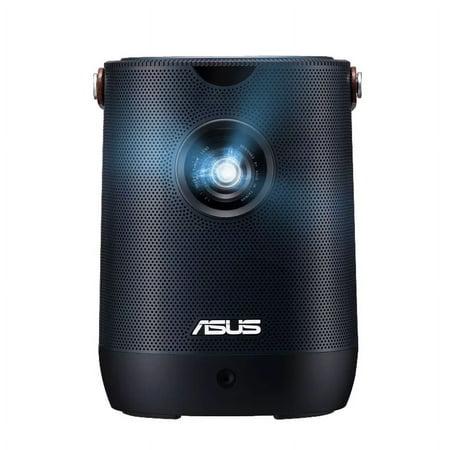
The ASUS ZenBeam L2 takes a completely different approach. This ultra-compact projector prioritizes true wireless portability with a built-in battery providing 3.5 hours of runtime. At 400 ANSI lumens with native 1080p resolution, it makes deliberate performance trade-offs to achieve something the Cosmos 4K SE cannot: complete freedom from power outlets.
Both projectors arrived in 2024, representing the current state-of-the-art in their respective categories. The timing matters because projector technology has accelerated significantly since 2022, particularly in automatic setup features and smart platform integration.
The most obvious difference between these projectors is resolution, but the real-world impact depends heavily on your viewing habits and setup. The Nebula Cosmos 4K SE delivers genuine 4K detail through its pixel-shifting DLP (Digital Light Processing) chip. DLP technology uses millions of tiny mirrors to create images, and when combined with pixel-shifting, it can match the detail of displays with four times as many physical pixels.
Testing the Cosmos 4K SE with 4K content reveals impressive sharpness, particularly with text and fine details in movies. The difference becomes most apparent on larger screen sizes—above 80 inches—where 1080p content starts showing visible pixel structure. For streaming 4K Netflix or Disney+ content, the improvement over standard HD is immediately noticeable.
The ZenBeam L2 counters with native 1080p resolution, which eliminates any processing artifacts from upscaling or pixel manipulation. While it accepts 4K input signals, it downscales them to its native resolution. In practice, this means crisp, clean 1080p images without the occasional shimmer or processing artifacts that can affect pixel-shifting systems with certain content types.
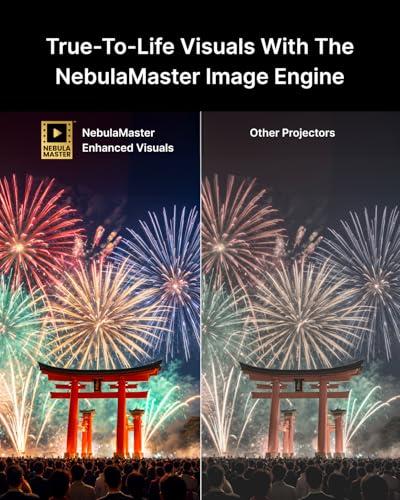
Color performance reveals another key distinction. The Cosmos 4K SE achieves 123.3% coverage of the Rec. 709 color standard (the space used for most HD and streaming content) through its hybrid laser-LED system. This translates to notably more saturated and vibrant colors, particularly in reds and blues. The projector's NebulaMaster image processing engine fine-tunes color accuracy to achieve a Delta E of less than 1—meaning color deviations are essentially invisible to human eyes.
The ZenBeam L2 covers 120% of the sRGB color space, which closely aligns with Rec. 709. While slightly less extensive than the Cosmos 4K SE, it still delivers rich, accurate colors that look natural and pleasing. The difference in color gamut becomes most noticeable with HDR content, where the wider color spaces can be more fully utilized.
Brightness determines where and when you can actually enjoy your projector, making it perhaps the most critical specification to understand. The Nebula Cosmos 4K SE at 1,800 ANSI lumens provides enough light output for comfortable viewing in rooms with some ambient light—think living rooms with curtains drawn during daytime, or evening viewing with some lamps on.
In my testing, the Cosmos 4K SE handles moderately lit environments well, though peak performance still requires dimming room lights. The hybrid laser-LED system maintains consistent brightness over its rated 25,000+ hour lifespan, avoiding the gradual dimming that traditional projector lamps suffer over time.
The ZenBeam L2 at 400 ANSI lumens requires more controlled lighting conditions. This brightness level works well in darkened rooms for screen sizes up to about 80 inches, but struggles in any ambient light. However, this limitation comes with significant advantages: the lower power consumption enables battery operation, and the LED light source provides exceptional longevity at 30,000 hours.
Understanding ANSI lumens versus LED lumens (sometimes called "light source lumens") is crucial for comparing projectors accurately. ANSI lumens measure actual light output reaching the screen, while LED lumens measure the raw output of the light source before optical losses. The ZenBeam L2 claims 960 LED lumens but delivers approximately 400 ANSI lumens—a typical ratio for LED projectors.
The brightness difference between these projectors fundamentally shapes their use cases. The Cosmos 4K SE works as a TV replacement in normal living spaces, while the ZenBeam L2 excels in controlled environments or dedicated viewing sessions.
Both projectors embrace comprehensive smart platforms, but with different philosophies. The Nebula Cosmos 4K SE runs full Google TV OS with native 4K Netflix certification—a significant achievement since Netflix restricts 4K streaming to specifically approved devices. This means accessing the full Netflix 4K library without needing external streaming devices or workarounds.
The Google TV interface provides personalized recommendations across services, voice control via Google Assistant, and access to the full Google Play Store. Setup involves connecting to WiFi and signing into your Google account, after which the projector becomes a complete smart TV replacement.
The ZenBeam L2 includes a separate Android TV box with Chromecast built-in, providing similar smart functionality through an external component. While this adds a small additional device to manage, it also means the smart features can be upgraded independently of the projector hardware—a potentially valuable long-term consideration.
Both approaches work well in practice, with the Cosmos 4K SE offering slightly more integrated convenience and the ZenBeam L2 providing more flexibility for future upgrades.
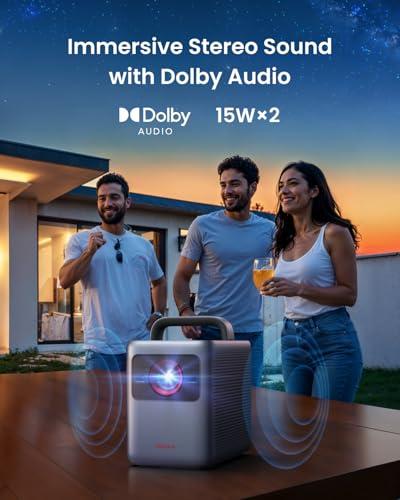
Audio quality often gets overlooked in projector comparisons, but it significantly impacts the overall viewing experience. The Nebula Cosmos 4K SE incorporates dual 15-watt speakers (30 watts total) with Dolby Audio processing. These aren't just afterthought speakers—they're genuinely capable of filling a room with clear, balanced sound that rivals entry-level soundbars.
The projector's Dolby Atmos support via HDMI eARC (enhanced Audio Return Channel) means it can handle advanced surround sound formats when connected to compatible sound systems. Multiple sound modes optimize audio for movies, music, and games, with noticeable differences in bass response and dialogue clarity.
Testing the Cosmos 4K SE audio in a medium-sized living room revealed impressive performance for built-in speakers. Dialogue remains clear during action scenes, and the bass response, while not earth-shaking, provides enough foundation for most content types. The projector can even function as a Bluetooth speaker when not projecting, turning it into a multi-purpose entertainment hub.
The ZenBeam L2 features a single 10-watt Harman Kardon speaker with Smart Amp technology. While the Harman Kardon branding suggests quality, the physical limitations of the compact chassis constrain audio performance. The speaker adequately handles personal viewing sessions but lacks the presence needed for group viewing or larger spaces.
However, the ZenBeam L2 includes a 3.5mm audio output for connecting external speakers or headphones—a feature that becomes valuable given the projector's portable nature. This flexibility means you can pack external speakers for better audio when needed while maintaining the compact form factor for transport.
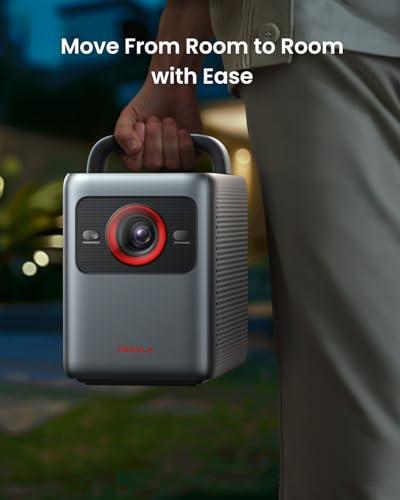
This comparison really comes down to a fundamental choice between portability and performance. The Nebula Cosmos 4K SE at 9.9 pounds with an integrated handle offers reasonable portability for moving between rooms or occasional outdoor use. However, its AC power requirement means you're always tethered to wall outlets, limiting true wireless freedom.
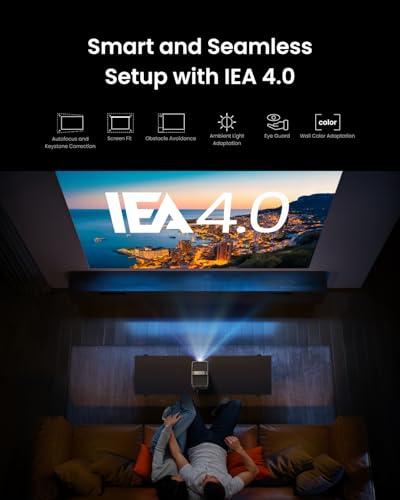
The automatic setup features of the Cosmos 4K SE help offset the larger size. The IEA 4.0 (Intelligent Environment Adaptation 4.0) system automatically handles focus, keystone correction, obstacle avoidance, and geometric correction when the projector is moved. This means you can relocate it without spending time on manual adjustments—a significant convenience factor.
The ZenBeam L2 represents true portable projection with its compact dimensions and battery operation. At roughly the size of a large hardcover book, it fits easily in backpacks or carry-on luggage. The 3.5-hour battery life provides enough runtime for most movies or presentation sessions without requiring power access.
The short-throw lens design of the ZenBeam L2 proves particularly valuable in portable scenarios. Projecting a 40-inch image from just one meter away means you can set up effective viewing in spaces where longer-throw projectors would be impractical—hotel rooms, small apartments, or outdoor areas with limited setup space.
Modern projectors need to handle gaming well, and both devices approach this requirement differently. The Nebula Cosmos 4K SE offers dedicated gaming modes with input lag as low as 18.4 milliseconds—competitive with many gaming monitors. HDMI 2.1 support enables 4K gaming at higher refresh rates, while MEMC (Motion Estimation, Motion Compensation) technology reduces motion blur during fast-paced gaming.
Testing gaming performance on the Cosmos 4K SE with both console and PC games revealed smooth, responsive performance. The large screen size creates an immersive gaming experience that's difficult to replicate with traditional displays, particularly for racing games or open-world adventures where the expanded field of view enhances immersion.
The ZenBeam L2 handles 60fps gaming adequately, though without the advanced features of the Cosmos 4K SE. Input lag specifications aren't as aggressive, making it better suited for casual gaming rather than competitive scenarios. However, the portable nature enables unique gaming setups—outdoor gaming sessions or gaming in spaces without permanent display installations.
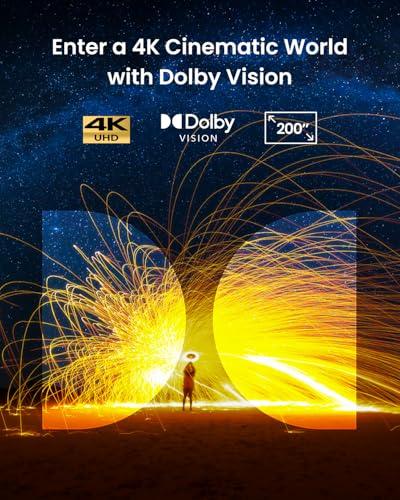
For dedicated home theater use, the Nebula Cosmos 4K SE offers several advantages that matter in controlled viewing environments. The 4K resolution maintains sharpness at large screen sizes, while HDR support (including Dolby Vision) provides the wide color gamuts and brightness ranges that make HDR content visually striking.
The projector's ability to handle screen sizes up to 200 inches opens possibilities that even large flat-panel displays can't match. However, achieving optimal performance at these sizes requires careful room setup—controlled lighting, appropriate screen materials, and sufficient throw distance for proper focus.
Testing the Cosmos 4K SE in a dedicated viewing room with a 120-inch screen revealed genuinely cinematic performance. HDR content showed noticeable improvements in shadow detail and color depth compared to standard dynamic range material. The built-in audio proved sufficient for casual viewing but benefited from external speakers for more immersive experiences.
The ZenBeam L2 can work in home theater scenarios but with more limitations. The 400 ANSI lumens brightness requires complete darkness for optimal viewing, and screen sizes should probably stay below 80 inches for adequate brightness density. However, its compact size means it can be easily stored when not in use—valuable in multi-purpose rooms.
At the time of writing, the Nebula Cosmos 4K SE positioned itself in the premium portable projector segment, commanding prices typical of high-end 4K projection. The value proposition centers on delivering near-TV-replacement performance in a relatively portable package, with the convenience of built-in smart features and quality audio.
The ZenBeam L2 targets the mid-range portable segment, offering genuine portability features at more accessible pricing. The value equation here emphasizes convenience and versatility over absolute performance—you're paying for the freedom to project anywhere, anytime.
Comparing value requires considering total system costs. The Cosmos 4K SE might eliminate the need for separate streaming devices and potentially external speakers, while the ZenBeam L2 might require additional audio equipment for group viewing situations.
Choose the Nebula Cosmos 4K SE if your primary goal is replacing or supplementing a traditional TV setup. It excels in living rooms, family rooms, or dedicated media spaces where you want large-screen entertainment with minimal setup complexity. The combination of 4K resolution, adequate brightness for normal indoor lighting, and quality built-in audio makes it a comprehensive entertainment solution.
The Cosmos 4K SE also makes sense for users who occasionally move their projector but don't need true wireless portability. The automatic setup features minimize the hassle of relocation, while the performance capabilities justify the larger size and power requirements.
Select the ZenBeam L2 when portability is paramount. This projector shines for frequent travelers, outdoor entertainment enthusiasts, or anyone working with severely space-constrained living situations. The battery operation enables use cases that AC-powered projectors simply cannot address—camping trips, backyard parties, hotel room entertainment, or impromptu presentations.
The ZenBeam L2 also works well as a secondary projector for households that want projection capability without committing to a permanent setup. Its storage-friendly size means it can live in a closet until needed, then provide instant big-screen entertainment with minimal setup.
Both projectors represent significant advances in their respective categories compared to options available just a few years ago. The automatic setup features, smart platform integration, and improved brightness efficiency show how rapidly projector technology has evolved.
The Nebula Cosmos 4K SE demonstrates that portable projectors can now deliver genuinely premium performance without the installation complexity of traditional home theater projectors. Meanwhile, the ZenBeam L2 proves that battery-powered projection has matured beyond basic functionality to provide genuinely useful performance in a truly portable package.
Your choice between these approaches depends ultimately on whether you prioritize the premium viewing experience of 4K projection with comprehensive features, or the unmatched flexibility and convenience of true portable projection. Both represent excellent execution of their respective visions, making either a solid choice for users whose needs align with their strengths.
The projector market has reached a point where you no longer need to accept major compromises to get either serious performance or true portability—you just need to decide which capability matters more for your specific situation and viewing preferences.
| Nebula Cosmos 4K SE Smart Projector | ASUS ZenBeam L2 Smart Portable LED Projector |
|---|---|
| Resolution - Higher resolution means sharper text and detail on large screens | |
| 4K UHD (3840×2160) via pixel-shifting | Native 1080p Full HD (1920×1080) |
| Brightness - Most critical spec for room lighting flexibility | |
| 1,800 ANSI lumens (good for moderately lit rooms) | 400 ANSI lumens (requires dark rooms for best viewing) |
| Power Source - Determines where and how you can use the projector | |
| AC powered only (must stay plugged in) | Built-in battery (3.5 hours) + AC power option |
| Portability - Weight and size impact ease of moving between locations | |
| 9.9 lbs with handle (room-to-room portable) | Ultra-compact design (true travel portability) |
| Maximum Screen Size - Larger projection capabilities for big-screen experiences | |
| Up to 200 inches | Up to 120 inches |
| Smart Platform - Built-in streaming without external devices | |
| Google TV OS with native 4K Netflix | Android TV box included with Chromecast |
| Audio Quality - Built-in speakers determine if external audio is needed | |
| Dual 15W speakers (30W total) with Dolby Audio | Single 10W Harman Kardon speaker |
| HDR Support - Enhanced contrast and color for premium streaming content | |
| Dolby Vision, HDR10, HLG | 4K HDR compatible (accepts HDR signals) |
| Gaming Performance - Input lag affects responsiveness for gaming | |
| 18.4ms input lag, HDMI 2.1, MEMC motion smoothing | Standard gaming support, 60fps capable |
| Auto Setup Features - Reduces manual adjustments when moving projector | |
| IEA 4.0: auto-focus, keystone, obstacle avoidance | Auto-focus and keystone correction in 3 seconds |
| Light Source Lifespan - Determines long-term maintenance costs | |
| Hybrid LED + Laser: 25,000+ hours | LED only: 30,000 hours |
| Throw Distance - How far projector needs to be from screen | |
| 1.2:1 ratio (standard throw) | 1.2:1 ratio with short-throw optimization |
| Color Performance - Affects vibrancy and accuracy of images | |
| 123.3% Rec. 709 coverage, ΔE<1 accuracy | 120% sRGB coverage |
| Target Use Case - Primary scenarios where each projector excels | |
| Home theater replacement, family entertainment | Travel projection, outdoor events, small spaces |
The Nebula Cosmos 4K SE is significantly better for home theater applications. It delivers true 4K resolution with 1,800 ANSI lumens of brightness, making it suitable for larger screens up to 200 inches. The projector includes Dolby Vision HDR support and dual 15W speakers with Dolby Audio, creating a comprehensive cinema experience. The ASUS ZenBeam L2 at 400 ANSI lumens requires complete darkness and works best on smaller screens, making it less ideal for dedicated home theater setups.
The primary difference is their intended use case. The Nebula Cosmos 4K SE is designed as a home theater replacement with 4K resolution and high brightness but requires AC power. The ASUS ZenBeam L2 prioritizes portability with built-in battery power and ultra-compact design but delivers 1080p resolution with lower brightness. One focuses on performance while the other emphasizes convenience and mobility.
The ASUS ZenBeam L2 is far more portable with its compact size and built-in 3.5-hour battery that enables completely wireless operation. It's designed for travel, camping, and moving between locations. The Nebula Cosmos 4K SE weighs 9.9 pounds with a handle and requires AC power, making it suitable for room-to-room movement but not true wireless portability.
Yes, both projectors offer comprehensive streaming capabilities. The Nebula Cosmos 4K SE runs Google TV OS with native 4K Netflix certification, allowing direct access to all major streaming platforms. The ASUS ZenBeam L2 includes an Android TV box with Chromecast built-in, providing similar streaming access through an external component that connects to the projector.
The Nebula Cosmos 4K SE delivers superior picture quality with 4K UHD resolution, higher brightness at 1,800 ANSI lumens, and wider color gamut coverage. It supports Dolby Vision HDR and can maintain image quality on larger screens. The ASUS ZenBeam L2 provides clean 1080p images with good color accuracy but cannot match the detail and brightness capabilities of the Cosmos 4K SE.
The Nebula Cosmos 4K SE produces 1,800 ANSI lumens, making it usable in moderately lit rooms and suitable for daytime viewing with curtains drawn. The ASUS ZenBeam L2 outputs 400 ANSI lumens, which requires darker environments for optimal viewing. The brightness difference is significant and affects where and when you can comfortably use each projector.
The Nebula Cosmos 4K SE offers superior gaming performance with input lag as low as 18.4ms, HDMI 2.1 support for 4K gaming, and MEMC motion smoothing technology. It can handle competitive gaming and provides an immersive large-screen experience. The ASUS ZenBeam L2 supports standard gaming at 60fps but lacks the advanced features and low input lag needed for serious gaming applications.
The Nebula Cosmos 4K SE includes impressive dual 15W speakers (30W total) with Dolby Audio that can fill most rooms adequately, reducing the need for external speakers in many situations. The ASUS ZenBeam L2 has a single 10W Harman Kardon speaker that works for personal viewing but may require external speakers for group viewing or larger spaces.
The Nebula Cosmos 4K SE handles ambient light much better due to its 1,800 ANSI lumens output, making it usable in living rooms with some natural light. The ASUS ZenBeam L2 at 400 ANSI lumens struggles in any ambient light and requires darkened rooms for acceptable image quality. For bright room use, the Cosmos 4K SE is the clear choice.
Both projectors use long-lasting LED technology. The ASUS ZenBeam L2 LED light source is rated for 30,000 hours, while the Nebula Cosmos 4K SE hybrid laser-LED system lasts 25,000+ hours. Both eliminate the need for expensive lamp replacements that traditional projectors require, making them cost-effective long-term solutions.
The Nebula Cosmos 4K SE can effectively replace a TV for most users, offering 4K streaming, good brightness for normal lighting conditions, quality built-in audio, and smart features comparable to modern TVs. The ASUS ZenBeam L2 works better as a supplementary device due to its brightness limitations and need for darker viewing environments, though it excels in portable scenarios where TVs aren't practical.
Value depends on your priorities. The Nebula Cosmos 4K SE provides excellent value for users wanting a comprehensive home entertainment system with 4K quality and smart features. The ASUS ZenBeam L2 offers superior value for users prioritizing portability and convenience, providing unique battery-powered projection capabilities that the Cosmos 4K SE cannot match. Choose based on whether you value performance or portability more.
We've done our best to create useful and informative comparisons to help you decide what product to buy. Our research uses advanced automated methods to create this comparison and perfection is not possible - please contact us for corrections or questions. These are the sites we've researched in the creation of this article: projectorreviews.com - tvsbook.com - youtube.com - projectorcentral.com - youtube.com - projectorcentral.com - techradar.com - youtube.com - projectorcentral.com - youtube.com - the-gadgeteer.com - newegg.com - projectorreviews.com - projectorcentral.com - youtube.com - seenebula.com - seenebula.com - bestbuy.com - projectorcentral.com - youtube.com - mezha.media - asus.com - asus.com - youtube.com - projectorreviews.com - asus.com - digitalcameraworld.com - youtube.com - asus.com - digitalcitizen.life - tweakreviews.com - shop.asus.com - edgeup.asus.com - asus.com - projectorcentral.com - asus.com - uk.store.asus.com - asus.com - thegadgetflow.com - bhphotovideo.com - asus.com - asus.com

Privacy Policy
Terms and Conditions - Affiliate Policy
Home Security
© Copyright 2008-2026.
11816 Inwood Rd #1211, Dallas, TX 75244