

When I first started testing portable projectors a few years ago, the technology landscape looked very different. Most battery-powered projectors delivered dim, pixelated images that were barely watchable in pitch-black rooms. Fast forward to today, and we're seeing two distinct evolutionary paths that represent fundamentally different philosophies about what projection technology should accomplish.
Anker's Nebula brand perfectly illustrates this split with two compelling but very different projectors: the ultra-portable Capsule 3 GTV and the home theater-focused Cosmos 4K SE. Released in 2022 and 2023 respectively, these models showcase how projection technology has matured into specialized categories, each excelling in their intended use cases while making strategic trade-offs elsewhere.
The smart projector market has evolved dramatically over the past five years. What started as basic LED boxes requiring external streaming devices has transformed into sophisticated entertainment systems with built-in operating systems, advanced image processing, and intelligent setup features. Today's smart projectors essentially function as large-screen TVs that happen to use projection technology instead of traditional panels.
The key innovation driving this evolution is the integration of streaming platforms directly into the projector's operating system. Both the Capsule 3 GTV and Cosmos 4K SE run Google TV, which means you can access Netflix, Disney+, Amazon Prime Video, and thousands of other apps without any external devices. This eliminates the cable clutter and setup complexity that plagued earlier generations of projectors.
However, the most significant development has been the branching of projector technology into two distinct categories. Ultra-portable projectors prioritize mobility and convenience, often incorporating batteries and compact form factors that enable truly wireless operation. Home theater projectors focus on maximum image quality and brightness, typically requiring AC power but delivering performance that can rival traditional TVs in dedicated viewing spaces.
The choice between these approaches involves understanding several key factors: your primary viewing environment, portability requirements, image quality expectations, and how projection fits into your broader entertainment setup.
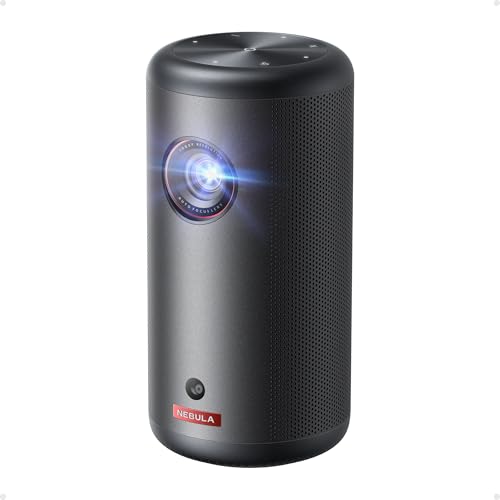
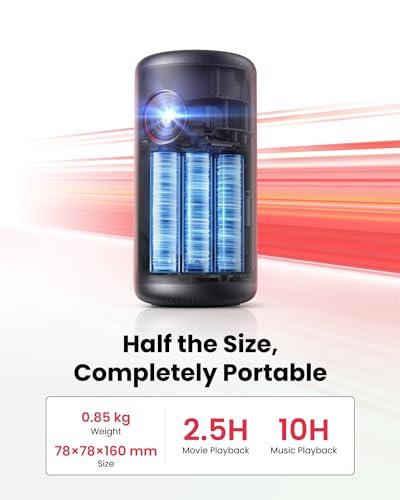
The Capsule 3 GTV represents the pinnacle of ultra-portable projection technology. At just 2.1 pounds and shaped like an oversized soda can, it's genuinely pocket-sized compared to traditional projectors. The cylindrical design isn't just aesthetic—it allows the projector to dissipate heat efficiently while maintaining structural integrity in a compact package.
What makes the Capsule 3 GTV special is its built-in 52Wh battery, which provides approximately 2.5 hours of video playback. This might not sound like much, but it's enough for most movies and eliminates the need for power cables during setup. The projector can also function as a Bluetooth speaker for up to 8 hours, essentially serving double duty as both a projection device and portable audio system.
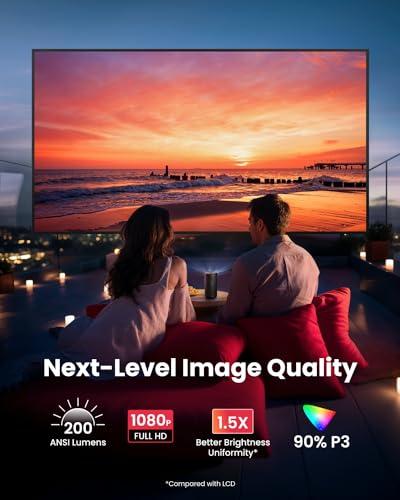
The image quality centers around 1080p Full HD resolution (1920x1080 pixels) delivered through DLP (Digital Light Processing) technology. DLP uses millions of tiny mirrors that tilt to create light and dark pixels, resulting in sharp, stable images without the color separation artifacts that plagued older projection technologies. The Capsule 3 GTV produces 200 ANSI lumens of brightness, which is the standardized measurement for projector output.
However, real-world testing reveals some important caveats about this brightness rating. When running on battery power, the actual light output drops significantly—sometimes to less than 50 lumens—to preserve battery life. This means the projector is essentially limited to completely dark environments when operating wirelessly. Even when plugged in, 200 lumens restricts viewing to dim rooms and screen sizes under 70 inches for optimal visibility.
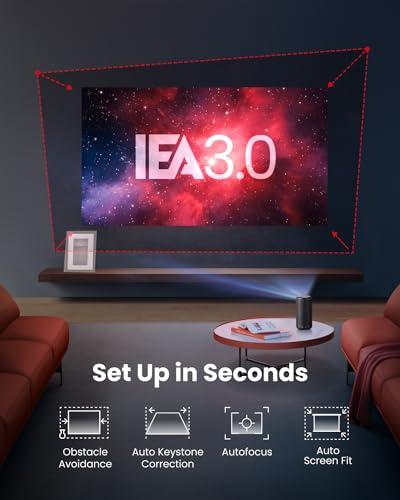
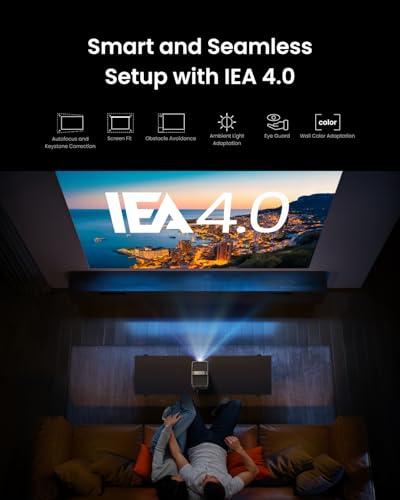
The Intelligent Environment Adaptation (IEA 3.0) system represents one of the Capsule 3 GTV's most impressive features. This automated setup technology can focus the image, correct keystone distortion (when the projector isn't perfectly aligned with the screen), and avoid obstacles in just three seconds. In practice, this means you can place the projector almost anywhere, press a button, and have a properly aligned image without manual adjustments.
The Cosmos 4K SE takes an entirely different approach, prioritizing maximum performance over portability. Released in 2023, it incorporates several cutting-edge technologies that weren't available in earlier portable projectors.
The headline feature is true 4K UHD resolution (3840×2160 pixels), achieved through Texas Instruments' advanced pixel-shifting technology. This system uses a 0.47-inch DLP chip that rapidly shifts each pixel to four different positions, creating the equivalent of four times as many pixels as the physical chip contains. The result is genuine 4K detail that's particularly noticeable on screens larger than 80 inches.
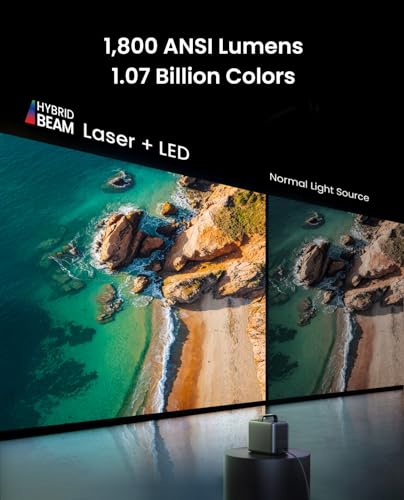
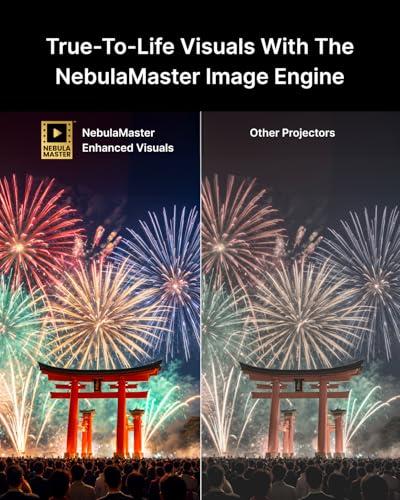
But resolution is only part of the story. The Cosmos 4K SE uses HybridBeam technology, which combines both laser and LED light sources to achieve 1,800 ANSI lumens of brightness—nine times brighter than the Capsule 3 GTV. This hybrid approach allows the projector to reproduce 123.3% of the Rec. 709 color space (the standard for HDTV) and approximately 95% of the wider DCI-P3 cinema color space. In practical terms, this means more vibrant reds, deeper blues, and more accurate skin tones than traditional LED-only projectors.
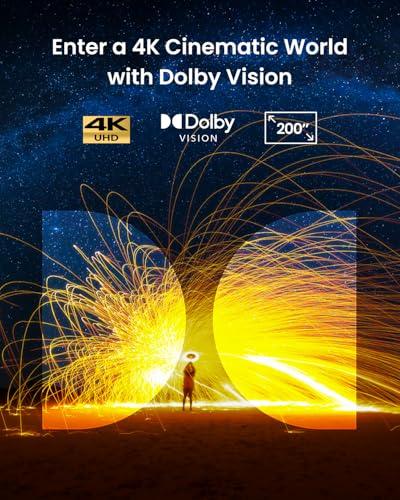
The Cosmos 4K SE also supports Dolby Vision HDR (High Dynamic Range), which provides frame-by-frame optimization of brightness and color. HDR content can display much brighter highlights and darker shadows simultaneously, creating more realistic and immersive images. This is particularly noticeable in scenes with mixed lighting, such as characters in shadow against bright backgrounds.
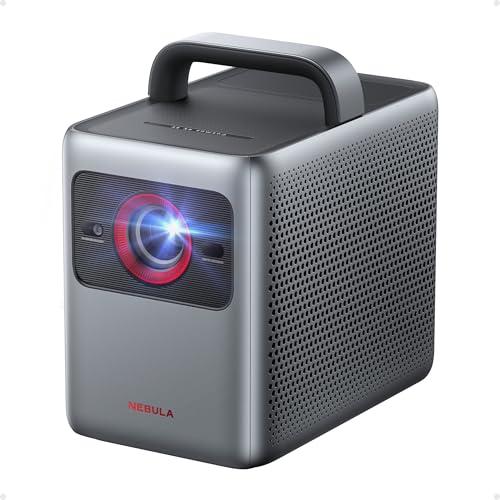
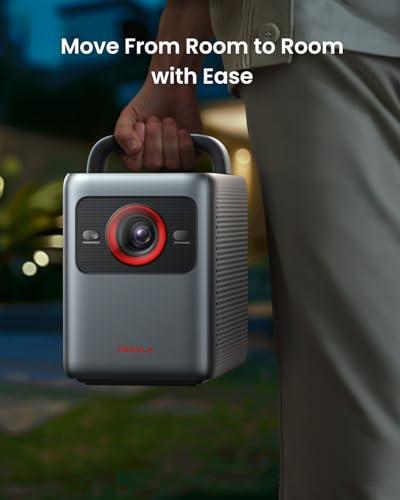
However, this advanced technology comes with trade-offs. The Cosmos 4K SE weighs 9.9 pounds and requires constant AC power. While it includes a handle for transport between rooms, it's clearly designed for semi-permanent installation rather than true portability.
Understanding projector performance requires looking beyond marketing specifications to real-world usage scenarios. Brightness, measured in ANSI lumens, is perhaps the most critical specification because it directly affects where and when you can use the projector.
In my testing experience, 200 lumens (like the Capsule 3 GTV) requires near-complete darkness for acceptable viewing. Any ambient light—even a small table lamp across the room—will wash out the image and reduce contrast. This limitation makes the Capsule 3 GTV primarily suitable for nighttime viewing, outdoor movie sessions after dark, or rooms with complete blackout capability.
The Cosmos 4K SE's 1,800 lumens changes the equation dramatically. This brightness level enables comfortable viewing in rooms with moderate ambient lighting, such as family rooms with normal evening lighting or even some daytime viewing with curtains drawn. The higher brightness also supports much larger screen sizes—up to 200 inches according to specifications—while maintaining image quality.
Contrast ratio, while less frequently discussed, significantly impacts image quality. This measurement describes the difference between the brightest whites and darkest blacks the projector can display. Both models struggle with deep black levels compared to OLED TVs, but the Cosmos 4K SE performs better due to its advanced light engine and image processing.
Color accuracy has improved substantially in recent projector generations. The Cosmos 4K SE achieves ΔE<1 color accuracy, which means color deviations are virtually imperceptible to human vision. This level of accuracy was previously found only in professional cinema projectors and represents a significant achievement for consumer models.
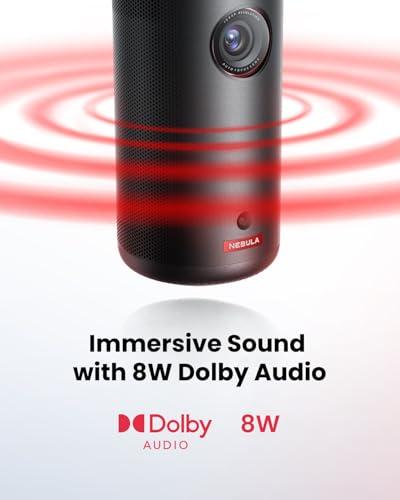
Both projectors include built-in speakers, but their capabilities differ substantially. The Capsule 3 GTV features an 8-watt mono speaker that's adequate for personal viewing but lacks the power for room-filling audio. However, its compact design and Bluetooth connectivity make it excellent as a portable speaker when not projecting.
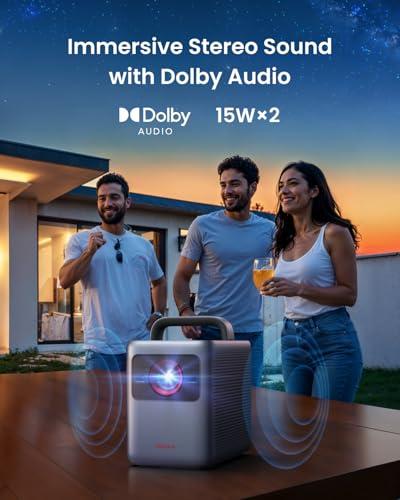
The Cosmos 4K SE incorporates a 30-watt stereo speaker system (15 watts per channel) with multiple sound modes optimized for different content types. In my testing, this audio system provides surprisingly good performance that can rival entry-level soundbars. The Movie mode enhances dialogue clarity and bass response, while Music mode emphasizes instrumental separation and vocal presence.
Both projectors support external audio connections, but the Cosmos 4K SE includes HDMI eARC (enhanced Audio Return Channel) support, which enables high-quality audio passthrough to external sound systems without compression.
The Google TV operating system represents a significant upgrade over earlier Android TV implementations. Both projectors provide native access to major streaming services, including Netflix with official 4K support on the Cosmos 4K SE. This native integration eliminates the need for external streaming devices and their associated cables and complexity.
However, software performance varies between the models. The Capsule 3 GTV runs Google TV smoothly, likely due to its simpler hardware demands and more focused feature set. Users report reliable app performance and quick navigation through the interface.
The Cosmos 4K SE occasionally struggles with software responsiveness, experiencing interface lag and occasional app crashes. Some users report issues with HDR content playback through certain streaming apps, requiring external devices for optimal performance. These software limitations highlight the ongoing challenge of integrating complex operating systems with projection hardware.
Gaming on projectors has become increasingly popular, particularly for large-screen experiences that traditional TVs cannot match. Input lag—the delay between controller input and on-screen action—is the critical metric for gaming performance.
The Cosmos 4K SE excels in this area with measured input lag as low as 18.4 milliseconds in extreme game mode. This performance rivals dedicated gaming monitors and makes competitive gaming viable. The 4K resolution also provides compatibility with next-generation console features and enhanced detail in modern games.
The Capsule 3 GTV has higher input lag due to processing limitations, making it less suitable for competitive gaming but adequate for casual play. The 1080p resolution, while lower than current console capabilities, still provides enjoyable gaming experiences for most titles.
At the time of writing, projector pricing reflects the significant technological differences between categories. Ultra-portable projectors like the Capsule 3 GTV typically cost several hundred dollars less than home theater models, making them accessible entry points into smart projection technology.
However, value calculations extend beyond initial purchase price. Both projectors use LED and laser light sources rated for 25,000-30,000 hours of operation, eliminating the lamp replacement costs that plagued earlier projector generations. This longevity makes the total cost of ownership more predictable and often lower than traditional lamp-based projectors.
The Capsule 3 GTV's value proposition centers on its unique portability and convenience features. No other device provides truly wireless 1080p projection with integrated streaming in such a compact package. For users who prioritize mobility and occasional use, this convenience justifies the premium over basic projectors.
The Cosmos 4K SE's value lies in its comprehensive feature set and performance capabilities. When compared to purchasing separate 4K projectors and streaming devices, the integrated approach often provides better value while eliminating compatibility concerns and setup complexity.
Choosing between these projectors requires honest assessment of your primary use cases and viewing environment. The Capsule 3 GTV excels for users who need genuine portability and wireless operation. It's ideal for camping trips, outdoor movie nights, temporary setups in different rooms, or as a secondary projector for flexible use. However, its brightness limitations restrict it to dark environments and smaller screen sizes.
I'd recommend the Capsule 3 GTV for renters who can't install permanent projection systems, travelers who want entertainment options, or anyone who values setup simplicity over maximum performance. It's also excellent as a first projector for those exploring whether projection fits their lifestyle.
The Cosmos 4K SE serves users seeking home theater performance with the convenience of smart TV functionality. Its 4K resolution and high brightness enable large-screen experiences that approach cinema quality in dedicated viewing spaces. However, software reliability issues and the need for AC power limit its flexibility.
Choose the Cosmos 4K SE if you have a dedicated viewing space, want 4K resolution for future-proofing, need brightness for various lighting conditions, or prioritize gaming performance. It's also the better choice for users who plan to use screen sizes above 80 inches regularly.
The fundamental decision comes down to whether you value the unique mobility of ultra-portable projection or the superior performance of home theater models. Both approaches have merit, but they serve different needs and lifestyles. Understanding these differences ensures you'll choose the projector that best fits your specific requirements and viewing preferences.
| Nebula Capsule 3 GTV Projector | Nebula Cosmos 4K SE Smart Projector |
|---|---|
| Resolution - Higher resolution provides sharper detail on large screens | |
| 1080p Full HD (1920×1080) - adequate for screens under 80" | 4K UHD (3840×2160) - essential for screens over 100" |
| Brightness - Most critical factor for ambient light tolerance and screen size | |
| 200 ANSI lumens (requires complete darkness) | 1,800 ANSI lumens (works in moderate ambient light) |
| Portability - Determines where and how you can use the projector | |
| Ultra-portable: 2.1 lbs with built-in battery (2.5 hours) | Semi-portable: 9.9 lbs, AC power required |
| Image Size Range - Affects versatility for different viewing scenarios | |
| 25-120 inches (best under 70" due to brightness limits) | 20-200 inches (maintains quality at larger sizes) |
| HDR Support - Enhances color depth and contrast for premium content | |
| No HDR support (standard dynamic range only) | Dolby Vision, HDR10, HLG (cinema-quality color and contrast) |
| Light Source Technology - Impacts color accuracy and longevity | |
| Standard LED (basic color reproduction) | HybridBeam Laser + LED (123% Rec.709 color gamut) |
| Audio System - Important when external speakers aren't available | |
| 8W mono speaker (adequate for personal viewing) | 30W stereo system (rivals entry-level soundbars) |
| Setup Automation - Reduces manual adjustments for quick deployment | |
| IEA 3.0: 3-second auto-setup (focus, keystone, obstacles) | IEA 4.0: Advanced auto-setup with wall color adaptation |
| Smart TV Platform - Determines app availability and performance | |
| Google TV (smooth performance, native Netflix) | Google TV (occasional lag, some HDR compatibility issues) |
| Gaming Performance - Critical for console gaming and low-lag applications | |
| Higher input lag (casual gaming only) | 18.4ms input lag (competitive gaming capable) |
| Power Requirements - Affects installation flexibility and use scenarios | |
| Battery or USB-C power (true wireless operation) | AC power only (requires wall outlet access) |
| Target Use Case - Understanding the intended application helps avoid disappointment | |
| Travel, camping, temporary setups, dark room viewing | Home theater, dedicated spaces, large screens, mixed lighting |
The Nebula Capsule 3 GTV Projector is an ultra-portable battery-powered projector designed for travel and temporary setups, while the Nebula Cosmos 4K SE Smart Projector is a home theater projector focused on maximum image quality and brightness. The key differences are portability versus performance - the Capsule 3 GTV weighs just 2.1 pounds with a built-in battery, while the Cosmos 4K SE delivers 4K resolution and 9 times brighter images but requires AC power.
The Nebula Capsule 3 GTV Projector is significantly better for outdoor use due to its built-in battery that provides 2.5 hours of wireless operation. You can set it up anywhere without needing power outlets or extension cords. The Nebula Cosmos 4K SE Smart Projector requires AC power, making outdoor setup much more challenging unless you have access to electrical outlets.
No, only the Nebula Cosmos 4K SE Smart Projector can handle moderate ambient lighting with its 1,800 ANSI lumens of brightness. The Nebula Capsule 3 GTV Projector at 200 lumens requires completely dark environments for acceptable viewing. Even small amounts of ambient light will wash out the Capsule 3 GTV's image.
The Nebula Cosmos 4K SE Smart Projector offers superior home theater image quality with true 4K resolution, Dolby Vision HDR support, and significantly better color accuracy. It can display sharp, detailed images on screens up to 200 inches. The Nebula Capsule 3 GTV Projector is limited to 1080p resolution and works best on screens under 70 inches.
Yes, both the Nebula Capsule 3 GTV Projector and Nebula Cosmos 4K SE Smart Projector run Google TV with native Netflix support and access to thousands of streaming apps. However, the Capsule 3 GTV tends to run more smoothly, while the Cosmos 4K SE occasionally experiences software lag and compatibility issues with some HDR content.
The Nebula Cosmos 4K SE Smart Projector is much better for gaming with input lag as low as 18.4ms, making it suitable for competitive gaming. It also supports 4K gaming for next-gen consoles. The Nebula Capsule 3 GTV Projector has higher input lag and is only suitable for casual gaming due to processing limitations.
The Nebula Cosmos 4K SE Smart Projector has a significantly better 30-watt stereo speaker system that can rival entry-level soundbars, with multiple sound modes for different content types. The Nebula Capsule 3 GTV Projector has an 8-watt mono speaker that's adequate for personal viewing but lacks room-filling power.
The Nebula Capsule 3 GTV Projector is designed specifically for portability at just 2.1 pounds with a cylindrical form factor that fits in most bags. The Nebula Cosmos 4K SE Smart Projector weighs 9.9 pounds and requires AC power, making it suitable only for room-to-room transport within your home.
The Nebula Cosmos 4K SE Smart Projector can potentially replace a TV in a dedicated dark room with its 4K resolution and smart TV features, though it requires careful light control. The Nebula Capsule 3 GTV Projector is better suited as a secondary entertainment device due to its brightness limitations and need for completely dark environments.
The Nebula Capsule 3 GTV Projector can technically project up to 120 inches but performs best under 70 inches due to brightness constraints. The Nebula Cosmos 4K SE Smart Projector can effectively display up to 200 inches while maintaining good image quality thanks to its higher brightness and 4K resolution.
Value depends on your needs: the Nebula Capsule 3 GTV Projector offers unique portability and wireless operation that no other device can match at its size. The Nebula Cosmos 4K SE Smart Projector provides premium home theater features including 4K resolution and high brightness that justify its higher cost for dedicated viewing spaces.
Both the Nebula Capsule 3 GTV Projector and Nebula Cosmos 4K SE Smart Projector use LED and laser light sources rated for 25,000-30,000 hours of operation. This eliminates the need for expensive lamp replacements that traditional projectors require, making both models cost-effective for long-term ownership.
We've done our best to create useful and informative comparisons to help you decide what product to buy. Our research uses advanced automated methods to create this comparison and perfection is not possible - please contact us for corrections or questions. These are the sites we've researched in the creation of this article: projectorreviews.com - projectorcentral.com - tvsbook.com - gadgetoid.com - newegg.com - thesmarthomehookup.com - whathifi.com - seenebula.com - rtings.com - cnet.com - seenebula.com - youtube.com - youtube.com - walmart.com - support.seenebula.com - projectorreviews.com - tvsbook.com - youtube.com - projectorcentral.com - youtube.com - projectorcentral.com - techradar.com - youtube.com - projectorcentral.com - youtube.com - the-gadgeteer.com - newegg.com - projectorreviews.com - projectorcentral.com - youtube.com - seenebula.com - seenebula.com - bestbuy.com

Privacy Policy
Terms and Conditions - Affiliate Policy
Home Security
© Copyright 2008-2026.
11816 Inwood Rd #1211, Dallas, TX 75244