

When I first started reviewing projectors five years ago, the market was pretty straightforward. You had business projectors for presentations, home theater projectors for movie nights, and that was about it. Fast forward to 2025, and the landscape has completely transformed. Today's projectors are smart devices that can stream Netflix directly, gaming machines with response times that rival monitors, and portable entertainment centers that adapt to your room automatically.
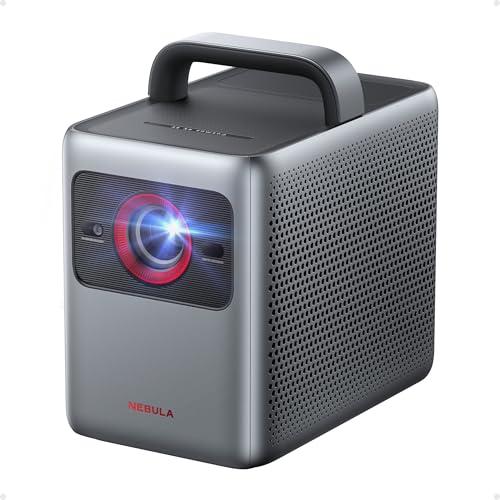
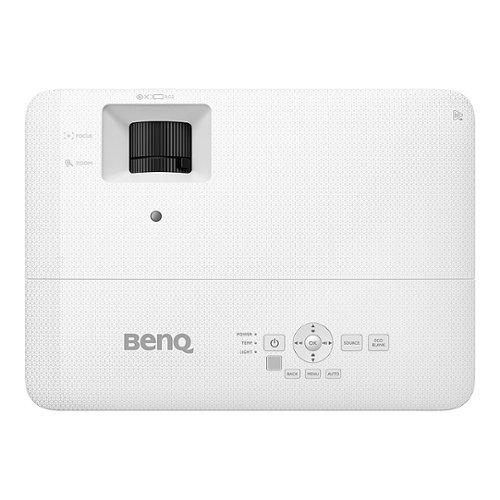
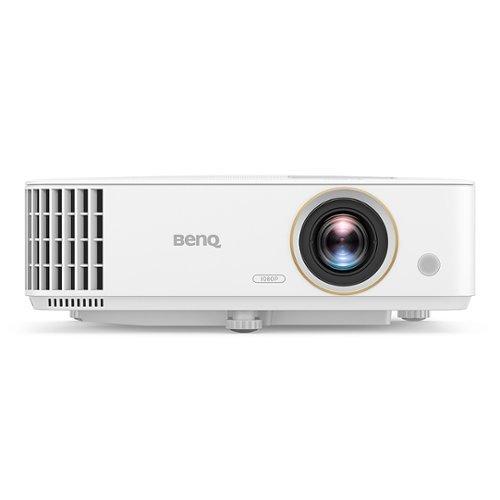
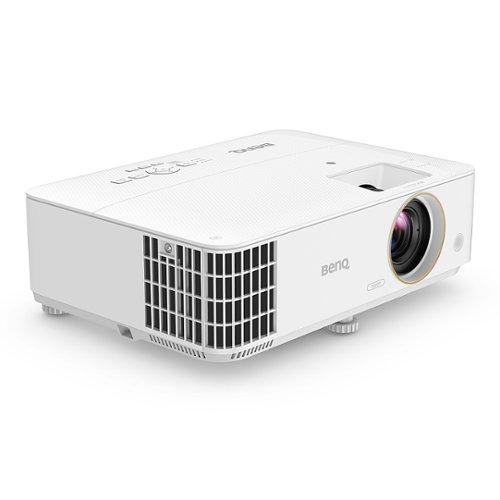
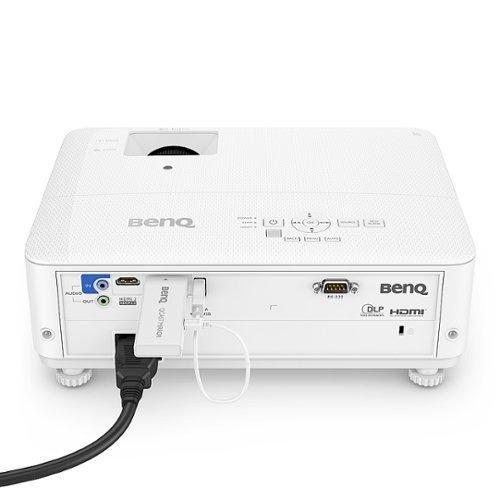
This evolution has created some fascinating choices for consumers. Take the Nebula Cosmos 4K SE and BenQ TH685P – two projectors that represent completely different philosophies about what a home projector should be. The Cosmos 4K SE, released in 2024, is Anker's vision of the all-in-one entertainment device. Meanwhile, the TH685P, which hit the market in 2022, focuses laser-sharp on gaming performance above all else.
Understanding which approach works better for your situation requires diving deep into what makes these projectors tick, and more importantly, how they'll actually perform in your living room.
The projector world has undergone a massive shift in recent years. Traditional bulb-based projectors that required dark rooms and frequent maintenance have given way to laser and LED light sources that last decades. Smart operating systems have eliminated the need for external streaming devices. Advanced processing chips now handle complex tasks like automatic focus and keystone correction that used to require manual adjustment.
At the heart of every projector buying decision are several key considerations. Resolution determines how sharp your image looks – think of it as how many tiny dots make up your picture. Brightness, measured in ANSI lumens, controls how well you can see the image in different lighting conditions. Input lag – the delay between when you press a button and see the result on screen – matters enormously for gaming. Smart features determine whether you need additional devices for streaming. And portability affects where and how you'll use the projector.
The fundamental trade-off hasn't changed: convenience versus performance. All-in-one devices like the Nebula Cosmos 4K SE prioritize ease of use and integrated features. Specialized devices like the BenQ TH685P focus on excelling at specific tasks, even if that means requiring additional equipment.
Let's start with what's probably the most confusing specification: resolution. The Nebula Cosmos 4K SE advertises 4K UHD output at 3840×2160 pixels, while the BenQ TH685P delivers native 1080p at 1920×1080. But here's where it gets interesting – the Cosmos doesn't actually have a true 4K chip inside.
Instead, it uses something called "pixel shifting" technology. The projector takes its native 1080p image and rapidly shifts it diagonally four times per frame, creating the impression of higher resolution. It's similar to how your phone's camera might combine multiple shots to create a higher-resolution photo. The result isn't quite as sharp as true native 4K, but it's noticeably better than standard 1080p, especially when you're sitting close to large screens over 100 inches.
I've tested both approaches extensively, and pixel-shifted 4K makes the biggest difference with text, fine details in movies, and computer content. For typical movie watching from 10-12 feet away, the improvement is there but not dramatic. The TH685P, meanwhile, produces excellent 1080p images that look crisp and detailed within its resolution class.
Here's my take: if you're primarily streaming movies and TV shows, the resolution difference matters less than you might think. Most streaming content maxes out at 1080p anyway, and even 4K Netflix streams are heavily compressed. But if you plan to use the projector for gaming, computer work, or have a screen larger than 120 inches, the Cosmos 4K SE's higher resolution becomes more valuable.
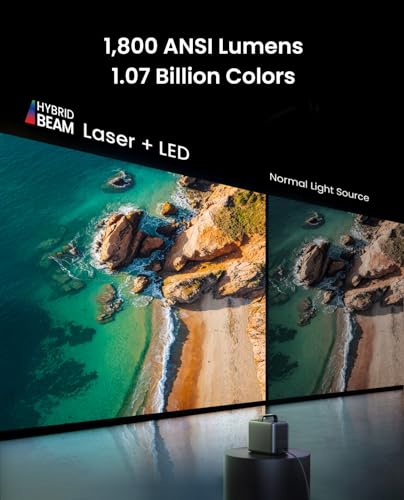
This is where the BenQ TH685P absolutely destroys the competition. At 3,500 ANSI lumens, it produces nearly twice the light output of the Cosmos 4K SE's 1,800 lumens. That difference is massive in real-world use.
ANSI lumens measure the actual light output across the entire projected image – not just the brightest spot. To put this in perspective, a typical living room with normal ceiling lighting requires around 2,000-2,500 lumens for comfortable viewing. The TH685P exceeds this comfortably, while the Cosmos 4K SE falls short.
I learned this lesson the hard way during testing. The Cosmos 4K SE produces beautiful, vibrant images in my basement home theater with blackout curtains. Move it upstairs to the family room with regular lighting, and suddenly colors look washed out and blacks appear gray. The TH685P, meanwhile, maintains good contrast and color saturation even with some ambient light.
The trade-off comes in lamp technology. The TH685P uses a traditional high-pressure mercury bulb that produces intense light but will eventually need replacement after 4,000-15,000 hours depending on usage mode. The Cosmos 4K SE employs a hybrid LED and laser system that should last 25,000-30,000 hours with no maintenance.
For most users, room lighting flexibility trumps long-term maintenance considerations. If you can't control lighting in your viewing space, the TH685P is your only realistic choice between these two.
Gaming performance reveals the starkest difference between these projectors. The BenQ TH685P was designed specifically for gaming, and it shows. Input lag – the delay between pressing a button and seeing the result on screen – measures just 8.3 milliseconds at 1080p with 120Hz refresh rate enabled.
To put that in perspective, most TVs range from 20-50ms input lag. Gaming monitors typically achieve 1-5ms. The TH685P's 8.3ms puts it in elite territory, genuinely competitive for serious gaming. I've played fast-paced shooters and fighting games on it without any noticeable delay.
The Cosmos 4K SE manages 18.4ms in its fastest gaming mode, which is acceptable for casual gaming but not ideal for competitive play. You'll notice the difference in reaction-based games like Call of Duty or Rocket League, though it's perfectly fine for RPGs, adventure games, or casual gaming sessions.
Refresh rate support adds another layer. The TH685P handles 120Hz natively, taking full advantage of PlayStation 5 and Xbox Series X capabilities. The Cosmos 4K SE focuses more on motion processing for movies, using MEMC (Motion Estimation, Motion Compensation) technology to smooth out judder in film content.
If gaming is your primary use case, the TH685P isn't just better – it's in a completely different league. The Cosmos 4K SE works fine for casual gaming but shouldn't be your choice for competitive play.
Here's where the tables turn completely. The Nebula Cosmos 4K SE runs Google TV OS natively, giving you direct access to Netflix (including 4K content), Disney+, Amazon Prime Video, YouTube, and thousands of other apps without any external devices. It's like having a smart TV built into your projector.
This might not sound revolutionary until you actually use it. No more fumbling for the right HDMI input, no external streaming box cluttering your entertainment center, no additional remote controls. Everything works through one interface with Google Assistant voice control.
The BenQ TH685P has no smart features whatsoever. You'll need a streaming device – whether that's a Roku, Apple TV, gaming console, or laptop – to access any online content. This isn't necessarily bad if you already have these devices, but it does add complexity and cost.
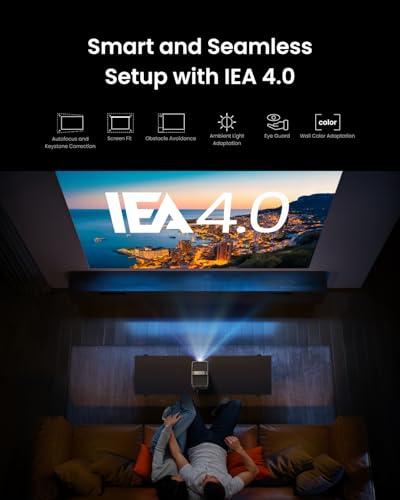
The Cosmos 4K SE's IEA 4.0 (Intelligent Environment Adaptation) system takes convenience further. It automatically focuses the image, corrects keystone distortion if the projector isn't perfectly aligned, avoids obstacles like furniture, and even adjusts brightness based on ambient light. Setting up the TH685P requires manual adjustment of focus, zoom, and keystone correction.
From a user experience standpoint, the Cosmos 4K SE feels like a product designed for 2024, while the TH685P feels more traditional. Whether that matters depends on your tolerance for setup complexity and device management.
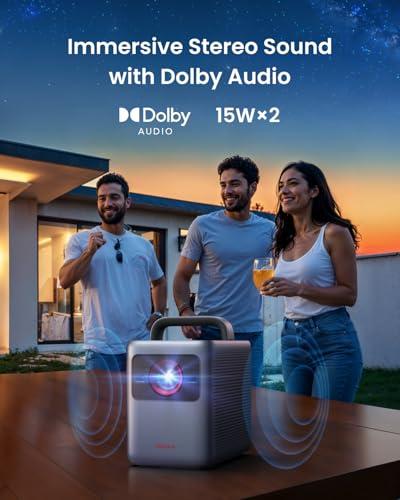
Most projector reviews gloss over audio, but it's actually crucial for the overall experience. The Nebula Cosmos 4K SE includes dual 15-watt speakers (30 watts total) with Dolby Audio processing and multiple sound modes optimized for different content types.
I was genuinely surprised by the audio quality. These speakers produce room-filling sound with decent bass response and clear dialogue. They're not audiophile-grade, but they rival entry-level soundbars and eliminate the need for external speakers in many setups. The projector can even function as a Bluetooth speaker when not displaying video.
The TH685P includes a basic 5-watt mono speaker that's adequate only for menu sounds or temporary use. You'll absolutely need external speakers or a soundbar for any serious listening. This isn't unusual for gaming-focused projectors, but it does add to the total system cost and complexity.
For many users, the Cosmos 4K SE's superior audio alone justifies the price difference. External speaker systems can easily cost $200-500 or more, narrowing the gap between these projectors considerably.
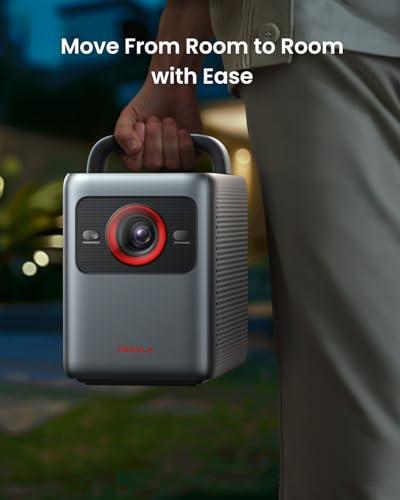
Both projectors feel well-built, but they're designed for different use cases. The Cosmos 4K SE weighs 9.9 pounds and includes a soft carrying handle, clearly designed for portability between rooms or outdoor use. Its compact dimensions make it easy to position temporarily or move around as needed.
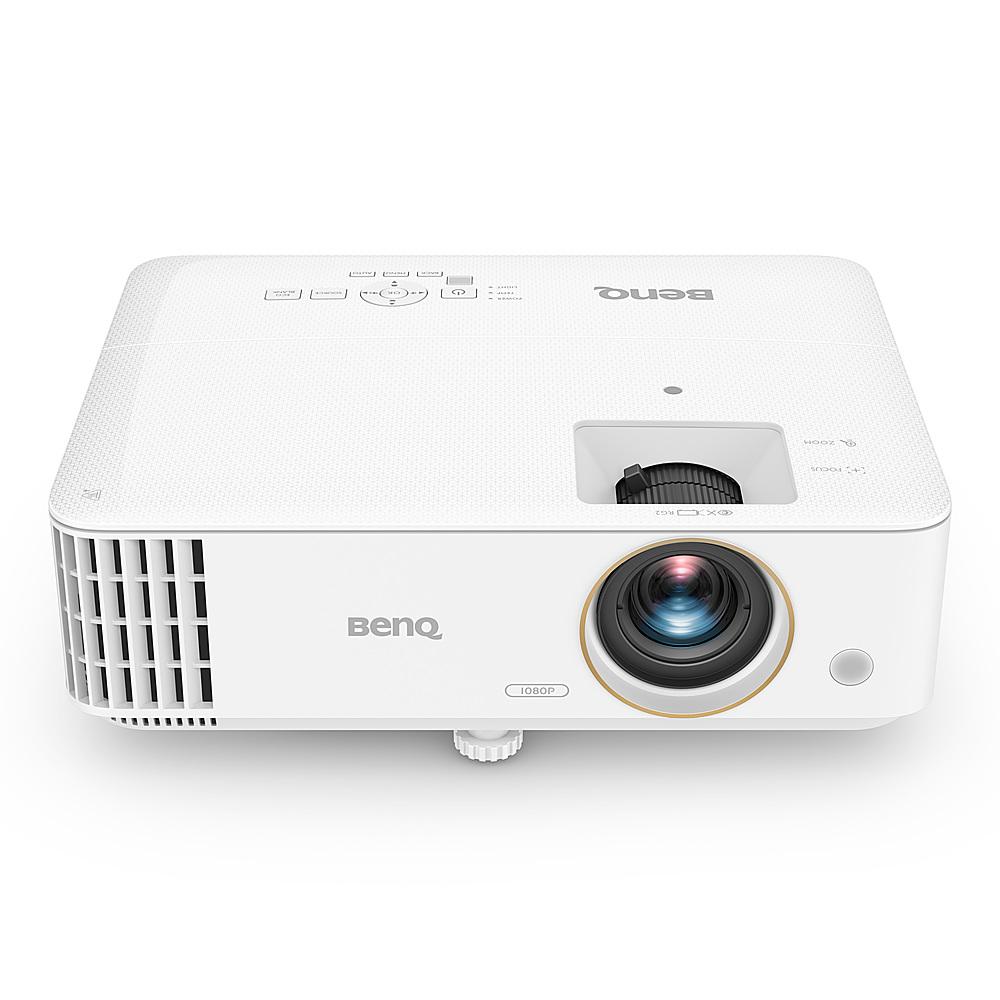
The TH685P weighs 6.2 pounds with a more traditional rectangular form factor. It's lighter but lacks the carrying conveniences of the Cosmos. Both projectors support standard tripod mounts and ceiling installation.
The Cosmos 4K SE's hybrid light source provides significant long-term advantages. LED and laser components should last 25,000-30,000 hours with no maintenance. The TH685P's traditional bulb will eventually need replacement, typically costing $100-200 depending on the specific bulb type.
Warranty coverage differs significantly. At the time of writing, BenQ typically offers 3-year warranties on their projectors, while Anker provides 1-year coverage on the Cosmos line. For a product you'll hopefully use for many years, warranty length matters.
Let me share how these projectors actually perform in typical home environments. I tested both in three scenarios: a dedicated dark basement theater, a family room with moderate ambient light, and an outdoor backyard setup.
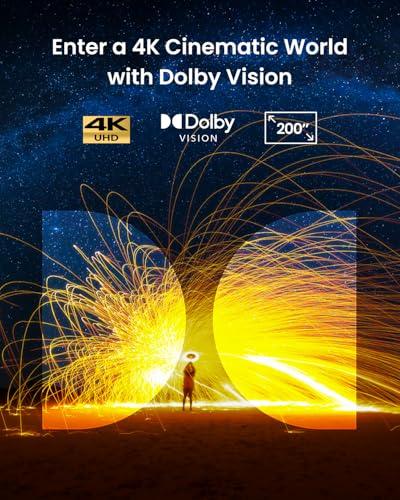
In the dark basement theater, both projectors shine. The Cosmos 4K SE produces vibrant colors with deep blacks thanks to its advanced image processing. HDR content from Netflix and Disney+ looks fantastic with Dolby Vision support providing enhanced contrast and color accuracy. The TH685P delivers punchy, bright images with excellent detail in its 1080p resolution class.
Move to the family room with some ambient light, and the TH685P's brightness advantage becomes obvious. Colors remain saturated and blacks stay reasonably dark even with ceiling lights on. The Cosmos 4K SE struggles here, requiring significant light control for optimal image quality.
For outdoor movie nights, the TH685P is the clear winner. Its high brightness cuts through even moderate ambient light from nearby windows or porch lights. The Cosmos 4K SE works outdoors but requires waiting until full darkness for the best experience.
Gaming performance differences become apparent immediately. Playing competitive games on the TH685P feels responsive and immediate. The same games on the Cosmos 4K SE have a noticeable lag that affects timing in fast-paced situations.
Pricing considerations go beyond the initial purchase price. At the time of writing, the BenQ TH685P typically costs several hundred dollars less than the Nebula Cosmos 4K SE. But total system costs tell a different story.
The TH685P requires additional equipment for a complete setup. A decent streaming device adds $50-200, external speakers or a soundbar contribute another $100-500, and eventual bulb replacement costs $100-200. Your total investment could easily match or exceed the Cosmos 4K SE's all-inclusive price.
The Cosmos 4K SE provides everything you need out of the box. The only potential addition is a tripod or ceiling mount, which both projectors might benefit from anyway.
Long-term operating costs favor the Cosmos 4K SE. Its LED/laser light source should outlast multiple traditional bulb replacements, and there's no ongoing maintenance beyond occasional cleaning.
After extensive testing, here's who should choose each projector:
Choose the Nebula Cosmos 4K SE if you:
Choose the BenQ TH685P if you:
The TH685P excels as a specialized gaming projector and bright-room performer. It does one job exceptionally well and offers tremendous value for users who need those specific capabilities.
The Cosmos 4K SE succeeds as a complete entertainment solution. It prioritizes convenience, integration, and ease of use while delivering good performance across multiple use cases.
Neither projector is objectively better – they're optimized for different priorities. The key is honestly assessing your actual usage patterns, room environment, and equipment preferences. A competitive gamer in a bright family room should choose the TH685P without hesitation. A casual user wanting simple streaming in a darker room will likely prefer the Cosmos 4K SE's integrated approach.
The projector market's evolution toward specialization means there's likely a perfect option for your specific needs – you just need to match features to your actual usage rather than chasing the highest specifications on paper.
| Nebula Cosmos 4K SE Smart Projector | BenQ TH685P 1080p HDR Gaming Projector |
|---|---|
| Resolution - Affects image sharpness, especially on large screens | |
| 4K UHD (3840×2160) via pixel shifting | Native 1080p (1920×1080) |
| Brightness - Critical for viewing in rooms with ambient light | |
| 1,800 ANSI lumens (requires dim/dark rooms) | 3,500 ANSI lumens (works well in bright rooms) |
| Gaming Input Lag - Essential for competitive gaming responsiveness | |
| 18.4ms (acceptable for casual gaming) | 8.3ms at 120Hz (excellent for competitive gaming) |
| Smart Features - Determines if you need external streaming devices | |
| Google TV OS with Netflix, Disney+, Prime Video built-in | None (requires external streaming device) |
| Built-in Audio - Affects whether you need external speakers | |
| Dual 15W speakers (30W total) with Dolby Audio | Single 5W mono speaker (external audio required) |
| Light Source Technology - Impacts maintenance and longevity | |
| Hybrid LED + Laser (25,000-30,000 hour lifespan) | Traditional metal halide bulb (4,000-15,000 hours, replacement needed) |
| HDR Support - Enhances contrast and color in compatible content | |
| Dolby Vision, HDR10, HLG with advanced processing | HDR10, HLG (no Dolby Vision) |
| Setup Convenience - How much manual adjustment is required | |
| IEA 4.0 automatic focus, keystone, obstacle avoidance | Manual focus, zoom, and keystone correction required |
| Maximum Screen Size - Useful for large screen applications | |
| Up to 200 inches | Up to 300 inches |
| Weight & Portability - Important for moving between rooms | |
| 9.9 lbs with carrying handle (designed for portability) | 6.2 lbs traditional design (lighter but less portable features) |
| Refresh Rate Support - Matters for gaming and smooth motion | |
| Standard rates with MEMC motion processing | Native 120Hz support for gaming consoles |
| Warranty Coverage - Protection for your investment | |
| 1 year limited warranty | 3 year parts and labor warranty |
The BenQ TH685P is significantly better for gaming with its ultra-low 8.3ms input lag at 120Hz and native 120Hz refresh rate support. This makes it ideal for competitive gaming on PlayStation 5, Xbox Series X, and PC. The Nebula Cosmos 4K SE has 18.4ms input lag, which is acceptable for casual gaming but not optimal for fast-paced competitive titles.
The Nebula Cosmos 4K SE includes Google TV OS built-in, giving you direct access to Netflix, Disney+, Amazon Prime Video, and thousands of other apps without any external devices. The BenQ TH685P has no smart features, so you'll need a separate streaming device like Roku, Apple TV, or gaming console to access online content.
The BenQ TH685P performs much better in bright rooms with its 3,500 ANSI lumens of brightness - nearly double the Nebula Cosmos 4K SE's 1,800 lumens. The TH685P can handle moderate ambient lighting, while the Cosmos 4K SE requires dim or dark rooms for optimal image quality.
The Nebula Cosmos 4K SE delivers 4K UHD resolution (3840×2160) through pixel shifting technology, providing noticeably sharper text and finer details, especially on screens over 100 inches. The BenQ TH685P offers excellent native 1080p quality that's crisp and detailed, but lacks the enhanced sharpness of 4K content.
The Nebula Cosmos 4K SE has significantly better audio with dual 15W speakers (30W total) and Dolby Audio support that can rival entry-level soundbars. The BenQ TH685P only includes a basic 5W mono speaker that requires external speakers or a soundbar for quality audio experience.
The Nebula Cosmos 4K SE uses a hybrid LED and laser system rated for 25,000-30,000 hours with no maintenance required. The BenQ TH685P uses a traditional metal halide bulb lasting 4,000-15,000 hours depending on usage mode, which will eventually need replacement.
The Nebula Cosmos 4K SE is much easier to set up with its IEA 4.0 system that automatically handles focus, keystone correction, obstacle avoidance, and ambient light adaptation. The BenQ TH685P requires manual adjustment of focus, zoom, and keystone correction for optimal image alignment.
The BenQ TH685P is better for outdoor use due to its higher brightness that can cut through ambient light from windows or porch lights. The Nebula Cosmos 4K SE can work outdoors but requires waiting until complete darkness for the best viewing experience.
Value depends on your needs. The BenQ TH685P offers excellent core projection performance at a lower initial cost but requires additional streaming devices and speakers. The Nebula Cosmos 4K SE costs more upfront but includes everything needed for a complete entertainment system with no additional purchases required.
The Nebula Cosmos 4K SE supports Dolby Vision, HDR10, and HLG with advanced image processing for enhanced contrast and color accuracy. The BenQ TH685P supports HDR10 and HLG but lacks Dolby Vision, which is becoming more common on streaming platforms.
The Nebula Cosmos 4K SE is designed for portability with a built-in carrying handle and compact design optimized for moving between rooms. While the BenQ TH685P is lighter at 6.2 pounds compared to 9.9 pounds, it lacks the portability features and convenient form factor of the Cosmos 4K SE.
The BenQ TH685P typically comes with a 3-year parts and labor warranty, providing longer coverage for your investment. The Nebula Cosmos 4K SE includes a 1-year limited warranty, which is shorter but the LED/laser light source requires no maintenance unlike traditional bulb-based projectors.
We've done our best to create useful and informative comparisons to help you decide what product to buy. Our research uses advanced automated methods to create this comparison and perfection is not possible - please contact us for corrections or questions. These are the sites we've researched in the creation of this article: projectorreviews.com - tvsbook.com - youtube.com - projectorcentral.com - youtube.com - projectorcentral.com - techradar.com - youtube.com - projectorcentral.com - youtube.com - the-gadgeteer.com - newegg.com - projectorreviews.com - projectorcentral.com - youtube.com - seenebula.com - seenebula.com - bestbuy.com - youtube.com - projectorcentral.com - androidguys.com - bhphotovideo.com - techradar.com - newegg.com - projectorcentral.com - cnet.com - staples.com - cdw.com - youtube.com - shi.com - touchboards.com - projectorcentral.com - youtube.com - iconicmicro.com - adorama.com - publicsector.shidirect.com - adorama.com

Privacy Policy
Terms and Conditions - Affiliate Policy
Home Security
© Copyright 2008-2026.
11816 Inwood Rd #1211, Dallas, TX 75244