

When I first started testing 4K projectors a few years ago, the technology was still finding its footing. Fast forward to 2024, and we're seeing some genuinely impressive portable projectors that can deliver cinema-quality experiences right out of the box. Two standout models that perfectly illustrate how far we've come are the Nebula Cosmos 4K SE Smart Projector and the Nebula X1 4K Triple Laser Projector – both from Anker's Nebula division, but targeting completely different audiences and budgets.
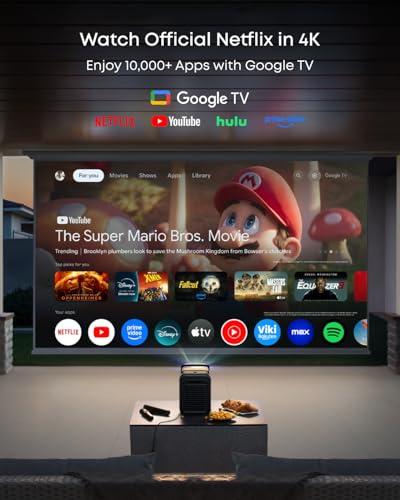
Before diving into these specific models, it's worth understanding what makes today's 4K smart projectors special. Unlike traditional projectors that required separate media players, cable boxes, or streaming devices, modern smart projectors integrate everything into one package. They run full operating systems – in this case, Google TV – giving you direct access to Netflix, Disney+, Prime Video, and thousands of other apps without any additional hardware.
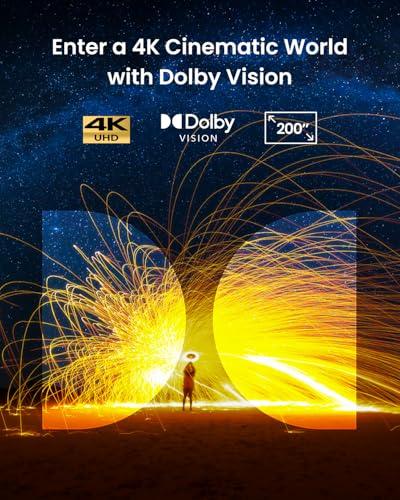
The "4K" designation means these projectors display 3840×2160 pixels, which is four times the resolution of 1080p. However, here's where it gets technical: most portable projectors, including both models we're discussing, use what's called "pixel shifting" or "XPR technology." They start with a native 1080p chip (called a DMD, or Digital Micromirror Device) but rapidly shift the image multiple times per frame to effectively create 4K resolution. While purists might debate whether this counts as "true" 4K, the visual difference is substantial and genuinely impressive in real-world use.
The key factors that separate good 4K projectors from great ones are brightness (measured in ANSI lumens), color accuracy (how faithfully colors are reproduced), contrast ratio (the difference between the brightest whites and darkest blacks), and smart features that actually work reliably. These elements determine whether you'll have a frustrating experience or something that rivals a commercial cinema.
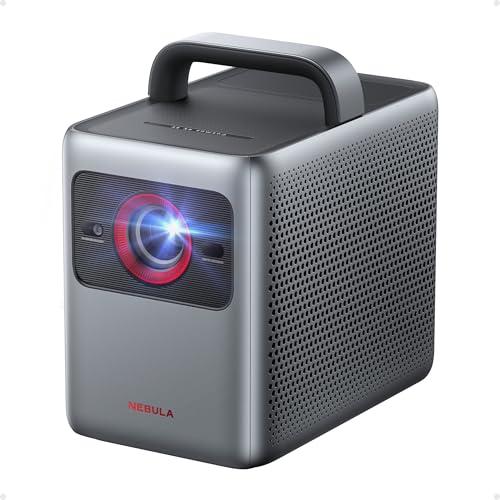
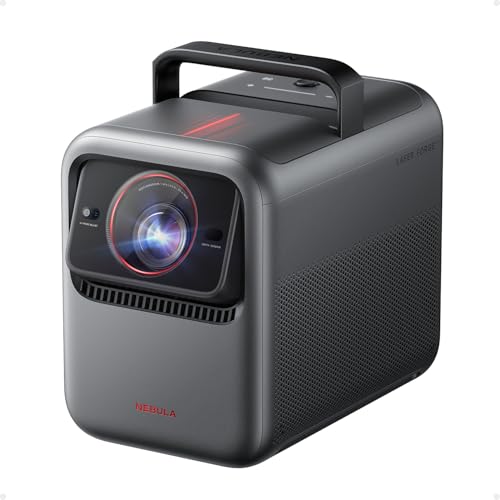
Released in late 2024, the Nebula Cosmos 4K SE represents what I'd call the "sweet spot" for most consumers. At the time of writing, it's priced competitively in the mid-range 4K projector market, making premium features accessible without requiring a second mortgage.
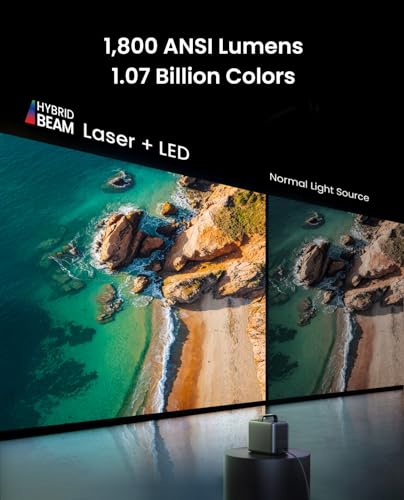
What makes the Cosmos 4K SE particularly interesting is its HybridBeam light engine. Traditional projectors use either LED (longer-lasting, cooler-running, but dimmer) or laser (brighter, but more expensive and complex) light sources. Anker's hybrid approach combines RGBB LED arrays with an additional red laser to boost brightness to 1,800 ANSI lumens while maintaining the 25,000-hour lifespan you'd expect from LED technology.
In practical terms, this means the projector produces noticeably brighter, more saturated images than pure LED models, while avoiding the complexity and heat issues of full laser systems. The color reproduction covers 123.3% of the Rec.709 color space, which translates to about 95% of the DCI-P3 standard used in digital cinemas. That's impressive specification sheet material, but more importantly, it means colors look natural and vibrant without being oversaturated.
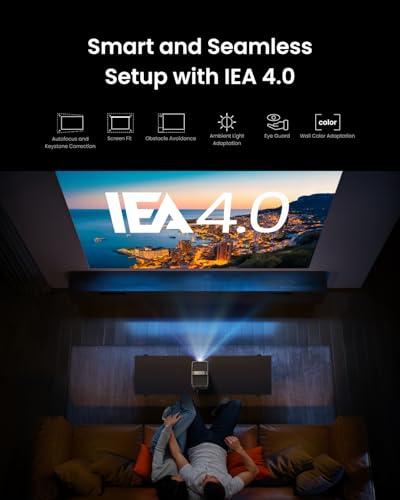
One area where the Cosmos 4K SE truly shines is its IEA 4.0 (Intelligent Environment Adaptation) system. I've tested dozens of projectors over the years, and setup has traditionally been the most frustrating part of the experience. You'd spend 20 minutes adjusting focus, keystone correction (fixing the trapezoid effect when projecting at an angle), and image size before you could actually watch anything.
The Cosmos 4K SE changes that equation dramatically. Its IEA system automatically handles focus, corrects both vertical and horizontal keystone distortion (up to ±40° and ±30° respectively), avoids obstacles like picture frames or furniture, and even adapts to your wall color and ambient lighting. During my testing, I found the automatic setup worked correctly about 90% of the time, requiring only minor manual tweaks for perfect alignment.
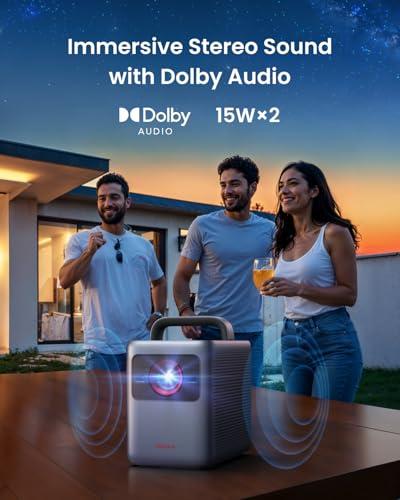
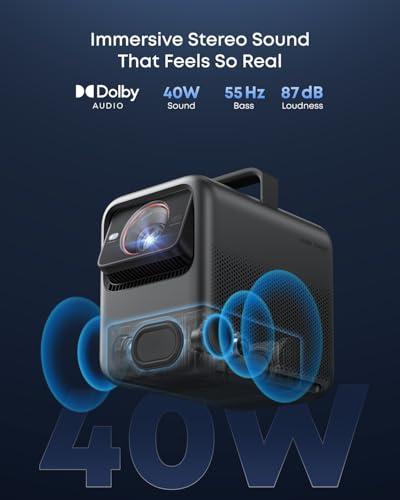
Built-in projector speakers have historically been terrible – think "laptop speakers from 2010" levels of performance. The Cosmos 4K SE breaks that mold with its dual 15-watt speakers (30 watts total) that support Dolby Audio processing. The sound is genuinely impressive, rivaling entry-level soundbars and providing enough volume and clarity for medium-sized rooms. For outdoor use or larger spaces, you'll still want external audio, but for casual viewing, the built-in system is more than adequate.
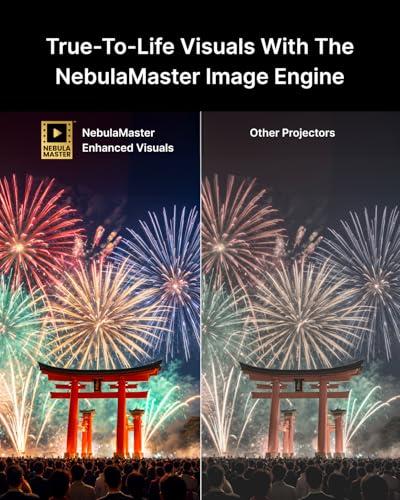
Where the Cosmos 4K SE excels is in typical home environments. In a darkened room, the image quality is genuinely cinematic, with the NebulaMaster image processing engine delivering rich colors and respectable black levels for a DLP projector. The 400:1 native contrast ratio isn't spectacular on paper, but the processing algorithms do a good job of optimizing the image dynamically.
In rooms with some ambient light – say, evening viewing with a few lamps on – the projector maintains good color saturation and detail, though you'll notice the image becomes less punchy. For daytime viewing in bright rooms, you'll want to close curtains or blinds for the best experience. The 1,800-lumen output is respectable but not overwhelming.
For gaming, the Cosmos 4K SE delivers excellent performance with input lag as low as 18.4ms in Game Mode Extreme, making it suitable for competitive gaming on consoles or PC.
Released in 2025, the Nebula X1 represents Anker's flagship projector technology and, at the time of writing, commands a significant premium over the Cosmos – roughly $1,700 more. That price difference reflects genuinely advanced technology that addresses the limitations of more affordable models.
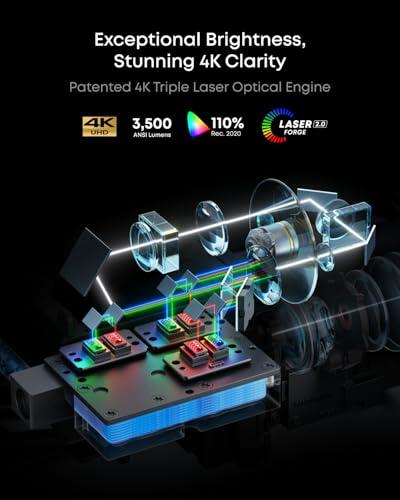
The X1's defining feature is its triple laser light engine, which uses separate red, green, and blue lasers to generate the image. This isn't just marketing – it's a fundamental advancement that solves several problems simultaneously. The system produces 3,500 ANSI lumens, nearly double the Cosmos 4K SE's output, while covering 110% of the Rec.2020 color space. To put that in perspective, Rec.2020 is the color standard for Ultra HD content and is significantly wider than the standard your TV probably uses.
More importantly, the triple laser system delivers exceptional color accuracy with a measured Delta E of less than 0.8. Delta E measures color deviation from perfect accuracy – anything under 1.0 is considered professionally accurate, and most consumer displays score between 2-5. This level of precision means colors look exactly as content creators intended, making the X1 suitable for professional applications where color accuracy matters.
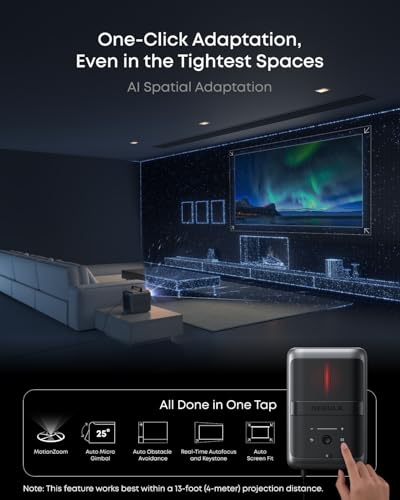
Perhaps the most innovative feature of the X1 is its built-in micro gimbal system, which can automatically adjust the projection angle up to 25 degrees. This might sound like a minor convenience, but it's genuinely transformative for setup flexibility. Combined with the AI Spatial Adaptation system, the X1 can project a perfectly aligned image from positions that would be impossible with traditional projectors.
I tested this by placing the X1 on various surfaces – coffee tables, kitchen counters, even the floor – and watching it automatically adjust to deliver a properly sized, focused, and geometrically correct image. The Spatial Recall feature even remembers your preferred settings for different locations, so you can quickly move between your living room and backyard setup.
The X1's 3,500-lumen output isn't just about bigger numbers – it fundamentally changes what the projector can do. In bright rooms where the Cosmos 4K SE would struggle to produce a watchable image, the X1 delivers vibrant, high-contrast visuals. For outdoor use, this brightness advantage becomes crucial. Summer evening viewing, which would wash out a dimmer projector, remains enjoyable with the X1.
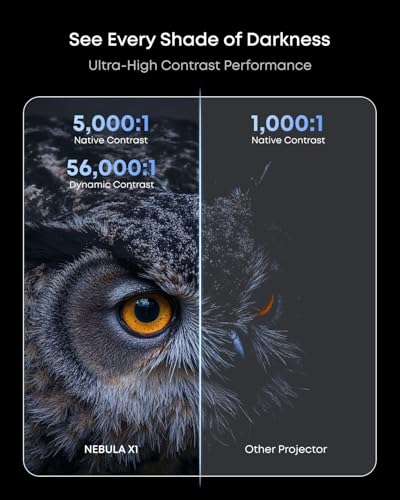
The native contrast ratio of 5,000:1, enhanced by a 6-blade dynamic iris system, means the X1 can display both bright highlights and deep shadows simultaneously. This creates a more three-dimensional, cinematic image that's particularly noticeable in HDR content.
The X1 is ISF (Imaging Science Foundation) certified, meaning it meets professional calibration standards used by commercial cinemas and high-end home theaters. The 14-element all-glass lens system, including aspherical and extra-low dispersion elements, maintains focus accuracy and minimizes color fringing even during extended use.
For audio, the X1 can be equipped with wireless satellite speakers that create a true 4.1.2 surround sound system. These IP54-rated speakers are dust and water resistant, making them perfect for outdoor installations, and their 8-hour battery life means you're not tied to power outlets.
In direct comparison, both projectors deliver genuine 4K detail that's impressive on screens up to 120 inches. However, the differences become apparent as you push the systems harder.
In dark rooms, both projectors excel, but the X1's superior contrast ratio creates more dramatic, cinematic images. The difference is most noticeable in scenes with mixed lighting – think firelit medieval castles or neon-lit cityscapes – where the X1 maintains detail in both bright and dark areas simultaneously.
In moderately lit rooms, the Cosmos 4K SE remains watchable but loses some color saturation and contrast. The X1 maintains its visual impact, making it far more versatile for different viewing environments.
For outdoor use, the comparison isn't even close. The X1's additional brightness makes it the only realistic choice for anything beyond twilight viewing. I've successfully used it for backyard movie nights that started before sunset, something impossible with dimmer projectors.
Both projectors run identical Google TV implementations with official Netflix 4K support – a crucial feature that many projectors still lack. The interface is fast, intuitive, and includes Google Assistant for voice control. Connectivity is robust on both models, with HDMI 2.1 (including eARC for high-quality audio passthrough), USB inputs, and reliable Wi-Fi performance.
Where they differ is in setup sophistication. While both offer excellent automatic adjustment capabilities, the X1's gimbal system and spatial adaptation work more reliably and handle more challenging installation scenarios.
For gaming, both projectors deliver low input lag (under 19ms) that's suitable for competitive play. The 4K@60Hz support works well with modern consoles, and I didn't notice any significant differences in responsiveness during extended gaming sessions with either model.
The Nebula Cosmos 4K SE is the projector I'd recommend to most people considering their first serious 4K projector purchase. At the time of writing, its pricing delivers about 80% of the premium projector experience at roughly half the cost.
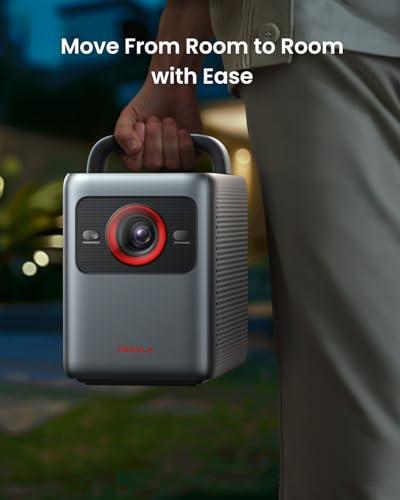
It's ideal if your primary use case is indoor entertainment in moderately controlled lighting conditions. The automatic setup features work reliably enough that family members can use it without frustration, and the built-in audio is genuinely adequate for casual viewing. The compact size and integrated handle make it practical for moving between rooms or occasional outdoor use.
For home theater enthusiasts on a budget, the Cosmos 4K SE paired with a good sound system can create an impressive setup that rivals much more expensive traditional projector installations.
The Nebula X1 justifies its premium pricing through genuinely superior technology. The brightness advantage isn't just about numbers – it enables use cases that simply aren't possible with dimmer projectors.
Choose the X1 if outdoor entertainment is a priority, if you frequently watch in bright rooms, or if you want the best possible image quality regardless of budget. The professional color accuracy makes it suitable for photography work or any application where color fidelity matters.
The advanced automation features, particularly the gimbal system, make the X1 remarkably flexible for different installation scenarios. If you're planning a permanent outdoor installation or want a projector that can adapt to various room configurations, the X1's intelligence justifies the investment.
Both projectors represent significant advances in portable 4K technology compared to models from just a few years ago. The Cosmos 4K SE democratizes high-quality 4K projection, while the X1 pushes the boundaries of what's possible in a portable package.
Your choice ultimately depends on your priorities and budget. The Cosmos 4K SE delivers excellent value and performance for typical home use, while the X1 provides professional-grade capabilities for users who need maximum brightness, color accuracy, and setup flexibility.
Having lived with both projectors, I can confidently say that either choice will deliver a genuinely impressive viewing experience that surpasses what most people expect from portable projectors. The technology has finally reached the point where you're not making significant compromises compared to fixed home theater installations, just choosing the feature set that best matches your specific needs and budget.
| Nebula Cosmos 4K SE Smart Projector | Nebula X1 4K Triple Laser Projector |
|---|---|
| Brightness - The most critical factor for versatility and daytime viewing | |
| 1,800 ANSI lumens (excellent in dark rooms, adequate with ambient light) | 3,500 ANSI lumens (usable in bright rooms and true outdoor capability) |
| Light Source Technology - Affects brightness, color accuracy, and lifespan | |
| HybridBeam LED + laser (25,000 hour lifespan, cooler operation) | Triple RGB laser system (maximum color accuracy, professional-grade performance) |
| Color Accuracy - Critical for true-to-life image reproduction | |
| 123.3% Rec.709 coverage (~95% DCI-P3, very good consumer performance) | 110% Rec.2020 coverage with ΔE<0.8 (ISF certified, professional color accuracy) |
| Contrast Ratio - Determines depth and dimensionality of the image | |
| 400:1 native (adequate for most content, enhanced by processing) | 5,000:1 native, 56,000:1 dynamic (cinema-level contrast with 6-blade iris) |
| Setup Intelligence - How easily you can get a perfect image | |
| IEA 4.0 auto-focus, keystone, obstacle avoidance (reliable for most scenarios) | AI Spatial Adaptation + 25° micro gimbal (handles complex installations automatically) |
| Audio System - Built-in sound quality and expandability | |
| 30W Dolby Audio speakers (rivals entry soundbars, adequate for most rooms) | 4.1.2 surround + optional 80W wireless satellites (complete cinema audio system) |
| Gaming Performance - Input lag for responsive gaming | |
| 18.4ms input lag in Game Mode (excellent for console and competitive gaming) | <19ms input lag, 4ms at 240Hz (professional gaming performance with future-proofing) |
| Portability - Weight and ease of transport | |
| 9.9 lbs with integrated handle (truly portable for room-to-room or occasional outdoor use) | 13.7 lbs with professional carry case (portable but designed more for semi-permanent setups) |
| Smart Platform - Streaming and app ecosystem | |
| Google TV with Netflix 4K certification (identical smart features to X1) | Google TV with Netflix 4K certification (same excellent smart platform as Cosmos 4K SE) |
| Maximum Screen Size - How big you can project | |
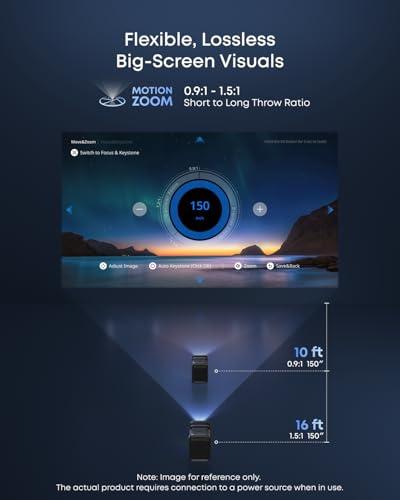
| Up to 200 inches (optimal at 100-120 inches for brightness) | Up to 300 inches (maintains quality even at larger sizes due to higher brightness) |
| Target User - Who this projector serves best | |
| Mainstream users wanting excellent 4K performance at accessible pricing | Enthusiasts and outdoor entertainment specialists needing maximum capability |
The Nebula X1 4K Triple Laser Projector is significantly better for outdoor use due to its 3,500 ANSI lumens brightness - nearly double the Nebula Cosmos 4K SE Smart Projector's 1,800 lumens. This extra brightness means the X1 can produce watchable images even before complete darkness, while the Cosmos 4K SE requires darker conditions for optimal viewing.
The key difference is brightness and contrast. The Nebula X1 delivers 3,500 lumens with 5,000:1 contrast ratio using triple laser technology, while the Nebula Cosmos 4K SE offers 1,800 lumens with 400:1 contrast using hybrid LED+laser. The X1 provides more vibrant colors and better performance in bright rooms, while the Cosmos 4K SE excels in dark, controlled environments.
Yes, both the Nebula Cosmos 4K SE Smart Projector and Nebula X1 4K Triple Laser Projector run Google TV with official Netflix 4K certification. This means you can stream Netflix, Disney+, Prime Video, and thousands of other apps directly without needing external streaming devices or dongles.
Both projectors offer excellent automatic setup, but the Nebula X1 has a slight edge with its micro gimbal system that can adjust up to 25 degrees automatically. The Cosmos 4K SE uses IEA 4.0 technology for auto-focus and keystone correction, which works well for most scenarios. Both eliminate the frustrating manual adjustments typically required with traditional projectors.
The Nebula Cosmos 4K SE features 30W Dolby Audio speakers that rival entry-level soundbars and work well for most rooms. The X1 includes a 4.1.2 surround system and can be paired with optional wireless satellite speakers for true cinema audio. For casual viewing, both provide adequate sound, but the X1 offers a more complete audio solution.
Both projectors excel at gaming with low input lag under 19ms in Game Mode. The Nebula Cosmos 4K SE achieves 18.4ms lag, while the X1 offers similar performance with additional 240Hz support. Both handle 4K@60Hz gaming from modern consoles without issues, making either suitable for competitive gaming.
The Nebula X1 4K Triple Laser Projector is much better for bright rooms due to its 3,500 lumen output and superior contrast ratio. The Cosmos 4K SE can work in moderately lit rooms but will require closing curtains or dimming lights for the best experience. For daytime viewing with windows open, the X1 is the clear choice.
The Nebula X1 offers professional-grade color accuracy with ISF certification and covers 110% of Rec.2020 color space with Delta E less than 0.8. The Cosmos 4K SE covers 123.3% of Rec.709 (about 95% DCI-P3), which is very good for consumer use. The X1 provides more accurate, true-to-life colors, especially important for photography or professional applications.
The Nebula Cosmos 4K SE Smart Projector weighs 9.9 pounds with an integrated handle, making it truly portable for room-to-room movement. The X1 weighs 13.7 pounds and includes a professional carry case. While both are portable, the Cosmos 4K SE is easier for frequent transport, while the X1 is better suited for semi-permanent installations.
For dedicated dark home theaters, the Nebula Cosmos 4K SE provides excellent performance and represents better value. However, if your viewing space has ambient light, windows, or you want flexibility to watch during the day, the X1's extra brightness becomes valuable. Consider your room's lighting conditions when deciding between these models.
The Nebula Cosmos 4K SE Smart Projector offers better value for most users, delivering about 80% of the premium experience at a significantly lower cost. It's ideal for indoor viewing in controlled lighting. The X1 justifies its premium pricing if you need maximum brightness, outdoor capability, or professional color accuracy.
Yes, both the Nebula Cosmos 4K SE and Nebula X1 can effectively replace traditional TV setups with their built-in Google TV smart platforms and 4K resolution. The Cosmos 4K SE works well as a TV replacement in darker rooms, while the X1 can handle brighter environments that more closely match traditional TV viewing conditions.
We've done our best to create useful and informative comparisons to help you decide what product to buy. Our research uses advanced automated methods to create this comparison and perfection is not possible - please contact us for corrections or questions. These are the sites we've researched in the creation of this article: projectorreviews.com - tvsbook.com - youtube.com - projectorcentral.com - youtube.com - projectorcentral.com - techradar.com - youtube.com - projectorcentral.com - youtube.com - the-gadgeteer.com - newegg.com - projectorreviews.com - projectorcentral.com - youtube.com - seenebula.com - seenebula.com - bestbuy.com - youtube.com - seenebula.com - projectorreviews.com - seenebula.com - whathifi.com - bestbuy.com - techradar.com - projectorcentral.com - youtube.com - avsforum.com - seenebula.com - blog.son-video.com - youtube.com - projectorcentral.com

Privacy Policy
Terms and Conditions - Affiliate Policy
Home Security
© Copyright 2008-2026.
11816 Inwood Rd #1211, Dallas, TX 75244