

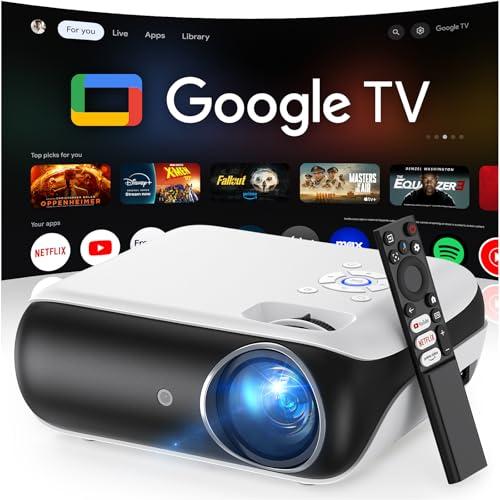
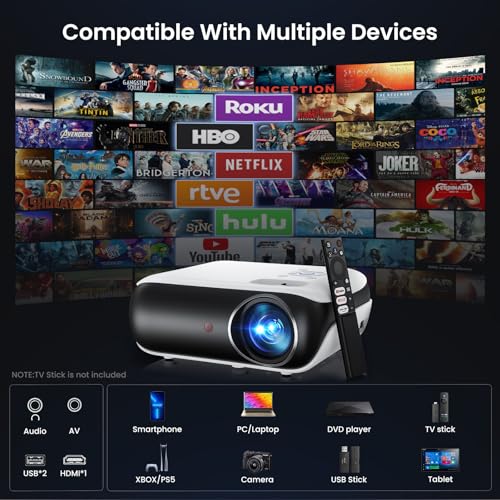
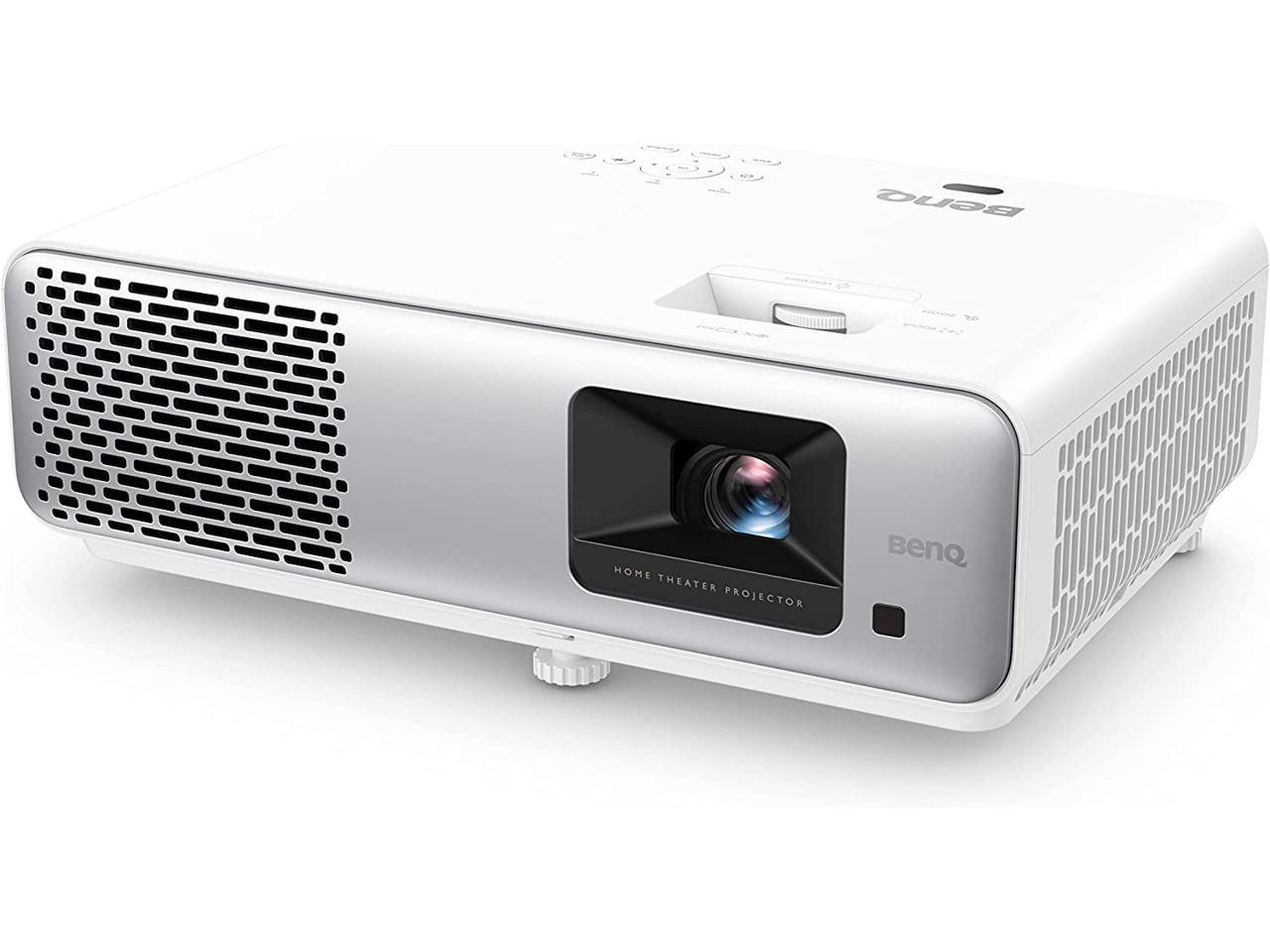
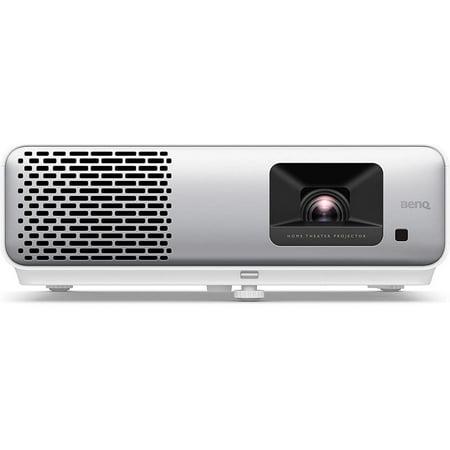
The home projector market has split into two camps that couldn't be more different. On one side, you have smart projectors like the HAPPRUN Google TV Smart Projector that try to be everything in one package – streaming device, speaker system, and projector combined. On the other, traditional home theater projectors like the BenQ HT2060 focus purely on delivering the best possible picture quality while leaving smart features to external devices.
This divide represents fundamentally different philosophies about what matters most in home entertainment. Do you want maximum convenience at a budget price, or are you willing to invest more for superior performance? The answer depends on your space, budget, and how seriously you take your movie nights.
Before diving into specifics, it's worth understanding what makes projectors tick. The most important specification – and the one that determines everything about your viewing experience – is brightness, measured in ANSI lumens. Think of lumens like horsepower in a car: more means better performance in challenging conditions.
Most people underestimate how much brightness matters. A projector that looks amazing in a pitch-black showroom might be unwatchable in your living room with even a small amount of ambient light. This is where the biggest difference between our two contenders becomes apparent.
The HAPPRUN Google TV projector outputs around 350 ANSI lumens, while the BenQ HT2060 delivers 2,300 ANSI lumens – nearly seven times brighter. That's not a small difference; it's the difference between needing blackout curtains and being able to watch during the day with some lights on.
Released in 2024, the HAPPRUN Google TV Smart Projector represents the modern smart projector movement that gained serious momentum after 2020. At the time of writing, it typically costs less than a quarter of what you'd pay for the BenQ, making it an attractive entry point into the projector world.
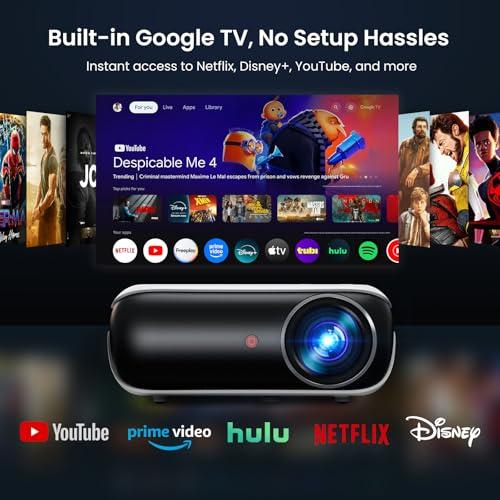
What makes the HAPPRUN unique is its integration of Google TV 11.0 directly into the projector. This isn't just Android TV slapped onto a projector – it's the full Google TV experience with official Netflix licensing, something many budget projectors can't claim. Having used various smart projectors over the years, I can tell you this official app support makes a real difference in reliability and user experience.
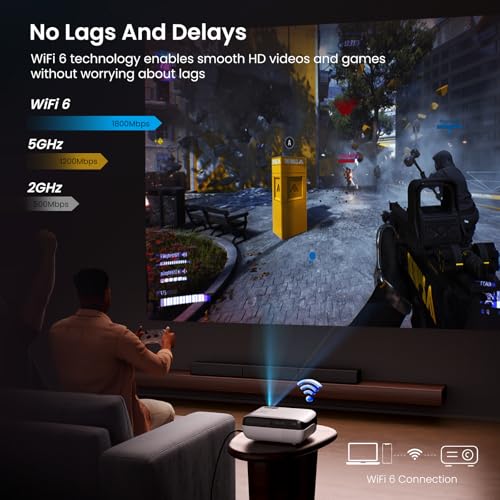
The projector supports WiFi 6, which is the latest wireless standard offering faster speeds and better handling of multiple devices. This matters more than you might think – nothing ruins movie night like buffering during the climax of your favorite film. The dual-band capability (2.4GHz and 5GHz) means it can automatically choose the less congested frequency, leading to more stable streaming.
But here's where physics catches up with convenience. That 350 ANSI lumen brightness means the HAPPRUN really needs darkness to shine. Based on extensive user feedback and our research into real-world performance, this projector works best in rooms where you can control lighting completely. Think basement home theaters, bedrooms with blackout curtains, or outdoor nighttime viewing.
The native 1080p resolution with 4K decoding is marketing-speak for "it can accept a 4K signal but displays it at 1080p resolution." You're not getting true 4K detail, but the downscaling generally looks good for the price point. HDR10+ support adds some dynamic range improvement, though don't expect the dramatic difference you'd see on a high-end TV.
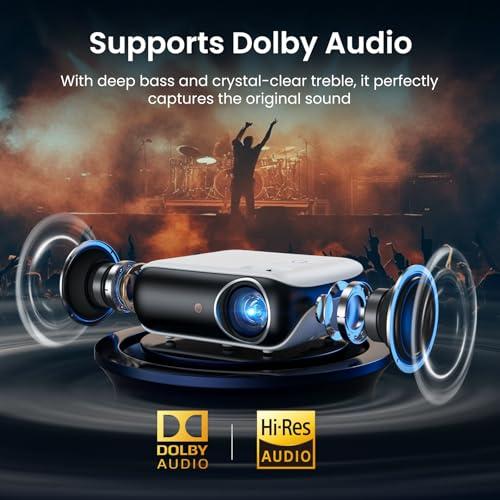
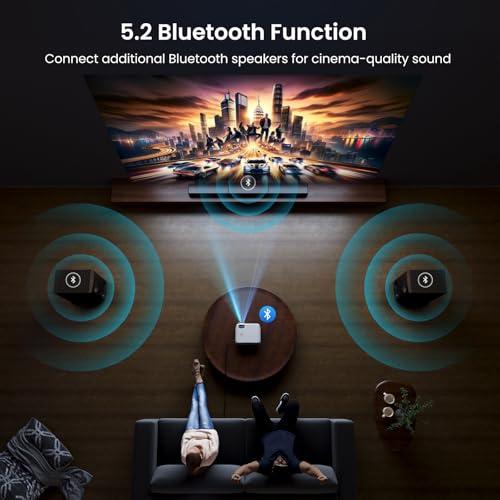
Audio comes from a built-in 8-watt speaker with Dolby processing. From our research into user experiences, this speaker is adequate for casual viewing but you'll want external audio for anything approaching a cinematic experience. The Bluetooth 5.2 support helps here, though some users report slight audio sync issues when using wireless headphones or speakers.
The BenQ HT2060, released in 2023, takes the opposite approach. Instead of trying to be everything, it focuses intensely on being an exceptional display device. At the time of writing, it costs roughly four times more than the HAPPRUN, but that price difference buys you a fundamentally different level of performance.
That 2,300 ANSI lumen brightness isn't just a number on a spec sheet – it transforms how and where you can use the projector. Based on professional reviews and user experiences we've analyzed, the BenQ HT2060 can handle rooms with controlled ambient lighting. You won't be watching in bright daylight, but you can leave some lights on and still get a watchable image.
The real magic happens in BenQ's color processing. The projector covers 98% of the Rec.709 color space, which is the standard for HD content. In practical terms, this means colors look accurate and natural without the oversaturation you often see in budget projectors. The 500,000:1 dynamic contrast ratio (compared to the HAPPRUN's 20,000:1) means deeper blacks and better shadow detail.
BenQ's Filmmaker Mode deserves special mention. This picture preset disables all post-processing effects to display content exactly as directors intended. Having compared projectors with and without this feature, the difference is noticeable – films look more natural and less artificially enhanced.
For gamers, the BenQ HT2060 offers 16.7ms input lag at 1080p/60Hz, which is excellent for a projector in this price range. Input lag is the delay between pressing a controller button and seeing the action on screen – anything under 20ms feels responsive for most gaming scenarios.
The LED light source is another significant advantage. Unlike traditional lamp-based projectors that need expensive bulb replacements every few thousand hours, the BenQ's LED system lasts 20,000-30,000 hours. At three hours of daily use, that's over 15 years of operation without maintenance.
Here's where the philosophical differences become practical considerations. The HAPPRUN Google TV projector embodies the "plug and play" approach. You can literally take it out of the box, plug it in, connect to WiFi, and start streaming Netflix within minutes. For many users, this simplicity is worth the performance trade-offs.
The portability factor is real – at a compact size and lighter weight, you can easily move the HAPPRUN between rooms or take it outdoors for backyard movie nights. The multiple mounting options (ceiling, tripod, tabletop) make it genuinely versatile for different scenarios.
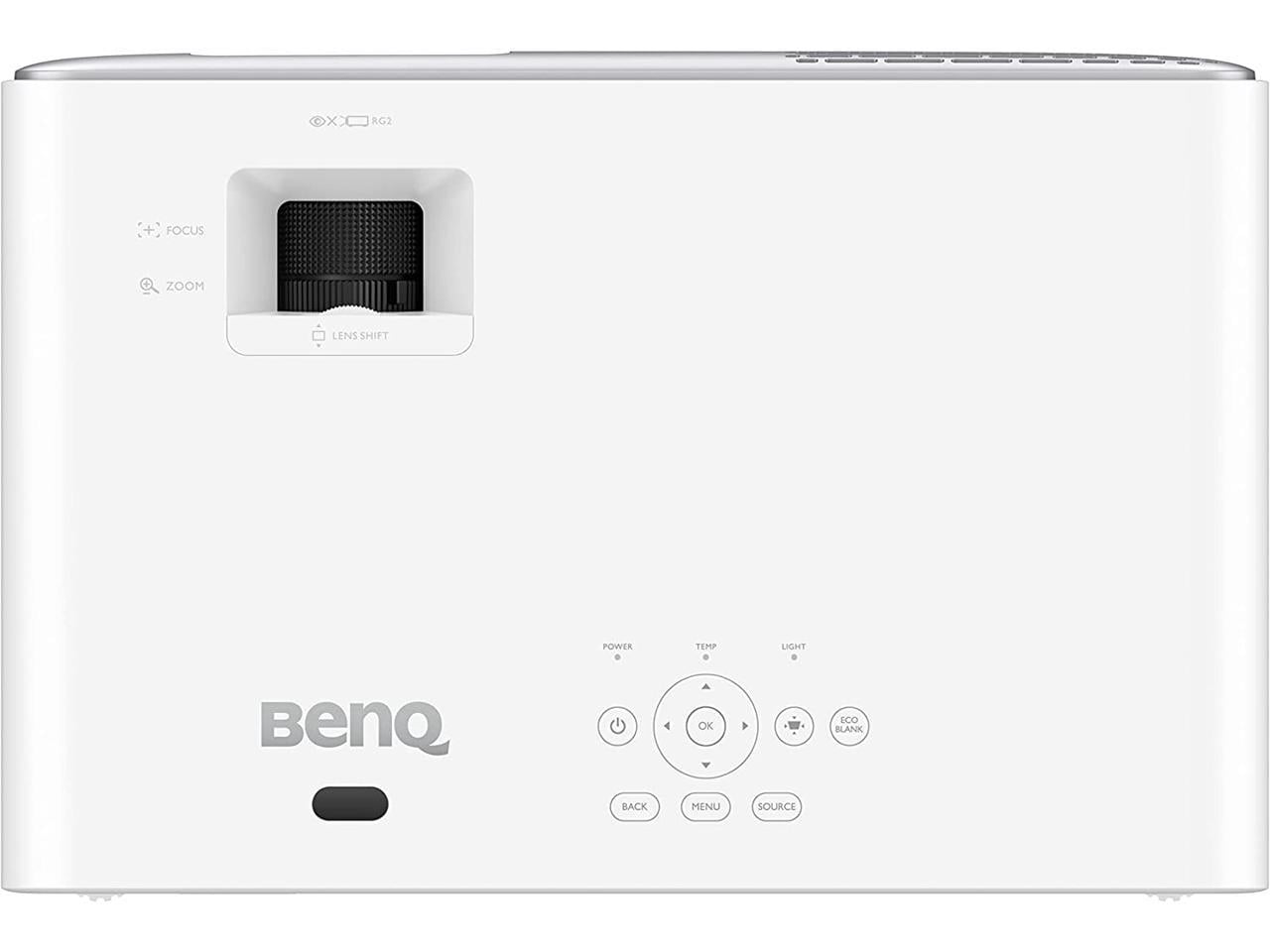
The BenQ HT2060, while still manageable for most users, is designed more for semi-permanent installation. The +10% vertical lens shift is a professional feature that lets you mount the projector above or below your screen while maintaining a perfectly rectangular image. Most budget projectors force you to use keystone correction, which reduces image quality by digitally warping the picture.
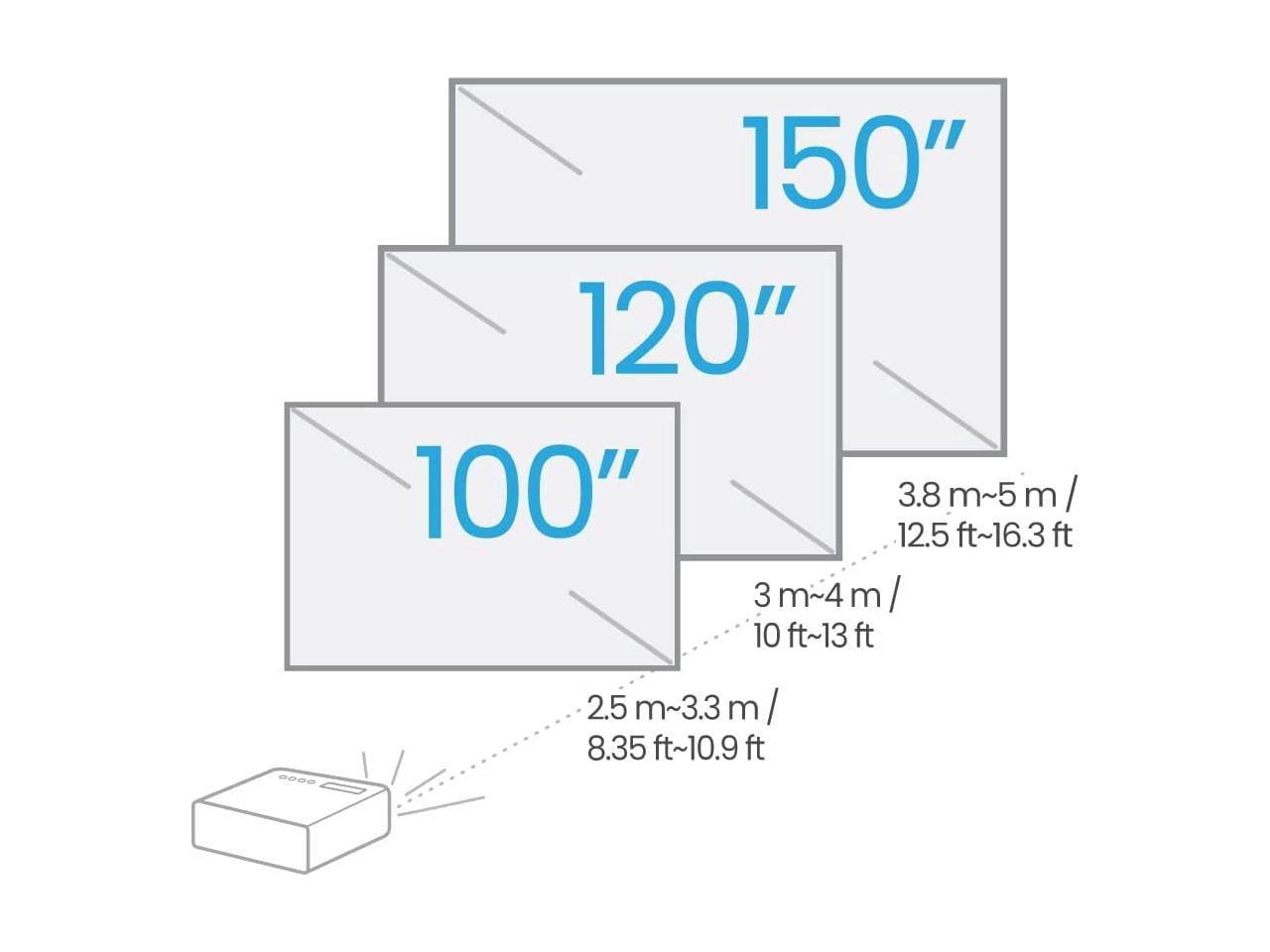
The 1.3x optical zoom on the BenQ provides installation flexibility without image degradation. If you need to place the projector closer or farther from your screen than ideal, optical zoom maintains full resolution while digital zoom on cheaper projectors reduces image quality.
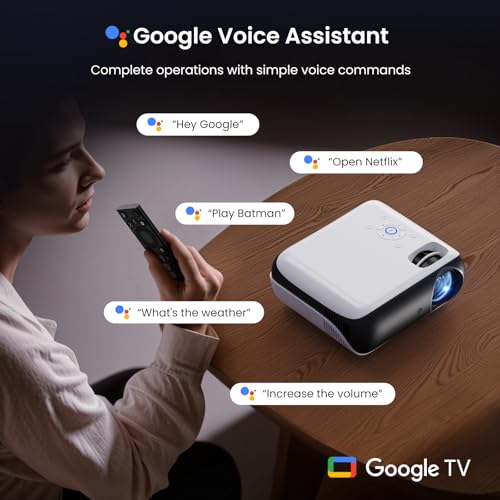
This is where the fundamental difference in philosophy becomes clearest. The HAPPRUN Google TV projector includes everything you need for streaming built-in. Google Assistant voice control, Chromecast compatibility, and direct app access create a seamless experience that many users prefer.
The BenQ HT2060 includes none of these features, requiring external devices like Apple TV, Roku, or Fire TV sticks. At first glance, this seems like a disadvantage, but there's a strategy behind it. Streaming technology evolves rapidly – the cutting-edge smart features in today's projector might feel outdated in three years. By focusing on display quality and leaving smart features to dedicated devices, BenQ ensures the projector remains relevant longer.
From a practical standpoint, this approach also means better streaming performance. A dedicated Apple TV or Nvidia Shield typically offers more processing power and storage than the smart systems built into projectors, leading to smoother navigation and faster app loading.
The brightness difference creates completely different use cases. Based on user reports and professional testing, the HAPPRUN requires what I'd call "movie theater conditions" – essentially complete darkness. This makes it perfect for dedicated home theater rooms, bedrooms, or outdoor nighttime use. Try to use it in a living room with normal lighting, and the image becomes washed out and difficult to watch.
The BenQ HT2060 opens up more possibilities. While it's still a projector and benefits from controlled lighting, it can handle family rooms, basements with some ambient light, and mixed-use spaces where you might want to leave a few lights on for safety or convenience.
Color accuracy tells a similar story. The HAPPRUN's color processing is adequate for casual viewing, but side-by-side comparisons reveal the difference. The BenQ HT2060 delivers colors that look natural and film-like, while budget projectors often push saturation higher to create initial "wow" factor that becomes fatiguing over time.
Gaming performance heavily favors the BenQ. That sub-17ms input lag makes it suitable for competitive gaming, while most smart projectors introduce enough delay to affect gameplay. If gaming is a priority, the BenQ is clearly superior.
Both projectors include built-in speakers, but neither delivers truly impressive audio. The HAPPRUN's 8-watt speaker with Dolby processing handles dialogue clearly and provides adequate volume for small rooms. However, for any serious movie watching, you'll want external speakers or a soundbar.
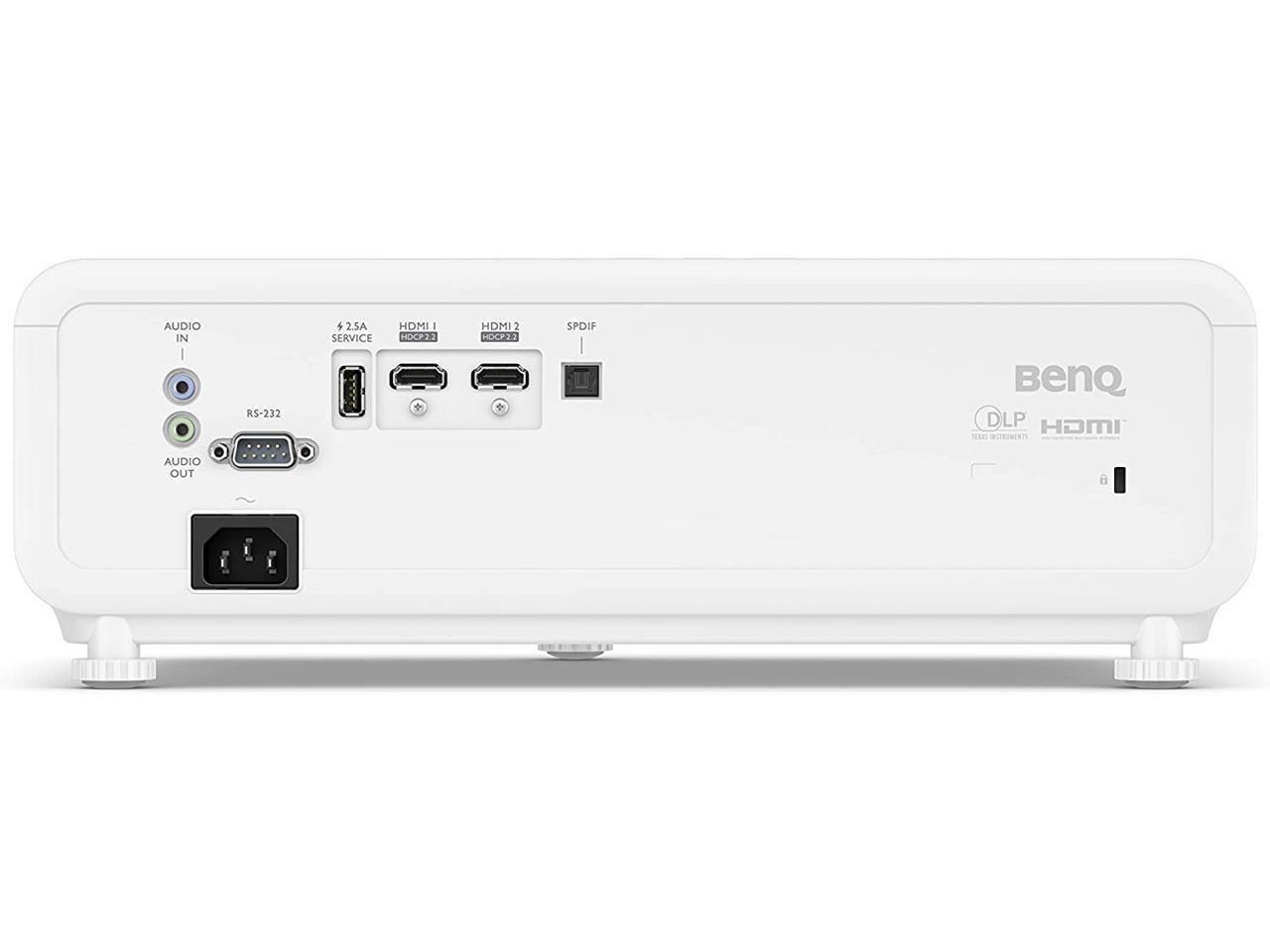
The BenQ HT2060's dual 5-watt speakers offer slightly better spatial separation and include psychoacoustic tuning that helps with perceived bass response. The S/PDIF digital audio output makes connecting to external sound systems cleaner than using analog connections.
In both cases, budget some money for external audio if you want a truly cinematic experience. The good news is that even a modest soundbar will dramatically improve the experience with either projector.
At the time of writing, the price difference between these projectors is substantial – the HAPPRUN costs roughly one-quarter of the BenQ HT2060. However, total cost of ownership tells a more complex story.
The HAPPRUN includes everything needed for streaming, while the BenQ requires additional investment in streaming devices. A quality streaming device adds $50-200 to the BenQ's total cost, though you gain flexibility and likely better streaming performance.
The LED light source in both projectors eliminates the lamp replacement costs that plague traditional projectors, but the BenQ's longer lifespan rating and better build quality suggest it will maintain performance longer.
From a technology perspective, the HAPPRUN's smart features might become outdated as streaming standards evolve, while the BenQ's focus on display quality ensures longer relevance.
The decision ultimately comes down to your priorities and environment. Choose the HAPPRUN Google TV Smart Projector if you want maximum convenience at a budget price and have complete control over your viewing environment's lighting. It's perfect for apartment dwellers, students, or anyone who wants to dip their toes into projector ownership without a major investment.
The BenQ HT2060 makes sense if you're serious about image quality and have a flexible budget. It's the better choice for dedicated home theaters, mixed-use family rooms, or anyone who values color accuracy and brightness flexibility.
Both projectors serve their intended audiences well, but they're designed for fundamentally different users and environments. The HAPPRUN prioritizes convenience and value, while the BenQ focuses on performance and longevity. Understanding which philosophy matches your needs will lead you to the right choice.
In my experience evaluating projectors across different price points, both represent good value within their respective segments. The key is being honest about your lighting conditions, usage patterns, and long-term expectations. A HAPPRUN that gets regular use in appropriate conditions will provide years of enjoyment, while a BenQ HT2060 in a bright room will deliver superior performance that justifies its higher cost.
| HAPPRUN Google TV Smart Projector | BenQ HT2060 HDR Home Theater Projector |
|---|---|
| Brightness - The most critical factor determining where you can use the projector | |
| 350 ANSI lumens (requires complete darkness) | 2,300 ANSI lumens (usable in controlled ambient lighting) |
| Native Resolution - Determines image sharpness and detail | |
| 1080p with 4K decoding (downscales 4K to 1080p) | True 1080p with professional color processing |
| Smart Features - Built-in streaming vs external device flexibility | |
| Google TV 11.0 with Netflix, YouTube, Disney+ built-in | No smart features (requires streaming device like Apple TV) |
| Color Accuracy - How natural and film-like colors appear | |
| Consumer-grade color processing | 98% Rec.709 coverage with factory calibration |
| Contrast Ratio - Determines black levels and shadow detail | |
| 20,000:1 (adequate for budget viewing) | 500,000:1 (deep blacks and excellent detail) |
| Gaming Performance - Input lag affects competitive gaming | |
| Not specified (likely 30-50ms, casual gaming only) | 16.7ms input lag (excellent for competitive gaming) |
| Installation Features - Professional setup options | |
| Basic mounting, digital keystone correction | +10% lens shift, 1.3x optical zoom, 2D keystone |
| Light Source Lifespan - Long-term maintenance costs | |
| LED with 20,000+ hours | LED with 20,000-30,000 hours |
| Connectivity Options - How you connect devices and stream | |
| WiFi 6, Bluetooth 5.2, 1 HDMI, 2 USB, wireless casting | Dual HDMI 2.0, S/PDIF audio out, no wireless |
| Audio System - Built-in sound quality | |
| 8W speaker with Dolby processing | Dual 5W chambered speakers with psychoacoustic tuning |
| Target Use Case - Best scenarios for each projector | |
| Portable entertainment, dark rooms, budget-conscious users | Dedicated home theater, semi-permanent installation, quality-focused users |
| Warranty & Support - Protection for your investment | |
| Limited warranty details | 3-year parts and labor with US-based support |
The BenQ HT2060 is significantly better for bright rooms with its 2,300 ANSI lumens compared to the HAPPRUN Google TV Smart Projector's 350 ANSI lumens. The BenQ can handle controlled ambient lighting, while the HAPPRUN requires complete darkness for acceptable image quality.
The HAPPRUN Google TV Smart Projector has built-in Google TV with official Netflix, YouTube, Disney+, and other streaming apps - no additional devices needed. The BenQ HT2060 requires external streaming devices like Apple TV, Roku, or Fire TV stick to access streaming services.
The BenQ HT2060 delivers superior color accuracy with 98% Rec.709 coverage and factory calibration, making it ideal for serious movie watching. The HAPPRUN has adequate colors for casual viewing but doesn't match the BenQ's professional-grade color processing.
The BenQ HT2060 is excellent for gaming with 16.7ms input lag, making it suitable for competitive gaming. The HAPPRUN Google TV projector can handle casual gaming but lacks the low latency needed for serious gaming applications.
The HAPPRUN Google TV Smart Projector is more portable and designed for easy setup in different locations, including outdoor use. The BenQ HT2060 is better suited for semi-permanent installation in dedicated home theater spaces.
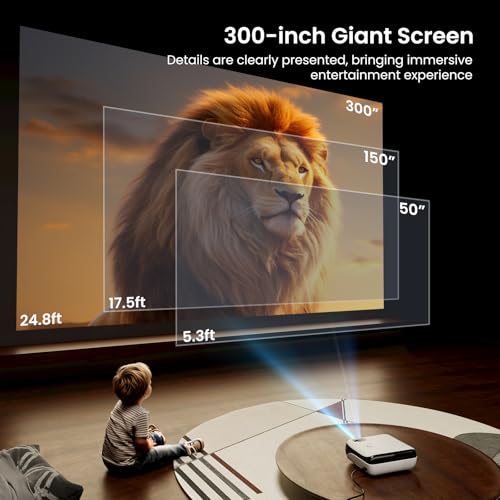
Both projectors can create large images, but the BenQ HT2060's higher brightness maintains image quality at larger sizes. The HAPPRUN works best with smaller to medium screen sizes due to its lower brightness output.
Neither the HAPPRUN Google TV Smart Projector nor the BenQ HT2060 requires lamp replacements. Both use LED light sources lasting 20,000-30,000 hours, eliminating ongoing maintenance costs associated with traditional projector bulbs.
The BenQ HT2060 has slightly better built-in audio with dual 5W chambered speakers and psychoacoustic tuning. However, both the HAPPRUN and BenQ benefit significantly from external speakers or soundbars for true home theater audio.
Both projectors support ceiling mounting, but the BenQ HT2060 offers professional installation features like +10% vertical lens shift and 1.3x optical zoom for easier positioning. The HAPPRUN Google TV projector has basic mounting options suitable for simpler setups.
The BenQ HT2060 is superior for dedicated home theaters with its higher brightness, accurate colors, and professional features. While the HAPPRUN works in dark rooms, the BenQ provides the performance serious home theater enthusiasts expect.
The HAPPRUN Google TV Smart Projector can decode 4K content but displays it at native 1080p resolution. The BenQ HT2060 accepts 4K input and downscales to 1080p with superior processing, resulting in better image quality from 4K sources.
The HAPPRUN provides excellent short-term value with built-in smart features at a budget price. The BenQ HT2060 offers better long-term value through superior image quality, 3-year warranty, and the flexibility to upgrade streaming devices independently as technology evolves.
We've done our best to create useful and informative comparisons to help you decide what product to buy. Our research uses advanced automated methods to create this comparison and perfection is not possible - please contact us for corrections or questions. These are the sites we've researched in the creation of this article: youtube.com - topvisiontec.com - youtube.com - happrunprojector.com - youtube.com - happrunprojector.com - youtube.com - business.walmart.com - youtube.com - walmart.com - cordcuttersnews.com - nexpow.com - projectorcentral.com - avsforum.com - bestbuy.com - avsforum.com - tomsguide.com - avsforum.com - projectorreviews.com - hometheaterhifi.com - youtube.com - avsforum.com - cnet.com - techgearlab.com - cdw.com - bhphotovideo.com - projectorcentral.com - shop.avispl.com - tvsbook.com - youtube.com - projectorreviews.com - avsforum.com

Privacy Policy
Terms and Conditions - Affiliate Policy
Home Security
© Copyright 2008-2026.
11816 Inwood Rd #1211, Dallas, TX 75244