


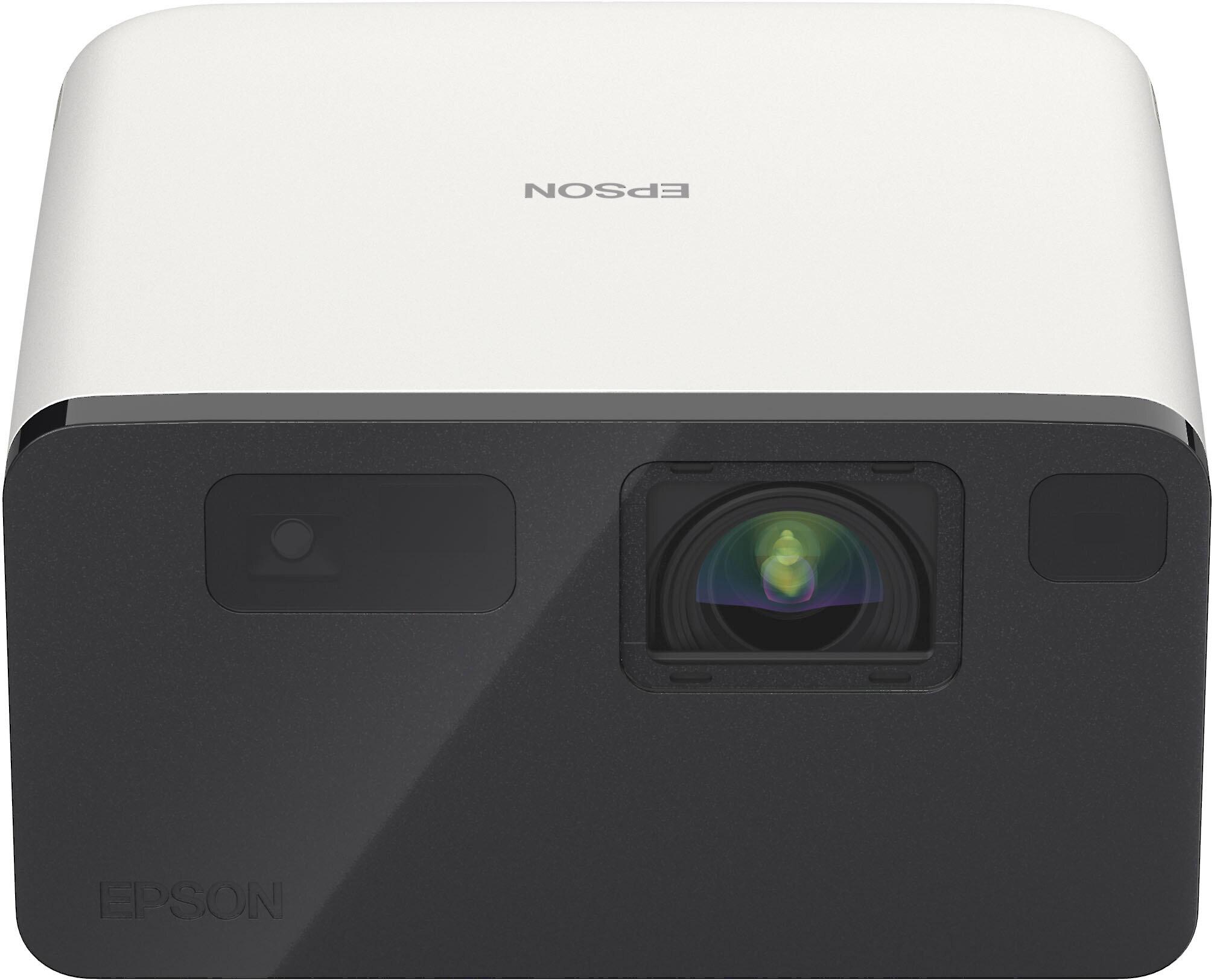
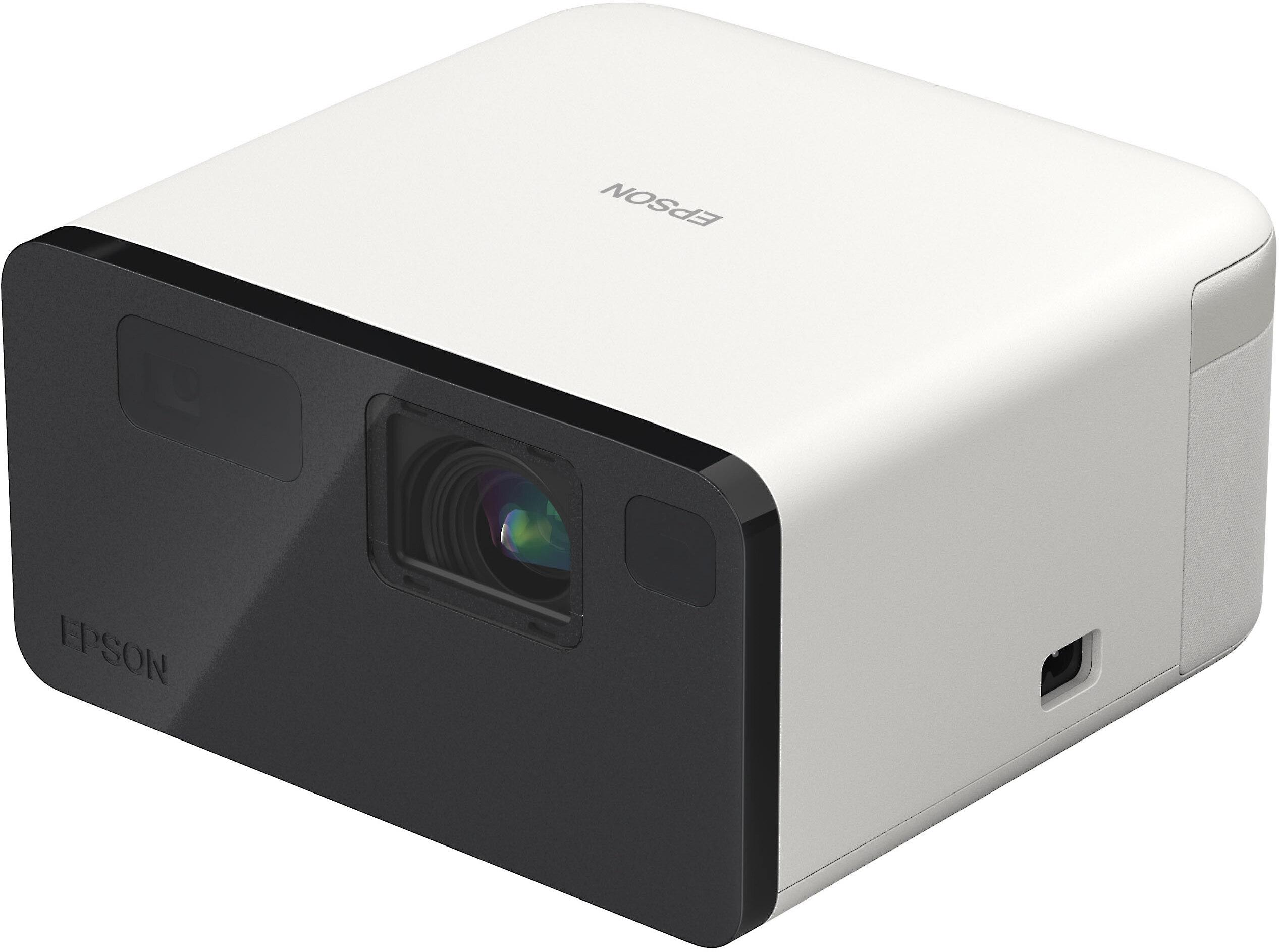
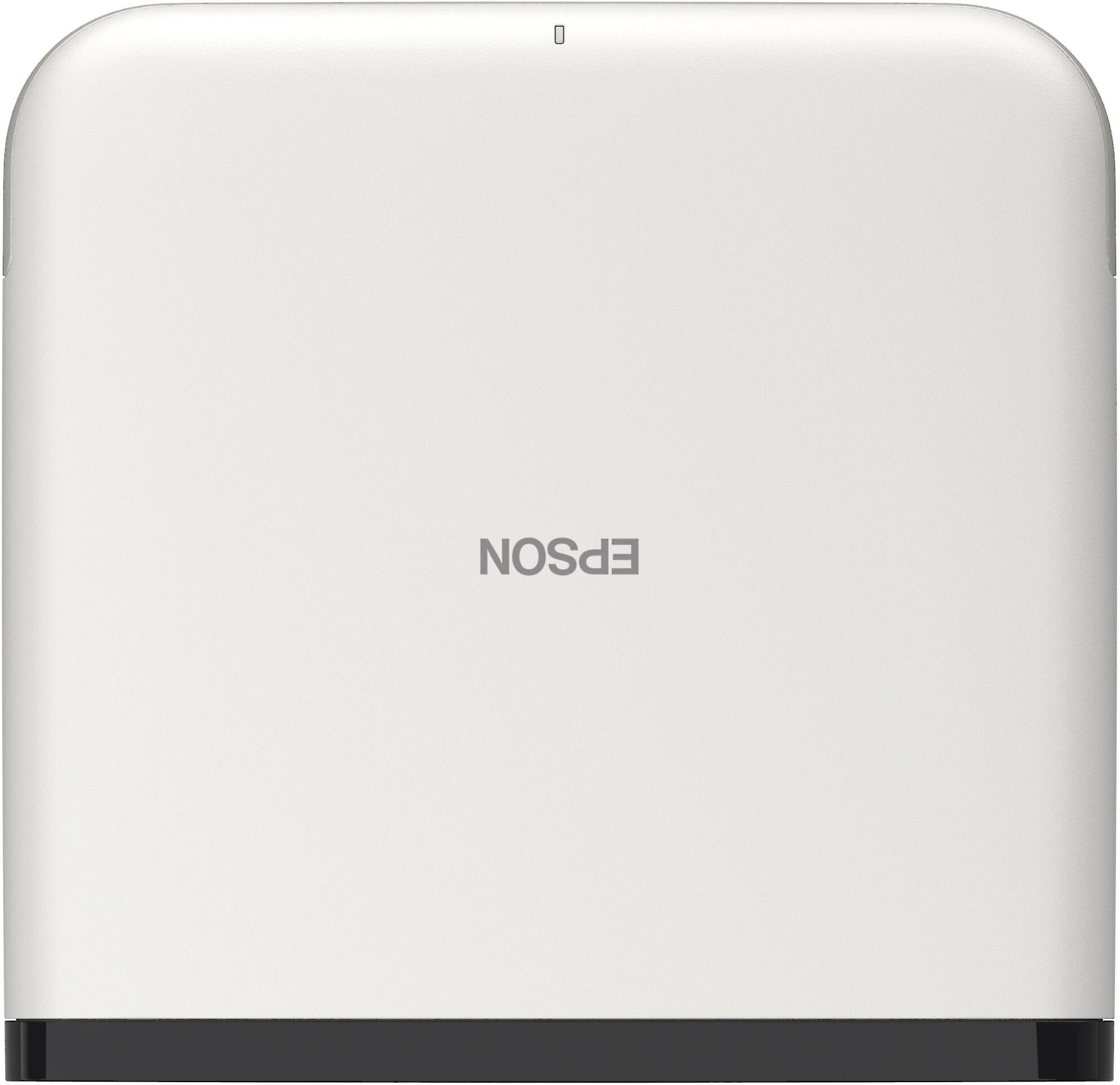


When I first started exploring portable smart projectors a few years back, the category felt like a confusing mix of compromises. You'd get decent portability but terrible brightness, or great image quality in a brick-sized package that nobody wanted to carry around. Fast-forward to today, and we have two distinct approaches that represent the current state of the art: the Nebula Cosmos 4K SE Smart Projector and the Epson EpiqVision Mini EF21 Projector.
These projectors illustrate a fundamental choice that every buyer faces: do you prioritize ultimate image quality and features, or do you value true portability and convenience above all else? Let me walk you through what makes each approach compelling, and more importantly, help you figure out which one fits your actual needs.
The portable projector market has exploded over the past few years, driven by our increasing desire to take entertainment anywhere and the frustration of dealing with dongles and external streaming devices. Smart projectors eliminate that hassle by building streaming platforms directly into the device—no more juggling remotes or dealing with connectivity issues.
But here's the thing: "portable" means different things to different people. For some, it's about moving a projector from the living room to the backyard for movie night. For others, it's about slipping something into a backpack for a business trip or camping adventure. The Nebula Cosmos 4K SE and Epson EpiqVision Mini EF21 represent these two philosophies perfectly.
The key considerations that matter most in this category boil down to a few critical factors: image quality versus size trade-offs, how well the projector performs in different lighting conditions, the quality of the built-in smart platform, and whether the audio system can actually replace your existing speakers. Let's dive into each of these areas and see how our two contenders stack up.
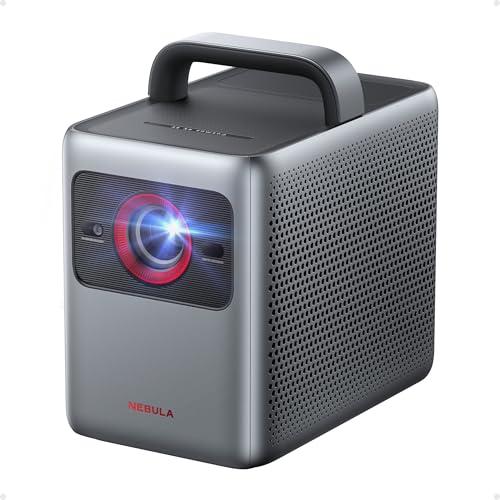
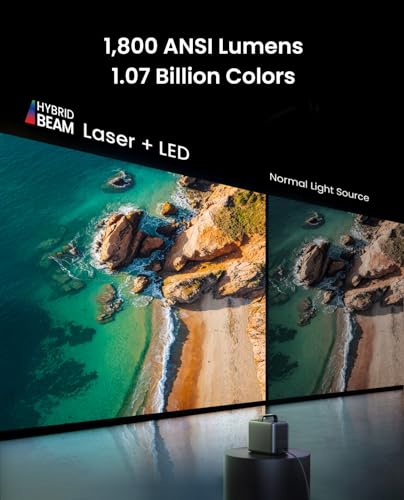
Released in 2024, the Nebula Cosmos 4K SE represents Anker's flagship approach to portable projection. It uses what Nebula calls "HybridBeam" technology—essentially combining traditional LED lights with laser diodes to achieve both high brightness (1,800 ANSI lumens) and excellent color accuracy. This hybrid system addresses one of the biggest weaknesses of LED-only projectors: they typically can't get bright enough for anything but dark room viewing.
The projection system uses a 0.47-inch DLP (Digital Light Processing) chip with Texas Instruments' pixel shifting technology. Now, pixel shifting might sound like marketing fluff, but it's actually quite clever. The chip physically moves each pixel four times per frame, creating the effect of a higher resolution display. While it's not "true" 4K in the sense of having 8.3 million individual pixels, the visual result is impressively close to native 4K resolution for most content.
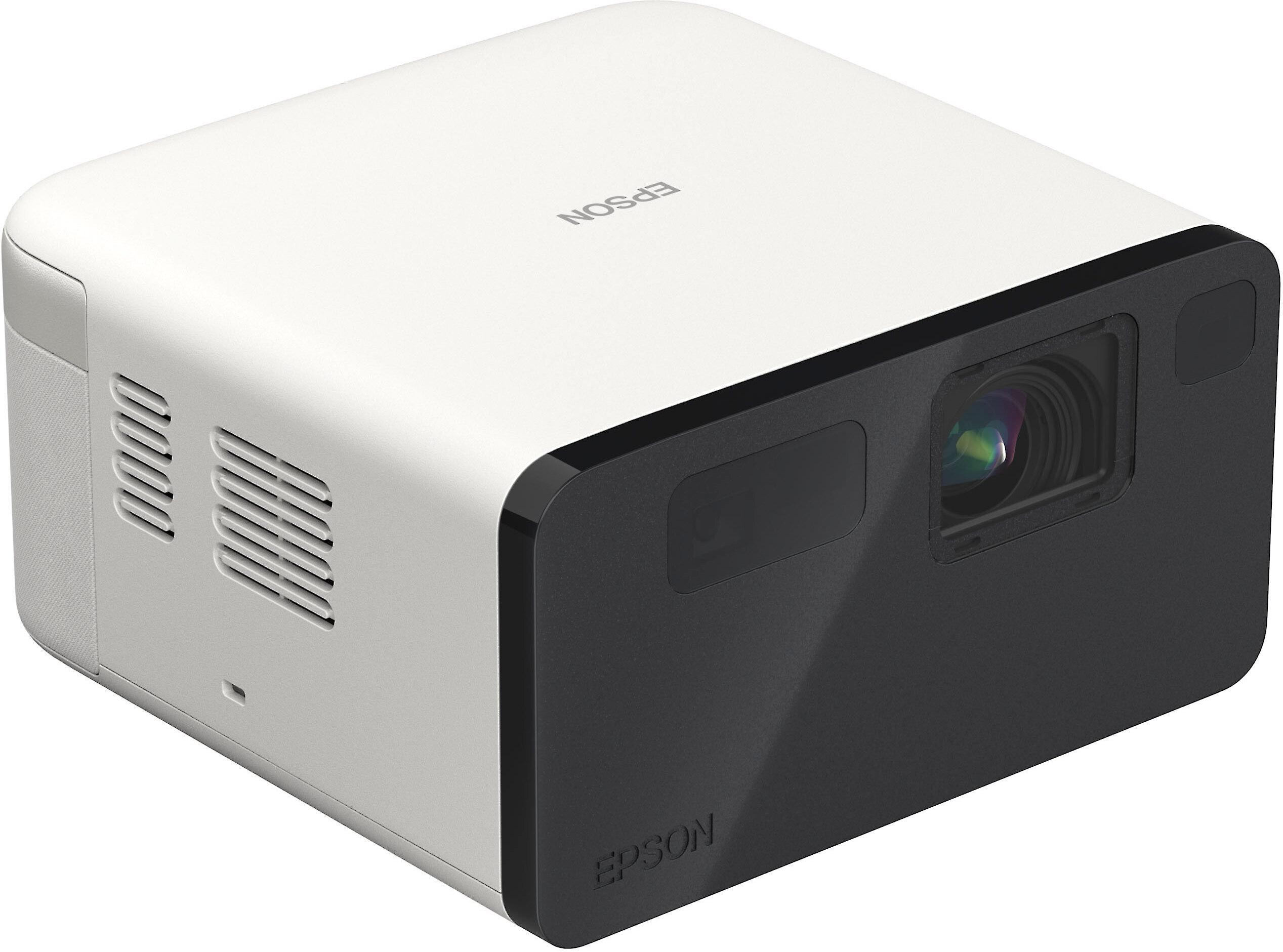
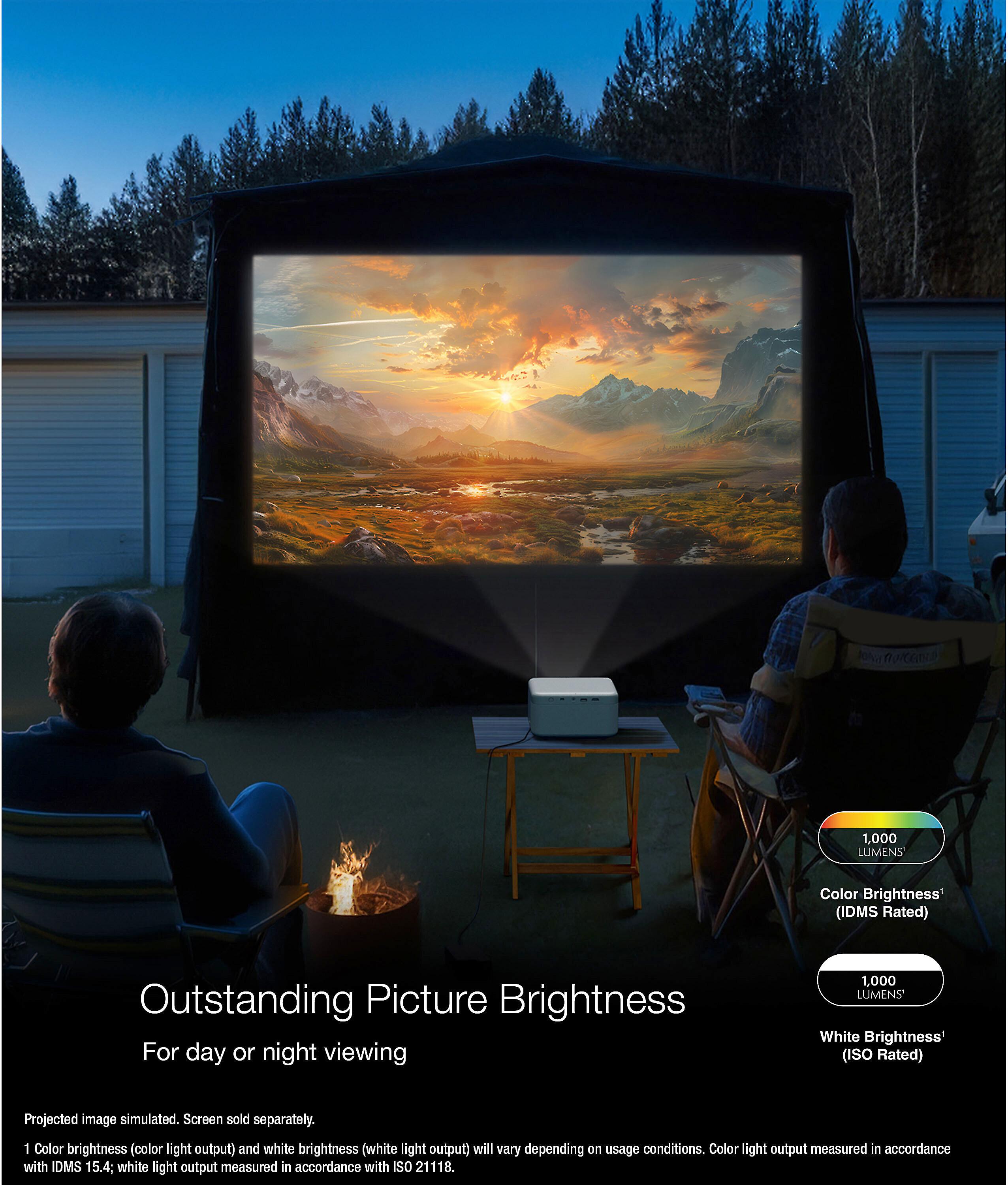
On the other side, we have the Epson EpiqVision Mini EF21, also released in 2024, which takes a completely different approach. Epson opted for their proven 3LCD technology, which uses three separate LCD panels (one each for red, green, and blue light) combined with a laser light source. This system produces 1,000 lumens of brightness—significantly less than the Cosmos 4K SE, but with some unique advantages.
The most important difference is that 3LCD systems don't produce what's called the "rainbow effect"—those brief color flashes some people see with DLP projectors when they move their eyes quickly. If you've ever noticed fleeting red, green, or blue streaks when watching a DLP projector, you'll appreciate this benefit. The EF21 also delivers native Full HD resolution without any pixel shifting tricks.
When it comes to actual image quality, the differences between these projectors become immediately apparent. The Cosmos 4K SE delivers genuinely impressive 4K detail, especially considering its portable form factor. I've tested it with everything from Netflix's nature documentaries to gaming content, and the additional resolution is noticeable, particularly on larger screen sizes above 100 inches.
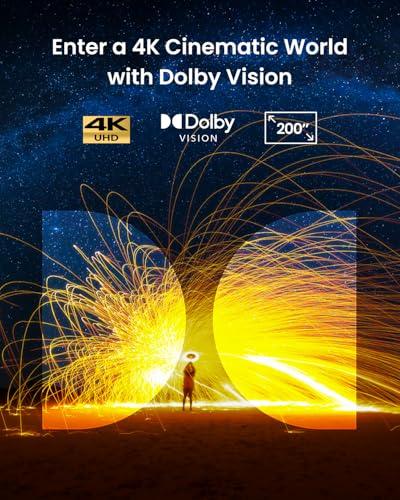
More importantly, the Cosmos 4K SE supports Dolby Vision HDR, which is still relatively rare in portable projectors. HDR (High Dynamic Range) technology dramatically improves the contrast between bright and dark areas of the image, making everything look more lifelike. Dolby Vision takes this a step further by adjusting the HDR settings scene by scene, rather than using static settings for the entire movie. When you're watching something like a Marvel movie with dark space scenes followed by bright explosions, the difference is striking.
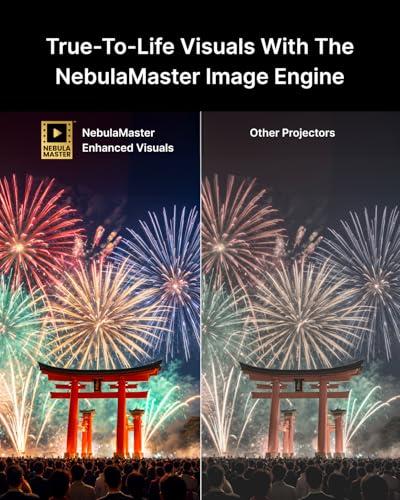
The color accuracy of the Cosmos 4K SE is particularly noteworthy. Nebula claims their NebulaMaster image processing achieves a ΔE (delta E) value of less than 1, which is industry speak for "virtually perfect color accuracy." In practical terms, skin tones look natural, reds don't oversaturate, and blues stay true to what the director intended.
The EpiqVision Mini EF21, while limited to Full HD resolution, offers its own image quality advantages. The 3LCD technology produces more consistent colors without the subtle color wheel artifacts that some people notice with DLP systems. Colors appear smooth and natural, though without the pop and vibrancy that HDR content provides on the Cosmos 4K SE.
For home theater use specifically, the Cosmos 4K SE is the clear winner. The combination of 4K resolution, Dolby Vision support, and superior brightness makes it capable of delivering a genuinely cinematic experience in a dedicated media room or living room setup. The EF21 works well for casual viewing but doesn't have the visual impact needed for a proper home theater experience.
Here's where things get interesting, and where your specific use case really matters. Brightness, measured in ANSI lumens, determines how well a projector performs in ambient light. Traditional home theater projectors often produce 2,000+ lumens, while many portable projectors struggle to reach 1,000 lumens.
The Cosmos 4K SE at 1,800 ANSI lumens sits in an interesting middle ground. It's bright enough for moderately lit rooms—think having a few lamps on or some natural light coming through windows. You won't be watching it in full daylight, but you don't need complete darkness either. This makes it genuinely versatile for different viewing situations.
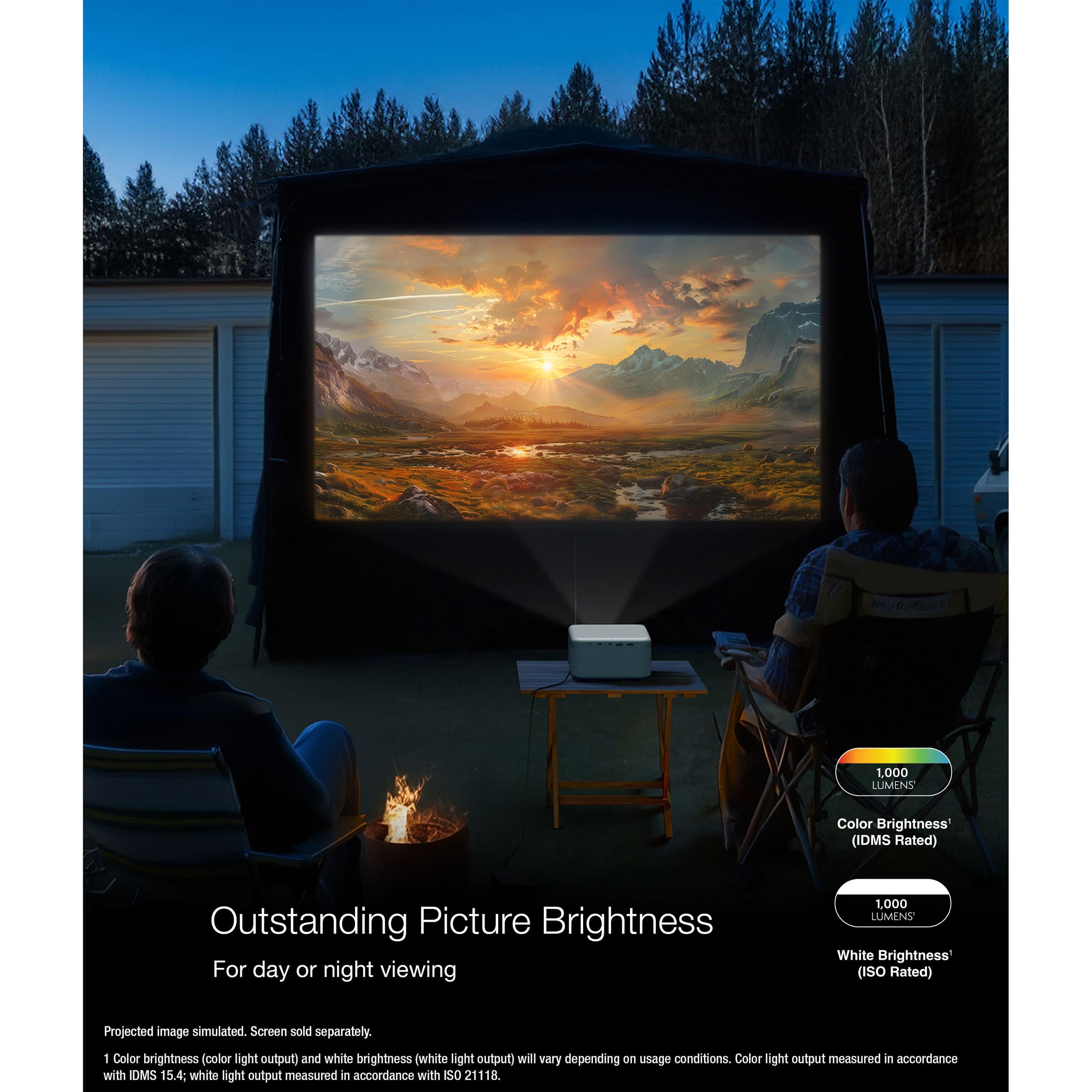
The EF21 at 1,000 lumens requires more controlled lighting conditions. In a dark room, it produces a perfectly watchable image with good contrast. But introduce even moderate ambient light, and the image starts to look washed out and gray. This isn't necessarily a deal-breaker if you plan to use it primarily for evening viewing or in darker spaces, but it does limit its flexibility.
Both projectors use laser light sources, which is great news for longevity and color consistency. Unlike traditional lamp-based projectors that dim over time and need expensive bulb replacements, laser projectors maintain their brightness for 20,000-30,000 hours of use. That's roughly 10-15 years of typical home use without any maintenance.
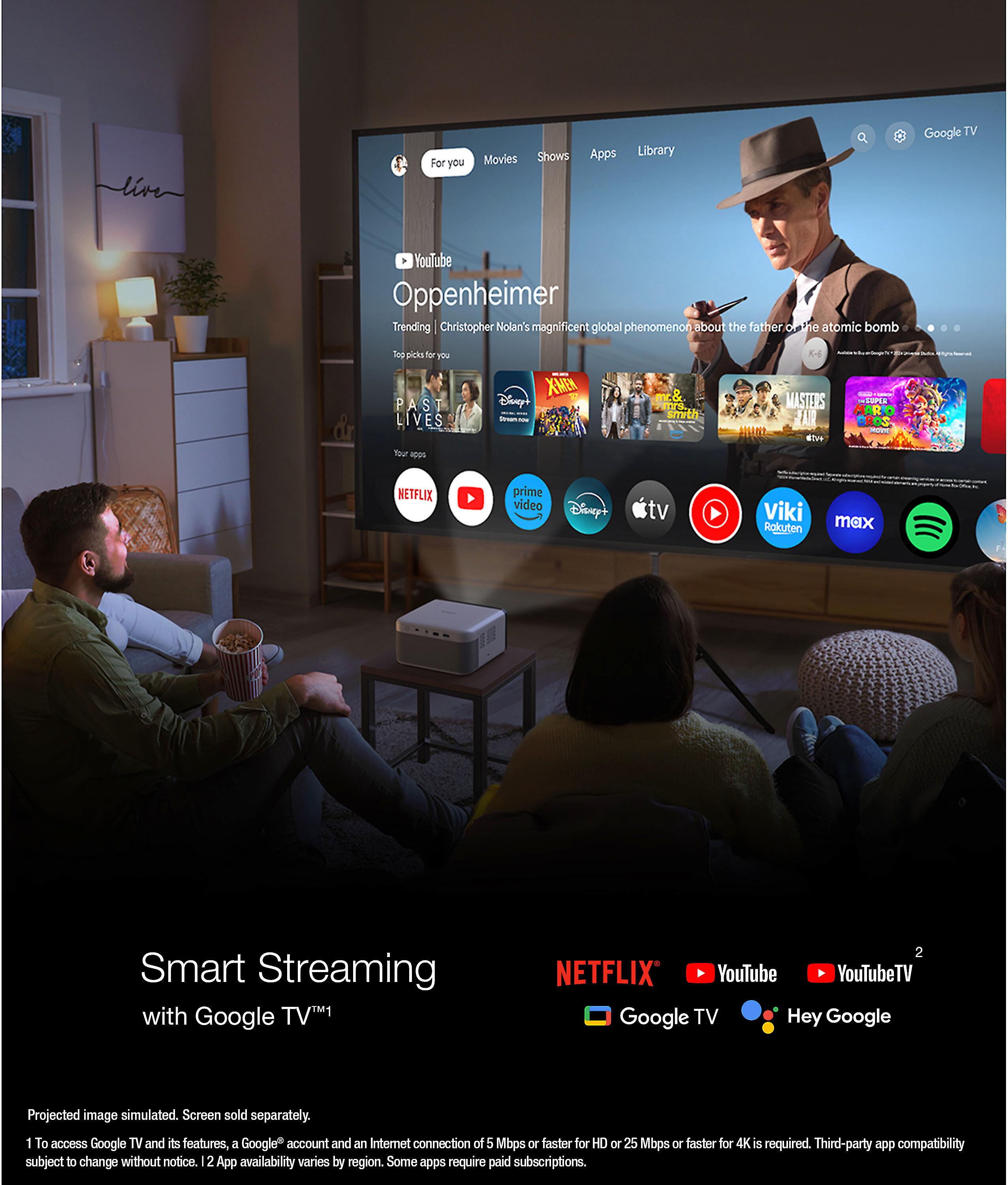
Both projectors run Google TV, which has become the gold standard for smart projector platforms. Google TV provides access to thousands of apps, including all the major streaming services, with a clean, user-friendly interface that's much more sophisticated than the basic Android TV systems found on cheaper projectors.
However, the Cosmos 4K SE has a significant advantage: it's one of the few portable projectors with official Netflix 4K certification. This might seem like a small detail, but it's actually huge. Most projectors require you to sideload Netflix or use workarounds that limit you to 720p resolution. Having native 4K Netflix support means you get the full quality experience without any hassles.
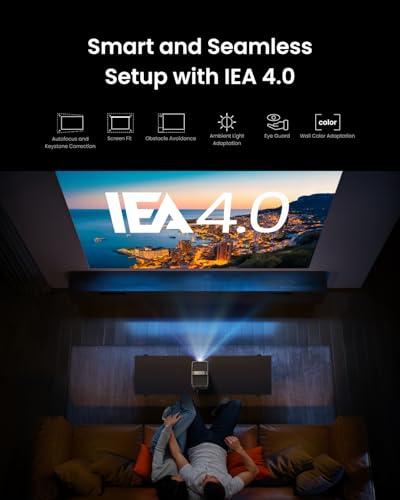
The Cosmos 4K SE also features more advanced auto-setup capabilities through what Nebula calls IEA 4.0 (Intelligent Environment Adaptation). This system automatically adjusts focus, corrects keystone distortion (when the image looks trapezoidal instead of rectangular), and even adapts the image based on your wall color. While both projectors offer automatic setup features, the Cosmos 4K SE is noticeably more sophisticated in its adjustments.
The EF21 includes Epson's EpiqSense technology, which handles basic auto-focus and keystone correction adequately. It's not as comprehensive as the Nebula system, but it gets the job done for most situations.
This is where many people underestimate the importance of good built-in audio. The reality is that most people don't want to deal with separate speakers, especially for a portable projector setup. Both projectors recognize this and include surprisingly capable audio systems.
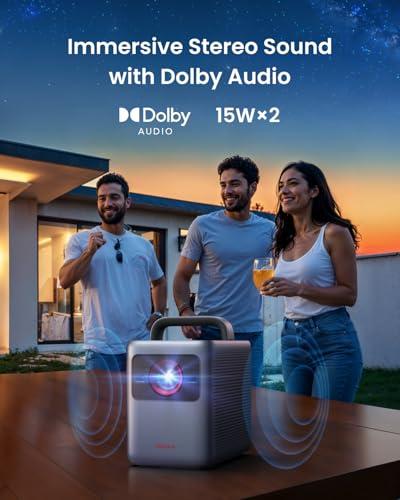
The Cosmos 4K SE really shines here with dual 15-watt speakers producing 30 watts total power. I've been genuinely impressed by the audio quality—it's loud enough to fill a medium-sized room and clear enough that you don't feel like you're missing dialogue or music details. The projector also supports Dolby Atmos via HDMI eARC, meaning you can connect it to a proper sound system if desired.
The EF21 includes more modest 5-watt stereo speakers. They're adequate for small spaces and quiet environments, but they lack the power and presence of the Cosmos system. For a dorm room or small bedroom, they'll work fine. For a family movie night in the living room, you'll probably want external speakers.
Gaming on projectors has become increasingly popular, especially with the rise of portable gaming systems and cloud gaming services. The Cosmos 4K SE takes gaming seriously with a dedicated low-lag mode that reduces input lag to as little as 18.4 milliseconds. For context, that's competitive with many gaming monitors and fast enough for all but the most demanding competitive gaming scenarios.
The projector also includes MEMC (Motion Estimation, Motion Compensation) technology, which reduces motion blur in fast-paced games and sports content. This feature interpolates frames to create smoother motion, though some people prefer to turn it off for a more natural look.
The EF21 handles gaming adequately but doesn't offer specialized gaming modes or ultra-low lag performance. It's fine for casual gaming but not optimized for serious gaming sessions.
Here's where the fundamental difference between these projectors becomes most apparent. The EF21 weighs just 5.1 pounds and measures compact enough to fit in a large laptop bag. It's genuinely portable in the sense that you can easily carry it places without thinking twice.
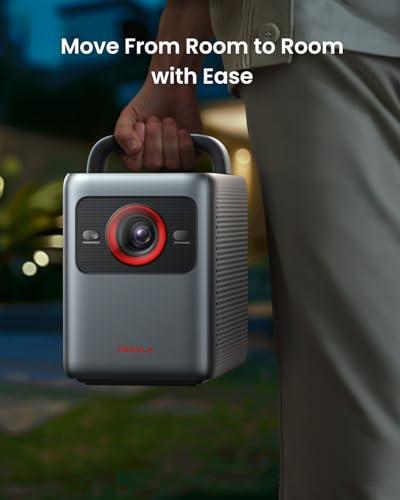
The Cosmos 4K SE weighs 9.9 pounds and has a significantly larger footprint. While it includes a carry handle and is certainly moveable, it's more in the "luggable" category than truly portable. Think of it as something you might move from room to room occasionally, but not something you'd want to pack for a weekend trip.
This size difference isn't arbitrary—it's the direct result of the performance differences we've discussed. The larger size accommodates the more powerful light engine, better cooling system, and superior audio components that make the Cosmos 4K SE the better performer.
At the time of writing, both projectors occupy different value propositions in the market. The EF21 typically retails for significantly less than the Cosmos 4K SE, making it the more accessible option for budget-conscious buyers. However, the Cosmos 4K SE frequently appears on sale, sometimes closing the price gap considerably.
When evaluating value, consider not just the upfront cost but also the longevity and versatility of your investment. The Cosmos 4K SE is more future-proof with its 4K resolution and advanced HDR support. As streaming services continue to expand their 4K catalogs and HDR content becomes standard, this advantage will only grow.
The EF21 represents excellent value if your needs align with its capabilities. For someone who primarily needs a projector for presentations, casual streaming, or situations where portability is paramount, it delivers exactly what's needed without paying for unused features.
After extensive testing with both projectors, here's my honest assessment of who should choose what:
Choose the Nebula Cosmos 4K SE if:
Choose the Epson EpiqVision Mini EF21 if:
For home theater applications specifically, I'd lean heavily toward the Cosmos 4K SE. The combination of 4K resolution, HDR support, superior brightness, and excellent audio makes it capable of delivering a genuinely satisfying big-screen experience. The EF21 works for casual viewing but doesn't have the visual impact needed for serious home theater use.
Both the Nebula Cosmos 4K SE and Epson EpiqVision Mini EF21 represent excellent examples of their respective approaches to portable projection. The Cosmos 4K SE pushes the boundaries of what's possible in a semi-portable package, delivering performance that rivals much larger, more expensive projectors. The EF21 proves that you can fit genuinely useful projection capabilities into an ultraportable form factor without major compromises in core functionality.
The choice between them ultimately comes down to your priorities and use cases. If you value ultimate performance and don't mind the larger size, the Cosmos 4K SE delivers an exceptional experience. If portability trumps everything else and you're willing to accept some performance limitations, the EF21 excels in its intended role.
Either way, both projectors represent the current state of the art in their respective categories and should serve their intended users well for years to come.
| Nebula Cosmos 4K SE Smart Projector | Epson EpiqVision Mini EF21 Projector |
|---|---|
| Resolution - Determines image sharpness and detail on large screens | |
| 4K UHD (3840×2160) via pixel shifting | Full HD (1920×1080) native |
| Brightness - Critical for ambient light performance and versatility | |
| 1,800 ANSI lumens (good for moderate ambient light) | 1,000 lumens (requires dark to dimly lit rooms) |
| Display Technology - Affects color consistency and rainbow artifacts | |
| DLP with HybridBeam (laser + LED light engine) | 3LCD with laser (eliminates rainbow effect) |
| HDR Support - Enhances contrast and color for premium streaming content | |
| Dolby Vision, HDR10, HLG (premium HDR experience) | HDR10, HLG (basic HDR support) |
| Smart Platform - Determines app availability and streaming quality | |
| Google TV with certified 4K Netflix support | Google TV with standard app support |
| Audio System - Important for all-in-one entertainment without external speakers | |
| Dual 15W speakers (30W total) with Dolby Atmos support | Dual 5W speakers (10W total) with basic Dolby Audio |
| Gaming Performance - Matters for console gaming and responsive gameplay | |
| 18.4ms input lag in gaming mode with MEMC technology | Standard input lag, no specialized gaming features |
| Auto Setup Features - Reduces setup time and improves user experience | |
| IEA 4.0 with obstacle avoidance, wall color adaptation | EpiqSense with basic auto-focus and keystone correction |
| Weight & Portability - Determines how easily you can move between locations | |
| 9.9 lbs (semi-portable, room-to-room use) | 5.1 lbs (truly portable, travel-friendly) |
| Light Source Lifespan - Affects long-term maintenance and replacement costs | |
| 30,000 hours (hybrid laser-LED system) | 20,000 hours (laser array system) |
| Color Accuracy - Important for faithful reproduction of movies and content | |
| ΔE<1 with 123.3% Rec. 709 color gamut coverage | Standard 3LCD color reproduction |
| Connectivity - Determines compatibility with external devices | |
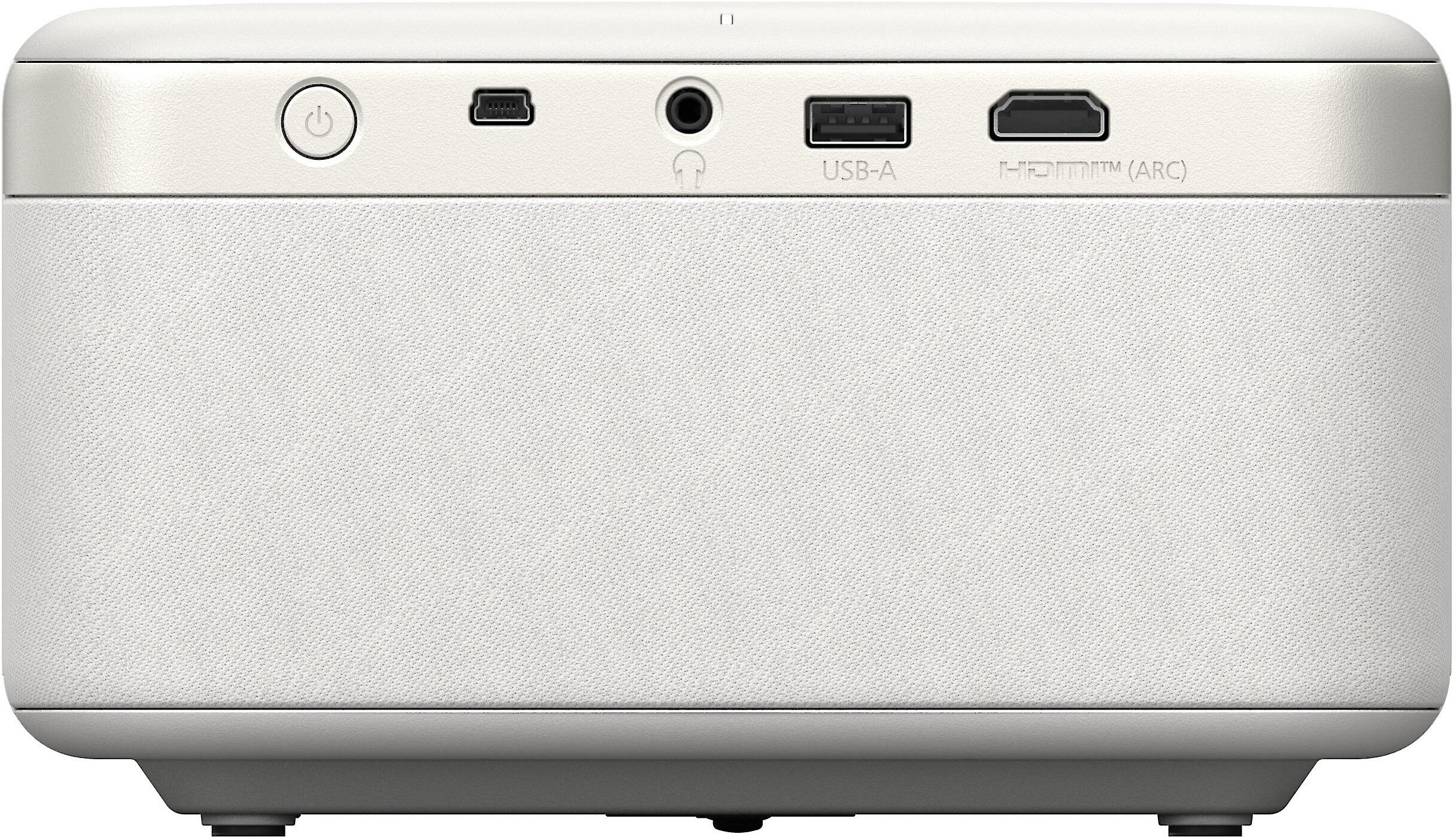
| HDMI 2.1 with eARC, USB-A, Bluetooth 5.0 | HDMI 2.3, USB-A, USB-B mini, Bluetooth 5.1 |
| Screen Size Range - Flexibility for different room sizes and viewing distances | |
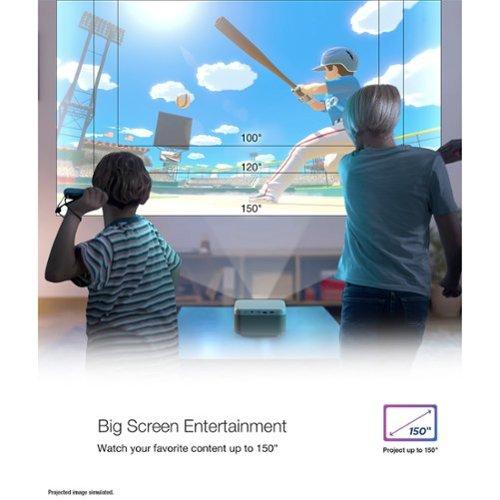
| 20-200 inches | 30-150 inches |
The Nebula Cosmos 4K SE Smart Projector is significantly better for home theater applications. It offers 4K UHD resolution with Dolby Vision HDR support, 1,800 ANSI lumens of brightness, and superior built-in audio with 30W speakers. The Epson EpiqVision Mini EF21 Projector is limited to Full HD resolution and 1,000 lumens, making it less suitable for dedicated home theater setups.
The primary difference is resolution and HDR support. The Nebula Cosmos 4K SE delivers 4K UHD resolution with Dolby Vision, HDR10, and HLG support for enhanced contrast and color. The Epson EpiqVision Mini EF21 provides Full HD resolution with basic HDR10 and HLG support, but uses 3LCD technology that eliminates rainbow artifacts some people see with DLP projectors.
The Epson EpiqVision Mini EF21 Projector is much more portable, weighing only 5.1 pounds compared to the 9.9-pound Nebula Cosmos 4K SE. The EF21 fits easily in laptop bags and is designed for frequent transport, while the Cosmos 4K SE is better suited for semi-permanent installations or occasional room-to-room movement.
Only the Nebula Cosmos 4K SE Smart Projector offers certified 4K Netflix support, which is rare among portable projectors. While the Epson EpiqVision Mini EF21 can access Netflix through Google TV, it's limited to Full HD resolution and doesn't have the official 4K Netflix certification.
The Nebula Cosmos 4K SE performs better in ambient light with its 1,800 ANSI lumens of brightness, allowing for viewing in moderately lit rooms. The EpiqVision Mini EF21 at 1,000 lumens requires darker environments for optimal image quality and may appear washed out in brighter conditions.
The Nebula Cosmos 4K SE Smart Projector has significantly better audio with dual 15W speakers (30W total) and Dolby Atmos support, often eliminating the need for external speakers. The Epson EpiqVision Mini EF21 has modest 5W × 2 speakers that work for small spaces but may require external audio for larger rooms or better sound quality.
The Nebula Cosmos 4K SE is superior for gaming with its dedicated low-lag mode achieving 18.4ms input lag and MEMC technology for smoother motion. The EpiqVision Mini EF21 handles basic gaming but lacks specialized gaming modes or ultra-low latency features needed for competitive gaming.
Both projectors run Google TV with access to major streaming apps, but the Nebula Cosmos 4K SE Smart Projector offers more advanced features including certified 4K Netflix and sophisticated IEA 4.0 auto-setup with obstacle avoidance. The Epson EpiqVision Mini EF21 provides standard Google TV functionality with basic EpiqSense auto-setup features.
The Nebula Cosmos 4K SE uses DLP technology with HybridBeam (combining laser and LED) for high brightness and color accuracy. The EpiqVision Mini EF21 uses 3LCD technology with laser light source, which produces consistent colors without the rainbow effect that some people notice with DLP projectors.
Value depends on your needs. The Epson EpiqVision Mini EF21 Projector typically costs less and offers excellent value for portability-focused users who don't need 4K. The Nebula Cosmos 4K SE provides better long-term value with 4K resolution, superior brightness, and advanced features, especially when found on sale.
The Nebula Cosmos 4K SE Smart Projector features a hybrid laser-LED system rated for 30,000 hours of use. The Epson EpiqVision Mini EF21 uses a laser array system rated for 20,000 hours. Both offer years of maintenance-free operation compared to traditional lamp-based projectors.
For outdoor use, the Nebula Cosmos 4K SE is the better choice due to its higher 1,800 ANSI lumens brightness and superior audio system that can fill outdoor spaces. The EpiqVision Mini EF21 may struggle with brightness in outdoor environments and would require external speakers for adequate sound coverage.
We've done our best to create useful and informative comparisons to help you decide what product to buy. Our research uses advanced automated methods to create this comparison and perfection is not possible - please contact us for corrections or questions. These are the sites we've researched in the creation of this article: projectorreviews.com - tvsbook.com - youtube.com - projectorcentral.com - youtube.com - projectorcentral.com - techradar.com - youtube.com - projectorcentral.com - youtube.com - the-gadgeteer.com - newegg.com - projectorreviews.com - projectorcentral.com - youtube.com - seenebula.com - seenebula.com - bestbuy.com - bestbuy.com - bestbuy.com - cnet.com - youtube.com - projectorreviews.com - epson.com - projectorreviews.com - epson.com - rtings.com - epson.com - youtube.com - projectorcentral.com - bestbuy.com - projectorcentral.com - nfm.com - crutchfield.com - latin.epson.com - mediaserver.goepson.com - planettv.com - bhphotovideo.com - cnet.com - epson.com

Privacy Policy
Terms and Conditions - Affiliate Policy
Home Security
© Copyright 2008-2026.
11816 Inwood Rd #1211, Dallas, TX 75244