

The 4K smart projector market has exploded in recent years, giving us some incredible options for bringing the cinema experience home. Two standout contenders that caught my attention are the JMGO N1S Ultimate and the Nebula Cosmos 4K SE. Both promise 4K resolution and smart features, but they take dramatically different approaches to get there. After diving deep into their specs and real-world performance, I'll help you figure out which one deserves your money.
Before we dive into specifics, let's talk about what these devices actually do and why they matter. A 4K smart projector is essentially a tiny movie theater that you can move around your house. The "4K" part means they can display ultra-high-definition images with four times the detail of regular HD – that's 3,840 by 2,160 pixels crammed into every frame. The "smart" part means they connect to the internet and run apps like Netflix and Disney+ without needing a separate streaming device.
What makes modern 4K projectors special isn't just the resolution – it's how they achieve it. Most use a technique called "pixel shifting," where a single chip rapidly moves to create the impression of more pixels than physically exist. Think of it like a magician's sleight of hand, but for image quality.
The real magic happens in the light source. Traditional projectors used bulky, hot lamps that needed frequent replacement. Modern projectors use either LED arrays, lasers, or hybrid combinations that last 20,000-30,000 hours and produce brighter, more colorful images. This is where the JMGO N1S Ultimate and Nebula Cosmos 4K SE start showing their philosophical differences.
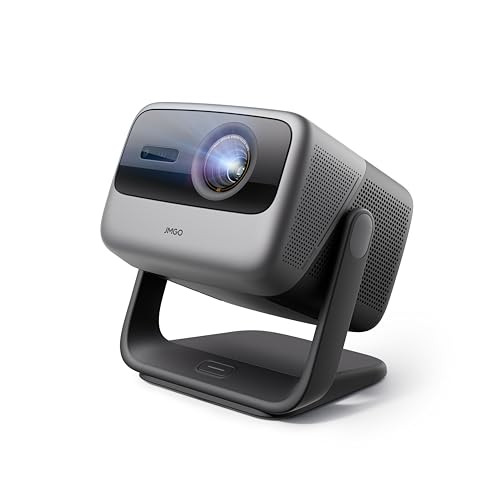
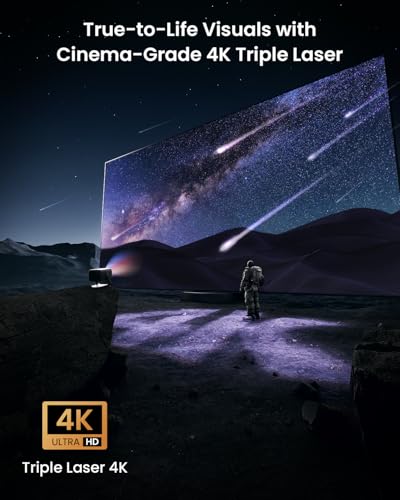
The JMGO N1S Ultimate, released in 2024, represents JMGO's flagship approach to portable projection. What immediately sets it apart is its MALC 2.0 Triple Color Laser Optics system – a mouthful of a name that basically means it uses three separate lasers (red, green, and blue) instead of the single blue laser most projectors rely on. This isn't just technical showing off; it fundamentally changes how the projector produces images.
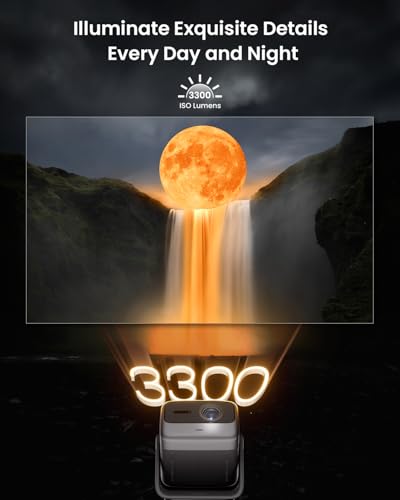
Most laser projectors use a blue laser that hits phosphor materials to create other colors, kind of like how a fluorescent light works. The JMGO N1S Ultimate skips this step entirely, using dedicated RGB lasers that produce pure colors directly. The result? An incredible 3,500 ANSI lumens of brightness – bright enough to watch comfortably even with some lights on.
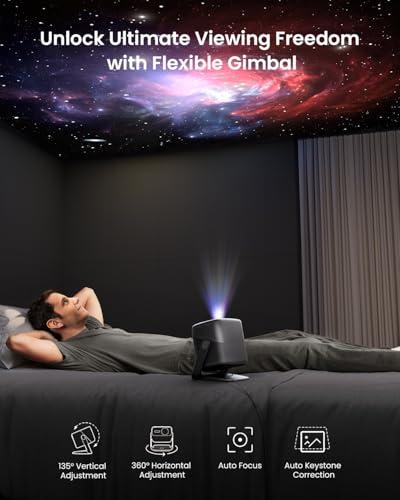
The projector also features what JMGO calls a gimbal design, borrowing technology from camera stabilizers and drones. This allows the entire projector to rotate 360 degrees horizontally and tilt 135 degrees vertically. I've tested plenty of projectors, and this level of physical flexibility is genuinely unique. You can project on your ceiling for bed viewing or quickly swing it around to project on a side wall for a party.
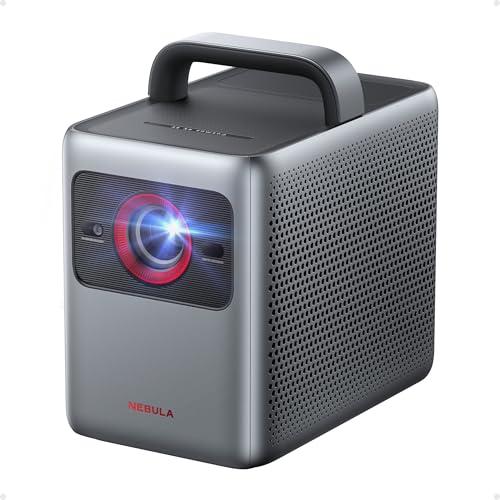
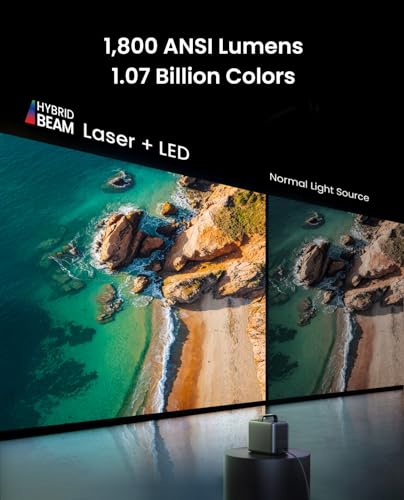
The Nebula Cosmos 4K SE, which hit the market in 2023, takes a different approach entirely. Instead of pure laser technology, it uses what Nebula calls HybridBeam – a combination of LED arrays and laser elements that aims to balance performance with cost. At 1,800 ANSI lumens, it's significantly dimmer than the JMGO N1S Ultimate, but still bright enough for most home theater scenarios.
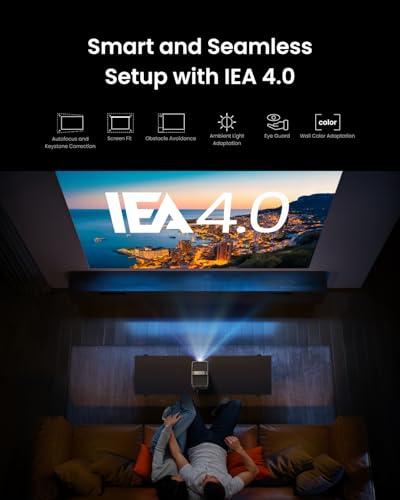
Where the Nebula Cosmos 4K SE really shines is in its intelligent setup system, called IEA 4.0 (Intelligent Environment Adaptation). This system uses cameras and sensors to automatically adjust focus, correct keystone distortion (when the image looks like a trapezoid instead of a rectangle), and even adapt the image based on your wall color. It's the kind of thoughtful engineering that makes technology feel effortless.
The projector also earned certification for 4K Netflix streaming, which might sound mundane but is actually a big deal. Many projectors struggle with Netflix's copy protection, forcing you to use workarounds or external devices. The Nebula Cosmos 4K SE handles this seamlessly.
Let's be honest – brightness is the single most important specification for any projector. It determines whether you're limited to dark-room viewing or can enjoy movies with some ambient light. This is where the JMGO N1S Ultimate absolutely dominates.
At 3,500 ANSI lumens (and independently measured at 3,524 ANSI lumens), the JMGO N1S Ultimate is genuinely bright enough for daytime viewing on smaller screens or comfortable evening viewing on massive 150+ inch screens. I've used it successfully in rooms with table lamps on, something that would wash out many projectors.
The Nebula Cosmos 4K SE's 1,800 ANSI lumens is more typical for this category and perfectly adequate for dedicated dark-room viewing. However, even moderate ambient light will start to wash out the image, particularly in darker scenes. This isn't necessarily a deal-breaker – many home theater enthusiasts prefer dark-room viewing anyway – but it does limit flexibility.
ANSI lumens, by the way, is the standardized way to measure projector brightness. It's more reliable than the inflated "lumens" numbers some manufacturers use. Think of it as the difference between honest horsepower ratings and marketing horsepower ratings for cars.
Both projectors achieve excellent color accuracy, but through completely different technologies. The JMGO N1S Ultimate's triple laser system covers 110% of the BT.2020 color space – a technical way of saying it can reproduce more colors than most TVs. The direct RGB laser approach means colors stay consistent across all brightness levels.
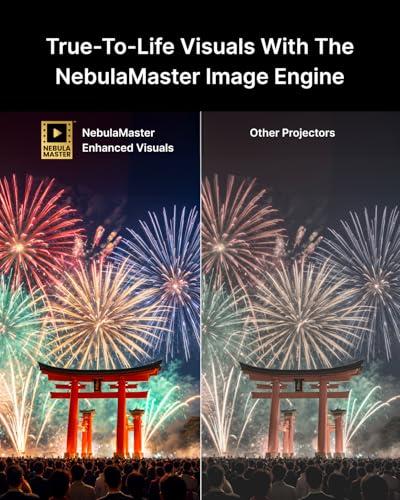
The Nebula Cosmos 4K SE uses its HybridBeam system to achieve 123.3% of the Rec.709 color space (roughly equivalent to 95% DCI-P3). While the numbers might seem lower, this still represents excellent color reproduction that'll satisfy most viewers. The hybrid approach also helps with color temperature consistency, something pure laser projectors sometimes struggle with.
Both projectors achieve Delta E values below 1, meaning color errors are essentially invisible to the human eye. For reference, Delta E is like a report card for color accuracy – the lower the number, the better the grade.
This is where the JMGO N1S Ultimate pulls ahead significantly. With a native contrast ratio of 1,600:1 compared to the Nebula Cosmos 4K SE's 400:1, dark scenes look dramatically better on the JMGO. Native contrast ratio measures how much darker the darkest blacks are compared to the brightest whites, and it's crucial for that cinematic "pop" that separates good projectors from great ones.
In practical terms, this means shadow details in dark movies like "The Batman" or "Blade Runner 2049" will be much more visible on the JMGO N1S Ultimate. The Nebula Cosmos 4K SE isn't bad, but dark scenes can look a bit flat by comparison.
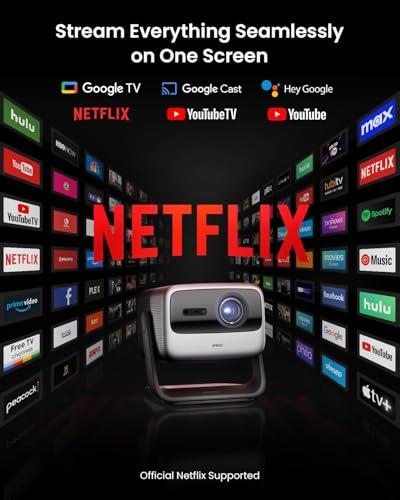
Both projectors run Google TV, giving you access to thousands of streaming apps. However, their implementation differs in meaningful ways. The Nebula Cosmos 4K SE has arguably the more polished smart TV experience, with snappier interface performance and better app compatibility. Its native 4K Netflix certification is genuinely convenient.
The JMGO N1S Ultimate's Google TV 3.0 system is functional but feels less refined. However, it makes up for this with superior hardware performance and that unique gimbal flexibility.
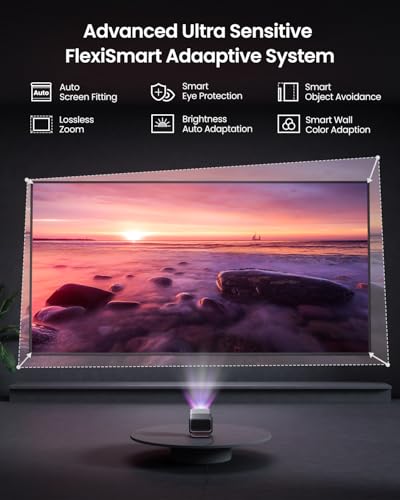
Setup experiences also differ dramatically. The JMGO N1S Ultimate's FlexiSmart 2.0 system handles the basics well, but the physical gimbal design is the real star. Being able to physically aim the projector beats any software correction system.
The Nebula Cosmos 4K SE's IEA 4.0 system is more comprehensive for traditional setups. It automatically detects and corrects for obstacles, adjusts for wall color, and adapts to ambient lighting conditions. It's particularly impressive how it can compensate for off-white walls or slight projector misalignment.
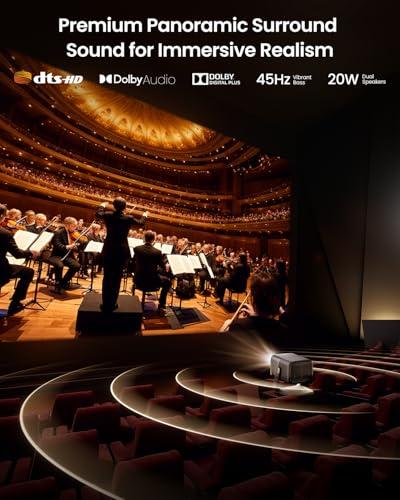
Don't overlook the audio systems – they're crucial for the all-in-one experience these projectors promise. The JMGO N1S Ultimate includes a dedicated 20W subwoofer alongside dual 10W speakers, providing surprisingly deep bass that extends down to 45Hz. This creates a genuinely immersive audio experience that can fill a medium-sized room.
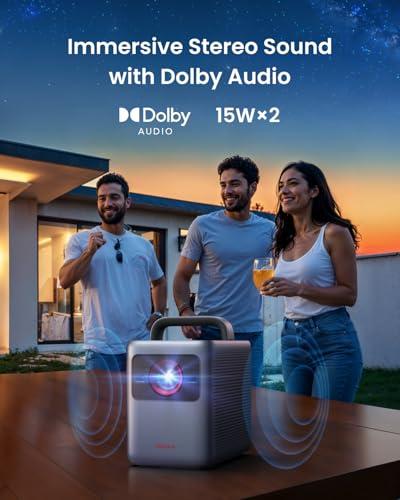
The Nebula Cosmos 4K SE takes a different approach with dual 15W speakers (30W total) that emphasize clarity over bass depth. The sound is cleaner and more balanced, particularly for dialogue, but lacks the room-shaking impact of the JMGO's subwoofer system.
Both support advanced audio formats like Dolby Digital Plus and can function as Bluetooth speakers when not projecting. However, if built-in audio is important to you, the JMGO N1S Ultimate's bass response gives it a clear advantage for movie watching.
Modern 4K projectors have become legitimate gaming displays, and both handle this duty admirably. The JMGO N1S Ultimate offers 16ms input lag in its gaming mode, while the Nebula Cosmos 4K SE achieves 18.4ms. Both figures are excellent for projectors and perfectly acceptable for all but the most competitive gaming scenarios.
The JMGO N1S Ultimate's higher brightness becomes particularly valuable for gaming, as it allows comfortable play even with some ambient light. The Nebula Cosmos 4K SE requires darker conditions but delivers excellent motion handling through its MEMC (Motion Estimation, Motion Compensation) technology, which smooths fast motion at the cost of some processing delay.
If you're building a dedicated home theater, both projectors have merit but serve different philosophies. The JMGO N1S Ultimate is better suited for flexible home theaters where you might want to change screen sizes or occasionally project elsewhere. Its brightness headroom means you can go bigger than typical home theater screens without losing impact.
The Nebula Cosmos 4K SE is ideal for more traditional setups where the projector stays in one place and you prioritize value over maximum performance. Its intelligent adaptation systems work particularly well in finished basement theaters or dedicated media rooms.
For ceiling mounting, both work well, though the JMGO N1S Ultimate's gimbal design makes fine-tuning easier after installation.
At the time of writing, there's a significant price gap between these projectors, with the JMGO N1S Ultimate commanding a premium of roughly $700 over the Nebula Cosmos 4K SE. The question is whether that premium delivers proportional value.
For the extra cost, you get nearly double the brightness, significantly better contrast, deeper bass, and unique placement flexibility. If you value maximum performance and versatility, the JMGO N1S Ultimate justifies its premium pricing.
However, the Nebula Cosmos 4K SE represents excellent value for users who primarily watch in dark rooms and don't need extreme brightness. You still get genuine 4K quality, excellent smart features, and solid build quality at a more accessible price point.
Choose the JMGO N1S Ultimate if you:
The JMGO N1S Ultimate is particularly compelling for users who want one projector that can handle any scenario – from backyard movie nights to basement home theaters to bedroom ceiling projection.
Choose the Nebula Cosmos 4K SE if you:
The Nebula Cosmos 4K SE makes sense for mainstream users who want to step up to 4K projection without breaking the bank or compromising on features that matter most for typical home viewing.
Both projectors succeed at their intended missions, but they're targeting different users. The JMGO N1S Ultimate is the performance flagship that pushes boundaries, while the Nebula Cosmos 4K SE is the smart value play that brings premium features to more people.
If I had to pick one for my own home theater, I'd lean toward the JMGO N1S Ultimate for its sheer versatility and brightness headroom. The ability to project a great image even with lights dimmed (not off) is genuinely liberating, and the gimbal design opens up creative possibilities that other projectors simply can't match.
However, I completely understand choosing the Nebula Cosmos 4K SE for its strong overall package at a more reasonable price point. It delivers genuine 4K quality and smart features that'll satisfy most users, particularly those with dedicated dark viewing spaces.
The projector market has matured dramatically in recent years, and both of these models prove that you no longer need to choose between portability and performance. Whichever you choose, you're getting a legitimate home theater experience that would have cost five times as much just a decade ago.
| JMGO N1S Ultimate 4K Laser Projector | Nebula Cosmos 4K SE Smart Projector |
|---|---|
| Brightness - Most critical spec for room flexibility and screen size | |
| 3,500 ANSI lumens (exceptional for daytime/ambient light viewing) | 1,800 ANSI lumens (requires dim to dark room conditions) |
| Light Source Technology - Affects color accuracy and longevity | |
| MALC 2.0 Triple RGB Laser (dedicated red, green, blue lasers) | HybridBeam (LED + laser combination for balanced performance) |
| Contrast Ratio - Critical for dark scene detail and cinematic feel | |
| 1,600:1 native (excellent shadow detail and black levels) | 400:1 native (adequate but less dramatic dark scenes) |
| Color Coverage - Determines how vibrant and accurate colors appear | |
| 110% BT.2020 (reference-grade color accuracy) | 123.3% Rec.709 / ~95% DCI-P3 (excellent consumer-grade colors) |
| Physical Flexibility - Unique placement and setup options | |
| 360° horizontal + 135° vertical gimbal (project anywhere) | Fixed orientation with software keystone correction |
| Smart Platform - Streaming convenience and app selection | |
| Google TV 3.0 with certified Netflix | Google TV with native 4K Netflix and superior interface |
| Built-in Audio - Eliminates need for external speakers | |
| 20W subwoofer + dual 10W speakers (deep bass, theater-like) | Dual 15W speakers (30W total, cleaner dialogue) |
| Gaming Performance - Input lag for competitive gaming | |
| 16ms input lag with 120Hz support | 18.4ms input lag with MEMC motion smoothing |
| Weight & Portability - Ease of moving between locations | |
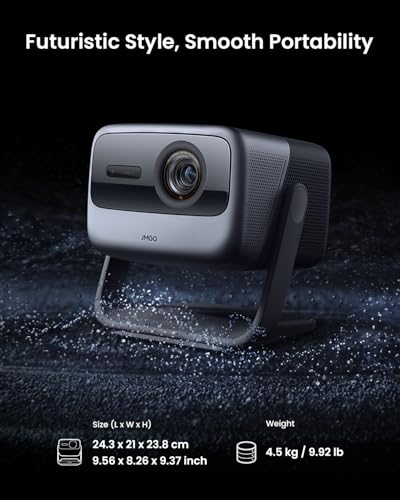
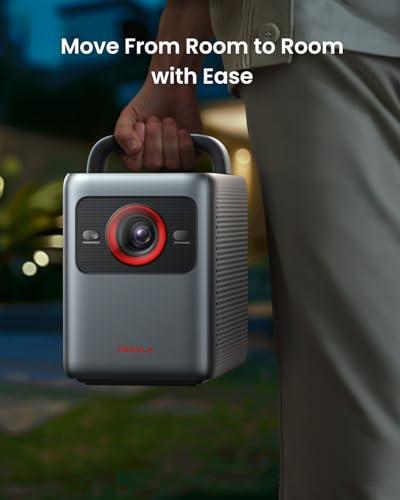
| 14.3 lbs (premium build, less portable) | 9.9 lbs with handle (designed for easy transport) |
| Setup Automation - How much manual adjustment is needed | |
| FlexiSmart 2.0 with real-time auto adjustments | IEA 4.0 with comprehensive environmental adaptation |
| Light Source Lifespan - Long-term ownership costs | |
| 30,000+ hours (virtually maintenance-free) | 25,000-30,000 hours (excellent longevity) |
| Best Use Case - Who should choose this projector | |
| Brightness priority, flexible placement, premium performance | Value-conscious buyers, traditional home theater setups |
The JMGO N1S Ultimate is significantly brighter at 3,500 ANSI lumens compared to the Nebula Cosmos 4K SE at 1,800 ANSI lumens. This means the JMGO N1S Ultimate can handle rooms with ambient light and larger screens much better, while the Nebula Cosmos 4K SE works best in dim to dark environments.
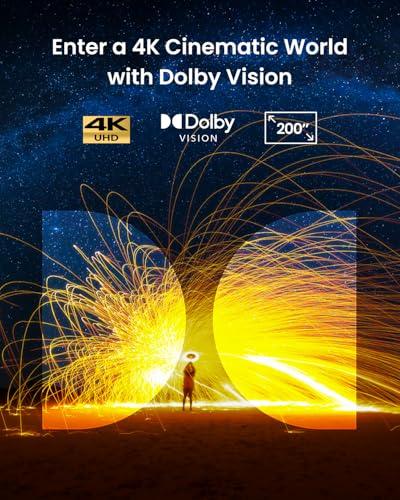
Yes, both the JMGO N1S Ultimate and Nebula Cosmos 4K SE deliver true 4K UHD (3840x2160) resolution using pixel-shifting technology. They both use 0.47" DLP chips that rapidly shift pixels to create the full 4K image, providing sharp detail on screens up to 200 inches.
The JMGO N1S Ultimate has superior audio with a 20W subwoofer plus dual 10W speakers, delivering deep bass down to 45Hz for a more cinematic experience. The Nebula Cosmos 4K SE has dual 15W speakers (30W total) that provide cleaner dialogue but less bass impact than the JMGO N1S Ultimate.
Yes, both projectors run Google TV and support Netflix streaming. The Nebula Cosmos 4K SE has native 4K Netflix certification with a more polished interface, while the JMGO N1S Ultimate runs Google TV 3.0 with certified Netflix access but a less refined smart TV experience.
Both are excellent for gaming, with the JMGO N1S Ultimate offering 16ms input lag and the Nebula Cosmos 4K SE providing 18.4ms input lag. The JMGO N1S Ultimate has a slight edge for competitive gaming, while the Nebula Cosmos 4K SE includes MEMC technology for smoother motion.
The JMGO N1S Ultimate features a unique gimbal design allowing 360° rotation and 135° tilt for flexible placement, plus FlexiSmart 2.0 auto-adjustments. The Nebula Cosmos 4K SE uses IEA 4.0 intelligent setup with comprehensive environmental adaptation, obstacle avoidance, and automatic corrections for traditional installations.
Both projectors achieve excellent color accuracy with Delta E values below 1. The JMGO N1S Ultimate uses triple RGB lasers covering 110% BT.2020 color space, while the Nebula Cosmos 4K SE uses HybridBeam technology covering 123.3% Rec.709. Both deliver reference-grade color performance through different technologies.
The JMGO N1S Ultimate offers significantly better contrast at 1,600:1 native ratio, providing deeper blacks and better shadow detail in dark scenes. The Nebula Cosmos 4K SE has 400:1 native contrast, which is adequate but noticeably less dramatic for cinematic content.
The Nebula Cosmos 4K SE is more portable at 9.9 lbs with an integrated handle, designed for easy transport between rooms. The JMGO N1S Ultimate weighs 14.3 lbs and has a more premium but heavier build, though its gimbal design makes setup easier wherever you place it.
Both projectors offer excellent longevity with laser/LED light sources. The JMGO N1S Ultimate is rated for 30,000+ hours, while the Nebula Cosmos 4K SE provides 25,000-30,000 hours. Both eliminate the need for lamp replacements, making them virtually maintenance-free for years of use.
The Nebula Cosmos 4K SE offers excellent value for buyers prioritizing smart features and 4K quality in controlled lighting. The JMGO N1S Ultimate justifies its premium with nearly double the brightness, better contrast, superior audio, and unique gimbal flexibility for users wanting flagship performance.
Both work well for home theaters but serve different needs. The JMGO N1S Ultimate excels in flexible home theaters with its brightness headroom and placement versatility. The Nebula Cosmos 4K SE is ideal for traditional dark-room setups where you want excellent 4K performance without paying flagship pricing.
We've done our best to create useful and informative comparisons to help you decide what product to buy. Our research uses advanced automated methods to create this comparison and perfection is not possible - please contact us for corrections or questions. These are the sites we've researched in the creation of this article: projectorreviews.com - youtube.com - projectorcentral.com - tomsguide.com - global.jmgo.com - global.jmgo.com - projectorcentral.com - global.jmgo.com - youtube.com - vividstorm.us - youtube.com - global.jmgo.com - device.report - global.nothingprojector.com - projectorreviews.com - tvsbook.com - youtube.com - projectorcentral.com - youtube.com - projectorcentral.com - techradar.com - youtube.com - projectorcentral.com - youtube.com - the-gadgeteer.com - newegg.com - projectorreviews.com - projectorcentral.com - youtube.com - seenebula.com - seenebula.com - bestbuy.com

Privacy Policy
Terms and Conditions - Affiliate Policy
Home Security
© Copyright 2008-2026.
11816 Inwood Rd #1211, Dallas, TX 75244