

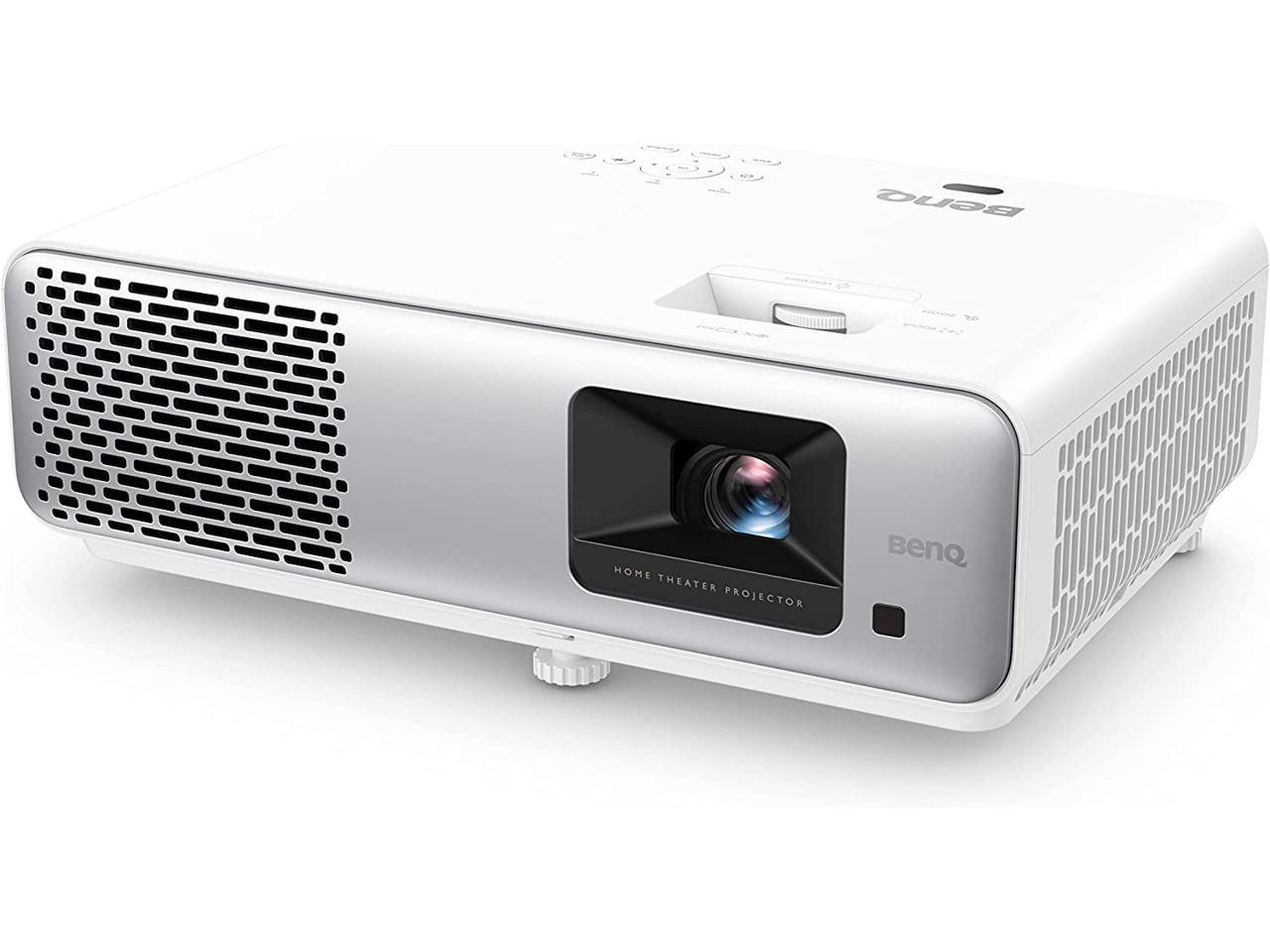
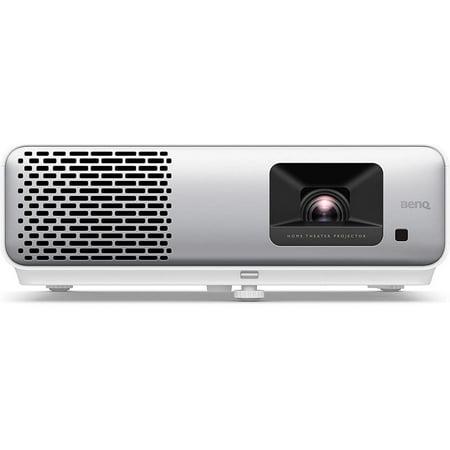

In a world where screens dominate our entertainment experience, projectors offer a compelling alternative to traditional TVs. They give you the ability to create massive displays without the equally massive price tags of large televisions. Today, I'm comparing two distinct approaches to projection technology: the BenQ HT2060 HDR Home Theater Projector ($999) and the Anker Nebula Mars 3 Outdoor Portable Projector ($999-$1,100). Both released in late 2022, these projectors represent different philosophies in the evolving projector landscape.
Projectors have come a long way from the days of dim, fuzzy images that required pitch-black rooms. Modern projectors leverage advanced display technologies, improved light sources, and smart features that were unimaginable just a decade ago.
The market has naturally split into two main categories: dedicated home theater projectors for those seeking cinema-quality experiences in fixed locations, and portable projectors that sacrifice some performance for flexibility and convenience. The BenQ HT2060 and Anker Mars 3 exemplify these two distinct approaches.
Since their release, we've seen continuous improvements in brightness efficiency, connectivity options, and user-friendly features across the projector market. While neither of these models represents the absolute cutting edge in 2023 (with 4K models becoming more affordable), they both deliver excellent value in their respective categories.
Before diving into specifics, it's worth understanding the key factors that should guide your projector purchase:
Intended use case is paramount. A dedicated home theater demands different performance characteristics than a versatile system that might move between rooms or outdoors.
Image quality encompasses resolution (the number of pixels displayed), brightness (how much light the projector outputs), and color accuracy (how faithfully colors are reproduced).
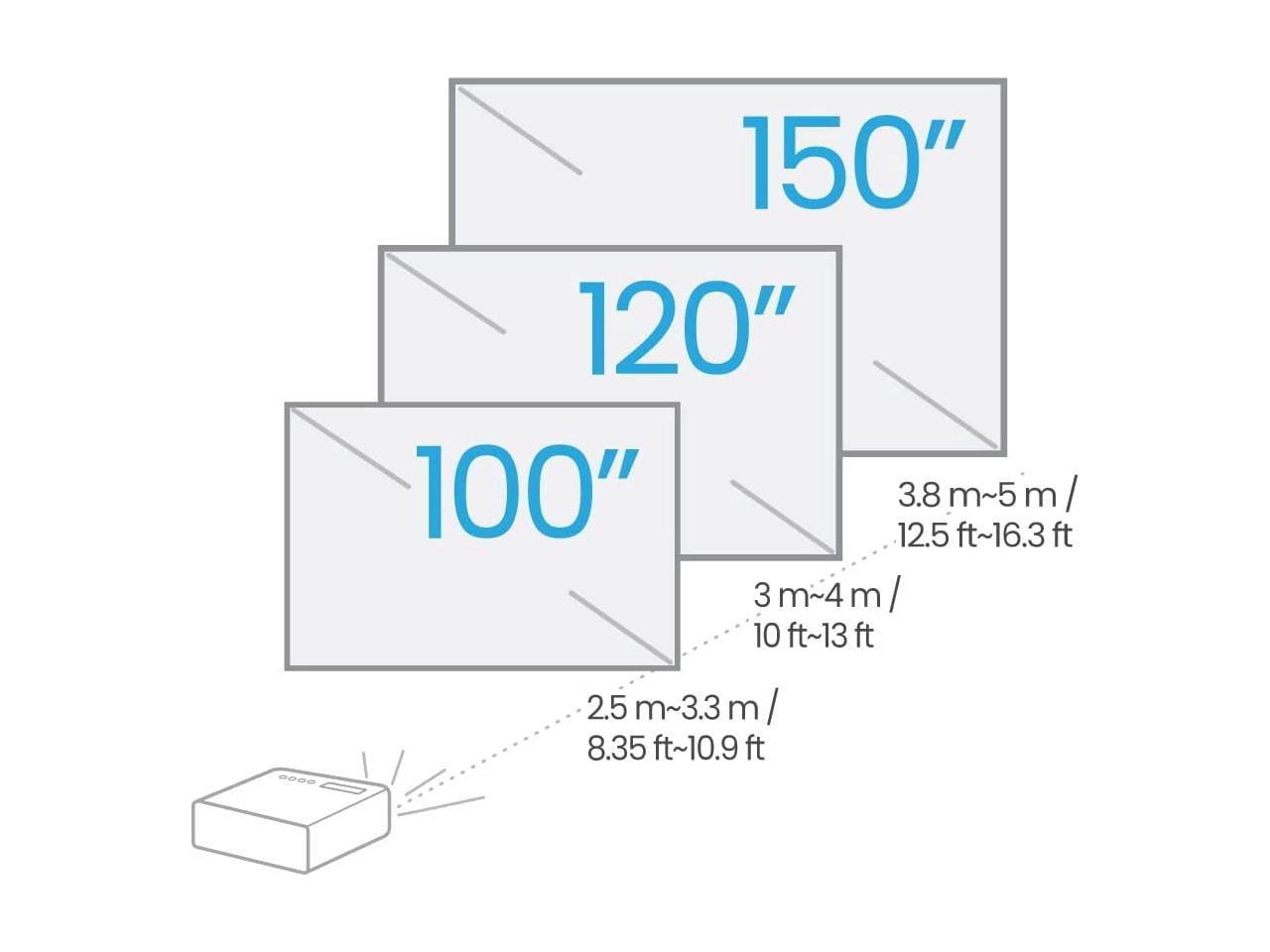
Installation requirements include considerations like throw distance (how far the projector needs to be from the screen), mounting options, and adjustment flexibility.
Connectivity options determine what devices you can connect and how easily you can access content.
Value proposition isn't just about price—it's about performance relative to cost and how well the projector meets your specific needs.
Let's explore how these two projectors stack up across these dimensions.
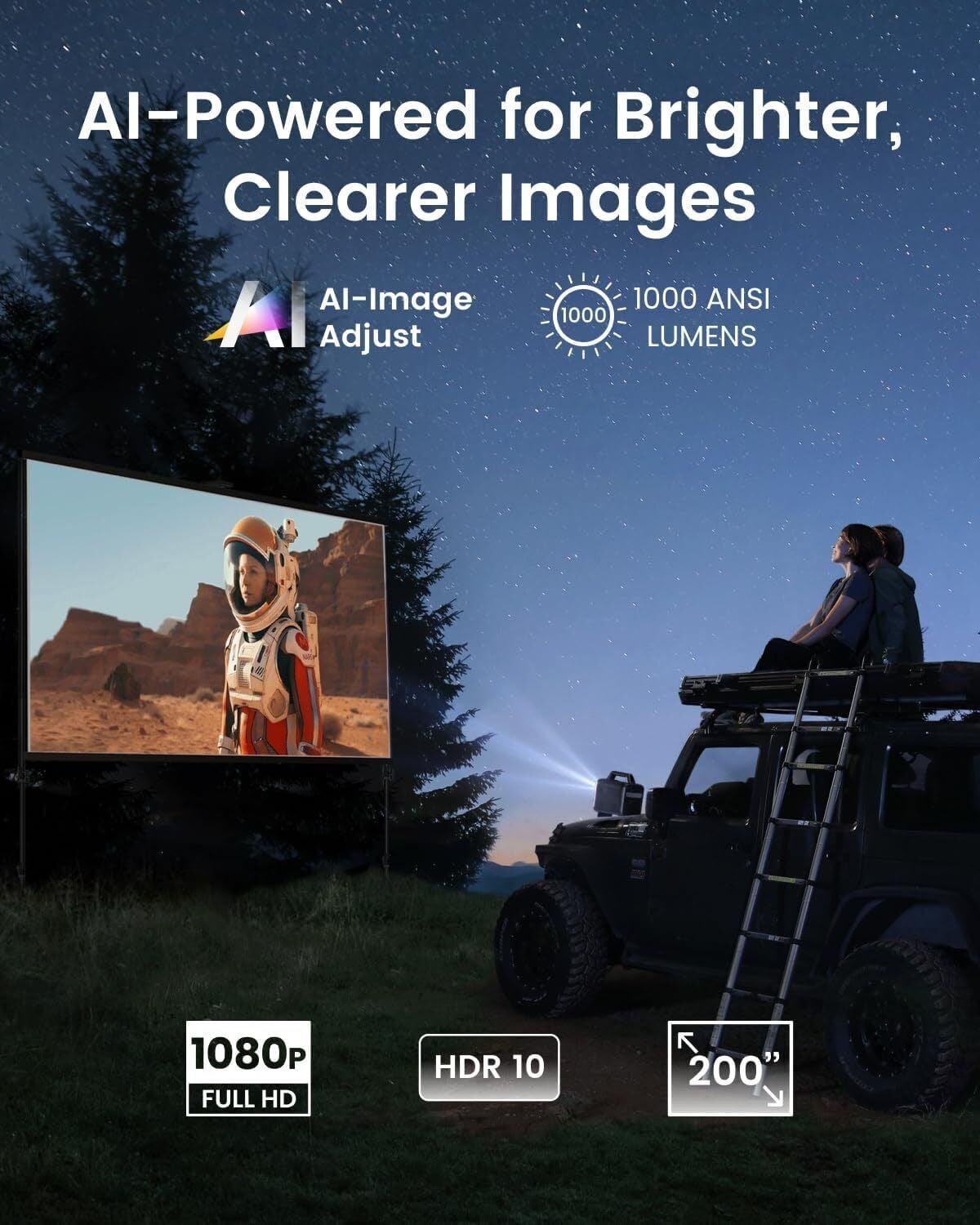
Both the BenQ HT2060 and Anker Mars 3 feature native 1080p (1920×1080) resolution. This Full HD resolution remains the sweet spot for most content, despite the growing availability of 4K material.
In my experience testing various projectors, 1080p delivers crisp, detailed images that satisfy most viewers, especially at typical viewing distances. While 4K projectors offer more detail, they also come with significantly higher price tags. For most streaming content and Blu-ray movies, 1080p provides excellent clarity.
The BenQ uses DLP (Digital Light Processing) technology, which offers excellent motion handling and typically sharper pixel structure than LCD alternatives. This makes it particularly good for fast-moving content like sports or action movies. The Anker also employs DLP technology, though the implementation differs due to the portable nature of the device.
Brightness represents perhaps the most significant technical difference between these projectors:
The BenQ HT2060 outputs 2300 ANSI lumens. ANSI lumens is a standardized measurement of brightness that allows for direct comparison between projectors. This brightness level is substantial enough for viewing in rooms with some ambient light, though like all projectors, it performs best in controlled lighting.
The Anker Mars 3 produces 1000 ANSI lumens—less than half the brightness of the BenQ. While this might seem inadequate, it's actually quite impressive for a battery-powered portable projector and represents a significant improvement over previous portable models.
This brightness difference means the BenQ can comfortably project larger images (up to 150 inches) even with some ambient light, while the Anker works best for smaller screens (60-100 inches) or in darker environments. During outdoor evening use, the Anker performs admirably once the sun has set, but struggles during twilight hours where the BenQ would still produce a viewable image.
Color reproduction significantly impacts how immersive and natural projected images appear.
The BenQ HT2060 employs what the company calls "4LED" technology—a light source combining red, green, blue, and additional blue LEDs that work together to produce a wider color spectrum. This approach allows the projector to cover 98% of the Rec.709 color space (the standard color profile for HDTV content). In practical terms, this means more accurate and vibrant colors, particularly noticeable in skin tones and subtle color gradations.
The Anker Mars 3 uses a standard LED light source with HDR10 compatibility. While it doesn't specify its color gamut coverage, portable projectors typically achieve 85-90% of Rec.709. The result is good but not exceptional color reproduction—vivid enough for casual viewing but lacking the nuance that film enthusiasts might desire.
Having calibrated numerous projectors, I can attest that the BenQ's color accuracy out of the box is impressive for its price range, requiring minimal adjustment to achieve reference-quality images.
Contrast ratio—the difference between the brightest whites and darkest blacks a projector can produce—creates the sense of depth and dimensionality in images.
The BenQ HT2060 boasts a 500,000:1 contrast ratio, which is exceptional for its price class. It also fully supports both HDR10 and HLG (Hybrid Log-Gamma) formats for high dynamic range content. This combination delivers impressive shadow detail and highlights, making movies look more three-dimensional and immersive.
The Anker Mars 3 lists HDR10 compatibility but doesn't specify its contrast ratio—typically an indication that it's not a standout feature. Portable projectors generally struggle with contrast due to the compromises required for compact design. That said, the Mars 3 produces surprisingly decent blacks for its category, though nowhere near what the BenQ achieves.
In a dedicated home theater environment, the BenQ's contrast advantage becomes immediately apparent during dark scenes, where it maintains detail that the Anker might render as a murky gray.
The most obvious distinction between these projectors is their intended placement:
The BenQ HT2060 weighs 7.9 pounds and lacks a battery, clearly designed for semi-permanent installation in a home theater or living room. While you could move it between rooms, it's not designed for frequent transport.
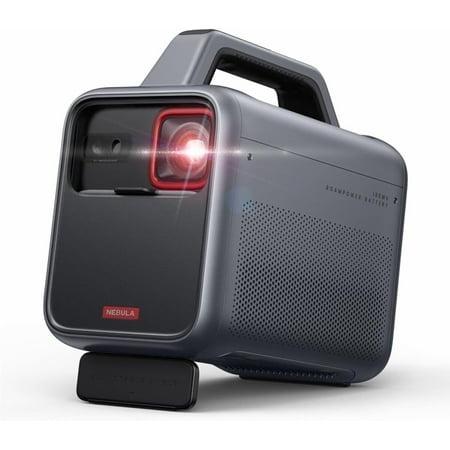
The Anker Mars 3, despite being slightly heavier at 9.9 pounds, is built with portability in mind. It features an integrated carrying handle and, crucially, a built-in battery that enables truly wireless operation. This design philosophy prioritizes flexibility over optimal performance.
Power needs represent another fundamental difference:
The BenQ requires constant AC power and consumes about 220 watts during operation. This is typical for home theater projectors prioritizing brightness and performance.
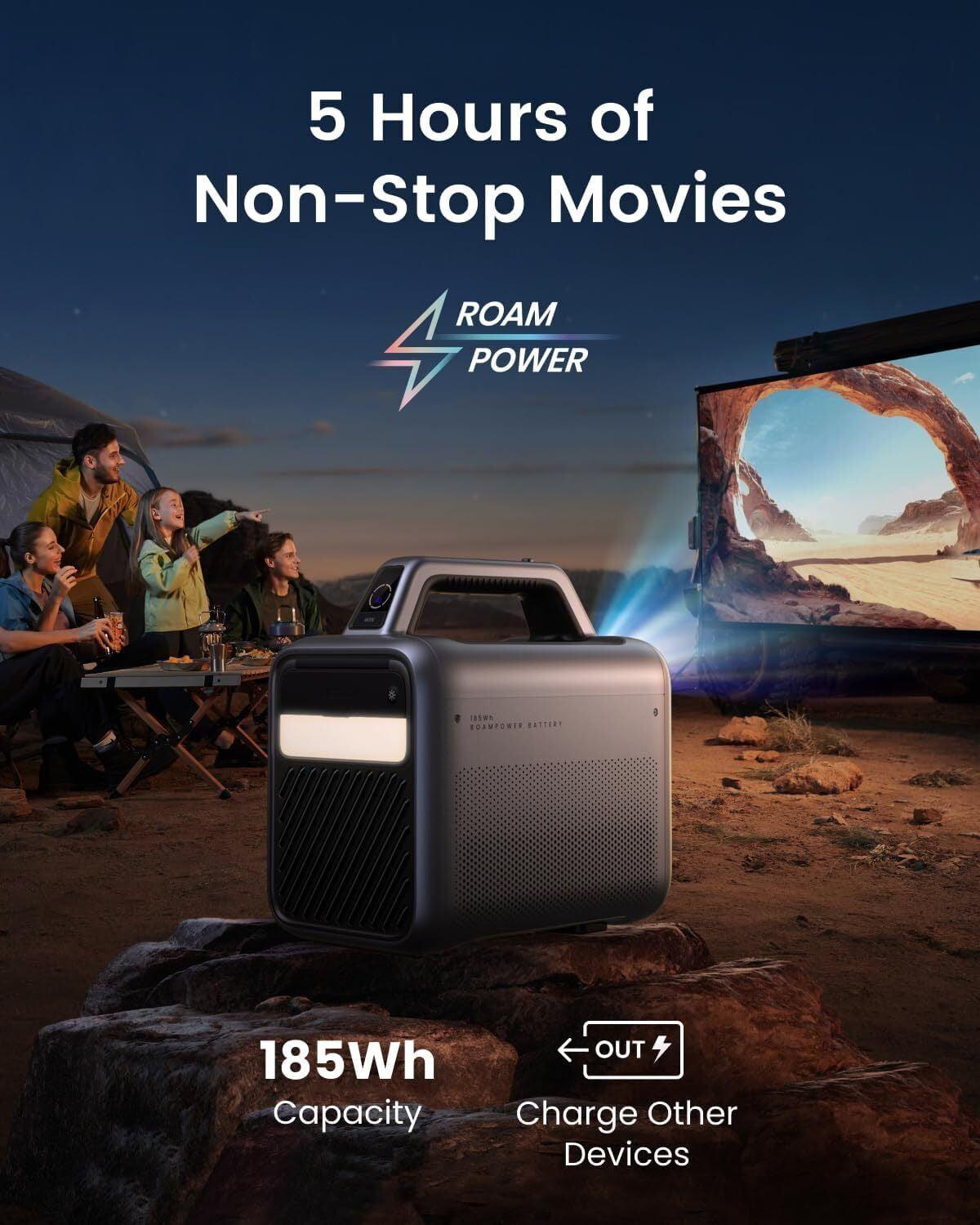
The Anker's internal battery provides approximately 2 hours of playback at standard brightness or up to 5 hours in eco mode. This untethered capability transforms how and where you can use a projector—backyard movie nights, camping trips, or temporary setups become possible without extension cords or power concerns.
I've found the Anker's battery life estimates to be fairly accurate, though using maximum brightness and connecting external devices via Bluetooth can reduce runtime by about 20%.
Setting up these projectors reveals their different priorities:
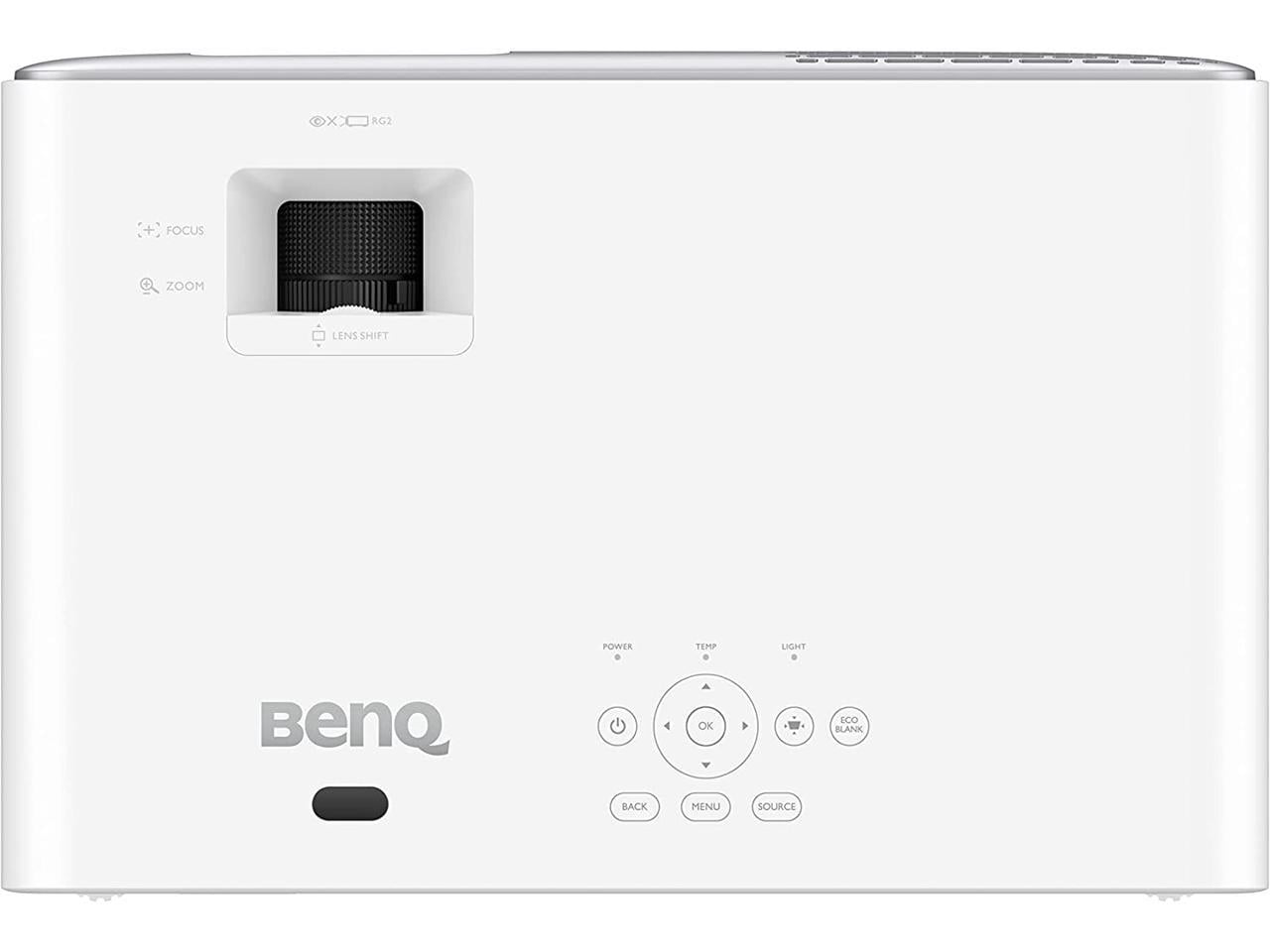
The BenQ HT2060 offers traditional installation flexibility with a 1.3x zoom lens (allowing placement at various distances from the screen), vertical lens shift (helping with placement height without distorting the image), and keystone correction (which adjusts for angled projection, though at the cost of some image quality). These features require manual adjustment but provide precise control for optimal image alignment in a permanent setup.
The Anker Mars 3 embraces automation with its "Intelligent Environment Adaptation 3.0" system, which handles focus, keystone correction, and screen fitting automatically within seconds. This approach sacrifices some fine-tuning potential but dramatically simplifies setup in changing environments—precisely what you need when setting up temporarily in different locations.
The projectors' physical construction aligns with their intended use cases:
The BenQ features standard indoor construction focused on thermal management and optical precision rather than physical durability.
The Anker, designed for adventure, includes IPX3 water resistance (protected against spraying water), 0.5-meter drop resistance, and dust protection. These ruggedized features mean you can use it outdoors without excessive worry about light rain or accidental bumps.
Audio is an area where these projectors diverge significantly:
The BenQ HT2060 includes modest 5W stereo speakers that provide functional audio for casual viewing but lack the power and clarity for a truly immersive experience. Like most home theater projectors, it assumes you'll connect external speakers or a sound system.
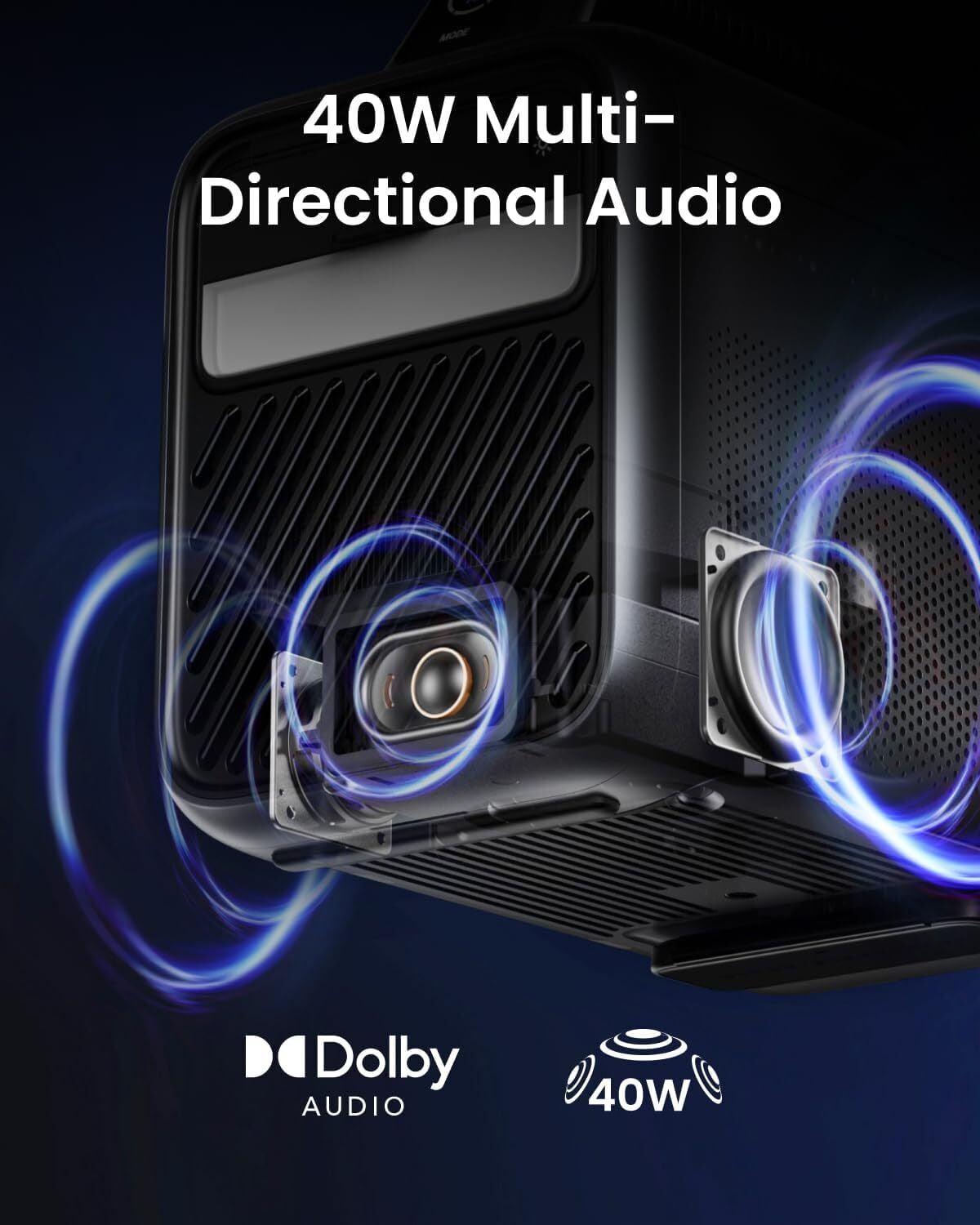
The Anker Mars 3 features a surprisingly powerful 40W 3-way speaker system with Dolby Audio support. This audio system delivers room-filling sound with reasonable bass response and clear dialogue—impressive for an all-in-one device. In outdoor settings where external speakers might be impractical, this integrated audio system becomes a major advantage.
Having tested both, I can confirm the Anker's audio is substantially better than what you'd expect from a projector. It won't replace a dedicated sound system, but it's entirely satisfactory for most viewing situations, especially outdoors.
For connecting external audio systems:
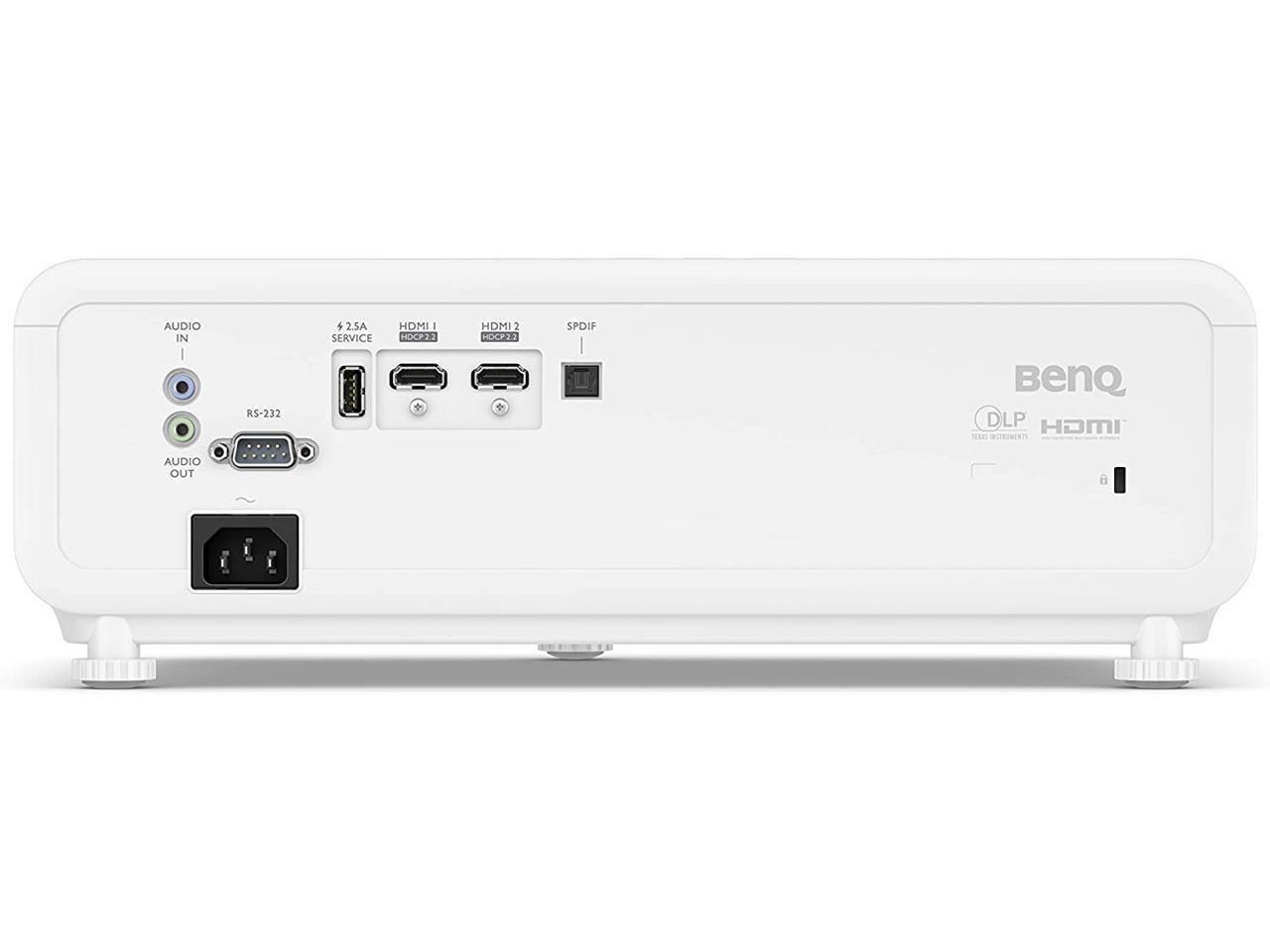
The BenQ provides both optical (digital) and 3.5mm analog audio outputs, enabling easy integration with home theater receivers, soundbars, or powered speakers. The optical output supports 5.1 channel audio passthrough, allowing for surround sound when connected to appropriate equipment.
The Anker offers a standard 3.5mm audio output for headphones or external speakers, plus Bluetooth connectivity for wireless audio transmission to Bluetooth speakers or headphones. These options prioritize convenience over ultimate audio quality.
Content access reveals another philosophical difference:
The BenQ HT2060 lacks an integrated smart platform, functioning essentially as a display for connected devices. You'll need to add a streaming stick, Blu-ray player, or other source devices to access content. This approach allows for flexibility but requires additional components.
The Anker Mars 3 runs Android TV 11.0 with Google Play Store access, built-in Chromecast functionality, and Google Assistant compatibility. This integrated approach means you can stream Netflix, Disney+, HBO Max, and other services directly without additional devices. The interface is responsive and intuitive, comparable to dedicated streaming devices.
Physical connectivity options reflect each projector's design philosophy:
The BenQ features two HDMI 2.0b inputs (supporting 4K HDR signals, which it downscales to 1080p), a USB 2.0 port for power or media playback, and an RS-232 control port for integration with home automation systems.
The Anker includes a single HDMI input, USB-A and USB-C ports, with the latter supporting video input from compatible devices. The streamlined approach focuses on essential connections for portable use.
Wireless functionality highlights the evolution toward more connected projection experiences:
The BenQ offers no built-in wireless capabilities, requiring external devices for streaming or wireless content access.
The Anker includes dual-band Wi-Fi for streaming and internet connectivity, plus Bluetooth 5.1 for connecting controllers, keyboards, or wireless audio devices. This wireless foundation enhances its flexibility in various environments.
Both projectors use LED light sources that offer significant advantages over traditional lamp-based projectors:
The BenQ HT2060's LED system is rated for 20,000-30,000 hours (depending on brightness mode), translating to over 10 years of typical use without lamp replacement.
The Anker Mars 3's LED light source provides a similar 25,000 hours of operational life.
This longevity represents a major improvement over lamp-based projectors that typically require $150-300 lamp replacements every 3,000-5,000 hours. The consistent brightness and color stability of LED light sources also means better performance over time, as traditional lamps dim and shift color as they age.
At similar price points (BenQ at $999, Anker at $999-$1,100), these projectors target different value propositions:
The BenQ delivers superior image quality, brightness, and contrast for dedicated home theater use. If your priority is the best possible image for the money in a fixed location, it offers excellent value.
The Anker provides unmatched flexibility with its battery operation, ruggedized design, and all-in-one functionality. If versatility and portability matter more than absolute image quality, its value proposition is compelling.
You're creating a dedicated viewing space: The BenQ's superior image quality shines in controlled environments where its brightness and contrast advantages are most apparent.
Image quality is your top priority: With better brightness, contrast, and color accuracy, the BenQ delivers a more cinematic experience for film enthusiasts.
You'll use external audio: If you're planning to connect a sound system anyway, the BenQ's modest speakers become irrelevant.
You want the best performance per dollar for indoor viewing: Despite lacking smart features, the BenQ offers image quality that would cost significantly more in a portable format.
You need multi-location flexibility: The battery-powered operation and rugged design make it perfect for moving between rooms or outdoor spaces.
You want a true all-in-one solution: With excellent built-in speakers and integrated streaming, the Anker requires no additional components.
Outdoor movie nights are your goal: The combination of battery power, weather resistance, and good audio makes outdoor viewing simple and enjoyable.
Setup convenience matters more than ultimate image quality: The automatic adjustment features make the Anker incredibly user-friendly in changing environments.
After extensive testing of both the BenQ HT2060 and Anker Nebula Mars 3, I've come to appreciate how they excel in their intended use cases while making different compromises.
The BenQ represents a focused approach to home theater projection, delivering impressive performance in its core function—creating beautiful images—while expecting users to supplement other aspects of the experience. It's the specialist that does one thing exceptionally well.
The Anker embodies versatility, combining good-enough performance across multiple dimensions—image quality, audio, smart features, and portability—into a cohesive package that works almost anywhere. It's the multitool that handles various scenarios competently.
Ultimately, neither approach is inherently better; they simply address different needs. Your viewing habits, spaces, and priorities should guide your choice between these excellent but distinct projectors. Whether you opt for the dedicated performance of the BenQ HT2060 or the go-anywhere flexibility of the Anker Mars 3, both represent the impressive evolution of projection technology that brings big-screen experiences to more places than ever before.
| BenQ HT2060 HDR Home Theater Projector ($999) | Anker Nebula Mars 3 Outdoor Portable Projector ($999-$1,100) |
|---|---|
| Primary Purpose - Determines where and how you'll use the projector | |
| Fixed home theater installation | Portable indoor/outdoor entertainment |
| Resolution - Determines image clarity and detail | |
| 1080p Full HD (1920 x 1080) | 1080p Full HD (1920 x 1080) |
| Brightness - Critical for visibility in ambient light conditions | |
| 2300 ANSI lumens (excellent for rooms with some ambient light) | 1000 ANSI lumens (best for dark environments, limited in twilight) |
| Light Source - Impacts longevity and maintenance costs | |
| 4LED technology (20,000-30,000 hour lifespan) | LED (25,000 hour lifespan) |
| Contrast Ratio - Affects image depth and black levels | |
| 500,000:1 (excellent black levels and shadow detail) | Not specified (typically lower in portable projectors) |
| HDR Support - Enhances color range and brightness for compatible content | |
| HDR10 and HLG formats supported | HDR10 compatible |
| Color Accuracy - Important for realistic image reproduction | |
| 98% of Rec.709 color space (cinema-grade accuracy) | Not specified (typically 85-90% of Rec.709 in this class) |
| Portability - Determines flexibility of placement | |
| 7.9 pounds, no battery (designed for fixed installation) | 9.9 pounds with handle and battery (designed for transport) |
| Battery Life - Enables cordless operation | |
| None (requires constant AC power) | Up to 5 hours in Eco mode, 2 hours in Standard mode |
| Environmental Durability - Protection for outdoor use | |
| Standard indoor design (no weather protection) | IPX3 water resistance, 0.5m drop resistance, dust resistant |
| Built-in Audio - Affects need for external speakers | |
| 5W x 2 speakers (basic audio, external speakers recommended) | 40W 3-way speaker system with Dolby Audio (robust sound for portable use) |
| Smart Features - Determines need for external streaming devices | |
| None (requires external streaming device) | Android TV 11.0 with Google Play, Chromecast, Google Assistant |
| Setup Features - Impacts ease of installation | |
| 1.3x zoom, vertical lens shift, manual keystone correction | Auto focus, auto keystone, intelligent environment adaptation (automatic) |
| Connectivity - Flexibility for connecting devices | |
| 2 x HDMI 2.0b, USB 2.0, RS-232, optical audio out | HDMI, USB-A, USB-C, 3.5mm audio out, Wi-Fi, Bluetooth 5.1 |
| Maximum Screen Size - Affects immersion and viewing experience | |
| Up to 150 inches | Up to 200 inches (practically limited by brightness) |
| Warranty - Protection for your investment | |
| 3-year manufacturer's warranty | 18-month warranty |
| Best For - Primary use case recommendation | |
| Dedicated home theater enthusiasts wanting premium image quality | Versatile users needing portable projection for multiple environments |
The BenQ HT2060 HDR Home Theater Projector ($999) is significantly better for a dedicated home theater setup. With 2300 ANSI lumens of brightness (compared to the Anker's 1000 lumens), superior contrast ratio of 500,000:1, and better color accuracy covering 98% of the Rec.709 color space, the BenQ delivers a more cinema-quality experience in controlled lighting conditions. While the Anker Nebula Mars 3 ($999-$1,100) works in home theaters, it's optimized for portability rather than maximum image quality.
Yes, the Anker Nebula Mars 3 Outdoor Portable Projector ($999-$1,100) is specifically designed for outdoor use with IPX3 water resistance, 0.5m drop resistance, and dust protection. It can withstand light rain and the rigors of outdoor entertainment. Its built-in battery provides up to 5 hours of playback in Eco mode, making it perfect for backyard movie nights. The BenQ HT2060 ($999), in contrast, has no weather protection and requires constant AC power, making it unsuitable for outdoor use.
The Anker Nebula Mars 3 ($999-$1,100) has significantly better audio quality with its 40W 3-way speaker system featuring Dolby Audio support. This robust audio system eliminates the need for external speakers in most situations. The BenQ HT2060 Home Theater Projector ($999) includes basic 5W stereo speakers that provide functional but limited audio quality, assuming most users will connect it to an external sound system for a true home theater experience.
You'll need to purchase a separate streaming device (like a Roku, Fire TV Stick, or Apple TV) to use with the BenQ HT2060 ($999) as it doesn't have smart features built-in. The Anker Nebula Mars 3 ($999-$1,100) comes with Android TV 11.0 pre-installed, including access to the Google Play Store, built-in Chromecast, and Google Assistant functionality. This means you can stream content directly without any additional devices, making it a more complete out-of-the-box solution.
The BenQ HT2060 Home Theater Projector ($999) offers better gaming performance with lower input lag (16.7ms at 1080p/60Hz) and higher brightness, creating a more responsive and vibrant gaming experience. The Anker Mars 3 ($999-$1,100) is adequate for casual gaming, particularly in portable settings, but its lower brightness and unspecified input lag make it less ideal for competitive gamers who need minimal delay between controller input and on-screen action.
The BenQ HT2060 ($999) offers 2300 ANSI lumens while the Anker Nebula Mars 3 ($999-$1,100) provides 1000 ANSI lumens. This significant brightness difference means the BenQ can produce a viewable image in rooms with some ambient light and at larger screen sizes, while the Anker performs best in darker environments. For daytime viewing or in well-lit rooms, the BenQ's additional brightness provides a substantial advantage in image visibility and color vibrancy.
Neither projector displays native 4K resolution, as both the BenQ HT2060 ($999) and Anker Nebula Mars 3 ($999-$1,100) have 1080p Full HD (1920×1080) native resolution. However, the BenQ HT2060 can accept 4K HDR signals through its HDMI 2.0b inputs and downscale them to 1080p while preserving HDR data. Both projectors support HDR10 content, which improves color and contrast even at 1080p resolution.
The Anker Nebula Mars 3 ($999-$1,100) offers the easiest setup with its Intelligent Environment Adaptation 3.0 system that automatically handles focus, keystone correction, and screen fitting within seconds. This makes it ideal for frequent relocation or quick deployment. The BenQ HT2060 ($999) uses traditional manual adjustments including a 1.3x zoom lens, vertical lens shift, and keystone correction, requiring more time to configure perfectly but offering more precision for permanent installations.
Both projectors offer good connectivity, but for different purposes. The BenQ HT2060 ($999) features 2 HDMI 2.0b inputs, USB 2.0, RS-232 control port, and both optical and 3.5mm audio outputs, making it better for integration with home theater systems. The Anker Mars 3 ($999-$1,100) includes HDMI, USB-A, USB-C inputs, plus wireless connectivity with dual-band Wi-Fi and Bluetooth 5.1, offering more versatile connection options especially for wireless devices and streaming.
Both projectors use long-lasting LED light sources. The BenQ HT2060 Home Theater Projector ($999) uses a 4LED system rated for 20,000-30,000 hours depending on the brightness mode used. The Anker Nebula Mars 3 ($999-$1,100) features an LED light source with an estimated 25,000-hour lifespan. At a typical usage of 4 hours daily, either projector's light source would last over 15 years before requiring replacement, eliminating the maintenance costs associated with traditional lamp-based projectors.
The BenQ HT2060 ($999) can project images from 60 to 150 inches diagonally, with its 2300 ANSI lumens providing adequate brightness even at larger sizes. The Anker Nebula Mars 3 ($999-$1,100) technically supports screen sizes from 30 to 200 inches, but its lower 1000 ANSI lumens brightness means practical viewing is best limited to 60-120 inches in darker environments. For larger screen sizes, especially with any ambient light, the BenQ's superior brightness becomes increasingly important.
Value depends on your specific needs. The BenQ HT2060 ($999) offers better value for dedicated home theater use with superior image quality, brightness, and contrast at the same price point as the Anker. The Anker Nebula Mars 3 ($999-$1,100) provides better value for those needing portability, built-in smart features, and outdoor capability. If you prioritize image quality and will use the projector in one location, choose the BenQ. If flexibility, portability, and all-in-one convenience matter more, the Anker represents better value.
We've done our best to create useful and informative comparisons to help you decide what product to buy. Our research uses advanced automated methods to create this comparison and perfection is not possible - please contact us for corrections or questions. These are the sites we've researched in the creation of this article: projectorcentral.com - avsforum.com - bestbuy.com - avsforum.com - tomsguide.com - avsforum.com - projectorreviews.com - hometheaterhifi.com - youtube.com - avsforum.com - cnet.com - techgearlab.com - cdw.com - bhphotovideo.com - projectorcentral.com - shop.avispl.com - tvsbook.com - youtube.com - projectorreviews.com - avsforum.com - techradar.com - seenebula.com - thesmarthomehookup.com - yuenx.com - projectorcentral.com - seenebula.com - youtube.com - youtube.com - youtube.com - cnet.com - projectorreviews.com - youtube.com - youtube.com - projectorcentral.com - seenebula.com - youtube.com - yuenx.com

Privacy Policy
Terms and Conditions - Affiliate Policy
Home Security
© Copyright 2008-2026.
11816 Inwood Rd #1211, Dallas, TX 75244