


The portable projector market has exploded in recent years, transforming how we think about home entertainment. Gone are the days when projectors meant bulky, expensive equipment that required professional installation. Today's smart projectors pack impressive technology into surprisingly compact packages, bringing big-screen entertainment to apartments, bedrooms, and even outdoor spaces.
But with so many options available, choosing the right projector can feel overwhelming. Two standout models—the TCL C1 Google TV Portable Projector and the Nebula Cosmos 4K SE Smart Projector—represent dramatically different approaches to portable projection. Understanding their strengths and limitations will help you make the right choice for your specific needs and budget.
Before diving into specific models, it's worth understanding what makes modern portable projectors special. Unlike traditional projectors that required separate streaming devices, today's smart projectors run full operating systems like Google TV or Android TV. This means you can access Netflix, YouTube, Disney+, and thousands of other apps directly from the projector—no external devices needed.
The key specifications that matter most for portable projectors are brightness (measured in lumens), resolution, contrast ratio, and throw distance. Brightness determines how well you'll see the image in different lighting conditions. Resolution affects image sharpness and detail. Contrast ratio influences how deep blacks appear and how vibrant colors look. Throw distance determines how far back you need to position the projector to achieve your desired screen size.
Released in 2023, the TCL C1 took a refreshingly different approach to portable projection. While most manufacturers focused on cramming maximum brightness and resolution into increasingly expensive packages, TCL prioritized portability, ease of use, and affordability without sacrificing essential features.
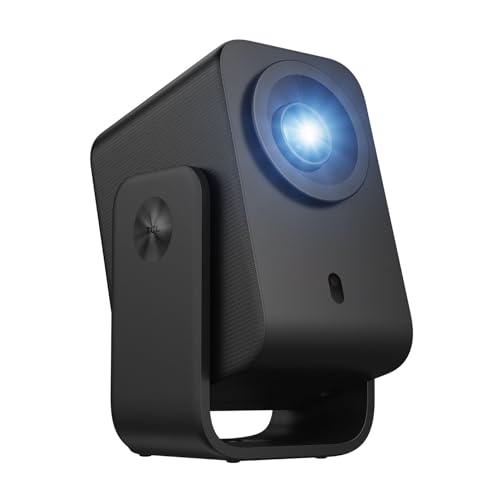
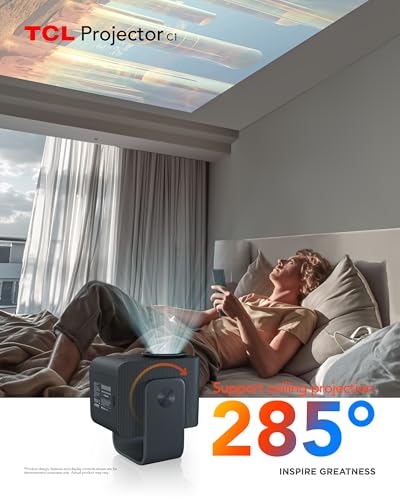
The most striking feature of the TCL C1 is its built-in gimbal stand—a 285-degree rotating mount that lets you position the projector at virtually any angle. This isn't just a marketing gimmick; it's genuinely useful. You can project straight up onto the ceiling for bedtime viewing, angle it perfectly for wall projection from awkward positions, or even use it outdoors where level surfaces aren't available. No other projector in this price range offers this level of positioning flexibility.
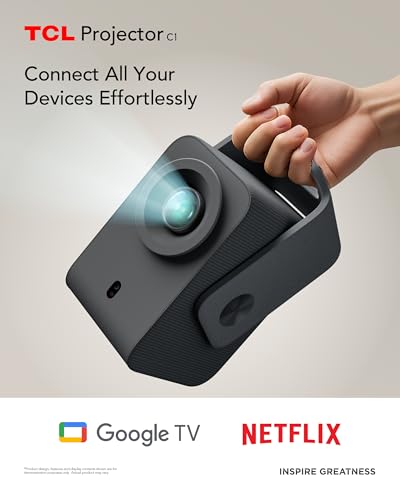
Weighing just 3.9 pounds and roughly the size of a large book, the TCL C1 delivers true grab-and-go portability. The integrated handle makes it easy to carry between rooms or take to a friend's house. The sealed optical engine—a design where the lens assembly is completely enclosed to prevent dust intrusion—ensures the image quality won't degrade over time, a common problem with cheaper projectors.
The TCL C1 delivers native 1080p resolution (1920×1080 pixels) with support for 4K input signals, though these get downscaled to 1080p for display. Its LED light source produces 230 ISO lumens—a measurement standard that's typically more conservative than the ANSI lumens many manufacturers claim. While this might sound dim compared to traditional projectors, it's perfectly adequate for dark room viewing on screens up to 120 inches.
The TrueHue color processing technology optimizes colors and contrast frame-by-frame, helping compensate for the relatively modest brightness. In completely dark rooms, the image quality is surprisingly good for the price point, with accurate colors and sharp details. However, any ambient light quickly washes out the image, limiting daytime use.
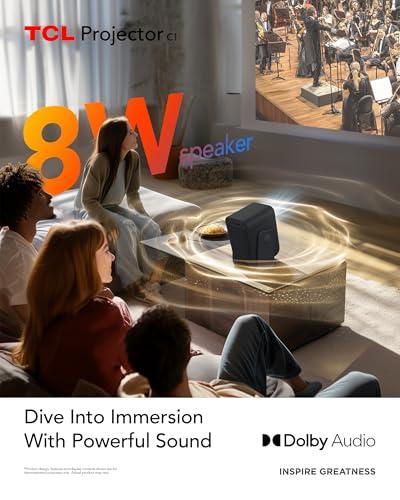
Audio comes from a single 8-watt speaker with Dolby Audio support. While it won't replace a dedicated sound system, it's remarkably clear and loud enough to fill a small to medium room. The TCL C1 can also function as a Bluetooth speaker when not projecting, adding to its versatility.
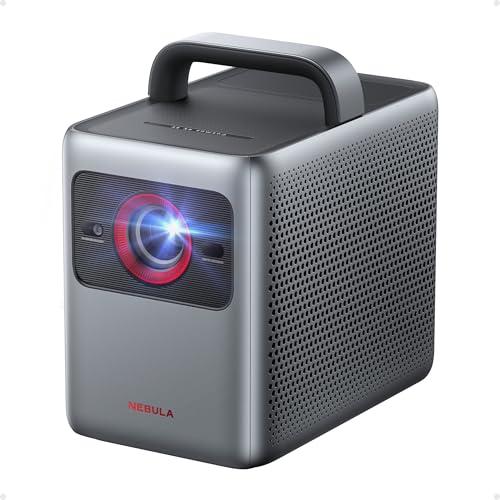
Released in 2024, the Nebula Cosmos 4K SE represents Nebula's push into premium portable projection. Unlike the TCL C1, this projector doesn't compromise on core specifications to achieve portability. Instead, it delivers genuine home theater performance in a package that's still portable enough to move between rooms.
The headline feature is true 4K UHD resolution (3840×2160 pixels) achieved through DLP pixel-shifting technology. This involves a tiny chip that rapidly shifts pixels to create the perception of four times the resolution of the underlying 0.47-inch DMD (Digital Micromirror Device). While purists might argue this isn't "native" 4K, the visual result is indistinguishable from native 4K for most content.
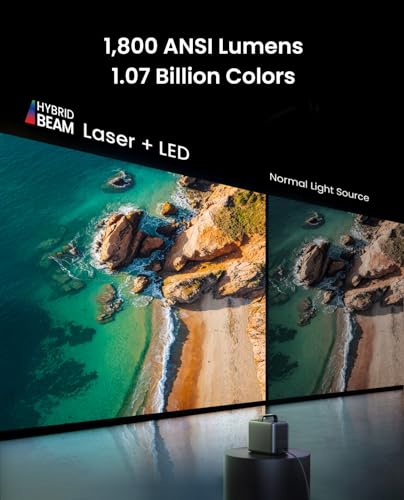
More impressive is the HybridBeam light engine, which combines LED and laser technologies to produce up to 1,800 ANSI lumens. This hybrid approach delivers the color accuracy of LEDs with the brightness potential of lasers, resulting in vibrant, punchy images that remain visible even in moderately lit rooms.
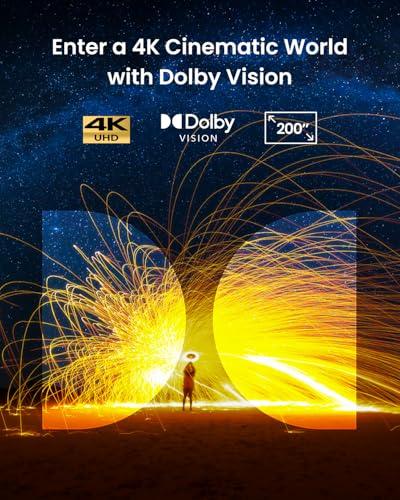
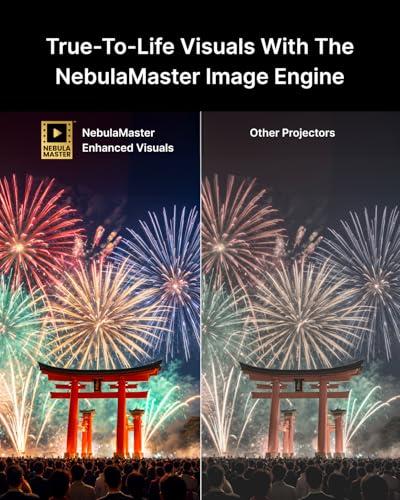
The Nebula Cosmos 4K SE includes several premium features absent from budget projectors. Dolby Vision support provides dynamic HDR (High Dynamic Range) processing, adjusting brightness and contrast scene-by-scene for more realistic images. The NebulaMaster image engine uses 3D lookup tables to ensure color accuracy that measures ΔE<1—meaning color deviations are virtually imperceptible to the human eye.
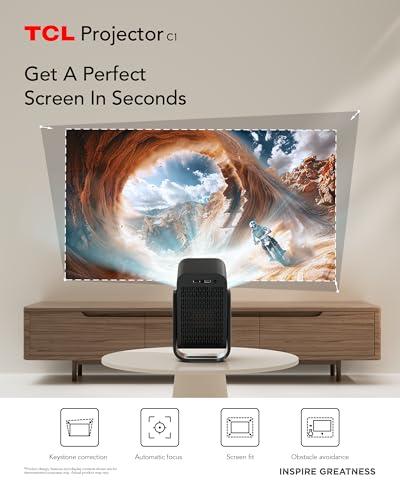
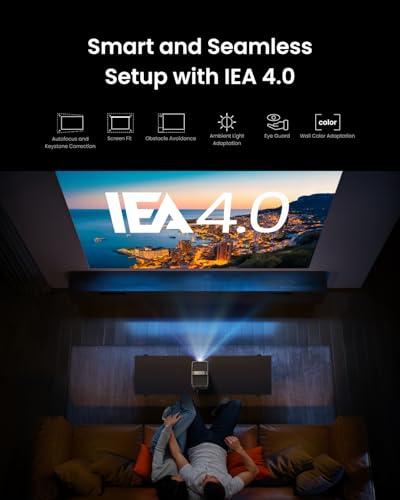
The IEA 4.0 (Intelligent Environment Adaptation) system goes beyond simple auto-focus and keystone correction. It can detect obstacles in the projection path and adjust the image accordingly, adapt to wall color to maintain accurate colors, and even dim the projector when someone walks in front of it. These features make setup remarkably foolproof, even for projector novices.
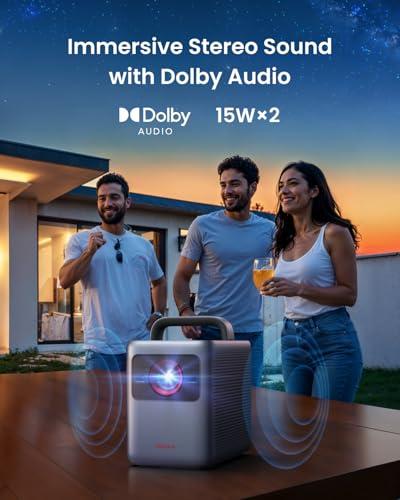
Audio performance is where the Cosmos 4K SE truly shines. Dual 15-watt speakers (30 watts total) provide genuine stereo imaging with enough power to fill large rooms. Support for Dolby Atmos via HDMI eARC means you can connect it to high-end audio systems for immersive surround sound.
Brightness is perhaps the most critical specification for projector performance, and the difference between these models is dramatic. The TCL C1's 230 ISO lumens restricts usage to very dark environments. Turn on even a few lamps, and the image becomes washed out and difficult to watch.
The Cosmos 4K SE's 1,800 ANSI lumens—roughly eight times brighter—changes the entire usage paradigm. You can watch comfortably with room lights dimmed or even with some ambient daylight. This brightness advantage extends the projector's usability throughout the day and makes it suitable for larger screens in brighter spaces.
However, brightness isn't everything. Higher brightness often comes with increased fan noise, heat generation, and power consumption. The TCL C1 runs virtually silent and stays cool, while the Cosmos 4K SE, though still reasonably quiet, produces more noticeable fan noise during operation.
The resolution gap between 1080p and 4K becomes most apparent with detailed content like nature documentaries, sports, or PC gaming. The Cosmos 4K SE's ability to display true 4K content from Netflix, streaming services, and gaming consoles provides noticeably sharper text, more detailed textures, and better overall clarity on large screens.
That said, the TCL C1's 1080p performance shouldn't be dismissed. For typical movie watching from standard viewing distances, the resolution difference is less dramatic than you might expect. The quality of the image processing often matters more than raw resolution, and the TCL C1's TrueHue technology does an admirable job optimizing the available pixels.
Where 4K really matters is screen size. While the TCL C1 looks sharp on screens up to about 80 inches, larger sizes reveal the resolution limitations. The Cosmos 4K SE maintains sharp, detailed images even on screens approaching 150 inches, making it better suited for larger spaces.
Audio quality often gets overlooked when choosing projectors, but it significantly impacts the viewing experience. The TCL C1's single 8-watt speaker performs admirably for its size, delivering clear dialogue and reasonably full sound for small spaces. However, it lacks the dynamic range and spatial imaging that makes movies truly immersive.
The Cosmos 4K SE's dual-speaker setup is in a completely different class. The stereo separation creates a proper soundstage, making action sequences more engaging and music more enjoyable. The speakers have enough power to fill large rooms without distortion, potentially eliminating the need for external audio equipment in smaller setups.
For home theater enthusiasts, the Cosmos 4K SE's HDMI eARC support is particularly valuable. This allows the projector to send high-quality audio signals to soundbars or AV receivers, integrating seamlessly into existing audio systems.
Gaming performance has become increasingly important as projectors gain popularity among console and PC gamers. Input lag—the delay between when you press a button and see the response on screen—is crucial for competitive gaming.
The TCL C1 offers respectable gaming performance with low enough input lag for casual gaming. Its support for 4K 60Hz HDR input (downscaled to 1080p) ensures compatibility with modern consoles, and the large screen experience makes single-player games particularly immersive.
The Cosmos 4K SE excels in gaming scenarios with input lag as low as 18.4 milliseconds in its extreme gaming mode. Combined with true 4K output and MEMC (Motion Estimation, Motion Compensation) technology for smoother motion, it provides a genuinely competitive gaming experience on a massive screen.
Both projectors run Google TV, providing access to all major streaming services including Netflix, Disney+, Prime Video, and YouTube. However, there are subtle differences in implementation and performance.
The TCL C1 runs Google TV smoothly despite its modest hardware specifications (2GB RAM, 16GB storage). Navigation is responsive, and app loading times are reasonable. The voice remote includes dedicated buttons for major services, making common tasks quick and intuitive.
The Cosmos 4K SE offers a slightly more premium smart TV experience with faster app switching and smoother menu animations. Its hardware has more headroom for future software updates and more demanding applications.
Both projectors offer excellent automatic setup features, but the Cosmos 4K SE's IEA 4.0 system is more sophisticated. While the TCL C1 handles basic auto-focus and keystone correction well, the Cosmos 4K SE adapts to more complex environments and unusual projection angles with greater success.
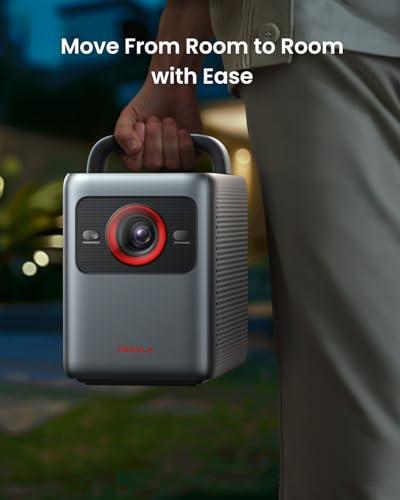
The portability difference between these projectors is significant and affects their practical usage patterns. The TCL C1's 3.9-pound weight and integrated handle make it genuinely portable in the laptop sense—you can easily carry it in a bag for travel or move it between rooms daily.
The Cosmos 4K SE at 9.9 pounds is still portable compared to traditional projectors, but it's more suited to semi-permanent installations or occasional relocation. The soft carrying handle helps, but you're not likely to casually move it around as often as the TCL C1.
The TCL C1's unique gimbal design provides positioning flexibility that the Cosmos 4K SE can't match. Being able to project directly overhead for ceiling viewing or at extreme angles for awkward spaces is genuinely useful and not available on any other projector at this price point.
For dedicated home theater use, these projectors serve different needs. The TCL C1 excels in smaller spaces like bedrooms, apartments, or secondary viewing areas where a full home theater setup isn't practical. Its quiet operation and ceiling projection capability make it ideal for bedtime viewing or casual entertainment.
The Cosmos 4K SE can serve as a primary home theater display in the right environment. Its brightness and 4K resolution make it suitable for larger rooms and more serious movie watching. The premium audio system reduces the need for additional equipment, simplifying setup while maintaining quality.
However, both projectors have limitations for serious home theater use. Neither offers the deep blacks and high contrast ratios of premium LCD or OLED displays. The Cosmos 4K SE comes closer to traditional home theater performance, but users seeking the best possible image quality might need to consider higher-end dedicated projectors or large-screen displays.
At the time of writing, these projectors occupy very different value propositions. The TCL C1 typically costs around $200-300, making it one of the most affordable ways to access Google TV and large-screen entertainment. For this price, the build quality, features, and performance are exceptional.
The Cosmos 4K SE commands roughly four to five times the price of the TCL C1, placing it in competition with mid-range home theater projectors and large TVs. The 4K resolution, high brightness, and premium audio justify the price for users who need these features, but the value proposition is more specialized.
Choose the TCL C1 if portability, affordability, and unique positioning flexibility matter most to you. It's ideal for apartment dwellers, students, frequent travelers, or anyone seeking an entry point into projector ownership without a major financial commitment. The gimbal design and compact size open up usage scenarios impossible with traditional projectors.
Select the Nebula Cosmos 4K SE if you prioritize image quality, brightness, and audio performance over ultimate portability. It's better suited for users with dedicated entertainment spaces, larger rooms, or those who want a projector capable of serving as their primary display. The 4K resolution and high brightness make it future-proof for evolving content standards.
The fundamental question is whether you value convenience and versatility over raw performance. The TCL C1 maximizes flexibility and minimizes barriers to entry, while the Cosmos 4K SE delivers home theater performance with portability as a bonus feature rather than the primary focus.
For most first-time projector buyers, the TCL C1's combination of affordability, ease of use, and unique features provides better value. The Cosmos 4K SE is worth the significant price premium only if you specifically need its advanced capabilities and can fully utilize its performance advantages in your viewing environment.
| TCL C1 Google TV Portable Projector | Nebula Cosmos 4K SE Smart Projector |
|---|---|
| Resolution - Affects image sharpness and detail on large screens | |
| 1080p native (1920×1080) with 4K input support | True 4K UHD (3840×2160) via DLP pixel shifting |
| Brightness - Most critical for ambient light tolerance | |
| 230 ISO lumens (dark room only) | 1,800 ANSI lumens (handles moderate ambient light) |
| Weight & Portability - Determines ease of transport | |
| 3.9 lbs ultra-portable with integrated handle | 9.9 lbs semi-portable with soft handle |
| Unique Positioning Features - Setup flexibility | |
| 285° adjustable gimbal for wall/ceiling projection | Standard base with multiple projection modes |
| Audio System - Built-in sound quality | |
| Single 8W speaker with Dolby Audio | Dual 15W speakers (30W total) with Dolby Atmos support |
| Light Source Technology - Brightness and color quality | |
| LED with 30,000 hour lifespan | Hybrid LED + Laser with 25,000-30,000 hours |
| Screen Size Range - Optimal viewing sizes | |
| 40-120 inches (best under 80 inches) | 40-200 inches (excellent up to 150 inches) |
| Smart TV Platform - Streaming capabilities | |
| Google TV with certified Netflix access | Google TV with 4K Netflix certification |
| HDR Support - Enhanced contrast and colors | |
| HDR10 basic support | Dolby Vision, HDR10, HLG advanced support |
| Gaming Performance - Input lag for responsive gaming | |
| Low lag suitable for casual gaming | Ultra-low 18.4ms lag ideal for competitive gaming |
| Auto-Setup Technology - Convenience features | |
| Auto focus, keystone correction, obstacle avoidance | IEA 4.0 with ambient light adaptation and wall color correction |
| Connectivity Options - Device compatibility | |
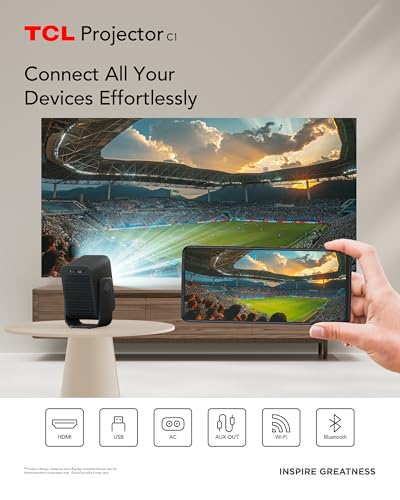
| HDMI 2.1, USB-A, Wi-Fi 5, Bluetooth 5.1 | HDMI 2.1 with eARC, USB 3.0, Wi-Fi, Bluetooth |
| Target Price Range - Value positioning at time of writing | |
| Budget-friendly under $300 | Premium around $1,300 |
The TCL C1 Google TV Portable Projector is significantly better for beginners due to its automatic setup features, lower cost, and simpler operation. Its gimbal design and auto-adjustment technology make it nearly foolproof to use, while the Nebula Cosmos 4K SE Smart Projector requires more setup knowledge and investment.
The Nebula Cosmos 4K SE delivers true 4K resolution (3840×2160) compared to the TCL C1's 1080p resolution. More importantly, the Cosmos 4K SE is about 8 times brighter at 1,800 ANSI lumens versus 230 ISO lumens, making it usable in rooms with ambient lighting while the TCL C1 requires complete darkness.
The TCL C1 Google TV Portable Projector is much more portable at just 3.9 pounds with an integrated handle, making it truly grab-and-go. The Nebula Cosmos 4K SE weighs 9.9 pounds and is better suited for semi-permanent setups, though it's still moveable between rooms when needed.
Only the Nebula Cosmos 4K SE Smart Projector can handle moderately bright rooms due to its 1,800 ANSI lumen output. The TCL C1 requires very dark environments to produce a watchable image, limiting its daytime usability.
The Nebula Cosmos 4K SE has significantly better audio with dual 15-watt speakers providing stereo sound and Dolby Atmos support. The TCL C1 Google TV Portable Projector has a single 8-watt speaker that's adequate for small rooms but lacks the power and spatial audio of the Cosmos 4K SE.
Both work for gaming, but the Nebula Cosmos 4K SE Smart Projector is superior with ultra-low 18.4ms input lag and true 4K resolution, making it excellent for competitive gaming. The TCL C1 offers decent gaming performance for casual play but isn't optimized for serious gaming sessions.
The TCL C1 Google TV Portable Projector provides exceptional value for budget-conscious buyers, offering smart TV features and good image quality in dark rooms at a fraction of the cost. The Nebula Cosmos 4K SE offers better performance but costs significantly more, making it valuable only if you need its advanced features.
The Nebula Cosmos 4K SE Smart Projector is much better suited for home theater use with its 4K resolution, high brightness, Dolby Vision support, and powerful built-in audio system. The TCL C1 works well for casual home theater in smaller, darker spaces like bedrooms but isn't ideal for dedicated theater rooms.
Both the TCL C1 Google TV Portable Projector and Nebula Cosmos 4K SE Smart Projector run Google TV with access to Netflix, Disney+, Prime Video, and thousands of other apps. Both include Google Assistant voice control and Chromecast functionality, with the Cosmos 4K SE offering certified 4K Netflix streaming.
Both projectors offer automatic setup features, but the TCL C1 has a unique advantage with its 285-degree gimbal stand that allows projection at virtually any angle, including straight up to the ceiling. The Nebula Cosmos 4K SE has more advanced auto-correction technology but requires more traditional positioning.
The TCL C1 Google TV Portable Projector works best with screens 40-120 inches, with optimal performance under 80 inches. The Nebula Cosmos 4K SE can handle much larger screens from 40-200 inches effectively, maintaining sharp image quality even at 150+ inches due to its higher resolution and brightness.
Choose the TCL C1 Google TV Portable Projector if you want maximum portability, unique positioning flexibility, and excellent value for dark-room viewing. Select the Nebula Cosmos 4K SE Smart Projector if you need 4K resolution, can use it in brighter rooms, want premium audio quality, and can justify the higher investment for better overall performance.
We've done our best to create useful and informative comparisons to help you decide what product to buy. Our research uses advanced automated methods to create this comparison and perfection is not possible - please contact us for corrections or questions. These are the sites we've researched in the creation of this article: youtube.com - thegadgetflow.com - notebookcheck.net - shopabunda.com - youtube.com - youtube.com - youtube.com - youtube.com - tcl.com - androidauthority.com - manuals.plus - westcoast.co.uk - projectorreviews.com - tvsbook.com - youtube.com - projectorcentral.com - youtube.com - projectorcentral.com - techradar.com - youtube.com - projectorcentral.com - youtube.com - the-gadgeteer.com - newegg.com - projectorreviews.com - projectorcentral.com - youtube.com - seenebula.com - seenebula.com - bestbuy.com

Privacy Policy
Terms and Conditions - Affiliate Policy
Home Security
© Copyright 2008-2026.
11816 Inwood Rd #1211, Dallas, TX 75244