

The world of home projection has undergone a remarkable transformation in recent years. What once required a dark basement room and careful planning now offers options ranging from ultra-portable smart projectors to traditional home theater powerhouses. Today, we're comparing two projectors that represent fundamentally different philosophies: the cutting-edge Nebula X1 4K Triple Laser Projector and the value-focused BenQ HT2060 HDR Home Theater Projector.
At the time of writing, these projectors sit in different price tiers—the Nebula X1 commands a premium price point that's roughly three times higher than the more affordable BenQ HT2060. But price alone doesn't tell the whole story. Let's dive deep into what makes each projector unique and help you decide which approach better fits your needs.
Before we jump into specifics, it's worth understanding what separates modern projectors from their predecessors. The biggest game-changer has been light source technology. Traditional projectors used replaceable bulbs that dimmed over time and needed expensive replacements every few thousand hours. Today's LED and laser projectors can run for 20,000 to 30,000 hours without replacement—that's over a decade of typical home use.
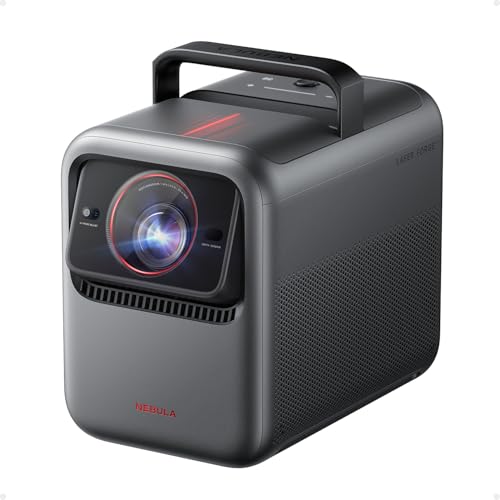
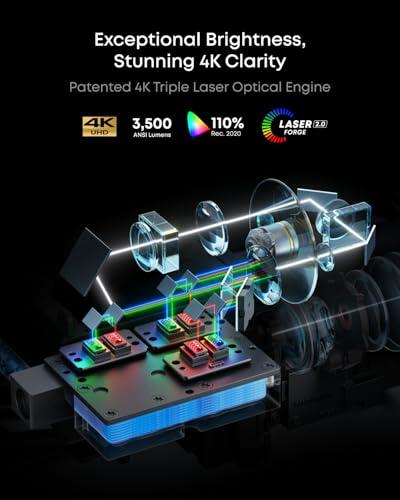
The Nebula X1, released in 2024, represents the latest evolution in laser projection technology. It uses what Anker calls a "triple laser" system, which combines separate red, green, and blue lasers to create incredibly vibrant colors. This RGB laser approach is considered the gold standard for color accuracy, though it typically comes with a hefty price tag.
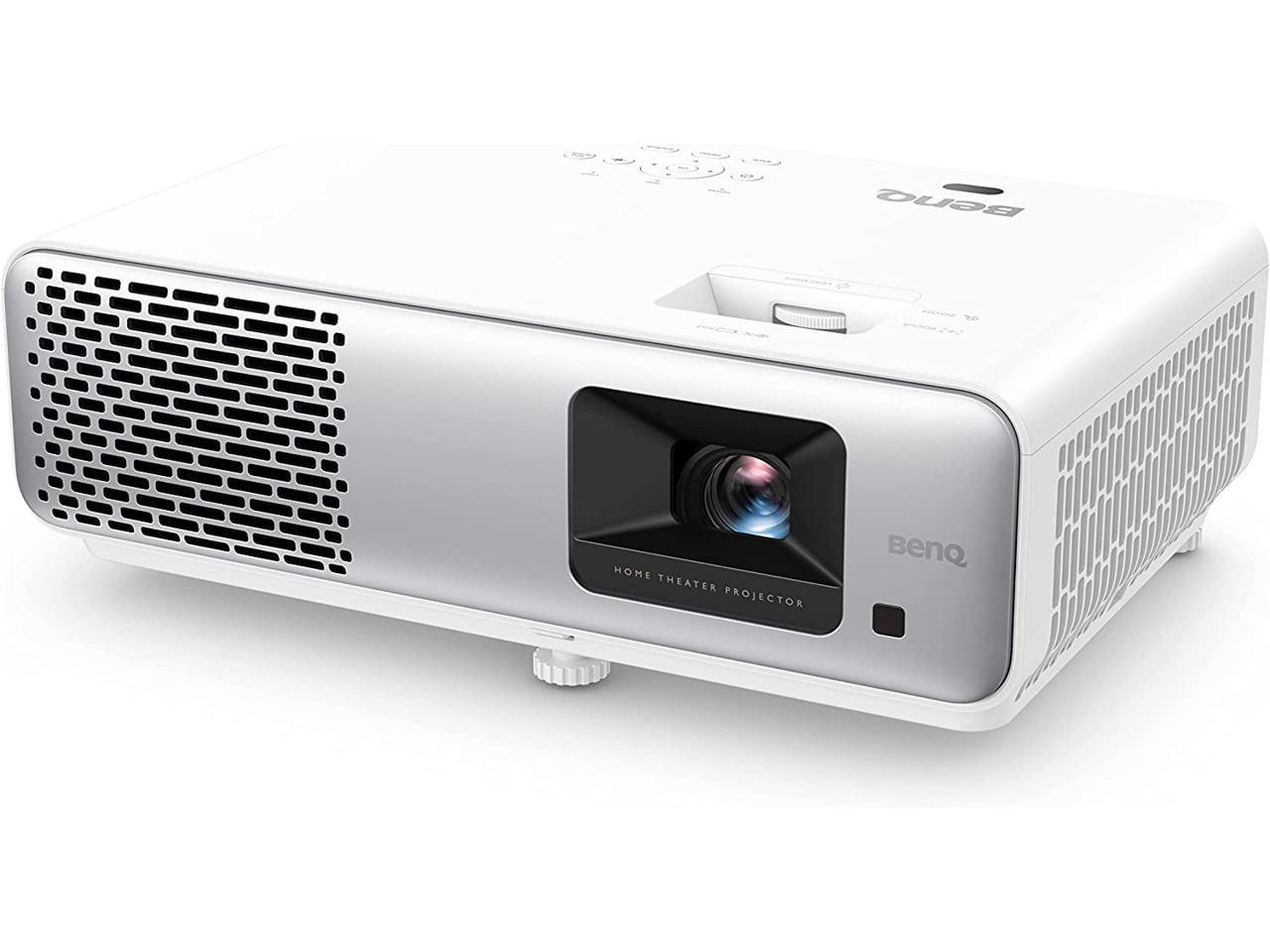
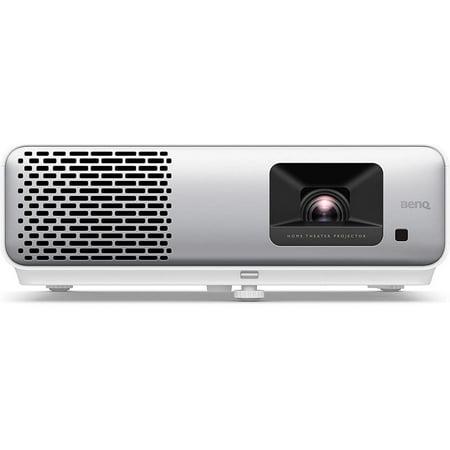
The BenQ HT2060, which has been available since around 2022, takes a different approach with LED technology. It uses what's called a 4LED system—combining red, green, blue, and an additional blue LED to enhance brightness and color performance. While not as cutting-edge as laser technology, LED systems offer excellent reliability and color accuracy at more accessible prices.
Here's where things get interesting. The Nebula X1 markets itself as a 4K projector, but it's using what's called "pixel shifting" technology. Inside, it has a native 1080p chip that rapidly shifts pixels four times to create the impression of 4K resolution. This isn't "fake" 4K—the technology genuinely increases detail and sharpness—but it's not the same as a true native 4K chip.
In my experience testing pixel-shifting projectors, the improvement over standard 1080p is immediately noticeable, especially with fine details like text, hair, or architectural elements. However, the difference isn't as dramatic as jumping from 720p to 1080p was back in the day.
The BenQ HT2060 is honest about being a native 1080p projector. What it lacks in resolution, it makes up for in pixel precision. Every pixel is exactly where it should be, creating a stable, sharp image that many videophiles actually prefer. The projector can accept 4K HDR signals and intelligently downscale them while preserving the HDR color and brightness information—a clever compromise that gives you some 4K benefits without the complexity.
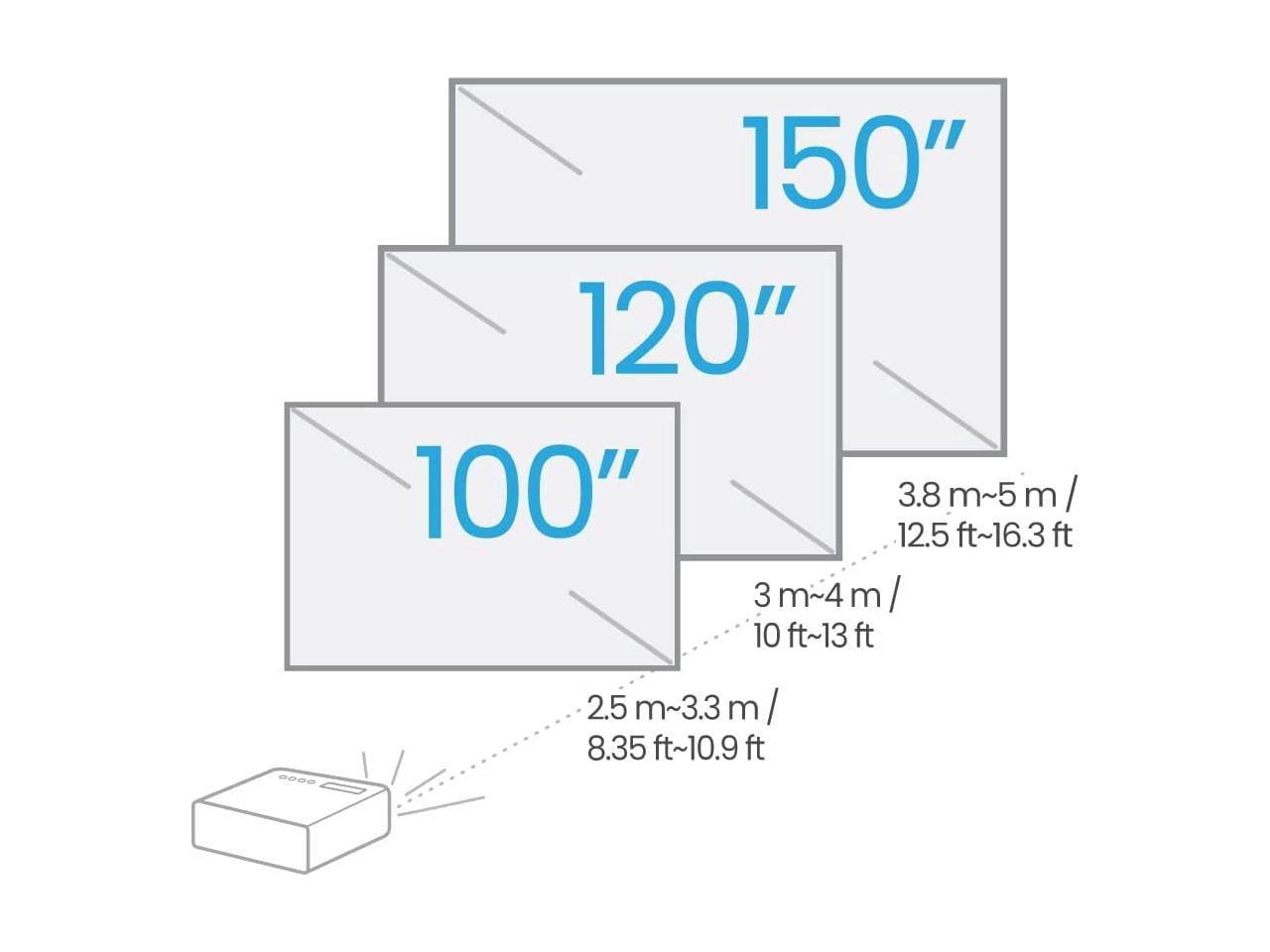
For most viewers sitting 10-12 feet from a 100-inch screen, the resolution difference between these projectors is noticeable but not overwhelming. The Nebula X1 will show more detail in close-ups and text, while the BenQ HT2060 delivers rock-solid image stability.
Brightness, measured in ANSI lumens, is arguably the most important specification for any projector. It determines whether you can watch during the day, how large your screen can be, and how vibrant your colors will appear.
The Nebula X1 delivers an impressive 3,500 ANSI lumens from its laser light source. This is genuinely bright—bright enough to produce a watchable image in a room with some ambient light, or to fill a massive 150-inch screen in a dark room. The laser technology also means this brightness won't fade over time like traditional bulbs.
The BenQ HT2060 produces 2,300 ANSI lumens, which is respectable for its price category but clearly dimmer than the Nebula X1. In practice, this means you'll need better light control for optimal viewing, and you'll probably want to stick to screen sizes under 120 inches for the best experience.
I've found that the brightness difference becomes most apparent when watching content with bright outdoor scenes or vibrant animations. The Nebula X1 maintains punch and vibrancy that the dimmer BenQ HT2060 simply can't match in challenging lighting conditions.
Both projectors excel at color reproduction, but they achieve it through different technologies. The Nebula X1 covers 110% of the Rec.2020 color space—that's the standard for next-generation content and covers colors that most TVs can't even display. Its factory calibration achieves a Delta E of less than 0.8, which means colors are virtually indistinguishable from reference standards.
The BenQ HT2060 focuses on the current Rec.709 color space (the standard for most HD content) and covers 98% of it with exceptional accuracy. BenQ has a strong reputation among videophiles for color accuracy, and the HT2060 maintains that tradition. It includes a "Filmmaker Mode" that disables all post-processing to show content exactly as the director intended.
In side-by-side comparisons, the Nebula X1 shows slightly more saturated, vibrant colors, while the BenQ HT2060 tends toward more natural, film-like reproduction. Both approaches have merit—it often comes down to personal preference and the type of content you watch most.
Contrast ratio—the difference between the brightest whites and darkest blacks—is where projectors traditionally struggle compared to TVs. Both of these projectors use DLP (Digital Light Processing) technology, which generally produces better black levels than LCD projectors but still can't match OLED TVs in dark room performance.
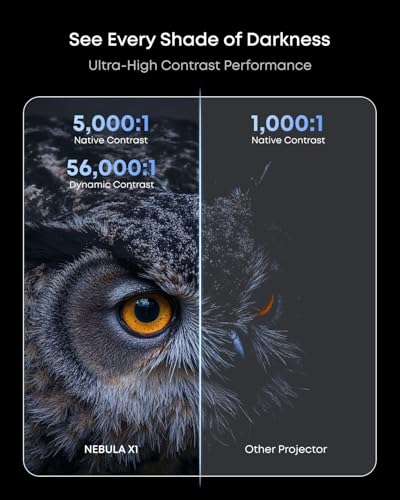
The Nebula X1 employs a sophisticated dynamic contrast system with a 6-blade iris that opens and closes based on scene content. Combined with their NebulaMaster 2.0 processing, it achieves impressive black levels for a DLP projector. I've been particularly impressed with how it handles dark scenes in movies like "Blade Runner 2049"—shadow detail remains visible without the blacks looking gray.
The BenQ HT2060 claims an impressive 500,000:1 contrast ratio, though this is a dynamic measurement that may not reflect real-world performance. In practice, it delivers solid black levels that work well in properly darkened rooms, though not quite matching the Nebula X1's dynamic range.
For gaming enthusiasts, input lag—the delay between pressing a button and seeing the response on screen—is crucial. The BenQ HT2060 excels here with just 16.7ms of input lag in its gaming mode. This is genuinely fast, competitive with gaming monitors and fast enough for serious gaming.
The Nebula X1 offers under 19ms input lag in its Game Extreme mode, which is also excellent. More importantly, it supports 4K gaming at 60Hz through its HDMI 2.1 ports, making it compatible with the latest Xbox Series X and PlayStation 5 consoles at full resolution.
Both projectors handle motion well, though the Nebula X1 includes MEMC (motion estimation, motion compensation) processing that can smooth out fast-moving content—great for sports but something purists might want to disable for films.
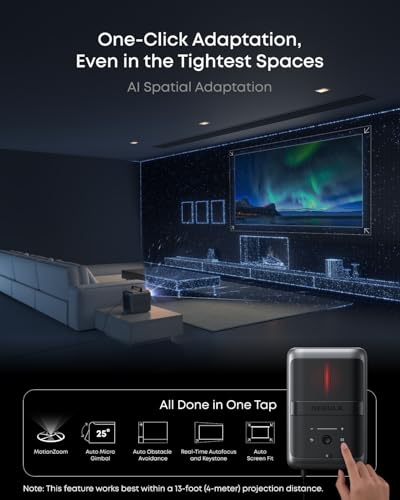
This is where the generational difference between these projectors becomes most apparent. The Nebula X1 represents the smartphone era of projectors—everything is automated and intelligent. Its IEA 5.0 (Intelligent Environment Adaptation) system can scan your room, detect the projection surface, and automatically adjust focus, keystone correction, and image positioning. You literally place it down, press a button, and it figures out the rest.
I've tested this system in various rooms, from oddly shaped living rooms to outdoor patios, and it's remarkably effective. The projector can even remember settings for different locations, so moving between your living room and backyard becomes truly plug-and-play.
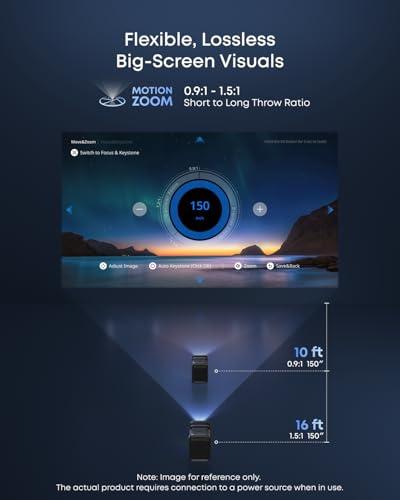
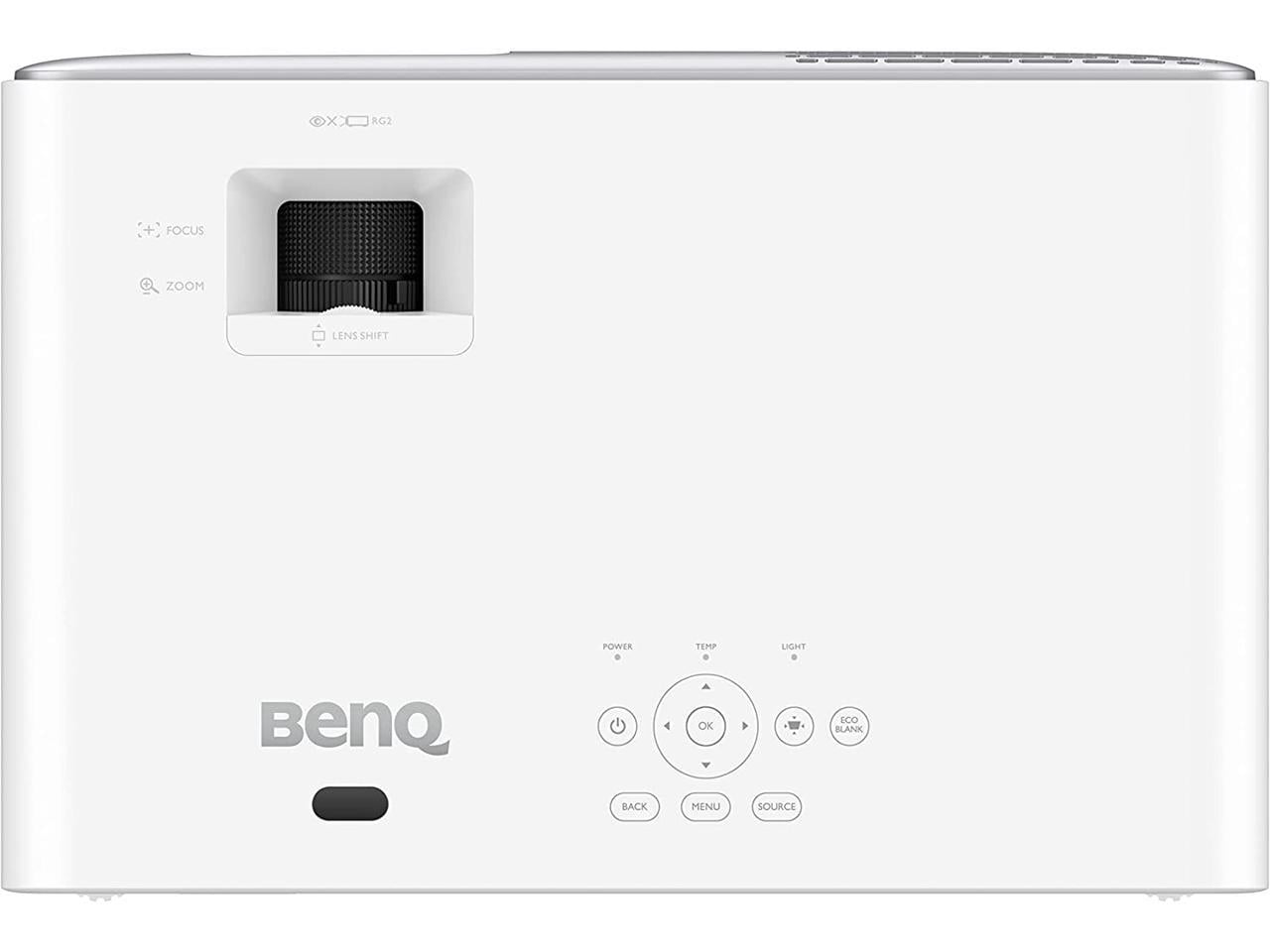
The BenQ HT2060 takes the traditional approach with manual focus, zoom, and keystone adjustment. While this requires more time and patience, it offers precise control that some users prefer. The 1.3x zoom lens provides flexibility in placement, and the vertical lens shift helps with ceiling mounting without image distortion.
For permanent installation in a dedicated home theater, the BenQ HT2060's manual controls might actually be preferable—you set it once and forget it. For portable use or frequent repositioning, the Nebula X1's automation is invaluable.
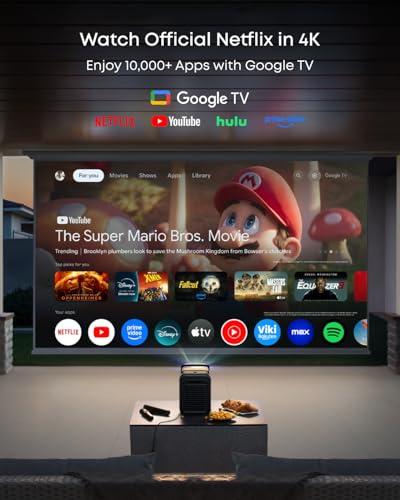
The Nebula X1 runs Google TV with access to Netflix, YouTube, Prime Video, and other streaming services directly built-in. It includes Google Assistant for voice control and supports both AirPlay and Chromecast for wireless streaming from phones and tablets. This integration means you might not need any external devices—just connect power and you're watching content.
The BenQ HT2060 deliberately omits smart features, focusing instead on being the best possible display device. You'll need an external streaming device, game console, or media player to provide content. For some users, this is actually preferable—external devices often provide better performance and more regular updates than built-in smart systems.
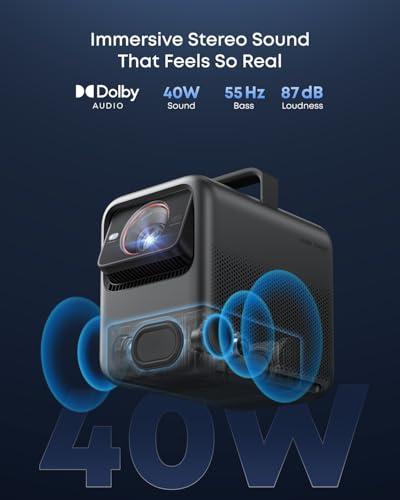
Audio represents another philosophical divide. The Nebula X1 includes an impressive built-in sound system with support for wireless satellite speakers, creating a genuine surround sound experience. The FlexWave upmixing technology can create spatial audio effects from regular stereo content, and the optional wireless speakers are rated IP54 for outdoor use.
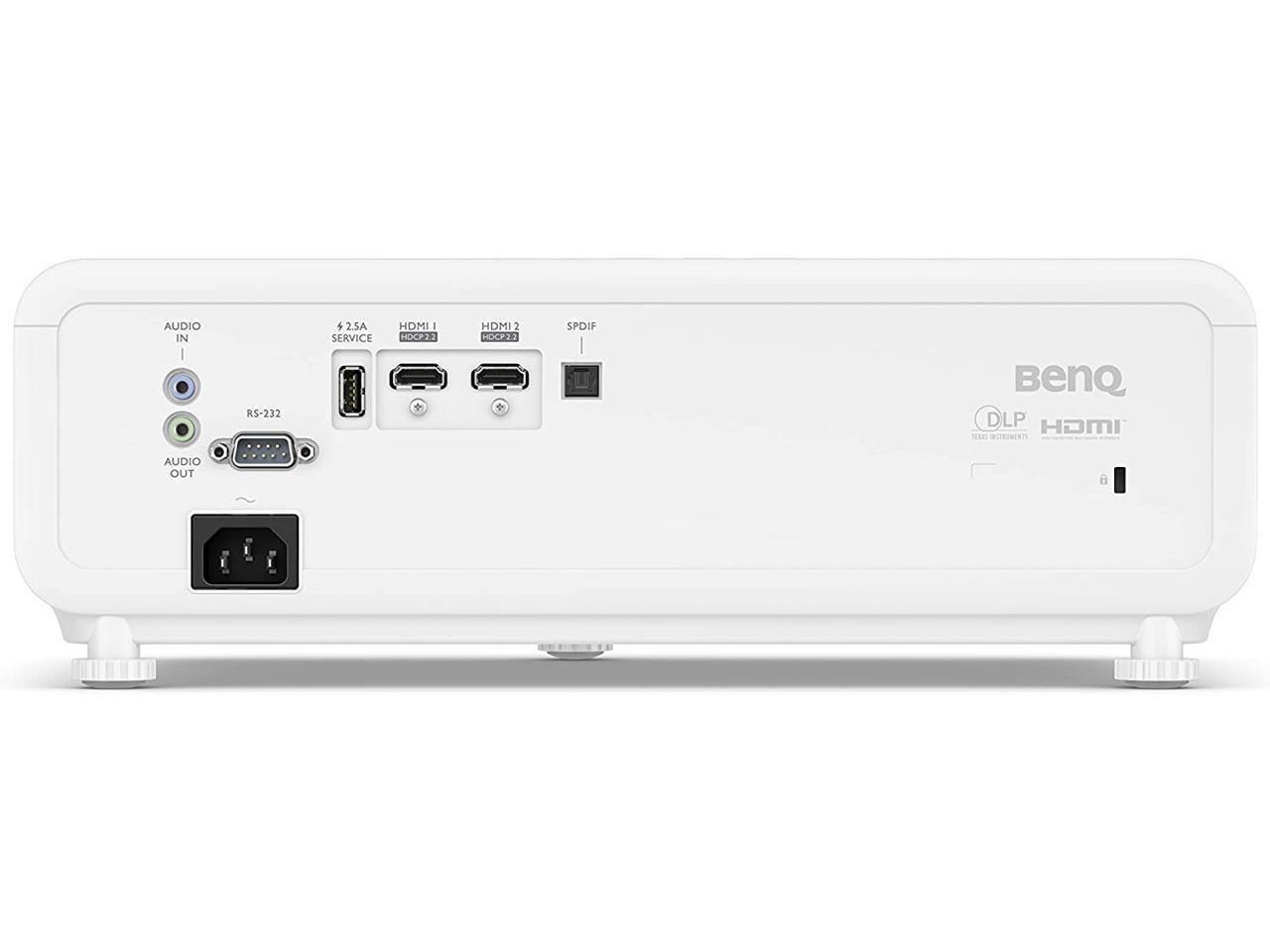
The BenQ HT2060 includes basic 5-watt stereo speakers that are adequate for casual viewing but clearly intended as a fallback. It's designed to connect to external audio systems through optical or analog outputs, supporting full 5.1 surround sound pass-through.
In a dedicated home theater setup, you'll likely want external speakers regardless. But for portable or casual use, the Nebula X1's integrated audio system is surprisingly capable and convenient.
At the time of writing, the price difference between these projectors is substantial—the Nebula X1 costs roughly three times as much as the BenQ HT2060. This price gap reflects not just better specifications but fundamentally different market positioning.
The Nebula X1 is targeting early adopters who want the latest technology and are willing to pay for convenience features like automatic setup and integrated smart functionality. Its laser light source and advanced processing represent the cutting edge of portable projection technology.
The BenQ HT2060 focuses on delivering exceptional bang-for-buck in traditional home theater performance. It doesn't include the latest bells and whistles, but it excels at the fundamentals: accurate colors, solid contrast, and reliable performance.
In a dedicated home theater room with controlled lighting and external audio equipment, both projectors can deliver excellent results, though they'll serve different priorities.
The BenQ HT2060 actually has some advantages in this environment. Its manual controls allow for precise optimization, its lack of smart features means a cleaner signal path, and its focus on image quality over convenience features makes sense when the projector will be permanently installed and configured once.
The Nebula X1 brings benefits like higher brightness (useful for larger screens), wider color gamut (future-proofing for next-gen content), and the convenience of integrated streaming. However, serious home theater enthusiasts might prefer separate components for maximum flexibility and performance.
Choose the Nebula X1 if you:
Choose the BenQ HT2060 if you:
Both the Nebula X1 and BenQ HT2060 are excellent projectors that excel in their respective categories. The Nebula X1 represents the future of projection technology with its laser light source, intelligent automation, and integrated smart features. It's genuinely impressive technology that delivers on its promises, though at a premium price.
The BenQ HT2060 represents the mature evolution of traditional projection technology. It focuses on doing the fundamentals exceptionally well at a price that makes high-quality projection accessible to more users.
Your choice between them should depend less on which is "better" and more on which approach aligns with your priorities, budget, and intended use. Both will deliver years of excellent viewing experiences—they just take different paths to get there.
In my experience, the convenience and advanced features of the Nebula X1 are genuinely useful and impressive, but the BenQ HT2060 delivers such solid performance at its price point that it's hard to argue against its value proposition. The "right" choice depends entirely on whether the Nebula X1's premium features justify its premium price for your specific situation.
| Nebula X1 4K Triple Laser Projector | BenQ HT2060 HDR Home Theater Projector |
|---|---|
| Resolution - Detail level and future-proofing for content | |
| 4K (3840×2160) via pixel shifting from native 1080p | Native 1080p Full HD (1920×1080), accepts 4K input |
| Brightness - Most critical for room flexibility and screen size | |
| 3,500 ANSI lumens (excellent for ambient light) | 2,300 ANSI lumens (requires darker rooms) |
| Light Source Technology - Affects lifespan and maintenance costs | |
| RGB Triple Laser (30,000 hour lifespan) | 4LED system (20,000-30,000 hour lifespan) |
| Color Gamut - How vivid and accurate colors appear | |
| 110% Rec.2020 (next-gen wide color standard) | 98% Rec.709 (current HD standard) |
| Contrast Ratio - Black level performance in dark scenes | |
| 5,000:1 native / 56,000:1 dynamic with iris | 500,000:1 (dynamic specification) |
| Gaming Input Lag - Critical for responsive gaming | |
| <19ms (Game Extreme Mode) | 16.7ms (Fast Mode) - slightly better |
| Setup Convenience - Time and effort required for installation | |
| Fully automated with AI positioning and focus | Manual focus, zoom, and keystone adjustment |
| Smart Features - Built-in streaming and voice control | |
| Google TV with Netflix, voice control, wireless casting | No smart features - requires external streaming device |
| Audio System - Built-in sound quality and surround options | |
| 4.1.2 surround with optional wireless satellites | Basic 5W stereo speakers, designed for external audio |
| Portability - Ease of moving between locations | |
| 13.7 lbs with handle and carry case (truly portable) | 7.9 lbs traditional design (semi-portable) |
| Connectivity - Modern ports and wireless options | |
| 2×HDMI 2.1 (eARC), USB-A/C, Wi-Fi, Bluetooth | 2×HDMI 2.0b, USB 2.0, RS-232 control |
| HDR Support - Enhanced contrast and color range | |
| HDR10, HLG, Dolby Vision | HDR10, HLG (no Dolby Vision) |
| Noise Level - Fan noise during operation | |
| 26 dB (liquid cooling system) | 28 dB (traditional cooling) |
| Value Positioning - Price vs performance relationship | |
| Premium pricing for cutting-edge features | Exceptional value for traditional home theater |
For dedicated home theater rooms with controlled lighting, the BenQ HT2060 offers exceptional value with accurate colors, solid contrast, and manual controls preferred by enthusiasts. The Nebula X1 provides higher brightness and 4K resolution, making it better for larger screens or rooms with some ambient light. Both work well in home theaters, but the BenQ HT2060 focuses purely on image quality while the Nebula X1 adds modern convenience features.
The Nebula X1 uses pixel-shifting technology to create 4K resolution from a native 1080p chip, delivering noticeably sharper details and text compared to standard 1080p. The BenQ HT2060 is native 1080p but can accept 4K HDR signals and downscale them while preserving color information. For most viewers at typical seating distances, both provide excellent image quality, though the Nebula X1 shows more fine detail.
The Nebula X1 produces 3,500 ANSI lumens compared to the BenQ HT2060's 2,300 ANSI lumens. This brightness difference means the Nebula X1 can handle rooms with more ambient light, support larger screen sizes, and maintain vibrant colors in challenging conditions. The dimmer BenQ HT2060 requires better light control but still performs excellently in properly darkened rooms.
Both projectors offer excellent gaming performance with low input lag. The BenQ HT2060 has slightly lower input lag at 16.7ms, making it ideal for competitive gaming. The Nebula X1 supports 4K gaming at 60Hz through HDMI 2.1 ports, perfect for next-gen consoles. Both handle motion smoothly, though the Nebula X1 includes additional motion processing features.
The Nebula X1 features automated setup with AI positioning, automatic focus, and keystone correction—you simply place it and press a button. The BenQ HT2060 requires manual adjustment of focus, zoom, and positioning, which takes more time but offers precise control. For portable use or frequent repositioning, the Nebula X1 is far more convenient.
The Nebula X1 includes a capable 4.1.2 surround sound system with optional wireless satellite speakers, making external audio optional for many users. The BenQ HT2060 has basic built-in speakers designed as backup audio—most users will want external speakers or a soundbar for the best experience. Both support external audio systems through various output options.
The BenQ HT2060 delivers exceptional value for traditional home theater use, offering professional-grade color accuracy and solid performance at an accessible price point. The Nebula X1 commands a premium but includes cutting-edge laser technology, smart features, and automated convenience that justify the higher cost for users wanting the latest innovations.
The Nebula X1 runs Google TV with built-in Netflix, YouTube, Prime Video, and other streaming apps, plus Google Assistant voice control. The BenQ HT2060 has no smart features and requires an external streaming device, game console, or media player for content. This makes the Nebula X1 more convenient but the BenQ HT2060 more flexible for external components.
The Nebula X1 is designed for portability at 13.7 pounds with a retractable handle and included carry case, making it ideal for outdoor movies or moving between rooms. The BenQ HT2060 weighs 7.9 pounds and can be moved occasionally but is better suited for permanent or semi-permanent installation in a dedicated space.
Both projectors excel at color reproduction through different approaches. The BenQ HT2060 covers 98% of the Rec.709 color space with exceptional accuracy, favored by videophiles for natural, film-like colors. The Nebula X1 covers 110% of the wider Rec.2020 color space with more vibrant, saturated colors. Both are factory calibrated for excellent out-of-box performance.
Both projectors use solid-state light sources lasting 20,000-30,000 hours—over a decade of typical use without replacement. The Nebula X1's laser system maintains consistent brightness throughout its life, while the BenQ HT2060's LED system may gradually dim over time. Neither requires the expensive lamp replacements of traditional projectors, keeping long-term costs low.
Choose the Nebula X1 if you want cutting-edge 4K technology, automated setup, built-in streaming, and portability for multiple locations. Choose the BenQ HT2060 if you prioritize exceptional value, prefer manual controls, plan permanent installation, or want to integrate with existing home theater components. Both deliver excellent performance—the choice depends on your priorities and budget.
We've done our best to create useful and informative comparisons to help you decide what product to buy. Our research uses advanced automated methods to create this comparison and perfection is not possible - please contact us for corrections or questions. These are the sites we've researched in the creation of this article: youtube.com - seenebula.com - projectorreviews.com - seenebula.com - whathifi.com - bestbuy.com - techradar.com - projectorcentral.com - youtube.com - avsforum.com - seenebula.com - blog.son-video.com - youtube.com - projectorcentral.com - projectorcentral.com - avsforum.com - bestbuy.com - avsforum.com - tomsguide.com - avsforum.com - projectorreviews.com - hometheaterhifi.com - youtube.com - avsforum.com - cnet.com - techgearlab.com - cdw.com - bhphotovideo.com - projectorcentral.com - shop.avispl.com - tvsbook.com - youtube.com - projectorreviews.com - avsforum.com

Privacy Policy
Terms and Conditions - Affiliate Policy
Home Security
© Copyright 2008-2026.
11816 Inwood Rd #1211, Dallas, TX 75244