

In a world where home entertainment options continue to expand, projectors have carved out a unique and compelling niche. Unlike traditional TVs that are constrained by physical screen dimensions, projectors offer the flexibility of variable screen sizes, often at a fraction of the cost per inch compared to large televisions. Whether you're setting up a dedicated home theater or looking for entertainment on the go, today's projectors offer impressive technology that caters to diverse needs.
I've spent considerable time with both the BenQ HT2060 and the XGIMI Halo+, and they represent two distinct approaches to projection technology. Let's explore how these projectors compare and who might benefit most from each option.
Before diving into specifics, it's important to understand that the projector market has evolved significantly over the past decade. Traditional lamp-based projectors have increasingly given way to LED and laser light sources that offer longer lifespans and more consistent brightness over time.
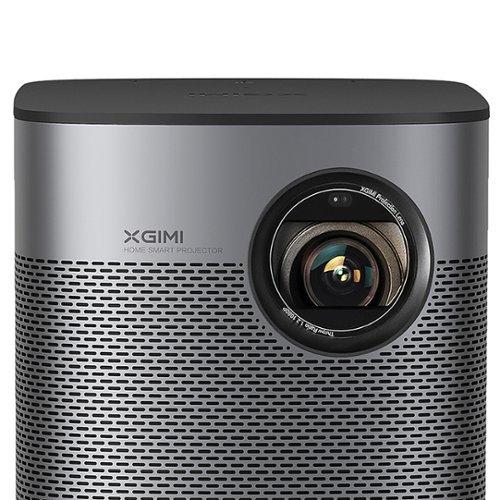
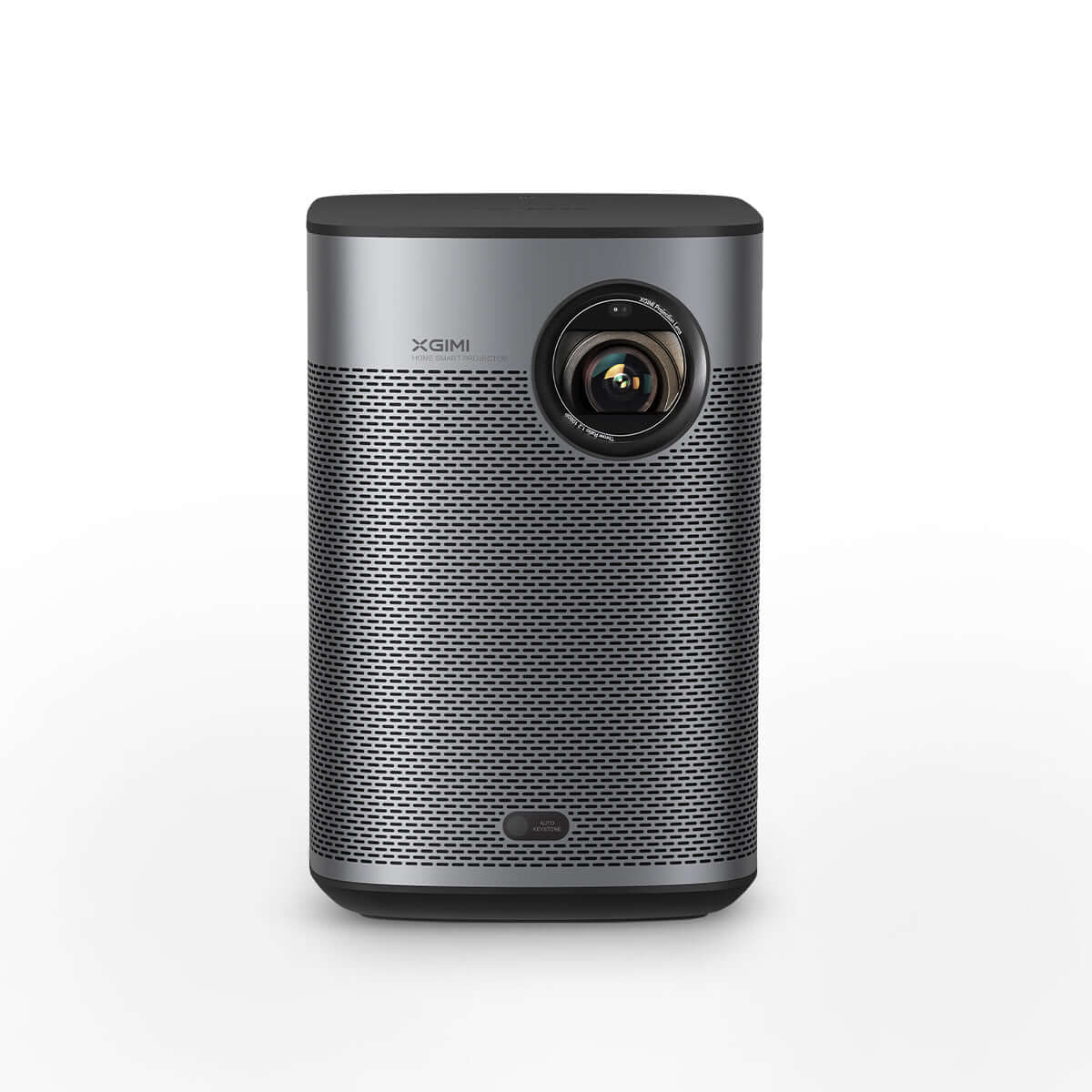
The BenQ HT2060, released in 2023, represents the modern dedicated home theater projector with its 4LED light source technology. Meanwhile, the XGIMI Halo+, which hit the market in late 2021, exemplifies the evolution of portable projection technology with its balance of portability and performance.
While both are classified as projectors, they serve different purposes:
The most noticeable difference between these projectors is their brightness, which significantly impacts when and where you can use them.
The BenQ HT2060 outputs 2300 ANSI lumens—an industry-standard brightness measurement that reflects the actual light output reaching your screen. This level of brightness allows the projector to maintain a vibrant, visible image even with some ambient light present. In practical terms, this means you can watch a movie during the day with curtains drawn without the image appearing washed out.
The XGIMI Halo+ produces 700 ISO lumens. While ISO lumens and ANSI lumens aren't directly comparable (ISO measurement tends to yield higher numbers than ANSI for the same projector), this still represents significantly less brightness. In real-world use, the Halo+ performs best in dark environments or when projecting smaller images of 60-80 inches.
During my testing, the BenQ maintained excellent visibility on a 120-inch screen with light-filtering curtains during daytime, while the Halo+ struggled in similar conditions, requiring near-darkness to maintain image pop and contrast at that size.
Both projectors feature native 1080p (1920 x 1080 pixels) resolution, which remains the sweet spot for projectors in this price range. While 4K projectors have become more common, they typically command significantly higher prices.
The clarity difference between these units comes not from resolution but from their optical systems and image processing. The BenQ HT2060 utilizes a larger, more sophisticated lens system that maintains sharpness across the entire image. Its fixed installation design allows for optimal focus uniformity.
The XGIMI Halo+ features impressive clarity for its size, but I noticed that focus uniformity isn't quite as consistent, particularly at the edges of larger projected images. This is a common limitation in more compact portable projectors where optical components must be miniaturized.
Color performance is where the BenQ's home theater pedigree becomes evident. The HT2060's 4LED light source incorporates a dedicated green LED alongside traditional RGB LEDs. This technology, relatively new in consumer projectors, enhances color purity and allows the projector to cover 98% of the Rec.709 color space—the standard used for HDTV content.
The Halo+ employs XGIMI's X-VUE 2.0 image processing, which does an admirable job enhancing colors, but in side-by-side comparisons, it doesn't match the BenQ's color accuracy and saturation. The difference is most noticeable in content with subtle color gradations like sunset scenes or skin tones.
Both projectors support HDR10 and HLG (Hybrid Log-Gamma) high dynamic range formats, but their implementation differs significantly:
The fundamental difference in design philosophy between these projectors becomes most apparent when setting them up.
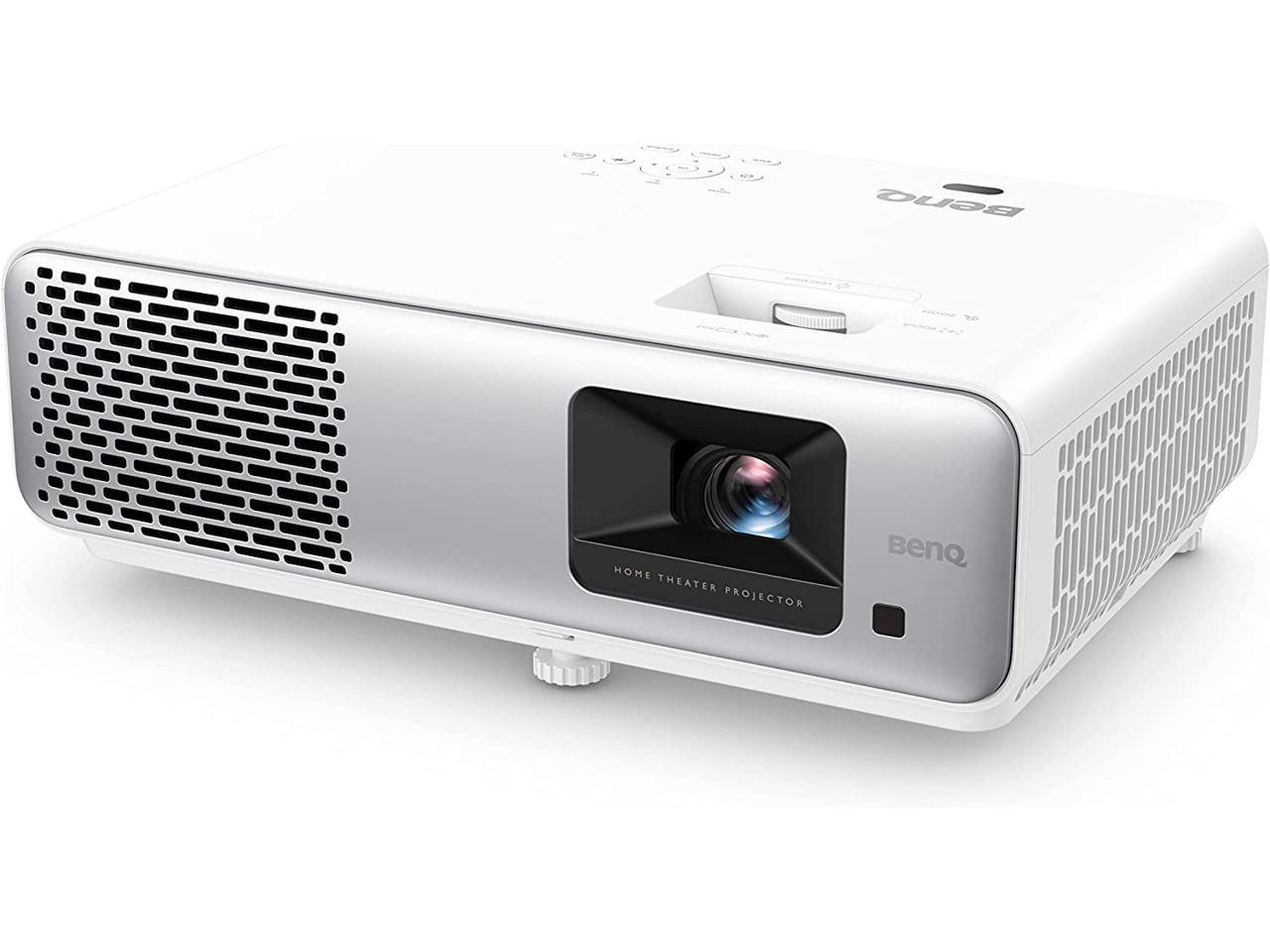
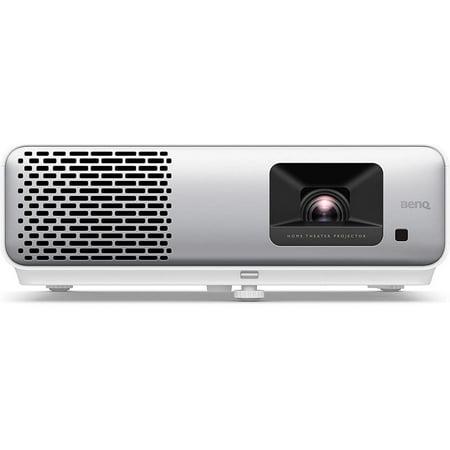
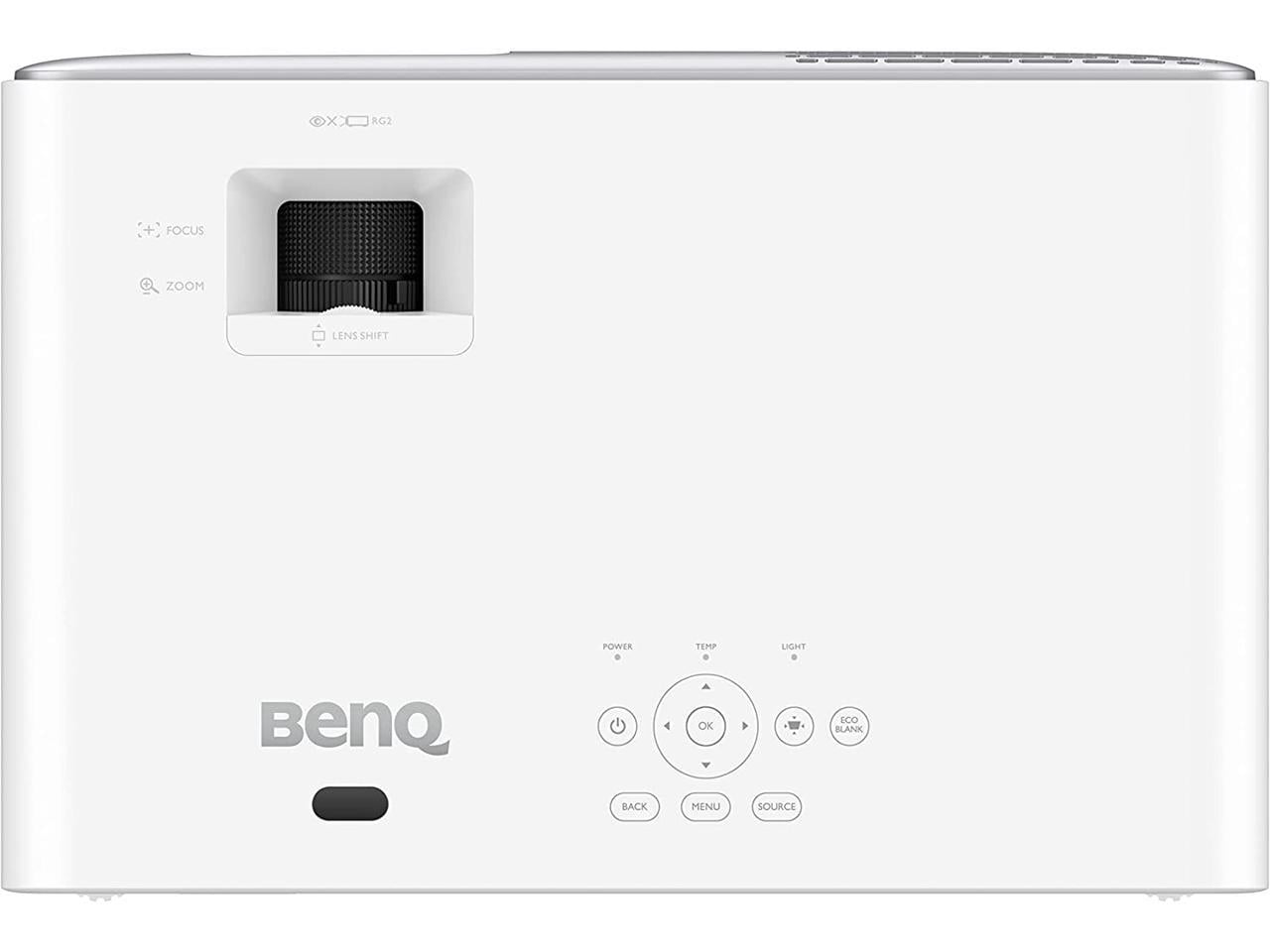
The BenQ HT2060, weighing 7.9 pounds, is designed for semi-permanent installation. It offers several installation aids including a 1.3x zoom lens (allowing flexibility in placement distance), vertical lens shift of +10% (letting you adjust the image position without moving the projector), and 2D keystone correction (which digitally adjusts the image when the projector isn't perfectly perpendicular to the screen).
Despite these features, it still requires thoughtful setup and potentially ceiling mounting for optimal results. Cable management also becomes a consideration, as you'll need to route power and source connections to your fixed location.
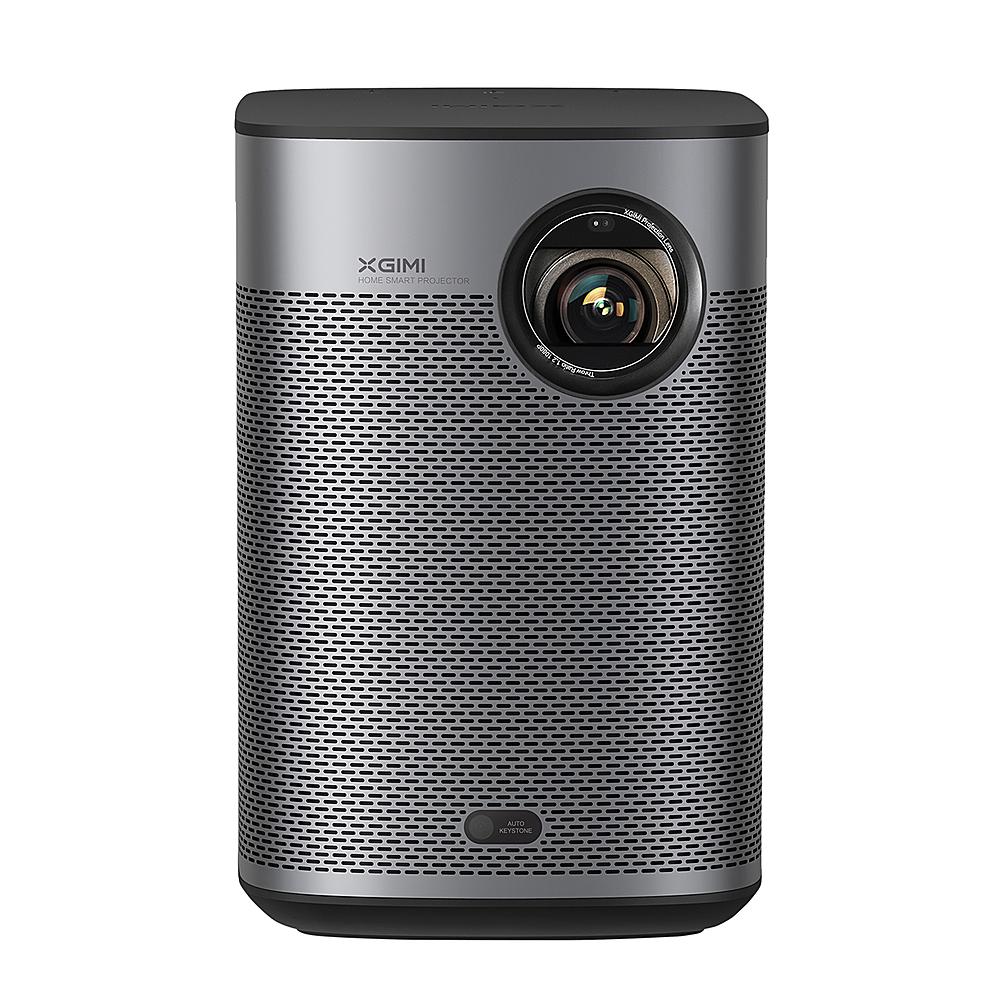
The XGIMI Halo+ revolutionizes setup with its Intelligent Screen Adaptation technology. This system combines auto-focus, auto keystone correction, and obstacle avoidance to automatically configure a perfectly squared image in seconds. I've found this system remarkably effective—place the projector on virtually any surface, power it on, and within moments it identifies the optimal projection area and adjusts accordingly.
Weighing just 3.53 pounds and featuring a built-in battery, the Halo+ can transform any space into a viewing area without complex installation. This flexibility does come at the cost of some image quality, however, as digital keystone correction reduces effective resolution and brightness.
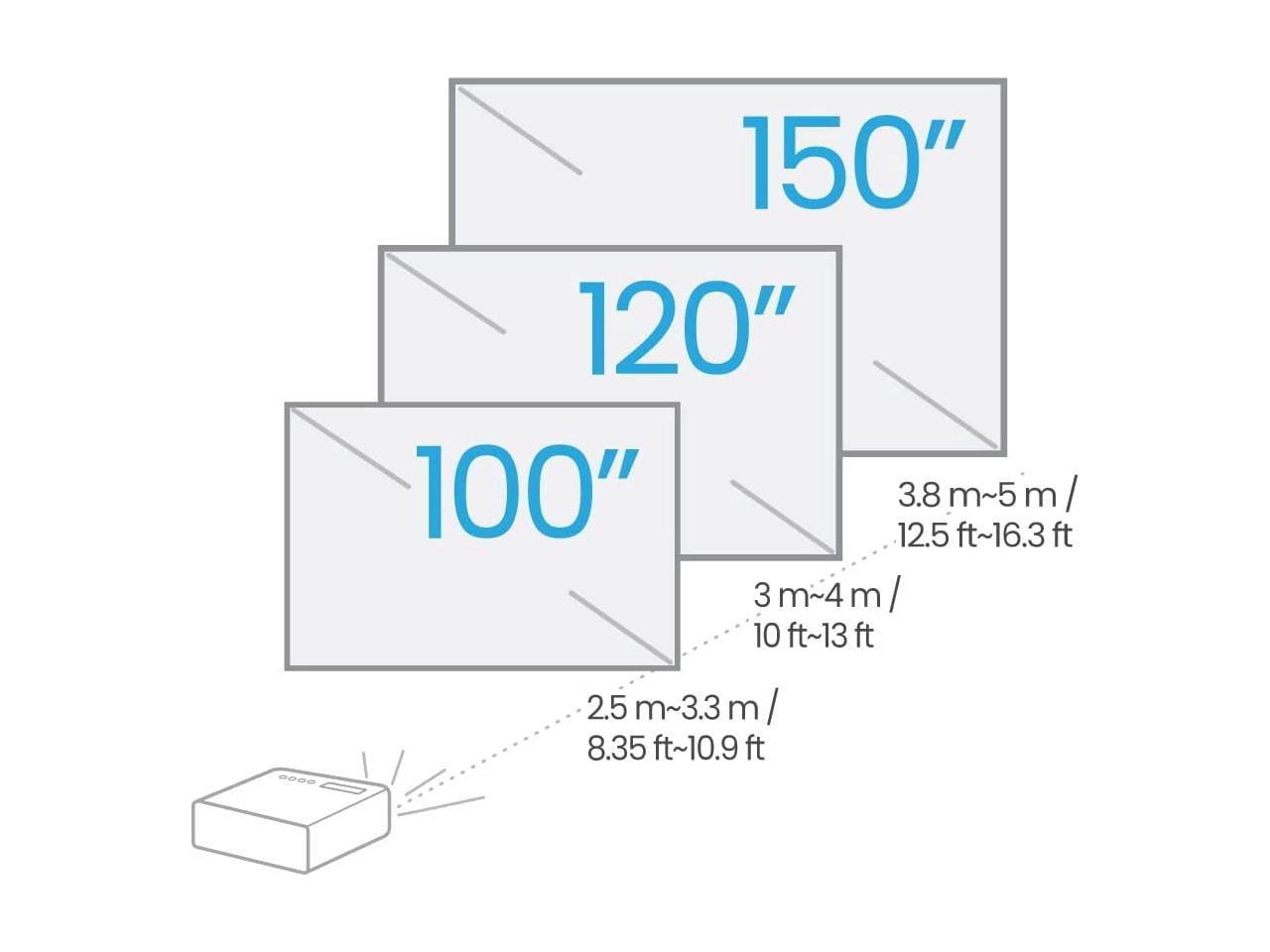
Throw ratio—the relationship between the distance from the projector to the screen and the resulting image width—significantly impacts where you can place these devices.
The BenQ features a throw ratio of 1.15:1 to 1.50:1, meaning it needs to be placed further from the screen than some ultra-short-throw alternatives. For a 100-inch diagonal image, you'll need roughly 8.5 to 11 feet of distance between the projector and screen. This requires a reasonably sized room for larger images.
The Halo+ has a fixed throw ratio of 1.2:1, falling within a similar range. However, its portability allows you to adjust the image size by simply moving the projector, making it more adaptable to different spaces. The tradeoff comes when you want larger images in smaller rooms, where neither projector can match the capabilities of more expensive short-throw alternatives.
One of the most significant differences between these projectors is their approach to content delivery.
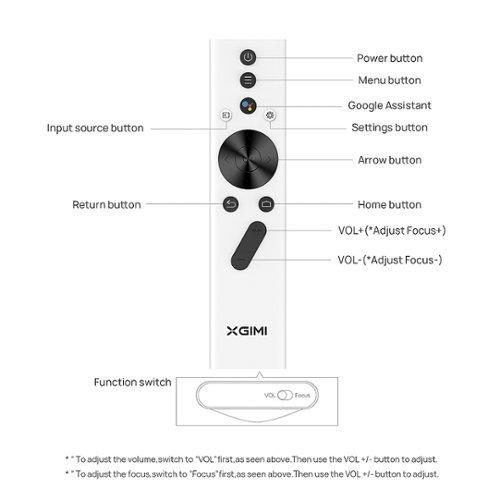
The XGIMI Halo+ runs on Android TV 10.0, offering a built-in streaming platform with access to thousands of apps including YouTube, Disney+, Hulu, and Amazon Prime Video. The interface is responsive and familiar to most Android users. However, it's worth noting that Netflix isn't natively supported at full resolution due to certification issues—a common limitation with many Android TV projectors. Workarounds exist but aren't as seamless as dedicated streaming devices.
The BenQ HT2060 takes a different approach with no built-in smart platform. It functions essentially as a display, requiring external streaming devices like Roku, Apple TV, or Fire TV Stick to access content. While this might seem like a disadvantage, it provides flexibility to choose your preferred streaming platform and ensures you can easily upgrade your streaming technology without replacing the entire projector.
Both approaches have merit—the Halo+ offers all-in-one convenience ideal for portable use, while the BenQ's approach potentially provides better long-term upgradability and performance.
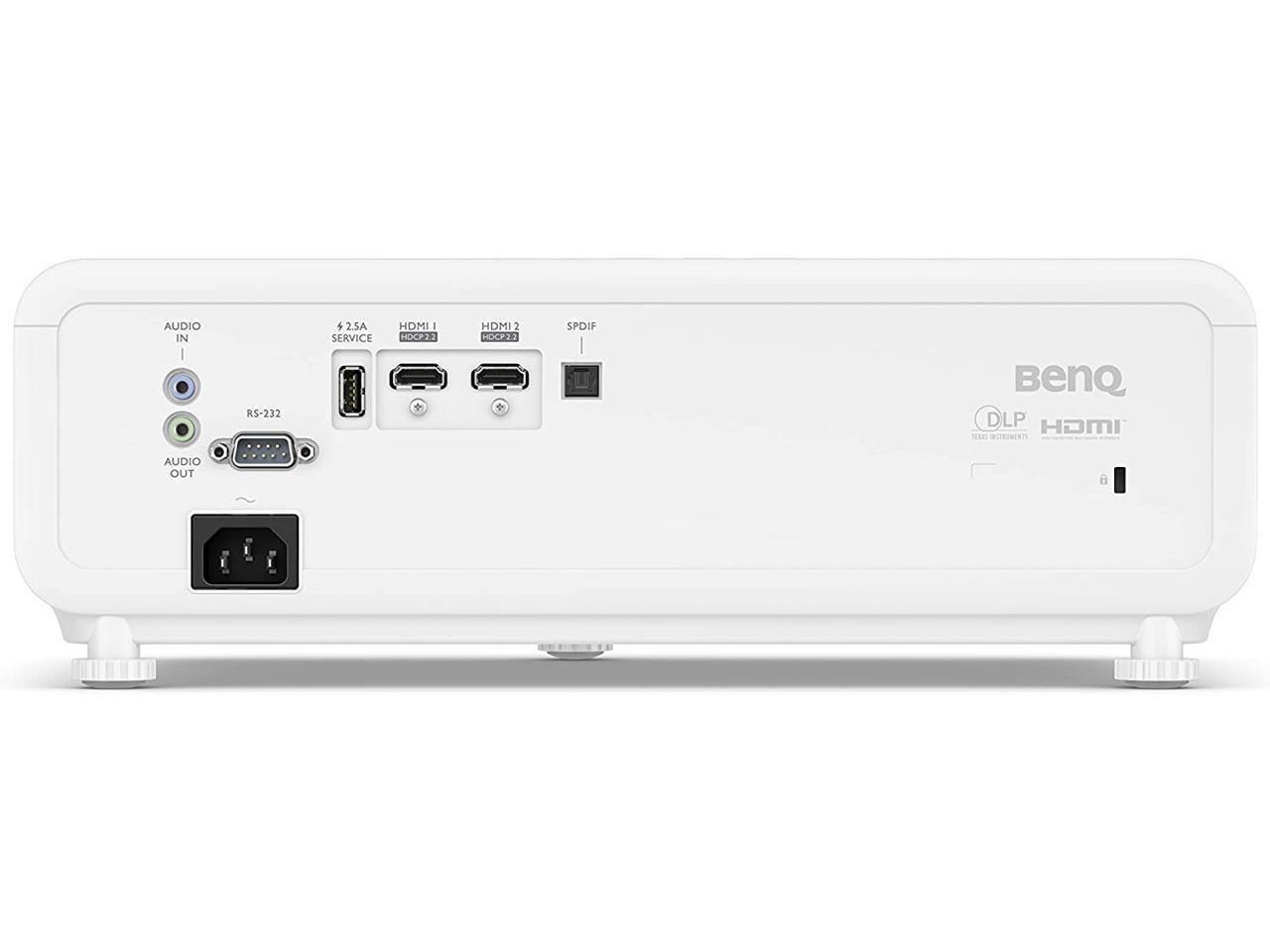
The BenQ features two HDMI 2.0b ports, supporting 4K HDR input (though it displays at 1080p), along with audio outputs including optical and 3.5mm analog. This connectivity profile suits permanent installation where multiple devices might be connected.
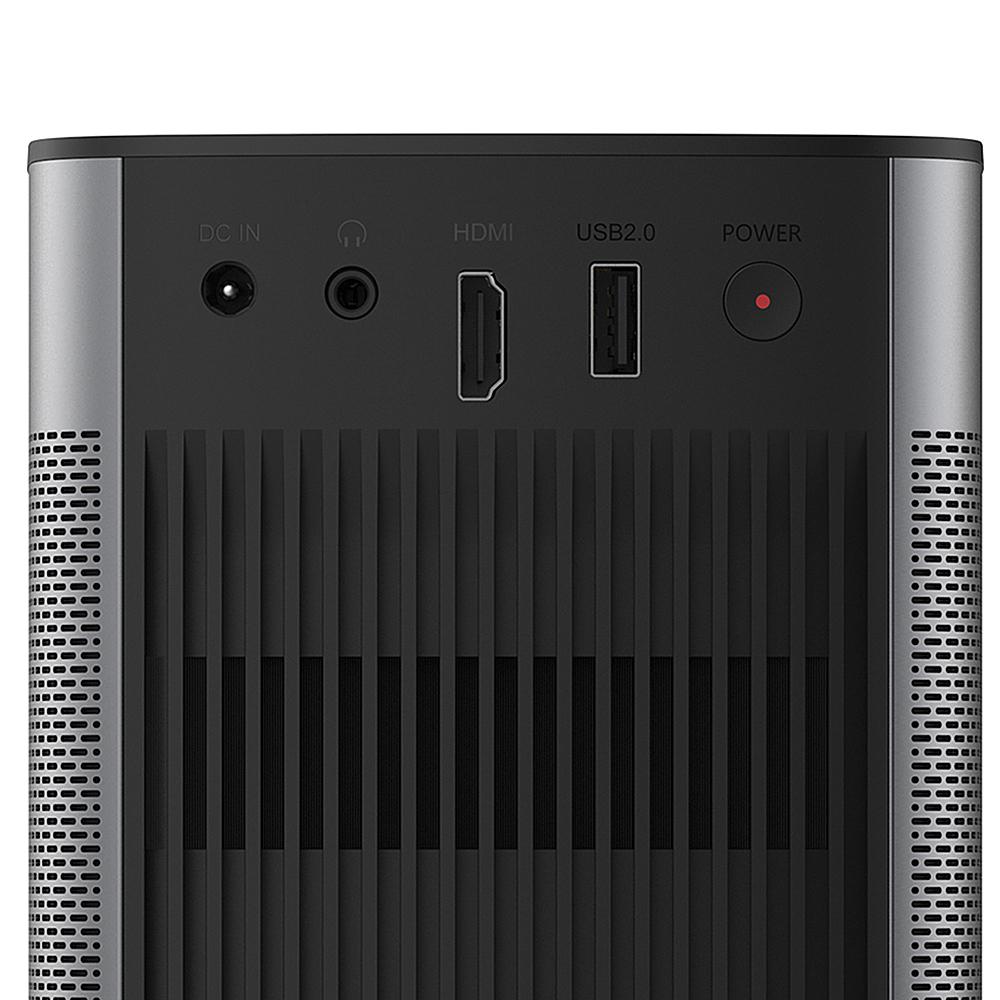
The Halo+ includes a single HDMI port with eARC support (allowing connection to compatible soundbars with enhanced audio return functionality), one USB port, and wireless casting via Chromecast and Airscreen. While more limited in physical connections, its wireless capabilities largely compensate for fewer ports.
The audio approach for these projectors reflects their intended use cases.
The XGIMI Halo+ features an impressive sound system for its size—dual 5W speakers tuned by Harman/Kardon that deliver rich, room-filling audio. During testing, I found its audio clarity and volume sufficient for most portable viewing scenarios, eliminating the need for external speakers. The built-in speakers support Dolby Audio and DTS-HD formats, enhancing the audio experience for compatible content.
The BenQ HT2060 includes dual 5W speakers that provide adequate sound for casual viewing, but they lack the richness and depth of the Halo+'s audio system. However, this aligns with its home theater focus, where most users will connect to external audio systems. The HT2060 supports 5.1 channel audio output via its optical connection, making it easy to integrate with existing home theater audio setups.
In a dedicated home theater environment, the BenQ's approach makes more sense, as external speakers or soundbars will almost always outperform built-in options. For portable use, the Halo+'s superior built-in audio is a significant advantage.
The most fundamental distinction between these projectors is their mobility. The XGIMI Halo+ features a built-in 59.454Wh battery that provides approximately 2.5 hours of projection time—sufficient for most movies at reduced brightness settings. This true portability enables unique use cases impossible with traditional projectors: backyard movie nights, camping trips, presentations on the go, or simply moving from room to room.
The BenQ HT2060 requires constant AC power and isn't designed for frequent relocation. Its fixed nature is the necessary tradeoff for its superior brightness and image quality.
For gaming enthusiasts, input lag (the delay between a controller input and seeing the result on screen) is a crucial consideration. The BenQ excels here with a low input lag of 16.7ms in its Fast Mode at 1080p/60Hz, making it suitable for competitive gaming where quick reactions matter.
The Halo+ performs adequately for casual gaming with an input lag in the 35-40ms range, but this might feel sluggish for fast-paced or competitive games. This reflects the general prioritization of the BenQ for performance metrics versus the Halo+'s emphasis on convenience.
Both projectors utilize solid-state light sources that far outlast traditional projector lamps. The BenQ HT2060's 4LED system is rated for 20,000 hours in normal mode and 30,000 hours in economy mode—equivalent to watching 4 hours of content daily for over 13 years before noticeable brightness degradation.
The XGIMI Halo+'s LED light source offers a similar 25,000-hour lifespan. Unlike lamp-based projectors that require expensive bulb replacements every few thousand hours, both projectors should maintain consistent performance throughout their practical lifespan.
While both projectors feature 1080p native resolution, the BenQ accepts 4K input signals and downscales them, ensuring compatibility with newer 4K source devices. Its dual HDMI 2.0b ports also support modern video standards.
The Halo+ benefits from its Android TV platform, which receives regular updates to maintain compatibility with streaming services. However, as with any smart device, software support will eventually end while the hardware remains functional.
After extensive testing of both projectors, I've found that the decision really comes down to how and where you plan to use your projector, rather than simply which is "better."
Choose the BenQ HT2060 if:
Choose the XGIMI Halo+ if:
For my personal setup, I've found that the BenQ HT2060 excels in my dedicated basement home theater where its superior brightness and image quality create a truly immersive experience for movies and gaming. The fixed installation was worth the effort for the enhanced performance.
However, I also appreciate the XGIMI Halo+ for its remarkable versatility—it's become my go-to for impromptu movie nights in different rooms, backyard screenings, and even travel. Its instant setup and surprisingly capable audio make it perfect for these flexible use cases.
The projector market continues to evolve rapidly, with both manufacturers pushing the boundaries of what's possible in their respective categories. The BenQ represents the democratization of high-quality home theater projection at increasingly accessible price points, while the XGIMI shows how portable projectors have matured from novelty items into legitimate entertainment solutions.
Ultimately, both the BenQ HT2060 and XGIMI Halo+ excel at their intended purposes. Your choice should align with how you plan to use your projector most frequently, balancing the tradeoffs between image quality, brightness, and flexibility to find the perfect match for your viewing habits.
| BenQ HT2060 HDR Home Theater Projector | XGIMI Halo+ Portable Projector |
|---|---|
| Price - Your baseline investment | |
| $999 (Focused on home theater performance) | $849 (Premium for portability) |
| Type - Defines core use case and flexibility | |
| Fixed home theater projector (Permanent installation) | Portable projector (Take-anywhere design) |
| Brightness - Determines usability in different lighting conditions | |
| 2300 ANSI lumens (Works in rooms with some ambient light) | 700 ISO lumens (Requires darker environments for optimal viewing) |
| Light Source - Impacts longevity and maintenance costs | |
| 4LED technology (20,000-30,000 hour lifespan, no lamp replacements) | LED (25,000 hour lifespan, no lamp replacements) |
| Resolution - Affects image detail and clarity | |
| 1080p Full HD native (Accepts 4K input signals) | 1080p Full HD native |
| HDR Support - Enhances contrast and color depth | |
| HDR10 and HLG (Effective implementation due to higher brightness) | HDR10 and HLG (Limited impact due to brightness constraints) |
| Weight - Influences portability and placement options | |
| 7.9 pounds (Designed for fixed installation) | 3.53 pounds (Lightweight for easy transport) |
| Battery - Determines freedom from power outlets | |
| None (Requires constant AC power) | Built-in 59.454Wh (Up to 2.5 hours of viewing) |
| Smart Features - Affects content access convenience | |
| No built-in smart platform (Requires external streaming devices) | Android TV 10.0 built-in (Thousands of apps, no native Netflix support) |
| Audio - Important for standalone use without external speakers | |
| Dual 5W speakers (Basic, meant to complement external audio) | Dual 5W Harman/Kardon speakers (Rich, room-filling sound) |
| Inputs - Determines connection flexibility | |
| 2x HDMI 2.0b, audio outputs (Better for multiple sources) | 1x HDMI (eARC), 1x USB, wireless casting (Streamlined for portable use) |
| Auto Features - Impacts setup convenience | |
| Manual focus, 1.3x zoom, +10% lens shift (Traditional setup) | Intelligent Screen Adaptation with auto focus, auto keystone, obstacle avoidance (Instant setup) |
| Gaming Performance - Critical for responsive gameplay | |
| 16.7ms input lag at 1080p/60Hz (Suitable for competitive gaming) | 35-40ms input lag (Adequate for casual gaming only) |
| Best For - Primary intended use case | |
| Dedicated home theaters, gaming setups, permanent installations | Portable entertainment, travel, backyard movies, multi-room flexibility |
The BenQ HT2060 HDR Home Theater Projector offers superior image quality with significantly higher brightness (2300 ANSI lumens vs 700 ISO lumens), better color accuracy (98% Rec.709 coverage), and more effective HDR implementation. The XGIMI Halo+ Portable Projector provides good image quality for a portable device but can't match the BenQ HT2060 in terms of brightness, contrast, or color performance, especially in environments with ambient light.
Yes, the XGIMI Halo+ Portable Projector is ideal for outdoor use thanks to its built-in battery that lasts up to 2.5 hours, compact 3.53-pound design, and integrated Harman/Kardon speakers. For best results, use it after sunset or in very dark environments since its 700 ISO lumens brightness isn't ideal for outdoor viewing before dark. The BenQ HT2060 is not suitable for outdoor use as it requires constant AC power and is designed for permanent installation.
The BenQ HT2060 HDR Home Theater Projector is significantly better for dedicated home theater use with its superior brightness (2300 ANSI lumens), excellent color accuracy, effective HDR performance, and lower input lag for gaming. It's designed specifically for optimal performance in home theater environments. While the XGIMI Halo+ can function in a home theater setting, it's better suited for casual or temporary setups rather than delivering the premium experience the BenQ HT2060 provides.
The XGIMI Halo+ Portable Projector features impressive built-in Harman/Kardon dual 5W speakers that deliver room-filling sound suitable for most viewing scenarios without external speakers. The BenQ HT2060 has dual 5W speakers that provide adequate sound for casual viewing, but for a true home theater experience, you'd benefit from connecting external speakers or a sound system through its optical or 3.5mm audio outputs.
The XGIMI Halo+ Portable Projector is significantly easier to set up with its Intelligent Screen Adaptation technology that automatically handles focus, keystone correction, and obstacle avoidance. You can simply place it and start watching within seconds. The BenQ HT2060 requires more traditional manual setup with its focus ring, 1.3x zoom adjustment, and vertical lens shift, making initial installation more involved, though it only needs to be done once for permanent setups.
The XGIMI Halo+ Portable Projector runs Android TV with built-in access to thousands of streaming apps including Disney+, YouTube, and Amazon Prime Video, though Netflix requires workarounds due to certification issues. The BenQ HT2060 has no built-in streaming capabilities and requires external streaming devices like Roku, Apple TV, or Fire TV Stick to access streaming services including Netflix.
The BenQ HT2060 HDR Home Theater Projector is superior for gaming with its low input lag of 16.7ms at 1080p/60Hz, making it suitable for competitive gaming where quick reactions matter. The XGIMI Halo+ has an input lag of around 35-40ms, which is acceptable only for casual gaming and may feel sluggish for fast-paced or competitive games. The higher brightness of the BenQ HT2060 also benefits gaming visuals.
Both projectors offer excellent longevity. The BenQ HT2060 HDR Home Theater Projector features a 4LED light source rated for 20,000 hours in normal mode and up to 30,000 hours in economy mode. The XGIMI Halo+ Portable Projector uses an LED light source rated for 25,000 hours. Neither requires lamp replacements like traditional projectors, representing over a decade of normal use before significant brightness degradation.
The BenQ HT2060 HDR Home Theater Projector at $999 offers better value for dedicated home theater users seeking maximum image quality and performance. The XGIMI Halo+ Portable Projector at $849 provides better value for those prioritizing portability, convenience, and flexibility across multiple use cases. Your specific needs determine which represents better value—fixed performance versus portable versatility.
Yes, both projectors accept game consoles through HDMI connections. The BenQ HT2060 offers two HDMI 2.0b ports, allowing you to connect multiple devices simultaneously. The XGIMI Halo+ has one HDMI port, so you may need to disconnect other devices when connecting a game console. Both support modern gaming systems, though the BenQ HT2060 provides a better gaming experience due to lower input lag.
The BenQ HT2060 HDR Home Theater Projector performs significantly better in bright rooms with its 2300 ANSI lumens brightness, maintaining a visible and vibrant image even with some ambient light. The XGIMI Halo+ Portable Projector with 700 ISO lumens struggles in bright environments and performs best in dark or dimly lit rooms. For daytime viewing or rooms with windows, the BenQ HT2060 is the clear choice.
While neither projector has native 4K resolution (both are 1080p Full HD), the BenQ HT2060 HDR Home Theater Projector can accept 4K HDR input signals and downscale them to 1080p while preserving HDR benefits. The XGIMI Halo+ Portable Projector also accepts 4K content but doesn't process it as effectively. If you have 4K content sources, the BenQ HT2060 will make better use of them despite both being 1080p projectors.
We've done our best to create useful and informative comparisons to help you decide what product to buy. Our research uses advanced automated methods to create this comparison and perfection is not possible - please contact us for corrections or questions. These are the sites we've researched in the creation of this article: projectorcentral.com - avsforum.com - bestbuy.com - avsforum.com - tomsguide.com - avsforum.com - projectorreviews.com - hometheaterhifi.com - youtube.com - avsforum.com - cnet.com - techgearlab.com - cdw.com - bhphotovideo.com - projectorcentral.com - shop.avispl.com - tvsbook.com - youtube.com - projectorreviews.com - avsforum.com - bestbuy.com - bestbuy.com - youtube.com - projectorcentral.com - staples.com - youtube.com - rtings.com - us.xgimi.com - youtube.com - cnet.com - us.xgimi.com - youtube.com - marieclaire.com - youtube.com - youtube.com - youtube.com - youtube.com - odpbusiness.com - bhphotovideo.com - bestbuy.com - projectorcentral.com - us.xgimi.com - global.xgimi.com - projectorscreen.com - petra.com - eu.xgimi.com - us.xgimi.com - global.xgimi.com

Privacy Policy
Terms and Conditions - Affiliate Policy
Home Security
© Copyright 2008-2026.
11816 Inwood Rd #1211, Dallas, TX 75244