

The world of home entertainment has evolved dramatically over the past few years, with portable 4K projectors emerging as a compelling alternative to traditional televisions. These devices promise cinema-quality experiences without the commitment of permanent installation, making them perfect for flexible home setups, outdoor movie nights, or creating theater experiences in any room.
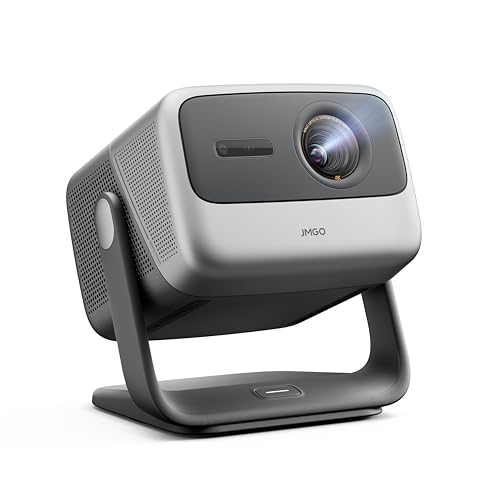
Two standouts in this competitive category are the JMGO N1S Pro 4K (released in 2024) and the Nebula Cosmos 4K SE. Both represent the current state of premium portable projection technology, but they take notably different approaches to delivering 4K content. Understanding these differences will help you choose the right projector for your specific needs and budget.
Before diving into specifics, it's worth understanding what makes a projector "premium portable." These aren't the tiny pocket projectors you might find for quick presentations, nor are they the massive home theater installations that require dedicated rooms. Premium portable 4K projectors occupy a sweet spot: they're light enough to move between rooms (typically under 10 pounds) but powerful enough to fill a wall with bright, detailed images.
The key technologies that define this category include advanced light sources (laser, LED, or hybrid systems), integrated smart platforms for streaming, and sophisticated auto-adjustment features that eliminate the tedious setup process that once plagued projectors. Most importantly, they deliver true 4K resolution—that's 3840 x 2160 pixels, or four times the detail of standard HD.
The most fundamental difference between the JMGO N1S Pro and Nebula Cosmos 4K SE lies in their light engines—the technology that creates the bright, colorful light needed for projection.
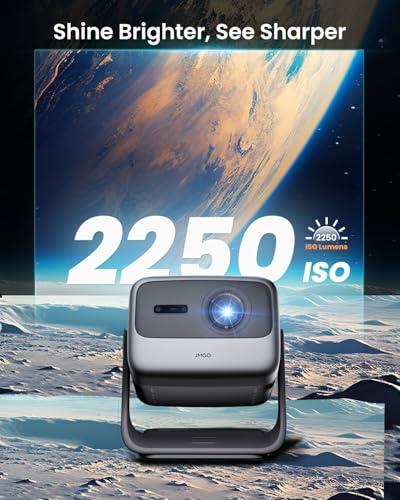
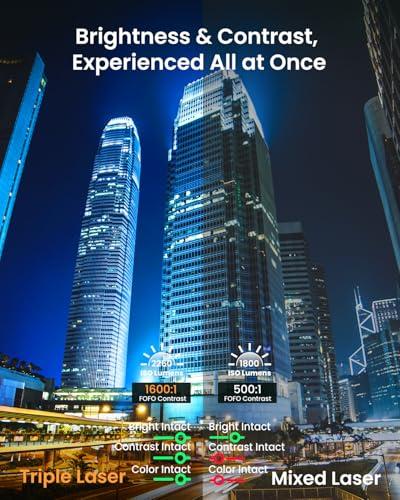
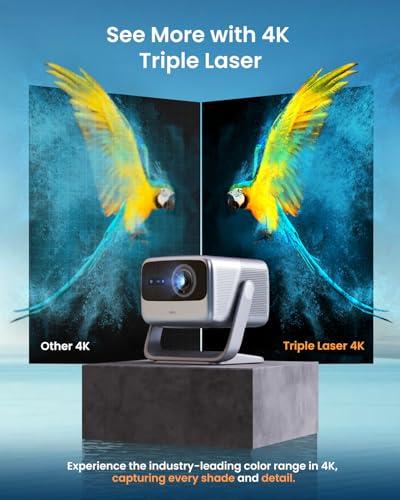
The JMGO N1S Pro employs what the company calls MALC 2.0 (Micro-structure Adaptive Laser Control), which uses three separate RGB lasers—red, green, and blue—to create light. This triple laser approach is relatively new to portable projectors and represents a significant technological advancement. Each color laser operates independently, allowing for precise color mixing and exceptional color accuracy. The system delivers 2,400 ANSI lumens (ANSI is the industry standard for measuring projector brightness) and claims to cover 110% of the BT.2020 color space.
To put that in perspective, BT.2020 is the color standard for 4K and HDR content, encompassing a much wider range of colors than older standards. Covering 110% means this projector can display colors more saturated than what most content creators even use, resulting in particularly vibrant reds, deep blues, and rich greens.
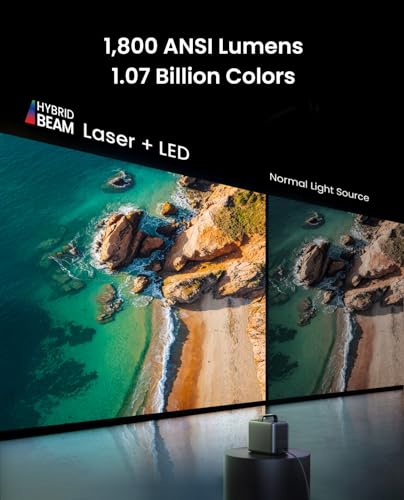
In contrast, the Nebula Cosmos 4K SE uses HybridBeam technology, combining both laser and LED elements. This approach pairs an RGBB LED array (red, green, blue, plus an extra blue "pump" LED) with a red laser to boost brightness and color saturation. The result is 1,800 ANSI lumens and coverage of 123.3% of the Rec.709 color space, which translates to about 95% of the DCI-P3 standard used in digital cinema.
The technical differences here matter significantly for real-world performance. The JMGO N1S Pro's higher brightness makes it more suitable for rooms with ambient light—think family rooms with windows or outdoor use during twilight hours. The triple laser system also ensures consistent performance over time, with an estimated lifespan of 30,000 hours before any noticeable degradation.
Both projectors deliver true 4K resolution, but they achieve it through different methods. The JMGO N1S Pro uses a 0.47-inch DLP (Digital Light Processing) chip with pixel shifting technology. DLP chips contain millions of tiny mirrors that tilt to create images, and pixel shifting rapidly moves these images to create the full 4K resolution from a smaller native resolution chip. This technique has become standard in affordable 4K projectors and, when done well, produces genuinely sharp 4K images.
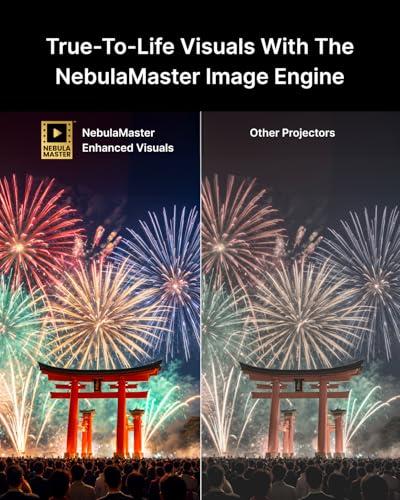
The Nebula Cosmos 4K SE uses similar DLP technology but pairs it with advanced image processing through its NebulaMaster image engine. This system uses 3D LUTs (Look-Up Tables)—essentially color correction maps that ensure accurate color reproduction—to achieve what the company claims is industry-leading color accuracy with a Delta E value under 1.
Delta E is a measurement of color accuracy where lower numbers are better. A Delta E under 1 means color differences are virtually imperceptible to the human eye, making this projector suitable for users who care about color-accurate content, such as photographers or videographers reviewing their work.
However, our research into expert reviews reveals some important nuances. The JMGO N1S Pro excels in bright scenes and delivers impressive peak brightness, but struggles somewhat with black levels and contrast in darker content. This is partly due to its DLP technology—while DLP projectors are excellent for sharpness and color, they typically can't match the deep blacks that OLED or high-end LCD displays achieve.
The Nebula Cosmos 4K SE, despite lower peak brightness, appears to handle contrast and color gradation more effectively thanks to its image processing engine. Expert reviews consistently note smoother gradients and better handling of dark scenes, though both projectors perform best in dimmed or dark rooms for optimal contrast.
High Dynamic Range (HDR) represents one of the most significant improvements in display technology in recent years. HDR content contains a much wider range of brightness levels and colors than standard content, resulting in more lifelike images with bright highlights and detailed shadows.
This is where the two projectors diverge significantly. The JMGO N1S Pro supports HDR10, the most common HDR standard, but lacks support for Dolby Vision, the premium HDR format used by Netflix, Disney+, and other major streaming services. HDR10 uses static metadata—essentially a single set of instructions for the entire movie—while Dolby Vision uses dynamic metadata that optimizes every scene individually.
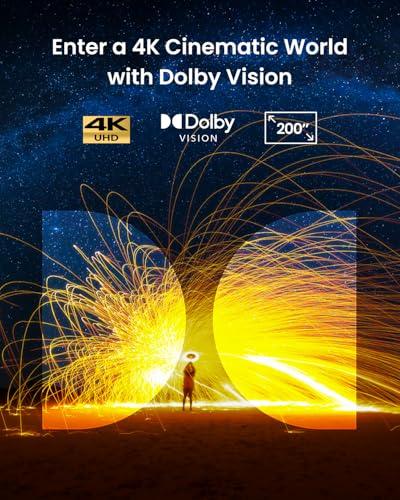
The Nebula Cosmos 4K SE supports not only HDR10 but also Dolby Vision and HLG (Hybrid Log-Gamma), making it one of the few portable projectors with comprehensive HDR support. This means Netflix's growing catalog of Dolby Vision content will look significantly better on the Cosmos 4K SE, with more accurate highlights and better preservation of detail in bright scenes.
For home theater enthusiasts, this difference is substantial. Dolby Vision content genuinely looks more cinematic, with better contrast and more realistic lighting. If you're planning to use your projector primarily for streaming premium content, the Cosmos 4K SE's HDR advantage is compelling.
Gaming on projectors has traditionally been problematic due to input lag—the delay between pressing a button and seeing the result on screen. Modern gaming demands low latency, particularly for competitive games where milliseconds matter.
The JMGO N1S Pro delivers respectable gaming performance with input lag measured at around 35ms. This is acceptable for casual gaming and single-player experiences, but competitive gamers might notice the delay in fast-paced games like first-person shooters or racing games.
The Nebula Cosmos 4K SE excels here with input lag as low as 18.4ms in its extreme gaming mode. This puts it in the territory of dedicated gaming monitors and makes it genuinely suitable for serious gaming. The projector also includes MEMC (Motion Estimation, Motion Compensation) technology, which creates intermediate frames between actual frames to smooth motion. While this can introduce artifacts in some content, it's generally beneficial for gaming and sports.
For families with teenage gamers or adults who enjoy console gaming, the Cosmos 4K SE's gaming performance is a significant advantage. The ability to game on a 100+ inch screen with minimal lag is genuinely impressive and something that wasn't possible with projectors just a few years ago.
One area where both projectors excel is integrated audio, addressing a longtime weakness of portable projectors. Poor built-in speakers once meant that any serious projector setup required external audio equipment.
The JMGO N1S Pro features 20W stereo speakers that, according to multiple reviews, deliver surprisingly good audio quality. The speakers are side-firing, which helps distribute sound throughout the room rather than directing it straight forward. Users consistently report clear dialogue and sufficient bass for casual viewing, though the audio lacks the depth and detail that dedicated speakers provide.
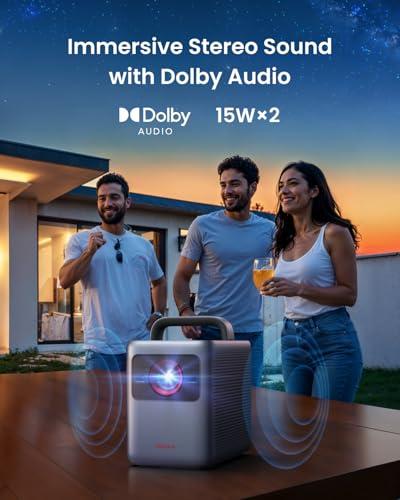
The Nebula Cosmos 4K SE goes further with dual 15W speakers (30W total) that support Dolby Audio and can handle Dolby Atmos content when connected via HDMI eARC (enhanced Audio Return Channel). The projector can even function as a standalone Bluetooth speaker, making it useful even when not projecting. Multiple sound modes optimize audio for movies, music, or outdoor use.
For most users, both projectors provide sufficient audio quality for casual viewing, though serious home theater setups will still benefit from dedicated sound systems. The Cosmos 4K SE's additional audio features and higher power output give it an edge for users who prioritize integrated sound.
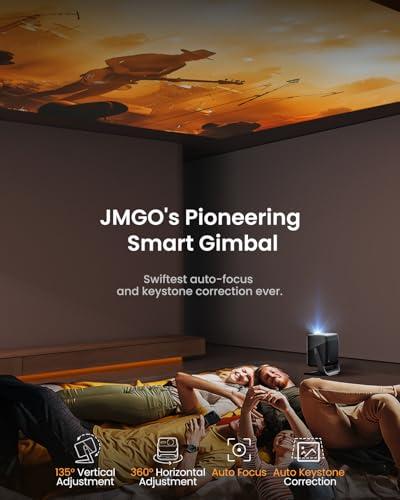
The most visually distinctive difference between these projectors lies in their design approaches. The JMGO N1S Pro features a unique gimbal system that allows 360-degree horizontal rotation and 135-degree vertical tilt. This means you can project onto walls, ceilings, or angled surfaces without moving the projector base—a genuinely innovative feature that opens up creative installation possibilities.
This gimbal design makes the N1S Pro particularly appealing for unconventional setups. Want to project movies on your bedroom ceiling for comfortable viewing? The gimbal makes this simple. Need to project around obstacles or onto angled surfaces? The flexibility is unmatched among portable projectors.
However, this flexibility comes with trade-offs. The gimbal system adds complexity and weight, making the projector less truly portable than traditional designs. At nearly 10 pounds, it's manageable but not something you'd casually carry to different locations frequently.
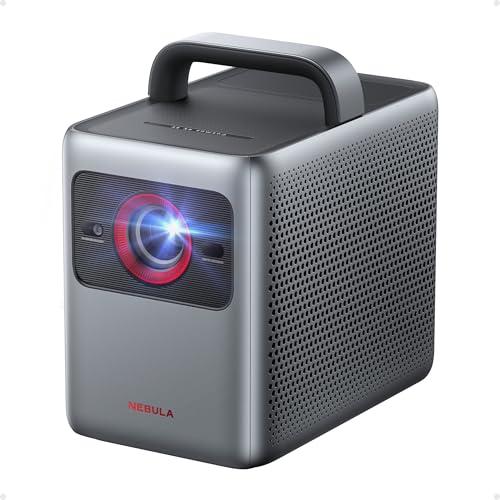
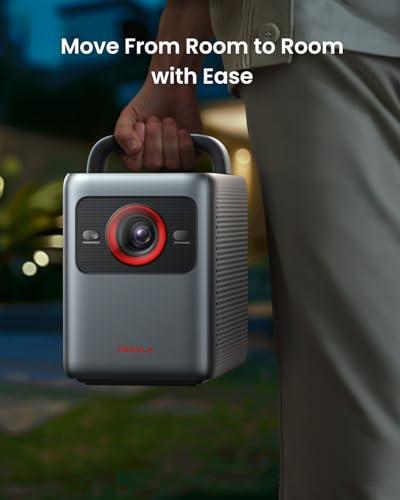
The Nebula Cosmos 4K SE takes a more traditional approach, prioritizing portability and simplicity. At 4.5 kilograms (about the same weight), it includes a integrated handle and compact form factor that genuinely supports frequent movement. The trade-off is less placement flexibility—you need to position the entire projector where you want the image, rather than adjusting just the projection angle.
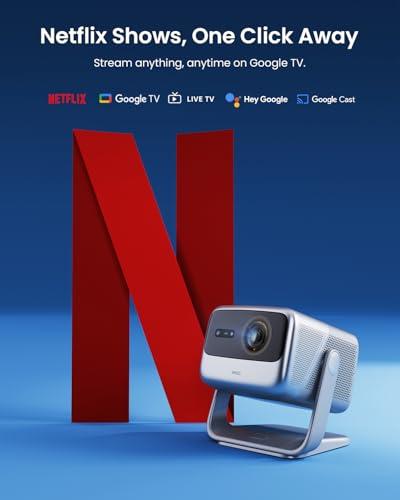
Both projectors run Google TV, Google's latest smart platform that replaced Android TV. This provides access to major streaming services including Netflix, Disney+, Amazon Prime Video, and thousands of other apps through the Google Play Store.
The JMGO N1S Pro includes native Netflix support—increasingly important as Netflix restricts access on devices without proper licensing. The projector comes with 2GB of RAM and 32GB of storage, which should handle current apps comfortably but may feel limiting as smart TV platforms become more demanding over time.
The Nebula Cosmos 4K SE also features certified Netflix support and includes the same 2GB RAM, but with 16GB of storage. This reduced storage could become a limitation as you install multiple streaming apps and they receive updates over time.
Both projectors support Google Assistant for voice control and Chromecast for wireless casting from mobile devices. The smart platform experience is largely similar between them, with the N1S Pro's additional storage providing better long-term flexibility.
Modern portable projectors have largely eliminated the tedious setup process that once required manual focus, keystone adjustment, and careful positioning. Both of these projectors include automatic features that handle most setup tasks.
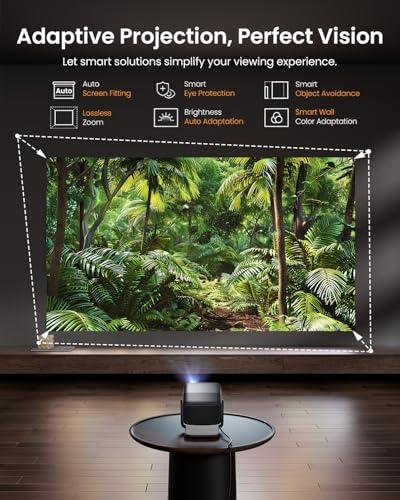
The JMGO N1S Pro includes auto-focus, auto keystone correction (automatically corrects image distortion when projecting at angles), and smart object avoidance that can detect and work around obstacles in the projection path. The gimbal system adds another layer of convenience by allowing image adjustment without moving the projector base.
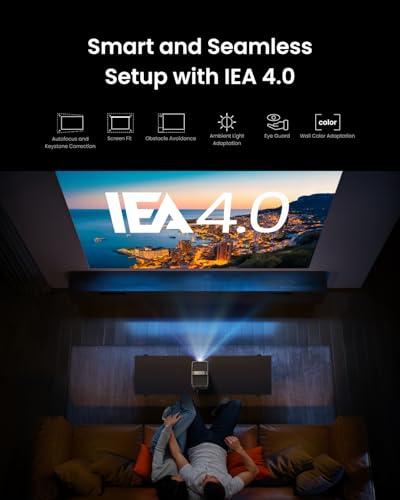
The Nebula Cosmos 4K SE features IEA 4.0 (Intelligent Environment Adaptation), which automatically handles focus, keystone correction, obstacle avoidance, and even adapts the image based on wall color and ambient lighting. This system can also detect when someone walks in front of the projection beam and automatically dim or pause to protect their eyes.
Both systems work well in practice, though expert reviews suggest that manual fine-tuning occasionally improves results, particularly for larger screens or challenging environments.
At the time of writing, the JMGO N1S Pro positions itself as a premium option with pricing reflecting its advanced triple laser technology and unique gimbal design. The Nebula Cosmos 4K SE offers more accessible pricing while maintaining strong performance and comprehensive features.
The price difference is substantial—the Cosmos 4K SE typically costs significantly less than the N1S Pro, making it an attractive entry point into premium 4K projection. This pricing reflects different target markets: the N1S Pro targets enthusiasts willing to pay for cutting-edge technology and unique features, while the Cosmos 4K SE focuses on delivering strong value and broad appeal.
The decision between these projectors ultimately depends on your specific needs, budget, and intended use cases.
Choose the JMGO N1S Pro if you need maximum brightness for daytime viewing or rooms with significant ambient light. The triple laser technology provides the brightest, most color-accurate image, and the gimbal system offers unmatched placement flexibility. This projector makes sense for users who want the latest technology and don't mind paying premium prices for cutting-edge features. It's also ideal if you plan creative installations like ceiling projection or need to work around architectural obstacles.
The Nebula Cosmos 4K SE represents better value for most users, delivering excellent 4K image quality, superior gaming performance, and comprehensive HDR support at a more accessible price point. Its lighter weight and traditional design make it genuinely portable, while features like Dolby Vision and low input lag gaming provide premium experiences that the N1S Pro can't match.
For serious gamers, the Cosmos 4K SE's 18.4ms input lag advantage is compelling. For streaming enthusiasts who prioritize Netflix and Disney+ content, Dolby Vision support makes a noticeable difference in image quality.
Both projectors represent significant advances over earlier portable projection technology and will satisfy most users' needs for large-screen entertainment. Your choice should primarily depend on whether you prioritize maximum brightness and placement flexibility (N1S Pro) or value, gaming performance, and comprehensive HDR support (Cosmos 4K SE).
The portable 4K projector category continues evolving rapidly, with both companies likely to introduce updated models incorporating new technologies. However, both of these current options provide genuinely impressive large-screen experiences that would have been impossible at any price just a few years ago.
| JMGO N1S Pro 4K Projector | Nebula Cosmos 4K SE Smart Projector |
|---|---|
| Brightness - Critical for ambient light performance | |
| 2,400 ANSI lumens (excellent for most lighting conditions) | 1,800 ANSI lumens (best in dim to dark rooms) |
| Light Source Technology - Affects color quality and longevity | |
| Triple RGB laser (MALC 2.0) - premium technology | HybridBeam laser + LED - balanced approach |
| Color Gamut Coverage - Determines color vibrancy and accuracy | |
| 110% BT.2020 (exceptional color range) | 123.3% Rec.709 / 95% DCI-P3 (excellent cinema colors) |
| HDR Support - Essential for premium streaming content | |
| HDR10 only (missing Dolby Vision) | HDR10, Dolby Vision, HLG (comprehensive support) |
| Gaming Input Lag - Crucial for responsive gaming | |
| 35ms (acceptable for casual gaming) | 18.4ms (excellent for competitive gaming) |
| Audio Power - Determines need for external speakers | |
| 20W stereo speakers (good quality) | 30W dual speakers with Dolby Audio (superior output) |
| Design Innovation - Affects placement flexibility | |
| Gimbal system (360° horizontal, 135° vertical adjustment) | Traditional fixed design (lighter and more portable) |
| Storage Capacity - Important for app management | |
| 32GB (better future-proofing) | 16GB (adequate for current needs) |
| Weight - Affects true portability | |
| 4.5kg / 9.9 lbs (portable but substantial) | 4.5kg / 9.9 lbs (compact with integrated handle) |
| Projection Size Range - Determines screen size flexibility | |
| 84.9" - 180" (wide range) | 20" - 200" (more versatile sizing) |
| Light Source Lifespan - Long-term cost consideration | |
| 30,000 hours (laser advantage) | 25,000-30,000 hours (hybrid longevity) |
| Smart Platform Features - Streaming convenience | |
| Google TV with native Netflix, Google Assistant | Google TV with native 4K Netflix certification |
The JMGO N1S Pro 4K Projector is significantly brighter at 2,400 ANSI lumens compared to the Nebula Cosmos 4K SE Smart Projector at 1,800 ANSI lumens. This 33% brightness advantage makes the JMGO N1S Pro better suited for rooms with ambient light or daytime use, while the Nebula Cosmos 4K SE performs best in dimmed or dark environments.
The Nebula Cosmos 4K SE Smart Projector offers superior gaming performance with 18.4ms input lag compared to 35ms on the JMGO N1S Pro 4K Projector. The Cosmos 4K SE also includes MEMC technology for smoother motion, making it the clear choice for serious gamers who want responsive gameplay on a large screen.
Yes, both the JMGO N1S Pro 4K Projector and Nebula Cosmos 4K SE Smart Projector run Google TV with native Netflix support and access to thousands of streaming apps. Both include Google Assistant and Chromecast functionality, though the N1S Pro offers more storage space (32GB vs 16GB) for apps.
The Nebula Cosmos 4K SE Smart Projector has comprehensive HDR support including Dolby Vision, HDR10, and HLG, while the JMGO N1S Pro 4K Projector only supports HDR10. This gives the Cosmos 4K SE a significant advantage for streaming premium content from Netflix, Disney+, and other services that use Dolby Vision.
Both projectors weigh about the same (4.5kg), but the Nebula Cosmos 4K SE Smart Projector is more traditionally portable with its integrated handle and compact design. The JMGO N1S Pro 4K Projector features a unique gimbal system that adds flexibility but makes it less convenient for frequent transport between locations.
The Nebula Cosmos 4K SE Smart Projector has more powerful audio with 30W total output (dual 15W speakers) and Dolby Audio support, compared to the JMGO N1S Pro 4K Projector's 20W stereo speakers. The Cosmos 4K SE can also function as a standalone Bluetooth speaker and offers multiple sound modes for different content types.
Both projectors excel at color reproduction but in different ways. The JMGO N1S Pro 4K Projector uses triple RGB laser technology covering 110% of BT.2020 color space for exceptional vibrancy, while the Nebula Cosmos 4K SE Smart Projector achieves superior color accuracy with Delta E<1 through its NebulaMaster image processing engine.
The JMGO N1S Pro 4K Projector features a unique gimbal system allowing 360° horizontal and 135° vertical adjustment, enabling ceiling projection and creative installations without moving the base. The Nebula Cosmos 4K SE Smart Projector uses a traditional fixed design but offers a wider projection size range (20"-200" vs 84.9"-180").
For dedicated home theater rooms, the JMGO N1S Pro 4K Projector excels with higher brightness and exceptional color gamut coverage. However, the Nebula Cosmos 4K SE Smart Projector may be better for movie enthusiasts due to its Dolby Vision support and superior contrast handling in dark scenes.
Both projectors offer comprehensive auto-setup features. The JMGO N1S Pro 4K Projector includes auto-focus, keystone correction, and smart object avoidance with its gimbal flexibility. The Nebula Cosmos 4K SE Smart Projector features IEA 4.0 technology with ambient light adaptation, wall color adjustment, and eye protection features.
The Nebula Cosmos 4K SE Smart Projector typically offers better value, delivering strong 4K performance, comprehensive HDR support, excellent gaming capabilities, and superior audio at a more accessible price point. The JMGO N1S Pro 4K Projector commands a premium for its advanced triple laser technology and unique gimbal design.
Choose the JMGO N1S Pro 4K Projector for maximum brightness, cutting-edge laser technology, and unique placement flexibility with the gimbal system. Select the Nebula Cosmos 4K SE Smart Projector for better gaming performance, comprehensive HDR support including Dolby Vision, superior built-in audio, and excellent overall value for most users.
We've done our best to create useful and informative comparisons to help you decide what product to buy. Our research uses advanced automated methods to create this comparison and perfection is not possible - please contact us for corrections or questions. These are the sites we've researched in the creation of this article: techradar.com - projectorcentral.com - gray9.in - projectorreviews.com - howtogeek.com - the-gadgeteer.com - projectorcentral.com - global.jmgo.com - global.jmgo.com - cnet.com - cnet.com - youtube.com - global.jmgo.com - avsforum.com - youtube.com - youtube.com - projectorreviews.com - tvsbook.com - youtube.com - projectorcentral.com - youtube.com - projectorcentral.com - techradar.com - youtube.com - projectorcentral.com - youtube.com - the-gadgeteer.com - newegg.com - projectorreviews.com - projectorcentral.com - youtube.com - seenebula.com - seenebula.com - bestbuy.com

Privacy Policy
Terms and Conditions - Affiliate Policy
Home Security
© Copyright 2008-2026.
11816 Inwood Rd #1211, Dallas, TX 75244