

When I first saw the Aurzen ZIP Tri-Fold announced in early 2025, my immediate thought was "finally, someone cracked the code on truly portable projection." Then I compared it to something like the BenQ HT2060, which launched in 2023 as a dedicated home theater solution, and realized we're looking at two completely different philosophies of what a projector should be.
The projector world has split into fascinating territory over the past few years. On one side, we have ultra-portable mini projectors that prioritize convenience and mobility above all else. On the other, traditional home theater projectors continue pushing the boundaries of image quality and brightness. Understanding which camp serves your needs better requires diving into what really matters for your viewing habits.
The fundamental question isn't just "which projector is better" – it's "what kind of projection experience do you actually need?" This distinction has become more important as technology has advanced in different directions.
Portable mini projectors represent the smartphone revolution applied to projection. They emphasize instant setup, wireless connectivity, and the ability to create a viewing experience anywhere. These devices typically sacrifice raw performance for convenience features like built-in batteries, automatic focus correction, and palm-sized form factors.
Home theater projectors follow the traditional path of maximizing image quality within a dedicated space. They assume you have a controlled lighting environment, a permanent setup location, and the patience to fine-tune settings for optimal performance.
The key considerations that separate these categories include brightness levels (measured in ANSI lumens – essentially how much light the projector can output), resolution capabilities, ambient light tolerance, and installation complexity. At the time of writing, you're generally looking at a significant price gap between ultra-portable and home theater models, with the premium portable options costing roughly half what a quality home theater projector demands.
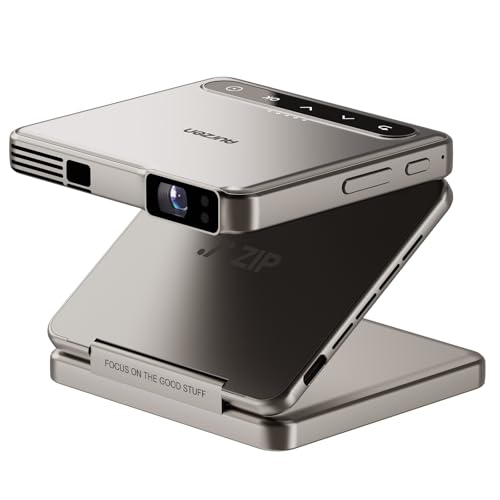
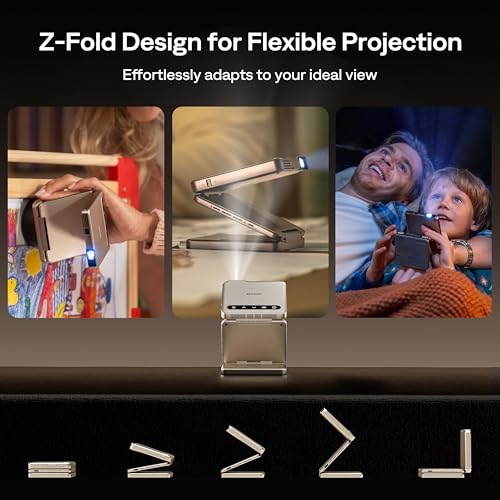
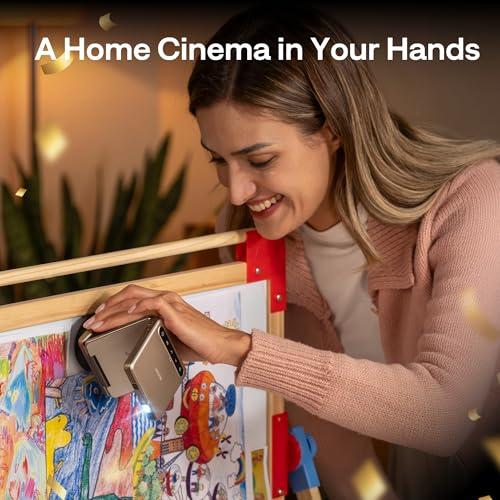
The Aurzen ZIP Tri-Fold represents something genuinely new in projector design. Its tri-fold mechanism – imagine a smartphone that folds twice to become even more compact – creates the world's smallest foldable projector. When collapsed, it measures roughly the size of a thick smartphone and weighs less than most power banks.
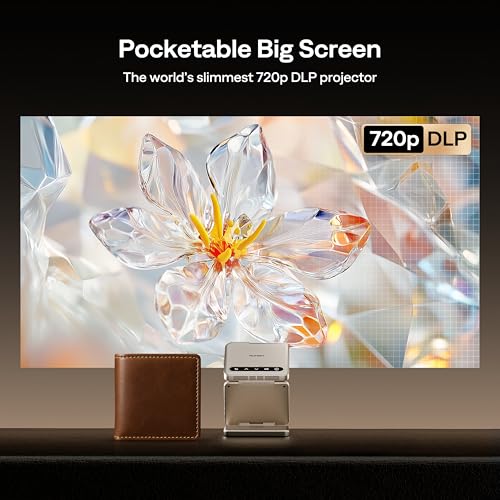
But the real engineering achievement lies in what BenQ calls Texas Instruments' second-generation 0.16-inch DMD chip. DMD stands for Digital Micromirror Device – essentially millions of tiny mirrors that tilt to create images. This particular chip is the smallest DMD ever used in consumer projectors, and it uses something called XPR pixel-shifting technology. Think of XPR as digital sleight of hand: the projector rapidly shifts the image to display more pixels than the chip physically contains, creating a 720p image from a smaller native array.
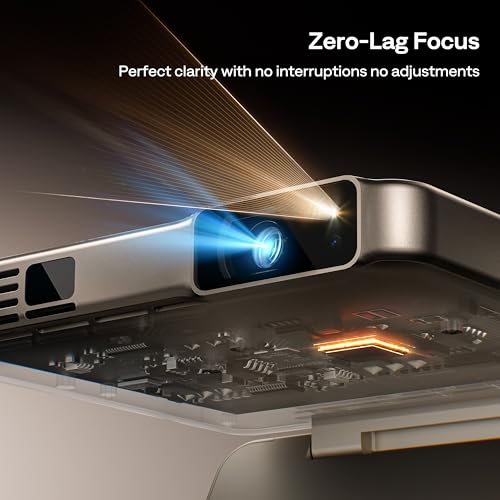
The ZIP's ToF (Time-of-Flight) auto-focus system measures distance to the projection surface 30 times per second, automatically adjusting focus and correcting keystone distortion – that trapezoid effect you get when projecting at an angle. This borrowed technology from aerospace and robotics means setup is genuinely instant: unfold, power on, and you're watching content.
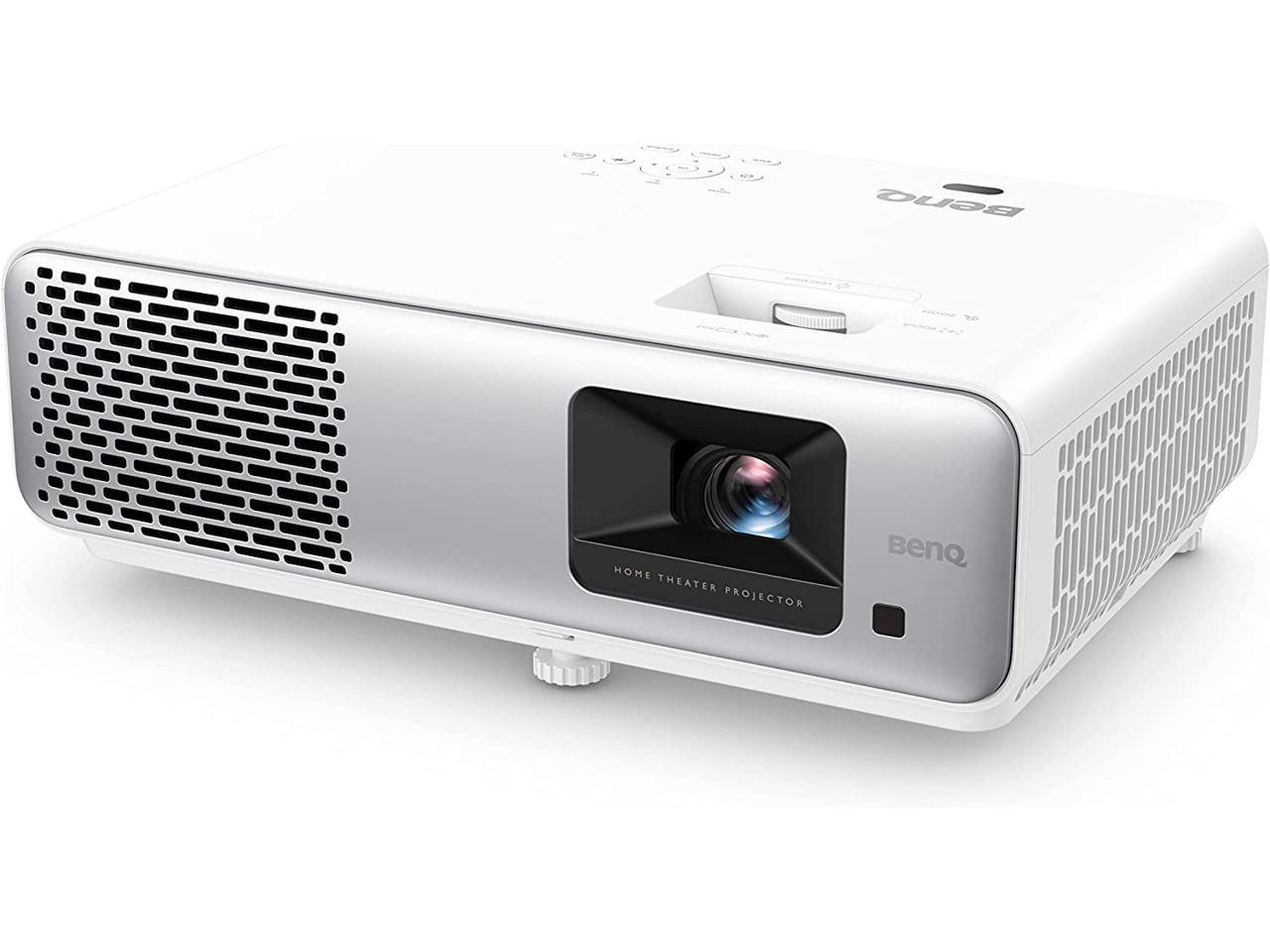
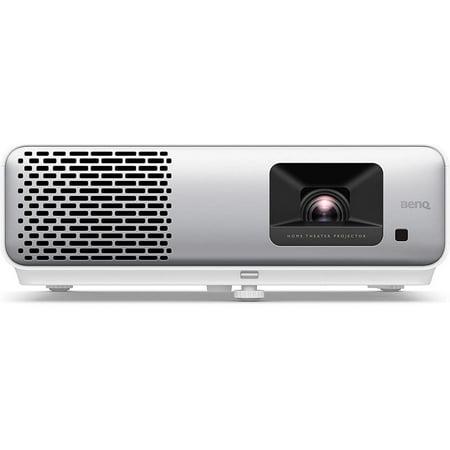
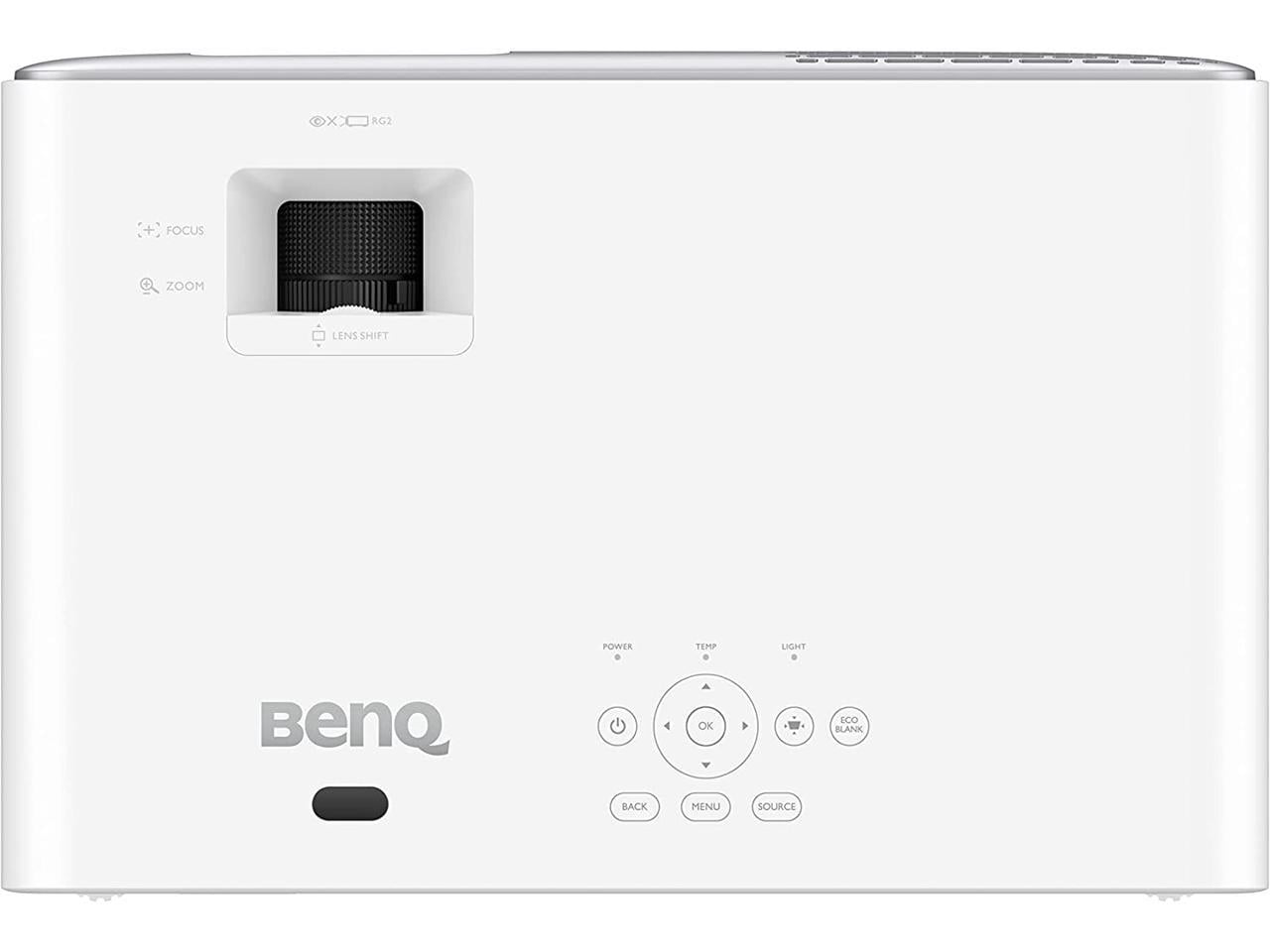
The BenQ HT2060, in contrast, represents refined traditional projector engineering. Released in 2023, it incorporates BenQ's years of home theater expertise into what they position as an accessible entry point for serious projection.
Its 4LED light source is particularly interesting from a technical standpoint. Instead of traditional lamp technology, which burns out and requires replacement, LED-based systems can run for 20,000 to 30,000 hours. The HT2060 uses a sophisticated four-LED array that produces more accurate colors than single-LED systems while maintaining consistent brightness over its entire lifespan.
The projector's CinematicColor technology aims to reproduce 98% of the Rec.709 color space – essentially the color standard for HD television content. This means when you're watching movies or shows, you're seeing colors much closer to what directors intended during post-production.
Resolution tells only part of the story, but it's still crucial for understanding what you'll actually see. The BenQ HT2060 delivers full 1080p resolution (1920x1080 pixels), while the Aurzen ZIP maxes out at 720p (1280x720 pixels).
In practical terms, this difference becomes obvious on larger screens. The HT2060 maintains sharp detail even at 120+ inch screen sizes, while the ZIP starts showing pixelation beyond about 60 inches. For most portable use cases – hotel rooms, camping, small apartment walls – the ZIP's resolution proves perfectly adequate. But if you're planning to replace a living room TV with projection, that extra resolution matters significantly.
The HT2060 also supports 4K input signals, downscaling them intelligently for display. This means your 4K streaming device will look better than if you fed it a native 1080p signal, even though the projector can't display true 4K resolution.
Brightness, measured in ANSI lumens, determines where and when you can actually use a projector. This specification has become the primary differentiator between portable and home theater models.
The Aurzen ZIP produces 100 ANSI lumens – enough for dark room viewing on moderate screen sizes, but completely overwhelmed by ambient light. I've found that even light from a single table lamp makes the image nearly unwatchable. This positions it firmly as a lights-off projector for bedrooms, tents, or late-night patio use.
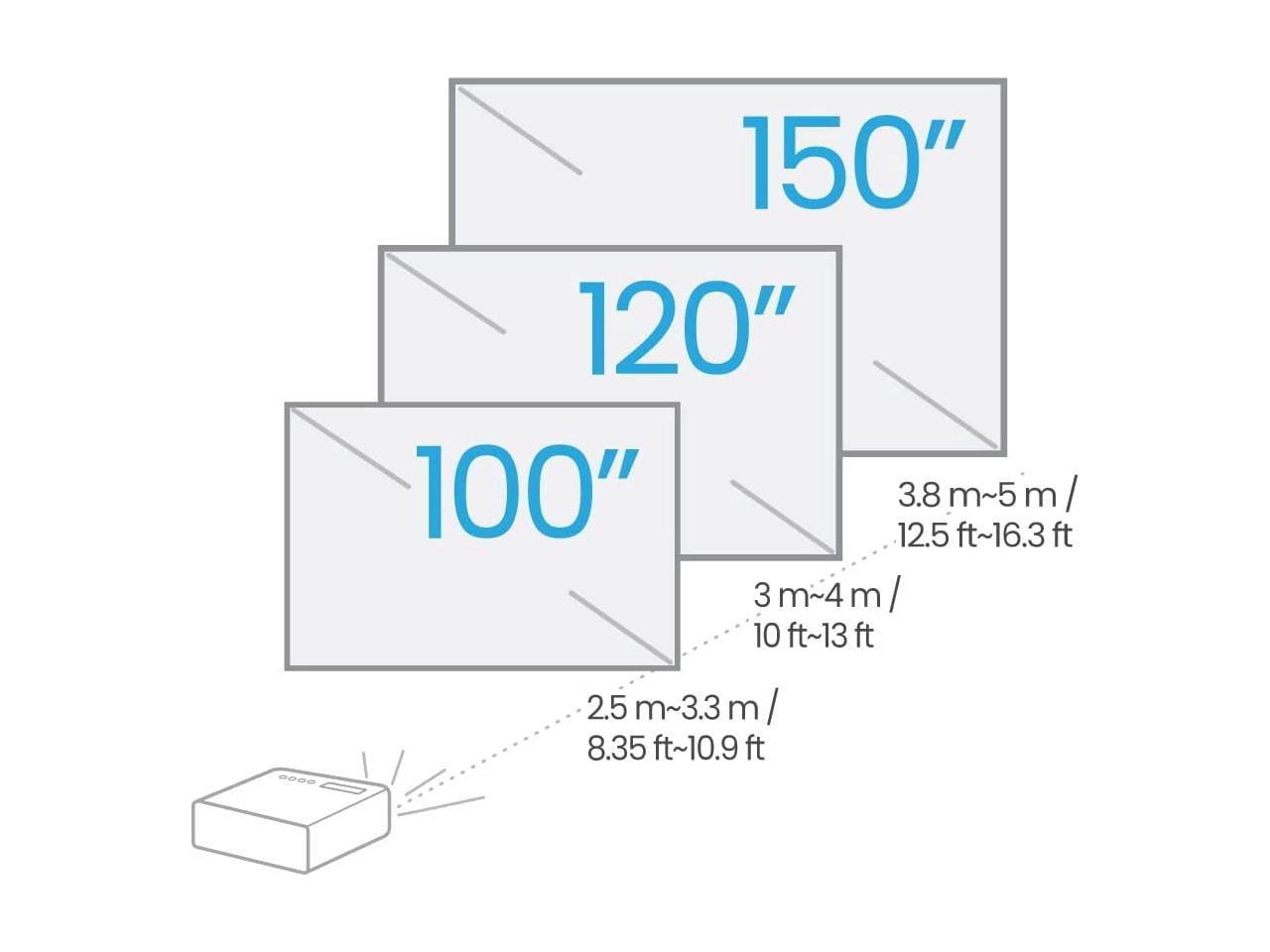
The BenQ HT2060, at 2,300 ANSI lumens, operates in a completely different league. You can watch content with moderate room lighting, though like all projectors, it still performs best in darker environments. This brightness level also enables much larger screen sizes – 100 to 150 inches becomes genuinely viable, creating a true theater experience.
The brightness difference reflects fundamental physics limitations. The ZIP's tiny LED array simply cannot produce as much light as the HT2060's larger, more powerful LED system. This isn't a design flaw – it's the unavoidable trade-off for extreme portability.
Color accuracy has become increasingly important as content creators use wider color palettes and HDR (High Dynamic Range) technologies. HDR essentially provides more detailed information about bright and dark areas of images, creating more lifelike contrast.
The BenQ HT2060 supports both HDR10 and HLG formats, the two most common HDR standards. Its color processing can handle the expanded contrast range that HDR content demands, delivering noticeably better image depth and realism when watching compatible movies or shows.
The Aurzen ZIP lacks HDR support entirely. While it produces pleasant, watchable images, you're missing the enhanced contrast and color range that modern content offers. For casual viewing, this isn't necessarily problematic, but movie enthusiasts will notice the difference immediately.
Gaming performance hinges primarily on input lag – the delay between when you press a controller button and when the action appears on screen. Both projectors handle gaming differently based on their target markets.
The BenQ HT2060 includes a dedicated game mode that reduces input lag to 16.7 milliseconds at 1080p 60Hz refresh rates. This makes it genuinely suitable for competitive gaming, particularly on consoles like PlayStation 5 or Xbox Series X. The low input lag, combined with the large screen size capability, creates an immersive gaming experience that's hard to replicate on traditional displays.
The ZIP doesn't specifically optimize for gaming, maintaining standard 60Hz refresh rates with typical processing delays. While perfectly playable for casual gaming, competitive players might notice the difference. However, its unique portability makes it interesting for gaming scenarios that traditional projectors can't address – like multiplayer sessions in different rooms or outdoor gaming setups.
Modern projectors must handle increasingly complex content delivery methods, from streaming services to wireless display technologies. This area showcases some of the most interesting differences between our two approaches.
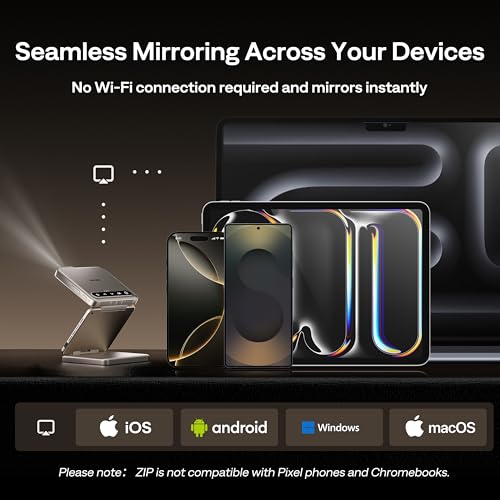
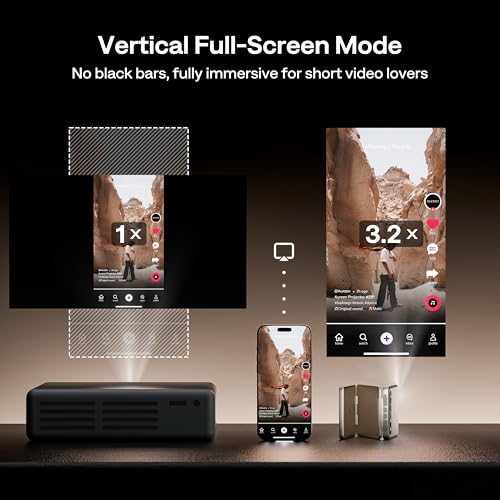
The Aurzen ZIP pioneered what they call AirLink Wi-Fi-free screen mirroring. Unlike traditional wireless display systems that require both devices to join the same Wi-Fi network, AirLink creates a direct connection between your phone, tablet, or laptop and the projector. Setup involves simply selecting the projector from your device's display menu – no apps, passwords, or network configuration required.
However, the ZIP faces the same content protection challenges that plague most portable projectors. DRM (Digital Rights Management) systems used by Netflix, Disney+, Amazon Prime Video, and similar services prevent direct mirroring of their content. These services can detect that you're trying to project to an external display and will either refuse to play or display a blank screen. BenQ offers a CastPlay wireless HDMI dongle as a workaround, but this adds complexity and cost.
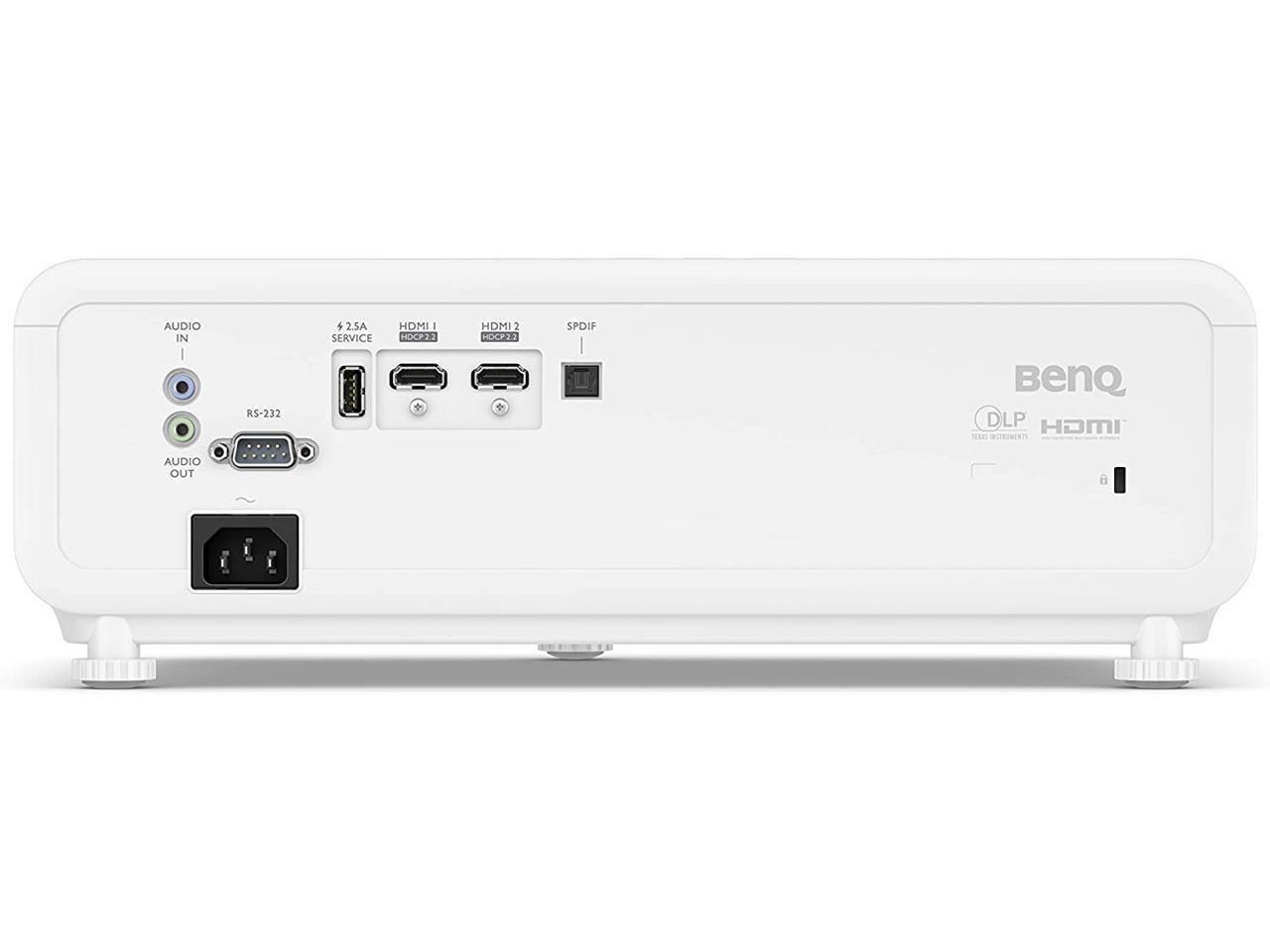
The BenQ HT2060 sidesteps these issues through traditional HDMI connectivity. Its dual HDMI 2.0 inputs accept signals from any source device – streaming boxes, game consoles, computers, or dedicated media players. Since the content protection happens at the source device level, not the projector level, you can watch any content that your source device supports.
Audio represents another area where the different approaches become obvious. The Aurzen ZIP includes basic dual 1-watt speakers – adequate for personal viewing but underwhelming for group scenarios. Its Bluetooth 5.4 connectivity allows pairing with external speakers or headphones, which I'd recommend for any serious viewing session.
The BenQ HT2060 features more substantial dual 5-watt chambered speakers that produce noticeably better sound quality. More importantly, it includes S/PDIF optical audio output, allowing connection to dedicated sound systems or soundbars without introducing audio delay issues.
For home theater applications, both projectors benefit significantly from external audio solutions, but the HT2060 provides more professional integration options.
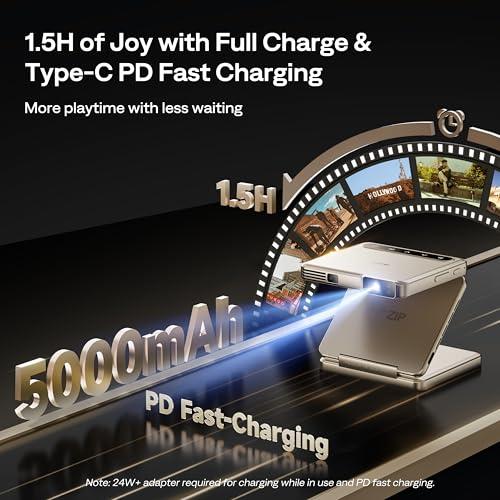
Power management reveals perhaps the starkest difference between portable and stationary projection philosophies. The Aurzen ZIP includes a 5,000mAh lithium battery that provides roughly 90 minutes of continuous playback – enough for most movies, but requiring external power for marathon viewing sessions or all-day presentations.
The projector supports operation while charging, and BenQ offers a PowerPlay magnetic stand accessory with an additional 10,000mAh battery that extends runtime to approximately 3 hours. For true portability scenarios – camping trips, hotel rooms, or outdoor movie nights – this battery life proves adequate but requires planning.
The BenQ HT2060 draws 220 watts from AC power, providing unlimited runtime but tethering you to electrical outlets. This power consumption reflects its much brighter LED array and more powerful processing systems.
The ZIP's tri-fold design creates installation possibilities that traditional projectors simply cannot match. Its built-in gimbal stand system allows projection angles from 0 to 180 degrees, enabling ceiling projection, wall mounting, or even floor-level upward projection for creative applications.
The magnetic base system works with metal surfaces or dedicated suction cup accessories, making temporary installations possible on refrigerators, whiteboards, or car hoods. I've found this flexibility particularly valuable for business presentations where you can't predict the available setup options.
Auto-focus and keystone correction eliminate the tedious adjustment process that traditional projectors require. Simply position the ZIP anywhere within range of your desired screen area, power it on, and the image automatically adjusts for focus and geometric correction.
The BenQ HT2060 provides professional installation capabilities that serious home theater enthusiasts demand. Its +10% vertical lens shift allows positioning flexibility without introducing keystone distortion – you can mount the projector slightly above or below the screen centerline while maintaining perfect geometry.
Manual 1.3x zoom provides installation flexibility for different room sizes and throw distances. The projector can create a 100-inch image from approximately 9 to 12 feet away, accommodating various room layouts without compromising image quality.
2D keystone correction handles both vertical and horizontal geometric distortion, though like all keystone correction, it's best used sparingly to avoid degrading image sharpness.
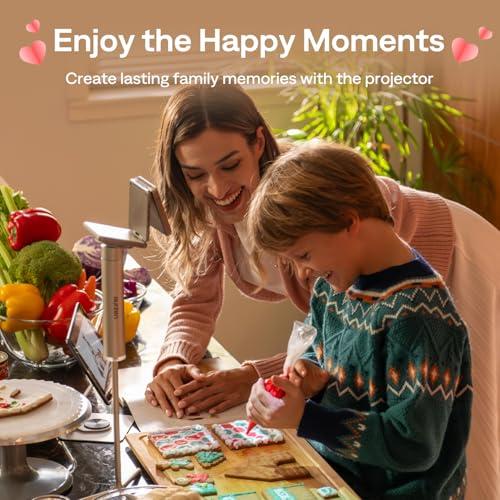
The ZIP creates entirely new projection use cases that weren't practical before its extreme miniaturization. Business travelers can pack a complete presentation system in their laptop bag. Van life enthusiasts can enjoy movie nights without dedicating precious storage space to bulky equipment. Parents can set up impromptu movie sessions for kids in bedrooms, basements, or even outdoor spaces.
I've found the ZIP particularly valuable for creative applications – art installations, pop-up events, or anywhere you need flexible, temporary projection capability. Its unique form factor enables mounting positions and angles that would be impossible with traditional projectors.
The instant setup capability makes it practical for situations where traditional projector configuration would be prohibitive. Hotel conference rooms, client offices, or outdoor presentation scenarios benefit enormously from the ZIP's plug-and-play approach.
The HT2060 excels in traditional home theater applications where image quality and reliability take precedence over portability. Dedicated media rooms, living room installations, and basement theater setups benefit from its superior brightness and resolution capabilities.
Gaming enthusiasts will appreciate the low input lag and large screen capabilities that make console gaming genuinely immersive. The combination of bright output and accurate colors creates a gaming experience that rivals high-end gaming monitors while providing massive screen sizes.
For serious movie watching, the HT2060's HDR support and color accuracy deliver the cinematic experience that filmmakers intended. Its Filmmaker Mode disables post-processing effects that might alter the director's vision, providing authentic reproduction of theatrical presentations.
The decision between the Aurzen ZIP Tri-Fold and BenQ HT2060 ultimately depends on whether you prioritize mobility or image quality. At the time of writing, the price difference reflects this philosophical split – the ZIP commands a premium for its innovative engineering and unprecedented portability, while the HT2060 offers superior performance per dollar for stationary applications.
Choose the Aurzen ZIP if you need genuine portability for travel, camping, or mobile presentations. Its revolutionary design creates projection opportunities that simply weren't possible before, and its instant setup capability makes it practical for spontaneous viewing sessions. The image quality limitations become acceptable trade-offs when the alternative is no projection capability at all.
Choose the BenQ HT2060 if you want to create a serious home theater experience with superior image quality and brightness. Its traditional approach delivers better performance for dedicated viewing spaces, and its professional features provide the flexibility needed for optimal room integration.
Both projectors represent significant achievements in their respective categories. The ZIP pioneers ultra-portable projection technology that will likely influence future portable devices, while the HT2060 demonstrates how traditional home theater projection continues improving while becoming more accessible.
The projector landscape continues evolving rapidly, with manufacturers pushing both portability and performance boundaries. Whichever direction serves your specific needs better, both approaches offer compelling advantages that weren't available just a few years ago.
| Aurzen ZIP Tri-Fold Portable Mini Projector | BenQ HT2060 HDR Home Theater Projector |
|---|---|
| Resolution - Higher resolution means sharper text and clearer details on larger screens | |
| 720p (1280 x 720) - adequate for screens under 60 inches | 1080p (1920 x 1080) - sharp detail up to 150+ inch screens |
| Brightness - Critical for ambient light tolerance and maximum screen size | |
| 100 ANSI lumens - requires dark rooms, best under 60 inches | 2,300 ANSI lumens - handles moderate lighting, supports 100-150 inch screens |
| Portability - Determines whether you can easily move or travel with the projector | |
| 3.3 x 3.1 x 1 inches, 9.88oz - fits in pocket, revolutionary tri-fold design | 14.4 x 9.6 x 4.6 inches, 7.9 lbs - requires permanent setup or dedicated storage |
| Power Source - Affects where and how long you can use the projector | |
| Built-in 5,000mAh battery (90 minutes) - wireless freedom but limited runtime | AC powered (220W) - unlimited runtime but requires electrical outlet |
| HDR Support - Enhanced contrast and color range for modern content | |
| No HDR support - standard dynamic range only | HDR10 and HLG support - better contrast and color depth for compatible content |
| Setup Complexity - How quickly you can start projecting content | |
| Instant setup with ToF auto-focus and wireless mirroring - unfold and go | Manual focus, zoom, and positioning - requires careful adjustment but more precise |
| Color Accuracy - Important for movies and professional presentations | |
| Basic color reproduction - adequate for casual viewing | 98% Rec.709 coverage with CinematicColor - cinema-accurate colors |
| Gaming Performance - Input lag affects responsiveness for gaming | |
| Standard 60Hz processing - fine for casual gaming | 16.7ms input lag in game mode - optimized for competitive gaming |
| Audio Quality - Built-in speaker performance for standalone use | |
| Dual 1W speakers - basic audio, external speakers recommended | Dual 5W chambered speakers with S/PDIF output - better built-in audio |
| Connectivity Options - How you connect devices and handle different content | |
| Wireless mirroring (AirLink), USB-C - simple but DRM content requires dongles | Dual HDMI 2.0, RS-232 - handles all content types without restrictions |
| Light Source Lifespan - Long-term cost and maintenance considerations | |
| 20,000 hour LED - no lamp replacements needed | 20,000-30,000 hour LED - longer lifespan with 3-year warranty |
| Screen Size Range - Optimal viewing sizes for each projector | |
| 40-60 inches recommended (up to 80 possible) - limited by brightness | 100-300 inches capable - brightness supports cinema-sized screens |
The BenQ HT2060 is significantly better for home theater applications. It delivers 1080p resolution with 2,300 ANSI lumens brightness, supporting screen sizes up to 150 inches in dedicated theater rooms. The HT2060 also includes HDR support, accurate color reproduction covering 98% of Rec.709, and professional installation features like lens shift and manual zoom. The Aurzen ZIP Tri-Fold is designed for portable use with only 100 ANSI lumens and 720p resolution, making it unsuitable for serious home theater setups.
The BenQ HT2060 can handle moderate ambient lighting thanks to its 2,300 ANSI lumens output, though it still performs best in darker environments. The Aurzen ZIP Tri-Fold requires very dark rooms due to its limited 100 ANSI lumens - even light from a single lamp can wash out the image completely.
The Aurzen ZIP Tri-Fold is revolutionary in terms of portability, featuring a unique tri-fold design that collapses to just 3.3 x 3.1 x 1 inches and weighs only 9.88oz. It literally fits in your pocket and includes a built-in battery for wireless operation. The BenQ HT2060 weighs 7.9 pounds and measures 14.4 x 9.6 x 4.6 inches, requiring permanent installation or dedicated storage space.
The BenQ HT2060 delivers superior image quality with full 1080p resolution, HDR support, and cinema-accurate colors. The Aurzen ZIP Tri-Fold maxes out at 720p resolution without HDR, which is adequate for casual viewing on smaller screens but shows limitations on displays larger than 60 inches.
The Aurzen ZIP Tri-Fold includes a built-in 5,000mAh battery providing approximately 90 minutes of continuous playback, with options to extend runtime using external battery packs. The BenQ HT2060 doesn't have a battery and requires constant AC power connection, providing unlimited runtime but eliminating portability.
The BenQ HT2060 is optimized for gaming with 16.7ms input lag in game mode, making it suitable for competitive gaming on large screens. The Aurzen ZIP Tri-Fold offers standard 60Hz processing that works fine for casual gaming but lacks the low-latency optimization that serious gamers prefer.
Neither projector includes built-in streaming apps. The Aurzen ZIP Tri-Fold uses wireless screen mirroring from your devices but faces restrictions with DRM-protected content like Netflix, requiring additional dongles for full compatibility. The BenQ HT2060 connects via HDMI to streaming devices, game consoles, or computers without content restrictions.
The Aurzen ZIP Tri-Fold works best with 40-60 inch screens, though it can project up to 80 inches in very dark conditions. The BenQ HT2060 excels at larger screen sizes from 100-300 inches, with its high brightness supporting true cinema-sized displays that would overwhelm the portable projector.
The Aurzen ZIP Tri-Fold offers instant setup - simply unfold, power on, and the ToF auto-focus system automatically adjusts focus and keystone correction. The BenQ HT2060 requires manual positioning, focus adjustment, and careful alignment, but provides more precise control over the final image quality.
Value depends on your needs. The BenQ HT2060 offers superior performance per dollar for stationary home theater use, delivering significantly better brightness, resolution, and features. The Aurzen ZIP Tri-Fold commands a premium for its innovative tri-fold design and unprecedented portability - you're paying for convenience and unique engineering rather than raw performance.
The Aurzen ZIP Tri-Fold focuses on wireless connectivity with Wi-Fi-free screen mirroring and Bluetooth audio, though it struggles with DRM-protected streaming content. The BenQ HT2060 provides dual HDMI 2.0 inputs, S/PDIF optical audio output, and RS-232 control, handling any content source without compatibility issues.
The Aurzen ZIP Tri-Fold is purpose-built for travel and outdoor use, with its pocket-sized form factor, built-in battery, and instant setup making it ideal for hotel rooms, camping trips, and mobile presentations. The BenQ HT2060 requires AC power and careful setup, making it impractical for portable or outdoor applications.
We've done our best to create useful and informative comparisons to help you decide what product to buy. Our research uses advanced automated methods to create this comparison and perfection is not possible - please contact us for corrections or questions. These are the sites we've researched in the creation of this article: aurzen.com - youtube.com - tomsguide.com - aurzen.com - aurzen.com - projectorcentral.com - appleinsider.com - youtube.com - aurzen.com - aurzen.com - aurzen.com - aurzen.com - projectorcentral.com - avsforum.com - bestbuy.com - avsforum.com - tomsguide.com - avsforum.com - projectorreviews.com - hometheaterhifi.com - youtube.com - avsforum.com - cnet.com - techgearlab.com - cdw.com - bhphotovideo.com - projectorcentral.com - shop.avispl.com - tvsbook.com - youtube.com - projectorreviews.com - avsforum.com

Privacy Policy
Terms and Conditions - Affiliate Policy
Home Security
© Copyright 2008-2026.
11816 Inwood Rd #1211, Dallas, TX 75244