

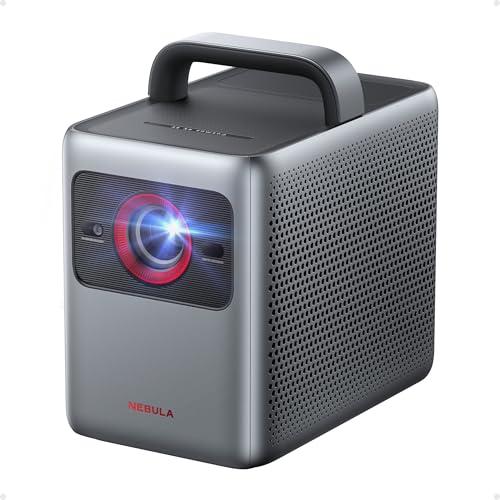
If you've ever tried to set up movie night with friends or create an outdoor cinema experience, you know that choosing the right projector can make or break the experience. Today we're diving deep into two very different approaches to portable projection: the Nebula Cosmos 4K SE Smart Projector and the BenQ GS50 Portable Outdoor Projector. While both can throw a big picture on your wall, they're designed for completely different lifestyles and priorities.
Before we jump into comparing these two devices, let's talk about what actually matters in the portable projector world. Unlike those massive home theater projectors that require dedicated rooms and professional installation, portable projectors are all about compromise and convenience. You're trading some picture quality for the ability to easily move your entertainment wherever you want it.
The key things that separate good portable projectors from mediocre ones come down to a few critical areas. First, there's the eternal brightness battle – can you actually see the image in anything other than a pitch-black room? Then you have resolution, which determines how sharp and detailed everything looks. Smart features matter too, because nobody wants to mess around with dongles and cables when you're trying to start a movie. And finally, there's the question of true portability: does it actually go where you want to go, or does it need to stay tethered to a wall outlet?
Both the Cosmos 4K SE and GS50 tackle these challenges, but they've chosen completely different paths to get there.
Released in 2024, the Nebula Cosmos 4K SE represents the cutting edge of portable projection technology. At roughly double the cost of the BenQ GS50, it's positioned as a premium device that doesn't want you to feel like you're compromising on picture quality just because you want some portability.
The standout feature here is genuine 4K resolution – that's 3,840 by 2,160 pixels, the same resolution as your best streaming content and modern gaming consoles. Now, here's where things get technical: the Cosmos 4K SE uses what's called "pixel shifting" technology. The actual chip inside is native 1080p, but through some clever engineering magic involving rapidly moving mirrors, it creates those extra pixels to deliver true 4K detail. Think of it like a painter who can make incredibly detailed artwork by moving their brush so precisely and quickly that your eye sees far more detail than should be possible with that brush size.
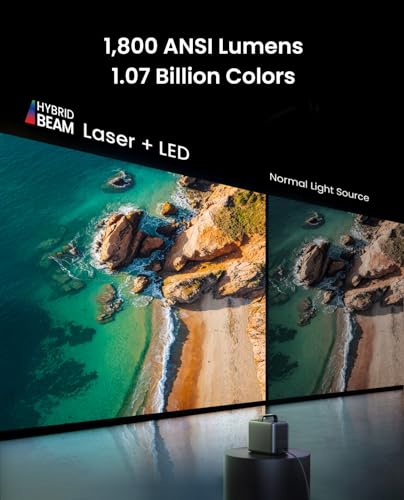
What really sets the Nebula Cosmos 4K SE apart is its HybridBeam light engine – a fancy term for how it creates the light that forms your image. Instead of using just LEDs like most portable projectors, it combines both LED and laser light sources. This hybrid approach delivers 1,800 ANSI lumens of rated brightness (though real-world testing shows it's closer to 1,200 lumens). ANSI lumens, by the way, is the standardized way to measure projector brightness – the higher the number, the better it performs in rooms with ambient light.
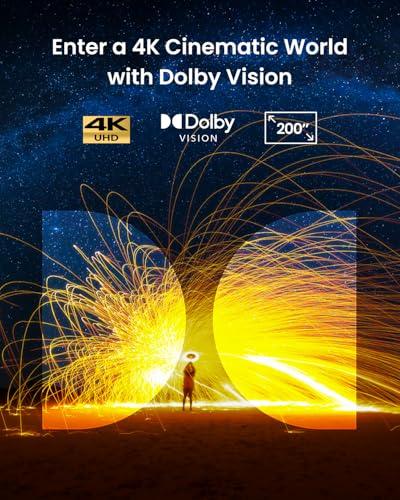
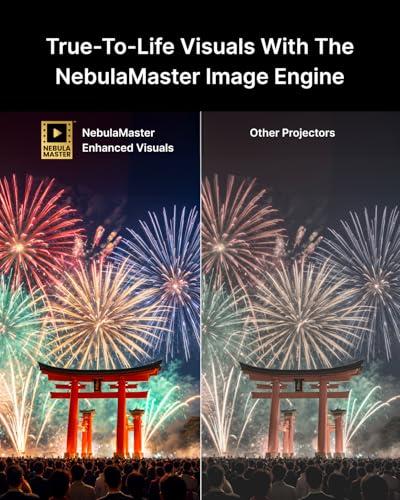
The color performance is where this projector really flexes its premium muscles. It can reproduce 123.3% of the Rec. 709 color standard, which is the benchmark for high-definition content. In practical terms, this means reds are more vibrant, greens are more lush, and the overall image has that "wow factor" you'd expect from a high-end display. The projector also supports Dolby Vision, which is like HDR on steroids – it analyzes each frame of your movie and optimizes the brightness and contrast for that specific moment.
For smart features, the Cosmos 4K SE runs Google TV, which is essentially Android TV's more polished cousin. This means you get native access to Netflix in full 4K quality – something that's surprisingly rare in the projector world. Most projectors require workarounds or external devices to get Netflix working properly, so this is a genuine convenience win.
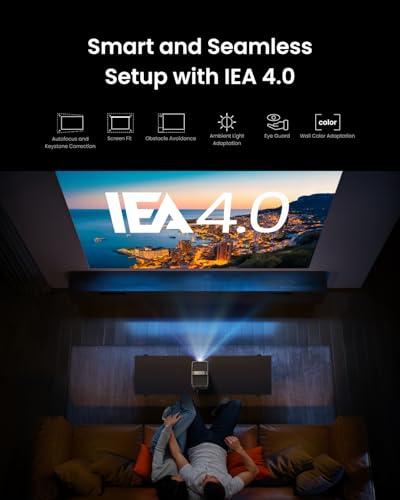
The IEA 4.0 (Intelligent Environment Adaptation) system is like having a personal technician constantly adjusting your projector. It automatically focuses the image, corrects for wonky angles if you can't place the projector perfectly straight, and even adapts to different wall colors. If you've ever spent twenty minutes trying to manually focus a projector while someone holds a test pattern, you'll appreciate this automation.
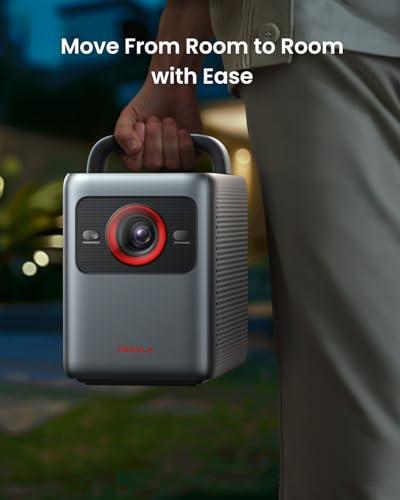
However, the Nebula Cosmos 4K SE isn't without its limitations. At nearly 10 pounds, it's portable in the "move it from room to room" sense, not the "throw it in a backpack for camping" sense. More importantly, it requires constant AC power – there's no battery option. Some users also report a noticeable light halo around the projected image, which can be distracting on anything other than a proper projection screen or very dark wall.
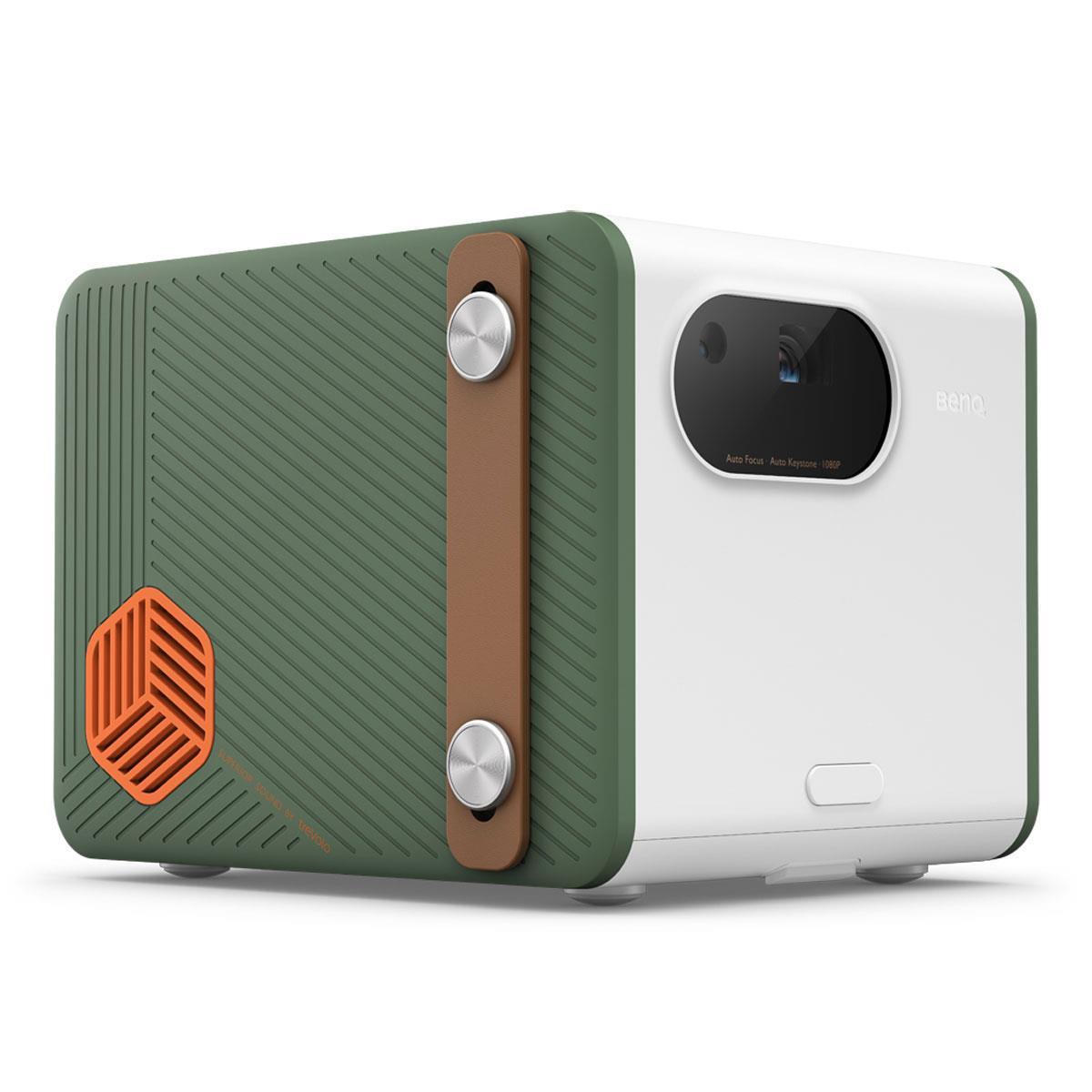
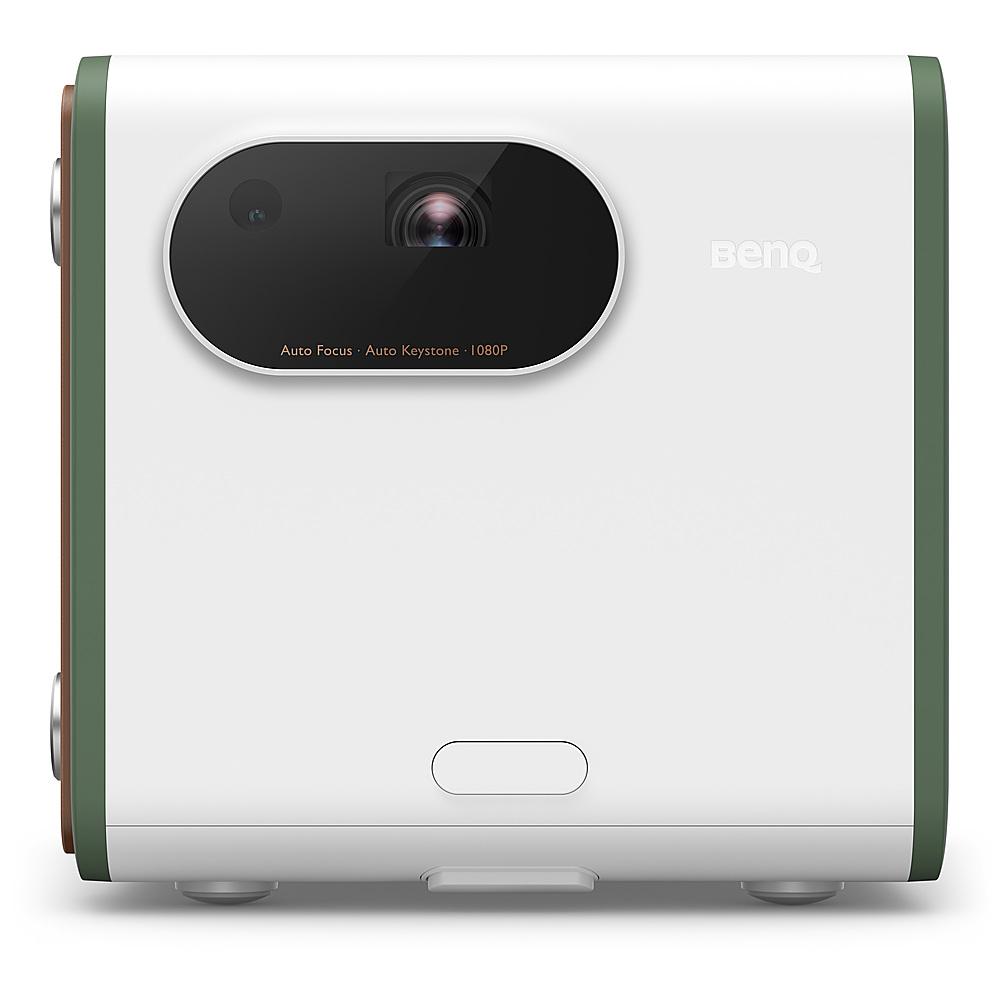
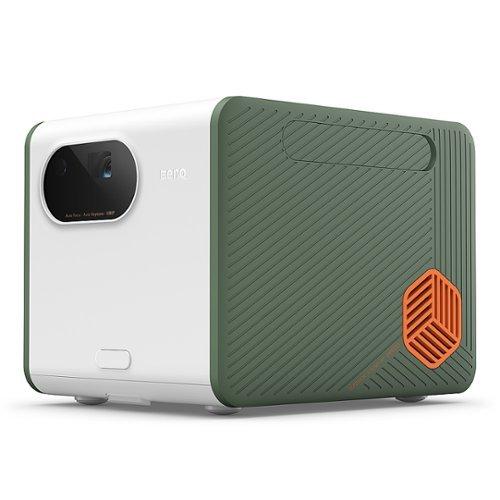
The BenQ GS50, released in 2021, takes a completely different approach to portable projection. While projector technology has advanced significantly since then – particularly in brightness and smart features – the GS50's core design philosophy remains sound: create a projector that can actually go anywhere and survive the experience.
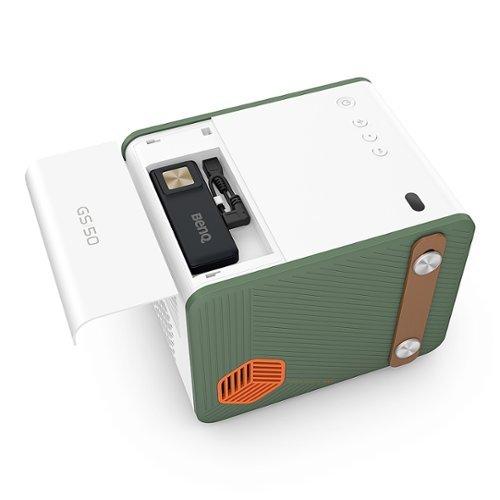
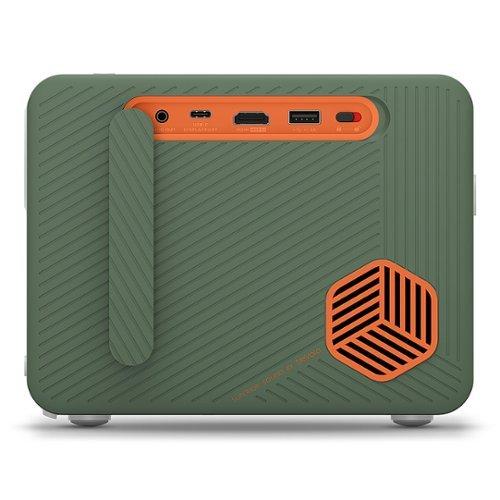
The most important feature of the GS50 is something the Cosmos 4K SE completely lacks: a built-in battery. This 2.5-hour power source transforms it from a "portable" projector that still needs to live near outlets into a truly cordless device. I've used battery-powered projectors for camping trips, and the freedom to set up anywhere without hunting for power is genuinely liberating.
At just over 5 pounds, the GS50 is also significantly lighter than its premium competitor. But weight isn't the only portability advantage – this projector is built to survive the outdoors. The IPX2 rating means it can handle light splashes and rain drops without dying, while the ruggedized construction can survive drops from over two feet. If you've ever worried about expensive electronics around campfires, sandy beaches, or enthusiastic kids, you'll appreciate this durability focus.
The picture quality story is more modest but still respectable. The BenQ GS50 delivers native 1080p resolution – that's 1,920 by 1,080 pixels, which is still Full HD and perfectly adequate for most content. While it can't match the 4K detail of the Cosmos 4K SE, 1080p is the sweet spot for portable projection. The difference between 1080p and 4K becomes less noticeable on larger screens viewed from typical distances, and the lower resolution helps with battery life and heat management.
At 500 ANSI lumens, the GS50 is significantly dimmer than the Cosmos 4K SE. This means you really need dark conditions to get a good image, but that's actually perfect for its intended use case. Outdoor movie nights typically happen after sunset anyway, and camping situations are naturally dark environments.
The smart features are more limited due to the projector's age. Running Android 9.0, it has access to Google Play apps, but notably lacks native Netflix support – a common limitation in older Android TV implementations. You can work around this with Chromecast or AirPlay, but it's less seamless than the Cosmos 4K SE's approach.
Where the GS50 does shine is in its practical design touches. The ambient light sensor automatically adjusts brightness to match conditions, helping preserve battery life. The carrying handle is genuinely comfortable for extended transport. And the setup process, while not as automated as the Cosmos 4K SE, is still straightforward enough for quick outdoor deployment.
When choosing between these projectors, understanding the performance differences is crucial because they determine what you can actually do with each device.
The resolution difference between these projectors is substantial and immediately noticeable. The Cosmos 4K SE's 4K image delivers four times the pixel count of the GS50's 1080p output. This translates to sharper text, more detailed textures, and better clarity in complex scenes.
However, pixel count isn't everything. The Cosmos 4K SE also supports HDR (High Dynamic Range), which often makes a bigger visual impact than resolution alone. HDR content has brighter highlights, darker shadows, and more vibrant colors. When watching something like a Marvel movie with lots of special effects, the HDR advantage is immediately apparent – explosions are more brilliant, space scenes have deeper blacks, and the overall image has more "pop."
The BenQ GS50 lacks HDR support, so it displays everything in standard dynamic range. While this doesn't make the image look bad, it does mean you're missing out on the enhanced visual experience that modern content creators intend.
Brightness is arguably the most critical specification for any projector because it determines where you can actually use the device. The Cosmos 4K SE's measured 1,200 lumens gives it a significant advantage in moderately lit rooms. You can watch movies in the early evening with some ambient light from windows or lamps without the image completely washing out.
The GS50's 500 lumens requires more careful light management. During my testing of similar brightness projectors, I found that even a couple of table lamps can make the image appear washed out and gray. However, this limitation is less problematic for the GS50's intended use – outdoor evening viewing naturally provides the dark conditions where 500 lumens works well.
It's worth noting that both projectors struggle in truly bright conditions. Neither can compete with daytime TV viewing in a sun-lit room. The Cosmos 4K SE is more tolerant of ambient light, but even it requires some light control for optimal viewing.
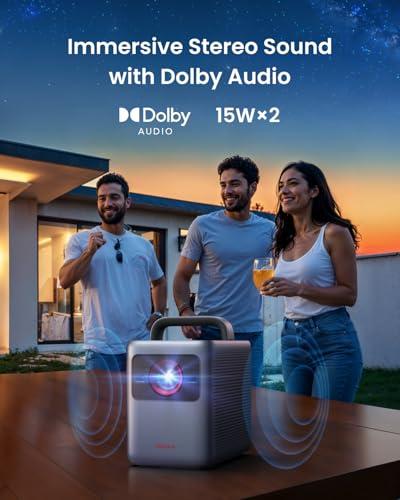
Built-in audio quality varies dramatically between portable projectors, and it can make or break the viewing experience. The Cosmos 4K SE includes a robust 30-watt sound system with Dolby Audio support. In my experience, this level of audio power can easily fill a medium-sized room without external speakers. The sound quality is rich enough for movie dialogue and impactful enough for action sequences.
The GS50's 10-watt audio system is more modest but adequate for its use case. For small outdoor gatherings or personal viewing, it provides clear dialogue and reasonable sound effects. However, if you're planning larger outdoor movie nights, you might want to consider pairing it with a portable Bluetooth speaker.
Both projectors can function as Bluetooth speakers when not projecting, which is a nice bonus feature for music listening.
The smart platform differences between these projectors reflect their different design philosophies and release years. The Cosmos 4K SE's Google TV implementation is modern and comprehensive, offering the same interface you'd find on high-end smart TVs. Native 4K Netflix support is particularly valuable because it eliminates the compatibility issues and quality limitations that often plague projector streaming.
The GS50's older Android 9.0 platform shows its age in app compatibility and interface design. While you can still access most major streaming services through workarounds like Chromecast, the experience isn't as seamless. However, for outdoor use where internet connectivity might be limited anyway, this disadvantage is less critical.
Both projectors offer comprehensive connectivity options, including HDMI, USB, and wireless protocols. The Cosmos 4K SE includes HDMI 2.1 with eARC support, which enables advanced audio passthrough to soundbars or receivers – a feature that matters more in permanent home theater setups.
For those considering either projector for home theater use, the Cosmos 4K SE is clearly the better choice, but with important caveats. Its 4K resolution and HDR support provide a genuinely cinematic experience that can rival mid-range TVs in picture quality. The intelligent setup features make it practical for regular use without becoming a technical hassle.
However, calling it a "home theater" projector requires some perspective. True home theater projectors typically offer 3,000+ lumens, extensive lens adjustments, and superior contrast ratios. The Cosmos 4K SE is more accurately described as a high-quality portable projector that can serve home theater duty in the right conditions.
The lack of optical zoom is a significant limitation for permanent installations. You'll need to position the projector at a specific distance from your screen based on the desired image size, with limited flexibility for room layout optimization. The reported light halo issue could also be problematic for dedicated theater rooms where image uniformity matters more.
The BenQ GS50 isn't really designed for home theater use, though it can certainly handle movie nights in a pinch. Its lower brightness and resolution make it better suited for casual viewing rather than serious home entertainment.
Choosing between these projectors comes down to understanding your primary use case and priorities. At the time of writing, the Cosmos 4K SE commands roughly twice the price of the GS50, reflecting its premium positioning and advanced features.
Choose the Nebula Cosmos 4K SE if:
Choose the BenQ GS50 if:
Both the Nebula Cosmos 4K SE and BenQ GS50 excel at what they're designed to do, but they're designed for fundamentally different users and situations.
The Cosmos 4K SE represents the pinnacle of portable home entertainment, bringing near-TV quality to a moveable package. Its 4K resolution, HDR support, and intelligent features make it ideal for users who want premium performance without permanent installation. However, its power requirements and higher cost limit its appeal to indoor-focused users with sufficient budget for the premium experience.
The GS50 prioritizes practical portability over absolute performance, creating a device that can truly go anywhere and survive the journey. Its battery operation, rugged construction, and outdoor-friendly design make it perfect for adventurous users who value flexibility and durability over ultimate picture quality.
In my view, neither projector is a compromise – they're both excellent examples of focused design serving specific needs. The key is honestly assessing your intended use case and matching it to the right device. If you're building an indoor entertainment system that occasionally moves between rooms, the Cosmos 4K SE delivers impressive performance. If you're planning camping trips, backyard movie nights, or need genuine go-anywhere capability, the GS50 provides unmatched practical flexibility.
The portable projector market continues evolving rapidly, with new models appearing regularly that push brightness, resolution, and smart features forward. However, the fundamental choice between premium indoor performance and rugged outdoor capability remains, and these two projectors represent excellent examples of each approach done well.
| Nebula Cosmos 4K SE Smart Projector | BenQ GS50 Portable Outdoor Projector |
|---|---|
| Resolution - Determines image sharpness and detail quality | |
| 4K UHD (3840×2160) via pixel shifting - Noticeably sharper text and fine details | 1080p Full HD (1920×1080) native - Adequate for most content, lighter processing |
| Brightness - Critical for ambient light tolerance | |
| 1,800 ANSI lumens rated (1,200 measured) - Works in moderately lit rooms | 500 ANSI lumens - Requires dark environments but adequate for outdoor evening use |
| Power Source - Determines true portability | |
| AC power only - Limits to locations with electrical outlets | Built-in 2.5-hour battery - True cordless operation for camping and outdoor use |
| Weight & Portability - Affects ease of transport | |
| 9.9 lbs with handle - Room-to-room portable but not backpack-friendly | 5.1 lbs with comfortable handle - Genuinely travel-friendly for outdoor adventures |
| Environmental Protection - Important for outdoor durability | |
| Indoor use only - No weather resistance | IPX2 splash-proof rating plus drop protection - Built for outdoor conditions |
| HDR Support - Enhances color and contrast quality | |
| Dolby Vision, HDR10, HLG - Premium HDR experience with enhanced visuals | None - Standard dynamic range limits color impact |
| Smart Platform - Affects streaming convenience | |
| Google TV with native 4K Netflix - Seamless streaming without dongles | Android 9.0 with limited Netflix - Requires Chromecast workarounds for some apps |
| Audio System - Built-in sound quality | |
| 30W (15W×2) with Dolby Audio - Room-filling sound suitable for most viewing | 10W (5W×2) speakers - Adequate for personal/small group viewing |
| Setup Intelligence - Ease of getting perfect image | |
| IEA 4.0 auto-focus, keystone, obstacle avoidance - Minimal manual adjustment needed | Basic auto-focus and keystone - Simple but requires more manual fine-tuning |
| Gaming Performance - Input lag for responsive gaming | |
| 18.4ms in Game Mode - Excellent for competitive gaming | Not specified - Likely higher latency, casual gaming only |
| Light Source Lifespan - Long-term reliability | |
| 30,000 hours (Hybrid LED+Laser) - Excellent longevity with advanced technology | 20,000-30,000 hours (LED) - Good lifespan with proven LED technology |
| Price Category - Value positioning at time of writing | |
| Premium tier - Roughly double the cost but includes 4K and advanced features | Budget-friendly - Lower cost reflects focus on practical portability over premium specs |
The Nebula Cosmos 4K SE Smart Projector delivers significantly better picture quality with true 4K UHD resolution (3840×2160) compared to the BenQ GS50 Portable Outdoor Projector's 1080p Full HD. The Cosmos 4K SE also supports Dolby Vision HDR for enhanced colors and contrast, while the GS50 offers standard dynamic range only.
The BenQ GS50 Portable Outdoor Projector is specifically designed for outdoor use with a built-in 2.5-hour battery, IPX2 splash protection, and rugged construction. The Nebula Cosmos 4K SE Smart Projector requires AC power and lacks weather resistance, making it unsuitable for camping or outdoor environments.
The Nebula Cosmos 4K SE Smart Projector is much brighter at 1,800 ANSI lumens compared to the BenQ GS50's 500 ANSI lumens. However, neither projector performs well in bright daylight - both need controlled lighting for optimal viewing, with the Cosmos 4K SE being more tolerant of ambient light.
The Nebula Cosmos 4K SE Smart Projector offers native 4K Netflix support through its Google TV platform, providing seamless streaming. The BenQ GS50 Portable Outdoor Projector lacks native Netflix but can stream it through Chromecast or AirPlay workarounds due to its older Android 9.0 system.
The Nebula Cosmos 4K SE Smart Projector excels for gaming with low 18.4ms input lag in Game Mode, 4K resolution, and smooth motion processing. The BenQ GS50 Portable Outdoor Projector can handle casual gaming but lacks the low latency and high resolution needed for competitive or demanding games.
The BenQ GS50 Portable Outdoor Projector offers true portability at 5.1 pounds with battery power, making it ideal for travel and camping. The Nebula Cosmos 4K SE Smart Projector weighs 9.9 pounds and requires AC power, limiting it to room-to-room portability within homes or offices.
The Nebula Cosmos 4K SE Smart Projector features superior audio with 30W speakers and Dolby Audio support, providing room-filling sound suitable for movie nights. The BenQ GS50 Portable Outdoor Projector has modest 10W speakers adequate for personal viewing but may need external audio for larger groups.
The Nebula Cosmos 4K SE Smart Projector is better suited for home theater use with 4K resolution, HDR support, and intelligent setup features, though it's still a portable rather than dedicated home theater projector. The BenQ GS50 works for casual home viewing but lacks the resolution and brightness for serious home theater applications.
The Nebula Cosmos 4K SE Smart Projector offers advanced IEA 4.0 technology with automatic focus, keystone correction, and environmental adaptation for nearly effortless setup. The BenQ GS50 Portable Outdoor Projector provides basic auto-focus and keystone correction but requires more manual adjustment for optimal results.
The BenQ GS50 Portable Outdoor Projector provides excellent value for users prioritizing true portability and outdoor use at a lower price point. The Nebula Cosmos 4K SE Smart Projector offers premium features like 4K and HDR at a higher cost, making it valuable for users wanting superior picture quality.
The Nebula Cosmos 4K SE Smart Projector supports screens up to 200 inches, taking advantage of its higher brightness and 4K resolution. The BenQ GS50 Portable Outdoor Projector works best with screens up to 100-110 inches due to its lower 500-lumen brightness output.
Both the Nebula Cosmos 4K SE Smart Projector and BenQ GS50 Portable Outdoor Projector offer excellent longevity with LED/laser light sources rated for 20,000-30,000 hours. The Cosmos 4K SE's hybrid laser-LED system may provide slightly longer life and better color stability over time compared to the GS50's traditional LED setup.
We've done our best to create useful and informative comparisons to help you decide what product to buy. Our research uses advanced automated methods to create this comparison and perfection is not possible - please contact us for corrections or questions. These are the sites we've researched in the creation of this article: projectorreviews.com - tvsbook.com - youtube.com - projectorcentral.com - youtube.com - projectorcentral.com - techradar.com - youtube.com - projectorcentral.com - youtube.com - the-gadgeteer.com - newegg.com - projectorreviews.com - projectorcentral.com - youtube.com - seenebula.com - seenebula.com - bestbuy.com - cnet.com - hometheaterhifi.com - youtube.com - youtube.com - whathifi.com - youtube.com - bgeek.eu - youtube.com - youtube.com - projectorreviews.com - youtube.com - youtube.com - projectorcentral.com - projectorreviews.com - bestbuy.com - touchboards.com - projectorcentral.com - adorama.com - projectorreviews.com - insight.com - cnet.com

Privacy Policy
Terms and Conditions - Affiliate Policy
Home Security
© Copyright 2008-2026.
11816 Inwood Rd #1211, Dallas, TX 75244