

The portable 4K projector market has exploded in recent years, and for good reason. These devices promise big-screen entertainment without the commitment of mounting a permanent home theater setup. Whether you're planning backyard movie nights, setting up a gaming cave, or creating a flexible home theater, today's portable projectors deliver surprisingly impressive results.
But not all 4K projectors are created equal. The Hisense M2 Pro and Nebula Cosmos 4K SE represent two very different approaches to portable projection, each with distinct advantages that make them better suited for different users and situations. Understanding these differences is crucial to making the right choice for your specific needs.
Before diving into the comparison, it's worth understanding what makes a projector truly "portable" and what 4K means in this context. Portable projectors typically weigh under 15 pounds and can be easily moved between rooms or taken outdoors. They often include built-in speakers, smart TV platforms, and simplified setup features that make them more user-friendly than traditional home theater projectors.
The "4K" designation, however, isn't always straightforward. Some projectors achieve 4K resolution through "pixel shifting" – essentially moving pixels quickly to create the impression of higher resolution from a lower-resolution chip. Others use native 4K chips with millions of individual mirrors or pixels. This distinction matters significantly for image quality, as we'll explore.
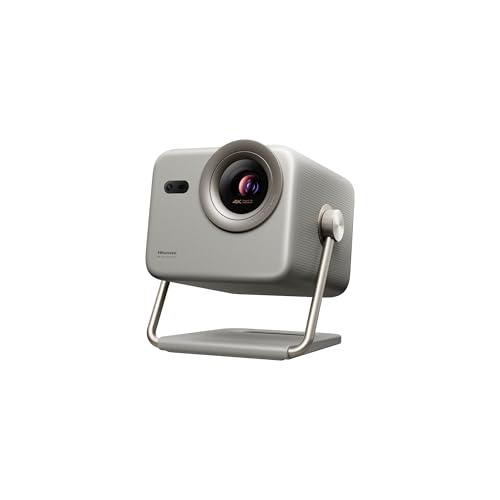
The Hisense M2 Pro, released in 2024, represents the cutting edge of portable laser projection technology. It's positioned as a premium device that doesn't compromise on image quality despite its portability. At the time of writing, it commands a significant price premium that puts it in the upper tier of portable projectors.
The Nebula Cosmos 4K SE, also from 2024, takes a more balanced approach. It combines solid performance with practical features at a more accessible price point – roughly half the cost of the Hisense M2 Pro at the time of writing. This positions it as an excellent value proposition for users who want 4K projection without breaking the bank.
The most fundamental difference between these projectors lies in how they achieve 4K resolution. The Hisense M2 Pro uses a genuine 4K DLP chip with 2.07 million individual micromirrors. Each mirror corresponds to a single pixel, meaning every pixel in a 4K image gets its own dedicated mirror. This is true, native 4K projection.
The Nebula Cosmos 4K SE, like many projectors in its price range, uses a 1080p DLP chip with pixel shifting technology. This technique rapidly moves the pixels to create four distinct positions, effectively quadrupling the apparent resolution. While the end result is sharp and detailed, it's not quite the same as having dedicated pixels for every point of resolution.
In practice, both approaches produce impressive results, but the difference becomes apparent when viewing fine details or text. The Hisense M2 Pro maintains perfect sharpness even with small text or intricate patterns, while the Nebula Cosmos 4K SE occasionally shows slight softness in the most demanding content.
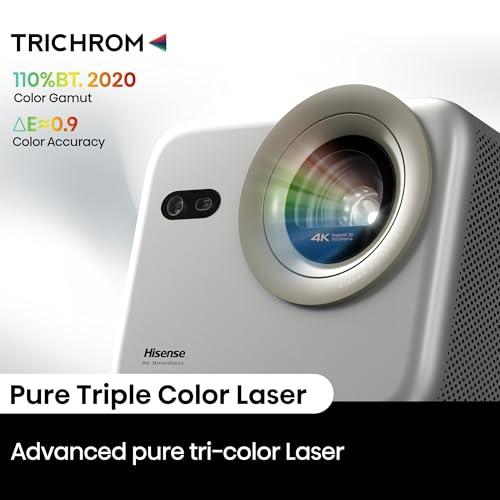
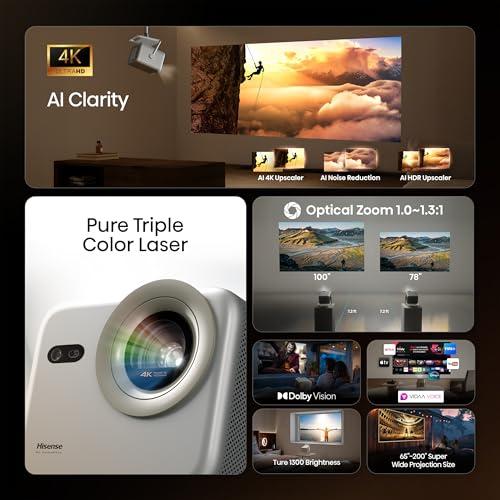
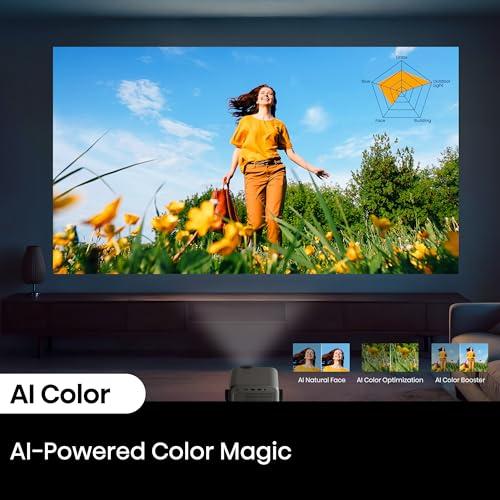
Here's where the Hisense M2 Pro truly sets itself apart. Its triple laser system uses separate red, green, and blue lasers – a technology borrowed from premium cinema projectors. This approach allows it to reproduce 110% of the BT.2020 color space, which is the widest color standard used for 4K content.
To put this in perspective, most TVs and projectors can only reproduce about 70-80% of this color space. The Hisense M2 Pro's wider color gamut means more vivid reds, deeper greens, and more accurate skin tones. Colors appear more lifelike and saturated without looking artificial.
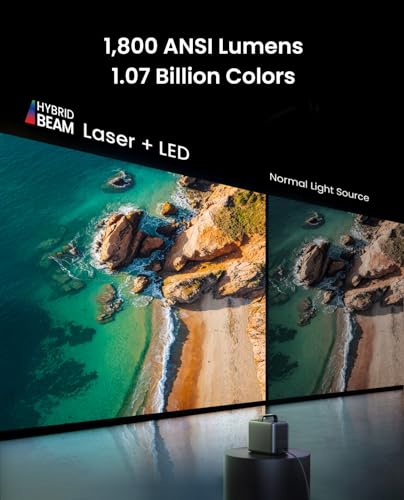
The Nebula Cosmos 4K SE uses a hybrid approach, combining LED and laser phosphor technology. While it achieves impressive color reproduction – covering about 95% of the DCI-P3 color space (the standard used for digital cinema) – it can't match the pure, saturated colors that discrete RGB lasers provide.
Both projectors support HDR (High Dynamic Range), which enhances the contrast between the brightest and darkest parts of an image. However, their approaches differ significantly.
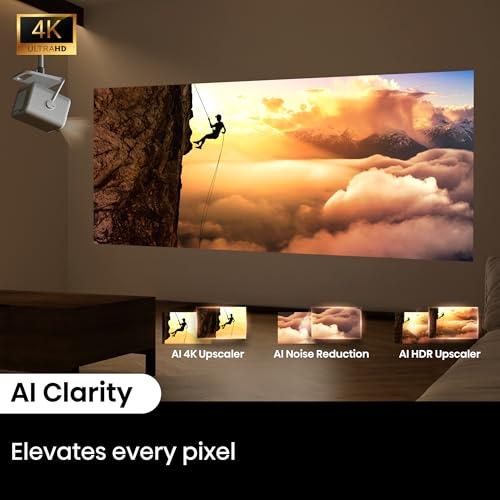
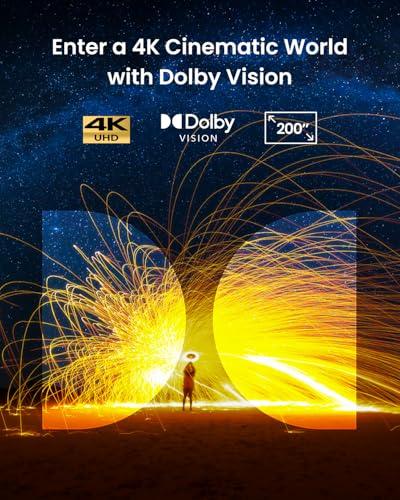
The Hisense M2 Pro supports Dolby Vision, HDR10, HDR10+, and HLG – essentially every HDR format you'll encounter. Its AI-powered HDR upscaling can even enhance standard content to look more HDR-like. Combined with its superior color reproduction and 1,000:1 contrast ratio, HDR content really pops on this projector.
The Nebula Cosmos 4K SE also supports major HDR formats, but its lower native contrast ratio (400:1) means it can't achieve the same dramatic difference between light and dark areas. HDR content still looks good, but it lacks the impact you'll get from the Hisense M2 Pro.
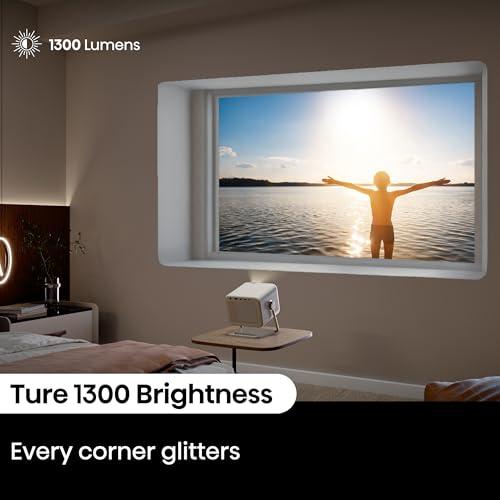
Brightness might be the Nebula Cosmos 4K SE's biggest advantage. At 1,800 ANSI lumens, it significantly outshines the Hisense M2 Pro's 1,300 ANSI lumens. This 38% brightness advantage translates to better performance in rooms with ambient light.
ANSI lumens measure the actual light output of a projector under standardized conditions. Generally, you need at least 1,000 ANSI lumens for a decent image in a dark room, 1,500+ for a room with some ambient light, and 2,000+ for daytime viewing with windows open.
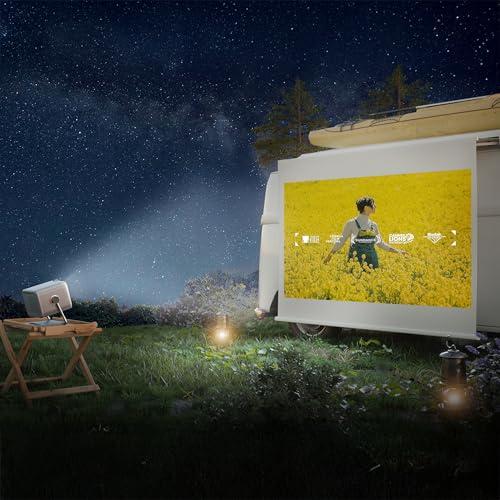
The Nebula Cosmos 4K SE's higher brightness makes it more versatile for different viewing environments. You can use it in a family room with some lights on, or even outdoors before complete darkness falls. The Hisense M2 Pro, while still capable in moderately lit rooms, really shines (pun intended) in darker environments where its superior contrast and color accuracy can be fully appreciated.
Modern projectors have become surprisingly capable gaming displays, and both models cater to gamers with specific features. The Hisense M2 Pro supports up to 240Hz refresh rates and achieves input lag as low as 12 milliseconds. Input lag is the delay between when you press a button and when the action appears on screen – crucial for competitive gaming where every millisecond counts.
The Nebula Cosmos 4K SE offers respectable gaming performance with input lag around 18.4ms in its dedicated game mode. While not quite as responsive as the Hisense M2 Pro, it's still excellent for most gaming scenarios, including competitive play.
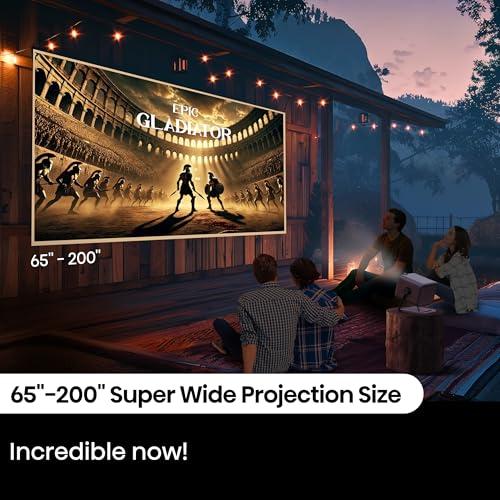
Both projectors include game-specific picture modes that optimize brightness, contrast, and color settings for better visibility in dark game environments. The larger screen sizes these projectors enable – up to 200 inches – create an incredibly immersive gaming experience that's impossible to achieve with traditional TVs.
The Nebula Cosmos 4K SE takes a clear lead in smart features. Its Google TV platform provides access to over 10,000 apps, including native 4K Netflix – something that's still relatively rare in projectors. The interface is smooth and familiar to anyone who's used modern Android TV devices, with Google Assistant voice control and excellent app selection.
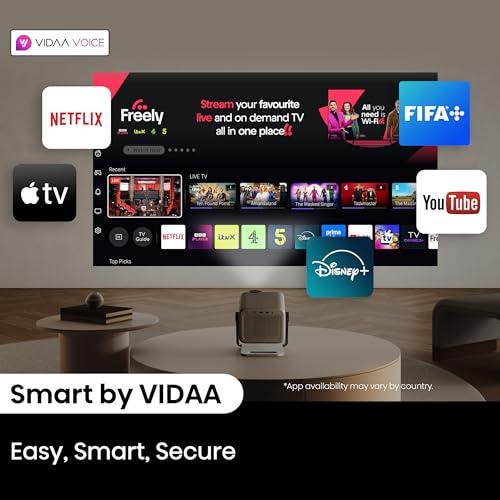
The Hisense M2 Pro runs VIDAA OS, which covers the essential streaming services but lacks the breadth of Google TV. However, VIDAA is clean, fast, and includes the most popular apps like Netflix, Disney+, Amazon Prime Video, and YouTube.
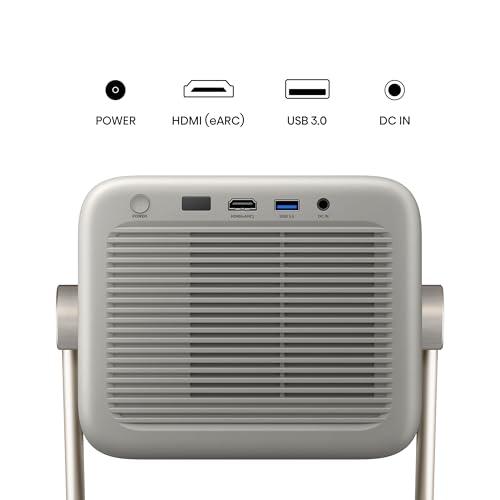
Both projectors offer comprehensive connectivity with HDMI 2.1, USB ports, and wireless capabilities. The Nebula Cosmos 4K SE includes eARC (enhanced Audio Return Channel) support, making it easier to connect to external sound systems.
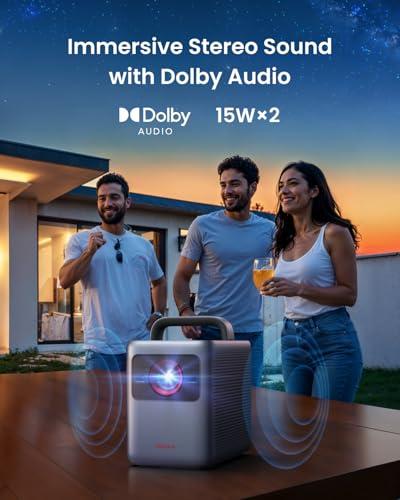
Projector audio has traditionally been an afterthought, but both models take sound seriously. The Nebula Cosmos 4K SE includes a 30-watt stereo system with Dolby Audio and Dolby Atmos support. Based on user feedback, the audio quality is surprisingly good – clear dialogue, decent bass response, and enough volume to fill a medium-sized room without external speakers.
The Hisense M2 Pro's 20-watt system, while less powerful on paper, still delivers solid audio with support for Dolby Audio and DTS Virtual:X. The difference in audio quality isn't dramatic, but the Nebula Cosmos 4K SE has a slight edge for users who plan to rely primarily on built-in speakers.
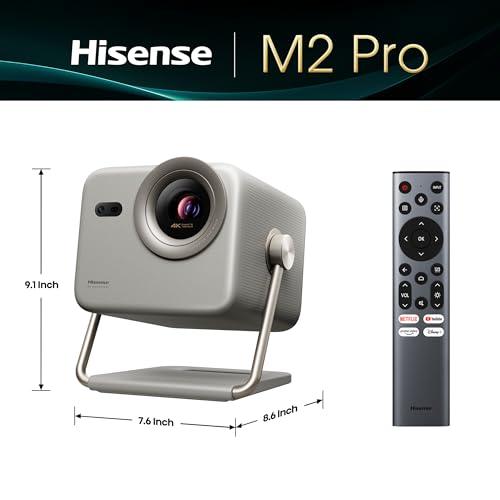
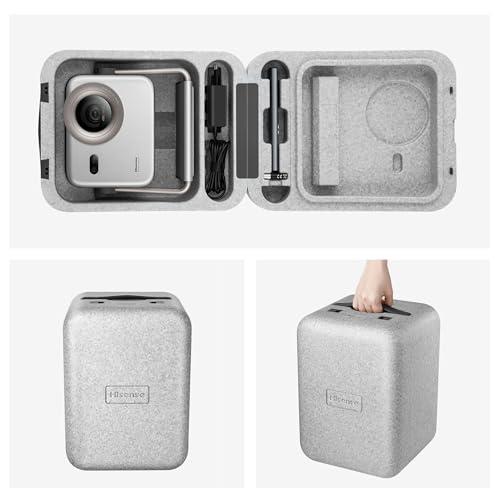
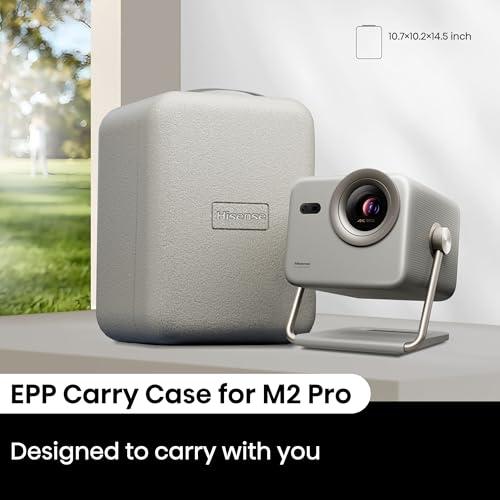
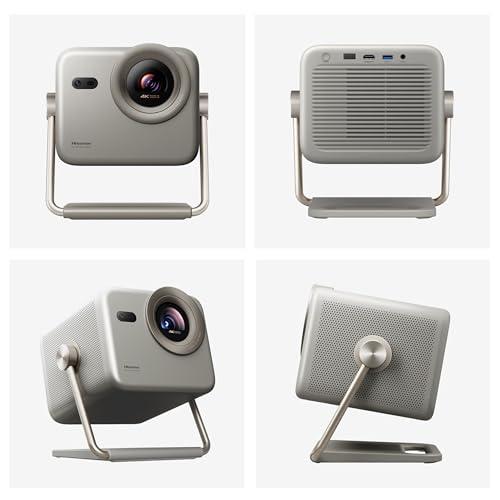
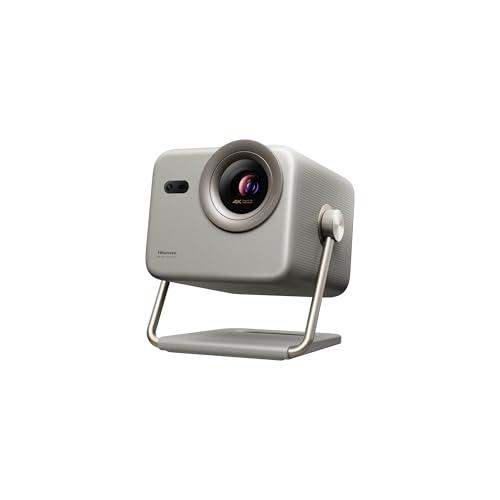
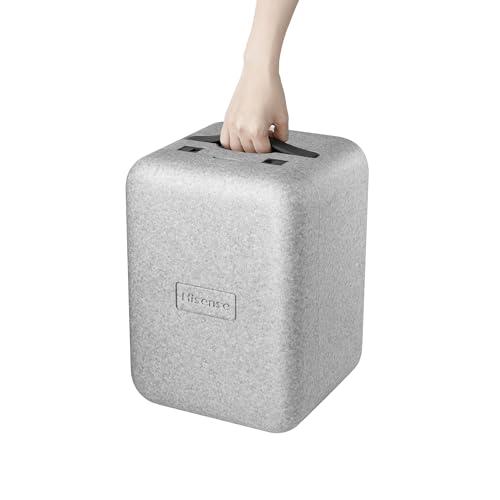
Despite both being "portable," these projectors approach mobility differently. The Hisense M2 Pro is genuinely compact and lightweight at 8.6 pounds, with a unique gimbal mount system that allows 360-degree rotation and ceiling projection. This flexibility is remarkable – you can literally project on any surface, including the ceiling above your bed.
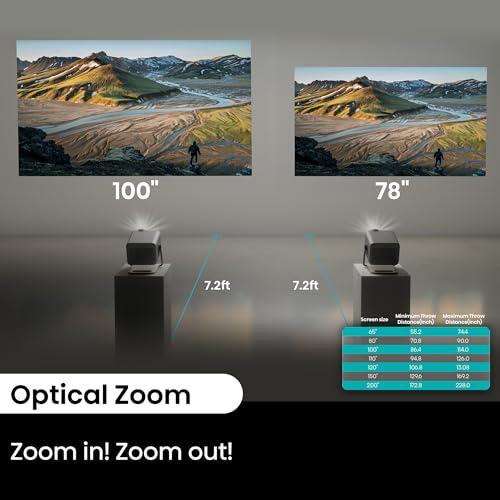
The optical zoom feature on the Hisense M2 Pro is particularly valuable. Unlike digital zoom, which reduces image quality, optical zoom maintains full 4K sharpness while adjusting the image size. This means you can fine-tune the picture size without moving the projector, making setup much more flexible.
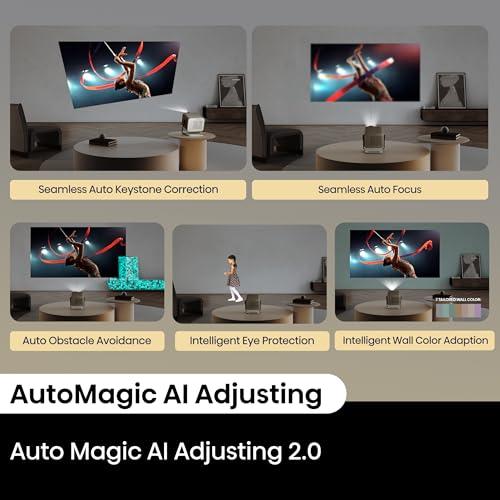
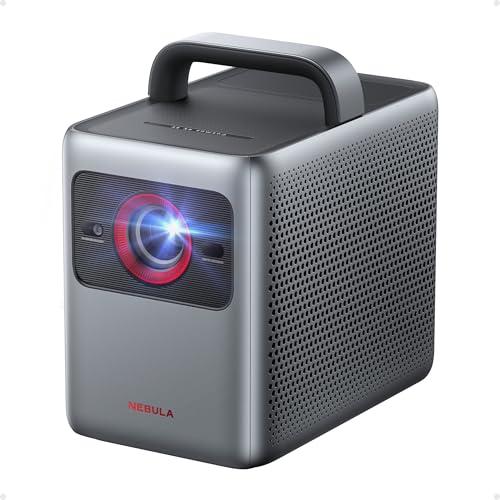
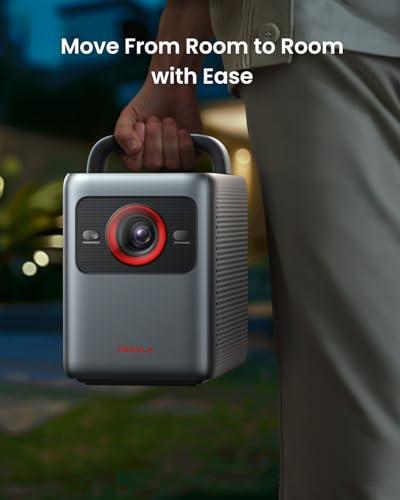
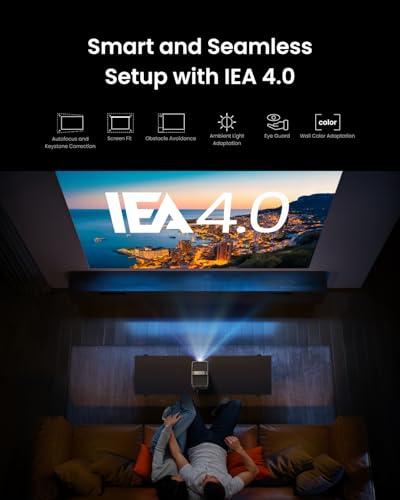
The Nebula Cosmos 4K SE, at 9.9 pounds, is still portable but feels more substantial. Its IEA 4.0 intelligent setup system automatically handles focus, keystone correction (fixing the trapezoid distortion when projecting at an angle), and even obstacle avoidance. While it lacks optical zoom, these automatic features make setup remarkably simple.
Laser light sources offer significant advantages over traditional lamp-based projectors. Both models use laser technology with rated lifespans exceeding 25,000 hours – that's over 10 years of typical use. Lasers also maintain consistent brightness over time, unlike lamps that gradually dim.
The Hisense M2 Pro's triple laser system is particularly noteworthy for its zero harmful blue light emission, making it easier on the eyes during extended viewing sessions. This is especially important for families with children or anyone sensitive to blue light.
For dedicated home theater use, the choice between these projectors depends largely on your room setup and priorities. The Hisense M2 Pro excels in light-controlled environments where you can fully appreciate its superior contrast and color accuracy. Its true 4K resolution and wide color gamut make it ideal for movie enthusiasts who want the best possible image quality.
The Nebula Cosmos 4K SE works better in multi-purpose rooms where complete light control isn't always possible. Its higher brightness and excellent smart TV platform make it more family-friendly and versatile for different types of content.
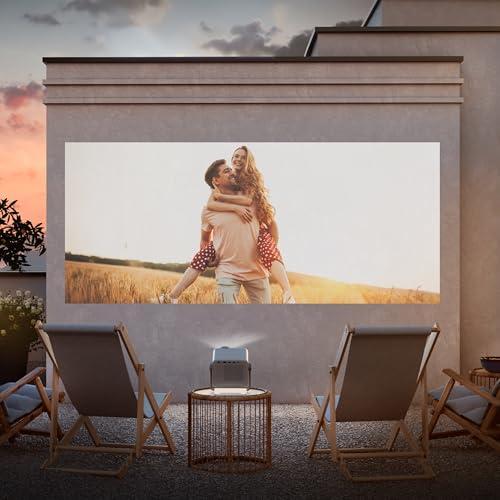
Screen size considerations are important for both. These projectors can create images up to 200 inches diagonally, but optimal viewing depends on your room size and seating distance. For most home theaters, a 100-120 inch image provides an excellent cinema-like experience without overwhelming the space.
The Hisense M2 Pro is ideal for users who prioritize image quality above all else and don't mind paying a premium for cutting-edge technology. It's perfect for movie enthusiasts, those with dedicated dark viewing spaces, and users who value maximum portability and setup flexibility. The optical zoom and gimbal mount make it exceptionally versatile for different installation scenarios.
The Nebula Cosmos 4K SE offers better value for most users, especially those who need versatility in different lighting conditions. Its superior brightness, excellent smart features, and strong built-in audio make it ideal for families, casual users, and those who want a single device that handles all their entertainment needs without additional components.
At the time of writing, the price difference between these projectors is substantial – the Hisense M2 Pro commands roughly twice the price of the Nebula Cosmos 4K SE. This price gap reflects their different target markets and technological approaches.
If your budget allows for the premium option and you value absolute image quality, the Hisense M2 Pro delivers an exceptional experience that justifies its cost. However, for most users seeking excellent 4K projection without the premium price tag, the Nebula Cosmos 4K SE provides outstanding value and performance.
Consider your primary use case: pure home theater in a dark room favors the Hisense M2 Pro, while versatile family entertainment in various lighting conditions points toward the Nebula Cosmos 4K SE. Both are excellent projectors that represent the current state of portable projection technology – your choice simply depends on which strengths align with your specific needs and budget.
| Hisense M2 Pro 4K Triple Laser Portable Projector | Nebula Cosmos 4K SE Smart Projector |
|---|---|
| Native Resolution - Determines true image sharpness and detail quality | |
| True 4K (3840×2160) with 2.07M micromirrors | 1080p upscaled to 4K via pixel shifting |
| Light Source Technology - Affects color accuracy, brightness consistency, and lifespan | |
| Triple discrete RGB lasers (25,000+ hours) | Hybrid LED + Laser Phosphor (30,000 hours) |
| Brightness - Critical for ambient light performance and daytime viewing | |
| 1,300 ANSI lumens (best in dark rooms) | 1,800 ANSI lumens (better for mixed lighting) |
| Color Gamut - Determines color vibrancy and accuracy for HDR content | |
| 110% BT.2020 (cinema-grade color reproduction) | 95% DCI-P3 (excellent but more limited range) |
| Contrast Ratio - Affects black levels and overall image depth | |
| 1,000:1 (superior dark scene detail) | 400:1 (adequate but limited dynamic range) |
| Gaming Performance - Input lag determines responsiveness for competitive gaming | |
| 12ms input lag, 240Hz support | 18.4ms input lag in Game Mode Extreme |
| Smart Platform - Determines app selection and streaming capabilities | |
| VIDAA OS (major apps, simpler interface) | Google TV (10,000+ apps, native 4K Netflix) |
| Audio System - Built-in sound quality affects need for external speakers | |
| 20W stereo with Dolby Audio/DTS Virtual:X | 30W stereo with Dolby Audio/Atmos support |
| Portability - Weight and size affect ease of moving between locations | |
| 8.6 lbs, compact design with gimbal mount | 9.9 lbs, larger but includes carrying handle |
| Setup Flexibility - Determines installation options and ease of use | |
| Optical zoom (1.0-1.3x), 360° rotation capability | Fixed lens, IEA 4.0 auto-setup with obstacle avoidance |
| HDR Support - Enhanced contrast and color for premium content | |
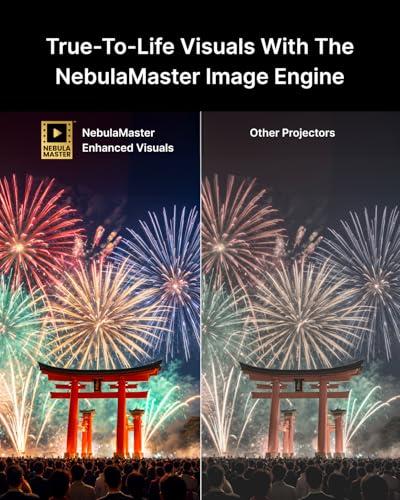
| Dolby Vision, HDR10, HDR10+, HLG with AI upscaling | Dolby Vision, HDR10, HLG with NebulaMaster processing |
| Connectivity - Port selection for external devices and audio systems | |
| HDMI 2.1, USB, Wi-Fi, Bluetooth 5.0 | HDMI 2.1 with eARC, USB 3.0, Wi-Fi, Bluetooth |
| Value Positioning - Premium vs mainstream pricing at time of writing | |
| Premium pricing for cutting-edge laser technology | Mid-range pricing with excellent feature balance |
The Hisense M2 Pro delivers superior image quality with true native 4K resolution and triple laser technology that produces 110% of the BT.2020 color space. This means sharper details, more accurate colors, and better contrast (1,000:1 vs 400:1) compared to the Nebula Cosmos 4K SE, which uses 1080p upscaling to achieve 4K. For home theater enthusiasts who prioritize the best possible picture quality, the Hisense M2 Pro is the clear winner.
The Nebula Cosmos 4K SE is significantly brighter at 1,800 ANSI lumens compared to the Hisense M2 Pro's 1,300 ANSI lumens. This 38% brightness advantage makes the Nebula Cosmos 4K SE better for rooms with ambient light or daytime viewing, while the Hisense M2 Pro performs best in darker, controlled environments.
The Nebula Cosmos 4K SE provides better value for most users, offering excellent performance at roughly half the cost of the Hisense M2 Pro. While the Hisense M2 Pro has superior image quality and premium features, the Nebula Cosmos 4K SE delivers impressive 4K projection, smart features, and versatility at a more accessible price point.
The Nebula Cosmos 4K SE has superior built-in audio with 30W stereo speakers supporting Dolby Audio and Dolby Atmos, compared to the Hisense M2 Pro's 20W system. User reviews consistently praise the Nebula Cosmos 4K SE's audio quality, often eliminating the need for external speakers in smaller rooms.
The Hisense M2 Pro is more portable at 8.6 lbs versus the Nebula Cosmos 4K SE's 9.9 lbs. The Hisense M2 Pro also features a unique 360° gimbal mount system that allows projection on any surface, including ceilings, making it more versatile for different setups and locations.
Both projectors offer excellent gaming performance, but the Hisense M2 Pro has a slight edge with 12ms input lag and 240Hz refresh rate support compared to the Nebula Cosmos 4K SE's 18.4ms input lag. However, both are suitable for competitive gaming, and the Nebula Cosmos 4K SE's higher brightness can be advantageous for gaming in brighter rooms.
The Nebula Cosmos 4K SE excels in smart features with Google TV OS, providing access to over 10,000 apps including native 4K Netflix. The Hisense M2 Pro uses VIDAA OS, which covers major streaming services but has a more limited app selection. For users who prioritize comprehensive streaming capabilities, the Nebula Cosmos 4K SE is superior.
For dedicated home theater use, the Hisense M2 Pro is generally preferred due to its superior image quality, true 4K resolution, wider color gamut, and better contrast ratio. However, the Nebula Cosmos 4K SE works better in multi-purpose rooms where complete light control isn't possible, thanks to its higher brightness and excellent smart TV platform.
Only the Hisense M2 Pro features optical zoom (1.0-1.3x throw ratio), allowing you to adjust image size without moving the projector while maintaining full 4K sharpness. The Nebula Cosmos 4K SE has a fixed lens but compensates with advanced auto-setup features including intelligent keystone correction and obstacle avoidance.
Both projectors use laser light sources with exceptional lifespans - the Hisense M2 Pro offers 25,000+ hours while the Nebula Cosmos 4K SE provides up to 30,000 hours. Both will last over 10 years with typical use, making longevity a non-factor in the decision between these models.
The Nebula Cosmos 4K SE performs better in bright rooms due to its 1,800 ANSI lumens brightness output. While the Hisense M2 Pro can handle some ambient light, it's optimized for darker viewing environments where its superior contrast and color accuracy can shine through.
Choose the Hisense M2 Pro if you prioritize the absolute best image quality, have a dedicated dark viewing space, and don't mind paying premium pricing for cutting-edge laser technology. Choose the Nebula Cosmos 4K SE if you want excellent 4K performance with better brightness, comprehensive smart features, superior audio, and better value for money in a versatile package suitable for various lighting conditions.
We've done our best to create useful and informative comparisons to help you decide what product to buy. Our research uses advanced automated methods to create this comparison and perfection is not possible - please contact us for corrections or questions. These are the sites we've researched in the creation of this article: thegadgetflow.com - valueelectronics.com - youtube.com - projectorscreenstore.com - whathifi.com - hisense-usa.com - tomsguide.com - content.syndigo.com - youtube.com - shop.hisense-usa.com - avsforum.com - projectorscreen.com - projectorscreen.com - projectorcentral.com - avsforum.com - youtube.com - projector-database.com - projectorreviews.com - tvsbook.com - youtube.com - projectorcentral.com - youtube.com - projectorcentral.com - techradar.com - youtube.com - projectorcentral.com - youtube.com - the-gadgeteer.com - newegg.com - projectorreviews.com - projectorcentral.com - youtube.com - seenebula.com - seenebula.com - bestbuy.com

Privacy Policy
Terms and Conditions - Affiliate Policy
Home Security
© Copyright 2008-2026.
11816 Inwood Rd #1211, Dallas, TX 75244