

In today's world of exploding home entertainment options, projectors have carved out a unique space. They offer something TVs simply can't match: the true big-screen experience that transforms regular movie nights into cinema-like events. But the projector market has evolved dramatically in recent years, branching into distinct categories that serve different needs and budgets.
Today, we're comparing two fundamentally different approaches to home projection: the highly portable TCL A1 Portable Smart Projector priced at $499 and the more traditional BenQ HT2060 HDR Home Theater Projector at $999. Despite sharing the "projector" label, these devices represent distinctly different philosophies about how we should consume content at home.
The projector market has undergone significant transformation since the early 2000s. Traditional home theater projectors were once bulky affairs that required permanent installation and careful setup. They demanded dedicated spaces with controlled lighting and represented significant investments.
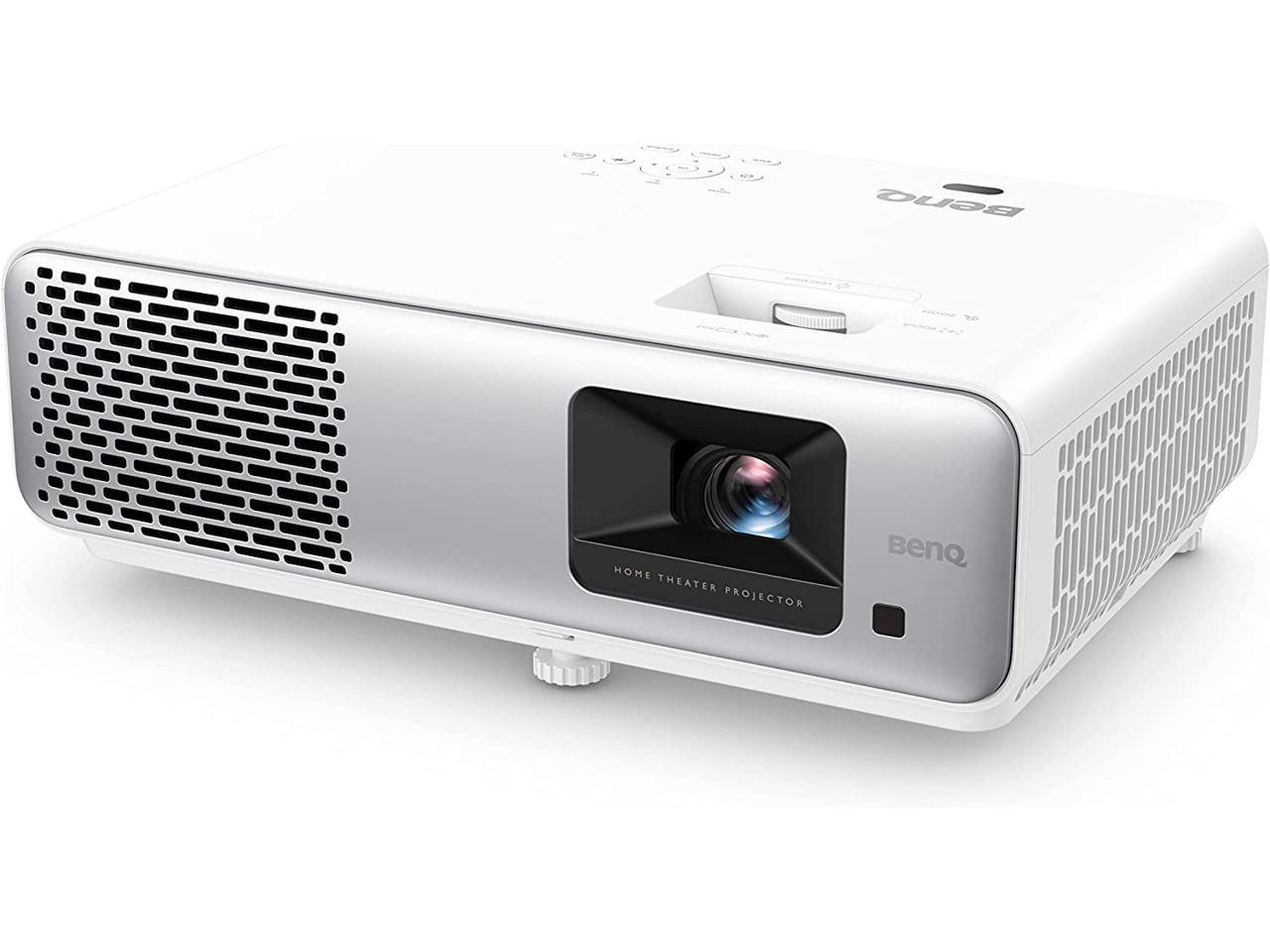
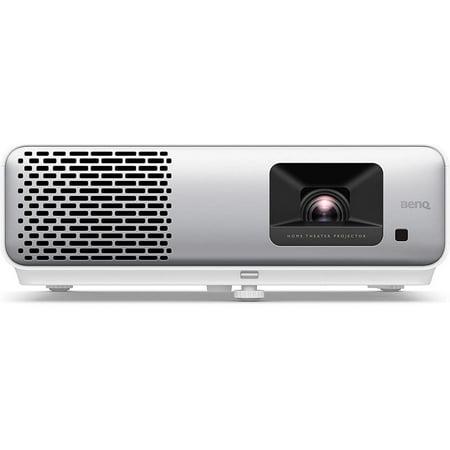
The BenQ HT2060, released in late 2022, comes from this lineage but incorporates modern technologies like 4LED light sources and HDR processing that weren't available in previous generations. It represents the evolution of the traditional home theater projector: better, brighter, and more versatile than its ancestors, while maintaining focus on image quality above all else.
In contrast, the TCL A1, released in early 2023, exemplifies the newer breed of "lifestyle projectors" that prioritize portability and convenience. These projectors integrate streaming platforms and emphasize easy setup, aiming to be more accessible to casual users rather than dedicated home theater enthusiasts.
This fundamental difference in philosophy shapes everything from their performance characteristics to ideal use cases. Let's explore exactly what separates them.
When evaluating projectors, brightness isn't just one specification among many—it's often the defining characteristic that determines where and when you can actually use the device.
The TCL A1 outputs 360 ISO Lumens. What does this mean in practical terms? ISO Lumens is a brightness measurement standard that accounts for how our eyes perceive color brightness, not just raw light output. At 360 ISO Lumens, the TCL A1 produces enough light for enjoyable viewing, but with significant limitations. You'll need a properly darkened room—think movie theater dark, with blackout curtains or nighttime viewing. Any ambient light will quickly wash out the image, making daytime viewing difficult unless you're in a basement or windowless room.
I've tested similarly-bright projectors and found that even a small amount of light leakage from adjacent rooms or around window coverings can significantly impact image quality. The relatively dim output means you'll also need to keep the projected image size modest (under 100 inches diagonal) to maintain acceptable brightness levels.
The BenQ HT2060, in comparison, boasts 2300 ANSI Lumens. ANSI Lumens is the industry-standard brightness measurement that uses a specific testing methodology. At over six times the brightness of the TCL A1, the practical implications are enormous. You can watch content with some ambient light present, use larger screen sizes without brightness degradation, and enjoy more vibrant colors even in less-than-ideal conditions.
This brightness difference represents the single most important practical distinction between these projectors. The BenQ can serve as a genuine TV replacement in many situations, while the TCL is more of a special-occasion device that requires accommodating viewing conditions.
Raw resolution tells only part of the story when it comes to image quality. Both projectors offer 1080p (1920×1080) native resolution, which remains sufficient for most content consumption, even in 2023 when 4K is increasingly common.
However, the underlying display technologies and processing create significant differences in the viewing experience.
The TCL A1 uses LCD (Liquid Crystal Display) projection technology, where light passes through small liquid crystal panels that create the image. LCD projectors typically offer good color reproduction but may struggle with producing deep blacks compared to other technologies. The TCL's image processing is designed for straightforward viewing rather than cinephile-grade accuracy.
The BenQ HT2060 employs DLP (Digital Light Processing) technology with a 4LED light source. DLP uses millions of microscopic mirrors that tilt toward or away from the light source to create the image. This newer 4LED system combines multiple colored LEDs to produce more accurate colors and better brightness than traditional lamp-based projectors. The result is notably better color accuracy, with BenQ claiming 98% coverage of the Rec.709 color space (the standard color space for HDTV).
The BenQ also includes dedicated "Filmmaker Mode," which disables image processing that might interfere with seeing content as directors intended. This means no motion smoothing (that soap opera effect many TVs have), no unnecessary sharpening, and accurate color reproduction.
While both projectors accept HDR (High Dynamic Range) content, the BenQ's much higher contrast ratio of 500,000:1 compared to the TCL's more modest contrast capabilities means it can actually render meaningful HDR effects. HDR content on the TCL will play, but the limited brightness and contrast range means you won't see much benefit from the expanded dynamic range.
In my experience with similar projectors, this translates to the BenQ offering significantly more depth, detail, and vibrancy in all content types. Dark scenes remain detailed rather than turning into murky shadows, and bright highlights pop without losing detail.
Here's where the competing philosophies of these projectors become most evident.
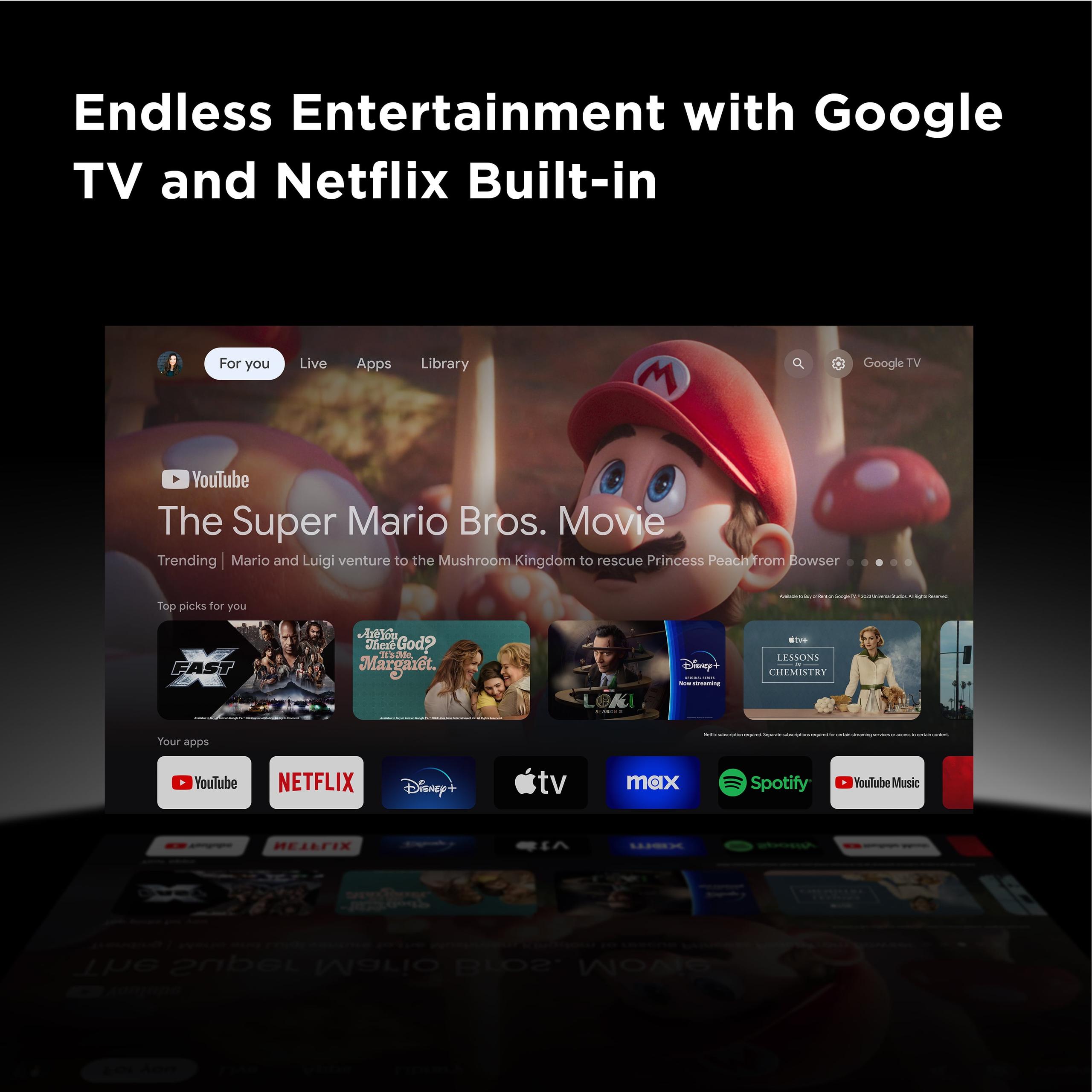
The TCL A1 incorporates a complete Google TV operating system. This means the projector functions as a standalone streaming device with access to thousands of apps including Netflix, Disney+, Prime Video, and others without requiring any additional equipment. Built-in Chromecast functionality allows easy content sharing from mobile devices, and Google Assistant provides voice control capabilities.
This integrated approach means simplicity—turn on the projector, and you're immediately at the Google TV home screen ready to select content. For casual users, this convenience factor is significant. However, reviewers have noted that the interface can be sluggish, with noticeable lag when navigating menus or loading apps.
By contrast, the BenQ HT2060 has no built-in streaming platform. It's designed to work with external devices—be that a streaming stick like Roku or Fire TV, gaming console, or Blu-ray player. This approach prioritizes performance over convenience. Without the need to run a full operating system, the projector can focus resources on image processing and response time.
The BenQ's 16.7ms input lag (the delay between when a signal is received and when it appears on screen) makes it significantly more responsive than the TCL for gaming or interactive content. For context, most TVs considered "good" for gaming have input lag below 20ms, so the BenQ is quite competitive in this regard.
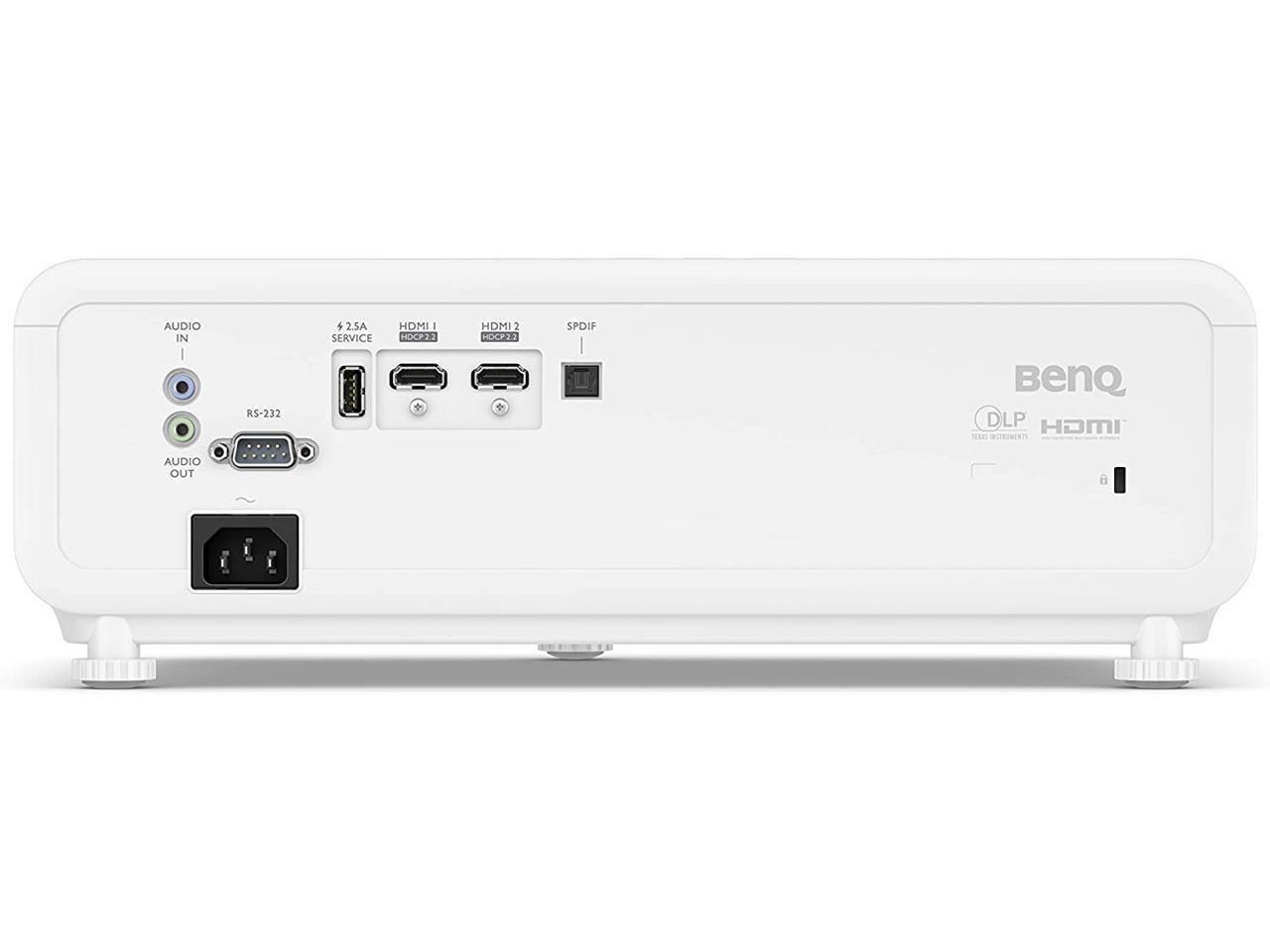
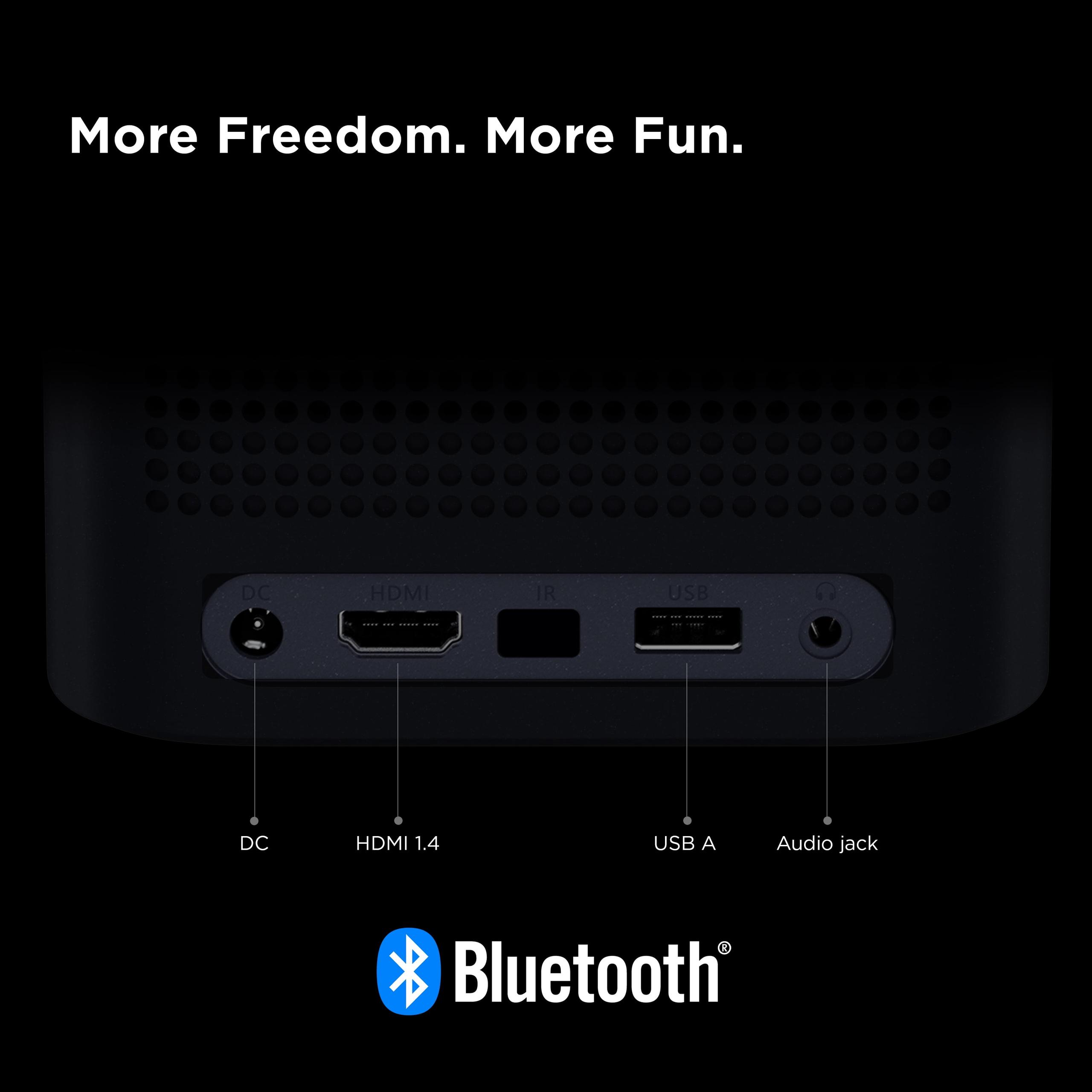
The connectivity options reflect these different approaches. The TCL offers a streamlined selection with one HDMI port and one USB port, while the BenQ provides two HDMI 2.0b inputs supporting 4K HDR signals, plus audio output options including optical audio for connecting to sound systems.
The physical design of these projectors reveals their intended use cases.
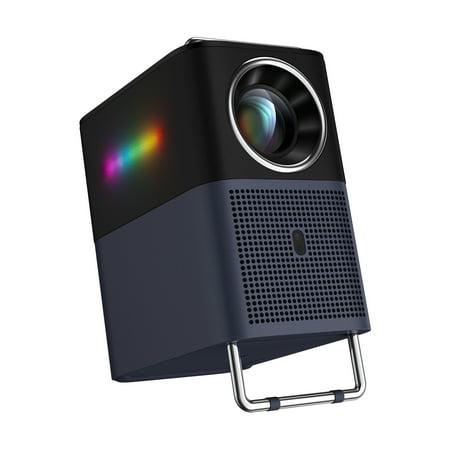
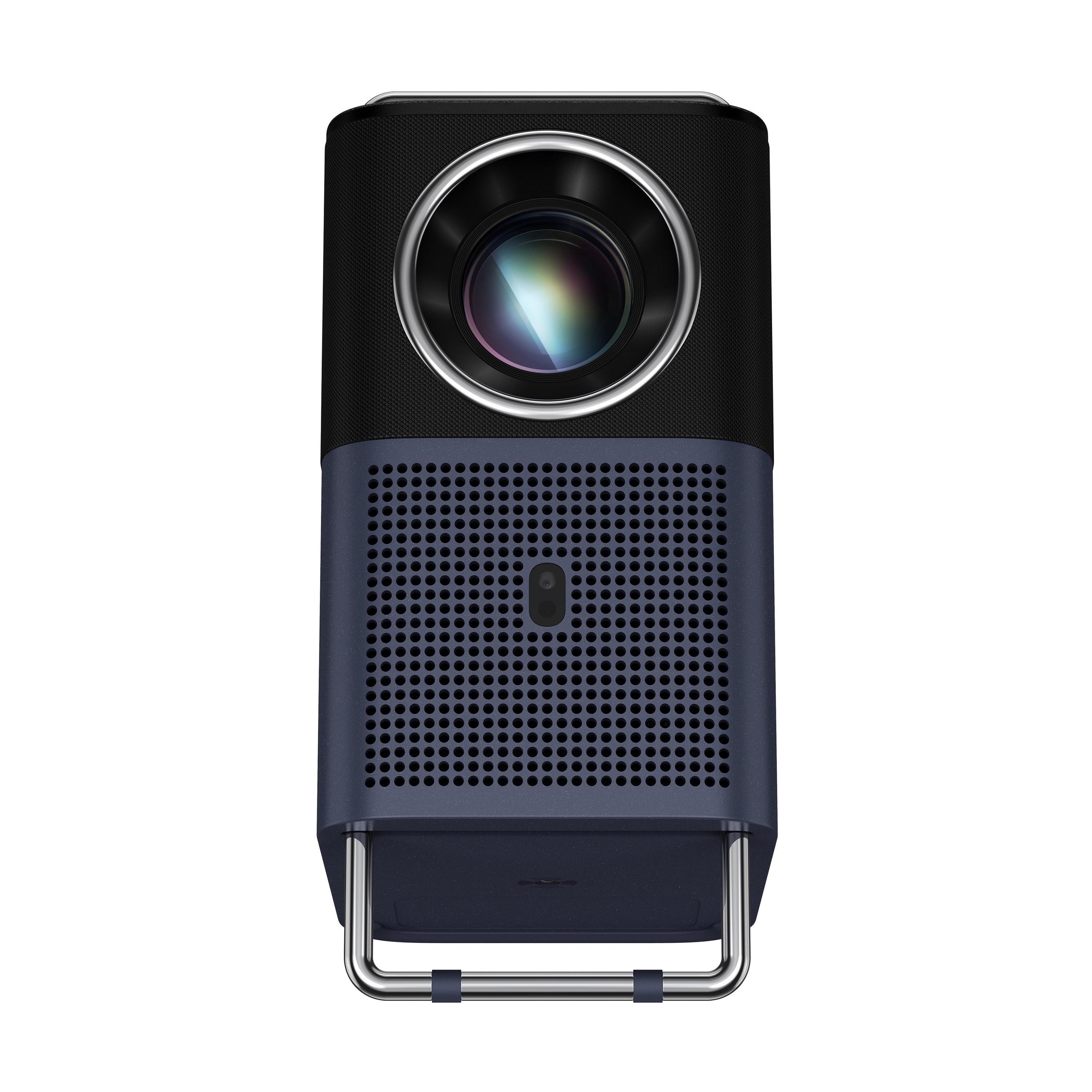
The TCL A1 embraces portability with its compact 5.0" x 7.6" x 10.4" dimensions and modest 5.5-pound weight. Its standout feature is the VersaGrip handle that doubles as an adjustable stand allowing up to 15 degrees of tilt. This clever design element means you can easily position the projector on various surfaces without needing extra equipment.
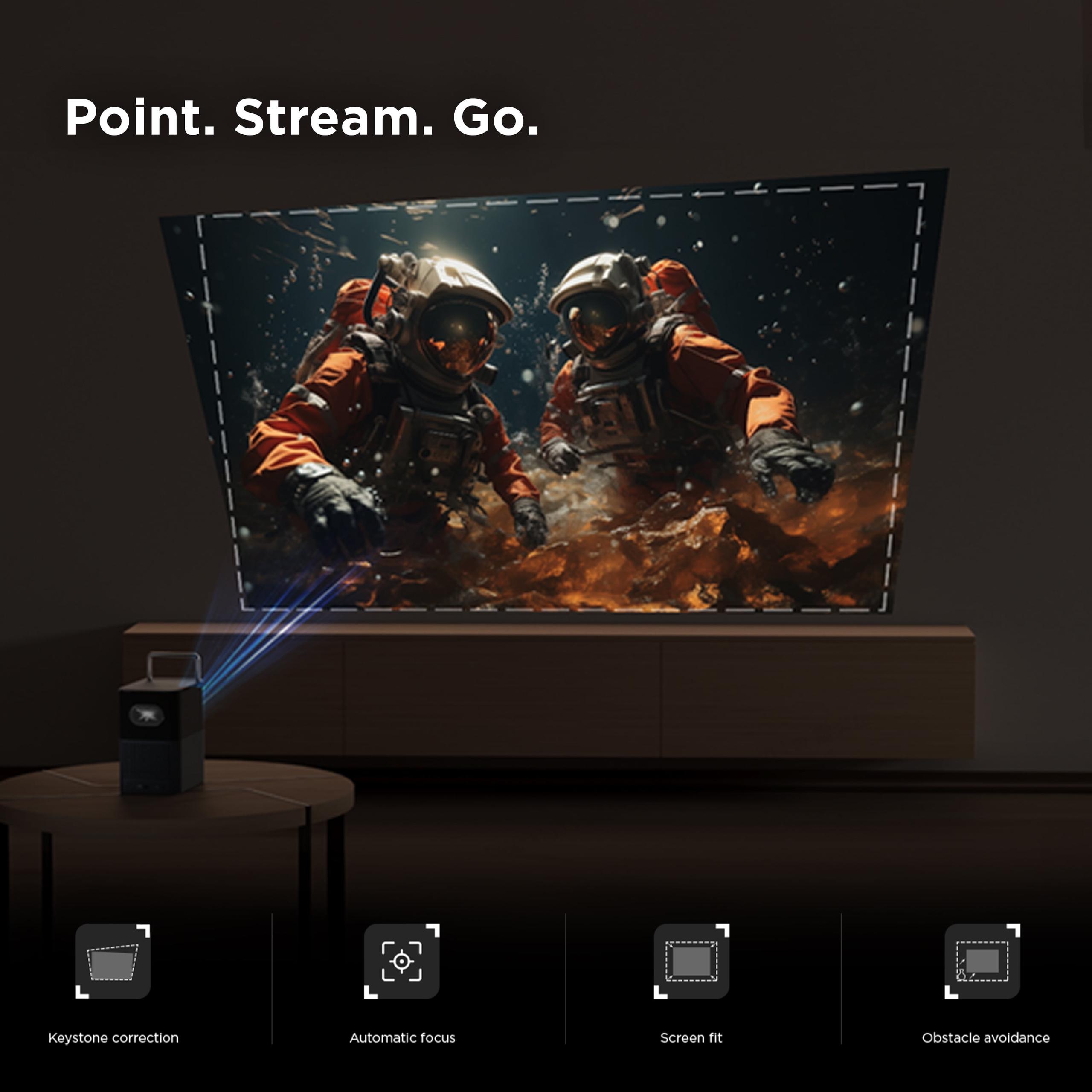
Auto-focus and auto-keystone correction features further enhance its portable nature. These technologies automatically adjust the image to be rectangular and sharp even when the projector isn't perfectly positioned relative to the screen. Simply set the projector down, turn it on, and within seconds, it adjusts for optimal viewing. While these corrections are never as perfect as proper positioning, they make impromptu movie nights much more accessible.
The included carrying case underscores TCL's understanding that this projector will travel—whether that's between rooms in your home, to a friend's house, or for backyard movie nights.
The BenQ HT2060 takes a more traditional approach, weighing in at 7.9 pounds with dimensions of 14.4" x 9.6" x 4.6". While not immovable, it's designed with semi-permanent installation in mind. The added weight comes with advantages: better cooling systems, more robust components, and superior optics.
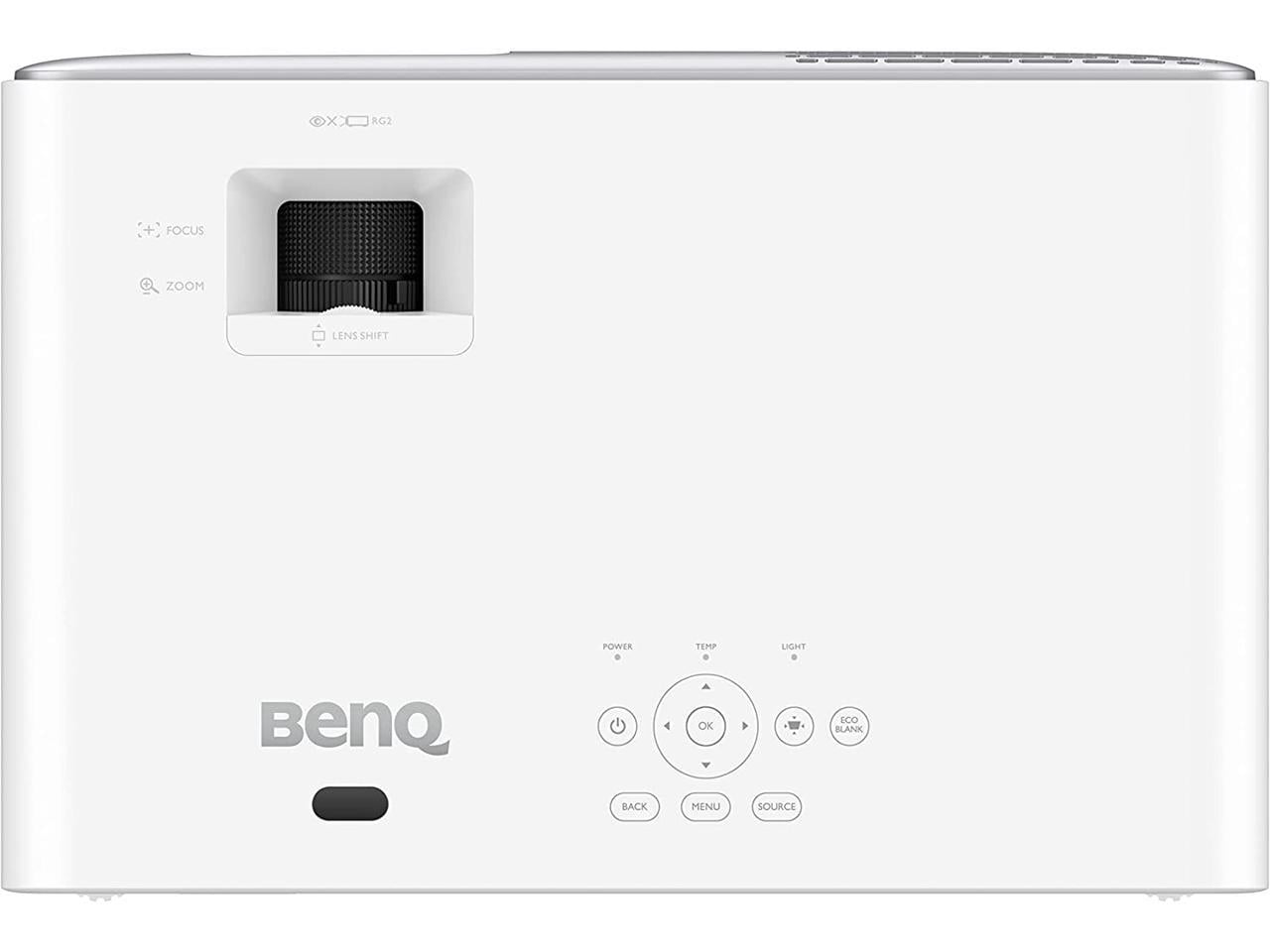
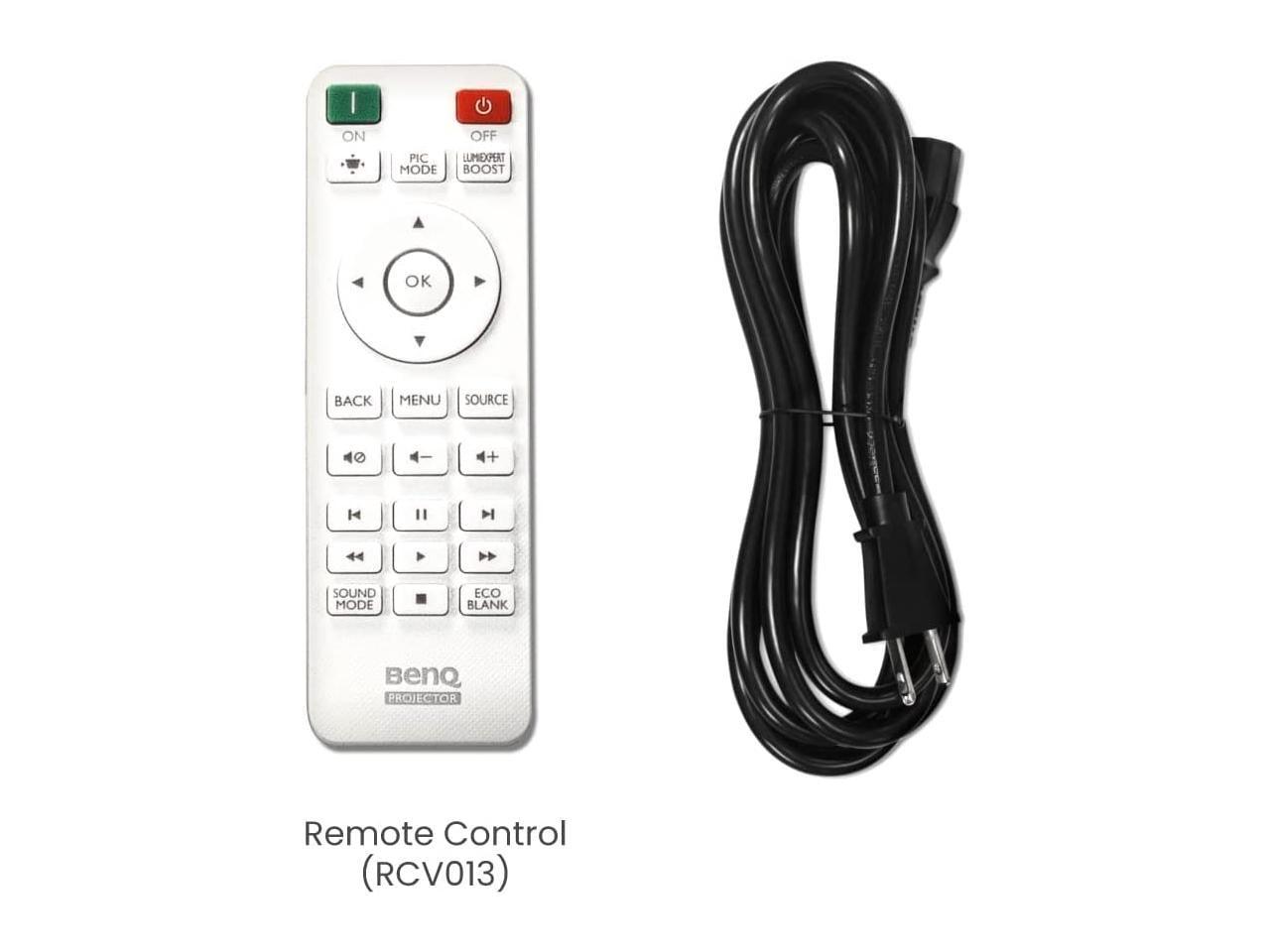
Instead of automatic adjustments, the BenQ offers more precise manual controls including 1.3x optical zoom and +10% vertical lens shift. These features provide greater flexibility for permanent installations, allowing fine-tuning of image size and position without moving the projector itself. For home theater enthusiasts, this precision is often preferable to automated systems that make compromises.
The BenQ also offers a wider throw ratio range (1.15:1 - 1.50:1), meaning it can create various image sizes from different distances. This flexibility is valuable when working with fixed room dimensions in a dedicated home theater setup.
Built-in audio is another area where these projectors' design philosophies diverge.
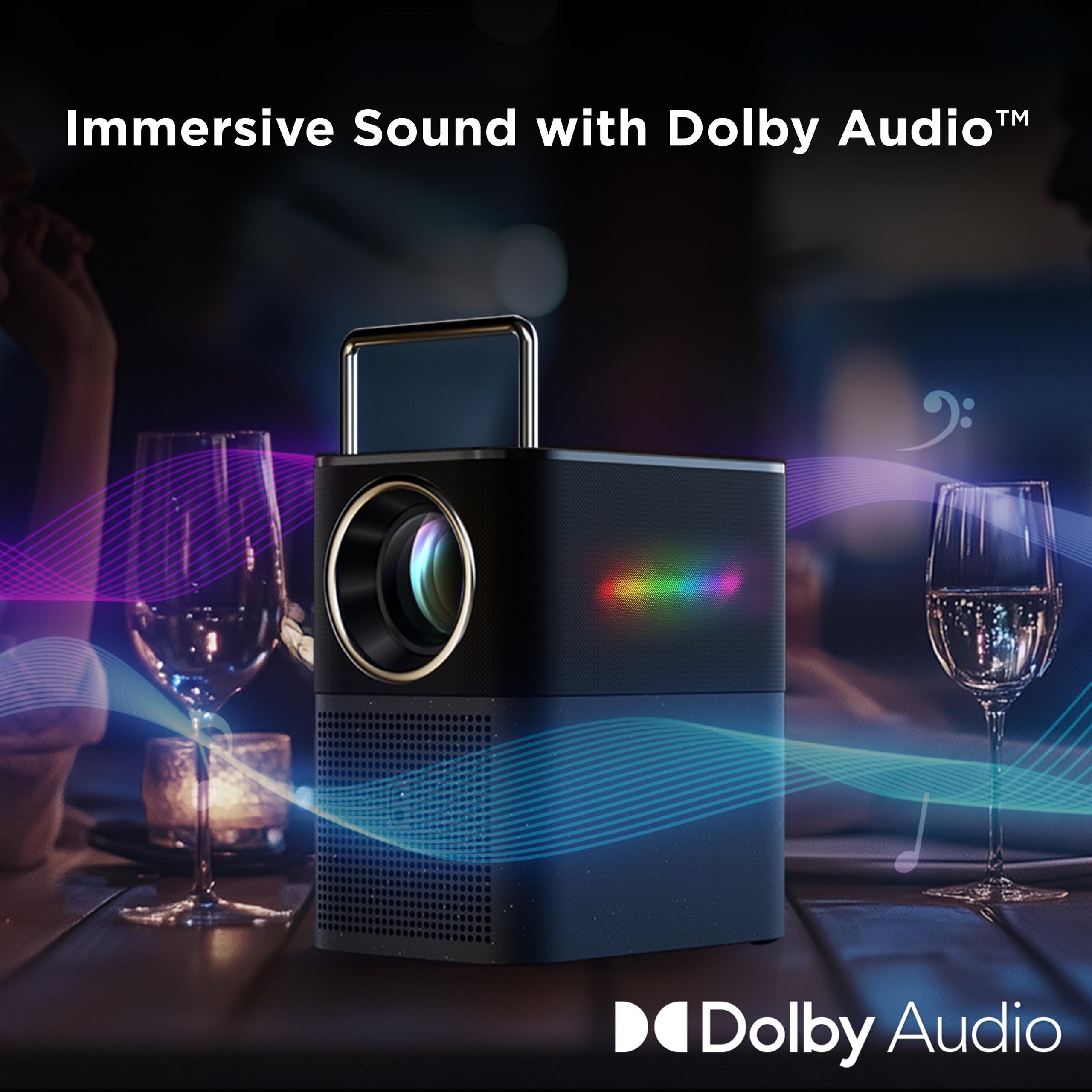
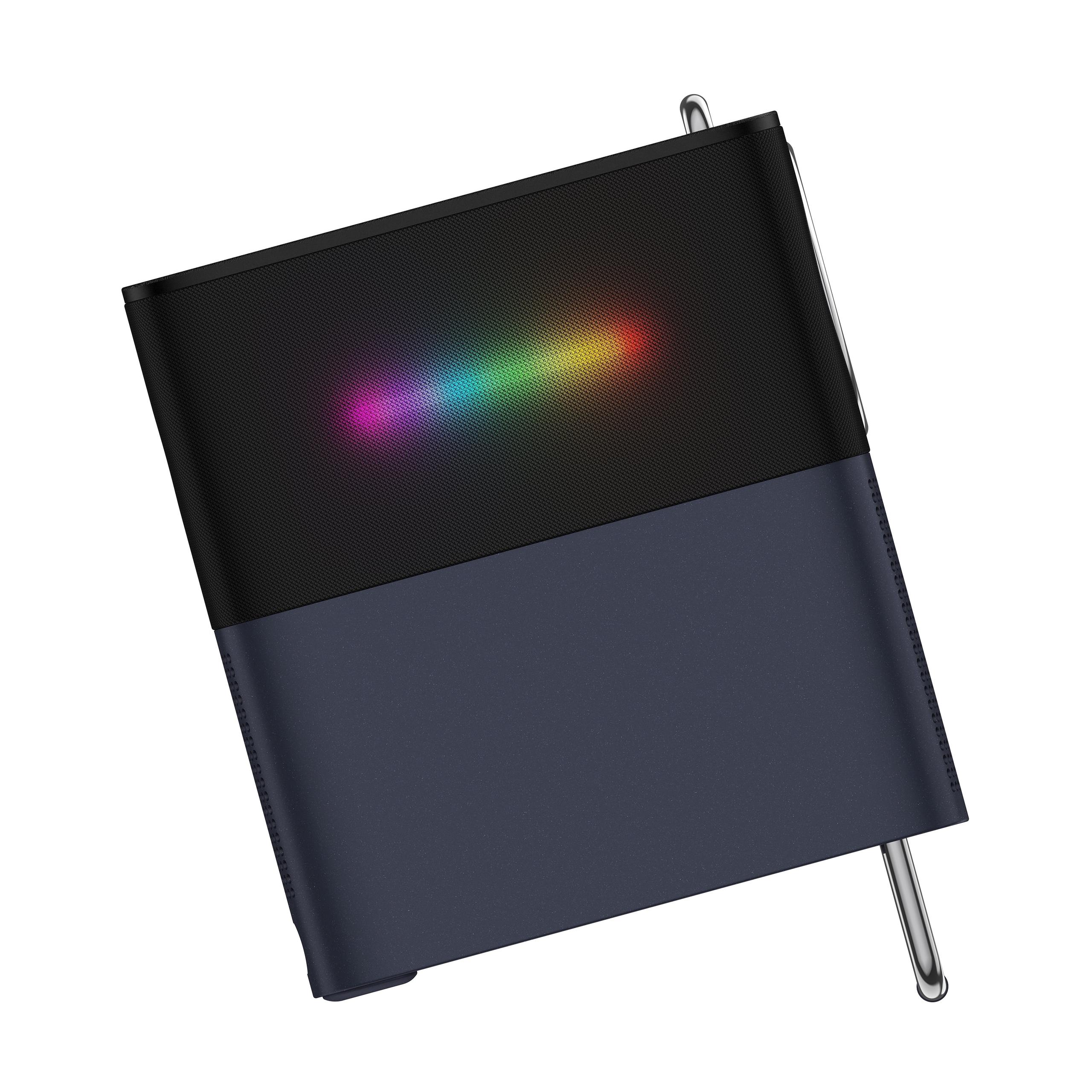
The TCL A1 features dual 8W speakers with Dolby Digital+ processing. For a portable device, this audio system is quite impressive, producing room-filling sound with reasonable clarity. The Dolby processing helps create a wider soundstage than you might expect from such a compact unit. An interesting addition is the Light Sync feature, which uses LEDs on the projector to create ambient lighting effects synchronized with the audio—a fun touch for parties or casual viewing.
These speakers are engineered with the understanding that in many portable use cases, the projector will be the only sound source available. Whether you're having an impromptu movie night in a bedroom or watching outside, the audio needs to be self-contained and adequate.
The BenQ HT2060 includes dual 5W speakers that provide functional but basic sound. They're sufficient for casual viewing or when audio quality isn't the primary concern, but BenQ clearly expects most users to pair this projector with a dedicated audio system. The included S/PDIF (Sony/Philips Digital Interface) optical output supports 5.1 channel surround sound, making it easy to connect to external audio equipment.
This approach aligns with home theater best practices, where separate, specialized components handle different aspects of the entertainment experience. In most dedicated home theaters, external speakers or soundbars would be the expected audio solution.
When investing in technology, thinking beyond the initial purchase price to consider long-term value is important.
The TCL A1 at $499 represents a lower initial investment. Its LED light source should provide many years of viewing before degradation becomes noticeable, though TCL doesn't specifically advertise the rated hours. Based on similar technologies, 20,000+ hours is a reasonable expectation—that's over 10 years if used for 5 hours daily.
The value proposition centers on versatility. You're getting a complete portable entertainment system with built-in streaming capabilities. If your needs include flexibility and you understand the brightness limitations, the TCL delivers good value.
The BenQ HT2060 at $999 requires double the investment but offers several long-term advantages. The 4LED light source is rated for 20,000 hours in normal mode and up to 30,000 hours in economy mode. BenQ also provides a 3-year warranty (compared to the typical 1-year for consumer electronics), suggesting confidence in their build quality.
The higher brightness means the image will remain usable even as the light source gradually dims over years of use. The superior optics and image processing should also help the projector remain satisfying even as new technologies emerge.
For dedicated home theater use, the BenQ represents better long-term value despite the higher initial cost, because it delivers capabilities that will remain relevant longer.
Understanding exactly how these projectors might fit into your lifestyle helps clarify which represents the better value for your specific needs.
The TCL A1 excels in the following scenarios:
The BenQ HT2060 shines in these situations:
Choosing between the TCL A1 and BenQ HT2060 ultimately comes down to understanding your specific needs and priorities. Here are the key questions to ask yourself:
1. What's your typical viewing environment? If you can consistently control lighting conditions completely, either option could work. If your space has windows or ambient light that can't be fully eliminated, the BenQ's superior brightness becomes almost mandatory for satisfying viewing.
2. How permanent is your setup? For fixed installations where the projector will remain in one position, the BenQ's superior image quality and installation flexibility make more sense. If you need to store the projector when not in use or move it between locations, the TCL's portability offers significant advantages.
3. What's your primary content type? For cinematic movies and dramatic shows where image quality significantly impacts enjoyment, the BenQ delivers a premium experience. For casual viewing of news, reality TV, or content where absolute image quality is less critical, the TCL may be sufficient.
4. Do you already own streaming devices? If you already have Apple TV, Roku, or other streaming solutions, the BenQ's lack of smart features isn't a disadvantage. If you prefer an all-in-one solution without additional components, the TCL's integrated Google TV is valuable.
5. How important is future-proofing? The BenQ's superior brightness, contrast, and build quality will likely remain satisfying longer as technology advances and your expectations evolve. The TCL may feel limited sooner as your needs change.
The TCL A1 Portable Smart Projector and BenQ HT2060 HDR Home Theater Projector exemplify how diverse the projector market has become. Rather than direct competitors, they represent different approaches to home entertainment that will appeal to different users.
The TCL A1 excels at delivering convenience, portability, and a complete entertainment solution at an accessible price point. Its limitations—primarily brightness and contrast—are reasonable trade-offs for users who prioritize flexibility and simplicity.
The BenQ HT2060 delivers a premium viewing experience with significantly better image quality, making it the clear choice for dedicated home theater environments and users who prioritize performance over portability. The higher price reflects genuine capability advantages that translate to noticeably better viewing experiences.
In a world where we increasingly expect our technology to be versatile, these projectors remind us that specialization still has its place. The TCL A1 tries to do many things adequately, while the BenQ HT2060 focuses on doing one thing exceptionally well. Which approach better serves your needs will depend entirely on how you plan to use it—and that's a personal decision only you can make.
| TCL A1 Portable 1080p Smart Projector | BenQ HT2060 HDR Home Theater Projector |
|---|---|
| Price - Initial investment consideration | |
| $499 | $999 |
| Brightness - Determines usability with ambient light and maximum screen size | |
| 360 ISO Lumens (requires near-dark conditions) | 2300 ANSI Lumens (works with moderate ambient light) |
| Resolution - Affects image clarity and detail | |
| 1080p (1920 x 1080) native | 1080p (1920 x 1080) native with 4K input compatibility |
| Display Technology - Impacts color accuracy and contrast | |
| LCD (decent colors, moderate contrast) | DLP with 4LED (98% of Rec.709 color space, 500,000:1 contrast ratio) |
| Portability - Determines ease of movement and setup | |
| Highly portable (5.5 lbs) with carrying case and VersaGrip handle/stand | Semi-portable (7.9 lbs) designed for more permanent installation |
| Smart Features - Affects standalone functionality | |
| Built-in Google TV with streaming apps and Assistant | No smart features; requires external streaming device |
| Image Adjustment - Impacts setup convenience | |
| Auto focus and auto keystone correction | Manual 1.3x zoom and +10% vertical lens shift for precise adjustments |
| Audio System - Determines need for external speakers | |
| Dual 8W speakers with Dolby Digital+ | Dual 5W speakers with 5.1 channel audio output support |
| Input Lag - Critical for gaming performance | |
| Not specified (likely moderate to high) | 16.7ms (excellent for gaming) |
| Connectivity - Flexibility for different devices | |
| 1x HDMI, 1x USB, Wi-Fi, Bluetooth | 2x HDMI 2.0b, 1x USB, optical audio out, RS-232 |
| Light Source Lifespan - Long-term durability | |
| LED (estimated 20,000+ hours) | 4LED (20,000-30,000 hours depending on mode) |
| Warranty - Manufacturer confidence indicator | |
| Standard 1-year warranty | 3-year warranty |
| Maximum Screen Size - Determines immersion potential | |
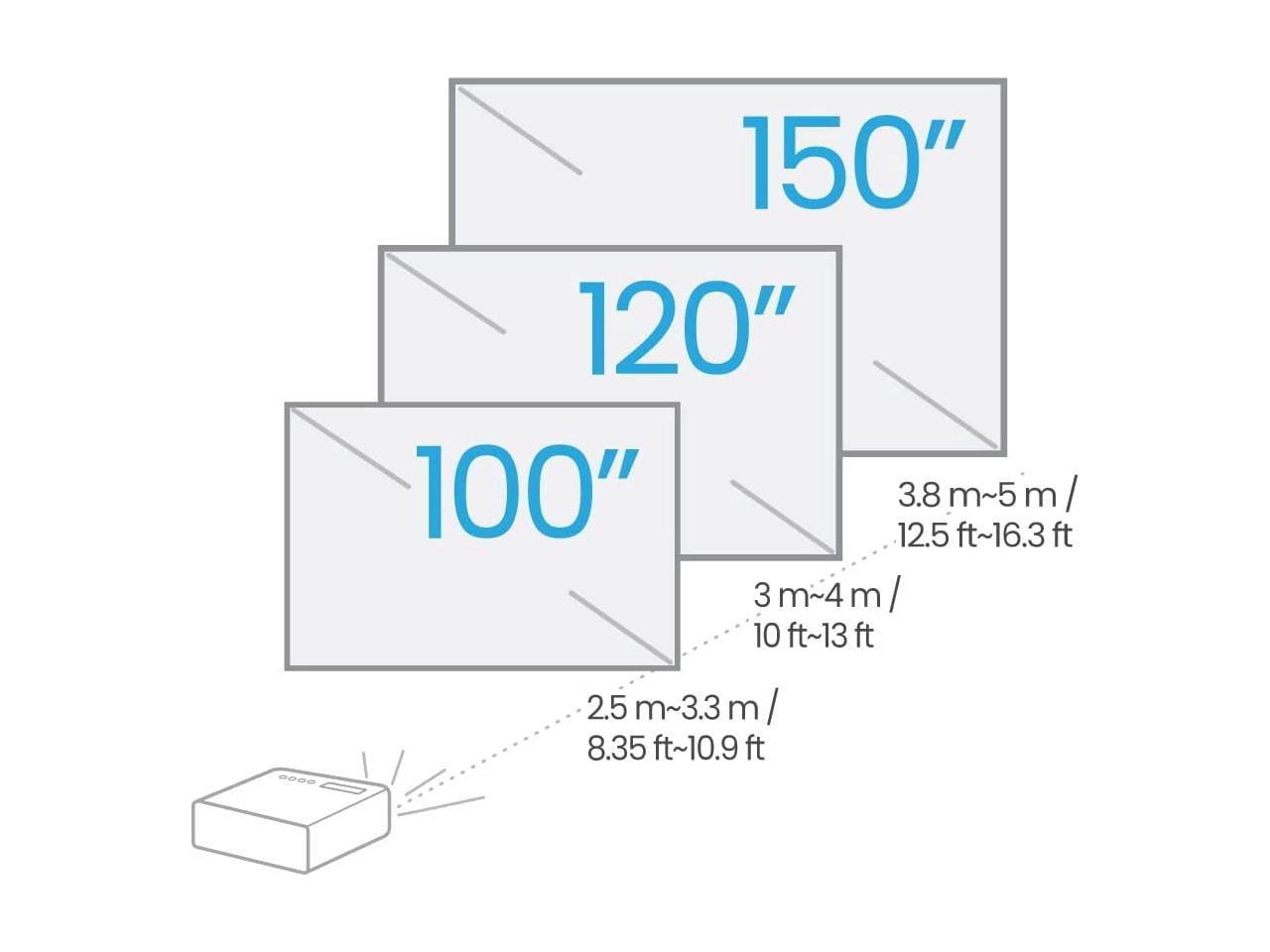
| Up to 120 inches diagonal (best under 100" in dark rooms) | Up to 150 inches diagonal with maintained brightness |
| HDR Support - Enhances contrast and color in compatible content | |
| Basic HDR compatibility (limited by brightness) | HDR10 and HLG with effective tone mapping |
| Ideal Use Case - Best application for value | |
| Portable entertainment, occasional use, multi-purpose spaces | Dedicated home theater, living room replacement for TV, gaming |
The BenQ HT2060 HDR Home Theater Projector is significantly better for dedicated home theater use due to its 2300 ANSI lumens brightness (compared to the TCL A1's 360 ISO lumens), superior contrast ratio, and better color accuracy. While the TCL A1 Portable 1080p Smart Projector can work in a completely dark home theater room, the BenQ HT2060 delivers a more cinematic experience with deeper blacks and brighter highlights. For serious home theater enthusiasts, the BenQ HT2060 justifies its higher $999 price tag compared to the TCL A1 at $499.
The BenQ HT2060 HDR Home Theater Projector is significantly better for rooms with ambient light because of its 2300 ANSI lumens brightness, which is over 6 times brighter than the TCL A1 Portable 1080p Smart Projector. The TCL A1's 360 ISO lumens output requires near-complete darkness to display a good image. If you plan to watch content during the day or in a room where you can't achieve complete darkness, the BenQ HT2060 is the only practical option between these two projectors.
The TCL A1 Portable 1080p Smart Projector is designed specifically for portability with its lightweight 5.5-pound design, integrated VersaGrip handle that doubles as an adjustable stand, and included carrying case. It also features auto-focus and auto keystone correction for quick setup. The BenQ HT2060 HDR Home Theater Projector weighs 7.9 pounds and is designed for more permanent installation rather than frequent movement. If you need to move your projector between rooms or locations regularly, the TCL A1 is significantly more portable.
The TCL A1 Portable 1080p Smart Projector has Google TV built-in, giving you access to thousands of streaming apps without needing any additional devices. The BenQ HT2060 HDR Home Theater Projector does not have any smart features and requires an external streaming device like a Roku, Apple TV, Fire Stick, or gaming console to access streaming services. If you want an all-in-one solution without purchasing additional components, the TCL A1 is more convenient, while the BenQ HT2060 offers more flexibility to use your preferred streaming platform.
The BenQ HT2060 HDR Home Theater Projector is better for gaming with its 16.7ms input lag, which is considered excellent for gaming projectors. The TCL A1 Portable 1080p Smart Projector doesn't specify its input lag, but similar portable projectors typically have higher latency that can affect competitive gaming. The BenQ also offers superior brightness and contrast which enhances gaming visuals. For serious gamers, the BenQ HT2060 provides a more responsive and immersive experience than the TCL A1.
The BenQ HT2060 HDR Home Theater Projector has significantly better image quality with its DLP 4LED technology, 500,000:1 contrast ratio, and 98% coverage of the Rec.709 color space. While both projectors offer 1080p resolution, the TCL A1 Portable 1080p Smart Projector uses standard LCD technology with more modest contrast capabilities. The BenQ also handles HDR content more effectively due to its higher brightness and contrast. For viewers who prioritize picture quality, the BenQ HT2060 delivers noticeably superior performance compared to the TCL A1.
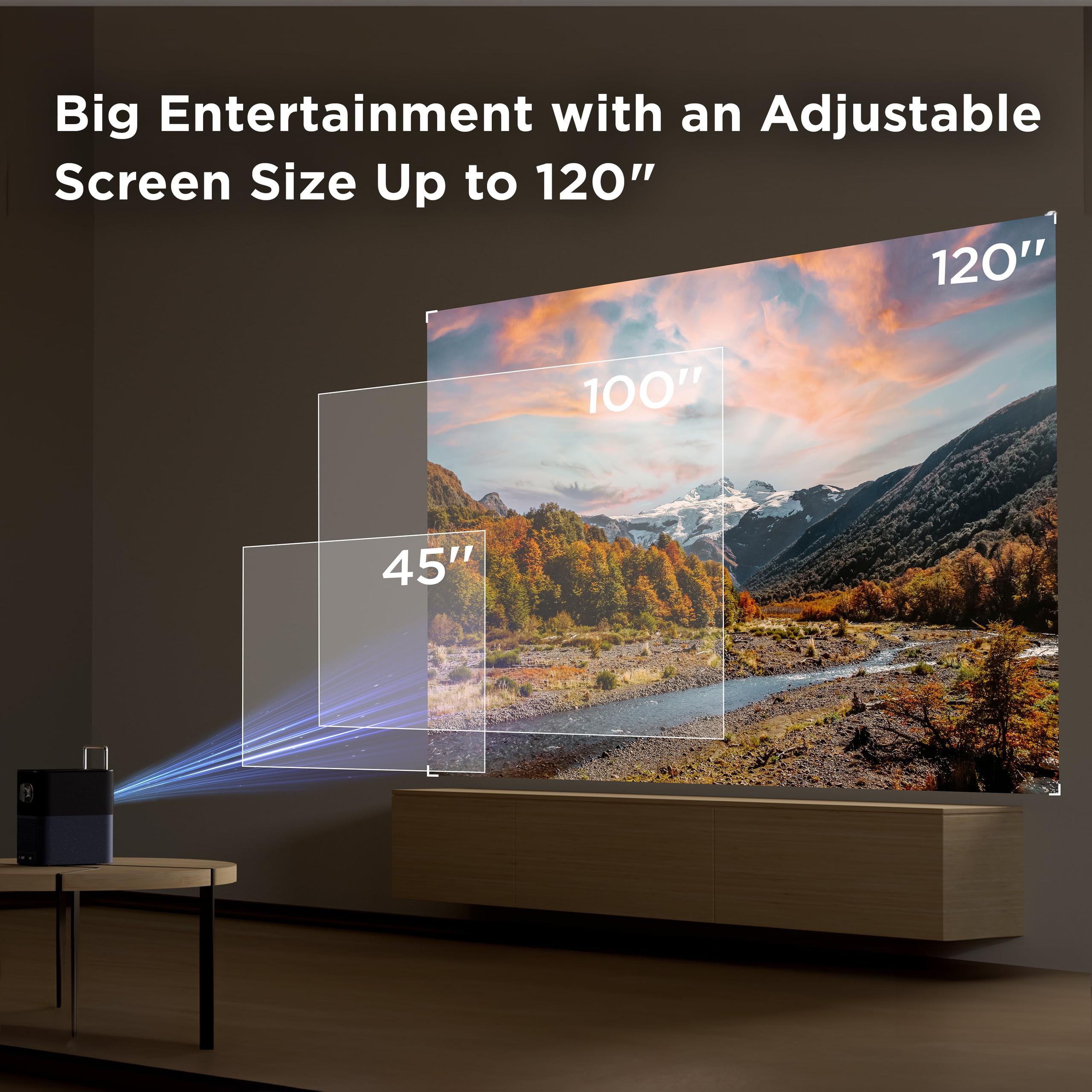
The TCL A1 Portable 1080p Smart Projector supports screen sizes from 45 to 120 inches diagonal, though it performs best at sizes under 100 inches due to its limited brightness. The BenQ HT2060 HDR Home Theater Projector supports screen sizes from 60 to 150 inches diagonal while maintaining good brightness throughout that range. If you want a truly cinematic experience with a large screen, the BenQ HT2060 can deliver more impressive results at larger sizes than the TCL A1.
The TCL A1 Portable 1080p Smart Projector features more powerful built-in speakers with dual 8W drivers and Dolby Digital+ processing, compared to the BenQ HT2060 HDR Home Theater Projector's dual 5W speakers. The TCL A1's audio system is designed to be self-sufficient for portable use, while the BenQ HT2060 includes an optical audio output, expecting many users to connect external audio systems. For standalone use without external speakers, the TCL A1 provides better audio than the BenQ HT2060.
Value depends on your specific needs. The TCL A1 Portable 1080p Smart Projector at $499 offers better value for those prioritizing portability, built-in streaming, and occasional use in completely dark rooms. The BenQ HT2060 HDR Home Theater Projector at $999 provides better value for dedicated home theater setups, gaming, or use in rooms with some ambient light. While twice the price, the BenQ offers over six times the brightness and significantly better image quality. For regular use in a fixed location, the BenQ HT2060 typically offers better long-term value than the TCL A1.
Neither projector has native 4K resolution. Both the TCL A1 Portable 1080p Smart Projector and BenQ HT2060 HDR Home Theater Projector have 1080p (1920×1080) native resolution. However, the BenQ HT2060 can accept 4K HDR input signals and downscale them to 1080p while maintaining HDR benefits. The TCL A1 has more basic HDR compatibility but may not process 4K inputs as effectively. If you have 4K content sources, the BenQ HT2060 will handle them better than the TCL A1, though neither will display true 4K resolution.
The TCL A1 Portable 1080p Smart Projector is easier to set up with its auto-focus and auto keystone correction features that automatically adjust the image when you place the projector. Its VersaGrip handle/stand also makes positioning simple. The BenQ HT2060 HDR Home Theater Projector requires more manual setup but offers more precise adjustments with its 1.3x zoom and vertical lens shift for permanent installations. For quick, hassle-free setup, especially when moving between locations, the TCL A1 is more user-friendly than the BenQ HT2060.
Both projectors use LED-based light sources known for longevity. The BenQ HT2060 HDR Home Theater Projector specifically rates its 4LED light source for 20,000 hours in normal mode and up to 30,000 hours in economy mode. The TCL A1 Portable 1080p Smart Projector doesn't specify exact hours, but similar LED projectors typically last 20,000+ hours. At 5 hours of use per day, both projectors should last 10+ years before significant brightness degradation. The BenQ also offers a longer 3-year warranty compared to the TCL's standard warranty, suggesting potential durability advantages for the BenQ HT2060 over the TCL A1.
We've done our best to create useful and informative comparisons to help you decide what product to buy. Our research uses advanced automated methods to create this comparison and perfection is not possible - please contact us for corrections or questions. These are the sites we've researched in the creation of this article: youtube.com - hometheaterforum.com - hifivision.com - tcl.com - gstylemag.com - youtube.com - youtube.com - soundandvision.com - tcl.com - androidheadlines.com - valueelectronics.com - tcl.com - walmart.com - esquire.com - hometheaterview.com - androidpolice.com - projectorcentral.com - howtogeek.com - nfm.com - tcl.com - valueelectronics.com - extapps.dec.ny.gov - cna-aiic.ca - projectorcentral.com - tcl.com - tcl.com - tcl.com - projectorcentral.com - avsforum.com - bestbuy.com - avsforum.com - tomsguide.com - avsforum.com - projectorreviews.com - hometheaterhifi.com - youtube.com - avsforum.com - cnet.com - techgearlab.com - cdw.com - bhphotovideo.com - projectorcentral.com - shop.avispl.com - tvsbook.com - youtube.com - projectorreviews.com - avsforum.com

Privacy Policy
Terms and Conditions - Affiliate Policy
Home Security
© Copyright 2008-2026.
11816 Inwood Rd #1211, Dallas, TX 75244