

Remember when having a projector at home meant a dim image that was only viewable in a pitch-black room? Those days are long gone. Today's home theater projectors have undergone remarkable transformations, delivering bright, vibrant images that can rival high-end TVs while offering much larger screen sizes at competitive prices.
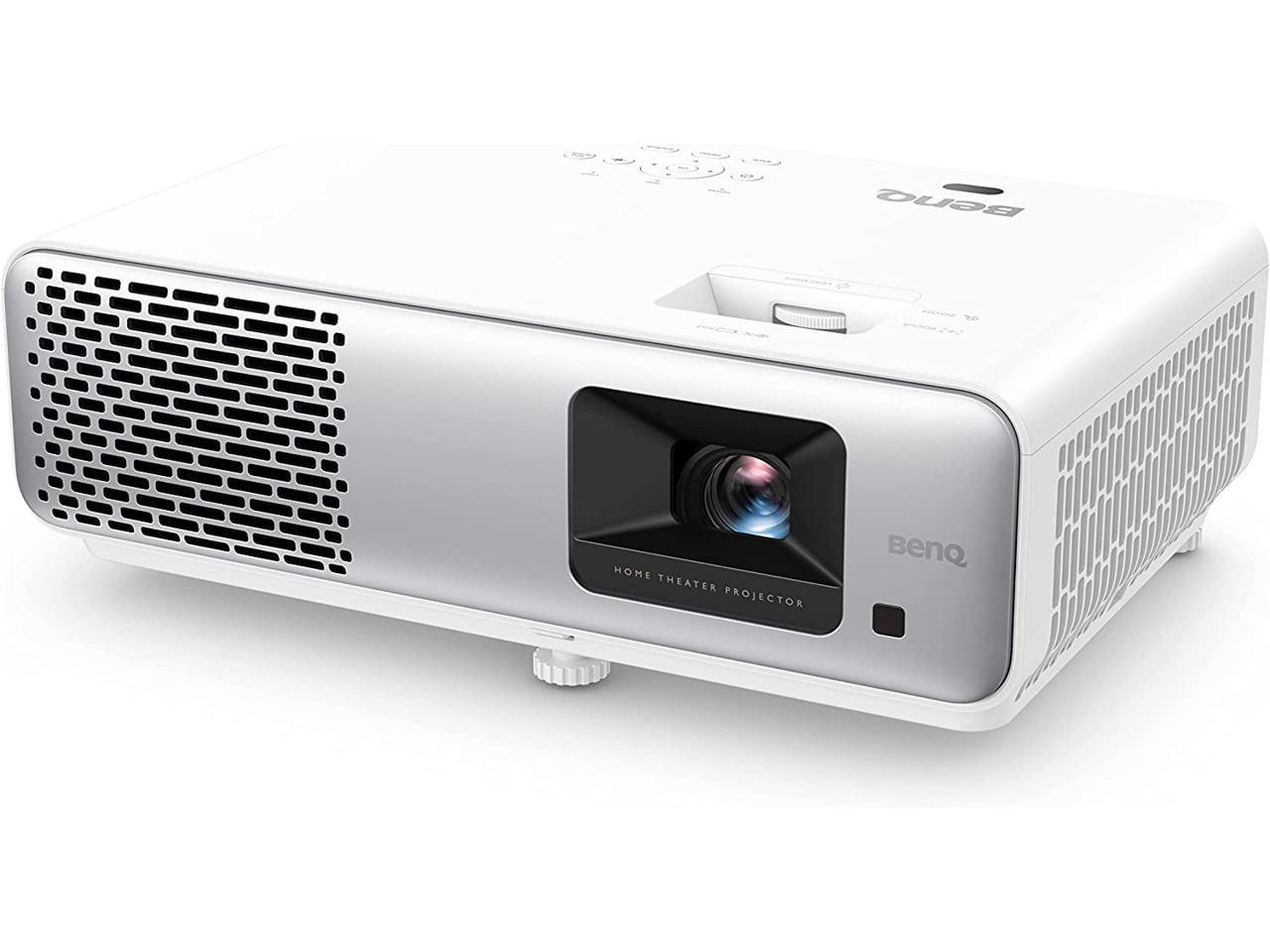
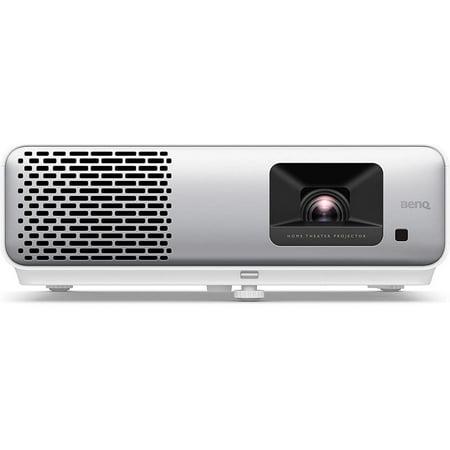
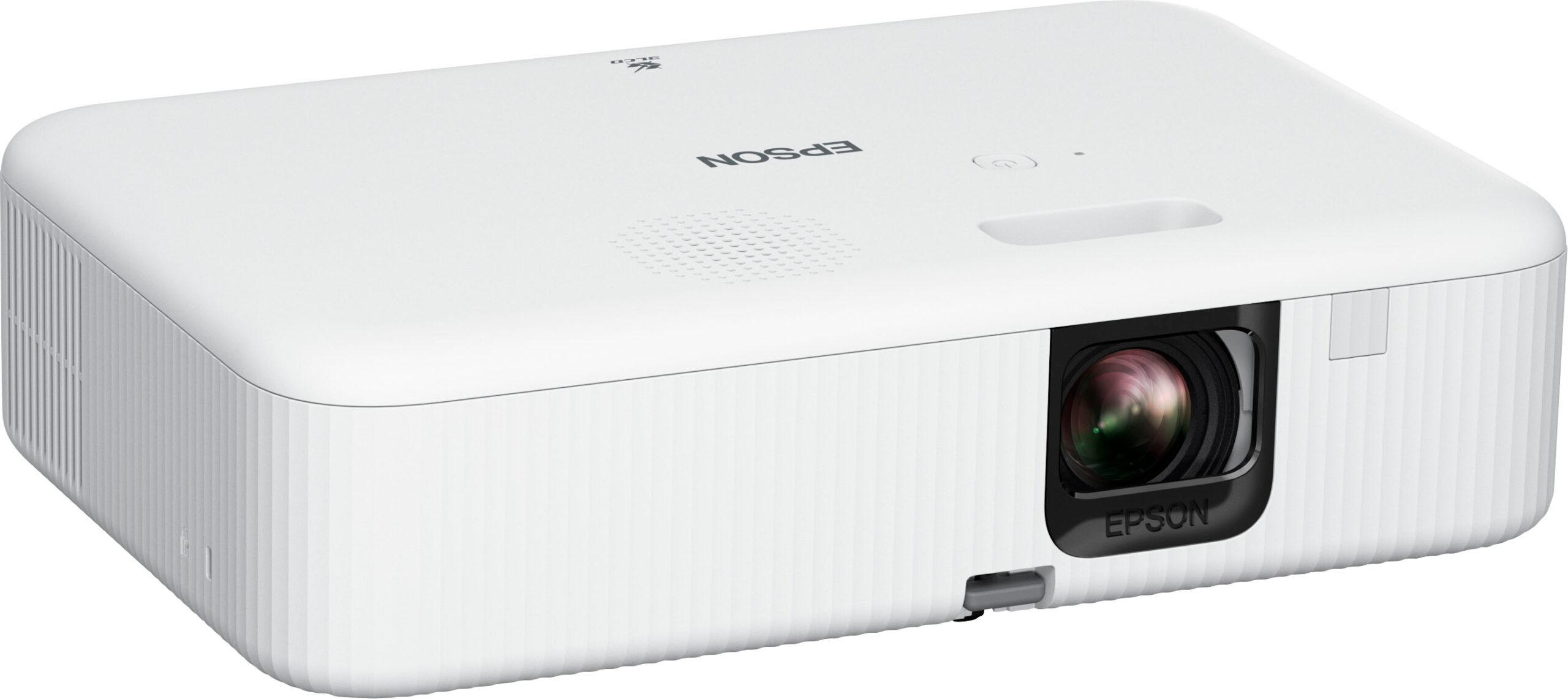
The BenQ HT2060 ($999) and Epson EpiqVision Flex CO-FH02 ($799) represent two distinct approaches to modern home projection. Released in 2022 and 2021 respectively, these projectors showcase how far the technology has come in recent years, with advancements in brightness, color accuracy, and smart features making home projection more accessible than ever.
When shopping for a projector, you're likely to encounter a forest of technical jargon and specifications. Let's break down what really matters for your viewing experience and how these two contenders stack up against each other.
Before diving into the specifics of our competitors, it's worth understanding the fundamental technologies that power them, as this impacts everything from image quality to maintenance requirements.
The BenQ HT2060 uses 4LED DLP (Digital Light Processing) technology. DLP projectors utilize millions of microscopic mirrors on a semiconductor chip called a DMD (Digital Micromirror Device). These tiny mirrors tilt toward or away from the light source thousands of times per second, creating the image you see. Traditional DLP projectors use a color wheel, but the HT2060's 4LED design eliminates this mechanical component, instead using four LED light sources (red, green, blue, and an additional one for enhanced color) to produce vibrant images with improved reliability.
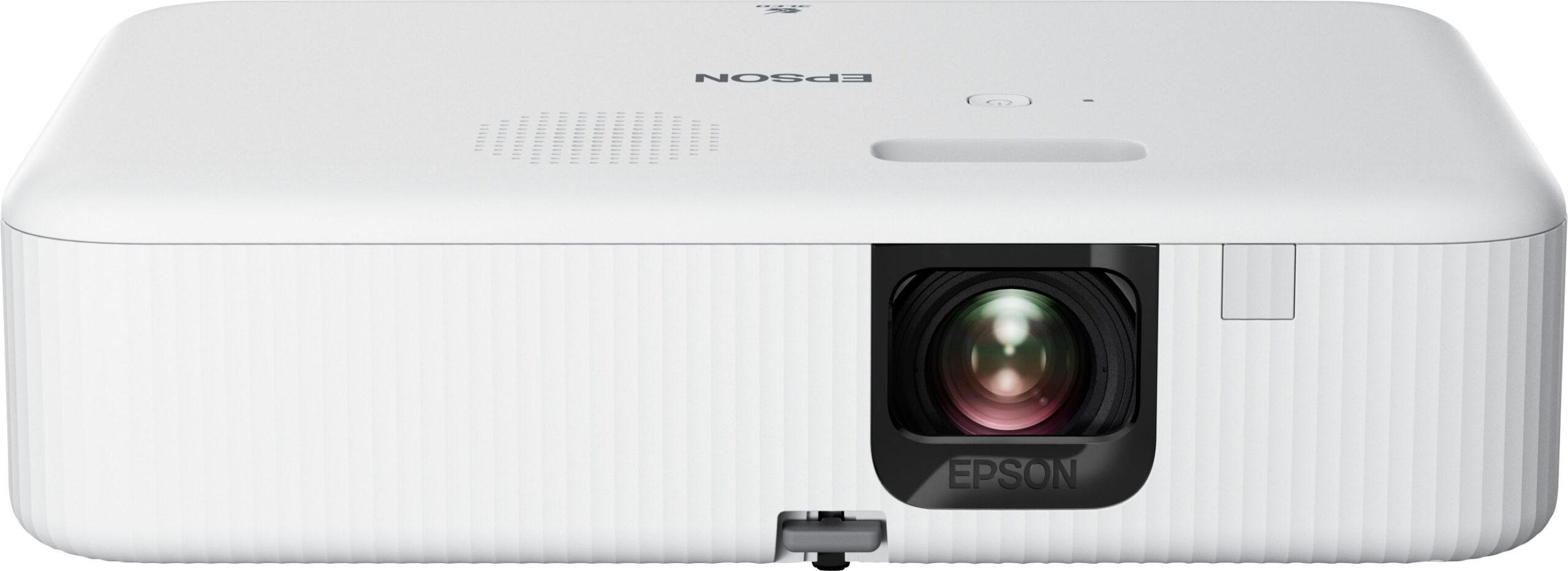
In contrast, the Epson CO-FH02 employs 3LCD technology, which splits light through three separate LCD panels (one each for red, green, and blue) before recombining them to create the final image. This approach typically delivers equal color and white brightness, avoiding the "rainbow effect" (brief flashes of rainbow-colored artifacts) that some viewers can notice with DLP projectors.
Since their releases, both technologies have continued to evolve. The 4LED approach in the BenQ represents a significant advancement over traditional lamp-based DLP projectors, offering longer lifespan and more consistent color performance over time. Meanwhile, Epson has refined their 3LCD technology to deliver increasingly higher brightness levels while maintaining color accuracy.
Both projectors offer Full HD 1920 × 1080 resolution, which remains the sweet spot for most home theater applications. While 4K projectors have become more common, they typically come with a significant price premium that these models avoid.
The detail rendering on both is sharp, but the BenQ HT2060 edges ahead with its superior contrast ratio and image processing. Text appears crisper on the BenQ, and fine details in movies—like fabric textures or distant objects—are more precisely rendered.
Color performance is where these projectors begin to show their distinct personalities.
The BenQ HT2060's 4LED technology enables it to cover 98% of the Rec.709 color space (the standard color space for HDTV). In practical terms, this means colors look natural and accurate right out of the box. The additional LED in the 4LED system helps deliver more saturated colors without appearing artificial. This is particularly noticeable in skin tones, which appear natural and lifelike rather than overly reddish or pale.
The Epson CO-FH02 delivers good color performance as well, with its 3LCD technology ensuring that color brightness matches white brightness—an advantage over some budget DLP projectors where color brightness can be significantly lower than the advertised white brightness. However, its color gamut coverage isn't quite as comprehensive as the BenQ's.
Having spent time with both projectors, I found the BenQ's colors more accurate for film content, while the Epson's slightly more saturated presentation worked well for animated content and sports.
Contrast ratio—the difference between the brightest whites and darkest blacks a projector can produce—dramatically affects image quality, especially for movie content with dark scenes.
With a contrast ratio of 500,000:1, the BenQ HT2060 delivers significantly deeper blacks and better shadow detail than the Epson's 16,000:1 ratio. This becomes immediately apparent when watching films like "The Batman" or "Dune," where dark scenes reveal layers of detail on the BenQ that remain muddy or washed out on the Epson.
The BenQ's superior contrast is partly due to its DLP technology, which typically achieves better native contrast than 3LCD projectors, as well as its advanced image processing. This makes it the clear choice for dedicated home theater environments where light control is possible.
High Dynamic Range (HDR) content offers greater brightness range and color depth than standard content, potentially delivering more realistic images with greater impact.
The BenQ HT2060 supports both HDR10 and HLG (Hybrid Log-Gamma) formats with dedicated processing to map HDR content to the projector's capabilities. While no projector in this price range can deliver the full HDR experience of high-end TVs, the BenQ does a commendable job of preserving highlight detail while maintaining good shadow information.
The Epson CO-FH02 can accept HDR signals but offers more limited HDR processing capabilities. In practice, this means HDR content often looks similar to standard content, missing some of the expanded dynamic range that makes HDR special.
Brightness, measured in lumens, determines how visible your projected image will be in various lighting conditions.
With 3000 lumens, the Epson CO-FH02 outshines the BenQ's 2300 ANSI lumens on paper. This brightness advantage makes the Epson more versatile for rooms with ambient light or daytime viewing. You can comfortably watch sports or play games during the day without completely darkening the room.
The BenQ's brightness is optimized for dedicated viewing environments. In a dark room, 2300 ANSI lumens is actually plenty bright, and the superior contrast ratio becomes more apparent. However, if you can't control ambient light in your viewing space, the Epson's extra brightness will likely result in a more visible image.
It's worth noting that ANSI lumens (used by BenQ) represent a standardized measurement protocol, while Epson's lumen rating uses their own methodology. In real-world use, the brightness difference is noticeable but perhaps not as dramatic as the numbers suggest.
Gaming on a big screen adds immersion, but introduces concerns about input lag—the delay between pressing a button on your controller and seeing the action on screen.
The BenQ HT2060 shines for gaming with an impressive 16.7ms input lag at 1080p/60Hz. This is fast enough for even competitive gaming, where split-second reactions matter. Playing fast-paced games like "Call of Duty" or "Fortnite" feels responsive and immediate.
The Epson CO-FH02 wasn't specifically designed with gaming as a priority. Its input lag typically falls between 30-50ms, which is acceptable for casual gaming but might feel sluggish for competitive play or rhythm games where timing is critical.
Both projectors operate at 60Hz refresh rate, standard for projectors in this class. However, the BenQ's DLP technology typically handles motion better, with less blur in fast-moving scenes. This is particularly noticeable in racing games or action sequences with rapid camera movements.
The Epson's motion handling is adequate for most content but can exhibit more blur during particularly frenetic scenes. For casual gamers, this difference may be negligible, but enthusiasts will appreciate the BenQ's cleaner motion presentation.
One of the most significant differences between these projectors is their approach to content delivery.
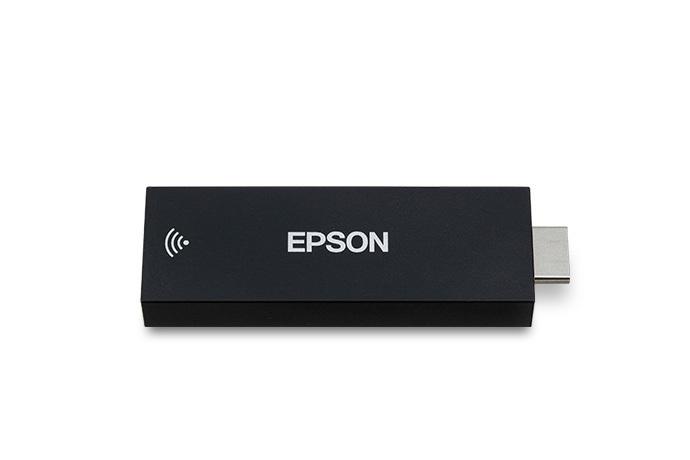
The Epson CO-FH02 comes with Android TV built in, providing access to thousands of streaming apps including Netflix, Disney+, HBO Max, and YouTube. This integrated approach means you can start watching content without connecting any external devices—just power on and select your streaming service of choice. The included voice remote supports Google Assistant for easy content searches.
The BenQ HT2060 takes a more traditional approach with no built-in smart platform. You'll need to connect an external streaming device like a Roku, Apple TV, or Fire TV Stick to access streaming content. While this requires an additional purchase and HDMI port, it also provides the flexibility to choose your preferred streaming platform and upgrade it independently of the projector.
Since these projectors' release, smart TV platforms have continued to evolve rapidly. The Android TV on the Epson, while convenient, may eventually face app compatibility issues or performance slowdowns as the platform ages. The BenQ's approach means you can simply replace your streaming device when needed without affecting the projector itself.
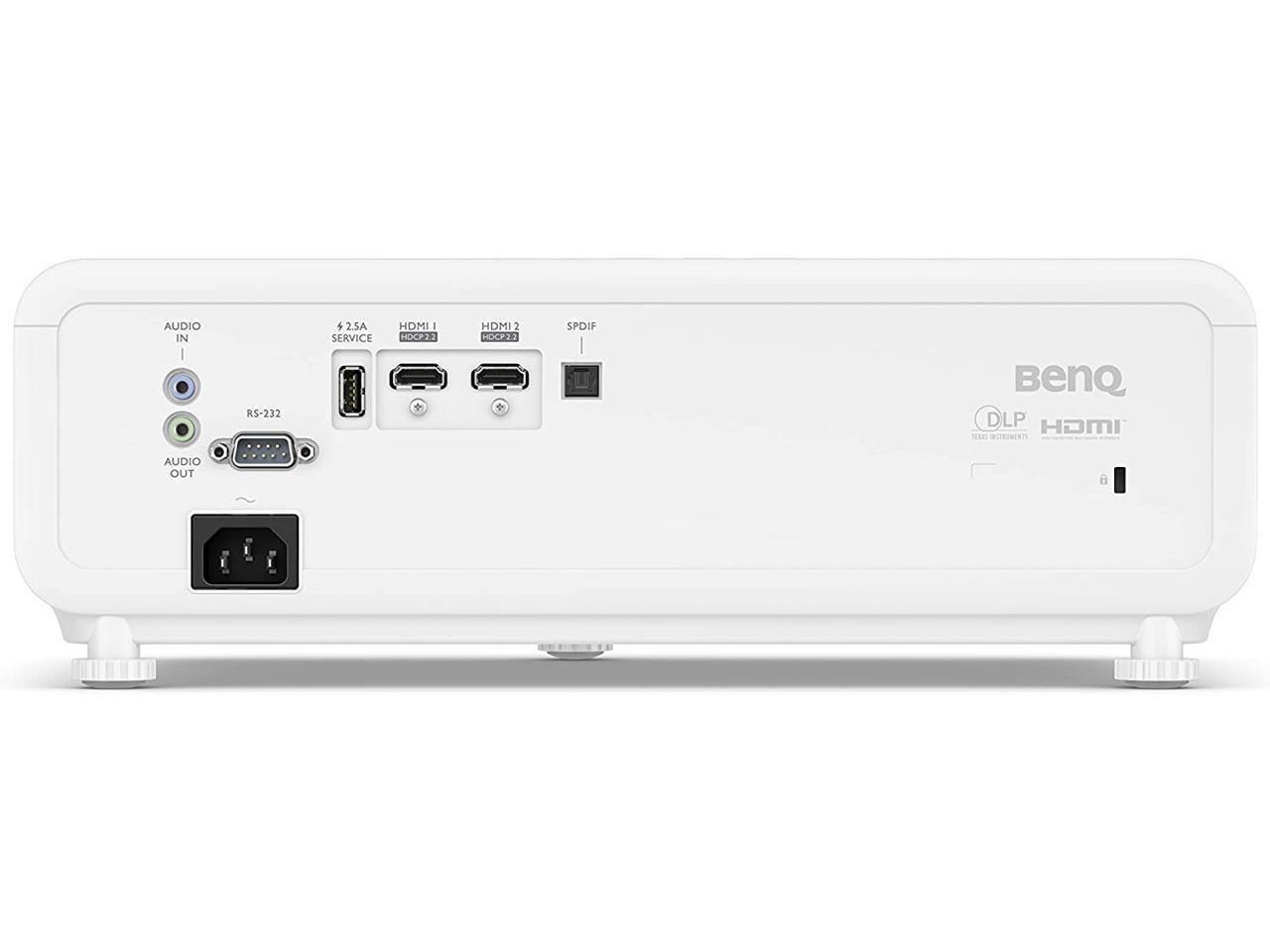
For connecting external devices, the BenQ HT2060 offers more robust options with two HDMI 2.0b inputs, a USB port that can power streaming sticks, optical and 3.5mm audio outputs, and RS-232 control for integration with home automation systems.
The Epson CO-FH02 is more limited with just one HDMI port and one USB port. However, it does offer Chromecast built-in for wireless streaming from compatible devices and Bluetooth audio output for connecting wireless speakers or headphones.
The BenQ's dual HDMI inputs allow you to keep both a streaming device and a game console connected simultaneously, while the Epson would require manually switching cables or adding an HDMI switch.
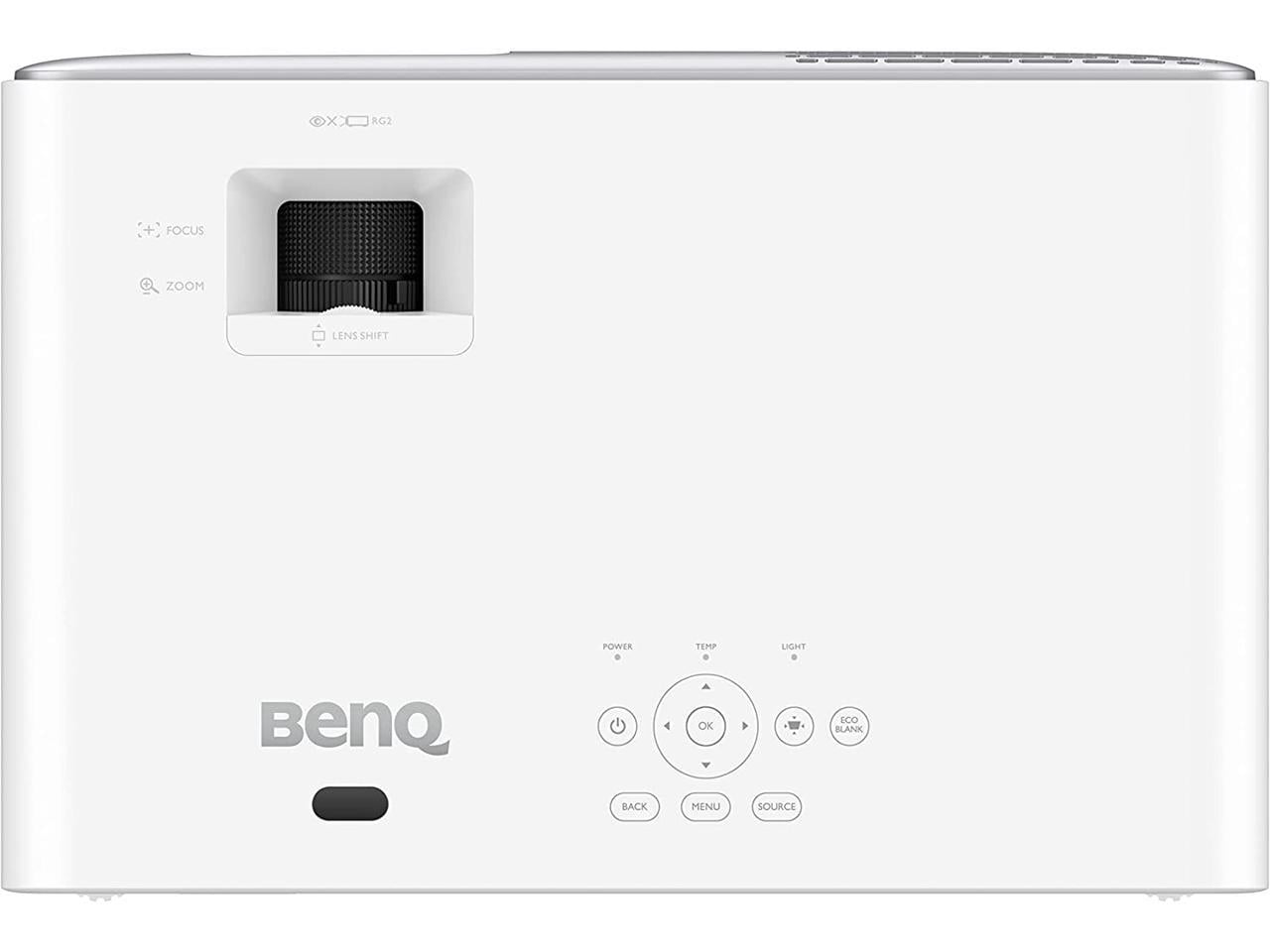
The BenQ HT2060 offers features that make it ideal for permanent installation, including a 1.3x zoom lens for flexible throw distances and +10% vertical lens shift—a rare feature at this price point that allows you to move the image up or down without moving the projector. This helps achieve proper screen positioning without resorting to keystone correction, which can distort the image and reduce effective resolution.
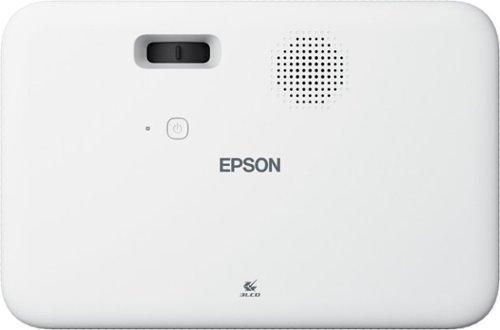
The Epson CO-FH02 prioritizes ease of setup with automatic vertical keystone correction (±30 degrees) and a manual horizontal keystone slider. These features make it quick to set up anywhere, though keystone correction does slightly reduce image quality. The projector lacks zoom functionality, meaning you'll need to physically move it to adjust image size.
Weighing 5.7 pounds and featuring a compact design, the Epson CO-FH02 is built with portability in mind. It's easy to move between rooms or take to a friend's house for movie night or sports viewing.
The BenQ HT2060 is larger and heavier at 7.9 pounds, reflecting its focus on performance over portability. While still movable, it's designed with the assumption that you'll find an ideal spot and leave it there.
One of the most significant advantages of the BenQ HT2060 is its 4LED light source, rated for up to 30,000 hours of usage. At five hours of viewing per day, that's over 16 years before the light source would need replacement. The LED light source also maintains consistent brightness and color performance throughout its lifespan.
The Epson CO-FH02 uses a traditional UHE (Ultra High Efficiency) lamp with a rated lifespan of 6,000 hours in normal mode and up to 12,000 hours in ECO mode. While respectable, this means you might need to replace the lamp every 3-5 years with regular use. Replacement lamps typically cost $100-200, adding to the long-term ownership cost.
Beyond lamp replacement, both projectors require minimal maintenance. Occasionally cleaning the air filter (both have them) helps maintain optimal cooling and performance. The BenQ's solid-state lighting eliminates the need for lamp replacement, making it effectively maintenance-free for most of its lifespan.
At $799, the Epson CO-FH02 offers excellent value for its brightness, built-in streaming, and portability. Its lower initial cost makes it accessible for first-time projector buyers or those who need occasional big-screen viewing rather than a dedicated theater setup.
The BenQ HT2060 commands a $200 premium at $999 but justifies this with superior image quality, gaming performance, installation flexibility, and significantly longer lifespan. When factoring in potential lamp replacement costs for the Epson, the total cost of ownership over 5+ years actually favors the BenQ despite its higher upfront price.
Since their release, both projectors have maintained good value relative to newer models. The technological improvements in the BenQ's 4LED system represent a significant advancement that hasn't been obsoleted by newer models in the same price range. Similarly, the Epson's combination of brightness and smart features continues to compete well with current offerings.
In my experience reviewing projectors over many years, models with longer light source lifespans and better build quality tend to provide greater satisfaction over time. The frustration of a lamp failure during a movie night or having to replace an entire projector because the cost of repair exceeds its value can quickly change the value equation.
After spending extensive time with both projectors, I've found that the decision comes down to your specific viewing environment, content preferences, and how you plan to use the projector.
Choose the BenQ HT2060 if:
The BenQ excels in traditional home theater applications, delivering film-like image quality with accurate colors and excellent contrast. Its gaming performance and installation flexibility make it versatile within a dedicated space, while its LED light source provides peace of mind regarding longevity.
Choose the Epson EpiqVision Flex CO-FH02 if:
The Epson shines as a versatile, bright projector that adapts to different environments. Its portability and automatic setup features make it ideal for those who want big-screen entertainment without dedicating permanent space to it. The built-in Android TV offers convenience that the BenQ can't match without additional hardware.
Both the BenQ HT2060 and Epson EpiqVision Flex CO-FH02 represent excellent values in their respective niches. The technological advancements they incorporate—from the BenQ's 4LED system to the Epson's integration of smart features—show how far projectors have come in recent years.
For dedicated home theater enthusiasts who prioritize image quality and longevity, the BenQ HT2060's superior contrast, color accuracy, and maintenance-free LED light source make it worth the additional investment. Its performance with film content in particular creates an immersive viewing experience that rivals projectors costing significantly more.
For those seeking flexibility, brightness, and convenience with a more modest investment, the Epson CO-FH02 delivers remarkable value. Its portability and ease of use make big-screen entertainment accessible in ways that traditional home theater projectors can't match.
The best projector isn't about which has the most impressive specifications—it's about which one best fits your specific needs, viewing environment, and content preferences. Whether you choose the cinema-quality experience of the BenQ HT2060 or the bright, versatile convenience of the Epson CO-FH02, both represent how far projection technology has advanced, bringing the big-screen experience home in increasingly accessible and impressive ways.
| BenQ HT2060 HDR Home Theater Projector ($999) | Epson EpiqVision Flex CO-FH02 Smart Portable Projector ($799) |
|---|---|
| Display Technology - Affects color reproduction and image quality | |
| 4LED DLP technology with 98% Rec.709 coverage | 3LCD technology with equal color and white brightness |
| Brightness - Determines visibility in ambient light conditions | |
| 2,300 ANSI lumens (better for controlled lighting) | 3,000 lumens (better for rooms with ambient light) |
| Contrast Ratio - Impacts black levels and image depth | |
| 500,000:1 (superior dark scene detail and depth) | 16,000:1 (adequate but less impressive blacks) |
| Resolution - Determines image sharpness and detail | |
| Full HD (1920×1080) | Full HD (1920×1080) |
| HDR Support - Enhances dynamic range in compatible content | |
| HDR10 and HLG with dedicated processing | Basic HDR10 compatibility with limited processing |
| Light Source Lifespan - Affects long-term maintenance costs | |
| LED with up to 30,000 hours life (essentially maintenance-free) | Traditional lamp with 6,000-12,000 hours (will require replacement) |
| Gaming Performance - Critical for responsive gameplay | |
| 16.7ms input lag (excellent for competitive gaming) | 30-50ms input lag (acceptable for casual gaming only) |
| Smart Features - Determines need for external devices | |
| No built-in smart platform (requires external streaming device) | Built-in Android TV with voice control and streaming apps |
| Connectivity - Impacts versatility with external devices | |
| 2× HDMI 2.0b, USB, optical audio out, 3.5mm audio, RS-232 | 1× HDMI, 1× USB, Bluetooth audio, Chromecast built-in |
| Installation Flexibility - Affects placement options | |
| 1.3× zoom, +10% vertical lens shift, 2D keystone correction | No zoom, automatic vertical keystone correction (±30°) |
| Portability - Determines ease of relocation | |
| 7.9 lbs, designed for permanent installation | 5.7 lbs, compact design for easy transport |
| Audio - Impacts need for external speakers | |
| Dual 5W speakers (adequate but basic) | Single 5W speaker with bass reflex (good for portable use) |
| Projection Size - Determines screen size flexibility | |
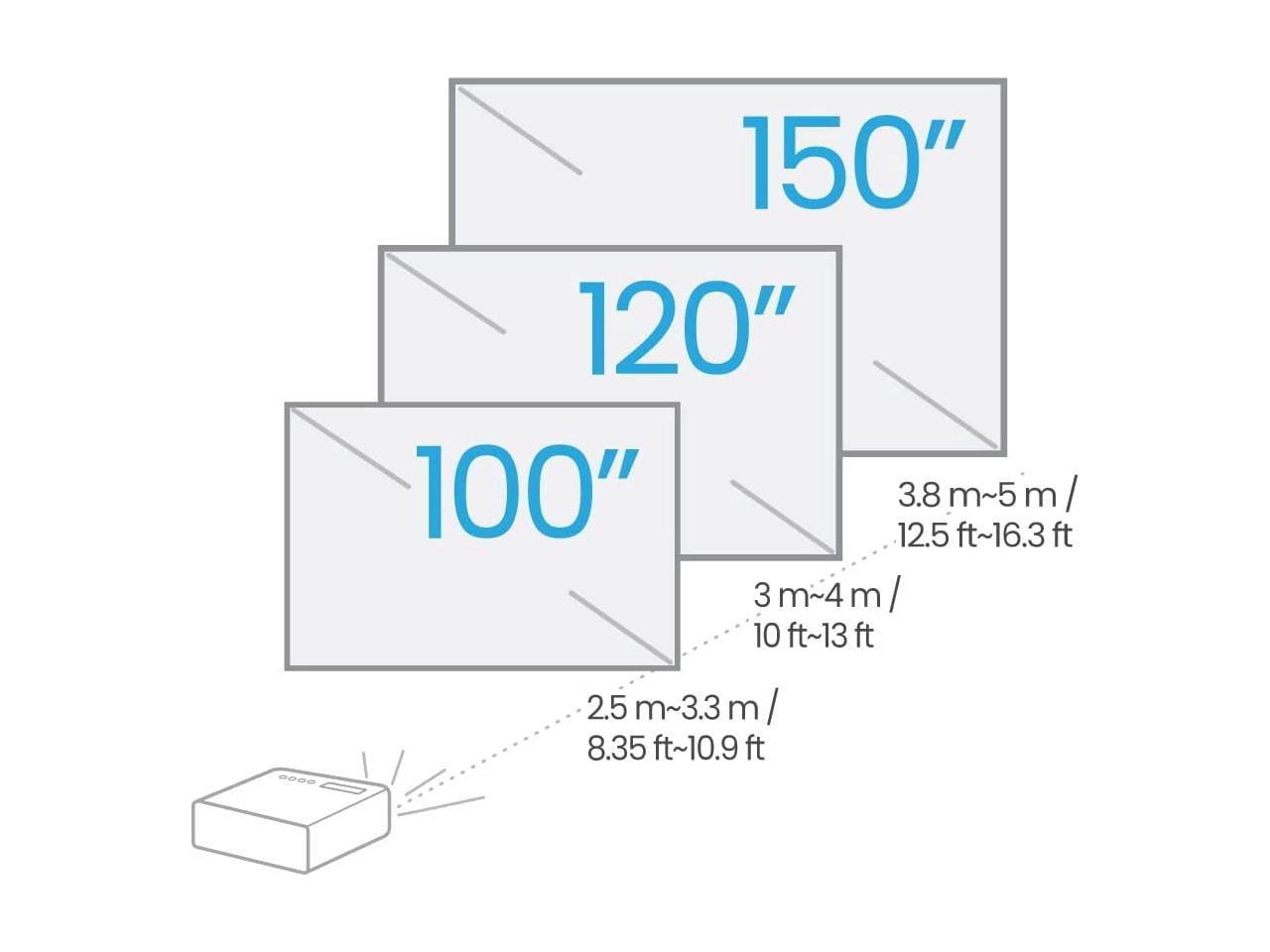
| 60"-150" recommended (minimum 5.7 ft distance) | Up to 300" (more flexible minimum distance) |
| Warranty - Protects your investment | |
| 3-year warranty on parts and labor | 2-year warranty |
| Best For - Primary use case recommendation | |
| Dedicated home theaters with light control, movie enthusiasts, gamers | Multi-purpose rooms, portable needs, casual viewing, bright environments |
For movie watching, the BenQ HT2060 HDR Home Theater Projector ($999) outperforms the Epson EpiqVision Flex CO-FH02 Smart Portable Projector ($799). The BenQ offers significantly better contrast (500,000:1 vs 16,000:1), deeper blacks, and superior HDR processing, resulting in a more cinematic experience. The BenQ HT2060 also provides more accurate colors with 98% Rec.709 coverage, making it the preferred choice for dedicated home theater movie viewing.
The Epson EpiqVision Flex CO-FH02 is better suited for bright living rooms with its higher 3,000 lumens brightness compared to the BenQ HT2060's 2,300 ANSI lumens. While both projectors will perform best with some light control, the Epson's additional brightness makes it more versatile in rooms with ambient light or daytime viewing. If you can't fully darken your living room, the Epson CO-FH02 will deliver a more visible image.
Gamers should choose the BenQ HT2060 for its significantly lower input lag of 16.7ms compared to the Epson CO-FH02's 30-50ms. This lower latency provides more responsive gameplay, especially important for competitive or fast-paced games. The BenQ HT2060 also offers better motion handling with less blur during rapid movements, creating a smoother gaming experience overall.
Both the BenQ HT2060 and Epson CO-FH02 include built-in speakers that are adequate for casual viewing but limited in audio quality. The BenQ features dual 5W speakers while the Epson has a single 5W speaker with bass reflex. For a true home theater experience, external speakers or a soundbar are recommended with either projector. The Epson does offer Bluetooth audio output for wireless speaker connection, which the BenQ lacks.
The Epson EpiqVision Flex CO-FH02 offers easier setup with its automatic vertical keystone correction and portable design. It's designed for quick placement and adjustment. The BenQ HT2060 requires more careful positioning but provides more installation flexibility with its 1.3x zoom and +10% vertical lens shift, allowing for proper image alignment without quality-reducing keystone correction. For simple, temporary setups, the Epson CO-FH02 is more user-friendly.
The Epson EpiqVision Flex CO-FH02 includes built-in Android TV, providing immediate access to streaming services like Netflix, Disney+, and YouTube without additional devices. The BenQ HT2060 has no built-in smart platform and requires an external streaming device like a Roku, Apple TV, or Fire TV Stick. If convenience is a priority, the Epson offers a simpler streaming solution, though the BenQ's approach allows for upgrading your streaming device independently.
The BenQ HT2060 will typically last longer with its 4LED light source rated for up to 30,000 hours (about 16+ years at 5 hours daily use). The Epson CO-FH02 uses a traditional lamp with 6,000 hours in normal mode and up to 12,000 hours in ECO mode, requiring lamp replacement every 3-5 years of regular use. The BenQ's solid-state lighting eliminates the need for lamp replacement, making it essentially maintenance-free for most of its lifespan.
The BenQ HT2060 offers superior connectivity with two HDMI 2.0b inputs, allowing you to keep multiple devices connected simultaneously (like a gaming console and streaming device). The Epson CO-FH02 has only one HDMI port, requiring you to manually switch cables or add an HDMI switch when using multiple devices. However, the Epson does offer Chromecast built-in for wireless connection from compatible devices.
For a dedicated home theater room, the BenQ HT2060 is the clear choice over the Epson CO-FH02. Its superior contrast ratio (500,000:1), better color accuracy, enhanced HDR processing, and more installation options make it ideal for optimized home theater environments. When paired with proper light control, the BenQ HT2060 delivers a more cinematic experience that takes full advantage of a dedicated viewing space.
Value depends on your priorities. The Epson CO-FH02 ($799) offers better immediate value with its lower price, built-in streaming, and higher brightness. The BenQ HT2060 ($999) provides better long-term value with superior image quality, gaming performance, and significantly longer lifespan without lamp replacements. When factoring in potential lamp replacement costs for the Epson, the total ownership cost over 5+ years may actually favor the BenQ despite its higher upfront price.
Both the BenQ HT2060 and Epson CO-FH02 can be ceiling mounted, though the BenQ is better suited for permanent installation. The BenQ offers vertical lens shift and 2D keystone correction that make ceiling mounting more flexible. The Epson can also be ceiling mounted but is designed more for portability than permanent installation. Both projectors have the necessary mounting points for standard ceiling mounts.
The Epson CO-FH02 can project images up to 300 inches diagonally, while the BenQ HT2060 has a recommended maximum of 150 inches. However, optimal image quality for both projectors is achieved at smaller sizes (80-120 inches) where brightness and sharpness are maintained. The Epson's higher brightness gives it an advantage when projecting very large images, though ambient light should still be controlled for best results with either the Epson CO-FH02 or BenQ HT2060.
We've done our best to create useful and informative comparisons to help you decide what product to buy. Our research uses advanced automated methods to create this comparison and perfection is not possible - please contact us for corrections or questions. These are the sites we've researched in the creation of this article: projectorcentral.com - avsforum.com - bestbuy.com - avsforum.com - tomsguide.com - avsforum.com - projectorreviews.com - hometheaterhifi.com - youtube.com - avsforum.com - cnet.com - techgearlab.com - cdw.com - bhphotovideo.com - projectorcentral.com - shop.avispl.com - tvsbook.com - youtube.com - projectorreviews.com - avsforum.com - expertreviews.co.uk - projectorcentral.com - youtube.com - bestbuy.com - specsradar.com - techwalls.com - cnet.com - epson.com - youtube.com - projectorreviews.com - epson.com - abt.com - youtube.com - cnet.com - techgearlab.com - staples.com - bestbuy.com - bestbuy.com - projectorcentral.com - bhphotovideo.com - dell.com - latin.epson.com - specsradar.com - projectorcentral.com - officedepot.com - files.support.epson.com - walmart.com - adorama.com - epson.com

Privacy Policy
Terms and Conditions - Affiliate Policy
Home Security
© Copyright 2008-2026.
11816 Inwood Rd #1211, Dallas, TX 75244