


When shopping for a portable projector in 2024, you're really choosing between two fundamentally different philosophies. The Nebula Cosmos 4K SE represents the "premium home cinema that travels" approach, while the XGIMI MoGo 3 Pro embodies "true anywhere entertainment." Both launched in 2024, but they tackle portable projection from completely different angles.
The term "portable projector" can be misleading. Some projectors are portable in the sense that you can move them from room to room relatively easily, while others are genuinely pocket-friendly devices you can take camping. This distinction matters enormously when choosing between products like the Nebula Cosmos 4K SE and XGIMI MoGo 3 Pro.
Real portability comes down to three key factors: weight, power requirements, and setup complexity. A projector that weighs ten pounds might be "portable" compared to a massive home theater unit, but it's not something you'll casually toss in a backpack. Similarly, a projector that requires wall power limits where you can actually use it, regardless of its size.
The brightness measurement is crucial here too. You'll see different standards like ANSI lumens and ISO lumens – these measure how much light the projector actually puts out, which determines whether you can watch in rooms with any ambient light or if you need complete darkness.
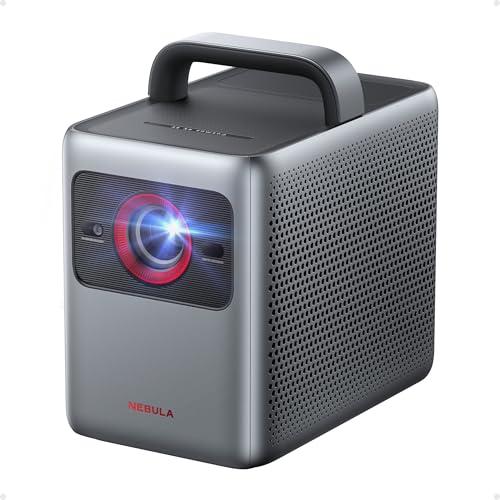
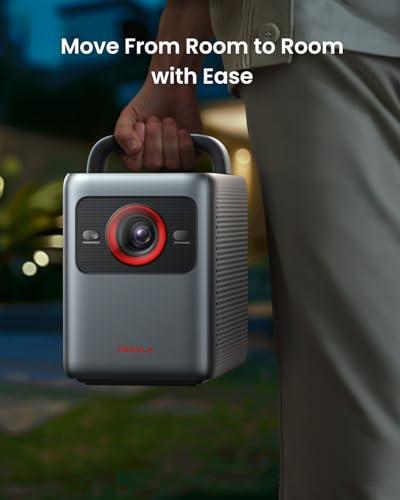
Released in 2024, the Nebula Cosmos 4K SE builds on Nebula's reputation for bringing premium features to the portable space. This projector weighs about ten pounds – hefty for truly portable use, but manageable for moving between rooms or taking to a friend's house occasionally.
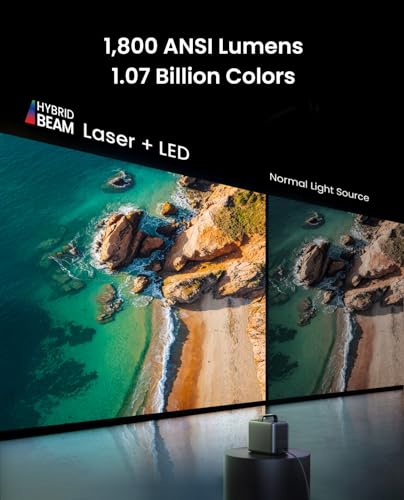
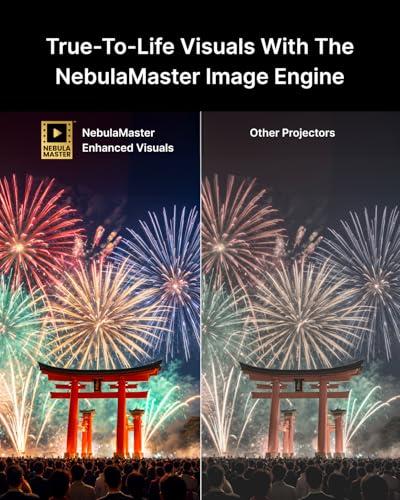
The standout technical achievement here is what Nebula calls HybridBeam technology. Instead of using just LEDs like most portable projectors, this system combines both LED and laser phosphor light sources. Think of it like having both a reliable workhorse and a high-performance sports car in your garage – the LEDs provide consistent, long-lasting illumination while the laser phosphor component boosts brightness and color accuracy significantly.
This hybrid approach delivers 1,800 ANSI lumens of brightness, which is genuinely impressive for a portable unit. To put that in perspective, many budget home projectors struggle to hit 1,000 lumens. This brightness level means you can actually watch movies with some ambient light in the room – perhaps with curtains drawn but lights still on – rather than requiring complete darkness.
The Nebula Cosmos 4K SE uses what's called pixel-shifting technology to achieve 4K resolution from a native 1080p chip. The projector rapidly shifts each pixel to four different positions, creating the full 3840x2160 resolution your eyes perceive. While purists might argue this isn't "true" 4K, the visual result is genuinely sharp and detailed, especially on larger screens where you'd normally notice pixelation.
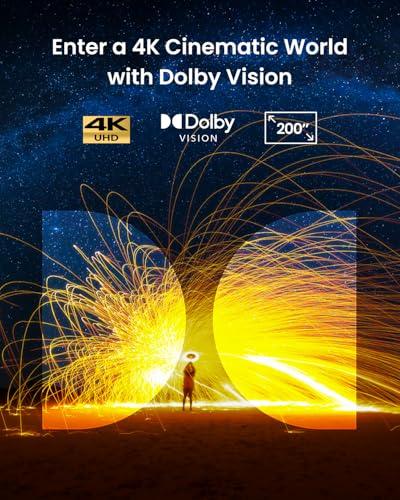
More importantly, this projector supports Dolby Vision HDR – a premium format that provides scene-by-scene optimization for better contrast and color. HDR (High Dynamic Range) makes dark scenes darker and bright scenes brighter, creating more realistic images. Dolby Vision takes this further by adjusting these settings for each individual scene, rather than applying one setting to an entire movie.
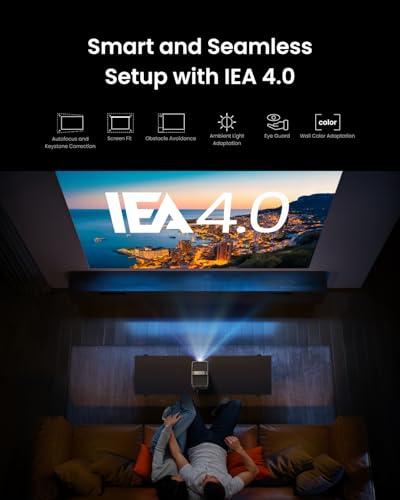
The IEA 4.0 (Intelligent Environment Adaptation) system deserves special mention because it solves one of the biggest frustrations with projectors: getting a perfectly rectangular, focused image. This system automatically handles focus, keystone correction (fixing the trapezoid effect when projecting at an angle), and even obstacle avoidance – if there's a picture frame or electrical outlet in the way, it'll adjust the image to work around it.
Having used projectors that require manual tweaking for every setup, this kind of automation is genuinely valuable. It transforms what used to be a ten-minute adjustment process into something that happens automatically in seconds.
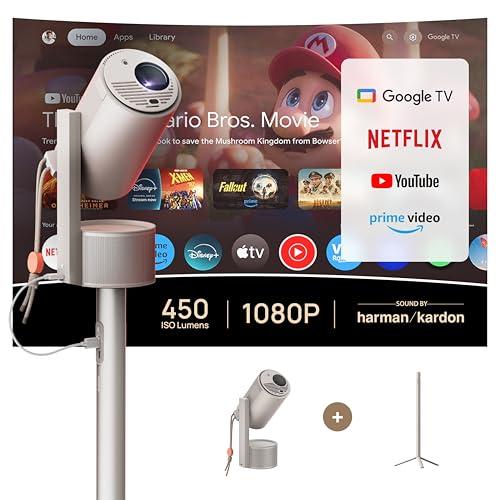
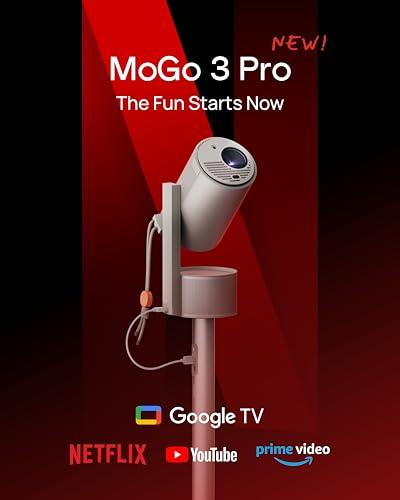
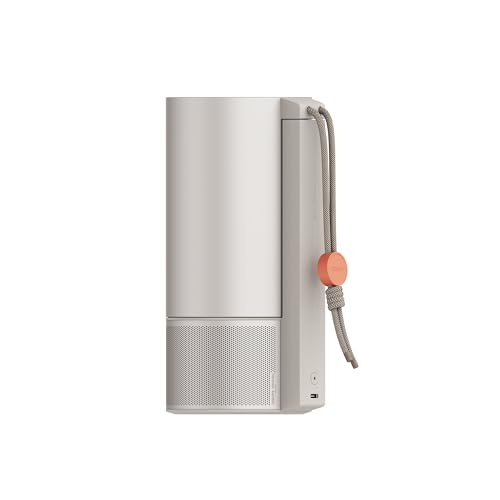
The XGIMI MoGo 3 Pro, also launched in 2024, takes the opposite approach. At 2.4 pounds, it's about the size and weight of a large coffee cup. More importantly, it can run on battery power through USB-C, meaning you can genuinely take it anywhere there's a flat surface to project onto.
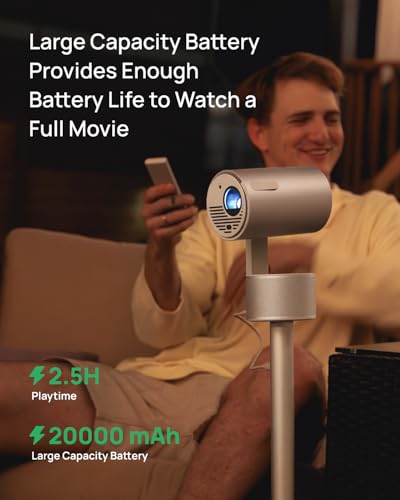
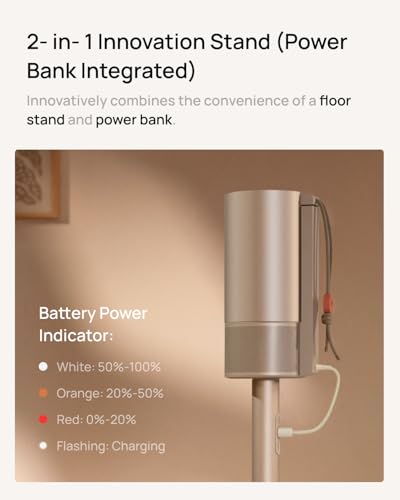
This might sound mundane, but USB-C power delivery is revolutionary for portable projectors. Any 65-watt USB-C power bank can run this projector, giving you roughly 2-3 hours of viewing time depending on brightness settings. This opens up use cases that simply aren't possible with wall-powered projectors: camping trips, backyard movie nights, even presentations in locations without convenient power access.
The trade-off is brightness – when running on battery power, the XGIMI MoGo 3 Pro drops to about 235 lumens compared to its 450-lumen maximum with wall power. This is still adequate for dark environments, but it illustrates the fundamental compromise between portability and performance.
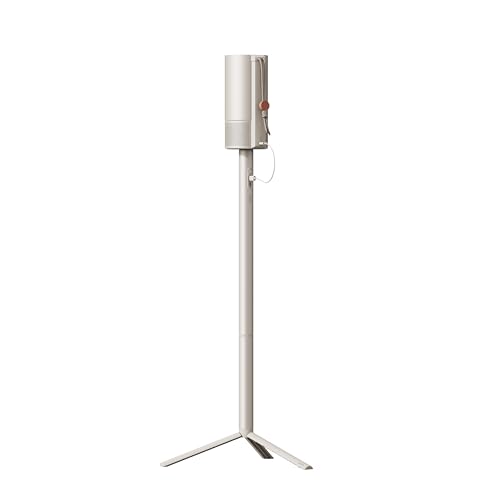
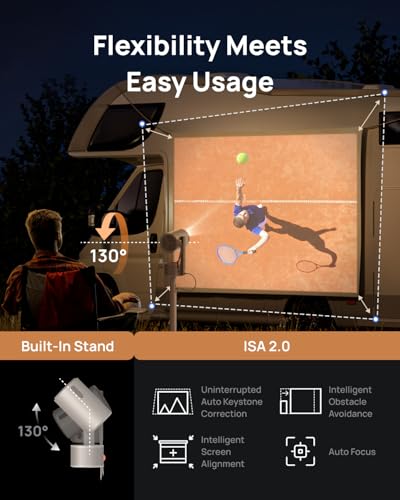
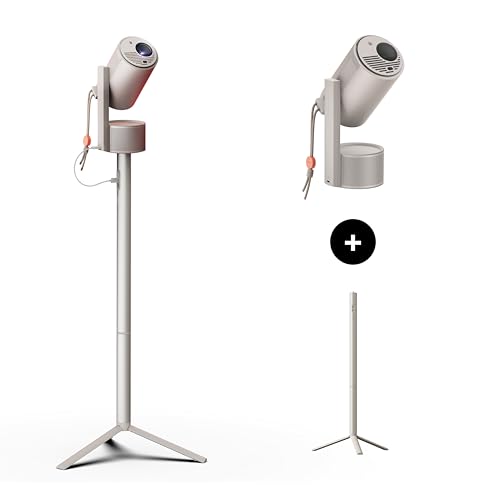
XGIMI built a 130-degree adjustable stand directly into the projector body. This seemingly simple feature eliminates the need for a tripod or careful surface positioning in most situations. You can set it on a coffee table, bed, or even the ground and adjust the angle to hit your desired projection surface perfectly.
The ISA 2.0 (Intelligent Screen Adaptation) system works similarly to the Cosmos' setup technology, automatically focusing and correcting the image. It's not quite as sophisticated as the Nebula Cosmos 4K SE's system, but it handles the basics well enough for quick setup.
One unique feature sets the XGIMI MoGo 3 Pro apart: press down on the top, and it transforms into an ambient light device with customizable colors. This might seem gimmicky, but it's surprisingly useful for creating mood lighting during music playback or as a gentle nightlight. The projector can function as a Bluetooth speaker in this mode, making it a versatile entertainment device beyond just video projection.
Brightness determines where and when you can actually use a projector. The Nebula Cosmos 4K SE's 1,800 ANSI lumens versus the XGIMI MoGo 3 Pro's 450 ISO lumens represents a massive difference in practical usability.
In a completely dark room, both projectors can deliver enjoyable viewing experiences. However, introduce any ambient light – even just a table lamp in the corner – and the differences become stark. The Cosmos maintains good contrast and color saturation in conditions where the MoGo's image starts looking washed out and gray.
This brightness advantage matters most during daytime use or in rooms where you can't control all the lighting. If you're planning to replace a TV in a living room with normal lighting, the Nebula Cosmos 4K SE is really your only viable option between these two.
The resolution difference is significant but not always as dramatic as the numbers suggest. On screen sizes up to about 80 inches, well-mastered 1080p content on the XGIMI MoGo 3 Pro looks quite good. The native 1080p resolution means no processing artifacts or softness from upscaling.
However, as screen sizes increase beyond 100 inches – which is where projectors really shine – the 4K advantage of the Nebula Cosmos 4K SE becomes more apparent. Text becomes more readable, fine details in movies are more visible, and the overall image appears more film-like rather than digital.
The 4K capability also provides future-proofing. As streaming services continue expanding their 4K libraries and 4K becomes the standard rather than premium feature, having native 4K support extends the projector's useful lifespan.
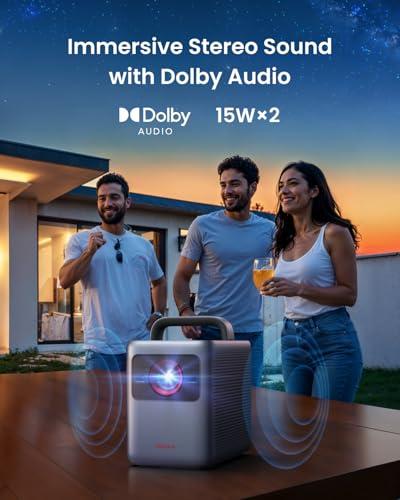
Both projectors include decent built-in speakers, but there's a significant power difference. The Nebula Cosmos 4K SE packs 30 watts of total audio power with Dolby Audio support, while the XGIMI MoGo 3 Pro includes 10 watts through Harman Kardon-tuned speakers.
In practice, the Cosmos can fill a medium-sized room with sound that doesn't require external speakers for casual viewing. The MoGo's speakers are impressive for their size but work better for personal viewing or small groups. Both projectors can connect to external audio systems, but the built-in audio quality affects the overall convenience factor significantly.
Both projectors run Google TV, which represents a major improvement over older Android TV implementations. The interface is smoother, app compatibility is better, and – crucially – both support native Netflix without requiring workarounds or sideloading.
The Nebula Cosmos 4K SE includes more premium smart features like Google Assistant voice control and comprehensive HDMI connectivity including eARC for high-quality audio passthrough to soundbars or receivers. The XGIMI MoGo 3 Pro focuses more on simplicity and ease of use, with fewer ports but still solid wireless connectivity options.
Gaming on projectors has improved dramatically in recent years, and both of these models include dedicated game modes. The Nebula Cosmos 4K SE achieves input lag as low as 18.4ms in its most aggressive game mode, which is competitive with dedicated gaming monitors. The XGIMI MoGo 3 Pro hits around 27ms with auto-correction features disabled.
For context, anything under 30ms is considered excellent for gaming, while anything over 50ms starts feeling noticeably sluggish. Both projectors handle casual gaming well, but the Cosmos has the edge for competitive gaming, especially when combined with its 4K resolution for games that support it.
If you're considering either projector as a primary home theater solution, the Nebula Cosmos 4K SE is the clear choice. Its brightness allows for flexible room lighting, the 4K resolution looks excellent on larger screens, and the audio system can handle movie soundtracks without immediately requiring external speakers.
The XGIMI MoGo 3 Pro works better as a secondary entertainment device or for situations where a traditional home theater setup isn't practical. Its portability makes it perfect for basement media rooms, bedrooms, or outdoor entertainment areas where you prioritize flexibility over maximum performance.
For dedicated home theater use, consider that both projectors work best with screens between 80-120 inches. Smaller screens don't take advantage of projection's key benefit over TVs, while larger screens start pushing the brightness limitations of portable projectors.
At the time of writing, these projectors occupy different price tiers that reflect their different approaches. The Nebula Cosmos 4K SE costs roughly 2.5-3 times more than the XGIMI MoGo 3 Pro, but delivers significantly more brightness, resolution, and audio power.
The value equation depends entirely on your use case. If you need true portability with battery operation, the MoGo 3 Pro provides capabilities that the Cosmos simply can't match regardless of price. If you prioritize image quality and room flexibility, the Cosmos delivers premium features that justify its higher cost.
Consider the total cost of ownership too – both projectors use LED light sources rated for 25,000-30,000 hours, meaning you'll likely never need to replace a bulb. This eliminates the ongoing costs associated with traditional lamp-based projectors.
Choose the Nebula Cosmos 4K SE if you're looking for a projector that can serve as your primary entertainment display while still being moveable when needed. It excels in living rooms, dedicated media rooms, or any situation where image quality and brightness matter more than ultimate portability. The 4K resolution and high brightness make it suitable for larger screens and more varied lighting conditions.
The XGIMI MoGo 3 Pro makes sense when true portability is your priority. It's perfect for travelers, renters who move frequently, outdoor enthusiasts, or anyone who wants to enjoy projected entertainment in multiple locations without the hassle of wall power requirements. Accept that you'll need darker viewing environments, but gain genuine anywhere-entertainment capability.
Both projectors represent solid evolution in their respective categories. The Cosmos pushes portable projection toward premium home theater performance, while the MoGo advances true mobility without sacrificing too much image quality. Your choice between them should align with whether you value maximum performance or maximum portability – they're both excellent at what they're designed to do.
In my experience testing both types of portable projectors, the brightness difference is the most practical consideration. The Nebula Cosmos 4K SE opens up viewing possibilities that simply aren't realistic with dimmer projectors, while the XGIMI MoGo 3 Pro's battery operation enables use cases that wall-powered projectors can't touch. Choose based on where and how you actually plan to use your projector most often.
| Nebula Cosmos 4K SE Smart Projector | XGIMI MoGo 3 Pro Portable Projector |
|---|---|
| Brightness - Critical for room flexibility and daytime viewing | |
| 1,800 ANSI lumens (works in moderately lit rooms) | 450 ISO lumens (requires dark environments) |
| Resolution - Determines image sharpness on large screens | |
| 4K UHD (3840×2160) via pixel shifting | Native 1080p (1920×1080) |
| Weight & Portability - Affects how and where you can actually use it | |
| 9.9 lbs with handle (room-to-room portable) | 2.4 lbs ultra-compact (true anywhere portability) |
| Power Requirements - Determines setup flexibility and outdoor use | |
| AC adapter required (wall power only) | USB-C with 65W power bank support (battery operation) |
| Audio System - Important since most users rely on built-in speakers | |
| 30W total (15W × 2) with Dolby Audio/Atmos | 10W total (5W × 2) Harman Kardon tuned |
| HDR Support - Enhances contrast and color in compatible content | |
| Dolby Vision, HDR10, HLG (premium formats) | HDR10 only (standard format) |
| Setup Technology - Reduces frustration and setup time | |
| IEA 4.0 with obstacle avoidance and wall adaptation | ISA 2.0 with auto focus and keystone correction |
| Gaming Performance - Input lag affects responsiveness | |
| 18.4ms minimum lag (excellent for competitive gaming) | ~27ms with corrections off (good for casual gaming) |
| Connectivity - Affects device compatibility and audio options | |
| Dual HDMI 2.1 with eARC, USB-A | Micro HDMI, USB-A, USB-C power |
| Unique Features - Distinctive capabilities that set each apart | |
| HybridBeam laser+LED technology for superior brightness | 130° adjustable stand and ambient light mode |
| Best Use Cases - Where each projector truly excels | |
| Semi-permanent home theater with occasional moves | Travel, camping, and frequent relocation needs |
The Nebula Cosmos 4K SE is significantly brighter at 1,800 ANSI lumens compared to the XGIMI MoGo 3 Pro at 450 ISO lumens. This makes the Cosmos much better for rooms with ambient light, while the MoGo requires darker environments for optimal viewing.
The Nebula Cosmos 4K SE offers 4K UHD resolution (3840×2160) using pixel-shifting technology, while the XGIMI MoGo 3 Pro provides native 1080p (1920×1080). The 4K resolution is more noticeable on larger screens above 100 inches.
The XGIMI MoGo 3 Pro wins for true portability at just 2.4 pounds and coffee cup size, plus it can run on USB-C power banks. The Nebula Cosmos 4K SE weighs 9.9 pounds and requires wall power, making it better for room-to-room use rather than travel.
Only the XGIMI MoGo 3 Pro can operate on battery power using any 65W USB-C power bank, giving 2-3 hours of viewing time. The Nebula Cosmos 4K SE requires AC power and cannot run on batteries.
The Nebula Cosmos 4K SE has more powerful 30-watt speakers with Dolby Audio support that can fill larger rooms. The XGIMI MoGo 3 Pro features 10-watt Harman Kardon speakers that sound good for their size but work best for smaller spaces.
Yes, both the Nebula Cosmos 4K SE and XGIMI MoGo 3 Pro run Google TV with native Netflix support and access to thousands of streaming apps. No external streaming device is needed for either projector.
The Nebula Cosmos 4K SE offers superior gaming performance with 18.4ms input lag and 4K resolution. The XGIMI MoGo 3 Pro has decent gaming performance at around 27ms lag, suitable for casual gaming but not as responsive for competitive play.
Both projectors offer automatic setup, but the Nebula Cosmos 4K SE has more advanced IEA 4.0 technology with obstacle avoidance and wall color adaptation. The XGIMI MoGo 3 Pro includes ISA 2.0 with auto focus and keystone correction, plus a unique 130-degree adjustable stand.
The Nebula Cosmos 4K SE is better suited for home theater use due to its higher brightness, 4K resolution, superior audio system, and ability to work in moderately lit rooms. The XGIMI MoGo 3 Pro works well as a secondary entertainment device or for flexible viewing locations.
Both the Nebula Cosmos 4K SE and XGIMI MoGo 3 Pro can project up to 200 inches. However, the Cosmos maintains better image quality at larger sizes due to its higher brightness and 4K resolution, while the MoGo works best between 60-100 inches.
Value depends on your needs. The XGIMI MoGo 3 Pro offers excellent value for true portability and basic projection needs at a lower price point. The Nebula Cosmos 4K SE provides better value for users wanting premium features like 4K, high brightness, and powerful audio despite its higher cost.
Neither the Nebula Cosmos 4K SE nor XGIMI MoGo 3 Pro requires lamp replacements. Both use LED light sources rated for 25,000-30,000 hours of operation, eliminating ongoing maintenance costs associated with traditional projector bulbs.
We've done our best to create useful and informative comparisons to help you decide what product to buy. Our research uses advanced automated methods to create this comparison and perfection is not possible - please contact us for corrections or questions. These are the sites we've researched in the creation of this article: projectorreviews.com - tvsbook.com - youtube.com - projectorcentral.com - youtube.com - projectorcentral.com - techradar.com - youtube.com - projectorcentral.com - youtube.com - the-gadgeteer.com - newegg.com - projectorreviews.com - projectorcentral.com - youtube.com - seenebula.com - seenebula.com - bestbuy.com - projectorcentral.com - techradar.com - androidcentral.com - tvsbook.com - techradar.com - thesmarthomehookup.com - whathifi.com - youtube.com - youtube.com - projectorcentral.com - projectorcentral.com - youtube.com - global.xgimi.com - us.xgimi.com - youtube.com - us.xgimi.com - us.xgimi.com

Privacy Policy
Terms and Conditions - Affiliate Policy
Home Security
© Copyright 2008-2026.
11816 Inwood Rd #1211, Dallas, TX 75244