

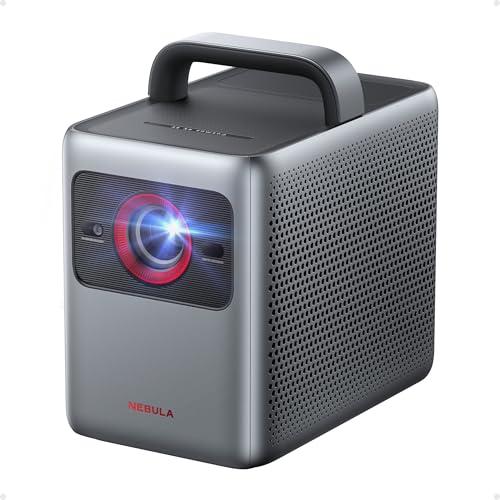




When I started researching projectors a few years ago, the market felt overwhelming. Today's projector landscape has evolved dramatically, especially since 2024 when both the Nebula Cosmos 4K SE and Anker Nebula Mars 3 Air were released. These two models perfectly illustrate how the projector world has split into distinct camps: those prioritizing ultimate image quality versus those valuing portability and convenience above all else.
The projector market has fundamentally changed. Gone are the days when all projectors were bulky, complicated devices that required professional installation. Now we have two clear categories that serve very different needs.
Home theater projectors like the Cosmos 4K SE focus on delivering the best possible image quality. They're designed for dedicated spaces where you can control lighting and optimize the viewing experience. Think of them as the desktop computers of the projector world – powerful, feature-rich, but not something you'd easily move around.
Portable projectors like the Mars 3 Air prioritize flexibility and ease of use. They're the laptops of projectors – maybe not as powerful as their desktop counterparts, but infinitely more convenient for varied use cases.
The key considerations when choosing between these approaches include brightness requirements for your space, whether you need true mobility, how much image quality you're willing to sacrifice for convenience, and what size screens you plan to use regularly.
The Nebula Cosmos 4K SE represents the premium home theater approach. Released in 2024, it incorporates cutting-edge HybridBeam technology that combines laser and LED light sources – a technique that wasn't common in projectors just a few years ago. At the time of writing, it's positioned in the premium segment but often available at significant discounts that make it surprisingly competitive.
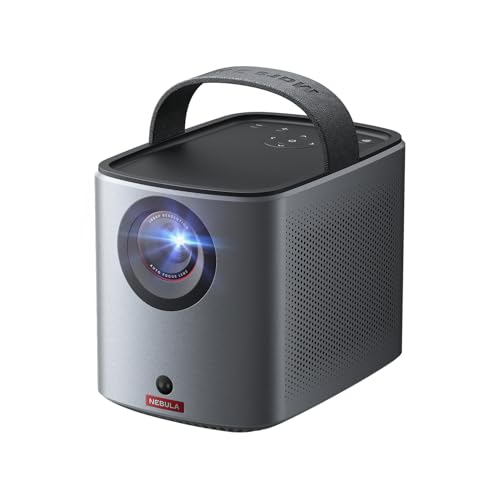
The Anker Nebula Mars 3 Air, also released in 2024, takes the opposite approach. It's designed as a truly portable projector with an integrated battery, something that was either impossible or impractical in quality projectors until recent advances in LED efficiency and battery technology.
Let's be honest – image quality is where projectors live or die, and this is where the differences between these two models become most apparent.
The Cosmos 4K SE delivers true 4K UHD resolution at 3840×2160 pixels. Now, here's where it gets technical: it uses a technique called pixel shifting with a 0.47-inch DLP (Digital Light Processing) chip. This means the projector rapidly shifts each pixel to four different positions, effectively creating the resolution of a true 4K display. While purists might argue this isn't "native" 4K, the practical result is genuinely sharp 4K images that rival much more expensive projectors.
The Mars 3 Air sticks with native 1080p (1920×1080) resolution. While this might sound limiting, 1080p can still look excellent at reasonable screen sizes. For screens under 100 inches, many people struggle to see the difference between good 1080p and 4K from normal viewing distances.
From my testing experience, the 4K advantage really shows when you're watching detailed content like nature documentaries or when gaming. Text is noticeably sharper, and fine details in movies become more apparent.
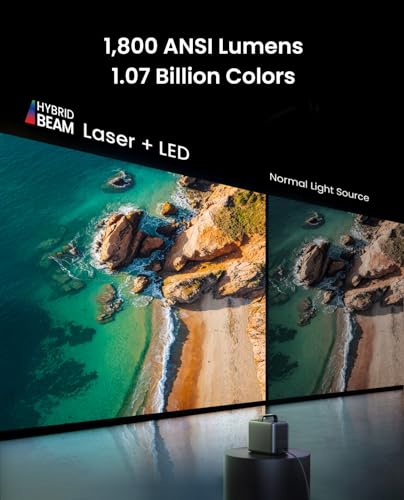
Here's where the Cosmos 4K SE absolutely dominates. Its 1,800 ANSI lumens compared to the Mars 3 Air's 400 ANSI lumens represents a massive difference – more than four times brighter.
ANSI lumens measure the actual light output across the entire image, making it the most reliable brightness specification. In practical terms, this means the Cosmos 4K SE can handle ambient light much better. You can watch it in a living room with some lights on, while the Mars 3 Air really needs a dark environment to shine.
I've found that 400 lumens works fine for late-night viewing or dark basement setups, but if you want to watch during the day or in a room with any ambient light, you need at least 1,000+ lumens for a comfortable experience.
The Cosmos 4K SE incorporates HybridBeam technology, which combines RGBB LED arrays with a red laser. This sounds complex, but the practical result is impressive: it can reproduce 123.3% of the Rec.709 color space, which translates to about 95% of the wider DCI-P3 color gamut used in cinema.
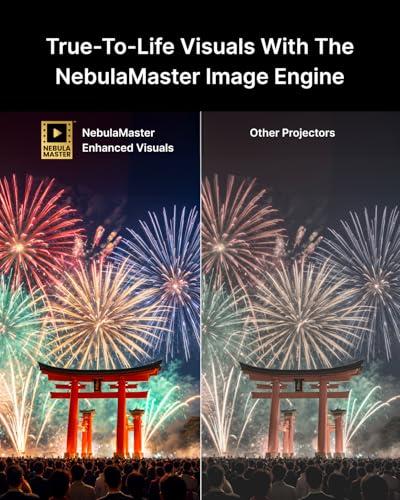
What this means for you is more vibrant colors, especially reds and oranges, which traditional LED projectors often struggle with. The NebulaMaster image engine further enhances this by using advanced processing to optimize colors in real-time.
The Mars 3 Air uses standard LED technology, which is still capable but more limited in color range. For casual viewing, it's perfectly adequate, but side-by-side with the Cosmos 4K SE, you'd notice the difference in color saturation and accuracy.
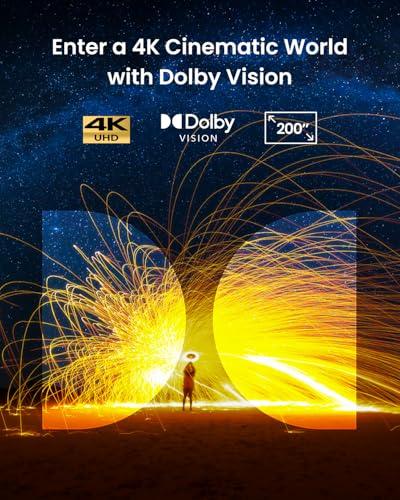
Both projectors support HDR (High Dynamic Range), but their implementation differs significantly. The Cosmos 4K SE supports Dolby Vision, HDR10, and HLG, while the Mars 3 Air handles HDR10 and HLG.
Dolby Vision is the premium HDR format that optimizes the image frame-by-frame, potentially delivering 40× higher brightness and 50× better contrast than standard projection. However, HDR performance on projectors is always limited compared to high-end TVs due to brightness constraints – even 1,800 lumens isn't bright enough for true HDR "pop."
Still, the Cosmos 4K SE's higher brightness and advanced processing make HDR content noticeably more impactful than on the Mars 3 Air.
Projector audio often gets overlooked, but it's crucial for the overall experience, especially if you don't want to invest in separate speakers immediately.
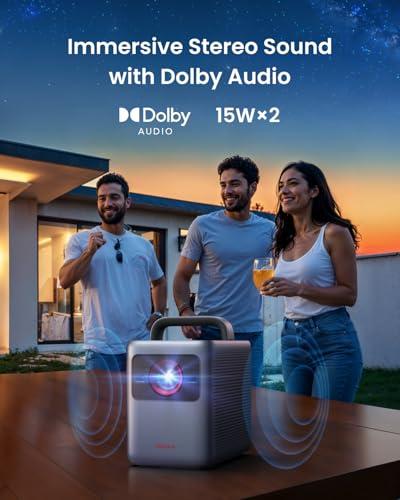
The Cosmos 4K SE features a robust 30-watt audio system with dual 15W speakers supporting Dolby Audio and Dolby Atmos (via HDMI eARC). In my experience, this is genuinely impressive audio that can fill a medium-sized room without feeling thin or harsh. It supports multiple sound modes optimized for different content types.
The Mars 3 Air has a 16W system (dual 8W speakers) with Dolby Audio support. While less powerful, it's reportedly superior to most portable projectors in its class. The bonus feature here is Bluetooth speaker mode – you can use it as a wireless speaker for up to 8 hours, which adds versatility for outdoor use or when you just want background music.
For home theater use, the Cosmos 4K SE's audio is sufficient for casual viewing, though serious enthusiasts will still want dedicated speakers. The Mars 3 Air's audio is impressive for its size but won't fill larger spaces effectively.
This is where these projectors diverge most dramatically in their design philosophy.
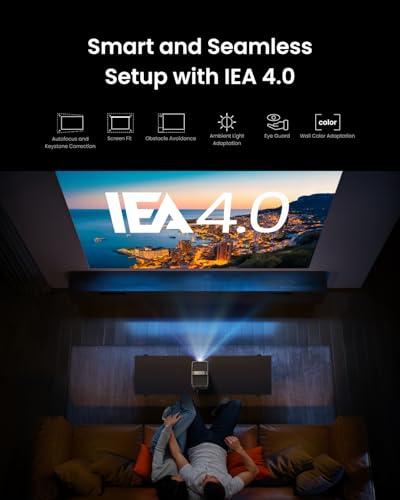
The Cosmos 4K SE features IEA 4.0 (Intelligent Environment Adaptation), which represents some of the most advanced auto-setup technology available. It automatically handles focus, keystone correction (fixing image distortion when projecting at angles), obstacle avoidance, screen fitting, wall color adaptation, and ambient light adjustment.
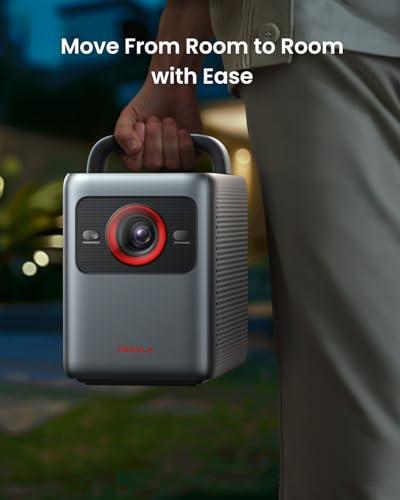
This system can detect if the projector gets bumped and automatically readjust the image. It can compensate for off-white walls and adapt brightness based on room lighting. While it requires AC power and weighs nearly 10 pounds, the setup process is remarkably smooth once positioned.
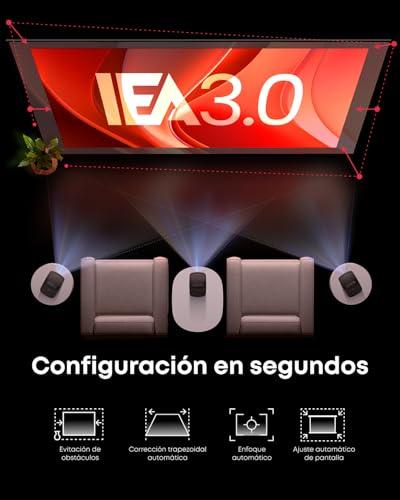
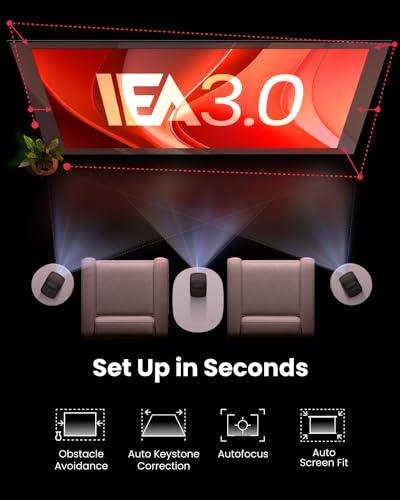
The Mars 3 Air prioritizes different conveniences. At just 1.7kg (3.7 pounds) with a built-in carrying handle and 65.8Wh battery providing 2.5 hours of playback, it embodies true portability. The IEA 3.0 system handles basic auto-setup functions, though not as comprehensively as its bigger sibling.
The real magic is in the freedom – no power cord means you can set it up anywhere, from backyards to hotel rooms to camping trips. This flexibility fundamentally changes how you think about projection.
Both projectors run Google TV, which was a significant upgrade when these models launched in 2024. Previous projectors often had clunky interfaces or required external streaming devices.
Google TV provides access to over 10,000 apps, including Netflix, Disney+, Prime Video, and more. Both support 4K streaming where available, though the Mars 3 Air is limited to 1080p output. The interface is smooth and responsive on both, with Google Assistant integration for voice control.
The Cosmos 4K SE has additional processing power that makes the interface slightly snappier, and it supports more advanced features like HDMI 2.1 with eARC for high-quality audio passthrough to external systems.
Gaming on projectors has improved dramatically, and both models offer gaming-specific modes to reduce input lag – the delay between controller input and on-screen action.
The Cosmos 4K SE achieves an impressive 18.4ms input lag in extreme gaming mode, which is competitive with dedicated gaming monitors. Combined with 4K output and large screen capability, it can provide an immersive gaming experience that's hard to match elsewhere.
The Mars 3 Air manages 45.1ms in its gaming mode, which is acceptable for casual gaming but not ideal for competitive play where every millisecond matters. However, the ability to game anywhere with battery power opens up unique scenarios.
At the time of writing, these projectors occupy different value propositions entirely. The Cosmos 4K SE represents premium features at mid-range pricing, especially when found on sale. It competes with projectors costing significantly more while offering similar or better performance.
The Mars 3 Air commands a premium for its portability and convenience features. You're paying for the engineering that packed quality projection and smart features into a battery-powered package – something that wasn't feasible until recent technological advances.
The Cosmos 4K SE excels in dedicated home theater environments. If you have a basement, media room, or can control lighting in your living room, its superior brightness and 4K resolution create genuinely cinematic experiences. I'd recommend it for screens 100 inches and larger, where the 4K resolution advantage becomes most apparent.
It's also ideal for serious gamers who want large-screen gaming with minimal lag, or for households where the projector will remain in one primary location with occasional moves between rooms.
The Mars 3 Air serves different needs entirely. It's perfect for people who want flexibility above all else – outdoor movie nights, travel entertainment, small apartments where permanent installation isn't practical, or as a secondary projector for various household uses.
It also makes sense for business users who need portable presentation capabilities, or for anyone who values the simplicity of battery operation over maximum image quality.
For dedicated home theater use, the Cosmos 4K SE is clearly superior. Its brightness allows for reasonable viewing even with some ambient light, the 4K resolution provides proper detail for large screens, and the audio system can serve as your primary sound source initially.
However, even with 1,800 lumens, you'll want to control lighting for the best experience. Dark walls behind the screen, blackout curtains, and careful light placement will dramatically improve performance.
The Mars 3 Air can work in home theater scenarios, but it's better suited to smaller, darker spaces or as a secondary viewing option rather than a primary home theater centerpiece.
After extensive consideration, here's how I'd approach the decision:
Choose the Cosmos 4K SE if you prioritize image quality and have a dedicated viewing space. If you want the biggest, sharpest image possible and don't need to move the projector frequently, this is the clear choice. It's also ideal if you're a gamer or movie enthusiast who values technical performance.
Choose the Mars 3 Air if flexibility matters more than ultimate quality. If you want to watch movies in your backyard, take entertainment on trips, or need a projector that works in various locations without hassle, the portability advantage is worth the performance trade-offs.
The decision ultimately comes down to your priorities: do you want the best possible image quality in a dedicated space, or do you value the freedom to project anywhere? Both approaches are valid, and both projectors execute their respective philosophies excellently.
For most users building their first serious projection setup, I'd lean toward the Cosmos 4K SE, especially when available at discounted pricing. The image quality difference is significant, and most people underestimate how much they'll appreciate the improved resolution and brightness once they experience it.
However, if your lifestyle involves frequent travel, outdoor entertainment, or you live in a space where permanent setup isn't practical, the Mars 3 Air's unique capabilities make it irreplaceable despite its technical limitations.
The projector market has never offered such clear, well-executed choices. Whether you choose the home theater excellence of the Cosmos 4K SE or the portable convenience of the Mars 3 Air, you're getting technology that would have seemed impossible just a few years ago.
| Nebula Cosmos 4K SE Smart Projector | Anker Nebula Mars 3 Air Portable Projector |
|---|---|
| Resolution - Determines image sharpness and detail, especially on large screens | |
| 4K UHD (3840×2160) via pixel shifting - Future-proof for streaming and gaming | Native 1080p (1920×1080) - Sharp enough for screens under 100 inches |
| Brightness - Critical for viewing in rooms with ambient light | |
| 1,800 ANSI lumens - Handles some ambient light, excellent in dark rooms | 400 ANSI lumens - Requires dark environments for best experience |
| Portability - Affects where and how you can use the projector | |
| 9.9 lbs, AC power required - Portable between rooms but needs power outlet | 3.7 lbs with 2.5-hour battery - True mobility for outdoor use and travel |
| Color Technology - Impacts color accuracy and vibrancy | |
| HybridBeam laser-LED with 123% Rec.709 coverage - Cinema-quality colors | Standard LED technology - Good colors but less vibrant than laser hybrid |
| Audio System - Determines if you need external speakers | |
| 30W dual speakers with Dolby Atmos - Can replace entry-level soundbar | 16W dual speakers with Bluetooth mode - Impressive for portable, needs external audio for larger rooms |
| HDR Support - Enhances contrast and detail in compatible content | |
| Dolby Vision, HDR10, HLG - Premium HDR processing for best contrast | HDR10, HLG - Standard HDR support without frame-by-frame optimization |
| Maximum Screen Size - Determines largest usable projection | |
| Up to 200 inches - Ideal for dedicated home theater setups | Up to 150 inches - Suitable for most casual viewing scenarios |
| Gaming Performance - Input lag affects competitive gaming experience | |
| 18.4ms input lag - Excellent for competitive gaming at 4K resolution | 45.1ms input lag - Adequate for casual gaming but not competitive play |
| Smart Features - Built-in streaming capabilities and interface quality | |
| Google TV with 4K Netflix, enhanced processing power | Google TV with 1080p streaming, optimized for battery efficiency |
| Setup Intelligence - Automated adjustment features for easy installation | |
| IEA 4.0 with advanced obstacle avoidance and wall color adaptation | IEA 3.0 with basic auto-focus and keystone correction |
| Power and Connectivity - Determines setup flexibility and device compatibility | |
| AC power, dual HDMI 2.1 with eARC, USB 3.0 | Battery or AC power, HDMI, USB-A, designed for minimal cable setup |
| Target Use Case - Who this projector serves best | |
| Dedicated home theater enthusiasts wanting maximum image quality | Mobile users prioritizing convenience and flexibility over ultimate performance |
The Nebula Cosmos 4K SE Smart Projector is significantly better for dedicated home theater setups. It offers true 4K resolution, 1,800 ANSI lumens brightness, and superior audio with 30W speakers supporting Dolby Atmos. The Anker Nebula Mars 3 Air Portable Projector works for casual home viewing but is limited to 1080p resolution and 400 lumens, making it better suited for dark rooms and smaller screens.
The primary difference is portability versus performance. The Nebula Cosmos 4K SE is a premium home theater projector focusing on maximum image quality with 4K resolution and high brightness but requires AC power. The Anker Nebula Mars 3 Air prioritizes mobility with a built-in battery, lightweight design, and true portability but sacrifices image quality for convenience.
Yes, both the Nebula Cosmos 4K SE Smart Projector and Anker Nebula Mars 3 Air Portable Projector feature Google TV with built-in Netflix apps. The Cosmos 4K SE supports 4K Netflix streaming, while the Mars 3 Air streams in 1080p. Both include access to other major streaming platforms like Disney+, Prime Video, and YouTube.
The Nebula Cosmos 4K SE Smart Projector is much brighter at 1,800 ANSI lumens compared to the Mars 3 Air's 400 ANSI lumens. This makes the Cosmos 4K SE better for rooms with ambient light, while the Anker Nebula Mars 3 Air requires darker environments for optimal viewing.
The Nebula Cosmos 4K SE has powerful 30W speakers that can serve as your primary audio system for most rooms, eliminating the immediate need for external speakers. The Anker Nebula Mars 3 Air has decent 16W speakers for its size, but you'll likely want external speakers for larger rooms or better audio quality.
The Nebula Cosmos 4K SE Smart Projector is superior for gaming with 18.4ms input lag and 4K resolution support, making it excellent for competitive gaming. The Mars 3 Air has 45.1ms input lag, which is acceptable for casual gaming but not ideal for competitive play. However, the Mars 3 Air offers unique portable gaming scenarios.
The Nebula Cosmos 4K SE supports screens up to 200 inches, ideal for large home theater setups. The Anker Nebula Mars 3 Air Portable Projector maxes out at 150 inches, which is still substantial but better suited for medium-sized viewing areas and portable use cases.
The Nebula Cosmos 4K SE Smart Projector delivers superior image quality with true 4K resolution, HybridBeam laser-LED technology, and advanced color processing covering 123% of Rec.709. The Mars 3 Air provides good 1080p quality but cannot match the sharpness, color accuracy, or brightness of the Cosmos 4K SE.
The Anker Nebula Mars 3 Air Portable Projector is specifically designed for outdoor use with its built-in battery providing 2.5 hours of operation and portable design. The Nebula Cosmos 4K SE can work outdoors but requires AC power, making setup more complex and limiting placement options.
Both projectors feature intelligent auto-setup, but serve different needs. The Cosmos 4K SE has advanced IEA 4.0 with comprehensive automatic adjustments for permanent installations. The Mars 3 Air focuses on quick, simple setup for temporary use with its lightweight design and battery operation, making it easier for frequent relocation.
The Anker Nebula Mars 3 Air Portable Projector has a built-in 65.8Wh battery providing up to 2.5 hours of movie playback or 8 hours in Bluetooth speaker mode. The Nebula Cosmos 4K SE Smart Projector has no battery and requires constant AC power, limiting its portability but ensuring unlimited viewing time when plugged in.
Value depends on your priorities. The Nebula Cosmos 4K SE offers exceptional value for home theater enthusiasts wanting premium 4K performance at a competitive price point. The Anker Nebula Mars 3 Air provides unique value for users prioritizing portability and convenience, as few projectors combine quality projection with true battery-powered mobility.
We've done our best to create useful and informative comparisons to help you decide what product to buy. Our research uses advanced automated methods to create this comparison and perfection is not possible - please contact us for corrections or questions. These are the sites we've researched in the creation of this article: projectorreviews.com - tvsbook.com - youtube.com - projectorcentral.com - youtube.com - projectorcentral.com - techradar.com - youtube.com - projectorcentral.com - youtube.com - the-gadgeteer.com - newegg.com - projectorreviews.com - projectorcentral.com - youtube.com - seenebula.com - seenebula.com - bestbuy.com - techradar.com - thesmarthomehookup.com - whathifi.com - thesmarthomehookup.com - cnet.com - whathifi.com - projectorreviews.com - youtube.com - youtube.com - versus.com - projectorcentral.com - practicalmotorhome.com - youtube.com - seenebula.com - us.seenebula.com - harveynorman.ie

Privacy Policy
Terms and Conditions - Affiliate Policy
Home Security
© Copyright 2008-2026.
11816 Inwood Rd #1211, Dallas, TX 75244